Tag: politics

  • Emergency and Now

    Emergency and Now

    By MG Devasahayam


    The author was District Magistrate of Chandigarh when Lok Nayak Jayprakash Narayan was incarcerated at PGI during Emergency. Over a time, he became an admirer of Lok Nayak and the two exchanged views quite often. -EDITOR

    “As the four senior most judges of the Supreme Court flagged their concern about the institution, it was reminiscent of the Emergency. Most people are these days moving in hushed silence, stunned and traumatized by the goings-on.”

    As I sat glued to the ‘idiot box’ watching the ‘historic’ event of four senior most judges of the Supreme Court ‘paying their debt to the nation’ and placing their case before ‘We, the People’, I was touched by two poignant references by Justice Jasti Chelameswar: “We are all…four of us are convinced that unless this institution is preserved and it maintains its equanimity, democracy will not survive in this country.” And: “We are left with no choice except to communicate it to the nation that ‘please take care of the institution and take care of the nation’… I don’t want another 20 years later some very wise men in this country blame that Chelameswar, Ranjan Gogoi, Madan Lokur and Kurian Joseph sold their souls and didn’t take care of this institution, they didn’t take care of the interest of this nation.”

    My thoughts went back to the special ward in the PGI, Chandigarh, and my conversations with Lok Nayak Jayaprakash Narayan (JP) who was incarcerated there during the Emergency. It was August 6, 1975. As was my wont, I had gone to see JP that morning. He asked me what the date was and I told him. He mumbled to himself that the Supreme Court hearing of the Prime Minister’s appeal against her disqualification by the Allahabad High Court was on the 11th. He asked me about the report of the case. He also asked me as to what was happening in Parliament.

    I could not mislead him by saying that there was nothing special. Hence, I told him about the amendments to the Representation of the People Act by Parliament the day before. He was upset as I narrated one by one the six amendments that had been made. The most prominent was the amendment granting immunity to the PM’s election from being challenged in a court of law. He looked sad and said with a deep sigh that there was no hope now. “Everything is finished. She will be there forever.”

    I also informed him of the convening of the state assemblies on August 8 and 9 and also the likely amendment of the Constitution rendering the elections of President, Vice-President, Prime Minister and Speaker of the Lok Sabha non-justiciable. He was more upset now. He said in a very sad tone: “Democracy is finished completely,” and after a pause, “at least for the present.” He said that his only hope was in the Supreme Court and that too had been shattered. “Now there is nothing to hope for and nothing to live for. This lady has demolished the very edifice of democracy so painfully constructed by her father and myriad others.” I was touched by his sentiments and the way he expressed it. I told him that this was inevitable and one could see it coming.

    But JP did not take it lying down. On August 10, he addressed a letter to the Prime Minister which was delivered to me around noon. In the letter, he had declared that from August 25, he would start a fast-unto-death unless the Emergency was revoked and all detainees released within two weeks. He would not take anything, except water, sour lemon and medicine meant only for ill health. Realizing its disastrous consequences, I rushed to JP immediately and after a sharp wordy duel lasting over two hours, dissuaded him from taking this extreme step. But not before he said these extremely anguished words: “I do not want to live to see the death of democracy before my very eyes. The least I could do would be to deny me that unparalleled agony and die before democracy is dead.”

    Be that as it may, the accuracy of JP’s prediction about the Supreme Court is narrated by Nayantara Sahgal in her book ‘Indira Gandhi’s Emergence and Style’: “The essence of Emergency was the pinnacle-power — a position above the multitude, unaccountable and unchallengeable — it sought to guarantee the Prime Minister. This was accomplished by three amendments to the Constitution and an Act of Parliament. The 38th Amendment put the declaration of Emergency beyond the scrutiny of the courts. The 39th Amendment made election disputes relating to the Prime Minister, President, Vice President and the Speaker non-justiciable. This wiped out the Allahabad High Court judgment with retrospective effect and ensured a Supreme Court judgment in her favor. On 7 November 1975, a 5-judge bench of the Supreme Court upheld the amendments and Indira’s 1971 election to Parliament.”

    Supreme Court judges then had not ‘taken care of the interest of the nation’ and some of them perhaps had ‘sold their soul’. This judgment shattered JP’s will to live and under intense agony and mental pressure, his kidneys, which were already under stress, failed. He took seriously ill which could have been life-threatening. Realizing the enormity of the situation, I initiated a ‘pincer movement’ to pressure the Union Home Ministry and PMO, got JP released on November 12 and sent him post haste to Bombay’s Jaslok Hospital just in time for his kidneys to be treated and life saved. JP lived for four more years, defeated the Emergency and returned India back to democracy.

    Since then, democracy has been limping and in recent years, again in dire danger. Basic violations of the democratic spirit and the crude attempts to legitimize a new type of regime and new criteria of allocation of rights and obligations continue unabated. There is no sense of boundary or restraint in the exercise of power, and there is a striking growth of arbitrariness and arrogance with which citizens are being turned into subjects, meekly accepting party/government diktats. Polarizing agenda, communal hatred, violence, demonetization and Aadhaar are the tools used.

    Reminiscent of the Emergency, most people are moving in hushed silence, stunned and traumatized by the goings-on. There is fear and anxiety all around. Across the nation, groveling administrators, media anchors, academicians, advocates and accountants are vying with each other to sing paeans to the rulers. The bulk of the civil service is crawling when only asked to bend. Higher echelons of the judiciary bow to the rulers and are willing to decree the way they want. Politicians of all hue and color, barring honorable exceptions, lay supine and inactive.

    In the event, India’s precious democracy is in peril again as openly stated by the four wise men of the highest court of the land. As an ordinary citizen, all I can do is to wail in the manner of our forefathers: “Democracy is in peril, defend it with all your might.” And, also salute these four men who have stood high and tall when most others have fallen asunder!

    (The author is a Former IAS officer and District Magistrate, Chandigarh)

  • Indian American lawmakers strongly criticize Trump’s anti-immigrant rhetoric

    Indian American lawmakers strongly criticize Trump’s anti-immigrant rhetoric

    WASHINGTON (TIP): All Indian Americans in Congress, much like their Democratic congressional colleagues, strongly criticized Trump’s State of the Union address.

    Reiterating his position on immigration and young Dreamers, Trump said the $25 billion border wall that he proposed in the immigration framework released last week will be the only solution for ending the DACA crisis.

    DACA, or the Deferred Action for Childhood Arrivals (DACA), allows individuals who entered the United States as minors and remained undocumented to get a renewable two-year period of deferred action from deportation. Those participating in the DACA program are called Dreamers.

    Forty-five minutes into his highly stretched first State of the Union address, Trump said the open borders have resulted in the inflow of “drugs and gangs” into the country.

    Trump said that slaying of Kayla Cuevas and Nisa Mickens, two teen girls in Long Island by MS-13 gang members, is the result of unchecked illegal immigrants crossing the national border. The parents of the victims were also present during the event.

    Ironically, Sunayana Dumala, the wife of Srinivas Kuchibhotla, an Indian American tech professional who was shot and killed by a white supremacist in Kansas, was present during the State of the Union address as the guest of Rep. Kevin Yoder when Trump said immigrants were spreading violence in the United States.

    Sen. Kamala Harris, who has been a strong advocate of Dreamers and immigrant, reacted strongly to the speech. “As the attorney general of California, my main area of focus was going after transnational criminal organizations involved in trafficking guns, drugs, and human beings,” speaking to MSNBC, she said. “MS 13 is one of the worst examples of criminal behavior. To equate that with dreamers and DACA was completely irresponsible and it was scapegoating, and it was fear mongering and it was wrong. It was wrong technically in terms of the nature and character of this populations and in terms of who they are and how they love their lives and that is wrong also because it not how leaders are supposed to do. We are not supposed to convince the American population a policy because   we make them afraid and that is exactly what this president is doing.”

    During the President’s speech, Harris tweeted, “Dreamers should not be used as a bargaining chip or held hostage in exchange for anti-immigrant policies.”

    Indian American Rep Pramila Jayapal, D-Washington, who boycotted the State of the Union, also ridiculed Trump’s rhetoric on immigrants and hosted their alternative State of Our Union address at the National Press Club on Tuesday night.

    Reacting to the president’s comments on the immigrants Jayapal tweeted, “the president’s rhetoric was absurd and more of the same. He wants to slash legal immigration and conflate immigrant families with terrorists and criminals and drains on our economy.”

    Speaking to MSNBC she said, “I came to this country as a 16-year-old and now I’m a United States Congresswoman, one among a dozen members of the Congress. But it is so insulting to see him (Trump) continually scapegoating immigrants, trying to make us the division, when we know that all of our ancestors have come here and helped build this county. For him to start with the MS 13 gang and that story and use that story in a way to say everybody is a criminal and therefore, we should cut family immigration to half and even safe family immigration. Even though he didn’t say family migration and said chain migration, what he really means is family reunification – the corner of immigration in this country for the last fifty years. It was outrageous and I’m so glad that I was not there.”

    The Democrat also said that, by holding Dreamers in a hostage-like situation, Trump is asking for ransom, which is to end the legal immigration by half. She also pointed that Dreamers were enjoying legal status and were not deportable until Trump ended the program.

    Another Indian American Democrat, Rep, Ro Khanna of California, after listening to Trump’s State of the Union address tweeted, “Tonight, Trump talked about immigration. His perception is flawed. Real lives are at stake, and I will not stop fighting for the 800,000 DREAMERs who deserve nothing less than a clean DREAM Act.”

    “I will continue to be a voice for jobs and equality, full funding for CHIP, a clean DREAM Act, and necessary disaster relief funding, as well as long-term economic solutions for working families,” he wrote in another tweet.

    A press release issued Rep. Raja Krishnamoorthi said: “I wish President Trump governed with the same tone of promise and cooperation that he used at times during his speech tonight. If only the first year of his presidency had focused on infrastructure, investments in workforce development, and career and technical education, what a different political moment we would all be living in today.”

    Voicing his support for the immigrants, Rep. Ami Bera invited a special guest for the State of the Union,  Dr. Bennet Omalu, a Nigerian immigrant who has made groundbreaking discoveries in caring for brain injuries. “We are a nation of immigrants and that should be celebrated,” Bera tweeted before leaving for the address.  “I’m honored to have him join me at the State of the Union to reaffirm our American values,” he said in another tweet.


  • India@68

    India@68

    Will Modi be India’s Gorbachev?

    Remember, Gorbachev, a modern man heading a medieval Communist Party, introduced Glasnost (Transparency), without exactly working much for Perestroika (Reconstruction) in the 1985-91 era. The result was the dissolution of the “secular” Soviet Union and emergence of an Orthodox Christian Russia on its ruins!
    Modi has often been talking about transparency; and rarely about reconstruction!
    As the year 2018 began, India’s politics is agog with the possible changes in the offing. Despite his currently steamroller majority in the Lok Sabha and the emerging one in the Rajya Sabha (Upper House), Modi appears buffeted more due to the circumstances not of his making but what he inherited. Like the Mahabharata’s great warrior Abhimanyu, he is struggling against seven enemies and he does not, apparently, know how to get out of the booby traps and landmines.
    Follow Story @
    https://www.theindianpanorama.news/featured/perspective-tired-titan-modi/

    As the “Sovereign, Socialist, Secular, Democratic Republic of India” celebrates its 68th anniversary on January 26, 2018, the world’s largest democracy refuses to grow old. It remains young, and, therefore, rather unpredictable, as ever. In fact, India has retained her youthfulness due to this very unpredictability; the vast nation, as sociologists and historians have noted, changes every ninth mile! And you are never sure which India best represents India!!

    When the war-crippled British Raj decided to leave India in 1947, dire warnings were given that the utterly brittle country of nearly 300 million diverse people divided across castes, creeds and customs would not survive for long and fall back upon its familiar, fissiparous path of slavery of another kind. India proved all dystopian warnings wrong.

    Winston Churchill was among the first politicians to predict India’s downfall from the British to the brutish era. The then war-time Prime Minister, who did not want to preside over the liquidation of the British Empire, had claimed that an Independent India would quickly disintegrate and return to the medieval era. Dr. B. R. Ambedkar, as Chairman of the Drafting Committee of the Constituent Assembly, had also expressed apprehension that India could lose her independence and territory once again and even become a dictatorship if she failed to put in checks-and-balances.

    Nothing of the sort has, however, happened. On the contrary, despite odds, India has not only retained her independence, sovereignty and territorial integrity, but has also been a beacon of independence to many “Third World” countries, thanks to its slow but sure progress and prosperity. She has not only emerged as the largest democracy in the world but also the third largest economy, the sixth space power, and an emerging world superpower. In other words, India has been a role model for many a nation the way her greatest son, Mahatma Gandhi, has been a role model for many a country vying for independence from a foreign yoke.

    Of course, the 2,000-year-old Mother India has had to struggle hard to put up the make up of a 20-year-old lady and walk the ramp of world powers. She had her own hours of reckoning, even dictatorship of sorts. She had to fight a war imposed by China in 1962, another by Pakistan in 1965, and a third during the Bangladesh Liberation in 1971. Also, she suffered a major embarrassment during the dictatorial Internal Emergency (1975-77), imposed by the then PM Indira Gandhi. Interestingly, it was also during the same Emergency that Mrs. Gandhi introduced the future seed of Indian politics: the 42nd Amendment to the Constitution, adding the word “secular” to the Preamble. This “secular” word would become the determinant of whither the Republic of India would march in the 21st century.

    For, when Mrs. Gandhi returned to power in 1980 after the brief Janata Party interregnum, she faced unprecedented turmoil in Punjab due to Pakistan-sponsored, financed and supported terrorism in the border state. For the first time, a “secular” India witnessed her Army storming a venerated shrine to flush out militants. India’s secularism was stretched to the limits and the woman who sought to conceive a “secular” India was consumed by the very forces she had unwittingly unleashed.

    Her son Rajiv Gandhi inherited the crown as well as the “secular” thorn from his mother. While he successfully fathered India’s communication revolution, he was also consumed by another kind of terrorism, from the Hindu Tamils of neighboring Buddhist Sri Lanka. Like his mother, he also stretched India’s secularism to the limits by first succumbing to the Muslims in the Shah Bano case and then to the Hindus on the Ayodhya issue.

    All governments that followed the Rajiv Gandhi era since 1989 were products of the struggle between the combination of Hindutva forces on one side and the “secular” ones on the other. This was the era of coalition governments in which alternated political groups led by the rightist Hindutva party, the BJP, and the “secular” fronts, led by the Congress, or ex-Congressmen.

    Interestingly, again, while Indira introduced “secular” content in the Constitution, her son Rajiv succumbed to both the Muslims and the Hindus, in that order, thus changing the very creed of the Congress—only Mahatma Gandhi had changed this creed in 1919 when he turned the Indian National Congress from being a post office to the biggest mass movement for India’s Independence.

    This change of creed became unstoppable. In fact, the Rajiv Gandhi-led Congress seemed to be the last sigh of the Grand Old Party (GOP), having won a massive majority of 404 seats out of 533 in the Lok Sabha (Lower House of Parliament) in 1984, riding a sympathy wave after the assassination of India Gandhi. In Independent India, this was the first election where the people voted on the basis of religion and a pro-Hindu sentiment began to take shape. Subsequently, it evolved further and empowered Narendra Modi to become the PM in 2014, heading the government led by the single dominant party (the BJP alone won 282 seats) after 30 years.

    It is this Republic that India of the 21st century has inherited.

    Where is India headed now?

    As the year 2018 began, India’s politics is agog with the possible changes in the offing. Despite his currently steamroller majority in the Lok Sabha and the emerging one in the Rajya Sabha (Upper House), Modi appears buffeted more due to the circumstances not of his making but what he inherited. Like the Mahabharata’s great warrior Abhimanyu, he is struggling against seven enemies and he does not, apparently, know how to get out of the booby traps and landmines.

    https://www.theindianpanorama.news/featured/perspective-tired-titan-modi/

    Only in the last week, fresh salvos have been fired at him. His friend-turned-foe, Dr Pravin Togadia, International Working President of the Vishwa Hindu Parishad, has gone ballistic against him and his government, even claiming that he could be killed in an organized “encounter” with the police! This demonstrates the internal bickering in the larger Sangh Parivar, and Modi may lose many foot soldiers for the ensuing 2019 General Elections next year, to be preceded by elections to eight state Assemblies. The Rashtriya Swayamsevak Sangh (RSS), which heads the Sangh Parivar, has been claiming to be the only champion of all that was Great in India of the bygone “Golden Age”, the only repository of the Hindu culture and civilization. But, ironically, the once-monolithic RSS is becoming more and more brittle and fissiparous in the image of India of Yesterday that it increasingly represents! The India of Tomorrow is going to be very different and the RSS would, predictably, embrace more and more irrelevance.

    Having known Modi personally since 1998, I can fairly assume that even Modi, apparently, realizes this increasing irrelevance of the RSS in which he cut his political teeth and activism since the early 1980s. A gizmo-loving Modi has almost been a ‘misfit’ in the RSS, being too modern an activist-politician emerging from the Sangh Parivar which has a strangely medieval, even ancient, mindset. But, like Atal Behari Vajpayee before him, he has had to suffer in silence this foot-soldier providing agency. That he is not an ideological junkie was proved when he systematically cut to size and made irrelevant the various Parivar constituents during his Chief Ministership of Gujarat (2001-14).

    And he also, apparently, realizes that the 2019 electoral battle will be very different from the one he won in 2014. Then, he could blame the Congress-led Government of Dr Manmohan Singh for the various ills; now, he cannot blame his own government for multiple failures to keep promises! Ironically, he continues to be the most popular politician in India at a time when his party is losing out, beginning with his home state of Gujarat.

    In other words, Modi’s popularity is independent of his own party’s, that of his government or even of the RSS. In still other words, it is somewhat like “Modi is India and India is Modi”, to borrow a famous phrase from the Emergency era when the then Congress President Dev Kant Barooah pronounced that “Indira is India and India is Indira”!

    A major reason for this overriding popularity of Modi is, apart from his own well-oiled PR network, also the failure of the country’s polity to produce another leader. In 2018, as of now, India is beset with the “There Is No Alternative” (TINA) syndrome. Although Rahul Gandhi, now the Congress President, has been able to revive some confidence during the last six months, he is no match to Modi’s political acumen, machinations and the ability to turn adversity into opportunity. Modi has been a full-time politician, with no baggage attached or inherited, and with no family, whereas Rahul has been a reluctant politician for most of his career.

    And it is Modi, not Rahul, who has actually inherited the political mantle of Indira Gandhi!

    Which takes us to figure out what Modi could do best, and the next.

    In the early 1980s, Indira’s lieutenants like the then Union Minister Vasant Sathe had released trial balloons wondering whether the country could adopt a Presidential system of governance to replace the current parliamentary system. The debate died down with the assassination of Mrs. Gandhi. It has been revived again.

    Can, therefore, Modi introduce the Presidential system? I remember Sathe having told me in the 1980s that, for this, the Parliament will have to merely pass an Amendment to make the President to be elected directly by the people. That is, election to the Presidency and the Lok Sabha will both be direct, and independent of each other. Be that, as it may, India could have in Modi her first President directly elected by the people!

    Clearly, it would be a paradigm shift in the Republic of India which will celebrate its Diamond Jubilee in 2024. Modi has often been talking about how India should celebrate the 75th anniversary of Independence in 2022 and hinted that he could continue to helm the affairs until 2024!

    As the first step towards this ‘destination’, Modi has been advocating holding of elections to the Lok Sabha and the state Vidhan Sabhas, simultaneously, ostensibly to save money. In the first two decades of Independence, simultaneous elections were held, but Indira Gandhi stopped this practice. If Modi revives it, he could have the advantage of superimposing his persona all over the simultaneous General Elections. Since he has no match, he is likely to win a Presidency hands down; and, even if the BJP/NDA lose the poll or majority, he will have the independence of being the elected President.

    Will, then, Modi-as-President be like Trump-as-President?

    Maybe.

    But he also risks becoming India’s own Mikhail Gorbachev! Remember, Gorbachev, a modern man heading a medieval Communist Party, introduced Glasnost (Transparency), without exactly working much for Perestroika (Reconstruction) in the 1985-91 era. The result was the dissolution of the “secular” Soviet Union and emergence of an Orthodox Christian Russia on its ruins!

    Modi has often been talking about transparency; and rarely about reconstruction!

    (The author is a journalist since 1983 and has worked with newspapers, news agencies and magazines in English and Hindi languages. He has contributed articles on diverse subjects. Currently, he is working as Consulting Editor with Business Line, the business daily of The Hindu Group of Publications in India. He is based in Ahmedabad in Gujarat, India. He can be reached at Virendra.pandit@gmail.com)


  • Indian Origin MP is First Female Muslim Minister to Address British Parliament

    Indian Origin MP is First Female Muslim Minister to Address British Parliament

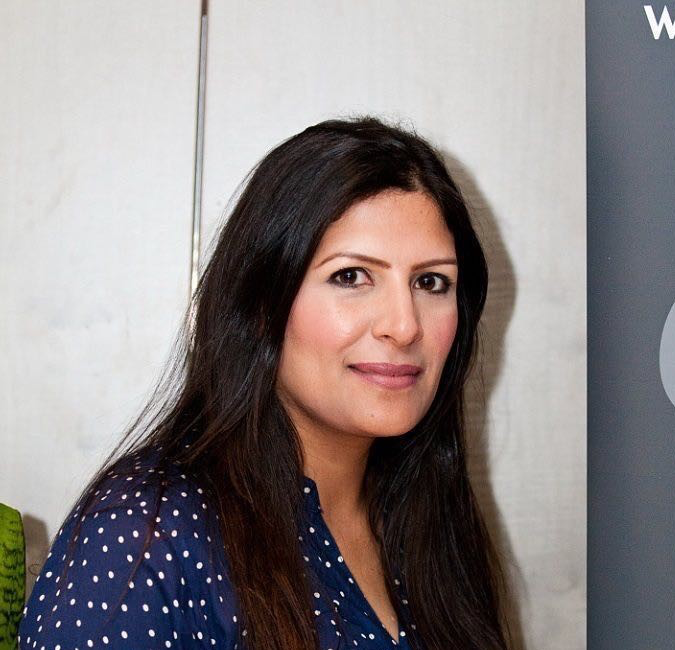
    LONDON (TIP):  Nus Ghani, an Indian origin parliamentarian in the UK, today became the first female Muslim minister to speak from the British Parliament dispatch box.

    Ms Ghani, born in Birmingham to parents who migrated from Pakistan-occupied Kashmir, was cheered by her colleagues as she addressed the House of Commons as a junior minister in the Department for Transport.

    “Made my debut as @transportgovuk Minister and made a bit of history as the first female Muslim Minister to speak from the House of Commons dispatch box,” she tweeted soon after her first Commons outing in her new role.

    Dispatch box is the designated place where ministers stand and speak from in the Commons.

    The 45-year-old was appointed Parliamentary Under-Secretary at the Department for Transport by British Prime Minister Theresa May as part of her New Year reshuffle last week.

    The Conservative Party MP from Wealden was also given the assistant government whip in the reshuffle to oversee party discipline.

    “The roles are both exciting and challenging opportunities… Transport is a subject on which I have campaigned passionately since being elected as the MP for Wealden. Alongside my ministerial duties, I will continue to be a strong voice for Wealden and deliver for my constituents,” Ghani had said in a statement.

    The minister in charge of her department, transport secretary Chris Grayling, said Ms Ghani’s promotion proved the Tories “were a party of opportunity”.

    “We’re the party to provide…the first Muslim woman minister to speak from the government dispatch box – the member for Wealden. I congratulate her – I’m very proud to sit alongside her,” he said.

    Ms Ghani worked for charities such as Age UK and Breakthrough Breast Cancer as well as the BBC World Service before first standing as a Conservative Party candidate in Birmingham in the 2010 general election.

    In 2015, she became the first Conservative party Muslim female candidate to be elected to Parliament.

    After the June 2017 snap election, she made history after she repeated her oath of allegiance to Queen Elizabeth II in Urdu when she was sworn into Parliament.

    “My motivation is simple. My parents are incredibly proud that I have been elected to serve as MP and I wanted to honor my mother by speaking in a language she understands and my mother tongue,” she had said at the time.

    Soon after, she was appointed Parliamentary Private Secretary to the UK Home Office.

    Her rapid rise in Theresa May’s government is seen as part of the British Prime Minister’s declared aim of moving away from an all-white middle-aged male Cabinet.


  • Landmark Brexit Bill passed

    Landmark Brexit Bill passed

    LONDON (TIP): British MPs gave the green light, on January 18, to a landmark Brexit Bill, after weeks of debate and a damaging government defeat, but the legislation now faces a battle in the House of Lords.

    The House of Commons voted by a majority of 29 to approve the EU (Withdrawal) Bill, which repeals the 1972 law that made Britain a member of theEuropean Union.

    “This bill is essential for preparing the country for the historic milestone of withdrawing from the European Union,” Brexit Secretary David Davis said.

    “We’ll have a statue book that works, delivering a smooth and orderly exit desired by people, businesses across the UK and being delivered by this government.”

    The Bill is only one of several that Prime Minister Theresa May’s minority government must pass to prepare Britain for its withdrawal from the EU in March 2019.

    MPs had tabled more than 500 amendments and spent more than 80 hours in debate, and Brexit Secretary David Davis said the Bill was heading to the Lords in an ‘improved’ state

    The unelected House of Lords may insist on further changes when peers begin their scrutiny on January 30, while ministers still face opposition from Scottish and Welsh administrations.

  • Canada Lawmaker behind 1984 Genocide Motion is Ontario’s First Sikh Woman Minister

    Canada Lawmaker behind 1984 Genocide Motion is Ontario’s First Sikh Woman Minister

    The 38-year-old daughter of Canada’s first turbaned MP Gurbax Singh Malhi was sworn in as Minister of the Status of Women on Thursday, January 18.

    TORONTO (TIP):   Harinder Malhi, the Indo-Canadian member of the Ontario provincial parliament and the mover of the 1984 genocide motion in the House last April, has been given a cabinet berth in the Ontario cabinet, making her the first-ever Sikh cabinet minister in the Canadian province.

    The 38-year-old daughter of Canada’s first turbaned MP Gurbax Singh Malhi was sworn in as Minister of the Status of Women on Thursday, January 18.

    The decision by Premier Kathleen Wynne to elevate Malhi seems to have been taken with an eye to Sikh votes as Ontario goes to the polls in June.

    Ms Malhi represents the Punjabi-dominated ‘riding’ (or constituency) of Brampton-Springdale in the Ontario assembly, whose members are called MPPs or members of provincial parliament.

    She joins another Indo-Canadian woman minister Dipika Damerla in the Ontario cabinet.

    Interestingly, her elevation to the cabinet comes when two senior Sikh MPPs Amrit Mangat and Vic Dhillon have been ignored.

    It is being speculated that because of her 1984 genocide motion, Ms Malhi can help her Liberal Party retain Sikhs votes which may drift to the New Democratic Party (NDP) which has just elected Jagmeet Singh as its national leader. After her genocide resolution, many in the Sikh community view her as the champion of the cause in the community.

    Her party may also benefit from her father and former MP’s huge hold over Sikh voters.

    Interestingly, as a member of the Ontario assembly, Jagmeet Singh too had introduced a similar motion on the anti-Sikh riots, but his motion failed. He was also denied a visa to India in 2013.

    Brampton, on the outskirts of Toronto, has the second largest concentration of the Sikh community in Canada after Surrey in British Columbia.

    Ms Malhi’s genocide motion in the Ontario assembly in April 2017 read: “That, in the opinion of this House… should reaffirm our commitment to the values we cherish — justice, human rights and fairness — and condemn all forms of communal violence, hatred, hostility, prejudice, racism and intolerance in India and anywhere else in the world, including the 1984 genocide perpetrated against the Sikhs throughout India, and call on all sides to embrace truth, justice and reconciliation.”

    The motion was passed 34-5 votes in a House of 107 members.

    Reacting strongly to it, India rejected it calling it a “misguided motion which is based on a limited understanding of India, its constitution, society, ethos, rule of law and the judicial process”.

    (Source: IANS)

  • Indian Origin is Britain’s First Woman Sikh Lawmaker to be Appointed as Shadow Minister

    Indian Origin is Britain’s First Woman Sikh Lawmaker to be Appointed as Shadow Minister

    The Shadow Cabinet is the team of senior parliamentarians chosen by the Leader of the Opposition to mirror the Cabinet in Government

    LONDON (TIP):  Preet Kaur Gill, Britain’s first woman Sikh Member of Parliament (MP) has been promoted to the Shadow Cabinet by the Opposition Labour party leader Jeremy Corbyn.

    The Shadow Cabinet is the team of senior parliamentarians chosen by the Leader of the Opposition to mirror the Cabinet in Government.

    Each member is appointed to lead on a specific policy area for their party and to question and challenge their counterpart in the Cabinet. In this way, the Opposition seeks to present itself as an alternative government-in-waiting.

    Ms. Gill, 44, won her Birmingham Edgbaston seat for the Labour party in the June 8 snap polls last year.

    In July, she was elected to the Home Affairs Select Committee in the British Parliament.

    She was promoted to the post of shadow minister for international development in Mr Corbyn’s New Year reshuffle of what he brands as a “government-in-waiting”.

    “We had no Sikh MPs prior to this election. So, Sikhs had no representation and we had no female Sikh representation. Parliament must reflect the people it serves,” Ms. Gill had said at the time of her election.

    Since then, she has a busy tenure, being elected to the influential Home Affairs Select Committee – the cross-party parliamentary panel that examines the workings of the UK Home Office. Ms. Gill is also the chair of the All Party Parliamentary Group for British Sikhs.

    Her appointment was announced alongside that of Clive Lewis as shadow treasury minister. Mr. Lewis had resigned as the shadow business minister in February last year over wanting a vote against the European Union (Notification of Withdrawal) Bill and was one of 52 rebel MPs to defy Labour party orders to back the bill in a Parliament vote.

    He was also accused in a sexual harassment scandal but cleared of wrongdoing by the party late last year.

    Others who moved up to the frontbenches of the Opposition include Jack Dromey as the shadow minister for pensions and Karen Lee as shadow minister for fire.

    “Pleased to make appointments to strengthen Labour’s frontbench which is a government-in-waiting. I look forward to working with them holding the Tories to account, developing our policies to transform our country and preparing to form a government for the many, not the few,” Mr Corbyn said in a statement.

    British Prime Minister Theresa May had announced a reshuffle of her top team earlier this year, leading to the appointment of three new Indian-origin MPs — Rishi Sunak, Suella Fernandes and Shailesh Vara — to junior ministerial posts.

  • Why is Martin Luther King, Jr. Relevant Today?

    Why is Martin Luther King, Jr. Relevant Today?

    By Ashok Ojha, Hindi Sangam Foundation

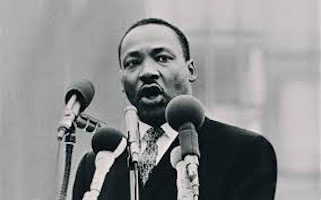
    Almost half a century ago Martin Luther King, Jr. shook the conscious of the United States of America by launching his movement to empower the poor, the discriminated and marginalized people. The nation was deeply divided between races and classes. King, a priest, challenged the administration of this country and vowed to establish the valued ingrained in the country’s constitution.

    People of all colors and shades identified with the values set by King and took part in his protest movements to demand equality and justice. We celebrate King’s birthday on January 15 and find that his deeds continue to inspire us. As we celebrate the birthday of this great civil rights warrior we realize that his values and goals continue to be relevant and meaningful guiding force. In order to compel the nation change its path of progress King followed the strategies that Gandhi in India had implemented with success. Gandhi led his people to the road to freedom from the British rule. King led a movement very similar to what Gandhi had achieved three decades ago.

    King’s strategy of resistance through non-violence proved very effective. The positive results of Gandhi’s strategy of non-violence sound logical to King. He was certain that violence was not the right path to achieve equality in USA. In order to convince the government in Washington D. C. King made inspiring speeches and led marches. He designed his movement against white supremacists same as Gandhi had asked his people to follow the path of civil disobedience against the British.

    The two leaders were not afraid of sufferings that they invited through their campaigns. They were ready to face violent consequences of their actions. In the end they were certain to compel their opponents change their hearts and minds. Their goal was to establish the power of non-violence which was greater than the power of the gun.

    Gandhi always combined faith in his principle of nonviolence. He was firm in his believe in seeking truth. ‘Truth is God’ was his mantra. King was a godly person, a Baptist minister of black Church who preached for God. He linked the power of God with the power of oppressed people and believed that freedom and equality belonged to them. Like Gandhi King was also a seeker of Truth.

    Inspired by the civil disobedience technic formulated by Gandhi, King asked his followers to boycott the use of segregated buses in Montgomery, Alabama. This was his experiment with truth. He was using the method of noncooperation with the system. His method was so much like that of Gandhi that people called him, ‘The American Gandhi’. However, Gandhi was fighting against the rulers who were outsiders. On the contrary King was bent upon forcing the federal government to do more for people. He knew that the federal government was able to find solutions for many problems that caused poverty and unemployment.

    Neither Gandhi nor King was willing to compromise on their goals. Gandhi didn’t accept anything less than ‘total freedom’. King’s fight for racial equality was aimed at equal rights for Black people. King’s efforts were well rewarded with Nobel Peace Prize in 1964. He focused his fight against poverty and Vietnam War. He targeted his fight on a broader scale to include elimination of poverty and social justice. He aimed at appealing to a broader audience of both Black and White masses.

    In 1964, King received a Nobel Peace Prize for his nonviolent fight against racial inequality.

    In the final years of his life, King’s focus changed to include a resistance to widespread poverty and the Vietnam War. The latter alienated many of his liberal allies.

    Today, civil disobedience continues to be a tool in a democratic society. Oppression of the poor has not stopped. Equality remains noble words in the constitution. King’s philosophy and his path of democratic resistance guides those who believe in struggle for freedom. Gandhi and King experimented with truth and achieved it. But for the oppressed and the poor truth continues to be elusive. The principles of Gandhi and King are strong guiding force for the seekers of change. King was assassinated in Memphis, Tennessee. His death ignited riots in many US cities. His mission is yet to be fulfilled.

    (The author is a journalist and Hindiphile)


  • Whither Education in Maharashtra?

    Whither Education in Maharashtra?

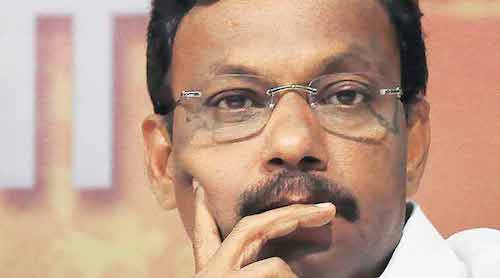
    Vinod Tawade: A failed Education Minister or an Amateurish Experimenter in Education System?

                                                      By Kishor Satwick

    Maharashtra Education Minister Vinod Tawade has again bowled a bad delivery. Under his initiative, the HSC Board has proposed two sets of test papers for Std. XII exam to be conducted in 2019 – A tough question paper for those desirous to pursue medical and engineering degrees and an easy one for the rest. The new paper pattern is already being implemented for class XI.

    According to the changed pattern, students will be given fewer choices on questions thus making it tougher to omit to study chapters or topics from a particular subject. The aim was to follow the CBSE pattern and prepare students for National Eligibility-cum-Entrance Test (NEET) and Joint Entrance Exam (JEE).

    The justification given by Vinod Tawade is: – “In NEET and JEE exams, you don’t have the option to choose what topic to study. You have to study everything. But if you are not going for these exams, then you could perhaps leave out certain topics. Out of roughly 15 lakh students who appear for class XII exams, only 5,000 go to medical colleges and 60,000 to engineering colleges. The rest go for a BSc degree. So, I have made this suggestion and the educationists are deliberating on this. We will take a decision on this before the next academic year begins.”

    It is known fact that level of examination depth in HSC is less than that in CBSC. Hence, students passing from HSC find it difficult to compete in NEET conducted by CBSC. The same goes for JEE. To increase the competitiveness of the Maharashtra Students is the call of the day. Earlier Congress/NCP Government had realized this and they had made the exam pattern competitive. However, the present Education Minister has been diluting even the syllabus ever since he has occupied that Chair.

    A bizarre idea has come to the fertile brain of Education Minister. The Learned Education Minister of Maharashtra further concludes that only 5,000 students go for medical degrees and rest do not go. The Learned Minister does not understand that it is not the case that only 5,000 students opt for medical education; rather the situation is because in Maharashtra, only 5,000 medical seats are available for admission, only 5,000 students can go for medical degrees. Instead of increasing the medical infrastructure in the State so that more students can go for medical education and fill the vacuum in health sector, the Minister is tinkering with the examination pattern promoting mediocrity. If one sees the admissions in engineering colleges, the figure of 60,000 quoted by Vinod Tawade is far from reality. As per DTE, Maharashtra, about 1,20,000 students took admissions in Engineering colleges in the Maharashtra State in 2017 as against the capacity of 2,10,000 seats. That left about 42% of the total seats vacant. According to DTE, while more students appeared for the MH-CET this year, compared to the past few years, there weren’t too many top scores when the results were announced on June 3. Just 1% of the applicants scored above 75% in the exam. This clearly shows the syllabus and the exam patter need to be redesigned to increase the intelligence and the competitiveness of the students and not to make them mediocre.

    This move is strongly opposed by the Academicians.

    Anil Deshmukh, president, Maharashtra State Federation of Junior College Teachers’ Organization says: “How can there be two papers? Asking students to decide if they are going to give entrances at the time of giving HSC is not a cogent suggestion.”

    Dr Ashok Wadia, Principal, Jai Hind College pointed out, “Students only know they have to give exams. The coaching class lobby has raised the bogey of failures as they streamline their coaching to how students can get more marks by studying most likely topics. Students have to study everything. Can a physics student say I can study the topic of ‘light’ but not ‘heat’?”

    But Learned Education Minister of Maharashtra thinks Yes; a student can learn ‘light’ but not ‘heat’. Considering this danger, the SC took away the medical entrance from the States to Centre and there is one NEET conducted by CBSC. If left to the likes of Vinod Tawade, we would have Neuro Surgeons who had left brain as option in their medical education.

    Mr. Vinod Tawade, the syllabus – whether for SSC – HSC or Engineering – should be such that it produces knowledgeable students/professionals. Industry is already complaining that 60% of the BE/B.Tech degree holders are unemployable. It is simply because of people like Vinod Tawade who encourage students to leave the topics for option thereby weakening their basic educational foundation by producing mediocracy.

    It is said a mediocre produces a mediocre. It is high time we had some professional as Education Minister in Maharashtra.

    (The author is a Mumbai based Chartered Accountant and Social Activist)


  • Do not Lose Hope in Trump, America’s Expectations Can Still Come True

    Do not Lose Hope in Trump, America’s Expectations Can Still Come True

    By A.D. Amar

    Since in office, Trump has given a very favorable treatment to many Indian Americans by appointing them in key Federal positions in his administration. He has also given India whatever it asked for. Additionally, Trump started to band with India in Asia-Pacific and other parts of the world against India’s archenemies. Indian Americans definitely appreciate that, says the author.

    In 2008, when I was contesting for the US Congress from the New Jersey’s District 7, I met with many seasoned and intelligent politicians from both parties. They all agreed on one thing that America’s problems were too big. They also agreed that they knew of no politician who had the capabilities to solve them.

    When I focused on these problems, I found out that there were just two big sources of most of America’s problems. They both had to do with the poor boarder control. One due to the lack of control of human inflow into the country and the second due to the lack of control of goods flowing in from all over the world. In other words, it is due to the illegal immigration and unchecked importation of goods. This is how America from being the world’s biggest and best-quality producer became the biggest importer and became a laughing stock of those countries that imported to America and even of those living in America, for its poor quality.

    In the process, from being the richest country in the world, it needed to borrow money from almost all countries around the world, with our biggest creditors being those who sold their goods to us, such as China, Japan, Germany, Mexico, Canada, Korea, etc. Because of the large inflow of the low skill workers from poor countries, American wages fell. Americans lost their jobs and riches to those who had forced themselves in through the borders, mostly along the South. The unemployment costs increased on the states and, because most of the illegal immigrant businesses run underground, the tax base decreased. Furthermore, the increased school, healthcare and other costs made the states and the Federal government operating in deficit.

    I believed that if we fixed these two problems, we could revive our economy and, with that, our financial problems will disappear. Furthermore, as money comes back in the system, slowly but surely everything will come back. America’s problems will disappear.

    In 2015, when I decided to support Donald J. Trump for the US President and, on December 25, 2015, with a friend, decided to form a committee to promote Trump, I knew that Trump would be able to deliver what America needed to fix its problems. Therefore, with my friend and another colleague, in January 2016, I registered a PAC called Indian Americans for Trump 2016. I did so because I had faith in Trump’s ability and temperament to be able to take on America’s problems. I expected Trump’s temperament as his big strength since the approaches of all other so called “normal” presidents had not succeeded in solving our problems, economic as well as foreign policy.

    During the primary campaign period, according to the records of the Trump for President, I was one of the three academics to had endorsed Trump for President. The political action committee we formed and I led was the first Indian American group formed specifically to openly favor Trump for President. The PAC worked very hard, reached out to Indian Americans and others in many states to campaign for Trump. President Trump, after his victory, agreed that Indian Americans played a critical role in his victory.

    Since in office, Trump has given a very favorable treatment to many Indian Americans by appointing them in key Federal positions in his administration. He has also given India whatever it asked for. Additionally, Trump started to band with India in Asia-Pacific and other parts of the world against India’s archenemies. Indian Americans definitely appreciate that.

    Another issue is that the countries who are “our friends” believe in keep taking money from us whether we have it or not. The story is the same whether these were countries who would keep selling to us their products without buying anything form us, or these were the countries who were living on aid from America; they all disdained America if America tried to cut their stream of cash coming from the USA. Both these groups of countries believed that they had a right to those streams, whether it was Japan, Germany, South Korea, Canada, France, and many others in this class. On the other hand, these are the countries that had been living on the aid coming from the USA. They include Pakistan, Egypt, Iraq, Israel, Palestine, Jordan, etc. They also believed that it was their right to receive these monies without any obligation. Trump already had bitter arguments on this with the leaders of these countries such as Angela Markel of Germany and Khwaja Asif of Pakistan.

    Another big problem that muddies up things in the USA is the political lobbies. They engage in pay-to-play. Politicians get contributions, and, in return, they do what the lobbyists want them to do. Many question why when Presidents were candidates, contesting for election, talked about these problems, but accepted them on their election. Others said that these have been happening for so long that they have become the “American Way”, America’s tradition. Among other American Presidents, Obama criticized the practice and promised never to do that and promised to change them, but did not dare go against the lobbyists. In fact, he let them run the White House, such as David Axelrod and Rahm Immanuel. The presidents, who changed, as Obama did, did not want to take the “risk”. They wanted to have their 8 years and retire, shifting the responsibility on the next President.

    Trump has been in office less than a year. All voters are watching. So far, he has been doing all right. If election were held today, he will win. However, if illegal immigrants continue to stay in the country and others, somehow, are allowed to sneak in, and the unchecked importation of foreign goods is allowed to continue, America’s problems will not go away. The stock market rise will be temporary and will make some rich, nevertheless, the problems will continue.

    However, Trump’s performance for the 2020 reelection will depend on his ability to handle the sources of America’s biggest problems listed above. If he cannot handle the trade imbalances, the illegal immigrant problems, and the power of the lobbyists, it will be difficult for him to get votes of those who made him win in 2016, Indian Americans or not.

    (The author is Professor of Management, Stillman School of Business, Seton Hall University. He can be reached at  Ad.amar@shu.edu / Tel: (973) 761 9684.)


  • What to watch in 2018

    What to watch in 2018

    As the new year begins, here are the smartest predictions of what’s coming in politics, tech and business in 2018.

                                                         By Erica Pandey

    The Big picture: In many ways 2018 will mirror 2017. The world’s largest economies will continue to grow in sync, the #MeToo movement will continue to topple men who behave badly from positions of power, and the North Korean nuclear threat will keep fueling international tensions. But new trends may emerge if the Democrats take the House in the midterm elections or media companies find a solution to the “fake news” epidemic.
    At home

    Democrats will take back the House “by an eyelash” in the 2018 midterm elections, the Financial Times’ Courtney Weaver predicts. It’s typical for the party of the president to lose seats in the midterms, and the Republican Party could “lose big” given Trump’s sub-50 approval rating. A Democrat majority in the House would also mean impeachment proceedings against Trump could gain ground in the new year.

    Abroad

    Trump’s approach to China is about to change for several reasons, per Sinocism’s Bill Bishop: the administration’s National Security Strategy very clearly reframed the U.S. government’s view of China in a confrontational way, the president believes China is still not doing enough on North Korea, and the administration’s “America First” trade contingent is ascendant. Several trade actions are in the planning stages and they will likely hit soon.

    Uneasy tension around the North Korean nuclear threat will continue — or escalate. Trump tweeted on Dec. 28 that there won’t be a “friendly solution” to the issue of North Korea if China violates UN sanctions against the rogue regime. And Admiral Mike Mullen, a former chairman of the Joint Chiefs, said on ABC’s This Week that the U.S. is closer “than ever before” to a nuclear confrontation with North Korea.

    UK Prime Minister Theresa May will keep her job, per the Financial Times’ Sebastian Payne. “Sealing a Brexit divorce deal has ensured short-term job security,” Payne writes.

    Zimbabwe won’t hold free and fair elections in 2018 despite the end to Robert Mugabe’s 37-year rule, FT’s David Pilling predicts. And Al Jazeera’s Barnaby Phillips writes, “Emmerson Mnangagwa will surely prove a more capable manager of Zimbabwe’s economy than Mugabe, but there are plenty of reasons to fear he’ll be just as ruthless and undemocratic.”

    The global economy

    Synchronized growth will continue. This year, for the first time since the Great Recession, the world’s leading economies grew in sync. And that growth will hold into 2018, Goldman Sachs research economists predict. They’re forecasting 4.0% GDP growth for the new year, up from a 3.7% projection for 2017.

    Emerging markets will grow as well. Average GDP growth for emerging markets will reach 5%, up from 4.7% in 2017, per the Financial Times’ James Kynge. “This will mostly be because Russia and Brazil, which have stumbled, will bounce back,” Kynge writes.

    In tech

    Big Tech will get stronger. “Silicon Valley got raked over the coals in 2017 about sexism, security and its influence on national affairs. But it hasn’t really grappled with the bigger problem: There’s too much power in the hands of too few … Expect to see tech giants flogging their “social good” efforts in the year ahead, but our trust won’t be restored by watching them act like benevolent dictators,” per the Washington Post’s Gregory Fowler.

    Bitcoin will keep dominating headlines with its dramatic crashes and booms. Goldman Sachs became the first major Wall Street institution to launch a trading desk for the cryptocurrency in 2017, and, as more institutions venture into the crypto world, prices will rise accordingly, CNBC’s Eric Jackson predicts.

    Augmented reality will rise in prominence, Axios’ Alayna Treene reports. “In the next few years, we’re going to see AR develop significantly and start to break through to the mainstream. Once that happens, it will effect almost every aspect of daily life — from entertainment and work to education and transportation.”

    In media

    Transparency will become “the antidote to fake news,” Frontline’s Raney Aronson-Rath tells Nieman Lab. Per Aronson-Rath, “We’ve seen Facebook make moves towards differentiating between verified and unverified stories. Twitter and Google, too. But the problem is massive, and these are just first steps.”

    The #MeToo movement will continue toppling powerful men who behave badly in media and every other industry. Here’s a list of the 82 men accused of sexual harassment and assault in 2017.

    (Source: Axios)

  • 365 days: A look at Donald Trump in the White House

    365 days: A look at Donald Trump in the White House

    The dawn of November 9, 2016, was one of great disbelief for the world’s oldest democracy as the news was just beginning to sink in among Americans of Donald Trump’s astounding victory in the presidential polls. A year on since that win, here’s a look at Trump in the White House:

    BY THE NUMBERS
    • Approval rating: 37% Lower than any previous president in over 70 years
    • Economy: 2.6% up in 2nd quarter of 2017. Trump had set a 3% target for long-term economic growth
    • 21% rise in S&P 500, fourth largest 12-month gain following a presidential election since 19363.
    • Jobless rate: 4.3% in July, lowest since early 2014
    • Tourist flow: 4.3m decline in overseas tourist numbers to US, represents loss of $7.4 billion revenue
    • Terror cases/ mass shootings: 362, including the October 1 Las Vegas shooting, the worst such in US history, and the October 31 New York van attack
    Trump on Twitter
    1. Around 2,400 tweets since November 8, 2016. That’s about 7 tweets a day
    2. Key words used in tweets: Great – 456, Fake news/media – 167, Jobs – 94, Obamacare – 77

    Some interesting tweets:

    Donald J. Trump✔ @realDonaldTrump My use of social media is not Presidential – it’s MODERN DAY PRESIDENTIAL. Make America Great Again! 5:41 PM – Jul 1, 2017

     75,611 75,611 Replies   55,085 55,085 Retweets   193,178 193,178 likes

    Twitter Ads info and privacy

    Donald J. Trump @realDonaldTrump Just heard Foreign Minister of North Korea speak at U.N. If he echoes thoughts of Little Rocket Man, they won’t be around much longer! 10:08 PM – Sep 23, 2017

     49,288 49,288 Replies   36,800 36,800 Retweets   133,381 133,381 likes

    Twitter Ads info and privacy

    Donald J. Trump ✔ @realDonaldTrump CHAIN MIGRATION must end now! Some people come in, and they bring their whole family with them, who can be truly evil. NOT ACCEPTABLE! 6:03 PM – Nov 1, 2017

     20,795 20,795 Replies   22,768 22,768 Retweets   76,320 76,320 likes

    Twitter Ads info and privacy

    Trump’s wealth
    1. Forbes said Trump’s wealth dipped by $600m to $3.1bn in Sept 2017 since 2016
    2. He fell 92 spots on the latest list of the richest Americans
    3. The drop was put down mainly to a tough real estate market and an expensive poll campaign

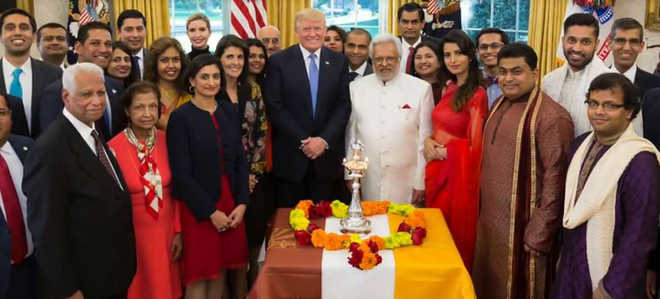
    PM Modi and Trump have declared ties between Washington and New Delhi have “never been stronger”. India is a key component in US plans to contain China. The White House has also pushed Pakistan to combat terrorism.


  • Trump Tax Bill Is Pro-Growth & Pro-People

    Trump Tax Bill Is Pro-Growth & Pro-People

    By Dave Makkar

    After more than three decades, Congress under President Trump, finally passed much-needed and long-overdue tax relief for millions of individuals, families and businesses. While the new tax bill is still not perfect, but it will go a long way in helping individuals, families, small to medium businesses as well as big corporations practically in every sector to be more competitive domestically as well as internationally. Consumers will receive much-needed tax relief and therefore, increase discretionary income. This Tax Bill will create still not too perfect but some what a fairer tax code that will trigger reinvestment in practically every state of America to create more jobs and better wages. This will boost the spending power of consumers and take America on the path of more prosperity, says the author.

    Personally, I have failed to understand the logics of Democrats that the Trump Tax Bill is anti-growth and anti-common person. The fact is this bill is pro-growth and pro-people. There is no doubt that the residents like me of high property and state tax states like New Jersey, New York, California etc.  will be affected to a certain extent because of the $10,000 cap on property tax and state tax deduction but not a whole lot because of the doubling up of standard deduction.

    As an resident of New Jersey since 1996, I can simply say if the property taxes are exorbitantly high; it is the residents that are to be blamed for allowing unionized politicians posing as Republicans & Democrats to govern 8.5 mil people in 8,000 sq. miles with 588 governments with over 10,000 elected/appointed politicians and 660,000 employees with no or little work. Unless the residents revolt to cut down the number of governments, elected/appointed politicians as well as the employees; they will see every year their property and state taxes going up to financially feed the monstrous size 588 governments of New Jersey.

    Democrats are ignoring the fact that about 70 percent of Americans take the standard deduction. Trump Tax Bill has doubled that deduction to $12,000 for individuals, 18,000 for heads of household, and $24,000 for joint filers combined with some more generous 7 tax brackets and rates. It would mean less tax taken from most individuals’ and families’ paychecks. Child tax credit has been increased from $1,000 to $2,000 per child. A portion $1,400 would be refundable. That is, taxpayers could get up to $1,400 back from the government, even if they owed no tax. The Bill also raises the income limit for child credit, so families with higher incomes can qualify. Families also could claim a new, $500 “family” tax credit for non-child dependents. That credit is non-refundable. The Bill would increase the amount that could be contributed to tax-favored ABLE savings accounts, designed to save for the needs of disabled adults and children. Contributions could also make the beneficiary of an ABLE account eligible for the saver’s credit, intended to supplement savings for lower-income people. This Bill also provides a temporary break to low-earning people, applying the lowest, 10% rate to more of their taxable income (individuals would get an additional $200 in income taxed at 10 percent; joint filers would get an additional $400 taxed at that rate). For Tax payers subject to the alternative minimum tax, for individuals the exemption from current first $54.300 has been raised to $70,300. For married couples filing jointly the limit from $54,500 has been raised to first $109,400 of income. Under the new Tax Bill by one estimate, a family of four with an income of roughly $73,000 would save $1,500 each year in taxes. In nut shell under this Tax Bill, it would mean less tax taken from most individual’s and families’ paychecks.

     Lower Property & state taxes deduction: A maximum $10,000 deduction for state and local taxes could be split between property taxes, and either state income or sales taxes. That’s compared with an unlimited deduction in the current tax code is certainly a setback for residents of high property & local tax states. This $10,000 cap applies to both singles and married couples filing jointly, though married people filing separately could deduct a maximum of only $5,000 each. People who run home businesses could still deduct the portion of state and local taxes, including property tax, that applies to that business. Interest on up to $750,000 in mortgage debt on a newly purchased primary home could be deducted; that’s a drop from the $1 million allowed now. The interest on home-equity loans and line of credit would no longer be deductible, regardless of what it’s used for.

    Upper-Middle Class Tax payers/investors with passive income.  Will get a significant tax break on a portion of qualifying income. According to a  research paper authored by 13 tax experts notes, certain wealthy individuals might be able to incorporate themselves and pay tax on interest income at the corporate rate of 21 percent, not the top 37 percent they’d pay as individuals.

    Coming to the rich, the heirs of wealthy people’s surviving spouses would continue to pay no estate tax. The estate tax exemption would double; currently non-spousal heirs would avoid a 40 percent tax on the first $5.49 million inherited from one individual and $10.98 million inherited from two.

    The main villain for the Tax Bill critics “The Corporations”: Their tax rate would drop to 21 percent from a top 35 percent rate; decline of a whopping 40 percent! Also allows fully allowable deductions for capital expenses and lower levies on repatriating overseas profits.

     Real Estate Businesses: can claim a new tax break that’s planned for partnerships, limited liability companies and other so-called “pass-through” entities.

    Technology: U.S. Tech companies are sitting on $3.1 trillion in overseas earnings, according to an estimate from Goldman Sachs. The largest stockpile belongs to Apple at $252 billion – 94% of its total cash. Microsoft, Cisco Systems, Google parent Alphabet Inc. and Oracle round out the top five, data compiled by Bloomberg show. One caveat is that the repatriation provision could generate a large tax bill. In Apple’s case, a 14.5 percent rate would equate to $36.6 billion in taxes, or about $7 a share, according to Bloomberg Intelligence.

    Banks: The earnings of big U.S. banks will be boosted by an average of 13 percent, according to Goldman Sachs. Leading the way will be Wells Fargo (17%) and PNC Financial Services Group Inc. (15%).

    Autos: The industry’s biggest companies, including General Motors and Ford, will benefit from the rate cut and the reduction on levies for repatriating overseas profits, according to UBS.

    Consumer products/retail: Retailers are big winners from the rate cut because many generate all, or at least an overwhelming majority, of their income in the U.S. and pay the highest tax rates of any industry. Most tax breaks and loopholes are not applicable to retail. Total sales from the nearly 3.8 million retail establishments in the United States reached about $2.6 trillion in 2016. Retailers employ almost 29 million, and support more than 42 million jobs in the U.S. That increases the prospect for better wages for existing employees in this sector and more jobs.

    Full and immediate deductions on capital expenditures could allow at least one retailer to not owe any federal taxes the next two years. Aaron’s Inc., which leases televisions and refrigerators to consumers at more than 1,700 stores, will be able to use deductions on buying inventory, which are considered capital investments, to wipe out its tax bill in 2018 and 2019, according to Stifel Nicolaus & Co.

    Chains and consumer brands also expect the tax bill to boost demand for their goods and services. Many of those companies rely on middle- and low-income shoppers for the bulk of their sales, and changes to individual taxes — such as doubling the standard deduction — will increase discretionary income.

    Industrials: In machinery, trucking is likely to see the biggest impact, according to Jefferies. The corporate rate cut would give U.S. transportation companies of all sizes more money to upgrade their fleets with fuel-efficient vehicles. The bill’s increased deductions for capital spending would add another incentive to buy new 18-wheelers, a potential boon for truck makers like Paccar Inc. and Navistar International Corp.

    Energy: oil-and-gas companies will be big winners because they pay the second-highest effective tax rate of any sector, at 37 percent, according to Bloomberg Intelligence. But a number of oil explorers and equipment providers won’t benefit because their operations are unprofitable.

    Hospitals and insurers: The bill is estimated to boost insurance companies’ profits by as much as 15 percent because they pay high rates, according Ana Gupte, an analyst at Leerink Partners.

     Pharmaceuticals: U.S. drug makers will be one of the biggest beneficiaries of the repatriation portion of the bill. They’ve been sitting on billions of dollars in overseas earnings and can now bring home that cash at a reduced rate. Biotech and pharma companies will get a smaller tax credit for developing drugs for rare diseases. Under current law, they can deduct 50 percent of the cost of testing drugs for rare or orphan diseases that affect only small numbers of patients. The revised bill cuts that amount to 25 percent, raising government revenue by $32.5 billion over a decade.

    Chris Martin in his article “Hidden Benefit to U.S. Corporate Tax Cuts: Lower Utility Bills” in Bloomberg wrote that there’s one place where every American may benefit from lower corporate income-tax rates: utility bills. Regulated utilities may pass tax savings on to ratepayers, consumers may get share of estimated 15% cut to utility tax. An average consumer could see a reduction of about 5 percent off their monthly bill, according to Rhame.

    After more than three decades, Congress under President Trump, finally passed much-needed and long-overdue tax relief for millions of individuals, families and businesses. While the new tax bill is still not perfect but it will go a long way in helping individuals, families, small to medium businesses as well as big corporations practically in every sector to be more competitive domestically as well as internationally. Consumers will receive much-needed tax relief and therefore, increase discretionary income. This Tax Bill will create still not too perfect but some what a fairer tax code that will trigger reinvestment in practically every state of America to create more jobs and better wages. This will boosts the spending power of consumers and take America on the path of more prosperity.

    If we want sustained and continuous economic growth and prosperity for all with low levels of poverty, the corporations must come up with a solution for equitable distribution of nation’s economic prosperity by voluntarily defining what should be the maximum or reasonable pay, perks and retirement packages for its executives. Corporations must stop creating high levels of economic inequalities by fraudulently defining the minimum wages for its workers that have if not equal; at least equitable contributions in creating the wealth for corporations and the nation. An Economy of exclusions, gross economic injustice with very high inequalities cannot continue forever because it can bring down the country with a massive class war   between the “Haves” and the “Have Nots”.

    (Data Compiled from various sources)

    (The author is a social activist and is a regular contributor to The Indian Panorama. He can be reached at davemakkar@yahoo.com)


  • Tired Titan: Who, after Modi?

    Tired Titan: Who, after Modi?

    By Virendra Pandit

    Within three years, however, the BJP is huffing and puffing, tired of its own baggage of successes, whereas the much pilloried and humbled Congress is seen as rejuvenating like a fallen Arnold ‘Terminator’ Schwarzenegger being revived by his emergency batteries. If in the early 1960s, India faced the huge question mark, ‘Who, after Nehru?’, and in the 1970s, ‘Who, after Indira Gandhi? the year 2018 has arrived with ‘Who, after Modi?’

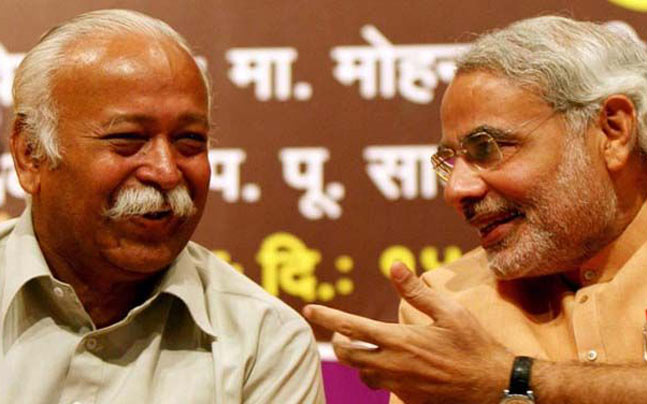
    Bhagwat, who succeeded K S Sudarshan as the RSS chief in March 2009, has been junior to Modi in the Sangh Pariwar hierarchy and seen as the one unable to tame the man who now helms India from 7, Race Course Road in New Delhi. On the contrary, Bhagwat is seen as a Modi-acolyte and many of the RSS subsidiaries—the Vishwa Hindu Parishad (VHP), the Bharatiya Mazdoor Sangh (BMS), Swadeshi Jagaran Manch (SJM) etc.—have, from time to time, raised the standard of rebellion ostensibly against the Government’s failures to deliver on the promises and also, indirectly, against the Modi-Bhagwat stranglehold that may pull down the entire edifice built since the founding of the RSS in 1925. RSS is the “socio-cultural-spiritual” parent of the BJP, its political front, which is part of dozens of organizations having Hindutva ideological affinities with the Grand Master across India.

    In 2014, when Narendra Modi, 64, became India’s 16th Prime Minister, he, and many, believed and boasted that he would continue to helm the affairs at least until 2024, what with the decimated main Opposition party, the Indian National Congress, touching the nadir of its entire political existence since 1885. Managing to win a measly 44 seats, out of 543, in the Lok Sabha (Lower House of Parliament), the corruption-accused, Jurassic Era’s Grand Old Party (GOP) had become laughing stock of the nation. Modi was the flavor of the season, the Knight-in-Shining-Armor, the Messiah…the very God Who Could Do No Wrong…

    The ‘belief’ that the right-wing Bharatiya Janata Party (BJP), led by a ‘youthful’ and energetic Modi as the fulcrum of National Democratic Alliance (NDA), had finally arrived as an effective alternative to the Congress was further buttressed with the BJP winning a series of State Assembly elections across India, replacing the Congress everywhere. Indeed, a gloating Modi himself has been talking about how to make India celebrate the Diamond Jubilee of her Independence in 2022 and, hinting, how he will continue to helm India until 2024!

    Within three years, however, the BJP is huffing and puffing, tired of its own baggage of successes, whereas the much pilloried and humbled Congress is seen as rejuvenating like a fallen Arnold ‘Terminator’ Schwarzenegger being revived by his emergency batteries. If in the early 1960s, India faced the huge question mark, ‘Who, after Nehru?’, and in the 1970s, ‘Who, after Indira Gandhi? the year 2018 has arrived with ‘Who, after Modi?’.

    For, all these three towering leaders, suffering with narcissism, would leave no second line of leaders who could replace or succeed them—but Mother India has been fecund enough to nurture a successor silently, even if via transitional leaders until the NextGen was crowned. So, Lal Bahadur Shastri succeeded Nehru while Indira was by her son Rajiv Gandhi. The Mother could, therefore, be trusted to be silently nurturing a successor to Modi as well! Next year, 2019, he will face the Lok Sabha election with a heavy baggage from the past; and his possible successor, if he loses the elections, is not visible yet!

    But why has this huge question mark emerged in the last few weeks? Has the Modi rhetoric run its course? Has his mystic and charisma seen a steep and sudden decline? Since 2014, he strode like a Colossus across not only India’s political firmament but also globally. He scripted many foreign policy firsts and successes, as millions of Indians looked with amazement at this fashion-designed Prime Minister making India proud both on national and global fronts. What has changed now, and so spectacularly?

    In November 2014, RSS chief Mohan Bhagwat compared Modi with the Mahabharata’s Abhimanyu, Arjuna’s valiant son who knew how to enter a Chakravyuha (the enemy’s phalanx in concentric circles with openings only at opposite sides) but not how to come out of it, and was, therefore, slain by seven Kaurava warriors. Modi, buffeted as he is now encircled by seven enemies, may have stepped into Abhimanyu’s shoes!

    His first enemy is, of course, the Indian economy. Only on January 5, the Central Statistical Organization (CSO) said the country’s growth in economy in 2017-18 slowed down to a four-year low of 6.5%, dragged down by sluggish manufacturing and farm sectors and the impact of the rollout of demonetization and Goods and Services Tax (GST) in the last one year. Clearly, an overall job-loss, farm distress shown by farmers’ suicides, youth unrest and the like have dragged down the people’s confidence in the government’s ability to deliver on its promises. Few, if any, are interested in what Moody’s says about Modi.

    A year on, the double whammy of demonetization and GST have begun to impact politics. In Modi’s home state of Gujarat, the recent Assembly elections left the BJP with, at best, a pyrrhic victory with the saffron party winning only 99 of the 182 seats, lowest since 1995. This steep decline in Modi’s image emboldened the BJP’s own leaders to virtually blackmail the party leadership and extract their pound of flesh! Clearly, the Modi charisma began to fade, first of all, in his own state. Successful event managements, circus-like extravaganzas, and sound-and-light razzmatazz, all at the expense of the exchequer, cannot replace good politics!

    His second enemy is India’s upwardly mobile and irreverent youth, nearly 100 million of them unemployed due to a variety of reasons. While battling for Prime Ministership in 2013-2014, Modi never tired of talking about this ‘demographic dividend’, what with 65% of the voters being in the 18-35-year age-group. He also drafted a series of plans for the youth, gave them dreams to live for and support him. But they remained pipedreams, and turned into nightmares for many. Empty promises disillusioned them, triggered youth rebellion, giving rise to the emergence of a formidable trio of Young Turks—Hardik Patel, Alpesh Thakore and Jignesh Mewani—in Modi’s own Gujarat. Together, they left the BJP with its bloodiest nose in 22 years and produced green-shoots in a Congress that lay comatose for a long time.

    With these three youths, the caste-centric politics of the 1990s has returned to India. This return to India’s basic, chaotic politics is the third enemy of Modi, who seemed to have replaced the Mandal-Kamandal era of the BJP with his own brand of vikas-centric politics that sought to stress on socio-economic development. Due to lack of resources to fund development, his boastful brand of politics collapsed, first of all, in his home state of Gujarat in the December 2017 Assembly elections. The assertive-aspirational politics of the caste-conscious youth, soon, found expression in neighboring BJP-ruled Maharashtra where the Dalits (Suppressed Castes) raised a banner of rebellion against the Upper Castes, they saw as represented by the BJP’s Chief Minister Devendra Fadanavis.

    Modi’s fourth enemy is the coming Assembly elections in eight states in 2018. Three of them are large states—Rajasthan, Madhya Pradesh and Chhattisgarh—and are BJP-ruled for years where the saffron party is expected to face a strong anti-incumbency and reverses. This is due to the BJP evolving itself as an ‘alternative’ to the Congress, i.e. as corrupt! The fourth state, Karnataka, hub of India’s IT revolution, also has little chances of going the BJP way. A caste-based social-re-engineering is now at work across the states and the “vote-banks” of yore are disintegrating everywhere, in the great socio-economic churning current in the cauldron called Modern India. Even the Muslims no longer remain a solid ‘vote-bank” as Muslim women saw in the ‘enemy’ BJP their emancipators, thanks to its support to them on the divorce issue, as evidenced in Gujarat by their large vote for the saffron party!

    With these new emerging trends reshaping Indian politics, Modi’s fifth enemy is the likely revival of the erstwhile United Progressive Alliance (UPA), led by a revivified Congress under a combative Rahul Gandhi. If the BJP fails to win back the major states this year, and with one state slipping after another from the saffron fold, the NDA itself may come apart. Some of its current regional partners may even join the UPA bandwagon. Only a few months ago, the UPA seemed to be disintegrating what with Bihar’s Nitish Kumar joining the NDA; no longer. India’s politics has entered its most mercurial state and equations change quickly.

    His sixth enemy is the overall disillusionment among the people with the political class as a whole. Modi came to power promising Achche Din (Better Days Ahead) and punishment to the corrupt UPA leaders but each one of them have been acquitted by the courts, and they are back hounding and howling at him. The general apathy of the voters for politicians of all hues, including Modi, was demonstrated by over 500,000 people who voted for the “None-Of-The-Above” (NOTA) option in Gujarat. This option, introduced by the Election Commission for the first time in an Assembly election, impacted the outcome in nearly 30 Assembly seats, out of 182, in Gujarat. It harmed both the BJP and the Congress as the number of NOTA votes were, in those 30 constituencies, more than the winning or losing margins.

    And his seventh enemy is from within: the disgruntled Sangh Pariwar (Saffron Brotherhood) and its many constituents. In 2014, the entire Pariwar, with over 25 million workers, had helped Modi climb the steps of Raisina Hills in New Delhi and take oath as the Prime Minister of an aspirational India. Three years down the line, with few results to show on the ground, his promises galore remain hollow, his bravado seems melting away, his 56-inch chest losing muscle. His recent election speeches in Gujarat showed him as a tired titan. Promising a better future, he emerged from Bharat but surrendered to India.

    But it is not Modi, the Abhimanyu, who alone may lose out. His “Krishna”, Mohan Bhagwat, having travelled with Modi so far and shielded him unconditionally, may also face heat from within the RSS rank-and-file for putting all the Hindutva eggs in Modi’s Nehru jacket.

    Their relationship, to say the list, is interesting. Bhagwat, who succeeded K S Sudarshan as the RSS chief in March 2009, has been junior to Modi in the Sangh Pariwar hierarchy and seen as the one unable to tame the man who now helms India from 7, Race Course Road in New Delhi. On the contrary, Bhagwat is seen as a Modi-acolyte and many of the RSS subsidiaries—the Vishwa Hindu Parishad (VHP), the Bharatiya Mazdoor Sangh (BMS), Swadeshi Jagaran Manch (SJM) etc—have, from time to time, raised the standard of rebellion ostensibly against the Government’s failures to deliver on the promises and also, indirectly, against the Modi-Bhagwat stranglehold that may pull down the entire edifice built since the founding of the RSS in 1925. RSS is the “socio-cultural-spiritual” parent of the BJP, its political front, which is part of dozens of organizations having Hindutva ideological affinities with the Grand Master across India.

    In a way, Modi himself may have undermined Bhagwat’s authority. In TV interviews, Modi had boasted in 2014 about his relations with Mohan’s father, Madhukar Rao, thus indirectly hinting that he (Modi) was senior to the Bhagwat Junior in the RSS hierarchy!

    It is this internal dynamics of the RSS that helped bring Modi to power in 2014. And it is this internal dynamics of the RSS that may also defeat him at the hustings in 2019, what with most of the RSS workers remaining aloof from elections, as in Gujarat recently.

    In 2014, the RSS had Modi to support. Who will it support in 2019?

     (The author is a journalist since 1983 and has worked with newspapers, news agencies and magazines in English and Hindi languages. He has contributed articles on diverse subjects. Currently, he is working as Consulting Editor with Business Line, the business daily of The Hindu Group of Publications in India. He is based in Ahmedabad in Gujarat, India. He can be reached at virendra.pandit@gmail.com)

  • Indian American NJ Senator-Elect Vin Gopal to host a Swearing-in Reception on Jan 9

    Indian American NJ Senator-Elect Vin Gopal to host a Swearing-in Reception on Jan 9

    Harinder Panaser, President, Global Haryana Chamber of Commerce, and CEO, Harman Wellness Professionals Inc characterized victories of Indian Americans, like Vin Gopal and Ravi Bhalla, who has been elected Mayor of Hoboken, as indicative of the growing involvement of Indian American community in the political process of the country, which, he said, is good for both the community and the country.

    ASBURY PARK, NJ (TIP): New Jersey Senator-Elect Vin Gopal will host a swearing-in reception on Tuesday, January 9th, 2017 in Asbury Park, in celebration of his official swearing-in as the newest State Senator representing New Jersey’s 11th District.

    Gopal became the first Democrat in 30 years to win the 11th District seat and at 32 years old, will be the youngest legislator in New Jersey’s upper-house. He will take the oath of office on the morning of January 9th at the State House in Trenton.

    “I know taking the oath of office will be one of the proudest moments of my life, and I cannot wait to get to work serving the people of Monmouth County,” Gopal said, “I look forward to personally thanking the supporters, elected officials, and community leaders who have stood by me every step of the way.”

    The Swearing-in reception on January 9, from 7 to 10 PM. at Wonder Bar, 1213 Ocean Avenue, Asbury Park, NJ 07712 will be attended by Assemblywoman Joann Downey, Assemblyman Eric Houghtaling, other local elected officials, and community members.

    Vin Gopal, the former Monmouth County Democratic chairman with deep roots in the party there, defeated longtime state Sen. Jennifer Beck in the state’s 11th legislative district.

    According to unofficial results from the Monmouth County Clerk’s Office, Gopal defeated Beck 28,750 votes to 25,108 votes.

    The Indian American community is really excited at the electoral victory of a large number of their members in the State of New Jersey.

    Harinder Panaser, President, Global Haryana Chamber of Commerce, and CEO, Harman Wellness Professionals Inc characterized victories of Indian Americans, like Vin Gopal and Ravi Bhalla, who has been elected Mayor of Hoboken, as indicative of the growing involvement of Indian American community in the political process of the country, which, he said, is good for both the community and the country.

    Vin is a lifelong Monmouth County resident, born in Neptune Township and raised in Freehold. After earning a Bachelor of Arts from Penn State, he spent years building his business from the ground up and now has 14 employees, based out of his Tinton Falls and Hazlet offices.

    “I’ve felt the crushing burden that over-regulation and red tape can have on a small business in Monmouth County’s local economy. It’s a waste of time and a waste of hard earned dollars. When I get to Trenton, the first thing I promise to do is cut the red-tape and work to get businesses growing and hiring again. Enough is enough.”

    A successful local small-business owner, Vin previously served on the Board of Directors for the now Monmouth County Chamber of Commerce where he chaired the Chamber’s Government Affairs Committee. He is a past-President of the Hazlet Township Business Owners Association and a past-Board member of Big Brothers Big Sisters of Monmouth County. Vin previously served as a volunteer EMT for the Colts Neck and Freehold First Aid Squads, responding to hundreds of 911 emergencies.

  • US votes Obama as ‘most admired’ man

    US votes Obama as ‘most admired’ man

    WASHINGTON (TIP): For the 10th year in a row, Americans have named former US president Barack Obama and Hillary Clinton as the man and woman they admire most, according to a recent Gallup poll published on Thursday, December 28.

    Obama edged out President Donald Trump, 17 per cent to 14 per cent, while former secretary of state Clinton moved past Michelle Obama, 9 per cent to 7 per cent and First Lady Melania Trump scored one per cent, the poll said. Obama wins over Trump, who is suffering brutally low approval ratings as he is about to complete his first year in the White House, came in second place followed by Pope Francis.

    (Source: PTI)

  • Roy Moore Fails to Stop Doug Jones’ Certification as Alabama’s first Democratic Senator in 25 years

    Roy Moore Fails to Stop Doug Jones’ Certification as Alabama’s first Democratic Senator in 25 years

    WASHINGTON (TIP): An Alabama circuit judge on Thursday, December 28, rejected Republican Roy Moore’s request to halt the certification, arguing the court did not have jurisdiction. Meanwhile, officials from the secretary of state’s office dismissed accounts of voter fraud provided by Moore’s attorneys.

    “There have not been any issues at this time that have been reported and determined to be verified as fraud,” said John Bennett, Merrill’s deputy chief of staff.

    Still, Moore, 70, the defiant former chief justice of the Alabama Supreme Court, refused to concede.

    The three Republicans who make up Alabama’s canvassing board — Gov. Kay Ivey, Atty. Gen. Steve Marshall and Secretary of State John Merrill — certified Jones as the victor of the closely watched Dec. 12 special election.

    “I’ve had to fight not only the Democrats but also the Republican Senate Leadership Fund and over $50 million in opposition spending from the Washington establishment,” he said in a statement after Republican state leaders certified Jones’ win. “I have stood for the truth about God and the Constitution for the people of Alabama”

    “I have no regrets,” he added. “To God be the glory.”

    In the 80-page complaint filed in state court, Moore’s attorneys asked that state officials be ordered to preserve election-related documents and data, block the certification, and direct state officials to set a new special election.

    On Thursday, an attorney for Jones filed a motion to dismiss Moore’s complaint on the grounds that “there is a lack of subject matter jurisdiction; [the complaint] fails to state a claim upon which relief can be granted; and/or [it] has no basis in the law.”

    In a statement, a spokesman for the Jones transition team urged Moore to bow out of the race.

    “This desperate attempt by Roy Moore to subvert the will of the people will not succeed,” Sam Coleman said. “The election is over, it’s time to move on.”

    In the complaint, Moore’s attorneys maintain that he will “suffer irreparable harm” if the election results are certified “without preserving and investigating all the evidence of potential fraud.” He would be denied “his full right as a candidate to a fair election,” they argue.

    Merrill, a Republican, maintains his office has found no evidence of voter fraud. Last week, he issued a statement noting that his office had discounted one widely publicized report of potential voter fraud — a viral video in which a male voter claimed in a local news broadcast that he and others had come “all the way from different parts of the country” to vote and canvass for Jones.

    “The Alabama Secretary of State’s Office was able to identify the young man who was anonymously featured on the news broadcast,” Merrill said in a statement. “After additional research was conducted, it was determined that this young man has lived and worked in Alabama for more than one year and is currently a registered voter in this state.”

    Yet Moore’s campaign states in the complaint that Merrill never conducted a “meaningful, in-depth investigation of voter fraud.”

    They also list a series of election “anomalies,” claiming there were an unusual number of out-of-state drivers’ licenses and suggesting that Democrats attempted to intimidate voters, with a Democratic super PAC running “fraudulent, false and misleading advertisements” against Moore.

    “I am looking forward to going to work for the people of Alabama in the new year,” Jones said in a statement. “As I said on election night, our victory marks a new chapter for our state and the nation. I will be an independent voice and work to find common ground with my colleagues on both sides of the aisle to get Washington back on track and fight to make our country a better place for all.”

    Official totals indicated Jones won by 21,924 votes, his margin of victory up to 1.6 percentage points from the previous unofficial total of 1.5 points.


  • Key ally of British prime minister resigns amid porn scandal

    Key ally of British prime minister resigns amid porn scandal

    LONDON (TIP): Key ally of British Prime Minister Theresa May was forced to resign on Dec 20 after an investigation concluded he made misleading statements about pornographic images found on a Parliament computer in his office in 2008.

    Damian Green, who was ousted as first secretary of state, maintains he did not use pornography on his office computers, but he agreed he had not been forthcoming in statements made about the matter in November. A report by May’s Cabinet secretary concluded Green had made misleading statements regarding his knowledge about the indecent images found by police. “I accept that I should have been clear in my press statements that police lawyers talked to my lawyers in 2008 about the pornography on the computers, and that the police raised it with me in a subsequent phone call in 2013,” Green said in his resignation letter, which was made public Wednesday night.

    May said she asked Green for his resignation after the investigation concluded he had not been open about the matter.

    “I have also carefully considered the report’s conclusions in relation to two statements you made on 4 and 11 November which you now accept were inaccurate and misleading,” the prime minister wrote in a letter requesting Green to step aside.  She said he had fallen short of the standards expected of him. “It is therefore with deep regret, and enduring gratitude for the contribution you have made over many years, that I asked you to resign from the Government and have accepted your resignation,” May wrote. Green was a vital political ally who acted as a de facto deputy prime minister and supported May in her difficult Brexit negotiations. His removal will cost her an important supporter as she tries to balance competing visions of Brexit within her Cabinet.

    Green had claimed earlier he was the victim of a smear campaign. The pornography was found on his office computer during a police investigation of government leaks.

    The Cabinet investigation did not yield a conclusion about sexual misconduct allegations writer Kate Maltby made against Green. Maltby said Green had “fleetingly” touched her knee during a meeting in a pub and later sent a suggestive text after a picture of her wearing a corset appeared in a newspaper.

    The cabinet secretary investigation said it was “not possible to reach a definitive conclusion” on whether Green’s behavior with Maltby was appropriate wily, but added that her account was “plausible.”

    Green is among a number of British politicians who have stepped down or been forced out in recent weeks as a wave of allegations of sexual harassment has surfaced. (AP)

  • BJP victory in Gujarat and Himachal Pradesh Assembly Elections Celebrated

    BJP victory in Gujarat and Himachal Pradesh Assembly Elections Celebrated

    HICKSVILLE, NY (TIP): Indian American Community organized a grand victory celebration in Hicksville, Long Island on December 19.

    Jagdish Sewhani, president American India Public Affairs Committee said that people of Gujarat and Himachal Pradesh have out rightly rejected the politics of casteism, appeasement of minorities and corruption.  They have endorsed good governance and voted for development. The proof is that the BJP has been re-elected for a record sixth time in Gujarat.  In Himachal Pradesh they have totally rejected corrupt Congress government and gave BJP a 2/3rd majority.

    Sharing his personal story, Sewhani said when he was growing up in Gujarat, long hours of power cut were norm of the day. Every year there were riots, and workers went on strike. Ever since BJP has come to power they have changed the face of Gujarat. It is the most developed and industrial State of the country. It has set a gold standard of development in the country. Gujarat now has surplus power. It is now riots and strikes free. There is internet even in villages.

    Women members of BJP celebrate victory of BJP in Gujarat and Himachal Pradesh Assembly elections

    Gujarat has reached this development because of a stable and powerful BJP government for nearly last two decades.

    This is the Gujarat Model we need to follow. If we want a developed and powerful India – which is peaceful and strong – the vision of New India that honorable Prime Minister has envisioned, we need a stable and strong government in Delhi for at least for the next three decades.

    BJP members celebrate victory

    India is on its way to Congress Mukt Bharat. BJP/NDA is now in power in 19 states. The credit of victory goes to our dynamic Prime Minister Shri Narendrabhai Modiji, who in last 3 1/2 years has given clean government, set a standard for good governance. India is now marching ahead…. We do not want to be stopped.

    As such we need to work in a mission mode for the 2019 general elections. Our objective should be not only to re-elect BJP, but also target 450 Lok Sabha seats and 50 percent of the popular votes. Such a strong mandate and popular government is essential to accelerate the pace of development march on the path of New India that we all dream of.

    The vision of New India requires uninterrupted power to BJP and Modiji.

    Modiji firmly believes in Politics of Development and Sab ka Sath and Sab Ka Vikas.

    There was lot of excitement in the audience. They were again and again chanting Modi/Modi. The victory celebrations finally concluded with a new slogan of Modiji Jeetega Bhai Jeetega, Vikas Hee Jeetega.

    (Press Release)

  • New Polish PM debuts at summit, seeks better ties with EU

    New Polish PM debuts at summit, seeks better ties with EU

    BRUSSELS (TIP): Poland’s new prime minister was making his debut on Dec 16 at a European Union summit, a first test of whether the Westerneducated former banker can bridge a deepening rift between his right-wing government and Brussels.

    Mateusz Morawiecki, 49, was tapped last week by the leader of the ruling Law and Justice party, Jaroslaw Kaczynski, to replace Beata Szydlo. Her two years as prime minister were marked by bitter conflicts with the EU over migrants, the environment and the state of Poland’s democracy.

    Poland’s current isolation marks a sharp reversal for a country that has seen massive economic development since joining the EU in 2004, which brought it an infusion of EU subsidies and foreign investment and which until 2015 was an increasingly influential voice in European affairs. That growing clout was reflected in the election in 2014 of the Polish prime minister at the time, Donald Tusk, to lead the European Council.

    Tusk leads the two-day EU summit that begins Thursday where leaders are to focus on Brexit, migration and defense.

    While Kaczynski has not explained his reasons for switching prime ministers, party members have suggested one aim was to improve the country’s international standing.

    As a communicator, Morawiecki certainly seems better fitted to the task. He is fluent in English and German, studied at universities in the United States and Germany, and for several years headed the Polish branch of a Spanish bank, Santander experiences that give him a more cosmopolitan air than many in his conservative party.

    Speaking to reporters, Morawiecki appeared conciliatory on Poland’s extensive logging in the protected Bialowieza forest, a point of contention between Warsaw and EU officials. He said that if the EU court rules that the logging must stop, it will.

    But he also made clear he was sticking to his predecessor’s staunch refusal to accept any refugees as part of an EU resettlement plan.

    “I am glad that our approach on refugees is becoming more and more understood in the European Union,’’ Morawiecki said, following a statement by Tusk earlier this week that the EU’s mandatary refugee quota system has been divisive and ineffective. He said his government supports an earlier policy of giving aid to refugees who stay closer to their homes.

    “We want to help people affected by the war on the spot,” he said to reporters in Brussels. “This support is more effective.”

    Yet recent developments in Warsaw will make it hard for Morawiecki to persuade his European counterparts to drop their concerns over the rule of law in Poland.

    In a case that US State Department says raises concerns about media freedom, Poland’s media regulator on Monday fined a private news channel nearly 1.5 million zlotys ($420,000) for what it alleged was unfair reporting during a political crisis last year. The channel, TVN24, is the country’s key source of independent television news. Lawmakers last week also passed two new laws regulating the Supreme Court and the National Council of the Judiciary, a body that appoints judges, giving the ruling party control over both institutions. At the Supreme Court, the retirement age for judges was lowered from 70 to 65, which will force the immediate retirement of some 40 per cent of more than 80 judges allowing the president, a party ally, to name their replacements.

    Law and Justice says it is seeking to purge the justice system of old communist holdovers and corrupt judges out of touch with regular people. Europe’s top human rights body, the Council of Europe, disagrees, and said aspects of the laws bear similarities to the Soviet judicial system.

    Morawiecki says he fully backs the changes. A former anti-communist dissident, he said recently some judges still working had passed judgments on his fellow activists in the 1980s.

    In Brussels, he said, “Europe should be a Europe of sovereign states who should have the right to reform their justice systems.” (AP)

  • Prior to upcoming visit by PM Modi, USINPAC does outreach with the Trump Administration

    Prior to upcoming visit by PM Modi, USINPAC does outreach with the Trump Administration

    WASHINGTON (TIP): As part of its ongoing strategic dialogue at Capitol Hill, The US India Political Action Committee (USINPAC) held a meeting with members of the Trump-Pence administration. Key participants at the dialogue were Raju Chinthala, USINPAC Indiana Chair, who met with Micheal Cutrone, the Special Advisor to the Vice President for South and Central Asia and Mr. Paul Teller, the Special Assistant to the President for Legislative Affairs. In light of the upcoming visit of Indian Prime Minister Narendra Modi to the nation and his meeting with President Trump, USINPAC was keen to provide valuable insight on matters pertaining to Indian Americans.

     This will be Prime Minister Modi’s first to Washington under the Trump administration. Unlike his past meetings this current visit will be singularly focused on bilateral relations. The Modi-Trump meet also comes at a time when the H1-B visa program is under intense scrutiny and President Trump has announced to withdraw from the Paris Climate Accords last week. President Trump had then called out India and China for being some of the world’s biggest polluters and had alleged that under the Climate accord the US would have to pay India ‘billions and billions of dollars.’ The Indian government is looking forward to smoothening out any wrinkles with the new administration, regarding immigration reform and reaffirm the US-India partnership in the spheres of international diplomacy and Defense & Security in the region.

     Press Secretary Sean Spicer, in a press briefing announced: “President Trump looks forward to discussing the ways to strengthen our ties between the United States and India and advancing our common priorities fighting terrorism, promoting economic growth and reforms and expanding security cooperation in the Indo-Pacific region.”

     Raju Chinthala remarked, “We had a very cordial and productive meeting with the Trump-Pence administration on various domestic and international issues. USINPAC will continue to develop dialogue between the US and India to strengthen our alliance and take it to the next level.”