TORONTO (TIP): “As Prime Minister Carney says, we are in the midst of a rupture, not a transition. That means we must move quickly to deepen and enhance partnerships in every corner of the globe and use the natural advantages and resources we have to build Canada Strong.
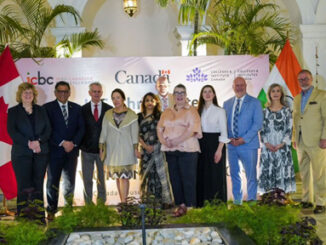
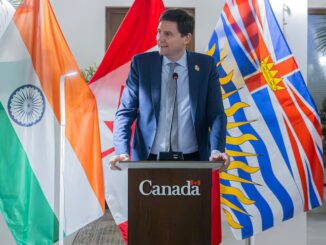
“As one of the largest and fastest-growing economies in the world, India is looking to us as a potential supplier of energy and minerals. I am pleased to work with India to build partnerships that advance bilateral trade and investment, global energy security, and the clean energy transition and generate revenue in Canada that we can use to pay for the public services we rely on. This is what being an energy superpower looks like,” says Tim Hodgson, Canadian Minister of Energy and Natural Resources, at the conclusion of his trip to India, where he attended India Energy Week and met with leaders of major Indian energy companies and his Indian counterparts to discuss opportunities to deepen bilateral trade and investment.
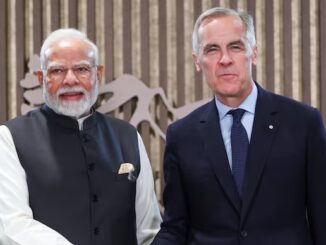
He is the third Canadian minister, after Anita Indira Anand and Maninder Singh Sidhu, to visit India during the past few months. Canadian Prime Minister Mark Carney is also expected to visit India in the coming months.
As Canada diversifies trade and attracts new investment to build the strongest economy in the G7, he says, “We are prioritizing broad engagement to maximize opportunities for our industries. That includes building new and enhanced relationships with Asian markets seeking long-term, reliable collaboration in energy and critical minerals.
“As one of the world’s largest economies, India is expected to have the largest growth in global energy demand from now through to 2030—offering a significant opportunity for Canada to supply Indian partners and customers with world-class, low-cost, low-carbon Canadian resources,” he said.
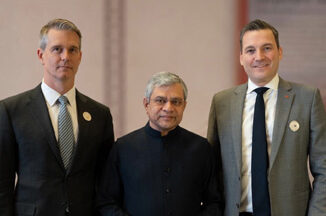
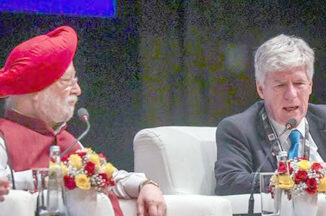
During India Energy Week, Minister Hodgson relaunched the Canada-India Ministerial Energy Dialogue (CIMED) alongside Hardeep Singh Puri, India’s Minister of Petroleum and Natural Gas, and endorsed the CIMED Action Plan. These initiatives mark a crucial first step for Canada toward a long-term, collaborative bilateral relationship with India that will serve as an important channel for sustained discussions on advancing Canada–India energy projects, potential long-term supply agreements, joint ventures, business-to-business deals, and targeted investments.
Minister Hodgson also met Piyush Goyal, India’s Minister of Mines, in New Delhi following his participation in India Energy Week. The two ministers agreed to formalize Canada and India’s cooperation on critical minerals in the coming weeks, including a high-level Indian government and industry delegation coming to the Prospectors & Developers Association of Canada Convention in Toronto in March 2026.
There is strong alignment between India’s ambitions and Canada’s push to begin building major energy and natural resource projects again, including LNG and recent investments under the G7 Critical Minerals Production Alliance. Rebuilding Canada’s relationship with India is key to achieving the Prime Minister’s goal of doubling exports to non-U.S. markets by 2035.
Canada has what the world wants, from conventional and clean energy to critical minerals, and we are leveraging these strengths to build partnerships with major global players—creating economic opportunities at home to foster our position as an energy superpower worldwide. Recognizing the opportunities for enhanced economic cooperation, Canada’s participation in India Energy Week continues positive momentum and bilateral engagement with India toward more reliable supply chains and strategic stability, for the benefit of both countries.
(Prabhjot Singh is a Toronto-based Senior Journalist. He can be reached at prabhjot416@gmail.com)
NEW DELHI/TORONTO (TIP): Energy ministers of India and Canada have reaffirmed the immense importance that energy security and diversity of supply have in the safety, well-being, and economic vitality of both countries. They held a bilateral meeting last week and launched the renewed Canada-India Ministerial Energy Dialogue.
Indian Minister of Petroleum and Natural Gas of India, Hardeep Singh Puri, and Canadian Minister of Energy and Natural Resources, Timothy Hodgson, participated in India Energy Week 2026 (IEW’26) in Goa, marking the first high-level participation of a Canadian Cabinet Minister at IEW.
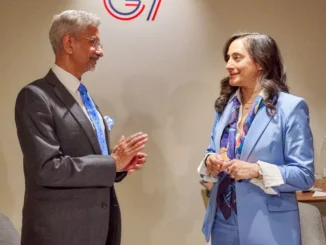
The Goa meeting was a follow-up to the direction provided by the prime ministers of the two countries during their interaction on the sidelines of the G7 Summit, held in June 2025 in Kananaskis, where they underscored the importance of restarting senior ministerial as well as working-level engagements.
Natural Resources Canada and India’s Ministry of Petroleum and Natural Gas recognized the complementary nature of their energy sectors and the mutual value to be gained from sustained engagement on energy matters.
Canada has stated its goal of becoming an energy superpower in clean and conventional energy, with export diversification as a priority, while India, as the epicenter of the global energy landscape, offers a natural and symbiotic partnership grounded in scale, stability, and long-term opportunity.
Canada has current and emerging liquefied natural gas (LNG) projects, is increasing production and exports of crude oil to markets in Asia via the Trans Mountain Expansion (TMX) Pipeline, and is advancing liquefied petroleum gas (LPG) exports to Asia via the west coast of Canada. At the same time, India, being the world’s third largest oil consumer, fourth largest LNG importer, third largest LPG consumer, and having the fourth largest refining capacity, is projected to remain at the center of the global energy landscape, accounting for over one-third of the growth in global energy demand over the next two decades, the largest contribution by any country.
Even efforts are underway in India to substantially scale up domestic oil production, significantly expand refining capacity, and increase the use of natural gas in the energy mix. Thus, India and Canada have significant potential to emerge as strong collaborators in the area of energy fuels. In this context, the ministers affirm to deepen bilateral energy trade, including the supply of Canadian LNG, LPG, and crude oil to India and the supply of refined petroleum products from India to Canada.
The ministers recognize the importance of joint commercial and investment partnerships in each other’s energy sector. Canada is acting quickly to build energy projects and supply products to international markets, with Asia as a priority region. In 2025, the Government of Canada launched the Major Projects Office and announced the acceleration of several energy and resource projects and strategies, representing more than $116 billion in investments.
India is also investing heavily in its own energy supply and prosperity. India highlighted the various policy reforms undertaken, including the huge investment opportunity of US$ 500 billion in the overall value chain of the energy sector. Recognizing this, the ministers agreed to deepen long-term partnerships aimed at facilitating increased reciprocal investment in the Canadian and Indian energy sectors.
The ministers also recognized the importance of climate-related objectives. This includes efforts to reduce emissions in conventional energy value chains, including through carbon capture utilization and storage, and support for the development and deployment of cleaner technologies as energy demand grows. Recognizing that there exists a huge potential for cooperation in clean energy value chains, the ministers noted the opportunities for collaboration in renewable energy, including hydrogen, biofuels, and sustainable aviation fuel; battery storage; critical minerals; clean technologies; electricity systems; energy supply chain resilience; and the application of artificial intelligence in the energy sector.
The ministers noted the ongoing collaborative efforts to advance the global energy transition via the global development and deployment of biofuels through the Global Biofuels Alliance (GBA), where Canada is an observer.
Building on the deliberations, both sides affirm:
The importance of energy security and diverse energy supply chains. Canada, as a safe, secure, and reliable supplier, and India, as a major consumer, can act in partnership to deepen trade and ensure stable and secure energy supplies. Canada and India will collaborate to promote and strengthen cooperation across trade in the energy sector, including services.
Their commitment to continued government-to-government dialogue and cooperation, such as through the Canada-India Ministerial Energy Dialogue, and regular and ongoing expert collaboration.
The intention is to work in partnership to support meaningful business-to-business, or business-to-government, collaboration across the value chain.
Their mutual intent is to continue supporting work through bilateral and multilateral mechanisms, as well as with industry partners, to support climate objectives for the benefit of the global community.
(Prabhjot Singh is a Toronto-based Senior Journalist. He can be reached at prabhjot416@gmail.com)
TORONTO (TIP): The fear of extortion continues to escalate as the local, provincial and federal agencies continue to grope in the dark without finding any substantial solutions to the problems that have been spreading their tentacles to communities across Canada, especially those with a significant Indian immigrant population.
The worst hit are the affluent members of the Indian community in general and the Sikhs in particular.
Extortions, which have been a rising concern for years, continue to rock meetings of city councils, provincial assemblies, and the national Parliament, the House of Commons.
The problem has been in the public domain that after a series of town hall meetings, debates and deliberations, those allegedly behind the rattling crime have started spreading the terror by making the shocking videos of their actions viral. The other day, a video of a man shooting up a Brampton home while brandishing two pistols allegedly went viral. It sent shock waves among members of the Indian community.
A recent report in a major tabloid of Toronto said that extortion was a “story of people being threatened with violence, like the shooting, or arson to the business or home, if they do not pay up. While the shootings and other acts of violence are carried out by hired local thugs, the money is often wired to organized crime groups in India. While the notoriously vicious and violent Bishnoi gang in India has claimed responsibility for some of these extortion rackets, there are other groups and copycat outfits involved.
“In the Brampton incident earlier this month, the shooting was recorded by an accomplice of the gunman and then sent to the homeowner the next day with a demand for $500,000. While Brampton and the surrounding area are a hotspot for this activity, it’s also been a problem in Winnipeg, Edmonton, and British Columbia’s Lower Mainland,” the report said.
After the Brampton City Council and Mayor urged the Federal Government to declare it a national crisis. Now, the city council of Surrey in BC, headed by Mayor Brenda Loc, passed a unanimous motion calling for a national state of emergency and for strong action by the federal government after 35 extortion incidents since the beginning of the year.
“Surrey is facing a serious and growing crisis of organized extortion, intimidation, and targeted shootings,” Locke said. “Residents and business owners are living in constant fear. Public safety is at risk, and the social and economic impact is real.”
She wants additional police resources, suggesting a joint federal-provincial-municipal task force and expedited deportation of “non-citizens charged or convicted of extortion, firearms offences, or participation in extortion-related criminal activity.”
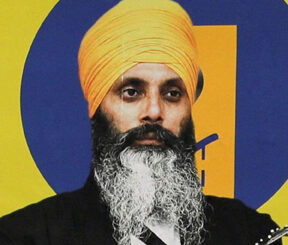
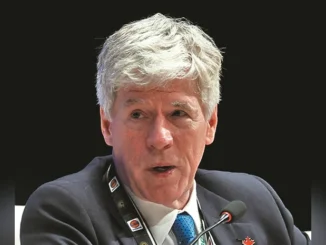
On return from his India visit, British Columbia Premier David Eby went after the head of a police anti-extortion task force. After his interaction with Indian media in Mumbai, where he found himself in a piquant situation when asked repeatedly about the Hardeep Singh Nijjar case, Eby said that the head of the anti-extortion needed to step aside if he could not demonstrate a sense of urgency in the fight. His remarks about RCMP Assistant Commissioner John Brewer come a day after Brewer repeatedly declined to characterize a wave of extortion-related shootings in the Lower Mainland as a crisis.
Soon after, the premier said that Brewer’s comments “cut at public confidence” and he needed to clarify himself. “If Mr. Brewer does not feel that urgency, does not feel this is a crisis, perhaps he’s not the right person to head up this task force,” Eby said, maintaining that “the reason we established this task force … was to respond to a crisis. We need them to bring that urgency to this job and to do it quickly and effectively for the people of Surrey and the people south of the Fraser,” the premier continued. “That is what they expect, that is what they demand, and that is what I expect.”
A few days earlier, Brewer, in an update on the work of the B.C. extortion task force, held that it was “actively hunting” suspects in 32 files across the Lower Mainland. But he would not describe the situation as a crisis after being pressed to do so in a news conference. Police were “actively hunting” those who were extorting businesses and individuals in B.C. John Brewer urged residents not to take matters into their own hands. This statement came as a sequel to yet another shooting in Surrey, which was believed to be linked to extortion.
There have been instances when victims reportedly retorted and fired back at the extortionists. Interestingly, Brewer apologized for not using the term “crisis” in his news conference and said the opportunity to provide an update had instead called the RCMP’s commitment into question and impacted public confidence.
The issue has been rocking the House of Commons, which resumed its sitting after the holiday break on Monday.
Conservative Deputy Leader Tim Uppal said that Canadians were living in fear in their own neighborhoods as extortion runs rampant right across the country. In British Columbia alone, extortion has increased by nearly 500%, yet the Liberals continue to ignore this crisis, so much so that the Surrey city council desperately passed a unanimous motion to ask the government to take some action. Canadians do not need more empty announcements or more meetings and town halls. Canadians need action. Why was the government ignoring the safety of Canadians? When will the Liberals finally work with us to bring in mandatory minimum sentences for extortion to help protect Canadians? he asked.
Responding to Tim Uppal, Minister of Justice and Attorney-General Sean Fraser admitted that extortion was a real and pressing problem in this country and that members had an opportunity to do something about it. Laws are being debated in Parliament right now that would make it harder for people charged with extortion-related offences to be released on bail, that would result in deeper and longer sentences for people who are convicted of extortion, and that would give new tools to law enforcement, who are asking the House to pass the strong borders act on lawful access so they can investigate, charge, and prosecute criminals. The thing that these different measures have in common is that the Conservative Party of Canada has been obstructing them for months. I ask them to get with the program, support these important bills, and bring extortion to an end in Canada.
Conservative MP Harb Gill from Windsor West, while joining the debate, said that as a former police officer, “I know a crisis when I see one. Extortion is out of control. Businesses and families are being threatened, shot at, and shaken down daily, yet the Liberals deny there is a crisis. They are dragging their feet. Some municipalities are even asking for a state of emergency to be declared. When will the government stop its hug-a-thug policy, work with Conservatives, restore mandatory minimums, and repeal the catch-and-release laws? For crying out loud, do something about this crisis.
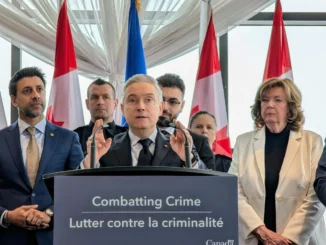
Ruby Sahota, Secretary of State, Combatting Crime, intervened to say that in this country, we have life in prison for extortion and mandatory minimum sentences when extortion is committed by organized criminals or with a firearm.” We are taking this issue very seriously. That is why I have crisscrossed the country, finding out what is needed and where the gaps are. Everywhere I have gone, police and law enforcement agencies have asked for lawful access. That was the second measure that we brought to Parliament, but the Conservatives have been obstructing it every step of the way. What do they have against catching extortionists?
Another Conservative MP, Amarjeet Gill from Brampton West, held that extortion was “exploding and terrorizing communities across Canada, such as Brampton and Surrey. Homes and businesses are being threatened and shot at. Families are living in fear. Some residents have recently fled the country. Their families are in fear for their lives. This crime surge cannot become the new normal. Canadians are paying the price, but Canadians deserve safety, not excuses. When will the Liberal government take real action to stop extortion, crack down on organized crime, and keep Canadians safe?
Veteran Affairs Minister Jill McKnight said that the rise in “extortion-related threats, shootings, and intimidation across Ontario and the Lower Mainland is a grave concern. I know how much fear it is causing for families, businesses, and our communities. Our government is advancing expanded legislative powers so that law enforcement has the tools it needs to effectively combat extortion and organized criminal networks. Political opponents in Surrey put aside their differences to act with quick urgency. I am asking their Conservative counterparts to stop obstructing necessary legislation and work with us to provide practical solutions. Our communities need to feel safe at home,” he said.
(If space permits, please carry the full introduction of Prabhjot. If not, please print the following)
(Prabhjot Singh is a Toronto-based Senior Journalist. He can be reached at prabhjot416@gmail.com)
Inderjit Singh Bindra, IAS Retd. and a former BCCI president has passed away aged 84 in New Delhi. Prabhjot Singh, a former Sports editor with The Tribune who has had a long association with Mr. Bindra pays him his tribute.
Inderjit Singh Bindra, the visionary administrator who transformed Indian Cricket and Punjab’s sports landscape passed away at 84 in New Delhi.
He was not only a doyen of Indian cricket, an administrator par excellence who commanded respect across multiple institutional domains, but also a gentleman, a keen golfer, a wonderful human being, and a trustworthy friend whose prime love was sports.
Inderjit Bindra and cricket were like two sides of a coin. No history of this modern-day sport would ever be considered complete without a substantial recognition of the immense contribution of this rarest of rare bureaucrats who served the Punjab Government after joining his parent cadre in 1966. (He had a brief stint as an IPS officer before getting into the elite service.)
He was a bureaucrat with a difference. Known for his quick decisions, he belonged to the rare band of civil servants who left little or no pendency files at the end of the day. In his death, Punjab has lost one of its illustrious sons, an administrator par excellence and a custodian of institutional integrity.
I had a very long association with him. When the Punjab Cricket Association Stadium (PCA stadium) was coming up, I used to accompany him on his evening “inspection-cum-evaluation” walk around the complex. He would follow the progress meticulously and hold regular meetings with both the architect and the construction company. No Deadlines were compromised.
He always took his criticism well. As captain of the Chandigarh Golf Club, he ordered the chopping off of the green tops of most of the trees. I came out with a front-page story in The Tribune, “Killing trees for their sport.” The next morning, when he called me, I told him that my respect notwithstanding, his action of wreaking havoc with the ecology could not be ignored in the public interest. He, instead of getting agitated, agreed with me to admit that it was a “wrong decision” and “chopping off green tops could have been avoided.” He kept his promise throughout, even while the PCA Stadium was being constructed. He was a regular at the golf club, where his immediate playmates used to be flying Sikh Milkha Singh and bureaucrat RS Mann. He was one of the first few to use a cart on the course.
Better known as a cricket administrator, he not only transformed a mediocre Punjab team into prestigious national Ranji Trophy champions but also brought the sleepy township of Sahibzada Ajit Singh Nagar—Mohali—on the world map with one of the best cricket stadiums, the PCA Stadium. In fact, if Punjab could renovate, upgrade, and modernize its sports infrastructure after the reorganization of the state in 1966, it was all because of his astute planning and farsightedness.
Not many would know about his love for sports other than cricket. Convinced that the public sector undertakings have a social role to play, he conceived, planned, and raised a hockey team in the public sector. Led by then Olympian—now an MLA from Jalandhar Cantonment—Pargat Singh and coached by international Sukhvir Singh Grewal, the team under the banner of Punjab Alkalis and Chemicals brought laurels to the state by winning several prestigious tournaments. His experiment of using public sector undertakings for checking sports drain from the state did not survive for long. The Alkalis team was disbanded after he was shifted from the Industries Department. This team had given Punjab and the country several outstanding players, most of whom later got absorbed into the Punjab police.
Inderjit Singh Bindra belonged to a vanishing category: the senior administrator who commanded respect across multiple institutional domains and whose work transcended the narrow bounds of his formal portfolio. Few civil servants transition successfully into sports administration at such rarefied levels; fewer still leave an indelible institutional legacy in both spheres.
KBS Sidhu, also a retired civil servant, while paying tribute to his senior colleague, wrote that Punjab has lost not merely a cricket administrator but a custodian of institutional integrity. India has lost a figure whose strategic vision helped position the nation as a cricketing superpower. And the broader world of cricket governance has lost one of its architects—a man whose tenure in positions of authority coincided with cricket’s globalization and the assertion of non-Anglo spheres of influence over the sport’s direction.
“Bindra’s death marks the conclusion of an extraordinary institutional career spanning more than four decades, during which he moved seamlessly between the senior echelons of the civil service and cricket administration, bringing to both spheres a rare combination of decisive leadership, legal acumen, and entrepreneurial vision,” wrote KBS Sidhu.
“My memories of Mr Bindra are still vivid and fresh in my mind. It was he who got the infamous Chaura Bazar of Ludhiana cleared of its encroachments. He refused to bow under any pressure,” recalls Dronacharya hockey coach Baldev Singh of Ludhiana, who incidentally figures in the list of recipients of Padam Shri this year.
During his career as a civil servant, Inderjit Bindra held several prestigious positions, including as Deputy Commissioner of Ludhiana from 1972 to 1974 and Patiala from 1975 to 1975, during which he established a reputation for swift, legally sound decision-making and administrative efficacy.
When the Rajiv-Longowal accord was reached in 1985, wherein a provision was made to transfer the administrative control of Chandigarh to Punjab, Inderjit Bindra’s reputation as administrator par excellence made him the automatic choice for the position of Administrator of Chandigarh. Not only the merger of Chandigarh, but the whole accord was subsequently cold-shouldered.
He was a bureaucrat who remained glued to the happenings in the state. Between 1982 and 1987, when Punjab was going through its critically turbulent times, he was positioned as Special Secretary to the President of India, Giani Zail Singh.
He probably had the first-hand account of events leading to both Operation Blue Star (June 1984) and the subsequent assassination of the then Prime Minister Indira Gandhi (October 1984), as he played a delicate balancing act between the president and the new prime minister, Rajiv Gandhi, while the country witnessed unprecedented violence, the worst after the 1947 partition. The violence was heaped on a minority to which he and the president belonged. At this crucial juncture, Inderjit Bindra played the role expected of a mature bureaucrat to maintain the institutional equilibrium so that constitutional propriety and political stability were not impacted by the rising tensions and sectarian violence.
Coming to his passion, cricket, Inderjit Bindra set for himself the arduous task of reviving and rejuvenating the game in the state. He not only brought together some of the promising youngsters after some stalwarts like Bishan Singh Bedi, the Amarnath brothers, and Madan Lal had packed their bags and moved to Delhi and other cricketing centers, but he also tried to rectify the poor institutional management and the absence of competitive infrastructure. He initially built a team with MP Pandov and GS Walia as his working hands.
In 1978, he formally took over as president of the Punjab Cricket Association. Punjab started quickly ascending on the national scene and climaxed in 1992-93 when the state won for the first time the prestigious Ranji Trophy title. A state that was still then known for its supremacy in hockey, football, athletics, and other sports had arrived on the cricket scene as well.
Besides upgrading the existing infrastructure, including Gandhi Park in Amritsar and Burlton Park in Jalandhar, the PCA sent money for modernizing its infrastructure; it was his vision that saw the Punjab Cricket Association coming up with a world-class facility at Mohali. As a tribute to his yeoman service to the game, the PCA stadium was named after him after he formally retired from his active association with the administration of the game in that state in 2014.
Inderjit Bindra is credited with marketing sport in a big way. It was he who roped in big companies for the live telecast of the game at various levels. Beyond tournament hosting, Bindra played a pivotal role in television rights monetization. He recognized, with prescient clarity, that satellite television represented an unprecedented revenue opportunity for Indian cricket. His tenure as president (1993-96) marked a period of administrative and financial rejuvenation of the BCCI that made it the cash-rich sports body of the country. It was he who played a stellar role in pulling the World Cup Cricket out of England to bring it to India and South Asia through the 1987 Reliance Cup. In 1996, it was India, Pakistan, and Sri Lanka that played joint host to the World Cup, all because of his coordination and efforts.
He never worked for honors and awards. Commitment and perfection were his passions, as he was a man who never compromised and always stood by people he liked and admired.
(Prabhjot Singh is a Toronto-based senior journalist. For a better part of his journalistic career, he worked at The Tribune, Chandigarh, from where he retired as Sports Editor of the publication)
Would you believe that in 1947, the price of gold in India was around ₹88 per 10 grams, while silver was ₹107 per kg? Petrol sold for about ₹0.25-0.27 per liter, rice for ₹0.12 per kg, milk for ₹0.12 per liter, and potatoes for approximately ₹0.25 per kg.
The 24C gold price per 10 gm from 1940 to the present day reflects our fiscal management. Do we have any explanation for the surge between 2010 and 2025? Starting with 1940, it was Rs 36; 1950—Rs 98; 1960—Rs 112; 1970—Rs 185; 1980—Rs 1300; 1990—Rs 3200; 2000—Rs 4400; 2010—Rs 18500; 2020—Rs 48000; 2025—Rs 150000 (as of October 2025).
These figures, taken from the web, have a story to tell. Are we happy with the progress we have made since we became a republic? Many would argue about what gold prices have to do with the progress the country has made. True, gold prices are not the sole criterion for judging a country.
While gold reserves depict the fiscal health of a nation, marketable crude or fuel indicates the energy available to the people of a nation to progress. Gold has gone up from Rs 88/10 gm, and petrol has, during the same period, reached Rs 100/liter. Does it make an argument?
In 77 years, we as a nation are still not able to claim that we have made quality or potable drinking water available to our population. Water, unlike gold or crude, is a necessity. You can survive without gold or even crude, but not without drinking water. Then how do we measure the progress we have made since Independence, especially when potable water is still out of reach of a substantial section of the population, especially in rural and remote areas? Women in remote and rural areas walk several km to bring home a bucket full of water from the nearest unregulated source.
Do the changes in nomenclature or new names to old historic cities or the rechristening of the laws make a meaningful change to the lifestyle of people? Does it help people get better and affordable healthcare or quality and affordable education at their doorstep?
We need to do a lot of introspection and focus on common man-related issues rather than talking big. Yes, we may soon be the third-largest growing economy, and we must not forget that problems grow with the population. We will soon be the world’s most populous nation! And like providing potable drinking water, we have also failed to check the growth of our population.
TORONTO (TIP): A high-powered British Columbia delegation led by Premier David Eby has been concentrating on business and technological cooperation with India rather than getting trapped in politics and straying away from its main objective of ensuring the standard of living of its people is not impacted by the U.S. trade war.
Midway on its six-day Indian sojourn, David Eby and his team members may be patting their backs at the grounds they have covered by advancing key partnerships with government and business leaders in Bengaluru, Karnataka, India’s largest innovation Center, to attract investment, foster collaboration in innovation, and build long-term relationships.
These partnerships will help B.C.’s technology and life-sciences sectors pursue joint opportunities that leverage B.C.’s research excellence and Karnataka’s deep pools of engineering talent, entrepreneurship and global scale. In Bengaluru, a letter of intent (LOI) was signed between the Province and the state government of Karnataka. The LOI expresses mutual interest to collaborate in life sciences, biotechnology, medical technology, medical devices and digital health.
“B.C.’s technology and life sciences businesses are second to none, and in the face of U.S. tariffs, we are strengthening our economy by deepening trade and investment relationships with diverse, reliable partners,” Kahlon said. “Bengaluru is the tech capital of India. Its rapid growth and innovation ecosystem make it an important partner for B.C.’s emerging sectors. These relationships create new opportunities for collaboration, investment and shared success.”
After meeting with officials in Bengaluru, it was agreed to share research and collaboration between Bengaluru and B.C. companies, and foster relationships and investments between Bengaluru and B.C. In addition, a delegation from Bengaluru agreed to explore travelling to Web Summit Vancouver 2026.
Critics of the trade mission have been skeptical of a warming relationship with India, years after former prime minister Justin Trudeau talked in the House of Commons about credible allegations that Indian agents were linked to an extrajudicial killing of Sikh activist Hardeep Singh Nijjar on Canadian soil in 2023.
Nijjar was a known advocate for an independent Sikh state called Khalistan. Back home, pro-Khalistan groups of Sikhs accused Eby of choosing trade interests over justice for Nijjar in a statement before he left for India. India’s government has denied ordering extrajudicial killings in Canada. Four men, all Indian nationals who arrived in Canada several years ago, have been accused of carrying out the killing of Nijjar.
Eby expressed support for the trial process currently underway in that case, saying there was a need to ensure justice for Nijjar and for the community.
Amid a spike in extortion-related crimes in B.C.’s Lower Mainland in the first two weeks of 2026 — with 16 reports of extortion in Surrey in the first fortnight of the New Year — Eby also said that the province’s extortion task force would provide an update to the community next week. He said there have been important developments in dealing with the rash of extortions — including deportations, an arrest in India and co-operation between Canadian and Indian law enforcement agencies. “But bluntly, we need better results. We need to see more arrests, and whatever we can do to support the police to be able to get the job done, we will do so,” he told the media in Mumbai.
“At the same time, we can’t sit around while our standard of living is eroded and our economy is eroded by the decisions of the president of the United States,” Eby said, in reference to the U.S. trade war. “India is going to be the third largest economy in the world, and Canadians and British Columbians will only benefit from a close relationship with India, ” said David Eby at a media conference.
The BC Government had claimed ahead of the Indian trip that B.C.-origin goods exports to India were worth $1.3 billion in 2024, while Kahlon said B.C. had “the highest share of exports to India of any province.”. David Eby and Ravi Kahlon will be in India till January 17, making stops in New Delhi and Chandigarh to meet with government and business leaders.
The president and CEO of the Business Council of British Columbia, Laura Jones, says India is a big market that could help diversify growth in the local economy.
Ravi Kahlon, during his meetings with business and industry leaders, strengthened partnerships in Karnataka, India’s Silicon Valley, to advance collaboration in life sciences, technology and innovation. Roundtables with B.C. and Indian companies identified opportunities for trade and investment, and the promotion of Web Summit Vancouver 2026 positioned B.C. as a global tech hub. He advanced key partnerships with government and business leaders in Bengaluru, Karnataka, India’s largest innovation Center, to attract investment, foster collaboration in innovation, and build long-term relationships.
These partnerships will help B.C.’s technology and life-sciences sectors pursue joint opportunities that leverage B.C.’s research excellence and Karnataka’s deep pools of engineering talent, entrepreneurship and global scale. In Bengaluru, a letter of intent (LOI) was signed between the Province and the state government of Karnataka. The LOI expresses mutual interest to collaborate in life sciences, biotechnology, medical technology, medical devices and digital health.
“B.C.’s technology and life sciences businesses are second to none, and in the face of U.S. tariffs, we are strengthening our economy by deepening trade and investment relationships with diverse, reliable partners,” Kahlon said. “Bengaluru is the tech capital of India. Its rapid growth and innovation ecosystem make it an important partner for B.C.’s emerging sectors. These relationships create new opportunities for collaboration, investment and shared success.”
India’s scale, talent pool and fast-growing technology sector create major opportunities for joint innovation that complements B.C.’s world-class strengths in life sciences and technology. Together, B.C. and Karnataka offer highly compatible innovation ecosystems that can accelerate growth for both regions.
“Global collaboration drives commercial success in life sciences,” said Wendy Hurlburt, president and CEO, Life Sciences BC. “Strengthening trade and investment ties with high-growth markets like India, one of the world’s largest economies, is critical to accelerating innovation, scaling our companies internationally and ensuring the long-term competitiveness of Canada’s life-sciences sector.”
In Bengaluru, Kahlon met with Sharath Kumar Bache Gowda, chairman of Karnataka State Electronics Development Corporation Limited (KEONICS). Discussions focused on expanding economic collaboration between B.C. and Karnataka’s life sciences, technology and innovation ecosystems.
Kahlon also held roundtables with B.C. companies doing business in India, including Telus Digital Services, Lululemon, Earth Daily Analytics and Yactraq Online, to discuss accomplishments, opportunities and challenges to operating in India, and potential supports from the Province. Kahlon also called on Indian technology companies to position B.C. as a global hub for innovation and technology, and to promote Web Summit Vancouver 2026 as a gateway for international collaboration. The discussion further strengthened ties with India’s fast-growing technology sectors, and showcased B.C.’s strengths in academic-industry leadership, government support programs and innovation ecosystems.
It was agreed to share research and collaboration between Bengaluru and B.C. companies, and foster relationships and investments between them. In addition, a delegation from Bengaluru agreed to explore travelling to Web Summit Vancouver 2026.
The agenda of the visit supports British Columbia’s Look West industrial and economic plan, and aligns with its trade diversification strategy, which focuses on delivering major projects more quickly, diversifying markets and growing targeted sectors, such as technology, life sciences, aerospace, marine, artificial intelligence (AI) and quantum, agriculture and construction innovation.
B.C. is home to a thriving innovation ecosystem, including more than 12,000 tech companies and leadership in AI, quantum computing and clean technology. Information technology is B.C.’s top investment sector in India. Leading B.C. companies, such as TELUS, Lululemon and Pani Energy, operate in Bengaluru, creating more than 1,400 high-paying jobs. B.C. currently has four trade and investment offices in India, attached to Canadian missions in New Delhi, Mumbai, Bengaluru and Chandigarh.
The “Silicon Valley of India” Bengaluru, contributes more than 43% to Karnataka’s economy and hosts more than 40% of India’s Global Capability Centres. Its economy is driven by information technology, biotechnology, aerospace and electric-vehicle manufacturing. The letter of intent commits the governments to: Life sciences and biotechnology collaboration. Facilitating collaboration in biotechnology, biopharma, medical technology, medical devices, digital health and related emerging areas through exchanges, partnerships and ecosystem linkages.
Innovation, trade and investment linkages: Encouraging two-way trade, investment and industry development by supporting business-to-business connections and startup engagement, as well as participation in relevant innovation and technology events.
Knowledge exchange and ecosystem engagement: Promoting knowledge-sharing through workshops, delegations, policy dialogues and institutional linkages between innovation ecosystems, research institutions, startups and industry stakeholders in both regions
David Eby says that finding new trade partners is critical to ensure British Columbians’ standard of living doesn’t deteriorate amid the U.S. trade war.
Eby spoke to India’s energy minister, giant conglomerates like Tata and Reliance, and oil companies like Indian Oil and Hindustan Petroleum. “I’ll have to say the big winner so far has been [B.C.’s] mining sector. The belle of the ball, really,” he told reporters. “There hasn’t been a meeting with one of these companies that hasn’t included an extensive discussion about the mining opportunities in the province, the more than 20 mines that are in various stages of development.”
The premier added that the province’s energy sector — and ongoing attempts to expand liquefied natural gas (LNG) production — was also being received well in India. He said that every company and politician were convinced that India would continue to grow at seven or eight per cent annually, and would become the world’s third-largest economy. “That means they need dramatic and increased amounts of energy,” the premier argued. B.C. Premier David Eby is making a big sales pitch in India while trying to find new customers outside the U.S. for the province’s natural resources, especially minerals.
“They’re doing a huge internal push to reduce reliance on imported petroleum products like oil and gas and diesel and so on,” he added. “But in the meantime, they are looking strongly to LNG as one of their major ways of reducing carbon intensity as well as reducing smog in the country.”
Eby said that the Woodfibre LNG project in Squamish, LNG Canada Phase 2 in Kitimat and the Ksi Lisims project near Prince Rupert are among those with interest from Indian investors.
(Prabhjot Singh is a Toronto based senior journalist. He can be reached at prabhjot416@gmail.com)
TORONTO (TIP): As mutual exchange of visits between trade missions of India and Canada has been set in motion with an official delegation of British Columbia arriving in India on Manday, January 12, the Overseas Friends of India Canada – Ottawa (OFIC) has written a letter to strongly urge the Government of Canada to advance negotiations toward the conclusion of a Comprehensive Economic Partnership Agreement (CEPA) between the two long-time trade partner nations.
Talks and negotiations on a Free Trade Agreement have been pending for more than a decade. Hopes of the two countries signing the CEPA got a boost with the recent exchange of ministerial and trade delegations between India and Canada.
“We welcome and commend Global Affairs Canada’s recent positive re-engagement with India at this strategically important moment,” say Shiv Bhasker, President and Hemant Shah, President and Trade Director of Overseas Friends of India Canada – Ottawa (OFIC), respectively.
A trade delegation of the Canadian Hindu Chamber of Commerce has completed its 11-day visit to India by visiting Assam, Uttar Pradesh, Haryana, Delhi and Chandigarh.
The Canadian Prime Minister, Mark Carney, is also expected to lead a strong delegation to India early next month. In an endeavor to strengthen trade links with Asia, Mark Carney is also leaving for China this week. After China, he will visit Qatar before returning to the continent next month on his first official visit to India.
The mood is upbeat as Indian industry, trade and business houses await the arrival of the first official trade delegation from Canada. Led by the Premier of British Columbia, David Eby, and Jobs Minister and Olympian Ravi Kahlon, this is the first official trade commission from any Canadian province to visit Chandigarh, New Delhi, Mumbai and Bengaluru to showcase its leadership and capabilities in sustainable forestry, clean energy and responsible mining. The Premier-led mission builds on the province’s Look West industrial and economic plan.
The mission will arrive on Monday and stay in India till January 17. Both Premier David Eby and Ravi Kahlon will meet with government and business leaders in major centers of commerce and technology, as it will promote British Columbia’s businesses, critical minerals and sustainable wood products, supporting work to build a more independent economy and creating more good jobs for people in British Columbia.
“With unjustified tariffs from the U.S. impacting B.C. workers and businesses, it’s more important than ever to deepen strategic relationships with international partners to attract new investment and support good-paying jobs in British Columbia,” Premier Eby said. India is a key market for B.C. with enormous trade opportunities. This trade mission is about deepening our relationships, supporting good jobs in B.C. and strengthening our position as the economic engine of the new Canadian economy.”
As India moves toward becoming the world’s third-largest economy, the Premier will highlight opportunities for sustainable forestry, clean energy and responsible mining through new partnerships that are available only in B.C.
India is the world’s third-highest energy consumer and has a growing demand for clean technology and clean energy. British Columbia has both to offer.
The mission is part of Look West: Jobs and Prosperity for BC and Canada and aligns with the Look West goal of doubling exports to non-U.S. markets over 10 years.
“British Columbia has the highest share of exports to India of any province,” Kahlon said. “Building on our Look West plan, the trade mission to India will showcase B.C.’s strengths in clean energy, sustainable forestry, responsible mining and clean technology. By attracting investment and reducing our reliance on U.S. markets through diversified trade partnerships, we will create good jobs and prosperity for all British Columbians.”
“Diversifying trade and investment, securing supply chains, retaining customers and opening new markets have always been important, but are now more urgent due to the chaotic and unjustified tariffs from the U.S.,” Premier Eby said. “As we move forward, our government will continue to leverage B.C.’s strengths to create more opportunities for our businesses to export and attract investment, which means jobs, opportunity and prosperity for British Columbians.”
In 2024, B.C.-origin exports of goods to India amounted to $1.3 billion. In early 2023, the B.C. government launched the Trade Diversification Strategy to strengthen and expand the province’s trading base. The province benefits from a network of more than 50 trade and investment representatives across 14 key markets in North America, Europe and Asia. This network includes trade and investment representatives in India in Chandigarh, New Delhi, Mumbai and Bengaluru (Bangalore). With 18 operating mines and two smelters, B.C. produces or has the potential to produce at least 19 of the critical minerals on Canada’s list and the U.S. 2025 draft critical minerals list, including copper, germanium, nickel and rare-earth elements.
Within Canada, British Columbia is the second-largest producer of natural gas. If viewed independently, B.C. is the world’s 12th-largest natural gas producer, with substantial reserves that could allow the industry to expand further. Forestry Innovation Investment, B.C.’s market development agency for forest products, has been promoting B.C. wood species in India through the Canadian Wood brand.
Meanwhile, Overseas Friends of India and Canada said in a letter to the Canadian Minister for International Trade, Maninder Sidhu, that Canada and India share a deep and enduring economic relationship founded on trust, mutual respect, and long-term cooperation. Canada has consistently supported India’s development—beginning with CIDA-led initiatives in the late 1970s that promoted Canadian mining, drilling, and engineering expertise, and extending to landmark collaborations such as the Canadian feasibility study for the New Mumbai Sea Port (Nhava Sheva). Canada remained an active and reliable partner even during India’s pre-liberalization period, as demonstrated by the 1985–86 Canadian trade mission and the widely recognized “Canada Week” trade fair in New Delhi.
Shiv Bhasker and Hemant Shah said in their letter to Maninder Sidhu that the Canadian strengths continue to add value across priority sectors, including mining,
agricultural storage, grains and pulses, aerospace, helicopters, and aviation maintenance. These sectors align closely with India’s development priorities and present significant opportunities for Canadian firms.
Education remains a cornerstone of the bilateral relationship, dating back to Prime Minister Shri Lal Bahadur Shastri’s visit to Ottawa in the late 1960s and the establishment of the Shastri Indo-Canadian Institute. Since 2006, flight schools in Western Canada, including Winnipeg, have trained Indian commercial pilots who now serve India’s rapidly expanding aviation sector—an example of people-to-people ties translating into tangible economic benefit, Bhasker and Shah said in their letter.
“CEPA is more than a trade agreement; it is a strategic instrument to expand market access, strengthen supply-chain resilience, and secure Canada’s long-term economic presence in one of the world’s fastest-growing major economies. The Indo-Canadian business community has played a critical role in sustaining bilateral trade for decades and will continue to serve as a vital bridge and driving force in this renewed partnership.
“OFIC therefore strongly recommends moving forward decisively with CEPA negotiations. We fully support the conclusion of a Comprehensive Economic Partnership Agreement between Canada and India and firmly believe it will deliver lasting economic and strategic benefits for both nations.
“OFIC stands ready and willing to assist the Government of Canada, Global Affairs Canada, and your office in any manner necessary to help make CEPA a reality, “ they said while concluding the letter.
(Prabhjot Singh is a Toronto-based profusely awarded senior journalist who specializes in Sports and Political reporting)
TORONTO (TIP): “Poaching the best and ignoring the rest” appears to be the new immigration mantra of the developed and flourishing West that it wants to portray and implement in 2026. Conveying a strong message to the nations overflowing with manpower resources, both raw and skilled, the elite group of nations—most sought after by prospective immigrants—has been gradually barricading the borders to minimize the “infiltration.” To cap it, member nations of this group have set in motion both legal and inhumane deportation processes to get rid of what they call “dead wood,” as most of their ageing sections of society have met their requirements of the workforce.
When the new Liberal government, led by Mark Carney, assumed office in April this year and presented its maiden budget in November, it clearly indicated that it would “look for the best of brains” to head new groups of scientific research. Bowing to the pressures, the Liberal government not only scaled down immigration levels but also introduced drastic cuts to the intake of international students. This major shift in the immigration rigmarole spells doom for hundreds of thousands of youngsters who want or aspire to make one of the developed Western nations their new home. Those with no skills find the immigration doors closed for them for now.
Donald Trump, soon after starting his second term in office in January of the outgoing year, started sending through full loads of US Air Force aircraft, bereft of basic passenger facilities, with immigration seekers without proper documents to the countries of their origin, including India. And the process has been continuing unabated since then. Hundreds of thousands have already been sent home unceremoniously. Aircraft loads of “unwanted immigrants” are even now leaving the shores of various North American ports for destinations in South Asia, Africa, and other parts of the world regularly. Incidentally, those being deported exclude the brain doctors, engineers, and scientists.
It is not only the closure of a channel that was taking a lot of loads off the governments of developing nations, but it has now started rebuilding the pressure on shrinking job opportunities and resources in these immigration feeder nations. While their best talent would be leaving the shores of the country, they would be left with numbers that they would find extremely difficult to adjust to under the tightening global economic norms.
The brain drain would continue unabated, thus putting additional pressure on these fund- and resource-starved nations. Producing a doctor with six to eight years in a government medical institution in India costs the state a minimum of Rs 20 lakh. The same is the case with an engineer or IT specialist groomed at a government institution; the money spent by the state is no less than that of a doctor. And once these young, bright doctors, engineers, and IT experts step out of their institutions, the developed nations are out poaching for them. Instead of repaying the society that spent on their training and grooming, they leave their homelands, lured by green pastures overseas.
The result is obvious. Their home turfs suffer from a shortage of doctors, engineers, technocrats, and other professionals. A simple case to illustrate this dilemma is the acute shortage of mental health officers in the country. Despite directions from the Apex Court that each district in the country must have a mental hospital, not even 20 per cent of districts in the country have such a facility. There is an acute shortage of super specialists in a country like India. Many medical colleges fake figures to show specialists and super specialists on their faculties, while in fact their services are requisitioned mostly from the private sector at the time of inspections.
It is not health care. Other areas, especially information technology, science and research, engineering, and related areas, would continue to be impacted by the changed immigration policies of Western nations.
Other than these technical or scientific “brains,” countries like India are also facing an acute shortage of middle-rung officers in their defense forces. One foremost reason is that pay packages are perhaps not as attractive as their counterparts’ pass-outs from IITs. Then some of the perks associated with jobs in the defense sector have been spiked so much that their added attractions have vanished in recent years. Even a lifetime career in the defense forces is not guaranteed under the Agnipath Yojana. Intriguingly, some of the able-bodied youth, looking for green pastures overseas and shirking jobs in uniform at home, were forced to join the armed forces overseas, as it happened in the case of Russia.
There is an urgent need for a fresh look at the immigration policies of the nations with abundant manpower or human resources. A country like India needs to regulate its brain drain as well as the outflow of its raw human resources. It also comes with a need to audit the education and healthcare infrastructure in the country. India, for example, can market both its education and health care potentials as a retort to the Western world.
Otherwise, developing economies would continue to lose their best to the West and keep the rest for their own use.
(Please print the detailed intro of Prabhjot here)
Three scientists of Indian descent are among 80 appointed to Order of CanadaBy Prabhjot Singh
OTTAWA (TIP): When Canada talks about taking “brains” or top “scientists” under its refabricated program, it probably refers to the likes of thoracic surgeon Shaf Keshavjee, inventor and electrical engineer Praveen Jain, and professor of public health Chandrakant Padamashi Shah, who have over the years not only made a name in their respective fields but have also contributed immensely to the country they opted to make their home.
They figure in the list of 80 appointed to the Order of Canada by the Governor General, Mary Simon, on the last day of the last year. Also in the list is the top Canadian sprinter, Andre de Grasse, winner of seven Olympic medals.
Mary Simon made these new appointments to the Order of Canada that include 6 Companions, 15 Officers, and 59 Members. Six appointments are promotions within the Order, and another represents an honorary appointment.
The Order of Canada is the cornerstone of the Canadian Honours System. Since its creation in 1967, more than 8,250 people from all sectors of society have been appointed to the Order. The contributions of these trailblazers are varied, yet they have all enriched the lives of others and made a difference to this country.
“The Order of Canada fosters a sense of pride and cohesion in our country. Every appointment celebrates not only the talent, expertise, and dedication of individuals but also the countless lives they have touched through their work, vision, and contributions. Their commitment extends beyond borders, inspiring progress in our communities, our country, and around the world. I offer my heartfelt congratulations to each new appointee on this well‑deserved recognition,” says Mary Simon while making the appointments.
The Order of Canada is one of the country’s highest honors. It recognizes people across all sectors of society who have made extraordinary and sustained contributions to our nation. Its motto, Desiderantes Meliorem Patriam, translates to “They desire a better country.”
A member or an officer of the Order of Canada can be promoted to a higher level if he or she demonstrates further exceptional achievement. Nominations for a promotion can be considered a minimum of five years after the last appointment.
Thoracic surgeon Shaf Keshavjee
Thoracic surgeon Shaf Keshavjee is a world-renowned lung transplant specialist whose groundbreaking work has transformed transplant surgery globally. He continues to expand possibilities within regenerative medicine, particularly through advancements in lung preservation during critical transplant procedures. He also excels as an educator and hospital administrator, shaping the future of health care through innovation and leadership. Currently, he is the Surgeon-in-Chief of the Sprott Department of Surgery, the Director of the Toronto Lung Transplant Program and Latner Thoracic Research Laboratories at UHN, and a Professor of Thoracic Surgery at the University of Toronto.
Furthermore, he is a member of the Order of Ontario and has been awarded two Queen Elizabeth II Diamond Jubilee Medals. In 2020, he received the prestigious Governor General of Canada’s Innovation Award. Other notable recognitions include UHN’s Inventor of the Year Award, Canada’s Top 40 Under 40, and the Lifetime Achievement Award from the Canadian Society of Transplantation.
Keshavjee was 12 when he moved to Toronto from Kenya with his mother and his businessman father. The young Shaf was drawn to the sciences at North Toronto Collegiate. “I always knew I wanted to be a surgeon,” he recalls. “Not just a doctor, but a surgeon.”
As a dedicated student, he hardly faced any problems getting into medical school at the University of Toronto. Though transplant surgery was never a consideration until the afternoon of November 7, 1983, when he was driving over a bridge on Mount Pleasant Avenue and heard on the radio that surgeon Dr Joel Cooper and his team had conducted the world’s first successful single lung surgery at Toronto General Hospital (TGH).
“I thought, wow, that’s cool,” media quoted him saying about his early days.
The risky procedure had been tried 44 times before without success. Three of those failures had been in Toronto. Most patients did not survive for more than two weeks
Three years later, Keshavjee was on hand when history was made the second time at TGH. He was a surgery resident when he scrubbed into the operating room to witness the world’s first successful double lung transplant surgery on November 26, 1986. That day, Keshavjee stayed mostly on the sidelines, watching the “giants” of thoracic surgery in action. On the operating table lay Canadian Ann Harrison, whose lungs had been virtually destroyed by emphysema.
Doctors told her that without surgery, she could just survive for a few months. Intriguingly, they also told her that even with the surgery, she may not be able to make it beyond the surgery table. She did and lived on for another 14 years.
“By this time, all the other organs had been transplanted, but the lungs hadn’t,” says Keshavjee. “The first kidney and heart transplants were done in the ‘50s.”
He completed his medical training at the University of Toronto in 1985 and specialized in general surgery, cardiac surgery, and thoracic surgery. He participated in the world’s first successful double lung transplant at Toronto General Hospital in 1986. Dr Keshavjee completed fellowships at Harvard University and the University of London. During his master’s studies, Dr. Keshavjee developed a lung preservation solution for donor lungs that has now been translated into clinical use around the world. Since then, he has led the development and translation of many innovations to the clinic, including the Ex Vivo Lung
Inventor and electrical engineer Praveen Jain
Another appointee to the Order of Canada is Praveen Jain, a leading inventor in electrical energy processing who has advanced efficient power generation, transmission, and use through electronics. A Queen’s University professor and founder of its Centre for Energy and Power Electronics Research, he has shaped the field while mentoring more than 100 trainees, earning recognition as an outstanding educator and innovator.
For the past 24 years, Praveen Jain has been actively involved in the research and development of high-frequency power conversion technologies. He is considered one of the leading authorities in the world in the practical applications of power electronics.
Jain has a natural ability to envision simple solutions to complex technical problems and then transfer these solutions into new designs. This ability has made him a tremendous asset to both academe and industry, to which he has successfully transferred technology from the university laboratory.
His work has resulted in 25 patents and over 200 publications. His designs have been successfully applied to telecom power supplies, induction melting, computers, and space systems throughout the world.
At Queen’s University, where he is a professor of electrical and computer engineering and Canada research chair in power electronics, Jain was able to attract millions of dollars in funding to conduct research and develop Canada’s first high-frequency power electronics laboratory. He has also supervised and guided over 50 graduate students, postdoctoral fellows, and power electronics engineers in academic and industrial research.
He has received many awards and honors for his work, including a prestigious Tier 1 Canada Research Chair in Power Electronics at Queen’s University, an Innovation Award from the Canada Foundation for Innovation, and an Ontario Distinguished Researcher Award from the Ontario Innovation Trust. He has also been named a Fellow of the Institute of Electrical and Electronics Engineers (IEEE).
Public health professor Chandrakant Padamashi Shah
The third appointee of Indian descent, Chandrakant Padamashi Shah, Professor Emeritus at the University of Toronto’s Dalla Lana School of Public Health, transformed public health education nationwide and championed Indigenous health throughout his career. He reshaped Canada’s citizenship exam and established the country’s first endowed Indigenous health chair, leaving a profound legacy of inclusion, scholarship, and systemic reform.
“The ninth of fifteen children in a small town in Maharashtra, India, Chandrakant Shah managed to attend medical school through diligent study, sometimes under an oil lamp. Like many others of his age, he went abroad for better opportunities, finally arriving in Canada, where he joined the School of Public Health at the University of Toronto. In Canada, he was immediately struck by the inequities in health and social services for the poor and the Aboriginal populations.
Through the University of Toronto, he became involved with the Sioux Lookout Zone Program in Northwestern Ontario by volunteering his pediatric services to the remote and isolated First Nations communities. This sparsely populated region became his second home for a number of years. Throughout his professorship at the university, he worked tirelessly to draw attention to existing inequalities and to rectify them. In addition, he made important contributions to the teaching of public health in Canada and wrote the first comprehensive textbook on the subject that is now in its sixth edition. He retired in 2001 and was invited to work as a primary care physician at Anishnawbe Health Toronto (AHT), an Aboriginal community health center.
(Prabhjot Singh, is a Toronto-based senior journalist. He can be reached at Prabhjot416@gmail.com)
TORONTO (TIP): “Poaching the best and ignoring the rest” appears to be the new immigration mantra of the developed and flourishing West that it wants to portray and implement in 2026. Conveying a strong message to the nations overflowing with manpower resources, both raw and skilled, the elite group of nations—most sought after by prospective immigrants—has been gradually barricading the borders to minimize the “infiltration.” To cap it, member nations of this group have set in motion both legal and inhumane deportation processes to get rid of what they call “dead wood,” as most of their ageing sections of society have met their requirements of the workforce.
When the new Liberal government, led by Mark Carney, assumed office in April this year and presented its maiden budget in November, it clearly indicated that it would “look for the best of brains” to head new groups of scientific research. Bowing to the pressures, the Liberal government not only scaled down immigration levels but also introduced drastic cuts to the intake of international students. This major shift in the immigration rigmarole spells doom for hundreds of thousands of youngsters who want or aspire to make one of the developed Western nations their new home. Those with no skills find the immigration doors closed for them for now.
Donald Trump, soon after starting his second term in office in January of the outgoing year, started sending through full loads of US Air Force aircraft, bereft of basic passenger facilities, with immigration seekers without proper documents to the countries of their origin, including India. And the process has been continuing unabated since then. Hundreds of thousands have already been sent home unceremoniously. Aircraft loads of “unwanted immigrants” are even now leaving the shores of various North American ports for destinations in South Asia, Africa, and other parts of the world regularly. Incidentally, those being deported exclude the brain doctors, engineers, and scientists.
It is not only the closure of a channel that was taking a lot of loads off the governments of developing nations, but it has now started rebuilding the pressure on shrinking job opportunities and resources in these immigration feeder nations. While their best talent would be leaving the shores of the country, they would be left with numbers that they would find extremely difficult to adjust to under the tightening global economic norms.
The brain drain would continue unabated, thus putting additional pressure on these fund- and resource-starved nations. Producing a doctor with six to eight years in a government medical institution in India costs the state a minimum of Rs 20 lakh. The same is the case with an engineer or IT specialist groomed at a government institution; the money spent by the state is no less than that of a doctor. And once these young, bright doctors, engineers, and IT experts step out of their institutions, the developed nations are out poaching for them. Instead of repaying the society that spent on their training and grooming, they leave their homelands, lured by green pastures overseas.
The result is obvious. Their home turfs suffer from a shortage of doctors, engineers, technocrats, and other professionals. A simple case to illustrate this dilemma is the acute shortage of mental health officers in the country. Despite directions from the Apex Court that each district in the country must have a mental hospital, not even 20 per cent of districts in the country have such a facility. There is an acute shortage of super specialists in a country like India. Many medical colleges fake figures to show specialists and super specialists on their faculties, while in fact their services are requisitioned mostly from the private sector at the time of inspections.
It is not health care. Other areas, especially information technology, science and research, engineering, and related areas, would continue to be impacted by the changed immigration policies of Western nations.
Other than these technical or scientific “brains,” countries like India are also facing an acute shortage of middle-rung officers in their defense forces. One foremost reason is that pay packages are perhaps not as attractive as their counterparts’ pass-outs from IITs. Then some of the perks associated with jobs in the defense sector have been spiked so much that their added attractions have vanished in recent years. Even a lifetime career in the defense forces is not guaranteed under the Agnipath Yojana. Intriguingly, some of the able-bodied youth, looking for green pastures overseas and shirking jobs in uniform at home, were forced to join the armed forces overseas, as it happened in the case of Russia.
There is an urgent need for a fresh look at the immigration policies of the nations abundant with manpower or human resources. A country like India needs to regulate its brain drain as well as the outflow of its raw human resources. It also comes with a need to audit the education and healthcare infrastructure in the country. India, for example, can market both its education and health care potentials as a retort to the Western world.
Otherwise, developing economies would continue to lose the best to the West and keep the rest for their own use.
(Prabhjot Singh is a Toronto based senior journalist. He writes on sports, politics and culture. He can be reached at prabhjot416@gmail.com)
OTTAWA (TIP): On January 1, 2026, Marc Miller, Minister of Canadian Identity and Culture, issued a formal statement to mark the beginning of Tamil Heritage Month. Canada’s rich diversity is reflected in the number of communities that dot its territory making it a true multiethnic and multicultural society. These communities add to the rich cultural heritage of Canada as they celebrate their festivals and hold their cultural events from time to time.
Starting with the New Year, it is Tamil community that celebrates its Heritage month. To mark the celebrations, Marc Miller, Minister of Canadian Identity and Culture and Minister responsible for Official Languages, congratulated the community and its leaders.
In a statement, he said “As Tamil Heritage Month begins today, I join all Canadians in wishing a wonderful month to Tamil communities across the country.
“Home to one of the largest Tamil diasporas outside Asia, Canada has been a welcoming destination since 1983 for communities fleeing violence and instability. Through their resilience, determination, and commitment, Canadians of Tamil origin have helped build vibrant communities and strengthen our country’s cultural mosaic.
“The contributions of the Tamil diaspora are felt in all areas: the arts, education, entrepreneurship, science, and beyond. Carried by one of the oldest languages still spoken today, Tamil heritage is a living legacy, rich in knowledge, traditions, and creativity, which continues to enrich our national heritage and shape our collective future.
“As we celebrate this richness, we recognize that racism and discrimination remain a reality for too many racialized people in Canada. Our government is committed to building a society where everyone can live, express themselves, and celebrate their culture in safety. That is why the Government of Canada launched Changing Systems, Transforming Lives: Canada’s Anti-Racism Strategy 2024–2028 in 2024 and developed the first-ever Canada’s Action Plan on Combatting Hate to fight racism, celebrate our diversity, and give communities the resources they need to prevent and stand against hate and intolerance.
“Throughout January, I invite all Canadians to discover the diversity and vitality of Tamil communities and their cultures across the country. I also wish a happy Thai Pongal (Lohri for Punjabis) celebrated in mid-January, to all people of Tamil origin here in Canada and around the world,” he added.
Tamil community is well represented in local, provincial and federal politics. The Canadian Minister for Public Safety, Gary Anandasangaree, is of the Tamil descent.
(Prabhjot Singh is a Toronto based senior journalist. He writes on sports, politics and culture. He can be reached at prabhjot416@gmail.com)
TORONTO (TIP): When Canadian Prime Minister Mark Carney rolled out a new economic package for war-torn Ukraine as he and Volodymyr Zelenskyy met briefly at a Halifax-area airport, a chain of reactions, both for and against helping a nation in distress, started. The two leaders embraced as Carney welcomed Zelenskyy to Canada. Zelenskyy touched down for a brief stop on his way to Florida for planned peace talks with U.S. President Donald Trump this weekend, which he called “very important and very constructive.”
Though the “intentions” behind aid or economic packages are seldom a subject of debate, this time the questions are being raised as the quantum of economic assistance offered looks beyond the means of the country that just managed to get its budget for 2025 ratified by the House of Commons by a couple of votes.
Canada has been a staunch supporter of Ukraine since Russia’s full-scale invasion began in February 2022, committing $6.5 billion in military support along with humanitarian aid.
The $2.5 billion that Canada committed to providing aid should enable the International Monetary Fund and the World Bank to lend nearly $10 billion to Ukraine to support reconstruction, the Prime Minister’s Office said in a news release. The funding will also be used to guarantee a loan of up to $322 million from the European Bank to assist Ukraine in reinforcing energy security.
“Canada has committed new support to Ukraine, not only to help end this war, but also to help the Ukrainian people recover and rebuild,” said Carney in the statement.
“Canada stands with Ukraine, because their cause—freedom, democracy, sovereignty—is our cause,” he said.
The new economic package has evoked mixed reactions. While it may be a little far-fetched to link the revival of speculations that a section of the wealthy, perturbed by the rising tax slabs, including the wealth tax, plans to move out to safer tax havens, there is a certain undercurrent of discontent among average taxpayers over the government’s largesse to nations at war.
They hold that with $2.5 billion in new “offerings” to Ukraine, it is no surprise that the federal government is looking at larger deficits. The 2024 fall statement projected a budget deficit of $42.2 billion this fiscal year. The 2025 budget pegged the deficit at $78.3 billion, with deficits exceeding $50 billion for the next five years. Ultimately, these growing deficits will transform into taxes, direct or indirect, besides accelerating rates of both inflation and unemployment.
Some of the economic erosions may be due to conditions that have deteriorated since last year, but the bulk is from new spending. Overall, higher deficits are translating into more debt. As a result, debt servicing charges as a share of federal revenues are expected to increase from 10.5% last fiscal year to more than 13% by 2029–30.
Nonetheless, given the increases in spending and deficits, the federal government has once again changed its fiscal anchor, which is a target that the government articulates to reassure markets, rating agencies, and the public that its finances remain responsible.
An official communique said that since Russia’s unprovoked, unjustified, full-scale invasion, Canada has provided nearly $22 billion in multifaceted assistance for Ukraine, including over $12 billion in direct financial support—making Canada among the largest contributors to Ukraine’s recovery and reconstruction. As the Ukrainian people endure another winter of Russian aggression, Canada remains steadfast in its support for Ukraine.
Building on Canada’s strong support for Ukraine, Mark Carney announced last weekend new measures to support a just and lasting peace. Canada has announced an additional $2.5 billion commitment for Ukraine, including financing that will enable the International Monetary Fund to lend Ukraine an additional $8.4 billion as part of an extended financing program, besides Canada’s participation in extended and expanded debt service suspension for Ukraine, for up to $1.5 billion in 2025-26.
Canada’s new economic package also includes a loan guarantee of up to $1.3 billion in 2026 to the World Bank’s International Bank for Reconstruction and Development to support Ukraine’s reconstruction and a loan guarantee of up to $322 million in 2026 to the European Bank for Reconstruction and Development to support Ukraine’s gas imports and reinforce its energy security.
In Halifax, Carney and Zelenskyy held a bilateral meeting to discuss the latest developments in ongoing peace talks. Mark Carney affirmed Canada’s full support for Ukraine.
Since the beginning of 2022, Canada has committed $6.5 billion in military assistance to Ukraine. This funding will allow Canada to deliver military assistance to Ukraine through 2029.
“The barbarism that we saw overnight—the attack on Kyiv—shows just how important it is that we stand with Ukraine during this difficult time,” Carney said.
Zelenskyy thanked Canada for its support and called the new attacks “Russia’s answer to our peace efforts” and said it showed that Russian President Vladimir Putin “doesn’t want peace.”
Zelenskyy also called Putin a “man of war.”
Moscow has said the new strike was in response to Ukraine’s attacks on “civilian objects” in Russia.
TORONTO (TIP): As pleas by various cities and provinces for review of the changes made in the immigration policy have been overlooked by the federal government, Canada has experienced its worst-ever decline in its population over the last eight decades.
Many businesses in small towns and cities are facing closure due to a lack of workforce. Recently, Canada’s leading news network, CBC, highlighted the plight of a young Indian immigrant who had been running a restaurant in Saskatchewan. The owner, who came as an international student in 2010, says that by early next year, her last two chefs, whose work permits were not renewed, will leave for India, jeopardizing her business.
Her story is not an isolated case; the shortage of workforce, both skilled and unskilled, has put many employers in a difficult situation.
According to Statistics Canada, the country witnessed an unprecedented drop in numbers of its population in the third quarter of this year. The total population, which had touched the 40 million mark a couple of years ago, has declined by 76000.
When the present minority Liberal government headed by Mark Carney presented its first budget, it talked about halving international student permits in coming years. Making clear that it needs brains and not a workforce, the budget said that Ottawa was set to launch an initiative to recruit more than 1,000 top international researchers to Canada, with the budget injecting up to Can $17 billion (US $12 billion) into a suite of recruitment measures. Canada’s Finance Minister Francois Philippe Champagne was quoted as saying that Canada wants to attract the “best and the brightest.”
Prime Minister Mark Carney had stated that he wanted to restore immigration rates to “sustainable levels” while attracting the “best talent in the world to help build our economy.”
While the impact of the new immigration policy will take a while to reflect its impact on the Canadian economy, the Liberal government had proposed in its budget that it wants to keep new permanent residents at less than 1 per cent of the population beyond 2027, while reducing the number of temporary residents to less than 5 percent by the end of 2027.
The latest figures by Statistics Canada indicate that the impact of the new immigration policy has started reflecting the shift in demographic indicators.
Even the birth rate in Canada has shown a visible decline over the past six decades. It was immigration that had been sustaining population growth. Many economists have warned the government a stagnant or negative population growth could harm some sectors of the economy even if it improves the country’s per capita productivity.
(Prabhjot Singh is a Toronto-based profusely awarded senior journalist who specializes in Sports and Political reporting)
Civic authorities raise hands in helplessness amidst escalating threat of extortions and transnational organized crime
By Prabhjot Singh
BRAMPTON (TIP): Rapid escalation in threats of extortion and transnational organized crime have been forcing city councils with large and substantial populations of Punjabi immigrants to raise their hands in despair while seeking help from both provincial and federal governments to stem the rot. After provinces like British Columbia, Ontario, and Alberta were rocked by the growing incidence of extortions, now many major regions, cities, and towns in various parts of Canada have started looking out for help “to keep their communities safe.”
As a wave of extortion-related crime is sweeping Canada, city councils, too, have started joining the bandwagon of protestors. There have been townhall brainstorming sessions with victims, law enforcement, and intelligence agencies with the elected representatives, but the menace refuses to abate.
The issue has been debated numerous times in the House of Commons but without any respite to those getting threatening telephone calls or their premises, both residential and business, becoming targets of gunfire. Intriguingly, the worst hit by this wave of extortions and transnational crime is the Punjabi community in general and Sikhs in particular.
The latest to raise a hue and cry is the City of Brampton, one of the most populated cities of Indian immigrants. Its mayor, Patrick Brown, on Tuesday sent out a scathing letter to both the prime minister, Mark Carney, and the federal minister for public safety, Gary Ananadasangaree, saying, “I am writing to you further to a motion adopted by Brampton City Council concerning the escalating threat of extortion and transnational organized crime affecting the City of Brampton and the broader Region of Peel.
“A copy of this motion has been shared with your offices, as well as with the Premier of Ontario and the Ontario Solicitor General, to underscore the seriousness and urgency of this matter. “Extortion driven by transnational criminal networks has increased at an alarming rate in Peel Region, with small businesses and vulnerable community members being disproportionately targeted through threats of violence, arson, and intimidation. The scale, sophistication, and cross-border nature of these crimes place them well beyond what municipal resources alone can sustainably address.
“We acknowledge and commend the Government of Canada’s recent actions in British Columbia, including dedicated federal funding for integrated enforcement teams targeting organized crime, as well as investments in victim support, outreach, and safety planning. These measures recognize that extortion and organized crime
are national public safety issues requiring federal leadership, coordination, and resources.
“Peel Region’s extortion rates now meet or exceed those that justified federal intervention in British Columbia. As such, equitable treatment demands that federal support follow crime severity rather than geography.
“Without comparable federal investment, communities such as Brampton are left exposed to criminal networks that operate internationally, exploit digital platforms, and rely on intimidation to silence victims.
“Following Deputy Mayor Harkirat Singh’s motion, unanimously approved by our Council, we respectfully request that the Government of Canada take the following actions: Extend dedicated extortion and organized-crime task-force funding to the Region of Peel, mirroring the federal funding and operational model established in British Columbia; provide targeted funding for victim support and community outreach, including culturally informed services, safety planning, and initiatives that encourage reporting and protect those who come forward; establish formal intelligence-sharing and coordination frameworks between federal, provincial, and municipal law enforcement agencies to enable the effective disruption of transnational criminal networks operating across borders and jurisdictions.
“These actions would significantly strengthen public safety, protect vulnerable communities, and ensure a coordinated national response to a threat that is neither local nor isolated. Brampton and Peel Region stand ready to work collaboratively with the federal government and our provincial partners to implement solutions that reflect the seriousness of this challenge,” the mayor said.
In a similar missive sent to Premier of Ontario Doug Ford, Patrick Brown said, “I am writing further to a motion adopted by Brampton City Council addressing the growing impact of extortion and transnational organized crime on the City of Brampton and the broader Region of Peel.
“Extortion-related crimes have increased significantly in Peel Region, with small businesses, families, and community members facing threats of violence, property damage, and intimidation. These crimes often go underreported due to fear and lack of access to culturally appropriate and adequately resourced victim support services.
“The human and economic toll on our communities continues to grow.
The Government of Canada’s recent collaboration with the Province of British Columbia provides a strong and effective model. In British Columbia, dedicated provincial and federal investments have supported victims of extortion through safety planning, outreach, protective measures, and trauma-informed services. This approach recognizes that victim support is a critical component of any successful strategy to combat organized crime.
“Given the severity and scale of extortion affecting Peel Region and following Deputy Mayor Harkirat Singh’s motion, unanimously approved by our Council, we respectfully request that the Province of Ontario work in partnership with the Government of Canada to establish a dedicated victim support fund, mirroring the funding model implemented in British Columbia. Such a fund would ensure timely, coordinated, and culturally responsive support for victims, while reinforcing public confidence and encouraging reporting of these crimes.
“A provincial commitment to victim support would complement law enforcement efforts, reduce long-term social and economic costs, and demonstrate Ontario’s leadership in protecting communities from organized criminal activity that transcends municipal boundaries.
“The City of Brampton stands ready to collaborate with the Province of Ontario and federal partners to design and implement a funding framework that reflects local needs and delivers meaningful support to those most affected,” he added.
OTTAWA (TIP): Problems refuse to die down for Prime Minister Mark Carney even after the British Columbian Premier David Eby offered to talk with Alberta and Ottawa about the new pipeline on the condition that the existing ban on tanker traffic off his province’s northern coast remains in place.
Prime Minister Mark Carney and Alberta Premier Danielle Smith signed a memorandum of understanding (MOU) on November 27 to carry forward their shared missions. While this framework for an agreement will strengthen federal-provincial collaboration in the energy sector to achieve net-zero emissions by 2050, unlock the full potential of Alberta’s energy resources, and create hundreds of thousands of new high-paying careers for Canadians, it has led to dissidence within the ruling Liberal caucus. Career environmentalist and Minister Steven Guilbeault did not waste any time quitting his membership of Carney’s Cabinet by reiterating his position as a key voice on the environment.
While distancing himself from the Liberal government on the issue of the MOU with the Alberta government, Steven Guilbeault circulated a three-page letter alleging that much of the policy he worked on “is or is about to be dismantled.”
The BC Premier, David Eby, too, has opposed the Alberta-Ottawa deal throughout.
Unmindful of the opposition, Prime Minister Mark Carney has gone ahead and named Marc Miller, a former federal minister who represents a Montreal riding, as the new minister of culture and identity, in place of Steven Guilbeault.
Mark Carney also made a few new appointments, including a couple of changes in his cabinet. Other changes and appointments include Joël Lightbound, currently Minister of Government Transformation, Public Works and Procurement, who will also serve as Québec Lieutenant.
Also, Julie Aviva Dabrusin retains her portfolio, with the new title of Minister of the Environment, Climate Change, and Nature.
The Alberta-Ottawa MOU is built on practical solutions: stronger, more effective industrial carbon pricing; major private sector investments in clean technologies; and expanded, responsible energy development for the workers and communities who rely on it.
Under this partnership, Canada and Alberta will collaborate on multiple projects to build Canada’s economy and meet growing consumer and industrial energy demands. It will advance the construction of Pathways Plus—the world’s largest carbon capture, utilization, and storage project. The project will strengthen Canada’s energy sector, reduce emissions, and deliver substantial economic benefits, including more than $16 billion in GDP and more than 40,000 jobs annually.
TORONTO (TIP): Volunteering and social service come naturally to him. Born and brought up in Winnipeg, Manitoba, 45-year-old Hiren Shah lived up to the adage “like father, like son.” Emulating his illustrious father, Hemant Shah, a pioneer in promoting Indo-Canadians relations in general and trade partnerships in particular, Hiren has been out to prove that sincerity and loyalty have no substitute in social life.
Though it is a common saying that the Western world follows a “hire and fire” policy in work workplace, Hiren has been successful in proving the opposite.
He started working with McDonald’s while he was going to school at the age of 15. Since then, he has continued working with one of the world’s largest fast food enterprises and risen to be its director for franchise owner operators. For almost 30 years, he has still going strong with his first employer, a rare achievement in the Canadian context. He has done the Indo-Canadian community proud with his commitment and social work.
Recently, he was felicitated by the Mayor of Winnipeg, Scott Gillingham, for his volunteer work.
“I am humbled to share that this year I have been a recipient of the 2025 Mayor’s Volunteer Service award (Winnipeg) through Volunteer Manitoba. Giving back to my community has been an important part of my life for many years. Whether through the Ronald McDonald House, Winnipeg Kinsmen or the St Boniface Hospital Foundation, Natasha Shah (wife) and I are passionate about helping raise funds for causes near and dear to our hearts.
“The award is in recognition of our passion for people and commitment to making our community a better place every day in any way possible,” adds Hiren Shah.
You name an activity, and Shahs – Hiren and Natasha – are part of it.
Hiren serves on the Ronald McDonald House’s golf tournament board, which plans, coordinates and executes an annual fundraiser, and has also supported the Champions for Families program. He is also associated with the Winnipeg Kinsmen in 2018, and through his work with both the Kinsmen and Ronald McDonald House, he has helped direct funds to non-profits like Agape Table Soup Kitchen and Rainbow Resource Centre.
In the role of the vice-president of service with Winnipeg Kinsmen, he has had the honor to support various other non-profits, such as Special Olympics, Winnipeg Harvest, Toba Centre, Bruce Oake Recovery Centre, and so much more. Hiren approaches every experience with humility, respect, and dignity, leaving a lasting impression that inspires others to pay it forward and embrace the power of community.
(Prabhjot Singh is a Toronto based senior journalist. He writes on sports, politics and culture. He can be reached at prabhjot416@gmail.com)
BRAMPTON (TIP): Marked by solemnity, religious fervor, and sanctity, the Consulate General of India in Toronto joined Virasat-e-Khalsa in commemorating the 350th anniversary of the unprecedented martyrdom of the ninth Sikh Guru, Sri Guru Tegh Bahadur, while eulogizing his extraordinary courage, unwavering faith, and supreme sacrifice.
The event held on November 23, in Brampton, the largest home of the Indian community in Ontario, started with soulful shabad kirtan by Professor Paramjit Singh and his group amidst flowing crowds of devotees and the vibrant diaspora gathering in heartfelt devotion. Public representatives and revered religious scholars also joined this sacred moment, alongside followers of the Sikh Panth who came in deep reverence.
The acting Consul General with eminent guests.Shabad Kirtan being performed by Professor Paramjit Singh and his group.Dr. Raj of Delhi, through a remote message, talked about Sri Guru Tegh Bahadur and his great sacrifice.
Shri Guru Tegh Bahadur Ji’s life epitomized courage and compassion. He is universally admired for his courage and unwavering commitment to his principles as well as ideals. His supreme sacrifice was for humanity so that everyone could live a dignified life of his or her own belief and thought without ever being pressured to abandon their faith and belief.
Scholars and social and religious leaders who attended and spoke at the event held that the 350th Shaheedi Samagam offered a solemn and reflective occasion for the community. The organizers had invited dignitaries and members of the diaspora to honor his sacrifices, revisit his teachings, and draw inspiration from his enduring message of compassion, bravery, and unwavering commitment to righteousness.
A scene from a playSpeakers
The acting Consul General Kapidhwaja Pratap Singh reflected on Guru Sahib’s unwavering courage and his unparalleled sacrifice for the protection of faith and humanity. Consul Girish Juneja conducted the event that also witnessed recognition of outstanding diaspora members—Lajpat Rai Prashar, who gave a call for reviving the spirit of Punjab and Punjabiyat; Kuldip Singh Bacchher, father of Chancellor of Waterloo University, Jagdeep Singh Bacchher; Vishal Khanna of Sai Dham food bank; and Prof. Paramjeet Singh, a teacher, musician, and singer—for their dedication to public service and their meaningful contributions to society. The presence of prominent public representatives, including Dr. Surjit Singh Bhabhra, Amarjot Sandhu MPP, Inderjeet Singh Bal, and Vidya Bhushan Dhar.
Inderjeet Bal traced the history leading to the supreme sacrifice of Sri Guru Tegh Bahadur, while Vidya Bhushan Dhar, a Kashmiri Pandit, recalled that Sri Guru Tegh Bahadur sacrificed himself not only for the survival of Kashmiri Pandits but for a secular humanity. Dr. Raj of Delhi, through a remote message, talked about Sri Guru Tegh Bahadur and his great sacrifice.
The exceptional turnout and the commemoration that culminated with the staging of plays on the ninth Sikh Guru stood out as a significant and powerfully resonant event.
(Prabhjot Singh is a Toronto-based senior journalist who has received many awards for his journalistic work. He can be reached at prabhjot416@gmail.com)
WESTMOUNT, QUEBEC (TIP): Gurveen K. Chadha of Westmount in Quebec has scripted history by becoming the first Punjabi girl to be elected a councillor to the Westmount City Council.
She defeated a sitting Councillor, Conrad Peart, in the just-concluded Quebec municipal elections.
“I know how policy gets built and how strategy is implemented. Now I’m ready to work for the community where I grew up,” commented Gurveen K. Chadha after her election.
Gurveen K. Chadha was born and raised in Westmount—learning to swim at the YMCA, skating at the Rec Centre, and taking classes at Victoria Hall. She went on to study public policy at Harvard and Dartmouth. Her career bridges public policy and the private sector. In Ottawa, she was Director of Policy to Marc Garneau, Canada’s Minister of Transport, leading policy development and managing complex issues at the national level. In business, she has led strategy and operations at companies like Shopify and Jobber, and she also co-founded the olive oil shop, Olives en folie, that was on Victoria Ave.
Over the past decade, she has knocked on hundreds of doors during campaigns in this city, listening directly to residents. She joins the City Council with the desire to improve our infrastructure, strengthen economic vitality on Sherbrooke, Greene, Victoria, and Ste-Catherine, and create sustainable public spaces that will keep Westmount thriving for the next 150 years.
The Council of the City of Westmount is formed by the mayor and eight city councillors, each representing one of the city’s eight electoral districts. The mayor and councillors also sit on various standing committees and municipal organizations. The term of this council runs from 2025 to 2029.
She won in a four-corner contest, defeating the sitting Councillor Conrad Peart. Gurveen, a newcomer, polled 52.59%, securing 487 votes against the 31.49% (291 votes) polled by Conrad Peart. Massimo Mazza with 87 votes and Lynda Lyness with 61 votes were placed third and fourth, respectively.
OTTAWA (TIP): Clouds of uncertainty over the future of the minority Liberal government led by Mark Carney faded away after Green Party Leader Elizabeth May offered the Treasury benches a critical “yes vote” on its first budget in a neck-and-neck fight that went 170-168 for a great reprieve of Canadians who did not want to go back to the polls for the second time in seven months. The House of Commons passed Mark Carney’s first budget in a crucial vote that propped up the minority Liberal government and kept Canadians from heading back to the polls this winter. It was the third time that the Liberals got a ”yes” vote from the House since the presentation of the budget on November 5.
Earlier, Conservatives and Bloc Québécois had pressed for no-confidence motions that Mark Carney and his government managed to survive.
Incidentally, Canada did not have a majority government for a while. Though the Liberals have been running minority governments with the support of Opposition parties, minus the Conservatives, they had to succumb to the pressure tactics of the Opposition parties. The Jagmeet-led NDP had an agreement to support the last Liberal government led by Justin Trudeau in return for certain promises, including free dental care for the elderly and children, besides those with low income.
Carney was elected in the spring on a campaign to end U.S. President Donald Trump’s tariff war, but only secured a minority government mandate, leaving the Liberals scrambling to secure support for the budget for weeks.
Several opposition MPs did not vote, which enabled the motion to pass in the House of Commons on Monday evening.
The Liberals presented their budget as a plan to spend less and invest more in the face of U.S. tariffs. While the Conservatives wanted the Liberals to minimize the deficit and keep it around Can $47 billion, it actually touched Can $90 billion.
After taking Ottawa’s cost savings goals into account, the budget proposes nearly $90 billion in new spending over five years, much of it focused on capital creation.
Green Party Leader Elizabeth May offered the Liberals a critical yes vote on Prime Minister Mark Carney’s first budget Monday.
Following the question period on Monday and before the vote, May told reporters she will support Carney’s fiscal plan after the prime minister pledged his commitment to the Paris Agreement climate goals in the House of Commons.
A series of dramatic turns was witnessed after the presentation of the budget when Nova Scotia MP Chris d’Entremont, representing the main opposition party, the Conservatives, crossed the floor to join the Liberals caucus.
Unlike the previous Liberal regime led by Justin Trudeau, the NDP, led by Jagmeet Singh, bailed the government out of the embarrassment of repeated no-confidence motions brought in by the Conservatives. At times, even the Bloc Québécois opposed the Conservatives’ no-confidence moves.
The situation, however, changed this time when the Liberals not only delayed the budget till the first week of November but also failed to earn the support of two of the three main opposition parties. Leading up to today’s vote, opposition parties spoke out against the budget, saying it doesn’t align with their priorities.
That changed for the Green Party when Carney pledged earlier in the day for the first time to meet Canada’s Paris climate commitments in response to a question from the Green Party leader and lone MP, Elizabeth May, pressing him for environmental action.
“This budget puts us on the path for real results for climate, for nature, for reconciliation. I can confirm to this House that we will respect our Paris commitments for climate change, and we’re determined to achieve them,” Mark Carney said.
TORONTO (TIP): Riding a wave of quick return to normalcy in bilateral relations following the successful exchange of recent ministerial visits, it is time for the business, trade, and industry of both India and Canada to work on new agreements, partnerships, and investments to carry this momentum forward for the overall benefit of the people of the two closely knit nations. This was the gist of the message from the leaders of trade, industry, business, and diplomacy at an event here on Monday, November 17, to announce the launch of the second Trade Mission of the Canadian Hindu Chamber of Commerce.
Another official of the second Trade Mission of the Canadian Hindu Chamber of Commerce outlined the program.
And when the second Trade Mission embarks on its visit to India in the first week of the New Year, it will have a plethora of avenues and opportunities in technology and innovation, education and skill development, energy, small business, and MSME ecosystems to explore.
When the first 33-member mission returned home after a successful sojourn in India, Nepal, and Bangladesh in 2023, during which it visited 16 cities, it had signed several memoranda of understanding in certain niche areas, including ayurveda, diamonds, and jewelry. The time is ripe now for the second mission to carry forward the good groundwork already done and explore further new areas.
The Chamber, which has established itself as one of Canada’s most active business organizations, with over a thousand members, in advancing international and inter-provincial engagement, the 2026 mission will be led by its president, Kushagr Dutt Sharma; trade mission chair, Dr. Rakesh Kantaria; India-Canada Trade Committee chair, Hemant M. Shah; and the 2026 Trade Mission co-chair, Amit Chowdhary.
The current leadership team that has been guiding the Chamber’s growing portfolio of global outreach has successfully executed multiple international trade missions, along with inter-provincial business delegations across Canada, connecting entrepreneurs, investors, and institutions across sectors and regions, says Kushagr Sharma.
The Canadian Hindu Chamber of Commerce also holds its annual Invest India–Invest Canada Business Summit, which has been acting as a bilateral forum uniting policymakers, industry leaders, and high-growth enterprises from both nations to accelerate trade and investment partnerships.
The launch event also saw the presence of senior officials of the ICICI Bank Canada, including its Chairman, Mr Himadari, who promised all support to the Mission. Also present was Deepak Anand, Member of Provincial Parliament, who divulged that though Ontario was celebrating Hindu Heritage Month, it was a unique land that was represented by more than 100 communities, ethnicities, and religious backgrounds working for a common motive of making Canada their home.
India’s acting Consul-General in Toronto, Kapidhwaja Partap Singh, said that there was a tremendous potential for the bilateral trade to grow. He talked about health care, education, pharmaceuticals and resources, saying that with the changed immigration policy, India could be a source for supplying the skilled manpower that Canada wants to import now.
He said that three ministerial visits within a week reflect the huge potential. India will be working on a mechanism to capture knowledge for taking the initiatives in an executable way forward. He also talked about the Surat jewelry mission’s Canadian visit. India, he said, could also benefit from the Canadian expertise in mining, besides realigning its student force to meet the skilled workforce requirement of Canada. The Consul-General was expecting many more exchanges of such visits. He also announced that India was almost giving 100 percent clearance to medical visas, provided the applicants are annexing a letter from the hospital and the medical authorities concerned.
The second mission will engage with prominent industry bodies, business chambers, and regional partners across Assam—which has great potential for energy in which Canada holds the expertise—Uttar Pradesh, Chandigarh (Punjab and Haryana), Delhi, and Himachal Pradesh.
The launch event also saw the presence of senior officials of the ICICI Bank Canada, including its Chairman, Mr Himadari, who promised all support to the Mission. (Photos by Maninder K Chandhoke)
The objectives of the mission, according to Kushagr Dutt Sharma, are to strengthen Canada-India bilateral business cooperation; connect Canadian businesses with regional industry leaders and chambers; and explore sectoral opportunities in energy, electronics manufacturing, the information technology sector, and pharmaceuticals.
He even referred to how Canada was investing its huge pension fund in India.
A video message from Mr Hemant Shah, who, in recognition of his long services in promoting India-Canada trade, has been named Chair of the Free Trade Development Committee of the Chamber, also talked about the tremendous potential for furthering the bilateral trade.
Rakesh Kantaria, Maharishi Jani, and Rajan Sharda of ICICI Bank were among other speakers at the event.
(Prabhjot Singh is a Toronto-based senior journalist)
NIAGARA, CANADA (TIP): Maritime security and prosperity, critical minerals, economic resilience, and energy security were the major issues discussed during the 2-day G7 Foreign Ministers conclave that concluded at White Oaks resort in Niagara on Wednesday, November 12.
India’s foreign minister, S. Jaishankar, was among the participants representing the outreach countries. It was for the second consecutive time that India was represented at a G7 event held under Canada’s presidency.
With the end of its presidency, Canada will pass on the baton to the next country in the queue, South Africa.
At the end of the conclave, the following joint communique was issued:
“We, the G7 Foreign Ministers of Canada, France, Germany, Italy, Japan, the United Kingdom, and the United States of America, and the High Representative of the European Union, met under Canada’s G7 Presidency in Niagara on November 11-12, 2025. We welcomed the participation of the Foreign Ministers of Brazil, India, the Kingdom of Saudi Arabia, Mexico, the Republic of Korea, South Africa, and Ukraine, who joined us for discussions on maritime security and prosperity, critical minerals, economic resilience, and energy security.
Ukraine’s long-term prosperity, security and defense
We reaffirmed our unwavering support for Ukraine in defending its territorial integrity and right to exist, and its freedom, sovereignty, and independence. We reiterated that an immediate ceasefire is urgently needed. We agreed that the current line of contact should be the starting point of negotiations. We remain committed to the principle that international borders must not be changed by force.
We are increasing the economic costs to Russia and exploring measures against countries and entities that are helping finance Russia’s war efforts.
We condemned the provision of military assistance by DPRK and Iran and the provision of weapons and dual-use components by China, a decisive enabler of Russia’s war.
We acknowledged the ongoing discussions on a wide range of financing options, including further leveraging immobilized Russian Sovereign Assets in our jurisdictions in a coordinated way to support Ukraine.
We strongly condemned Russia’s recent direct attacks on energy infrastructure and reaffirmed our support for Ukraine’s energy security.
Peace and stability in the Middle East
We reiterated our strong support for President Trump’s Comprehensive Plan to End the Gaza Conflict. We welcomed the ceasefire and the release of hostages. We stressed the urgency of returning the remains of deceased hostages. We also welcomed the increased flows of aid, but expressed concern about restrictions that remain in place. We called on all parties to allow for humanitarian assistance without interference at scale, through the United Nations and its agencies, and the Red Crescent, in addition to other international institutions and INGOs, as stipulated in President Trump’s plan.
All parties must continue to engage constructively on the next steps outlined in the Comprehensive Plan, in pursuit of a political horizon for peaceful and prosperous co-existence for the Israeli and Palestinian peoples that advances comprehensive Middle East peace and stability. We will also continue to maintain attention on the situation in the West Bank.
We urged Iran to fully implement its obligations both under UN Security Council resolutions and the Treaty on the Non-Proliferation of Nuclear Weapons. Iran must resume full cooperation with the International Atomic Energy Agency, including enabling inspections of all nuclear facilities and materials. We called on Iran to engage in direct talks with the United States, supported by the E3. We continue to call on all UN member states to adhere to their obligations following the legal implementation of the snapback mechanism.
Regional security and prosperity across the Indo-Pacific
We reaffirmed the importance of a free and open Indo-Pacific based on the rule of law. We reiterated our strong opposition to any unilateral attempts to change the status quo, in particular by force or coercion, including in the East China Sea and the South China Sea.
We expressed serious concern over the use of dangerous maneuvers and water cannons in the South China Sea, as well as efforts to restrict freedom of navigation and overflight through militarization and coercion in the South China Sea. We reiterated that the award rendered by the Arbitral Tribunal on 12 July 2016 is a significant milestone, binding upon the parties.
We emphasized the importance of maintaining peace and stability across the Taiwan Strait, and opposed any unilateral attempts to change the status quo, particularly by force or coercion. We encouraged the peaceful resolution of cross-Strait issues through constructive dialogue. We also expressed support for Taiwan’s meaningful participation in appropriate international organizations.
We remain concerned about China’s military build-up and rapid increase in nuclear weapons arsenal and call on Beijing to demonstrate its commitment to stability through improved transparency.
We strongly condemned the DPRK’s nuclear and ballistic missile programs and reaffirmed our commitment to the complete denuclearization of the DPRK, in accordance with relevant UN Security Council Resolutions. We expressed grave concern over the DPRK’s cryptocurrency thefts. We urged the DPRK to resolve the abductions issue expeditiously.
Haiti
We stressed the need for voluntary personnel and financial contributions to implement UNSC Resolution 2793. We urged the Haitian authorities to present a concrete plan and timeline toward free and fair elections. We welcomed the launch of a Regional Maritime Security Initiative to address transnational organized crime and foster greater stability and resilience in Haiti and the Caribbean through improved maritime security.
Sudan
We strongly condemned the recent escalation of violence and attacks that are often ethnically motivated by the Rapid Support Forces (RSF) against unarmed civilians and aid workers, particularly in El Fasher and North Kordofan. We deplore the devastating impact of this war on civilians, including the famine that has led to the world’s largest humanitarian crisis. We unequivocally condemn sexual violence. We urged the Rapid Support Forces (RSF) and Sudanese Armed Forces (SAF) to respect human rights, de-escalate, commit to an immediate and permanent ceasefire, and ensure the rapid and unimpeded passage of humanitarian assistance. We expressed our support for diplomatic efforts underway to restore peace and security and called upon external actors to contribute to that end.
Eastern DRC
We remain deeply concerned by ongoing violence and reports of human rights violations in eastern DRC, including conflict-related sexual violence. We called on all parties to protect civilians and facilitate humanitarian access. We urged all parties to engage in good faith in the peace process, to deliver lasting peace and security, in line with UNSC Resolution 2773. We called on parties to uphold commitments to fully implement the June 27 Peace Agreement and July 19 Declaration of Principles. We welcomed the Paris Conference on peace and stability in the Great Lakes region, held on October 30, 2025.
Migration
We noted the serious impact of conflict and instability on affected countries and regions, as well as on broader regional and international security, undermining growth and development, lessening opportunity and driving displacement and irregular migration. We committed to take up these issues at a future G7 Foreign Ministers’ Meeting.
Maritime security and prosperity
Maritime security and prosperity are fundamental to global stability, economic resilience, and the well-being of all nations. We reaffirm the principles reflected in the United Nations Convention on the Law of the Sea.
We recalled the G7 Foreign Ministers’ Declaration on Maritime Security and Prosperity, adopted in Charlevoix, Quebec, on March 14, 2025. We welcomed the work carried out by the members of the G7 NB8++ Shadow Fleet Task Force.
We reiterated our commitment to strengthen G7 coordination with partners to prevent the use of unregistered or fraudulently registered, uninsured and substandard vessels engaged in sanctions evasion, risky navigation practices, arms transfers, illegal, unreported and unregulated fishing, illicit trade, and maritime crime.
We reaffirmed our shared commitment to address hybrid threats, including activity against critical undersea infrastructure, and to strengthen our partnership in securing maritime ports and routes against the trafficking of illegal drugs.
Economic resilience, energy security and critical minerals
Building on the G7 Critical Minerals Action Plan, the G7 Roadmap to promote standards-based markets for critical minerals and the Production Alliance, we are pursuing partnerships that drive economic development, innovation, resilient and sustainable supply chains, and shared prosperity and security beyond the G7.
We expressed particular concern with the use of non-market policies and practices to disrupt critical minerals supply chains, as well as other forms of market distortions, including overcapacity. In this regard, we welcome the results of the recent U.S. – China discussions and discourage any future policy impediments to predictable trade, including in critical minerals.
G7 members agreed to pursue concrete initiatives, jointly with partners, to address vulnerabilities by reducing our dependencies and strengthening our collective economic resilience and security.
NIAGARA, CANADA (TIP): The last showcase of the Canadian presidency of the G20—the foreign ministers’ conclave—may have gone well beyond the expectations of the hosts with a glitch-free event, yet it left certain questions, especially those related to tariffs and trade, unanswered.
Anita Anand, Minister of Foreign Affairs, played a warm, welcoming host to more than a dozen members of her clan drawn not only from member G7 nations but also from eight other outreach countries, including India.
She also held one-to-one meetings with all attending foreign ministers. However, her meeting with Marco Rubio, the United States Secretary of State, on the second and last day of the G7 Foreign Ministers’ conclave in the Niagara Region, landed her in a little hot soup over skipping the subject of tariffs and trade with her US counterpart.
Though Minister Anand and Secretary of State Rubio discussed the strong Canada–United States partnership and cooperation on key global challenges, including stability in the Indo-Pacific region, Russia’s ongoing war of aggression against Ukraine, peace and security in the Middle East, and the ongoing crisis in Haiti, they did not talk about the “big rupture” in the bilateral trade relations that occurred last month when the US President, Donald Trump, abruptly cancelled talks with Ottawa.
The two neighbors had been trying to reach a settlement to scale back Donald Trump’s protectionist tariffs on Canadian goods.
When confronted with a question at the end of the event press conference about leaving trade off the agenda during her 40-minute meeting with Marco Rubio, Anita Anand defended the lack of trade, saying negotiations on the subject were well left to her colleague, Dominic LeBlanc.
She was rubbed further when asked if Indian Foreign Minister Subrahmanyam Jaishankar could discuss trade with Marco Rubio during their meeting on the sidelines of the summit. Why not her?
“I am respectful of my colleagues’ portfolios, one of whom is Dominic LeBlanc—whose role is to cover Canada-US trade,” she said in her answer to the question. She held that her job was to build relationships with the United States on other engaging issues from Ukraine to the Middle East to the Arctic.
The minister and the secretary of state also spoke about national and joint efforts to ensure the security of the North American Arctic. The two ministers agreed to continue close cooperation in advancing shared security and foreign policy priorities.
“From the Gulf of America to the Pacific, safe and open waterways are the backbone of the American economy, carrying U.S. products to markets around the world. We engaged in important discussions with G7 partners today on more coordination in support of U.S. efforts to increase maritime security.
Marco Rubio took to his X handle to say “Met with Canadian Foreign Minister to further U.S.-Canada coordination on improving the security situation in Haiti, sustaining the ceasefire in the Middle East, and maintaining a free Indo-Pacific.
Meanwhile, the Indian Foreign Minister talked about his meeting with Marco Rubio, saying, “Good to meet @SecRubio. Appreciate his condolences on the loss of lives in the blast in Delhi. Discussed our bilateral ties, focusing on trade and supply chains. Exchanged views on the Ukraine conflict, the Middle East/West Asia situation and the Indo-Pacific.
Jaishankar also talked about his participation in an Outreach Session on Energy Security and Critical Minerals and put forth his perspective. Spoke about the need on both issues to mitigate dependence, strengthen predictability, and build resilience. Greater international cooperation is the only way forward. Noted the unpredictability and market constraints in global supply. More policy consultations and coordination are helpful. The key issue, however, is to translate that on the ground. India is open to working constructively with international partners in this regard.
Jaishankar also met foreign ministers of Germany, the UK, Brazil, France, South Africa, Mexico, Saudi Arabia, and Ukraine, and representatives of the European Union.
Anita Anand met with Andrii Sybiha, Ukraine’s Minister of Foreign Affairs, on the last day of the G7 Foreign Ministers’ meeting. They discussed Ukraine’s economic and governance reforms, as well as the joint efforts being made to advance the work of the International Coalition for the Return of Ukrainian Children.
Anita Anand reaffirmed Canada’s strong support for Ukraine’s sovereignty and territorial integrity. She highlighted Canada’s plans to increase pressure on Russia through sanctions and other economic measures and to use its G7 presidency to strengthen these efforts.
The ministers also discussed increasing bilateral cooperation on energy security, recognizing its strategic importance for Ukraine’s resilience, war efforts, and long-term recovery.
During her round of meetings, Anita Anand met Antonio Tajani, Italy’s Minister of Foreign Affairs and International Cooperation.
Minister Anand highlighted Canada’s participation in Security Action for Europe (SAFE) as a commitment to defense cooperation and discussed ways of enhancing bilateral relations and addressing ongoing geopolitical challenges.
Both ministers agreed that trade diversification strengthens economic resilience and creates new opportunities for businesses in both countries. They also committed to continuing to further strengthen bilateral and trade relations between Canada and Italy.
Minister Anand expressed that she looks forward to visiting Italy in the new year to continue building on the strong partnership between the two countries.
Anita Anand also met Jean-Noël Barrot, France’s Minister for Europe and Foreign Affairs.
The ministers discussed the importance of the defense and trade relationship between Canada and France to meet the challenges of today’s world, including through the promotion of industrial collaboration. In particular, they underscored joint efforts to strengthen transatlantic security, deepen defense cooperation, and expand trade ties in partnership with the European Union.
Minister Anand and Minister Barrot reaffirmed their unwavering support for Ukraine and their commitment to advancing peace in the Middle East.
Both ministers agreed that Canada and France share a strong potential for further collaboration in areas such as critical minerals. They discussed ongoing priorities for the G7 as France prepares to assume the G7 presidency next year.
TORONTO (TIP): Teodosio is an Italian village that observed its 81st Independence Day this week. And the guests of honor at a simple and impressive flag hoisting ceremony were members of the World Sikh (Martyr) Soldiers Memorial Committee.
The local commune, in recognition of the role played by Sikh soldiers during the Second World War against the invading German soldiers, eulogized the sacrifices of Indian soldiers in general and the Sikh soldiers in particular.
President of the World Sikh (Martyrs) Soldiers Memorial Committee, Prithipal Singh, was joined by other members of the committee – Sewa Singh (ex-serviceman), Satnam Singh, Darshan Singh and Dalip Singh Dipo.
They have strong associations with those regiments of the British Army that sent soldiers to Italy and other countries during the Second World War. Now, they have organized themselves into an organization and have been working to upkeep Sikh memorials in Italy.
As per Sikh traditions, after Prithpal Singh performed the “Ardas”, Mayor of Teodosio, Jioni Revali, highlighted the sacrifices made by the Sikh soldiers in preventing any progress of the German soldiers to free the area from the possession of the strong German army.
Prithipal Singh said that though the exact details of the number of Sikh soldiers who were part of the force that fought the strong German army were subject matter of continuous research, at least three Sikh soldiers made the supreme sacrifice in the major fight that took place on November 6, 1944. It was on this day that Teodosio was freed.
People of Teodosio now celebrate November 6 as their Independence Day.
They believe that on November 6, 1944, three Indian Sikh soldiers lost their lives during a mine cleaning operation on a bridge. The people of Teodosio remember them, and all the other Indian soldiers who gave their lives and made sacrifices fighting thousands of kilometers from their homes to free a land unknown to them. It is an important and unprecedented sacrifice. “So, it is important that we remember these heroes. Even if their names have not reached us, their actions have never been forgotten. Beginning September 26, they began playing a key role in the liberation of our valley, engaging in gun fights with German troops, pushing them back towards the plains and freeing the mountain ridges encircling Teodosio,” they said while paying tributes to the Sikh soldiers as a part of their Independence Day celebrations.
The World Sikh (Martyrs) Soldiers Memorial Committee, says Prithipal Singh, has been working in close coordination with the Italian authorities to raise appropriate memorials of Sikh soldiers in various parts of Italy.
A couple of such memorials have already been unveiled, he added.
(Prabhjot Singh is A Toronto-based Senior Journalist. He is a regular contributor to The Indian Panorama)
OTTAWA (TIP): By taking yet another step, India and Canada are on the threshold of restoring normal cordial diplomatic relations after a gap of a little more than two years.
The first step was taken when the new Canadian Prime Minister, Mark Carney, invited his Indian counterpart, Narendra Modi, as a special guest to the G7 leaders’ summit in Alberta.
A subsequent telephonic conversation between Canadian Foreign Minister Anita Anand and her Indian counterpart, S. Jaishankar, broke the ice for the restoration of bilateral visits.
After meeting S. Jaishankar on the sidelines of the United Nations, she undertook a bilateral visit to India, during which she met Indian Prime Minister Narendra Modi.
After her visit, the new Indian High Commissioner to Canada, Dinesh Patnaik, extended an invitation on behalf of Narendra Modi to Canadian Prime Minister Mark Carney for early next year. India wants Mark Carney to be in New Delhi for an AI international conference in February.
Next week, when Canada, during its presidency of the G7, is holding its second G7 Foreign Ministers conclave on November 11 and 12 at Niagara, Anita Anand has extended a special invitation to S. Jaishankar to participate. The Indian Foreign Minister’s participation has been confirmed.
The G7 is an informal forum of seven countries with advanced economies and the European Union. Its leaders meet annually at the G7 Summit to address global economic and geopolitical issues. Canada and its G7 partners are celebrating 50 years of partnership and cooperation in 2025. Since France hosted the first meeting in 1975, the G7 has been a driving force for international peace, economic prosperity, and sustainable development.
From June 15 to 17, 2025, G7 leaders gathered in Kananaskis, Alberta, for the G7 Summit. As host, Canada led discussions on shared priorities, including international trade, peace and security, and global economic stability. It was here that Narendra Modi was invited to end the thaw in diplomatic relations between India and Canada.
Meanwhile, Anita Anand has confirmed the participants for the upcoming G7 Foreign Ministers’ Meeting, which will take place in Niagara.
Minister Anand will welcome the foreign ministers of the G7 members—France, Germany, Italy, Japan, the United Kingdom, the United States of America, and the European Union.
Canada is also pleased to host ministers from several outreach countries, reflecting shared global priorities and partnerships. These include Australia, Brazil, India, the Kingdom of Saudi Arabia, Mexico, the Republic of Korea, South Africa, and Ukraine. This important gathering will provide an opportunity to advance Canada’s G7 agenda on pressing global economic and security challenges, including maritime security and prosperity, economic resilience, energy security, and critical minerals.
Following the March 2025 G7 Foreign Ministers’ Meeting, hosted by Minister Mélanie Joly in Charlevoix, Quebec, this upcoming meeting marks the second time Canada will host the foreign ministers this year under the G7 Presidency.
This meeting will bring together G7 ministers to discuss global challenges and strengthen international collaboration. The agenda will cover thematic issues, including security and prosperity, as well as important work on economic resilience, following discussions held at the G7 Leaders’ Summit in Kananaskis. Minister Anand and her counterparts will work toward coordinated G7 responses to pressing international challenges, emphasizing cooperation with partners across regions and sectors.
“A strong Canada means strong protections for our communities and a Criminal Code that responds to emerging threats, protects victims of crime, and keeps our kids safe. This is the latest in a series of reforms to strengthen community safety and Canada’s justice system. In the coming months, the Government of Canada will bring forward further changes to address court delays, strengthen victims’ rights, better protect people facing sexual and intimate partner violence, and keep children safe from horrific crimes”: Sean Fraser, Minister of Justice and Attorney General of Canada.
By Prabhjot Singh
OTTAWA (TIP): Bowing before unabated criticism from the Opposition for laxity in bail laws and massive increase in crime by repeated offenders, the Liberal Government led by Mark Carney introduced sweeping reforms to make bail laws stricter, besides toughening sentencing laws.
Presenting before the House of Commons, the new laws, the Liberals have proposed 80 clauses of targeted changes to bail and sentencing laws after extensive consultations.
The Liberal proposals come weeks after a similar Bill, “Jail not Bail”, was rejected by the House of Commons.
Ever since the new House of Commons began its sitting, the deterioration in law and order situation, especially a multiple increase in extortions, crime against children and women, auto thefts, and home invasions, has been the subject of animated discussions.
While the national police-reported crime rate decreased between 1998 and 2014 (-37%), an upward trend (+12%) between 2014 and 2024. While there has been a 4% decrease in 2024 compared to 2023, everyone in Canada, alongside the Government, is deeply concerned with the overall rise in crime over the past decade.
Since 2014, police-reported crime rates have increased, particularly for homicide, sexual assault, extortion, child sexual offending, violent firearm offences and various other property crimes. Canada’s Violent Crime Severity Index was 41% higher in 2024 than it was in 2014.
Recidivism (i.e., reoffending) rates have generally declined over the past 10 years. However, offenders with 10 or more prior convictions were much more likely to be reconvicted within 3 years than those with 9 or fewer prior convictions.
Those released from custody are more likely to reoffend as compared to those who were subject to some form of community supervision. Reoffending frequently involves a breach of conditions associated with previous criminal justice system involvement.
Canada’s criminal justice system is a shared responsibility of the provinces, territories and the federal government. The federal government is responsible for enacting criminal law, while provincial and territorial governments are responsible for the administration of justice. Provinces are responsible for conducting most bail hearings and enforcing bail conditions, as well as operating most remand facilities. Several provinces have recently taken steps to address the issue of repeat violent offenders.
Sean Fraser, Minister of Justice and Attorney General of Canada and Minister responsible for the Atlantic Canada Opportunities Agency, before introducing the Bill, said: “Canada’s new government is moving ahead with sweeping reforms to keep Canadians safe. We’re proposing over 80 clauses of targeted changes that will make bail harder to get while also toughening sentencing laws for repeat and violent offenders. We are supporting police on the front lines, and we are investing in long-term prevention, like housing, mental health, and youth programs, so communities are safer over time. In the coming months, we will also bring forward additional measures to better protect people facing sexual and intimate partner violence, and to keep children safe from horrific crimes.”
As the criticism of the Government refused to die down, Canada’s new Liberal government, led by Mark Carney, introduced sweeping reforms to make bail laws stricter and sentencing laws tougher for repeat and violent offending, to support the front lines, and to invest in long-term prevention.
The Minister of Justice and Attorney General of Canada announced on Thursday the introduction of the Bail and Sentencing Reform Act. The reforms would introduce over 80 clauses of targeted changes to the bail and sentencing framework in the Criminal Code, informed by extensive consultations. They would also make amendments to improve the youth justice system.
The Act would make bail stricter and harder to get, including in cases of repeat and violent offending. It would create new reverse onuses, meaning the starting point is detention and the accused would have to prove why they should be released on bail.
When considering whether to grant bail, the amendments would direct police not to release an accused when it is against the public interest or when detention is needed to protect victims or witnesses. Courts would be required to consider specific factors, including whether the allegations involved random or unprovoked violence and if the accused has any outstanding charges, and to set stricter conditions, including weapons bans. Changes would make clear that in reverse onus cases, courts must closely scrutinize the bail plan of the accused, who would be required to clearly demonstrate that their plan is reliable and credible, to be released on bail.
The Act would also toughen sentencing laws for repeat and violent crime, including car theft and extortion, meaning those found guilty can spend more time in prison. Proposed amendments would require consecutive sentences for violent auto theft and break, and extortion and arson, and allow them for repeat violent offending. This means serving one sentence after another instead of serving sentences for multiple offences at the same time.
New aggravating factors would apply to crimes against first responders, retail theft, and theft or mischief that harms essential infrastructure. The Act would also end house arrest for certain sexual assault and child sexual offences, restore driving prohibitions for criminal negligence causing bodily harm and death and manslaughter, and strengthen fine enforcement.
These changes to the Criminal Code by the federal government will only be effective if provincial and territorial governments do their part in supporting their implementation. This includes properly managing and resourcing the administration of justice, including police and prosecution services under their jurisdiction, bail courts, bail supervision programs, provincial courts, jails and victim services. The federal government looks forward to continuing to work with provincial and territorial governments to ensure the proper functioning of the criminal justice system.
A strong Canada means strong protections for our communities and a Criminal Code that responds to emerging threats, protects victims of crime, and keeps our kids safe. This is the latest in a series of reforms to strengthen community safety and Canada’s justice system. In the coming months, the Government of Canada will bring forward further changes to address court delays, strengthen victims’ rights, better protect people facing sexual and intimate partner violence, and keep children safe from horrific crimes, the Minister said.
(Toronto based Prabhjot Singh is an award-winning journalist recognized for investigative journalism, environment and business reporting, sports and feature writing. A Media Consultant, he has remained associated with various news agencies, including Reuters, and media houses like PTC News (India/Canada), Parvasi Media (Canada) the Liberal World (India), and The Indian Panorama, New York. He is interested in Indian Diaspora and the Sikh Diaspora in particular. His work has appeared in various international and national newspapers, magazines and journals.)
Signup to our Newsletter!
Don’t miss out on all the happenings around the world