Tag: Prabhjot Singh

  • Has PBD started losing its sheen?

    By Prabhjot Singh

    The Ministry of External Affairs and the Odisha Government are patting their backs for the “overwhelming success” of the just concluded biannual event for the elite of the Indian Diaspora.

    The three-day Pravasi Bharatiya Divas held at a specially erected tented township at Janata Maidan in Bhubaneswar, the capital of Odisha, not only saw 27 eminent members of the Indian Diaspora drawn from 24 countries being honored with Pravasi Bharatiya Samman Awards, but also witnessed concerted efforts by the NDA government in projecting “Viksit” (developed) Bharat by 2047, the centennial year of India’s independence.

    Overall, delegates were appreciative of the arrangements made for the smooth conduct of the convention. Odisha government put its best foot forward to attract Foreign Direct Investment in various areas, specifically in mining and tourism sectors.
    “Focus was rightly more on the projection of India as an emerging economic power but at the same time, the other party in the convention, the Diaspora, was left wondering at its shrinking space in the bilateral convention,” commented a number of delegates from the USA, Australia, and the UK.

    They held that the reason for the decreasing participation of delegates from the West or the developed nations was the changing mandate of the convention. Instead, this time some of the Asian nations, including Mauritius, Oman, Qatar, UAE, Malaysia, and a few African nations constituted more than two-thirds strength of all delegates.

    The focus was more on showcasing the progress the country has made during the present NDA regime in various fields, including technology. It also provided a platform for the Odisha government to showcase to the world the “investment opportunities” it offers in various fields in general and tourism in particular.

    It was in 2002 that the then BJP-led NDA government under the stewardship of Atal Bihari Vajpayee endorsed the recommendation of the LM Singhvi Committee report, and the Pravasi Bharatiya Divas convention was launched.

    This mega event was originally planned to act as a bridge between the overseas community and the Union Government in making them partners in the overall development of India as a “new economic” power. It was mandated to provide a platform for the exchange of views on the issues facing the country and its Diaspora worldwide.

    Of late, feel the delegates, the NDA government has been hijacking the agenda of this mega event by projecting its policies and programs. Issues and problems facing the Diaspora are gradually getting pushed to the periphery. Even individual or institutional achievements of the overseas community are getting marginalized. The only consolatory component of the biannual convention is the felicitation of the elite of the overseas community.

    In the 2025 PBD 27 such personalities and institutions who have made a mark in community service; business, trade, and industry; science and technology; education and academics; politics; environment; healthcare and medicine; and art, culture and literature were celebrated by the President, Droupadi Murmu. Some areas, like sports, where members of the Indian Diaspora have made laudable singular and collective achievements, are still to get recognition through Pravasi Samman awards. Of the nearly 300 overseas Indians honored till now, not even a single sportsperson figure in the list. Monologues have replaced dialogues. Even the participation of youth and women, too, has shown a decline. This is in spite of the fact that the first day of the convention remains committed to youth development and its connectivity to the roots.

    Of late, leaders in science, technology, research, business, trade, industry, and other areas have started skipping this convention. Even some of the political bigwigs, including the first Great Britain Prime Minister of Indian descent, Rishi Sunak, and the first woman US Presidential candidate, Kamla Harris, did not find mention in the event designed specifically for the likes of them.

    Interest in the States, too, has been diminishing in the PBD. In the initial editions, the States used to celebrate their “days” by showcasing the progress they have made since independence while offering attractive investment opportunities to major industrial, business, financial, hospitality and tourist industry giants. Instead, the focus now veers on the host State only.

    Odisha, too, has joined the select band of States which have named a nodal minister as a one-man authority or single window clearance procedure to facilitate investments. The earlier practice of various States putting up special stalls and making their senior officials available to participating delegates has been discontinued.

    Though the chief guest at this biannual mega convention is normally a Head of a state of Indian descent, participation of other overseas politicians of Indian descent has diminished.

    Many delegates held that the programme needs a revisit and redesign to meet the rapidly changing requirements of the of the nearly 36 million strong overseas Indian community. India, they say, remains the single largest source of both skilled and unskilled manpower and contagious issues related to identity and globalization need to be addressed more aggressively.

    Some developed nations like the USA, Canada, Great Britain, Australia, and New Zealand, acknowledged as top favorite destinations for Indian youth, including students, are making rapid changes to their immigration policies and programs because of which there hangs a sword of uncertainty, and their apprehensions of “deportation” from the countries of their present abode need to be taken up more seriously at the events like PBD.

  • Safety and security of Indian nationals anywhere in the world are the top priority for the Government of India

    Safety and security of Indian nationals anywhere in the world are the top priority for the Government of India

    • Prabhjot Singh

    BHUBNESWAR (TIP): The security and safety of Indian nationals anywhere in the world get top priorities of the Union Government Senior officials of the Ministry of External Affairs and the Odisha Government held that the Union Government was fully conscious of its duties and responsibilities towards Indian nationals.

    “If Indian nationals face any problems anywhere, the government of India is there to protect and assist them. We have been cautioning people against falling prey to unauthorized manpower agents,’ says Arun K. Chatterjee, Secretary of the Union Ministry of External Affairs.

    He said that the institution of PBD has been serving as an integral part of bonding between the Government of India and a strong overseas Indian community.

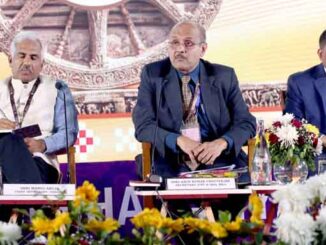
    Talking to the media after the three-day Pravasi Bharati Divas 2025, Arun K. Chatterjee was joined by the Chief Secretary of Odisha, Manoj Ahuja, and other senior functionaries of both the Union Ministry of External Affairs and the Odisha government. They were unanimous in their briefing that the three-day mega event organized by the Odisha Government was a roaring success “as we have got very positive feedback from all sections, including participants.”

    They were, however, confronted by some unsavory questions, especially about the denial of invitations to parents and other family members of overseas Indians belonging to Odisha.

    They assailed the organizers for ignoring the claims of the local people as participants in the mega event.

    Manoj Ahuja held that the Odisha Government had focused on promoting tourism as most of the delegates visited almost all 31 places of historic and religious interest. “They all were happy with the hospitality of Odisha and arrangements made for the smooth conduct of the mega event.”

    Since Odisha has emerged as an ideal destination for investment in various sectors, including tourism, the State Chief Minister, Mohan Charan Majhi, has announced a Nodal Minister as a single point of contact to facilitate seamless investments in the State.

    Arun Chatterjee said that Odisha has emerged as a leader of five Eastern States as it abounds in natural minerals, sports, knowledge economy and other areas. It has tremendous tourism potential as it has been successful in showcasing itself as a potential investment destination.

    Besides looking east, it also emerged as a strong destination for “chalo India” initiative.

    Manoj Ahuja also revealed that the Odisha government would soon conduct a census of blue-collar job seekers working in the Middle East and elsewhere. Arun Chatterjee, while responding to another question on blue-collar migrants from India, said that the Prime Minister during his recent visit to Kuwait, held a meeting with 200 blue-collar Indian workers there. “It was a lively interaction,” he said.

    Responding to a question from Prof. Indrajit S Saluja, chief editor of the New York based Indian American English weekly The Indian Panorama about the participation of youth in the PBD, Arun Chatterjee revealed that the union government was conducting almost every month a group of youth of Indian origin for a three-week Know India programme. Four hundred youths benefit from this fully funded programme of the Indian government. At the end of their visit to the country of their ancestors they feel “incredibly” connected to their roots, he said.

    Arun Chatterjee and Manoj Ahuja were joined by the Spokesperson of the Ministry of External Affairs, Randhir Kumar Jaiswal; and Ankan Banerjee, Joint Secretary in the Ministry of External Affairs, besides Sanjay Kumar Singh, Principal Secretary, Information and Public Relations of Odisha Government, at the media briefing.

  • Punjab’s disappointing token presence at PBD 2025

    • Prabhjot Singh

    BHUBANESWAR (TIP)- Punjab’s claim as one of major contributors to Indian Diaspora notwithstanding, its near total absence at the Pravasi Bharati Divas 2025 is intriguing.

    Except for a small stall by Punjab Tourism at the venue, delegates attending the bi-annual convention rue the absence of senior officials, including Minister for NRIs, at the biannual event.

    Delegates from the US – Indrajit Saluja and Manjuri at the PBD 2025 (Photo: Prabhjot Singh)

    “Punjab should have been at the forefront. Even after 18 editions, the State has yet to host a single edition of the PBD. It has been holding meets with NRIs but never done it at the national level. Over the years, its participation, too, has been on the down slide,” says New York-based journalist Prof Indrajit Saluja. Though the State government has released full page advertisements in major newspapers and other media channels, it should have sent teams of its senior officials to interact with delegates to woo them to invest in the State, he added.

    Canberra (Australia)-based Ravinder Sahni says that Punjabis are a global community. “I am pleasantly surprised not to find many Punjabi delegates here. May be the State Government has other ways and means to reach out the global Punjabi Diaspora.

    “There is also an urgent need to engage younger generation in the PBD events that serve as a great platform not only for the community leaders to sit together and carry the country’s image forward.

    Canberra (Australia)-based Ravinder Sahni says that Punjabis are a global community. “I am surprised not to find many Punjabi delegates here”. (Photo: Prabhjot Singh)

    “I am into politics and represent Labour party down under,” says Ravinder Sahni while praising arrangements made by the Odisha government for its maiden show.

    Manjuri, an IT expert, travelled all the way from Dallas in the US, for her second successive PBD.

    “I attended the last edition at Indore also and feel that it is a great opportunity to interact with the elite of the overseas Indian community,” she adds while revealing her association with a spiritual group that has its headquarters in Odisha.

    Khusbhu Merchant and Shobit Prakash travelled all the way from Rajasthan, where they are associated with a rural-based university, RNB.

    “We are here to explore possibilities of how we can take Indian education in general and rural education to a new and higher level with the support of Indian Diaspora. India has the talent, and we must provide the platforms for our rural youth to be at par with their counterparts in urban areas and overseas,” they said.

    Kanwerdeep Singh of Punjab Tourism at PBD 2025 in Bhubaneswar (Photo: Prabhjot Singh)

    Kanwerdeep Singh from Anandpur Sahib has been deputed by Punjab Tourism Corporation to manage a stall to woo delegates to visit Punjab, both for its religious and heritage sites besides exploring possibilities for investments in Punjab.

  • 3-Day 18th Pravasi Bharatiya Divas at Bhubaneswar Concludes

    3-Day 18th Pravasi Bharatiya Divas at Bhubaneswar Concludes

    • Over 3000 Delegates from across 70 countries attended, claim EAM Officials
    • 27 Honored with Pravasi Bharatiya Samman
    • Participation of Indian Diaspora from Developed Countries declines
    • Youth participation Inadequate
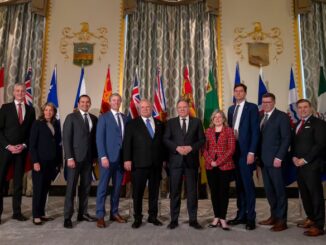
    PM in a group photograph during the inauguration of the 18th Pravasi Bharatiya Divas (PBD) convention at Bhubaneswar, in Odisha on January 09, 2025.  (Photo/ PIB)
    • I.S. Saluja

    BHUBANESWAR (TIP): The 3-day 18th edition of the Pravasi Bharatiya Divas concluded here on Friday, January 10th, with the President of India Droupadi Murmu presiding over the Valedictory session during which she presented the Pravasi Bharatiya Samman to 27 distinguished persons of Indian origin.

    (Read the story on the front page)

    More than 3000 delegates drawn from around the globe participated in the biannual event held every year from January 8 to 10 to commemorate the return of the father of the nation, Mahatma Gandhi, from his stint in South Africa. The Pravasi Bharati Divas was started in 2003 and has served as a unique platform for overseas Indians to share their achievements and issues with people and governments of the country of their original domicile. 

    The 18th PBD was inaugurated by Prime Minister of India, Narendra Damodardass Modi on Thursday, January 9, 2025, at a specially erected hall in the sprawling Janata Maidan in Bhubaneswar. He was accorded a rousing reception by the large gathering of NRI’s, local politicians, guests and officials.

    (Read the story on the front page). 

    The Indian Panorama team, which included editor Prof. Indrajit S Saluja, senior journalist Prabhjot Singh and the on-assignment photographer Jay Mandal, covered the three-day mega event to celebrate the vibrant Indian Diaspora has filed a couple of stories which are being published below.

  • The ghost of no-confidence motions continues to haunt Justin Trudeau, the minority Liberal government

    The ghost of no-confidence motions continues to haunt Justin Trudeau, the minority Liberal government

    By Prabhjot Singh

    For Justin Trudeau and his minority Liberal government, there has been no running away from the ignominy of no-confidence motions. The House of Commons that broke for the holidays from December 18 till January 27 may have its Public Accounts Committee meeting in the first week of the New Year to discuss the possibility of early tabling of the no-confidence motion. Normally, the Opposition parties have to wait for the Opposition days to table their motions. The Business Advisory Committee of the Commons fixes opposition days. Besides the Conservatives, the NDP also declared that it would bring up a no-confidence motion against the Justin Trudeau government after the House of Commons resumes its sitting in the last week of January.

    While Prime Minister Justin Trudeau is holidaying in British Columbia, Conservatives, the main opposition party, have been working overtime on modalities to bring down the Liberal government at the earliest to advance the federal elections. After their earlier three attempts of toppling the government failed, the Conservatives now intend to convene the House of Commons public accounts committee early in the new year to table a non-confidence motion aiming to make optimum use of its popularity wave for replacing Liberals as the ruling party.

    According to the latest opinion polls, the Conservatives are 20 points ahead of the Liberals. They do not want this advantage to go to waste.

    The chairman of the Public Accounts Committee (PAC), John Williamson of the Conservative Party, took to his social media channels a day after Boxing Day to announce that a meeting of the PAC is being recalled on January 7 to discuss a motion of non-confidence. He said the motion is to be tabled in Parliament when the House returns from its holiday break on January 27. A vote on the PAC motion could take place as early as January 30.

    In a Press Release, the Tories said the motion would simply read, “the Committee report to the House the following recommendation: That the House has no confidence in the Prime Minister and the Government.” Williamson further said in his letter that all three opposition parties—the Tories, NDP, and Bloc Québécois—agree they do not have confidence in the Liberal government. If any Liberal committee member attempts to filibuster and delay the motion’s passage, he will respond by scheduling additional meetings throughout January, Williamson added.

    The mandate of the PAC is to oversee government spending. Like other Committees of the House, it can also adopt reports or make recommendations to the House of Commons to take action. In case the committee were to pass a motion with such a recommendation, the House may choose to debate and vote on it, which would make it an official motion of non-confidence.

    During the last sitting of Parliament, the Conservatives introduced three non-confidence motions to bring down the Liberal government and trigger an election, all of which were unsuccessful. While the New Democrats voted against all three of the motions, their leader Jagmeet Singh announced on December 20 that his party would bring a no-confidence motion to bring down the government after the House resumes its sitting on January 27.

    Events have been overtaken by the developments. The announcement by the NDP leader Jagmeet Singh came at the end of a tumultuous week that saw Deputy Prime Minister and Finance Minister Chrystia Freeland resign from cabinet hours before she was set to table the Fall Economic Statement. Her resignation acted as a catalyst in bringing together all Opposition leaders to call the Prime Minister to quit.

    NDP leader Jagmeet Singh, a rock-solid supporter of Trudeau government, finally deserted him and declared NDP will vote to oust Trudeau government.

    Incidentally, the NDP had been supporting the major Liberal government in return for its Supply and Confidence Agreement (SACA), under which it had been supporting the minority ruling party in exchange for legislation like free dental care and pharmaceutical care programs. The NDP, however, tore this SACA on September 4, maintaining that it would decide on a case-to-case basis how to vote on future confidence motions.

    After the House adjourned for holidays, Conservative Leader Pierre Poilievre, wanted to grab the opportunity of exploiting to the fullest the growing revolt within the Liberals after Deputy Prime Minister and Finance Minister Chrystia Freeland sent a stunning resignation letter to Justin Trudeau. Another Minister, Sean Fraser, had declared his intentions to quit the Cabinet on December 18 to devote more time to his family. After Freeland’s resignation letter that shocked not only the Liberal caucus but also all political parties, things have not been going the way Justin Trudeau had imagined or planned.

    His plans were further aggravated by US President-elect Donald Trump threatening a 25 per cent tariff on all imports from Canada. Pierre Poilievre chose the developments to send a letter to Governor General Mary Simon to urge her to recall the House as early as possible for a non-confidence vote, given the stated lack of confidence in the government from all opposition parties. Many felt that his letter would be outside the prerogative of the governor-general, who is normally inclined to act on advice from the prime minister and not the leader of the Opposition.

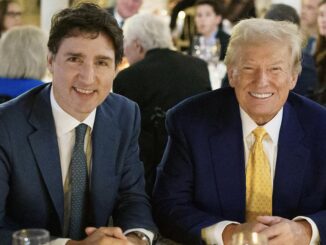
    Justin Trudeau visited the US President-Elect Donald Trump at Mar-a-Lago to plead with him against raising tariffs on Canadian goods coming into America.

    Justin Trudeau was quick to name a replacement for Chrystia Freeland and reshuffled his Cabinet by inducting eight new faces, his problems did not end there. The dissent within the Liberal caucus has been growing since then. At least two MPs, including Chandra Arya, openly came out in support of Chrystia Freeland as a replacement for Trudeau.

    Though Trudeau did address a meeting of the caucus and also held discussions with his Cabinet colleagues on the US developments, he has been exercising restraint in addressing issues concerning his leadership.

    Meanwhile, one of his existing advisers Gerald Butts was quoted by the media saying Trudeau may soon be stepping down.

    Butts, who now works for the think tank Eurasia Group, wrote an article on the political developments since Chrystia Freeland’s resignation from cabinet and growing revolt within the Liberal Party, inferring “If, as is now widely expected, Mr Trudeau’s resignation is imminent, the only way forward is a real leadership race.”

    Butts argued against the Liberal caucus anointing Freeland as the new leader after she quit in dramatic fashion hours before she was scheduled to deliver the Fall Economic Statement.

    Butts said Freeland’s team now believes she will be thanked for Trudeau’s job after having done the Liberal Party and the country a “favour by ringing a loud buzzer alarm into the ear of a Prime Minister who was sleepwalking toward electoral oblivion.”

    “Chrystia Freeland was the first person recruited to Team Trudeau to help shape that agenda and make it real for people,” Butts wrote about how the Liberal Party soared back to power in 2015 promising to boost the middle class.

    Butts, who served as principal secretary to Trudeau from 2015 to 2019, added he had not expected the political partnership between Freeland and Trudeau would “end in tears.”

    This development makes it more likely Trudeau won’t lead the Liberal Party in the next election, Butts said, with the election now likely coming sooner and with greater odds of a Conservative majority.

    Freeland, known as a politician of few words, has not spoken to the media after her resignation. She, however, said in her resignation letter that she will run in the next election, unlike the other five ministers who have recently left the cabinet and announced to quit federal politics after the next election.

    Pressure has been building up on Trudeau to step down since the Liberal Party lost a couple of its stronghold ridings in Ontario, Quebec and British Columbia.

    (Prabhjot Singh, is a Toronto-based award-winning independent journalist, He was celebrated by AIPS, the international body of sports journalists, for covering ten Olympics at its centennial celebrations held at UNESCO Centre in Paris during the 2024 Olympic Games. Besides, he has written extensively about business and the financial markets, the health industry, the public and private sectors, and aviation. He has worked as a political reporter besides covering Sikh and Punjab politics. He is particularly interested in Indian Diaspora and Sikh Diaspora in particular. His work has also appeared in various international and national newspapers, magazines and journals.)

  • Looking Ahead  2025: Those aspiring to settle down in North America may keep their fingers crossed

    Looking Ahead 2025: Those aspiring to settle down in North America may keep their fingers crossed

    By Prabhjot Singh

    As everyone steps into the New Year with hopes for bright, cheerful and prosperous 2025, things may not be looking rosy for those who aspire to make North America their new home. There will be a change of guard in the United States on January 20 when Donald Trump returns to the Oval Office in the White House. Canada may not be far behind in putting a new party in the political command of the nation.

    Both Canada and the US witnessed record immigration from South Asia in general and India in particular in the tumultuous year 2024, which is coming to an end, leaving behind both sweet and sour memories. Uncertain is the future of those who have no legal documentation in support of their continuation of living in either the US or Canada. It is not only the US President-elect Donald Trump who has made no secret of his intentions of deporting all those who have no legal right to be in the USA. His first axe will fall on those who have either a criminal background or are currently facing criminal charges. The number of such aliens could run into millions and may take a long time for the new US administration to carry out the orders of President Trump during his second term.

    Canada, too, has been struggling hard to come out of the mess it created with its frequently changing and pro-immigrant policies of previous years. Finding the situation slipping out of hands, the minority government of Justin Trudeau has been desperate to restore order by promulgating new policies and programs while upsetting the applecart of young hopefuls who landed in Canada legally based on previous policies and programs and have now been told that “permanent residency status is not guaranteed for them because of the new rules.

    When Governments changed their policies and programs midway, hundreds of thousands of hopefuls, while believing the policies and programs of the authorities concerned, took the jump without realizing their “drowning would be inevitable.” Many of them are on the brink as statements, policies, and plans are being pronounced day in and day out. When they needed “cheap labor” or “manpower” in addition to the billions of dollars prospective immigrants were bringing with them, the Governments welcomed them with open arms. Now, after sailing through the crisis, especially the post-COVID pandemic, they find the “immigrant influx too wieldy to be controlled.” New rules may be in place but those hoping to make them have not lost hopes. Immigration is a multi-dimensional phenomenon. So much so that people transgress international and geographical borders to reach where they want to be. No laws are without flaws. Those who set their eyes on settling abroad find ways and means to achieve their goals. If in the recent past, “illegitimate immigration and travel agents” were using all illicit means to carry out their operations of human smuggling with a mixed rate of success, now they have also changed their modus operandi.

    They have taken the mixed route of blending both legitimate and illegitimate means to send aspirants overseas. They not only exploited the existing systems, including 10-year visas or express entry as introduced by Canada but also used other means, including the use of a “political asylum route” to smuggle the aspirants by charging huge amounts as their fee.

    Guiding gullible aspirants to hold protests outside embassies and consulates of the countries of their origin and get some good pictures made to show their involvement, these agents held, would strengthen the case of their candidates for “political asylum”. This led to a huge increase in the number of political asylum seekers who in turn get special treatment from the countries they want to make their new homes. Incidentally, a big number of these “political asylum seekers” came from the international students community who would invariably base their claim on fear of being “persecuted” in case they returned to the country of their origin.

    Several Indian students stage a sit-in protest in Canada’s Brampton. (Photo : Twitter/@ellymangat123)

    The enterprising manpower and immigration agents have also come out with yet another model of mixing both “legitimate and illegitimate means” to send young able-bodied immigration aspirants abroad.

    Their modus operandi was recently tracked down by the Enforcement Directorate back home in India.

    The Enforcement Directorate investigated the alleged involvement of some Canadian colleges and a few Indian entities in a money-laundering case linked to the trafficking of youngsters into the US from the Canadian border.

    The investigation followed the death of a four-member Indian family, hailing from Dingucha village in Gujarat, who died of extreme cold while trying to cross the Canada-US border illegally a couple of years ago.

    The brains behind this racket worked in connivance with some Canadian Colleges who would admit the aspirants by getting them student visa. Once in Canada, they would walk out of the college to reclaim a full-fee refund and then head for the USA from a porous US border without realizing that it would not be easy there.

    Under the new regime of Donald Trump, they would be on the first list to be deported as they do not have any legal documents to enter and stay in the USA. The legal channels may have either closed or shrunk but there is no dearth of those who want to make it to the US or Canada. They all live in hope. They hope the year 2025 will bring them luck.

  • Will Canadian woes end by the year 2024?

    Will Canadian woes end by the year 2024?

    By Prabhjot Singh

    2024 turned out to be a tumultuous year for Canada. Nothing went right. Acknowledged as one of the best countries to live in, Canada slid into one of the worst years in recent history. Its bilateral relations with India touched a new low. Before the end of the year, its long-time ally and biggest trade partner and neighbor, the USA, threatened a 25 per cent import tariff on anything Canadian.

    To top it all, the minority Liberal government was rocked by internal strife and external pressure to quit and pave the way for an advanced federal election.

    Who could better describe the country’s situation than its own Prime Minister?

    In his Christmas message Justin Trudeau gave vent to his spleen saying “For you, the holidays may be a time of big family gatherings and feasts, of gifts and celebrations. But maybe it is a very hard time. If you are grieving, worried, or alone, this can be the toughest time of the year. It can be the loneliest. So let us all check in on the people in our lives who have not had an easy time this year, and who may need us more than we know.

    “As we reflect on the past year and look to the future, let us continue to show love and kindness – to ourselves and to those in need. Let us also take a moment to thank those who give so much of themselves to make Canada the place we are proud to call home, including the brave members of our Canadian Armed Forces, the dedicated first responders and essential workers, and the countless volunteers. Thank you, to all of you.”

    How true? How precisely did he put his inner feelings in a message that normally is delivered to join festivities on the sacred occasion as he said at the beginning of his message “This is such a special time of year. It is a time to gather with loved ones, to celebrate the spirit of the season, and to give thanks for all that is good in the world.

    “For Christians, it’s a time to celebrate the birth of Jesus Christ and think about his story of kindness, forgiveness, and faith. The lessons of his life are universal, and they inspire and comfort people every time they’re told – and retold.”

    It was not at the far end of the year. Troubles for Justin Trudeau and his minority Liberal government started much earlier. He survived three no-confidence motions, thanks to unrelenting support from the fourth-largest party in the House of Commons, the New Democrats.

    Chaos in immigration, growing inflation, unemployment, rising bank rates, homelessness, longer queues outside foodbanks, an alarming increase in gun violence and continuous loss in popularity as revealed by by-elections held during the year virtually cornered Justin Trudeau and his government midway in the year. The situation was further aggravated by the accompanying political turmoil, more so after ally New Democrats Party led by Jagmeet Singh tore down its Supply and Confidence Agreement (SACA) putting the minority government in limbo.

    Things started turning sour for Justin Trudeau after the killing of a Sikh leader Hardeep Singh Nijjar outside a Gurdwara in Surrey. Since the Liberals led by Justin Trudeau never had good times with India ever since coming to power in 2015, the killing of Hardeep Singh Nijjar, which saw Justin Trudeau raising accusation fingers at India, brought to thaw the bilateral relations.

    India and Canada have enjoyed for more than a century strong people-to-people relations. These relations did not match the bilateral relations the two countries always aspired to have over the years, including good times. Instead, this unfortunate development, the killing of a Canadian on Canadian soil, suspected at the instance of a foreign hand, led to a diplomatic spat. Sizes of the diplomatic corps were shrunk leading to the temporary suspension of the counsellor and other services. Accusations and counter-accusations flew high.

    Though Prime Ministers of Canada and India met on the sidelines during various international summits, their conduct was more remorse than friendly sending wrong signals to people back home. As the issue snowballed into a controversy, Canada’s Royal Canadian Mounted Police (RCMP) came out with startling revelations suggesting the involvement of the government of India agents in the assassination of Hardeep Singh Nijjar. Better sense prevailed after an initial flare-up as both sides took to caution than aggression to gradually push the issue to the side-lines.

    As relations with India receded to the background, Canada had yet another nightmare unfold. The election of the US President, which was watched with considerable interest the world over, put the Canadians under stress. President-elect Donald Trump got into offensive mode, and his first promulgations made Canadians scurry under cover. Donald Trump accused Canada as a source of both Fentanyl and human smuggling. How serious are these problems?

    Donald Trump spared no opportunity to bash Canada for its porous borders that paved the way for the smuggling of synthetic Fentanyl. He wanted his immediate neighbors – Mexico and Canada – to act fast and stop smuggling, both Fentanyl and illegal aliens.

    Gauging the gravity of the Fentanyl accusations by the US, the leader of the Opposition in the Canadian House of Commons, Pierre Poilievre, moved a resolution urging Prime Minister Justin Trudeau to “protect our people from dangers of drugs”. Though the motion was defeated 210-121, it did evoke an animated debate before it was put to vote. The Conservative Leader held that after nine years, the NDP-Liberal Government’s radical hard drug liberalization has spread death and disorder across Canada. Since Justin Trudeau became Prime Minister, 47,000 Canadians have died of drug overdoses, representing a 200 per cent increase since 2016.

    The Common Sense Conservatives had put forward a motion in the House of Commons, calling on Trudeau to protect people from dangerous drugs. The motion also wanted to reverse the catch-and-release Bill C-5, which eliminated mandatory jail time for certain violent offenders. It also advocated for longer jail sentences for drug kingpins, besides demanding a ban on the importation of fentanyl precursors. The government should stop buying dangerous opioids which were diverted to teenagers and other vulnerable Canadians, the motion said, demanding that Canadian ports be secured against fentanyl by buying high-powered scanners and putting more boots on the ground there to stop fentanyl and its ingredients from coming into our country.

    In the 12 months ending September this year, Pierre Poilievre said, US border agents seized about 11,600 pounds of drugs entering the United States from Canada. Seizures of fentanyl doses more than tripled between 2023 and 2024, rising from 239,000 doses to 839,000. A year ago, CSIS told Trudeau that they had identified more than 350 organized crime groups actively involved in the domestic illegal fentanyl market. And just last month, the RCMP uncovered a “super lab” operating in rural British Columbia that was capable of producing 95 million lethal doses of fentanyl. Incidentally, the kingpin of this lab has been a person of South Asian descent.

    The tirade of opposition campaigns apart, attacks from within the Liberal party started mounting on the Prime Minister. A section of the Liberal caucus revolted against him asking him to go. Trudeau, however, managed to put aside the dissensions on the plea that in spite of tough resistance from the Opposition that wanted cuts on all programs, including dental care for seniors, saying he and his party were committed to working for Canadians.

    His pleas did not cut ice with many of the party dissenters. Some announced that they would not contest the ensuing election to the House of Commons, and a few others quit even their Cabinet positions to express their resentment.

    Internal strife climaxed when the Deputy Prime Minister and Finance Minister Chrystia Freeland, in her stunning resignation letter hours before she was to present her Fall Financial Report, shook the shaky Trudeau Government to its bones. The report was tabled. Left with no choice, the Prime Minister named a new Finance Minister and ordered a reshuffle of his Cabinet.

    Since Liberal MPs of South Asian descent stood by Justin Trudeau throughout his tough times, he inducted Brampton MP Ruby Sahota, to raise the number of South Asians in the 38-member Cabinet to six. She was named Minister for Democratic Institutions and Minister Responsible for the Federal Economic Development Agency for Southern Ontario.

    Within a few hours of the reshuffling of the federal Cabinet, Chandra Arya, Liberal MP from Nepean, fired a salvo asking Prime Minister Justin Trudeau to quit. He is the first Liberal MP of South Asian descent to express his dissent in the leadership of Justin Trudeau.

    Besides, four Conservative MPs of Indian descent, including Tim Uppal, Jasraj Singh Hallan, Arpan Khanna, and Shuvaloy Majumdar, who have been part of three non-confidence motions, Jagmeet Singh, Leader of the New Democrats, became the first MP of South Asian descent to ask Justin Trudeau to quit. And for the ruling Liberals, Chandra Arya is the first South Asian from the Liberal caucus to revolt against Trudeau’s leadership.

    While time and fate will decide the future of Justin Trudeau and his Liberal Government in 2025, it is the 2-million-strong South Asian community continues to await difficult and uncertain times ahead.

    Will the turn of the year bring back cheers to members of the community who proudly acclaim themselves to be “Canadians”? only time will tell.

    Meanwhile, I wish all Canadians a Happy New Year.

    (Prabhjot Singh, is a Toronto-based award-winning independent journalist, He was celebrated by AIPS, the international body of sports journalists, for covering ten Olympics at its centennial celebrations held at UNESCO Centre in Paris during the 2024 Olympic Games. Besides, he has written extensively about business and the financial markets, the health industry, the public and private sectors, and aviation. He has worked as a political reporter besides covering Sikh and Punjab politics. He is particularly interested in Indian Diaspora and Sikh Diaspora in particular. His work has also appeared in various international and national newspapers, magazines and journals.)

  • Dr Manmohan Singh, a down-to-earth man of principles

    Dr Manmohan Singh, a down-to-earth man of principles

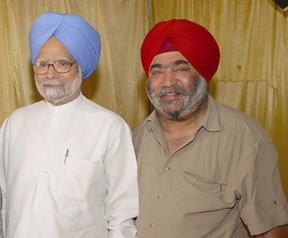
    It was in July 2009. Dr Manmohan Singh, the then Prime Minister of India, had come to Jalalabad in Ferozepur district, on an electioneering campaign. I was assigned to cover his rally.

    Since I had been interacting with him for a long time, I had requested the organizers for an interview with him. The request was granted. Before he went to address the rally, I was escorted to a makeshift tent on a side of the main dais where a couple of chairs and a table were organized to facilitate the interview.

    I was already seated in the tent when Dr Manmohan Singh came. “Hello Prabhjot, how are you?”

    I was pleasantly surprised by the way he greeted me. I was overwhelmed to hear my name from Dr Singh as he still remembered my name as I had not met him after he became the Prime Minister in 2004. A down-to-earth man, his simplicity and his respect for others always impressed me.

    “Sir, I am fine. How about you? You just had a heart procedure,” I asked him.

    “It went very well. I am fine. How is Mr Dua? How is The Tribune doing?” were his next questions before the start of the interview. Mr H K Dua was at that time Editor-in-Chief of The Tribune group of newspapers.

    Dr Manmohan Singh had the best of relations with all Editors of The Tribune, including Mr H.K. Dua and his predecessor, Mr Hari Jaisingh. After covering the rally when I returned to Chandigarh, the first thing Mr Dua asked me was whether I was able to talk to him.

    “Yes, sir, I did. I had a brief interview with him as he had to address a couple of other election rallies also,” I told him before I got busy with my copy. I was conscious that Dr Singh would look for The Tribune and my interview with him the next morning.

    Dr Manmohan Singh was often quoted saying that the first thing he wanted with his morning cup of tea was the latest edition of The Tribune. Besides The Tribune, he was in love with Chandigarh where he worked as a Professor of Economics at Panjab University and had a house close to the Panjab University campus.

    Besides Panjab University, he loved to be at CRRID to participate in various programs related to rural development. He was close to the then Director of CRRID, Dr Racchpal Malhotra, who also had served Panjab University earlier.

    Dr Singh visited the Sector 19 Centre for Research in Rural and Industrial Development (CRRID) in Chandigarh. Invariably, I was assigned to cover his events and interview him.

    In 2004 he became the Prime Minister. But our interactions continued. Though he did not belong to the typical genre of politicians, he was an academician, a world class economist, who led the country for 10 long years or two consecutive terms. He demonstrated his political acumen by heading a coalition government and survived a no-confidence motion, thanks to a dissident Akali MP SS Libra from historic Sri Fatehgarh Sahib.

    After assuming office as Prime Minister, my interactions were considerably reduced. Besides Jalalabad, I got another chance to interact with him when he came to Paonta Sahib in Himachal Pradesh. Again, he was on an electioneering campaign. Though Dr Manmohan Singh could never become a member of Lok Sabha, the lower House of Parliament, he represented the Upper House, Rajya Sabha, till he retired as a Parliamentarian in April this year after a stint that lasted more than three decades.

  • Canadian MPs of Indian descent condole the death of Dr Manmohan Singh

    Canadian MPs of Indian descent condole the death of Dr Manmohan Singh

    By Prabhjot Singh

    Herb Dhaliwal, the first MP of Indian descent to become a federal minister in Canada, was joined by some of his contemporaries in eulogizing India’s one of tallest Prime Ministers, Dr Manmohan Singh, who left for his heavenly abode early this week. Herb Dhaliwal, who lives in Vancouver, says that among various things he shared with Dr Singh was “our retirement from politics”.

    “I am personally feeling very saddened by the loss of my good friend, Dr Manmohan Singh. Beginning in the late 1990s I had the distinct privilege of becoming acquainted with this wonderful gentleman. I met him several times during his terms of office, first as Finance Minister and then as Prime Minister, as well as since he and I both left politics.

    “India has lost an icon, a distinguished past Prime Minister highly respected by his world leader peers. He was a humble, long-standing career official who rose to make an indelible mark as an inspirational economic visionary. His dynamic policies on deregulation changed many sectors, opening India to foreign investment and the prosperity resulting.

    “Manmohan Singh was the first Sikh in history to occupy the Lok Kalyan Marg (Prime Minister’s official residence). He also was a man whose legacy includes, although with his characteristic soft voice, being outspoken on behalf of India’s less fortunate.

    “May he rest in peace, remembered for having been a kind human being, one who brought India forward to becoming a modern economic marvel among the community of nations,” Dhaliwal said in his message.

    Gurbaksh Malhi, who was also elected to the House of Commons along with Herb Dhaliwal in 1993, condoled the death of Dr Manmohan Singh. He was the second Indian Prime Minister after Mrs Indira Gandhi to visit Canada.

    When Dr Manmohan Singh came to attend the 2010 G 20 Summit in Toronto, said Mr Gurbaksh Malhi, recalling his meeting with him. At that time, all Canadian MPs of Indian descent called on him and submitted a memorandum to him highlighting the problems members of Indian Diaspora faced back home.

    “He was a thorough gentleman, soft-spoken, with an open mind. He evinced keen interest in the issues we raised with him. He promised to look into all those demands mentioned in our memorandum. “

    “I also had a few other opportunities to meet him. During my visits to India, both as a part of the Canadian delegations and my personal or private visits, I would make sure to call on Dr Manmohan Singh. And he was always warm and receptive. He would enquire about the strong Indo-Canadian community in general and the Canadian Punjabis in particular.

    “He was not only an upright politician but also a great human being. He lived a simple and Inspirational life. I remained a great admirer of Dr Manmohan Singh,” Gurbaksh Malhi said. “I had several opportunities to meet and interact with Dr Manmohan Singh, says Gurmant Grewal, also a former Canadian MP of Indian descent.

    “I accompanied a delegation of Canadian Parliamentarians to India with Preston Manning, the then Chief of Reform Party. We wanted the sanctions Canada had Imposed on India following its nuclear explosion under the BJP regime to be lifted. We met him. And he was very open. Friendly and receptive to our suggestions. He was a giant. He was not only a world-class economist but also a wonderful human being, known for his integrity and simplicity. His connectivity to people at the grassroots level made him a most revered politician not only in India but worldwide.

    “He ushered in several people welfare programs, the word appreciated. I always looked forward to meeting him for exchanging Ideas on issues facing the world. He was not only well aware but also very clear in his ideas,” says Gurmant Grewal, who frequented India mostly as part of Canadian delegations, more so when Stephen Harper was the Prime Minister.

    Gurmant Grewal also says that Dr Manmohan Singh had a soft corner for Canada. “He was always ready to do anything to promote bilateral relations between India and Canada as the two nations enjoy a very strong people-to-people bonding,” he added. All MPs of Indian descent who had a chance to meet or interact with him were infatuated by his warmth, simplicity and clarity. They all have been full of praise for Dr Manmohan Singh. They have joined the global Indian community in paying rich tributes to him.


  • Brampton MP Ruby Sahota joins Cabinet as Justin Trudeau inducts eight new faces

    Brampton MP Ruby Sahota joins Cabinet as Justin Trudeau inducts eight new faces

    By Prabhjot Singh

    OTTAWA (TIP): With the induction of Brampton MP Ruby Sahota, the number of South Asians in the 38-member Cabinet of Justin Trudeau has gone up to six. She will be the Minister for Democratic Institutions and Minister Responsible for the Federal Economic Development Agency for Southern Ontario.

    Never before have MPs of South Asian descent had such a good representation in the federal Cabinet. Questions were being asked about the longevity of the reshuffled Cabinet as all the three Opposition parties – Conservatives, Bloc Quebecois and New Democrats – are out baring their knives to kill the government at the first possible opportunity.

    The American threat of a 25 per cent tariff looms large in the air as President-elect Donald Trump is scheduled to assume office on January 20.

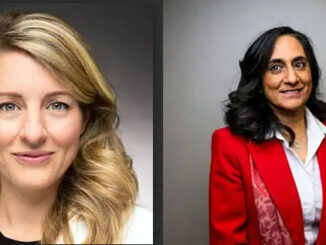
    After Ruby Sahota’s inclusion, other MPs of South Asian descent on the Canadian Cabinet are Anita Anand, Minister of Transport and Internal Trade, as she sheds the portfolio of President of the Treasury (that goes to Ginette Petitpas Taylor), Jaffna-born Gary Anandasangaree, Minister of Crown-Indigenous Relations and Northern Affairs and Minister responsible for the Canadian Northern Economic Development Agency, Kamal Khera, Minister of Diversity, Inclusion and Persons with Disabilities, Harjit S. Sajjan, President of the King’s Privy Council for Canada and Minister of Emergency Preparedness and Minister responsible for the Pacific Economic Development Agency of Canada, and Arif Virani, Minister of Justice and Attorney General of Canada.

    While the Prime Minister, Justin Trudeau,  announced changes to the Ministry, in his declared intent to continue till the next federal election in October of next year, both the Leader of Opposition, Pierre Poilievre, and the Liberals ally,  Jagmeet Singh of New Democrats, made clear their stands to bring down the minority Liberal government at the early possible opportunity to force an early election.

    Pierre Poilievre, who earlier in the day taunted the NDP leader Jagmeet Singh for his open letter to the Canadians, took to X to say that he has written to the Governor-General “confirming that the Prime Minister has lost the confidence of the House and that Parliament must be recalled to hold a vote before the end of the year on triggering an Axe The Tax election. I am asking the NDP leader to match his actions to his word and send a letter to Her Excellency asking for the same.”

    In an earlier post on X, Pierre Poilievre said: “Ha! Now that Parliament is closed there is no chance to introduce any motion for months—until after you get your pension. You did the same stunt in September, claiming you would no longer prop Trudeau up. Then you went back on your word and voted 8 times against an election and for your boss Trudeau. Just 11 days ago you voted against a non-confidence motion filled with your own words. Had you voted the other way, we would be almost halfway through the election now. Only common-sense Conservatives can and will replace this costly NDP-Liberal clown show.

    Hours before the swearing-in ceremony at Rideau Hall, Jagmeet Singh took to X and announced that “Justin Trudeau failed in the biggest job a Prime Minister has: to work for people, not the powerful. The NDP will vote to bring this government down, and give Canadians a chance to vote for a government who will work for them.”

    In an open letter to Canadians that he shared on X, Jagmeet Singh said that he “called Justin Trudeau to resign and he should. He cannot fix health care. He cannot build homes you can afford. He cannot lower your bills.

    “I have always fought like hell to get dental care, free birth control and diabetes medication. I did not give up when Justin Trudeau said no. And I won’t let Pierre Poilievre take it all away.

    “The next fight is a big one. Pierre Poilievre and the Conservatives will give CEOs and big businesses anything they want, and make callous cuts to pay for it. They will cut health care, childcare, housing and people’s pensions.”

    Meanwhile, the Prime Minister’s office released a statement saying that the new Ministry will deliver on what matters most.

    It said “Building on the work done since 2015 to invest in Canadians, the team will continue to move forward on housing, childcare, and school food while working to put more money back in people’s pockets.

    “The changes to the Ministry are as follows:

    • Anita Anand becomes Minister of Transport and Internal Trade, Gary Anandasangaree becomes Minister of Crown-Indigenous Relations and Northern Affairs and Minister responsible for the Canadian Northern Economic Development Agency, Steven MacKinnon becomes Minister of Employment, Workforce Development and Labour, and Ginette Petitpas Taylor becomes President of the Treasury Board

    “The Prime Minister also welcomed the following new members to the Ministry: 

    Rachel Bendayan becomes Minister of Official Languages and Associate Minister of Public Safety,  Élisabeth Brière becomes Minister of National Revenue, Terry Duguid becomes Minister of Sport and Minister responsible for Prairies Economic Development Canada, Nate Erskine-Smith becomes Minister of Housing, Infrastructure and Communities, Darren Fisher becomes Minister of Veterans Affairs and Associate Minister of National Defence,   David J. McGuinty becomes Minister of Public Safety,· Ruby Sahota becomes Minister of Democratic Institutions and Minister responsible for the Federal Economic Development Agency for Southern Ontario, and Joanne Thompson becomes Minister of Seniors. 

    “These new ministers will work with all members of Cabinet to deliver real, positive change for Canadians. They join the following ministers remaining in their portfolio:

    • Terry Beech, Minister of Citizens’ Services
    • Bill Blair, Minister of National Defence
    • François-Philippe Champagne, Minister of Innovation, Science and Industry
    • Jean-Yves Duclos, Minister of Public Services and Procurement and Quebec Lieutenant
    • Karina Gould, Leader of the Government in the House of Commons
    • Steven Guilbeault, Minister of Environment and Climate Change
    • Patty Hajdu, Minister of Indigenous Services and Minister responsible for the Federal Economic Development Agency for Northern Ontario
    • Mark Holland, Minister of Health
    • Ahmed Hussen, Minister of International Development
    • Gudie Hutchings, Minister of Rural Economic Development and Minister responsible for the Atlantic Canada Opportunities Agency
    • Marci Ien, Minister for Women and Gender Equality and Youth
    • Mélanie Joly, Minister of Foreign Affairs
    • Kamal Khera, Minister of Diversity, Inclusion and Persons with Disabilities
    • Dominic LeBlanc, Minister of Finance and Intergovernmental Affairs
    • Diane Lebouthillier, Minister of Fisheries, Oceans and the Canadian Coast Guard
    • Lawrence MacAulay, Minister of Agriculture and Agri-Food
    • Soraya Martinez Ferrada, Minister of Tourism and Minister responsible for the Economic Development Agency of Canada for the Regions of Quebec
    • Marc Miller, Minister of Immigration, Refugees and Citizenship
    • Mary Ng, Minister of Export Promotion, International Trade and Economic Development
    • Harjit S. Sajjan, President of the King’s Privy Council for Canada and Minister of Emergency Preparedness and Minister responsible for the Pacific Economic Development Agency of Canada
    • Ya’ara Saks, Minister of Mental Health and Addictions and Associate Minister of Health
    • Pascale St-Onge, Minister of Canadian Heritage
    • Jenna Sudds, Minister of Families, Children and Social Development
    • Rechie Valdez, Minister of Small Business
    • Arif Virani, Minister of Justice and Attorney General of Canada
    • Jonathan Wilkinson, Minister of Energy and Natural Resources,” the statement said.

    (Prabhjot Singh is a Toronto-based  award-winning independent journalist, He was celebrated by AIPS, the international body of sports journalists, for covering ten Olympics at its centennial celebrations held at UNESCO Centre in Paris  during the 2024 Olympic Games. Besides, he has  written extensively about  business and the financial markets, the health industry, the public and private sectors, and aviation. He has worked as a political reporter besides covering Sikh and Punjab politics. He is particularly interested in Indian Diaspora and Sikh Diaspora in particular. His work has also appeared in various international and national  newspapers, magazines and journals)

  • Stop ripping off or become the 51st state of US: Donald Trump tells Canadian PM

    Stop ripping off or become the 51st state of US: Donald Trump tells Canadian PM

    By Prabhjot Singh

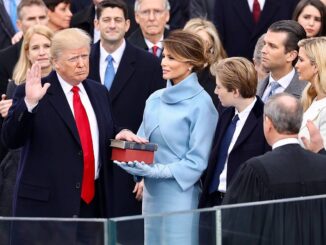
    TORONTO (TIP): Canadian Prime Minister and members of his delegation who had a closed-door meeting with the US President-elect Donald Trump last Friday, November 29, were reportedly stunned when, during the deliberations on the 25 per cent import tariff, the host surprised everyone by suggesting that Canada should become the 51st state of the US.

    According to media reports, Donald Trump said in a lighter vein that if Justin Trudeau did not like the tariff, perhaps Canada could become the 51st state and Trudeau could serve as its governor. Trudeau laughed nervously at the apparent joke, the media reports said.

    Yesterday, when the House of Commons resumed its sitting, the issue of border security was raised by the Leader of Opposition, Pierre Poilievre, saying that his party had been asking the Prime Minister to wake up and regain control of the order but he continues to do the opposite. Pierre said that in 2015, the number of unprocessed asylum claims was under 10,000. Today, there were over 260,000.oration with provincial police forces to crack down on the human trafficking, illegal entry, drug production and trafficking.

    These are the issues because of which the US President-elect Donald Trump had been threatening to impose 25 per cent duty on items imported from Canada and Mexico.

    After talking to Donald Trump on the phone early last week, the Canadian Prime Minister accompanied by some senior functionaries of his Government, air dashed to Florida last weekend. The Canadians met Donald Trump and his team over a dinner meeting that reportedly lasted three hours. It was during this meeting that Donald Trump made that comment of suggesting Canada to become 51st state.

    Media reports quoting an insider who was at the meeting said :“We are told that when Trudeau told President-elect Trump that new tariffs would kill the Canadian economy, Trump joked to him that if Canada cannot survive without ripping off the U.S. to the tune of $100 billion a year, then maybe Canada should become the 51st state and Trudeau could become its governor”.

    Media reports further said that someone at the table noted that a Canadian state in the U.S. would be liberal, prompting Trump to say that the territory could be divided into two states, one liberal and one conservative. That reportedly drew more laughter.

    Donald Trump’s humor-veiled bombast last weekend was somewhat reminiscent of his wish during his term of Presidency. At that time he had made public his wish to purchase Greenland.

    While responding to issues raised by Pierre Poilievre, Canadian Minister Dominic LeBlanc, who was with Justin Trudeau in the meeting with Donald Trump, the previous weekend, said that the Canadian delegation had had a very cordial and constructive conversation with our American partners on Friday evening. “We talked about security at the Canada-U.S. border over the decades and the integration of Canadian police forces with their American partners. We talked, for example, about the important work that the RCMP is doing in the fight against fentanyl, which has led to drug seizures and significant arrests, often in partnership with our American allies.

    Another Conservative MP, while joining the debate in the House of Commons, said that President-elect Trump just asked the Prime Minister to do something. “We have been asking for the same thing over here for nine years. We are calling for additional measures to stop gun smuggling, drug trafficking and auto theft. He never listened. Gun smuggling and auto theft are a scourge in Quebec. We have suggested enhanced surveillance at the Port of Montreal and at the border, but nothing has changed.

    Dominic LeBlanc retorted back, saying “we have worked with our law enforcement. We have invested more to reverse the cuts made by the former Conservative government. If my colleague is serious about our country’s national security, I suggest that he encourage his boss to obtain the security clearance needed to access information that will help protect his political party and caucus. For example, when it comes to India’s foreign interference, it might be a good idea for the Leader of the Opposition to do that.

  • Hockey: India completes a hat-trick  of triumphs in Asia Cup for Junior Men

    Hockey: India completes a hat-trick of triumphs in Asia Cup for Junior Men

    • By Prabhjot Singh

    TORONTO (TIP): Defeating its traditional rivals and neighbor Pakistan 5-3 in the final, India won its third successive Asia Cup for Junior Men hockey title in Muscat. Araijit Singh Hundal, who scored four goals in the final, was declared player of the match. India were the winners of the 2004, 2008, 2015 and 2023 editions of the event as well. It was the fifth title triumph for India in the 11 editions of the tournament held so far. Hockey India would be closing the year on a cheerful note as Indian men’s and women’s teams have already retained their Asian Champions Trophy titles while Junior Men have completed a hat-trick of triumphs in the Asia Junior Cup.

    With this win, India gets direct entry to the FIH Hockey World Cup for Junior Men. It is the first title triumph for former Indian goalkeeper PR Sreejesh as a coach. Though he took the Indian Colts to the Sultan Hockey Tournament in Malaysia early this year, the Indian team had finished with a bronze medal.

    Araijeet Singh Hundal (4’, 18’, 47’, 54’) was in top form for India while Dilraj Singh (19’) scored the other goal. Pakistan’s captain Shahid Hannan (3’) and Sufyan Khan (30’, 39’) did their utmost to keep their team in the tie for the majority of the game.

    The win handed the Indian colts, currently coached by two-time Olympic medalist. PR Sreejesh, a record-extending fifth title (2024, 2023, 2015, 2008 and 2004) in the competition and also helped keep arch-rivals Pakistan from winning its fourth crown.

    As Indian players were getting into their groove, Pakistan skipper Shahid Hannan pounced on a stray ball in the shooting circle and beat Bikramjeet Singh in a one-on-one situation to put Pakistan ahead.

    India responded immediately by earning a penalty corner and Araijeet Singh Hundal unleashed a powerful drag flick to the right top corner to restore parity. Both teams went on to trade circle entries without finding the back of the net till the end of the first quarter.

    Within three minutes of the second quarter, India was awarded another penalty corner and Araijeet stepped up again, finding the gap between Pakistan’s goalkeeper Muhammad Janjua and another defender with a thunderous drag flick to give India the lead.

    Following this, the Indian forwards relentlessly pressured Pakistan’s defense. Soon, Dilraj weaved past two defenders on the left wing and struck the board, extending India’s lead to 3-1.

    As the first half was drawing to a close, Pakistan’s Sufyan Khan showcased his drag-flicking skills, beating Bikramjit Singh in goal to make it 3-2.

    Araijeet created two chances in quick succession as the third quarter began but Pakistani goalkeeper Muhammad Janjua pulled out amazing saves on both occasions to keep Pakistan in the match

    Both teams went back and forth until Sufyan Khan, with six minutes left in the quarter, flicked the ball into the Indian goal from a penalty corner and ensured Pakistan headed into the last quarter level on the score.

    As soon as the final quarter began, India seized the initiative. Manmeet Singh skillfully dribbled past his marker and found an unmarked Araijeet in front of the goal, who deflected the ball into the goal to restore India’s lead and complete his hat-trick.

    With ten minutes to go, Zikriya Hayat tried to launch a counter-attack but Indian goalie Prince Deep Singh rushed out to avert any danger.

    With six minutes left in the game, India earned a penalty corner and employed a variation to free up Araijeet, who smashed the ball into the top right corner with his flick, making it 5-3 for India.

    As the game headed to a close, Hannan Shahid carved out a significant goal-scoring opportunity but Prince Deep stood firm in goal, swatting away the attempt and sealing India’s victory.

    Earlier, India defeated Thailand 11-0, Japan 3-2, Chinese Taipei 16-0, Korea 8-1 before getting better of Malaysia at 3-1 in the semi-finals and 5-3 against Pakistan in the final.

    (Prabhjot Singh is a Toronto-based award-winning senior sports journalist. He can be reached at prabhjot416@gmail.com)

  • South Africa joins the 2036 Olympic bidders

    South Africa joins the 2036 Olympic bidders

    Chile, Egypt, India, Mexico, Qatar and Turkey also have evinced interest

    By Prabhjot Singh

    India has yet another rival in South Africa in bidding to host the 2036 Olympic Games. While the BJP-led NDA government in India has fully backed the Indian Olympic Association’s bid to organize the world’s biggest sporting extravaganza in 2036, South Africa is the latest country to join the list of countries contending to host the 2036 Olympic Games.

    Others who have already announced their intentions to host the Olympic Games 2036 are Chile (South America), Egypt (Africa), India (Asia), Mexico (Americas), Qatar (Asia), and Turkey. Africa is the only continent still waiting to host its first Olympic Games.

    Interestingly, the bidders for the 2036 Olympic Games are mainly from three continents – Africa, Americas and Asia. Americas will hold the next edition of the Games in Los Angeles in 2028 – which will travel down under to Brisbane (Australia) in 2032. Now the eyes are set for the 2036 Olympic Games as some of the first-timers are pinning their hopes on the new venue selection criteria.

    This week, when a delegation of the South African Olympic Committee visited the headquarters of the International Olympic Committee in Lausanne, it was enthusiastically welcomed. The IOC welcomed South Africa’s proposal to begin preliminary discussions on the possibility of hosting the Olympic Games in 2036. The initiative, presented at a meeting at the Olympic House in Lausanne, marks the start of an ambitious project that could see South Africa become the first African country to host the world’s biggest sporting event.

    The South African delegation was led by Sports Minister Gayton McKenzie, accompanied by South African National Olympic Committee President Barry Hendricks and CEO Nozipho Jafta. The project is supported by South African IOC member Anant Singh and honorary member Sam Ramsamy. They are both members of the Indian Diaspora.

    The IOC President Thomas Bach underlined the importance of this proposal from South Africa. “The IOC welcomes this proposal and the united commitment of SASCOC, the South African government and our representatives in South Africa. This project is not only about hosting an Olympic Games in South Africa but is intended as a project for the whole of Africa,” said Bach, underlining the historic impact that the first Olympic Games on the African continent would have. Minister Gayton McKenzie added: “We are at the beginning of an exciting process that could see South Africa host the 2036 Olympic Games. This vision brings us together as a nation and has the potential to show the world the best of Africa.”

    South Africa is not alone in the race for the 2036 Olympics. Countries that have already expressed interest include Chile, Egypt, India, Mexico, Qatar and Turkey. Each of these contenders is in preliminary talks with the IOC under the new venue selection model, which seeks to accommodate the needs of host regions and encourage sustainability.

    Barry Hendricks, President of SASCOC, emphasized the advantages of this new approach: “The old prescriptions of how a Games should be organized no longer exist. An Olympics in South Africa could showcase all the wonders of our country and inspire a new generation of athletes not only in South Africa but across the continent.”

    The IOC has introduced a flexible approach to the selection of future Olympic venues, allowing interested countries to work collaboratively to develop projects tailored to their realities. The body is currently in talks with more than a dozen stakeholders from four continents.

    The South African bid represents not only a milestone for the country but also a significant step for the Olympic Movement as it seeks to diversify venues and bring the Games to regions that have never hosted them before. It would be a symbol of unity and progress for the entire African continent.

  • Hockey India League appoints Josh Burt as Technical Delegate and Colin French as Umpire Manager for 2024-2025 edition

    Hockey India League appoints Josh Burt as Technical Delegate and Colin French as Umpire Manager for 2024-2025 edition

    The celebrated league officials with vast experience will ensure smooth conduct of the most-anticipated Hockey India League

    By Prabhjot Singh

    NEW DELHI (TIP): Hockey India League, on Thursday, named Josh Burt as Technical Delegate and Colin French as Umpire Manager for the most-anticipated 2024-2025 edition of the tournament which will feature global hockey stars turning up for their respective franchises.

    Josh Burt has been officiating at international tournaments since 2011 and has been part of the Technical Delegate for prestigious events such as Men’s Junior World Cup in 2013, Youth Olympic Games 2014, Hockey World League Semi-Final in 2015 and 2017, FIH Champions Trophy 2012 and 2018 respectively. He is also a veteran of three Olympic Games having officiated in Rio, Tokyo and Paris 2024.

    Speaking about his appointment, Josh said, “It’s both an honor and privilege to be appointed the Technical Delegate for the highly anticipated 2024/25 Hockey India League. It fills me with immense pride knowing that Hockey India and the franchises have placed their trust in me to ensure the success of this remarkable event. Their unwavering faith in my leadership abilities is truly humbling and I am committed to upholding the highest standards of professionalism, fairness, and integrity throughout the tournament.”

    “As the leader of the officiating team, my pledge to you all is to ensure that every match is officiated with utmost precision and accuracy. I understand the significance of fair play and the impact it has on the overall experience for both the players and fans alike,” he added.

    Colin French, on the other hand, began his international umpiring career in 2013 with the Oceania Cup. He has since officiated at the Trans-Tasman Trophy, Youth Olympic Games, FIH Hockey Pro League, Commonwealth Games 2018 and 2022. His career spanning over a decade includes officiating at the prestigious Men’s Hockey World Cup in 2023.

    Speaking about his appointment, Colin said, “I feel very excited and privileged to be appointed as the Umpires Manager for the 2024/2025 Hockey India League. This will be an amazing hockey event hosted in majestic India, involving some of the finest hockey players, coaches, and officials within India and from around the world. The Hockey India League will showcase the very best of our sport with high class skills, passion, competitiveness, and an entertaining brand of hockey. I look forward to working alongside Hockey India to help deliver this amazing hockey league event. I can’t wait! “

    Commenting on appointing the officials, Dr Dilip Tirkey, Hockey India League Chairperson, said, “We are delighted to appoint Josh Burt as technical official and Colin French as the umpire manager for the Hockey India League. Both bring immense experience and under their expertise, we look forward to smooth conduct of matches upholding the sportsmanship and spirit of the game. While Josh and Colin will lead the technical delegation for HIL, we will also engage upcoming match officials from India to give them exposure and opportunity during the HIL.”

    Shri Bhola Nath Singh, Member of Hockey India League Governing Committee said, “Having good match officials and technical officials is absolutely essential in the success of the league and we are happy to appoint Josh and Colin, both of whom are veterans of the game and their experience will be imperative in smooth execution of the league.”

    The Men’s HIL begins on 28th December in Birsa Munda International Hockey Stadium in Rourkela while the women’s HIL will begin on 12th January in Marang Gomke Jaipal Singh Munda Astro Turf Stadium.

    The Men’s HIL will have two phases. In Phase 1, starting on 28 December, all eight teams will play against each other once until 18 January. Phase 2 will begin on 19 January, with teams divided into two pools: Pool A (Delhi SG Pipers, Shrachi Rarh Bengal Tigers, Soorma Hockey Club, and Vedanta Kalinga Lancers) and Pool B (Gonasika, Hyderabad Toofans, Tamil Nadu Dragons, and UP Rudras). In Phase 2, teams will play against the other teams in their pool once each.

    Each team will also play one match in the alternate venue; the Marang Gomke Jaipal Singh Munda Astro Turf Stadium in Ranchi. The top four teams with the most points at the end of Phase 2 on 29 January will advance to the Semi Final slated for 31 January.

    Meanwhile, the Women’s HIL will commence on 12 January at Marang Gomke Jaipal Singh Munda Astro Turf Stadium in Ranchi. All four teams will play against each other twice, starting with a match between Delhi SG Pipers and Odisha Warriors. The Women’s teams too will play one of their matches in their alternate venue; the Birsa Munda Hockey Stadium in Rourkela. The top two teams at the end of the pool stage on 24 January will face off in the Final on 26 January.

    (Prabhjot Singh, is a Toronto-based award-winning independent journalist, He was celebrated by AIPS, the international body of sports journalists, for covering ten Olympics at its centennial celebrations held at UNESCO Centre in Paris during the 2024 Olympic Games. Besides, he has written extensively about business and the financial markets, the health industry, the public and private sectors, and aviation. He has worked as a political reporter besides covering Sikh and Punjab politics. He is particularly interested in Indian Diaspora and Sikh Diaspora in particular. His work has also appeared in various international and national newspapers, magazines and journals. He can be reached at prabhjot416@gmail.com)

  • Art: Ipsitaa, India’s first “triple threat” talent

    By Prabhjot Singh

    She is all rolled into one. A multi-talented artist, an academic scholar, a kathak dancer, a trained singer, an actress, and a coach make Ipsitaa, a globe-trotter Chandigarh girl, cynosure of all eyes. Her journey to stardom commenced with her debut song, ‘First Kiss,’ in collaboration with the celebrated artist Yo Yo Honey Singh. That sensational track amassed 238 million views on YouTube and received 34 million streams on Spotify.

    She belongs to rare category multi-talented artists, who also achieved academic excellence at institutions like London School of Economics, Yale, Princeton, Columbia, Cornell as well as Stanford. With her unique blend of talent, Ipsitaa is poised to become India’s first ‘triple threat’ talent, following in the footsteps of her idols in the West who have proven through their determination that girls, can indeed, do it all.

    Ipsitaa’s musical prowess continued to flourish with the release of four independent songs, each a testament to her talent and artistry. Notably, her single – ‘Solo Laila’ – garnered widespread acclaim for its empowering message to women, boasting 20 million views on YouTube and 1.4 million streams on Spotify. Next, she was seen in her soul-stirring Punjabi ballad, ‘Nikaah,’ which resonated deeply with women around the world.

    Her diverse portfolio also includes ‘Dilbara,’ and a captivating independent Christmas Album, ‘Songs of Christmas’ showcase her versatility. Born in Chandigarh and raised in various cities around North India (due to her parents’ background in civil service), Ipsitaa showed an early inclination towards singing, acting, and dancing. She began cultivating her skills in pop and opera singing at the age of 12. A testament to her prodigy is the distinction she achieved in the Grade 8 Voice Exam in the category of Vocals: Rock & Pop conducted by Trinity College, London, where she emerged as the topper in North India.

    Her early successes extended to her role as the youngest member of the international choir, the Capital City Minstrels, and a position as the lead singer and soloist in her school, where she garnered numerous awards at the inter-school, state, and national levels. She also attained a senior diploma in Kathak at the age of 14. Notably, the performing arts were not her only pursuit.

    Her academic brilliance afforded her acceptance offers from Ivy League colleges including Yale, Princeton, Columbia,
    and Cornell, as well as Stanford. She chose to pursue her dream of attending Yale, where she double majored in Economics and Psychology, while also participating in 14 productions, ranging from operas and musicals to postgraduate-level plays at the Yale School of Drama
    (for which she was selected via competitive auditions as one of the only undergraduate performers).

    She founded Yale’s first Indian Classical dance group and took the role of the lead Kathak dancer. Ipsitaa’s academic passion for Behavioural Economics led her to pursue higher education. She received an MSc in Behavioural Science from the London School of Economics, where her thesis titled ‘Does Engaging in Arts Improve Life Satisfaction?’ demonstrated her commitment to both academics and the arts. But it was only after her fortuitous discovery by Yo Yo Honey Singh’s team, through her covers and mashups online, that Ipsitaa realised her true calling in music.

    Ipsitaa’s artistic endeavours are not solely a reflection of her remarkable talent but also a manifestation of her commitment to addressing significant societal issues.

    Her body of work beautifully articulates the struggles and aspirations of women, exploring themes such as the sacrifices imposed by culture and religion, the importance of nurturing dreams without constraints, and the imperative nature of questioning societal expectations. Ipsitaa’s powerful voice serves as an instrument for change, and her passion for addressing women’s issues has garnered her a dedicated following. She aspires to blend her Western music training with her Indian heritage to craft songs that resonate deeply with the modern Indian woman.

    As she embarks on her journey as a professional artist, she envisions a future filled with music that empowers, inspires, and brings forth the voices of countless women who have remained voiceless in their aspirations and desires.

    “Kadar Na Jaane” was a new age pop song by Ipsitaa that speaks directly to girls, encouraging them to focus on themselves and their own well-being instead of investing in relationships with boys who fail to appreciate their worth. The lyrics vividly depict the common scenario of a girl being wooed by someone who may not have sincere intentions, highlighting the importance of recognising one’s value and not settling for less. The song paints a picture of a girl being pursued by someone who may not truly care for her. Despite the promises and declarations of
    love, the girl is urged to see through the facade and realise her own worth.

    The song also serves as a powerful anthem for self-love and empowerment. It encourages girls and women to prioritise honesty, self-respect, and integrity in relationships, and to walk away from those who do not value them. It is more than just a song; it’s a powerful reminder for girls to
    focus on themselves, embrace their worth, and not settle for anything less than genuine love and respect. It is a full out performance music video using colourful sets, new age, K-Pop inspired visuals and dance choreography. It is a video that no other Indian artist has done before to set a new benchmark for Indian pop music.

    (Prabhjot Singh, is a Toronto-based award-winning independent journalist, He was celebrated by AIPS, the international body of sports journalists, for covering ten Olympics at its centennial celebrations held at UNESCO Centre in Paris during the 2024 Olympic Games. Besides, he has written extensively about business and the financial markets, the health industry, the public and private sectors, and aviation. He has worked as a political reporter besides covering Sikh and Punjab politics. He is particularly interested in Indian Diaspora and Sikh Diaspora in particular. His work has also appeared in various international and national newspapers, magazines and journals)

  • Cricket: USA stays at the top in ICC ODI Series as Nepal-Scotland game abandoned after rain

    Cricket: USA stays at the top in ICC ODI Series as Nepal-Scotland game abandoned after rain

    • By Prabhjot Singh

    GRAND PRAIRIE , TX (TIP): Two North American teams – the USA and Canada – share the top position with 16 points each in the ICC Men’s World Cup League 2 after completion of their 12 matches each. On the better run quotient, the USA was placed at the number one position with its NRR reading of 0.428 while Canada with a similar number of wins – eight – was at the number two position with an NRR of 0.292.
    The US leg of the ICC ODI series or World Cup League 2 ended with the last game between Nepal and Scotland getting abandoned because of rain. Put to bat first, Nepal was 26 for one from six overs when rain prevented any further play in the game at Grand Prairie Stadium in Texas. In the first game between the two teams, Nepal recorded a convincing five-wicket win over Scotland with 20.1 overs to spare. Scotland could muster only 154 in its innings and Nepal responded with 157 for five from 29.5 overs for its only win in the series played at Grand Prairie Stadium.
    The US team proved that its successes in the last T20 World Cup that it jointly hosted with West Indies in June this year were no fluke as it beat Nepal in both its games. Though the USA was convincingly beaten by Scotland in both the games, its wins against Nepal helped it to climb back to the top of the table with a total of eight wins from 12 games.
    Its immediate neighbor and traditional rival Canada too has eight wins from its 12 games but is now placed at the number two position because of a little lower run quotient.
    Of eight teams in League 2, Scotland was now placed third with 15 points from its 12 games. Its last game against Nepal was abandoned.
    The Netherlands is the only team that has the potential to upset the apple cart of both the USA and Canada. The European Orange Jerseys have three games in hand as they have 12 points from nine games. They have two games against Oman and one against UAE in hand. In case they win all three, they will climb to the top of the table. Even with two wins from two games, they will join USA and Canada at the top. In such a case the run quotient will become decisive. At the end of the US leg of League 2, the home team captain Monank Patel was the top batter with 502 runs from 11 innings he played. He is followed by Harsh Thaker of Canada with 489 runs from 12 innings while Michael van Lingen of Namibia was the third top batter with 445 runs.
    Pargat Singh of Canada was placed fourth with 432 runs made from 11 innings.
    Canada’s Dilan Heyliger was on the top of the list among bowlers having claimed 25 wickets in 12 matches. Nosthush Kenjige (USA) was the second best with 20 wickets from 12 matches and Kaleem Sana (Canada) was the third on the list having claimed 19 wickets in 11 matches.

  • Dr Jagdeep Singh Bachher is a rare Sikh academician to become a Chancellor of university overseas

    Dr Jagdeep Singh Bachher is a rare Sikh academician to become a Chancellor of university overseas

    • By Prabhjot Singh

    Born and raised in Nigeria, Dr Jasdeep Singh Bachher has achieved the rare distinction of becoming the Chancellor of a Canadian University, from which he obtained all three of his academic degrees—BASc, MASc, and PhD.

    When officially installed as the 12th chancellor, Dr Jasdeep Singh Bachher marked a new chapter in the University’s leadership. The chancellor serves as the University’s ceremonial head, representing the institution at public events, presiding over convocation ceremonies and conferring degrees, diplomas and certificates.

    At a ceremony held prior to the Convocation and attended by all members of his family and close friends, Dr Bachher had an interesting tale of his life journey to share with the audience.

    “Thirty-six years ago, my parents, both Science teachers in a Nigerian school, decided to immigrate to Canada. The Counsellor at the Canadian High Commission asked my parents where they wanted to settle in Canada. They told him that they have no idea of Canada but wanted their son to study engineering and daughter medicine. Since the Counsellor belonged to the Kitchener-Waterloo area, he suggested Waterloo University for me and my sister and virtually filled out our admission forms also. I was 15 when I arrived in Toronto Canada. And within a few days, I was at Waterloo University. My sister after studying medicine met her life partner at the University and then moved to Sweden where she is practicing medicine. I finished all my degrees at Waterloo,” he said. Engineer by training, he is now acknowledged as an investment specialist.

    “I felt very special and proud when members of my family and friends occupied the front few rows at my installation ceremony just before this convocation,” he said emotionally.

    Dr Bachher claims himself to be a proud Waterloo alum, who brings global experience and embodies the University’s values of thinking differently, acting with purpose and working together. He says his leadership will support Waterloo’s mission to advance learning and knowledge through teaching, research and scholarship, fostering innovation and collaboration on a global scale.

    He says he is a Sikh of Indian origin though his parents spent their lifetime teaching Sciences – biology and chemistry – to school students in Nigeria. “I treat myself as Ambassador of Waterloo and want you all, the new graduates, to be Ambassadors of your Alma Mater.”

    Currently, the chief investment officer at the University of California, Dr Bachher oversees the management of more than USD 180 billion in investment pools, including pensions, endowments and total-return investment funds. His expertise in global finance and investment strategies has positioned him as a leading figure in the world of institutional investments. His tenure at the University of California has been marked by initiatives emphasizing sustainable investing and long-term economic growth. From entrepreneur to investment leader, Dr Bachher has worked for leading companies and organizations across North America, including Manulife Financial, the Alberta Investment Management Corporation and now the University of California’s system of 10 campuses, six academic health centers, and three affiliated national laboratories.

    Dr Bachher has been a champion for change in the investment industry and gained an international reputation as an innovator. In his role as a chief investment officer, he created a collaborative culture known as The UC Investments Way which is embodied by 10 pillars that guide investment decision-making for the benefit of university stakeholders and the broader UC community. During his ten-year tenure at UC, the university’s investment assets have doubled.

    “My connection to the University dates back thirty years, and I am excited to share my affinity for this institution and connect with you,” Dr Bachher says. “Like our graduates, I fondly recall the anticipation and excitement of convocation. I crossed this stage on three separate occasions while my family and friends proudly watched from the bleachers. Like many others, my success was directly related to the love and support I received along the way.”

    Dr Bachher has served on Waterloo’s Board of Governors since 2018, including as its vice-chair before being appointed chancellor.

    “Like our graduates, Chancellor Bachher exemplifies the type of dynamic leader that Waterloo develops: a champion of curiosity, exploration, risk-taking, entrepreneurship, global stewardship and leadership,” says Vivek Goel, president and vice-chancellor of the University of Waterloo. “His connections to our institution and the community are deep, and I look forward to working with him to continue building upon Waterloo’s success.” Dr Bachher’s return to the University as chancellor symbolizes a full-circle moment, where his personal and professional journey aligns with his alma mater’s mission of teaching, innovation and research. Dr Bachher’s leadership in global investment circles is reflected in his role at the University of California and his thought leadership on institutional investments and innovation. His experience in both the public and private sectors positions him as a dynamic leader who understands the challenges and opportunities of today’s interconnected world.

    As chancellor, he will serve as a key ambassador for the University, championing our global futures — societal, health, sustainable, technological and economic — while strengthening connections with the University’s worldwide alumni network and fostering partnerships with industry, government and academia. Through his advocacy, Dr Bachher will help ensure Waterloo’s continued impact on solving global challenges and shaping a better future.

    Dr Bachher succeeds Dominic Barton, who served as the University of Waterloo’s 11th chancellor. Barton, a global leader in business and governance, brought significant influence and vision to his role, aligning closely with the University’s innovation and social responsibility goals. His tenure as chancellor was marked by a dedication to philanthropy, global collaboration, gender equity initiatives and economic development. Barton’s legacy will continue to inspire the University, and he will be named chancellor emeritus in recognition of his service.

    “I’m delighted to welcome Dr Bachher as the new chancellor of the University of Waterloo,” says Nenone Donaldson, vice-president, of Advancement. “I have had the privilege of knowing Dr Bachher for many years. He is an exemplary alum and a true champion of our University. I look forward to continuing our work together to build transformative partnerships that will advance our vision for Waterloo at 100.”

    With Dr Bachher’s installation as the 12th chancellor, the University of Waterloo continues its legacy of innovation and impact. His deep understanding of the University’s values, combined with his global experience, will ensure that Waterloo remains at the forefront of solving the world’s most pressing challenges through interdisciplinary collaboration and bold leadership.
    (Prabhjot Singh is a senior journalist, based in Toronto. He can be reached at prabhjot416@gmail.com)

  • Violence at Hindu Temple: Brampton Mayor wants a Bill to prohibit protests outside places of worship as Ruby Sahota MP raises it in the House of Commons

    Violence at Hindu Temple: Brampton Mayor wants a Bill to prohibit protests outside places of worship as Ruby Sahota MP raises it in the House of Commons

    By Prabhjot Singh

    BRAMPTON (TIP): Echo of the violent incidents outside Brampton Hindu Temple and Malton Singh Sabha Gurdwara was heard in the House of Commons when it resumed its sitting on Monday, November 4, as Mayor of Brampton Patrick Brown announced to bring in a Bill in his City Council to prohibit protests outside places of worship.

    Liberal MP Ruby Sahota, who raised the issue in the House of Commons, expressed her deep concern at the incidents and held that “everyone in our community deserves to feel safe and respected in his or her place of worship.” She took to “X” and said: ”I am troubled to hear about the recent acts of violence outside the Hindu Sabha temple in Brampton. Everyone in our community deserves to feel safe and respected in their places of worship. There is no room for such actions in our society and I strongly denounce this violence.

    “I have spoken with Police Chief Nishan and have confidence that Peel Regional Police will act swiftly to protect our community and hold those responsible to account.”

    Speaking in the House of Commons, she said that she went to Hindu temples and Sikh gurdwaras to join members of the Indo-Canadian community in celebrating Diwali. But incidents of violence, first outside the Hindu Temple, and then outside Malton Gurdwara, had shaken her.

    She also assailed the official Opposition Party, the Conservatives, for cancelling the Diwali event on Parliament Hill. She complimented the ruling Liberal party caucus for holding the Diwali celebrations on the Hill on Monday. The event, she said, was largely attended. Chandra Arya, also of the ruling Liberal, the main organizer of the Diwali celebrations on Parliament Hill, was also on X and wrote: “I was pleased to host Diwali on Parliament Hill. We also used the opportunity to raise the flag of the Hindu sacred symbol Aum on Parliament Hill. Great turnout with participants from Ottawa, the Greater Toronto Area, Montreal and many other places. The event was supported by 67 Hindu and Indo-Canadian organizations across Canada. The added pleasure this year was Diwali is also part of the Hindu Heritage Month across Canada. My sincere thanks to all those who attended, volunteers and artists of excellent cultural performances at the event.”

    Meanwhile, Mayor of Brampton Patrick Brown said that he plans to bring a bill before Brampton Council to prohibit protests at places of worship. “I would also request Mississauga Council to enact a similar law,” he said.

    Patrick Brown was on “X” saying “I will be bringing a motion to our Brampton City Council which would look at prohibiting protests at places of worship. Places of worship should be safe spaces that are free of violence and intimidation. I have asked our City solicitor to look into the legality of such a by-law for our next scheduled meeting of the City Council.”

    Meanwhile, the Hindu Maha Sabha had given a call for holding a peaceful protest outside the Brampton temple to condemn the incidents of violence that took place on Sunday, November 3.

  • Nepal loses to USA by three-wickets in a nail bite finish in ICC ODI series

    Nepal loses to USA by three-wickets in a nail bite finish in ICC ODI series

    By Prabhjot Singh

    GRAND PRAIRIE, TX (TIP): Cricket fans at Grand Prairie Cricket Stadium in Texas could not have asked for more as the home team batters stole the thunder and recorded an exciting three-wicket win over fancied Nepal with two balls to spare in a tall-scoring game.

    Needing 286 to win, allrounder Shardyl van Schalkwyk plundered a six to long off on the fifth ball of the last over bowled by Sompal Kami to give the US a historic triumph, the first major win for the home team after its super run in the T20 World Cup in June this year.

    Earlier opener Shayan Jahangir and skipper Monank Patel figured in a 161-run second-wicket partnership before all-rounder Harmeet Singh took command of the game to make sure that the home team romps home victorious to the great cheers of Sunday revelers. Shayan completed a superb century by making 104 from 97 balls with 12 boundaries and four hits to the maximum.

    Sunday revelers enjoyed every bit of this high-scoring game, which saw 13 hits to the maximum as both teams crossed past the 280 mark.

    Put to bat first, Nepal started on an impressive note with openers – Anil Sah and Asif Shaikh – putting on 96 for the opening wicket partnership. Both completed their half-centuries in a game where their captain Rohit Paudal needing a boundary to complete his century was yorked by Saurabh Netravalker on the last ball of the Nepalese innings. Nepal made 286, a challenging total on a batter-friendly and even wicket.

    Anil Sah made 56 off 62 balls with the help of five boundaries while his opening wicket partner contributed 52 off 53 balls with the help of seven boundaries and a six. After the openers left, skipper Rohit Paudal and Aasif Shaikh took command of the game and added 56 for the fourth wicket. Rohit hit eight boundaries and three sixes in his 75-ball innings. Aasif Shaikh, who went before Rohit, made 37 from 45 balls with the help of two fours and a six.

    Nosthush Kenjige was the pick of the US bowlers as he ended with an impressive figure of four for 52. Saurabh claimed the 10th and last US wicket with the last ball of the innings. He finished with two for 63. Shadley (1/57), Jasdeep (1/69) and Harmeet Singh (1 for 46) were the other successful US bowlers.

    Though skipper Monank Patel promoted Andries Gous in his place to open the innings, the move did not work. Andries returned to the pavilion with only four runs on board. A second-wicket partnership between Monank and Shayan Jahangir enthused the local cricket fans as they not only kept on accelerating the run rate but also figured in a valuable 161-run second-wicket partnership.
    After their partnership, it was the Harmeet and Shadley pair that put on 71 runs for the seventh wicket to bring the home team to the brink of a historic win. After Harmeet left, it was Jasdeep Singh, who hit a towering six and made 11 runs in the 49th over to make the score 282 for seven. Needing only five runs in the last over, Shadley made sure of the triumph with a massive six to the long off boundary on the fourth ball of the 50th over.

    Nepal 286 in 50 overs (Anil Sah 56, Asif Shaikh 52, Rohit Paudel 96, Aasif Shaikh 37, Dipendra Airee 13, Nosthush Kenjige 4 for 52, Saurabh Netravalker 2 for 63, Shadley 1 for 57, Jasdeep Singh 1 for 69 and Harmeet Singh 1 for 46 lost to USA 291 for 7 in 49.4 overs ( Shayan Jahangir 104, Monank Patel 62, Harmeet Singh 57, Shadley 29 not out, Jasdeep Singh 11 not out, Sompal Kami 2 for 37 and Kushal Bhurtel 4 for 23) by three wickets and two balls to spare.

  • Canada: Bhajan Brar and Tajinder Grewal script history in Saskatchewan politics

    By Prabhjot Singh

    Two turbaned Sikhs were among the three candidates of South Asian descent declared successful in the Saskatchewan Provincial Assembly elections. Bhajan Singh Brar and Tajinder Singh Grewal, both of the New Democratic Party (NDP), thus became the first turbaned Sikhs to sit in the Saskatchewan Assembly.

    After the preliminary round of vote counting, Bhajan Brar (Regina Pasqua) and Tajinder Grewal (Saskatoon University-Sutherland) were declared successful. Noor Burki, also of NDP (Regina Coronation Park), was the third candidate of South Asian descent to be declared successful.

    In all 14 candidates of South Asian descent were in the field. The ruling Saskatchewan Party, led by incumbent Premier Scot Moe, won a majority, bagging 34 seats in a House of 61. In the outgoing Assembly, the Saskatchewan Party had 48 seats, while the NDP occupied the remaining 13. This time, the NDP, led by Carla Beck, put up a splendid fight, taking its tally to 27.

    The NDP virtually made a clean sweep as it won all 12 seats in the Regina region and 13 of the 14 seats in the second major urban area of Saskatoon.

    In 2020, Gary Grewal became the first Canadian of Indian origin to sit in the Saskatchewan Provincial Assembly. He decided not to seek re-election this time.

    Bhajan Brar

    Both Bhajan Brar and Tajinder Grewal, not only won with impressive margins over their rivals from the ruling Saskatchewan Party but also scripted history. They join the select band of Canadian politicians of Punjabi descent who would sit in the Assembly sporting their turbans. Never before any Sikh wearing a turban has sat in the Saskatchewan Provincial Assembly.

    Bhajan Brar is a community leader, a father and a grandfather. He contested the Saskatchewan Provincial Assembly elections for the second successive team. In 2020 he lost narrowly. Bhajan Brar has been a dedicated volunteer, having worked with numerous organizations throughout Regina. Bhajan has been trained as an engineer and has spent time working as both a journeyperson electrician and a power engineer. He says he is devoted to ensuring a brighter future for all people in Saskatchewan.

    Tajinder Grewal with NDP leader Carla Beck

    Tajinder is a renowned scientist and a devoted community leader. He represented the Saskatchewan NDP as its candidate in Saskatoon University-Sutherland. Tajinder Grewal has had a profound impact on the scientific and cultural landscapes of Saskatchewan, holding significant roles at SGS Canada Inc., the University of Saskatchewan, the Saskatchewan Research Council and the Punjabi Cultural Association of Saskatchewan. A dedicated volunteer and board member, he has served on many foundations and community organizations. Tajinder says he has dedicated his life to public service.

    The third successful candidate of the South Asian community is Noor Burki who also won the NDP ticket and he defeated Riaz Ahmed of the ruling Saskatchewan Party.

    Other candidates of South Asian descent who contested on various party tickets were unsuccessful. They include Parminder Singh, Rahul Singh, Khushdil (Lucky) Mehrok, Jaspreet Mander, Mohammad Abushar, Mumtaz Naseeb, Liaqat Ali, Mohammad Riaz, Caesar Khan, and Riaz Ahmad.

  • India-Canada diplomatic spat: Dialogue is the only way out feels a vast majority in Indian Diaspora

    By Prabhjot Singh

    The diplomatic spat between India and Canada continues unabated,  a vast majority in the Indian Diaspora wants an early end to it suggesting both sides should exercise extra restraint and sit across the table to resolve the issues amicably. “Both India and Canada as members of the Commonwealth have well organized administrative structures to take care of all such aberrations than taking in washing their dirty linen in public.

    “Nothing comes out of such tit-for-tat policies as the public at large is the sufferer,” say several members of the Indian Diaspora, both in Canada and elsewhere in the world. Both countries affirm that their sovereignty is based on the Rule of Law and they have strong law enforcement pieces of machinery to tackle sensitive issues like foreign interference. Besides, they have diplomatic channels open to them to thrash out issues that are transnational or related to internal security or the overall well-being and security of the people. The two nations have strong people-to-people contacts besides huge bilateral trade.

    We talked to a cross-section of people from different walks of life, including politics, academics, social organisations, immigration, public affairs and media on this raging spat. Here are excerpts from what they said:

    Gurbax Singh Malhi

    Gurbax Singh Malhi, the first turbaned Sikh to sit in a federal Parliament outside India, says: “For the public, it is not good. The  public suffers.”

    Herb Dhaliwal

    Herb Dhaliwal, the first Indo-Canadian to become a federal Minister in Canada, says: “In regard to the Canada/ India relationship it has come to the lowest point in history. The Modi government is now seen, in the West, as a bunch of criminals and gangsters and the media as a mouthpiece for them.

    “India was the Centrepiece of the Canadian Indo-Pacific strategy is dead. A Canadian security team travelled to India to provide evidence of the killing of a Canadian citizen to get the cooperation of India but no cooperation came only stonewalling. I hope the media and the citizens of India will hold their government accountable for its actions.

    Tejinder Aujla

    Tejinder Singh Aujla, a social activist and hockey promoter from Surrey, says that Canada is a soft target for India and its agency Research and Analysis Wing (RAW). He feels that Canadian politicians are not as cunning as their Indian counterparts and it is why the Canadian Prime Minister spoke about foreign interference in the murder of Hardeep Singh Nijjar in the House of Commons.

    “We all come from farming backgrounds and know that irked by farmers’ agitation, the Indian government pointed fingers at Canadians of Punjabi origin blaming them for supporting the farmers back home.

    “Canadian Sikhs were happy that their Prime Minister Justin Trudeau stood by them and exposed the alleged interference of Indian agents in targeting Canadians on Canadian soil. A blame game does not help anyone. It is time for the Indian Government to cooperate with the investigations and stop blaming overseas Sikhs,” concludes Tejinder Aujla, holding that Five Eyes is supportive of the Canadian stand.

    Prof. I S Saluja

    Prof.  I S Saluja, a veteran journalist and Editor-in-Chief of The Indian Panorama, one of the most credible newspapers in North America, says: “The diplomatic tensions between India and Canada are not the result of a sudden incident but have deep historical roots. For decades, the two countries have had differing perspectives, particularly around the presence of a sizable Punjabi Sikh community in Canada. Punjabis, especially Sikhs, began settling in Canada almost a century ago, contributing significantly to its economy, particularly in agriculture and transportation. Over time, the community became politically influential, with many Sikhs holding positions of power in Canadian politics.

    “The relationship between India and Canada, however, began to sour in the 1980s, when Sikh separatists in Canada began supporting the demand for an independent Khalistan, a movement India strongly opposed. India accused Canada of providing sanctuary to these separatists, which Canada denied. This longstanding issue resurfaced with the assassination of Hardeep Singh Nijjar, a Khalistani leader, in 2023. Canada accused India of orchestrating the murder, a charge India has vehemently denied.

    “This accusation has further strained relations, with Canada insisting that it had intelligence from the Five Eyes alliance supporting its claims. India, on the other hand, remains sensitive to foreign criticism of its handling of separatist threats. The expulsion of diplomats and media narratives on both sides have exacerbated the situation, leading to a diplomatic standoff. Resolving these tensions will likely require diplomatic intervention, possibly through a neutral third party like the United States, to prevent further damage to bilateral ties and ensure the welfare of the Punjabi community in Canada.

    Seema Jham

    Seema Jham, a Public Relations and Communications professional, based in Toronto, writes:  “The ongoing diplomatic tensions between India and Canada are undoubtedly complex. Both nations, as two of the world’s largest democracies, have much to offer each other.

    “This diplomatic strain could have implications for various sectors, including trade, education, and the movement of people between the two countries.

    What’s happening now should be resolved through diplomatic action and open discussion, aimed at fostering collaboration, intelligence sharing, and mutual respect, rather than blame and accusations. Both countries have enjoyed a longstanding relationship, and there is immense potential for continued cooperation.

    Economically, the stakes are high. India is Canada’s 9th largest trading partner, with bilateral trade reaching $8 billion in 2023. This figure could grow significantly if current issues are resolved. As a developing country, India relies heavily on foreign direct investment, with Canada being one of its major investors. A prolonged diplomatic standoff could hinder growth for both nations.

    To move forward, both sides must engage in diplomatic dialogue, showcase mutual respect, and explore new avenues for collaboration and intelligence sharing. “I hope that both governments can engage in constructive dialogue and work toward a solution that benefits both nations,” she adds.

    Shefoli Kapur

    Shafoli Kapur (with pic), the Toronto-based Immigration specialist, says: “For the Indian community in Canada, this situation is particularly delicate. As one of the largest immigrant populations in Canada, Indian Canadians have significantly contributed to the country’s economic, social, and cultural fabric. However, this spat could increase polarization within the community, especially among Sikhs and Hindus, potentially giving rise to distrust and divisions. Many fear that the political rhetoric may amplify xenophobic sentiments or mischaracterizations of Indian diaspora groups. Additionally, visa restrictions and travel warnings could impact businesses, students, and family connections between the two countries.

    “In essence, while diplomatic disagreements can evolve, the Indian community in Canada may bear a more personal brunt of the fallout, navigating rising tensions both between their home and adopted nations.

    Naveen Prudhvinad Chintada

    Naveen Prudhvinadh Chintada (with pic), who moved from Hyderabad some years ago to make Canada his new home, says: “As I observe the changing diplomatic ties between India and Canada over the past year, it is evident that both countries have hit rock bottom in their relationship. The deterioration became more pronounced when Mélanie Joly, Canada’s foreign minister, made a strong and bold statement, indicating that there are active plans to impose sanctions on India. Such measures could have far-reaching consequences, directly impacting the vital trade relationship between the two nations. Currently, Canada exports $4.3 billion worth of goods and services to India while importing $3.8 billion from India. In this scenario, any aggressive actions could potentially hurt Canada’s economy more, given the trade imbalance.

    “Moreover, during a recent press conference, the Canadian government was unable to convincingly present or explain the evidence they claim to have against the Indian government. This raised concerns not only about the credibility of their allegations but also about the potential international fallout.

    “At the same time, many Canadians are growing increasingly dissatisfied with the current government, citing weak leadership and poor decision-making. Canada, once celebrated for being a beacon of multiculturalism and inclusivity, is no longer as open or welcoming, especially toward its growing South Asian communities. These recent allegations against India could escalate tensions and make the situation for Indian communities in Canada even worse, leading to greater division and mistrust.”

    Nirmal Singh, a scholar based in Florida, says: “The Five Eyes (FVEY) is an Anglosphere intelligence alliance comprising Australia, Canada, New Zealand, the United Kingdom, and the United States. These countries are party to the multilateral UK-USA Agreement, a treaty for cooperation in signals intelligence and are understood to have supported the Canadian position so far.

    The picture changed  when Canada declared India’s High Commissioner and some of the High Commission staff as persons of interest in the ongoing controversy. Media reported that NZ conditionally supports Canada in its action – the caveat being if proven. The UK and Australia also have let their positions known in support of Canada. The US had a clear position so far but the stakes have been raised by recent developments.

    New India Abroad in an analysis reported that “The prime ministers of India and Canada could benefit politically in the short term from the unprecedented expulsion of top diplomats from each country, analysts said on October 15 ” https://www.newindiaabroad.com/english/news/deepening-canada-india-standoff-seen-as-a-short-term-boost-for-modi-trudeau

    As for Sikhs in India, they are weighed down by the problems that seem to be only getting worse for Indian Punjab as evidenced by a news report a day or so back where a Farmers group and the Arhtiyas et al were protesting together.  It indicates that the fear of a failing farm economy is now affecting all Punjabis.

    My submission is that it is well recognized that there is hardly any support among Sikhs in India including those living in Punjab for the creation of Khalistan. Therefore, the development of Punjab could be delinked from the Khalistan-related happenings elsewhere.  This could go a long way in the optimization of the Punjabis in national endeavours.

    Lord Rami Ranger

    Lord Rami Ranger, a senior and respected member of the Indian Diaspora in the UK, feels strongly about this tiff. He says: ” First, Canada should not support the Khalistanis. They will damage the Canada-India relationship.

    “Second, not allowed parade showing  Mrs Gandhi being shot and PM Modi in a cage.

    “Thirdly, Canada should not allow the Indian flag to be desecrated in public.

    “If Canada had the evidence, it should have been discussed with India in private.

    “Finally, Canada should give land to make Khalistan,” he concludes.

    Tarlochan Singh

    Tarlochan Singh, a former MP and Chairman of the Minorities Commission in India, comments: “ I feel Trudeau is overstretching the killing of Najjar. For so many months they have been investigating and could not go to the Court to convict the assailant. They are only after the collaborators. They want to blame the Indian Embassy and Raw. This is a political game. Fault lies with Trudeau who himself addresses Press Conferences. No Prime Minister of any country has done this.

    (Prabhjot Singh is a Toronto-based  award-winning independent journalist, He was celebrated by AIPS, the international body of sports journalists, for covering ten Olympics at its centennial celebrations held at UNESCO Centre in Paris  during the 2024 Olympic Games. Besides, he has  written extensively about  business and the financial markets, the health industry, the public and private sectors, and aviation. He has worked as a political reporter besides covering Sikh and Punjab politics. He is particularly interested in Indian Diaspora and Sikh Diaspora in particular. His work has also appeared in various international and national  newspapers, magazines and journals. He can be reached at prabhjot416@gmail.com

    Visit www.probingeye.com; https://www.facebook.com/PrabhjotSingh.Journalist/?ref=pages_you_manage)

  • India-Canada diplomatic spat leaves strong Indo-Canadian community in a lurch

    India-Canada diplomatic spat leaves strong Indo-Canadian community in a lurch

    By Prabhjot Singh

    Three days after Prime Minister, Justin Trudeau, met his Indian counterpart, Mr Narendra Modi, on the sidelines of the ASEAN Summit in Vientiane, Laos, both Canada and India expelled six of each other’s diplomats in one of the most severe actions yet in an escalating dispute over the June 2023 assassination of a Sikh activist, Hardeep Singh Nijjar, in  Surrey in British Columbia province of Canada.

    The virtual snapping of diplomatic relations has sent shock waves among members of the Indian Diaspora in Canada.

    Earlier, India outrightly rejected the latest communique from the Canadian Government in which six members of the Indian diplomatic corps, including High Commissioner, SK Verma, were named as “people of interest” linking them to the killing of Sikh activist Hardeep Singh Nijjer.

    India defended its diplomats holding that High Commissioner was a very senior member of the country’s foreign service and the charges levelled against members of its mission were unacceptable and slanderous.

    In a counter-action, the Indian foreign ministry said it was expelling Canada’s acting high commissioner, deputy high commissioner and four other diplomats, adding that they were told to leave India by the end of Saturday.

    The Indian ministry also rejected Canada’s diplomatic communication.

    It is not the first time diplomatic relations have been stained to a level that even consular services get curtailed. Last year, both India and Canada drastically cut the strength of their respective diplomatic corps.

    In 1986, Canada had not only withdrawn its High Commissioner to India but also imposed severe sanctions after India went ahead with a nuclear explosion in Pokhran.

    “I know the events of the past year and today’s revelations have shaken many Canadians, particularly those in Indo-Canadian and Sikh communities. Many of you are angry, upset, and frightened. I get that. This shouldn’t happen. Canada and India have a long and storied history rooted in strong people-to-people ties and business investments, but we cannot abide by what we are seeing right now. Canada fully respects the sovereignty and territorial integrity of India, and we expect India to do the same for us,”. Justin Trudeau said in a statement.

    Talking to the media, the Canadian Prime Minister said: “The Commissioner of the RCMP, Mike Duheme, has stated that the RCMP has clear and compelling evidence that agents of the Government of India have engaged in, and continue to engage in, activities that pose a significant threat to public safety. This includes clandestine information-gathering techniques, coercive behavior targeting South Asian Canadians, and involvement in over a dozen threatening and violent acts, including murder. This is unacceptable.

    “While attempts have been made by the RCMP and national security officials to work with the Government of India and Indian law enforcement counterparts on this matter, they have been repeatedly which concluded six agents of the Government of India are persons of interest in criminal activities. And despite repeated requests to the Government of India, they have decided not to cooperate. Given that the Government of India still refuses to co-operate, my colleague, the Minister of Foreign Affairs, Melanie Joly, had only one choice.

    “Today, she issued a deportation notice for these six individuals. They must leave Canada. They will no longer be able to act as diplomats in Canada, nor to re-enter Canada, for whatever reason. Let me be clear: the evidence brought to light by the RCMP cannot be ignored. It leads to one conclusion: it is necessary to disrupt the criminal activities that continue to pose a threat to public safety in Canada. That is why we acted. Because we will always – first and foremost – stand for the right of Canadians to feel safe and secure in their own country.

    “We will never tolerate the involvement of a foreign government in threatening and killing Canadian citizens on Canadian soil – a deeply unacceptable violation of Canada’s sovereignty and of international law,” Justin Trudeau said.

    Canada’s foreign minister, Melanie Joly, said the Royal Canadian Mounted Police had gathered “ample, clear and concrete evidence which identified six individuals as persons of interest in the Nijjar case.”

    She said India was asked to waive diplomatic and consular immunity and cooperate in the investigation but refused to cooperate.

    “Regrettably, as India did not agree and given the ongoing public safety concerns for Canadians, Canada served notices of expulsion to these individuals,” she said while urging the Indian government  to support the ongoing investigation in the interest of “both our countries to get to the bottom of this.”

    RCMP Commissioner  Mike Duheme claimed that investigators have evidence tying Indian government agents to other homicides and violent acts in Canada. He, however,  declined to provide specifics, but said there have been well over a dozen credible and imminent threats that have resulted in police warning members of the South Asian community, notably the pro-Khalistan, or Sikh independence, movement. He said attempts to have discussions with Indian law enforcement were unsuccessful.

    “The team has learned a significant amount of information about the breadth and depth of criminal activity orchestrated by agents of the government of India, and consequential threats to the safety and security of Canadians and individuals living in Canada,” Duheme said.

    India has rejected the accusation as absurd.

    Though Indo-Canadian relations have always remained tipsy and turvy, they got a turn for worse in June last year when Hardeep Singh Nijjer, 45, was fatally shot after he left the Sikh temple in Surrey, British Columbia. An Indian-born citizen of Canada, he owned a plumbing business and was a leader of the movement to create an independent Sikh homeland. India had declared him a terrorist in 2020 and his name was figured in the list of individuals who were wanted to be extradited to India.

    Four Indian nationals living in Canada were charged with Nijjar’s murder. The bone of contention between India and Canada over the years has been the activities of pro-Khalistan elements on Canadian soil. While Canada had been dismissing these allegations on the plea that it does not curtail the right to freedom of expression, the Government of India had been complaining that an anti-India and secessionist movement was being supported by the Canadian government by its inaction in the matter.

    The Indian foreign ministry said Monday that “India reserves the right to take further steps in response to the Trudeau government’s support for extremism, violence and separatism against India.”

    The ministry also summoned Canada’s top diplomat in New Delhi and told him that “the baseless targeting” of the Indian high commissioner and other diplomats and officials in Canada “was completely unacceptable.”

    (Prabhjot Singh, is a Toronto-based  award-winning independent journalist, He was celebrated by AIPS, the international body of sports journalists, for covering ten Olympics at its centennial celebrations held at UNESCO Centre in Paris  during the 2024 Olympic Games. Besides, he has  written extensively about  business and the financial markets, the health industry, the public and private sectors, and aviation. He has worked as a political reporter besides covering Sikh and Punjab politics. He is particularly interested in Indian Diaspora and Sikh Diaspora in particular. His work has also appeared in various international and national  newspapers, magazines and journals)


  • US Cricket targets a million players by 2028 Olympic Games

    By Prabhjot Singh

    Imagine one million cricket players in the US by the time Los Angeles hosts its third summer Olympic Games in 2028! This is a target the US cricket has set for itself to mark 100 days of the ICC Men’s T20 World Cup 2024 legacy since the final of the mega event that the US and West Indies jointly organized early this year.
    Captivating the glory of the revival of cricket in the Americas, the US cricket has initiated a strong “Playground to Podium” programme to get one million school children playing the bat and ball game in the country by the time the summer Olympic Games return to Los Angeles for the third time in the history.
    The ambitious programme opens numerous avenues for budding cricket players and those who have expertise in training and coaching new inductions with basic skills of the game.
    Cricket took not only the US but also Canada by storm early this year when the World’s top teams, including the new champions India, Australia, England, Pakistan, New Zealand, West Indies, Bangladesh, Sri Lanka, Afghanistan, and South Africa, descended on the US soil to showcase some of the top batters, including Rohit Sharma, Jos Butler and Babar Azam, and the bowlers like Jaspreet Bumrah and Arshdeep Singh.
    Till then, the Americans had New York Yankers slogger Aaron Judge as a hero batter in baseball. Now focus has started moving from baseball to cricket, especially in the younger generation of the South Asian migrant community.
    It was not only a first-time host of the mega event of the latest and shortest version of cricket, but also the stunning display of its team that shocked the likes of Pakistan in the tournament that captivated the nation.
    Just as important was the impact off the field in engaging the next generation and the legacy of the competition would continue to be rolled out in the coming months and years.
    In a recent Press communique, the ICC held that the Playground to Podium initiative aims to ensure one million school children are playing cricket by the time the sport returns to the Olympic programme at LA 2028, and over 4500 youngsters are already participating following various activations across the summer, showcasing the importance of this year’s World Cup.
    The ICC’s entry-level programme, criiio has partnered with over 200 elementary, middle and high schools to target over 4000 students and educators across Men’s T20 World Cup host locations, Dallas, New York, and Florida. Schools have incorporated criiio into their Physical Education sessions, fostering a new generation of cricket enthusiasts and integrating the sport into the youth’s sporting experience. Criiio cricket festivals have also been delivered throughout summer camps in Dallas and Florida, giving a fun, first experience to more than 500 youngsters, including participants working on their throwing, catching and ball striking skills.
    Upskilling teachers to provide essential knowledge and skills to introduce and sustain cricket activities within their schools has been identified as a key area of legacy in the USA. Over 260 teachers participated in ICC criiio teacher training days where they were equipped with a comprehensive criiio curriculum and toolkits, ensuring effective delivery of cricket sessions.
    The development of coaches and umpires is important to the sustainability of the game and the introduction of ICC Training and Education programmes, resulting in an increase in over 100 qualified coaches and umpires through various Level 1 and Tutor Level certification programmes.
    There has also been a focus on supporting an equipment drive by DP World where cricket kits have been delivered to hundreds of aspiring cricketers, resulting in breaking down barriers to participation and ensuring all children have access to the sport.
    The World Cup has also boosted the sport further across the Americas region with a series of High-Performance and Development workshops attended by representatives from the USA, Bermuda, Mexico, Cayman Islands, Costa Rica, and Belize. The workshops focused on key topics like high-performance ecosystems, talent identification, and team culture. Workshops were conducted by ex-cricketers Lisa Sthalekar and Robin Singh.
    ICC General Manager, Development, William Glenwright said: “The success of the ICC Men’s T20 World Cup legacy project in the first 100 days has exceeded our expectations, as we continue to use the event as a catalyst to deliver transformative growth in the USA – with our eyes now firmly on maintaining this momentum in partnership with USA Cricket as we head towards cricket’s Olympic return at LA 2028.
    “The launch of the criiio programme in the USA has got off to a strong start with cricket rolled out in over 200 schools with more than 260 teachers trained and over 4,000 students participating in cricket for the first time. Further online and face-to-face training is being delivered to 1,700 additional teachers between now and the end of the year. Together with the hosting of various coach and umpire education courses, our focus on cricket in schools is not only introducing thousands of new kids in the USA to cricket but also improving the playing experience by enhancing the standard of coaching and umpiring in the USA and the wider Americas Region.
    “We are excited to see how this progresses in collaboration with USA Cricket in making our game more accessible and encouraging more people to pick up a bat and ball and enjoy the game of cricket.”
    The ambitious programme of a million cricket players also offers numerous opportunities for those who can impart training to budding players. The programme would boost the Indian sports goods industry by supplying cricket playing equipment to the Americas.

  • ICC Women’s T20 World Cup

    ICC Women’s T20 World Cup

    India beaten in opener as Pak, Bangladesh make a winning start

    By Prabhjot Singh

    Dubai (TIP)- The ICC Women’s T20 World Cup 2024 has started on a mixed note for the Asian teams as India was humbled in its opener while Pakistan and Bangladesh made winning starts in the tournament that got underway in UAE after it was shifted from strife-torn Bangladesh.India, who lost to New Zealand by 58 runs, will have to come back strongly in its next assignment against Pakistan to stay in the hunt for a place in the knockout round. New Zealand, buoyed by this win will enter with a lot of confidence against six-time champion Australia in its next encounter.
    Pakistan beat Sri Lanka by 31 runs while Bangladesh recorded its first-ever win in the ICC Women’s T20 World Cup since 2014 defeating Scotland by 16 runs. In another match, South Africa recorded an impressive 10-wicket win over West Indies.
    After opting to bat first, the Kiwis started strong, with openers Bates and Plimmer laying a solid foundation in the first six overs. They played cautiously yet effectively, setting the stage for a competitive total. However, the game’s momentum shifted when India claimed a couple of quick wickets, turning the match into a tactical contest. India’s spinners took control, effectively slowing the run rate during the middle overs. Despite these challenges, New Zealand forced its way back in the death overs. Sophie Devine’s unbeaten half-century, along with crucial partnerships with Kerr and Halliday, propelled the team forward. The Kiwis finished strong, scoring 51 runs in the final five overs and posting a challenging total for India to chase. Following an impressive performance by its batters, New Zealand bowlers, too, stepped in capitalizing on the advantages with no apparent dew and the ball moving both in the air and off the pitch. Their disciplined attack yielded quick wickets in the early stages, effectively tearing apart the Indian batting order. Young Eden Carson delivered an impressive performance, while the seasoned Lea Tahuhu claimed three wickets but it was Rosemary Mair who chipped in with a spectacular 4-fer. The Kiwi bowlers worked together effectively, thwarting any potential partnerships from flourishing. Their disciplined bowling was complemented by outstanding fielding, leaving no Indian batter able to score more than 20 runs. To make matters worse, no partnership managed to exceed 20 runs either.
    This pressure to accelerate certainly got the better of them as Jemimah Rodrigues too fell early in her innings in an attempt to counterattack. In stark contrast to their opponents, the Indian innings got off to a disastrous start. The Powerplay proved brutal as it lost its top three batters – Smriti Mandhana, Shafali Verma, and Harmanpreet Kaur – cheaply. With the score at a precarious 43/3 in 6 overs, India found itself in deep trouble already.
    As a result, with too many wickets down, India crawled through the mid-overs and could only get to 63 at the halfway stage versus New Zealand 72/2 at this very stage. They never found the momentum and the asking rate zoomed up massively and it was a matter of time before a procession of wickets which further depleted their hopes. And in the end, they were bowled out with an over to spare.
    New Zealand 160 for four in 20 overs (Sophie Devine 57 not out, Georgia Plimmer 34; Renuka Singh Thakur 2/27)
    India 102 all out in 19 overs (Harmanpreet Kaur 15, Jemimah Rodrigues 13; Rosemary Mair 4/19, Lea Tahuhu 3/15)
    New Zealand won by 58 runs.
    (Prabhjot Singh, is a Toronto-based award-winning independent journalist, He was celebrated by AIPS, the international body of sports journalists, for covering ten Olympics at its centennial celebrations held at UNESCO Centre in Paris during the 2024 Olympic Games. Besides, he has written extensively about business and the financial markets, the health industry, the public and private sectors, and aviation. He has worked as a political reporter besides covering Sikh and Punjab politics. He is particularly interested in Indian Diaspora and Sikh Diaspora in particular. His work has also appeared in various international and national newspapers, magazines and journals.)

  • Petition for fresh Kanishka probe stirs a controversy

    Petition for fresh Kanishka probe stirs a controversy

    By Prabhjot Singh

    OTTAWA (TIP): Spearheaded by Sukh Dhaliwal, Liberal MP from British Columbia, leaders of various Sikh organizations have petitioned the Canadian House of Commons demanding a fresh inquiry into one of the worst air tragedies in history.
    Reacting to the petition sent to the House of Commons, Chandra Arya, also a Liberal MP (from Ontario), made a statement in the House saying “Now, there is a petition on the Parliament portal asking for a new inquiry and promoting conspiracy theories promoted by Khalistan extremists.”
    There was no official word on the petition from the House of Commons or the Government of Canada.
    Though the petition has been made to the House of Commons, its copies, urging Canadians to sign it, have been pasted at gurdwaras throughout Canada and several other important public places.
    Signed among others by Manveer Singh, H S Hansra, Amarjit S Mann, Bhupinder S Dhillon, Sukhdev Singh and Manjit Singh Mann, the petition reads: “The Air India bombings of June 23, 1985, that left 331 people dead was the worst tragedy in the history of aviation terror before 9/11. The victims’ families continue to wait for justice and closure. The Sikhs in Canada widely believe that this was the handiwork of foreign intelligence to discredit their political activism and undermine their advocacy work for human rights in India.
    “The recent developments within the Sikh community in British Columbia give credence to this perception. The Canadian government is looking into growing foreign interference in its political affairs.
    “The Sikhs are living under fear since the murder of Surrey Delta Gurdwara President Hardeep Singh Nijjer in June 2023; and on September 18, 2023, the Prime Minister of Canada stated that there are credible allegations of a link between agents of the Government of India and the killing of Hardeep Singh Nijjer,” the petition said while calling upon the Government of Canada to order a fresh inquiry into the Air India episode to determine whether any foreign intelligence was involved in the crime.
    “Mr. Speaker, 39 years back, Air India Flight 182 was blown up mid-air by a bomb planted by Canadian Khalistan extremists. It killed 329 people, and this is the largest mass killing in Canadian history, said Mr Chandra Arya in the House of Commons.
    “Even today, the ideology responsible for this terrorist attack is still alive among a few people in Canada. Two Canadian public inquiries have found Khalistan extremists responsible for the bombing of the Air India flight. Now, there is a petition on the Parliament portal asking for a new inquiry and promoting conspiracy theories promoted by Khalistan extremists.
    “Mr Bal Gupta, whose wife Rama was killed in this attack, told The Globe and Mail, “It’s deeply frustrating. It opens up old wounds all over again. It’s all garbage. It’s an attempt to gain publicity and support for terrorist activities,” Chandra Arya concluded.