Tag: Prabhjot Singh

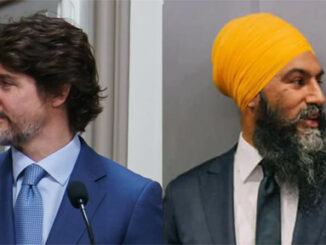
  • Bitter exchange between PM Justin Trudeau and Leader of Opposition Pierre Poilievre before the no to-no-confidence motion

    Bitter exchange between PM Justin Trudeau and Leader of Opposition Pierre Poilievre before the no to-no-confidence motion

    After Conservatives now Bloc Quebecois threatens to bring down the minority Liberal government

    By Prabhjot Singh

    OTTAWA (TIP): It was free for all as the House of Commons witnessed a rowdy question hour before turning down no-confidence motion 211-120 for a reprieve for the minority Liberal Government. Marred by acrimonious verbal exchanges between those supporting and opposing the motion, Speaker Greg Fergus asked Conservative Leader Pierre Poilievre to leave the House after he refused to withdraw the “unparliamentary language he had used against the Prime Minister.

    Pierre Poilievre tried to bring down the government with a non-confidence motion. It failed when all Bloc, NDP, Green MPs, and two Independents voted against it.

    “Today, we will vote to trigger a carbon tax election between the costly carbon tax coalition of NDP-Liberals … or common-sense Conservatives who will axe the tax, build the homes, fix the budget and stop the crime,” Poilievre said, making his case to the Commons in question period. “Again with the clever little performance, with the slogans he has memorized, without any solutions for Canadians,” Trudeau shot back.

    “He does not care about Canadians, he cares about his political self-interest. Little performances, little rhymes and slogans — no solutions,” Trudeau said as he returned to the House today after his official visit to the United States where he attended the general assembly session of the United Nations

    The speaker called it a “remarkable question period” after MPs from all sides yelled at each other and called each other names.

    “There are a couple of things that are going on here today that are not acceptable,” Fergus said.

    Poilievre’s day-long suspension from the House followed his calling Prime Minister Justin Trudeau a “wacko” for supporting B.C.’s past policy of decriminalizing some hard drugs in an attempt to reduce the number of overdose-related deaths.

    Poilievre maintained it was a “wacko policy” backed by “this wacko prime minister.” When Speaker Fergus asked him to withdraw the “unparliamentary language,” he refused, saying that he would replace “wacko” with “extremist” or “radical.” Poilievre’s refusal prompted Fergus to remove him.

    Once the Leader of Opposition was ordered out of the House, the Conservative caucus left the Commons chamber en masse, following Pierre Poilievre.

    Speaker also ordered Conservative MP Rachael Thomas to withdraw from the House of Commons for ‘disregarding the authority of the chair.’ Thomas was heard saying ‘The chair is acting in a disgraceful manner.’

    It was not Pierre Poilievre alone who was cautioned by the Speaker. Even the Prime Minister was also mentioned. During question hour, Justin Trudeau said at one point that Poilievre was a “spineless” leader. This remark did result in a rebuke from Fergus. The Speaker told Trudeau not to make comments that “call into question the character of an individual member of Parliament.”

    “Poilievre is trying to earn votes through personal attacks”, Trudeau said, after the Conservative leader raised Trudeau’s past episodes of wearing blackface.

    As the verbal tirade continued, Trudeau accused Poilievre of courting “white nationalist groups” with his visit to an anti-carbon tax protest camp in the Maritimes earlier this month.

    Another issue that snowballed into another exchange of barbs was the Trudeau accusing Conservatives of making homophobic comments during rowdy question hour.

    Speaker Greg Fergus was asked by the Treasury Benches to investigate whether a Conservative MP made homophobic comments involving the prime minister on the floor of the House.

    The incident that turned question hour into an all-out yelling match, started with a question from Conservative Leader Pierre Poilievre about the government’s controversial purchase of a luxury apartment for its consul general in New York.

    While listing off features of the condo, including “a handcrafted copper soaking tub,” Poilievre asked Prime Minister Justin Trudeau if he visited Consul General Tom Clark at the new residence on his recent trip to the U.S.

    Speaker wanted that no one should speak out of turn, Trudeau quipped, “We are used to casual homophobic comments from the other side of the House.” It led to an uproar as the Opposition benches started shouting to demand that the prime minister be kicked out for unparliamentary language.

    Fergus said he heard a comment but could not tell who made it. While pleading with MPs to “treat each other with the presumption of honor and respect,” he asked Trudeau to withdraw his comment.

    “Standing up to bullies requires us to call them out on their crap sometimes and that’s what I will do,” Trudeau responded.

    “I will happily withdraw my comment if the member who suggested that I was sharing a bathtub with Tom Clark stands up, and takes responsibility.”

    After another round of yelling and calls to “kick him out,” Trudeau withdrew what he characterized as his “comment about defecating.”

    Fergus then allowed Trudeau to continue with his response to the original question.

    PM Justin Trudeau fielded a few more questions from Bloc and NDP MPs before he left the House after the fracas.

    When the vote was taken, the result 211-120 was on the expected lines as the Liberals, NDP, Bloc Quebecois, Green and two independents voted against the motion.

    Bloc Québécois Leader Yves-François Blanchet laid out a list of demands Wednesday that he said the government must fulfil by the end of October if it wants to avoid the risk of an early election.

    Speaking to the media, Blanchet said the Bloc wants the government to push through a bill, C-319, that would hike Old Age Security (OAS) payouts by 10 per cent for seniors between the ages of 65 and 74. The government topped up OAS payments for seniors aged 75 and older in 2022.

    Blanchet also said he wants the government to agree to pass a Bloc private member’s bill, C-282, that exempts the supply-managed farm sectors — dairy, poultry and eggs — from any future trade negotiations.

    He said those demands must be met by October 29. If they are not, he said, the Bloc will start negotiations with the Conservatives and the NDP on toppling Prime Minister Justin Trudeau’s government.

    The Liberal government may not fall even if the Bloc pulls its support. Trudeau could convince the NDP to back him up again. The Conservatives are eager to go to an election as soon as possible and have threatened to table more non-confidence motions in the coming weeks to trigger a vote.

    The Liberals hold 153 of the 338 seats in Parliament. To get to a majority of 169 MPs without Conservative support, the Liberals need either the NDP (25 MPs) or the Bloc (33 MPs) to stand with them.

    The Conservatives (119 MPs) and the Bloc voting together wouldn’t be enough to bring down the government. They need the NDP’s support as well to get the no-confidence motion through.

    (Prabhjot Singh, is a Toronto-based award-winning independent journalist, He was celebrated by AIPS, the international body of sports journalists, for covering ten Olympics at its centennial celebrations held at UNESCO Centre in Paris during the 2024 Olympic Games. Besides, he has written extensively about business and the financial markets, the health industry, the public and private sectors, and aviation. He has worked as a political reporter besides covering Sikh and Punjab politics. He is particularly interested in Indian Diaspora and Sikh Diaspora in particular. His work has also appeared in various international and national newspapers, magazines and journals.)

  • Mission accomplished, says Dr. Gurinderpal Singh Josan

    Mission accomplished, says Dr. Gurinderpal Singh Josan

    Saragarhi Park is now open to tourists

    “Our mission has been accomplished,” says Dr Gurinderpal Singh Josan, Chairman of the Saragarhi Foundation, holding “now tourists can walk down the park created on the battlefield of Saragarhi. It is open to the public.

    By Prabhjot Singh

    “On July 8, 2019, the Foundation hoisted ‘Nishan Sahib’ at Saragarhi. With the help of the British, American, Canadian and Indian Army and the support of the Government of Pakistan, we have been able to recapture the ethos and spirit of one of the eight most historic battles recognized and published by UNESCO,” adds Dr Josan.

    A gurdwara has also been set up at Hangu in the Khyber Pakhtoon region where the battle was fought on September 12, 1897.

    Dr Josan talks about Prem Nagar, a fenced locality at the foothills of Saragarhi where Hindu, Sikh and Christian families live. Incidentally, Indians and Americans are prohibited from visiting this belt of Pakhtoon area which is known to be the Taliban’s belt. He says he has been to Hangu valley, where the battle of Saragarhi was fought, several times. “With the help of locals, I have been able to revive some of the historic sites, including the “pyramid” where gallant Sikh soldiers were cremated. A “minar” (tower) was raised at the venue with the names of all 21 soldiers inscribed on it in 1901 by the British was reduced to ruins in the absence of any upkeep and maintenance.

    A ceremonial marchpast by Sikh officers of the British Army at Wolverhampton.

    “We have been successful in re-enacting the ‘Minar’ with the names of the heroes of the battle written on it. Because of our efforts and work, the historic battlefield is now fenced and protected. With the start of the Gurdwara at Hangu, our first mission of revisiting the epic battlefield has been completed.

    New York-based Dr Josan has taken upon himself the onerous task of not only tracing the families of all those gallant soldiers from 36 Sikh, now the 4th battalion of the Sikh Regiment, who while holding a small fortress atop Samana ridge between two forts, decided to fight to their last then desert the battlefield.

    Gurdwara Guru Nanak Sahib at Wednesfield in the Midlands in the UK.

    He set up the Saragarhi Foundation in Amritsar in 1987. Now 56 galleries in the world carry the portraits of all 21 Sikh soldiers.

    The 127th anniversary of the epic Battle of Saragarhi falls on September 12 (Thursday). Fought on September 12, 1897, in the Tirah region of Northwest Frontier Province, then part of British India, 21 Sikh soldiers made their last stand against thousands of Pathans.

    Overwhelming odds notwithstanding, the soldiers held off repeated enemy attacks on the fortress. The tribesmen finally set fire to the bushes and shrubs surrounding the post and under the cover of smoke managed to breach the wall. This was followed by fierce hand-to-hand combat.

    When the British Parliament heard of the battle, its members stood in unison to give an ovation to the defenders of Saragarhi. The story of the heroic deeds of these men was also placed before Queen Victoria. The account was received all over the world with awe and admiration.

    All 21 soldiers were awarded the Indian Order of Merit (posthumously) then the highest gallantry award applicable to Indian troops. It was considered equivalent to the Victoria Cross. The battle is included in the school curriculum in Punjab, and Haryana may also do the same.

    The Sikh Regiment carries the Battle Honour Saragarhi 1897 and Saragarhi Day is observed in India, the USA, Canada, Great Britain and many other countries. The battle has also been featured in a Bollywood film that Dr Josan claims is based on his coffee table book on the Saragarhi battle.

    Saragarhi Memorial at Wednesfield in the Midlands in the UK.

    Dr Josan was recently in the UK where the 127th anniversary celebrations marked the holding of Sri Akhand path sahib at Gurdwara Wednesfield in the midlands. There is a memorial raised in front of the Gurdwara carrying the statue of Havildar Ishar Singh, who led the Sikh soldiers.

    A ceremonial band and march by the Sikh Regiment of the British Army marked the event.

    In November, Dr Josan says, Saragarhi Stadium will be inaugurated at Dumanda village, near Adampur. Surrey-based Co-Chairman of the Saragarhi Foundation, J. Minhas, is from Dumanda. Two Saragarhi heroes – Gurmukh Singh and Jeewan Singh – belonged to his village. In June this year, one of the commemorative galleries of the Saragarhi battle was inaugurated in Surrey.

    The Stadium will have football, basketball and volleyball playfields of international standards. There will be the latest gymnasium hall in the Stadium whose gate will be the replica of the Saragarhi fort in Pakistan.

    A day before the 127th anniversary, a musical tribute to Saragarhi, by Satnam Punjabi, was released.

    (Prabhjot Paul Singh is a Toronto-based award-winning independent journalist, He was celebrated by AIPS, the international body of sports journalists, for covering ten Olympics at its centennial celebrations held at UNESCO Centre in Paris during the 2024 Olympic Games. Besides, he has written extensively about business and the financial markets, the health industry, the public and private sectors, and aviation. He has worked as a political reporter besides covering Sikh and Punjab politics. He is particularly interested in Indian Diaspora and Sikh Diaspora in particular. His work has also appeared in various international and national newspapers, magazines and journals.)

  • After pulling out of CASA, Jagmeet Singh’s NDP puts Canadian politics in a turmoil

    After pulling out of CASA, Jagmeet Singh’s NDP puts Canadian politics in a turmoil

    By Prabhjot Singh

    With its announcement of ending its governance agreement with the Liberals, the NDP has put the minority Liberal government’s survival at stake besides setting in motion an animated debate over advancing federal elections scheduled otherwise, for October 2025.

    In a campaign-style social media video, NDP Leader Jagmeet Singh announced that he has ended his party’s supply-and-confidence agreement (CASA) with Prime Minister Justin Trudeau’s Liberal government. The first federal deal ensured the Liberal minority government’s survival.

    The CASA was reached between the two parties in March 2022. Through this, the NDP committed itself to supporting the Liberal government on confidence votes in exchange for legislative commitments on NDP priorities. It was to continue till June 2025. The snapping of CASA leaves the separatist Bloc Québécois and the NDP as possible Liberal dance partners in the coming months.

    The Liberals hold 154 of the 338 seats in Parliament. To get to a majority of 169 MPs, the Liberals need either the NDP (24 MPs) or the Bloc (32 MPs) to stand with them. The Green Party holds just two seats. It is not much of a factor in confidence votes.

    Prime Minister Justin Trudeau, while reacting to Jagmeet Singh’s announcement online that he was ending his party’s supply-and-confidence agreement with the Liberals, said he hoped that the NDP would ‘stay focused’ on delivering for Canadians rather than politics.
    Trudeau held he was not angling for an election any time soon. He, however, urged the NDP leaders to support policies the two progressive parties have been backing for the last two years.

    “I will let other parties focus on politics. I am focused on actually delivering the things Canadians told me this summer they need,” Trudeau said.

    “I certainly hope that the NDP will stay true to its fundamental values, which is making sure that Canadians get the support they need and keeping away the austerity cuts and the damage that will be done by Conservatives if they get the chance.” “Justin Trudeau has proven again and again that he will always cave to corporate greed. The Liberals have let people down. They don’t deserve another chance from Canadians,” Singh said in the video.

    “There is another, even bigger battle ahead. The threat of Pierre Poilievre and Conservative cuts. From workers, from retirees, from young people, from patients, from families — he will cut to give more to big corporations and wealthy CEOs.”

    Singh said the Liberals will not stand up to corporate interests and he will be running in the next election to “stop Conservative cuts.”

    Leader of the Opposition (Conservative) Pierre Poilievre called Singh’s announcement a “stunt” and criticized him for not saying whether he would vote non-confidence in the government.

    “He came out and claimed that he was wrong, that the coalition was a bad, costly idea, but he refuses to commit to voting for a carbon tax election,” Poilievre told reporters. to

    Poilievre asked Jagmeet Singh to commit to voting for an election at the earliest opportunity when the House of Commons returns.

    “Right now, we don’t have a calendar to indicate when we can put forward a motion,” he said. “After Sellout Singh did this stunt today, he is going to have to vote on whether he keeps Justin Trudeau’s costly government in power, or whether he triggers a carbon tax election.”

    In a media release accompanying his announcement, Singh said “the NDP is ready for an election, and voting non-confidence will be on the table with every confidence measure.”

    Last week, Poilievre called on Singh to pull out of the agreement. In response to Poilievre, Peter Julian, the NDP’s House leader, said, “leaving the deal is always on the table for Jagmeet Singh.”

    A spokesperson for the NDP revealed that the plan to end the agreement had been under active consideration for the past two weeks. It was kept under wraps so as not to inform the Liberal government of its decision until an hour before the video was scheduled to go live online.

    Within 10 minutes of informing the Prime Minister’s Office about the NDP’s decision to pull the plug, Jagmeet Singh posted the video on social media shortly before 1 pm on Wednesday.

    Justin Trudeau hoped the next election would not happen “until next fall” so that his government has time to move forward on pharma care, dental care and school food programs.

    “The contrast with a Conservative leader that wants to cut … the programs that Canadians are relying on to get through this difficult time, well, that will be a political decision that Canadians get to take in an election,” he said.

    Liberals House of Commons Leader Karina Gould, who only last week said she was confident the agreement would last until June, said that Singh’s decision was “a big surprise.”

    “There were no signs in the relationship that the NDP was going to do this. It came as a big surprise to all of us today,” she told media. “Mr. Singh has just decided that this is better for him politically and he’s putting at risk all of the successful programs that we have put in place over the last three years.”

    Jagmeet Singh has decided to ‘put his own personal, political interest ahead of that of Canadians,’ she added.

    Trudeau said his government is more focused on tackling the affordability crisis and climate change.

    “These are the things that we’re focused on. I’ll let others focus on politics,” Trudeau said.

    “I really hope the NDP stays focused on how we can deliver for Canadians, as we have over the past years, rather than focusing on politics.”

    Through the CASA, the NDP kept the minority Liberal government in power in exchange for movement on key priorities such as dental care benefits, one-time rental supplements for low-income tenants and a temporary doubling of the GST rebate. Some of the promises the Liberal government made to the NDP, however, have yet to be fully realized. Pharmacare legislation hasn’t passed the Senate and a bill to implement Elections Act changes is still before the House. A promised Safe Long-Term Care Act has yet to be tabled.

    While the Liberals and NDP have started to roll out a pharma care plan by agreeing to provide free contraception and diabetes treatments, the federal government was yet to complete deals with provincial governments to actually deliver those benefits. Even the new federal dental care program won’t be fully implemented until early next year.

    Many feel that the end of CASA doesn’t necessarily mean an immediate election. The Liberals could seek the support of the Bloc Québécois or try to continue negotiating with the NDP on a case-by-case basis.

    Only yesterday, NDP labor critic Matthew Green said the NDP has been re-evaluating the deal since Labor Minister Steve MacKinnon directed the Canada Industrial Relations Board to impose binding arbitration less than 24 hours after Canadian Pacific Kansas City and Canadian National Railway locked out their workers after failing to reach a deal at the bargaining table.

    In a message to his followers, Jagmeet Singh said “We wanted to make sure you saw this today. This is an important moment for our movement and our country to announce the end of the supply and confidence agreement with Trudeau’s Liberals. They don’t deserve another chance to let people down. “It’s going to be up to New Democrats to show Canadians the path to fight Pierre Poilievre’s division and hate with unity and hope.

    “What happens between now and the election will be the fight of our lives. It will put to the test what kind of country we want to be:

    “One that takes care of our neighbors, or one that caves to the interests of big corporations and their rich CEOs?

    “Canadians will have a chance to choose between hope and despair. We choose hope,” he added.

    (END OF BOX)

    Prime Minister Justin Trudeau, in his message to party followers, said, “It is a disappointing day for Canadians.

    Last week Pierre Poilievre called on Jagmeet Singh to rip up our supply and confidence agreement that has delivered so much progress for Canadians.

    “Today Singh did as he was told, abandoning progressive policies and putting important programs at risk of Conservative cuts.

    “Together, over the past two and a half years, our Liberal team has worked with the NDP in a divided minority parliament to build homes at a pace we haven’t seen in more than 50 years, deliver dental care for 500,000 Canadians, deliver free contraceptive and life-saving diabetes medication for 9 million Canadians through National Universal Pharmacare, build an economy that works for everyone, and so much more.

    “In March 2022, when the agreement was reached, I said that we couldn’t let our differences stand in the way of delivering what Canadians deserve and need. But clearly, Jagmeet Singh and the NDP disagree. While they put politics over progress, we’ll keep moving forward for everyone.

    “This time next year we could be days into a national campaign. With Jagmeet Singh turning his back on our agreement to deliver for Canadians and Pierre Poilievre and his Conservatives itching for an election, we need to be ready for one that can now be called at any moment. So much is at stake,” he added.
    (The author is a senior journalist. He can be reached at prabhjot416@gmail.com)

  • Why did India return from Paris with 16 and not 18 hockey Olympians?

    Why did India return from Paris with 16 and not 18 hockey Olympians?

    By Prabhjot Singh

    While fervor, gaiety, celebrations, and felicitations to mark back-to-back bronze medal triumphs in the Tokyo and Paris Olympic Games are almost nearing their end, at least two members of the Indian hockey squad must have been left wondering why they did not return home as “Olympians” with bronze medals hanging down their necks.
    This million-rupee question probably did not agitate the minds of officials of the Indian Olympic Association (IOA) and Hockey India (HI), who were part of the official entourage to the Paris Olympic Games.
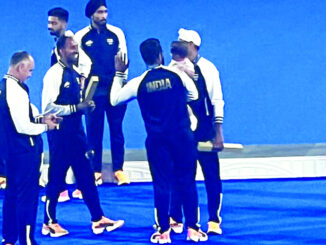
    When the medal ceremony was held after the gold medal match, there were 18 players each of the new champions, the Netherlands, and the runners-up Germany, on the podium, and India, the winner of the bronze medal, had only 16 players. After the conventional ritual was gone through, three of the Indian players – Krishan Bahadur Pathak (goalkeeper), deep defender and drag-flicker Jugraj Singh and midfielder Neelkanta – who watched all the games from the stands, joined their colleagues on the ground to celebrate the bronze medal triumph. The Indian hockey team’s bronze medal win at the Paris Olympic Games was a moment of triumph, but two reserve players, Krishan Bahadur Pathak and Jugraj Singh, were left wondering why they didn’t receive medals.
    Despite being part of the team throughout the tournament, they were not included in the medal ceremony as they did not take the field of play. The International Hockey Federation (FIH) clarified that only athletes who participate in a match can be considered Olympians and receive medals. India did not utilize the Alternate Athlete (Ap) rule, which allows teams to swap in reserve players during the tournament. In contrast, other teams, including the Netherlands and Germany, used this rule to give more players the opportunity to participate and receive medals. The Indian team management’s decision not to invoke this provision has left the reserve players feeling disappointed and wondering what could have been.
    With bronze medals hanging around their necks, 16 Indian players were busy greeting each other besides acknowledging compliments from their accompanying family members, friends and well-wishers, Indian reserve players looked heartbroken as their opportunity to return home as Olympians with a similar bronze medal hanging down their necks had slipped away without any fault of theirs. They were with the team throughout, discharging their roles as well as they could.
    They wondered why reserve players of other teams, including new champions, the Netherlands, and the silver medalist Germany, had blooded 18 players each during the Games, they were denied a legitimate chance of sharing the same honors.Understandably such questions are seldom asked as they have their future in sport at stake.
    When contacted, Nicolas Maingot, Senior Communications Manager of the International Hockey Federation (FIH), said that the IOC rules state that to become an Olympian, and to be awarded a medal, an athlete needs to take the field of play. Any athlete who does not, even if they are named as a reserve, is neither an Olympian nor can they be awarded a medal. This is true of all sports.
    Therefore, for hockey, only those athletes from the medal-winning teams who were named in a matchday squad of 16 and took the field of play during a match, were awarded medals.
    The Netherlands and Germany both used the new Ap athlete rules in place during Paris to swap in their Ap athletes during different matches in the tournament and, therefore 18 athletes received medals. Neither reserve goalkeeper did, however. India did not make any changes during the tournament to their matchday 16 and therefore only 16 medals were awarded and their 3 Ap athletes are not considered Olympians or medalists for Paris as they did not play at any stage.
    What is the Ap rule?
    The International Olympic Committee (IOC) circulates rules and guidelines for all participating National Olympic Committees (NOCs) and their affiliates National Sports Federations (NSFs) for their teams and players participating in the Olympic Games. It notified the Alternate athlete (Ap) as follows:
    Alternate athlete (Ap)
    As per the “Accreditation at the Olympic games – Detailed applications” NOCs can activate alternate athlete (Ap) in the following sports and disciplines: Artistic swimming, Athletics, Cycling – BMX racing, Cycling – Track, Equestrian, Fencing, Handball, Hockey, Football, Rowing, Rugby, Table Tennis, Volleyball and Water Polo (TBD).
    All Ap athletes need to be identified at the time of the final Entries Submission. In addition, before the sport-specific deadlines set in the Late Athlete Replacement Detailed Annex by Discipline, the NOCs can either activate their Ap athlete(s) or to use a replacement from the long list and be in a position to appoint another Ap athlete. To replace an Ap athlete the LAR process using the e-LAR process using the e-LAR tool as described above is applicable.
    Once competition has started, the activation of the Ap athlete has to follow the same e-LAR process as above and adhere to the timelines stipulated in the Late Athlete Replacement Detailed Annex by discipline.
    Why did India decide not to make use of the Ap rule?
    The Indian team management in its prudence may have decided not to invoke this provision so as not to upset the rhythm of the team. There could be other reasons, including some technical aspects which are not out in the public domain.
    Statistically speaking, India needed to use this rule more than other teams as it was the only team to be given a red card and that too at the beginning of the second quarter of a crucial quarterfinal match against Great Britain. Losing a dependable deep defender and an alternate drag flicker with a semi-final against the defending world champions Germany in hand, India needed reinforcements to tighten its defense line. It was available under the Ap rules. India had the option to bring in Jugraj Singh.
    Though the Indian team played the semi-final against Germany without Amit Rohidas by using former captain and midfielder Manpreet Singh as a deep defender, it did affect two positions, one at which Manpreet plays originally and the second at the position he played in the semi-final. Had Jugraj been there, it would have come as a blessing for he would have come in deep defense and allowed Manpreet to play at his natural position.
    Though Amit Rohidas was the only player to get a red card and two-match suspension, Germany had landed in a similar but a little less severe situation after its opening game against France. Christopher Rueher, one of their most experienced players, was shown a yellow card during the game. After the game, a one-match ban was imposed on him for arguing with the umpire.
    Germany managed the challenge and used the Ap rule. It was not only Germany but almost all teams that made use of the Ap rule. Interestingly, none of the teams used it for bringing in their reserve goalkeepers.
    Rest, all is history.

    (Prabhjot Singh is a senior journalist. He writes with equal aplomb on sports and politics. He can be reached at Prabhjot416@gmail.com)

  • When overseas Indians enjoyed their moments of glory

    When overseas Indians enjoyed their moments of glory

    By Prabhjot Singh

    Led by veteran Rajeev Ram, sportspersons belonging to the Indian Diaspora representing different nations in the 2024 Paris Olympic Games have every reason to feel pleased about their performance in the 2024 Paris Olympic games.
    After Rohan Bopanna, the oldest tennis player to compete in the 2024 Paris Olympic Games, made an early exit from his favorite men’s doubles event, his long-time arch-rival and friend, Rajeev Ram, finished on the podium. Though a gold medal eluded Rajeev Ram for the second time since the Rio Olympic Games in 2016, he doubled his silver medal tally of the Olympic Games. In partnership with left-handed Austin Krajicek, he lost the men’s doubles final to the Australian pair of Mathew Ebden and John Peers at 7-6, 6-7, 8-10.
    Incidentally, Mathew Ebden is a long-time doubles partner of Rohan Bopanna.
    Rajeev Ram has become the second player of Indian origin to win two Olympic medals in different editions. Earlier, hockey player, Kulbir Bhaura, representing Great Britain had won two Olympic medals – a Brown in the 1984 Los Angeles Olympic Games and a gold in the 1988 Seoul Olympic Games.
    Rajeev won his first Olympic medal, a silver, in partnership with Venus Williams in the 2016 Rio Olympic Games. In the semi-final, Rajeev and Venus defeated Indian pair Rohan Bopanna and Sania Mirza.
    The only tennis medal that has come India’s way was a bronze won by Leander Paes in the 1996 Atlanta Olympic Games. He lost to the ultimate winner, Andre Agassi, in the semi-finals. Since then, India has not won any medal in tennis while Rajeev Ram, a player of Indian origin, has won two silver medals in 2016 and 2024. Rajeev Ram has represented the USA in three consecutive Olympic Games since 2016.
    Another player of Indian origin who represented the USA in the third consecutive Olympic Games has been Kanak Jha, a table tennis player. Kanak Jha had a credible tournament as he qualified for the pre-quarterfinals, his highest finish since his Olympic debut in Rio in 2016.
    Besides Rajeev Ram and Kanak Jha, who represented the USA In three Olympic Games each, wrestler Amarveer Singh Dhesi donned Canadian colors in the Paris 2024 Olympic Games. He made his Olympic debut in the 125 kg category at Tokyo. He finished 13th. This time, he won his pre-quarter-final encounter but lost the quarter-final and also the repechage to end among the top eight.
    Another athlete of Indian origin who represented Canada has been Jasneet Nijjar, a runner. She was a part of the Canadian 4×400 m women’s relay quartet that finished sixth.
    The third player of Indian origin to represent Canada was water polo player Jessica Gaudreault, a goaltender. Canada finished eighth in the women’s water polo event.
    A player of Indian origin represented France in table tennis. Prithika Pavade competed in women’s singles. She lost to Manika Batra.

  • Crave to be the best as consolations are illusionary

    By Prabhjot Singh

    A nation of 1.4 billion people, claiming itself to be a world economic power, ended its campaign in the 2024 Paris Olympic Games without getting anywhere near showcasing a world champion in sports.

    Why are we not able to produce world champions in sports? It is a million-rupee question that the country is either reluctant or refuses to answer.

    India tally of six medals – a silver and five bronze medals – even fails to equal what the country achieved in the 2020 Tokyo Olympic Games. In the past four years, we lost the only World champion title – Neeraj Chopra in javelin throw – we had.

    India lost it to its neighbor that is torn by strife, has its economy shattered and struggling to survive.

    Compared to 117-strong squad sent by India, Pakistan’s contingent comprised of only seven people, of which only two – the new Olympic champion in javelin Nadeem Ashraf and his coach – were financed by the Pakistan Sports Control Board.

    India has a population of 1.4 billion that is spread across states that are larger than many countries. About 200 million people live in the northern state of Uttar Pradesh. Pakistan is much smaller, but is still the world’s fifth most populous country, with more than 230 million people.

    Geographically, India is almost four times bigger than Pakistan.

    Since Independence, India has won hockey gold five teams, including the last it won from a depleted field in Moscow in 1980 while Pakistan has won three times.

    India has won only two individual gold medals in Olympic Games. The first of which came in shooting – Abhinav Bindra – in 2008 Beijing Olympic games and second in the Tokyo Olympic Games through javelin thrower Neeraj Chopra.

    Many other Asian nations are far ahead of India. China shared the top spot with the USA with 40 gold medals each. Japan and Korea are other Asian superpowers in sports. They continue to be among top eight sporting nations of the world.
    Other than them, Islamic Republic of Iran, Chinese Taipei, Hong Kong China, Philippines and Indonesia had two gold medals each in the just concluded Olympic Games. Countries like Israel, Thailand and Pakistan also ended on the medals tally with a gold medal each.

    India, however, draws its consolation that 21 of its 117 athletes that went to Paris came back with medals hanging around their necks. Sixteen of these medals – bronze – came from hockey and three from shooting. Only other medal won by India was a bronze in wrestling.

    India feels contended with consolatory medals, generally bronze and sometime with silver, and probably lack the will or capability to win gold medals. As a true sporting nation, we keep gold for others and feel content with silver and bronze.

  • Prabhjot is honored by AIPS, the world’ sports journalist body, for covering 10 Olympic Games

    Prabhjot is honored by AIPS, the world’ sports journalist body, for covering 10 Olympic Games

    Prabhjot Singh is one of the sports journalists honored by AIPS , the world’s journalist body for covering 10 Olympics . Congratulations to Prabhjot Singh and all others who have been honored for their feat.

  • Women athletes are keeping Indian flag flying high

    Women athletes are keeping Indian flag flying high

    Led by double medalists PV Sindhu (badminton) and Manu Bhaker (shooting), women athletes are keeping the Indian flag flying high at the 2024 Paris Olympic Games.

    By Prabhjot Singh

    PARIS (TIP): Led by double medalists PV Sindhu (badminton) and Manu Bhaker (shooting), women athletes are keeping the Indian flag flying high at the 2024 Paris Olympic Games.
    While Manu Bhaker has emulated the double medal feat of PV Sindhu, women athletes, including Sreeja Akula and Manika Batra (table tennis), Deepika Kumari and Bhajan Kaur (archery), have had an impressive start to their Olympic campaign here. Though this is not to belittle the contribution of male athletes, especially badminton star Lakshya Sen and HS Prannoy or shooters – Arjun Babuta, Sarabjot Singh and Swapnil Kusale – besides the men’s hockey team, in the first five days of competitions have gone well for women athletes of the Indian squad.
    Before the start of the 2024 Paris Olympic Games, PV Sindhu was the lone female athlete from India with two Olympic medals – a silver in women’s singles in Rio and a bronze in London. Haryana’s Manu Bhaker, however, has put her record to shade by winning two bronze medals here, scripting history by becoming the first-ever Indian athlete to win two Olympic medals in the same edition of the Games.

    Manika Batra

    While PV Sindhu failed to win her third Olympic medal in the women’s singles Round of 16 at the Olympics as she lost against sixth-seeded Chinese shuttler He Bing Jiao in straight sets 19-21, 14-21, Manu Bhaker stays a step ahead as she is determined to accomplish the rarest feat of winning three medals in the same Olympics. Her favorite event, 25 m Air Pistol, is scheduled for Friday.
    PV Sindhu was impressive in her initial group matches. She defeated Kristin Kauuba of Estonia 21-5, 21-10.
    In Table Tennis, Sreeja Akula beat Jian Zeng 9-11,12-10,11-4, 11-5, 10-12 and 12-10 to create a flutter here. She has joined her senior colleague Manika Batra in the round of 16. Manika takes on Japanese opponent Mio Hirano for a place in the quarterfinals.
    Kanak Jha, a player of Indian origin, representing the US for the third consecutive time, also moved up with a splendid win over P. Gionis of Greece at 11-5,11-4,11-7, 7-11, 8-11 and 11-8.
    The toast of Indian fans was young Lakshya Sen who toppled third seed Jonatan Christie 21-18, 21-12 in the group matches. The win puts Lashya in the run for a medal for his unbeaten performance in the competition so far. He has already crossed a tough hurdle.
    Indian double pair Rani Reddy and Chirag Shetty, too, have been doing well in the competition tormented by sicknesses and last-minute withdrawals. Matches already won by Indian pair, like a few others, have been taken off the competition record. German opponents had cried off before the game of the world number Indian pair earlier.
    Arjun Babbuta narrowly missed a bronze medal. He needed only one good shot in one of his last two laps, but it was not to be. On Wednesday, Swapnil Kusale made the medal round in the 50 m Rifle 3 positions with a score of 590, three points behind the top qualifier Liu Yukun of China. All eyes are set for the final tomorrow.
    In archery, Deepika Kumari and Bhajan Kaur made a winning start in individual events to raise hopes for a first-ever Olympic medal.

  • Olympic Games 2024 : Manu Bhaker is the new sports icon of India

    Olympic Games 2024 : Manu Bhaker is the new sports icon of India

    By Prabhjot Singh

    Paris (TIP)- A girl from Jhajjar in rural Haryana is the new sports icon of India. She has given India its first two medals, both bronzes, in 10 m Air Pistol. This new sports icon is none other than Manu Bhaker, a student at Panjab University in Chandigarh.
    When she won a bronze medal in the 10 m Air Pistol for women, she became the first Indian woman shooter to win a medal in the Olympic Games. On Tuesday, she paired up with a boy from neighboring Punjab, Sarabjot Singh, to win a similar color medal in the 10 m Air Pistol Mixed team event. She thus added yet another feather to her cap to become the first Indian woman shooter to win two Olympic medals in the same Olympic Games. Incidentally, no other Indian shooter has won two Olympic medals.
    Manu has her favorite event, 25 m Air Pistol (individual) left. She hopes to make a hat-trick of Olympic medals in her second Olympics after she drew a blank in the 2021 Tokyo Olympic Games. Her struggle and hard work have been rewarded.

    Manu Bhaker-Sarabjot Singh proudly display their Bronze medals at Paris Olympics.

    She also brought luck to her teammate, Sarabjot Singh, who had earlier missed making the medal round in the men’s event. He finished ninth with a score of 577. His fellow shooter, Arjun Cheema, after a good start, suffered a lapse off concentration to finish 18th with a score of 574.
    Arjun Cheema and Rhythm Sangwan failed to make the medal round in the event Manu Bhaker and Sarabjot excelled.
    Shooting is one sport in which India hopes to reap a rich harvest of medals. Yesterday, Arjun Babuta finished fourth and missed the bronze medal by a whisker aggregating 208.4. It was a big heartbreak for him as he came so close and yet remained far away from his dream Olympic medal. His last two rounds of 10.1 and 9.5 proved costly for him while ultimate bronze medalist Miran Maricic of Croatia had 10.7 and 9.9 in his last two shoots.
    One of the world’s oldest players in the Tennis circle, Rohan Bopanna, ended his Olympic campaign without a medal. He in partnership with Balaji was ousted in the first round by the French team of Gael Monfils and Roger Vasilin. Rohan had come close to winning a medal in the 2016 Rio Olympic Games where he in partnership with Sania Mirza lost the mixed doubles semi-final to Rajeev Ram and Venus Williams.
    Rajeev Ram and Venus Williams then went on to win the silver thus making Rajeev Ram. He has been the first Indian expatriate to win an Olympic medal.
    Yesterday when Manika Batra won her second round in women’s singles in Table Tennis, she defeated Prithika Pavade, also a player of Indian origin representing the host country, France. Manika won in straight games against her.
    Incidentally, another player of Indian origin in the competition on Monday was Jessica of Canada. Jessica is a water polo player and played the goalkeeper of the Canadian team that lost its opening game to Hungary.

  • Olympic Games-2024: A Curtain Raiser

    Olympic Games-2024: A Curtain Raiser

    • When age fails to come in the way of sports rivalries!
    • Will Rohan Bopanna break Rajeev Ram’s winning streak
    By Prabhjot Singh

    Prabhjot Singh, a senior sports journalist, in his career spanning 40 years, has witnessed, and reported on six summer Olympic games, one winter Olympic games, seven World Cups in Hockey, FIFA World Cup in 2006, besides three World Cups in Cricket, and two editions of Pan Am Games (Toronto and Lima). He has also covered Asian Games (New Delhi and Jakarta) and Commonwealth games in Melbourne and New Delhi.
    He will be in Paris from July 23, 2024 till August 13, 2024 to cover the Olympic Games 2024 in Paris which has the distinction of hosting the Olympic Games for a third time. Earlier , Paris hosted the Olympic Games in 1900 and 1924. The only other city to host Olympic Games three times is London which hosted Olympic Games in 1908, 1948 and 2012.
    Readers of The Indian Panorama will get to read Prabhjot Singh’s special reports on Olympic Games 24 straight from Paris on a daily basis at www.theindianpanorama.news besides selected reports in the weekly editions. Prabhjot Singh can be reached at prabhjot416@gmail.com

    Rohan Bopanna, one of the oldest players on the tennis circuit, may still be hopeful of ending his career with a medal in tennis. He may again run into Rajeev Ram in the men’s doubles event. This time, Rohan Bopanna will be paired with Sriram Balaji. Rohan, now 44, is the oldest while Rajeev is not far behind as he crossed 40 in March this year. Photo: Reuters file

    Rivalries, traditional or otherwise, enliven sports competitions. Suppose the fight for Ashes between Australia and England enthuses cricket followers worldwide. In that case, the India-Pakistan game in hockey gets the South Asian community on the edge of their seats. Have you ever wondered about the tennis rivalry that has been growing between India and the United States since the 1996 Atlanta Olympic GamesRs
    Individual rivalries apart, they become so exciting and animated that they get linked to national pride and honor.
    In the 1996 Atlanta Olympic Games, Indian ace Leander Paes made the medal round in men’s singles. In the semi-finals, he was drawn to meet the challenge of Andre Agassi of the hosts, USA.
    Though Leander lost to his much-fancied opponent, he made amends by winning the bronze medal, the first individual medal for an Indian athlete since the 1952 Helsinki Olympic games.
    The defeat of Leander set in motion a rivalry that has since then been growing steadily. The USA has been triumphant in most of the prestigious events against its Indian opponents. Twenty years later, when the Indian mixed doubles pair of Rohan Bopanna and Sania Mirza faced Rajeev Ram and Venus Williams in the semi-finals in the Rio Olympic games, the Americans were unstoppable.
    It was a golden opportunity for the Indian pair to end the 20-year drought in tennis, but it went down fighting to a Czech Republic pair in the bronze medal game.
    The rivalry did not end with the second successive reverse for India in Olympic tennis, it got extended to one of the grand slams, the US Open. In the 2023 US Open, Rohan Bopanna and his Australian partner lost the men’s doubles title to Rajeev Ram and Austin Krajicek.
    Rohan Bopanna, one of the oldest players on the tennis circuit, may still be hopeful of ending his career with a medal in tennis. He may again run into Rajeev Ram in the men’s doubles event. This time, Rohan Bopanna will be paired with Sriram Balaji. The tennis competition will be held from July 27. Rohan, now 44, is the oldest while Rajeev is not far behind as he crossed 40 in March this year.
    Rajeev Ram is one of the illustrious members of the Indian Diaspora who has won several honors for the US in Grand Slams and even a silver medal in the Olympic Games (2016). Rohan lost a chance to become the second Indian player after Leander to win an Olympic medal in Tennis in Rio. Paris may be his last chance.
    Other than Rajeev Ram, Kanak Jha is another player of Indian origin who will be donning US colors for the third consecutive Olympic Games. Kanak plays Table Tennis but has never progressed to the medal round in his previous Olympic participations.
    When the United States Olympic & Paralympic Committee announced its 592-member 2024 Olympic team to compete at the 2024 edition of the Games, it included both Rajeev Ram and Kanak Jha. Before Rajeev Ram won a silver medal in 2016, cyclist Alexi Singh Grewal held aloft the US flag with a gold medal triumph in the 1984 Los Angeles Olympic Games. Alexi Singh has been the torch-bearer of sportspersons of Indian origin representing the US in various major international sporting events.
    Paris returns as the host nation of the Olympic Games Paris 2024, which is taking place exactly 100 years since Paris hosted the Olympic Games back in 1924. Paris joins London as the only two cities to host the Olympic Games three times. Paris hosted in 1900, 1924 and now 2024, while London hosted in 1908, 1948 and 2012.
    An estimated 10,500 athletes from more than 200 National Olympic Committees and the IOC Refugee Olympic Team will take to Paris to compete on the world stage. Thirty-two sports will be contested during the Olympic Games Paris 2024, with 329 medal events in total.
    The Paris 2024 Olympic Games will make history by achieving numerical gender parity on the field of play, ensuring equal representation of male and female athletes. For the 2024 U.S. Olympic team, the roster comprises of 314 females and 278 males.
    “It is with immense pride and excitement that we announce the 2024 U.S. Olympic Team and the exceptional athletes that embody the spirit of dedication, resilience, and excellence, continuing the proud history of Team USA at the Olympic Games,” said USOPC CEO Sarah Hirshland. “As they prepare to represent our nation on the greatest stage in all of sports, we honor their personal achievements and celebrate the unwavering support of the people that make it possible — their families, teammates, National Governing Bodies, coaches, and communities around the country. In the true spirit of ‘One for All,’ we join a proud nation of fans in cheering them on through inspiring performances and unforgettable moments.”
    The 2024 U.S. Olympic Team has over 250 returning Olympians – including three five-time, four four-time, 16 three-time and more than 50 two-time Olympians. The slate of veterans features 122 Olympic medalists, including 66 Olympic champions who have won 110 gold medals. Forty-five athletes have won multiple Olympic medals, while 23 have won multiple Olympic gold medals.
    The multiple medalists are led by Katie Ledecky (swimming) who leads the team with 10 Olympic medals, including seven golds and three silvers. Simone Biles (artistic gymnastics) and Caeleb Dressel (swimming) enter Paris 2024 with seven medals each, while Ryan Murphy (swimming) has six, and Diana Taurasi (basketball), Lilly King (swimming) and Simone Manuel (swimming) have five each.
    The three five-time Olympians on the roster include Taurasi, Steffen Peters and McLain Ward (equestrian). The four four-time Olympians feature Brady Ellison (archery), Gerek Meinhardt (fencing), Stu McNay (sailing) and Vincent Hancock (shooting).
    “These athletes of Team USA have demonstrated unparalleled dedication and passion in their pursuit of excellence on their road to earning a place on the 2024 U.S. Olympic Team and representing the United States in Paris,” said Rocky Harris, USOPC chief of sport and athlete services, and Chef de Mission for the Olympic Games Paris 2024. “Their journey to the Games exemplifies the Olympic spirit-pushing boundaries, breaking records, and captivating millions around the country and the world, and I am so proud to be a part of a team of colleagues at the USOPC and across the National Governing Bodies who support them. This summer, Team USA athletes will amaze us with extraordinary talent and indomitable spirit – and they will undoubtedly inspire the next generation.”
    Of the collective of 592 U.S. athletes competing in Paris, 75% (444 athletes) competed collegiately at 169 schools. Twenty-one teams have at least 80% collegiate participation on their U.S. Olympic rosters, including 15 teams that are comprised of 100% college athletes: women’s basketball, men’s and women’s 3×3 basketball, beach volleyball, men’s and women’s indoor volleyball, diving, fencing, women’s field hockey, women’s rugby, modern pentathlon, men’s and women’s water polo, rowing and triathlon. College athlete representation on the 2024 U.S. Olympic Team spans all three NCAA Divisions (I, II and III), as well as junior colleges and collegiate club programs.
    Forty-six states are represented on the U.S. roster, with California (120), Florida (42), Texas (41), Illinois and Pennsylvania (27) leading the way. Three athletes identify international hometowns, including Ian Barrows (sailing) from St. Thomas, U.S. Virgin Islands, Maximilian Dietz (soccer) from Frankfurt, Germany, and Luca Cupido (water polo) from Santa Margherita Ligure, Italy.

    (Photo by Christian Petersen/Getty Images for World Athletics)

    At a glance
    – It also includes 314 women and 278 men, marking the fourth straight Olympic Games with more women on the U.S. roster than men.
    – Artistic gymnast Hezly Rivera is the youngest of three athletes who are age 16, while equestrian Steffen Peters will be competing at age 59.
    – The 2024 team features more than 250 returning Olympians and 122 Olympic medalists, including 66 Olympic champions.
    – Three five-time Olympians decorate the roster, including Diana Taurasi (basketball), Steffen Peters (equestrian) and McLain Ward (equestrian). The four four-time Olympians include Brady Ellison (archery), Gerek Meinhardt (fencing), Stu McNay (sailing) and Vincent Hancock (shooting).
    – The United States will be represented in 44 sports in Paris. Of the 329 medal events contested in Paris, Team USA will have at least one entry (athlete/team) in 253 of these events.
    – There are at least six sets of siblings on the team, including twins Annie and Kerry Xu (badminton), Brooke and Emma DeBerdine (field hockey), Alex and Aaron Shackell (swimming), Gretchen and Alex Walsh (swimming), Juliette and Isabella Whittaker (track and field) and Chase and Ryder Dood (water polo).
    – Twelve athletes on the roster self-identify ties to the military, including 10 with the Army, one with the Navy and one with the Marines.
    – Forty-six athletes on the roster self-identify as parents, including 34 dads and 12 moms.
    – March is the most popular birthday month with 59 athletes.

  • Prabhjot Singh heads to Paris to cover 2024 Olympic Games

    Prabhjot Singh heads to Paris to cover 2024 Olympic Games

    TORONTO (TIP): Senior journalist and sports editor Prabhjot Singh will head to Paris to cover the 2024 Olympic Games. He will be in Paris from July 23 till August 13. Besides covering all important events, he will also focus on the Indian Diaspora, hockey, boxing, wrestling, tennis, table tennis, athletics, badminton and other Games featuring players of Indian origin besides doing stories of human interest and general interest.

    Prabhjot Paul Singh, better known as Prabhjot Singh, is a veteran all round journalist with over 40 years of experience of working with print and electronic media, including 37 years with The Tribune – the oldest and largest circulated English daily of North India. He had also worked as Executive Editor, PTC News, the world’s largest Punjabi TV network, for more than 8 years.

    He did his M.Sc. in Journalism from PAU, Ludhiana, MA (Eng) and BSc (Medical) from Panjab University, Chandigarh, and Bachelor of Journalism from Punjabi University, Patiala.

    The man with solid ethical core, integrity, strong communication skills with knowledge of English, Urdu, Punjabi, Hindi, German, French as well as courageous attitude and analytic mind had won KK Birla Foundation Fellowship on Media and Terrorism and also KC Kulish (Rajasthan) award for Excellence in International Journalism.

    In fact, he had been a pioneer in introducing the concept sports page in Jalandhar (vernacular) newspapers in February, 1975, months before he was offered a job as a Sports Reporter by The Tribune group of newspapers.

    In 2012, Vienna based International Press Institute (IPI) has recognized his commitment to promote free exchange of accurate, balanced news among nations and for Excellence in Journalism, for publishing an investigative series into the loot of the public transport system in Punjab by Punjab politicians, he was awarded IPI-India award.

    The Sunday magazine section of The Tribune from Chandigarh dated 25 November 1984, carried an article titled “Profile of an assassin”, is his most recognized work.

    Though he has many feathers in his cap yet efforts to make IXC (Chd airport) active will be remembered always as a blessing for Punjabi Diaspora. His tireless pen had made Chandigarh airport as Chandigarh International Airport. He had raised issues related to IXC at various platforms.

    His love for sports can be witnessed from his travels to six summer Olympic games, one winter Olympic games, seven World Cups in Hockey, FIFA World Cup in 2006, besides three World Cups in Cricket, and two editions of Pan Am Games (Toronto and Lima). He has also covered Asian Games (New Delhi and Jakarta) and Commonwealth games in Melbourne and New Delhi. Also he has been to many other important international events and did spectacular stories of human interest.

    Prabhjot has been contributing to The Indian Panorama for many years now.

  • Cricket is an amazing game that produces instant heroes

    Cricket is an amazing game that produces instant heroes

    • Sahil Chauhan of Estonia puts Nicholas Pooran’s effort to shade
    By Prabhjot Singh

    Cricket is an amazing game that produces instant heroes. While Nicholas Pooran of West Indies was on a record-shattering spree against Afghanistan in the last group game of the T20 World Cup, elsewhere in Cyprus, Sahil Chauhan of little-known Estonia scripted history, smashing the quickest T20 century in 27 balls.
    Neither Cyprus nor Estonia are any entities big enough to qualify for the T20 World Cup, a 6-match series played between the two teams at Episkopi produced some amazing records. The three-day six-game series featuring several players of Indian origin, including Sahil Chauhan for Estonia and Taranjit Singh for Cyprus, had the game statisticians busy. It may be a mere coincidence that Sahil Chauhan’s unprecedented 27-ball century coincided with Nicholas Pooran’s explosive innings of 98.
    Sahil Chauhan also created a record of hitting 18 hits to the maximum in his unbeaten innings of 144 made from 44 balls. His fastest century also broke Jan-Nicol Loftie Eton’s mark of the fastest T20I hundred from 33 balls. It was also the fastest century in all T20s, thus eclipsing Chris Gayle’s 30-ball innings in IPL in 2013.
    In the first match of the series, Sahil went cheaply. In the second, Estonia had a dismal start while chasing a huge target of 191 for seven. Unperturbed by the early dismissals of openers, Sahil started on an aggressive note and took command of the game with his lusty hits to the maximum, smashing a record 18 sixes, to achieve a record strike rate of 351.21 and help his team win the game.
    Thousands of miles away, the batters of the host West Indies were in terrific form. They not only recorded the highest aggregate of all Group matches – 218 for five in 20 overs – against Afghanistan but also saw wicketkeeper-batter Nicholas Pooran climbing to the top position as an individual scorer. He made 98 to overtake Aaron Jones of USA who remained unbeaten on 94 in the opening game against Canada.
    The explosive Nicholas Pooran hammered 36 runs in one over of Omarzai’s bowling. He got 6, 5NB, 5WD, 0, 4LB, 4, 6, 6 from the over that had eight balls because of a no-ball and a wide each.
    Pooran with his superb feat joined a select band of cricketers who have scored 36 runs from an over in the T20 format of the game. Others on the elite list include three Indian players. Yuvraj became the first batter to score 36 runs in an over when he faced England’s Stuart Broad and hit the pacer for six maximums in one over. Rohit Sharma and Rinku Singh are the other two Indian batters.
    During his 98-run innings, Pooran smoked eight sixes, taking his tally to 128 in the T20I format and past West Indies great Chris Gayle’s total of 124.
    West Indies put to bat first made its intentions obvious by going for big shots. However, opener Brandon King struggled to get the start and fell prey to left Omarzai after scoring 7 runs off 6 balls. From there, Pooran and Johnson Charles played their shots to put the Caribbeans in command.
    Pooran’s brutal assault of 98 runs propelled West Indies to 218/5, its highest first-innings total in the ongoing marquee event and also its highest total in the T20 World Cups.
    After a day’s rest, the next round of the T20 World Cup – Super 8 – will start Wednesday morning with the USA taking on South Africa. In the evening, West Indies will play the defending champions England. The two sides have a prolific cricketing history, with the Men in Maroon ensuring a dominant display at home against England in recent years.
    Eight teams that have made it to Super 8 have been divided into two groups. Group A: India, Australia, Afghanistan, Bangladesho Group B: USA, England, West Indies, South Africa.
    Fawwaz Baksh, ICC Men’s T20 World Cup 2024 Tournament Director said:
    “We are getting down to the business end of the tournament and fans can look forward to an exciting Super 8 stage. It is also great to see the two hosts, West Indies and USA qualify for the Super 8, and especially the USA, which is competing in an ICC Men’s T20 World Cup for the first time. With other tournament favorites such as India, Australia, England and South Africa also in the mix, together with the impressive Afghanistan and Bangladesh teams, the next couple of weeks promises to be a cricketing spectacle.”
    Four of the Super 8 qualifiers have won the World Cup previously, India, England, West Indies and Australia. Super 8 matches will be played across four West Indies venues: Antigua and Barbuda (four), Barbados (three), Saint Lucia (three) and Saint Vincent and the Grenadines (two).Each team will play every other team in its group once, with the top two sides in each group qualifying for the semi-finals, to be played in Trinidad and Tobago and Guyana on 26 and 27 June, respectively.

    (Prabhjot Singh is a senior journalist. He writes with equal aplomb on sports and politics. He can be reached at Prabhjot416@gmail.com)

  • South Africa survives a scare

    South Africa survives a scare

    USA puts up a gallant fight before going down to Proteas by 18 runs

    By Prabhjot Singh

    Giant killers of the group matches, and one of the hosts of the T20 World Cup, USA put up a magnificent fight before bowing down by 18 runs to South Africa in the first game of the Super 8.
    Comprising mostly of players of South Asian and West Indian descent, the USA is also identified as “Mini India”. Allrounder Harmeet Singh (2/24 and 38) justified the confidence put in the Diaspora.
    Responding to a massive challenge of scoring 195 against formidable Proteas, USA came close needing just 28 from 12 balls. But it was experienced Kagiso Rabada, the most successful South African bowler, who just conceded 2 runs in his 19th wicket besides breaking the 91-run partnership between Andries Gous and Harmeet Singh.
    Once Harmeet was gone, the game swung back in the favor of Proteas. In the final and 20th over, Anrich Nortje bowled well to concede just seven to end the gallant fight of the Americans, who had earlier in the group matches, caused a major flutter by defeating Pakistan by five runs in the Super over.
    After slipping to 76-5 in pursuit of 195, a superb partnership worth 91 between Andries Gous and Harmeet Singh gave USA hope of a stunning victory. The hero of the American fightback was its wicketkeeper-batsman Andries Gous who not only remained unbeaten on 80 made from 47 balls but also had a fruitful partnership with Harmeet Singh, who had earlier impressive figures of 2/24, claiming wickets on successive balls. Harmeet Singh was a member of the WC U-19 champion Indian team before migrating to the USA.
    The USA lost its star batter and captain Aaron Jones for a blob when Keshav Maharaj, a player of South Asian descent, had him caught by de Cock.
    Earlier, Steven Taylor and Andries Gous gave the US a good start putting up 33 runs in just 3.3 overs. They suffered a reverse when Nitish Kumar left at 53 with his score of 8, including a hit to the maximum. Cory Anderson, originally from New Zealand, too, could not last long and was out for 12 making US 71/4. When Jahangir fell for 3, the US were struggling at 76 for 5.
    At this stage, Harmeet joined Andries Gous and the two went about repairing the damaged innings with some solid hitting. They took the total past the 150 mark. Sat the end of the 18th over, the US needed just 28 from 12 balls but the 19th over from Kagiso Rabada went for just two runs and included the wicket of Harmeet to drag the game back in South Africa’s favor.
    The final over from Anrich Nortje went for just seven as South Africa held on for the win.
    Gous ended unbeaten on 80 after a brilliant knock that included five fours and five sixes, while Rabada was the pick of the Proteas bowlers taking 3-18.
    Quinton de Kock earlier top-scored for South Africa with a sublime 74 from 40 balls, seven fours and five sixes. Quinton de Kock was declared man of the match.
    Skipper Aiden Markram added a lively 46 from 32 balls and Heinrich Klassen 36 from 22 as South Africa posted 194-4 – their highest tournament score so far.

    (Prabhjot Singh is a senior journalist. He writes with equal aplomb on sports and politics. He can be reached at Prabhjot416@gmail.com)

  • India wraps up Super 8 opener in style

    India wraps up Super 8 opener in style

    Batters, bowlers put up stellar show to help India make winning start in Super 8

    By Prabhjot Singh

    Putting up a good team effort, India wrapped up its Super 8 opener defeating Afghanistan by 47 runs. Both batters and bowlers contributed their mites in helping the 2007 champions to a dream start. Deciding to bat first after winning the toss, India had the misfortune of losing its captain and opener, Rohit Sharma, early on with the scoreboard reading 11 from 2.5 overs. However, subsequent batters, including Virat Kohli, had their heads down as they missed no opportunity to punish the loose balls to end up with a defendable total of 181 for eight wickets. Virat Kohli got his highest of this tournament by making 24 while wicketkeeper-batsman Rishabh (20), mercurial Surya Kumar Yadav (53), Shivam Dube (10), Hardik Pandya (32) and Axar Patel (12) propped up Indian innings. For Afghanistan pacer Fazalhaq Farooqi (3 for 33) and skipper Rashid Khan (3 for 26) were devastating.
    Chasing 182 for an outright win, Afghan batters met tough resistance from Indian pacers and spinners alike. While Jasprit Bumrah, as usual, was outstanding, finishing with a marvelous figure of three for seven, his opening bowler partner, Arshdeep Singh ended with three for 36, claiming the last wicket of Noor Ahmad on the last ball of the innings.
    Though it was a turning track, India brought in Kuldeep Yadav to replace Mohammed Siraj. Though he was hit for three sixes, Kuldeep justified his inclusion by finishing with two for 32 while other spinners Ravindra Jadeja (one for 20) and Axar Patel (1 for 15) were among the wickets.
    With one change in the team and winning the toss, skipper Rohit Sharma must have got into the game with mixed feelings as his form in the tournament has been far from expectations. Though he failed with bat again, making only 8 from 13 balls with the help of a boundary, he inspired his colleagues to give their best. They did. Virat Kohli was more cautious than aggressive as he preferred singles and twos to build his innings. He hit a six but his usual Strokeplay was conspicuous by its absence. He made 24 from as many balls. Incidentally, it was his highest in the ongoing tournament. It was the first time in this marquee event, he got into the double figures.
    The toast of Indian innings was Surya Kumar Yadav who notched up his second successive fifty from 28 balls with five boundaries and three towering sixes. He held the Indian innings together while keeping the scoreboard moving. He got ample support from Hardik Pandya after Shivam Dube left at 90 for four. Hardik and Surya added 60 for the fifth wicket.
    In between Afghan skipper Rashid Khan tied Indian batters in knots with his intelligent weave of spinners. He claimed the wickets of Virat, Rishabh, and Shivam Dube.
    It was Jasprit Bumrah who gave India a good start claiming the first two wickets of Rahmanullah Gurbaz for 11 and Hazratullah Zazai for 2 to make the Afghan score 23 for 3 in 4.1 overs after Axar Patel had claimed the wicket of Ibrahim Zadran (8) with the score reading 23 for 2. When Jaspreet returned to bowl his second spell, he removed Najabullah Zadran for 19 by getting him caught by Arshdeep Singh.
    For Afghanistan, Gulbadhin Naib (17 from 21 balls), Azmatullah Omarzai (26 from 20 balls), Najbullah Zadran ( 19 from 17 balls) and Mohammad Nabi (14 from 14 balls) were outstanding batters.
    Arshdeep after an expensive opening spell of none for 22 in two overs, came back strongly to claim three wickets, including two wickets of skipper Rashid Khan and Naveen-ul-Haq on successive balls to end with an impressive tally of three for 36. The win for India comes as a great morale booster to start the Super 8 on a cheerful note with both batters and bowlers coming together with impressive shows.

  • Smiles and heartbreaks of T20 WC

    Smiles and heartbreaks of T20 WC

    The last match win proved inconsequential for Pakistan over Ireland.

    Afghanistan has already assured itself a place in Super 8.
    Afghanistan has already assured itself a place in Super 8.

    South Asian teams end their campaigns on a winning note

    By Prabhjot Singh

    Three of the Asian teams competing in the T20 World Cup ended their group matches on a winning note. The last match wins proved inconsequential for Pakistan (over Ireland) and Sri Lanka (over the Netherlands) as they already stand eliminated from the next round. However, for Bangladesh, its 21-run win over Nepal made sure of its entry into the Super 8 round, thus making it the third South Asian team after India and Afghanistan to join the elite group.
    Though Afghanistan has already assured itself a place in Super 8, it has a match against the hosts West Indies in hand.
    Until the last group game, one Super Eight spot was still open after Nepal’s heart-breaking loss to South Africa. With Nepal and Sri Lanka out of the reckoning, the battle was between Bangladesh and Netherlands. Bangladesh sealed its slot with a 21-run win over Nepal. Had Bangladesh lost to Nepal in Kingstown, and the Netherlands had beaten Sri Lanka in the last night games, the Super 8 qualification would have come down to net run rates. Since “ifs” are “ifs”, nothing of the sort happened. Bangladesh had the NRR advantage also as it was on 0.478, compared to -0.408 for the Netherlands.
    The only redeeming feature of the Sri Lanka-the Netherlands game was that the South Asian Islanders became the first team in this marquee event to cross the 200-mark.Sri Lanka made 201 for six, the highest of the tournament so far, before bowing out with two losses and an abandoned game. Sri Lanka then bowled out the Netherlands for 118 in 16.4 overs to win its last game by 83 runs.
    India’s last game against Canada was abandoned. The outcome was inconsequential to the Group A standings as India and USA qualified for the Super 8. After Pakistan won its last game against Ireland, it moved up to number three position in the group, pushing Canada to fourth while winless Ireland remained at the bottom.
    A fiery opening spell from Tanzim Hasan Sakib powered Bangladesh to a slightly tense win over Nepal, sealing its progress to the Super Eight stage. For the second game in a row Nepal had a Full Member side on the ropes with its bowling performance in Kingstown. Its batters, however, could not withstand the onslaught of pace battery of Bangladesh.
    A win, let alone a comfortable one, looked like a tricky prospect for Bangladesh after it was bundled out for 106. Having come within two runs of chasing down a slightly bigger target against South Africa, Nepal would have fancied its chances of recording its first win against a full member team, but Tanzim scythed through its top order with stunning figures of 4-2-7-4 that reduced Nepal to 26 for 5.
    Since the asking rate was neither high nor impossible, it kept Nepal in the hunt as Kushal Malla 27 made from 40 balls, Dipendra Singh Airee 25 from 31 balls, and wicketkeeper batter Aasif Sheikh 17 from 14 balls waged a gallant battle against the ball. But nothing could stop pacers Tanzim Hasan Sakib (4 for seven) and Mustafizur Rehman (three for seven) put on a death bowling masterclass when Nepal needed 30 off 24 to help Bangladesh pull off the lowest successful defense in a men’s T20 World Cup. In fact, when Nepal came to challenge the target of 107 runs, it found itself in a big trouble as Tanzim struck twice in his second over – the third of the innings. Kushal Bhurtel missed a low full toss that swung away late to clip the off stump before Anil Sah toe-ended his effort to mid-off.
    As the battle between the bat and the ball continued, Taskin Ahmed created a couple of chances in the next over. It was Tanzim who reaped the rewards of the pressure built, with Rohit Paudel slapping a short and wide delivery straight to backward point. Tanzim nearly struck again in the over, but a plodder from Sundeep Jora fell short of the bowler.
    Reliable Aasif Sheikh fell next, caught at cover to complete an excellent powerplay for Bangladesh. Tanzim bowled out in the seventh over, and picked up his fourth wicket when he had Jora caught at gully. He bowled a double-wicket maiden and a wicket maiden, and his 21 dot balls were the most by a bowler in a men’s T20 World Cup match.
    In the eighth over, Dipendra Singh Airee ended a 23-ball boundary drought, when he swept the last ball of leg spinner Rishad Hossain to help Nepal reach 50 in the next over.
    Kushal Malla and Dipendra Airee continued to build the innings of Nepal, shifting gears in the 16th over when highest scorer for Nepal, Kushal Malla, slog-swept Mahmudullah for teams’ first six of the innings. One ball later, he nudged him fine on the leg side for a four to bring up the fifty partnership. They were left with 30 to win off the last four. But Bangladesh did not let the chance go.
    Bangladesh 106 (Shakib 17, Kami 2/10, Lamichhane 2/17, Paudel 2/20, and Dipendra Airee 2/22) beat Nepal 85 (Kushal Malla 27, Dipendra Singh Airee 25 and Aasif Sheikh 17,Tenzim 4/7, Mustafizur 3/7) by 21 runs.

    (Prabhjot Singh is a senior journalist. He writes with equal aplomb on sports and politics. He can be reached at Prabhjot416@gmail.com)

  • Weather halts Pakistan’s progress  in T20  World Cup as US-Ireland game is abandoned

    Weather halts Pakistan’s progress in T20 World Cup as US-Ireland game is abandoned

    By Prabhjot Singh
    • India, USA move to Super 8

    When luck deserts you, nothing helps. And it becomes all the more agonizing and painful when even nature turns against you and wreaks havoc with your hopes and dreams. This is exactly what is happening to Pakistan cricket team playing in the T20 World Cup.
    As a result created a history becoming the first ever debutant side to make the Super 8 round with five points from four games keeping Ireland at the bottom while pushing Pakistan out of contention of the knockout round.
    All Pakistani prayers went unanswered and inevitable has happened. Both Ireland and Pakistan have been knocked out of the tournament and India and USA make it to the Super 8 round from this group. The remaining games in the group would be played as scheduled as they would have no bearing on the Super 8 round.
    While eight matches were played at Nassau County International Cricket Stadium, four games – Nepal vs Sri Lanka (June 11), USA vs Ireland (June 14), Canada vs India (June 15) and  Ireland vs Pakistan (June 16) – were allotted to Central Broward Park & Broward County Stadium, Lauderhill, Florida. Since it is Monsoon season, Florida is known to be hit by thunderstorms and heavy rains during late June and early July months.
    The Lauderhill venue is the most established US cricket venue, having opened in 2007 as an arena dedicated to the sport. It hosted the country’s first T20 international match when New Zealand took on Sri Lanka in 2010. The USA played its first one-day international series here in 2019. The stadium, which was constructed at a cost of $70m, has a capacity of 25,000 people.
    Though Pakistan had no game scheduled for today, eyes of all Pakistani players, officials and fans were glued on the Ireland-USA match. The future of Pakistan in the tournament hinged on the outcome of this game. And things did not work the ways many Pakistanis prayed and wanted. The miracle, they thought would happen, refused to come.
    Pakistan was hoping against hope as the chances of the match to begin were bleak as the state of Florida, where Lauderhill is situated, has been hit by a tropical thunderstorm, leading to incessant rain and flash flooding.
    As ill luck would have it, Florida has been through a series of vagaries of weather for the past few days. Thunderstorms have put the normal life out of gear. Even some teams which were to fly out of Florida had to stay put because of delay or cancellation of flights.
    There were a series of inspections of soggy outfield before the toss to this crucial USA-Ireland crucial Group A T20 World Cup match  could be held. Though the match was scheduled to start at 10.30 am, it had to be abandoned  as all attempts by the organisers, including vacuum sucking of moisture from outfield,  proved insufficient to make the play possible.
    Pakistan was keeping an eye on this match since a defeat for USA would have kept them in hunt for a place in the Super Eight stage. And USA needed only a point to make its historic entry to the Super 8 round thus becoming the first debutant team to qualify for the knockout round.
    Had USA lost then Pakistan would have targeted a  huge win against the Irish side in its last group game to overtake the Americans and progress to the Super Eight stage.
    USA are now  placed second in the points table with five points from four games, while Ireland are placed at the bottom with  an abandoned game and two losses from three games.
    Pakistan are placed third with one win from three games, while India lead the group with an all-win record from three matches.
    Teams that could not take the field
    Ireland: Paul Stirling (c), Mark Adair, Ross Adair, Andrew Balbirnie, Curtis Campher, Gareth Delany, George Dockrell, Graham Hume, Josh Little, Barry McCarthy, Neil Rock, Harry Tector, Lorcan Tucker, Ben White, Craig Young.
    USA: Monank Patel (c), Aaron Jones, Andries Gous, Corey Anderson, Ali Khan, Harmeet Singh, Jessy Singh, Milind Kumar, Nisarg Patel, Nitish Kumar, NoshtushKenjige, Saurabh Nethralvakar, Shadley Van Schalkwyk, Steven Taylor, Shayan Jahangir. Reserve Players: Gajanand Singh, Juanoy Drysdale, Yasir Mohammad.

    (Prabhjot Singh is a senior journalist. He writes with equal aplomb on sports and politics. He can be reached at prabhjot416@gmail.com)

  • India and Afghanistan keep South Asian flags flying

    By Prabhjot Singh

    Cricket, a game of the British vintage, has become a religion for South Asians. So overpowering is its growing popularity in the subcontinent that in the ongoing T20 World Cup in Americas – West Indies and the USA are jointly hosting the 9th edition of this marquee event – 12 of the 20 teams are represented by players of the South Asian descent.
    Incidentally, a record number of six South Asian nations – India, Pakistan, Sri Lanka, Bangladesh, Afghanistan and Nepal – qualified for the T20 World Cup 2024, six other teams – Canada, Oman, Uganda, the Netherlands, New Zealand and the USA – are also represented by players of the South Asian descent.
    Otherwise, South Africa has won all its three matches played so far defeating two of Asian teams – Sri Lanka and Bangladesh. Besides, it has beaten the Netherlands to stay at the top of the table with maximum thee wins from as many matches.
    Looking at analytics of the completed 21 of 55 matches of the tournament, performance of South Asian teams and players have been hawking media headlines. Playing against teams from other parts of the World, South Asians have a 3-4 record, with Afghanistan recording convincing wins against Uganda and New Zealand and India notching up a similar flattering win over Ireland, they have suffered some shocking defeats, including Pakistan losing super over game to the USA and Nepal going down tamely to the Netherlands. In the last game played today at Nassau Cricket Stadium, Bangladesh went down fighting to South Africa by 4 runs.
    South Africa 113/6 (Heinrich Klassen 46, David Miller 29, Quinton de Kock 18, Tanzim Hasan Shakib 3/18, Taskin Ahmed 2/19) beat Bangladesh 109/7 (Tawhid Hriday 37, Mahmudullah 20, Keshav Maharaj 3/27, Anrich Nortje 2/17 and K Rabada 2/19) by four runs.

    In the matches played among South Asian nations, India recorded an exciting 6-run win over Pakistan in a low scoring game while Sri Lankans were surprised by Bangladesh.
    Players belonging to the South Asian Diaspora have till now performed well for the countries of their present abode. When the US shocked Pakistan, it was all because of some good batting by the team captain, Monnak Patel. Other players of the South Asian descent who have done well include batters Pargat Singh (Canada) Shreyas Movva (Canada) and Vikramjit Singh (the Netherlands.
    Former Pakistani cricket star Shahid Afridi wrote in his column that in the game between India and Pakistan, it was an easily chaseable target. No team has ever defended a lower total at the ICC Men’s T20 World Cup, he wrote holding that
    Pakistan’s bowling was disciplined and it managed to restrict what is the best batting line-up in the world to just 119.”
    He quoted Indian skipper Rohit Sharma admitting that his team did not bat well enough and the loss of early wickets, including his own and that of Virat Kohli to bring the game to life. Early removal of both of them gave Pakistan plenty of momentum.
    “There has been a lot of talk about the drop-in pitch in New York and the surface was a little slow compared to the batting-friendly pitches we have become accustomed to in T20 cricket,” wrote Afridi but went on to add that the pitch should never be used as an excuse and neither captain did so – they know that top-level professionals should know how to adjust to any conditions.
    “I believed India’s batters were 35 to 40 runs short of where they wanted to be. In my experience, international cricket and especially the ICC Men’s T20 World Cup is all about handling pressure. On the big days, you have to have nerves of steel until you make it through.
    “India stayed positive and calm until the last ball and the pressure of the run chase was not handled well by Babar Azam’s side. The key difference between the two teams was India’s consistency, self-belief, discipline and attitude on the field. The Pakistan batting line-up simply isn’t clicking and what we saw was a weak display of power hitting,” Afridi added. India has now won seven of its eight matches against Pakistan at the ICC Men’s T20 World Cup.

  • For New Yorkers, the T20 World Cup is over

    For New Yorkers, the T20 World Cup is over

    By Prabhjot Singh

    After eight of the 20 teams participating in the T20 Cricket World Cup went all out in their quest for a place in the Super 8, curtains were rung down on the makeshift Nassau County International Cricket Stadium. The closing game, between the two undefeated teams – India and the USA – was not without its anxious and exciting moments before the host team conceded defeat by seven wickets with 10 balls to spare.
    Teams that played in New York included India, Pakistan, South Africa, Sri Lanka, Bangladesh, Ireland, Canada and the host USA. India won all of its three games here to stay on top of Group A. South Africa also won all its three games here.
    Though it was the last game, it was not the end of cricket here at Long Island where sports goods dealers are hoping for a huge demand for cricket equipment in the coming times. “The game has come to stay here. And the growing interest of the youngsters is reflected by growing demand for the game gear here,” remarked a shopkeeper of Floral Park.
    Many youngsters felt encouraged to take their first lessons in the game from the players and officials of the participating teams.
    Since there were terrorist threats, especially to the India-Pakistan game, the police did not take any chances for any of the eight games played here. It was only after the end of the India-USA game that the police started dismantling its security apparatuses. The police did not let its guard down till the end as India was playing.
    Nassau County Police Commissioner Patrick Ryder was quoted saying in the Media that it has been the highest level of security that has been in place during the World Cup. Most cricket fans had to walk from Nassau Coliseum to get to the stadium in Eisenhower Park. As fans make their way in, they were immediately ushered into security checks where they were forced through a screener and were checked two or three times before ever entering the grounds.
    Police said it had on an average deployed about 300 officers at the stadium alone. There were K9 units, mounted police and partners from multiple agencies working together to make sure everyone was safe.
    County officials also claimed that they put a lot of work in to making sure the event ran smoothly. The local businesses welcomed the holding of T20 World. Cup here as it gave a boost to them.
    “When you are charged with keeping 34,000 people safe every day – a lot of work but it is worth it. As close to perfect as you can possibly get,” Nassau County Executive Bruce Blakeman, told Media on the last day of the event.
    A Long Island-based company Landtek, installed the field and the main pitch where the cricket matches were played. Getting the right type of grass for the historic event was no easy feat. “This job in our backyard was special,” said the owner of the company. He revealed that twenty-two tractor-trailers took the trip from Florida to New York. The trays carrying the drop in pitches were approximately 10 x 82 feet long weighing approximately anywhere from 16 to 18 tons a piece.”
    Nearly 200,000 pounds of sod made the long journey from Boynton Beach, Florida, to Nassau County as workers started installing it in April at the 34,000-seat temporary cricket stadium constructed for the event.
    In the games played here, South Africa defeated Sri Lanka by five wickets, the Netherlands by 4 wickets and Bangladesh by 4 wickets; India beat Ireland by 8 wickets, Pakistan by 6 runs and the US by seven wickets; Pakistan beat Canada by seven wickets and Canada beat Ireland by 12 runs.

  • USA cause an all-time great upset, defeating Pakistan in super over

    USA cause an all-time great upset, defeating Pakistan in super over

    By Prabhjot Singh

    The USA could not have asked for more. After a winning start in the first-ever T20 World Cup on its soil, the home team continues to produce historic moments as it stunned Pakistan with a splendid nail-biting finish in the super over. Earlier, a boundary of the last ball had helped the home team to extend the game to the super over. The decisive super-over saw the USA batsmen put up 18 runs on the board before taking a wicket and restricting Pakistani batsmen to 13 in one of the major upsets in instant cricket.

    Pertinently, the USA had defeated its neighbor and arch-rival Canada in the opener in what was termed the revival of the 188-year-old cricket rivalry between two North American nations.

    With two wins from as many matches, the USA now stands at the top of the pool.

    Once again, Grand Prairie Stadium has proved lucky for the US team. Two games played at a 7,000-capacity stadium have ended in impressive wins for the hosts.

    The USA owes its triumphs – both against Canada and Pakistan today – to kits players of Indian origin as skipper Monank Patel made a well-deserved 50 in a game that saw Pakistan put up 159 for seven. The USA responded well finishing at the same total with a boundary coming off the last ball of their 20 overs innings.

    While the USA is playing its first-ever T20 World Cup, Pakistan has reached at least the semi-finals in six of the eight editions of the T20 World Cups, including a runners-up finish in the 2022 edition. But today, it was not the day of one of the Asian cricket giants. They were up against a USA team that did everything right on the day to pull off one of the biggest results in the history of the game.

    Pakistan relied on Mohammed Amir for the super over. Three wides and a couple of overthrows saw the home team put up an impressive score of 18 with Aaron Jones contributing the only boundary in the decisive over. And when Pakistan returned to bat, Netravalkar, also a player of South Asian origin, held his nerve and verve to restrict Pakistan to 13 for one. It was another migrant of South Asian descent, Nitin Kumar, who scored a boundary of the last ball to force the game to the super over.

    The match would go down in the annals of US cricket as the most stunning win ever recorded on American soil in this ancient game seeking a comeback.

    Chasing 160 for an outright win, the US lost its opener for 12. It brought in skipper Monank Patel who chipped in with a classy 50 and stood like a rock as the Pakistani bowlers toiled hard to keep the Americans from reaching anywhere near the victory target. He put in 68 with Gaus in a game-changing partnership.

    Set 160 to win in regulation time, the USA very nearly won the game in their initial allocated overs as their top order dealt well with a high-caliber Pakistan attack.

    Opener Steven Taylor departed for 12 (16) in the final over of the Powerplay, but Monank Patel and Andries Gous put Pakistan on the back foot with a brilliant partnership that moved the tournament co-hosts into treble figures and seemingly in control of the run chase.

    Monank was particularly impressive, hitting a classy half-century to give his side hope, putting on 68 in a crucial stand with Gous.

    Now, Pakistan faces India on Sunday. After its shock defeat at the hands of the USA, demand for tickets for the India-Pakistan game has dropped significantly.

    Though the ICC stated that all efforts are being made to make the drop in pitches at the Nassau County Cricket Stadium to produce some excellent cricket on Sunday, the US has put a spanner with its superb showing at Dallas, one of two other venues of the T20 World Cup.

  • When the T20 World Cup matches are played on “ghost” pitches

    When the T20 World Cup matches are played on “ghost” pitches

    India starts in style with an impressive win over Ireland

    By Prabhjot Singh

    After incurring few blows, including a hit on the shoulder of its skipper Rohit Sharma, India raced to a comfortable eight-wicket win over Ireland in its T20 World Cup opener at Nassau County Cricket Stadium on Wednesday. Wicketkeeper batsman, Rishabh Pant, who smashed McCarthy’s second ball of 13th over to the maximum, to hoist win for the 2007 Cup champions India, had also received a nasty hit on his elbow early in the innings.

    These blows apart, players and team officials, are making no secret of their feelings about the variable bounce of the “ghost” or “drop in” pitches on use here at County Cricket Stadium. None of the four innings played on this pitch in the two matches so far, any team would reach the triple figure mark.

    In the opener, Sri Lanka were bowled out for 77. Ireland innings folded up for 96. Indian bowlers cannot be denied their due as Hardik Pandya (three for 27), Jaspreet Bumrah (two for 6 ) and young Arshpreet Singh (two for 30) bowled extremely well on a pitch of uneven bounce.

    While the Indian batting coach Vikram Rathod said that playing conditions were the same for every team, Indian batsmen have quickly adapted themselves by trying to “control the controllable”. He admitted that the “drop in” pitch at Nassau County Cricket Stadium was a “challenging wicket”.

    Varying are opinions of players and team officials who have had a chance to train or play on this ground.

    “Toss is crucial on this ground and we are lucky, we won the toss and bowled first,” he said corroborating what the Springboks did in the first game against Sri Lanka. They won the toss and put in their opponents to bat first and bowled them out for 77.

    India saw its skipper Rohit Sharma hoisting milestone of completing 1000 T20 runs by clubbing successive balls from Joshua Little to the maximum to reach the mark in style. At that time, he had reached 42 from 33 balls to take India to 64 for one in 9 overs. Earlier, India lost its star batter Virat Kohli caught at third man off Mark Adair for . Rohit retired at 56 putting Rishabh Pant in command who closed the game with a six of McCarthy with eight wickets and 46 balls to spare.

    The sheen and glory of the big win has been partially taken away by the pitches, curated in Florida and brought in here the newly fabricated Nassau County International Cricket Stadium, the game’s first-of-its-kind modular playing arena that has got mired into controversies, less than a week of its commissioning.

    Its uneven bounce and behavior have been worrying teams. India, after winning the toss, put Ireland into bat first as pacers Arshdeep Singh and Mohammed Siraj exhibited speed and uneven bounce that saw Indian keeper both jumping high and bending low to gather dot balls in the power play. Arshdeep was first to meet with success as he had removed both Adam Balbirnie and Paul Stirling with impressive figures of two for four at one stage. Arshdeep came for severe punishment in his fourth and last over to end with figures of 2 for 30.

    Jaspreet Bumrah was virtually unplayable on this unplayable pitch after he came as a first change to end with two for six from three overs,.

    Paul Stirling was clueless to a sharply bouncing delivery that crept up from length and led to a top edge. Harry Tector was hit on the gloves by another Arshdeep delivery and shook his fingers in pain. Later, he was dismissed by a Jasprit Bumrah delivery that darted into him, taking an inside edge onto his helmet on the way to the cover fielder. The uneven and abrupt bounce continued as one of rising deliveries of Arshdeep flew over the head of Benjamin White.

    Great Little Master Sunil Gavaskar, who is one of the commentators, could not resist saying: “You can see the bounce. The ball is climbing over the stumps. LBWs will be a little difficult.”

    Determined Ireland batters waged a fight and managed to reach 96 even after being reduced to 50-8 at one stage.

    When India came to bat in chase of the winning target of 97, skipper Rohit Sharma had to retire hurt after he was hit on the shoulder by a Josh Little delivery. Rishabh Pant, too, received a blow to his elbow off the same bowler. He needed a check from the physio before resuming.

    As I mentioned in one of my previous dispatches, four main pitches and six drop-in surfaces were curated in Florida and transported to New York for the T20 World Cup. Some experts who support drop in pitches hold that it takes time for the surfaces to settle down before it starts supporting both batters and bowlers alike.

    It is not pitches alone that have come under severe criticism. Even outfields, too, have been drawing wrath of some players and officials. Some sandy patches were picked for mention.

    Since the match of the tournament – India-Pakistan encounter – is to be played on one of these four “ghost” or “drop in” pitches on June 9, it may also like earlier matches turn out to be a low scoring game to the disappointment of cricket crazy South Asian Diaspora here.

    “We want to see action, hits to the maximum and some entertaining cricket and not the ball playing the mischief,” remarked a veteran cricketer, Mr Yash Kapoor, who is long settled here.

  • Indian Diaspora holds the limelight in T20 World Cup

    Indian Diaspora holds the limelight in T20 World Cup

    Six of 20 participating teams are represented by Indian Diaspora

    By Prabhjot Singh

    After the hosts USA defeated Canada in the opening game of the T20 World Cup in Dallas last weekend, Indian Diaspora continues to hold the limelight in this marquee event. In the second game on the same venue, it was the European challenger, the Netherlands beat Nepal by six wickets, focus continued on players of the Indian origin.

    The USA-Canada match saw several players of South Asian origin in action. The second game, too, saw players of Indian origin playing a crucial role in the win for the Dutch.

    Though Cricket is a game of British origin, it has, like field hockey, come to be known as a game of the South Asian Diaspora. Six of the 20 teams competing in the first ever T20 World Cup being held on the US soil have players of South Asian descent.

    While the USA team is led by Monank Patel, it has several other p[layers of South Asian descent. They include Shayan Jahangir, Jessy Singh, Ali Khan, Nitish Kumar, Saurabh Netravalkar, Nisarg Patel. Harmeet Singh, and Milind Kumar. Contrary to belief that cricket is a new game to the American continent, there has been a long history of this “gentleman game” being played in the continent even before the “Test” cricket was introduced. A three-day match played in New York had seen visiting Canada triumph by 23 runs in 1844. Incidentally the first Test match between Australia and England dates back to 1877, 33 years after the first recorded international game in North America. Canada is also led by a player of South Asian origin. He is Saad Bin Jaffer who is credited with taking the wicket of Pakistan’s star batsman Babar Azam. Other players of Canadian team of South Asian origin include Ravinder Pal Singh, Harsh Thakker, Dilpreet Singh, Navneet Dhaliwal, Pargat Singh, Junaid Siddiqui, Kaleem Sana and Shreyas Movva. They dominated the high scoring opening game of the tournament, giving the nearly filled Stadium a good return for its money.

    Good work by players of South Asian Diaspora continued in the second game at Dallas where Vikramjit Singh, while playing for the Netherlands, knocked off 22 runs of the Nepalese attack to help his team win the opener. Teja Nidamanura is another player of Indian origin the Dutch team.

    Brief Scores of that game are Nepal 106 (19.2 overs) (Rohit Paudel 35, Karan KC 17, Gulshan Jha 14, Logan van Beek 3/18, Tim Pringle 3/20 and Paul van Meckeren 2/19). The Netherlands 109/4 in 18.4 overs( Max O’ Dowd 54 not out, Vikramjit Singh 22, Sybrand Engelbrecht 14, Dipendra Singh Airee 1/6.Sompal Kami 1/18, Abinash 1/29).

    Other than the US, Canada and the Netherland teams, players of South Asian descent are also represented on New Zealand, Oman, and Uganda.

    While Rachin Ravindra and leg spinner Ish Sodhi are donning Kiwi colors in the T20 World Cup, four players are in the Oman squad. They are Jatinder Singh, Prajapati Kashayap, Pratik Athawale and Sunny Shrivastav.

    Uganda, representing Africa along with South Africa, also has three players of Indian origin in its ranks. They are Ronek Patel, Dinesh Nakarani and Alpesh Ramajani.

    Former Indian star allrounder Yuvraj Singh is one of the brand ambassadors of the T20 World Cup 2024.

    (Prabhjot Singh is currently in New York covering the T20 World Cup. He is a senior journalist who has the rare felicity of covering sports and political news with equal aplomb. He can be reached at prabhjot416@gmail.com)

  • Gone are days for single party majority; alliances are back

    Gone are days for single party majority; alliances are back

    Institutions, including political outfits, always stay taller than individuals who come and go. Institutions stay. Of course, individuals contribute immensely to building institutions, but they seldom become indispensable.

    “The party that looked “unbeatable” till early this year, met its Waterloo in its own backyard of the Hindi heartland, including Uttar Pradesh which sends 80 of 545 Lok Sabha members. Known for its political acumen, some call this most populus state “Ultapulta Pradesh”,   it had earlier shown the longest ruling Congress door. After giving the Bharatiya Janata Party enough time in office, the State has now put its confidence in the Samajwadi Party giving it a record 37 seats, a performance that may have even surprised its leadership.”

    By Prabhjot Singh

    Politics is a game of glorious uncertainties. India, the biggest and most vibrant democracy,  has come a long way after it wriggled out of the regimen of mandatory alliances to a single-party majority rule in 2014. And after 10 years, coalitions have again become a political necessity. Though then the Bhartiya Janata Party had broken the hoodoo of coalitions at the center, it now desperately needs its alliance partners in its endeavor to earn the right to govern the biggest democracy in the world for its third term.

    More than 642 million people voted to give a fractured verdict while constituting the 18th Lok Sabha with no single party anywhere near the majority mark. In 2014, the BJP came out as the single largest party by winning the majority verdict. Though it stayed on with its alliance part,, including the oldest regional party, Shiromani Akali Dal,  for almost two terms, it parted company with some of its allies before testing deep troubled waters of the voter’s pool this year. Overconfident of its prowess of swimming to safety, it almost drowned itself in the battle of the ballot nearly allowing its sworn opponents and traditional rivals to swim to the podium.

    Elated at its earlier success starting in 2014, BJP went on improving its performance as it took its individual tally from 282 in 2014 to 303 in 2019 before setting for itself a gigantic task of 350 seats in the lower House of Parliament in the 2024 contest. The voters, however, did not think the way the party supremo and two-term Prime Minister Narendra Modi thinks. They sent a message loud and clear saying “We decide what we want”.

    The party that looked “unbeatable” till early this year, met its Waterloo in its own backyard of the Hindi heartland, including Uttar Pradesh which sends 80 of 545 Lok Sabha members. Known for its political acumen, some call this most populus state “Ultapulta Pradesh”,   it had earlier shown the longest ruling Congress door. After giving the Bharatiya Janata Party enough time in office, the State has now put its confidence in the Samajwadi Party giving it a record 37 seats, a performance that may have even surprised its leadership.

    Institutions, including political outfits, always stay taller than individuals who come and go. Institutions stay. Of course, individuals contribute immensely to building institutions, but they seldom become indispensable.

    The poll results will now obviously force Narendra Modi to rely on allies to form the government after a bitter and divisive election that was projected as a referendum on his popularity. It also now dims light on the coterie that had the country’s Home Minister and former party President as the confidant of the Prime Minister. The element of surprise is now with the I.N.D.I. Alliance provided  browbeats NDA in the battle of “horse trading”, a game that Narendra Modi and his coterie had set in motion just before the start of the 2024 battle of the ballot.

    Interestingly, the BJP candidates, including those who won over from other parties, including Congress,  contested in the name of Modi,  hoping not only for a landslide but also the accomplish the slogan of their leader “iss baar 400 ke paar”  saw success eluding them. They could win-win or were ahead only in 240 seats to emerge as the single largest party, a far cry from the 303 it had won last time in the 543-member Lok Sabha to mark the return of coalition politics.

    BJP’s key allies N. Chandrababu Naidu’s TDP and Nitish Kumar’s JD(U) had every reason to be pleased with the performance of their respective candidates as they won 16 and 12 seats in Andhra Pradesh and Bihar, respectively. With the support of its other allies, the BJP-led NDA  has been forced to a tight-rope walking on its course to reach the 272 majority mark. The TDP also swept the Assembly elections in Andhra Pradesh dislodging Y. S. Jagan Mohan Reddy’s YSRCP.

    Congress president Mallikarjun Kharge termed the poll outcome as the “victory of the people and that of democracy.”

    “We had been saying that this battle is between the public and Modi…This mandate is against Modi. This is his political and moral defeat. It is a big defeat for a person who sought votes in his name. He has suffered a moral setback,” Kharge told reporters at the AICC headquarters flanked by Congress leaders Rahul Gandhi and Sonia Gandhi after the good showing by the Congress.

    On the other hand, Narendra Modi with his 52-inch chest, has been on track to equal Jawaharlal Nehru’s record as the PM for a third consecutive term. His accomplishment is, however, subject to acceptance by allies to be in the government.

    In a post on X, Modi said, “I bow to the ‘Janata Janardan’ for this affection and assure them that we will continue the good work done in the last decade to keep fulfilling the aspirations of people.” He retained the Varanasi seat but with a reduced victory margin of nearly 1.53 lakh votes in Varanasi. In 2019, the margin was 4,79,505.

    It was not Modi alone. Others, including the Aam Aadmi Party, too, would love to put behind this debacle as quickly as it can. As a ruling party in Delhi, it drew a blank while in Punjab against its projected claim of 13-0, it ended with just three seats as four of its five Cabinet Ministers fell on the way to their run for Lok Sabha seats.

    And Punjab did the trick. BJP drew a blank from this border State even after it had won over three sitting MPs from other parties in its list of contestants. Two Independents – Amritpal Singh (Khadoor Sahib) and Sarabjeet Singh Khalsa (Faridkot)  – with their splendid triumphs had a message for the rest of the world “Do not take us for granted, we are different.”

    India Votes

    Party                         2014                            2019                       2024

    BJP                              282                                 303                         240

    Congress                     44                                    52                           99

    Trinamool Congress  34                                 22                            22

    Samajwadi Party       5                                    5                              37

    TDP                          16                                     3                              16

    YSR                           9                                     22                           4

    DMK                          *                                    24                           22

    SAD                          4                                      2                               1

    (The author is a senior journalist. He can be reached at prabhjot416@gmail.com)


  • The final assault of the 2024 battle!

    The final assault of the 2024 battle!

    Ballots, not bullets, Punjabis fire differently.
    “When the high-pitched campaign was drawing to its conclusion, leaders like Prime Minister Narendra Modi, Home Minister Amit Shah, Defense Minister Rajnath Singh, Finance Minister Nirmala Sitharaman, Chief Ministers of various States, including those governed by BJP and AAP, were in the State promising moon to the State tormented by continuous neglect by the Centre as well as its sinking fiscal health and its strong farm force out in streets demanding acceptance of its long-standing demands.”

    By Prabhjot Singh

    Punjabis are unique as they have a style of saying things differently. While the rest of the country was engaged in a war of “hatred”, “communal and religious divides” and “character assassinations” during the first six phases of polling in the Lok Sabha elections, they were greatly amused. Political discourse had touched a new low.

    For the last five days, anyone and everyone who matters in the Indian political system, was in Punjab, heaping praises on the people of this border State for their unprecedented contribution not only to the freedom struggle but also in rebuilding the nation after the hard-earned 1947 freedom.

    When the high-pitched campaign was drawing to its conclusion, leaders like Prime Minister Narendra Modi, Home Minister Amit Shah, Defense Minister Rajnath Singh, Finance Minister Nirmala Sitharaman, Chief Ministers of various States, including those governed by BJP and AAP, were in the State promising moon to the State tormented by continuous neglect by the Centre as well as its sinking fiscal health and its strong farm force out in streets demanding acceptance of its long-standing demands.

    The farm force wanted in a democratic way to question the national political leadership in general and the BJP in particular as to why the farmers were being labelled as “urban Naxalites”, “Khalistanis” or “anti-national elements” for their peaceful agitations in support of their long-standing demands, including guaranteed Minimum Support Price for their produce.

    It was this final phase of campaigning that brought the two Prime Ministers – the incumbent and his immediate predecessor – face to face on how democracy should be run or governed.

    Intriguingly, it did not happen in any of the first six phases that saw polling for 486 of 543 seats completed. But the last 57 seats that will go to poll on June 1 are different.

    Polling is scheduled in all 13 seats of Punjab and four of Himachal Pradesh, 13 constituencies in Uttar Pradesh, nine in West Bengal, eight in Bihar, six in Odisha and three seats in Jharkhand besides Chandigarh. Prime Minister Narendra Modi is seeking a third consecutive term from Varanasi.

    The turnout in the first six phases was 66.14%, 66.71%, 65.68%, 69.16%, 62.2% and 63.36% respectively. Counting of votes will be taken up on June 4.

    There was nothing unusual in the campaigning as the BJP leaders led by Prime Minister Narendra Modi spared no chance to heap accusations on the Congress and the INDIA alliance leaders of being corrupt, anti-Hindu and engaging in loot, appeasement and dynastic politics. The Opposition parties, too, shot back alleging that the BJP was anti-farmer, anti-youth and was itching to change and scrap the Constitution.

    Appealing to emotive voters is an art in which Indian politicians excel. Historic and religious references were galore as they did not stop short of creating wedges among communities to suit their political game plans.

    In Punjab, realizing that farmers come from the Jat families, the BJP and others played a calculated plan to woo non-Jats, especially Dalits. In his last rally at Hoshiarpur, PM Modi attempted to strike a rapport with the Dalit dominated audience saying he represented Varanasi, the birthplace of Guru Ravi Dass, and he had come to pay his obeisance at “Chotti Kashi” of Ravidasias (Hoshiarpur).

    Elsewhere, PM Modi was going out of way to heap praise on the Sikh community holding that one of “Panj Piaras” of Sri Guru Gobind Singh ji came from Gujarat. Intriguingly, it was during his tenure as Chief Minister of Gujarat, a national holiday on the birth anniversary of the founder of Sri Guru Nanak Dev Ji, was cancelled by him. The Sikh community of Ahmedabad and the rest of Gujarat had strongly protested against the decision of the then BJP government of the State.

    As the election campaigning was coming to an end, former Prime Minister, Dr Manmohan Singh, issued a three-page letter to the voters of Punjab. This surprise move by Dr Manmohan Singh has created a furor as he is known to be a man of principles. Dr Manmohan Singh accused Modi of lowering the dignity of public discourse and the gravity of the office of the prime minister by giving “hateful speeches” during the poll campaign. In an appeal to voters of Punjab, Dr. Singh asserted that only the Congress can ensure growth-oriented progressive future where democracy and Constitution will be safeguarded. He also hit out at the BJP government for imposing the “ill-conceived” Agnipath scheme on the armed forces. PM Modi took upon himself the onerous responsibility of spearheading the election campaign. As such he had 206 public outreach programs, including rallies and roadshows, after elections to 18th Lok Sabha were announced on March 16.

    In Punjab, where the ruling AAP and its INDIA bloc partner Congress are fighting separately in a multi-cornered contest, the high-decibel campaign saw the participation of almost all top politicians of the country..

    For the Congress, Kharge, Rahul Gandhi and Priyanka Gandhi Vadra led the campaign. For AAP, its convener and Delhi CM Arvind Kejriwal, got interim bail from the Apex Court to campaign for party candidates in Punjab, Delhi and Haryana. Delhi Chief Minister Arvind Kejriwal, out on interim bail in the excise policy case, also led an aggressive campaign for his party candidates along with Punjab Chief Minister Bhagwant Mann.

    Modi, while addressing a rally at Hoshiarpur in Punjab, attacked the Congress for “ranting” about the Constitution when it was the one that “strangled” it during the Emergency and did not care about it when Sikhs were killed in the 1984 riots. He also talked about various other issues, including reservations, corruption and Ram Temple.

    Hitting out at the Opposition for questioning the Agnipath scheme, he accused the INDIA bloc of making the Army a “weapon of politics” and said there could not be a “bigger sin than this”.

    Punjab is known to set new political trends. 2024 is not going to be any different. The results of 13 Punjab seats may have a pack of surprises for many as both national and regional parties are expected to perform differently than anticipated.
    (Prabhjot Singh is a senior journalist. He can be reached at prabhjot416@gmail.com)

  • Dr. Manohar Singh Gill, a doyen of Punjab and Punjabiyat

    Dr. Manohar Singh Gill, a doyen of Punjab and Punjabiyat

    By Prabhjot Singh

    Manohar Singh Gill, Former chief election commissioner and Union Minister of State has passed away. He was admitted to Max Hospital, New Delhi where he breathed his last on October 15. He was a doyen of Punjab and Punjabiyat. Farmers and farming were very dear to his heart. It was he who conceptualized “Apni Mandi”, a marketplace, where farmers could bring and sell their produce directly to the consumers thus eliminating the commission agents. Once introduced, it spread rapidly and neighboring State of Haryana and the Union Territory of Chandigarh, too, adopted it.

    At a meeting in New Delhi. (L to R): MS Gill, PC Alexander, Atal Behari Vajpayee and Vilasrao Deshmukh. (File Photo : Indian Express)

    The man, Dr Manohar Singh Gill, a hardcore bureaucrat, lived 87 years of distinguished life, getting into prestigious Indian Administrative Service (IAS) at the age of 22. After superannuating from the elite central civil service, he was appointed Chief Election Commissioner. He was the pioneer of introducing Electronic Voting Machines (EVMs) besides the first CEC to head a team of Election Commissioners.

    Earlier in his career, he was Deputy Commissioner, Lahaul and Spiti, in undivided Punjab. It was here, he fell in love with the hills and mountaineering. He later served as Principal Secretary to the longest serving Punjab Chief Minister Parkash Singh Badal and Development Commissioner, Punjab. He held several other important positions, both in Punjab and at the Centre.

    It was not the end of his long-distinguished career. He joined Indian National Congress and served two terms as Member of Upper House of Parliament, Rajya Sabha. When India played host to the 2010 World Cup Hockey and the Commonwealth games in New Delhi the same year, he was then Union Minister for Youth Affairs and sports. It was under his supervision that all stadia, including the historic Major Dhyan Chand National Hockey Stadium, were renovated in time for the two major sporting events held within a single calendar year.

    Dr Manohar Singh Gill came from the Majha region of Punjab. His father, Colonel Partap Singh Gill (retd), was a great admirer of JP Narayan. And when the first non-Congress government was formed at the Centre under Morarji Desai, he was appointed Lieutenant-Governor of Goa. After his stint in Goa, Colonel Gill came and settled in Chandigarh. It was he who thought of uniting hundreds and thousands of families separated by the 1947 partition. Since the then Prime Minister of Pakistan, Nawaz Sharief, originally belonged to Taran Tarn – Jatti Umrah was his native village – Colonel Gill floated Jatti Umrah Parivar Milap Trust. On getting in touch with Nawaz Sharief, he started working on families that had suffered the pangs of partition. On completion of 50 years of Independence. Colonel Gill, with all back up support from his elder son, Dr Manohar Singh Gill, took a delegation to Pakistan to reunite 20-odd families after an agonizing and unending wait of 50-odd years. The delegation went as personal guests of Pakistan PM Nawaz Sharief.

    Like his father, Punjab and Punjabiyat were very dear to Dr Manohar Singh Gill. Not only Apni Mandi, but he also initiated several schemes, both as a bureaucrat and later as a Rajya Sabha member for the welfare of farming community of Punjab. He played a stellar role in the development of Khadoor Sahib, a Sikh historic town in the Majha region. As a Union Sports Minister, he sanctioned a couple of synthetic hockey surfaces for the border belt as hockey remained a major sport in the region. His initiative helped young girls to take to competitive hockey well.

    Former Chief Election Commissioner Manohar Singh Gill inaugurates a library set up in the memory of Saadat Hasan Manto, at Paproudi village in Samrala, Punjab. (File photo : Tribune)

    And not many would know that Baldev Singh, who rose to the fame by producing a record of women and men hockey Olympians from a sleepy town of Shahabad Markanda on the Amritsar-Kolkata National Grand Trunk Road, was chosen for the prestigious Dronacharya award even without his applying for it. Dr Gill told Baldev Singh that he had been following his work and was highly impressed. Baldev Singh still recalls his meetings with Dr Gill saying that he would not have applied for or got the award but for Dr Gill.

    Dr Gill was so attached to anything that was close to the hearts of Punjabis. When Punjab decided to organize the World Cup Kabaddi championships, he did not like the new rules. “There is no Kabaddi until the raider keeps chanting kabaddi, kabaddi till the break of his breath,” lamented Dr Gill as the game does not require “kabaddi, Kabaddi” chants anymore.

    He was a vociferous supporter of solving Punjab problems, including Rivers Water dispute through a dialogue or negotiations than taking the matter for legal adjudication. He vehemently criticized the reorganization of Punjab as he felt many speaking areas were left out of the 1966 partitioning of Punjab.

    He was a scholar as he used to read and write a lot. Many, while praising his uprightness and initiative in promoting Punjab and Punjabiyat thought he was too strong and outspoken and lived to the adage “while getting things done, I do not listen to anyone”. And this applied to his political career also. He would speak out his mind even if his comments were contrary to the party line on sensitive policy matters. But that was the way Dr Manohar Singh Gill was.

    (The author is a senior journalist. Read his columns at www.probingeye.com
    https://www.facebook.com/PrabhjotSingh.Journalist/?ref=pages_you_manage)

  • Hockey: Indian men continue to sweep continental titles and Asian Games are the latest

    Hockey: Indian men continue to sweep continental titles and Asian Games are the latest

    By Prabhjot Singh

    Those who had written Indian hockey off a couple of years ago are now forced to eat their words. India is back and back with a vengeance. In the past one year, Indian men have been making a clean sweep of all continental tournaments. And the just concluded Asian Games in Hangzhou is the latest. In August, India won the Asian Champions Trophy in Chennai.
    It not only makes India a direct qualifier for the 2024 Paris Olympic Games Hockey competition, but also makes former Olympic champions an undisputed leader of the continental hockey.
    India exhibited great team effort and played superbly throughout the tournament scoring 58 goals and emerging the only unbeaten team in the tournament. India’s arch-rival, Pakistan, however, could not end the tournament the way it wanted. Though Pakistan ended on a winning note defeating Malaysia in the playoff for the fifth and sixth position, it expected to finish a little higher, at least on the podium.
    Now previous champions Japan, Korea, China, Pakistan and Malaysia will have to go through the rigmaroles of playing the Olympic Qualifying tournaments for a berth in the 2024 Paris Olympic Games. Though initially Pakistan had offered to host one of the Olympic Qualifier Tournaments in Lahore, but it was taken away by the International Hockey Federation (FIH) quoting internal strife in the country as the reason. The tournament will now be held in Oman, the new hockey center of the continent after Bhubaneswar, Rourkela, Kuala Lumpur and Ipoh.
    India’s return to the top was the culmination of a long-drawn effort that saw it making a clean sweep of continental tournaments it played this year.
    It added its sixth title to its kitty by defeating defending champions Japan 5-1 in the Asian Games final. Earlier in the pool matches India recorded its biggest ever win (10-2) over arch rivals Pakistan.
    India started with a style by notching up 16-0 win over Uzbekistan in the opener followed by 16-1 win over Singapore. After taking a comfortable 3-0 lead against Japan in the next match, India conceded two goals in the closing stages of the game to end with a 4-2 win over defending champions Japan. After a record 10-2 win against Pakistan, India had little trouble in defeating Bangladesh 12-0 in its last pool game to finish at the top of the table.
    In the semi-finals, South Korea put up a splendid fight but it was not enough to upset the rhythm of the Indians looking for glory. India won the semis 5-3 for a place in the gold medal match. Pitted against the 2018 champions Japan in the final, India reiterated its supremacy to prove that earlier 4-2 win in the pool games was no fluke. India ended the summit clash with an impressive 5-1 win.
    India’s title triumph was also a personal gratification for the team captain Harmanpreet Singh, a drag flicker. Though in the last FIH World Cup for men hosted jointly by Bhubaneswar and Rourkela, one of reasons attributed for India’s poor ninth finish, was fewer goals from Harmanpreet than expected. He proved he is still the best as he scored in every match of significance. Even in the final, two of five goals came from his lethal drag flicks.
    India’s return to top position after a gap of nine years has warmed the cockles of the hearts of Indian hockey fans the world over. Now the focus will be on the bigger challenge, the summer Olympic Games. Harmanpreet had incidentally played sheet anchor when India returned to podium at the 2020 Tokyo Olympic Games by remaining one of the top scorers. And in Hangzhou he proved beyond doubt that he is still the number one.
    Earlier this year, the FIH Hockey5s Asia Cup in Oman, India recorded a 2-0 win in a penalty shootout after a 4-4 draw with Pakistan in the final. Only a week earlier, Indian women had won the gold medal at the same venue.
    Never before in the history of hockey any team had won so many continental titles in a row. As of today, India is the winner of Asian Games for men, Asia Cups, both for men and women, Asian Champions Trophy for men and Asia Cups, both for junior men and women.
    After the Asian Games title triumph, India has joined the hosts France, Australia men and women and the Netherlands men and women, as direct qualifiers for the 2024 summer Olympic Games. Later this month, Pan Am Games in Santiago will decide the teams, both men and women, that will represent Americas in the Paris Olympic Games.

    (Prabhjot Singh is a senior journalist. Read his articles at www.probingeye.com)