Tag: President Pranab Mukerjee

  • Panjab University, Chandigarh Professor Emeritus Padma Shri Harkishan Singh

    Panjab University, Chandigarh Professor Emeritus Padma Shri Harkishan Singh

    Professor Emeritus at the PU, is a Prof Harkishan Singh is a well-known pharmaceutical academic, medicinal chemist and renowned science historian
    Professor Emeritus at the PU, is a Prof Harkishan Singh is a well-known pharmaceutical academic, medicinal chemist and renowned science historian

    Prof Harkishan Singh is a well-known pharmaceutical academic, prominent medicinal chemist and renowned science historian.

    On being asked for his reaction on the announcement of Padma Shri to him, 89-year-old Prof Harkishan Singh said, “I am pleased to receive this honor, but I was not working for awards. It is my passion to research and invent something fruitful for society.”

    Prof Harkishan Singh is a renowned personality in the pharmacy industry not because of his books on research but for his rarest accomplishments, including the discovery of a clinically useful drug, Chandonium Iodide (HS-310), which was later named by the World Health Organisation (WHO) as Candocuronium Iodide. Candocuronium is the only drug discovered by any Indian University till date.

    Over 350 publications, 18 books and 14 patents are testimony to the outcome of his work. He mentored over 50 doctoral and master theses too.

    One of his sons, Harry S Panaser who is settled in New Jersey State of USA said he was pleased that his father was selected by government of India for one of the highest civilian awards of India and added that his father was never after any awards and honors. All he wanted was to work to his ability to contribute his bit to humanity.

    Professor Harkishan Singh was born on 25 November, 1928. He is a well-recognized pharmaceutical academic, medicinal chemistry researcher and science historian. He has experience of over half a century to his credit. He has worked at the Banaras Hindu University, University of Saugar, and the Panjab University in India, and abroad at the University of Maryland, University of Mississippi and the University of London.

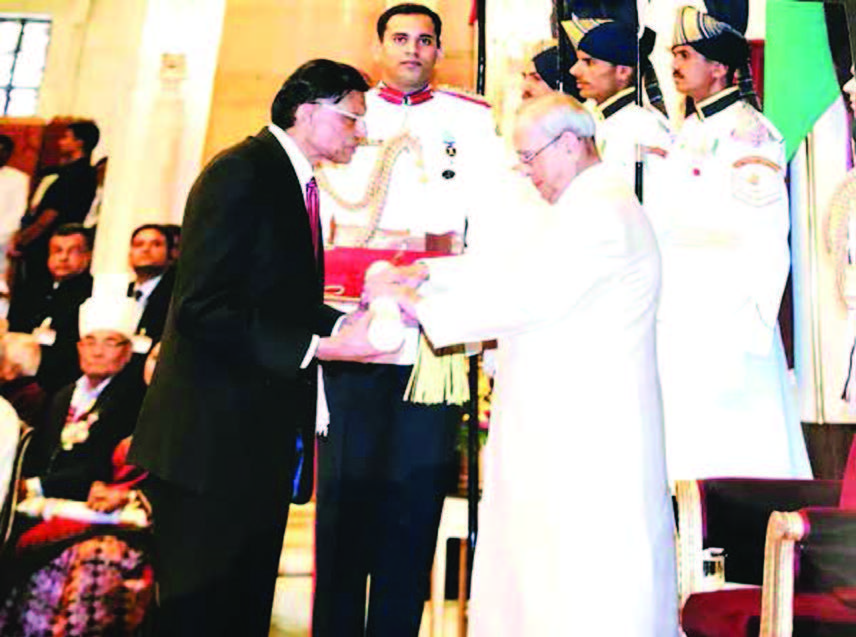
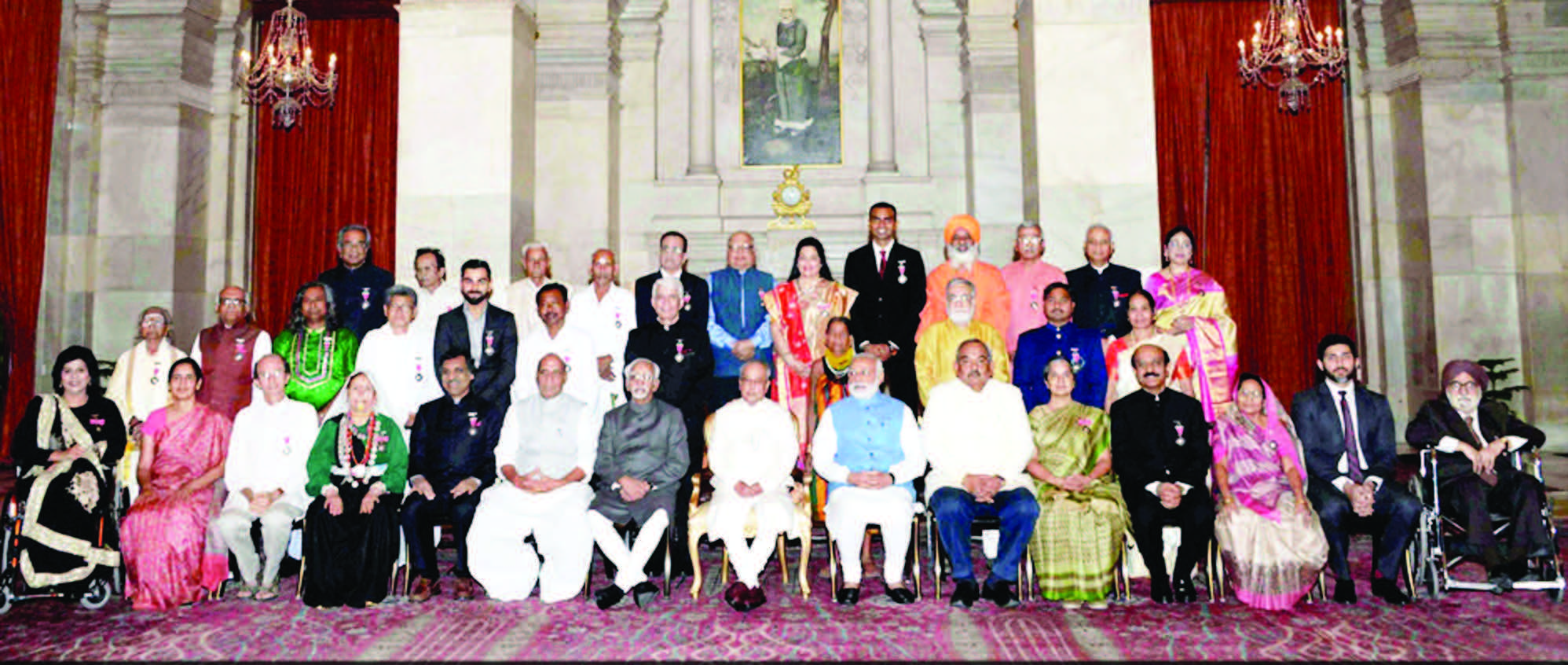
    Prof. Harkishan Singh is one of the Padma awardees who were conferred the honor by the President of India, Pranab Mukherjee at Rashtrapati Bhavan on March 30, 2017
    Prof. Harkishan Singh is one of the Padma awardees who were
    conferred the honor by the President of India, Pranab Mukherjee at Rashtrapati Bhavan on March 30, 2017

    His scientific research has been in organic chemistry, medicinal chemistry and natural products. Nearly 50 master and doctoral theses have been completed under his supervision. There have been published 125 original scientific research papers. 14 patents have been obtained. His research group has been successful in designing a clinically useful drug candocuronium iodide (INN) (chandonium iodide, HS-310), which is a synthetic azasteroid. Dr Singh has lectured on his research at several of the institutions and conferences in India, United States of America, Canada, United Kingdom and China. He delivered invited lectures at the Harvard School of Medicine and at the International Symposium on Molecular Structure sponsored by the International Union of Crystallography at Beijing.

    As a science historian Professor Singh has examined the history of pharmaceutical developments in India of the nineteenth and twentieth centuries. His history research studies have been on pharmacopoeias and formularies, pharmaceutical education, pharmacy practice, biographies of pharmaceutical luminaries, and pharmaceutical journalism. He has published over fifty articles.

    In addition to his scientific and history research papers, Dr Singh has authored and/or coauthored twelve books and nearly two dozen of review articles, including several book chapters. He has written extensively on educational, scientific, historical and professional issues. All told his total publications come well to over 300.

    Prof. Singh (seated) with family. L to R: Alicia, Dr Manjeet, Ajooni Kaur and H S Panaser
    Prof. Singh (seated) with family. L to R: Alicia, Dr Manjeet, Ajooni Kaur and H S Panaser

    Professor Singh has been on many academic, scientific, professional and governmental bodies. He was a member of the Committee on Education in Medicinal Chemistry of the International Union of Pure and Applied Chemistry, which prepared the Report on the International Education of Medicinal Chemists (IUPAC Technical Reports Number 13; 1974).

    His affiliations with several scientific and professional organizations include emeritus membership of the American Chemical Society, life memberships of the Indian Pharmaceutical Association and Association of Pharmaceutical Teachers of India, and memberships of the American Institute of History of Pharmacy and British Society for History of Pharmacy.

    Dr Manjeet Kaur, H S Panaser, Dr. Amarjit Singh, IAS with Prof Harkishan Singh
    Dr Manjeet Kaur, H S Panaser, Dr. Amarjit Singh, IAS with Prof Harkishan Singh

    Professor Harkishan Singh is recipient of several scientific and professional awards and recognitions. He has been a National Fellow of the University Grants Commission, New Delhi. He has been General President of the Indian Pharmaceutical Congress. He received Eminent Pharmacist Award of the Indian Pharmaceutical Association. Dr Singh’s standing as historian has been recognized through his election to the Academie Internationale d’Histoire de la Pharacie. The University of the Sciences in Philadelphia conferred upon Professor Harkishan Singh the degree of Doctor of Science (Honoris Causa) in recognition of his distinguished academic career and outstanding contributions to scientific research in organic and medicinal chemistry and the history of pharmacy.

    The Indian Panorama has a special reason to celebrate the honor to Prof. Harkishan Singh. The Chief Editor Prof. Indrajit Singh Saluja shares with Dr. Singh an association with Banaras Hindu University (BHU), where he studied for two years, and with Panjab University, Chandigarh, where he was a Member of Languages Faculty for a couple of years.

  • TV Asia Chairman HR Shah receives Padma Shri award

    TV Asia Chairman HR Shah receives Padma Shri award

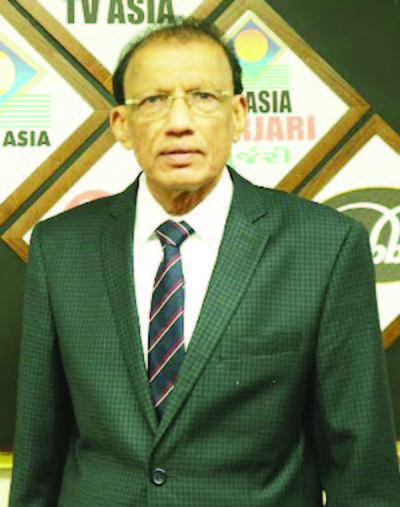
    NEW DELHI (TIP): TV Asia Chairman H.R. Shah received the Padma Shri award from India’s President Pranab Mukherjee at the Rashtrapati Bhawan in New Delhi on April 13.

    Shah received India’s fourth highest civilian honor in the field of Literature & Education – Journalism.

    Shah, who has lived in the United States for 46 years, is originally from Bahadarpur, Gujarat.

    Two other Indian-Americans named for this year’s Padma Shri award include Ustad Imrat Khan in the field of Art-Music and Anant Agarwal in the field of Literature & Education.

    Even before Shah received the award formally from Rashtrapati Ji, his friends and admirers celebrated his selection for Padma Shri and felicitated him.

    Indo-American Press Club organized a felicitation evening in the month of March. Some other organizations were keen to felicitate him but he wanted them to wait until he received the award formally from President of India.

  • Engage in ‘reasoned discussion and debate’, not in violence, President Mukherjee advises students

    Engage in ‘reasoned discussion and debate’, not in violence, President Mukherjee advises students

    KOCHI (TIP): There is no room in this country for an intolerant Indian and students in India’s universities must engage in “reasoned discussion and debate” rather than “propagate a culture of unrest”, President Pranab Mukherjee said on March 2.

    “There should be no room in India for the intolerant Indian,” President Mukherjee said while delivering the 6th KS Rajamony Memorial Lecture on “India@70” today in Kerala’s Kochi district. “Those in universities must engage in reasoned discussion and debate rather than propagate a culture of unrest. It is tragic to see them caught in the vortex of violence and disquiet,” he said. Although Mukherjee did not mention the Ramjas College row, his comments came amid the Left and right-wing groups engaged in a bitter, and even violent, debate over whether free speech is unpatriotic.

    FREEDOM OF SPEECH GUARANTEED TO EVERY INDIAN:

    President Pranab Mukherjee asserted that freedom of speech and expression is guaranteed to every Indian by the Constitution. “There must be space for legitimate criticism and dissent,” he said.

    “India has been since ancient times a bastion of free thought, speech and expression. Our society has always been characterized by the open contestation of diverse schools of thought and debate or discussion. Freedom of speech and expression is one of the most important fundamental rights guaranteed by our Constitution,” he said.

    In an apparent reference to the hounding of Delhi University student Gurmehar Kaur for questioning the RSS-backed Akhil Bharatiya Vidyarthi Parishad (ABVP), Mukherjee said the acid test for any society is how it treats it women and children.

    “I do not consider a society or state to be civilized if its citizens’ behavior towards women is uncivilized. When we brutalize a woman, we wound the soul of our civilization. The acid test of any society is its attitude towards women and children,” he said.

    POLITICIANS MUST NOT TAKE PEOPLE FOR GRANTED:

    Addressing India’s politicians, Mukherjee said they should not take the people for granted. “The leaders or political activists must listen to people, engage with them, learn from them and respond to their needs and concerns. Our lawmakers must never take the people for granted. They must focus on the fundamental task of law making and raising of issues of concern to the people,” he said.

    Mukherjee, however, did not dismiss the virtues of patriotism. “The time has come for collective efforts to re-discover the sense of national purpose and patriotism. Sense of national purpose and patriotism alone can lift our nation on to the road of sustained progress and prosperity. The nation and the people must always come first,” he said.

  • TV Asia Chairman HR Shah and 2 others from USA among recipients of Padma awards

    TV Asia Chairman HR Shah and 2 others from USA among recipients of Padma awards

    NEW YORK (TIP): TV Asia Chairman/CEO and prominent Indian American community leader HR Shah was on Wednesday, January 25 named for the Padma Shri, India’s fourth highest civilian honor in the field of Literature & Education – Journalism. Two other Indian Americans are also named for this year’s Padma Shri award – Ustad Imrat Khan in the field of Art-Music and Anant Agarwal in the field of Literature & Education.

    The Padma awards are conferred by the President of India at ceremonial functions which are held at Rashtrapati Bhawan usually around March/ April every year. This year the President of India has approved conferment of Padma Awards to 89 persons. The list comprises of 7 Padma Vibhushan, 7 Padma Bhushan and 75 Padma Shri Awardees. 19 of the awardees are women and the list also includes 5 persons from the category of foreigners, NRIs, PIOs and 6 posthumous awardees.

    Mr HR Shah is the recipient of the prestigious 2005 Ellis Island Medal of Honor, which is bestowed only on those who display significant contributions to their own communities and to the US at large. He has received more than a hundred awards and citations from across the globe in serving ethnic American communities in different fields. He is a founding member of GOPIO as well as Past President and Trustee of the Federation of Indian Associations (FIA) and a member of the Board of Advisors of the Ellis Island-National Ethnic Coalition of Organizations (NECO). As the Chairman and Trustee of Bharatiya Vidya Bhavan (USA), the world famous institute of Indian culture, education, music and the arts, he has worked for the upliftment in lifestyle of Indians via education. With TV Asia, Mr Shah is the first NRI to run a 24/7 TV station in North America. He is also the first NRI to own a chain store business anywhere in the world – Krauszer’s Food Stores.

    Shah said “I am deeply humbled, honored and overjoyed that the Republic of India has decided to confer on me the Padma Shri”. He said he would “rededicate” himself to help India and US further strengthen their ties.

    “I look forward to receiving the Padma Shri in New Delhi later this year and rededicate myself to helping India and the United States further their close relations, as well as to promote India’s rich culture and heritage,” Shah said, January 25 after he was announced as a recipient of India’s prestigious civilian honor.

    (Click here to Read the profile of HR Shah published recently in The Indian Panorama)

    Ustad Imrat Khan, younger brother of sitar maestro Ustad Vilayat Khan, has established his reputation not only by an absolute mastery of two different instruments, the sitar and the surbahar, but also by the consistent purity and integrity with which he presents every aspect of the great Indian classical genres, spanning the whole spectrum of feeling and expression. He is the senior performer of the Imdadkhani gharana, the school of sitar and surbahar performance named after his grandfather Imdad Khan. He spends a portion of each year teaching classical Indian music and instructing sitar students at Washington University in Saint Louis. In 1988 Imrat Khan received a Sangeet Natak Akademi Award from the president of India.

    Anant Agarwal is currently the president of eDX.com in Massachusetts Institute of Technology (MIT), USA. In 2012, he was named by Forbes magazine among the 15 “classroom revolutionaries” who are using innovative technologies to reinvent education for students and teachers globally. Agarwal did his early education in city’s St Aloysius College right from std 1 to second PUC (1977). He then moved to IIT-Madras where he did his BTech, and followed it up with MS and PhD in electrical engineering from Stanford University, USA. At MIT, he led the development of Alewife, an early cache coherent multiprocessor, and founded Tilera, a fabless semiconductor company focusing on scalable multicore embedded processor design.

    Here is thecomplete list of 2017 Padma award winners. The list comprises of 7 Padma Vibhushan, 7 Padma Bhushan and 75 Padma Shri Awardees.  19 of the awardees are women and the list also includes 5 persons from the category of foreigners, NRIs, PIOs and 6 Posthumous awardees.

    PADMA VIBHUSHAN / Awardee Field of Prominence

    • Sharad Pawar / Public Affairs
    • Murli Manohar Joshi / Public Affairs
    • P.A. Sangma (posthumous) / Public Affairs
    • Sunder Lal Patwah (posthumous) / Public Affairs
    • K.J. Yesudas / Art – Music
    • Sadhguru Jaggi Vasudev / Others – Spiritualism
    • Udipi Ramachandra Rao / Science & Engineering

    PADMA BHUSHAN / Awardee Field of Prominence

    • Vishwa Mohan Bhatt / Art – Music
    • Devi Prasad Dwivedi / Literature & Education
    • Tehemton Udwadia / Medicine
    • Ratna Sundar Maharaj / Others-Spiritualism
    • Swami Niranjana Nanda Saraswati / Others-Yoga
    • H.R.H. Princess Maha Chakri Sirindhorn (Foreigner) / Literature & Education
    • Cho Ramaswamy (Posthumous) / Literature & Education –Journalism

    PADMA SHRI / Awardee Field of Prominence

    • Basanti Bisht / Art-Music
    • Chemanchery Kunhiraman Nair / Art-Dance
    • Aruna Mohanty / Art-Dance
    • Bharathi Vishnuvardhan / Art-Cinema
    • Sadhu Meher / Art-Cinema
    • T K Murthy / Art-Music
    • Laishram Birendrakumar Singh / Art-Music
    • Krishna Ram Chaudhary / Art-Music
    • Baoa Devi / Art-Painting
    • Tilak Gitai / Art-Painting
    • Aekka Yadagiri Rao / Art-Sculpture
    • Jitendra Haripal / Art-Music
    • Kailash Kher / Art-Music
    • Parassala B Ponnammal / Art-Music
    • Sukri Bommagowda / Art-Music
    • Mukund Nayak / Art-Music
    • PurushottamUpadhyay / Art-Music
    • AnuradhaPaudwal / Art-Music
    • WareppaNaba Nil / Art-Theatre
    • Tripuraneni Hanuman Chowdary / Civil Service
    • T.K. Viswanathan  / Civil Service
    • Kanwal Sibal / Civil Service
    • Birkha Bahadur Limboo Muringla / Literature & Education
    • Eli Ahmed / Literature & Education
    • Narendra Kohli / Literature & Education
    • G. Venkatasubbiah / Literature & Education
    • AkkithamAchyuthan Namboothiri / Literature & Education
    • Kashi Nath Pandita / Literature & Education
    • Chamu Krishna Shastry / Literature & Education
    • Harihar KripaluTripathi / Literature & Education
    • Michel Danino / Literature & Education
    • Punam Suri / Literature & Education
    • VG Patel / Literature & Education
    • V Koteswaramma / Literature & Education
    • Balbir Dutt / Literature & Education – Journalism
    • BhawanaSomaaya Literature & Education-Journalism
    • Vishnu Pandya Literature & Education-Journalism
    • Subroto Das Medicine
    • Bhakti Yadav Medicine
    • Mohammed Abdul Waheed Medicine
    • Madan MadhavGodbole Medicine
    • DevendraDayabhai Patel Medicine
    • Harkishan Singh Medicine
    • MukutMinz Medicine
    • Arun Kumar Sharma Others-Archaeology
    • Sanjeev Kapoor Others-Culinary
    • MeenakshiAmma Others-Martial Art
    • GenabhaiDargabhai Patel Others-Agriculture
    • ChandrakantPithawa Science & Engineering
    • Ajoy Kumar Ray Science & Engineering
    • ChintakindiMallesham Science & Engineering
    • Jitendra Nath Goswami Science & Engineering
    • DaripalliRamaiah Social Work
    • Girish Bhardwaj Social Work
    • KarimulHak Social Work
    • BipinGanatra Social Work
    • Nivedita Raghunath Bhide Social work
    • AppasahebDharmadhikari Social Work
    • Baba Balbir Singh Seechewal Social Work
    • ViratKohli Sports-Cricket
    • Shekar Naik Sports-Cricket
    • Vikasa Gowda Discus Throw
    • Deepa Malik Sports-Athletics
    • MariyappanThangavelu Sports-Athletics
    • DipaKarmakar Sports-Gymnastics
    • P. R. Shreejesh Sports-Hockey
    • Sakshi Malik Sports-Wrestling
    • Mohan Reddy Venkatrama Bodanapu Trade & Industry
    • Imrat Khan (NRI/PIO) Art-Music
    • Anant Agarwal (NRI/PIO) Literature & Education
    • H.R. Shah (NRI/PIO) Literature & Education-Journalism
    • Suniti Solomon (Posthumous) Medicine
    • Asoke Kumar Bhattacharyya (Posthumous) Others-Archaeology
    • Dr. Mapuskar (Posthumous) Social Work
    • AnuradhaKoirala (Foreigner) Social Work

    (Source: PIB)


  • President Mukherjee bats for electoral reforms, demonetization in his address to the Nation

    President Mukherjee bats for electoral reforms, demonetization in his address to the Nation

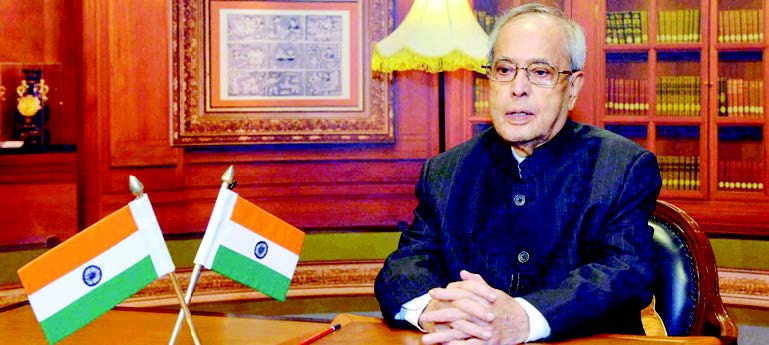
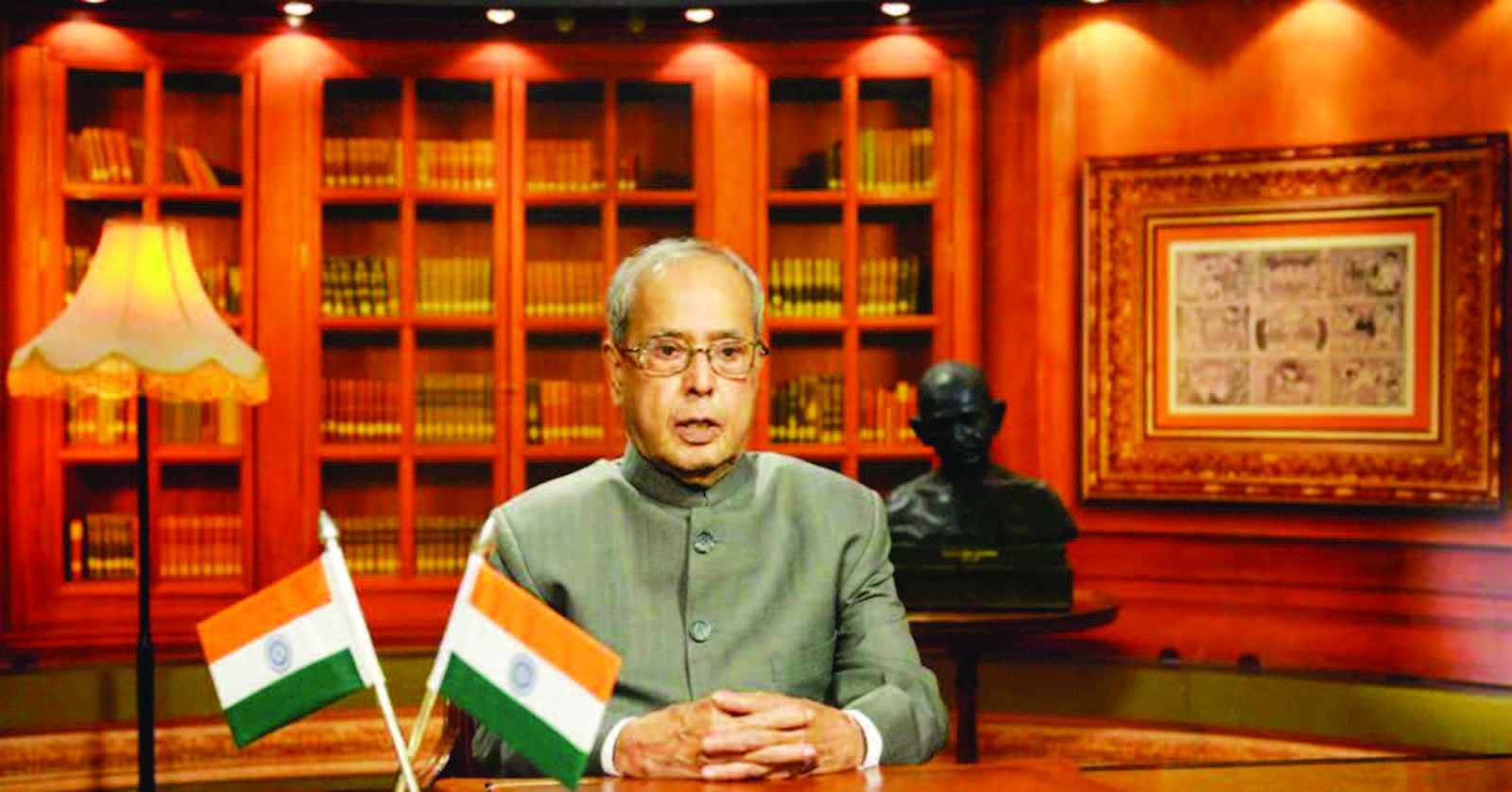
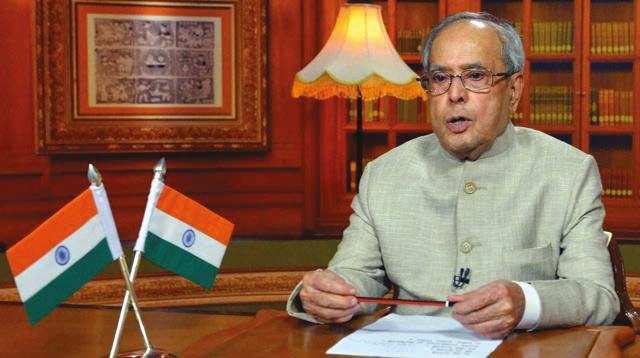
    NEW DELHI (TIP): President of Republic of India, in his address to the nation on the eve of Republic Day,on Wednesday, January 25, spoke about the need for simultaneous elections to Parliament and assemblies, saying that it is the Election Commission who has to move forward in consultation with political parties.

    The President also brought up the issue of demonetization in his speech and said that currency ban may have led to “temporary” slowdown in economy but it will bring more transparency in the system.

    The official celebration of Republic Day spans over four days. It is marked by illumination of Raisina Hill area, address by the President, parade past the India Gate and the Beating Retreat ceremony.

    The crown prince of Abu Dhabi, Mohammed bin Zayed bin Sultan Al-Nahyanwould is the chief guest for the parade.

    Highlights of President’s address to the Nation.

    President Pranab Mukherjee extends his greetings to all forces and pays his tribute to the soldiers who lost their lives in the line of duty.

    We waited till January 26, 1950 — when the Indian people got their constitution… On that day, we became the biggest democracy of the world,” the President says.

    Indian democracy has been a scene of oasis in a region troubled by unrest, says Pranab Mukherjee.

    President Mukherjee lists out the strides made by India in the fields of economy, development, education since its Independence.

    Our economy has been performing well despite global challenges…. we are showing sustained recovery, says Mukherjee, who was also the former finance minister of India.

    Demonetization may have led to temporary slowdown of economic activity, but it will improve the transparency of economy:?Mukherjee talks on the contentious issue of currency recall. The Narendra Modi-led government had demonetized old Rs 500/1000 notes in an announcement on November 8 last year. The Opposition, including Congress party, have maintained vigilant attack against the Modi government, saying that note ban has hurt the poor.

    Ahead of Assembly elections 2017 in which five states go to polls this year, the President says “time is ripe for a constructive debate on electoral reforms”.

    As our Republic enters her sixty-eighth year, we must acknowledge that our systems are not perfect #President Mukherjee
    –           President of India (@RashtrapatiBhvn) January 25, 2017

    Mukherjee enumerates the benefits of Clean India initiative, MGNREGA, Digital India, Start-up India, National Skill Development mission.

    Hailing the plurality of India, Mukherjee says ideas, tolerance and respect for others are values inherent to India. We are the “argumentative India”, not the “intolerant Indian”.

    “Our tradition has always celebrated the ‘argumentative’ Indian; not the ‘intolerant’ Indian… Multiple views, thoughts and philosophies have competed with each other peacefully for centuries in our country.”

    “We are a noisy democracy, yet we need more, not less.”

    We have to work harder because our pluralistic culture and tolerance are still being put to test by vested interests #PresidentMukherjee
    President of India (@RashtrapatiBhvn) January 25, 2017

    Referring to the recent Budget session that ended on December 16, Mukherjee slams parliamentary disruptions and says that legislators lost time arguing.

    In his speech, the President talks about the issues facing India, including ensuring the well-being of security personnel, women’s safety, ecological degradation and food security.

    “Our motherland asks each of us in whatever role we play to do our duty; with integrity, commitment & unflinching loyalty,” the President says, ending the speech swiftly.

  • PBD 2017 Concludes on a note of greater engagement between the government of India and the Diaspora

    PBD 2017 Concludes on a note of greater engagement between the government of India and the Diaspora

    ‘Indians abroad are ambassadors of our culture’: President Mujherjee

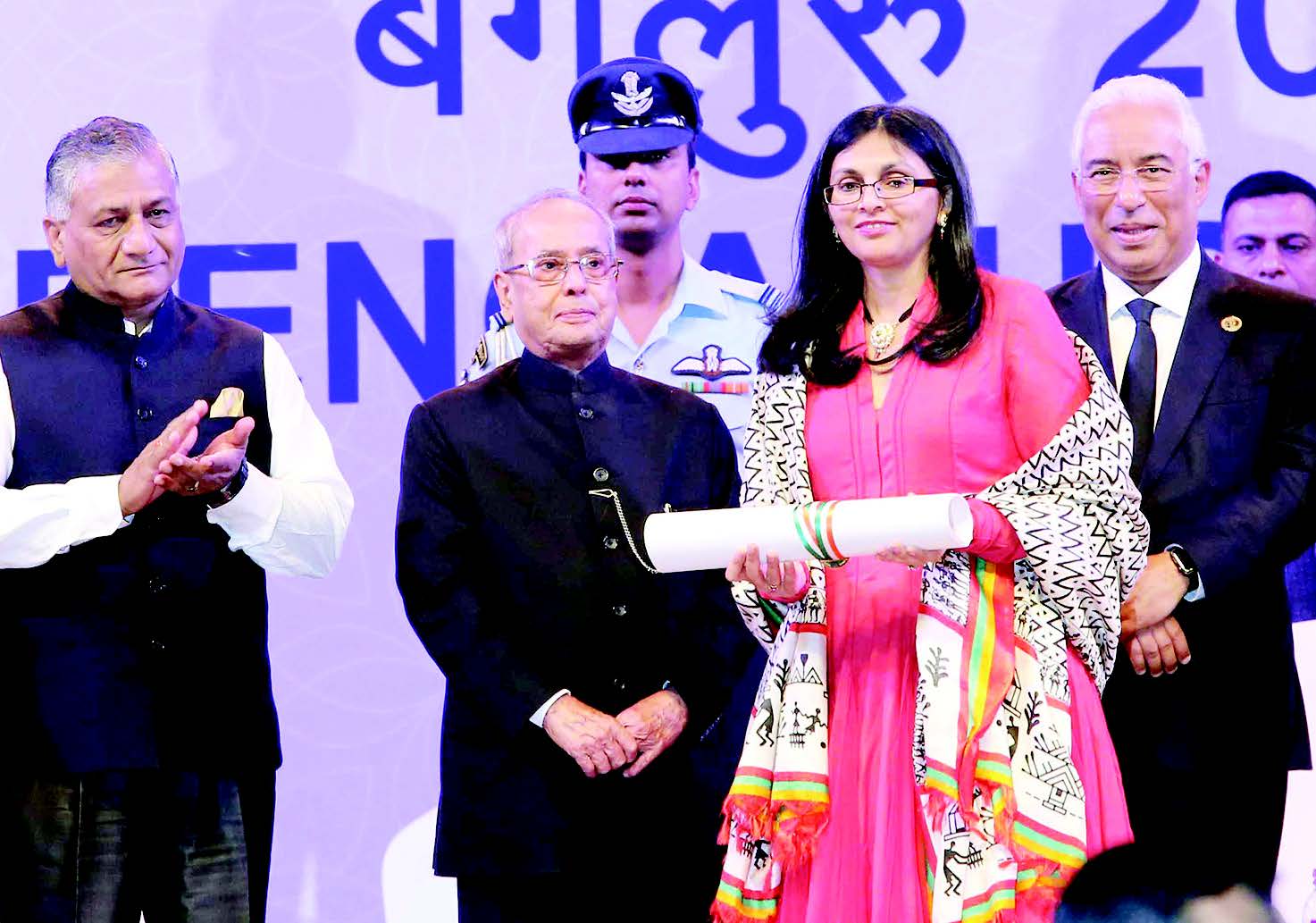
    BENGALURU (TIP): The three-day Pravasi Bharatiya Divas convention came to an end on Monday, January 9, with the President Pranab Mukerjee delivering valedictory address and conferring Pravasi Bharatiya Samman on 30 NRI’s which included the Chief Guest at the PBD, Prime Minister of Portugal Luiss Santos DaCosta, who has his roots in Goa, and Nisha Desai Biswal, US Asstt Secretary of State, On the occasion, President also released a Book of Prime Ministers speeches abroad.

    President Pranab Mukherjee praised the Centre’s efforts of extracting thousands of Indians from difficult situations across the globe during Bengaluru’s Pravasi Bharatiya Sammelan, says overseas Indians are ambassadors of the country’s culture abroad.

    Non-Resident Indians (NRIs) from the US led the list of 30 persons conferred the Pravasi Bhartiya Samman awards by President Pranab Mukherjee.

    The first award was received by Portugal Prime Minister Antonia Luiss Santos Da Costa for his contribution in the field of public service.

    As per the list, six awards were given to NRIs from the US, the highest in the list, while two each to those from the UK and UAE.

    One award each was given to NRIs from 20 countries, including Australia, France, Canada, Israel, Libya, Fiji, Brunei, Singapore, Portugal and others.

    Among the NRIs from the US, Hari Babu Bindal was honored for his contribution in the field of environment engineering, Nisha Desai Biswal for public affairs, Sampat Kumar Shidramapa Shivanagi for community leadership, while Mahesh Mehta, Ramesh Shah and Bharat Haridas Barai were awarded for their contribution in the field of community service. Neena Gill and Priti Patel from the UK were honored for their contribution in the field of public service.

    In the list of NRIs from the UAE, Vasudev Shamdas Shroff and one organization Indian Social and Cultural Centre were awarded.

    In the field of business, Rajasekharan Pillai Valavoor Kizhakkathi from Bahrain, Mukund Bhikhubhai from Canada and Susheel Kumar Saraff from Thailand were honored.

    In the field of medical science, Lael Anson E Best from Israel and Carani Balaraman Sanjeevi were selected.

    Sandip Kumar Tagore from Japan was awarded for his contribution in the field of arts and culture, while Muniandy Thambirajah from Malaysia and Zeenat Musarrat Jafri from Saudi Arabia were honored for education and community service. In the field of public service, Pravin Kumar Jugnauth from Mauritius and Winston Chandarbhan Dookeran from Trinidad were honored. Vinod Chandra Patel from Fiji was selected for his contribution in the field of social service.

    The theme of this year’s PBD is “Redefining engagement with Indian diaspora”. A record 8,000 delegates from 30 countries participated in the three-day event. Prime Minister Narendra Modi lauded the Indian diaspora across the world as he addressed people at the 14th Pravasi Bharatiya Diwas 2017 in Bengaluru on Sunday.

    He added that Indian diaspora has made invaluable contribution to our economy and the government aims to change brain drain to brain gain through its policies. Prime Minister Narendra Modi thanked the persons of Indian origin for their support to government’s initiative against black money and corruption.

  • President Mukherjee warns against rise of divisive forces

    President Mukherjee warns against rise of divisive forces

    NEW DELHI (TIP): On the eve of India’s 70th Independence Day, President Pranab Mukherjee warned against the rise of divisive and intolerant forces, in what can be seen as a message for the parties in power.

    Mukherjee also asked for firm measures to deal with attacks on weaker sections amid allegations of increasing victimisation of Dalits and minorities, often by fringe elements of the ruling establishment.

    Reminding about the duties defined in the Constitution, President Mukherjee in his pre-Independence Day speech asked the stakeholders to uphold the “spirit of the Constitution” and maintain the “maryada (sanctity)” of authorities and institutions of state power.

    “In these four years, I saw with disgust forces of divisiveness and intolerance trying to raise their ugly head. Attacks on weaker sections that militate against our national ethos are aberrations that need to be dealt with firmly,” Mukherjee said in what may be his last speech as President on August 14.

    A spate of incidents, including attacks on churches, the beef controversy, a Muslim’s lynching on the suspicion that he was storing beef, the suicide of Dalit student Rohith Vemulla and the recent beating of Dalit youth in Gujarat, has raised a number of political storms for the ruling Bharatiya Janata Party, which has come under increased criticism from the opposition.

    “The Constitution has clearly defined the duties and responsibilities of every organ of the state. It has established the ancient Indian ethos of ‘maryada’ as far as authorities and institutions of state power are concerned,” Mukherjee said. “The spirit of the Constitution has to be upheld by adherence to this ‘maryada’ by the functionaries in the discharge of their duties.”

    The President hailed the passage of the 122nd Constitution Amendment Bill for the goods and services tax as
    “reason enough to celebrate India’s democratic maturity”. “The fact that despite two consecutive drought years, inflation has remained below 6% is a testimony to our nation’s resilience,” he said.

    But he also warned against
    “disruptions, obstructionism and unmindful pursuit of a divisive political agenda by groups and individuals” that might lead to “nothing but institutional travesty and Constitutional subversion”.

    “Polarising debates only deepen the fault lines in public discourse,” he said. “The collective wisdom of the society and India’s polity gives confidence that such forces will remain marginalised and India’s remarkable growth story will continue uninterrupted.”