
Category: Punjab Election

  • Punjab elections and Deras

    Punjab elections and Deras

    Region is dotted with Deras that are known to influence elections

    PUNJAB ELECTIONS

    • Biggest of these Deras is of Radha Soamis based out of Beas in the Majha region
    • Among major sects or Deras are Namdharis and Nirankaris,Dera Sacha Sauda with headquarters in Sirsa remains most controversial
    • Other major Deras are Sachkhand Ballan, Swami Jagat Giri Ashram and Noor Mahal
    • Various Sikh sects, including Nanaksar, Dhadrian, Harian Bellan, Hansali and others, represent Sant Samaj
    • Damdami Taksal too has been hawking media headlines
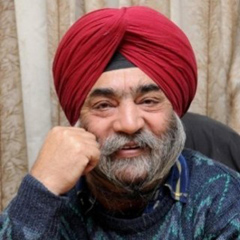
    By Prabhjot Singh

    Release of Ram Rahim of Dera Sacha Sauda on parole a fortnight before the February 20 poll in Punjab has set in motion an animated debate over the timing of his “Furlow”. There are many who view it as a political master stroke played by the BJP government in Haryana to influence elections, both in Uttar Pradesh and Punjab, others are dismissing it as an administrative or procedural relief to a convict. Whatever be the reasons or the background of his release, it has stirred a controversy that may have far reaching political implications.Deras in general, and Dera Sacha Sauda in particular, have generally played a decisive role in many of previous electoral battles. One of the major factors believed to influence the outcome of battles of the ballot in Punjab are Deras that dot not only the entire State but also the catchment areas, including neighboring Haryana.
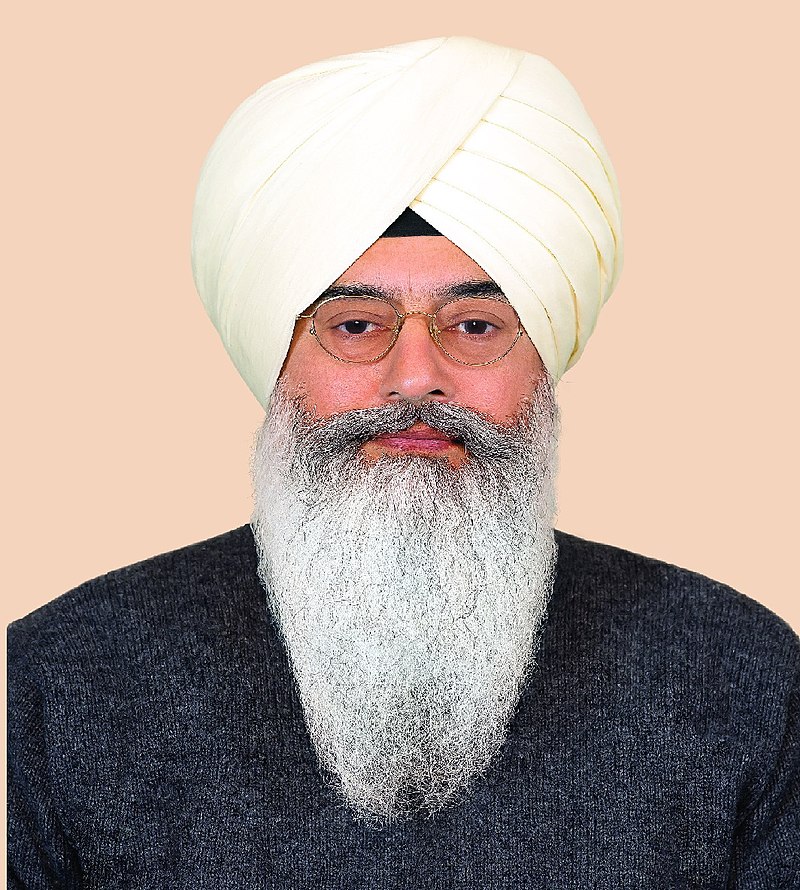
    Baba Gurinder Singh Dhillon, head of Radha Soami Satsang Beas wields considerable influence in the Majha region of Punjab

    Important and major Deras or sects like Radha Soamis, Nirankaris and Namdharis generally stay clear of politics and elections, same cannot be said of many others, especially Dera Sacha Sauda, that wield considerable influence in the Malwa belt and some parts of Western Uttar Pradesh.A few months before the 2017 elections to the Punjab assembly were announced, the then Congress Vice-President Rahul Gandhi visited Dera Radha Soami at Beas. Incidentally, the President of the All-India Namdhari sect is H S Hanspal, who headed the Punjab Pradesh Congress Committee when Capt Amarinder Singh was Chief Minister of Punjab (2002-2007). Hanspal also represented Congress as Member of Rajya Sabha. This time, Hanspal, upset over the denial of a party ticket to his grandson, decided to leave Congress and join hands with the Aam Aadmi Party. A substantial section of Sant Samaj that has in its fold various Sikh sects, including revered Nanaksar, used to support the ruling Shiromani Akali Dal. The situation has changed this time. The Damdami Taksal, an influential sect of Sikhs, caused a big flutter when some of its top leaders declared support for Bharatiya Janata Party. While there has been no corroborative evidence of followers of one Dera or the other voting enmasse for a particular party or a candidate, yet no party of substance misses an opportunity to appease these socio-religious organizations. In the past, State Governments have been doling out concessions and special treatment to them in an endeavor to have their leadership on their side. So much so that at times they even enjoy immunity from the law of the land.  Law enforcement agencies face a harrowing time as and when these Deras or their chiefs get mired in controversies linked to serious criminal offences, including rape, murder or illegal confinement. Some of these cases are handled by the prime investigation agency, the Central Bureau of Investigation. It is in one of such cases that the chief of Dera Sacha Sauda, Ram Rahim, was convicted and sentenced for life. His earlier pleas for release on parole were dismissed for security reasons.

    In fact, before his arrest, a big drama took place that led to arson and violence in Panchkula as a lot was said about the CBI case against the Dera Sacha Sauda chief. There were allegations that the case was being pushed to cold storage after BJP came to power on its own in the 2016 Assembly elections in the State. Earlier, the Dera was believed to have supported Congress in the 2007 Punjab Assembly elections. Some political pundits go to the extent of saying that the Dera was playing the role of a King maker.

    It is why his 21-day parole and physical presence in the region is being followed with abated interest.

    Looking back at electoral battles of the past two decades, it can be safely inferred that Deras have been the most sought-aftercenters when it comes to ensuring a victory in the elections. Undoubtedly the Deras have been playing King Makers, though discreetly. Their influence has been growing steadily and may not be impacted by the Apex court verdict on restraining political parties from seeking a vote in the name of caste, creed, religion or language.

    If Akali Dal suffered reverses in the 2007 Assembly elections in the Malwa belt – it got only 19 of 65 seats – it was suspected that Dera Sacha Sauda followers voted for Congress. Though Congress led by Capt Amarinder Singh failed to return to power, it gave a lesson to the power incumbents Shiromani Akali Dal-Bharatiya Janata Party (SAD-BJP) alliance a lesson in Dera politics.

     The message of the 2007 elections was loud and clear.

    Subsequently, every party, including the Congress, the Shiromani Akali Dal (SAD), Aam Aadmi Party, and Bahujan Samaj Party — have been bending backwards to seek the blessings of these deras and their chiefs before or during elections.

    Even the latest entrant to Punjab politics, Aam Aadmi Party, too, also tried to garner the support of Deras. In the 2017 elections, the Bahujan Samaj Party that had its base eroded considerably over the years also seriously considered seeking the support of at least five Deras that have a huge following of the Dalits.

     In Punjab, Scheduled Castes are the single largest vote bank as they are a little more than 32% of the State’s population. It is probably the reason for Congress to name the incumbent Chief Minister Charanjit Singh Channi as its Chief Ministerial face for the 2022 elections by overlooking the claims of its Punjab Pradesh Congress Committee chief Navjot Singh Sidhu.

    There have been instances when one Dera or the other openly pledged allegiance to a party, the party concerned made a significant dent in its rivals’ vote share. The success of Congress in the Malwa belt in the 2007 Punjab Assembly elections and the BJP success in the 2016 Haryana Assembly elections are points in order.

    Though the Apex Court gave a landmark verdict on the eve of 2017 Assembly elections to five States, including Punjab, that votes cannot be solicited in the name of religion, caste or language, the Deras remained high on demand.

    Intriguingly in the Assembly elections in 2012 and also the 2014 general elections, candidates close to the Dera Sacha Sauda chief, Gurmit Ram Raheem, failed to get voters’ verdict in their favor. They include Harminder Jassi, who in 2017 contested unsuccessfully from Maur in the Malwa belt on Congress ticket.

    The Deras play safe as they do not flout election laws and refuse to openly support one party or the other.  After all parties have approached them, they follow the same safe modus operandi of referring the matter to their respective political wings, who in turn direct the followers to vote according to their conscience.

     One of the prime reasons for growing the Dera cult is the failure of the State to curb caste distinctions. Discarded by upper castes, lower castes, coming from different religious backgrounds, form the bulk of Deras as they are treated at par and given respectability. Various political parties find Dera followers a heterogeneous voter base that once convinced can influence electoral fortunes.

     “How Deras impact the ensuing Assembly elections?”, only results will tell.

    (The author is a veteran journalist with over three decades of experience covering a wide spectrum of subjects and stories. He has covered Punjab and Sikh affairs for more than three decades besides covering seven Olympics and several major sporting events and hosting TV shows. For more in-depth analysis please visit probingeye.com or follow him on Twitter.com/probingeye)




  • Mild Fluctuations in Share of National and Regional Parties

    Mild Fluctuations in Share of National and Regional Parties

    By Prabhjot Singh

    A careful analysis of the election results since 1967 would reveal that the percentage of votes polled by national parties, mainly the Congress, except for 1977 and 1997, has been more than 50. In 1967, for example, when Punjab had its first coalition government — the United Front — the Congress had polled 36.56 per cent of the total votes against 26.47 per cent votes polled by all state parties. The overall votes polled by national parties, including the Congress, Jana Sangh, CPI, CPM, Praja Socialist Party and Swatantra Party — was 56.60. In 1969, the share of national parties rose to 58.34 per cent, with the Congress increasing its share to 39.18 per cent while the state parties accounted for only 30.44 per cent of the votes. In 1972, when the Congress returned to power in the State, the share of the national parties increased slightly to 58.77 per cent while those of state parties dropped to 28.73 per cent. The Congress had taken its poll percentage to 42.84, which had been surpassed only twice afterwards, first in 1980 when the Congress got 45.19 per cent of the total votes polled and again in 1992 when it got 43.71 per cent votes.

    The 1992 election was exceptional in the history of Punjab. The mainstream Shiromani Akali Dal boycotted the elections. A faction of the Dal, led by the then rebel Akali leader, Capt Amarinder Singh, contested 58 seats and won only three. This was the only occasion when the percentage of votes dropped to 23.82, the lowest ever. The other lowest being 64.33 in 1980. The share of national parties dropped to 40.29 per cent, the only time below 50 per cent, in 1997 when besides 26.59 per cent of the votes secured by the Congress, all the national parties, including the BJP, CPI and CPM had aggregated 40.29 per cent. The most distinguishing aspect of Punjab politics has been that the Akalis, even at times securing clear majority, have been aligning themselves with the Jana Sangh/Bharatiya Janata Party. This combination alienated both Sikh and Hindu votes from the once powerful Congress.

    The emergence of the Bahujan Samaj Party in the 1992 elections saw this political outfit of the downtrodden getting 16.32 per cent of the valid votes polled which in the 1992 elections was more than three times that secured by the Akali Dal led by Capt Amarinder Singh. Interestingly, the BSP had bagged nine seats against three by the Akalis. The BSP, however, failed to maintain its tempo and in the 1997 elections, after witnessing a vertical split-leading to the formation of the Bahujan Semaj Morcha headed by Mr. Satnam Singh Kainth — saw its share of vote coming down to 7.48 per cent of the total valid votes and its share in the Vidhan Sabha dropping to one. The electorate in Punjab have known to participate in the process enthusiastically, averaging more than 64 per cent in all the previous elections held in the State so far.

    Till date, the Shiromani Akali Dal has never crossed the 40 per cent barrier. Its best performance was in 1985 when it got 38.01 per cent of the total valid votes. In 1997, this percentage dropped slightly to 37.64. Besides the Congress and the Akali Dal, other main players in Punjab politics have been Jana Sangh/BJP, CPI, CPM and briefly the Janata Party, which in the 1977 elections polled 14.99 per cent votes to win 25 seats out of 41 candidates put up by it.

    The Communists — the CPI and the CPM — put together had been aggregating about 9 to 10 percent of the total valid votes polled till 1997. The exceptions were the 1967 and 1969 election when they polled less than 8 per cent but since 1972, they have been averaging 9 per cent and above. In the 1967 elections they polled 8.46 per cent votes, 7.91 per cent in 1969, 9.77 per cent in 1972 and 9.60 per cent in 1977 winning eight, six, 11 and 15 seats collectively, respectively.

    In 1980, they crossed the double figure mark, aggregating 10.52 per cent to win 14 seats — nine by the CPI and five by the CPM. Since then, their share, both in percentage of valid votes and seats in the Vidhan Sabha, has been dropping as in the 1997 elections, they got only 4.77 per cent of total valid votes with two seats in the Vidhan Sabha. In the last Vidhan Sabha, the Communists went unrepresented. During the first term of Capt Amarinder Singh as Chief Minister, both the Communist legislators, defected and joined Congress. Since then, the Communists had been drawing a blank in Vidhan Sabha elections.

    (Prabhjot Singh is a veteran journalist with over three decades of experience covering a wide spectrum of subjects and stories. He has covered  Punjab and Sikh affairs for more than three decades besides covering seven Olympics and several major sporting events and hosting TV shows. For more in-depth analysis please visit probingeye.com  or follow him on Twitter.com/probingeye)

  • It may not be a Tussle between Congress and SAD any more

    It may not be a Tussle between Congress and SAD any more

    By Prabhjot Singh

    Punjab has been one of those states that has not only won against two-decade long terror-driver turbulence but also for its reiteration and trust in strong democratic norms. After partition of the country in 1947, Congress domination in State politics continued till 1966. Since then, Punjab has been witnessing a fierce tussle for power between a national party — Congress — and a regional party — Shiromani Akali Dal (SAD).

    This time, the State may have a new political party or alliance at the helm of affairs.  Both Shiromani Akali Dal and Congress have witnessed groups of senior leaders walking out to form their own outfits. Punjab Lok Congress is the offshoot of Congress while Samyukta Akali Dal is the breakaway group of Shiromani Akali Dal.

    In the last elections in 2017, the new entrant, Aam Aadmi Party (AAP), after its roaring success in Delhi, managed to push the SAD-BJP alliance to third position by winning 20 seats.

    Among new entrants are the Shiromani Akali Dal-Bahujan Samaj Party alliance, Bhartiya Janata Party-Punjab Lok Congress-Samyukta Akali Dal alliance and Samyukat Samaj Morcha (Balbir Singh Rajewal).

    Incidentally, SAD had always enjoyed the support of Bharatiya Janata Party, a major national party, as its alliance partner. In 2021, this oldest alliance crumbled after the Union Government passed the three Farm Laws.

    The Congress and the SAD, as two major political opponents, have been ruling the state alternately since reorganization of the State on November 1, 1966. Their rules have been punctuated with spells of varying periods of the President’s rule. These Presidential intervention on recommendation of the Governor were either because of political uncertainty or because of terrorism that engulfed the state for over two decades since late 1979.

    It was because of terrorism that State also witnessed major boycott of the electoral process, first in 1985 when certain wings of the Akalis stayed away and then in 1992 when the mainstream Akali Dal boycotted the elections. In 1991 when Chandrasekhar was Prime Minister and elections were called to restore democracy in the State, Congress decided to stay away. Intriguingly, a day before polling was to be held in the State, elections were called off as the Centre Congress had come back to power and the minority government of Chandrasekhar bowed out.

    Akalis had protested the last-minute cancellation maintaining that more than 30 candidates had fallen to the bullets of terrorists while reposing their faith in democracy. Subsequently when elections were called again in February 1992, Akalis led by Parkash Singh Badal, boycotted. Only a fraction of Akalis led by Amarinder Singh contested on 58 of 117 seats and won on three. BJP, the traditional alliance partner of Akalis, however, participated in the 1992 elections though without much success. Even its Hindu card at that time did not work.

    While the Congress has enjoyed seven full-term governments — those of 1952, 1957, 1962, 1972, 1992, 2002 and 2017 the Shiromani Akali Dal that made history in 1997 by becoming the first non-Congress party to complete its first full term in office since Independence, has repeated its 1997 feat in 2007 and 2012.The only time Punjab electors did not give any party or alliance a clear mandate was the 1967 election, the first after the reorganization of the State. Congress got only 48 in a house of 104.

    It was during this time that the Akalis had their first tryst with power by getting the entire Opposition united to form the United Front government. It was the first multi-party coalition government in the State.  In 1985, after signing of the Rajiv-Longowal accord, Akalis graduated to absolute power, winning 73 of the 100 Vidhan Sabha seats they contested. In the 1997 elections, they took this supremacy for power a step further by improving their individual tally to 75 out of 92 seats contested by them.

  • Will Punjab Model be the Key Issue in Assembly Elections 2022?

    Will Punjab Model be the Key Issue in Assembly Elections 2022?

    Kejriwal is promising justice in sacrilege cases, jobs to youths and corruption-free governance.
    Sukhbir Singh Badal has not yet come up with any model
    By Prabhjot Singh

    In the last 55 years, politics in Punjab has mainly revolved around politics of doles and appeasements that in turn wreaked havoc with the economy of the State bringing it down from the top spot in the country to the also ran category.

    “After witnessing two partitions since 1947, the State is without its own capital, besides it has lost control over the prestigious hydel projects like Bhakra and Beas, its rivers waters are being diverted in utter violation of the conventional Riparian laws and several other prestigious institutions the State either acquired as a part of partition settlement or built on its own after 1947 like Panjab University, Postgraduate Institute of Medical Education and Research, Punjab Engineering College, etc., etc. are managed by the Union government or the Centre.”

    For those, who are worried about the deteriorating fiscal health and social fabric of this border agrarian State, yes, “Punjab Model” should be a guiding factor for its electors in determining their future ruling political parties or leaders.

    But then what is the “Punjab Model”?

    Both the Punjab Pradesh Congress Committee chief Navjot Singh Sidhu and the Aam Aadmi supremo Arvind Kejriwal are going around with their “Punjab Model” in soliciting support of the worried voters as the State is on the verge of both political and financial bankruptcy.

    Their models may not be in line or consonance with what Punjab needs today. They are mostly talking about models broadly to appease some sections of voters without dealing with the issues that have scripted tormenting history of the State since the 1947 partition in general and the reorganization in 1966 in particular.In the last 55 years, politics in Punjab has mainly revolved around politics of doles and appeasements that in turn wreaked havoc with the economy of the State bringing it down from the top spot in the country to the also ran category.

    After witnessing two partitions since 1947, the State is without its own capital, besides it has lost control over the prestigious hydel projects like Bhakra and Beas, its rivers waters are being diverted in utter violation of the conventional Riparian laws and several other prestigious institutions the State either acquired as a part of partition settlement or built on its own after 1947 like Panjab University, Postgraduate Institute of Medical Education and Research, Punjab Engineering College, etc., etc. are managed by the Union government or the Centre.

    In addition, there are other issues, like inclusion of Punjabi speaking areas, that prompted the State to demand “autonomy” through the Sri Anandpur Sahib resolution. Many elections have come and gone but these core issues or demands never made it to the top of the agenda or election manifesto of any political party. The coming elections are no different.

    When and who is going to fight for these long-standing demands of Punjab?

    Looking through the history of the State after Independence in general and reorganization in 1966 in particular, grabbing power has been the only agenda of the political parties or their leadership.

    None other than Darshan Singh Pheruman of Akali Dal (Pheruman) made a sacrifice to press for acceptance of these demands. His sacrifice, however, went waste for lack of support from the mainstream parties.Unfortunately, these issues still do not figure in any of the “Punjab Models” being projected by Congress or AAP leaders. Should voters presume that these issues stay consigned to the history books and would not be raised or fought for.

    Let us talk about the Kejriwal or AAP’s “Punjab Model” of governing the state after polls. Like Sidhu’s model, it is primarily about the current issues facing the State. He is promising justice in sacrilege cases, jobs to youths and corruption-free governance. With his model, he asserts, will help hard working people of the State to bring his party to power to break the friendly “partnership” between the Badals and the Congress. He maintains that his Punjab model will have a 10-point agenda that will include free power to people up to 300 units per billing cycle and controlling the drug menace. The AAP, while trying to lure women voters, also wants regular financial support for them saying each woman above the age of 18 would be given Rs 1000 each every month.

    On the other hand, Navjot Sidhu had been going around and promising Punjab with his 13-point Punjab model. His mainstay is restructuring the economy of the State by pulling it out of debt trap. His concept of a healthy fiscal model is to use internal resources in not only generating new revenue channels but also solving the problem of unemployment. For Sidhu, liquor, sand and bajri (gravel) could serve as wonder commodities in filling the empty coffers of the State. He has been promising to set up state-owned liquor besides sand and bajri corporations for mobilizing revenue enough to make the State cut its annual borrowing and be on its way to great financial recovery. Sidhu feels convinced that from liquor alone, Punjab could generate about Rs 25,000 crore of revenue. His model also includes setting up a regulatory commission to control the cable sector.

    Other major contestants, including the Shiromani Akali Dal-Bahujan Samaj Party alliance, Bharatiya Janata Party-Punjab Lok Congress-Sanyukta Shiromani Akali Dal alliance, and the Samyukat Samaj Morcha have so far refrained from making public their “Punjab Models”.

    Even if all the contestants – political parties or alliances – make public their models, what legal sanctity these pronouncements will have in the post-election scenario remains a million-rupee question.

    (The author, a former editor of The Tribune, is a senior journalist. He can be reached at prabhjot416@gmail.com)