Tag: Punjab

  • PADMA AWARDS 2016

    PADMA AWARDS 2016

    NEW DELHI (TIP): Former Comptroller and Auditor General of India Vinod Rai, actor Rajinikanth, spiritual guru Sri Sri Ravishankar and tennis player Sania Mirza are on the list of 112 Padma awardees whose names were announced on Monday by the government.

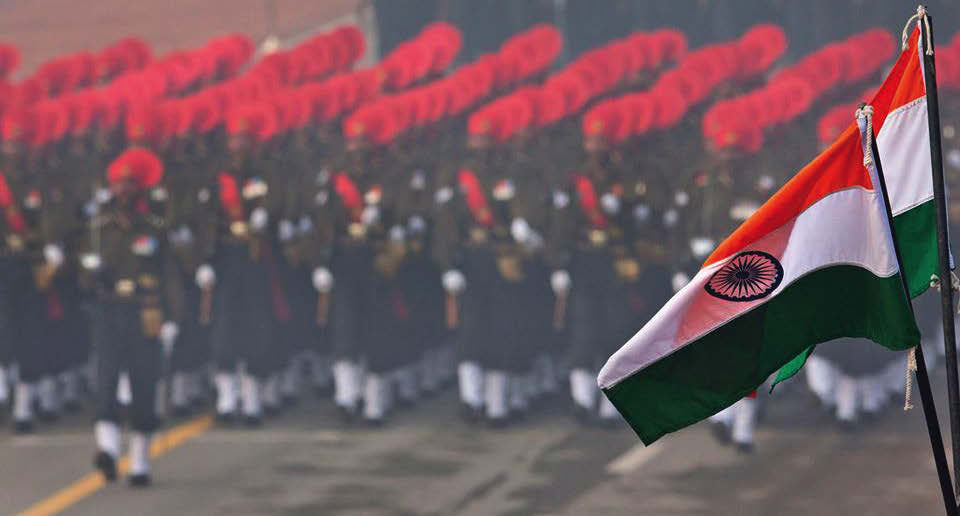
    The awards will be given across three categories: the Padma Vibhushan, Padma Bhushan and Padma Shri. These awards are given on Republic Day, for the over six decades now, to people who the government recognises have excelled in their fields.

    Padma Vibhushan

    1. Shri Rajinikanth    Art-Cinema    Tamil Nadu
    2. Ms. Yamini Krishnamurthi Art- Classical dance Delhi
    3. Smt. Girija Devi    Art-Classical Vocal    West Bengal
    4. Shri Ramoji Rao    Literature & Education-Journalism   Andhra Pradesh
    5. Dr. Viswanathan Shanta    Medicine- Oncology    Tamil Nadu
    6. Shri Shri Ravi Shankar    Others-Spiritualism    Karnataka
    7. Shri Jagmohan    Public Affairs    Delhi
    8. Dr.Vasudev Kalkunte Aatre    Science & Engineering    Karnataka
    9. Shri Avinash Dixit (Foreigner)    Literature & Education
    10. Late Shri Dhiru Bhai Ambani (Posthumous)    Trade & Industry    Maharashtra

    Padma Bhushan

    11. Shri Anupam Kher Art-Cinema Maharashtra
    12. Shri Udit Narayan Jha Art-Playback Singing Maharashtra
    13. Shri Ram V. Sutar Art-Sculpture Uttar Pradesh
    14. Shri Heisnam Kanhailal Art-Theatre Manipur
    15. Shri Vinod Rai Civil Service Kerala
    16. Dr. Yarlagadda Lakshmi Prasad Literature & Education Andhra Pradesh
    17. Prof. N. S. Ramanuja Tatacharya Literature & Education Maharashtra
    18. Dr. Barjinder Singh Hamdard Literature & Education – Journalism Punjab
    19. Prof. D. Nageshwar Reddy Medicine-Gastroenterology Telangana
    20. Swami Tejomayananda Other-Spiritualism Maharashtra
    21. Shri Hafeez Contractor Others-Architecture Maharashtra
    22. Shri Ravindra Chandra Bhargava Public Affairs Uttar Pradesh
    23. Dr.Venkata Rama Rao Alla Science & Engineering Andhra Pradesh
    24. Ms. Saina Nehwal Sports-Badminton Telangana
    25. Ms. Sania Mirza Sports-Tennis Telangana
    26. Ms. Indu Jain Trade & Industry Delhi
    27. Late Swami Dayanand Sarawasati (Posthumous) Others- Spiritualism Uttarakhand
    28. Shri Robert Blackwill (Foreigner) Public Affairs USA
    29. Shri Pallonji Shapoorji Mistry (NRI/PIO) Trade & Industry Ireland

    Padma Shri

    30. Smt. Prathibha Prahlad Art- Classical Dance Delhi
    31. Shri Bhikhudan Gadhvi Art- Folk Music Gujarat
    32. Shri Sribhas Chandra Supakar Art- Textile Designing Uttar Pradesh
    33. Shri Ajay Devgn Art-Cinema Maharashtra
    34. Ms. Priyanka Chopra Art-Cinema Maharashtra
    35. Pt. Tulsidas Borkar Art-Classical Music Goa
    36. Dr. Soma Ghosh Art-Classical Vocal Uttar Pradesh
    37. Shri Nila Madhab Panda Art-Film Direction and Production Delhi
    38. Shri S.S. Rajamouli Art-Film Direction and Production Karnataka
    39. Shri Madhur Bhandarkar Art-Film Direction and Production Maharashtra
    40. Prof. M. Venkatesh Kumar Art-Folk Artist Karnataka
    41. Ms. Gulabi Sapera Art-Folk Dance Rajasthan
    42. Smt. Mamta Chandrakar Art-Folk Music Chhattisgarh
    43. Ms. Malini Awasthi Art-Folk Music Uttar Pradesh
    44. Shri Jai Prakash Lekhiwal Art-Miniature Painting Delhi
    45. Shri K. Laxma Goud Art-Painting Telangana
    46. Shri Bhalchandra Dattatray Mondhe Art-Photography Madhya Pradesh
    47. Shri Naresh Chander Lal Art-Theatre & Cinema Andaman & Nicobar
    48. Shri Dhirendra Nath Bezbaruah Literature & Education Assam
    49. Shri Prahlad Chandra Tasa Literature & Education Assam
    50. Dr.Ravindra Nagar Literature & Education Delhi
    51. Shri Dahyabhai Shastri Literature & Education Gujarat
    52. Dr.Santeshivara Bhyrappa Literature & Education Karnataka
    53. Shri Haldar Nag Literature & Education Odisha
    54. Shri Kameshwaram Brahma Literature & Education – Journalism Assam
    55. Prof. Pushpesh Pant Literature & Education-Journalism Delhi
    56. Shri Jawaharlal Kaul Literature & Education-Journalism Jammu & Kashmir
    57. Shri Ashok Malik Literature &Education Delhi
    58. Dr.Mannam Gopi Chand Medicine-Cardio Thoracic Surgery Telangana
    59. Prof. Ravi Kant Medicine-Surgery Uttar Pradesh
    60. Prof. Ram Harsh Singh Medicine- Ayurveda Uttar Pradesh
    61. Prof. Shiv Narain Kureel Medicine- Paediatric Surgery Uttar Pradesh
    62. Dr.Sabya Sachi Sarkar Medicine -Radiology Uttar Pradesh
    63. Dr. Alla Gopala Krishna Gokhale Medicine-Cardiac Surgery Andhra Pradesh
    64. Prof. T.K. Lahiri Medicine-Cardio Thoracic Surgery Uttar Pradesh
    65. Dr. Praveen Chandra Medicine-Cardiology Delhi
    66. Prof. (Dr) Daljeet Singh Gambhir Medicine-Cardiology Uttar Pradesh
    67. Dr.Chandrasekar Shesadri Thoguluva Medicine- Gastroenterology Tamil Nadu
    68. Dr. (Mrs.) Anil Kumari Malhotra Medicine-Homeopathy Delhi
    69. Prof. M.V. Padma Srivastava Medicine-Neurology Delhi
    70. Dr. Sudhir V. Shah Medicine-Neurology Gujarat
    71. Dr. M. M. Joshi Medicine-Ophthalmology Karnataka
    72. Prof. (Dr) John Ebnezar Medicine-Orthopaedic Surgery Karnataka
    73. Dr. Nayudamma Yarlagadda Medicine-Paediatric Surgery Andhra Pradesh
    74. Shri Simon Oraon Other -Environment Conservation Jharkhand
    75. Shri Imitiaz Qureshi Other-Culinary Delhi
    76. Shri Piyush Pandey Others-Advertising & Communication Maharashtra
    77. Shri Subhash Palekar Others-Farming Maharashtra
    78. Shri Ravinder Kumar Sinha Others-Wildlife Conservation Bihar
    79. Dr. H.R. Nagendra Others-Yoga Karnataka
    80. Shri M. C. Mehta Public Affairs Delhi
    81. Shri M. N. Krishna Mani Public Affairs Delhi
    82. Shri Ujjwal Nikam Public Affairs Maharashtra
    83. Shri Tokheho Sema Public Affairs Nagaland
    84. Dr. Satish Kumar Science & Engineering Delhi
    85. Dr.Mylswamy Annadurai Science & Engineering Karnataka
    86. Prof. Dipankar Chatterji Science & Engineering Karnataka
    87. Prof.(Dr.) Ganapati Dadasaheb Yadav Science & Engineering Maharashtra
    88. Smt. (Prof.) Veena Tandon Science & Engineering Meghalaya
    89. Shri Onkar Nath Srivastava Science and Engineering Uttar Pradesh
    90. Ms. Sunita Krishnan Social Work Andhra Pradesh
    91. Shri Ajoy Kumar Dutta Social Work Assam
    92. Shri M. Pandit Dasa Social Work Karnataka
    93. Shri P. P. Gopinathan Nair Social Work Kerala
    94. Smt. Madeleine Herman de Blic Social Work Puducherry
    95. Shri Srinivasan Damal Kandalai Social work Tamil Nadu
    96. Shri Sudhakar Olwe Social Work Maharashtra
    97. Dr. T.V. Narayana Social Work Telangana
    98. Shri Arunachalam Murugantham Social Work Tamil Nadu
    99. Ms. Deepika Kumari Sports-Archery Jharkhand
    100. Shri Sushil Doshi Sports-commentary Madhya Pradesh
    101. Shri Mahesh Sharma Trade & Industry Delhi
    102. Shri Saurabh Srivastava Trade & Industry Delhi
    103. Sh Dilip Sanghvi Trade & Industry Maharashtra
    104. Dr. Keki Hormusji Gharda Trade & Industry Maharashtra
    105. Late Shri Prakash Chand Surana (Posthumous) Art – Classical Music Rajasthan
    106. Late Shri Saeed Jaffrey (NRI/PIO/Posthumous) Art- Cinema UK
    107. Shri Michael Postel (Foreigner) Art-Archaeology France
    108. Shri Salman Amin Sal Khan (NRI/PIO) Literature & Education USA
    109. Smt. Hui Lan Zhang (Foreigner) Others-Yoga China
    110. Shri Predrag K. Nikic (Foreigner) Others-Yoga Serbia
    111. Dr.Sundar Aditya Menon (NRI/PIO) Social Work UAE
    112. Shri Ajaypal Singh Banga (NRI/PIO) Trade & Industry USA

  • Indian American Sikh Jailed For 82 Years after extradition from India

    Indian American Sikh Jailed For 82 Years after extradition from India

    A 30-year-old Indian man has been sentenced to 82 years in jail by a US court for killing a compatriot and wounding another during a festival at a Sikh sports complex in Sacramento in 2008.

    Sacramento Superior Court Judge Richard Sueyoshi on Friday sentenced Amandeep Singh Dhami to 82 years to life in state prison for killing Parmjit Singh, 26, and wounding Sahibjeet Singh, one of Parmjit’s associates on August 31, 2008, The Sacramento Bee reported.

    Mr Dhami managed to flee the festival grounds after the broad-daylight shooting, but a second shooter, Gurpreet Singh Gosal, 28, was captured and handed over to police by locals.

    Gosal was sentenced to 25 years to life in state prison after trial for second-degree murder and firing a weapon in the course of a murder for his role in the shooting.

    Mr Dhami fled the US to India for five years. He was arrested in Jalandhar, Punjab, on local charges by Indian authorities and was extradited to California in 2013 to face charges of second-degree murder and attempted murder.

    A Sacramento Superior Court jury in June last year convicted Mr Dhami of the charges.

    Prosecutors said Mr Dhami and Mr Gosal sought out Parmjit and his men at the festival grounds as payback for a tussle with members of his crew at a San Jose nightclub days earlier. The fight had been the latest in a long-standing feud between the rival camps, the paper quoted prosecutors as saying.

    “At his trial, prosecutors depicted Mr Dhami as a low-level, but violent, gangster who boasted of his exploits in rhymes and on social media where his moniker was ‘Mista Killafornia’,” the paper said.

    Prosecutors said Mr Dhami and Mr Gosal were armed with three handguns and about 250 rounds of ammunition when they climbed out of their Lincoln Navigator in the festival’s parking lot.

    Sacramento County Deputy District Attorney Anthony Ortiz called Mr Dhami “a hardcore gangster armed for war”, it said.

    Mr Dhami took the stand at trial, testifying that he and Mr Gosal went to the festival to mend fences after the incident at the San Jose nightclub, but were armed in case of an ambush. Mr Dhami said he envisioned a meeting of “two gangsters who could work things out,” before shots rang out.

  • Oil prices plunge and trigger global market sell-off

    Oil prices plunge and trigger global market sell-off

    NEW YORK (TIP): Energy companies were pummeled as the price of crude oil sank 7 percent hit new lows of less than$27 a barrel, threatening more damage to an industry that has already been stricken with bankruptcies, layoffs and other cutbacks.

    The price of U.S. crude fell below $27 a barrel amid a global glut in oil supplies that seems to be getting worse. That’s the lowest price since May 2003 and a far cry from the $100 a barrel it fetched in the summer of 2014.

    Wednesday, January 20

    US stocks sank more than 2 per cent, with petroleum stocks diving, joining Asia and Europe in a sell-off prompted by sliding oil prices and worries about lower growth. The Dow Jones Industrial Average was down 428.81 points at 15,587.21 in early trade.

    Falling crude price and weakening global sentiments hit Indian bourses hard with the benchmark indices sinking to 20-month lows. Coinciding with this, the rupee breached the 68/$ mark, the lowest level since September 2013, before closing at 67.96.

    All the indices on the NSE ended in the red, with Nifty PSU bank, Nifty Realty and Nifty Metal being the top three losers. Vedanta, Hindalco Industries, Adani Ports and Special Economic Zone, Punjab National Bank and State Bank of India were the top five losers in the Nifty 50. India VIX, which measures the market’s expectation of volatility in the near term, jumped 13.75 per cent to 20.9650.

    Once market favorites, mid- and small-caps are taking a beating. Nifty Midcap 100 and Nifty Smallcap 100 declined 1.8 per cent and 2.37 per cent, respectively.

  • Making of a terrorist: Babri Masjid demolition triggered Azhar’s jihad

    Making of a terrorist: Babri Masjid demolition triggered Azhar’s jihad

    Masood Azhar, the stodgy, 5ft 3-inch Maulana, under detention for the audacious attack on Pathankot’s air base has had his eyes firmly set on India for two decades now.

    Most remember he was flown to freedom by a special plane on December 31, 1999 so that 155 passengers on board a hijacked plane to Kandahar could be rescued but few know that when Azhar first landed in India in 1994 on a fake Portuguese passport, Srinagar was not the city he first went to.

    The Maulana chose Lucknow as his first stop after landing at Delhi’s international airport on January 29, 1994.

    Reaching Ayodhya was far more important because the demolition of the Babri Masjid was the spark that ignited his desire for jihad. His visit to the disputed site, where all that was left of the Babri Masjid was rubble, is an experience best narrated in the Maulana’s own words.

    “I remember the day I was standing there. In front of me lay the Babri Masjid in ruins. Angrily, I was stamping the ground, squashing the Indian soil with my shoes and saying, ‘O Babri Masjid, we are ashamed, O Babri Masjid, we are sorry… you were a sign of our glorious past and we will not rest till we restore you to your former glory.’”

    These lines — translated by intelligence officials from tapes that sold openly in Bahawalpur, his home town in Pakistan’s Punjab — became part of speeches he gave to indoctrinate and motivate the militant cadre.

    Azhar, who formed the Jaish-e-Mohammad (Army of the Prophet) only after his release in Kandahar, started his learning at the Jamia Islamia school in Karachi’s Binori mosque, where he found himself in the company of students who were under the influence of leaders of the Harkat-ul-Mujahideen (HuM), a militant organization that was then active in Afghanistan and later extended its activities to Kashmir.

    The Maulana may never have turned his attention to India or Kashmir were it not for the demolition of the Babri Masjid. He was content playing the role of a ‘journalist’ through a militant journal called Sada-i-Mujahid (Knock of the Mujahid). He spent time spreading the message of jihad through his writings and also travelled to collect funds for his comrades in Afghanistan, where he went for training but failed because he was overweight.

    He was good at procuring donations through his speeches, he told interrogators after he was arrested in Kashmir.

    He came to the Valley – after a brief stop in Ayodhya – with a precise mission: To motivate the militants. Once in Srinagar, he contacted Sajjad Afghani, a sharpshooter who had performed bravely against the Russians in Afghanistan and whom Azhar had first met at the training camp in Yuvar in Afghanistan.

    Word had already reached Srinagar and the neighboring district of Anantnag that the Maulana had arrived and that he would soon be visiting and addressing them.

    Sajjad joined him at the mosque in Lal Bazaar that evening and they set off for a remote village in Anantnag, about 70km from Srinagar.

    The meeting or majlis-e-jehad that took place there is once again best described in Azhar’s own words: “About 25 armed mujahideen were gathered at a small house in the village. They greeted us warmly and soon a religious discourse began. The young men’s chests were decorated with magazines and within them burned the flame of courage and bravery. All of them were listening to me intently and their AK-47s lay cradled in their laps like children in their mother’s care. Some of them also had carbines and rocket launchers that they must have seized from the army. Three or four of our soldiers were guarding the door downstairs and they had wanted to join us too but then duty came first and they had to be content with listening to me over their wireless sets.”

    “After the majlis ended, my brothers stretched out on the floor and I decided to go down and join the mujahedeen who were on guard duty. Before I did that, I picked up a Kalashnikov and after feeling the weapon in my hands, found that it was ready to talk to the mushrikeen (enemy). The bullet was in the chamber and it was ready to fire and I felt ecstatic at the thought of enemy soldiers falling… my joy knew no bounds as I held the loaded gun in my hands.”

    Two days later, he was arrested along with Sajjad.

    Azhar spent the next few months in the hands of various interrogating officials, drawn from agencies like the Intelligence Bureau and the Research and Analysis Wing. The interrogating officer for Kashmir’s counter-intelligence wing, after several days of trying to break Azhar, interestingly noted in his report that “he (Azhar) was not himself involved in any subversive activity in Kashmir”.

    It was soon after his arrest that I had a chance to meet him. Azhar refused to look me in the eye for his religion forbade eye contact with women. It didn’t matter at all that the Indian Army surrounded him or that he was in captivity. He had no problems, rather, no reservations, narrating what he had done in the two days that he had spent in the Valley. He was fortunate, I remember him telling me, that Allah had chosen him for what he called an Islamic duty and his only regret was that he had been captured and not killed.

    “Had he been tortured?” I asked him. Driven by rage — he broke his own rule — and looking me straight in the eye and said sarcastically, “No, the army has been showering me with petals.”

    Unknown to his interrogators, the Pakistan establishment was devising desperate strategies to secure the Maulana’s release. The Pakistan high commission in Delhi even wrote to the ministry of external affairs. Azhar was also charged with an attempted jail break while he was in custody in Jammu.

    The plan to free Azhar finally came through after he was swapped in exchange for passengers in Kandahar. For Azhar himself, it was a moment when he had been blessed.

    His flight to freedom is, once again, best described by him. “The plane was flying high and heading for Pakistan and soon it would be over Baluchistan and then over Afghanistan… Jaswant Singh, the minister of Bharat, sat in the very first row. He had a personal physician with him who gave him some tablets. The cabin crew politely offered us refreshments but we declined, saying we were fasting. We were neither hungry nor thirsty but lusting for the freedom that would soon be ours. The historic moment arrived when the plane started descending…”

    “…The runway flashed by and I felt a mixture of emotions. The land where the plane had touched down, everything belonging to it was intensely dear to me. Mullah Omar (the one-eyed leader of the Taliban), the person whose deep love filled my heart, lived here in Kandahar. He, whose presence is a true blessing for Muslims, had made Islam proud. When I was in prison, I desperately yearned to behold this city and kiss the hand of Mullah Omar… The plane was racing towards the airport building and the sight of the beautiful faces of the thousands of Taliban armed guards was adding joy to my heart…”

    “A few feet away stood the Indian plane that had been hijacked a week ago. As I watched mesmerized, two masked men came down on a rope ladder and ran towards our car and hugged me in a warm embrace. A storm of emotions washed over us and tears welled up in our eyes. Had the world seen those tears, they would have known why these soft-hearted men — being called terrorists and extremists — had taken this step. It was because of the atrocities committed by India…”

    “…Both my hands were free and I was sitting in a Taliban car heading towards freedom, a freedom about which my prayer is: Ya Allah, make it a precursor to the liberation of Kashmir, the Babri Masjid and the Masjid-al-Aqsa (Jerusalem).”

    That freedom has been curtailed for the first time. Azhar, who formed the Jaish-e-Mohammed in 2001, is once again under the scanner for his and his organization’s role in the Pathankot attack. Once again, he finds himself under the scrutiny of AK Doval, the national security adviser who as a senior Intelligence Bureau officer then, was a key negotiator — talking to the hijackers — on the same tarmac where the Maulana had regained his freedom.

    HARINDER-BAWEJA

    By Harinder Baweja

  • Indian American 7-Eleven Store Owner Gets $1 Million For Selling Record Jackpot Ticket

    Indian American 7-Eleven Store Owner Gets $1 Million For Selling Record Jackpot Ticket

    WASHINGTON:  An Indian-origin convenience store owner in the US has become a celebrity overnight after he sold one of the three Powerball winning lotteries with a record jackpot of $1.6 billion.

    Lottery officials confirmed one jackpot-winning ticket was sold at Balbir Atwal’s store located at Chino Hills in California. Two others were sold in Tennessee and Florida.

    Mr Atwal received a $1 million cheque as retailer bonus for selling the winning ticket.

    Mr Atwal said he was surprised to learn his store was one of the lucky ones, calling the group of revellers “a big family.” “I didn’t believe it and then I looked at it carefully again,” Mr Atwal said.

    City officials described Mr Atwal as a cornerstone in the community, after he was among the first business owners to set up shop in the city after its incorporation.

    Mr Atwal said he planned to give a part of his winnings to charity and share the rest with his employees and family. “This is a land of opportunity,” said Atwal.

    “Anybody who comes, you will achieve your dreams.” Mr Atwal came to the US from Punjab, India in the early 80s, and opened four 7-Eleven stores, including the Chino Hills location about 24 years ago.

    “I 100 per cent believe he deserves this,” Sonia Atwal, one of his three daughters, was quoted by NBC News as saying.

    “He pretty much set his foot here and helped our family make it- the American dream.” Shortly after the announcement on Wednesday, a huge crowd packed the 7-Eleven chanting “Chino Hills” to celebrate the historic win in the usually-quiet suburb city of about 75,000 residents.

    Although the large group did not win big, they said it was exciting to know the winner was from their community. “We’re all just very excited that one of us could be the winners, and it’s just very exciting for everyone,” Delaney Gurol said.

    More than 30 media trucks were parked outside the Chino Hills store to cover the event.

    It was not immediately known who the winning ticket was sold to, and lottery officials said he or she had one year from Wednesday to come forward.

    In addition to the winning jackpot tickets, lottery officials said eight tickets that won $2 million were sold in seven states, and 73 that netted $1 million were sold in 23 states.

    The jackpot on Wednesday was not just the largest in Powerball history, New York State lottery officials said, but also the largest of any lottery game in the United States. The jackpot started at $40 million on November 7 and rolled over 19 times, with no one matching all six numbers.

  • ISIS claims responsibility for attack on media house in Pakistan

    ISIS claims responsibility for attack on media house in Pakistan

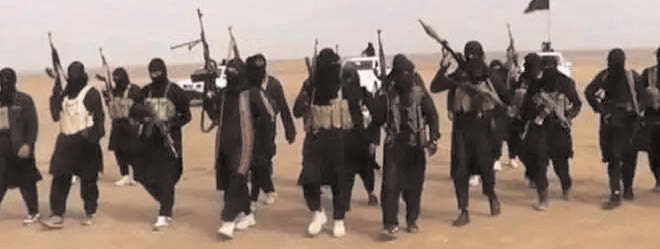
    ISLAMABAD (TIP): The dreaded Islamic State militant group has claimed responsibility for the attack on a Pakistani media house that had injured one person.

    Unidentified assailants riding a motorbike lobbed a hand grenade on ARY News office and fired several shots on Wednesday.

    Security guards present at the office entrance retaliated forcing the attackers to flee away dropping pamphlets, ARY news said in a report.

    Global terror outfit ISIS’s Afghanistan chapter claimed responsibility of the attack in the pamphlets ‘in reaction to the channels coverage of ongoing operation Zarb-e-Azb’.

    In the attack, a non-linear editor was injured who was hit by a shrapnel in the head. He was immediately whisked to a hospital for medical attention.

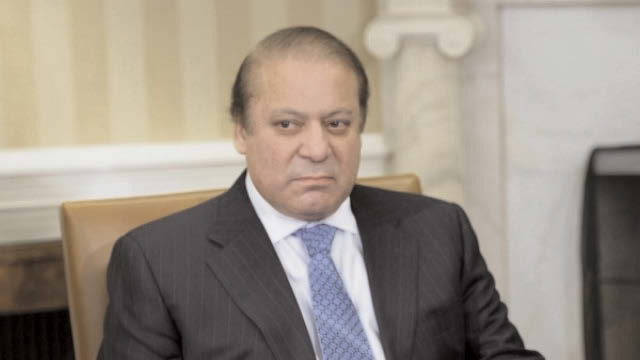
    Prime Minister Nawaz Sharif denounced the attack in strongest words. He directed the authorities to provide security to ARY News employees.

    A probe is going on and no arrest has been made in the case, police said.

    Pakistani police said in December they arrested eight suspected IS extremists after a raid in the central province of Punjab, accusing them of planning attacks.

    Pakistan has officially denied that Islamic State organisation is operating in Pakistan, but authorities have expressed fears the extremists could find recruits among the country’s myriad Islamist militant groups.

    (PTI)

  • Pakistan constitutes team to probe links to Pathankot attack

    Pakistan constitutes team to probe links to Pathankot attack

    ISLAMABAD (TIP): Pakistan on Wednesday set up a Joint Investigation Team (JIT) comprising security and military officials to probe whether any Pakistani individual or organization was involved in the Pathankot terror attack in India.

    The JIT was set up following an order of Prime Minister Nawaz Sharif to ensure a thorough and fair probe by Pakistan.

    According to an official of the Prime Minister’s Office, the JIT would be led by Additional IG Counter Terrorism Department (CTD) Punjab, Rai Tahir.

    Other members of the team are Director, Intelligence Bureau (IB) Lahore Azeem Arshad, Additional Inspector General, Counter Terrorism Department (CTD) Khyber Pakhtunkhwa Salahuddin Khan, Director, Federal Investigation Agency (FIA) Lahore, Usman Anwar, Brigadier Noman Saeed, ISI, and Lt Col Irfan Mirza, Military Intelligence (MI). The team will investigate the involvement of any individual or organization from Pakistan in the Pathankot airbase attack on January 2 in which seven Indian security personnel were killed.

  • 1971 Indo-Pak War hero Lt Gen Jacob dies

    1971 Indo-Pak War hero Lt Gen Jacob dies

    Lt Gen (Retd) J F R Jacob, who played a key role in the 1971 war which liberated Bangladesh from Pakistan, died here today at the age of 92 due to “old age complications”.

    Jacob, who was also Governor of Punjab and Goa, breathed his last at the Army Hospital here at around 8 am.

    He was admitted to the Army’s Research and Referral Hospital since January 1 after suffering from pneumonia. Prime Minister Narendra Modi condoled his demise and said India will always remain grateful to Jacob for his impeccable service to the nation. He also recalled his association with him.

    “RIP Lt Gen JFR Jacob. India will always remain grateful to him for his impeccable service to the nation at the most crucial moments.

    “Lt Gen JFR Jacob and I interacted often. Had a memorable interaction when he presented his autobiography to me,” he tweeted.

    Defence Minister Manohar Parrikar and BJP chief Amit Shah have also condoled his demise.

    Army chief Gen Dalbir Singh Suhag expressed his deepest condolences towards this great loss, a statement by the Army said.

    He said that Jacob was a pillar of military leadership and personified the best qualities of a soldier and a statesman who will always be remembered as one of the most prominent Leaders in the annals of Indian military history.

    Jacob had negotiated the surrender of Pakistani troops in Dhaka after the 1971 Bangladesh liberation war when, as Major General, he served as the Chief of Staff of Indian Army’s Eastern Command.

    Born in 1923 in Bengal Presidency under British India, Jacob joined the army at the age of 19 in 1942 and also fought in World War II and the Indo-Pakistan War of 1965 before he retired in 1978.

    Post retirement, he joined BJP and headed its ex-servicemen wing. He was appointed Governor of Goa during Vajpayee government and then Governor of Punjab. He was also the Administrator of Union Territory of Chandigarh.

    During his stint as Punjab Governor and UT Administrator, he would often conduct check in government offices unannounced.

    He authored two books – ‘Surrender at Dacca: Birth of a Nation’ and ‘An Odyssey in War and Peace: An Autobiography Lt Gen J F R Jacob’.

  • TALKS ONLY IF PAK ACTS PROMPTLY, SAYS INDIA

    TALKS ONLY IF PAK ACTS PROMPTLY, SAYS INDIA

    NEW DELHI (TIP): India on Jan 7 made it clear to Pakistan that the proposed foreign secretary-level talks could be held only if Islamabad acts promptly against plotters of the Pathankot airbase attack.

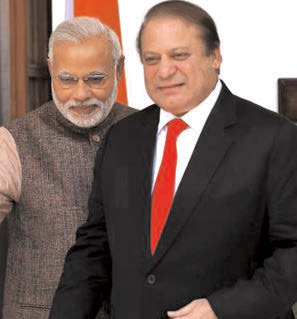
    New Delhi put the onus on Islamabad to salvage the peace process which was recently reinitiated by Prime Minister Narendra Modi and his Pakistan counterpart M Nawaz Sharif.

    The dialogue process between the two countries came under a shadow after the recent attacks on the Indian Air Force base in Pathankot (Punjab) and the Consulate General of India at Mazar-e-Sharif in Afghanistan.

    “The ball is in Pakistan’s court,” Ministry of External Affairs spokesperson Vikas Swarup told journalists on Thursday.

    He, however, declined to comment on the proposed meeting between Foreign Secretary S Jaishankar and his Pakistan counterpart A A Chaudhry, which is scheduled to be held in Islamabad on January 15.

    “The immediate issue (for India) is Pakistan’s response to the terrorist attack (on IAF base in Pathankot) and the actionable intelligence provided to it,” he said.

    Prime Minister Narendra Modi’s National Security Advisor Ajit Doval on Monday shared with his Pakistani counterpart Naseer Khan Janjua details of the calls and transcripts of the conversations between the Jaish-e-Mohammed (JeM) terrorists, who attacked the IAF base in Pathankot, and the “commanders” of the terror organisation based in the neighbouring country.

    It was reported that New Delhi had asked Islamabad to immediately arrest JeM founder Moulana Masood Azhar and three other operatives of the terror organisations — Ashfaq Ahmad, Hafiz Abdul Shakur and Kasim Jaan.

    They were in constant touch with the terrorists and coordinating their assault on the airbase from a control room set up at the outfit’s headquarters in Bahawalpur in Pakistan.

    New Delhi suspects that Azhar’s brother Abdul Rauf Ashgar masterminded the attack. Modi on Tuesday asked Sharif to immediately act against the individuals and organizations responsible for the terrorist attack.

    Sharif assured Modi over phone that his government would take “prompt and decisive action against the terrorists”.

    “Actionable intelligence with regard to the terrorist attack and the links with the perpetrators in Pakistan have been provided to the Pakistani side. The Pakistani Prime Minister promised prompt and decisive action. We now await that prompt and decisive action,” the MEA spokesperson said on Thursday.

    “We had extended a hand of friendship to Pakistan but we will not countenance cross-border terrorist attacks,” said Swarup. The meeting between the two foreign secretaries on January 15 is expected to mark restart of the bilateral dialogue, which remained stalled since January 2013.

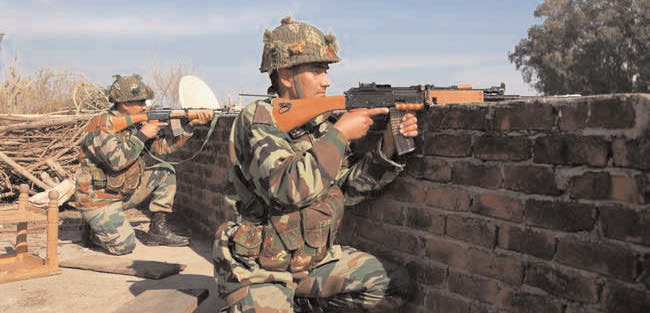
    Seven security-men were killed in the attack on the IAF base in Pathankot. The six JeM terrorists, who carried out the attack, were all eliminated by the security personnel in a three-day-long operation.

    The terrorist attack came just a little more than a week after Modi’s surprise visit to Lahore to greet Sharif on his birthday and to join celebration for the wedding ceremony of the Pakistan Prime Minister’s granddaughter. The visit added to the newly generated goodwill between the two neighbours, which saw a thaw in their ties with the December 9 announcement on resumption of the parleys as Comprehensive Bilateral Dialogue.

  • PANIC GRIPS GURDASPUR AS FORCES PLAN TO TAKE ON 2 SUSPECTED MILITANTS

    PANIC GRIPS GURDASPUR AS FORCES PLAN TO TAKE ON 2 SUSPECTED MILITANTS

    Security personnel including an Israel-trained SWAT team spilled into the fields and byways of Punjab’s Pandher village on Thursday to flush out two suspected terrorists, with the authorities fearing an attack on a key military facility days after a terror siege at the nearby Pathankot airbase.

    Police sources confirmed that government forces were prepared for an offensive a day after locals reported seeing two men in military fatigues acting suspiciously near the army cantonment in Gurdaspur district. When confronted, the men took cover in a sugarcane field, witnesses said.

    When contacted, Punjab Police deputy inspector general (border range) Kunwar Vijay Partap Singh said: “We are not taking any chances. We are not ruling out anything. Aerial surveillance and troop movement is on.”

    “A drone helped locate their location and by Thursday afternoon, the army and police teams took position,” a police source said.

    Soldiers concealed themselves on rooftops, behind trees and at a brick kiln as armoured vehicles and mortar guns rolled into the village in the afternoon. A helicopter had conducted surveillance sorties earlier in the day.

    By Thursday night, the sugarcane field spread over 30 acres was lit up by searchlights by the army and police personnel. Villagers said the drone had been hovering over the fields for thermal images

    Pandher village is nearly 20km off the India-Pakistan border and about a stone’s throw from the Tibri military cantonment.

    The facility is not far from the Pathankot air force station that saw a four-day long counter-terror operation in which six jihadists and seven security personnel were killed.

    All roads leading to Tibri have been cordoned off and a high alert sounded in the area.

    “We couldn’t get any sleep last night. Many villagers left to stay the night with their relatives though some returned this morning,” said a local resident who did not wish to be named.

    Gurdaspur was also targeted by Pakistani terrorists in July last year when they stormed a police station.

    By night, several houses at Bhule Chakk village located opposite Pandher across the road were also evacuated.

  • US expects Pakistan will take action against Pathankot attackers

    US expects Pakistan will take action against Pathankot attackers

    The US expects Pakistan will take actions against the perpetrators of the terror attack on IAF base in Pathankot, a top American official said, hours after Islamabad said it is working on the “leads” provided by India.

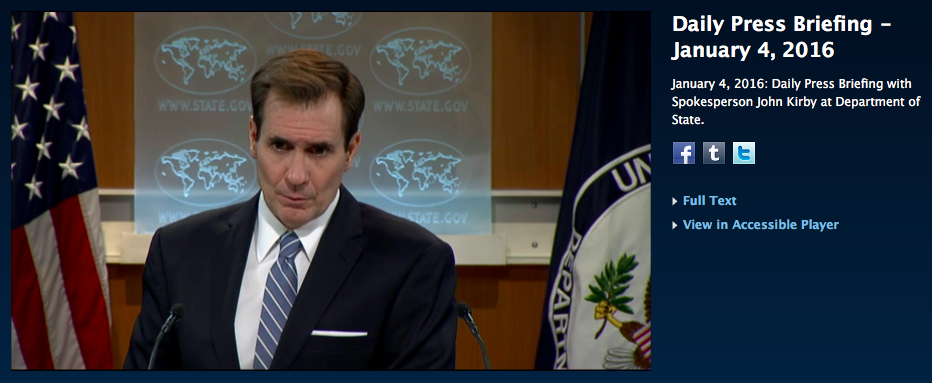
    “The government of Pakistan has spoken very powerfully to this and it’s certainly our expectation that they’ll treat this exactly the way they’ve said they would,” state department Spokesman John Kirby said on Monday.

    Pakistan has said it is working on the “leads” provided by India on this attack.

    Describing terrorism as a “shared challenge” in South Asia, the US also asked all countries in the region to work together to disrupt and dismantle terrorist networks and bring justice to the perpetrators of the Pathankot terrorist attack.

    “We urge all the countries in the region to work together to disrupt and dismantle terrorist networks and to bring justice to the perpetrators of this particular attack. I would note that the government of Pakistan, also publicly and privately condemned this recent attack on the Indian air base.

    “We have been clear with the highest levels of the government of Pakistan that it must continue to target all militant groups,” Kirby said.

    The government of Pakistan has said publicly and privately that it’s not going to discriminate among terrorist groups as part of its counter-terrorism operation, he said.

    “So this is a shared challenge that we all face in the region and we in the United States want everybody to treat it as a shared challenge,” Kirby said, adding that the US has strongly condemned the terrorist attack on the Indian Air Force (IAF) base in Punjab’s Pathankot.

    “We extend our condolences to all the victims and their families,” he said.

    He said the US has for a long time talked about the continued safe haven issues there in between Afghanistan and Pakistan and certainly between India and Pakistan.

    “We’re mindful that there remain some safe havens that we obviously want to see cleared out. And we continue to engage with the government of Pakistan to that end. And again, I would point you back to what the government of Pakistan itself has said and acknowledged that it’s not going to discriminate among terrorist groups and it will continue to take the fight,” Kirby said.

    The Pakistani government, the Pakistani people very much understand the threat here, Kirby said.

    “What we want and what we continue to say we want and will continue to work for is increased cooperation, communication, coordination, increased information-sharing and increased efforts against what we all believe is a shared challenge in the region.

    “We want to see the government of Pakistan continue to press the fight against terrorists, all terrorists, and to meet their own expectations that they’re not going to discriminate among groups. They’ve said themselves and our expectation is that they’ll live up to that pledge,” he said.

    “We recognise there’s more everybody can do, not just Pakistan but every nation can do because it is a shared challenge and it’s a challenge, as you well know, that doesn’t necessarily observe borders and boundaries. So it’s something that everybody can attack more,” Kirby said.

    Kirby said the US is encouraged by the government of Pakistan condemning this attack, and the statement that they’ve made about not discriminating among groups.

    “As we’ve said before, this is an issue that, as are so many issues between India and Pakistan and we want to see them work out bilaterally,” Kirby said, adding that normalisation of relations between India and Pakistan remains vital to the security and economic prosperity of the entire region.

    “We strongly encourage the governments of both India and Pakistan to remain steadfast in their commitment to a more secure and prosperous future for both our countries and for their region,” Kirby added.

    Pakistan on Monday said it is working on the “leads” provided by India on the terror attack on the IAF base in Pathankot, according to the Foreign Office.

    Extending Pakistan’s deepest condolences to the government and people of India on the “unfortunate terrorist incident” in Pathankot, a statement by the spokesperson of the ministry of foreign affairs said, “In line with Pakistan’s commitment to effectively counter and eradicate terrorism, the Government is in touch with the Indian government and is working on the leads provided by it.”

    The statement, however, did not give details of the “leads” provided by India.

    BELOW IS THE TRANSCRIPT OF THE PRESS BRIEFING

    QUESTION: Two questions. Yes, sir. One, it was then prime minister Atal Bihari Vajpayee who went to Pakistan with a message of peace, and it was also Prime Minister Nawaz Sharif then. And he took the bus from India to Pakistan. It was a big step at that time. And when he came back in the bus, India was faced with the Kargil War.

    MR KIRBY: Faced with a what?

    QUESTION: Kargil War. War.

    QUESTION: Kargil War.

    MR KIRBY: Kargil War.

    QUESTION: That means Pakistan’s General Musharraf attacked India. That was a gift for the Atal Bihari prime minister for the peace message. Now, on Christmas Day, Prime Minister Narendra Modi took another peace step and went to Pakistan, meet and greet Prime Minister Nawaz Sharif. When he came back – and again, the message was same from the people of India to the people of Pakistan: message of peace. When he came back, India was faced with the terrorism, terrorists on the border in airbase. So what would – and upcoming meeting January 16 is also now at stake whether India should continue or not. So what do we make this, before my second question?

    MR KIRBY: Well, there is an awful lot there. I mean, you saw my statement over the weekend. We strongly condemn the terrorist attack on the airbase in the Indian state of Punjab; and as before, we extend our condolences to all the victims and their families. We remain committed to a strong partnership with the Indian Government to combat terrorism. You and I have talked about that many, many times. We urge all the countries in the region to work together to disrupt and dismantle terrorist networks and to bring justice to the perpetrators of this particular attack.

    I would note that the Government of Pakistan also publicly and privately condemned this recent attack on the Indian airbase. And we’ve been clear with the highest levels of the Government of Pakistan that it must continue to target all militant groups, and the Government of Pakistan has said publicly and privately that it’s not going to discriminate among terrorist groups as part of its counterterrorism operations.

    So I think as I’ve said before, this is a shared challenge that we all face in the region. And we in the United States want everybody to treat it as a shared challenge. And the Government of Pakistan has spoken to this, has spoken very powerfully to this, and it’s certainly our expectation that they’ll do exactly what – they’ll treat this exactly the way they’ve said they will.

    QUESTION: Second, the people of Pakistan and the people of India both wants these terrorists – that training centers in Pakistan should be closed down, but the Pakistan Government is not taking any steps. And finally, what – the Indian media has been showing all these terrorism activities line by line and live from Pakistan and into India, this latest attack. And at the same time, Pakistani media has been told by the ISI and the military they will be punished if they show, but they must condemn that India media is just overstating all these attacks. What I’m saying: What is the future? Why U.S. is not taking action or asking Pakistan to stop and close down all these training centers, which they are threatening U.S. and India?

    MR KIRBY: Well, we have for a long time talked about the continued safe haven issues there in between Afghanistan and Pakistan and certainly between India and Pakistan. We’re mindful that there are – remain some safe havens that we obviously want to see cleared out. And we continue to engage with the Government of Pakistan to that end. And again, I would point you back to what the Government of Pakistan itself has said and acknowledged, that it’s not going to discriminate among terrorist groups and it will continue to take the fight.

    And Pakistan too has suffered from terrorism. Thousands and thousands of Pakistani soldiers have been killed. Thousands of Pakistani citizens – innocent Pakistani citizens – have been killed or injured by terrorist attacks. The Pakistani Government, the Pakistani people very much understand the threat here. And what we want and what we continue to say we want and will continue to work for is increased cooperation, communication, coordination; increased information sharing and increased efforts against what we all believe is a shared challenge in the region.

    QUESTION: Thank you, sir.

    MR KIRBY: Yeah.

    QUESTION: Can I follow it up?

    MR KIRBY: Yeah.

    QUESTION: Can I follow it up?

    QUESTION: South China Sea.

    QUESTION: Follow-up.

    MR KIRBY: I’ll go to you, then I’ll come to you. Go ahead.

    QUESTION: Do you think Pakistan is taking enough steps against terrorist networks which are targeting India, like Lashkar-e-Tayyiba, Jaish-e-Mohammad?

    MR KIRBY: Well, what I would tell you is we all recognize this is a fluid threat. It’s one that you could probably never do enough to get at. So we want to see the Government of Pakistan continue to press the fight against terrorists, all terrorists, and to – as I said, to meet their own expectations that they’re not going to discriminate among groups. They’ve said that themselves, and our expectation is that they’ll live up to that pledge. But we recognize there’s more everybody can do – not just Pakistan, but every nation in the region can do – because it is a shared challenge. And it’s a challenge, as you well know, that doesn’t necessarily observe borders and boundaries. So it’s something that everybody can attack more.

    QUESTION: You said more every nations to do. What should India do?

    MR KIRBY: I’m not going to —

    QUESTION: What —

    MR KIRBY: Look, I —

    QUESTION: In this fight against terrorism, what do you want – expect India to do?

    MR KIRBY: I’m not prepared with an agenda list for every nation in the region and what they can do. I think you should speak to Indian authorities about the challenges that they’re facing and their plans to address it. Our role has been and will continue to be one of encouraging regional cooperation and communication to get at what is actually a regional – trans-regional, frankly – threat.

    QUESTION: And finally, the kind of statements that have come from India and Pakistan after this Pathankot attack – does this give you comfort, some kind of comfort, that there is not much – enough tension between the two countries after this attack?

    MR KIRBY: Well, I mean, certainly we – we’re encouraged by the Government of Pakistan condemning this attack, and again, the statements that they’ve made about not discriminating among groups. But this is – as we’ve said before, this is an issue that – as are so many issues between India, Pakistan – India and Pakistan – we want to see them work out bilaterally.

    Okay? Yes.

    QUESTION: Can I have a follow-up on that —

    MR KIRBY: Okay.

    QUESTION: Yeah. Over the weekend, have you been in touch with either India or Pakistan to ensure that talks are on tracks and it – they’re not derailed?

    MR KIRBY: Talks are —

    QUESTION: Talks between India and Pakistan which have been started afresh last week.

    MR KIRBY: I don’t have any discussions to read out to you, but I can tell you the normalization of relations between India and Pakistan remains vital to the security and economic prosperity of the entire region. We strongly encourage the governments of both India and Pakistan to remain steadfast in their commitment to a more secure and prosperous future for both their countries and for the region. So I don’t have any specific discussions to read out to you.

    You’ve been patient. Go ahead.

  • Terror attack Hits Pathankot Air Force station in Punjab; 2 terrorists killed – Live Updates

    Terror attack Hits Pathankot Air Force station in Punjab; 2 terrorists killed – Live Updates

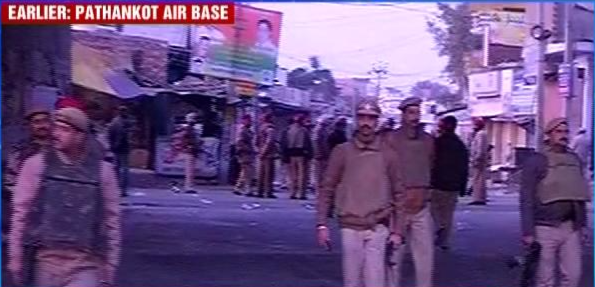
    Two terrorists have been killed, reports suggest 4-5 terrorists stormed base in Indian army fatigues. Fierce gun battle underway between security forces and terrorists.

    This story has been updated : Pathankot Terror Attack: All 5 Terrorists Neutralized | Jaish-E-Mohammed Blamed

    Two terrorists had been killed in the operation, whereas two or three others were still holed up in the area.

    Sources said that one air force personnel has also died during the gunbattle, while five others have been injured.

    According to ANI, four-five gunmen stormed base in Indian army fatigues. the firing is supposed to have taken place in technical area, and not near the hangers, according to sources.

    A fierce gunbattle is underway between the security forces and the attackers.

    As per latest reports, the terrorists have been contained to non-operational areas.

    At least two terrorists have been killed in a gun battle with the armed forces at the Pathankot Air Force Station on the Jammu-Pathankot highway. The BSF and Punjab Police have thrown a cordon around the air base and four military choppers are hovering over it.

    According to initial reports, the incident is being linked to the missing car of a Punjab SP on Friday morning.

    Meanwhile, authorities said the helicopters and other equipment in the Air base was safe. The entire area has been cordoned off, police said. The attackers had also made calls to Pakistan, police said.

    The attack comes days after PM Narendra Modi’s unscheduled visit to Pakistan. It is the second big terror attack in Punjab within less than a year as last year three militants stormed a police station in Diana Nagar before being eliminated after 12 hour gun battle.


  • Sikh Americans are not Muslims, but they still suffer from Islamophobia

    Sikh Americans are not Muslims, but they still suffer from Islamophobia

    Shah Noor, a recent transplant to California from Maryland, was driving through a nearby community one evening with his wife and stopped at a 7-Eleven to get some milk.

    A police car pulled up with lights flashing. Officers walked to their car and grilled them for 45 minutes. They were aggressive, he said, and asked what they were doing there, where they work. At one point, he saw the officer put his hand on his gun.

    “It was scary,” Noor said. “Pure harassment.”

    Police — Noor declined to identify the agency because of an ongoing investigation —cited him for talking on his cell phone while driving. He said the charge is bogus.

    “My phone had been dead for over three hours,” said Noor, 32, a lawyer who now runs JS Noor, a jewelry business. And the log on his wife’s cell phone shows no activity during that time.

    He’s convinced that racial profiling was in play. He wears a turban and has a beard. His wife, Stephanie, is African-American. And all of this happened within days of a mass shooting in San Bernardino carried out by a Muslim couple.

    After every attack on U.S. soil committed by Muslims, the backlash seems to increase. But hate crimes don’t target only Muslims.

    Noor is originally from India and a Sikh, not an Arab or Muslim.

    ‘[Sikhism] preaches a message of devotion, remembrance of God at all times, truthful living, equality between all human beings, social justice, while emphatically denouncing superstitions and blind rituals.’ – Sikh Coalition

    Since 9/11, Islamophobia has spread and has targeted groups indiscriminately. Sikhs, who wear a turban as an article of faith, have often been mistaken for Muslims in the U.S. They pray at a gurdwara, not a mosque, but a gurdwara in Buena Park, Caifornia, was vandalized days after the San Bernardino shooting. Graffiti sprayed on the façade included the misspelled “Islahm” and an expletive directed at the Islamic State of Iraq and the Levant.

    The San Bernardino shooters had apparently been inspired by the group that has been behind horrific violence worldwide, including the Nov. 13 attacks in Paris.

    The 20-year-old man arrested for the vandalism issued a public apology to the congregation of Buena Park Gurdwara Singh Sabha, a Sikh house of worship in Orange County.

    But other assaults have been more violent. On Sept. 15, 2001, four days after the attacks on the World Trade Center towers, Balbir Singh Sodhi was shot and killed outside of his Mesa, Arizona, gas station by Frank Roque. Roque wanted to “kill a Muslim” in retaliation for the attacks on Sept. 11. Sodhi is considered the first murder victim of post-9/11 backlash. Roque was convicted of first-degree murder and sentenced to life in prison for the hate crime.

    The Sikh Coalition was founded by volunteers in 2001 in response to a spate of attacks against Sikh Americans.

    “Sikh adults were assaulted, Sikh children were bullied, places of worship were vandalized,” said Arjun Singh, the coalition’s law and policy director. “Terrorist attacks lead to xenophobia and anyone who looks different is targeted, including Sikhs.”

    The Sikh Coalition reports a spate of attacks and harassment this month alone.

    A Sikh woman traveling to California shortly after the San Bernardino attacks said she had to show her breast pump to airline employees to prove she wasn’t a “terrorist”.

    In Grand Rapids, Michigan, a store clerk originally from the state of Punjab in India was shot during an armed robbery. The assailants called the clerk a terrorist.

    Five days after the San Bernardino attack, Gian Singh, a 78-year-old grandfather, was walking to pick up his grandson from school in Bakersfield, when a man in a pick-up truck threw an apple at him with such force that the apple split when it hit his head, according to the Sikh Coalition, which is representing him.

    ‘Sikh adults were assaulted, Sikh children were bullied, places of worship were vandalized. Terrorist attacks lead to xenophobia and anyone who looks different is targeted, including Sikhs.’ – Arjun Singh, law and policy director, Sikh Coalition

    There have been Sikhs in the U.S. for more than a century. Many came to build the railroads in the West. There is no accurate data on the number of Sikhs here, and estimates vary widely between 750,000 and 1.6 million, according to the coalition. Almost half of them live in California, the state with the largest Sikh population, but the densest concentration of Sikhs is in the tri-state area of New York, Connecticut and New Jersey.

    The Sikh religion is a monotheistic religion that originates in the Punjab region of India. According to the coalition, it “preaches a message of devotion, remembrance of God at all times, truthful living, equality between all human beings, social justice, while emphatically denouncing superstitions and blind rituals.”

    “We were shocked after finding out about the graffiti,” said Jaspreet Singh, 40, on the board of the Buena Park gurdwara that was vandalized. “Especially the hate words being used.”

    For Sikhs who grew up in the U.S., harassment has been a way of life. For Noor, schoolyard teasing was common but never did he feel so much hatred as after 9/11.

    “You feel people don’t like you, like an outsider,” he said. People would call him “Osama” in reference to Osama bin Laden, the founder of Al-Qaeda, the group that claimed responsibility for the 9/11 attacks. They also called him “Taliban,” the armed fundamentalist movement in Afghanistan.

    “Sometimes, I would walk up to [the hecklers] and yell back, ‘I’m not a terrorist,’” Noor said.

    One time, someone pulled a knife on him in Wheaton, Maryland, a suburb of Washington. Another time, in Amsterdam, people in a car yelled out “bin Laden” at him, he said. When he yelled back, they followed him up an alley. He escaped.

    And there was another encounter with police in a Detroit suburb. He had a bracelet in his hand that he was playing with. Police mistook it for a masbaha, Muslim prayer beads. He showed them that it had a cross on it.

    “I wear religious symbols of all kinds,” Noor said. “I go to church, to gurdwara, to mosque.”

    He has attended service at a Baptist congregation, his wife’s religion.

    His cousin, Jaisal Noor, 30, a reporter for The Real News Network, a nonprofit news and documentary service based in Baltimore, wrote about assaults on Sikhs for the 10th anniversary of 9/11.

    “The day of 9/11, I was confronted with the reality that things changed,” he said in an interview.

    He was in high school when the World Trade Center towers collapsed.

    “I remember that day feeling worried for my family, my parents,” he said. His father was a frequent business traveler who encountered a lot of discrimination at airports.

    His classmates would rant, “We’re gonna get these A-rabs” but then would turn to him and tell him they had no problem with him because he was Indian.

    “But it’s never gone away,” said Jaisal Noor. “Whenever we’re at war, the attacks increase … They see images of turban-wearing men as the enemies.”

    Sikhs say their first reaction may be to distance themselves from Muslims and explain to people that they are not Arabs or Muslim. But they stress that no one, Sikh or Muslim or any other religious or ethnic minority, should be targeted.

    “Many Sikhs are worried, and rightly so,” said Arjun Singh. “If the bigoted rhetoric continues, hate violence will continue too … Today’s toxic political climate has led to bias, discrimination and hate violence.”

  • Pakistan military deals a blow to jihadis but not to ideology

    Pakistan military deals a blow to jihadis but not to ideology

    ISLAMABAD (TIP): All cellphone coverage was blocked by the government for three hours one recent afternoon in the Pakistani capital, and it did not take people long to discover why: Maulana Abdul Aziz, the radical preacher of the Red Mosque, was sermonizing again.

    Banned from giving sermons in the mosque, the scene of an army siege on extremists that killed as many as 75 people in 2007, Aziz had announced that he would relay his latest Friday sermon by cellphone, calling aides at the mosque who would rebroadcast it over the mosque’s loudspeakers.

    But instead of arresting the jihadi preacher, as many moderate Pakistanis would like, the authorities simply turned off the city’s cell networks last Friday from 11am to 2pm, the traditional time for Friday Prayer, according to senior Pakistani officials, speaking on condition of anonymity because they were not authorized to talk to the news media.

    Aziz’s relative untouchability is a measure of how enduring the power of militant Islamist ideology has remained in Pakistan. Even as the Pakistani military has driven some jihadi groups out of business or into hiding over the past year, other technically banned jihadi or sectarian groups like Lashkar-e-Taiba and Ahle Sunnat Wal Jamaat are still thriving, with little apparent effort by the government or military to curb them.

    The ascendance of such groups and of radical mosques and madrassas was well underway during the years that Tashfeen Malik, half of the husband-wife pair of mass shooters in California, returned to Pakistan for her university education in Punjab province.

    Many Pakistani officials have been quick to suggest that Malik must have found her extremist beliefs while she was growing up in Saudi Arabia. But the reality in Pakistan is that hard-line Islamist views in line with some of the most conservative Saudi teachings are more mainstream than ever.

    While the Shariah law the hard-liners here tend to espouse calls for their women to be kept in purdah — strictly separated from men at all times — some Pakistani women have been at the fore in pushing the Islamist agenda themselves.

    That fact came into view most prominently with the case of Aafia Siddiqui, a Pakistani neuroscientist and member of al-Qaida who was convicted in 2010 of trying to kill American personnel in Afghanistan. She is serving an 86-year prison sentence in the United States.

    A recent example popped up here at the Jamia Hafsa school, a girls’ madrassa attached to Aziz’s Red Mosque. About 15 of the older students recently posted a video of themselves in full burqas in front of the flag of the Islamic State, praising the group’s leader, Abu Bakr al-Baghdadi, and asking him to come help them avenge their followers and others who have been killed — especially Osama bin Laden. “May God annihilate America and those who support it,” their spokeswoman said. “We pray for you every night here in the land of Pakistan.” (NYT News Service)

  • Punjabi Singer Goes Missing In Canada: Police

    Punjabi Singer Goes Missing In Canada: Police

    TORONTO:  A 30-year-old Punjabi singer, who visited Canada for a music performance, has gone missing, prompting authorities to seek the public’s help in locating him.

    Lehmber Singh missed his return flight to India on November 5 at 6:30pm at the Person International Airport and his whereabouts since then are not known, Mississauga police said.

    Mr Singh has been described by the Peel Regional Police in a public notice – issued yesterday with his photograph – as a 5’5″ tall South Asian man with a beard and moustache, weighing 140 pounds and shoulder-length wavy black hair, slim built and brown eyes.

    He was last seen wearing blue jeans, full length black trench coat.

    Mr Singh only speaks Punjabi and his English is limited. He also may have a black carry-on bag in his possession. He also had some 100 dollars in his possession and an international cell phone.

    “On November 5, Singh was last seen by a family relative at approximately 10:30 am in the area of Derry Road East and Edwards Boulevard in the City of Mississauga,” police said.

    Local media said family members and police are concerned for Mr Singh’s well-being as he does not know the area and may be lost in Canada, which is home to a large number of people from India.

  • Pakistan cracks down on terror

    Pakistan cracks down on terror

    LAHORE:With ties between extremists and Islamabad on the decline, militants are now faced with a more resolved and committed effort to eliminate them.

    The recent revelations that the San Bernardino shooters had extremist ties to Pakistan might appear to confirm the narrative that Pakistan is consumed by a downward spiral of extremist violence.

    But over the past year, it has quietly made some important, costly, and under-appreciated strides in its counter-militancy efforts.

    Individually, none are groundbreaking, but together they point in a more promising direction for Pakistani society, regional stability, and the U.S.-Pakistan relationship.

    First, the Pakistani army has pursued more comprehensive military operations in tribal areas than initially expected. Although it has not directly targeted the Haqqani Network as the United States hoped, Pakistan has actively targeted a wide array of militant groups, not just the Pakistani Taliban (TTP).

    Also Read: Two professors arrested at Punjab University for ‘terrorist links’

    Second, Pakistani security forces have expanded their counter-militancy operations, not only against assets once under state purview that have now turned rogue, but also against a wider range of sectarian militant groups. Pakistan adopted a strategy of leadership targeting, or “decapitation,” against the once formidable Lashkar-e-Jhangvi (LeJ), a sectarian militant group with strong links to the Sunni extremist political group, Ahle Sunnat Wal Jamaat. Over the past year, LeJ leadership — once described as “untouchable” and “invincible” — has been systematically wiped out in a series of extrajudicial killings, possibly because it was drifting toward the Islamic State.

    The counter-sectarian campaign could expand beyond LeJ. The Pak Institute for Peace Studies (PIPS) estimates that the state has conducted 20 major search operations that have netted nearly 100 key leaders from the militant-linked Ahle Sunnat Wal Jamaat. Chipping away at sectarian groups is important, because they feed other militant organizations like al Qaeda, TTP, Jaish-e-Mohammed, and Lashkar-e-Taiba (LeT).

    Third, Islamabad has augmented the military’s kinetic actions by denying extremist and militant groups the social space they have utilized and operated in for decades. It has begun to seriously enforce regulations on hate speech, on the misuse of mosque loudspeakers or amplifiers to prevent public incitement, and on weapons sales. Tempering sectarian mobilization with these tools was not new, but its enforcement is.

    Finally, the Pakistan Electronic Media Regulatory Authority prohibited media coverage of banned organizations, specifically LeT and Jamaat-ud-Dawa, though there appears to be confusion and bureaucratic infighting over this judgment. Even critics of government shortcomings acknowledge “the space for pro-extremist mindset has gradually shrunk.”

    Also Read: Two professors arrested at Punjab University for ‘terrorist links’

  • Uber plans to tap into private car pool

    Uber plans to tap into private car pool

    NEW DELHI (TIP): A day after chief minister Arvind Kejriwal batted for carpooling as a solution to deal with the odd-even car number scheme, sources close to Uber said the cab aggregator is testing a new ride-sharing service in Delhi, where private car owners can pick up other commuters on the way and split the cost of the trip.

    Till now, Uber has been allowing only commercially licensed cab operators to join its platform. In October, it signed an MoU with the Punjab government to allow any private car owner to offer Uber services.

    It’s not clear if Delhi’s Motor Vehicles Act will allow such a step. But given the pressure, the Kejriwal government is in to handle the situation arising out of restricting the number of private vehicles on roads on the basis of odd-even number of their licence plates from

    January 1, the Uber solution may look attractive.

  • Punjabi is Canada third official language

    Punjabi is Canada third official language

    Punjabi is officially the third language of the Canadian Parliament. The first and second official languages of the country and its parliament are English and French.

    Four years back Punjabi was recognised as Canada’s third most common language. Now it has officially taken over the mantle in the Commonwealth‘s top legislature after the election of 20 Punjabi-speaking candidates to the House of Commons.

    Twenty-three Members of Parliament of South Asian-origin were elected to the House of Commons, Parliament of Canada in the 19 October Parliamentary elections. Three of them, Chandra Arya – born and raised in India, Gary Anandasangaree – a Tamil and Maryam Monsef – of Afghan origin, do not speak Punjabi, The Hill Times Online reported.

    Of the 20 who speak Punjabi, 18 are Lib-erals and two are Conservatives. Among the newly-elected Punjabi-speaking MPs, 14 are males and six are females. Ontario elected 12, British Columbia four, Alberta three and one is from Quebec.

    “The voice of the Indo-Canadian community will now be very well represented in the Parliament. In the overall aspect of it, the South Asian community won,” MP Deepak Obhrai of Conservative Party said.

    In an interview with the paper, Navdeep Bains, a Liberal MP, said although 20 Punjabi-speaking MPs have been elected, these MPs represent all constituents regardless of their party affiliation or ethnic origin.

    Iqra Khalid, the Liberal MP who was born in Pakistan, said the diversity of the newly-elected House reflects the true make-up of Canada. According to Statistics Canada’s 2011 National Household Survey, 430,705 Canadians identified Punjabi as their mother tongue, making it the third most com-mon language after English and French. The 430,705 native Punjabi speakers make up about 1.3 per cent of Canada’s population. The 20 Punjabi-speaking MPs represent almost six per cent of the House of Commons.


  • Petition filed to bring Kohinoor from UK to Pakistan

    Petition filed to bring Kohinoor from UK to Pakistan

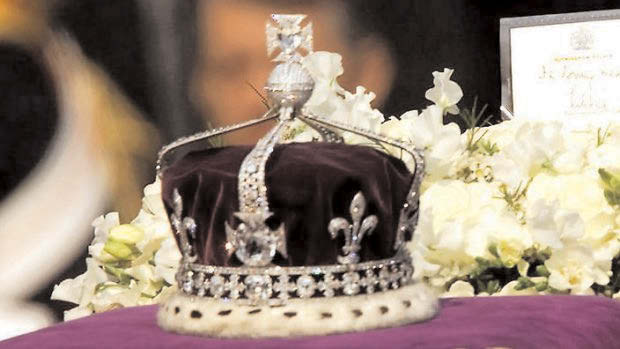
    LAHORE (TIP): A petition has been filed in a Pakistani court asking the government to bring back Kohinoor diamond, the world famous precious stone which India has been trying to get from the UK.

    Barrister Javed Iqbal Jaffry alleged in his petition to the Lahore High Court that the UK snatched the diamond from Daleep Singh, grandson of Maharaja Ranjeet Singh, and took it to Britain.

    “The diamond became part of the crown of incumbent Queen Elizabeth-II at the time of her crowing in 1953. Queen Elizabeth has no right on the Kohinoor diamond, which weighs 105 carats and worth billions of rupees,” he said.

    “Kohinoor diamond was cultural heritage of Punjab province and its citizens owned it in fact,” Jaffry said.

    He asked the court to direct federal government to bring the diamond to Pakistan from the British government.

    The Kohinoor was mined in medieval times in the Kollur mine in Andhra Pradesh’s Guntur district. At one time it was considered the largest diamond in the world.

    The diamond was originally owned by the Kakatiya Dynasty, which had installed it in a temple of a Hindu goddess as her eye.

    Reportedly, in 1849, after the conquest of the Punjab by the British forces, the properties of the Sikh Empire were confiscated. The Kohinoor was transferred to the treasury of the British East India Company in Lahore. The properties of the Sikh Empire were taken as war compensations.

    It passed through the hands of various invaders and was finally appropriated by the British during the Raj.

    Today the diamond is a part of the Crown of Queen Elizabeth II.

    India has been long demanding the return of Kohinoor which was owned by several Mughal emperors and Maharajas before being seized by the British.

    India says that Kohinoor was illegally acquired and wants it returned along with other treasures looted during colonial rule.

    When Queen Elizabeth II made a state visit to India marking the 50th anniversary of independence in 1997, many Indians in India and Britain demanded the return of the diamond.

    British Indian MP Keith Vaz had called for the return of ‘Kohinoor’ diamond to India ahead of Prime Minister Narendra Modi’s visit to the UK in November. (Source: PTI)

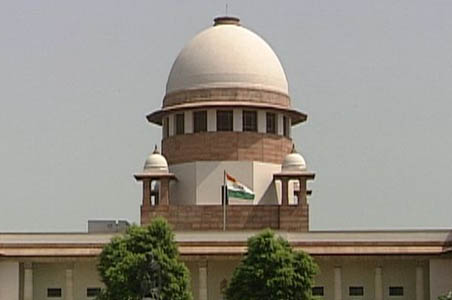
  • Justice Thakur assumes charge as CJI

    Justice Thakur assumes charge as CJI

    NEW DELHI (TIP): A soft-spoken but tough judge, Justice Tirath Singh Thakur on December 3 assumed office as Chief Justice of India after being sworn in by President Pranab Mukherjee.

    Justice Thakur’s term as 43 rd CJI would last for 13 months and he would retire on January 4, 2017. Well-versed in Urdu poetry, Justice Thakur, who passed several signficant orders in IPL spot fixing scandal, Subrata Roy Sahara case, NRHM and Saradha and other chit fund scams, never misses an opportunity to recide couplets to mollify the frayed tempers in the court.

    Son of former Judge of Jammu and Kashmir HC and Assam Governor Devi Das Thakur, Justice Thakur started his practice as pleader in 1972.

    Justice Thakur became the additional judge of the Jammu and Kashmir High Court on February 16, 1994. He was transferred to the Karnataka High Court in March 1994. He became the permanent judge in September 1995. He was transferred to the Delhi High Court in July 2004.

    Justice Thakur became the acting chief justice of the Delhi High Court on April 9, 2008 and the chief justice of Punjab and Haryana High Court on August 11, 2008 and continued to serve in that capacity till he was elevated as the judge of the apex court.

    The brief oath-taking ceremony in the Durbar Hall of Rashtrapati Bhavan was attended by Vice President Hamid Ansari, Prime Minister Narendra Modi, his cabinet colleagues and former chief justices, among others. His mother Saraswati Thakur and other family members were present at the function.

  • Some relief for flood-hit Chennai as rain stops, water level in rivers declines

    Some relief for flood-hit Chennai as rain stops, water level in rivers declines

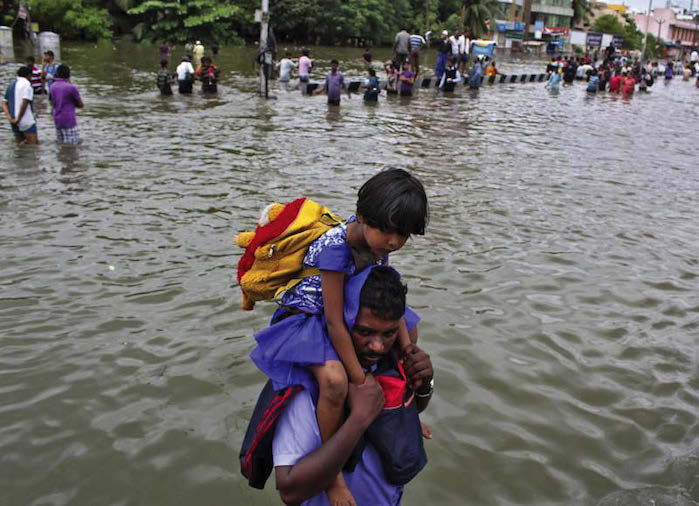
    CHENNAI (TIP): After days of chaos, there was finally some relief for the flood-battered people of Chennai, as a break in rain overnight helped reduce water levels of the Adyar and Kumbh rivers, thus easing large-scale flooding.

    While intermittent rain has been forecast for Chennai over the next 24 hours, coastal and interior Tamil Nadu will receive more rain in that period.

    NDRF chief O P Singh said the situation had improved in the city overnight as water levels in many areas receded. There was a sharp fall in the discharge of waters from Chembarapakkam, Pondi and Puzhal lakes as well, leading to reduction in the water levels of the two rivers that criss-cross the city.

    Rescue and relief operations are continuing in full swing and the National Disaster Response Force will intensify its operations in the affected areas on Friday.

    “5 NDRF teams from Punjab have reached Chennai at 3am on Friday morning,” the NDRF head said, adding, “We’ve rescued more than 9,000 people so far.”

    He added that power has been restored in several areas that were not waterlogged and the communications network has also improved.

    Officials said that from a discharge of 30,000 cusecs of water from Chembarampakkam, one of the key sources of drinking water supply to Chennai city, it has come down to 13,000 cusecs in the afternoon and 5,000 cusecs at night after there was no fresh rain on Thursday.

    Similarly, there has been considerable decline in discharge of water from Puzhal, Pondi and Madurantakam lakes among others.

    Still, Chennai city remained virtually cut off from the rest of the country with all air, rail and road transport services continuing to be suspended. Public transport was crippled because of flooding of the arterial main roads, including Mount Road over the Marmalong bridge.

    The Grand Southern Trunk Road that links Chennai with Madurai and beyond was cut off after breaches in several places in Kanchipuram district.

    The Southern Railway announced cancellation of all inter- and intra-state train services till Saturday while the airport operations will remain suspended till Sunday.

    Prices of milk, vegetables and food items skyrocketed because of short supply and people were forced to fork out huge amount of money for buying essentials.

    With the flood wreaking havoc, Prime Minister Narendra Modi on Thursday undertook an aerial survey of the flood-hit areas of Chennai and its suburbs and the neighbouring districts of Kancheepuram and Tiruvallur.

    Later he held consultations with Jayalalithaa at the naval base “INS Adyar” and announced Rs 1,000 crores in aid for relief work. This amount is over and above the Rs 940 crores given by the Centre to Tamil Nadu during the earlier spell of heavy rain in November.

    Jayalalithaa also made a separate aerial survey of the affected areas on Thursday.

    In a brief statement that began in Tamil, PM Modi said he has seen the extent of damage suffered by the state and shared the misery of people of Tamil Nadu. “I will stand in support of you,” he said in his remarks after the review meeting with the chief minister.

    Teams of NDRF, Army personnel and police and fire service men swung into action to rescue people from their flooded homes in Kotturpuram, Nandanam, Jafferkhanpet, Saidapet and the suburban areas of Velacheri, Madipakkam, Tambaram and Mudichur localities, where water had reached up to the first floor.

    A total of 28 NDRF teams with over 1,200 personnel were deployed in Chennai where they rescued around 5,000 marooned people by deploying over 110 boats. Two NDRF teams were deployed in Puducherry.

    Air Force personnel dropped food packets providing succour to the distressed people living on roof tops after floods displaced them from their homes. A total of 14 lakh food packets were distributed, Tamil Nadu government said.

    255 Navy personnel were pressed into service with 12 boats and 15 helicopters for reaching relief.

    Heavy rain continued to lash coastal Cuddalore district, one of the worst affected areas ever since northeast monsoon fury started early last month, and Villupuram and Kanyakumari districts and Puducherry as the death toll in the state mounted to 269.

    Chennai will remain overcast with possibility of intermittent rains. Fishermen have been warned not to go to sea, Area Cyclone Warning Centre Director SR Ramanan told reporters.

  • INOC, USA APPLAUDS THE APPOINTMENT OF CAPTAIN AMARINDER SINGH AS PPCC PRESIDENT

    INOC, USA APPLAUDS THE APPOINTMENT OF CAPTAIN AMARINDER SINGH AS PPCC PRESIDENT

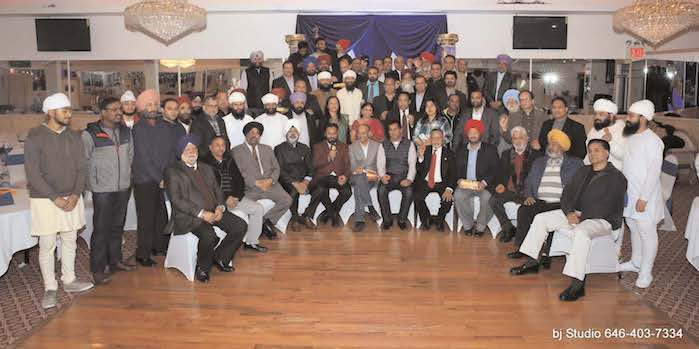
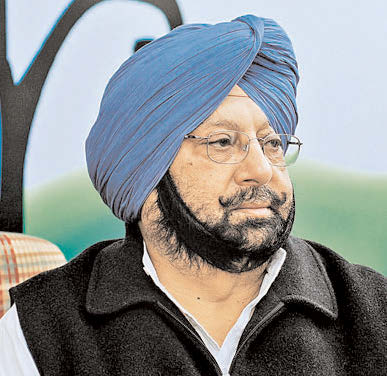
    NEWYORK (TIP): At a standing room crowd only gathering at the LibertyPalace in Richmond Hill, New York, hundreds of Congress loyalists cheered and distributed sweets to congratulate Captain Amarinder Singh as the Punjab Pradesh Congress Committee Chief on his appointment by the AICC President, Smt. Sonia Gandhi.

    In a resolution introduced on the floor, the meeting expressed its gratitude to Sonia ji for this bold decision at a critical time for the party in the state and congratulated Captain Amarinder Singh and wished him all the success in the future. Mr. Mohinder Singh Gilzian, President of INOC, USA, in his speech, touched upon the  state of affairs in Punjab with the mismanagement and corruption under the Badal government combined with the divisive politics of its ally BJP that is harming the interest of the common people.

    He cited the media reports saying that ‘Punjab continues to be on edge, and the outlook remains grim. The increasing grip of the Badal family over issues concerning Sikhs, both political and religious, coupled with incidents of sacrilege of the holy book, the Guru Granth Sahib, and multiple sets of problems faced by farmers, are reinforcing the impression of a State administration at a loss for initiatives to regain equilibrium. The State is already in the grip of drug abuse, falling agricultural output and farm debts. It has faced a farmers’ agitation for over two months now. The resentment in the cotton and rice belt reached such proportions that officials were scared to venture into the villages. In addition, dissidents are threatened to a point where the freedom of expression is at risk’.

    The meeting also celebrated the Constitution of India that provided stability and prosperity to the nation and saluted its architects Pandit Jawaharlal Nehru and B.R. Ambedkar. Meeting also expressed concerns about the growing intolerance in India and requested the Modi Government to uphold the constitution and respect the legacy of great leaders that paved the way for a democratic and secular nation. George Abraham, Chairman, in his speech, paid special tribute to Nehru for his great contribution in building strong institutions that have served the country well in the last six decades.

    Mr. Harbachan Singh, Secretary-General in his speech alluded to the Bihar election results and congratulated the State for its victory and pointed out that the Indian voter has already begun to draw his/her conclusions of the recent 18-month
    performance/experience with the Modi Government. ‘Captain Amarinder Singh’s appointment has rejuvenated the hopes and interests of Congress supporters and reinforced their determination to correct the mistakes of the past’ he further added.

    Mr. T.J. Gill, President of Punjab Chapter exhorted the participants to be more active in supporting good governance in the State and promised to do his very best in conveying the NRI sentiment to the Captain and the new leadership in that regard.

    Mr. Karamjit Dhaliwal, Vice-President Spoke about the need for the Congress cadre in Punjab to come together in unity as it will be facing the election in the near future.

    Among those who addressed the audience included Bawa Rajender Singh Lally, Babu Joginder Singh Miani, Mr. Satish Sharma, Mr. Sarmukh Singh, Mr. Sarbjit Singh Advocate, Mr. Rajesh Allahdad, Mr. Jaswinder Singh Bittoo, Mr. Jagjit Singh, Manmohan Singh Miani and Mr. Gurmit Singh. Mr. Jasvir Singh Nawanshahr expressed vote of thanks.

  • GET OUT, HARYANA MINISTER ANIL VIJ TELLS WOMAN COP AFTER SPAT

    GET OUT, HARYANA MINISTER ANIL VIJ TELLS WOMAN COP AFTER SPAT

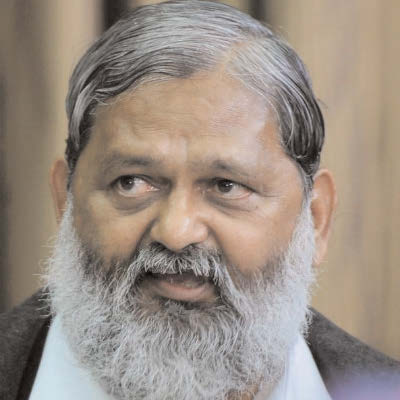
    CHANDIGARH (TIP): Haryana minister Anil Vij on Nov 27 asked superintendent of police (SP) Sangeeta Kalia to “get out” of a meeting in Fatehabad.

    But the IPS officer refused to leave, forcing a fuming Vij to walk out of the meeting in a huff.

    The ugly spat between the two took place in presence of several others at the meeting at Fatehabad district panchayat office.

    A video grab shows the minister getting agitated while asking Kalia about a complaint pertaining to unauthorized sale of liquor.

    On being asked about the steps being taken to check the illegal liquor sale, Kalia claimed around 2,500 cases were registered under the Excise Act in the past 10 months, which was a “record”.

    Vij was apparently not satisfied with the reply and as the two continued to argue before he asked her to “get out”.

    BJP workers and others at the meeting too left with Vij, who said he will take up the matter with the cabinet.

    Fatehabad deputy commissioner N K Solanki, who was at the meeting, tried to pacify Vij, but the minister refused to listen to him.

    Vij had taken up the liquor smuggling issue at the meeting after an NGO complained to him about it.

    “I will not attend the meeting till this SP is there in the district. She has behaved like this even in the past,” he said.

    “We had complaints from local residents and the NGO that they were not getting any help from police in curtailing liquor smuggling from the border villages of Punjab.”

    Kalia refused to comment while Congress’s state chief Ashok Tanwar said the BJP government has lost control over bureaucrats and official machinery within a year.

    “…even its ministers are yet to learn how to deal with officers and the system.”

  • Amarinder returns as Punjab Congress chief, Soni to lead 2017 election campaign

    Amarinder returns as Punjab Congress chief, Soni to lead 2017 election campaign

    CHANDIGARH (TIP): The Congress picked former chief minister Amarinder Singh on Nov 27 to lead the party in Punjab, a move aimed at ending a prolonged leadership logjam and seal deep divisions in the ranks that could impede its bid to win the 2017 assembly election.

    State unit chief Partap Singh Bajwa bowed out and several leaders got key posts as part of a revamp that bears the stamp of party vice-president Rahul Gandhi, insiders said.

    The move is expected to end intense factionalism raging in the Punjab Congress that hit the party’s fortunes in the 2014 general elections when it managed to win just three of the state’s 13 Lok Sabha seats, down from eight in the previous polls.

    Singh was one of the few winners, defeating the BJP’s Arun Jaitley in Amritsar even as the Congress was routed across the country, and was appointed the party’s deputy leader in the Lok Sabha.

    While projecting a Jat Sikh in Singh as the party’s face, the Congress has also tried to woo the Dalits and Hindus using a social engineering formula.

    With an eye on the assembly polls, Rajya Sabha MP Ambika Soni has been appointed the campaign committee chief while MLA Sadhu Singh Dharamsot, who belongs to a Scheduled Caste, will be her deputy.

    Amarinder Singh is seen as the best bet for the Congress poll strategy against the ruling Shiromani Akali Dal-BJP alliance that has been embroiled in a controversy over the desecration of the Sikh holy book, Guru Granth Sahib.

    A spate of violent protests has swept the state, with radical groups blocking roads and clashing with security forces, targeting chief minister Parkash Singh Badal and the ruling SAD. But with the Congress riven by dissent, the rookie Aam Aadmi Party is looking to cash in during the election.

    The AAP had also taken away a huge chunk of anti-incumbency votes in the Lok Sabha polls to win four seats.

    Analysts say the former chief minister worked his way to the state Congress chief ’s post through a relentless onslaught on Bajwa by openly seeking his removal and challenging his authority through parallel shows of strength. Rahul, who named Singh the CM candidate in the run-up to the 2012 election, was not willing to pass the baton back to him after two consecutive poll drubbings under his watch.

    But realpolitik prevailed after Singh upped the ante by questioning the Amethi MP’s leadership and even hinted at breaking away from the party.

  • Sikh Body Gives Scholarships Worth $200,000 to Students in Punjab

    Sikh Body Gives Scholarships Worth $200,000 to Students in Punjab

    WASHINGTON:  A US-based Sikh body has given scholarships worth USD 200,000 to poor students in Punjab to improve their access to higher education, according to a media report.

    Sikh Human Development Foundation (SHDF), which is based in Washington said, the scholarship has been given to 583 needy students in Punjab this year.

    Sikh Human Development Foundation
    Sikh Human Development Foundation

    SHDF financially assist meritorious and needy students in Punjab and other Northern Indian states to improve their access to higher professional education.

    “Over the years, the organisation has awarded a total of 4001 scholarships,” said Gajinder Singh Ahuja, chairman of SHDF.

    Jaspreet Kaur Ahuja, secretary general of SHDF, said 68 per cent of the recipients belong to rural areas of Punjab and adjoining areas.

    Maintaining the past trends, female students represented 74 per cent of the total number of scholarship recipients.

    Among the awardees, 32 per cent are pursuing medical and nursing, 33 per cent engineering, 23 per cent management related, five per cent IT and seven per cent other professional courses.

    Rajwant Singh, outreach director of SHDF, said the scholarships are awarded on need and merit basis.

    All students come from families earning less than USD 190 (Rs. 12000) a month and many with income less than USD 1 a day.