Tag: Punjab

  • The enduring legacy of Nehru:  a tribute to the architect of modern India

    The enduring legacy of Nehru: a tribute to the architect of modern India

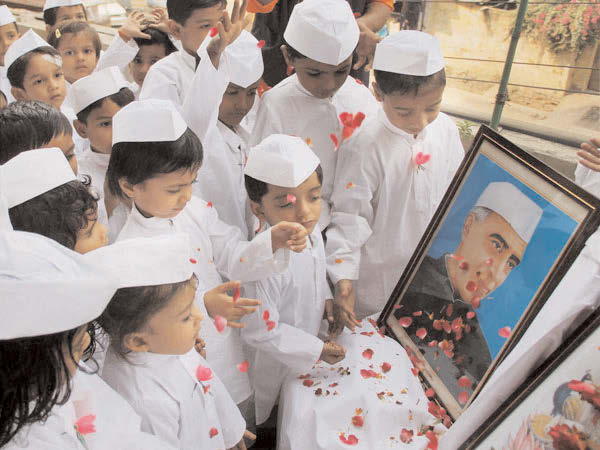
    A moment comes, but comes rarely in history, when we step out from the old to new, when an age ends, and when a soul of a nation, long suppressed, finds utterance’. Pandit Jawaharlal Nehru delivered these inspiring words in his speech, ‘Tryst of Destiny’ in1947. He is still remembered for his vision and commitment to bring India from out of oppression into freedom, modernity, and self-reliance.

    As we have celebrated the 125th birth anniversary of Jawaharlal Nehru on November 14th, 2015, we are in awe as we recollect his contribution, not only towards gaining India’s independence but also for laying a strong foundation of a pluralistic and forward looking India. Yet, half a century after his death, the current leadership of India is busy trying to downplay his legacy for political expediency, and to re-create a nation away from the democratic and secular tradition he has championed.

    Jawaharlal Nehru laid the foundation of strong institutions that helped India preserve freedom and democracy and move on to become a modern nation.
    Jawaharlal Nehru laid the foundation of strong institutions that helped India preserve freedom and democracy and move on to become a modern nation.

    When India gained Independence, there were monumental challenges resulting from the partition and the ongoing violence between Hindus and Muslims. The urgent task facing the leadership at the time was the resettlement of 6 million refugees, and arresting the spread of further violence. Nehru put together a team of dedicated patriots such as Sardar Tarlok Singh, Sarojini Naidu and S.K. Ghosh to limit the violence, as well as rescue and recover abandoned and abducted women and children.

    When the British left, the Government, headed by Nehru, faced another important task: the national integration of 562 princely states. A newly created State department under the decisive leadership of Sardar Vallabhai Patel along with Nehru ensured the integration of the country in a remarkably short period of time.

    If we look back at history for a moment, we would admire how Nehru brought together exceptional people of different ideologies such as Dr. B.R. Ambedkar, S.P. Mookerjee, John Mathai, C.H. Bhabha and Shanmukham Chetty to be reflective of India’s secular and multi-faceted character in the Constituent Assembly. The Congress party delivered on the promise that the constitution they were about to create would reflect the aspirations of the Indian people.

    The constitution of India was amongst the largest in the world with 395 Articles and 9 Schedules. The preamble spells out the basic philosophy and the solemn resolve of the people of India to secure justice, liberty, equality and fraternity for all its citizens. What Nehru has accomplished through this document with significant help and support from Ambedkar also is part of his vision to empower marginalized sections of the society.Nehru was committed to ensuring social justice and the welfare of the masses as far back as 1938 by setting up the National Planning Committee under the banner of the Congress Party for the very purpose of improving the quality of life of ordinary citizens. These efforts culminated in creating a permanent planning commission to establish a just social order to ensure the equitable distribution of income and wealth. Nehru’s actions in these matters paint him as a socialist, however, he strongly believed that planning was essential to the development needs of a poor country with scarce resources, which needed to be managed optimally.

    He was also concerned about the unequal access to land which was a big problem in rural India. After independence, the issue was prioritized, and by 1949, different states had passed land reform legislations to abolish the ‘Zamindari’ system and empowering the rural peasantry while doing away with the institutionalized exploitation by the feudal lords.

    Nehru was a strong proponent of self-reliance, clearly recognizing that underdevelopment was the result of a lack of technological progress. Consequently, a new Industrial policy was enacted to develop key industries. While Independent India was in its infancy, he identified the production of power and steel for self-sufficiency and planning. In collaboration with other countries, India built steel plants in Rourkela (Orissa), Bhilai (M.P.) and Durgapur (W. Bengal). Dam projects were undertaken in various places to produce hydro-electric power, including the flagship Dam at Bhakra Nangal, Punjab. The first oil refinery was inaugurated in Noonmati, Assam in 1962 as another leap forward towards industrialization. Nehru called them ‘the temples of modern India’.

    Nehru was determined to foster a ‘scientific temper’ as he provided leadership in establishing many new Engineering Institutes, the most important being the premier Indian Institute of Technology, 5 of which were started between 1957 and 1964. His farsightedness is also evident in granting deemed university status to the Indian Institute of Science in Bangalore, and setting up the Council of Scientific and Industrial Research, and the Defense Research and Development Organization, and laying the foundation stone for the Tata Institute of Fundamental Research. Nehru’s own words stated that these would become ‘visible symbols of building up the new India and of providing life and sustenance to our people’.

    The architects of free India- Nehru, Gandhi and Sardar Patel
    The architects of free India- Nehru, Gandhi and Sardar Patel

    Soon after independence, India embarked upon a nuclear program aimed at developing its nuclear capacity for peaceful purposes. As we know by now, Dr. Homi Bhabha’s pioneering work in this regard is widely acclaimed in enhancing India’s capabilities in this area. Dr. Vikram Sarabhai, the father of the Indian Space Program helped to establish the Indian Space Research Organization.

    Nehru recognized the importance of education as a tool for empowerment and the establishment of the University Education Commission under the Chairmanship of Dr. S. Radhakrishnan and Secondary Education Commission under the chairmanship of Dr. A. L. Mudaliar laid the foundation of education and higher education. The Indian Council of Cultural Relations was also established under Maulana Azad to promote policies pertaining to India’s external cultural relations.

    Nehru also played a crucial role as a leader of the non-aligned world, shaping India’s foreign policy for the post-independence period. His charismatic personality, along with deep understanding of the country and the world enabled him to be an effective spokesman for the developing world and an advocate for liberation movements across the globe.

    Undoubtedly, Nehru helped to build institutions that stood the test of time. The emerging nations during that period such as Yugoslavia, Egypt and Ghana failed in this regard, and results are quite evident for all of us to see. Nehru’s vision and leadership were critical in shaping India as we know it today. According to ‘Journey of a Nation’, edited by Anand Sharma, Nehru laid the foundation of a self-reliant, productive and confident India, creating many of its Institutions leaving an indelible stamp on every aspect of the country.

    Sadly, there are regressive forces at work now to undo the Nehruvian legacy and to take us back to the age when the soul of the nation was suppressed. Among reflective Indians, especially NRIs, it is time to realize that the ongoing Nehru bashing has been somewhat counterproductive. Nehru’s respect for democratic procedures and his inclusive vision will continue to remain relevant, without which a modern India might cease to exist! To revise a famous quote to fit this narrative, ‘if India is to progress, Nehru is inescapable… we may ignore him at our own risk’.

  • Punjab approves life term for sacrilege

    CHANDIGARH (TIP): The Punjab cabinetannounced it would introduce a new amended section (295 AA) in the Indian Penal Code (IPC) to provide life imprisonment to those involved in sacrilege of Guru Granth Sahib.

    Hurting religious sentiments, currently covered under IPC’s Section 295 A, makes sacrilege punishable by three-year imprisonment.

    “This step would act as a deterrent to prevent the recurrence of such unfortunate incidents (sacrilege) in future,” deputy chief minister Sukhbir Badal said.

    “This amendment is all the more necessitated as the existing provisions of the said Act in Section 295, 295A and 296, though deal with these matters, but do not provide deterrent punishment for such unfortunate incidents.”

    The move follows over a dozen cases of Guru Granth Sahib desecrations in the past couple of months which triggered violent protests. Two protesters were killed when police fired on protesters in Faridkot last month.

    The BJP welcomed the move, but added the government should seek a similar punishment for disrespect to Hindu idols in temples where prana pratishta (idol consecration) is followed even as one of the party’s ministers attended the cabinet meeting.

  • NRI Caught While Trying to Cross India-Pak Border by Car

    NRI Caught While Trying to Cross India-Pak Border by Car

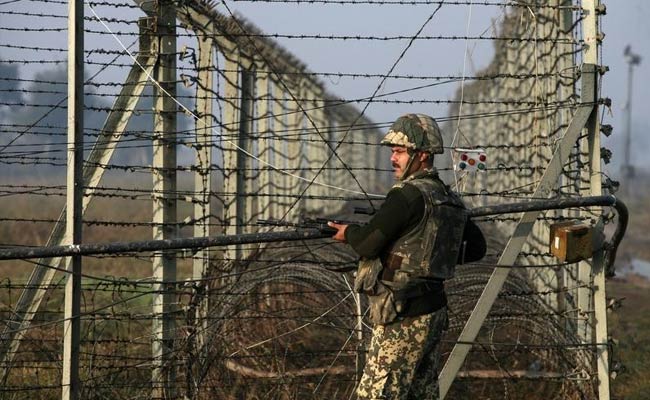
    AMRITSAR, PUNJAB:  An NRI, said to be undergoing psychiatric treatment, allegedly attempted to cross the Attari-Wagah Indo-Pak land route in his car today. His car smashed into a barrier near the international border before he was nabbed by Border Security Force (BSF) personnel.

    According to a senior BSF official, the NRI from Canada, who originally hails from Jalandhar and identified as Surinder Singh Kang, has told investigators that he wanted to pay obeisance at Nankana Sahib in Pakistan, but thought obtaining visa and going through other formalities would take time.

    Giving details, the BSF official said that at around 4:30 AM, after paying obeisance at the Golden Temple here, the NRI crossed the first gate near the border after which he smashed a Customs barrier whose pillars broke and then proceeded towards the Swarn Jayanti Dwar, and was apprehended before he could further proceed towards the international gate.

    “Preliminary investigations reveal that he was undergoing psychiatric treatment. He told us that he wanted to pay obeisance at Nankana Sahib, but did not want to wait for the visa and other formalities and adopted the illegal way,” the official said.

    Further investigations were underway and the NRI was being questioned.

  • AAP Leaders in Canada to Woo NRI Punjabi Indians Abroad

    AAP Leaders in Canada to Woo NRI Punjabi Indians Abroad

    NEW DELHI:  With eyes set on the 2017 Punjab Assembly polls, a delegation of AAP leaders has flown to Canada to woo the NRI Punjabi Indian community settled in the North American country in a bid to strengthen the party’s voter base in the state as well as attract overseas donation.

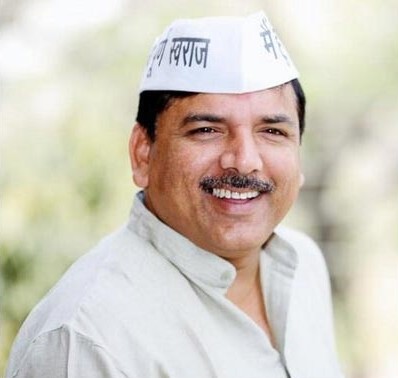
    Top AAP leaders Sanjay Singh, also the party’s Punjab affairs in-charge, and Ashutosh along with leaders from the state have started holding dialogues with the Punjab natives.

    Incidentally, it is Mr Singh’s second visit to Canada this year. “The trip is meant for interaction and engagement with those who belong to Punjab,” Ashutosh said over phone.

    When contacted, a party leader said, “Canada is to the people of Punjab what Delhi and Mumbai are to Biharis and UPiites. A lot of migrant population from the state is settled in Canada and therefore, households in each village will have have someone or the other working in Canada.”

    “The Indians working in Canada not only hold economic power because of the money they send back, but can also influence voters. More importantly, they are also a major source of fund for the party,” the AAP leader said.

    Of the overseas donation received by the AAP, major contributors are from the US and Canada.

    The party had sought to reach out to Punjab natives in Canada during the Lok Sabha polls as well.

    “During such visits, we canvas support for the party and such delegations also help spread party’s tentacles. In fact all the parties do this,” the AAP leader said.

    Apart from Canada, a lot of natives from Punjab are also settled in Australia, the US, the UK and Malaysia. AAP is planning to send party delegations in these countries in coming days to garner support and raise funds.

    With an aim to wrest power in Punjab after having made its presence felt in the state during the Lok Sabha elections, AAP had recently made structural changes in the state unit, which irked many in the party.

    AAP had opened its account in the Lok Sabha by winning four seats in Punjab in 2014 general elections. However, two of its MPs — Dharamvira Gandhi and Harinder Singh Khalsa — have been suspended on the charge of anti-party activities.

  • SGPC set the precedent to appont killer as jathedar

    SGPC set the precedent to appont killer as jathedar

    CHANDIGARH: It is not for the first time that a convicted killer has been ‘appointed’ as jathedar of the highest temporal body of Sikhs — the Akal Takht. Ironically, it was the Shiromani Gurdwara Parbandhak Committee (SGPC), which is now facing a similar situation, that had set the dangerous precedent in 1990.

    Serving life sentence for the murder of Nirankari sect leader Gurbachan Singh in 1980, Ranjit Singh was appointed as the Akal Takht jathedar in 1990 by the Shiromani Akali Dal-backed SGPC, then led by Gurcharan Singh Tohra. Though Parkash Singh Badal and Tohra were then on the same side, it was Tohra who had masterminded the move to get Akalis to group around him by proving his Jagtar Singh Hawara far-right credentials. In a curious replay of the earlier situation, former Punjab chief minister Beant Singh’s assassin Jagtar Singh Hawara has been declared as the Akal Takht “jathedar” by the radicals during their recent Sarbat Khalsa. Hawara, like Ranjit Singh then, is lodged in Delhi’s Tihar Jail and is serving a life sentence after his death penalty was commuted to life sentence by the Punjab and Haryana high court in October 2010. After appointing him as jathedar, Tohra, backed by the SAD and BJP, had lobbied hard for the release of Ranjit Singh and a petition seeking remission of his sentence was sent to then President KR Narayanan, who later signed the order commuting the remainder of Ranjit Singh’s sentence in November 1997 during the IK Gujral government at the Centre.

    Now, it’s the release of “jathedar Hawara” that is being sought by over 20,000 people through an online petition on the White House website seeking help of US President Barack Obama. The petition has been launched by US-based separatist group, Sikhs For Justice. However, unlike the 1990 precedent, now it is the SGPC which is at the receiving end of radicals’ religio-political move.

    Ranjit Singh was released after serving 13 years for murdering the Nirankari sect leader over a violent clash on Baisakhi day in 1978, when individuals at a Nirankari gathering in Amritsar had opened fire on protesters belonging to the fundamentalist Damdami Taksal led by Jarnail Singh Bhindranwale and the Akhand Kirtani Jatha led by Fauja Singh.

  • Giani Pinderpal Singh ‘approached’ to head Akal Takht

    Giani Pinderpal Singh ‘approached’ to head Akal Takht

    The Shiromani Gurdwara Parbandhak Committee (SGPC) is contemplating to pick eminent Sikh kathavachak (preacher) Giani Pinderpal Singh (49) as the Akal Takht jathedar to replace the beleaguered Giani Gurbachan Singh.

    The development comes in the backdrop of the controversial decision taken at the radicals’ Sarbat Khalsa to ‘appoint’ former Punjab chief minister Beant Singh’s assassin Jagtar Singh Hawara as the Akal Takht jathedar.

    As per reports, speculation is rife in Sikh circles that a person like Pinderpal would be acceptable to Sikhs in India as well as abroad, be it moderate or hardliners, to head the highest temporal seat of the community.

    “A person like him (Pinderpal) can certainly help bring the Sikh community out of the current crisis, but it remains to be seen whether he would accept the post of the Akal Takht head or not,” said SGPC president Avtar Singh Makkar, adding that it was premature to reach any conclusion.

    Pinderpal, who hails from Tharwa Majra village in Karnal (Haryana), lives in Ludhiana. Sources say he is being persuaded by the SGPC and other Sikh bodies to head the Akal Takht.

    In August 2008, he was approached by the SGPC to take over as the Akal Takht jathedar after the ouster of then jathedar Giani Joginder Singh Vedanti, but he refused the offer.

    Talking to HT on the phone, Pinderpal said, “In the current situation, there is an acute deficit of trust and faith among the Sikhs. No Sikh believes in the other. Moreover, when there are two jathedars (one appointed by the SGPC, the other by the ‘Sarbat Khalsa’), it is very difficult for both to prove who is the real one.”

    Evading queries on being approached to head the Akal Takht, he said a priest could not be a leader.

    Pinderpal, a product of Gurmat Missionary College, Rupnagar, is known to focus on Gurbani rather than criticising the political set-up in Sikh institutions. Considered to be in the league of preacher Sant Singh Maskeen, he has a popular slot on a Punjabi TV channel for performing ‘katha’ daily at 9am.

    He got upset with the SGPC when he was told late last month to wind up his scheduled 10-day ‘katha’ on the fourth day because of his comments on the Panthic crisis, made at Manji Sahib on the premises of the Golden Temple.

  • Threat to India from Intolerance

    Threat to India from Intolerance

    As we prepare to celebrate the festival of lights which signifies victory of good over evil, my thoughts go to India and our people there. I have seen the good times and the bad times that India has passed through during the last 50 years or so. I have been a witness to communal clashes, and the worst which I was a witness to, was the anti-Sikh riots in the wake of Indira Gandhi’s murder.

    I have also seen how Punjab and Punjabis suffered during the period of militancy in the 80’s. I have myself experienced some of the miseries that common man is subjected to in a police state. The memory is still crowded with many unpleasant experiences. They were fearsome and worrisome. I would not like to have another experience like the ones I had on several occasions. And, thank God, many years have passed since the last unpleasant one.

    But the recent incidents of intolerance- religious, communal, political- has me as also many Indians worrying. Protest is a democratic way of expressing one’s disagreement over an issue. But when the protest becomes violent or challenges the fundamental rights of others, it has to be viewed seriously.

    Ever since the BJP led government came in to power, one has witnessed polarization on many fronts. While political polarization is a part of politics and does not harm common people, nor challenges their fundamental rights, the religious intolerance is of the worst kind, since it is based on the principle of hatred. We have seen its manifestation in religiocommunal clashes and individual lynching and murders. We have seen how intolerance of other people’s faith and practices causes damage to the nation’s social fabric. The fundamentalist elements are always on the look out to foment trouble. Whoever they may be, they are not friends and well wishers of the nation.

    There can be no denying the fact that over the last two years or so India has become a playground for the fundamentalist elements. The fringe elements of political parties lose no opportunity to spit venom and create an atmosphere of distrust among communities.

    Instead of disciplining them, the bosses clog their ears, shut their eyes, and, worse, keep their mouths sealed. And the President of the Republic has to speak the mind of the people. Foreign agencies have to draw the attention of the Prime Minister to the growing threat to nation from these elements and the PM chooses to remain silent.

    India has certainly fallen on bad days. There can be no happy Diwali when the dark devil of intolerance stalks fearlessly and the guards choose not to challenge it.

  • Hafiz Saeed’s security enhanced by Pakistan Govt

    Hafiz Saeed’s security enhanced by Pakistan Govt

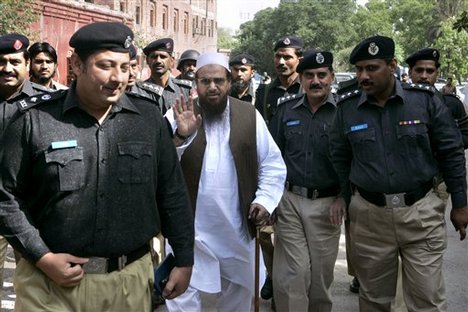
    LAHORE: Pakistan’s Punjab province government has enhanced the security of Mumbai attack mastermind Hafiz Saeed following a home department alert that a “foreign intelligence agency” may make an attempt on JuD chief’s life.

    “We have enhanced the security of Hafiz Saeed in accordance with the directive of the home department,” an official of the Punjab government told PTI on Tuesday.

    He said more policemen have been deployed at his residence in Jauhar Town and JuD headquarters Chauburji, Lahore, in the wake of the threat.

    Senior superintendent of police Athar Ismail said the police had “sensitized” the people who are engaged in the personal security of Saeed.

    According to the letter issued by the Punjab home department, a “foreign intelligence agency” has made plans to attack “high-value targets” like Prime Minister Nawaz Sharif and JuD chief Saeed to create chaos on a wide-scale.
    Saeed, who orchestrated the November, 2008, Mumbai terror attack in which 166 people were killed, roams around freely in Pakistan despite being a designated terrorist and has made many anti-India remarks and speeches.

    Pakistan has said that there is no case against Saeed and that he is free to move in the country as a Pakistani national.

  • HARBHAJAN-GEETA BASRA’S BIG, FAT PUNJABI WEDDING

    HARBHAJAN-GEETA BASRA’S BIG, FAT PUNJABI WEDDING

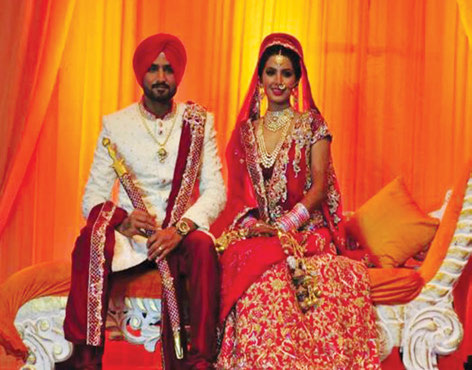
    JALANDHAR (TIP): The big fat Punjabi wedding celebrations of Geeta Basra and Harbhajan Singh culminated in their Anand Karaj ceremony on October 29 morning at a gurudwara in Phagwara, near Jalandhar.

    But before the bride and groom tied the knot, there was no dearth of celebratory events and festive moments at the traditional ceremonies held in the run up to the wedding ceremony. After a fairy-tale mehendi on Monday, which was gatecrashed by Bhajji, the couple spent some time dancing with friends, family and star guests at the sangeet. Mika Singh and Gurdas Maan were the entertainers of the evening, and actor/comedian Gurpreet Ghuggi made an appearance too. Some of Bhajji’s cricketer friends, including Parthiv Patel and RP Singh, joined in. The evening also saw the couple exchange rings, and make a Bollywood-style performance too.

    Wednesday night was all about the jago ceremony, an integral part of Punjabi marriage rituals. Bhajji’s sisters, mother and other relatives carried a decorated ghara and did some giddha, taking a round of the locality. “There was lot of halla gulla and dholis were called,” a source said. Bhajji wore a green Pathani suit for the occasion. After the jago ceremony, a special dinner was organized.Cricketers Sarandeep Singh and Rahul Sharma were present too.

    To maintain privacy, the cricketer’s house in a posh locality in Jalandhar was cordoned off. His wedding card has a special entry pass. On the jago evening, bouncers were given special T-shirts with Harbhajan and Geeta written on them. “The bouncers’ uniforms are being altered for each occasion,” the source said.

    Geeta and her relatives have been putting up at a resort, where the choora chadai ceremony took place and golden kaliren were attached to the bride’s bangles. Source: TOI

  • PROGRESSIVE PUNJAB INVESTORS’ SUMMIT | Housing bags biggest pie share of investments

    CHANDIGARH (TIP): Housing emerged as the sunshine sector in Punjab accounting for the largest pie share of the total investment committed during the second Progressive Punjab Investors’ Summit that ended at the Indian School of Business here on Thursday.

    The final tally of committed investment touched a whopping Rs 1.15 lakh crore with the total number of players, who signed memoranda of understanding (MoUs) with the Punjab government going up to 378. Of the total MoUs signed, 25% pertained to the housing sector. The top five highest investments in the sector amounted to almost Rs 22,500 crore.

    The renewable energy sector also attracted big investment with five companies offering to invest almost rs 15,000 in bio-refinery and solar power plants. They include two international players– SUN AMP, a Singapore based company that will set up a 200MW solar project and Solar Capital (Pvt) Ltd, a South African firm that will come up with grid connected solar power plants of 200MW. Both companies will invest Rs 1,300 crore each.

    The health sector also caught fancy of big players with the top six investors pledging almost 8,000 crore. The number of MoUs, however, in the sector was not very high pointing towards the sector becoming a niche area with limited pre-established players calling the shots.

    In the final count, the agro food-processing sector attracted investment worth rs 8,000 crore with the top five players promising to pump in over 2,000 crore. However, as 14% of the total MoUs were signed in this sector, it clearly points to the fact that a host of smaller players have come up in the sector.

    The manufacturing sector seems to have generated a fair amount of interest. Over 33% of the total MoUs inked pertained to this sector. However, the investment amount pledged by the top five investors was a little over Rs 4,000 crore.

    Addressing mediapersons on the concluding say of the summit, deputy chief minister Sukhbir Singh Badal said the corporate sector had shown “faith” and “trust” in the policies of the SAD-BJP government even after “15 days of unrest” in the state. He was referring to the recent protests and violence in Punjab over incidents of sacrilege of Guru Granth Sahib.

    He said the fiscal sops to investors in Punjab will continue even after Goods and Services Tax (GST) is implemented. “We will give up Punjab’s share in GST,” said Sukhbir when asked about the fate of tax-free incentives offered to agro processing units in the state once the GST is rolled out.

    “We will come out with a special package by November end for the existing industry and MSME,” said the deputy chief minister. Earlier while delivering the valedictory address, Sukhbir said Punjab was moving towards establishment of various clusters.

  • 5.3-magnitude quake jolts Pakistan

    ISLAMABAD (TIP): An earthquake of 5.3 magnitude was felt across Pakistan’s Punjab province on October 23, authorities said. The epicentre was 11 km north of Dajal town, Xinhua quoted the US Geological Survey as saying.

    The tremors were felt in Multan, Lodhran, Dera Ghazi Khan, Jampur, Khairpur Tamiwali Tehsil, Ahmadpur whereas Rajanpur, Mailsi, Burewala, Rangpur and Jehanian were also shook by the quake, according to reports received from these areas.

    Frightened people ran outside their houses and started reciting the Kalima. The epicenter of the earthquake was located at Monroe in D.G.Khan whereas its depth was recorded at 10 feet. According to rescue sources, no loss of life was recorded.

    After the earthquake was over, people took to Twitter and started narrating their experiences. With #Earthquake trending at the top in Pakistan, here are some of the tweets:-

  • GURU GRANTH SAHIB DESECRATION – PROTESTS ACROSS PUNJAB

    GURU GRANTH SAHIB DESECRATION – PROTESTS ACROSS PUNJAB

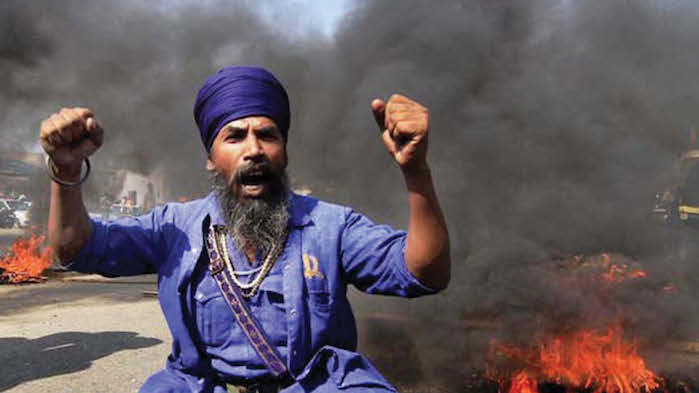
    CHANDIGARH (TIP): Protests continue in Punjab over incidents of alleged desecration of the Guru Granth Sahib even as the government deployed paramilitary personnel in four districts of the state.

    PROTESTS ACROSS PUNJABComing as they do so close to the farmers’ rail roko agitation, the protests have effectively grounded the state for over a fortnight and, Opposition leaders said, threatened to raise old ghosts of fear and instability.

    The extent of the crisis was underlined by the dramatic appearance of a sombre Deputy Chief Minister Sukhbir Singh Badal, accompanied by five Akali heavyweights, at a press briefing called by the police this evening to announce the arrest of two brothers for the alleged desecration of the Guru Granth Sahib in Faridkot district’s Bargari village.

    “My father, my family, the whole Akali leadership have been perturbed by the incidents and have been on a mission to nab the culprits. A conspiracy was hatched to set Punjab on fire and the faces behind it have come to the fore,” Sukhbir Badal said. His father Chief Minister Parkash Singh Badal hinted at a cross-border hand in the incidents.

    Announcing the arrest of the two brothers, a day after five other arrests, the police said they had solved five of seven incidents of desecration, and alleged a conspiracy hatched in Australia and Dubai. On Tuesday, the Punjab Cabinet passed a resolution condemning the acts of sacrilege in various districts and described it as “a deep-rooted conspiracy to disturb peace, amity, brotherhood and communal harmony in the state”.

    With just about a year ahead of the 2017 elections and fighting growing public resentment, the state government finds itself pushed into a corner after protests got a fresh impetus today with yet another desecration complaint from Bathinda. Residents of Gurusar village blocked the Bhagta Bhaika-Bathinda rail route from 10 am to 1.30 pm after over 150 pages of the Guru Granth Sahib were allegedly found torn.

    The incidents, and the initial use of force by police to disperse protestors that led to the deaths of two men, set off a flurry of resignations from the Shiromani Gurudwara Parbandhak Committee, which is controlled by the Akali Dal, and a handful from the party, and other positions as well. As many as 15 members of the SGPC have quit.

    The latest resignations came from Mohan Lal Banga, a former Akali MLA, who stepped down from the Punjab Public Services Commission, while Mangat Rai Bansal, who left the Congress to join SAD two years ago, quit the party.

    Sikh protestors, responding to cues from two little-known preachers and a clutch of radical Sikh groups, continue to keep the state on edge with road blockades lasting several hours daily in several parts of Punjab. Akali MLAs and other district-level leaders have been unable to reach out to them. After a few incidents in which protestors chased away Akali leaders, they have virtually gone into hiding.

    The desecration incidents came days after the Akal Takht controversially exonerated Gurmit Singh Ram Rahim, the head of Dera Sacha Sauda, from its own charge of blasphemy against him. The anger over the desecration incidents added to the unrest among panthic Sikhs over the pardon, for which the Akali Dal is widely blamed. A revocation of the pardon last week as a measure to mollify the protestors has not helped douse the anger against the Akalis.

    Security forces taking out a flag march in Amritsar.
    Security forces taking out a flag march in Amritsar.

    The government’s deployment of BSF personnel in the districts of Jalandhar, where Sikh protestors clashed with mostly Hindu shopkeepers, and in Ludhiana, Amritsar and Tarn Taran only seemed to underline its inability to bring the situation back under control.

    President of the state Congress Pratap Singh Bajwa said it showed a “trust deficit” between the state police and Sukhbir Badal, who is also the Home Minister. AAP said it was an attempt to “create a fear psychosis” in the minds of the people and “raise the bogey of terrorism” in the State. The Congress has demanded President’s rule in the State.

    Captain Amarinder Singh of the Congress asked Badal to stop blaming external forces, and demanded to know why the government had not acted on the theft of the Guru Granth Sahib in the Faridkot village when the complaint was first made in June.

    After Monday’s Jalandhar incidents, the BJP, a partner in the ruling coalition with SAD, which had been a quiet onlooker through the last week, sprung to life. The state unit’s core committee including Union Minister Vijay Sampla and three BJP Cabinet ministers Madan Mohan Mittal, Surjit Kumar Jayani and Chunni Lal Bhagat met this afternoon. State BJP president Kamal Sharma made a carefully worded statement after the incident on behalf of the core committee, demanding the arrest of the culprits and “exemplary punishment” to them, plus an investigation into the conspiracy behind the incidents.

    He said the core committee had made an appeal to Punjabis all over the world.. “The damage done in the black days of militancy has still not been undone in terms of economic progress. This hard-earned peace has to be maintained at all costs. My special appeal to the youth of the state is that we should not cause damage to the state in anger and spoil the atmosphere of brotherhood,” said Sharma.

    Sharma described the Jalandhar incident as “unfortunate” and expressed the hope it would not happen again. “I will also request political parties not to do any politics over peace and brotherhood on the state,” he said.

  • GURU GRANTH SAHIB DESECRATION – Centre seeks report from Punjab on ‘foreign hand’

    GURU GRANTH SAHIB DESECRATION – Centre seeks report from Punjab on ‘foreign hand’

    NEW DELHI (TIP): The centre has sought a report from the Punjab government on information about the alleged involvement of a foreign hand in recent incidents of the sacrilege of the holy book that sparked state-wide protests.

    The central government is seized of the matter and has sought a report from the Punjab government, a senior home ministry official said.

    The official said all necessary action will be taken against criminal elements be it within or outside the country.

    Punjab police on Tuesday said, it had arrested two brothers for alleged involvement in the desecration of the Guru Granth Sahib and claimed that they were getting instructions and funding from handlers in Australia and Dubai.

    Jaswinder Singh and Rupinder Singh were arrested for the case of sacrilege of the Sikh holy book at Bargari village in Faridkot district. The police said the brothers phone records had been traced to people in Australia and Dubai and a special investigation team would probe the matter.

    Aam Aadmi Party MP, Punjab, Bhagwant Mann met home minister Rajnath Singh on Thursday and urged him to ensure peace.

    During the 15-minute meeting, Mann told Rajnat Sing the situation in Punjab was ‘very disturbing’ in the wake of recent incidents.

    The sources said, the home minister gave him a patient hearing and told him that he had already spoken to Punjab chief minister Parkash Singh Badal. Chairman of International Sikh Council Mukhtiar Singh also met the home minister.

    Rajnath spoke to Badal on Monday and assured him ‘all possible help” from the centre to address the situation. Singh later apprised Prime Minister Narendra Modi of the situation in Punjab.

  • Anti-Bullying Campaign Launched in Hindi, Punjabi and Urdu

    Anti-Bullying Campaign Launched in Hindi, Punjabi and Urdu

    Reflecting the increasing diversity in the US, the White House has launched its annual anti-bullying campaign in three South Asian languages – Hindu, Urdu and Punjabi.

    Bullying is considered as a major problem in US schools. Latest figures show that one in five students report being bullied during the school year and bullying occurs once every seven minutes.

    According to White House, half of Asian-American students in New York City public schools reported biased-based harassment.

    The White House announced to launch its anti-bullying campaign in Hindi, Punjabi and Urdu along with Korean, Vietnamese and Chinese on during National Bullying Prevention Month.

    The White House Initiative on Asian Americans and Pacific Islanders, in partnership with the Sikh Coalition and the Coalition of Asian Pacifics in Entertainment (CAPE), yesterday launched the “Act To Change” public awareness campaign to address bullying, including in the Asian American and Pacific Islander (AAPI) community.

    Backed by a diverse coalition of supporters, including media platforms and national nonprofit organisations, the “Act To Change” campaign aims to empower AAPI youth, educators, and communities with information and tools to address and prevent bullying.

    In addition to promoting “Act To Change” through its various platforms, the Hindu American Foundation (HAF) will publish survey data on anti-Hindu bullying and bias in schools.

    “The bullying of Sikh children is an epidemic,” said Arjun Singh, the Sikh Coalition’s Law and Policy director. “Misinformation and misunderstanding regarding the Sikh faith, coupled with a dramatic increase in bigoted dialogue towards religious minorities, has resulted in intolerance and bullying in our schools,” he said.

    The Sikh Coalition worked with the Department of Justice to settle a landmark bullying case in Georgia against a Sikh child at the end of 2014.

    The settlement now better protects over 100,000 students across the school district from bullying and represents a first of its kind policy change in the US.

    “Students understand bullying better than anyone because they see it and experience it every single day,” said Harjot Kaur, Sikh Coalition’s New York City Community Development Manager.

    “The launch of this new initiative gives them a single, reliable platform of resources to combat bullying. A few years ago, this crisis was something nobody was talking about.This campaign adds significant momentum to the national movement to stop this problem,” she said.

    Bullying Prevention Awareness month was initiated by PACER’s National Bullying Prevention Center Since it began in 2006, the event has grown to an entire month of education and awareness activities, and is being recognized by schools and communities throughout the world. PACER recognized that students, parents, and people around the world need to become more aware of the serious consequences of bullying.

    “National Bullying Prevention Month has grown more than we could have ever expected,” said Paula Goldberg, PACER’s executive director. “In less than 10 years, PACER has helped to create a bullying prevention movement with millions of individuals across the globe.”

  • Learn ABC of the Grammar of Governance

    Learn ABC of the Grammar of Governance

    During his US visit, Prime Minister Narendra Modi conveyed to his audience: “Reform in governance is my No 1 priority. We are for simplified procedures, speedy decision making, transparency and accountability.” As the Chief Minister of Gujarat, Modi was a
    “governance”addict. On his assuming Prime Ministership, “governance” became India’s flavor and the Center’s guiding mantra. The stated objective was to have a “governance architecture” that put people at the centre of the development process. The President’s address to Parliament in June last year also laid down the motto: “Minimum government, maximum governance”.

    However, even after 16 months there is no such governance architecture or blueprint. In the upper echelons of decision making, there is mixup of government and governance, as if both are the same. They are not. Governance is not just government; it is bureaucracy, laws, rules, policies, programs, processes and procedures. It is far more than that. In a democracy like India, governance should be “society-centered”. It should include the government, which is its dominant part, but transcend it by taking in the private (farming, business, industry) and voluntary sectors (civil society). All the three are critical for sustaining human, economic and social development.

    Governments create a conducive political, administrative, legal and living environment. The private sector promotes enterprise and generates jobs and wealth, while the voluntary sector educates and mobilizes citizens’ groups to participate in economic, social and political activities. Each has weaknesses and strengths, so governance is facilitated through a constructive interaction among all three. While government is a politico-bureaucratic entity, governance is a joint venture encompassing all. The difference is huge.

    Being a joint venture, governance should adhere to the basic functional norm of involving stakeholders in decision-making and implementation processes. The Modi government made a false start by putting out a “secret” Intelligence Bureau report condemning several civil society organizations and eminent opinion leaders who differed from government policies as “anti-national” and accusing them of thwarting India’s development! Since then, many NGOS are being harassed by abusing the Foreign Exchange Management Act and other laws. The voluntary sector, except the RSS as well as its affiliate “think-tanks” and individuals, are out of the reckoning as far as “governance” is concerned. As for farmers, they are treated more as mendicants than partners. The elitist vision of the BJP and its leader is replete with bullet trains, state-of-the-art highways, smart cities, insulated industrial corridors and “Digital-India.” These are far removed from the deprived lives of a majority of farmers. Agriculture, which accounts for 60 per cent of India’s population, and from where the poorest draw sustenance, is only an add-on in the scheme of things. In business and industry, it is “big-is-bountiful” and “small-is-not-beautiful”. This has been demonstrated during Modi’s high-profile foreign visits and the mad hunt for big-ticket FDIs. Last year, on the launch of the “Make-in-India” campaign at Delhi, about 10 big industrialists on the dais pledged to invest billions of Rupees. The same scenario was repeated while kick-starting the “Digital-India” initiative and billions were again promised. As if only big-ticket investors alone are “partners in development.” The grammar of good governance is about socio-economic harmony, arising out of the smooth interface between government, civil society, farming and business communities. Unless this is achieved across the board, no amount of reforms can bring about achche din. As to “minimum government, maximum governance,” David Thoreau wrote over a century ago: “That government is the best which governs the least.” Conversely, “that government is the worst which governs the most.” The latter seems to be true of India. The Union Territory of Chandigarh is also a case in point. From 1952 to 1966, Chandigarh was the capital of Punjab and its citizens were represented in the state’s Legislative Assembly. A Chief Commissioner headed the local administration. When the undivided Punjab was divided, both Punjab and Haryana claimed the new city for its capital. Pending the resolution of the issue, Chandigarh was made a Union Territory, with its administration functioning directly under the Centre. While the UT lost representation in the Assembly, it has a Member of Parliament. Till May 31, 1984 Chandigarh had an Administrator designated as the Chief Commissioner. On June 1, 1984, the Governor of Punjab took over as the Administrator and the Chief Commissioner was re-designated as the Adviser to the Administrator. This was a prelude to Operation Blue Star.

    The stated reason was to facilitate “co-ordination” between the districts of Punjab and the capital in Chandigarh. This ad hoc measure became permanent. The Governor of Punjab is the head of the UT Administration, though it is the Adviser who runs the show. The Municipal Corporation of Chandigarh (MCC) came into existence on May 24, 1994. Several functions were transferred from the Chandigarh Administration to it through notifications issued on September 28, 1995 and May 16, 1996. The elected body of the MCC came into being in December 1996. The first thing it did was to stall the decision to levy property tax on commercial and residential buildings in the city, thereby triggering a duel between the UT Administration’s bureaucratic and political wings that continues till date. The transfer of functions was a half-hearted affair. The bureaucratically run Chandigarh Administration  retains the bulk of the assets, including near-total control of funds and resources. Chandigarh has five governments/power centers: The Union Home Ministry, the Punjab Raj Bhavan, the UT Secretariat, the MP and the MCC. Things have been falling between several stools. In Chandigarh, Modi’s motto looks reversed to “Maximum government, minimum governance”!

    By M.G. Devasahayam (The author is a former IAS officer of Haryana Cadre, now settled in Tamilnadu)

  • Interpol Issues Red Corner Notice against Nine Indo-Canadians in Indian drug ring

    Interpol Issues Red Corner Notice against Nine Indo-Canadians in Indian drug ring

    Nine Indian-origin Canadians, including several Metro Vancouver men, are wanted for drug smuggling in India in a high-profile case linked to a former Punjabi cop and wrestling champion.

    Interpol has issued a red corner notice for their alleged involvement in a drug smuggling network operationg out of India, according to a media report. The notices have been issued against Ranjit “Daraa” Aujla, Lehmber Daleh, Parminder Singh Deo, Sarabjit Singh Sandar, Harbans Singh Sidhu, Nirankar Singh Dhillon, Gursewak Singh Dhillon, Amarjit Singh and Pardip Singh.

    Ranjit “Dara” Aujla, a Richmond man and the former president of the B.C. Kabaddi Federation told The Vancouver Sun Wednesday that he’ll go to India “to fight the case.”

    He said he’s innocent of the allegations, which have been swirling as rumours and occasional news reports since the 2013 arrest in Punjab of Jagdish Bhola, a former cop and wrestler, the paper reported.

    At the time, police alleged Bhola was the kingpin of a billion-dollar network supplying heroin and methamphetamine to North America and Europe through Canadian contacts who smuggled drugs out of India.

    Aujla said he was in Punjab when Bhola was arrested, but was never questioned or taken into custody by police. “I hired a lawyer to check if there’s any case against me in India,” he said, “and my lawyer said there’s nothing going on.”

    He said he came to know about the Interpol warrant when a reporter called him this week.

    Meanwhile, Deo, who is retired, told the media that he has hired a lawyer in Punjab to get more information about the case.

    He said he hasn’t been in India in four years. “I am very shocked from this news because in India, someone sitting in jail, he is telling all the stories,” Deo said.

  • CONG FIGHTS CONG IN PUNJAB HOUSE, AKALIS RELIEVED

    CHANDIGARH (TIP): The ruling Akali-BJP government was spared an onslaught by the Opposition Congress on the last day of the monsoon session of Punjab Vidhan Sabha today, with the Congressmen choosing to fight among themselves in the House.

    Though Congress MLAs managed to create their share of noise in the House — which led to one adjournment for 25 minutes and the session boycott later — the case they had built against the government yesterday by targeting three Akali ministers over “irregularities” went crumbling amid infighting.

    Yesterday’s episode of Batala Congress MLA Ashwani Sekhri being booed by his party MLAs reverberated during the zero hour today. While Sekhri demanded action against two of his party’s MLAs — Ramanjit Singh Sikki and Sangat Singh Gilzian — for threatening him, the Congress strategy moved from taking on the government to quelling the tensions within the Congress Legislature Party (CLP).

    Though senior party MLAs tried to pacify Sekhri and told the Speaker that they would solve the issue among themselves, the Speaker referred the case to the Privileges Committee of the House.

    To counter the government, the Congress had planned to take up issues such as drug menace and the alleged involvement of BJP leaders in the illicit drug trade; a privilege motion against Minister for Backward Classes and Scheduled Castes Gulzar Singh Ranike; and the Punjab Chief Minister’s reply to the charges of “man-made” crisis in agriculture because of rampant corruption in the Agriculture Department.

    As Sekhri narrated the incident, some MLAs supported him, while others, including Leader of Opposition Sunil Jakhar, Lal Singh, Rana Gurjit Singh, Ajit Inder Singh Mofar and Sukhjinder Randhawa, were seen trying to pacify all in the Opposition benches.

    While Parliamentary Affairs Minister Madan Mohan Mittal said it was a serious matter, Revenue Minister Bikram Majithia said if the member of the House felt threatened, security must be provided to him. On this, Jakhar said the “internal matter of the Congress” was being politicised unnecessarily.

    Mittal said since Sekhri had not withdrawn his submission to the House, his “izzat” was in the hands of the Speaker, who asked Sekhri to name the MLAs. Sekhri said the names had appeared in the newspaper today, before finally naming Sikki and Gilzian.

    When Congress MLA from Ferozepur Parminder Singh raised the issue of drug menace, he was interrupted by Akali MLA Virsa Singh Valtoha who questioned him about the Congress’ stand on legalising poppy husk vends, based on a statement made by a Congress leader in Tarn Taran a few days ago. This led to a slanging match between the two sides and raising of slogans, forcing the Speaker to adjourn the House. This time was used by the Congress to pacify Sekhri, who later said all was well after the two MLAs apologised to him. Later, Jakhar told mediapersons that the matter was internal and was resolved internally.

    When the proceedings resumed and CM Parkash Singh Badal clarified the charges leveled against his government on the “man-made” agrarian crisis, the Opposition led by Jakhar demanded that the CM first explain his stand on the issue of a farmer, Kuldeep Singh, who committed suicide in Bathinda today. With the Speaker disallowing this interruption, the Congress MLAs boycotted the House.

  • The Context of the Cease-Fire Decision in the 1965 India-Pakistan War

    The Context of the Cease-Fire Decision in the 1965 India-Pakistan War

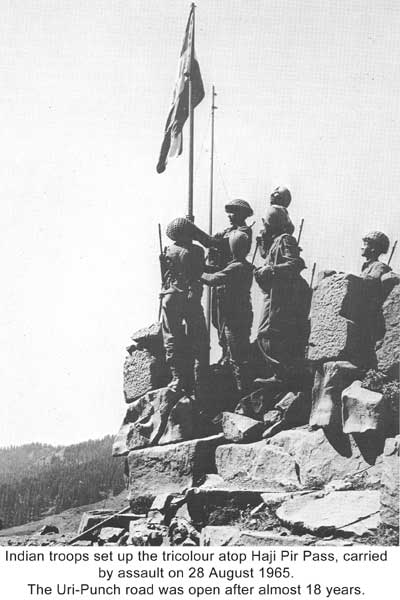
    By declaring a ceasefire with effect from 3.30 a.m. on 23 September 1965, did India miss an opportunity to attain decisive victory over Pakistan? Yes, according to the existing narrative, which attributes the ceasefire decision solely to the advice tendered in this regard by General J. N. Chaudhuri, the then Chief of the Army Staff and Chairman of the Chiefs of Staff Committee. In this account, Prime Minister Lal Bahadur Shastri was willing to consider extending the war “for some days” if the Indian Army could attain “a spectacular victory” in that timeframe.1 But Chaudhuri advised Shastri to agree to an immediate ceasefire because he was under the ‘false’ impression that the war effort could no longer be sustained given that “most of India’s frontline ammunition had been used up and there had been considerable tank losses also.”2 The reality was, however, quite different. By 22 September, the Indian Army had used up only 14 per cent of its frontline ammunition and it possessed “twice the number” of tanks than the Pakistan Army.3 In contrast, the Pakistan Army is believed to have been “short of supplies” and “running out of ammunition” by then.4 And a high attrition rate was “daily reducing the number of operational aircraft available” to the Pakistan Air Force.5 As argued by K. Subrahmanyam, under these circumstances, if India had continued the war “for another week, Pakistan would have been forced to surrender.”6

    There are, however, four problems with this narrative. First, it is based on the erroneous claim that the Indian Army possessed twice the number of tanks than the Pakistan Army at the end of the war. Second, it rests on the unverified assumption that the Pakistan Army’s ammunition and spare parts would not have lasted for more than a few days after 22 September. Third, the narrative fails to comprehend the context of the conversation between Shastri and Chaudhuri about extending the war for some more days. And finally, it fails to take into account military and diplomatic factors that actually determined the Cabinet’s ceasefire decision, some of which Chaudhuri himself highlighted in a written assessment he shared with Defence Minister Y. B. Chavan.

    Tank Strengths of India and Pakistan at the end of the War

    The official history of the war produced by the History Division of the Ministry of Defence claims that the Indian Army possessed twice the number of tanks than the Pakistan Army at the end of the war.7 It cites two sources in support of this claim: first, an interview given to its authors on 13 April 1988 by L. P. Singh, Home Secretary during the war; and, second, a letter sent to them on 12 April 1990 by K. Subrahmanyam, Deputy Secretary (Budget and Planning) in the Ministry of Defence during the war. It is not known what data source L. P. Singh and Subrahmanyam used to arrive at their conclusion. But their data source definitely could not have been the one used by the authors of the official history. If Singh and Subrahmanyam had used the same data source as the authors of the official history, they would not have been able to conclude that the Indian Army possessed twice the number of tanks the Pakistan Army did at the end of the war.

    The official history provides two sets of specific numbers that help to derive the actual number of tanks possessed by the Indian and Pakistan Armies at the end of the war. One, it provides the actual number of tanks the two armies possessed on September 1, the day the war began. And two, it provides the number of tanks that each army lost during the course of the war. Subtracting the number of tanks each army lost during the war from the total number of tanks each possessed on September 1 would give the net number of tanks each possessed at the end of the war.

    According to the official history, as on 1 September 1965, the Indian Army possessed 720 tanks and the Pakistan Army 765 tanks. That is, the Pakistan Army possessed 45 tanks more than the Indian Army on the day the war began. The official history’s source for these figures is Lt. Col. Bhupinder Singh’s book Role of Tanks in India-Pakistan War. Bhupinder Singh, in turn, had taken these figures from the 1965-66 edition of the Military Balance published by the London-based International Institute for Strategic Studies.8 During the course of the war, the Indian Army lost 128 tanks according to the official history, which cites a statement made to this effect by Defence Minister Chavan on 25 September 1965.9 Subtracting these 128 tanks lost from the pre-war strength of 720 gives a net figure of 592 tanks for the Indian Army at the end of the war.

    As for the Pakistan Army’s tank losses during the course of the war, the official history provides two figures, one the Indian estimate and the other the Pakistani estimate. The Indian estimate is that the Pakistan Army lost 200 tanks during the war. And the Pakistani estimate is that the Pakistan Army lost 165 tanks during the war. Subtracting the Indian estimate of 200 Pakistani tanks lost from the pre-war tank strength of 765 tanks gives a net figure of 565 tanks for the Pakistan Army at the end of the war. And subtracting the Pakistani estimate of 165 tanks lost from the pre-war strength of 765 tanks gives a net figure of 600 tanks for the Pakistan Army at the end of the war.

    In sum, at the end of the war, the Indian Army possessed 592 tanks; and the Pakistan Army possessed either 565 tanks or 600 tanks. In other words, the Indian Army possessed either 27 tanks more than the Pakistan Army or it possessed eight tanks less than the Pakistan Army. These numbers derived from the data cited in the official history itself discredit the claim that the Indian Army possessed twice the number of tanks than the Pakistan Army at the end of the war.

    That, in turn, calls into question the contention that the Indian Army would have been able to attain a spectacular victory if the war had been extended by a few more days. For, on 20 September, 1 Armoured Division, which had been “staked to turn the tide of the war” in India’s favour, had assumed the defensive and began to engage in refit and recoupment. And it did so after twice failing to capture the crucial town of Chawinda.10 By this time, moreover, it was being opposed not only by Pakistan Army’s 6 Armoured Division but also by a substantial portion of Pakistan’s 1 Armoured Division which had been moved from Khem Karan to the Sialkot front. Further, the two opposing Corps on this front, both named I Corps, were by then evenly matched in their non-armoured component, with seven brigades each.11 Under these circumstances of marked numerical inferiority in armoured strength and evenly matched infantry numbers, it would have been extremely difficult for the Indian Army’s I Corps and 1 Armoured Division to effect a break through the entrenched Pakistani defences or even batter them down through sheer attrition especially in a timeframe of a few days. In effect, a swift and spectacular victory would have been impossible if the war had been extended only by a few days or a week.

    Pakistan Army’s Materiel Situation

    The second problem with the existing narrative is its unverified assumption that the Pakistan Army was on the verge of running out of ammunition and spare parts. According to K. Subrahmanyam, it was US policy to provide six weeks’ worth of ammunition at war wastage reserves (WWR) to countries receiving American military aid. Further, such WWR of ammunition was provided at US rates, “which were lower than our rates”; Subrahmanyam does not, however, specify by how much or by what factor US WWR of ammunition were lower than “our rates”. This US policy applied to Pakistan as well, whose armed forces were equipped principally with American weapons and equipment during the 1950s and early 1960s.12

    The 1965 War began on 1 September with the Pakistani offensive in Chhamb, and ended on the early morning of 23 September. That is, it lasted 22 days or three weeks and one day. That means that the Pakistan Army would have used up three weeks’ worth of ammunition and spares. In effect, it would have possessed another three weeks’ worth of war wastage reserves. Such a conclusion is not difficult to arrive at. India, according to Subrahmanyam, had war wastage reserves worth 90 days at that time. And, as the official history of the war notes, the Indian Army had used up only 14 per cent of frontline ammunition at the end of 22 days of war. There is no reason to assume that the other party to this war, the Pakistan Army, consumed far greater quantities of ammunition; although the WWR, consisting of equipment and ammunition, is only a figure for planning and the actual expenditure of ammunition or loss of equipment varies depending upon intensity of engagement in battle(s). During war time the stocks from WWR are utilised to replenish the expenditure of ammunition or equipment getting destroyed or damaged beyond immediate repairs, during the battle. Of course, provision of Pakistan’s WWR would have been at US rates – not Indian rates – but in the absence of any indication about the exact differential between these two rates and actual expenditure, it is impossible to come to a definite conclusion that the Pakistan Army would have run out of ammunition if the war had continued for some more days or a week.

    Context of the Shastri-Chaudhuri Conversation

    The third inadequacy of the narrative that India could have attained a decisive victory is the inability of its advocates to comprehend the context of the Shastri-Chaudhuri conversation. In his interview to the authors of the official history, L. P. Singh stated that “towards the end of the war” Shastri asked Chaudhuri “whether India could win a spectacular victory if the war was prolonged for some days”, to which Chaudhuri responded that the army has already used up most of its frontline ammunition and had suffered considerable tank losses as well.13 In effect, by highlighting what turned out to be a non-existent ammunition shortage, Chaudhuri provided Shastri an indirect answer, namely, that “a spectacular victory” was no longer possible in “some days” given this deficiency. In the light of the subsequent revelation that the army had used up only 14 per cent of its frontline ammunition, analysts have exclusively focused upon Chaudhuri’s error, his fearfully cautious nature, and his tendency to act in an arbitrary and imperious manner.14 But what has been missed in these analyses is the context of the Shastri-Chaudhuri conversation.

    That context lies in the discussions that took place on 13 and 14 September 1965 in the Emergency Committee of the Cabinet (ECC). On these two days, the ECC was debating the pros and cons of agreeing to a ceasefire with effect from 6.30 p.m. on 14 September, which was being urged by the United Nations Secretary General, U Thant, who was actually present in Delhi between 12 and 15 September. The ECC stood divided on the question of whether to accept or reject U Thant’s plea, and the Security Council’s demand, for an early ceasefire. Acutely concerned about the impact of the war on the economy, Prime Minister Shastri, Finance Minister T. T. Krishnamachari and Food Minister C. Subramaniam were all in favour of agreeing to a ceasefire on the basis of the UN Security Council Resolution of 6 September. But they were strongly opposed by Defence Minister Chavan, who was not only reflecting his own views but also that of the leadership of the armed forces. Further, Selig Harrison, the then South Asia Bureau chief of The Washington Post, had reported at that time that Chaudhuri actually “urged” the ECC “to avoid a cessation of hostilities” at that point in time because the army was “on the verge of a decisive victory in the Punjab and should be allowed to inflict the maximum damage on Pakistani power.”15

    Shastri and other members of the ECC had to convince Chaudhuri to relent from his opposition to the government accepting an immediate ceasefire. The argument that they employed for this purpose went as follows: even if India accepted a ceasefire, Pakistan was probably not likely to do so; consequently, the war could well continue; and that would afford an opportunity for the army to attain its decisive, spectacular, victory, even as the government earned diplomatic points among world opinion by contrasting its own earnestness for peace with Pakistan’s attachment to war. It is on the basis of this understanding – that the war would probably continue and India would gain both diplomatically and militarily – that Chaudhuri accepted Shastri’s and the ECC’s decision to convey to the UN Secretary General India’s consent to the ceasefire.16

    Thereupon, Shastri wrote to U Thant on 14 September accepting the latter’s ceasefire proposal with effect from 6.30 a.m. on 16 September, provided Pakistan also agreed to do so. In this letter, Shastri also noted that military operations will continue against existing or future armed infiltrators from Pakistan and that the Security Council needs to make a distinction between Pakistan the aggressor and India the victim of aggression.17 When U Thant pointed out that these latter statements amounted to conditions for the ceasefire to come into effect, Shastri, with the concurrence of the ECC, sent “a more agreeable” follow-up letter to the UN Secretary General on 15 September.18 In this follow-up letter, after noting that he did not ask U Thant to give any undertaking on the issues of Pakistan’s aggression and armed Pakistani infiltrators, Shastri reaffirmed his “willingness, as communicated yesterday, to order a simple cease-fire and cessation of hostilities as proposed by you, as soon as you are able to confirm to me that the Government of Pakistan has agreed to do so as well.”19 But a ceasefire did not come into effect on 16 September and the war continued for another week because Pakistan insisted upon a precondition: that the ceasefire be accompanied by concrete steps that would “lead to a final settlement of the Kashmir dispute.”20

    What these events demonstrate is that the political leadership had taken a considered decision to accept an unconditional ceasefire with effect from 16 September. In the process, Shastri and his colleagues in the ECC had to convince Chaudhuri to relent from his strong opposition to that decision. Given this reality, it is inconceivable that only a week later Shastri seriously contemplated an extension of the war beyond 22 September, especially when neither the military nor diplomatic situation had improved in any significant way and when it was also clear that Pakistan will “ultimately agree to the ceasefire” without insisting upon any precondition this time around.21

    These developments help explain the manner in which Shastri phrased his question to Chaudhuri a week later: “whether India could win a spectacular victory if the war was prolonged for some days”? It is quite conceivable that Chaudhuri’s vehement opposition to the ceasefire decision and his assertion that the army was on the verge of a decisive victory at the ECC meetings on 13 and 14 September made a strong impression upon Shastri. After all, as Chief of the Army Staff and Chairman, Chiefs of Staff Committee, Chaudhuri represented the views of the entire military establishment. The very fact that the appropriateness of the ceasefire decision is still being discussed 50 years later in military circles attests to the enduring views that the armed forces have held in this regard. Consequently, before conveying to the United Nations his willingness to order a ceasefire that will bring the war to an end, Shastri may have felt compelled to ask Chaudhuri whether the decisive, spectacular, victory, which the army chief had earlier asserted was within reach, could still be attained if the war were to be extended for some days beyond 22 September.

    While it is not known when exactly Shastri posed this question to Chaudhuri, Chavan’s diary throws light on how and when the ceasefire decision was actually arrived at. The decision was made on the evening of 20 September at a meeting that Shastri held with Chavan, Chaudhuri and P.V.R. Rao, in which the Prime Minister’s Secretary L.K. Jha also participated. Chavan’s diary entry for that date states: “After some preliminary discussion about the military point of view, it was agreed that Prime Minister should send to U Thant … (a message) confirming our willingness to order simple ceasefire if Pakistan is agreeable.”22 In effect, the decision was taken by the Prime Minister on 20 September in consultation with the top leaders of the defence establishment – Defence Minister, Army Chief who was also Chairman, Chiefs of Staff Committee, and Defence Secretary. It was only subsequently, on 21 September, that the ECC endorsed the Prime Minister’s prior decision to accept the ceasefire “without much discussion”.23

    But what explains the difference between Chaudhuri’s initial opposition to a ceasefire and the erroneous excuse he offered for accepting the ceasefire a week later? Chaudhuri had expressed his strong opposition to a ceasefire on 13 and 14 September and asserted that the army was on the verge of a decisive victory because he believed that the armoured offensive in the Sialkot Sector, which was then underway, would turn the tide of war in India’s favour. I Corps’ objective was to secure Pakistani territory up to the Marala-Ravi Link Canal, thus driving a wedge between Sialkot and Lahore fronts, and in the process considerably attrite Pakistani forces. 1 Armoured Division had already captured Phillora on 11 September and in the process had inflicted heavy attrition on Pakistani armour. And on the morning of 14 September it began its advance against Chawinda. The capture of Chawinda would have severed a crucial rail link between Sialkot and Lahore and maintained the momentum of the forward advance towards the Marala-Ravi Link Canal. But fierce Pakistani resistance and misunderstandings between Indian commanders prevented Chawinda’s capture despite two successive attempts, the first on 14 September by 1 Armoured Division and the second on 19 September by 6 Mountain Division. Thereupon, 1 Armoured Division, which had by then lost 70 tanks through damage or destruction, assumed the defensive and began the process of refitting and recouping. In effect, as Harbakhsh Singh notes, the war on the Sialkot front had reached “a virtual stalemate”.24 By this time, moreover, the war on the Lahore front had settled down to a series of relatively minor actions that could not fundamentally change the frontline.

    4 Mountain Division failed to retake Khem Karan. While 7 Infantry Division managed to improve its position slightly, it could not fully mop up Pakistani pockets or destroy the bridges on the Ichhogil. The only major success was the capture of Dograi by 15 Infantry Division, but that came on 22 September, two days after the ceasefire decision had already been taken.25

    In the light of this turn of events, Chaudhuri could no longer assert to the Prime Minister that the army would be able to attain a spectacular victory if the war were to be extended by some more days beyond 22 September. Perhaps, in the light of his previous assertion about attaining a decisive victory within a few days, he felt compelled to offer the excuse that the army had used up most of its frontline ammunition and suffered considerable tank losses. As D. K. Palit notes, this was an “off-the-cuff answer” that Chaudhuri delivered without, as was his habit, verifying it first with his staff.26 But whatever Chaudhuri’s motive or fault or actual belief for providing the answer that he did, the fact of the matter is that the Indian Army was simply not in a position at that point in time to attain a spectacular victory in a matter of a few days or a week.

    Military and Diplomatic Factors that Influenced the Ceasefire Decision

    Finally, what has been missed through this exclusive focus upon Chaudhuri’s ‘erroneous’ belief about the army’s materiél position are other military and diplomatic factors that compelled the government to accept an early ceasefire. That the ceasefire decision did not solely hinge on Chaudhuri’s advice and incorrect statement about ammunition stocks, but was instead a function of other diplomatic and military factors, is evident from a written assessment that Chaudhuri himself had prepared and shared with Defence Minister Chavan on the morning of 20 September. As noted earlier, the Prime Minister took the ceasefire decision in consultation with the leaders of the defence establishment that very evening.

    During the morning meeting on 20 September, Chavan asked the three Chiefs of Staff about “their view” on the government agreeing to a ceasefire given that the UN Security Council was “expected” to pass another resolution that day demanding an immediate termination of hostilities. Chaudhuri responded that he had “prepared an assessment from (the) military point of view”, and after the morning meeting he “came back alone” to share this assessment with Chavan.  The “thesis” of Chaudhuri’s assessment, as briefly recorded by Chavan in his diary, was that India had achieved both its war objectives: defeating Pakistan’s attempt to conquer Jammu & Kashmir, and inflicting damage on Pakistan’s “war potential and military machine”. Since India was “on top of the situation” militarily, the army would support the government’s decision to agree to a ceasefire. Further, the resulting “respite … will be good to put things right as far as supplies were concerned.” In addition, the assessment highlighted two other factors that necessitated a ceasefire. First, India stood “completely isolated” in the diplomatic arena. Second, rejecting a ceasefire would also be “unwise” from the long-term military point of view because of the China factor. China, the assessment noted, is keen to ensure that the India-Pakistan war continued so that it can “fish in the troubled waters”. After recording this gist of Chaudhuri’s assessment on the ceasefire in his diary, Chavan noted: “I think it is good that the military and political thinking was moving in the same direction.”27

    In this assessment, Chaudhuri refers to the opportunity that the ceasefire would provide to replenish war supplies, although he does not expressly state whether most supplies had been used up. More importantly, he highlights two other factors that had a considerable bearing on the government’s calculations: the prospect of China initiating hostilities against India, and India’s diplomatic isolation and the international diplomatic pressure that was being exerted upon it to agree to an early ceasefire.

    The prospect of China initiating hostilities became evident as early as 7 September, when it issued a statement contending that India’s expansion of the “local conflict … in Kashmir into a general conflict” constituted “a grave threat to peace in this part of Asia.” Further, in an apparent attempt to lay the ground for a Chinese military intervention, the statement asserted that “India’s aggression against any one of its neighbours concerns all of its neighbours”.28 The very next day, on 8 September, China sent an ultimatum demanding that India either “dismantle” certain “military structures”, “withdraw” its armed forces from the border and “stop all its acts of aggression and provocation against China” or else “bear responsibility for all the consequences arising therefrom.”29 After a week-long lull, another ultimatum followed on 16 September demanding that India either “dismantle” 56 military works along the Sikkim border, “immediately stop all its intrusions” into Chinese territory, and “pledge to refrain from any more harassing raids across the boundary” or “bear full responsibility for all the grave consequences arising therefrom.”30 On the very next day, 17 September, Chinese troops began to move closer to the border in the Sikkim and Ladakh Sectors.31 And, three days later, on 20 September, Chinese troops fired upon Indian positions at several places along the border including Nathu La.32

    Although Indian leaders discounted a large-scale Chinese attack, they did think that China might initiate limited military action in order to divert India’s attention from the war against Pakistan. They believed that a Chinese attack could occur either through Chumbi Valley or more worryingly through the Karakoram Pass “in vicinity of Kargil” with a view to cutting off the Srinagar-Leh road”.33 Seriously concerned about such a possibility, the prime minister’s secretary, L. K. Jha, made a request to the US Ambassador in Delhi, Chester Bowles, that secret consultations be commenced between Indian and American military personnel with a view to “speed up” US military assistance in the event of a Chinese attack. But the United States expressed its unwillingness to initiate any such “contingency planning” given President Lyndon Johnson’s decision “to avoid commitment of any sort”.34

    China’s entry into the war, however limited its military intervention might have been, would have made it impossible for India to fully focus on the war with Pakistan. Continuing the war with Pakistan under these circumstances may not have yielded any appreciable advantages. In addition, China would have had an opportunity to once again “bruise India’s morale” or even pose a challenge to the Indian military presence in Ladakh.35 Under these circumstances, the ceasefire decision became impossible to postpone.

    Another factor that made the ceasefire decision impossible to postpone was lack of diplomatic support for India’s position in the international arena as well as the enormous diplomatic pressure that was being exerted, particularly by all the major powers in unison, to terminate the hostilities.

    The Soviet Union adopted a position of studied neutrality. Premier Alexie Kosygin repeatedly urged Shastri and Ayub Khan to cease hostilities and even offered to mediate between them. Further, for the first time since the United Nations was formed, the Soviet Union voted along with the United States in favour of three successive Security Council resolutions calling for an immediate ceasefire. What drove Soviet policy was concern about its communist rival, China, exploiting the India-Pakistan war to acquire a prominent role in South Asia.

    Preventing China from entering the war and denying it an opportunity to do so was also an important factor in US policy. For this purpose, even as it privately warned China against intervening in the India-Pakistan war, the United States worked with the Soviet Union to pass successive UN Security Council resolutions that contained explicit language about the undesirability of third-party military intervention. At the same time, to deny China an opportunity to intervene, the United States, along with the United Kingdom, suspended all economic and military assistance to India and Pakistan in order to compel them to end the war. In addition, the United States also began to exert subtle pressure on both countries by
    “dribbling” out food aid “slowly”.36 That this subtle pressure did register is evident from Indian Ambassador B. K. Nehru’s question to US Undersecretary of State George Ball as to “why you are trying to starve us out?37

    India could not even obtain diplomatic support from its non-aligned friends such as Egypt and Yugoslavia. These and several other countries in Asia and Africa also urged an early ceasefire.38 In effect, India stood isolated diplomatically and faced enormous international diplomatic pressure, a circumstance that had a major impact on the ceasefire decision.

    Conclusion

    For 25 years since the compilation of the official history and the series of books published in the 1990s, a simplistic narrative has dominated the debate on the decision to agree to a ceasefire. But this narrative is not only based on one erroneous claim and another unverified assumption, but it also fails to take into account the stalemate on the war front as well as other military and diplomatic factors that ultimately influenced the ceasefire decision. As a result, myth had usurped the place of history and the context in which that history unfolded. The history is that the ceasefire decision was influenced not by Chaudhuri’s ‘erroneous’ belief that the army had run out of ammunition but by the combination of the absence of the prospect of a swift victory, concerns about Chinese military intervention and its consequences, and concerted diplomatic pressure from the major powers.

    Views expressed are of the author and do not necessarily reflect the views of the IDSA or of the Government of India.


    1 Shastri’s poser to Chaudhuri sometime “towards the end of the war”. This was recalled on 13 April 1988 by L. P. Singh (Home Secretary during the war) in an interview with the official historians of the 1965 War. Cited in B. C. Chakravorty, History of the Indo-Pak War, 1965, Chapter 12, pp. 333-34, 339. This account has subsequently been published as S. N. Prasad and U. P. Thapliyal, The India-Pakistan War of 1965: A History (New Delhi & Dehra Dun: Ministry of Defence, Government of India & Natraj Publishers, 2011), p. 314.

    2 Chaudhuri’s response to Shastri’s poser, recalled on 13 April 1988 by L. P. Singh. Cited in Chakravorty, History of the Indo-Pak War, 1965, Chapter 12, pp. 333-34; Prasad and Thapliyal, India-Pakistan War of 1965, p. 314.

    3 Chakravorty, History of the Indo-Pak War, 1965, Chapter 12, p. 334; Prasad and Thapliyal, India-Pakistan War of 1965, p. 315.

    4 Russell Brines, The Indo-Pakistani Conflict (London: Pall Mall Press, 1968), p. 346; Altaf Gohar, Ayub Khan: Pakistan’s First Military Ruler (Karachi: Oxford University Press, 1996), p. 237.

    5 Asghar Khan, The First Round: Indo-Pakistan War 1965 (Ghaziabad: Vikas Publishing House, 1979 Indian edn.), p. 98.

    6 K. Subrahmanyam, “Guilt Gen of ’65,” Indian Express, 12 June 2005.

    7 Chakravorty, History of the Indo-Pak War, 1965, Chapter 12, pp. 334, 339. See Endnote 15 on page 339.

    8 Chakravorty, History of the Indo-Pak War, 1965, Chapter 1, p. 10; Prasad and Thapliyal, India-Pakistan War of 1965, p. 10; Bhupinder Singh, 1965 War: Role of Tanks in India-Pakistan War(Patiala: B. C. Publishers, 1982), pp. 20-21.

    9 Chakravorty, History of the Indo-Pak War, 1965, Chapter 12, pp. 333, 339. Prasad and Thapliyal, India-Pakistan War of 1965, pp. 312, 316.

    10 Prasad and Thapliyal, India-Pakistan War of 1965, pp. 187-221; Harbakhsh Singh, War Despatches: Indo-Pak Conflict 1965 (New Delhi: Lancer International, 1991), p. 158.

    11 Prasad and Thapliyal, India-Pakistan War of 1965, pp. 188-90.

    12 Subrahmanyam, “Guilt Gen of ’65”.

    13 Chakravorty, History of the Indo-Pak War, 1965, Chapter 12, pp. 333, 339; Prasad and U. P. Thapliyal, India-Pakistan War of 1965, p. 314.

    14 K. Subrahmanyam, “Guilty Gen of ’65”; Chakravorty, History of the Indo-Pak War, 1965, Chapter 12, p. 334; D. K. Palit, War in High Himalaya: The Indian Army in Crisis, 1962 (New Delhi: Lancer International, 1991), pp. 401-28.

    15 Selig S. Harrison reported on this episode in The Washington Post on 14 and 15 September 1965. Cited in Brines, Indo-Pakistani Conflict, pp. 367, 464.

    16 Brines, Indo-Pakistani Conflict, p. 367.

    17 Text of Shastri’s letter to U Thant dated 14 September 1965, reprinted as “Offer to Ceasefire,” in Selected Speeches of Lal Bahadur Shastri: June 11, 1964 to January 10, 1966 (New Delhi: Publications Division, Ministry of Information and Broadcasting, Government of India, 2007 reprint), pp. 334-35.

    18 In his diary entry for 15 September, Chavan noted that the ECC “decided after some discussion to reply in a more agreeable way” to U Thant. R. D. Pradhan, Debacle to Resurgence: Y. B. Chavan – Defence Minister 1962-66 (New Delhi: Atlantic Publishers & Distributors, 2013), p. 273.

    19 Cited in Brines, Indo-Pakistani Conflict, p. 368.

    20 Brines, Indo-Pakistani Conflict, pp. 368-69.

    21 Quoted phrase from Chavan’s entry in his diary on 21 September. Pradhan, Debacle to Resurgence, p. 307.

    22 Chavan’s diary entry on 20 September. Pradhan, Debacle to Resurgence, p. 306.

    23 Chavan’s diary entry on 21 September. Pradhan, Debacle to Resurgence, p. 307.

    24 Harbakhsh Singh, War Despatches, pp. 158, 122; Prasad and Thapliyal, India-Pakistan War of 1965, pp. 187-221.

    25 Harbakhsh Singh, War Despatches, pp. 112-21.

    26 Palit, War in High Himalaya, p. 427.

    27 Pradhan, Debacle to Resurgence, pp. 285-86. All quotations in this paragraph are from this source.

    28 “Statement of the Government of the People’s Republic of China, 7 September 1965,” reprinted as Appendix I in White Paper No. XII: Notes, Memoranda and Letters Exchanged Between The Government of India and China, January 1965-February 1966 (New Delhi: Ministry of External Affairs, Government of India, 1966), pp. 134-35.

    29 “Note given by the Ministry of Foreign Affairs, Peking, to the Embassy of India in China, 8 September, 1965,” reprinted in White Paper No. XII, pp. 38-39.

    30 “Note given by the Ministry of Foreign Affairs, Peking, to the Embassy of India in China, 16 September, 1965,” reprinted in White Paper No. XII, pp. 42-44.

    31 Srivastava, Lal Bahadur Shastri, p. 279.

    32 Pradhan, Debacle to Resurgence, p. 290; Defence Minister’s diary entry of 21 September 1965.

    33 B. K. Nehru, Indian Ambassador in Washington, to George Ball, US Undersecretary of State. See “Telegram From the Department of State to the Embassy in India,” 19 September 1965, Document 216, Foreign Relations of the United States, 1964-1968: Volume XXV, South Asia; Srivastava, Lal Bahadur Shastri, pp. 275-76.

    34 “Telegram From the Embassy in India to the Department of State,” 18 September 1965, Document 211, Foreign Relations of the United States, 1964-1968: Volume XXV.

    35 Srivastava, Lal Bahadur Shastri, p. 276.

    36 “Memorandum From Robert Komer of the National Security Council Staff to the President’s Special Assistant for National Security Affairs (Bundy),” Document 203, Foreign Relations of the United States, 1964–1968, Volume XXV.

    37 “Telegram From the Department of State to the Embassy in India,” 19 September 1965, Document 216, Foreign Relations of the United States, 1964-1968: Volume XXV.

    38 For an overview of the international diplomatic efforts to bring about a ceasefire and the positions adopted by the major powers, see Brines, Indo-Pakistani Conflict, pp. 353-81.

  • LENOVO EYES POLE POSITION IN INDIAN PC MARKET

    LENOVO EYES POLE POSITION IN INDIAN PC MARKET

    KOLKATA (TIP): Lenovo India Pvt. is eyeing the top position in the Indian PC market by March, its Marketing Director – India & South Asia, Bhaskar Choudhuri said.

    The company also aims to grab the number three spot in the smartphone segment, he said.

    The Chinese computer maker is currently ranked third in the Indian PC market with a share of about 18 per cent, which it wants to increase to 20 per cent. It is fifth-largest in smartphones with a share of about 7 per cent.

    “Lot of work needs to be done to get there…it is a stiff target,” he told The Hindu during an interaction. The company “needs to fundamentally rethink the categories and take bold steps to reach there.”

    Lenovo entered the Indian smartphone market a little over two years ago. “We plan to build a portfolio in 4G- enabled phones,” he said, declining to reveal more details of his strategies.

    Mr. Choudhuri said that Lenovo has already started initiatives to boost computer penetration in India, which at 10 per cent, is lowest among developing countries. The programme aims at educating the youth on PC use while providing financial support through Bajaj Fin Serv. This initiative is now being launched in West Bengal after successful pilots in Andhra Pradesh, Telangana, Gujarat, Punjab and Maharashtra. The computer sales market is flat and Lenovo is targeting the tier two markets, he said.

    “In terms of growth, India is among the most important markets for Lenovo. It is among the top-10 countries by turnover,” he said, adding that India could also become Lenovo’s export-hub. “However some clarity is needed on taxes and duties.” The company has two production facilities in India – at Puducherry (for PCs) and the other near Chennai (for smartphones).

  • Another anniversary of the Punjabi American Night

    Another anniversary of the Punjabi American Night

    From the Chopras, it was the Punjabi American Night at Eisenhower Park in Long Island. This annual event is organized by an indefatigable Mohinder Taneja, a former Director with Nassau County.

    The objective of this Night is to showcase the rich Punjabi culture. However, another activity overshadows the cultural presentation. It is the presentation of appreciation awards to those who contribute to the organization of the Night and to promotion of the avowed objective of the celebration. More often than not, there is no criterion for deciding on the merit of the person being appreciated or honored. It is a common knowledge that those who make some kind of a donation can get a citation or another award. It is a common practice, sadly enough, to buy and cell “honor” and
    “appreciation”.

    Many children and young boys and girls participated in the various events that went to enrich the cultural content. But, it makes me unhappy to find that in stead of showcasing them, Mr. Taneja decided to showcase the adults and the “honorees” along with the organizers, which is evident from the photograph he sent, with an elaborate caption to The Indian Panorama, for publication. I wish we honored the spirit rather than the form. In any case, children should not be ignored. They should rather be given precedence and encouraged. They are the preservers of tradition and cultural values.

    The Indian Panorama will be more than willing to give space to honor our children and the youth.

    Hope, Mr. Taneja and the likes of him get the message right.

  • Jagdeep Grewal Named First Female Postmaster of Sacramento

    Jagdeep Grewal Named First Female Postmaster of Sacramento

    NEW YORK: An Indian-American woman has become the first female to be appointed as the postmaster in Sacramento city in California in last 166 years, a media report said.

    Jagdeep Grewal was sworn in Sept. 3 on the north steps of the state Capitol as Sacramento’s first woman postmaster, according to the U.S. Postal Service. Jagdeep Grewal will oversee 1,004 employees who process and deliver mail on 537 city routes and 94 rural routes – and fill nearly 20,000 post office boxes.

    Ms Grewal who earned her bachelor’s and master’s degree from Punjab University, started her career in postal services in 1988 as a window clerk.

    She was promoted to the post of manager after five years of service.

    Referring to the steep decline in the usage of postal services due to internet and courier services, Ms Grewal said that she looked forward to working with Sacramento’s Postal Service employees during a challenging time.

    “It is only through joint effort and collaboration that we can truly meet our mission of providing extraordinary service while keeping costs down,” said Grewal in a news release.

    She has also worked as a postmaster in Pacifica-Daly City, California.

    The US Postal Service is facing cash crunch and recently reported a net loss of $586 million earlier this year.

  • Pakistan hangs four murder convicts: Reports

    ISLAMABAD (TIP): Four murder convicts were hanged to death on September 3 in separate jails in Pakistan’s Punjab province, the media reported.

    Three of the convicts – Muhammad Khan, Muhammad Boota, and Faqeer Muhammad – were executed in Bahawalpur Central Jail while the fourth one Maqbool was hanged in Kasur District Jail, Geo News reported.

    Pakistan lifted the ban on executions in December 2014, which had been in place since 2008, following a Taliban attack on a school in Peshawar that killed more than 150 people – most of them children – in a deadly terror attack.

  • Breaking the India-Pak Logjam

    Breaking the India-Pak Logjam

    On both sides of the India-Pakistan border, columns were written after the aborted National Security Advisers’ meeting. Most retired Indian diplomats and analysts argued that flip-flops on Pakistan betrayed the absence of coherence and strategy. Journalist-apologists of the government dismissed these as laments of those without post-retirement sinecures – a familiar approach, commonly used by twitter “trolls”, to attack the person rather than his argument.

    In Pakistan, retired diplomats reflected known proclivities ranging from India-baiting by Munir Akram to balanced analysis by former high commissioner to India, Ashraf J Qazi, or rare brutal self-examination by Husain Haqqani, victimized by the Pakistan military when posted as the Pakistan ambassador to the US. Haqqani reminded Pakistan that the last resolution by the UN Security Council on Kashmir was in 1957 and that today it would be impossible to get any support for a fresh resolution for plebiscite in Kashmir. His sage advice is that Pakistan should stop living in the past, trapped in a Kashmir-is-ours narrative, while India too must not rub Pakistan’s “nose in the ground”.

    The Modi government has undertaken two cycles of PM-level India-Pakistan engagement culminating in bickering and last-minute cancellation of scheduled meetings, i.e. Foreign Secretary-level meeting in August last year and now those of the NSAs a year later. The government’s defenders aver that this is actually calculated relaying of new red-lines. This claim needs examination.

    The first red-line is strict bilateralism, implying Pakistan would not provocatively consult Hurriyat before high-level talks. The second one is that India-Pakistan parleys will first focus on terror. Once India is satisfied of Pakistani cooperation, the old composite dialogue, or any new variant, may be revived. Pakistan’s de facto foreign minister Sartaj Aziz told Indian television that as a politician, if he met Indian Prime Minister on the sidelines of his talks with NSA Ajit Doval, he could not be constrained to only discuss terror without enquiring about “modalities” to resume dispute resolution.

    Sartaj Aziz’s argument carries weight as such specificity can be prescribed if the meeting was of Additional Secretaries heading the Anti-Terror Mechanism, as the writer did in 2006-07. It could also be if the Home Secretaries of the two countries met. Once talks are ramped up to the political level, the discussions perforce will be wider. In the Ufa statement, the words that “all issues connected to terrorism” will be discussed left a loophole for Pakistan to introduce Kashmir, as according to them it is the root cause of terror.

    The two other operative parts of the Ufa joint statement relate to confidence-building measures for maintaining peace at the Line of Control/International Border and the release of fishermen. Regarding the first, progress depends on Pakistan army’s cooperation, which uses ceasefire violations to convey unhappiness over its own government’s India policy or to facilitate infiltration or simply defy perceived Indian dominance. The recurring fishermen issue is a factor of unresolved maritime boundary due to the non-settlement of the Sir Creek issue.

    The tripod on which the Pakistan polity rests is the army, political parties and radical Islamic groupings – political or jehadi. A decade of Pakistan playing the US counter-terrorism game in the Af-Pak area has complicated relationships amongst the three. Some former jehadi protégés have turned enemies of the Pakistan state while others have diversified their own lateral links to Afghan/Al-Qaeda groups. The Death of Taliban leader Mullah Omar will exacerbate the jostling for space amongst the entire jehadi fraternity, further complicated by the ISIS seeking adherents.

    What then should be the Indian strategy to deal with this complex and evolving situation?BJP/RSS spokesmen on television hint at a Doval doctrine of retribution. One even claimed that the Indian NSA has warned Pakistan that it would lose Baluchistan if there is another 26/11. Such rash statements are providing Pakistan ammunition to prove Indian meddling, which globally none has so far taken seriously. It also neutralizes Indian moral advantage built over decades, alleging Pakistan’s complicity in abetting terror in India.

    Contrariwise following can be the contours of India’s Pakistan policy. Firstly, India must not push Pakistan’s elected government, however ineffective in controlling their army, into the army-jehadi corner. It is in India’s long-term interest to have any elected government be less and not more dependent on that combine.

    Secondly, Pakistan’s Punjab is losing mental space to the trans-Indus jehadi/Wahhabi hybrid of Islam which is alien to centuries of diverse and inclusive Islamic precept and practice. De-radicalization in Pakistan would need the Punjabi heartland to rediscover its historic roots, which it shares with Indian Punjab. Bangladesh, under PM Sheikh Hasina, is combating radicalization by rooting itself in the composite Bengali culture and not by espousing an anti-India Islamic construct. For this, it is necessary to revive incrementally cultural, travel and youth links between the two Punjabs -through which ran ancient arteries linking Central and South Asia.

    Maharaja Ranjit Singh – first indigenous ruler since Rajput rule (647-1192) to govern Punjab (1799-1839) – wove a Muslim majority area with a significant Hindu and Sikh population into a Punjabi citadel of composite culture against Pashtun interference from trans-Indus regions. Sikh troops hunted down Syed Ahmad, self-proclaimed Amir ul-Momineen, a title that Taliban leader Mullah Omar assumed, in 1831 at the Battle of Balakot.

    Thirdly, the Composite Dialogue, conceived in 1997 in Male by Prime Ministers Nawaz Sharif and IK Gujral, is flawed as confidence-building measures (CBMs) and disputes are tackled simultaneously. Pakistan holds back progress on CBMs to force progress on Kashmir, Siachen, etc. This is absurd as CBMs are meant to create the environment for dispute resolution and must precede the latter. Special representatives must be appointed to deal with disputes, out of public view, via a back channel. Meanwhile, the Foreign Secretaries/Ministers can quickly finalize CBMs that are mature for delivery. Terror issues can be handed over to the intelligence chiefs of the two nations.

    September-end, the two PMs will be in New York. They have an opportunity to break the logjam. PM Nawaz Sharif must refrain from playing to the international gallery. PM Modi needs to retrieve his Pakistan policy from the intelligence-security lobby for a safer South Asia.

    (The author, a career diplomat is a former Secretary, Ministry of External Affairs, Government of India)

  • 13 KILLED IN PAKISTAN ROAD ACCIDENTS

    13 KILLED IN PAKISTAN ROAD ACCIDENTS

    ISLAMABAD (TIP): At least 13 people were killed and 16 injured in two separate road accidents in Pakistan on August 25, local media reported.

    Samaa TV said that in the first accident, a van-oil tanker collision left nine people dead and six injured in the country’s east Punjab province.

    The passenger van with some 20 people aboard had a head-on collision with the oil tanker coming from the opposite direction in Jand area of Attock, a district located some 95 km west of the capital Islamabad.

    Police said that the over-speeding oil tanker went out of the driver’s control and hit the van.

    The inured people have been shifted to a nearby hospital where at least two of them are said to be in critical condition.

    In a separate road accident in the country’s south Sindh province, four people were killed and 10 injured when a passenger van hit a dumper, Geo News said.

    Police said that the van driver fell asleep at the wheel and rammed the dumper from behind near Larkana district of the province.

    The injured people have been shifted to a nearby hospital.

  • NON-COOPERATION MOVEMENT

    NON-COOPERATION MOVEMENT

    The Non-Cooperation Movement was pitched in under leadership of Mahatma Gandhi and the Indian National Congress from September 1920 to February 1922, marking a new awakening in the Indian Independence Movement. After a series of events including the Jallianwala Bagh Massacre, Gandhiji realised that there was no prospect of getting any fair treatment at the hands of British, so he planned to withdraw the nation’s co-operation from the British Government, thus launching the Non-Cooperation Movement and thereby marring the administrative set up of the country. This movement was a great success as it got massive encouragement to millions of Indians. This movement almost shook the British authorities.

    Simon Commission

    The Non-cooperation movement failed. Therefore there was a lull in political activities. The Simon Commission was sent to India in 1927 by the British Government to suggest further reforms in the structure of Indian Government. The Commission did not include any Indian member and the Government showed no intention of accepting the demand for Swaraj. Therefore, it sparked a wave of protests all over the country and the Congress as well as the Muslim League gave a call to boycott it under the leadership of Lala Lajpat Rai. The crowds were lathi charged and Lala Lajpat Rai, also called Sher-e-Punjab (Lion of Punjab) died of the blows received in an agitation.

    Civil Disobedience Movement

    Mahatma Gandhi led the Civil Disobedience Movement that was launched in the Congress Session of December 1929. The aim of this movement was a complete disobedience of the orders of the British Government. During this movement it was decided that India would celebrate 26th January as Independence Day all over the country. On 26th January 1930, meetings were held all over the country and the Congress tricolour was hoisted. The British Government tried to repress the movement and resorted to brutal firing, killing hundreds of people. Thousands were arrested along with Gandhiji and Jawaharlal Nehru. But the movement spread to all the four corners of the country Following this, Round Table Conferences were arranged by the British and Gandhiji attended the second Round Table Conference at London. But nothing came out of the conference and the Civil Disobedience Movement was revived.

    During this time, Bhagat Singh, Sukhdev and Rajguru were arrested on the charges of throwing a bomb in the Central Assembly Hall (which is now Lok Sabha) in Delhi, to demonstrate against the autocratic alien rule. They were hanged to death on March 23, 1931.

    Quit India Movement

    In August 1942, Gandhiji started the ‘Quit India Movement’ and decided to launch a mass civil disobedience movement ‘Do or Die’ call to force the British to leave India. The movement was followed, nonetheless, by large-scale violence directed at railway stations, telegraph offices, government buildings, and other emblems and institutions of colonial rule. There were widespread acts of sabotage, and the government held Gandhi responsible for these acts of violence, suggesting that they were a deliberate act of Congress policy. However, all the prominent leaders were arrested, the Congress was banned and the police and army were brought out to suppress the movement.

    Meanwhile, Netaji Subhash Chandra Bose, who stealthily ran away from the British detention in Calcutta, reached foreign lands and organized the Indian National Army
    (INA) to overthrow the British from India.

    The Second World War broke out in September of 1939 and without consulting the Indian leaders, India was declared a warring state (on behalf of the British) by the Governor General. Subhash Chandra Bose, with the help of Japan, preceded fighting the British forces and not only freed Andaman and Nicobar Islands from the Britishers but also entered the north-eastern border of India. But in 1945 Japan was defeated and Netaji proceeded from Japan through an aeroplane to a place of safety but met with an accident and it was given out that he died in that air-crash itself.

    “Give me blood and I shall give you freedom” – was one of the most popular statements made by him, where he urges the people of India to join him in his freedom movement.

    Partition of India and Pakistan

    non-cooperation movement2At the conclusion of the Second World War, the Labour Party, under Prime Minister Clement Richard Attlee, came to power in Britain. The Labour Party was largely sympathetic towards Indian people for freedom. A Cabinet Mission was sent to India in March 1946, which after a careful study of the Indian political scenario, proposed the formation of an interim Government and convening of a Constituent Assembly comprising members elected by the provincial legislatures and nominees of the Indian states. An interim Government was formed headed by Jawaharlal Nehru. However, the Muslim League refused to participate in the deliberations of the Constituent Assembly and pressed for the separate state for Pakistan. Lord Mountbatten, the Viceroy of India, presented a plan for the division of India into India and Pakistan, and the Indian leaders had no choice but to accept the division, as the Muslim League was adamant.

    Thus, India became free at the stroke of midnight, on August 14, 1947. (Since then, every year India celebrates its Independence Day on 15th August). Jawaharlal Nehru became the first Prime Minster of free India and continued his term till 1964. Giving voice to the sentiments of the nation, Prime Minister, Pandit Jawaharlal Nehru said,

    Long years ago we made a tryst with destiny, and now the time comes when we will redeem our pledge, not wholly or in full measure, but very substantially. At the stroke of the midnight hour, when the world sleeps, India will awake to life and freedom. A moment comes, which comes but rarely in history, when we step out from the old to the new, when an age ends and when the soul of a nation, long suppressed, finds utterance…. We end today a period of ill fortune, and India discovers herself again.

    Earlier, a Constituent Assembly was formed in July 1946, to frame the Constitution of India and Dr. Rajendra Prasad was elected its President. The Constitution of India which was adopted by the Constituent Assembly on 26th November 1949. On January 26, 1950, the Constitution came into force and Dr. Rajendra Prasad was elected the first President of India.