Tag: Punjab

  • FORMATION OF INDIAN NATIONAL CONGRESS

    FORMATION OF INDIAN NATIONAL CONGRESS

    inc-india-1947The foundations of the Indian National Movement were laid by Surendranath Banerjee with the formation of Indian Association at Calcutta in 1876. The aim of the Association was to represent the views of the educated middle class, inspire the Indian community to take the value of united action. The Indian Association was, in a way, the forerunner of the Indian National Congress, which was founded, with the help of A.O. Hume, a retired British official. The birth of Indian National Congress (INC) in 1885 marked the entry of new educated middle-class into politics and transformed the Indian political horizon. The first session of the Indian National Congress was held in Bombay in December 1885 under the president ship of Womesh Chandra Banerjee and was attended among others by and Badr-uddin-Tyabji.

    At the turn of the century, the freedom movement reached out to the common unlettered man through the launching of the “Swadeshi Movement” by leaders such as Bal Gangadhar Tilak and Aurobindo Ghose. The Congress session at Calcutta in 1906, presided by Dadabhai Naoroji, gave a call for attainment of ‘Swaraj’ a type of self-government elected by the people within the British Dominion, as it prevailed in Canada and Australia, which were also the parts of the British Empire.

    Meanwhile, in 1909, the British Government announced certain reforms in the structure of Government in India which are known as Morley-Minto Reforms. But these reforms came as a disappointment as they did not mark any advance towards the establishment of a representative Government. The provision of special representation of the Muslim was seen as a threat to the Hindu-Muslim unity on which the strength of the National Movement rested. So, these reforms were vehemently opposed by all the leaders, including the Muslim leader Muhammad Ali Jinnah. Subsequently, King George V made two announcements in Delhi: firstly, the partition of Bengal, which had been effected in 1905, was annulled and, secondly, it was announced that the capital of India was to be shifted from Calcutta to  Delhi.

    The disgust with the reforms announced in 1909 led to the intensification of the struggle for Swaraj. While, on one side, the activists led by the great leaders like Bal Gangadhar Tilak, Lala Lajpat Rai and Bipin Chandra Pal waged a virtual war against the British, on the other side, the revolutionaries stepped up their violent activities There was a widespread unrest in the country. To add to the already growing discontent among the people, Rowlatt Act was passed in 1919, which empowered the Government to put people in jail without trial.

    This caused widespread indignation, led to massive demonstration and hartals, which the Government repressed with brutal measures like the Jaliawalla Bagh massacre, where thousand of unarmed peaceful people were gunned down on the order of General Dyer.

    Reformers as guides of Freedom Movement

    The leadership of the freedom movement passed into the hands of reformists like Raja Rammohan Roy, Bankim Chandra and Ishwar Chandra Vidyasagar. During this time, the binding psychological concept of National Unity was also forged in the fire of the struggle against a common foreign oppressor.

    Raja Rammohan Roy (1772-1833) founded the Brahmo Samaj in 1828 which aimed at purging the society of all its evil practices. He worked for eradicating evils like sati, child marriage and purdah system, championed widow marriage and women’s education and favoured English system of education in India. It was through his effort that sati was declared a legal offence by the British.

    Swami Vivekananda (1863-1902) the disciple of Ramakrishna Paramahamsa, established the Ramkrishna Mission at Belur in 1897. He championed the supremacy of Vedantic philosophy. His talk at the Chicago (USA) Conference of World Religions in 1893 made the westerners realize the greatness of Hinduism for the first time.

    Jallianwala Bagh Massacre

    Jalianwala Bagh massacre of April 13, 1919 was one of the most inhuman acts of the British rulers in India. The people of Punjab gathered on the auspicious day of Baisakhi at Jalianwala Bagh, adjacent to Golden Temple (Amritsar), to lodge their protest peacefully against persecution by the British Indian Government. General Dyer appeared suddenly with his armed police force and fired indiscriminately at innocent empty handed people leaving hundreds of people dead, including women and children.

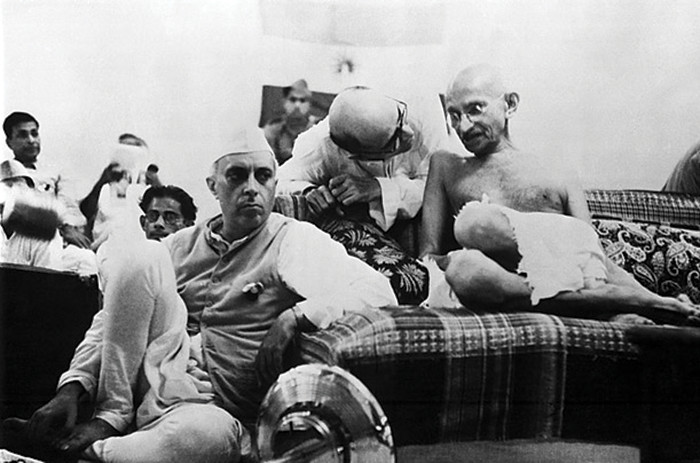
    After the First World War (1914-1918), Mohandas Karamchand Gandhi became the undisputed leader of the Congress. During this struggle, Mahatma Gandhi had developed the novel technique of non-violent agitation, which he called ‘Satyagraha’, loosely translated as ‘moral domination’. Gandhi, himself a devout Hindu, also espoused a total moral philosophy of tolerance, brotherhood of all religions, non-violence (ahimsa) and of simple living. With this, new leaders like Jawaharlal Nehru and Subhash Chandra Bose also emerged on the scene and advocated the adoption of complete independence as the goal of the National Movement.

  • INDIAN FREEDOM STRUGGLE

    INDIAN FREEDOM STRUGGLE

    The largest democracy of the world, in 68 years, could well  be on its way to becoming the World’s second largest economy, replacing the US, by 2050.

    “India has the potential to become the second largest economy in  the world by 2050 in PPP terms (third in MER  terms), although this requires a sustained programme of structural reforms”, says a PwC report.

    The Indian Panorama seeks to  look in to the growth journey of India since independence, focusing on key areas, as succinctly as possible, with a view to laying bare facts before our readers, leaving them to form their own conclusions. Preceding the story of Independent India, is a brief story of the freedom struggle which freedom loving people all over the world need to be familiar with, and  people of Indian origin reminded of. It was a struggle which inspired writers and poets to give words to the feelings of billions prompted patriots to sacrifice their lives for freedom, and  created heroes out of the common people.

    In ancient times, people from all over the world were keen to come to India. The Aryans came from Central Europe and settled down in India.The Persians followed by the Iranians and Parsis immigrated to India. Then came the Moghuls and they too settled down permanently in India. Chengis Khan, the Mongolian, invaded and looted India many times. Alexander the Great too, came to conquer India but went back after a battle with Porus. He-en Tsang from China came in pursuit of knowledge and to visit the ancient Indian universities of Nalanda and Takshila. Columbus wanted to come to India, but instead landed on the shores of America. Vasco da Gama from Portugal came to trade his country’s goods in return for Indian species. The French came and established their colonies in India.

    Lastly, the Britishers came and ruled over India for nearly 200 years. After the battle of Plassey in 1757, the British achieved political power in India. And their paramountcy was established during the tenure of Lord Dalhousie, who became the Governor-General in 1848. He annexed Punjab, Peshawar and the Pathan tribes in the north-west of India. And by 1856, the British conquest and its authority were firmly established. And while the British power gained its heights during the middle of the 19th century, the discontent of the local rulers, the peasantry, the intellectuals, common masses as also of the soldiers who became unemployed due to the disbanding of the armies of various states that were annexed by the British, became widespread. This soon broke out into a revolt which assumed the dimensions of the 1857 Mutiny.

    The First Struggle for Freedom- Indian Mutiny of 1857

    indianfreedomThe conquest of India, which could be said to have begun with the Battle of Plassey (1757), was practically completed by the end of Dalhousie’s tenure in 1856. It had been by no means a smooth affair as the simmering discontent of the people manifested itself in many localized revolt during this period. However, the Mutiny of 1857, which began with a revolt of the military soldiers at Meerut, soon became widespread and posed a grave challenge to the British rule. Even though the British succeeded in crushing it within a year, it was certainly a popular revolt in which the Indian rulers, the masses and the militia participated so enthusiastically that it came to be regarded as the First War of Indian Independence.

    Introduction of zamindari system by the British, where the peasants were ruined through exorbitant charges made from them by the new class of landlords. The craftsmen were destroyed by the influx of the British manufactured goods. The religion and the caste system which formed the firm foundation of the traditional Indian society was endangered by the British administration. The Indian soldiers as well as people in administration could not rise in hierarchy as the senior jobs were reserved for the Europeans. Thus, there was all-round discontent and disgust against the British rule, which burst out in a revolt by the
    ‘sepoys’ at Meerut whose religious sentiments were offended when they were given new cartridges greased with cow and pig fat, whose covering had to be stripped out by biting with the mouth before using them in rifles. The Hindu as well as the Muslim soldiers, who refused to use such cartridges, were arrested which resulted in a revolt by their fellow soldiers on May 9, 1857.

    The rebel forces soon captured Delhi and the revolt spread to a wider area and there was uprising in almost all parts of the country. The most ferocious battles were fought in Delhi, Awadh, Rohilkhand, Bundelkhand, Allahabad, Agra, Meerut and western Bihar. The rebellious forces under the commands of Kanwar Singh in Bihar and Bakht Khan in Delhi gave a stunning blow to the British. In Kanpur, Nana Sahib was proclaimed as the Peshwa and the brave leader Tantya Tope led his troops. Rani Lakshmibai was proclaimed the ruler of Jhansi who led her troops in the heroic battles with the British. The Hindus, the Muslims, the Sikhs and all the other brave sons of India fought shoulder to shoulder to throw out the British. The revolt was controlled by the British within one year, it began from Meerut on 10 May 1857 and ended in Gwalior on 20 June 1858.

    End of the East India Company

    Consequent to the failure of the Revolt of 1857 rebellion, one also saw the end of the East India Company’s rule in India and many important changes took place in the British Government’s policy towards India which sought to strengthen the British rule through winning over the Indian princes, the chiefs and the landlords. Queen Victoria’s Proclamation of November 1, 1858 declared that thereafter India would be governed by and in the name of the British Monarch through a Secretary of State.

    The Governor General was given title of Viceroy, which meant the representative of the Monarch. Queen Victoria assumed the title of the Empress of India and thus gave the British Government unlimited powers to intervene in the internal affair of the Indian states. In brief, the British paramountcy over India, including the Indian States, was firmly established. The British gave their support to the loyal princes, zamindar and local chiefs but neglected the educated people and the common masses. They also promoted the other interests like those of the British merchants, industrialists, planters and civil servants. The people of India, as such, did not have any say in running the government or formulation of its policies. Consequently, people’s disgust with the British rule kept mounting, which gave rise to the birth of Indian National Movement.

  • Army should back the State Police not Replace them in counter-terror operations

    Army should back the State Police not Replace them in counter-terror operations

    The response of the Punjab Police to the Dinanagar terror strike on July 27 has stirred up a debate on the appropriateness of employing the State Police as against the Army in such a scenario. Critics of the police action have lashed out at the Director General of Punjab Police (DGP), Sumedh Singh Saini, for insisting on using the state police SWAT (Special Weapons and Tactics) team even though the Army was readily available, a decision that caused a delay of several hours in mounting an effective response. On the other hand, former DGP of Punjab Police K.P.S. Gill, who is credited with terminating terrorism in Punjab, has appreciated the decision of the Punjab Police to go ahead with the anti-terror operation on its own. In a 28 July article in the South Asia Intelligence Review (SAIR), Gill, who is cognizant of the poor drills of the local police, stated:

    “The determination of the Punjab Police and its leadership to handle the response on its own, despite the presence of better equipped, better protected and better trained teams of central Forces on location, and despite some pressure to deploy these, is commendable. The DGP, Saini chose to lead from the front and whatever one may say of the quality of the response of his men, their motivation, their dedication to the task, their courage……cannot be denied. This is a tremendous change from the characteristic whining and complaining by most State Police Forces in the wake of a terrorist incident, and the eagerness with which an intervention by Central Forces is awaited and accepted.”

    Taking a more nuanced view of the critical role of the State Police in confronting terrorism, Gill further argued that:

    “It [the State Police’s response] is the only sustainable model to protect against the depredations of terrorists and extremists of various hues across unpredictable locations across the country. The Army cannot be everywhere……local authorities cannot, and must not, wait interminably for the Centre to send in appropriately trained or equipped Forces. The local Police, the first responders, must be ready, willing and highly motivated to react immediately and effectively on their own, and must take rightful pride in so responding. Every crisis across India cannot be handled from New Delhi. Decentralization is absolutely necessary, certainly in security matters”.

    In the given context and in view of India’s long experience in counter-insurgency and counter-terrorism, the case for employing the Army is akin to missing the wood for the trees. DGP Saini, who was baptized handling the Khalistan militancy under the leadership of Gill, was seemingly not affected by considerations of turf in deciding to undertake the operations. The terrorists had already inflicted the losses that they intended to. Equally important, they were quarantined and did not have the maneuverability to move further. An additional factor in favor of the Punjab Police was the availability of ample daylight hours. In any event, the Army was always available and could have been requisitioned in an eventuality.

    The Endeavour of the Punjab Police has an immense potential to set a strong precedent for the police in other states to train and prepare for internal security challenges, be it Jammu and Kashmir (J&K) or the states in the North East or states in Central India affected by Left Wing Extremism (LWE). In states battling insurgency with the active deployment of the Army, instances of State Police complacency and inclination to ‘piggy-back’ have become rampant. Some analysts have gone to the extent of suggesting that in the case of J&K, given the current state of near-normalcy, unless the Army reels back, the State Police would always remain reluctant to take on the mantle.

    There have been several successful models of counter-insurgency and counter-terrorism in India including Tripura, Punjab and Andhra Pradesh where police primacy was the template within which all operations took place. The final responsibility for maintenance of peace and order was vested in the Superintendent of Police of the district. The Army, where deployed, operated within the strategic framework jointly evolved with the police command, and supported the State Police which performed the principal tasks. Augmentation of police strength and capabilities in these states through training, equipment, mobility, fortification of police posts and, crucially, orientation, gave them a cutting edge over the insurgent and terrorist forces.

    In a nutshell, DGP Saini’s decision, in spite of the fumbling battle-drills of the team on ground, promises several pay-offs in the long term:

    • Boosts the morale of the Punjab Police by making them realize that ‘they can’.
    • Sensitizes the State Police to re-orient and re-train in order to regain the capabilities that empowered it to successfully eliminate militancy in the state in early 1990s.
    • Presents an example for other states to emulate; to enable themselves and not look behind their shoulders for reinforcement by Central Forces.
    • Presents more options to the political leadership while deciding upon the deployment of counter-insurgent and counter-terrorist forces.
    • Leads to state governments according priority to capability-enhancement of their police forces and instills enhanced sense of ownership over internal security issues.
    • And, finally, conveys to Pakistan that its intention of tying down the Army in such operations may not always work.

    Punjab Police had developed effective anti-terror capabilities in the past and that needs to be kept in fine fettle. The State Police rightly assumed ownership of the job at hand and other state police forces should be encouraged to develop similar capabilities, by judiciously utilizing grants available under the police modernization scheme. Such terror attacks would come unannounced and could even become frequent. While the pressure on terrorists in the neighboring state of J&K mounts, desperation is likely to be vented through any available window of opportunity that Punjab’s riverine terrain provides.

    Punjab not being a declared ‘disturbed area’, the employment of the Army, that too in the face of the demonstrated will and capability of the State Police, is not the most optimum option. At the same time, there is a need to remain cognizant of the fact that it is Pakistan’s aim to enmesh the Indian Army in internal security challenges that are not only costly in terms of money but also result in frictions that make the army itself as well as the state at large vulnerable to the ire of citizens. Instead of exhibiting eagerness to take a leading part in every internal security task, it would be prudent for the Army to remain alert and be prepared and willing to back up the police.

    Shashank Ranjan By Shashank Ranjan – Institute for Defence Studies and Analyses

    (Views expressed are of the author and do not necessarily reflect the views of the IDSA or of the Government of India)

  • Pakistan police kill leader of anti-Shia militant group

    Pakistan police kill leader of anti-Shia militant group

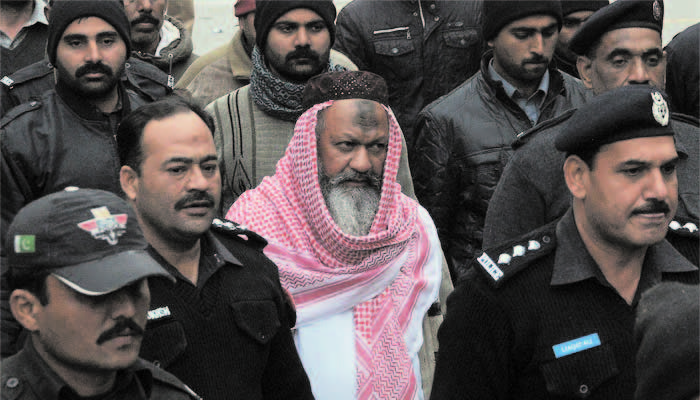
    ISLAMABAD (TIP): Malik Ishaq, the dreaded chief of banned Sunni sectarian outfit Lashkar-e-Jhangvi, was gunned down along with his two sons and 11 others early on July 30 morning by police in an alleged exchange of fire in Punjab’s Muzaffargarh district.

    While the exact circumstances of the killing remain unclear, police said the encounter took place following an attack on its convoy taking Ishaq and his sons to a detention centre. They were being taken to Shahwala in Muzaffargarh by the Counter-Terrorism Department (CTD) to aid in the recovery of arms and explosives that it had seized allegedly from LeJ terrorists.

    “As the police convoy was returning in wee hours on Wednesday, a group of militants on motorbikes ambushed it near Shahwala Jungle in an attempt to free Ishaq,” Shuja Khanzada, Punjab’s home minister, said. “Fourteen militants, including the LeJ chief and his sons, were killed in the battle, which ensued,” he said and added that at least six police officers were also injured.

    Ishaq, his sons and three aides, were arrested last Saturday on suspicion of involvement in sectarian killings.

    He had spent 13 years in police custody for more than 80 charges of sectarian killings. He was arrested in 1997 and after serving nearly 14 years in prison, released on bail in 2011. Observers believe that Ishaq, accused in over 70 criminal cases, was never successfully prosecuted. He walked free in December 2014 after a decision by the Lahore High Court. Analysts had called his release by court as a reflection of state’s weak judicial system.

    “He has faced several murder trials but always been acquitted after witnesses refused to testify against him,” said Nazrul Islam, political analyst.

    Lashkar-e-Jhangvi, a violent Sunni militant group that is said to be aligned with al Qaeda and Taliban, has been accused of killing hundreds of Shias after its emergence in the early 1990s. It had claimed responsibility for the deaths of hundreds of Shia Muslims, including two bombings in the western city of Quetta in early 2013 that had claimed lives of more than 200 people.

    Ishaq was also accused of masterminding, from behind bars, the 2009 attack on the Sri Lankan cricket team in Lahore, which wounded seven players and an assistant coach, and had left eight Pakistanis dead.

  • Gurdaspur attackers infiltrated from Pakistan, says government

    Gurdaspur attackers infiltrated from Pakistan, says government

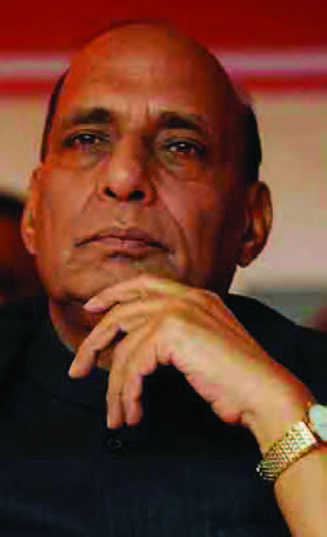
    NEW DELHI (TIP): Union Home Minister Rajnath Singh on July 30 said the three terrorists killed in Dinanagar town of Gurdaspur district in Punjab had infiltrated from Pakistan and warned the neighboring country that any effort by enemies will meet an effective and forceful response from Indian security forces.

    “A preliminary analysis of the Global Positioning System (GPS) data indicates that the terrorists had infiltrated from Pakistan through the area near Tash in Gurdaspur district, where the Ravi river enters Pakistan,” Rajnath Singh said in a statement in the Rajya Sabha on the terrorist attack in Dinanagar town in Gurdaspur district of Punjab on July 27.

    “It is also suspected that the same terrorists placed five Improvised Explosive Devices on the railway track near village Talwandi between Dinanagar and Jhakoladi which were subsequently defused,” Rajnath Singh added.

    He assured the house that any effort by the enemies of India to undermine its territorial integrity and security or imperil the safety and security of the citizens will meet an effective and forceful response from the country’s security forces.

    The union home minister further said that the government has been, and will remain resolute in this regard.

    “I take this opportunity to assure the house that the government is firmly committed to root out terrorism from India. I also assure the house that the government will do everything possible to prevent cross-border terrorism aimed against India,” Rajnath Singh said.

    In his statement made amid a din and anti-government slogans by the opposition, Rajnath Singh also lauded the Punjab Police for neutralizing the three terrorists.

    The union home minister said that the Border Security Force was always on the alert though some terrorist might have succeeded in infiltrating due to heavy rains and swelling of rivers and nullahs on the border.

  • Embarrassed Cong disowns Digvijaya, Tharoor remarks on Yakub hanging

    Embarrassed Cong disowns Digvijaya, Tharoor remarks on Yakub hanging

    DigvijayaTharoorNEW DELHI (TIP): Congress on July 30  scrambled to disown the controversial remarks of its party leaders Digvijaya Singh and Shashi Tharoor over the hanging of Yakub Memon.

    With finance minister Arun Jaitley pouncing on what he called “irresponsible” remark of Singh where he seemed to contrast the “urgency” shown in Yakub Memon’s case with the the soft-peddaling of other terror accused, a harried Congress distanced itself from the remarks of the party general secretary as well as those of Tharoor.

    In a series of tweets, Tharoor also questioned the death sentence. “Saddened by news that our government has hanged a human being. State-sponsored killing diminishes us all by reducing us to murderers too”, said Tharoor, while terming hanging
    “unworthy of a government” and questioning its effectiveness as a deterrent against terrorism.

    The twin comments triggered a row, especially Singh’s sentiment being seen as a bid to compare the Yakub hanging with other terror accused including those involving Hindu terrorists. “No individual, howsoever big, can change the stand of a political party,” AICC spokesman Randeep Surjewala said as the party tried to douse the controversy.

    Congress said the comments of individuals were their personal opinion, citing senior BJP leader and MPs Shatrughan Sinha and Ram Jethmalani who signed the petition in favour of mercy for Yakub, owning the argument that he was innocent in Mumbai blasts. “What Sinha and Jethmalani say do not become the BJP stand,” Surjewala said.

    Congress questioned BJP’s track record on terror while arguing that it had lost two prime ministers among other leaders to the menace while the saffron party had only released terrorists when it has been in power.

    Surjewala said, “Jaitley and BJP leaders should not lecture Congress and the country on terror. From Punjab to North-East, we faced terror and also ended it. Congress lost Indira Gandhi and Rajiv Gandhi, a chief minister in Punjab, to terrorists and top leaders in Chhattisgarh to naxals.”

    He said BJP’s track record on terror was questionable as it released top terror merchants led by Masood Azhar to Afghanistan in the Vajpayee government while in the coalition government led by VP Singh, terrorists were released in exchange of Rabaiyya Sayeed. Also, when PM Vajpayee went to Pakistan on a bus, Pakistan captured the Kargil heights and hundreds of soldiers had to sacrifice their lives to win back the territory.

    After Tharoor’s remarks were slammed by BJP and a section of netizens, the Congress leader noted in an article on a website that he had joined the public debate by expressing his sadness that the government has hanged a human being, whatever his crimes may have been. “I stressed that I was not commenting on the merits of this or any specific case: that’s for the Supreme Court to decide. My problem is with the principle and practice of the death penalty in our country,” he said in a blog.

  • YAKUB FIRST TO BE HANGED IN MAHARASHTRA AFTER KASAB

    YAKUB FIRST TO BE HANGED IN MAHARASHTRA AFTER KASAB

    MUMBAI (TIP): The hanging of Yakub Memon on July 30 in the 1993 Mumbai serial blasts in which 257 people lost their lives and over 700 were injured, is the first execution of death sentence in Maharashtra after Pakistani terrorist Ajmal Kasab was sent to the gallows for the 26/11 terror attacks.

    On May 3, 2010, a Mumbai Special Court convicted Kasab of murder and waging a war on India and sentenced him to death three days later. The verdict was upheld by the Bombay High Court on February 21, 2011 and the Supreme Court on August 29, 2012.

    Kasab’s mercy petition was rejected by the President on November 5, 2012 and he was hanged at Pune’s Yerwada Jail on November 21, 2012.

    A few months later, Afzal Guru, who was awarded capital punishment in Parliament attack case, was hanged on February 9, 2013, at Tihar Jail in Delhi.

    The first hanging in Independent India was that of Nathuram Godse and Narayan Apte in the Mahatma Gandhi assassination case.

    Godse, a militant Hindu nationalist, along with co-conspirator Apte was sentenced to death by the Punjab High Court after a widely watched trial. They were hanged at Ambala jail on November 15, 1949.

    In the Indira Gandhi assassination case, Satwant Singh and Kehar Singh were hanged on January 6, 1989.

    According to legal historians, the death penalty was incorporated in the Indian Penal Code in pre-independent India in 1860.

    After Independence, there have been debates on retaining the capital punishment in the country’s penal system.

    Despite the campaign for abolition of capital punishment by some rights groups, in 2007 India voted against a UN General Assembly resolution seeking a worldwide moratorium on death penalty.

    This stand was reiterated again in 2012 when the UN came out with another resolution on the issue.

  • Community in Baltimore raises a  Punjabi School; Dr. Gill appointed principal cum coordinator

    Community in Baltimore raises a Punjabi School; Dr. Gill appointed principal cum coordinator

    [vc_row][vc_column][vc_images_carousel images=”44259,44260,44261″ onclick=”link_image” custom_links_target=”_self” mode=”horizontal” speed=”3000″ slides_per_view=”1″ autoplay=”yes” hide_pagination_control=”” hide_prev_next_buttons=”” partial_view=”” wrap=”yes” img_size=”full”][vc_column_text]

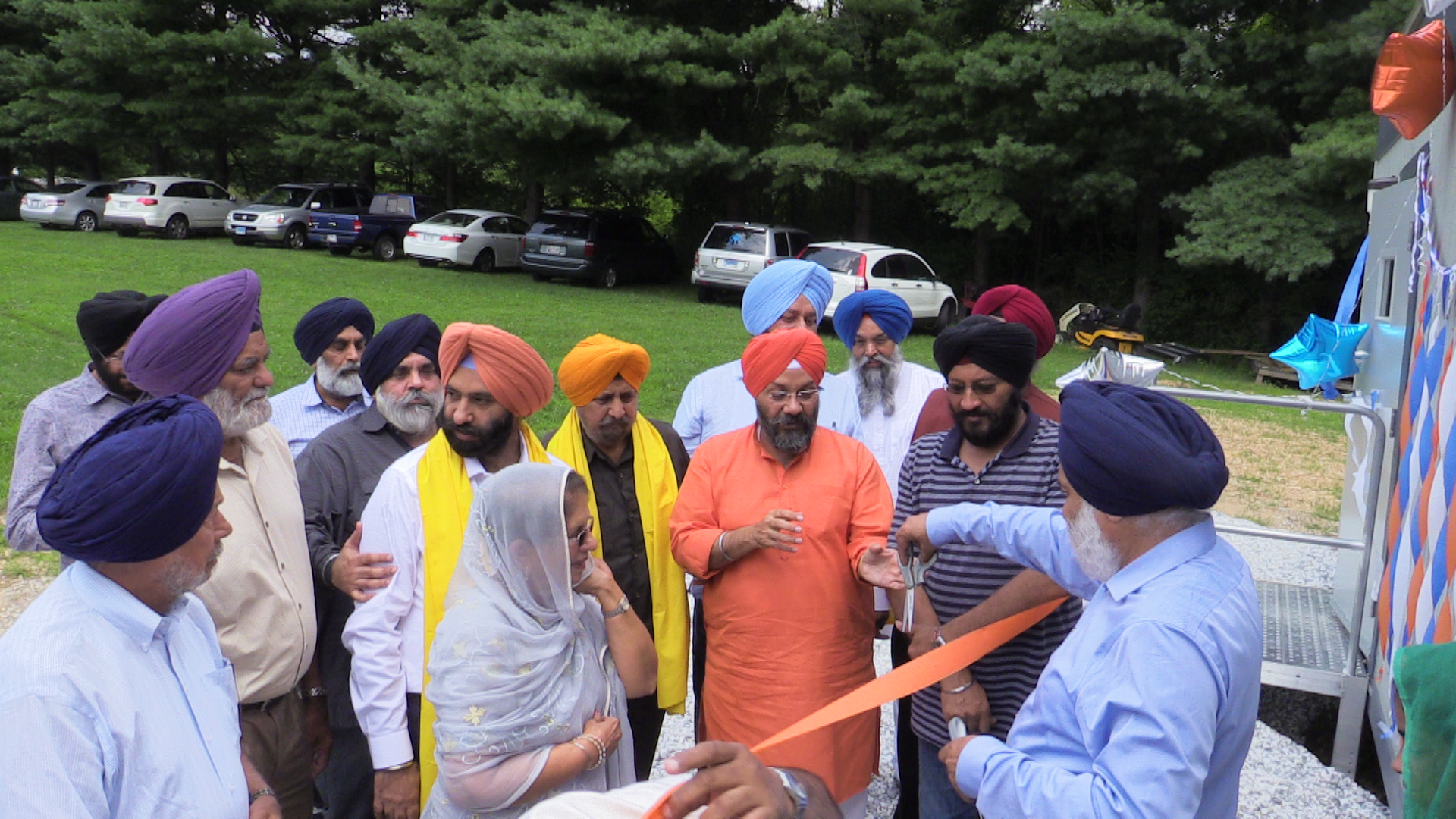
    MARYLAND (TIP): A determined community can achieve anything. The Sikh community in Baltimore decided to have a Punjabi school and they had it.

    A long cherished dream of the Sikh committee of the area was realized when a Punjabi school was inaugurated  in the premises of Gurudwara Sikh Association of Baltimore on Sunday, July 12. President of the DSGPC Manjit Singh GK and Gurudwara Sikh Association of Baltimore Trustee Dr. Kirpal Kaur cut the ribbon to inaugurate the school.

    The gurdwara management appointed Dr. Surinder Singh Gill as Principal cum Coordinator of the school. Dr. Gill is an educationist who has a long experience in school management, having established three schools in India.

    Once the management of the Gurdwara gave Dr. Gill the full authority to start a school, Dr. Gill, with the help of Paramjit Singh began wok to obtain equipment for the school.

    Dr. Kirpal Kaur and Jesse Singh took the responsibility of the expenses on trailer which was to be used to house the school. Dr. Gill prepared curriculum and arranged for books, registration and the other allied material and equipment for the school in just two weeks and made it possible for inauguration ceremony to take place on July 12, 2015.

    Speaking on the occasion, Dr. Kirpal Kaur said that the community felt the need of a Punjabi school. Without the knowledge of mother tongue, children will become    orphans. They will get lost. They will lose touch with their religion and culture.

    Manjit Singh GK congratulated the school management and Dr. Gill, in particular for realizing the need and setting up the school. He said Punjabi School was a need of the community and without Punjabi Sikhs cannot survive.

    On this occasion, Avatar Singh Hit offered five thousand books for the school and advised  the management to start the library from the ensuing session.

    Speaking on the occasion, Gurdwara President Jeet Singh said the Gurdwara management appreciated all who supported the idea of the school and contributed generously for its set up. In particular, he thanked Kawaljit Singh Soni, KK Sidhu, Baljinder Singh Shami, Dr Sukhpal Singh, Jeet Singh president, Karam Singh, Kanta Sami and the teachers of the school for their cooperation.

    Dr. Gill informed The Indian Panorama that in just 15 days thirty students were enrolled and the management provided free books, note books and bags to the students.. Dr. Gill said, “It is a great step for the Punjabi community and will go long way to mark a great start. The management expects more enrollments of students and looks forward to adding another Trailer very soon so that the State could designate it as a chartered school”.

    Dr. Gill said he was confident of the support of the community and the State administration and hoped to see the school being recognized as a chartered school.

    [/vc_column_text][/vc_column][/vc_row]

  • Punjab AAP leader Dr Daljit Singh expelled

    Punjab AAP leader Dr Daljit Singh expelled

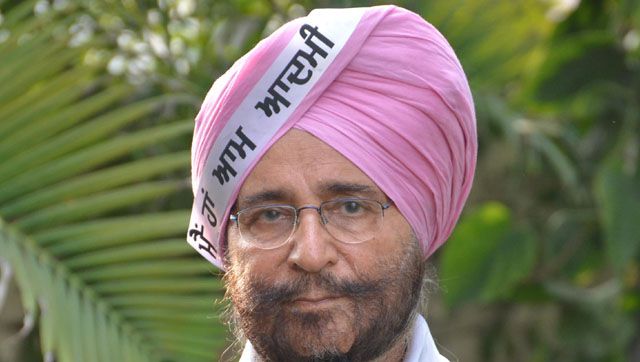
    Chandigarh (TIP) July 16: In an attempt to quell rebellion in the Punjab unit of the Aam Aadmi Party, took a swift decision on Thursday to expel its Punjab disciplinary committee chairman and state executive member Dr Daljit Singh.

    Dr Daljit Singh had made a statement last week that party spokesman and Punjab affairs in charge Sanjay Singh and the state convenient Sucha Singh Chottepur were out to destroy the AAP in the state.

    Dr Daljit Singh, a prominent eye surgeon of Amritsar, had unsuccessfully contested the Lol Sabha elections from Amritsar against Capt Amarinder Singh of the Congress and Arun Jaitley of the BJP.

    He was issued a show cause notice on Sunday and he had sent his reply the next day denying the charges.

    He had made the statement after at least two of the four MPs had raised their voice against Sanjay Singh who had later asked them to submit their report card as MPs

  • Indian American farmer appointed to advisory board of Fresno State University

    Indian American farmer appointed to advisory board of Fresno State University

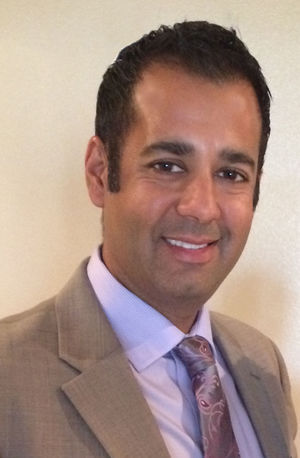
    SACRAMENTO (TIP): Indian American farmer Tejpal “Jay” Mahil has been named to the Fresno State University Advisory Board, a panel of community members who provide advice on improvement and development of the University.

    Mahil is a partner in a family farming operation, Creekside Land Company LLC. He was the first in his family to attend college and earned a bachelor’s degree in agricultural business from Fresno State in 1999.

    “Jay is an outstanding example of a Fresno State alumnus who is active in his community and the agricultural industry,” Castro said, in a statement. “His Central Valley experience and unique professional insights will be of great value to the advisory board as we work together to serve the University.”

    Mahil is a fourth-generation farmer and the first generation of his family to be born in the United States. His great grandfather emigrated from Punjab, India, in 1906.

    Mahil is president of the Madera County Farm Bureau, a board member of the San Joaquin Valley Winegrower Association and a member of the Madera Sunrise Rotary.

  • Man who monitored 1999 Kandahar hijack admits goof-up

    Man who monitored 1999 Kandahar hijack admits goof-up

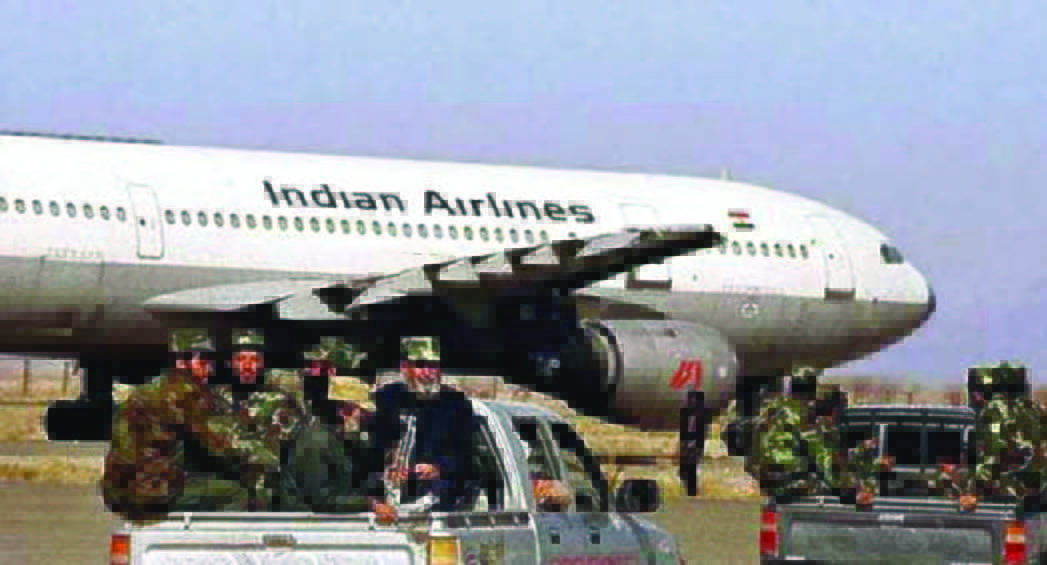
    NEW DELHI (TIP): The man who monitored the crisis arising from the 1999 hijack of IC-814, former RA&W chief A S Dulat, has admitted that the Crisis Management Group (CMG) had “goofed up” the operation.

    While he didn’t go into the details of the goof-up and what exactly transpired at the five-hour CMG meeting on December 24 while the plane was parked in Amritsar, Dulat said that “no one in Delhi or Punjab wanted to bell the cat”. In the meantime, the plane flew away, and with it the opportunity to gain an upper hand over the hijackers. Later, Dulat says “everyone shifted the blame to each other”.

    Speaking ahead of the launch of his book, ‘Kashmir: The Vajpayee Years’, Dulat said that the then Punjab police chief Sarabjit Singh, who was in charge of the situation when the plane was on the ground in Amritsar, said Delhi never told him that IC-814 was not to be allowed to take off. Singh did tell Delhi that he had at his disposal Punjab commandos trained in anti-terrorism operations who could storm the aircraft but Delhi’s response was that it did not want any casualties.

    After the plane flew off to Lahore – the next stop was Dubai and eventually Kandahar – Dulat writes that the “CMG degenerated into a blame game…with the cabinet secretary being head of the CMG as one target and NSG chief Nikhil Kumar, another.”

    He also criticized the handling of the hostage trade-off in 1989 when the daughter of the then Union home minister and current J&K CM Mufti Mohammed Sayeed was kidnapped. Dulat said, “Rubaiya’s kidnapping is a classic case on how not to handle a hostage crisis. We did everything wrong. Because it was such a high-profile kidnap, every friend of Mufti appeared on the scene and was busy scoring points. So instead of releasing one militant – Hamid Sheikh – which was all the JKLF wanted, we released five.” He pointed out that the release of the four others didn’t matter as much as the psychological impact of that trade-off. “They felt that they made Delhi bend.”

  • Canadian woos Punjab for closer ties

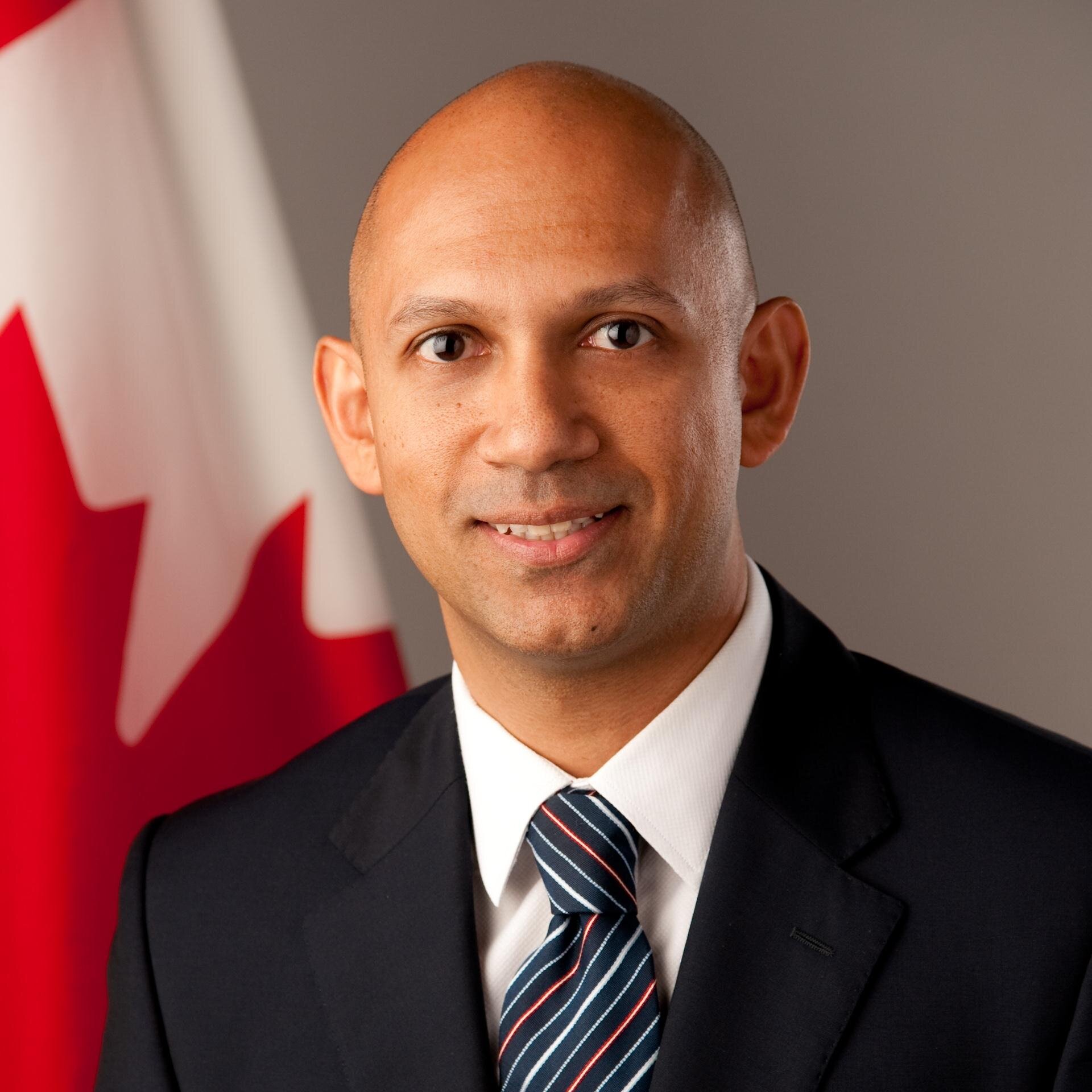
    “Canada and India share extremely strong relations. Now, we are focusing on trade and agricultural technology in India,” said Nadir Patel, High Commissioner for Canada to India.

    He was speaking at a special session ‘India-Canada relationship in today’s interconnected world’ hosted by the Indian School of Business (ISB) here this evening.

    Terming Indian Prime Minister Narendra Modi’s recent visit to Canada as very successful, Patel said more opportunities to further strengthen ties between both countries were being explored.

    “Things are moving in the right direction as far as bilateral relations between the two countries are concerned,” said Patel Patel, the first Indo-Canadian to be appointed to this top position.

    He added that Canadians of Indian origin have been contributing to the Canadian $2 trillion economy and there was immense scope to boost investment further in terms of entrepreneurial ventures in various sectors.

    The High Commissioner added that Canada’s start-up visa programme has specially been formulated to facilitate entrepreneurial ventures in Canada.

    “We are positive about the way business opportunities are shaping up in India but the gap between the vision and public policy implementation has to be bridged for better integration of the two nations,” said Patel.

    On various points, including the nuclear deal between both countries, the ‘Make in India’ programme and trade, Patel said that
    Canada was very keen to strengthen ties with India through various initiatives in the education sector.

    “Students are the best brand ambassadors of the Indo-Canadian relationship,” he said, adding that 46,000 Indian students are presently studying in Canada.

    “The number of Indian students in Canada has grown by 17 per cent over the past five years and is surging every year. We would like to see more students from Canada too studying in Indian educational institutions.”

  • Canadian high commissioner promotes India for studies to youths

    Canadian high commissioner promotes India for studies to youths

    CHANDIGARH: Nadir Patel, Canadian high commissioner to India, highlighted possibility of greater educational collaboration with not just Indian students studying on Canadian campuses but also vice versa coming true.

    “At present we have 46,000 Indian students studying in Canada. But we would like to see students from Canada also studying in Indian educational institutions. The number of Indian students in Canada has grown by 17% over the past five years and is surging every year,” he said while speaking on the topic ‘India-Canada relationship in today’s interconnected world’ at the Indian School of Business (ISB) in Mohali on Wednesday.

    Pael, the first Indo-Canadian to be appointed to this top position, met Punjab deputy chief minister Sukhbir Singh Badal earlier in the day. He informed that Canadians of Indian origin had been contributing a lot to the $2 trillion economy of the North American country, yet there was immense scope to boost investment further in terms of entrepreneurial ventures in various sectors.

  • Indian American Professor R Paul SIngh named World Agriculture Prize laureate

    Indian American Professor R Paul SIngh named World Agriculture Prize laureate

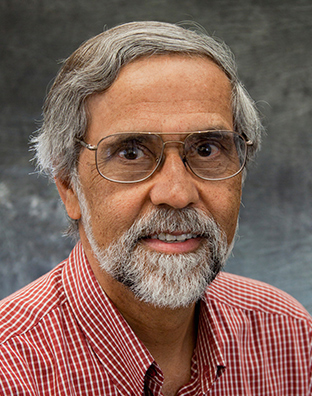
    Indian American Professor Emeritus R. Paul Singh who has held dual appointments in the departments of Biological and Agricultural Engineering and of Food Science and Technology at the University of California, Davis, has been named as the 2015 Global Confederation for Higher Education Associations for Agriculture and Life Sciences World Agriculture Prize laureate.

    The award was announced at the annual GCHERA conference, held June 24-26 at the Holy Spirit University of Kaslik, Jounieh, Lebanon. Formal presentation of the award will take place Sept. 20, during a ceremony at Nanjing Agricultural University, Jiangsu Province, China.

    “I’m deeply humbled and honored, upon receiving news of this award,” Singh said. “I’m proud of my students, postdoctoral fellows and visiting scientists for their numerous contributions to our research program. I’m also indebted to my UC Davis colleagues for their consistent support, which has allowed me to pursue my research and teaching activities in food engineering.”

    Singh earned a bachelor’s degree in agricultural engineering at India’s Punjab Agricultural University, then a master’s degree and Ph.D. at the University of Wisconsin-Madison and Michigan State University, respectively. He joined the UC Davis faculty one year later, in 1975.

    “For over four decades, Professor Singh’s work as a pioneer in food engineering has been improving lives the world over,” said UC Davis Chancellor Linda P.B. Katehi. “This prestigious, and well-deserved, honor is a testament to the importance of his research, and UC Davis is tremendously honored to call him a member of our faculty.”

    Singh became recognized for a body of research in areas such as energy conservation, freezing preservation, postharvest technology and mass transfer in food processing. His research on airflow in complex systems helped design innovative systems for the rapid cooling of strawberries, and his studies on food freezing led to the development of computer software that is used to improve the energy efficiency of industrial freezers. Under a NASA contract, his research group created food-processing equipment for a manned mission to Mars.

    He has helped establish and evaluate food-engineering programs at institutions throughout the world, including in Brazil, India, Peru, Portugal and Thailand. As of June 2015, his 115 video tutorials have been viewed more than 150,000 times by individuals from 193 countries.

    In recent years, his research focused on the physical mechanisms responsible for the digestion of foods in the human stomach, with an eye toward developing the next generation of foods for health.

  • Indian-American group condemns Ann Coulter’s swipe at Nikki Haley

    Indian-American group condemns Ann Coulter’s swipe at Nikki Haley

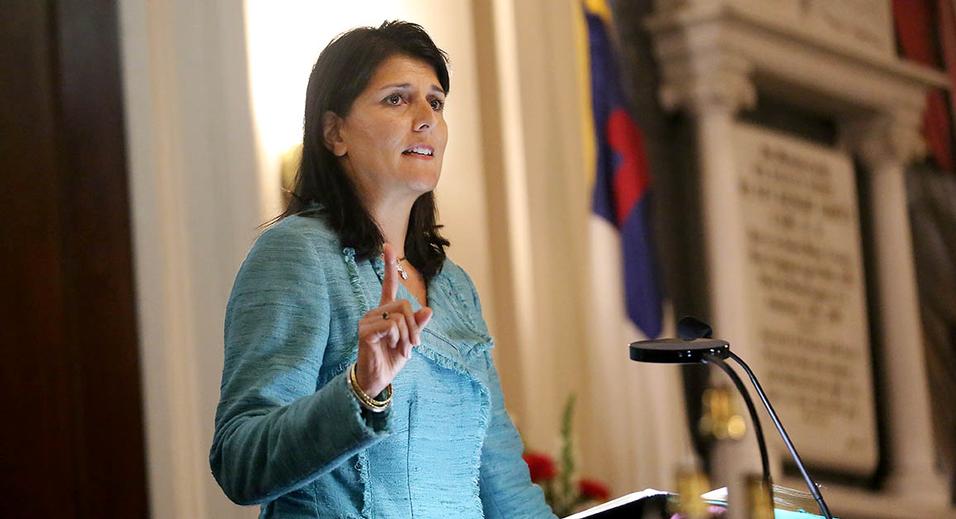
    The head of a top Indian-American advocacy group on Wednesday condemned Ann Coulter’s comments that South Carolina Gov. Nikki Haley doesn’t understand America because she’s “an immigrant” with roots in India.

    “It’s a demographic death march that the Republican Party is on. This is a country of immigrants,” said Sanjay Puri, chairman and founder of the U.S.-India Political Action Committee.

    Puri noted that not only was Haley born in America to immigrant parents, but Coulter’s ancestors were likely also immigrants to the United States. He said that the comments are offensive for “presuming that immigrants don’t understand American history.”

    On Tuesday, Coulter appeared on the Fox Business Network and condemned Haley for calling for the Confederate battle flag to be taken down from outside the State Capitol. “I would really like to like Nikki Haley since she is a Republican,” Coulter said, but added that the South Carolina governor “is an immigrant and does not understand America’s history.”

    Haley was, in fact, born in South Carolina in 1972. Her parents immigrated to the U.S. from the Indian state of Punjab.

    Coulter’s comments were a sharp departure from the views of fellow Republicans such as Scott Walker, Jeb Bush, John Kasich and Donald Trump, all of whom have agreed with the governor that it’s time for the flag to come down.

    She emphasized that, though she is from Connecticut, she believes the flag is an important part of Southern history.

    “The Confederate flag we’re talking about never flew over an official Confederate building,” Coulter said. “It was a battle flag. It is to honor Robert E. Lee. And anyone who knows the first thing about military history knows that there is no greater army that ever took the field than the Confederate Army.”

    Coulter said the fact that Dylann Roof, the alleged killer of nine African Americans in last week’s attack in South Carolina, showcased the flag in photos is irrelevant. The shooting, she said, “had nothing to do with the Confederate flag. He was also wearing a Gold’s Gym T-shirt.”

    The conservative pundit appeared on the show to promote her new book “Adios, America: The Left’s Plan to Turn Our Country into a Third World Hellhole,” which was published June 1.

  • Satnam Singh drafted in NBA, selected by Dallas Mavericks

    Satnam Singh drafted in NBA, selected by Dallas Mavericks

    NEW DELHI (TIP): Indian hoopster Satnam Singh Bhamara, on Friday, became the first player from the country to be drafted in NBA. Satnam, a versatile center player, was selected by Dallas Mavericks with the 52nd pick of the 2015 NBA draft.

    The youngster, who hails from a remote village in Punjab and stands 7 feet 2 inches tall, was hoping to become the first player born on the subcontinent to make the league. Mavericks had invited India’s biggest basketball hope, Satnam, for a pre-draft workout on Tuesday. It was the first time that the scouts of the Texas-based team witnessed the skills of the 290-pound Indian center. Confirming the development, Satnam had told TOI before boarding the flight to Dallas from Florida, “I am very excited to have a workout with Dallas Mavericks -one of the best and experienced team in the NBA. I will give my best and try to impress the selectors there.”

    NBA History has been made! #SatnamSingh has been picked by @dallasmavs-NOW the 1st Indian national in the NBA. pic.twitter.com/wkR21OAP9j — NBAIndia (@NBAIndia) June 26, 2015

    RT @Ananth_Pandian: First Indian to ever be drafted into the NBA – Satnam Singh https://t.co/1NmVwX4lCs – — Nathan (@Neshan_Nathan) June 26, 2015

    Satnam’s young age, giant frame and relatively little pro-league experience in basketball make him an intriguing prospect. However, it’s Satnam’s size and ability to guard multiple positions which is believed to have attracted the Mavs scouts as being a prospective contributor to a team on the defensive side of the ball.

  • Indian Canadian Steve Rai Becomes Vancouver Police Deputy Chief

    Indian Canadian Steve Rai Becomes Vancouver Police Deputy Chief

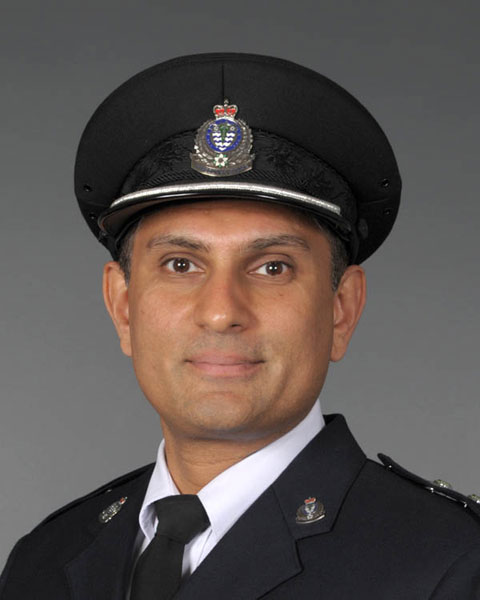
    India-born Steve Rai has been appointed the new deputy chief constable of Canada’s Vancouver Police Department.

    Vancouver Police chief Adam Palmer announced yesterday that Mr Rai has joined the department’s executive team as the new deputy.

    Born in Punjab, Mr Rai has been serving the police department for the past 25 years. His brother Roger is also a police officer assigned to the Downtown Eastside.

    Mr Rai drew on his cultural background to work extensively, at the street level, with the District’s South Asian community, using his skills in the Punjabi language.

    He also completed assignments in the Vancouver Police Jail, as a Recruiting Unit investigator, and a secondment to the former Coordinated Law Enforcement Unit, according to a press release from Vancouver Police Department.

    Vancouver, a bustling west coast seaport in British Columbia, has a large Indo-Canadian population and Prime Minister Narendra Modi had visited a temple and a gurdwara in the city during his visit to Canada in April this year.

  • AMID LALITGATE ROW, RAJE CANCELS ANANDPUR SAHIB AVOIDS MEETING AMIT SHAH

    AMID LALITGATE ROW, RAJE CANCELS ANANDPUR SAHIB AVOIDS MEETING AMIT SHAH

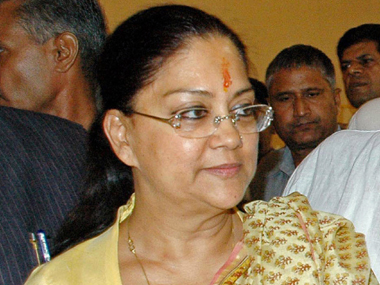
    JAIPUR (TIP): Amid raging Lalitgate row, Rajasthan chief minister Vasundhara Raje on June 19 cancelled her visit to Punjab where she would have come face-to-face with BJP president Amit Shah for the first time since the damaging revelations.

    “Due to back pain, the chief minister’s doctor has advised her to take rest so she has cancelled her visit to Punjab today,” Raje’s press advisor said.

    Raje, who is embroiled in a controversy over allegedly favouring tainted IPL chief Lalit Modi’s immigration plea in London, was scheduled to share the dais with BJP chief Amit Shah and Union home minister Rajnath Singh at the function in Anandpur Sahib celebrating 350 years of the key Sikh shrine. Significance was being attached to the meeting as none of the BJP central leaders or the government have come to her defence since the issue came out in public.

    Raje had spoken to Shah over phone on Wednesday to explain her position.

    Congress has been demanding her immediate resignation along with that of external affairs minister Sushma Swaraj, saying they have no right to continue in office after helping the former IPL chairman who is facing money laundering and other charges.

    However, Rajasthan health minister Rajendra Rathore rejected demands for Raje’s resignation, saying the entire national BJP and party MLAs were with her.

    “The entire BJP be it at the Centre or the state are with her. She has been leading us and will continue to do so. The entire legislature party is standing strongly with her. Our leadership is standing by her. The question of her resignation does not arise,” he had said.

  • NEK CHAND, CREATOR OF CHANDIGARH’S ROCK GARDEN, DIES AT 90

    NEK CHAND, CREATOR OF CHANDIGARH’S ROCK GARDEN, DIES AT 90

    NEK CHAND
    NEK CHAND

    CHANDIGARH (TIP): The creator of Chandigarh’s iconic Rock Garden, Nek Chand, breathed his last at the Post Graduate Institute of Medical Education and Research, Chandigarh, on June 12. He was 90. PGIMER sources said that Nek Chand had been ailing for some time. He was suffering from diabetes, hypertension and was also diagnosed with cancer. He had been admitted to the local Inscol Hospital in Sector 34 for the past few days. He had been undergoing dialysis but his condition kept on deteriorating. Earlier in the day, UT adviser Vijay Dev and home secretary Anurag Agarwal also visited him at the private hospital. They found that his condition was critical and suggested that he be shifted to the PGIMER at the earliest. He was brought to the PGIMER late on Thursday evening.

    His son, Anuj Saini, who helped him in maintaining Rock Garden, and his UK-based daughter were by his side when he passed away at PGIMER.

    [quote_center]KNOW THE MAN, THE LEGEND[/quote_center]

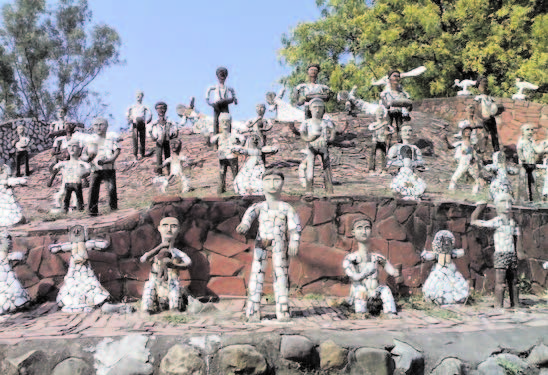
    Born at Shakargarh (now in Pakistan) in Gurdaspur district, Nek Chand and his family settled in Punjab after Partition. At the time when Chandigarh was being designed as India’s first truly modern city by Swiss-born French architect Le Corbusier, he found work as a roads inspector for the Punjab public works department in 1951.It was in the early 1960s that he began to clear a little forest patch near Sukhna Lake to create a small garden. He set stones around the little clearing and then sculpted a few figures from discarded and recyclable materials he found at hand. His creation grew covering several acres and comprising hundreds of sculptures.

    THE SECRET GARDENER

    Nek Chand toiled away secretly in the dead of night for nearly two decades to create his wonderland in north India. Riding his bicycle after dark to a state-owned forest, Nek Chand spent night after night clearing patches of ground and transforming the landscape into a majestic garden. When his secret was finally discovered in 1975, authorities threatened demolition, claiming he had violated strict land laws. But an amazed public rallied behind him.

    Eventually, the decision to give Chand a salary to help him work on his project fulltime, besides a workforce of 50 labourers, was taken. The garden was inaugurated as a public space in 1976, bringing him glory that would last a lifetime and beyond. He was awarded the Padma Shri in 1984.

    LEGACY LIVES ON

    The man, who saw beauty and art in what others said was junk, continued to work on the garden even in his last days. Made from recycled materials, Chand built the mass with a cement and sand mix before adding a final coating of smoothly burnished pure cement combined with waste materials such as broken glass, bangles, crockery, mosaic and iron-foundry slag.

    Now over 25 acres of several thousand sculptures set in large mosaic courtyards linked by walled paths and deep gorges, Nek Chand’s creation also combines huge buildings with a series of interlinking waterfalls. The Rock Garden is now acknowledged as one of the modern wonders of the world and receives over 5,000 visitors each day.

  • US FOOD AND DRUG ADMINISTRATION BLOCKED MAGGI IMPORT IN JANUARY

    NEW DELHI (TIP): Nestle may have secured a clean chit for Maggi from the Singapore food regulator, but the US Food and Drug Administration (FDA), considered the world’s strictest regulator, had refused import of the noodles earlier this year.

    The US FDA’s website shows that in January this year, six import refusal reports were issued to Nestle India by it. The regulator rejected Nestle India’s instant noodles and chowmein, manufactured at the company’s factories in Goa (Bicholim), Uttarakhand (Pantnagar) and Punjab (Moga).

    In the report, the US FDA said,”The article appears to be misbranded in that the label or labeling fails to bear the required nutrition information.”

    This is significant because even in India regulators have raised questions about Nestle’s labeling and packaging of Maggi, while ordering a countrywide withdrawal and recall of all nine variants of the popular snack. Regulatory tests in India have found Maggi containing added monosodium glutamate (MSG). However, the company does not declare so on the pack. Similarly, Maggi samples were allegedly found containing lead in excess of the prescribed limit.

    Interestingly, after the latest recall of Maggi instant noodles in India, the US FDA has also sent samples of the product for testing.

    Apart from Nestle’s products, imports of several other India-made packaged food products including bakery items, snacks, noodles and macaroni from leading players like Haldiram, Britannia and Indo Nissin Foods, were also blocked by the US FDA in the first five months of 2015.

    In fact, data from the American regulator shows, India leads the list of rejected food products in various categories, with more than half of such items coming out of Indian facilities. Countries like Mexico and China are much bigger exporters to the US.

    However, in terms of number of snacks and bakery products rejected, India, the eighth largest supplier of food to the US, is much ahead. For instance, the US FDA rejected a total of 217 bakery products between January and May, of which 116 were from India and 17 from China.

    Most of the Indian snacks and bakery products rejected by the American regulator so far this year are from Haldiram. Some of the reasons cited include contamination, pesticide adulteration, decomposed substances, inadequate processing and insanitary conditions etc.

    In some of the orders, the regulator said the products can be “rendered injurious to health”. Several phone calls made to Haldiram to seek their response remained unanswered.

    Experts say like medicines, food safety regulation is also going to be strengthened in upcoming years. “The Indian food market is evolving and companies need to behave in a more responsible manner,” a former FSSAI official said.

  • Blast convict Bhullar shifted to Amritsar jail from Tihar

    Blast convict Bhullar shifted to Amritsar jail from Tihar

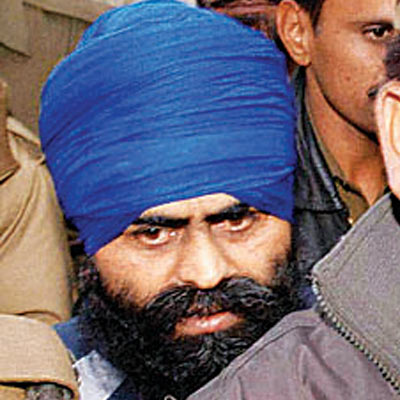
    AMRITSAR (TIP): Devinder Pal Singh Bhullar, a convict in the 1993 Delhi bomb blast case, was admitted, June 12, to the psychiatry ward of Guru Nanak Dev Hospital (GNDH) here after he was shifted to Amritsar Central Jail from Tihar Jail in Delhi amid tight security.


    Tight security arrangements were in place outside his hospital room where he was lodged. Central Jail Superintendent RK Sharma said a three-member medical board would examine the medical history of the convict.


    The board concluded that his mental health does not allow him to be kept behind  bars and, therefore, he was referred to the GNDH.  Before Bhullar was admitted to the hospital, a medical team headed by Dr PD Garg, head of psychiatry department, examined him.


    They went through his previous medical record and the treatment he was getting during his imprisonment in Tihar Jail. Dr Garg said he was suffering from acute schizophrenia and also having  suicidal tendencies besides hypertension. He said a medical board would be constituted to examine mental health of the patient on a daily basis.


    “We will keep him here for at least two weeks. His stay would be extended depending upon his mental condition,” he said.


    Bhullar has been allotted a separate air conditioned room in the psychiatry ward of the hospital, which is located on the first floor of Swami Vivekanand De-addiction and Treatment Centre. A television set has been installed in his room which has a single bed and attached washroom facility.


    The centre had turned into a fortress before his arrival. A large number of policemen were deputed outside the centre and the passage inside. Nobody was allowed inside the premises where a large number of his supporters and members of radical Sikh organizations flocked to meet him.


    Earlier, he arrived at the jail in an ambulance amid tight security and escorted by the vehicles of Punjab police and Delhi police.


    Bhullar was in Tihar Jail for the past two decades following his conviction in the 1993 Delhi bomb blast case. This death sentence, scheduled on August 25, 2001, was commuted to life imprisonment by the apex court. His wife Navneet Kaur had demanded his shifting to Amritsar in view of his poor health. The Delhi government led by Aam Aadmi Party had cleared the request for Bhullar’s transfer.

  • Sikh Group Sues Facebook for Banning Website in India

    Sikh Group Sues Facebook for Banning Website in India

    NEW YORK (TIP): A U.S.-based Sikh advocacy group has filed suit against Facebook, accusing the social media giant of blocking access to its Facebook page in India and raising concerns over the company’s censorship policies.

    Sikhs for Justice (SFJ), a non-profit organization with offices in New York City that advocates for issues important to members of the Sikh religious tradition, filed suit in California federal court this week requesting that a judge force Facebook to stop blocking its website in India and release all its communications with national Indian officials. The complaint alleges that the company illegally restricted access to SFJ’s page, presumably at the request of the Indian government, who disagrees with the group’s controversial activism. Among other things, the website criticized Indian Prime Minister Narendra Modi and campaigned against “forced conversions of Christians and Muslims to Hinduism,” an unsettling practice that has been reported to occur throughout India at the hands of Hindu nationalists.

    “In or around the first week of May 1, 2015, the plaintiff learnt the contents of the Plaintiff’s Facebook Page … were blocked completely in India without notice, reason, explanation, or proper and lawful cause,” the complaint, which was provided to Think Progress, read. The group’s lawyer reportedly sent Facebook a cease and desist letter asking for access to the be restored, but only received an automated response.

    “Blocking of SFJ’s page for exposing India with regard to the plight of religious minorities and advocating Sikh referendum in Punjab, Facebook Inc. violates section 2000a of 42 U.S. Code which prohibits discrimination on the grounds of religion, race or national origin,” the complaint argued.

    The lawsuit, which also sought compensatory and punitive damages, is unusual in that it challenges Facebook here in the United States, where free speech laws are well protected. But the digital juggernaut has long endured harsh criticism for helping foreign governments silence free expression. Free speech advocates have blasted Facebook for banning the pages of political rock bands in Pakistan at the urging of government censors, and opposition leaders in Russia lashed out at the company after it removed a website dedicated to organizing a protest against President Vladimir V. Putin in December of last year.

    Facebook has seen a rapid increase in requests to limit content all over the world, but India appears to be the worst offender: the company’s own Global Government Requests Report listed it as the top country asking for webpage takedowns from July to December 2014, with Facebook ultimately restricting 5,832 “pieces of content” on behalf of the Indian government. Although the report did not detail the reasoning for each request, Facebook hinted that many of the inquiries were related to religious issues.

    “We restricted access in India to content reported primarily by law enforcement agencies and the India Computer Emergency Response Team within the Ministry of Communications and Information Technology including anti-religious content and hate speech that could cause unrest and disharmony,” Facebook’s report reads.

    Indeed, while India’s Supreme Court recently struck down a law that allowed the government to jail citizens for posting “controversial” comments on social media, faith remains an especially inflammatory subject in the subcontinent. Hindu, Muslim, Sikh, and Christian groups have long clashed with each other and local authorities in various parts of the country, but the arrival of new political leadership may be escalating tensions: Prime Minister Modi, a hardline Hindu nationalist elected last year, has been accused by various groups — including SFJ — of doing little to stop sectarian riots that led to the deaths of more than a thousand Muslims in 2002.

    “Since the election of Narendra Modi as Prime Minister of India in May 2014, religious minorities especially Christians, Muslims and Sikhs are under increased attacks from the Hindu supremacist groups closely aligned with the ruling party of India,” SFJ’s complaint read.

  • Pakistan rolls out Rs 45 billion bus service for Islamabad

    ISLAMABAD (TIP): Pakistan Prime Minister Nawaz Sharif on June 5 launched a (Pakistani) Rs 45 billion
    ($441,804,600) bus service network here with a commitment to revolutionize the transport and infrastructure system of the country.

    Launched in March last year, the service was supposed to be completed by the end of the year but suffered delays.

    Inaugurating the service, Sharif said that Pakistan was changing and those traveling in the modern buses will feel as if they were in another country.

    “The project is a gift to the people of the Rawalpindi and Islamabad. We will also launch similar projects in other major cities,” he said.

    The 23km dedicated lane links the twin cities of Islamabad and Rawalpindi with help of 68 airconditioned buses that would help about 135,000 commuters daily.

    The total length of the Rawalpindi-Islamabad Metro Bus Service corridor is approximately 23km, including a 8.6km elevated section, 10km at grade and a 4km trench section.

    Its 24 stations are decorated with glistening tiles, escalators, elevators and modern glass and steel structures with roofs. It is said to provide quality service at minimum cost of Rs 20 per person.

    The project was marred by allegations of inflated cost and delays which irked travellers and provided fodder to opposition parties.

    The brain behind the project is said to be Punjab chief minister and the premier’s brother, Shahbaz Sharif, who has a penchant for mega projects.

    He told media before the launch that the “bus service was a boon for people with low-income”.

    The twin-city metro bus service is the second project after the first was opened by Shahbaz in Lahore in 2013, which has also been popular with commuters.

  • Missing Indian-Origin Hotelier from UK Murdered in Punjab

    Missing Indian-Origin Hotelier from UK Murdered in Punjab

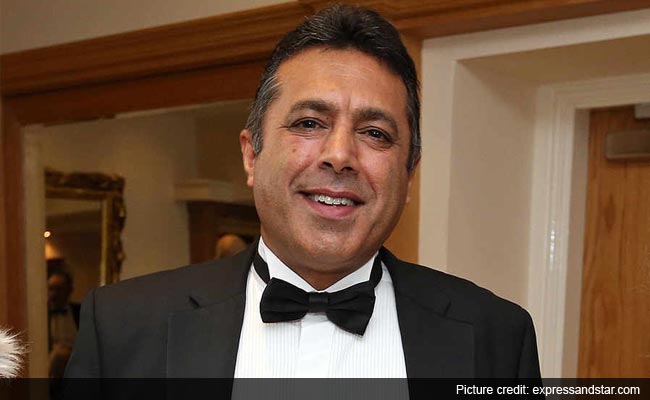
    CHANDIGARH:  Punjab Police on Saturday clarified that British hotelier of Indian-origin Ranjit Singh Power has been murdered, but his body was yet to be recovered, rejecting initial reports that a body found in a Punjab forest was of the NRI.

    Deputy Commissioner of Police Rajinder Singh told reporters that the victim’s friend and business partner, Baldev Singh Deol, and his partner’s driver strangled Mr Power at Anandpur Sahib in Ropar district, some 80 km from Chandigarh.

    Rajinder Singh, who is based in Jalandhar town, said the crime was committed on May 8 when Mr Power landed in India and was last seen in Amritsar.

    The body of Mr Power, who was on a business trip to India, was later thrown in the Bhakra canal in Ropar.

    After allegedly committing the crime, Mr Doel returned to Britain on May 15, said the police officer.

    “We are yet to recover the body,” he said.

    On being asked about the recovery of a body from a forest near Anandpur Sahib, he said: “We have also got the information. I cross-checked and it was a different body.”

    Based on the interrogation of driver Sukhdev Singh, who is also Mr Deol’s nephew, police said they have unearthed incriminating evidence relating to the crime.

    “We will seek police remand of Sukhdev Singh and initiate extradition of Deol from Britain,” he said.

    He said the car used in the crime has been recovered.

    “The victim’s two briefcases and two handbags are yet to be recovered. As per the interrogation, they are lying in Sukhdev Singh’s flat in Jalandhar.”

    Both Sukhdev Singh and Mr Deol were booked under section 302 (punishment for murder) and section 365 (kidnapping or abducting) of the Indian Penal Code.

    A property dispute is believed to be the cause of the crime.

    Earlier, a kidnapping case had been registered by the Jalandhar police against Mr Deol on the complaint of the Wolverhampton hotelier’s brother Amrik Singh, who resides in Jalandhar.

    Mr Power, 54, who owns a four-star Hotel in Wolverhampton, had come to India for a business deal, claimed his family, who had announced a reward of 25,000 pounds for providing information about his whereabouts.

    State Congress leader Sukhpal Singh Khaira had sought the intervention of Chief Minister Parkash Singh Badal in the case.

    “The NRI community is deeply concerned over Power’s abduction,” he said.

  • Why Is Pakistan Such a Mess? Blame India

    Why Is Pakistan Such a Mess? Blame India

    [quote_box_center]

    After a year in office, Modi’s gestures of conciliation toward Islamabad have gone nowhere. That’s because India’s founding fathers set Pakistan up to fail.

    “With rabid 24-hour satellite channels seizing upon every cross-border attack or perceived diplomatic affront, jingoism is on the rise. Indian strategists talk loosely of striking across the border in the event of another Mumbai-style terrorist attack; Pakistani officials speak with disturbing ease of responding with tactical nuclear weapons. From their safe havens in Pakistan meanwhile, the Taliban have launched one of the bloodiest spring offensives in years in Afghanistan, even as U.S. forces prepare to draw down there. If he truly hopes to break the deadlock on the subcontinent, Modi needs to do something even Gandhi could not: give Pakistan, a nation born out of paranoia about Hindu dominance, less to fear”, says the author.


    [/quote_box_center]

    Of all the hopes raised by Narendra Modi’s election as prime minister of India one year ago, perhaps the grandest was ending the toxic, decades-long rivalry with Pakistan. Inviting his counterpart Nawaz Sharif to the swearing-in — remarkably, a first since their nations were born out of the British Raj in 1947 — was a bold and welcome gesture. Yet within months of Modi’s inauguration, Indian and Pakistani forces exchanged some of the most intense shelling in years along their de facto border in Kashmir. Incipient peace talks foundered. And in April, a Pakistani court freed on bail Zaki-ur-Rehman Lakhvi, operational commander of the militant group Lashkar-e-Taiba (LT) and the alleged mastermind of the 2008 Mumbai terrorist attacks, infuriating many in India.

    Most Indians believe Pakistan’s generals have little interest in peace, and they’re not entirely wrong. For decades now, hyping the threat from across the border has won the army disproportionate resources and influence in Pakistan. It’s also fueled the military’s most dangerous and destabilizing policies — from its covert support of the Taliban and anti-India militants such as LT, to the rapid buildup of its nuclear arsenal. One can understand why Modi might see no point in engaging until presented with a less intractable interlocutor across the border.

    But however exaggerated Pakistan’s fears may be now, Indian leaders bear great responsibility for creating them in the first place. Their resistance to the very idea of Pakistan made the 1947 partition of the subcontinent far bitterer than it needed to be. Within hours of independence, huge sectarian massacres had broken out on both sides of the border; anywhere from 200,000 to a million people would ultimately lose their lives in the slaughter. Pakistan reeled under a tidal wave of refugees, its economy and its government paralyzed and half-formed. Out of that crucible emerged a not-unreasonable conviction that larger, more powerful India hoped to strangle the infant Pakistan in its cradle — an anxiety that Pakistan, as the perpetually weaker party, has never entirely been able to shake.

    Then as now, Indian leaders swore that they sought only brotherhood and amity between their two nations, and that Muslims in both should live free of fear. They responded to charges of warmongering by invoking their fealty to Mohandas K. Gandhi — the “saint of truth and nonviolence,” in the words of India’s first prime minister Jawaharlal Nehru. In fact, Nehru, and Gandhi himself — the sainted “Mahatma,” or “great soul” — helped breed the fears that still haunt Pakistan today.

    There’s little question, for instance, that Gandhi’s leadership of the Indian nationalist movement in the 1930s and 1940s contributed to Muslim alienation and the desire for an independent homeland. He introduced religion into a freedom movement that had until then been the province of secular lawyers and intellectuals, couching his appeals to India’s masses in largely Hindu terms. (“His Hindu nationalism spoils everything,” Russian writer Leo Tolstoy wrote of Gandhi’s early years as a rabble-rouser.) Even as Gandhi’s Indian National Congress party claimed to speak for all citizens, its membership remained more than 90 percent Hindu.

    Muslims, who formed a little under a quarter of the 400 million citizens of pre-independence India, could judge from Congress’s electoral victories in the 1930s what life would look like if the party took over from the British: Hindus would control Parliament and the bureaucracy, the courts and the schools; they’d favor their co-religionists with jobs, contracts, and political favors. The louder Gandhi and Nehru derided the idea of creating a separate state for Muslims, the more necessary one seemed.

    Ironically, Gandhi may have done the most damage at what is normally considered his moment of triumph — the waning months of British rule. When the first pre-Partition riots between Hindus and Muslims broke out in Calcutta in August 1946, exactly one year before independence, he endorsed the idea that thugs loyal to Mohammad Ali Jinnah, leader of the Muslim League, the country’s dominant Muslim party, had deliberately provoked the killings. The truth is hardly so clear-cut: It appears more likely that both sides geared up for violence during scheduled pro-Pakistan demonstrations, and initial clashes quickly spiraled out of control.

    Two months later, after lurid reports emerged of a massacre of Hindus in the remote district of Noakhali in far eastern Bengal, Gandhi fueled Hindu hysteria rather than tamping it down. Nearing 80 by then, his political ideas outdated and his instincts dulled by years of adulation, he remained the most influential figure in the country. His evening prayer addresses were quoted and heeded widely. While some Congress figures presented over-hyped casualty counts for the massacre — party chief J.B. Kripalani estimated a death toll in the millions, though the final tally ended up less than 200 — Gandhi focused on wildly exaggerated claims that marauders had raped tens of thousands of Hindu women. Controversially, he advised the latter to “suffocate themselves or … bite their tongues to end their lives” rather than allow themselves to be raped.

    Within weeks, local Congress politicians in the nearby state of Bihar were leading ugly rallies calling for Hindus to avenge the women of Noakhali. According to New York Times reporter George Jones, in their foaming outrage “it became rather difficult to differentiate” between the vicious sectarianism of Congress and radical Hindu groups like the Rashtriya Swayamsevak Sangh (RSS), whose cadres had begun drilling with weapons to prevent the Partition of India.

    Huge mobs formed in Bihar — where Hindus outnumbered Muslims 7 to 1 — and spread across the monsoon-soaked countryside.

    Huge mobs formed in Bihar — where Hindus outnumbered Muslims 7 to 1 — and spread across the monsoon-soaked countryside. In a fortnight of killing, they slaughtered more than 7,000 Muslims. The pogroms virtually eliminated any hope of compromise between Congress and the League.

    Equally troubling was the moral cover the Mahatma granted his longtime followers Nehru and “Sardar” Vallabhbhai Patel — a Gujarati strongman much admired by Modi, who also hails from Gujarat and who served as the state’s chief minister for over a decade. Echoing Gandhi’s injunction against pushing anyone into Pakistan against their wishes, Nehru and Patel insisted that the huge provinces of Punjab and Bengal be split into Muslim and non-Muslim halves, with the latter areas remaining with India.

    Jinnah rightly argued that such a division would cause chaos. Hindus, Muslims, and Sikhs were inextricably mixed in the Punjab, with the latter in particular spread across both sides of the proposed border. Sikh leaders vowed not to allow their community to be split in half. They helped set off the chain of Partition riots in August 1947 by targeting and trying to drive out Muslims from India’s half of the province, in part to make room for their Sikh brethren relocating from the other side.

    Jinnah also correctly predicted that a too-weak Pakistan, stripped of the great port and industrial center of Calcutta, would be deeply insecure. Fixated on building up its own military capabilities and undermining India’s, it would be a source of endless instability in the region. Yet Nehru and Patel wanted it to be even weaker. They contested every last phone and fighter jet in the division of colonial assets and gloated that Jinnah’s rump state would soon beg to reunite with India.

    Worse, Congress leaders threatened to derail the handover if they weren’t given power almost immediately. The pressure explains why Britain’s last viceroy, Lord Louis Mountbatten, rushed forward the date of the British withdrawal by 10 months, leaving Pakistan little more than 10 weeks to get established. (Excoriated ever since, the British seemed vaguely to believe they might keep governing Pakistan until the state had gotten on its feet.) Nehru and Patel cared little for Jinnah’s difficulties. “No one asked Pakistan to secede,” Patel growled when pressed by Mountbatten to show more flexibility.

    Yes, once the Partition riots broke out, Gandhi and Nehru strove valiantly to rein in the killings, physically risking their own lives to chastise angry mobs of Hindus and Sikhs. Yet to many Pakistanis, these individual efforts counted for little. Gandhi and Nehru couldn’t stop underlings from sabotaging consignments of weapons and military stores being transferred to Pakistan. They didn’t prevent Patel from shipping out trainloads of Muslims from Delhi and elsewhere, which raised fears that India meant to overwhelm its neighbor with refugees. They didn’t silence Kripalani and other Congress leaders, who warned Hindus living in Pakistan to emigrate and thus drained Jinnah’s new nation of many of its clerks, bankers, doctors and traders.

    Nor did the Indian leaders show much compunction about using force when it suited them. After Pakistan accepted the accession of Junagadh, a tiny kingdom on the Arabian Sea with a Muslim ruler but almost entirely Hindu population, Congress tried to spark a revolt within the territory — led by Samaldas Gandhi, a nephew of the Mahatma’s; eventually, Indian tanks decided the issue. When Pakistan attempted in October 1947 to launch a parallel uprising in Kashmir — a much bigger, richer state with a Hindu king and Muslim-majority population — Indian troops again swooped in to seize control.

    The pacifist Gandhi, who had earlier tried to persuade Kashmir’s maharajah to accede to India, heartily approved of the lightning intervention: “Any encroachment on our land should … be defended by violence, if not by nonviolence,” he told Patel. After Gandhi’s assassination in January 1948, Nehru continued to cite the Mahatma’s blessings to reject any suggestion of backing down in Kashmir.

    Gandhi’s motivations may have been pure. Yet he and his political heirs never fully appreciated how the massive power imbalance between India and Pakistan lent a darker hue to their actions. To this day, Indian leaders appear more concerned with staking out the moral high ground on Kashmir and responding to every provocation along the border than with addressing Pakistan’s quite-valid strategic insecurities.

    This serves no one except radicals on both sides. With rabid 24-hour satellite channels seizing upon every cross-border attack or perceived diplomatic affront, jingoism is on the rise. Indian strategists talk loosely of striking across the border in the event of another Mumbai-style terrorist attack; Pakistani officials speak with disturbing ease of responding with tactical nuclear weapons. From their safe havens in Pakistan meanwhile, the Taliban have launched one of the bloodiest spring offensives in years in Afghanistan, even as U.S. forces prepare to draw down there. If he truly hopes to break the deadlock on the subcontinent, Modi needs to do something even Gandhi could not: give Pakistan, a nation born out of paranoia about Hindu dominance, less to fear.

    (The author can be reached at syn2002@qatar-med.cornell.edu)