Tag: Punjab

  • Sikh: Legacy of the Punjab – Exhibit opening at the Institute of Texan Cultures – 28th annual Asian Festival

    Sikh: Legacy of the Punjab – Exhibit opening at the Institute of Texan Cultures – 28th annual Asian Festival

    [vc_row][vc_column width=”2/3″][vc_column_text]

    The exhibit, “Sikh: Legacy of the Punjab” was a big success in Washington, D.C., and has since made stops in Santa Barbara and Fresno, California.

    On Saturday it makes its first Texas stop, opening at the Institute of Texan Cultures in conjunction with the 28th annual Asian Festival.

    The exhibit runs until Jan. 3, 2016.

    In this, the Year of the Ram, the 28th annual Asian Festival on the grounds of the Institute of Texan Cultures celebrates all things Asian with food, music, performances and crafts. There’ll be traditional Asian dance and music on three stages as well as demonstrations of Asian cooking, henna painting and palm reading.

    [/vc_column_text][/vc_column][vc_column width=”1/3″][vc_column_text]

    MORE INFORMATION

    Asian Festival 10 a.m.-5 p.m. Saturday Institute of Texan Cultures 801 E. César E. Chávez Boulevard $10 ($8 online), $5 kids ages 6-12 http://www.texancultures.com/   [/vc_column_text][/vc_column][/vc_row][vc_row][vc_column width=”1/1″][vc_column_text]

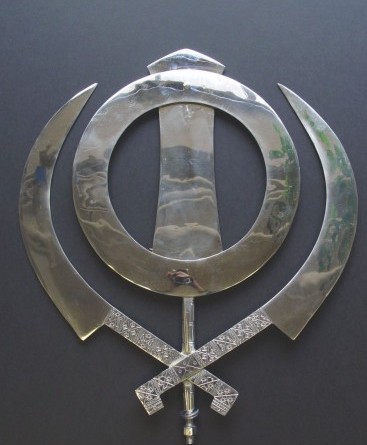
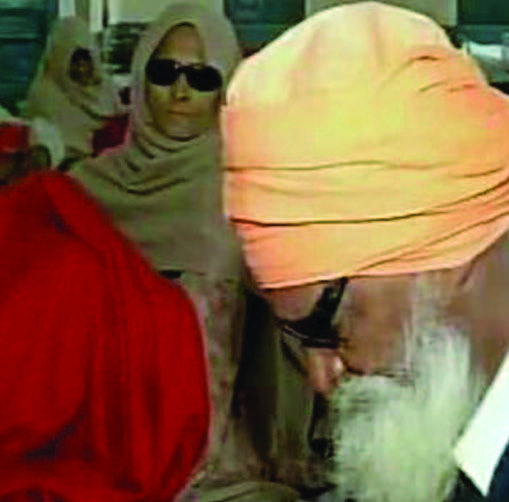
    With their distinctive dastaar, or turban, and the unshorn facial hair worn by men, Sikhs are often mistaken for Muslims, or even Hindus.

    [/vc_column_text][vc_column_text]

    Sikhism, however, is a distinct religion, one that arose more than 500 years ago in Punjab, a region of South Asia in what is now northwest India. Today it has more than 22 million followers, making it the world’s fifth-largest religion.

    [/vc_column_text][/vc_column][/vc_row][vc_row][vc_column width=”1/2″][vc_single_image image=”31049″ border_color=”grey” img_link_target=”_self” img_size=”full”][/vc_column][vc_column width=”1/2″][vc_single_image image=”31050″ border_color=”grey” img_link_target=”_self” img_size=”full”][/vc_column][/vc_row]

  • The AAP’s Second Coming

    The AAP’s Second Coming

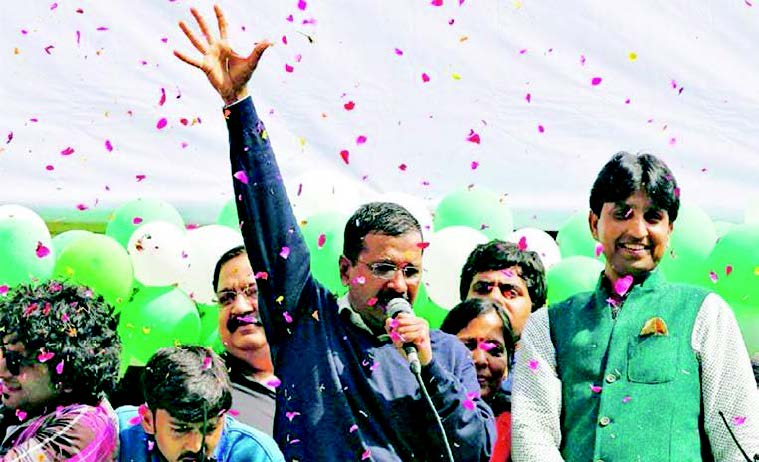
    In the winter of 2013, at a dinner party hosted by a prominent Janata Dal (United) leader in the national capital, shortly after the Delhi Assembly elections, I was witness to an extraordinary conversation. Seated at a table on the lawns of a Lutyens’ bungalow, senior leaders from the Congress, the Nationalist Congress Party (NCP), the Bharatiya Janata Party, the Communist Party of India (Marxist), the JD (U) and the Samajwadi Party discussed the dramatic electoral debut of Arvind Kejriwal’s Aam Aadmi Party (AAP) that stood a close second to the BJP in the State polls. The surprise?Despite their differing world views, they unanimously described Mr. Kejriwal’s politics as the most serious threat to the future of their own parties.

    But 13 months later – a period that saw Mr. Kejriwal become Chief Minister, then quit and fade away, and Narendra Modi’s BJP achieve spectacular success in the general election – many of those opposition parties including the JD (U), the Trinamool Congress and those from the Left declared solidarity with the AAP ahead of this year’s Delhi Assembly polls. When the results arrived, the significance of the barely two-year-old party’s victory sank in, and congratulations started pouring in from opposition parties including the Shiv Sena and the People’s Democratic Party, BJP allies, old and new. The message?Thank you for stopping the BJP.

    So what does the AAP’s second coming in Delhi – a microcosm of India, with its privileged, powerful urban centre widening out into a hinterland of migrants – mean for the traditional opposition parties? Is it an opportunity or a challenge, as they read it in 2013? 


    Ending era of ‘anti-Congressism’

    Last year, the BJP became the first party other than the Congress to win a majority at the Centre, ending the era of “anti-Congressism.” If the BJP was to be defeated, the message of the electorate was that as many non-BJP parties as could unite would have to come onto one platform, flipping the concept of “anti-Congressism” formulated by the socialist leader Ram Manohar Lohia over half a century ago.

    It is, therefore, not surprising that those at the forefront of the emerging “anti-BJPism” in the country are Lohia’s disciples: Janata Parivar members who have, on several occasions, since the 1960s, worked closely with the BJP or the Jan Sangh against the Congress.

    Today, the Janata Parivar’s constituents are struggling to merge their identities to form one party to protect their turf in Bihar, Uttar Pradesh, Karnataka and Haryana against the imminent BJP onslaught, their efforts slowed down by the crisis within the JD (U) in Bihar where they will face their first challenge in State elections later this year.


    Challenging BJP in Parliament

    Simultaneously, the Janata Parivar has also been playing a key role in challenging the BJP on the streets and in Parliament. The Janata Parivar-sponsored agitations questioning the government’s failure to act on the BJP’s electoral promises of bringing back black money, enhancing prices of farm produce, etc. may have gone largely unnoticed. But in Parliament, along with other opposition parties, they have caused serious discomfort to the ruling dispensation.

    In the winter session, the opposition deployed its superior numbers to block the Modi government’s reforms agenda. Divided on economic issues, the opposition joined hands to demand a clarification on religious conversions and communal statements made by BJP MPs, before cooperating on legislative business. The government walked into the opposition trap, failing to clear the Insurance Bill and the Coal Mines Bill. Eventually, it issued a slew of ordinances, providing fresh fodder for the opposition, which accused the BJP government of bypassing Parliament.

    This show of opposition solidarity (that saw nine parties including the Dravida Munnetra Kazhagam, the Bahujan Samaj Party and the NCP working jointly) will be repeated in this month’s budget session of Parliament, with the AAP’s clean sweep in the capital only strengthening that unity. Indeed, the government will find it hard now to push the land acquisition ordinance, for it was on this issue that the AAP campaigned in Outer Delhi where it had failed to get even a single seat in 2013, thanks largely to its inability to crack the caste factor among the migrant population. In 2015, the AAP won 12 of the 14 seats here.

    But replicating opposition unity outside Parliament will be far more difficult. The compulsions of State politics will ensure that regional parties such as West Bengal’s Trinamool and Odisha’s Biju Janata Dal will continue to work alone in their States, especially when it comes to electoral politics. The All India Anna Dravida Munnetra Kazhagam and the DMK will remain the dominant parties in Tamil Nadu, joining hands with parties with smaller presence at election time. Of course, any of these parties might at some stage join a broader national opposition front, provided potential partners don’t encroach upon their own areas of influence.

    For the steadily declining Left parties, which are in power in Tripura and have a notable presence in West Bengal and in Kerala, forging issue-based unity with other parties in Parliament is even less likely to translate into electoral solidarity. At best, it will participate in street agitations and its trade unions may make common cause with similar organisations on specific issues. The Left parties – the CPI(M), the CPI, the Forward Bloc and the Revolutionary Socialist Party – are currently engaged in trying “to broaden the Left” by including the Communist Party of India (Marxist-Leninist) and the Socialist Unity Centre of India. But with its focus still on creating an alternative policy framework, one that still remains at odds with most other political parties, it is unlikely that it would have any meaningful electoral alliances.

    That leaves us with the country’s largest opposition party, the Congress. If party president Sonia Gandhi had forged electoral alliances ahead of the 2004 general election to lead the United Progressive Alliance to victory, one that sustained for a decade, her successor is not cut from the same cloth. Rahul Gandhi, poised to become party president, has not yet demonstrated the leadership qualities necessary to revive the Congress that touched a historic electoral low last year. Worse, say despairing members of the Congress Working Committee, he is unwilling to work towards building electoral alliances to regain political ground.

    Most opposition parties were looking to the Congress for revival of the opposition. But now with the party scoring a duck in a State that it had earlier ruled for 15 uninterrupted years, that hope will diminish further.

    Where does the AAP now fit into the opposition? A quick check with some opposition leaders suggests that while they would like Mr. Kejriwal to endorse their dying brands, they are wary of entering into an alliance with him. They know that his David-like slaying of the Modi Goliath means he could only join such a platform in one capacity – as the leader.

    The AAP’s historic win may have shattered the air of invincibility that Mr. Modi had acquired, but for traditional opposition parties to get another life outside Parliament, they must build a younger leadership, re-invent themselves or simply perish. The Delhi election reflected a change in the national mood and if they don’t adjust to it, their irrelevance will further grow. Arithmetic can only help up to a point.

    The AAP, on its part, is in no hurry. It first wishes to make Delhi a model State, then build its unit in Punjab where it has four MPs, and then gradually grow in the rest of the country. Any success – or failure – in Delhi, the AAP knows, will get it nationwide attention. For the traditional parties, the threat they spotted in 2013 still looms large.


  • Sikhs For Justice  holds protest demonstration at Thai Consulate

    Sikhs For Justice holds protest demonstration at Thai Consulate

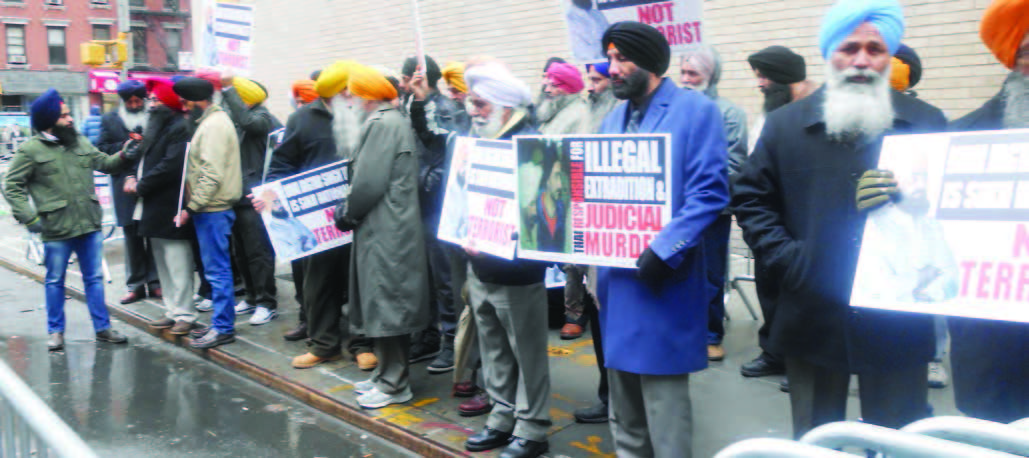
    NEW YORK CITY (TIP): A human rights advocacy group, Sikhs For Justice, organized a protest demonstration in front of Thailand Consulate in New York City, February 9. They were protesting the extradition to India of Jagtar Singh Tara, who the government of India wanted in connection with the murder of Beant Singh, a chief minister of the State of Punjab.

    About 40 demonstrators, mainly from New York and New Jersey participated.

    The protest was organized to demand from Thai government that it ask government of India to restore the custody of Jagtar Singh Tara to Thai government.

    The memorandum that SFJ submitted to Thai Consulate said, “Extradition of Jagtar Singh Tara, a Sikh nationalist, violated Thai Extradition act and UN Convention against torture. It further requested the PM of Thailand to reverse January 6 extradition order.

    Protesters who shouted slogans of Khalistan Zindabad, carried placards which read  Khalistan Zindabad and Tara’s Extradition is illegal.

    The demonstration continued for two hours during which time speeches were made by SFJ President Avtar Singh Pannu, legal advisor to SFJ, Attorney Gurpatwant Singh Pannun  and a few others.

    A representative of demonstrators was allowed to enter the Thai Consulate to submit a memorandum addressed to the Prime Minister of Thailand.

  • A BENEVOLENT LAW ABUSED – Racketeers use SIJS to make big money

    A BENEVOLENT LAW ABUSED – Racketeers use SIJS to make big money

    [vc_row][vc_column width=”2/3″][vc_column_text]

    It has been said the crooks will always find creeks to enter any system in the world. And when the system is welcoming and benevolent, the infiltration is much easier. Special Immigrant Juvenile Status law (Please read the article below by eminent attorney Anand Ahuja on page 6) was enacted with a humanitarian objective to provide protection to those minors who are victims of domestic abuse. Over the years, the law stands abused. It has become a booming business in many countries to push young boys and girls, mainly boys (77%), in to the United States territory and make them take advantage of SIJS.

    The Indian Panorama Investigative team came across quite a few people in Queens and Long Island in New York who are part of the thriving racket to smuggle in young boys and girls from India. The reports received by us indicate that it is a big business in many South Asian countries, in particular, India, Sri Lanka and Pakistan as also in many other countries across the world. We were taken for a shock to get to know how elaborate the racket’s dragnet is, which involves agents in countries from which the young people are sent, agents at the Mexican side of the US border who help them cross over in to the United States, agents in the US who manage a guardian for the boy/girl and so on so forth. All this involves huge money. In India, the price to send a young boy or a girl in to USA is anywhere between $80,000 to $100,000.

    Another shocking revelation was the involvement of church in this racket. During our talk with some who are involved in the racket told us, on condition of anonymity, that at least, one    priest from a Christian Church in New York and a Sikh priest from a Sikh Gurudwara in Arizona are actively involved in running the racket. The authorities do not suspect the priests of any wrong doing and the latter take advantage of it. Our source told us that the Christian Priest who is based in New York and comes from Punjab, India, visits his home state in India to “recruit” the youth who want to come to USA. It was pointed out to us that the pries has been making regular trips for the job. He arranges the incoming youth’s stay and finds him a guardian. Interestingly, all the young people who come here and come to have guardians, work and stay elsewhere, not necessarily with their guardians. The person agreeing to be a guardian to a youth is offered a payment of between $5000.00 to$10,000. The attorney’s fees is anywhere between $3000.00 and $5000.00. We were also told about two attorneys whose services the priest utilizes regularly. Also, there are some attorneys who specialize in such cases. The gentleman who offered to be guardian to a young man confided in us that the young man had disappeared and that he had to report the disappearance to the court.

    The malaise is much deeper and goes beyond simple monetary racket. It has serious implications for America’s security. With ISIS and Al Qaeda stepping up recruitment of young people from all over the world, USA is threatened as never before because of such soft laws  which allow easy infiltration in to the country. Our source, on condition of anonymity, told us that he had come to know that the enemies of USA are all set to push in young people in to USA to carry out their agenda in America, which is to harm the country in every way.

    A thorough investigation by the US administration  agencies concerned in to the racket and  the possible infiltration of enemies of USA in to the country, taking advantage of the benevolent soft humanitarian laws needs to be  done sooner than later. And the earlier, the better.

    [/vc_column_text][/vc_column][vc_column width=”1/3″][vc_column_text]

    (National Juvenile Justice Network)  (The Pew Charitable Trusts: May 9, 2013)

    Hundreds of thousands of youth (under age 18) attempt to enter the U.S. every year. Some come with their families, others alone, either of their own will seeking jobs, protection and family reunification or they are smuggled into the country for sweatshop labor or sexual exploitation. The exact number of children who attempt to enter the country is unknown. In 2005 granted legal permanent resident (LPR) status to 175,000 children under 14 years of age and to 196,000 youth ages 15 to 24. Twenty thousand youth ages 17 and under were accepted as refugees and 2,000 were granted asylum in the same year. Customs and Border Protection (CPB) apprehended almost 122,000 juveniles in the U.S. in 2004. Of this total, 84.6 percent were released back to Mexico, or in rare cases to Canada.

    [/vc_column_text][vc_column_text]

    (The Migrationist: August 8, 2013)

    Each year, thousands of unaccompanied alien children
    (UACs) risk harrowing journeys and travel alone to seek refuge in the United States. These children come from all over the world for many reasons, including to escape persecution in their home countries, to reunify with family members and to look for a better life. In recent years, the U.S. government has had roughly 6,000-8,000 of these children in its care and custody each year. While these children may be as young as infants, most (approximately 70 percent) have been between the ages of 15 and 17. -Women’s Refugee Commission

    [/vc_column_text][/vc_column][/vc_row]

  • PADMA AWARDS 2015 : REPORTS

    PADMA AWARDS 2015 : REPORTS

    PADMA AWARDS 2015 TO RAMDEV, AMITABH BACHCHAN, RAJINIKANTH, ADVANI, OTHERS: REPORTS NEW DELHI (TIP): Yoga exponent Baba Ramdev, Bharatiya Janata Party patriarch LK Advani, spiritual leader Shri Shri Ravi Shankar and veteran actors Amitabh Bachchan and Rajinikanth are among this year’s recipients of the prestigious Padma awards that recognises lifelong service to the country, according to a report.


    The awards this year, to be conferred on Republic Day, has several names seen as sympathetic to the ruling party, including lyricist and adman Prasoon Joshi, who worked on the BJP’s advertisement campaign for the Lok Sabha elections, and journalists Swapan Dasgupta and Rajat Sharma. Economist Bibek Debroy, a member of the newly instituted NITI Aayog, is also on the list.


    Padma awards, given since 1954 on Republic Day in honour of contributions in wide-ranging pursuits, have often been subject of controversy due to the arbitrary nature of the selection process and inevitable charges of favouritism by the government and the ruling party. They are given in three categories–Padma Shri, Padma Bhushan and Padma Vibhushan, in ascending order of distinction. It’s unclear which names have been picked for which awards.


    Punjab Chief Minister Prakash Singh Badal and Advani are the only two politicians in the list of 148 recipients, the report stated.


    Yoga exponent Ramdev, whose dedicated yoga television channel and camps are popular, is nonetheless a controversial figure, having said in the past that he can
    “cure” homosexuality, among other things. His company Patanjali Ayurveda makes consumer products such as soaps, oil and breakfast cereals and in five years had sales worth Rs. 450 crore, with a turnover expected to touch Rs. 2,000 crore.


    Actor Dilip Kumar, director Sanjay Leela Bhansali and scriptwriter Salim Khan, badminton player P V Sindhu, wrestler Sushil Kumar and Arunima Sinha, the first woman amputee mountaineer to climb Mount Everest, are among those honoured.


    Badminton player Saina Nehwal, who had kicked up a storm about not being nominated and was subsequently included in the list of contenders, has not been awarded, if reports are accurate. The official list is expected to be out today or tomorrow.


    T V Mohandas Pai, the Chairman of Manipal Global Education and a former director of Infosys, shares the honour with former bureaucrat N Gopalaswami (ex chief election commissioner), K S Bajpai and P V Rajaraman.


    Eminent vocalists Sudha Raghunathan, A Kanyakumari, Girija Devi and Malini Awasthi, actor Smriti Biswas, music directors Anu Malik and Ravindra Jain and Assamese film director Jahnu Barua are said to be on the list. This year two scientists from ISRO–S Arunan of the Mars Mission and S K Shivkumar of Chandrayaan–will also be felicitated, the Express report said.


    Padma Awards not yet announced: Govt 


    The Ministry of Home Affairs on January 23 said that the government has not yet announced any names for the Padma Awards, 2015, and added that the names appearing in the media are speculative.


    “Government has not yet announced Padma Awards for 2015. These awards are announced on 25th of Jan every year, on the eve of the Republic Day,” it said.


    “The names appearing in the media are speculative and there is no official confirmation for the same,” it added.


    Media 3reports have been speculating that spiritual guru Baba Ramdev, actor Amitabh Bachchan and BJP veteran L K Advani may be conferred the Padma awards on Republic Day.

  • PBD 2015 ROUND-UP

    PBD 2015 ROUND-UP

    Chief Ministers beckon overseas Indians to cash in on Investment opportunities in States

    GANDHINAGAR (GUJARAT) (TIP), January 9, 2015. Chief Ministers of as many as 9 States made a strong pitch for investments by overseas Indians as they laid bare the opportunities and facilities for investors here today at the CMs session on the concluding day of the three-day Pravasi Bharatiya Divas. Presiding over the session, Mr. Rajnath Singh, Union Home Minister, said that the real Bharat was the villages of India and therefore it was important to develop villages to ensure a balanced and an inclusive growth.

    He added that every state in India has a success story to tell and have been able to make a mark in one sector or the other. The Central government, he said, believed in promoting cooperative federalism and therefore the States and the Centre have to work in tandem to make India an economic super power. NRIs, he said, will have to play an important role in fulfilling the Centre’s

    ‘Make in India’ vision.

    GUJARAT: ‘Smart State’ is the mantra of the State Government for which a five-point agenda has been adopted. These are smart schemes for welfare, smart economy, smart governance, smart energy and smart human resources. These schemes are expected to help the Indian diaspora to channelize the flow of investments into the State, set up industrial units and contribute to the social sector schemes to light up the lives of the common man. Kerala: Some of the path-breaking projects being undertaken by the State Government are: e Kochi Metro Rail project, Smart City Project, Vizhinjam port development, Light Metro Rail, Kannur Airport Project, Surface Transport Development, National Waterway and a Student Entrepreneurship Programme. These projects demonstrate that this is the right time to invest in the State and be part of the overall growth of the State. The State Government will offer full support to all who extend their help in further developing the State. Kerala has seen a rapid increase in its growth performance. The state has the highest literacy rate, best human development indicators and has many structural advantages such as a vast coastal line and high productivity due to historical reasons.

    PUNJAB: The immediate investment opportunities in the State are in the fields of IT, bio-sciences and healthcare and futuristic development of 147 cities and towns. The focus areas of the government are agro and food processing, education & skills, electronics manufacturing, textiles & garments and infrastructure development. The top five reasons for investing in Punjab are: easiest place to do business, robust infrastructure, abundant skills and enterprise,responsive, accountable & transparent governance and fiscal incentives. A lot of facilities have been initiated for the NRIs in the State of Punjab. A special court has been set for NRIs in the State to expedite the process of litigation, special police thanas have been put in place and a special commission has been set up to address property related issues of the NRIs.Jharkhand: The State Government offers ample opportunities to investors to partner in sectors such as industry and industrial infrastructure, electronics & IT/ITeS, road & road transport infrastructure, skill development, knowledge & education, healthcare, power generation & distribution, tourism, hospitality, leisure & entertainment and urban infrastructure. The key enablers for attracting investments are nearness to natural resources, skilled manpower due to existing industrial base, investor friendly policies and land bank. To leverage these enablers through a comprehensive and partnering module, the Government of Jharkhand has focused on industrial and economic development of the state through implementation of various infrastructure projects on PPP format.

    MADHYA PRADESH: The State has come a long way from being counted amongst the BIMARU states. It has state-of-the-art infrastructure including roads, power, railways etc. The state has been witnessing double digit growth and has the most investment friendly environment. The industrial policy of the state is investor friendly, the state is very peaceful and there are no man day losses and has single window clearances. The State houses India’s best national parks and world heritage sites.

    ANDHRA PRADESH: The state of Andhra Pradesh has a long coast line and is the gateway to India and south east Asia, has 30 urban centres, extensive road and rail network, natural gas and 24X7 power, young and skilled population and deposits. The state is looking at building five grids- water, gas, power, road and fibre. It has a very strong agriculture and marine and diary sector besides having a niche in high technology sectors like information technology. The state has formulated specific policies to give customised impetus for thrust sectors like industry, port, electronics, textile and agro processing. Also, a land bank has been created with 400 thousandhectares of land. The state is ideally poised for river linking and has the potential to become a drought proof state in the next 5 years.

    MAHARASHTRA: The state of Maharashtra is a land of investment opportunities. The State Government has started fast tracking approvals, simplifying processes and initiated the process of reducing timelines to facilitate investors, inflow of FDIs and make the state conducive for ease of doing business. The state has commenced work in full earnest to take ahead Prime Minister Narendra Modi’s call for ‘Make in India’. The State offers immense opportunities for infrastructure development as the government is planning to create a new urban city which would be bigger than the city of Mumbai. Also, the Government looks forward to providing affordable housing to middle and lower strata of society, and hence the State invited the Pravasis to take advantage of these investment opportunities.

    GOA: The State possesses talented human resource, natural reserves, captivating beauty which makes a great tourism destination. The Goa Government has now identified thrust areas such as creation of knowledge hub, focus on R&D, pharmaceuticals, biotechnology, aviation, aerospace, defence, IT, agro-based & food processing industries, to synergize its efforts with the ‘Make in India’ campaign of the Prime Minister. The aim is that the fruits of development percolate to the underprivileged of the society.

    HARYANA: The state of Haryana witnessed rapid growth in various sectors and is also an integral part of Delhi’s National Capital Region. Earlier, known as an agricultural state, Haryana has come a long way and now witnesses the presence of some of the well-known multinational companies. Haryana is focusing on skill development for both its urban and rural population toprovide them with employment opportunities, particularly, in MSMEs. Known for achieving milestones in sports, the Government desires to establish Haryana as a ‘Sports Hub’.

  • Sukhbir seeks release of 13 Sikh terror convicts serving life

    Sukhbir seeks release of 13 Sikh terror convicts serving life

    NEW DELHI (TIP): Punjab deputy chief minister Sukhbir Singh Badal on January 8 sought Union home minister Rajnath Singh’s intervention to facilitate the release of more than a dozen Sikh terror convicts serving life terms. However, home ministry sources said the Centre was unlikely to entertain Punjab government’s plea seeking amnesty for the terrorists, five of whom were convicted for the assassination of former Punjab chief minister Beant Singh.

    Sukhbir’s call for freeing the life-term convicts lodged in various prisons across the country comes a month after his father and Punjab chief minister Parkash Singh Badal wrote to five chief ministers and two Union Territory administrations seeking their premature release on “humanitarian grounds”. Sukhbir pressed for premature release of the Sikh terror convicts, underlining how some of them had served over 25 years in prison and were suffering from geriatric problems such as blindness, having crossed 90 years of age.

    Singh resisted giving any assurance in the matter, though Badal claimed after the meeting that he was told that the Centre would “legally examine” the Punjab government’s appeal.

    A home ministry official said that though legal opinion could be taken in select cases where prisoners were either too old or had completed 20 years in prison, this was not done for those convicted of serious offences.

    Among the 13 Sikh terror convicts whose release is being sought by the Punjab government are Lakhwinder Singh, Shamsher Singh and Gurmeet Singh, lodged in Burail jail, Chandigarh;

    Jagtar Singh Hawara, Paramjit Singh Bheora, Davinder Singh Pal Bhullar and Daya Singh Lahoria in Tihar jail; Waryam Singh in Bareilly jail; Gurmeet Singh Fauji serving life sentence in a Rajasthan jail; Gurdeep Singh Khaira in Gulbarga jail, Karnataka; Lal Singh Akalgarh lodged in Naba jail and Subeg Singh and Nand Singh serving in Chandigarh jail.

    Sukhbir Badal was on Thursday accompanied by SGPC president Avtar Singh Makkar and SAD leader Sukhdev Singh Dhindsa.

    The Punjab government’s pitch for the release of Sikh life-term terror convicts comes against the backdrop of former terrorist Gurbax Singh Khalsa’s hunger strike at Ambala since November 4. The SGPC is backing his demand for
    “permanent release” of seven Sikh terror convicts handed life sentence.

  • Fifty Shades of Saffron

    Fifty Shades of Saffron

    On December 11, 2014, when the U.N. General Assembly adopted June 21 as the International Day of Yoga, as recommended by Prime Minister Narendra Modi, India rejoiced. Never mind that the day before was the first Human Rights Day under his watch; this crept by unnoticed.

    At the SAARC Summit, Mr. Modi declaimed, “As we seek to build bridges to prosperity, we must not lose sight of our responsibility to the millions living without hope.” He was, as always, matchless as a kathakar, an artiste whose fabulous retelling of fables reinforces them in the minds of the faithful as fact. But while his performances have zero defects, on the lives of the multitudes hanging on to his words, believing in them and daring to hope, they have had zero effect so far, because the responsibility of which the Prime Minister spoke is usually ignored.

    In 1990, the U.N. launched the Human Development Report based on the challenging predicate that “people are the real wealth of a nation.” How wealthy are we really? After two decades of rapid GDP growth, we bestride SAARC like a colossus doing the splits, one foot splayed eastward to keep China out, the other westward to keep Pakistan down. We loom like a giant among midgets, but on every parameter that measures equity in development, there is little to choose between us and our neighbors.

    The Human Development Index (HDI) for 2014 ranks us at 135 among 187 countries; Sri Lanka at 73 did way better than us, and we were shadowed by Bhutan at 136, Bangladesh at 142, Nepal at 145 and Pakistan at 146. The fact that India was a stable democracy, as the others were not, that our economy had galloped along, as theirs had not, had made very little difference to the lives of our citizens.

    Within the HDI, the Gender Inequality Index which measures three critical parameters – reproductive health, women’s empowerment and their participation in the labor market – is particularly important because it shows how a society treats its more vulnerable half. Sri Lanka at 75 is well ahead of us, but so is Nepal at 98, Bhutan at 102 and Bangladesh at 115. India is in lock-step with Pakistan, both ranked at 127. The Criminal Law Amendment Act, which brought in far-reaching measures to protect women, is now almost two years old; sadly, it has made little difference.

    Depth of deprivation

    My five years on the National Human Rights Commission were a humbling experience. In 2009, we had 82,000 complaints, in 2013, a lakh. A five-member Commission could not possibly do justice to more than a fraction of these. We dismissed 60 per cent of complaints in limine, or at the outset, 11 per cent with directions to officials to act (but never had the time to check if they did) and transferred 6 per cent to the State Human Rights Commissions, which were mostly ramshackle.

    Our investigative visits to rural India were dives into the darkness that contained the mass of the iceberg of which the complaints coming to us were only the tip. In a country still largely illiterate, a terrible violation of human rights in itself, very few knew the NHRC existed. Those who did wondered if it would be able to help; many thought it would not. For every complaint that came to us, a hundred did not, but since so many were on systemic problems affecting entire communities, they brought home to us the range, depth and persistence of discrimination and deprivation in India. The two are often linked, and that is the real cause of worry with our new dispensation. The poorest and the most vulnerable – women, Scheduled Tribes, Scheduled Castes and Muslims – suffer because the social bias against them is rooted in Hindu belief and practice, and still so strong that the laws meant to protect them are impotent. Even under a secular government, public servants would plead with the NHRC that there would be law and order problems if they tried to implement these. The danger now is that under a government so overtly Hindu, these practices will flourish even more. The hate speeches of Cabinet members signal where this could lead us.

    “Discrimination and deprivation are often linked to one another, and that is the real cause of worry with our new dispensation”

    Mr. Modi wants his party to be careful with their words, but there are fifty shades of saffron around, most of it strident. He wants civil servants to be sensitive, but they always are, to the wishes of the powers that be. He wants the police to be SMART, but they already are, reporting to the National Crime Records Bureau that in 2013 there were only two incidents of human rights violations by their personnel. The same year, 33,753 complaints to the NHRC, a third of the total received, were against the police, detailing how they preyed on those they should protect.

    In Mr. Modi’s defense, these are national problems he has inherited, not created, but Gujarat is the template he holds up to the rest of India, and there are a range of impartial reports that show how cavalier it has been about the lives of the State’s people. A 2013 Lancet study found that among the 11 rich States, Gujarat had done the worst in bringing down the mortality rate of children under five, one of the Millennium Development Goals. The Census established that the sex ratio in Gujarat has declined from 934 in 1991 to 920 in 2001 to 918 in 2011. Not surprisingly, the NCRB data shows a high incidence of crimes against women. So too, the data shows, are crimes against Scheduled Castes, at levels higher than in the other developed States: Maharashtra, Punjab and Tamil Nadu. The ASER/Pratham Reports on Education show low percentages of students in Standard V who could read a Standard II text, and could do divisions. That is not a model to copy.

    Dreadful cost

    Despite what he said in Kathmandu, Mr. Modi’s record as Gujarat Chief Minister shows that his sights are set on prosperity, not on “the millions living without hope.” ‘Make in India’ is his priority, and there the signs are ominous. A few weeks back, ASSOCHAM issued an advertisement which announced, “Repeal of archaic laws is the need of modern times…ASSOCHAM has identified 105 laws for review, which can promote a better regulatory framework for successfully actualizing Mr. Modi’s vision of ‘Make in India’.” These include 43 laws that protect human rights and safeguard labor welfare, including the Bonded Labor System (Abolition) Act, Protection of Forest Rights Act, Inter-State Migrant Workers Act, Child Labor (Prohibition and Regulation) Act, and the Minimum Wages Act. If these are the voices he listens to, development will come at a dreadful cost.

    India’s governments have so far pursued development with a human face. Vast social welfare programs protect those whom the market forces savage, but these are riddled with huge problems. For instance, hardly any materials go into the rural employment guarantee projects, but each year material costs claimed are well over 20 per cent of its budget. A survey done for the NHRC showed that 60 per cent of the allocation for the Integrated Child Development Services was being stolen. The list goes on. The answer does not lie in jettisoning these programs, but in making them work better. Without them, rural India will empty out.

    Our Prime Minister’s many admirers believe that Sardar Patel’s mantle has descended on him. Vallabhbhai Patel made India, Narendra Modi can unmake it. But with his extraordinary talents, integrity and ability, our Prime Minister can also be the making of India, and make India, all of India, proud. That should be his tribute to his idol, not the monstrous statue of the Sardar now rising in Gujarat like a prelapsarian Ozymandias.

    By Satyabrata Pal

  • US gives Pakistan a free pass — and $1 billion — by ignoring LeT, LeJ

    US gives Pakistan a free pass — and $1 billion — by ignoring LeT, LeJ

    WASHINGTON (TIP): The United States may well have subscribed to Pakistan’s policy of “bad terrorists” (from its Afghan front, who mostly attack Pakistan and US) versus “good terrorists” (from West Punjab, who mostly attack India).

    A defence authorization bill signed by President Barack Obama last week that provides for $1 billion in aid to Pakistan in 2015 conditions it on Islamabad taking steps to disrupt the Haqqani Network and eliminating safe havens of al-Qaida and Tehrik-i-Taliban Pakistan.

    However, it makes no mention of the Punjab-centric terror groups such as the Laskar-e-Taiba (LeT) aka Jamaat-ul-Dawa (JuD), Lashkar-e-Jhangvi (LeJ) and others that are considered proxies of the Pakistani state.

    A review of the 1640-page text of S.1847, formally known as the Carl Levin and Howard P ‘Buck’ McKeon National Defense Authorization Act for Fiscal Year 2015, shows US emphasis on calling Pakistan to account for terrorist activity on its western flank, mainly through the Taliban, which impacts the US drawdown in Afghanistan.

    It makes the $1 billion US aid contingent on Pakistan taking steps that have “demonstrated a commitment to ensuring that North Waziristan does not return to being a safe haven for the Haqqani network.” It also seeks a description of any strategic security objectives that the US and Pakistan have agreed to pursue and an assessment of the effectiveness of any US security assistance to Pakistan to achieve such strategic objectives.

    But missing from the legislation is any concern, let alone any conditions, about Pakistan’s fostering of the Punjabi terror groups such as LeT that not only attacked Mumbai on 26/11 (an incident in which six Americans were also killed), but also the Lashkar-e-Jhangvi, a sectarian outfit that has killed hundreds of Pakistani Shias.

    Both groups are patronized by Pakistan’s military and political establishments, which derive their power from the country’s heartland of west Punjab, much like the terror groups themselves.

    A charitable explanation for the legislative oversight (or lack of it) maybe to take into account the broad and fleeting reference to “other militant extremist groups” in the text of the legislation. But in a remarkable coincidence, the Pakistan establishment began freeing its so-called “good terrorists” from Punjab even as President Obama signed the defense authorization bill on December 19. The easing up also followed the Pakistani army chief Gen Raheel Sharif’s visit to Washington DC last month.

    In a series of moves demonstrating the Pakistani establishment was easing up on its own terrorist proxies in return for acting on US concerns, the Pakistani courts first released 26/11 planner Zaki-ur Lakhvi from prison, temporarily holding him back following Indian outrage; Islamabad then dawdled over filing replies in court in the case against JuD chief Hafiz Mohammad Saeed and his deputy Hafiz Abdur Rehman Makki, saying it is yet to get response to its questions from the US; most recently, it released LeJ head Malik Ishaq, who is accused of scores of sectarian murders inside Pakistan, before extending his incarceration for two weeks following outrage within Pakistan.

  • 22 STATES, UTS SUPPORT BILL TO PREVENT ‘HONOUR KILLINGS’

    22 STATES, UTS SUPPORT BILL TO PREVENT ‘HONOUR KILLINGS’

    NEW DELHI (TIP): The government has initiated the process of drafting a law against honour killings by treating crimes in the name of honour as a separate category of offences. The moves comes after 22 states, including Punjab, Haryana, Himachal Pradesh and Chandigarh (UT), supported the recommendations of the Law Commission of India to treat honour crimes as a standalone offence. Law Minister Sadananda Gowda said in Parliament today that the government would, after considering the comments from states, hold consultations on the enactment of the legislation against honour crimes. “After considering the responses of all states and UTs and consultations with stakeholders, the policy decision to enact the legislation on the subject will be taken. It would be difficult to fix a timeline but the department has initiated the process of implementation of the report of the Law Commission in this respect,” Gowda said.

    The Law Commission had in its 242nd Report on “Prevention of Interference with the Freedom of Matrimonial Alliances in the Name of Honour and Tradition” recommended a strict law against honour crimes being perpetuated by community panchayats working by different names in different parts of the country. The proposal to bring the law was first initiated during Congress-led UPA-II which had formed a Group of Ministers to make recommendations. The GOM never presented its report and was disbanded once its chairman – Pranab Mukherjee – proceeded to become President. At that time, Haryana had opposed the move. The BJP government, after coming to power, circulated the proposal again and 22 states, including Haryana (which now has a BJP government), have supported the recommendations of the Law Commission.

    Apart from Punjab, Haryana, Himachal and Chandigarh, the states that have backed the law are: Andhra, Assam, Chhattisgarh, Goa, Jharkhand, Karnataka, Kerala, Meghalaya, Mizoram, Nagaland, Odisha, Uttar Pradesh, West Bengal and the UTs of Dadra and Nagar Haveli; Daman and Diu, Lakshadweep and Puducherry. The responses of the remaining states are awaited. Consensus of states on the law to curb honour crimes is critical because the subject falls in List III (Concurrent List) of the Seventh Schedule of the Constitution and the Centre alone cannot legislate on it.

  • Punjab inks pact for high-speed internet in rural areas

    Punjab inks pact for high-speed internet in rural areas

    CHANDIGARH (TIP): In a bid to provide high speed internet connectivity with unlimited bandwidth in rural areas, the Punjab government has initiated a project to connect all villages with the optical fibre network. A spokesman from the governance reforms department, on December 11, said the state cabinet had already approved provision of right of way for implementation of the project, which would indirectly boost the state GDP. A tripartite MoU had been signed between Punjab, the Union government and Bharat Broadband Network Ltd (BBNL) to transform villages into e-villages under the project. He said the initiative would help bridge the digital gap between rural and urban areas and provide e-services to gram panchayats. As a pilot project, BBNL selected 67 blocks covering 6,000 villages to connect with Optical Fiber Network in the first phase. Divulging the project implementation plan, he said the project would be completed by utilizing existing fibers of PSUs like BSNL, Railtel and power grid besides laying incremental fibre to connect to gram panchayats, wherever necessary.

  • Woman’s death: Rampal sent to judicial custody

    Woman’s death: Rampal sent to judicial custody

    HISAR (TIP): A local court on December 11 sent the selfstyled godman Rampal to judicial custody in connection with the death of a woman follower in his ashram during the recent standoff between his disciples and police. Rampal was produced before the court of judicial magistrate (Hisar) Prateek Jain on Thursday after the completion of his three-day police remand relating to a murder case registered against him on November 19 in Barwala police station. Police sought 5-day police remand in connection with the death of a woman who along with four other women and an infant were killed during the over 10 day standoff in Satlok Ashram last month. The court had sent Rampal in 3-day police remand in this case on December 8. The case was registered against Rampal and some of his followers under Section 302 of the IPC (murder). The 63-year-old controversial godman was arrested from his ashram at Barwala in Hisar on November 19. He was produced before the Punjab and Haryana high court a day after his arrest in connection with a contempt case and was sent to police custody for five days by a court.

  • 60 LOSE VISION AFTER SURGERY AT EYE CAMP IN PUNJAB

    60 LOSE VISION AFTER SURGERY AT EYE CAMP IN PUNJAB

    AMRITSAR (TIP): At least 60 persons have lost their eyesight after an operation at an eye camp organised by an NGO in Gurdaspur district, civil and medical authorities said. While 16 persons belonged to villages of Amritsar the rest were from Gurdaspur district. All of them were admitted in city ENT hospitals of Amritsar and Gursdaspur. Confirming the incident, Deputy Commissioner Amritsar, Ravi Bhagat, said here today that the 16 affected patients admitted to the city ENT Hospital are under the supervision of Assistant Professor Karamjit Singh. Singh said that all of them have permanently lost their vision.

    Bhagat said that a high-level inquiry has been ordered to find the doctors who performed the operations at the camp. Giving details, Civil Surgeon Amritsar, Rajiv Bhalla, said all the patients were operated at an eye camp in Ghuman village of Gurdaspur district around ten days ago. The incident emerged when all the 16 patients, who belonged to Amritsar, approached Deputy Commissioner Bhagat to lodge a complaint against the NGO and doctors concerned. Bhalla said,”It was found that there were a total of 60 patients and sixteen of them were from Amritsar.” Rest were from Gurdaspur district.

    He said that cataract surgery in the eye camp was performed under “severe unhygienic condition” whereupon eyes of all the 60 patients were found damaged permanently. Bhalla said that before organising the eye camp, mandatory permission was required from the district Administration and Civil Surgeons of Gurdaspur and Amritsar but all the norms were not followed. Bhalla said that all the affected patients were above the age of 60 with poor economical condition. They are being provided free medical treatment in the ENT hospital of Amritsar and Gurdaspur. The incident comes days after 11 women died and 34 were reported critical after undergoing “faulty” sterilisation surgeries at a government-organised family planning camp in Bilaspur district of Chhattisgarh.

  • Centenary of KOMAGATA MARU TRAGEDY

    Centenary of KOMAGATA MARU TRAGEDY

    The younger generation of Indians may not have heard about Komagata Maru. And the older one may have a faded recollection of one of the historic events in India’s struggle for independence. Inder Singh who has been associated with the foundation in USA to preserve history of Komagata Maru, here recounts the hundred year old event and speaks about how important it is not to forget our shining history. –EDITOR

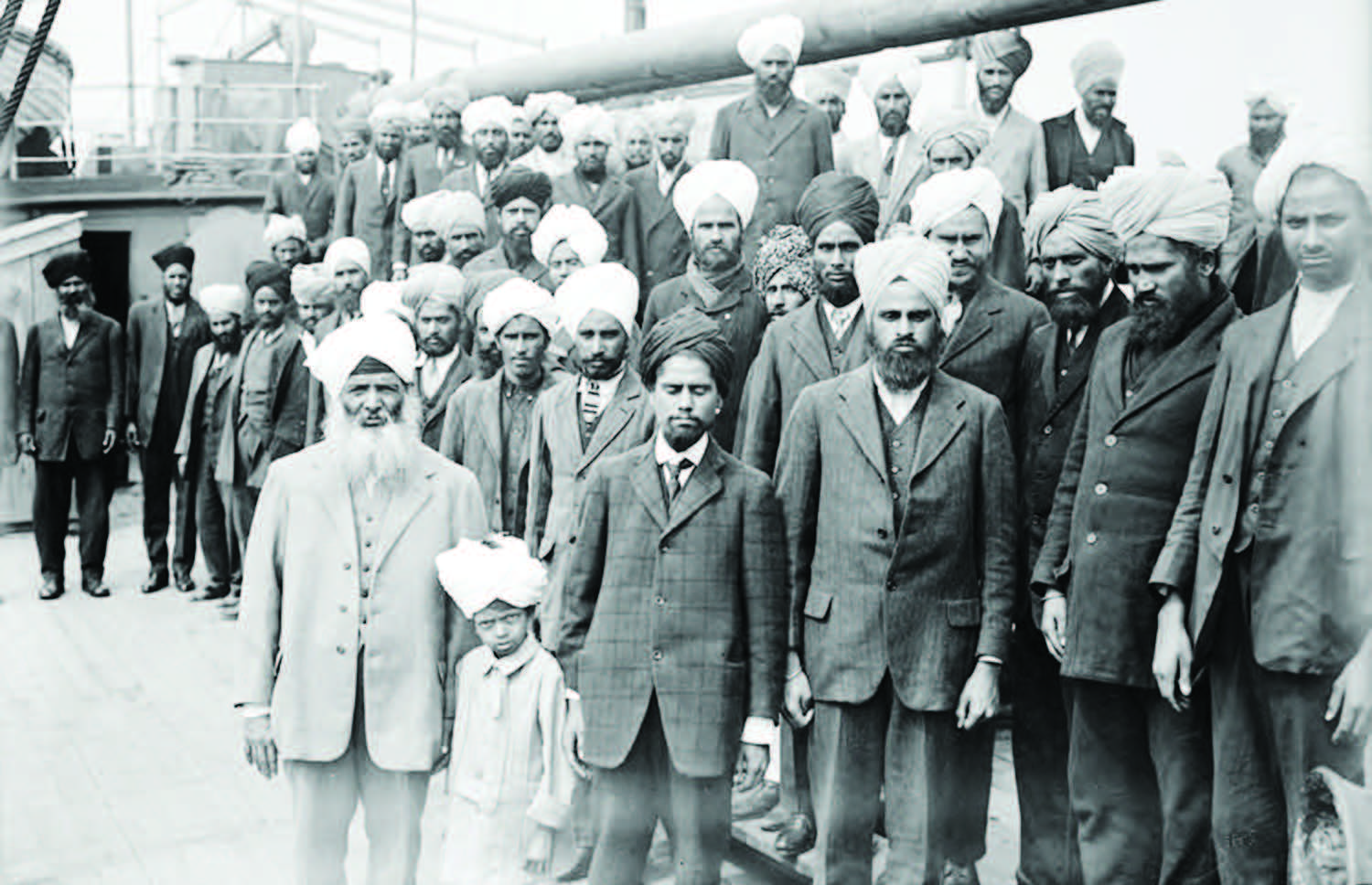
    Komagata Maru was a ship that took 376 Indians to Canada in 1914 to challenge the racist Canadian law. The passengers had taken the voyage in search of economic opportunities. They were connected neither with the Gadar Party nor with any other freedom movement. On reaching Vancouver, they were not allowed to land and were forced to stay on the ship for two months, sometimes without food and water. They were unhappy, some even rebellious at the unjust verdict of the highest Canadian justice court. The British Indian Government considered the passengers not as opportunity seekers but anti-British freedom fighters. On their return journey, they were not allowed to land in Hong Kong, Singapore or Shanghai, from where they started their voyage.


    6


    Majority of the passengers wanted to find work and make some money before going to their villages. They paid heavy price for dreaming to improve their economic situation, some spent part of their lives in jail, many were confined to their villages and eighteen of them lost their lives. Indians started coming to Canada from 1904 for economic opportunities. They had an easier access to Canada as both India and Canada were British colonies. The new immigrants were willing to do any kind of manual job and found work on farms, in factories, mills and lumberyards.


    7


    They were paid lower wages and worked for long hours. Some Canadian employers considered India as a source of cheap labor and publicized the economic and job opportunities available in Canada to attract more workers. By the end of 1907, number of Indian immigrants had reached over 5000, comprising mostly of Punjabi military veterans, farmers and unskilled laborers. As the number of immigrants increased, the white workers felt threatened that the Indians would take over their jobs. Fear of labor competition led to jealousy, racial antagonism and demands for exclusionary laws for foreign workers.


    8


    The local press carried many scare stories against the Asians and “Hindu Invasion.” The Government of Canada came up with two new laws to curb Indian immigration to Canada. One law required Indians to carry $200 in cash upon landing in Canada and the other, the “Continuous Passage” Act 1908, required immigrants to come to Canada via direct passage from their point of origin. These restrictions were very unreasonable. There were no ‘through’ ships from India to Canada and $200 was a significant amount of money, considering an average daily wage of 10 Cents of an Indian worker at that time.

    Thus, Indian immigration to Canada literally came to an end. The restrictive legislation led to discontent and anti-colonial sentiments within the Indian community. The Canadian immigration policy was exclusionist, based on race and nationality. Public and political sentiments were racist also. Over 2 million Europeans were welcomed from 1906 to 1915, while the number of Asian immigrants admitted during the same period was only about 50,000. Chinese immigrants had also to pay head tax on arrival, which was increased to $500 in 1904. Japanese government, by a gentleman’s agreement, was limited to issue only 400 passports for their nationals immigrating to Canada.

    Indians, although British subject like Canadians, were prohibited in 1908 to land in Canada because of the “Continuous Journey” law. Many Indians in Hong Kong, Singapore, Shanghai and other places were keen to come to Canada. But Steamship companies were not allowed to sell tickets to Indians for Canada. An enterprising and resourceful Indian in Singapore, Gurdit Singh, chartered a Japanese vessel Komagata Maru to challenge the racist Canadian law.

    He obtained clearance from the British Colonial secretary in Hong Kong to sail to Canada. He renamed the ship as Guru Nanak Jahaz in a prayer meeting and left Hong Kong with 165 passengers on April 4, 1914. He got 111 passengers at Shanghai and 85 more passengers joined at Moji, Japan. At Moji, Bhai Balwant Singh, head priest of Vancouver Sikh Temple, who was on a return journey to Vancouver, met with the passengers and explained them the attitude of the Canadian government. At Yokohama, Gyani Bhagwan Singh met with the passengers and told them the story of his deportation from Canada in November, 1913. Maulvi Mohammad Barkatullah, a renowned revolutionary who had lived in New York, also met with the passengers.

    Both, Bhagwan Singh and Barkatullah, were involved with India Independence Movement, started in America and known as Gadar Movement. They brought latest issue of weekly Gadar magazine and other revolutionary literature for passengers to read. The ship arrived in Vancouver on May 23, 1914 with 376 passengers, all British subjects (340 Sikhs, 24 Muslims and 12 Hindus). British Columbia Premier Richard McBride, one day prior to the arrival of the ship, made statement that the Komagata Maru passengers would not be allowed to disembark. The passengers, however, thought that as British subjects, they had the right to enter Canada.

    The Canadian public and political sentiments were against Indians getting permission to land. Canadian media in Vancouver was unsympathetic to the arriving passengers. Inflammatory articles in Vancouver newspapers helped to ignite and promote anti- Indian sentiments. The Sun newspaper called the passengers “Hindu Invaders.” Only an Indian newspaper, The Hindustanee welcomed the passengers.

    The immigration officials did not allow the passengers to land in Vancouver. Indians in Canada and the USA were outraged. The local Indians rallied in support of the passengers and organized protest meetings against the racist policy of the government. They formed a shore committee to help the passengers with food, provisions and legal challenges. The last installment for chartering the ship was due. Neither Gurdit Singh nor the passengers had money to pay. The shore committee organized a meeting of local Indians to raise funds for making installment payment and for legal fee and other expenses.

    In 1913, 38 Sikhs who had come by Panama Maru ship, were refused immigration. They challenged the continuous journey law in the court and were allowed to stay in Canada. The Government amended the Immigration law in January 1914 to plug loopholes and face any challenges. The shore committee hired an attorney to fight a test case against Canadian government’s refusal to allow Komagata Maru passengers to land in Canada. Unfortunately, the Court gave a unanimous judgment that it had no authority to interfere with the decisions of the Department of Immigration and Colonization. Only 20 returning passengers, and the ship’s doctor and his family were given permission to leave the ship.

    All the other passengers were ordered to leave the Canadian waters. The passengers had endured incredible hardships on the ship for two months and refused to leave without provision for their journey back to India. The government brought a navy cruiser to intimidate the passengers into leaving. However, the last minute negotiations averted confrontation. On receipt of provisions for the return journey, Komagata Maru left the harbor on July 23, 1914. The action of the Canadian Government created bitterness, frustration and vengefulness among the passengers as also among Indians in Canada and the US.

    Many passengers had boarded the Komagata Maru ship to Canada at Hong Kong, Singapore and Shanghai. On return journey, several of them wanted to land from where they had started their voyage but were refused permission to disembark. On September 5, 1914, before Komagata Maru reached India, the British authorities had enacted a new law, “Ingress into India Ordinance”, which empowered the Punjab Government to check the people entering India. The Government also had power to confine their movements to their villages or imprison them without trial. On reaching Budge Budge, near Calcutta, on September 29, 1914, the British Indian Government asked the passengers to board the train for Punjab.

    Except 62 passengers, all others wanted to stay in Kolkata and find employment there. The passengers had the Holy Sikh Scriptures, Guru Granth Sahib which they wanted to deposit at the Sikh temple, Kolkata. They proceeded in a procession to go to the temple but the police did not want them to go. In the scuffle between the police and the passengers, the police opened fire resulting in the death of twenty-three people – eighteen passengers, two innocent Begalis, two European officials, and one Punjab police official. Several suffered injuries and were hospitalized. Gurdit Singh and forty five of the passengers escaped.

    The police arrested two hundred and two passengers and put them in prison or confined them to their villages in Punjab for several years. (Harish Puri, The Ghadar Movement, 100) The brutal treatment of the returning passengers generated a wave of resentment against the British government. The Komagata Maru incident encouraged new converts to the Gadar cause, from not only North America but also Indians from all over the world and gave impetus to the movement for India’s independence. Jawala Singh had undertaken a simple business enterprise to transport his compatriots to Canada. But the venture ended with political implications. After evading arrest in Kolkata, he stayed in hiding for seven years.

    Finally, he surrendered to the police at the birth anniversary celebration of Guru Nanak Dev, at Nankana Sahib on November 15, 1921. He spent five years in jail for violating no laws. He joined Congress and in 1937, contested Punjab Legislative Assembly election. Unfortunately, he lost to the Akali candidate, Partap Singh Kairon who later joined Congress and was Punjab Chief Minister from 1952 to 1964. In 1951, Jawala Singh requested Prime Minister Jawahar Lal Nehru to build a memorial at Budge Budge in memory of the martyrs of Komagata Maru. On January 1, 1952, Mr. Nehru unveiled the completed monument which is popularly known as the “Punjabi Monument”. (www.rangandatta.wordpress.com/2013/01/30/ komagata-maru-memorial-budge-budge-24- parganas-south/) Indian community in Canada did not forget Komagata Maru tragedy. Baba Gurdit Singh, his colleagues and the ship have become an integral part of the history of Canada.

    A giant-sized mural of Baba Gurdit Singh and others in the ship, adorns the front wall of the Senior Citizen Housing Unit in Surrey, near Vancouver. A plaque commemorating the 75th anniversary of the departure of the Komagata Maru was placed in the Sikh temple in Vancouver on July 23, 1989. A plaque commemorating the 80th anniversary of the arrival of the Komagata Maru was placed in the Vancouver harbor in 1994.

    The first phase of the Komagata Maru Museum was opened in June 2012 at the Khalsa Diwan Society, Ross Street Temple, Vancouver. A monument in remembrance of the Komagata Maru incident was unveiled on July 23, 2012. It is located near the steps of the seawall near Convention Centre West in Vancouver. The Canadian government provided funding for both the monument and the museum. A stamp commemorating the 100th anniversary of the arrival of the Komagata Maru was released by Canada Post on May 1, 2014. On August 3, 2008, Canadian Prime Minister Stephen Harper appeared at the 13th annual Gadri Babiyan Da Mela (festival) in Surrey to apology for the Komagata Maru incident.

    In response to the House of Commons motion calling for an apology by the government, he said, “On behalf of the government of Canada, I am officially conveying as prime minister that apology.” On May 23, 2008, the Legislative Assembly of British Columbia unanimously passed a resolution “that this Legislature apologizes for the events of May 23, 1914, when 376 passengers of the Komagata Maru, stationed off Vancouver harbor, were denied entry by Canada.

    The House deeply regrets that the passengers, who sought refuge in our country and our province, were turned away without benefit of the fair and impartial treatment befitting a society where people of all cultures are welcomed and accepted.” The Government of India has decided to commemorate the centenary of Komagata Maru incident. The inaugural function of the yearlong centenary commemoration was organized on September 29, 2014 by Union Ministry of Culture. Three granddaughters of Baba Gurdit Singh – Ms. Harbhajan Kaur, Ms. Satwant Kaur and Ms. Balbir Kaur were honored by the Culture Minister Shri Shripad Naik on the occasion. A set of commemorative coins of denominations of ?100 and ?5 was released to mark the occasion. The government also decided to build a memorial at Budge Budge port.

    The National Film Development Corporation of India (NFDC) would make a film on the tragedy. A postal stamp would be issued in commemoration of the centenary. The Government of India has constituted a National Implementation Committee which has planned a number of programs such as national and international conferences, publications, development of digital archives and preparation of films and documentaries, etc. The Committee shall hold a week-long function at Vancouver from 23rd May to 30th May, 2015 which would include cultural events, seminars and exhibitions besides honoring the descendants of the Komagata Maru passengers as well as non-Indians including Canadians who rendered assistance both financially and legally to the cause of Komagata Maru passengers.

    The Punjab government would commemorate the centenary of Komagata Maru tragedy by installing a replica of the steamship Komagata Maru at the Azadi Memorial at Kartarpur in Jalandhar. A statue of Gurdit Singh shall be installed in Amritsar. His small house at Sarhali village in Amritsar shall be renovated and preserved. The government would also organize a state level function in February 2015. A brochure on Komagata Maru tragedy would be published.

    The book, Voyage of Komagata Maru, a translation of Gurdit Singh’s Zulmi Katha, edited by Darshan Singh Tatla and Prithipal Singh Kapur, shall be reprinted. A special library section is planned to house documents relating to Gadar and Komagata Maru in Punjabi University, Patiala. A play on Komagata Maru would be written, staged and video graphed for showing in colleges. This would be financed by Union ministry of Culture.

    (The author regularly writes and speaks on Indian Diaspora. He is the author of The Gadar Heroics – life sketches of over 50 Gadar heroes. He is Chairman of Global Organization of People of Indian Origin (GOPIO) and was president of GOPIO from 2004-2009. He was Chairman of National Federation of Indian American Associations (NFIA) from 1992-96, and president from 1988-92. He was founding president of Federation of Indian Associations in Southern California. He is Chairman of Indian American Heritage Foundation which has been awarding scholarships for excellence to top Indian students in Southern California since 1987. He can be reached at indersingh usa@hotmail.com)

  • Rampal sent to jail, faces murder charges after 6 deaths in Satlok Ashram

    Rampal sent to jail, faces murder charges after 6 deaths in Satlok Ashram

    CHANDIGARH, HISAR (TIP): Controversial godman Rampal and his close aides have been booked for murder on November 20. They have been blamed for the six deaths at Rampal’s Satlok Ashram near Barwala during the clashes with security forces. Haryana’s Director General of Police S.N. Vashisht told the media: “The murder cases relate to the six deaths at the ashram.” Vashisht said Rampal had been sent to Hisar for investigation of the fresh cases against him which include sedition, rioting, illegal detention and violation of Arms Act.

    Earlier, he was sent to judicial custody till November 28 by the Punjab and Haryana High Court after days of stubborn resistance by his followers, which turned Barwala town in Haryana’s Hisar district into a virtual warzone. There was loud hooting as the godman emerged from the court after the hearing. Dressed in a shirt and track pant and wearing slippers, the godman sat through the hourlong hearings, which started earlier than scheduled.

    The court ordered that Rampal be immediately sent to jai as the Division Bench cancelled his bail in the 2006 murder case. Rampal was put behind bars in Panchkula this morning after the high court cancelled the bail granted to him in April 2008 in a 2006 murder case. He was taken from a government hospital in Panchkula, where he was admitted early in the day, to the Sector 5 police station adjoining Chandigarh. Disappointment writ large on his face, Rampal stood in the lock up holding the iron bars, occasionally looking down. Before being taken to the police station, Rampal claimed that he was an innocent man.

    “I am innocent. All the charges against me are baseless,” he told journalists. When asked if he sorry for the death of six people at his ashram during the Satlok Ashram standoff, he said, “I did not ask them to be there.” The 63-year-old godman was arrested on November 19 night, more than 24 hours after over 5,000 security personnel stormed his fortified ashram compound using water cannon, tear gas and batons. More than 500 devotees of Rampal, including nearly 250 members of his private army, called Baba’s Commandoes, were also arrested.

  • RAMPAL SENT TO JAIL, FACES MURDER CHARGES AFTER 6 DEATHS IN SATLOK ASHRAM

    RAMPAL SENT TO JAIL, FACES MURDER CHARGES AFTER 6 DEATHS IN SATLOK ASHRAM

    CHANDIGARH, HISAR (TIP): Controversial godman Rampal and his close aides have been booked for murder on November 20. They have been blamed for the six deaths at Rampal’s Satlok Ashram near Barwala during the clashes with security forces. Haryana’s Director General of Police S.N. Vashisht told the media: “The murder cases relate to the six deaths at the ashram.” Vashisht said Rampal had been sent to Hisar for investigation of the fresh cases against him which include sedition, rioting, illegal detention and violation of Arms Act.


    38


    Earlier, he was sent to judicial custody till November 28 by the Punjab and Haryana High Court after days of stubborn resistance by his followers, which turned Barwala town in Haryana’s Hisar district into a virtual warzone. There was loud hooting as the godman emerged from the court after the hearing. Dressed in a shirt and track pant and wearing slippers, the godman sat through the hour-long hearings, which started earlier than scheduled. The court ordered that Rampal be immediately sent to jai as the Division Bench cancelled his bail in the 2006 murder case.


    39


    Rampal was put behind bars in Panchkula this morning after the high court cancelled the bail granted to him in April 2008 in a 2006 murder case. He was taken from a government hospital in Panchkula, where he was admitted early in the day, to the Sector 5 police station adjoining Chandigarh. Disappointment writ large on his face, Rampal stood in the lock up holding the iron bars, occasionally looking down. Before being taken to the police station, Rampal claimed that he was an innocent man. “I am innocent. All the charges against me are baseless,” he told journalists.

    When asked if he sorry for the death of six people at his ashram during the Satlok Ashram standoff, he said, “I did not ask them to be there.” The 63-year-old godman was arrested on November 19 night, more than 24 hours after over 5,000 security personnel stormed his fortified ashram compound using water cannon, tear gas and batons. More than 500 devotees of Rampal, including nearly 250 members of his private army, called Baba’s Commandoes, were also arrested.

    Rampal’s army

    Controversial preacher Rampal’s private army was armed to the teeth with firearms and was capable of sparking a small war if it wanted to. When senior police officials finally entered Satlok Ashram in Barwala on Wednesday, they found at least a couple of almirahs stacked with revolvers, guns and ammunition. The cops came across a number of locked almirahs as well in which more firearms are believed to have been kept. From the two almirahs they opened cops found .32 bore revolvers, .315 bore rifles and 12 bore guns. The officials also found some ammunition, including several rounds for 7.62mm rifle used in self-loading rifles (SLR) and 303 rifles. The army, paramilitary forces and police used these previously but they have since migrated to 5.56mm INSAS rifles. The 7.62mm is prohibited bore for private individuals who are not allowed to own such firearms even if they have a licence.

    Inside the ashram

    Satlok Ashram of controversial sect leader Rampal Dass is built like a fortress, surrounded by high walls with watchtowers. “The ashram is built like a fort meant to ward off an invasion. It reminded me of the Agra fort,” said a senior police officer who was part of the Operation Samvedi (sensitive) conducted over three days to nab the “mouse”— codename for the 63-year-old engineerturned- preacher. The “fortress” saw bloody clashes Tuesday as the police tried to storm the ashram to arrest Rampal for contempt of court after he repeatedly failed to appear in the HC in a 2006 murder case.

    The hall that can seat 50,000 has a special enclosure from where Rampal, who claims to be a devotee of mystic poet Kabir, delivered sermons from a hydraulic chair as his private militia stood guard. Dozens of air-conditioners and hundreds of fans can be seen. A local police officer gave the break-up: 10,000 ceiling and 1,000 exhaust fans under one roof. On the extreme left corner of the complex is a four-storey mansion Rampal lived in. A private swimming pool, state-of-the art elevators, 24 AC rooms with attached bathrooms fitted with top-of-the line fixtures, Rampal, whose followers largely come from lowincome strata, lived big.

    One of the rooms had a massage bed, another treadmills as Rampal stared down from huge wall posters. Satlok Ashram’s kitchen had all the modern equipment to cater to a lakh of devotees. Huge quantities of rice, pulses, vegetables, paneer and other items are stocked up in the kitchen. A DSP-rank officer said the stock could have fed a lakh people for a month. According to the officer, during the Satsangs, Rampal’s aides used to collect food material to feed the devotees. Several Barwala residents said that vendors used to queue up in front of the ashram’s gate with huge quantities of vegetables and other food items.

  • Xoom Announces Instant Deposit Service to Bank of Baroda Accounts in India

    Xoom Announces Instant Deposit Service to Bank of Baroda Accounts in India

    SAN FRANCISCO, CA (TIP): Xoom Corporation (NASDAQ: XOOM), a leading digital money transfer provider, is now offering instant deposits to Bank of Baroda bank accounts in India. This revolutionary service allows Xoom customers to instantly deposit money into their recipients’ Bank of Baroda bank accounts, 365 days a year, including bank holidays. Instant deposits to Bank of Baroda are processed through Xoom’s partnership with Punjab National Bank. “Through our partnership with Punjab National Bank and the breakthrough IMPS technology, we are thrilled to expand our instant deposit service to Bank of Baroda, one of the largest public sector banks in India,” said Julian King, Senior Vice President of Marketing and Business Development for Xoom.

    “Instant deposits are available 365 days, including bank holidays, so customers will never have to wait. Speed and convenience are what customers expect from Xoom’s service and we continue to do just that in our mission to provide instant deposit to even more banks in India.” In addition to Bank of Baroda, Xoom also offers instant deposits to ICICI Bank, HDFC Bank, Punjab National Bank, Union Bank of India, Federal Bank and Yes Bank. Xoom provides great locked-in exchange rates for money transfers to India, and there is no fee when customers send more than $1,000 and pay with their U.S.-based bank account. Plus, Xoom continues to provide fast bank deposits within four hours to all other banks in India, including to NRE and NRO accounts, when sent during bank processing hours in India. Customers can also download the Xoom App for Android and iOS mobile devices for free. Visit https://www.xoom.com/india for more information.

  • Xoom Announces Instant Deposit Service to Kotak Mahindra Bank Accounts in India

    Xoom Announces Instant Deposit Service to Kotak Mahindra Bank Accounts in India

    SAN FRANCISCO, CA (TIP): Xoom Corporation (NASDAQ: XOOM), a leading digital money transfer provider, is now offering instant deposits to Kotak Mahindra Bank accounts in India. This revolutionary service allows Xoom customers to instantly deposit money into their recipients’ Kotak Mahindra Bank accounts, 365 days a year, including bank holidays.

    Instant deposits to Kotak Mahindra Bank are processed through Xoom’s partnership with Punjab National Bank., a press release said. “Through our partnership with Punjab National Bank and the breakthrough IMPS technology, we are thrilled to expand our instant deposit service to Kotak Mahindra Bank,” said Julian King, Senior Vice President of Marketing and Business Development for Xoom. “Instant deposits are available 365 days, including bank holidays, so customers will never have to wait. Speed and convenience are what customers expect from Xoom’s service and we continue to do just that in our mission to provide instant deposit to even more banks in India.”

    In addition to Kotak Mahindra Bank, Xoom also offers instant deposits to ICICI Bank, HDFC Bank, Punjab National Bank, Bank of Baroda, Union Bank of India, Federal Bank and Yes Bank. Xoom provides great locked-in exchange rates for money transfers to India, and there is no fee when customers send more than $1,000 and pay with their U.S.-based bank account. Plus, Xoom continues to provide fast bank deposits within four hours to all other banks in India, including to NRE and NRO accounts, when sent during bank processing hours in India. Customers can also download the Xoom App for Android and iOS mobile devices for free. Visit https://www.xoom.com/india for more information.

    About Xoom

    Xoom is a leading digital money transfer provider that enables consumers to send money to 30 countries in a secure, fast and cost-effective way, using their mobile phone, tablet or computer. During the 12 months ended June 30, 2014, Xoom’s more than 1.1 million active customers sent approximately $6.3 billion to family and friends. The company is headquartered in San Francisco and can be found online at www.xoom.com.

    About Kotak Mahindra Bank

    Established in 1985, the Kotak Mahindra group is one of India’s leading financial services conglomerates. In February 2003, Kotak Mahindra Finance Ltd. (KMFL), the group’s flagship company, received banking license from the Reserve Bank of India (RBI). With this, KMFL became the first nonbanking finance company in India to become a bank – Kotak Mahindra Bank Ltd (KMBL).

    KMBL offers complete retail financial solutions for varied customer requirements. The Savings Bank Account goes beyond the traditional role of savings, and provides range of services through a comprehensive suite of investment services and other transactional conveniences like Online Shopping, Bill Payments, ASBA, Netc@rd, ActivMoney (Automatic TD sweep-in and Sweep-out) etc. Kotak’s Jifi, a first-of-its-kind fully integrated Social Bank Account, redefines digital banking by seamlessly incorporating social networking platforms like Twitter and Facebook with mainstream banking.

    KMBL also offers an Investment Account where Mutual Fund investments are recorded and can be viewed in a consolidated fashion across fund houses & schemes. Further, the Bank offers loan products such as Home Loans, Personal Loans, Commercial Vehicle Loans, etc. Keeping in mind the diverse needs of the business community, KMBL offers comprehensive business solutions that include Current Account, Trade Services, Cash Management Services and Credit facilities.

  • Govt does a U-turn, tells EC no relief announced for anti-Sikh riot victims

    Govt does a U-turn, tells EC no relief announced for anti-Sikh riot victims

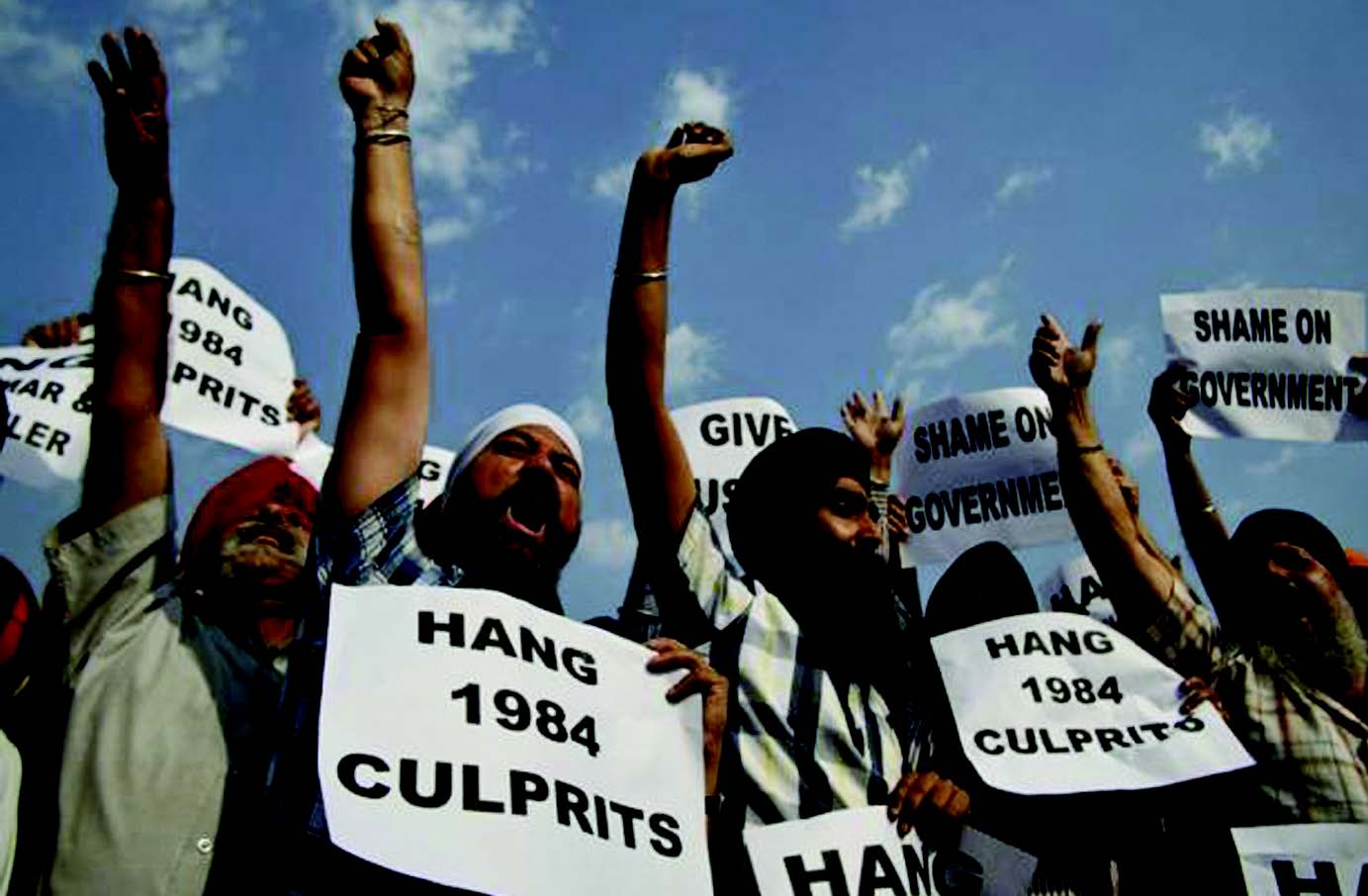
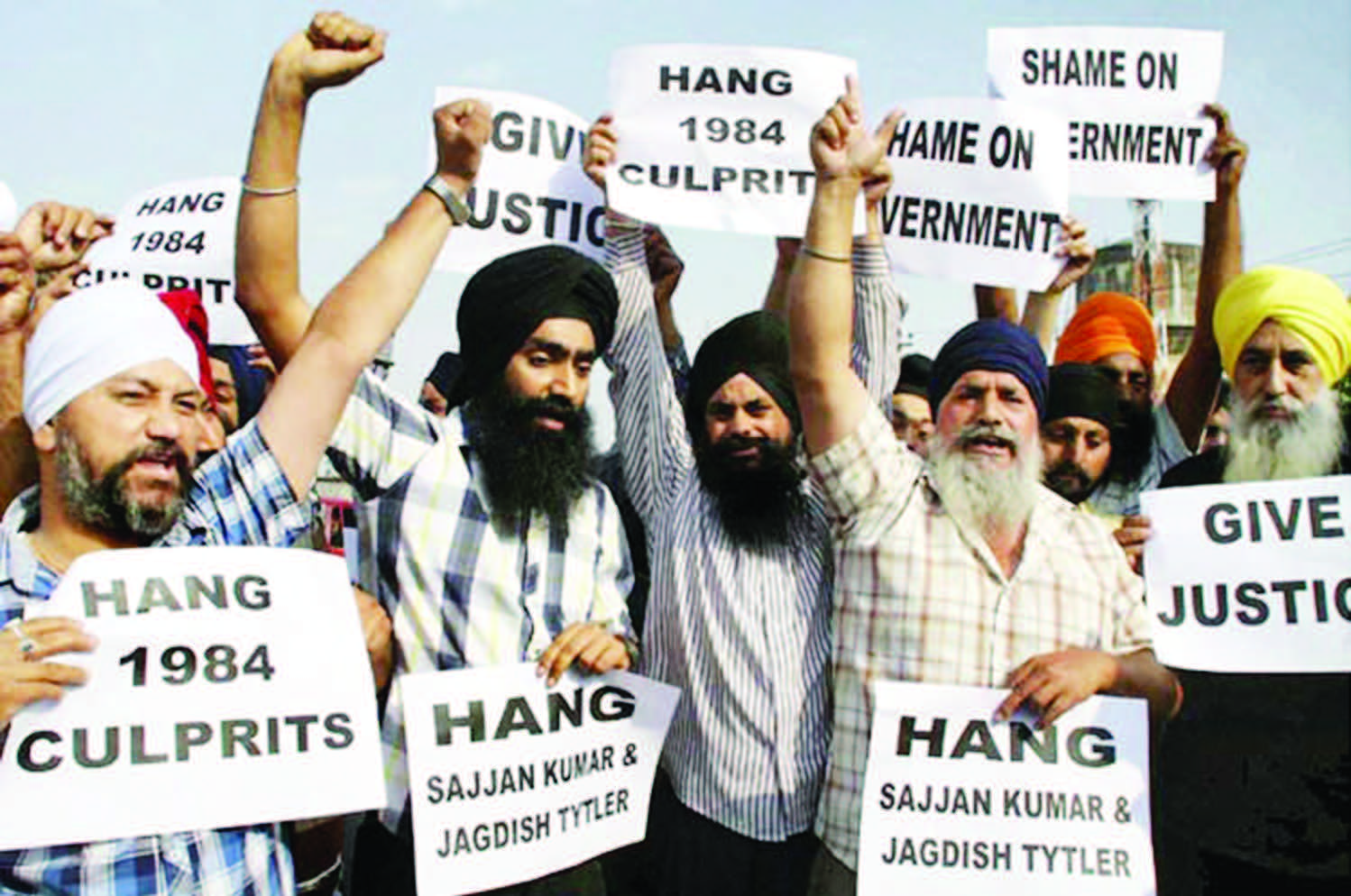
    NEW DELHI (TIP): In a dramatic aboutturn, the Central Government has told the Election Commission (EC) that no decision was taken to give additional Rs 5 lakh compensation each to the families of those killed in the 1984 anti-Sikh riots. This comes a week after the media extensively reported on October 30 that the Union Ministry of Home Affairs (MHA) had okayed Rs 5 lakh compensation to families of riots victims.

    The EC had sent a notice to the MHA saying “this was in violation to the model code of conduct which was in force in Delhi for byelections to Mehrauli, Tughlakabad and Krishna Nagar Assembly segments. In its response to the EC, the MHA said: “No decision (additional compensation to Sikh families) has been taken so far.” Leading Sikh right activists and persons, including Punjab Chief Minister Parkash Singh Badal had welcomed the announcement. Not satisfied with the MHA response, the EC said the news of announcing additional compensation was widely published and disseminated in the media and several panel discussions on the subject were held on TV channels.

    “The commission has also not come across any denial of the news by the government,” the EC told the MHA in written response on November 7 The ECI added, “Thus, it cannot be denied that the above news item gave an unmistakable impression to the electorate that a decision to the above effect was, in fact, taken by the government and that had the likelihood to effect of disturbing the level playing field”. The EC has hinted that the MHA used media to send the impression of additional compensation for Sikh families.

    Like all newspapers, The Tribune had also reported this based on the information originating from the ministry. On October 30, the MHA had held a meeting on enhancing compensation for those killed in communal violence. A press release was issued saying, “The Union Home Minister approves grant of higher compensation to victims of riots, naxal and terrorist violence”. It further said, “Union Home Minister Rajnath Singh has approved a proposal to substantially enhance the compensation to civilian victims of communal, terrorist or Naxal violence from Rs 3 lakh to Rs 5 lakh”. At least 3,325 persons, including 2,733 in Delhi, were killed in the riots triggered by the assassination of former Prime Minister Indira Gandhi by her bodyguards on October 31, 1984.

    EC letter to ministry

    After news reports emerged that additional compensation had been announced on October 30, the ECI shot off a notice to the MHA

    The letter said the compensation was in violation to the Model Code Conduct which was in force in Delhi

    The code was imposed due to the ongoing bye-elections to the Delhi Legislative Assembly for three constituencies

    Source: The Tribune)

  • Reliving the Memories of 1984

    Reliving the Memories of 1984

    Thirty years after the anti-Sikh riots that raged in Delhi, there are no easy answers to these questions: What should the Sikhs do? Should they forget the past? Should they live in the past? Or should they live with the past?

    By Mohinder Singh

    Let me begin my story from my diary of 1984, to be precise, that of March 24. On that day I escorted my teacher Dr Ganda Singh to the Rashtrapati Bhawan where he was to be conferred the Padma Bhushan by Giani Zail Singh, the then President of India. In the glittering ceremony, I noticed Mrs Indira Gandhi, the Prime Minister, Members of her Cabinet and other dignitaries and distinguished citizens who were to be honoured for their contribution in different fields. After the ceremony when we were going out for tea, Dr Ganda Singh, who had some eye problem, banged into the glass door of the Ashoka Hall and his Padma medal and spectacles fell on the floor. Rajiv Gandhi, who was walking beside him, quickly picked up the two items and passed them on to him and gently escorted him till the tea was over.

    Prominent Sikhs

    Later that evening, the Guru Nanak Foundation had arranged a reception for Dr Ganda Singh. It was attended by almost all prominent Sikhs in the national capital with the late Khushwant Singh as the main speaker. While writing my diary for that day, I felt proud that the Sikh community, which constituted less than 2 per cent of the Indian population, has done so well in independent India. Some of the prominent names that came to my mind were those of Baldev Singh, the first Defence Minister of independent India, Surjit Singh Majithia, Deputy Defence Minister of India, Swaran Singh as the Minister for Defence and later External Affairs, Hukam Singh and Gurdial Singh Dhillon as Speakers of the Lok Sabha, Buta Singh, Minister for Parliamentary Affairs, Sport, Works and Housing, Dr Manmohan Singh as Governor of the Reserve Bank of India, Arjan Singh and Dilbagh Singh as Chiefs of the Indian Air Force and many Sikhs in other important positions.

    In spite of talk of grievances, some real and some imaginary, Sikhs were doing well in all walks of life, be it business, sports or services. Little could I imagine that this best period in the history of the Sikh community would turn out to be the worst because of Army action in the Golden Temple, killing of Prime Minister of India, Indira Gandhi by two of her Sikh bodyguards and countrywide anti- Sikh riots that followed. On that fateful day, I happened to be in Chandigarh for an official meeting where we got to know that Prime Minister Indira Gandhi was dead though a formal announcement was made late that evening.

    While I managed to reach my home in Hauz Khas late that evening, what came as the first shock was to see the Green Park gurdwara set on fire. My family heaved a sigh of relief when I knocked at the door. In that group of 40 houses, I was the only turbaned Sikh. My immediate neighbours, all Hindus, were more worried about my safety than me. On the top floor, a young boy had stocked soda water bottles and stones to keep the mob away in case of any attack. Another neighbour who carried his service revolver offered to stay with our family the whole night to ensure that we were duly protected.

    Alarming situation

    On November 1, when violence spread throughout the city as a result of organised gangs taking over command of the anti-Sikh pogrom, the situation became rather alarming. I was advised by my teacher Prof Bipan Chandra to move to his home in the JNU campus. I was told that the mob was checking all vehicles at the IIT crossing, looking out for Sikhs and it was advisable for me to hide myself in a blanket and lie down in the leg space in the Ambassador car, with my wife and daughters occupying the backseat. My wife was advised to camouflage her identity by changing her dress.

    It was for the first time that I found my distinct identity, of which I always felt proud, had become my liability in spite of my opposing militant activity in Punjab and fighting the ideology of hate throughout my teaching career. My daughters who faced this trauma for the first time could not understand as to what was happening in a secular country. My younger daughter asked as to who had killed the Indian Prime Minister. Before I could answer, Bipan Chandra replied, “Ideology of hate”. She was too young to understand that it was this ideology which had led to the division of India and, later, the killing of Mahatma Gandhi who was opposed to any division on communal lines.

    That night I missed my sleep and kept on thinking how political parties use the ideology of hate for electoral gains. What disturbed me the most was the fact that Sikhs outside Punjab, who for their own reasons did not support the militant movement in Punjab, had become victims of mob violence for no fault of theirs.

    Communal politics

    In spite of my best efforts, I could not reconcile to the overnight change of the Sikh image from trusted lieutenants of the Indian State to a potential threat to its unity. I regretfully recalled how Punjab politics was communalised for electoral gains, with disastrous consequences for the Sikh community and the Indian State. The next day we heard about the violence spreading to different parts of Delhi and other parts of the country and the police and state machinery mutely watching this carnage. Later in the evening, Gopi Arora, a senior civil servant, asked Bipan for his advice as to how to check the growing violence.

    Bipan’s answer was simple, “You control the media. Let the TV and radio keep on announcing rioters being killed by the police.” But HKL Bhagat, who was the Minister for Information and Broadcasting, had other plans up his sleeve. On the contrary, he wanted to use the media to create a mass hysteria against the Sikhs, with an eye on the forthcoming Parliamentary elections. The Mishra Commission noticed that when Mrs Gandhi’s dead body was lying in state in Teen Murti, a group of people walking passed the body raised slogans, “Khoon ka Badla Khoon,” which was duly covered by the country’s only television channel, Doordarshan, and repeated 18 times for obvious reasons.

    Attacks and pelting stones on the cars in the entourage of the President of India, who rushed to the AIIMS, soon after his return from Yemen, and other incidents of October 31, 1984, are mentioned by the Nanavati Commission as “first signs of public resentment resulting in an angry outburst in Delhi,” but what happened for three consecutive days and nights between November 1 and November 3, in the national capital in the presence of heads of many countries who had joined in the national mourning, could not have happened without a free hand given to the organised gangs consisting of party workers and criminal elements from different political outfits.

    Gangsters armed with weapons of destruction like pistols, petroleum and other inflammable materials surrounding hapless Sikhs inside their localities and houses points toward an organised pogrom. According to the Mishra Commission, “If troops had been called on the morning of November 1, 1984 and Army columns had been moving in the streets properly, lives of at least 2,000 people could have been saved.” According to Nanavati Commission’s report, “There is enough material on record to show that at many places police had taken away their (Sikhs) arms and other articles with which they could have defended themselves against the attacks by the mobs.” According to the Nanavati Commission, at some places mobs indulging in violence were allowed to use DTC buses or other vehicles belonging to the State Transport Corporation.

    The modus operandi of the attackers was almost the same in various localities. The attackers “either came armed with weapons and inflammable materials like kerosene, petrol and some white powder or were supplied with such materials soon after they were taken to the localities where the Sikhs were to be attacked.”…. “Male members of the Sikh community were taken out of their houses. They were beaten first and then burnt alive in a systematic manner. In some cases, tyres were put around their necks and then were set on fire by pouring kerosene or petrol over them. In other cases, a white inflammable powder was thrown on them which immediately caught fire. This was a common pattern which was followed by the big mobs which had played havoc in certain areas.”

    The silver lining in the otherwise dismal picture was the role played by the wellmeaning members of the civil society and organisations like the People’s Union for Civil Liberties (PUCL), People’s Union for Democratic Rights (PUDR) and the Sikh Forum. At that difficult moment when most of the Sikhs had taken shelter in the homes of non-Sikh neighbours and friends and poor widows and children taken to relief camps, it were mainly non-Sikhs, especially Mrs Mohini Giri and her colleagues from the Guild of Service and War Widows Bhavan, who rushed relief to Teliwara and other areas in East Delhi which were not easily accessible. Faculty and students of the JNU played a positive role in coming out in open defence of the hapless Sikhs, who had become objects of hate and ridicule overnight. It was only appropriate that when Sant Harchand Singh Longowal came to visit Delhi to express sympathy with the members of the Sikh community, the first thing he did was to visit the JNU, wherein he started his speech by thanking non-Sikh sisters and brothers for saving many Sikh lives.

    While immediate relief was provided to the victims of the riots in different camps, no long-term strategy was planned for their emotional and economic rehabilitation and integration in the mainstream. VP Singh, who became the Prime Minister of India in 1989, in his wisdom provided small flats to the widows of 1984 riots in Tilak Vihar, Sector 16-J, Rohini and Garhi in East of Kailash, thus giving the national capital the dubious distinction of having “widows colonies” to be used as a votebank during every election. In spite of nine inquiry commissions, during the Congress, Janata Dal, NDA and UPA rule at the Centre, justice has eluded the Sikhs. This shows that the State is either unequipped or unwilling to punish the guilty.

    In spite of the Mishra Commission fixing the responsibility of the Delhi carnage on Congress workers and criminal elements and giving a clean chit to Congress leaders, popular Sikh memory will neither forgive nor forget HKL Bhagat, Sajjan Kumar, Jagdish Tytler, Dharam Das Shastri and others for their role in the anti-Sikh riots. Now that history has come full circle – from November 1984, when the Sikhs were hiding their identity and taking shelter in safe havens – to May 2004 when Dr Manmohan Singh, a turbaned Sikh, was elected to highest executive office of the Prime Minister of the world’s largest democracy: What should the Sikhs do? Should they forget the past? Should they live in the past? Or should they live with the past? These are the questions to which there are no easy answers. -The writer is Professor of Eminence, Punjabi University, Patiala

    Violence unleashed

    * After the assassination of Indira Gandhi on October 31, 1984, by two of her Sikh bodyguards, anti-Sikh riots erupted on November 1, 1984, and continued in some areas for days, killing more than 3,000 Sikhs.
    * Sultanpuri, Mangolpuri, Trilokpuri, and other Trans-Yamuna areas of Delhi were the worst affected.
    * Mobs carried iron rods, knives, clubs, and combustible material, including kerosene and petrol.
    * The mobs swarmed into Sikh neighbourhoods, and arbitrarily killed any Sikh men or women they could find.
    * Their shops and houses were ransacked and burned down.
    * In other incidents, armed mobs stopped buses and trains, in and around Delhi, pulled out Sikh passengers and either lynched them or doused them with kerosene before burning them alive.
    * Others were dragged out from their homes and hacked to death with bladed weapons. (British English. Courtesy The Tribune, Chandigarh)

  • 1984 SIKH MASSACRE: AN ENDLESS WAIT FOR JUSTICE

    1984 SIKH MASSACRE: AN ENDLESS WAIT FOR JUSTICE

    Nearly 3,000 members of India’s Sikh community were massacred after the assassination of Prime Minister Indira Gandhi by her two Sikh bodyguards on 31 October 1984. The wave of ethnic cleansing which raged unhindered across the country, especially in Delhi, after Mrs Gandhi was shot dead ended only with her cremation on 2 November. During these three days, droves of Sikhs were determinedly hunted down by Hindu mobs from their homes, corralled and slaughtered like animals.

    The trigger for Mrs Gandhi’s killing was the storming of the Golden Temple in Sikhism’s holy city Amritsar four months earlier to flush out Sikh militants fighting for an independent homeland of Khalistan or Land of the Pure. The heavily-armed militants – many of them former soldiers – had barricaded themselves inside the temple and were dislodged only after three days of bitter fighting. Some 1,000 people, including women and children pilgrims and about 157 soldiers, died.


    17


    Tanks too were employed to end the siege, leaving Sikhs highly aggrieved. The eventual and possibly avoidable storming of the Golden Temple generated a wave of violence leading to Mrs Gandhi’s assassination, the anti-Sikh riots and a vicious insurgency across Punjab that was eventually stamped out by the military around 1993, although not without widespread human rights abuses.

    But, the 1984 Delhi riots rocked the world, more so for the state’s direct involvement and public justification of the blood-letting. Reacting to the continuing Sikh killings in Delhi and other places, newly appointed Prime Minister Rajiv Gandhi declared at a massive rally in the capital that “once a mighty tree falls, it is only natural that the earth around it shakes”. One of the worst massacres took place in two narrow alleys in the city’s poor Trilokpuri colony where some 350 Sikhs, including women and children, were casually butchered over 72 hours.

    18

    The charred and hacked remains of the hundreds that perished in Trilokpuri’s Block 32 on the smoky and dank evening of 2 November 1984 were stark testimony to the unimpeded and seemingly endless massacre. Soon after news of Mrs Gandhi’s killing by her Sikh bodyguards spread, Hindu mobs swung into action – like they did elsewhere in the city armed with voters’ lists – in Trilokpuri against the low caste Sikhs inhabiting oneroomed tenements on either side of two narrow alleyways barely 150 yards long.

    With local police connivance they blocked entry to the neighborhood with massive concrete water pipes and stationed guards armed with sticks atop them. For the next three days marauding groups armed with cleavers, scythes, kitchen knives and scissors took breaks to eat and regroup in between executing their bloodthirsty mission. No one spoke and nothing, except the bizarre, dancing shadows moved during this surrealistic interlude. The police arrived in Trilokpuri 24 hours later when a newspaper revealed the horrific massacre. Sadly, there were no Sikhs left to protect.

    Tragic stories

    BHAGWANI KAUR, RIOT VICTIM On November 1 morning, there was stone-pelting between both parties (Sikhs and non-Sikhs) in Trilokpuri area. When the police came, they first cordoned off the area and then indicated the non-Sikhs to go ahead. Rioters barged into our homes, pulled out utensils and other goods and looted our homes. The men were dragged out by their hair and killed. On the third day, trucks were brought in, the bodies were taken away and dumped in the Yamuna.

    ‘They threw my father from top floor’ Paramjeet Kaur, lost her father and three uncles in riots I was just 11 years old in 1984. My father, three of my uncles, a brother-in-law and a cousin were killed in the riots. One of my cousins tried to hide on the windowsill but he couldn’t escape. The rioters burnt him alive. I still remember the ghastly scene. My father was thrown from the top floor. His head was smashed. My younger brothers were made to wear girls’ dresses to escape. The women, my two sisters and 3-4 other women, had a horrific time.

    ‘When will we get justice?’

    HUKM SINGH, lost his two toddler sons, a brotherI lost my two sons — four and two-and-a-half years — and a brother at Jagatpuri during the three-day rioting in 1984. They were among the 11 people from three families in our building to be killed. My landlord and his family were killed. My plyboard factory in Radhapuri was set afire.

    Timeline of events

    November 1984: Sikhs were killed in the riots following the assassination of then prime minister Indira Gandhi Oct 31, 1984.

    Feb 8, 2005: Justice G.T. Nanavati Commission appointed to look into the 1984 anti-Sikh riots, submits its report.

    October 2005: A case is registered by the Central Bureau of Investigation (CBI) on the recommendation of the Nanawati Commission.

    Feb 1, 2010: Court issues summons against Sajjan Kumar and seven other accused — Balwan Khokkar, Mahender Yadav, Girdhari Lal, Kishan Khokkar, Captain Bhagmal, Maha Singh and Santosh Rani. Six accused are alive and facing trial.

    Feb 8, 2010: Delhi High court appoints special public prosecutor R.S. Cheema to conduct the trial on a daily basis so that the proceedings can be concluded in six months.

    Feb 15, 2010: Sajjan Kumar’s anticipatory bail rejected by additional sessions judge.

    Feb 17, 2010: Non-bailable warrants issued against Sajjan Kumar

    Feb 23, 2010: Sajjan Kumar untraceable.

    Feb 26, 2010: Anticipatory bail granted to Sajjan Kumar by the Delhi High Court.

    July 1, 2010: Prosecution produces 17 witnesses.Witnesses Jagdish Kaur, Jagsher Singh and Nirpreet Kaur identify Sajjan Kumar in court and depose against him.

    June 2011: Prosecution evidence ends.

    August 2011: Defence prosecution starts. They produce 17 witnesses, of whom six are officials from Delhi Police who depose in favour of Sajjan Kumar.

    April 2012: Prosecution concludes its arguments

    January 2013: Defence concludes its arguments and a judgment is pronounced.

    April 30: District and sessions court acquits Sajjan Kumar, convicts former councillor Balwan Khokkar, former legislator Mahender Yadav, Kishan Khokkar, Girdhari Lal and Captain Bhagmal.

    VICTIMS TO GET ADDITIONAL RS 5 LAKH NEW DELHI (TIP):

    As the nation prepares to mark the 30th anniversary of the 1984 anti-Sikh riots, the government has said it would offer Rs 5 lakh each to the next of kin of the 3,325 victims. This amount would be additional to whatever compensations they have received so far. The Union Home Ministry has also approved a proposal to substantially increase compensations to civilians falling victim to communal, Maoist or terrorist violence from Rs 3 lakh to Rs 5 lakh.

    Compensation to the anti-Sikh riot victims, which would cost the exchequer an additional Rs 166.25 crore, will be dispersed soon. The riots were triggered after the assassination of Prime Minister Indira Gandhi by her Sikh guards. The decision to disperse additional compensation follows petitions by several Sikh organisations to the NDA government. The previous UPA government announced an Rs 717 crore package for the Sikh victims, including financial compensation of Rs 3.5 lakh to the next of kin of those killed, but it could only spend Rs 517 crore due to dispute over claimants.

    Home Minister Rajnath Singh also decided to increase compensation for victims of communal, Maoist and terrorist violence at a high-level meeting where the issue came up. “Till now the next of kin of persons killed or civilians who suffered permanent incapacitation as a result of violence were paid Rs 3,00,000 as per provisions of the Central Scheme for Assistance to Civilian Victims of Terrorist/Communal/Naxal violence since 2008,” an official statement said.

    Families of victims are eligible for the assistance irrespective of previous compensations. Official figures reveal that the government had dispersed Rs 6.12 crore as compensation to civilian victims in 204 incidents of terrorist, communal and naxal violence in 2011-12 and Rs 3.99 crore in 133 incidents in 2012-13. However, no compensations could be given in 2013-14 and 2014-15 (till July) since state governments have not mooted the proposals.

  • PUNJABI COMMUNITY SUPPORTS BOBBY KALOTEE

    PUNJABI COMMUNITY SUPPORTS BOBBY KALOTEE

    NEW YORK (TIP): Punjabi community is glad that a man with Punajbi origin-Bobby Kalotee- is seeking election for New York State Lt. Governor’s position. The Punjabi community already feels a lot proud that Punjab has given to the US at least two governors- one Nikki Haley and the other Bobby Jindal. The community is also proud to have Preet Bharara as US Attorney. The other day, Balwant Hothi, a film maker and his brothers Gurinder and Harvinder organized a get together at the residence of Balwant Hothi in Richmond Hill to drum up support for Bobby Kumar. Surely, the community is slowly waking up to the reality that it has to be a part of the political process if it wants its voice to be heard and its rights to be protected and honored. Voting takes place on November 4. For more information, please call Balwant Hothi at 718-785-6131.

  • Pakistan’s Military Adventurism

    Pakistan’s Military Adventurism

    Right environment to turn the heat on Islamabad

    Pakistan’s military adventurism on three fronts across its borders with India, Afghanistan and Iran has created just the right environment to turn the heat on Islamabad and Rawalpindi. Apart from mounting a media offensive, it is time for India to get world attention focused on Pakistan-sponsored terrorism and the plight of Baluchis, Shias and other minorities in that country”, says the author who was a career diplomat.

    Just over a year ago Mr. Nawaz Sharif was swept back to power, prompting expectations that he would tackle the country’s security and economic crises, and improve relations with India. But one year is an eternity in the politics of Pakistan. The US is refusing to pledge additional aid beyond what was promised earlier under the Kerry-Lugar legislation. Even “allweather friend” China has expressed disappointment that Sharif’s government has not done the requisite preparatory work for utilizing aid that Beijing had promised for the development of Pakistan’s ailing power sector.

    The only silver lining is the increased remittances from Pakistan’s workers in the Gulf despite calls by Imran Khan to workers to halt such inward remittances. Instead of acting circumspectly in such a situation, Pakistan has chosen to escalate tensions on its borders with Iran, Afghanistan and India. The tensions with these three neighbors with whom Pakistan shares land boundaries have arisen because of support to cross-border terrorism. This support is rendered by state agencies to extremist Sunni groups, ranging from Lashkar e taiba to the Afghan Taliban and Jaish e Adl.

    The tensions with Iran have risen because of the support that the extremist Sunni group Jaish ul Adl receives in Pakistan’s Baluchistan Province, where the Pakistan army is simultaneously engaged in a bloody conflict against Baluchi separatists. Tensions with Iran escalated last year when Jaish e Adl mounted cross-border ground and missile attacks in Iran, resulting in Iranian casualties.

    An Iranian spokesman warned that the Iranian forces would enter Pakistani territory if Pakistan “failed to act against terrorist groups operating on its soil”. Virtually coinciding with this was an incident when Jaish e Adl kidnapped five Iranian border guards and moved them into Pakistan. Iran not only warned Pakistan of cross-border retaliation, but also brought repeated incursions from Pakistan soil to the notice of the UN Security Council in writing. Ever since the pro-Saudi Nawaz Sharif, whose links with radical Sunni extremist groups are well documented, assumed power, Pakistan has moved towards rendering unstinted support to Saudi Arabia, even in the Syrian civil war.

    It has also unilaterally annulled the Pakistan-Iran oil pipeline project, prompting action by Iran, seeking compensation. While Nawaz Sharif was commencing negotiations for a peace deal with Tehriq e Taliban in the tribal areas of North Waziristan, bordering Afghanistan, the Army Chief, Gen Raheel Sharif, disregarded the views of the Prime Minister. He launched a massive military operation, involving over 50,000 military and paramilitary personnel, backed by artillery, tanks, helicopter gunships and fighter jets. An estimated one million Pashtun tribesmen have fled their homes.

    They are now homeless and facing barriers, preventing their entry into the neighboring provinces of Punjab and Sind. Not surprisingly, ISI “assets” like the Mullah Omar-led Afghan Taliban and the Haqqani network have been quietly moved out from the battle zone, quite obviously into ISI safe houses. Unrest is brewing amidst the displaced Pashtun tribals as the army is unwilling to coordinate its operations with civilian relief agencies. The displaced and homeless Pashtun tribals, will inevitably, in due course, resort to terrorist violence across Pakistan.

    The special treatment meted out to ISI assets like Mullah Omar and the Haqqani network would have been carefully noted by the new Ashraf Ghani dispensation in Afghanistan, as a prelude to more serious attacks by the Afghan Taliban acting out of the ISI and army protected safe havens in Pakistan. Pakistan’s western borders will be neither peaceful nor stable in the coming years. The escalating tensions with Iran, the partisan stance on Saudi Arabia-Iran rivalries and the military action in North Waziristan have invited criticism within Pakistan. The escalation of tension with India across the Line of Control and the international border has to be seen in this
    context.

    What better way for the army to divert attention from its misadventures in the west than to revive the “India bogey” in Pakistan? Such an action would also test the resolve of the Narendra Modi dispensation in India to deal with crossborder terrorism. Moreover, with state assembly elections due in J&K in December, the Pakistan army would strive to ensure that the credibility of these elections is questioned by ensuring a low turnout. Hurriyat leaders like Shabir Shah and Yasin Malik have already been commissioned to stir up discontent and discredit the Indian Army during the floods.

    What Pakistan had not bargained for, as it attempted to test India’s resolve from August onwards, was the robust response that it received not only from the Indian Army, but also from the Border Security Force. This was accompanied by an ill-advised diplomatic effort to seek UN intervention in Jammu and Kashmir. Both Nawaz Sharif and his otherwise realistic NSA Sartaj Aziz seem to forget that the world changed dramatically after 9/11. The Western world led by the United States has come to realize that Pakistan-backed terrorist groups are as much a threat to their security as to that of India.

    Pakistan also seemed to ignore Mr. Modi’s unambiguous stance that dialogue and terrorism cannot go hand in hand. They also evidently misread the significance of the Obama- Modi Joint Declaration averring action for “dismantling of safe havens for terrorist and criminal networks, to disrupt all financial and tactical support for terrorist and criminal networks such as Al Qaida, Lashkar e Taiba, Jaish e Mohammed, the DCompany, and the Haqqanis.”

    Pakistan’s military adventurism on three fronts across its borders with India, Afghanistan and Iran has created just the right environment to turn the heat on Islamabad and Rawalpindi. Apart from mounting a media offensive, it is time for India to get world attention focused on Pakistan-sponsored terrorism and the plight of Baluchis, Shias and other minorities in that country. In any case, there should be no question of a sustained dialogue process till Pakistan fulfils its January 2004 assurance that territory under its control will not be used for terrorism against India.

    (The author is a former diplomat.)

  • BHAI DOOJ: THE BOND OF BROTHERLY-SISTERLY LOVE

    BHAI DOOJ: THE BOND OF BROTHERLY-SISTERLY LOVE

    Nowhere is the bond of brotherly-sisterly love glorified with such grandeur as in India. Hindus celebrate this special relationship twice every year, with the festivals of Raksha Bandhan and Bhai Dooj.

    What, When & How

    After the high voltage celebrations of Diwali , the festival of lights and fire-crackers, sisters all over India get ready for ‘Bhai Dooj’ – when sisters ceremonize their love by putting an auspicious tilak or a vermilion mark on the forehead of their brothers and perform an aarti of him by showing him the light of the holy flame as a mark of love and protection from evil forces. Sisters are lavished with gifts, goodies and blessings from their brothers. Bhai Dooj comes every year on the fifth and last day of Diwali, which falls on a new moon night. The name ‘Dooj’ means the second day after the new moon, the day of the festival, and ‘Bhai’ means brother.

    Myths & Legends

    Bhai Dooj is also called ‘Yama Dwiteeya’ as it’s believed that on this day, Yamaraj, the Lord of Death and the Custodian of Hell, visits his sister Yami, who puts the auspicious mark on his forehead and prays for his well being. So it’s held that anyone who receives a tilak from his sister on this day would never be hurled into hell. According to one legend, on this day, Lord Krishna, after slaying the Narakasura demon, goes to his sister Subhadra who welcomes him the lamp, flowers and sweets, and puts the holy protective spot on her brother’s forehead. Yet another story behind the origin of Bhai Dooj says that when Mahavir, the founder of Jainism, attained nirvana, his brother King Nandivardhan was distressed because he missed him and was comforted by his sister Sudarshana. Since then, women have been revered during Bhai Dooj.


    22


    Bhai Phota

    In Bengal this event is called ‘Bhai Phota’, which is performed by the sister who religiously fasts until she applies a ‘phota’ or mark with sandal wood paste on her brother’s forehead, offers him sweets and gifts and prays for his long and healthy life. Every brother eagerly awaits this occasion that reinforces the bond between brothers and sisters and their affectionate relationship. It’s an opportunity for a good feast at the sister’s place, coupled with an enthusiastic exchange of gifts, and merriment amid the resounding of conch shells in every Bengali household.

    Underlying Significance

    Like all other Hindu festivals , Bhai Dooj too has got a lot to do with family ties and social attachments. It serves as a good time, especially for a married girl, to get together with her own family, and share the post- Diwali glee. Nowadays, sisters who are unable to meet their brothers send their tika – the spot of protection – in an envelope by post. Virtual tilaks and Bhai Dooj e-cards have made it even easier for brothers and sisters, who’re far away from each other, specially remember their siblings on this propitious occasion.

    Bhai Dooj In Uttar Pradesh

    In Uttar Pradesh, at first, sisters give a piece of cloth, knotted into a circular shape, full of batashas (sugar balls) to their brothers. This piece of cloth is called as ‘aabf’. For each brother, there are two aabf. After all the rituals, sisters apply a tika of roli and rice on the forehead of the brothers and then perform aarti, praying for the long and happy life of their brothers. At last, they offer sweets to them and then the story of Bhai Dooj is narrated.

    Bengal

    In Bengal this festival is called Bhai Phota. On this day, sisters observe fast till the time all the traditional customs have been performed. After this, they apply tika made of sandalwood paste, ghee and kohl (kajal) on their brothers’ forehead. Then the aarti is performed and sisters give sweets to their brothers to eat. Kheer and coconut laddus are the traditional sweets which are prepared on this day. At the time of applying tika, the sister chants the mantra which is as follows: “Bhratus tabaa grajaataaham Bhunksa bhaktamidam shuvam Preetaye yama raajasya Yamunaah Visheshatah.” This mantras means “I, your sister making you eat this holy rice for the pleasure of Yama and Yamuna”. In this way she prays God to bless her brother with the best in life.

    Bihar

    In the Bihar, the festival of Bhai Dooj is celebrated in the most unique way. The sisters curse their brothers in order to keep the evil spirits and dangers away from them. At first, they say very bad things to their brothers and then prick their own tongue with a wild prickly fruit as a punishment. By doing this, they ask their brothers to forgive them for the ill behaviour and mistakes which they have done till the date. Besides this, there is a unique custom in which brothers eat grains of bajri with water, from the hands of their sisters.

    Punjab

    In Punjab, the day after Diwali is celebrated as tika and on this day, sisters make a paste with saffron and rice and apply tika on their brothers’ forehead to keep away all the difficulties and dangers from them. After this, they exchange gifts and sweets among each other.

    Gujarat

    Bhai Dooj in Gujarat is known as Bhai Beej and on this auspicious occasion, sisters get up early in the morning and then the traditional tilak ceremony is held. After this, they perform aarti of their brothers and pray for their good fortune and life. Then they offer sweets to their brothers and in return the brothers bless them and exchange gifts.

    Maharashtra & Goa

    Marathi communities in Maharashtra and Goa called this festival as Bhav Bij. On this day, sisters draw a square on the floor in within the boundaries of which the brothers have to sit. After they are seated, it is a custom for to have a bitter fruit named Karith. After this, the rituals and applying the Tilak, traditional sweets such as Shrikhand Puri and Basundi Puri are served.

  • MAKE IN INDIA

    MAKE IN INDIA

    The Prime Minister’s call for making India a manufacturing hub and creating jobs should boost small and medium enterprises as well

    By Charan Singh Prime Minister Narendra Modi’s ‘Make in India’ campaign is creating waves both in India and abroad. Given the government’s intention to boost domestic manufacturing and create new jobs, its proposal to introduce a new policy for Micro, Small and Medium Enterprises (MSMEs) deserves a closer look. While Mr. Modi’s invitation to international companies to make investments has been receiving a lot of attention, the government’s close interaction with industry associations from different regions and sectors within India to discuss specific problems inhibiting domestic enterprises deserves equal consideration. India’s MSME sector has recorded more than 10 per cent growth in recent years despite the economic slowdown. MSMEs contribute nearly eight per cent to the national GDP, employing over eight crore people in nearly four crore enterprises and accounting for 45 per cent of manufactured output and 40 per cent of exports from India. Thus, the focus of the government on MSMEs at this juncture is justified given their potential for providing growth and employment.

    Significant initiatives In view of the significance of the sector, the government had announced a number of measures in its first budget. Some of the significant initiatives were setting up of Rs.10,000 crore of venture capital fund and establishing a nationwide, district-level incubation and accelerator program for encouraging entrepreneurship. Other important budgetary announcements included establishing a network of Technology Centers; revising the definition of MSMEs for providing higher capital ceiling, friendly legal bankruptcy framework to enable easy exit, a program to facilitate forward and backward linkages with multiple value chain of manufacturing and service delivery to be put in place, and launching the Skill India movement for youth with an emphasis on employ ability and entrepreneurship. A committee was also proposed to examine the financial architecture with a view to removing bottlenecks and creating new rules and structures for the sector.

    The government recently inaugurated a holistic, innovative and low-cost National Small Industries Corporation’s online e-commerce shopping portal for buying and selling of products produced by MSMEs. MSMEs are mainly classified as manufacturing and service enterprises. There is a specific stipulated limit on investment in plant and machinery for each of the respective micro, small and medium segments in manufacturing with a maximum limit of Rs.10 crore, and for equipment in service enterprises with a maximum limit of Rs.5 crore. MSMEs with 94 per cent of units unregistered are highly diverse in terms of their size and the level of technology employed. The production in the sector ranges from output of grass-root village industries and auto components, to microprocessors, electronic components and electro-medical devices. Since 1948, successive governments have been making intense efforts to encourage MSMEs but the sector continues to be under stress. The office of Development Commissioner for MSMEs was set up in 1954 and a dedicated Ministry for MSMEs in 1999. The Small Industries Development Bank of India (SIDBI), established in 1990, is the principal financial institution for promotion, financing and development of the MSMEs in addition to commercial banks, State financial corporations, and State industrial development corporations. Despite such efforts, some of the key problems faced by MSMEs continue to be related to availability of technology, infrastructure and managerial competence, and limitations posed by labor laws, taxation policy, market uncertainty, imperfect competition and the skill level of the workforce. The problems faced by MSMEs need to be considered in a disaggregated manner for successful policy implementation as they produce very diverse products, use different inputs and operate in distinct environments. In general, there is need for tax provisions and laws that are not only labor-friendly but also entrepreneur-friendly. More importantly, there is need for skill formation and continuous upgrade both for labor and entrepreneurs. While the government has to strengthen the existing schilling efforts for labor, there is an urgent need for managerial skill development for entrepreneurs running MSMEs – an area that is considerably neglected. These programs for entrepreneurs could be offered in a structured way in Industrial Training Institutes and management schools to include modules on management, labor laws, accounting, financial markets, procurement and marketing skills. Further, the government could consider dedicated television and radio programs, similar to agriculture, to help educate entrepreneurs running small businesses. Consumer tastes have been evolving as greater integration with global markets takes pace. In order to keep pace with changing tastes, large corporate firms have made substantial investment in extensive research and developing suitable product ranges. However, due to shortage of office space and financial resources, many micro and small enterprises are unable to invest in R&D and develop new products, and perish as a result. Therefore, government support in undertaking research to help develop new products that are being produced by MSMEs could be very helpful, similar to what agriculture universities do. Similarly, to encourage products manufactured by MSMEs, India could illustratively showcase and promote their products such as phulkari of Punjab, bamboo works of Assam and West Bengal, and cotton weaving of Tamil Nadu via galleries and museums.

    Credit crunch Issues related to credit, like adequacy, timely availability, cost and mortgages continue to be a concern for MSMEs. Consequently, 93 per cent of units in the MSME sector are dependent on self-finance. Profit margins are extremely thin due to stiff competition and the small size of firms. The government drive for financial inclusion could benefit MSMEs. The government could consider dedicating specialized financial schemes for addressing difficulties in assessing and providing credit for the MSMEs, as also providing line of credit to firms which are under financial stress. Given the grand financial inclusion initiative, maximum employment and growth with minimum difficulty to the entrepreneur will augur well for the country. (Charan Singh is RBI Chair Professor of Economics, IIM Bangalore.)