ISLAMABAD: Nearly 260 people have been killed and more than one m (TIP)illion affected due to rain and devastating floods in Pakistan with authorities racing against both time and tide to limit destruction, officials said on Sept 10. The rain lashed vast areas of the country last week and has now stopped but the floods triggered by the heavy showers are still out of control. Reema Zubari of the National Disaster Management Authority (NDMA) said 1,091,807 people have been affected by the floods in Punjab alone.
Another million people would be affected in Sindh province as the flood water has drained down to empty into the Arabian Sea, minister for water and power Khawaja Asif said. NDMA has warned that high to very high level flood would hit Sindh in the south of the country on September 13. Currently, southern part of Punjab has flooded due to water which has entered the region after wreaking havoc in northeastern and central parts of the province.
The deluge has destroyed crop in over 700,000 acres of land in Punjab. So far, 257 people have been killed across Pakistan in floods and rain-related incidents. Zubari said 179 people have been killed in Punjab province, 64 in Pakistan-occupied Kashmir and 14 in Gilgit-Baltistan. More than 6,000 houses have been damaged in Punjab. Chenab river is in high flood and raging down from central to south Punjab, leaving a trail of devastation. Today the authorities breached a major embankment along the river to save Jhang city and the Trimmu headwork on the Chenab. Efforts were also on to protect Multan city and already decisions have been made to cause artificial breaches at certain points to disperse water.
More villages could be inundated in addition to over 2,000 villages already affected by floods. Poor planning and lack of water management is visible in most places with officials struggling to limit the damage caused due to the floods.
Tag: Punjab
-

Floods, rain kill 260 in Pakistan, one million affected
-

A Benevolent Law Abused
Racketeers use SIJS to make big money
By I.S. Saluja & The Indian Panorama Investigative Team
Number of Undocumented Children Who Cross U.S. Border Alone Has Tripled
(The Pew Charitable Trusts: May 9, 2013)
Each year, thousands of unaccompanied alien children (UACs) risk harrowing journeys and travel alone to seek refuge in the United States. These children come from all over the world for many reasons, including to escape persecution in their home countries, to reunify with family members and to look for a better life. In recent years, the U.S. government has had roughly 6,000-8,000 of these children in its care and custody each year. While these children may be as young as infants, most (approximately 70 percent) have been between the ages of 15 and 17. – Women’s Refugee Commission
(The Migrationist: August 8, 2013)
Hundreds of thousands of youth (under age 18) attempt to enter the U.S. every year. Some come with their families, others alone, either of their own will seeking jobs, protection and family reunification or they are smuggled into the country for sweatshop labor or sexual exploitation. The exact number of children who attempt to enter the country is unknown. In 2005, the U.S. granted legal permanent resident (LPR) status to 175,000 children under 14 years of age and to 196,000 youth ages 15 to 24. Twenty thousand youth ages 17 and under were accepted as refugees and 2,000 were granted asylum in the same year. Customs and Border Protection (CPB) apprehended almost 122,000 juveniles in the U.S. in 2004. Of this total, 84.6 percent were released back to Mexico, or in rare cases to Canada.
(National Juvenile Justice Network)
It has been said the crooks will always find creeks to enter any system in the world. And when the system is welcoming and benevolent, the infiltration is much easier. Special Immigrant Juvenile Status law (Please read the article below by eminent attorney Anand Ahuja) was enacted with a humanitarian objective to provide protection to these minors who are victims of domestic abuse.
Over the years, the law stands abused. It has become a booming business in many countries to push young boys and girls, mainly boys (77%), in to the United States territory and make them take advantage of SIJS.
The Indian Panorama Investigative team came across quite a few people in Queens and Long Island in New York who are part of the thriving racket to smuggle in young boys and girls from India. The reports received by us indicate that it is a big business in many South Asian countries, in particular, India, Sri Lanka and Pakistan as also in many other countries across the world.
We were taken for a shock to get to know how elaborate the racket’s dragnet is, which involves agents in countries from which the young people are sent, agents at the Mexican side of the US border who help them cross over in to the United States, agents in the US who manage a guardian for the boy/girl and so on so forth. All this involves huge money. In India, the price to send a young boy or a girl in to USA is anywhere between $80,000 to $100,000.
Another shocking revelation was the involvement of church in this racket. During our talk with some who are involved in the racket told us, on condition of anonymity, that at least, one priest from a Christian Church in New York and a Sikh priest from a Sikh Gurudwara in Arizona are actively involved in running the racket. The authorities do not suspect the priests of any wrong doing and the latter take advantage of it.
Our source told us that the Christian Priest who is based in New York and comes from Punjab, India, visits his home state in India to “recruit” the youth who want to come to USA. It was pointed out to us that the pries has been making regular trips for the job. He arranges the incoming youth’s stay and finds him a guardian. Interestingly, all the young people who come here and come to have guardians, work and stay elsewhere, not necessarily with their guardians.
The person agreeing to be a guardian to a youth is offered a payment of between $5000.00 to $10,000. The attorney’s fees is anywhere between $3000.00 and $5000.00. We were also told about two attorneys whose services the priest utilizes regularly. Also, there are some attorneys who specialize in such cases. The gentleman who offered to be guardian to a young man confided in us that the young man had disappeared and that he had to report the disappearance to the court.
The malaise is much deeper and goes beyond simple monetary racket. It has serious implications for America’s security. With ISIS and Al Qaeda stepping up recruitment of young people from all over the world, USA is threatened as never before because of such soft laws which allow easy infiltration in to the country. Our source, on condition of anonymity, told us that he had come to know that the enemies of USA are all set to push in young people in to USA to carry out their agenda in America, which is to harm the country in every way.
A thorough investigation by the US administration agencies concerned in to the racket and the possible infiltration of enemies of USA in to the country, taking advantage of the benevolent soft humanitarian laws needs to be done sooner than later. And the earlier, the better.
Special Immigrant Juvenile Status
Throughout its history, the United States has been a refuge for oppressed people from around the world. The Pilgrims, the Quakers, the Amish, and countless others came to this country in centuries past, while in the more recent past immigrants have been Cubans, Jews, Southeast Asians, and others.What those diverse people shared was a belief that America could offer them refuge from government oppression. The United States has always been at the forefront of protection issues, and traditionally has granted sanctuary to victims of human rights abuses from around the world.
This refuge or protecting in the USA, however, is not limited to victims of political oppression but also is available to those who are victims of domestic violence and abuse specially minors.With an objective to provide protection to these minors who are victims of domestic abuse, Congress, in 2008, enacted a new statute, the William Wilberforce Trafficking Victims Protection Reauthorization Act of 2008, (TVPRA 2008).
The statute expands the definition of Special Immigrant Juvenile so that more children can qualify for the status, provides greater protections from aging out, removes additional grounds of inadmissibility to lawful permanent residence, and requires the US government to process the cases within 180 days for those undocumented youth who qualify for SIJS.
The Trafficking Victims Protection and Reauthorization Act has expanded the definition of Special Immigrant Juvenile Status (SIJS) to allow undocumented immigrant youth to petition for legal status based on abuse, neglect, or abandonment by one or both parents. SIJS waives unlawful entry, working without authorization, status as a public charge, and certain immigration violations. Once a minor receives SIJS, he/she will be able to adjust his/her status to that of a lawful permanent resident, obtain work authorization, and eventually apply for U.S. citizenship.
To be eligible under SIJS, one must be (a) under 21 at the time of filing, (b) Currently must be unmarried, and (c) Must be present in the United States. Further, SIJS visa program is different from other types of visas in that it requires coordination with a state family or Surrogate court. Special Immigrant Juvenile Status has two prong tests. First, the minor has to engage in a custody/adoption proceedings in the Family or Surrogate’s Court in the county where he/she resides.
As part of this proceeding, the court is to find minor’s eligibility for SIJS. Besides a guardianship petition, it is also possible to file a petition requesting an order though a custody, neglect, adoption, permanency hearing for children in foster care etc., proceeding. An order from a Family Court or Surrogate Court granting custody/adoption is a pre-requisite to applying for SIJS status. On February 5, 2014, the New York Appellate Division, Second Department, stated that New York State Family Courts do in fact have the authority to appoint a natural parent to be the guardian of his or her own children.
The court explained that under the Surrogate’s Court Procedure Act, any person may petition for guardianship of an infant. SCPA §1703. Therefore, the court reasoned that since the statute does not impose any limitations, appointment of guardianship may also be granted to a natural parent. The court’s reasoning was based upon prior decisions involving contests for guardianship between a natural parent and a relative or nonrelative of a child, where the natural parent has been named as the guardian or co-guardian of the child.
Matter of Revis v. Marzan (100 AD 3d 1004); Matter of Justina S. (180 AD 2d 641). One is to keep in mind that a state Family court and/or Surrogate court that grants custody/adoption petition does not make any immigration decision. After receiving this order from the Family or Surrogate’s Court, one has to go through the second stage, i.e., the one is to then apply to the United States Citizenship and Immigration Service (USCIS) for SIJS. Though USCIS one will get SIJS that would bestow upon the child lawful permanent residence and work authorization.
Whether one receives one’s special immigrant juvenile visa and green card concurrently or applies for an adjustment of status after your SIJ application is approved, one generally receives most of the same rights and privileges as other lawful permanent residents. If the petition is approved and the child becomes a lawful permanent resident, he or she will have access to financial aid for college, be able to work legally, be eligible for some public benefits, and be able to apply for US citizenship five years after becoming a permanent resident.
However; one is to keep in mind that the granting of SIJ status is based on allegations of abuse, abandonment or neglect by the applicant’s parents, a person who receives a green card or even ultimately citizenship through the SIJ program cannot petition for a green card on behalf of those parents. Moreover, SIJ program participants cannot petition on behalf of their siblings until they become U.S. citizens through naturalization. “Immigration law is extremely complicated-and with children, more so,” says Lenni Benson, a New York Law School professor and director of Safe Passage, a nonprofit that provides legal assistance to immigrant children in the state.
Since expertise in both the family law and immigration law is required for SIJS, therefore, it’s better to retain the services of a competent attorney for these cases.
(The author, an Attorney at Law, is licensed to practice law in the States of New York, Connecticut, Virginia, United States Court of Appeals for the Federal Circuit, U.S. Tax Court, U.S. District Court; Southern District of NY, U.S. District Court; Eastern District of NY. He works as an attorney with Anand Ahuja Associates, Attorneys at Law and International Business Consultants, 76 North Broadway Suite # 2000, Hicksville, NY 11801. He can be reached at anandesq@hotmail.com or on phone nos. (516) 502-3262, and (718) 850-1952. ) -

NRI landlord needn’t prove ownership to evict tenant, says SC
NEW DELHI (TIP): Non-resident Indians cannot be asked to prove ownership of their property to get their tenants evicted, the Supreme Court has said while overruling a high court order. “If ordinarily a landlord cannot be asked to prove his title before getting his tenant evicted on any one of the grounds stipulated for such eviction, we see no reason why he should be asked to do so only because he happens to be a non-resident Indian (NRI),” a Supreme Court bench said.
The court was ruling on a case from Punjab where an NRI returned and wanted to vacate a shop he had rented out as he wanted to start a business. The tenant contested the NRI’s title to the shops and won a case in the lower court, and a high court bench subsequently upheld the ruling of the rent controller. The court ruled in the NRI’s favour. “Section 13-B is a beneficial provision intended to provide a speedy remedy to NRIs who return to their native places and need property let out by them for their own requirement or the requirement of those who are living with and economically dependent upon them.
Their position cannot, therefore, be worse off than what it would have been if they were not NRIs,” it said. Justices TS Thakur and C Nagappan said the law entitles an NRI who returns to India to demand eviction of any residential or non-residential building let out by him, if it is required for his use or his dependant. -

IN NEW DING TO CREDIBILITY, HARYANA GOVERNMENT TOLD TO CANCEL DLF DEAL
Chandigarh (TIP): The Haryana government has been ordered to cancel the allocation of 350 acres of land in Gurgaon to real estate major DLF. The verdict of the Punjab and Haryana High Court further will add another ding to the credibility of the state’s Congress government, which has been accused of allowing sweetheart land deals between DLF and Robert Vadra, the entrepreneur son-in-law of Congress president Sonia Gandhi.
The assignment of 350 acres of prime property in the Wazirabad had been challenged by villagers who claim they were told that the government was acquiring their land for a recreational park. Instead, the land was given to DLF which planned to develop golf courses and villas for commercial sale. The state government headed by Chief Minister Bhupinder Singh Hooda had also been accused by the villagers and activist-turned-politician Arvind Kejriwal of favouring DLF over two other bidders for the same property.
The court on September 3 has asked the government to invite fresh bids for the property. The government’s consultants valued the land and set a reserve price of nearly 1700 crores. When only DLF was deemed eligible by a government committee, its bid which was almost identical was accepted – so the government appears to have accepted a poor offer.
In a statement, DLF said it is waiting for a copy of the verdict and it would ” like to clarify that the said land was allotted to DLF after two rounds of International Competitive Bidding process.” Ashok Khemka, a senior bureaucrat in Haryana who handled land records in an earlier posting has alleged that the Hooda administration allowed Mr Vadra to strike illicit land deals in Gurgaon which allowed him windfall gain.Mr Khemka has alleged a long campaign of vendetta by the government, which transferred him.
The government has rejected the charges and has declared Vadra’s deals with DLF were clean. Haryana votes soon for its next government. The BJP won seven of the state’s 10 seats in the national elections that were held in May. -

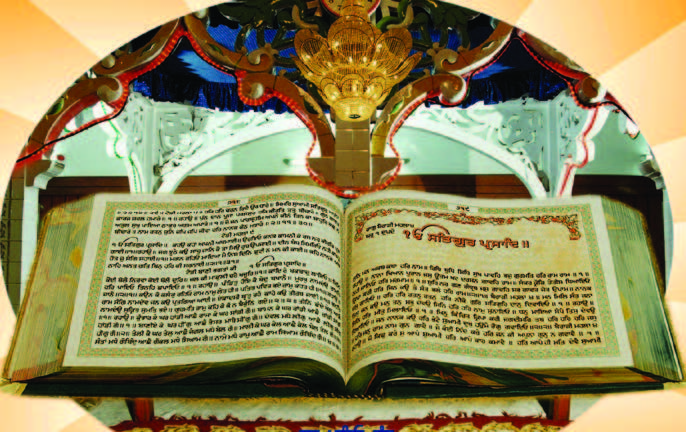
FIRST PRAKASH DIVAS OF SHRI GURU GRANTH SAHIB
Guru Arjan Dev Ji installed Adi Granth at Harmandir Sahib Ji 1604. Baba Buddha Ji was the First Granthi and Bhai Gurdas Ji completed Adi Granth Sahib Ji as dictated by Shri Guru Arjan Dev Ji in 1604. Later Guru Gobind Singh Ji adds Shabads of Guru Teg Bahadur Sahib Ji and then in 1708, Adi Granth became Guru Granth Sahib Ji, the Eternal Guru of Sikhs as was declared by Guru Gobind Singh Ji.
The Guru Granth Sahib is indeed unique in its thought, literary expression and the message it continues to communicate centuries after it was written. Exalted thought needs to be transported on the vehicle of language to reach the masses. Poetic expression lifts prose to a higher plane.When verse and music meld, their beauty and sweetness makes mind transcend the humdrum of rational existence. This is divine love, passion pure expressed poetically; set to select 31 ragas…. The thought is egalitarian, expressed in a language that can be lucidly understood by the masses and the compositions are poetic, composed in the traditional Indian meters.
As Bhai Kahan Singh’s Mahankosh tells us, the Guru Granth Sahib contains the bani (sacred compositions, literally utterances) of six Gurus, 15-non Sikh bhagats (saints) whose bani was in consonance with the teachings of the Gurus, 17 bhattas (bards) and four others. Guru Arjan Dev, the fifth Guru of the Sikhs, had the bani of the first four Gurus compiled in a manuscript for which he asked Bhai Gurdas, a major Sikh theologian, to be the scribe. It was this manuscript, the Adi Granth, which was ceremoniously installed in the sanctum sanctorum of Harmandir Sahib at Amritsar in 1604 AD.
The manuscript also had Guru Arjan Dev’s compositons, the writings of bhagats and some others like Bhai Mardana and Sunder. The work of scribing the bani of the Guru started in the lifetime of the founder of Sikhism, Guru Nanak Dev. His compositions were carried in oral tradition as well as written down by his followers, even during his journeys.
There are references in Puratan Janamsakhi to Hassu Lohar, Shihan Chheemba, Saido Jat, and Tan Sukh Bania, who were also among those who accompanied Guru Nanak during his journeys or udasis and penned his bani. Guru Nanak had founded Kartarpur, at present called Kartarpur Ravi and Dera Baba Nanak. It is now in Pakistan, just across the Ravi and is visible from the Indian side. It was here that the Guru settled down with his family in the twilight of his life. He was then in his seventies. As Bhai Gurdas, who was later to scribe the Adi Granth (original manuscript), says: “The morning would begin with the recitation of Japji and Asa di Vaar, after which people would continue with their worldly duties. In the evening, Sodhar and Aarti were recited.” The Janamsakhis tell us that Guru Nanak compiled Japji and Asa di Va at Kartarpur.
He asked Bhai Lehna to assist him in editing these compositions. He was subsequently chosen, over his own sons, by Guru Nanak as his successor and named Angad, a part of oneself. As tradition puts it, Guru Nanak gave him the pothi (manuscript) that had 974 of his compositions (Pothi zuban Angad jog mili). Guru Angad added 63 of his compositions and gave the corpus to Amar Das, who was to be the next Guru. He was to add 907 compositions. Guru Amar Das made his grandson, Sahansar Ram, write the manuscript. It included the bani of Guru Nanak Dev, Guru Angad Dev and Guru Amar Das. The works of the bhagats were also included in it. A number of manuscripts were written, two of which are still available.
They are known as the Goindwal pothis. These pothis also have Guru Amar Das’s forceful message about bhagat bani’s inclusion and importance, and of how the bhagats were influenced by Guru Nanak (Nama chimba Kabir julaha pure Gur te gat pai). Guru Amar Das decided that the next Guru would be his son-in-law, Guru Ram Das. At this, his two sons were unhappy and they kept the manuscripts with them in order to project their own importance to the followers. The pothis were thus kept by Bhai Mohan, Guru Amar Das’ elder son.
The other major source of bani of Guru Nanak was the Harsahai pothi, which was with the family of the descendants of Prithi Chand, elder brother of Guru Arjan Dev. This manuscript was to remain with the family till it was stolen in 1970-71. When Guru Arjan Dev decided to compile the bani of his predecessors, there were thus a number of significant manuscripts that contained the Gurus’ compositions. Some had certain compositions that Guru Arjan Dev did not consider authentic. In order to consolidate the bani and prevent any spurious compositions from creeping into the original texts, he decided to have the Adi Granth compiled. The Tawarikh Guru Khalsa tells us that everyone who could contribute was asked to do so.
The Guru issued hukamnamas to all Sikhs, asking them to bring the bani of the Gurus to Amritsar, where the editing was to be done. He called the rababis (rebeck players) who had memorised the bani, as well as ordinary Sikhs, who had preserved the bani safely. It was with this corpus that the editing began. Every available source and content was carefully scrutinised and Guru Arjan Dev kept only what was considered absolutely authentic. The task of making the manuscript was entrusted to Bhai Gurdas. The compositions of the bhagats were also scrutinised. The bhagats whose works are contained in the Guru Granth Sahib came from different regions of India and wrote in regional languages.
The number of their compositions which were included is given along with their names: Kabir 541, Farid 116, Namdev 61, Ravidas 40, Trilochan 4, Beni 3, Dhanna 3, Bhikhan 2, Jaidev 2, Parmanand 1, Pipa 1, Ramanand 1, Sadhana 1, Sain 1, Surdas 1. The bhagats were from different religious denominations. They also belonged to different castes, including the so-called low castes, and came from different parts of the country like Uttar Pradesh, Bengal, Maharashtra, Mysore, Sindh, Rajasthan and Punjab. The bhagat bani gives a unique inter-religious, inter-regional flavour to the Adi Granth and the bhagat bani of the Guru Granth Sahib is a wonderfully catholic, cosmopolitan aspect of this scripture. While scribing the Adi Granth, Guru Arjan Dev ensured that the matter was arranged in a particular order and that everything was in proper context.
The author of each composition was identified; the context determined the placing of the bani; the appropriate ragas were determined; and the whole text numbered, so that nothing could be interpolated. Scholars contend that the earlier manuscripts were written without any break between words to prevent anyone from inserting anything between these, and this tradition continues. A raga is usually defined as a musical arrangement that brings forth love in one’s mind. The arrangement of ragas in the Guru Granth Sahib is, according to the Hanuwant system, without the raginis.
All the hymns are meant to be sung; and kirtan, the singing of the bani in an appropriate raga, is considered by Gurmat as an essential part of the religion and the sole form of worship among the Sikhs. Singing kirtan creates a shared community experience through repetition. After the Adi Granth was ready, the manuscript was taken in a ceremonial procession from Ramsar to Harmandir Sahib. Bhai Budha, who had come to Kartarpur and became Guru Nanak’s follower as a young lad, was now much revered. He now had a silver beard and he carried the Adi Granth on his head as a mark of respect. Guru Arjan Dev held a chowr (whisk), and the Sikhs, led by Bhai Gurdas, accompanied the solemn and grand procession to Harmandir Sahib, where the Adi Granth was installed. Guru Arjan Dev and other Sikhs sat at a lower level.
The bani of the Adi Granth held an exalted status. Baba Budha became the first Granthi. Soon more and more Sikhs concentrated on learning Gurmukhi, since the bani was written in this script. The Sikhs also started making copies of the manuscript of the Adi Granth, some of which can still be seen. While the installation of the Adi Granth at Harmandir Sahib was of great significance to the Sikhs, it also caused jealousy to some, especially the estranged relatives of the Gurus. This led to an interesting incident that finds mention in history. In 1605, when Emperor Akbar was visiting Batala in Punjab, he was told that the Sikhs had a holy book that contained passages that were blasphemous to Islam.
The Emperor called for the Adi Granth, which was sent by the Guru in the custody of Bhai Gurdas and Baba Budha. Bhai Gurdas, who had written every word of it, assured the Emperor that there was nothing against Islam, and that on the contrary, it contained hymns of Muslim saints. The Adi Granth was read at random in the presence of qazis and pandits. The first stanza said: “We are all children of our Father God.” When it was opened next, it said: “God pervades all His creation and the creation resides in Him. When there is nothing but God, whom should one blame.”
The Emperor realised that there was nothing blasphemous in the document and he made an offering of gold coins to the Adi Granth. Robes of honour were presented to both custodians of the Adi Granth. This became the first significant instance of someone recognising the intrinsic truth contained in the Adi Granth and thereafter making a symbolic offering to it, something millions do every day, the world over. Guru Gobind Singh, after adding 115 compositions of his father, Guru Teg Bahadur, and Jai Jai Vantee Raga to the extant 30 ragas in the Adi Granth, proclaimed near the end of his life that henceforth there would be no person who would be the Guru of the Sikhs.The sole Guru would be the Word enshrined in the Guru Granth Sahib. The Word of faith, scribed for two centuries, was now complete and final.
-

Hazards of a poorly planned engagement with Pakistan
“While a measured engagement with whoever rules Pakistan is necessary, it has to be complemented with measures to tighten internal security, enhance our military capabilities and raise the costs for Pakistan, if it pursues its present efforts to “weaken India from within”, says the author
Adiplomatic engagement with a neighbour having territorial ambitions has to be carefully calibrated and executed. Apart from realistically assessing the balance of military and economic power, one has also to carefully assess the neighbour’s internal political imperatives and the readiness of its leadership to live at peace, without resort to terrorism.
Sadly, there are vociferous sections in India which believe that dialogue with Pakistan is an end in itself, without carefully considering what the available options are. Moreover, has continuing dialogue produced better results than no dialogue at all? Pakistan lost its eastern half, 13,000 Sq. kms. of its territory in the west, one half of its navy, one-fourth of its air force and army, with India holding 90,368 prisoners of war, in the 1971 Bangladesh conflict.
In negotiations in Simla with Zulfiqar Ali Bhutto, India’s most hard-headed Prime Minister was persuaded by some of her key officials that Bhutto would be devastated politically if he went back empty handed from Simla. While returning the 90,368 PoWs was inevitable, what was surprising was the decision to withdraw from 13,000 sq km of Pakistan territory captured by us on the basis of a mere verbal assurance from Bhutto that he would, in due course, settle the Kashmir issue on the basis of the territorial status quo.
Bhutto had no intention of abiding by his verbal commitment. Just over a decade later, Pakistan commenced promoting a communal divide in Punjab. This was followed by the arming and training of disaffected Kashmiri youth to promote an armed insurgency in J&K. Pakistan also sought to exploit “fault lines” in India’s body politic. The Mumbai bomb blasts in 1993, where 250 Indians perished, were planned and executed by the ISI.
The perpetrator of these blasts, Dawood Ibrahim, resides comfortably in Karachi. He even ventures abroad on a Pakistani passport. ISI-sponsored terrorism grew rapidly alongside continuing “dialogue” with Pakistan. The bilateral dialogue was called off by Prime Minister Benazir Bhutto in 1994 when she found that efforts to coerce India on J&K had not worked.
Unlike in the past, Kashmiri youths were becoming increasingly wary of crossing the LoC. What followed was the induction of Pakistani nationals from the ISI-backed terrorist outfits like Jaish e Mohammed, Harkat ul Mujahideen and Lashkar e Taiba. This shift in Pakistani strategies from support for a “freedom struggle” of Kashmiris to a jihad by terrorists occurred, not because of any “composite dialogue,” but because of ground realities.
Moreover, it was during this period that, thanks to imaginative political initiatives and effective policing, Pakistan-backed militancy in Punjab ended. Terrorists from Babbar Khalsa and the ISYF, however, still live across our borders. Prime Minister Inder Gujral initiated discussions with Nawaz Sharif on a “Composite Dialogue Process,” in which the centrality of terrorism was not emphasised. Terrorism was merely put on the same pedestal as drug smuggling! The first round of this dialogue was held in 1998, after the nuclear tests.
Determined to ensure that India was seen as sincere in its quest for peace, Mr. Vajpayee visited Lahore, only to find that rather than promoting peace, the resumption of the dialogue was accompanied by Pakistani intrusions, leading to the Kargil conflict, amidst dire Pakistani threats of nuclear escalation. President Musharraf’s subsequent visit to Agra was followed by the attack on India’s Parliament in December 2001. Structured dialogue alone was clearly no recipe for peace and good neighbourly relations.
The military standoff after the Parliament attack and the post 9/11 American invasion of Afghanistan, forced General Musharraf to think afresh. He proposed a ceasefire across the LoC and promised that “territory under Pakistan’s control” would not be used for terrorism against India. While Musharraf abided by his commitments, where the UPA government went horribly wrong was in presuming that a weak democratic government led by Mr. Asif Ali Zardari, a well-meaning Sindhi Shia, would be able to rein in the jihadi propensities of Gen Ashfaq Kayani, a hard line Islamist. New Delhi underestimated the significance of the deadly ISI-sponsored attack on our Embassy in Kabul in August 2008.
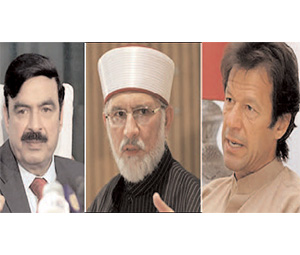
What inevitably followed was the terror strike of 26/11 in Mumbai. The public outcry that followed the disastrous summit diplomacy in Sharm-el Sheikh forced the UPA government to tread warily thereafter. Given what followed the 2008 terrorist attack on our Embassy in Kabul, New Delhi should not underestimate the significance of the attack on our consulate in Herat, just on the eve of Prime Minister Nawaz Sharif’s visit to Delhi. The recent demonstrations led by Imran Khan and Tahir-ul-Qadri clearly enjoy the behind-the-scenes backing of the Pakistani military establishment.
The army has indicated that it will assist Nawaz Sharif. But in return for this support it has demanded that Sharif “must share more space with the army”. To expect that in these circumstances, Nawaz Sharif can deliver India’s concerns on terrorism, or promote trade and energy cooperation significantly will be wishful thinking. The tough stance that India has taken on the links of the Pakistan establishment with Hurriyat at least conveys that it is not going to be “business as usual” with Pakistan, especially if it continues with ceasefire violations, while abetting terrorism in India and threatening our diplomatic missions and nationals in Afghanistan.
In her meticulously researched book “The Pakistan Army’s Ways of War” American academic Christine Faire notes that in order to deal with Pakistani army policies which undermine US interests and seek to destabilise India, the US should consider means to “contain the threats that emanate from Pakistan, if not Pakistan itself”. This is the first time a reputed American academic has spoken of the need to “contain” Pakistan.
Clearly, this cannot be done by merely chanting the mantra of “uninterrupted and uninterruptable dialogue” with Pakistan. While a measured engagement with whoever rules Pakistan is necessary, it has to be complemented with measures to tighten internal security, enhance our military capabilities and raise the costs for Pakistan, if it pursues its present efforts to “weaken India from within”.
(The author is a former diplomat. He served as India’s High Commissioner to Pakistan and Myanmar, and was spokesperson of the Ministry of External Affairs and the Prime Minister’s office) -

TALKS TO RESOLVE PAK CRISIS STALLED OVER PM RESIGNATION DEMAND
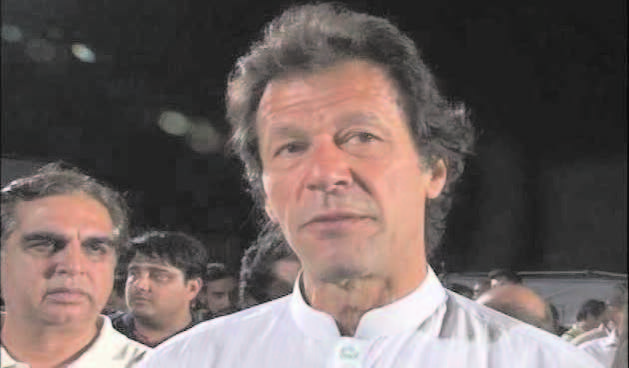
ISLAMABAD (TIP): Confrontation between Pakistan government and the opposition escalated today with Prime Minister Nawaz Sharif rejecting demands for his resignation and Imran Khan calling off the dialogue with his regime until he quits. Addressing the Parliament for the first time on the ongoing political crisis, Sharif brushed aside the demand for his resignation saying the country has survived “difficult times” and the current political crisis too shall pass. “We are not going to be diverted by these things.
The journey for the supremacy of Constitution and law in Pakistan will continue with full determination and God willing there will not be any interruption in it,” Sharif said. On the other side, Pakistan Tehreek-i- Insaf (PTI) chief Khan hardened his stand and called off the dialogue with the government saying that he will not be able to get justice as long as Sharif stays on as Prime Minister.
The hardening of stance came after the failed fifth round of talks even as the Supreme Court ordered the demonstrators to clear the Constitution Avenue by tomorrow. Political stalemate has continued for the last two weeks with Khan-led PTI and cleric Tahir-ul-Qadri’s Pakistan Awami Tehreek (PAT) refusing to budge from their demand of the Prime Minister’s resignation over allegations of rigging in last year’s general election and killing of 14 PAT supporters in Lahore on June 17.
Today’s developments came a day after Sharif and powerful Army Chief Gen Raheel Sharif agreed on the need to “expeditiously” resolve the political deadlock amid fears of instability in the coup-prone country. The talks between the PTI and the government ended in a stalemate with the sticking point being the protesters’ demand of Prime Minister’s resignation. “There will be no negotiations with your (Sharif) team now. No resignation, no negotiations,” Khan told a crowd of supporters outside the Parliament.
“Nawaz Sharif is buying time. If we let him stay, he will buy officials and media houses,” Khan said. “We offered concessions, we agreed for the Prime Minister to resign only for 30 days, but they know what would happen if they allow investigations to proceed,” the cricketer-turned politician said. “If you pull back, there will be no independent inquiry under Nawaz Sharif,” Khan said. He claimed that the government offered to make him deputy prime minister. Meanwhile, Qadri’s 48-hour ultimatum to Sharif to step down expired today. Qadri announced the deadline for the government to quit on Monday after talks with the government failed to make any headway. Federal ministers Ishaq Dar and Zahid Hamid went to the protest site to engage Qadri in the ‘decisive phase’ of talks. Qadri said the talks with the government have entered a final phase.
Punjab province chief minister Shahbaz Sharif could resign until the investigations into the Model Town tragedy is completed, Geo News reported quoting sources. The judicial commission investigating the June 17 Model Town incident, in which 14 of Qadri’s supporters were killed, has held the government responsible for it and said police acted on government orders which led to the bloodshed. The report said the affidavits of chief minister Shahbaz and former law minister Rana Sanaullah contained contradictions regarding the orders they reportedly issued to police to disengage, and declared that what happened on the ground did not match such claims.
As protesters continued to insist on their demands, a five-judge bench of the Supreme Court, headed by Chief Justice Nasir-ul-Mulk, gave the order for PTI and PAT protesters to clear the Constitution Avenue, including a road in front of the apex court and the Parliament. The order was given during the hearing of identical petitions filed by bar associations across the country against the PAT and PTI sit-ins.
According to petitioners, protesters are breaching the rights of the common citizen which ensure freedom of movement and right of assembly. Sharif has remained defiant in the face of protests by thousands of supporters of Khan and Qadri camping outside the Parliament demanding his resignation and re-elections to be held. “We have survived difficult times.
In the 2008 elections, our hands were tied. But we campaigned and participated, we did not cry about rigging — and it would have been a legitimate cry,” Sharif said while addressing the National Assembly. “Because at that time there was a dictator that controlled the government. He held those elections…But we said if PPP has got more seats than us then we will accept that right of the PPP,” he said. Sharif said his PML-N for five years worked with the Pakistan People’s Party government and supported it to complete its term. “I visited him (Imran Khan) in the hospital when he was injured and he congratulated me on winning the polls and said he will play the role of a constructive opposition,” Sharif told the House.
“Imran’s claims were published in the papers as well,” he said, adding that PTI had reservations but accepted the results of the elections. Days after its lawmakers resigned from the National Assembly, PTI’s Punjab Assembly members today submitted their resignations, stepping up pressure on the embattled government. Opposition Leader in the Punjab Assembly and PTI member Mehmoodur Rashid and 28 other party members handed their resignations from the house in the Punjab Assembly Secretariat. -

Pak protests: Imran Khan’s party holds talks with government negotiators
ISLAMABAD (TIP):
Pakistani ministers and opposition politicians met antigovernment protesters on August 20 but talks ended for the day with the sides appearing no closer to resolving a weeklong political crisis that has rattled the restive, nuclear-armed nation. Thousands of followers of cricketerturned- politician Imran Khan and populist cleric Tahir-ul-Qadri have been demonstrating outside the parliament building in Islamabad, trying to force Prime Minister Nawaz Sharif to resign from office. Khan and Qadri say last year’s general election that swept Sharif to power by a landslide was rigged and are demanding his resignation.
Late on Wednesday Imran Khan’s team met with government negotiators in Islamabad to discuss his Pakistan Tehreeke- Insaf (PTI) party’s demands. “We put our demands before the government team and they promised to get back to us on Thursday after examining them,” PTI vice-chairman Shah Mehmood Qureshi told reporters after talks. Imran Khan had earlier struck a defiant note, insisting Sharif must resign before he would participate in negotiations.
Chaudhry Muhammad Sarwar, a member of the government team and governor of Punjab province said the talks were cordial. “Whatever decision the two committees take will be in the best interest of Pakistan,” he said. Earlier on Wednesday evening, a crossparty delegation met members of Qadri’s team to try to resolve the standoff, but the session finished with no concrete result.
Talks were dominated by the issue of the alleged murder by police of at least 10 of Qadri’s Pakistan Awami Tehreek (PAT) movement’s workers in Lahore in June, Rahiq Abbasi, a member of the cleric’s committee, told reporters afterwards. called for the immediate registration of a case and the arrest of all accused,” Abbasi said, reiterating his call for Prime Minister Sharif’s government to stand down. The government’s response was not immediately known.
The showdown has added to instability in a country that has had three military coups since its creation in 1947 and which is struggling with a homegrown Taliban insurgency, a crippling power crisis and a sluggish economy. The two protest movements are not formally allied and have different goals, beyond toppling the government. But their combined pressure — and numbers — have given extra heft to the rallies.
If PAT were to reach a settlement with the government and withdraw, PTI’s position would be significantly weakened, despite Imran Khan’s tough stance. Neither movement has mobilized mass support beyond their core followers and opposition parties have shunned Imran Khan’s call to unseat the government and begin a campaign of civil disobedience.
The Supreme Court, which has played an influential role in Pakistani politics in recent years, has ordered Imran Khan and Qadri to appear on Thursday to explain their protests. The ruling came after petitions urging the court to restrain Khan and Qadri from “making illegal and unconstitutional demands”, Kamran Murtaza, a senior lawyer, told AFP. The protests have so far been peaceful but the crisis has raised fears that Pakistan’s fragile democracy could be under threat of another military intervention.
Rumours have abounded that elements within the influential military have been behind Imran Khan and Qadri’s moves, though the cleric and the interior minister have adamantly denied this. The army’s chief spokesman General Asim Bajwa said via Twitter the situation required “patience, wisdom and sagacity” from all sides and could only be resolved through “meaningful dialogue”.
Sharif has a history of testy relations with the military — his second term as prime minister ended abruptly in 1999 when then-army chief Pervez Musharraf seized power in a coup. His government is thought to have angered the military further by pursuing criminal cases against Musharraf dating back to his 1999-2008 rule, including treason charges. Military analyst Ayesha Siddiqui warned that the situation was precarious. “From the military perspective, they have tried and tested Nawaz Sharif a third time and they feel disappointed. Why would they let him be?” she told AFP. -

Manmohan Singh Immune as PM, not as Finance Minister, from claims of Sikh killings: US Court
NEW YORK (TIP):
US District Judge Honorable James Boasberg in the District of Columbia, August 19 ruled that former Prime Minister Manmohan Singh is immune from claims that he supported the genocide of Sikhs during his tenure as head of the country but does not have “head of state immunity” for claims arising from his tenure as Finance Minister of India (1991- 1996).
August 19 ruling of Judge Boseberge states that “Defendant Manmohan Singh was, until very recently, the Prime Minister of India. Plaintiffs Sikhs for Justice, a nonprofit organization, and Inderjit Singh have brought this suit alleging that the former Prime Minister tortured and killed Indian Sikhs during his time at the helm of that country’s government and, before then, as Finance Minister.
The United States, a nonparty in this litigation, has filed a Suggestion of Immunity claiming that Singh, as the sitting Prime Minister, is entitled to head-of-state immunity. Although at the time of that filing, Singh was indeed Prime Minister, he left office three weeks later. Plaintiffs, consequently, counter that Singh is no longer entitled to such immunity. They are only partly correct.
Although he is no longer a head of state, Singh is entitled to residual immunity for acts taken in his official capacity as Prime Minister. Because such residual immunity does not cover actions Singh pursued before taking office, however, the allegations stemming from his time as Finance Minister survive.” US based rights group, “Sikhs for Justice” (SFJ) and Inderjit Singh, claimed in the 2013 suit that as finance minister Manmohan Singh “funded several counter insurgency operations in state of Punjab during the 1990s resulting in more than hundred thousand Sikhs being killed extra- judicially by the security forces”.
During his tenure as Prime Minister, Manmohan Singh was accused of being complicit in the torture and killing of hundreds of thousands of members of Sikhs and for shielding the perpetrators of Sikhs Genocide. Judge Boasberg ruled that that U.S. law bars former heads of state from being sued for actions they took while in office, but not for private acts or those taken in prior government posts. However, “while Singh’s alleged acts as Finance Minister are not ‘private’ per se, they did not occur in the course of his official duties as head of state,” Boasberg wrote.
Terming the sustaining of charges against Manmohan Singh in US Court as a ray of hope for the plaintiffs Gurpatwant Singh Pannun, legal advisor to SFJ stated that this is a start of long and uphill battle of making former prime minister accountable for funding “counterinsurgency operations” across India in which hundreds of thousands of Sikhs were kidnapped, murdered and buried in mass graves during 1990s.
Citing the case of Jiang Zemin, the former president of China, in May, the U.S. Department of Justice urged Boasberg to dismiss the entire suit because it was filed when Singh was still a sitting head of state. However, the Judge Boasberg ruled that the cases were distinct because all of the claims against Zemin stemmed from his time as a head of state while the case against Manmohan Singh also includes claims from the time when he was not head of the state (1991-96). The case against Manmohan Singh was filed by the victims during September 2013 Obama-Singh Summit visit under the Alien Tort Claims Act (ATCA) and Torture Victim Protection Act (TVPA). -

INDIAN FREEDOM FIGHTERS
Known and revered worldwide as Mahatma Gandhi, he advocated nonviolence (ahimsa) as the only path to victory.
India as we know it today would not have been, but for the efforts of selfless and courageous men and women who deemed it their life’s purpose to liberate the country from colonial rule and retain its sovereignty and heritage. Some of these leaders adopted moderate approaches of dialogue, protests and civil disobedience in their struggle for independence, while others wanted self-rule and were literally willing to lay down their lives fighting for it.
However, it cannot be denied that one and all, in their own ways, these freedom fighters were responsible for making India an independent country and helped realise the dream of Swaraj. Here are some of the great leaders to whom we owe our present status as an independent and sovereign republic.

Jawaharlal Nehru
The first Prime Minister of independent India, he was a staunch believer in democratic ideals and helped realize the vision of India as a democracy.

Bhagat Singh
Considered one of the most influential revolutionaries of the Indian independence movement, he, along with Shivaraj Rajguru and Sukhdev Thapar became the symbols of courage, action, and spiritedness for Indian youth.

Subhash Chandra Bose
Founder of the Indian National Army, he enlisted the help of Japan in regaining control of several Indian territories under the rule of the British.

Dr. Rajendra Prasad
The first President of the Republic of India, Prasad was one of the architects of the Constitution of India.

Lal Bahadur Shastri
The second Prime Minister of independent India was instrumental in pushing forward the Green Revolution, which made India a food surplus country.

Chandrashekhar Azad
He was one of the fierce patriots who believed in freedom at any cost and accomplished daring deeds in the course of his lifelong fight. He was also the mentor of Bhagat Singh, the famous Indian martyr.

Sardar Vallabhbhai Patel
Known as the Iron man, he helped achieve the political integration of the princely states towards forming a unified independent India.

Bal Gangadhar Tilak
The first leader to boldly declare that complete selfgovernance (Swaraj) was the only position acceptable to him, Tilak was instrumental in inciting the desire for freedom in the Indian consciousness as well as saving Indian culture and heritage from insidious western influences.

Gopal Krishna Gokhale
He was one of the most learned men in India, and a leader of social and political reformists as well as a senior leader of the Indian National Congress. He was also a mentor to Mahatma Gandhi when the latter had returned from South Africa and was just beginning to actively participate in the Indian independence movement.

Dr. Bhimrao Ambedkar
Widely known as the father of the Indian Constitution, he was also instrumental in improving the plight of the dalits, tribals, and other marginalized.

Bagha Jatin Mukherjee
One of the great leaders of the underground resistance, Jatin, along with other revolutionaries, participated in guerrilla warfare on British nationals along with sabotaging British properties, all to disarm the British might.

Dadabhai Naoroji
One of the earliest leaders to lay the foundation for India’s freedom struggle, Naoroji was a founder of the Indian National Congress.

Jhansi Ki Rani Lakshmibai
One of the leading figures of the Great Indian Mutiny of 1857, she rode into battle to save Gwalior Fort, the last bastion of the uprising, and died

Mangal Pandey
Widely known as the initiator of the first war of independence, the Sepoy Mutiny of 1857, Pandey fired at British officers to vent mass anger among the Sepoys at being made to chew off the pig fat-containing outer layer of the new gun cartridges the Sepoys were to use.

Rabindranath Tagore
Tagore was a great writer and poet who stirred the emotions of the people and fired the spark of patriotism in them through his works. He is most famously known as the author of India’s national anthem ‘Jana Gana Mana’.

Vinayak Damodar Savarkar
Popularly known as ‘Veer’ Savarkar, he actively denounced British policy and boycotted British goods. He underwent imprisonment in the infamous Andamans prison.

C. Rajagopalachari
A great statesman and scholar, ‘Rajaji’ as he was known, was close to Mahatma Gandhi. He practiced Gandhi’s ideology throughout his life and worked for the Congress party for more than half a century.

Shivaram Hari Rajguru
He was an Indian revolutionary from Maharashtra, known mainly for his involvement in the murder of a British police officer. He was a member of the Hindustan Socialist Republican Army(HSRA), who wanted India to be freed from British rule by any means necessary.

Sukhdev Thapar
Sukhdev was a famous Indian revolutionary who played a major role in the India’s struggle for Independence. Sukhdev Thapar was a member of the Hindustan Socialist Republican Association (HSRA), and organised revolutionary cells in Punjab and other areas of North India. A devoted leader, he even went on to educate the youth at the National College in Lahore.

Ram Prasad Bismil
Ram Prasad Bismil was an Indian revolutionary who participated in Mainpuri conspiracy of 1918, and the Kakori conspiracy of 1925, both against British Empire. As well as being a freedom fighter, he was also a patriotic poet and wrote in Hindi and Urdu using the pen names Ram, Agyat and Bismil. But, he became popular with the last name “Bismil” only.

Tatya Tope
Ramachandra Pandurang Tope was an Indian Maratha leader in the Indian Rebellion of 1857 and one of its more renowned generals. He was a personal adherent of Nana Saheb of Bithur. He progressed with the Gwalior contingent after the British reoccupation of Kanpur and forced General Windham to retreat from Kanpur.

Lala Lajpat Rai
Lala Lajpat Rai was an Indian Punjabi author and politician who is chiefly remembered as a leader in the Indian fight for independence from the British Raj. He was popularly known as Punjab Kesari meaning The Lion of Punjab also known as “Sher-EPunjab” in Punjabi. He was part of the Lal Bal Pal trio. He was also associated with activities of Punjab National Bank and Lakshmi Insurance Company in their early stages. He sustained serious injuries by the police when leading a non-violent protest against the Simon Commission and died less than three weeks later.

Udham Singh
He was an Indian revolutionary, best known for assassinating Michael O’Dwyer in March 1940 in what has been described as an avenging of the Jallianwalla Bagh Massacre. He is a prominent figure of the Indian independence struggle. He is also referred to as Shaheed-i-Azam Sardar Udham Singh. -

India’s Independence Movement – a Timeline
By Nitin Vora
“At the stroke of midnight hour when the world sleeps, India will awake to life and freedom…are we brave
enough and wise enough to grasp this opportunity and accept the challenge of future? “The great day” that
millions of people have been dreaming about for years, at last materialised – a day of rapturous jubilation.”
Friends, these are the words of India’s first Prime Minister Jawaharlal Nehru on the eve of August 15, 1947, first day of our freedom.

Mahatma Gandhi
The British control of India began in the 1600′ with the East India Company as a commercial venture. However, over the decades Britain’s strong hold and political aspirations over the country became stronger. A growing sentiment to overthrow Britain’s domination culminated in the Indian mutiny of 1857. Some of you must have seen the movie “Mangal Pandey”, yes, I am talking about that young Mangal Pandey who gave a clarion call to all the Indian soldiers to revolt against Britain.

Jawaharlal Nehru
This was known as “sepoy mutiny” he was sentenced to death and within 2 months the great war of Independence started on 29th March, 1857. Rani Laxmibai of Jhansi created history by fighting a great battle, she succumbed to her wounds in the battlefield. The Indian National Congress, the political party was founded and spearheaded the freedom struggle in 1885. Swami Vivekanands’s presentation of India’s religion and culture to the parliament of world religions in 1893 in Chicago (USA), made the whole world aware of India’s rich heritage.

Sardar Vallabhbhai Patel
On his return, he electrified the whole nation with his clarion call “Arise, awake, and stop not till the goal is achieved”. Dadabhoy Navaroji’s “Poverty and un- British-rule in India” stimulated economic nationalism in 1901. The bifurcation of Bengal in 1905, which then comprised of Assam, Bihar, Orissa and Bengal sparked off yet another revolutionary movement with burning and boycotting of foreign goods. In 1906, Bal Gangadhar Tilak, the first nationalist leader voiced the idea of home rule,.

Subhash Chandra Bose
Tilak gave us the mantra “Swaraj is my birth right”. In 1911, King George Vth annuls the partition of Bengal and Delhi is made the capital of India. Rabindranath Tagore, the author of our national anthem jan gan man…. becomes the first Indian to receive Nobel Prize in 1912. Mohandas Karamchand Gandhi returns to India in 1915 from South Africa, where he had led a successful peaceful-resistance movement against the British government. South Africa beautifully says : “You gave us Gandhi, we are giving back Mahatma” The Rowlett act was introduced in 1918 so that any political subject could be arrested and imprisoned. Both Gandhi and Tilak condemned this and the country rose, imbued with the spirit of rebellion.

Lala Lajpat Rai
On 13th April 1919, General Dyer enters Jallianwala Bagh with armored cars and troops and orders fire on unarmed men, women and children. 3,000 + were massacred in Jallianwala Bagh. The carnage of such heinous magnitude awakened the whole country . In 1920, Congress led by Gandhiji proposed a non-violent, non-co operation movement. Countless gave up their career and joined the movement.

Bhagat Singh
Jawaharlal Nehru and Subhash Chandra Bose, two radical nationalists emerge as important national leaders in 1928. Inquilab Zindabad was the mantra for three revolutionaries- Bhagat Singh, Sukhdev and Rajguru who were hanged to death in 1929. Gandhiji, along with colleagues embarked on a 60 mile march to the sea coast at Dandi in Gujarat, protesting against the excise tax on salt known as the famous Dandi March in December 1929 civil disobedience. Nehru becomes the Congress President at Lahore annual convention and declares nothing short of poorna swaraj. Nehru unfurls the first tricolor flag in Punjab.
January 26, 1930 was declared as Independence Day. India’s Republic Day is also celebrated on 26th January for this reason. Louis Fischer wrote, “the British beat the Indians with batons and rifle butts but the Indians neither cringed nor complained nor retreated, that made England powerless and India invincible.” Netaji, in 1939 forms Forward Block party. He was the most fierce and visionary activist who shook the very foundation of the British empire.
In 1940, Muslim League under Mohammad Ali Jinnah, demands separate state of Pakistan. Britain encouraged this in pursuance of their policy of divide and rule. Rasbehari Bose formed Azad Hind Fauj and handed it over to Netaji who said ” give me blood, I’ll give you freedom”. “Karenge ya marenge, do or die “quit India”, the national slogan given by Gandhiji was adopted on August 8th, 1942. British Prime Minister Atlee agrees to India’s Independence in 1945. Mohammad Ai Jinnah on August 16, 1946 gave a call for direct action day through countrywide demonstrations. This triggered Calcutta killing of 5000 people which also spread to other parts of the country.
Britain agreed to Jinnah’s demand and Congress Party accepted the partition of the country into India and Pakistan. On June 3 , 1947, Lord Louis Mountbatten announced the partitin of India as Union of India and Islamic Pakistan. Sardar Vallabhbhai Patel, the iron man of India with great wisdom and political foresight consolidated about 600 princely states, scattered all over India, without any bloodshed. Pakistan was born on 14th August 1947 and India achieved her freedom on August 15, 1947.
India became a Republic on January 26, 1950. Bankimchandra composed the song Vande Mataram in an inspired moment,. Rabindranath Tagore sang it by setting a glorius tune to it and it was left to the genius of Shri Aurobindo to interpret the deeper meaning of the song from which India received new nationalism. “We owe a lot to the Indians, who taught us how to count, without which no worthwhile scientific discovery could have been made”, this is India’s gift to the world”.
Albert Einstein said, paying tribute to India. “India is the cradle of the human race, the birth place of human speech, the mother of history, the grandmother of legend and the great grandmother of tradition. our most valuable and most astrictive materials in the history of man are treasured up in India only” said the great American writer Mark Twain. -

Pakistani court bars Imran, Qadri from holding march
LAHORE (PAKISTAN (TIP):
A Pakistani court on August 13 restrained a cricketerturned politician and a Canada-based populist cleric from launching a march on Islamabad in an unconstitutional way, a lawyer said. The Lahore high court’s order came as authorities blocked almost every entry point to Islamabad on Wednesday, with more than 20,000 police and paramilitary forces deployed to try to thwart a major anti-government rally.
“Pakistan Tehreek-e-Insaf (PTI) and Pakistan Awami Tehreek (PAT) are restrained from launching a march/sit-in in Islamabad in any unconstitutional way keeping in view sensitivity of independence day and current uncertain situation in the country,” PTI’s lawyer Ahmad Owais said in Lahore quoting from a short order by a three-judge panel headed by Justice Khalid Mehmood.
Major roads were barricaded with shipping containers and police used excavators to dig up smaller roads in Islamabad, a day before two opposition protest marches are due to converge on the capital. Imran Khan and Canada-based preacher Tahir-ul-Qadri, who heads PAT, plan to march on the city on Thursday, Pakistan’s independence day, to demand Prime Minister Nawaz Sharif resign and call fresh elections. Both Khan and Qadri, who led mass demonstrations in Islamabad early last year to urge electoral reform, allege that the May 2013 general election was rigged.
By late Wednesday afternoon only the highway to the airport remained open and even there shipping containers were on standby ready to be moved into place. The heavily-guarded “red zone”, home to parliament, the president and prime minister’s residences and foreign embassies, was already sealed with containers, barbed wire and concrete blocks. Mobile phone services were shut down in the red zone on Wednesday — a common practice on sensitive occasions in Pakistan aimed at stopping militants using cell phones to detonate bombs.
In front of the five-star Serena hotel, the road was blocked with several containers guarded by around 50 to 60 policemen. The city streets were largely deserted on Wednesday, with almost all offices and shops closed. The government on Wednesday asked the Supreme Court to set up a panel of judges to investigate claims of rigging in last year’s general election — a move announced by Sharif late on Tuesday to try to ease political tension.
The judicial probe was a key demand of Khan, who leads the country’s third largest party, but he rejected Sharif’s proposal and demanded he step down. Sharif’s landslide general election victory in May 2013 saw Pakistan’s first ever handover of power from one civilianled government to another after a full term, in polls that local and foreign observers called credible.
In his television address on Tuesday, the 64-year-old prime minister said economic progress had been made under his government but the opposition groups’ protests would reverse the gains. and Qadri, who says he is struggling for an “interim national government” consisting of technocrats and experts, have announced they will merge their marches.
Tension has gripped parts of the country since last week, with running clashes between police and supporters of Qadri in the eastern city of Lahore over several days leaving at least one protester dead.The government for its part has rejected the allegations of vote-rigging and accuses the opposition groups of attempting to obtain by force what they could not achieve through democratic means.Punjab provincial law minister Rana Mashhood told AFP that more than 1,000 Qadri and Khan activists had been detained in recent days on suspicion of inciting or perpetrating violence. -

Teeyan da Mela: Festival for women
A Colorful and Enchanting Teeyan Da Mela organized by Hasda Punjab
For those of you who don’t know, teeyan da mela celebrates womanhood. It is an event in the Indian month of Saavan, corresponding to July/August when there are rains when women of all ages get together to welcome the month of rains with song and dance and have a good time together. It is an important part of the Punjabi tradition. A large number of songs have been created to celebrate this festival for women.
In Dallas, two prominent Punjabi organizations recently celebrated with great enthusiasm the event in which large number of women participated. We bring reports here of the two entertaining events from our correspondents Harjeet Singh Dhesi and Amarjeet Singh Dhillon.

Women engaged in household activities
DALLAS (TIP): The local Plano Civic Center was full of activity when the local Punjabi Organization Hasda Punjab celebrated Punjab’s rural festival for women- Teeyan da mela. A large number of women of all ages gathered to sing folk songs associated with the festival and dance to abandon. The cadence of music filled the ears of the listeners who could not help participating in the festivity.
Women in colorful attire created an illusion of a rainbow on earth. The most attractive part of the celebrations was a Gidha dance performance by women. Gidha is a folk dance of Punjab which is performed by a group of women to a set of boliyan- lyrics- depicting the rural life and feelings of love. Time seemed to stop when women performed the Gidha dance. The event became the more enjoyable with the presence at the celebration of the famous singer from Punjab, Satwinder Lovely, who enthralled the audience with her melodious singing.

A group of women sing and dance at the mela
No cultural or social event can be possible to be organized without the support from sponsors. The generous co-operation and support for the event came from a number or organizations and individuals which include Manpreet Walia, Haslet Punjabi Youth, Abbas Insurance Jaspreet Kaur, Surjit Singh Oklahoma, Gursewak Singh, Roger Singh, Hardeep Singh and a few others. (Harjeet Singh Dhesi can be reached at 972-900-4880. Email: dhesiharry@yahoo.com) -

Teeyan da Mela showcases rich Punjabi culture
Amarjit Dhillon
DALLAS (TIP):
Teeyan da Mela organized by Punjabi Cultural Association of North Texas (PCANT) here created a sort of history when a record breaking number of people participated in it. The colorful event held at Roma Palace, Garland showcased the rich cultural heritage of Punjab. Young and old women, dressed in colorful traditional Punjabi dresses which included suits of different designs and lahangas of various kinds spilled colors of Punjab and Punjabiat. Jeeni Mann from Dallas sang a devotional song (shabad) to kick off the colorful event.

Miss Punjaban, Mrs. Punjaban and Ma Punjaban amongst others
The masters of ceremony Roshni Kataria and Kulwant Kaur Sandhu invited various Gidha teams to perform. Each team gave a great performance, to the delight and joy of the large audience. In addition, three competitions were held at the mela (festival) which included Miss Punjaban, Mrs. Punjaban and Mother Punjaban. Roop Kamal won the title of Miss Punjaban while the title of Mrs. Punjaban went to Kirandeep Dhindsa. The Ma Punjaban (Mother Punjaban) title was annexed by Kuldeep Kaur Hothi of Dallas.

Enjoying themselves with abandon
The Judges- Harjinder Johl, Harinder Badian and Simar Uppal were unanimous in their choice of awardees. The organizers had made superb arrangements for refreshments which included the famous Punjabi Jalebi and Pakorhe, among others, and the gathered audience enjoyed the hospitality to the full. Manpreet Singh Walia was the grand sponsor of the event.
Others who sponsored the event included Guru Ravidass Society, Jassi and Lali Toor, and Harjit Singh Buttar. The media sponsors included Radio Vasda Rahe Punjab, Punjabi Media Group and Fun Asia. A vote of thanks was proposed by Asha Badhan, Surjeet Mandera, Harjinder Johl, Kulwant Sandhu and Roshni Kataria.
(Amarjit Dhillon can be reached at 972-375-8628. email: ranglapunjabdallas@hotmail.com) -

AAP ON THE VERGE OF COLLAPSE
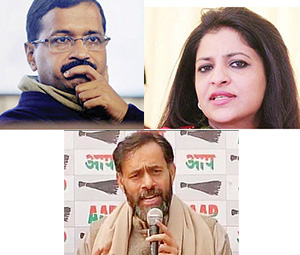
New cracks in AAP as Shanti Bhushan takes on Kejriwal
NEW DELHI (TIP) The Aam Aadmi Party (AAP) confronted a new installment of its intense internal battle August 13 after one of its founder members, Shanti Bhushan, went public with his criticism of party chief Arvind Kejriwal. Bhushan told a TV channel on Wednesday, August 13: “Arvind (Kejriwal) is a great leader and a great campaigner, but in my opinion he lacks organizational ability.
He does not have the kind of competence which can spread the message of the party all over India, which can quickly create elected structures of the party which nobody will be able to blame.” In a detailed critique, he also criticized Kejriwal for abruptly resigning as Delhi chief minister after 49 days without consulting anyone, calling it “a sign of political immaturity”. AAP rebutted that Bhushan was “apparently unhappy” at the party’s decision to not contest the Haryana polls.
“Bhushan has access to everyone in the party and his colleagues expect him to raise any issue which he considers important, with them, as a senior. It is unfortunate that he has aired his views publicly,” the party said in a statement. The 88-year-old former law minister remained silent today, while his son Prashant Bhushan, a close aide of Kejriwal, distanced himself from the comments.
“This is his personal view. It would have been better if he had discussed it with party members,” Bhushan said, siding with the party. Kejriwal has been facing increasingly sharp and unsparing attacks on his leadership since the party’s abysmal performance in the national election undid its spectacular debut in the Delhi polls in December. AAP contested over 300 seats but won just four seats in Punjab.
Many in the party believe Kejriwal’s high profile contest against Narendra Modi in Varanasi compromised AAP’s national poll campaign. Soon after the verdict, Shazia Ilmi, a prominent AAP leader, quit citing lack of inner democracy. In June, Yogendra Yadav, another founder member, wrote in an email to AAP members: “Arvind is turning into a personality cult that can damage an organization and the leader himself.” The party later insisted that it was united. -

Pakistan Celebrates Independence Day amidst political protests & fears of coup
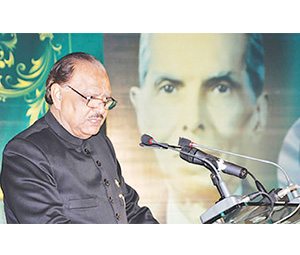
ISLAMABAD (TIP): Dark clouds of political unrest hung over the solemn celebrations of Independence of Pakistan on Thursday, August 14. President Mamnoon Hussain said the country was in a state of war and terrorism was being spread in the country under a conspiracy.
There were rumors afloat that Pakistan might witness a coup on the independence day. However, nothing has gone amiss except that both Imran Khan and Qadri have determinedly voiced their opposition to Nawaz Sharif government which they want to be out. Khan and Qadri will hold the march today, which is Pakistan’s independence day, to demand Sharif’s resignation and seek fresh elections. Both Khan and Qadri, who led mass demonstrations in Islamabad early last year to urge electoral reform, allege that the May 2013 general election, which brought Sharif to power, was rigged.
In his special message to the nation in a ceremony held at the President House, President Mamnoon Hussain emphasised the importance of harmony in order to resolve the political turmoil prevailing in the country. Mamnoon said the army was fighting for the stability and security of the country and its efforts were commendable, adding that the nation should provide support to the army in this hour of need. The president also referred to those displaced due to the military operation in North Waziristan and said the government was working to root out terrorism from the country.
On the occasion of Independence Day, the president recalled the great sacrifices rendered by martyrs. The president hoisted the national flag at the ceremony. He was flanked by Prime Minister Nawaz and army chief Raheel Sharif. Earlier, at the Independence Day ceremony in the Parliament House, the prime minister congratulated the nation and said no harm should befall the continuation of democracy in the country.
The premier also paid rich tribute to the martyrs of the independence movement. Meanwhile, Chief Minister Shahbaz Sharif visited Allama Iqbal’s tomb and hoisted the national flag. Sharif paid his respects to the martyrs of the independence movement and said the nation was still economically dependent. The Punjab chief minister said we had buried Allama Iqbal but had failed to carry his legacy forward. -

Control of gurdwaras in Haryana: SC orders for status quo
NEW DELHI (TIP):
The Supreme Court has directed the SGPC and newly formed Haryana Sikh Gurdwara Management Committee (HSGMC) to maintain status quo on the management control of gurdwaras prevailing at 2:30pm on August 7 in Haryana till further orders. During the hearing, the Haryana government informed the SC that the new state committee has forcibly taken control of Sikh gurdwaras in the state.
The SC asked Haryana DGP and district administration to maintain status quo with regard to gurdwaras and not permit any violence. The next hearing in the case would take place on August 25. The SC order came on a petition filed by Harbhajan Singh, a resident of Haryana and member of SGPC. Petitioner Harbhajan Singh – an SGPC member from Kurukshetra – contended that the Haryana Sikh Gurdwara (Management) Act, 2014 was not only a hasty enactment but also against the constitutional provisions and the Punjab Reorganisation Act, 1966.
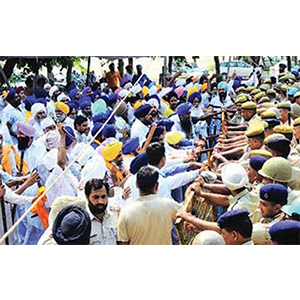
The petition said a wilful attempt was being made by Sikhs of Haryana, prompted by the state government, to wrest control of gurdwaras from the rightful members of SGPC by use of force. The on-going tussle between Amritsar-based SGPC and HSGMC in Haryana turned violent on August 6 when members of HSGMC “forcibly” tried to take control of a gurdwara in Kurukshetra and clashed with police leaving several people injured. Clashes erupted outside ‘Chhevin Patshahi’, one of the biggest gurdwaras in Haryana, when members of HSGMC “forcibly” tried to enter the Sikh shrine and were stopped by police, Kurukshetra superintendent of police (SP) Ashwin Shenvi said.
Police used water canons, lobbed tear gas shells and resorted to cane charge to disperse the agitated members. The members owing allegiance to HSGMC brandishing naked swords and lathis threw stones towards the shrine where the Amritsar-based Shiromani Gurdwara Parbhandhak Committee (SGPC) members were keeping watch. Some of the stones hit the policemen who acted as a buffer between the two rival groups.
Police fired water canons to stop the marching HSGMC members to avoid a direct contact between the two rival groups. Policemen deployed at the barricades used force to check the movement of the marchers towards the shrine. Shenvi said five police personnel were injured in the violence while the HSGMC claimed 65 of its members received injuries, five of them serious. HSGMC president Jagdish Singh Jhinda said police used force in which 65 people owing allegiance to the newly constituted body were injured. -

No new VIP security duties for NSG
NEW DELHI (TIP):
VIPs may no more enjoy the cover of coveted ‘Black Cat’ commandos. Government is learnt to have decided that VIPs would no longer get the cover of NSG commandos and the force would be redirected to keep 100% focus on counter-terror operations. The elite commando force was established as an emergency force to respond to terror attacks but has been diluted over the years with the burden of VIP security. As the force’s commandos are known to be the best in the country, they are coveted for security cover by politicians and VIPs as a status symbol. This may change soon, though. NSG DG J N Choudhary on Thursday told TOI, “The government is aware that VIP security is not our core competence.
If any more responsibility of VIP cover is given to us, it would dilute our capability to counter terror attacks. That is why the government is not giving us such responsibility anymore.” He added that NSG was a lean force, as any specialized force should be, and increasing VIP duties would spread it thin and unavailable to consistent counter-terror training, an absolute essential for such a force. Though the force has been demanding for long that its VIP duties be limited, successive governments have only increased the number of VIPs under its protection. Chhattisgarh CM Raman Singh and UP CM Akhilesh Yadav were added to the list in recent years.
However, the new government has been careful of the force’s concerns and has assigned other paramilitary forces to secure VIP protectees. A case in point is that of BJP chief Amit Shah and NSA Ajit Doval, both having very high threat perception, but still given CRPF and CISF security respectively. It will, however, continue to provide security to the 15 VVIPs that it guards at present until further orders.
The NSG guards CMs like Raman Singh (Chhattisgarh), J Jayalalithaa (Tamil Nadu), Tarun Gogoi (Assam), Akhilesh Yadav (Uttar Pradesh), Parkash Singh Badal (Punjab) and a host of other political figures like senior BJP leaders L K Advani and Rajnath Singh. It is also securing former CMs like Prafulla Mahanta (Assam), K Karunanidhi (Tamil Nadu) and Mulayam Singh Yadav (Uttar Pradesh).
The concept and thought process to reduce VVIP security duties of the elite force was mooted about two years back when the force decided to pull out about 900 commandos from its VVIP security duties and train them for specialized operational tasks of counter-terror and counter-hijack operations for which it was raised in 1984. -

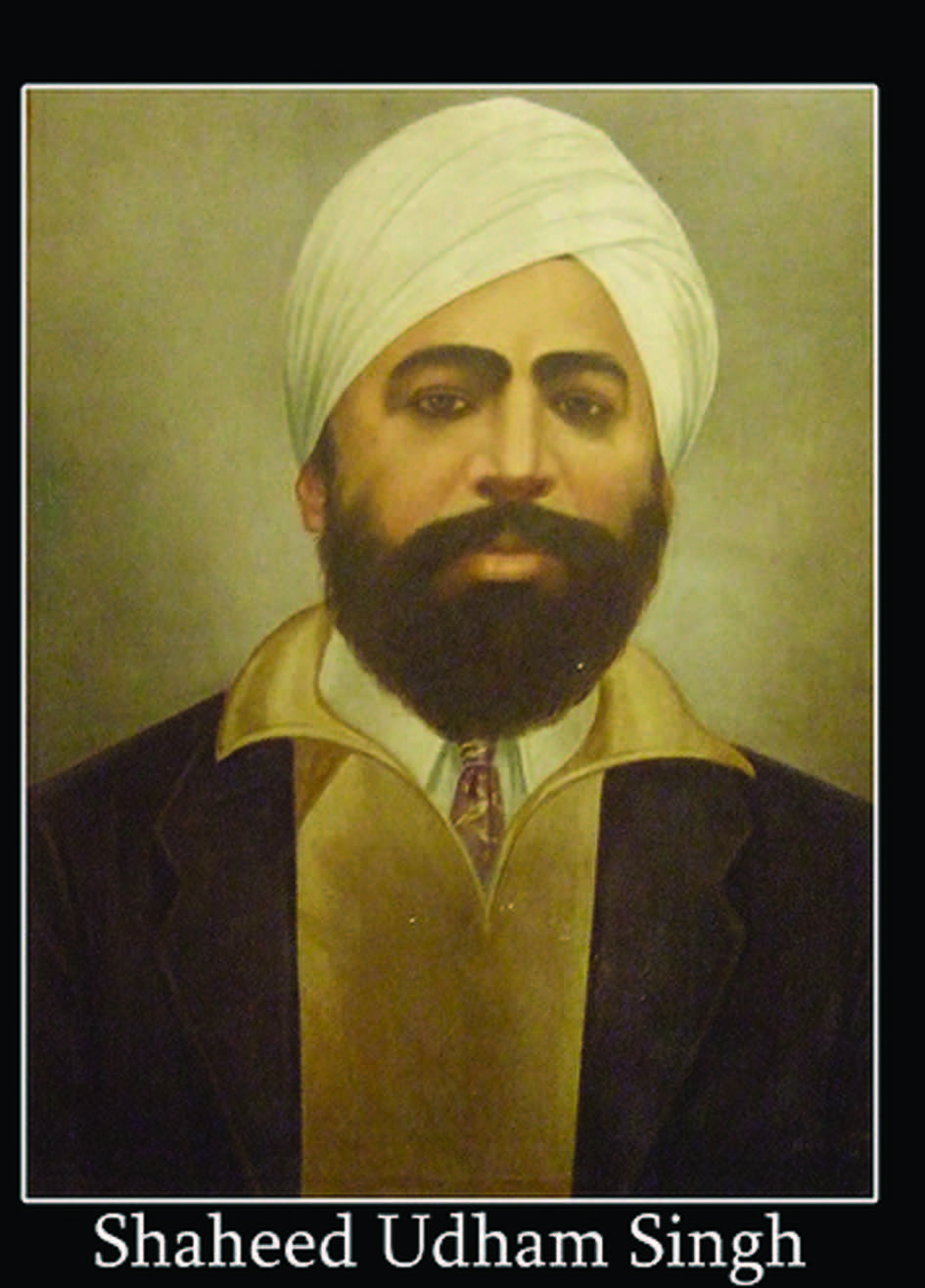
REMEMBERING SHAHEED UDHAM SINGH: HERO OF INDIA’S INDEPENDENCE STRUGGLE
Udham Singh, a revolutionary nationalist, was born Sher Singh on 26 December 1899, at Sunam, in the then princely state of Patiala. His father, Tahal Singh, was at that time working as a watchman on a railway crossing in the neighbouring village of Upall.
Sher Singh lost his parents before he was seven years and was admitted along with his brother Mukta Singh to the Central Khalsa Orphanage at Amritsar on 24 October 1907. As both brothers were administered the Sikh initiatory rites at the Orphanage, they received new names, Sher Singh becoming Udham Singh and Mukta Singh Sadhu Singh. In 1917, Udham Singh’s brother also died, leaving him alone in the world.
Bazaar outside Golden Temple
Udham Singh left the Orphanage after passing the matriculation examination in 1918. He was present in the Jallianvala Bag on the fateful Baisakhi day, 13 April 1919, when a peaceful assembly of people was fired upon by General Reginald Edward Harry Dyer, killing over one thousand people.
The event which Udham Singh used to recall with anger and sorrow, turned him to the path of revolution. Soon after, he left India and went to the United States of America. He felt thrilled to learn about the militant activities of the Babar Akalis in the early 1920’s, and returned home. He had secretly brought with him some revolvers and was arrested by the police in Amritsar, and sentenced to four years imprisonment under the Arms Act.
On release in 1931, he returned to his native Sunam, but harassed by the local police, he once again returned to Amritsar and opened a shop as a signboard painter, assuming the name of Ram Muhammad Singh Azad. This name, which he was to use later in England, was adopted to emphasize the unity of all the religious communities in India in their struggle for political freedom. Udham Singh was deeply influenced by the activities of Bhagat Singh and his revolutionary group. In 1935, when he was on a visit to Kashmlr, he was found carrying Bhagat Singh’s portrait. He invariably referred to him as his guru.
He loved to sing political songs, and was very fond of Ram Prasad Bismal, who was the leading poet of the revolutionaries. After staying for some months in Kashmlr, Udham Singh left India. He wandered about the continent for some time, and reached England by the mid-thirties. He was on the lookout for an opportunity to avenge the Jalliavala Bagh tragedy. The long-waited moment at last came on 13 March 1940. On that day, at 4.30 p.m. in the Caxton Hall, London, where a meeting of the East India Association was being held in conjunction with the Royal Central Asian Society, Udham Singh fired five to six shots from his pistol at Sir Michael O’Dwyer, who was governor of the Punjab when the Amritsar massacre had taken place.
O’Dwyer was hit twice and fell to the ground dead and Lord Zetland, the Secretary of State for India, who was presiding over the meeting was injured. Udham Singh was overpowered with a smoking revolver. He in fact made no attempt to escape and continued saying that he had done his duty by his country. On 1 April 1940, Udham Singh was formally charged with the murder of Sir Michael O’Dwyer. On 4 June 1940, he was committed to trial, at the Central Criminal Court, Old Bailey, before Justice Atkinson, who sentenced him to death.
An appeal was filed on his behalf which was dismissed on 15 July 1940. On 31 July 1940, Udham Singh was hanged in Pentonville Prison in London. Udham Singh was essentially a man of action and save his statement before the judge at his trial, there was no writing from his pen available to historians. Recently, letters written by him to Shiv Singh Jauhal during his days in prison after the shooting of Sir Michael O’Dwyer have been discovered and published.
These letters show him as a man of great courage, with a sense of humour. He called himself a guest of His Majesty King George, and he looked upon death as a bride he was going to wed. By remaining cheerful to the last and going joyfully to the gallows, he followed the example of Bhagat Singh who had been his beau ideal. During the trial, Udham Singh had made a request that his ashes be sent back to his country, but this was not allowed. In 1975, however, the Government of India, at the instance of the Punjab Government, finally succeeded in bringing his ashes home. Lakhs of people gathered on the occasion to pay homage to his memory.
Udham Singh tore 8-page statement before judge
While facing the historic trial in England for killing former Punjab lieutenant governor Michael O’Dwyer, freedom fighter Udham Singh had prepared an eight-page statement, which he wanted to read out in the court. However, the judge interrupted him. Angered over this, Udham tore the pages and hurled them towards the judge.
Taken aback, the court employees put together the bits of the torn paper to make them legible as the judge realised the undertrial may have wanted to say something. Today, those glued-back pages can be found in the national archives. Member of Ghadar Party Udham said his aim was not just to assassinate Dwyer, but he wanted the world to know that India needed Independence. “My only aim was not to kill Dwyer.
If it was so, I could have killed him earlier and didn’t have to wait for 21 long years to shoot him in Caxton Hall of London. Dwyer used to go for morning walk in a park and I too used to go there. I easily could have gunned him down, but I wanted to show to the whole of world that India wanted to break free and chose Caxton Hall to highlight the viewpoint of most of the Indians,” Udham had averred as the book says.”I do not care about dying. We are suffering from the British Empire.
I am not afraid to die. I am proud to die for my country. I want to help my native land in getting freedom and I hope when I am gone, my countrymen will drive out the Englishmen,” said Udham Singh.Udham Singh was an Indian revolutionary, best known for assassinating Michael O’Dwyer in March 1940 in what has been described as an avenging of the Jallianwalla Bagh massacre. A prominent figure of the Indian independence struggle, Udham was born on December 26, 1899 in Sunam, Punjab, India. On the 31st July, 1940, he was hanged at Pentonville Jail, London. — EDITOR
-

OBITUARY
We are deeply saddened to announce the untimely death of Dr. Romeo Parhar (November 25th, 1983 – July 22nd, 2014). An absolute gem of a human, with a soul of infinite compassion and optimism, Romeo graced us all with his intelligence, his humor, and his many charms. Born in Jalandhar, Punjab, Romeo was raised in New York, and once again reunited intimately with his Punjabi heritage as he left to Patiala for his medical schooling.
Over his years in Patiala, Romeo matured as an individual both intellectually and culturally. On his return, he settled down to fulfill his familial obligations and embark on a journey through a new chapter of his life. Romeo was a first-year resident in internal medicine at Mount Sinai Hospital, where he was passionate about his work and his relationships with patients.
He always thrived in fulfilling his professional obligations in the best way he could. He married his better half Dr. Simi Parhar on August 3rd, 2012, joining the graces of her father Dr. Avtar Singh Tinna and his wonderful and supportive family. On August 15th, 2013 a divine bundle of joy in the form of his daughter, Noor, was introduced into his life.
Romeo is survived by his wife Simi, his daughter Noor, his father Satnam Singh Parhar, his mother Dalgit Parhar, his sister Manpreet, his grandmother Harbans Kaur, and his loyal dog Mirza. He will fondly be remembered by friends and family far and wide. “Lives of great men all remind us, we can make our lives sublime, and, departing, leave behind us, footprints on the sands of time.” – Henry Wadsworth Longfellow -

SHERGILL’S INTERNATIONAL DIRECTORY ‘INDIANS ABROAD & PUNJAB IMPACT’ RELEASED IN LONDON
Senior journalist Nirpal Singh Shergill released in London on July 18, 2014, the 16th edition of his landmark international directory titled Indians Abroad and Punjab Impact. It is a complete international directory of Punjabi NRIs for day-to-day use by government offices, business leaders, export houses, educational institutions, charitable organizations, and business corporations. The directory has been compiled with a view to promoting businesses in India and abroad.