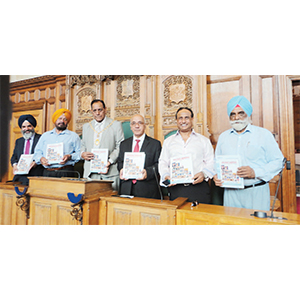
Chandigarh (TIP): On a day when a delegation of the Shiromani Gurdwara Prabandhak Committee (SGPC) met Haryana Governor Jagannath Pahadia against the passage of the Haryana Sikh Gurdwara Management Bill, 2014, by the Haryana Assembly, the Governor on July 14 gave his assent to the Bill, paving the way for the creation of a separate body for the management of the Sikh shrines in Haryana. The assent by the Governor came as a relief to the Hooda Government eyeing Sikh votes ahead of the Assembly elections later this year even as the SGPC described the Bill as “a blatant constitutional transgression” and “a brazen interference in Sikh religious affairs”.
Urging Pahadia to decline assent to the Bill and “seek clarification regarding reserving the Bill for Presidential assent,” a delegation threemember delegation led by SGPC president Avtar Singh Makkar today submitted a memorandum to the him alleging that the Bill been passed in an “unconstitutional manner”. Chief Minister Bhupinder Singh Hooda, however, reiterated his stand claiming that the Vidhan Sabha was competent to pass Bill and “there is no need to forward it to the President” after Governor’s assent.
“It was part of party’s manifesto for the 2005 and 2009 Assembly elections. It was party’s agenda and was based on demand of the Sikh brothers,” Hooda added. Meanwhile, the SGPC memorandum maintained that a state Vidhan Sabha had “no legislative competence “to pass a bill on a subject, which was governed by an Act of the Parliament. “Even after Partition, the gurdwaras which fell in the undivided state of Punjab and PEPSU have continuously been under the jurisdiction of the SGPC by virtue of the Sikh Gurdwara Act, 1925.This scope of jurisdiction has been preserved even after the territorial bifurcation of the state in November,1966,by according SGPC the status of an inter-state body corporate,” the memorandum asserted.
Akal Takht excommunicates HSGPC Chattha, Nalvi, Jhinda
Akal Takht on July 16 excommunicated Haryana Finance Minister Harmohinder Singh Chattha and state Sikh leaders Jagdish Singh Jhinda and Didar Singh Nalvi for “challenging the supremacy of Akal Takht by conspiring to divide the SGPC despite being repeatedly warned against it”. Akal Takht Jathedar Giani Gurbachan Singh, while reading out his edict from the rostrum of the Takht this afternoon, said: “The Sikh Sangat is directed to socially, religiously and politically boycott these individuals until they appear before Akal Takht and undergo ‘tankhah’ (religious punishment).” The decision came after the Sikh clergy and the SGPC executive committee held separate meetings. The meeting of Sikh high priests was preceded by a meeting of the SGPC executive, which passed a resolution terming the Haryana Sikh Gurdwara (Management) Bill 2014 to form a separate gurdwara panel for Haryana as “unconstitutional” and seeking action against Haryana Sikh leaders involved in it.
Punjab Assembly passes anti-HSGPC resolution
In the backdrop of controversy over the formation of a separate gurdwara panel by Haryana, the Punjab Legislative Assembly on July 17 passed by voice vote a resolution seeking the Centre’s intervention in prohibiting any state to interfere in religious matter of other states. The Congress opposed the resolution saying the Akalis were to blame for the formation of the Haryana Gurdwara Parbandhak Committee (HSGPC) as they had politicised the Shiromani Gurdwara Parbandhak Committee (SGPC) for their own vested interests. The Congress MLAs said they were for all for the unity of the Sikhs when it came to making of the All-India Gurdwara Act, but the Akalis had no right to oppose the HSGPC.
Tag: Punjab
-

Haryana Guv okays HSGPC Bill
-

Pakistani police lay siege to ‘militant hideout’ near PM’s house
LAHORE (TIP): Pakistani security forces laid siege on Thursday to a suspected militant hideout just a few kilometres from the family home of Prime Minister Nawaz Sharif in the eastern city of Lahore, officials said. One policeman was killed and three others wounded in the assault in the Raiwind area of Lahore, which came as a military operation against Taliban militants in the country’s restive northwest enters its second month amid rising fears of reprisal attacks. “A police team raided a house… around 2:00 am (2100 GMT Wednesday) on a tip off about presence of suspected militants, but they retaliated,” senior police official Malik Owais told AFP.
“One terrorist has been killed and another injured in this operation has been arrested. Police have now occupied the compound,” he added. Waqas Nazir, another police official confirmed the incident, adding that the raid took several hours because civilians had to be evacuated from the area first. Television footage showed a bullet-ridden compound with a large hole blown into one its walls being swarmed by police. Police could not immediately confirm the group to which they belonged. The Raiwind area is home to the famous ‘Raiwind Palace’ — the residence of the powerful Sharif political family which also includes the chief minister of the Punjab province of which Lahore is the capital.
It is also the base of the Tablighi Jamaat, a Sunni Muslim evangelical movement known for its ultra-conservative views. Pakistan launched a long-awaited operation in the North Waziristan tribal district last month aimed at eliminating Taliban and other militant bases after a dramatic attack on Karachi airport which marked the end of a faltering peace process with the Pakistani Taliban.
More than 800,000 people have been forced to flee from North Waziristan by the offensive. Analysts have warned that the operation would likely lead to reprisal attacks in Pakistan’s major cities at the hands of sleeper cells of militant outfits linked to the Taliban. Thousands of civilians have died since Islamist militants rose up against the Pakistani state more than a decade ago.
-

Displaced by army operation, 9 lakh Pakistanis fight misery
BANNU (TIP): The number of displaced people from North Waziristan, where the Pakistan army has launched a major anti-terror operation, has almost doubled to over 900,000 in the last few days. Most of them complain of official apathy and are living in terrible conditions without basics facilities in tents and slums in Bannu, 371km southwest of Islamabad. The misery of Arshad Daur (38) mirrors that of other displaced people. He left his village along with his ailing mother, three sisters-in-law and their five kids in haste when it was targeted in aerial strikes few days ahead of the mass exodus. They left everything behind.
Like many tribesmen, Daur’s three brothers work in the Middle East while he looks after their wives and kids. It took over 25 hours for them to cover their journey from Dande Darpakhel to Bannu. “For miles I carried my old mother on my back. After covering two-three miles distance, we took rest for few minutes and then embarked again on our journey for unknown destination. In the middle, I also had to carry my four-year-old nephew and niece on my back as they could not walk for long,” Daur said. When they finally reached Bannu, they did not know what to do next. “We stayed there for three days and then decided to leave for Taxila where some of our relatives are settled,” Daur said. A Punjab police team stopped the family when they finally reached Taxilla and asked them to prove their identity. “I have come from Waziristan.
I have neither identity card nor cell phone. I have relatives living on Khanpur road and want to go there,” Daur pleaded with a police officer. His pleas fell on deaf ears and after being slapped several times, the desperate family was taken to a police station. For several hours, they remained there before they were allowed to leave on the condition they would not enter Punjab. “We came back to Tarnol and were lucky to get seats late evening in a van for Kohat. They spent the night in the open in Kohat and next day went to Bannu. Daur’s wife and kids have been missing and are feared to have been killed in aerial bombardment which led to Taliban chief Hakimullah Mehsud’s death in November 2013. -

HARYANA ASSEMBLY PASSES BILL FOR SEPARATE SGPC
CHANDIGARH (TIP): Haryana Assembly on July 11 passed a bill paving the way for the formation of a separate body to manage affairs of Gurdwaras in the state even as the main opposition parties INLD and the BJP staged a walkout over the issue. The bill moved by Parliamentary Affairs Minister Randeep Surjewala was passed with a voice vote in the absence of the Indian National Lok Dal and BJP members, who had earlier staged a walkout opposing the legislation, claiming that the move was Congress’ “conspiracy” to “divide” the community.
Bhupinder Singh Hooda-led Congress government in Haryana passed the bill ignoring the stiff opposition of the Amritsarbased Shiromani Gurdwara Parbandhak Committee, the Shiromani Akali Dal and other groups. Congress had promised the formation of separate SGPC in its poll manifesto in 2005, but the issue remained unsettled in its first term and got carried over to Hooda’s second term. But with assembly elections due in Haryana in October this year, the issue was speeded up. Hooda, Surjewala and other treasury benches members described the bill as “historic” one which was long overdue as the Sikhs of Haryana had been “fighting” to have right over management of their Gurudwaras.
Heated arguments erupted between the ruling and opposition benches during the discussion on the Bill with the latter dubbing it as a “ploy” to garner votes ahead of the polls. “Dont divide the Sikhs on religious lines. They have a long history of sacrifice and the Sikhs of Haryana have not favoured this. This Bill should be taken back,” INLD’s State unit President Ashok Arora said, finding full support from his party MLAs including senior leaders Abhay Singh Chautala and Ramphal Majra. BJP’s senior leader Anil Vij said that the ruling party was “rushing through” and in a “hurry” to pass the 46-page Bill and had not given enough time to the Opposition to study and go through the contents of the important legislation, which was connected to the future of the Sikh community in the State. Vij said that the move was a “Congress conspiracy” to divide the community.
However, Hooda and Finance Minister Harmohinder Singh Chattha, who prepared the report which favoured the separate body, told the House that there was no politics being behind the move as the decision regarding it was taken considering sentiments and aspirations of the Sikhs of Haryana. Earlier in the day, Surjewala introduced the Haryana Sikh Gurdwaras (Management) Bill, 2014 “to provide for the better autonomous management and effective supervision of Sikh Gurdwaras and Gurdwara properties in Haryana and matters related thereto.” Haryana Sikh leaders including Jagdish Singh Jhinda, Didar Singh Nalwi, who spearheaded the campaign for separate SGPC in Haryana, besides Congress leaders from Punjab including state unit chief Pratap Singh Bajwa and some party MLAs watched the proceedings of the House from the visitors gallery.
SGPC wants Centre to intervene, stall move
Chandigarh (TIP): Dubbing the Haryana Government’s initiative to carve out a separate Sikh gurdwara panel for the state as ‘unconstitutional and illegal’, an anguished Shiromani Gurdwara Parbandhak Committee (SGPC) has urged the Central Government and the President to intervene and stall the move. The Amritsar-based apex religious body of the Sikhs on July 11 said it might take a legal route to block the creation of the Haryana Sikh Gurdwara Parbandhak Committee (HSGPC). “The party will decide the next course of action and do the needful. We will see…we might take legal action if necessary,” said SGPC chief Avtar Singh Makkar. The SGPC chief, who presided over a meeting at Nada Sahib, said: “It’s the prerogative of SAD patron Parkash Singh Badal and party chief Sukhbir Singh Badal to take up the matter with the Central Government and the President. We have also requested the Haryana Governor to not give his nod to the Bill for creation of the HSGPC.”
It is learnt that Badal during his recent meetings with top BJP leaders sought the Union Government’s support to stall the ongoing process for creation of a separate HSGPC. On being asked about the Modi government’s response, Makkar said: “It (response) was good.” The sources, however, said SAD leadership was given a ‘cold shoulder’ by central BJP leaders over the issue. Consequently, the SGPC has ‘toned down’ its stand on the HSGPC issue. The panel on Friday renewed its ‘truce’ offer to Haryana Sikh leaders. “We are all for the ‘panthic ekta’. To achieve it, we again offer our Haryana elected members two posts — that of Vice- President and Additional Secretary. We are also okay with Haryana gurdwaras spending the income being generated by them,” said Makkar. -

RAIL BUDGET LIKELY TO FOCUS ON PASSENGER SAFETY
NEW DELHI (TIP): On the back of two train accidents within a month of Modi government taking charge, railway minister Sadanand Gowda is likely to announce a slew of measures in his July 8 budget to enhance passenger safety. The may include installing indigenous Train Collision Avoidance System (TCAS) on more routes to enable safe running of more trains on the same track even under low visibility. As railways are facing a huge fund crunch, the plan support for the staterun transporter for special projects, can see a significant hike in the budget. An official said the budget may propose to set up a dedicated safety fund. The fund is likely to be created by imposition of a safety cess on fares.
The budget is also expected to provide clarity on foreign direct investment in the sector as the BJP government has hinted at allowing 100% FDI in railway infrastructure (including high speed tracks, dedicated freight corridors and station development). Following Prime Minister Narendra Modi’s footsteps, Gowda is also pushing to make the railways go green. The budget is expected to announce projects related to harnessing solar energy and development of offshore wind energy, including those related to use of solar energy to power local trains and use of innovative technology to run AC coaches.
The focus is expected to be on electrification of around 2000 km of tracks, considering that the railways have almost 38% (24,800 km) of its network electrified, carrying almost 67% of the freight traffic and 51% of the passenger traffic. The budget is likely to have many sops for northeast region, another priority area for the Modi government.
The railways would announce to expedite the construction of 14 strategic projects — mainly in border areas — that are struck for environment clearance and paucity of funds. These projects involve laying down of 2,888 km of railway tracks in Jammu & Kashmir, Arunachal Pradesh, Assam, Himachal Pradesh, Uttarakhand, Rajasthan and Punjab. The budget could allocate more funds for faster execution of dedicated freight corridor to ensure speedier transportation of goods in important routes.
-

8 killed as police, protesters clash in Lahore
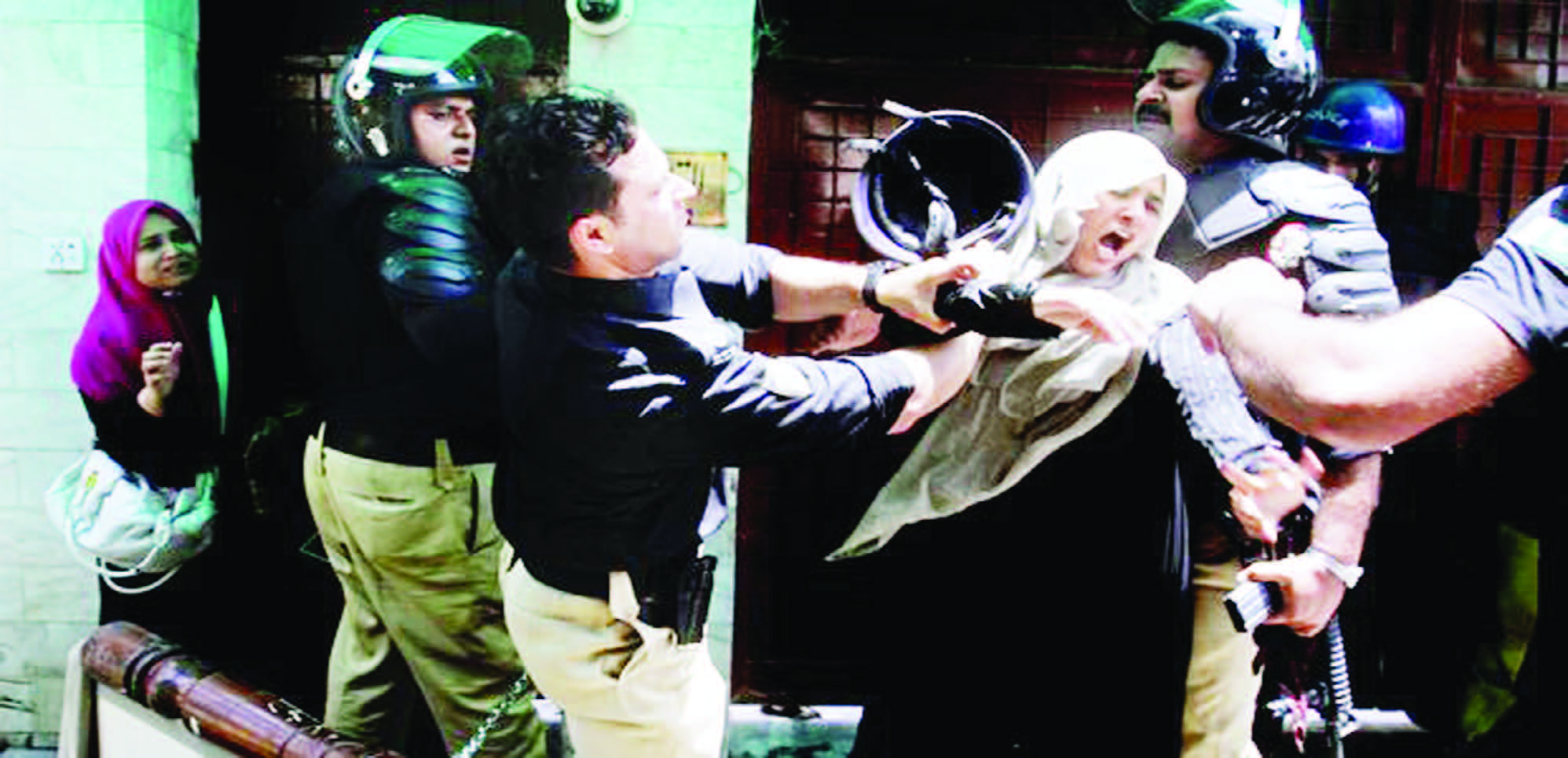
ISLAMABAD: At least eight people were killed and 85 injured in Lahore on Tuesday when the police clashed with supporters of moderate cleric Dr Tahirul Qadri, a Canadian national of Pakistani origin, vowing to bring a soft revolution in the country.
Qadri, a leader of the Pakistan Awami Tehreek (PAT), a religiopolitical party, has been trying to form a grand alliance against the government while demanding a change in the present system through a revolution. He has promised to return to Pakistan on June 23.
The clashes started when PAT members tried to stop the police from removing barriers outside their leader’s house in Lahore’s Model Town Colony and the party secretariat. As police baton-charged and shelled the protesters, the latter retaliated by pelting stones.
Meanwhile, the police started firing shots at the protesters, leading to the death of eight PAT supporters, including two women and a child, while more than 85 people were injured. “We received eight dead bodies including two women,” said Dr Abdul Rauf, a medical superintendent at Lahore’s Jinnah Hospital.
“All of them had bullet wounds. We also received 85 injured, including 17 police personnel. About 40 of the wounded sustained bullet injuries.” The doctor said 22 of the injured were critical. A spokesman for PAT said 12 of its workers were killed.
“They launched this operation to counter our peaceful movement and the ‘green revolution’ promised by Dr Tahir ul Qadri,” the spokesman said Responding to the use of force against his party workers, the PAT chief described it as “state terrorism” and lashed out at the Punjab government, saying an FIR would be registered against Prime Minister Nawaz Sharif and Punjab chief minister Shahbaz Sharif for the brutal killing of his supporters.
Qadri said the police took action, on the orders of the government, because of his support for the army during the ongoing operation in North Waziristan. “Anyone who stands in support of the army is seen by the government as their biggest enemy,” he said, adding the government had been against the military since the 1990s.
“The government was never in favour of the army operation in North Waziristan and had to approve it since they had no choice,” he said. PAT supporters staged protests in different cities — including Islamabad, Rawalpindi, Faisalabad, Karachi, Sialkot and Multan. All political parties strongly condemned the Lahore clashes. A joint opposition also staged a token walk out from Parliament.
Opposition leader Syed Khursheed Shah said it was a conspiracy against democracy, which he said was allegedly hatched by Shahbaz Sharif against his elder brother. Later, the Punjab CM addressed a press conference saying he would resign if found responsible for the violence. “The deaths in Lahore’s Model Town are unfortunate,” Shahbaz Sharif said. “I have ordered the formation of a judicial commission to probe the incident.”
-

Appointment of Juned Qazi as INOC(I), USA President celebrated
NEW YORK (TIP): A large gathering of INOC (I) workers celebrated, June 17, the appointment of Juned Qazi as the new President of INOC (I) USA. Introducing Juned Qazi, George Abraham, Chairman of INOC(I) said Qazi is a dedicated leader with charisma and youthful vigor who is capable of taking INOC (I) to the next level. He recollected the time he was with Qazi in India during the recent election cycle to secure a seat to run from Aligarh constituency on a Congress ticket.
” I have personally witnessed his ability to motivate and mobilize the cadre at the grass-roots level; if he is to employ the same amount of stamina and focus, INOC could be rebuilt very soon to face up to the challenges on hand”, Abraham added. General Secretary Harbachan Singh who was master of ceremonies for the event, said that Juned Qazi was a consensus builder and a very talented leader who has earned the trust of fellow members of the organization both in USA and India.

Mrs. George Abraham presenting a bouquet to Juned Qazi
He is a very amiable and dynamic leader, and we are confident that he will fully and very ably discharge his duties as President of INOC (I) and overwhelming support for him was the order of the day. He added, ” A sense of relief was felt all around the reception hall that the stagnant INOC(I) over the last one year was now once again geared up to function fullswing to respond to the aspirations of the people.” Mohinder Singh Gilzian, senior Vice- President lauded Qazi for his commitment to the values and principles of the Congress Party and wished him all the success. Juned Qazi thanked everyone for the great show of support and committed himself to work hard for the Indian Americans and motherland India, and to foster greater cooperation and friendship ties between the two.

” I have been a Congress worker and loyalist all my life and I mean to remain one and serve the organization in the best possible manner. Of course, I will need your support to restore strength and vibrancy to the organization”, said Juned. Photos/ Gunjesh Desai/ Masala Junction
He also vouched that he will go the extra mile to help the needy and will not hesitate to stand for what is right. Those who felicitated included Dr. Dayan Naik (President, Karnataka Chapter), Dr. Neil Mandava (Chairman, AP Chapter), John Joseph (President, Tamil Nadu ), T. J. Gill (President, Punjab), Zinda Singh (President, Delhi), Sonia Sodhi (President, MP Chapter), Chander Prakash Sukhval (V.P. Rajasthan Chapter), U.A. Naseer (Secretary, Kerala chapter), Sawaran Singh (President, Haryana Chapter) and Executive Committee members; Zach Thomas, Sabina Ali, Prasad Kambahpaty, Karamjit Dhaliwal. Others who felicitated included R. Jayachandran, Dr. Vaijinath Chakote, Jose George, Thomas T. Oommen, Dr. Uday Singh, Ram Gadula, Vidya Bhushan Sharma, Harkesh Thakur, Jose Jacob, Rev. Dr. Abraham and Rev. Wilson Jose, Mahesh Bhai and Rumpy Bindra. Earlier, at the beginning of the function, Mrs. George Abraham, the first lady of the INOC (I) presented, on behalf of the INOC (I) family a bouquet to Juned Qazi.
-

Agents promised jobs in Dubai, sent youths to Iraq
AMRITSAR (TIP): Most of the 40 Punjabi youths stuck in Iraq reached there allegedly through travel agents who with illegal recruitment syndicates operating from the Gulf countries trapped them using false promises of lucrative jobs for a hefty fee. Sources said unauthorized travel operators in various towns of Punjab are in touch with hiring agents of various construction companies in Iraq.
These agents lure youths by promising to get them jobs that offer monthly salaries in the range of $1000 to $1200 for which they are told to pay a fee of Rs 2-4 lakh to the travel agents. “There is hardly anyone willing to work in Iraq due to unrest so these agents send the boys to Dubai on tourist visas where they are ‘handled’ by the local agents,” a source said. These job-seeking youths are then made to stay in Dubai for a few days without any work. “When they get desperate to work and earn money, the agents tell them that due to some problems they couldn’t get the jobs in the promised companies in Dubai.
The hiring agents offer the hapless youngsters jobs in Iraq which are accepted by them. They are sent to Iraq from Dubai via Qatar and Kuwait,” a source said. “The youth from Punjab mostly travel illegally and without any documents, the agents also ensure crossing of borders to reach Iraq,” said Dubai-based businessmen S P S Oberoi who is the founder of NGO Sarbat Da Bhala Charitable Trust.
Sometimes these youths were illegally ‘transported’ to Iraq via the sea route as well, he added. Oberoi said the agents in India promise jobless youths they would be paid 1,200 dirham per month but they get even less than half of the promised salary in the construction companies in Iraq. He said his trust had opened offices in all districts of Punjab to save unemployed youth from falling into this trap.
“We ask such duped youths to give us their appointment letters or other documents given to them by the agents. Then our trust verifies the details so that the job aspirants are not cheated,” Oberoi said. He has offered to bear all expenses to bring the abducted Punjab youths back from Iraq.
-

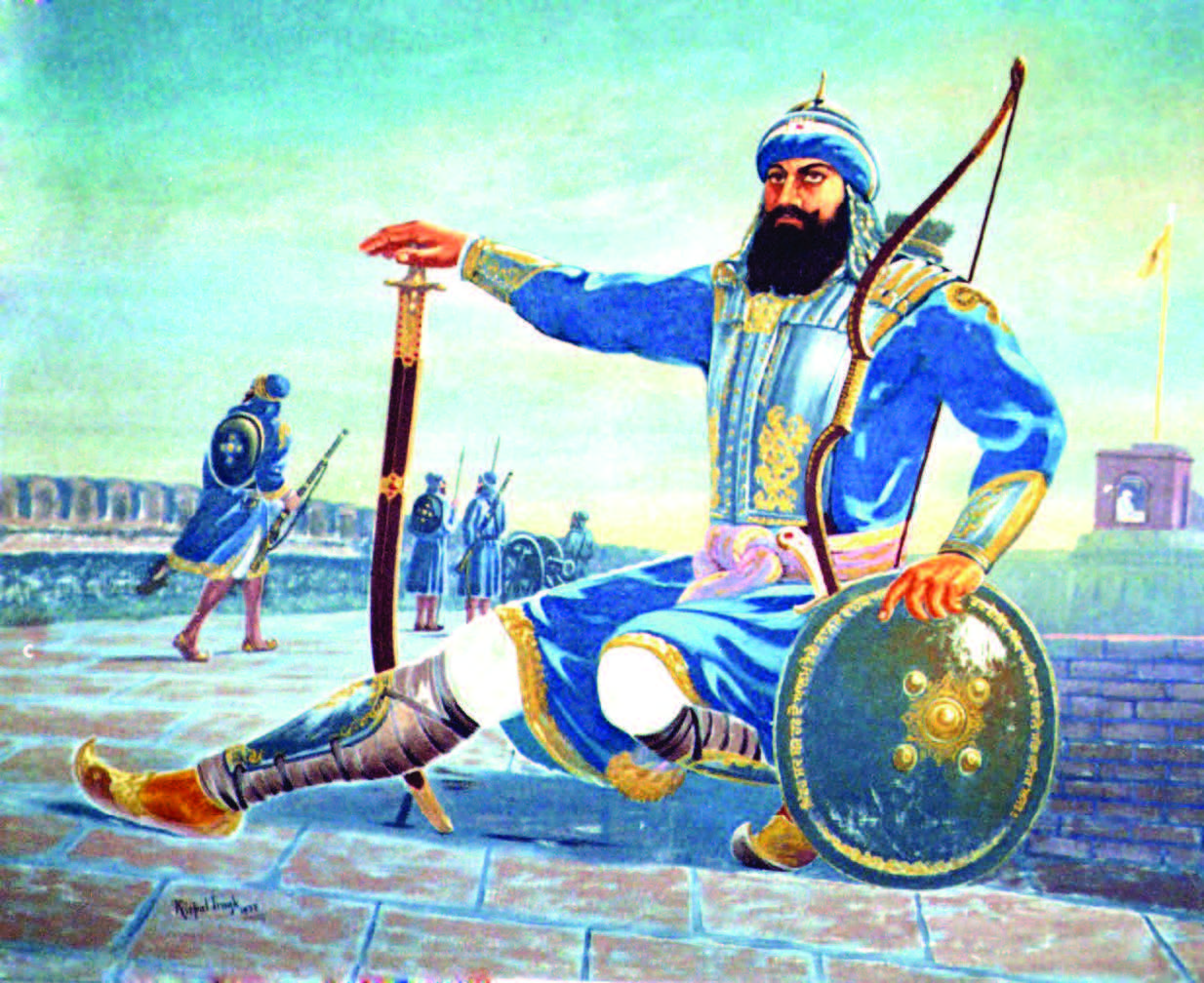
BABA BANDA SINGH BAHADUR THE FIRST SIKH GENERAL
He was born in October 1670 in a Rajput family doing farming in village Rajouri, district Punch, State of Kashmir. He was named Lachman Dev. As a child he was very fond of horse riding, martial art, hunting and was expert in use of bow and arrow and other weapons used in wars at that time. At the age of 15 years while hunting a she-deer and tearing the belly of the deer, he saw twin unborn off springs writhing in pain and dying in front of his eyes. He was so much moved of this happening that he left hunting and became an ascetic.
His father was a kind religious person and used to give free food and shelter to the visiting saints, sadhus and holy persons. Lachman Dev’s attention turned towards them. He became follower of Sadhu Ram Daas of Ram Thamman near Lahore (now in Pakistan). After some time he followed Janaki Daas. His name was changed to Madho Daas. While moving from place to place, he reached Punchvati near Nasik in Maharashtra and became follower Sadhu Aughhar Nath. Madho Daas served Aughhar Nath with full devotion for 5 years. Aughhar Nath pleased with his services, bestowed him with all his virtues, occult powers and even his own created holy book. Aughhar Nath expired in 1691.
Thus at the age of 21 years, Madho Daas, the Rajput youth attained miraculous powers and reached Nander to set up his own Ashram. Thus living at Nander since the last 16 years, in the year 1708, a the age of 38 years, Madho Daas with lot of miraculous powers and fame was a master of a big Ashram and was very proud of his wisdom, meditation, occult powers and fame. He started insulting, putting down all saints, sadhus, intellectuals, faquirs etc. who so ever came to his Dera.
Banda’s march towards Punjab
In Oct. 1708, at Nander, Guru Gobind Singh sent Banda Singh to Punjab and advised him to:
1. Put a stop to the cruelty of Punjab rulers.
2. Punish the guilty and cruel misrulers.
3. To fight for human rights,uplift and strengthen the poor, the low and slave like people who could not even imagine freedom.
The Guru blessed him with:
1. Guru’s order to Sikh Sangats.
2. Five arrows.
3. A double Edged sword (Khanda).
4. A big leather mounted drum (Nagaara).
He sent with him five Sikhs for counseling:
1. Bhai Daya Singh
2. Bhai Binod Singh
3. Bhai Kahan Singh
4. Bhai Bijay Singh
5. Bhai Ran SinghThe main aim for the Sikhs was Sarhind and its Nawab Wazir Khan. This war took place in May 1710 at the field of “Chhappar Chiri” 15 miles away from Sarhind. Wazir Hkan lost his life. The Mugal army ran away from the field. The Sikhs entered the city of Sarhind. Most of the high officials and administrators were killed. Their buildings were destroyed and looted. Even in war, Banda Bahadur had instructed not to harm any Mosque, Madrassa and Makbras (Graves). Irrespective of their religion, the old, women and children were protected from any harm. Sheikh Ahmed Sirhindi was the main conspirator for the death of Guru Arjan dev ji.
Even his grave was not destroyed. All attempts were made to avoid to give any religious colour to these wars. As and when an area was conquered Banda Singh appointed one of his trusted lieutenants to govern these places and who in turn appointed other local people for administration. Keeping continuous the wave of attacks on other areas, in 1710 itself he took over other Northeren Areas in between rivers of Jamuna and Ganga such as Saharan Pur, Shamli, Muzzafar Nagar etc. Banda Singh established his capital at Mukhlis Garh, a place situated in the base of hills and away from the main highway and central areas from security point of view.
He repaired the fort of Mukhlis Garh and renamed it as Loh Garh. He even started a mint to make coins and stamps in the name of Guru Nanak and Guru Gobind Singh and established Khalsa Kingdom. Seeing such a rise of Banda Singh, The Mugal Emperor at Delhi, Bahadur Shah became nervous and furious. He could least think of such a situation. To take back his lost areas, he started chasing Banda Singh with all his forces. Viewing the situation, Banda Singh and his forces returned to the fort of Loh Garh in Dec 1710.
The Mugal forces surrounded the fort and cut off all supplies. In one of pitch dark nights, Banda Singh and his men forced their way through the Mughal army and moved towards upper hill areas. Punishing various kings of hills who were part of the Mughal forces against Guru Gobind Singh, he moved towards Jammu. Bahadar Shah reached Lahore in Aug.1711. His attempts to kill or capture Banda Singh were on. In Feb 1712 Bahadur Shah died out of illness. For one year there was fight for the Throne of Delhi among his sons. To take gain of the situation Banda Singh collected his forces and again conquered Batala , Kalanaour, Sarhind, Muzaffar Nagar and other areas in 1712 and ruled till 1715.
In Delhi, Farukh Seyer son of Azimu-Shaan became king of Hindustan in Feb 1713. It was for the first time that Banda Singh broke the believe of Mugals that they could not be conquered by any one. He established a democratic rule. The poor and down trodden got a sense if living with dignity. Those who tilled the land became its owners. He had power of devils but heart of saints. He protected the poor and low, did not harm those who surrendered. Clear example is the army of Afgan fighters who did not want to fight Banda Singh and accepted his leadership.
In June 1716, Banda Singh and his 26 companions were moved in the streets of old Delhi in the form of a procession and then taken to the Makbra (Grave) of Khawaza Kutub-ud-deen Bakhitiyar Kaki near Kutub Minar. 26 sikhs were beheaded in the presence of Banda Singh, hoping that he may still ask for mercy. Now it was the turn of Banda Singh. He was asked to accept Islam or face death. He accepted death.
Execution of Banda Singh Bahadar
Banda Singh’s four-year-old son was seated on his lap. A dagger was given to Banda Singh and ordered to cut his own son. He refused. The executioner pierced the chest of his son, took out the violently vibrating heart and tried to push into the mouth of Banda Singh. Though shackled, Banda Singh refused furiously. After this his flesh was notched out with pliers, hot sharp rods were inserted into his flesh.
His eyes were notched out, hands and feet were chopped off. Thus when he became unconscious, his head was chopped off. This black day of the rulers was on 9th June 1716. Whosoever, a Muslim, Hindu or Christian, saw this felt that the souls of those, who sacrificed their lives had miraculous powers that did not allow them to accept defeat.
It was a strange incidence in the life of Banda Singh that when at the age of 15 years he saw dying two infants of a deer, which altogether changed his life and now at the age of 46, the beating heart of his own son was being pushed into his own mouth. The English historian Conningham wrote that it was inhumane, unsocial and forest ruled activity of the victorious Mugals for having treated the sikhs in such ill manners. Such dreadful were the scenes, perhaps no body except those who saw could believe.
Farakh-Seyer, who tortured and killed Banda Singh and his men in June 1716, met with the same fate just after three years at the hands of his own men. There was a revolt against him. He hid himself in the dark rooms of Red Fort. He was chased, and his eyes similarly notched off. And then killed. Banda Singh Bahadur ruled only for 6 to 7 years, when sikhs were like salt in flour. This broke the yoke of 700 years rule of the invading forces from the Arab countries.
-

Govt on overdrive to rescue Indians trapped in Iraq
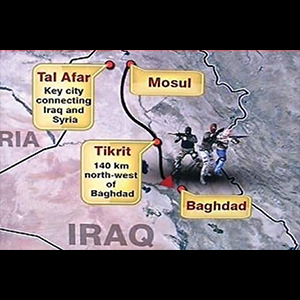
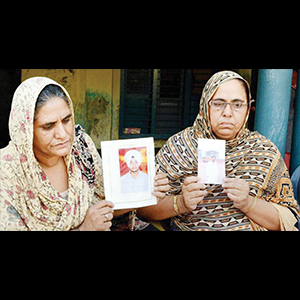
NEW DELHI (TIP): The new government led by Prime Minister Narendra Modi on Thursday, June 19 scrambled to secure the release of 40 Indians being held in war-torn Iraq but asserted it was doing its “very best” to ensure their safety in the strife-torn country. While the ministry of external affairs said that it had information on the location where the Indians are being held captive, external affairs minister Sushma Swaraj — who met families of some of the abducted Indians – said the government would leave no stone unturned to free the Indian workers. The mass abductions have arguably presented the new government with the first big challenge since it assumed power last month. Most of the abducted Indians, working for a Turkish construction company, hail from Punjab though a few are from Himachal Pradesh and Uttar Pradesh.
“I am personally mulling over all options. The government is making all kinds of efforts. We are not leaving any stone unturned,” Swaraj told reporters. “I am personally supervising this…I want to assure the families that the government and I will try our very best… make every effort,” she added. The government has already dispatched a former ambassador to Baghdad to coordinate rescue efforts in Iraq where large parts have been overran by Sunni insurgents. External affairs ministry spokesperson Syed Akbaruddin said during briefing, “We do have an understanding of the location (of the workers).
Given that the matter is underway, at this stage, I will not be able to share details of their location and what Iraqi authorities have shared with us”. Punjab chief minister Parkash Singh Badal and his Himachal Pradesh counterpart Virbhadra Singh appealed to the Centre to ensure the safe return of the abducted Indians. Badal has said he is willing to pay a ransom to gain the freedom of the workers from Punjab. Earlier in the day, Sushma Swaraj met a delegation of families of seven of the abducted Indians.
“The 40 men are safe… When the situation normalises, we will try to get them released,” she told the delegation accompanied by Badal. Himachal chief minister Virbhadra Singh said that the government has so far learnt that at least eight persons hailing from different parts of the state are missing in Iraq. “We are concerned about the safety of the all Himachal employed in Iraq,” he added. Official sources said, at least 16 residents of Haryana are believed to be stranded in strife-torn Iraq.
Tamil Nadu chief minister J Jayalalithaa also sought the Prime Minister’s personal intervention to secure safety of 46 Indian nurses, including six from the state, trapped in Iraq. In Jammu, the family-members of Rajesh Kumar, 34, informed that his phone is switched off for the last one week. “We are constantly trying but his phone is switched-off for one week. It has never happened before,” a sobbing Reema, his wife, said. Eight migrants from Gorakhpur and Deoria in Uttar Pradesh are feared stuck in the Iraq turmoil.
-

Sadhus, MPs and MLAs to be Part of Ganga Cleaning Mission: Uma Bharti
Will treat Sutlej on par with Ganga: Centre New Delhi (TIP): The Centre has decided to treat the Sutlej river on par with the Ganga. Punjab Chief Minister Parkash Singh Badal, who on June 12 called on Water Resources Minister Uma Bharti and Agriculture Minister Radha Mohan Singh, said the Centre had decided to treat the Sutlej at par with the Ganga, which is being cleaned under the prestigious National Mission.
New Delhi (TIP): Water resources minister Uma Bharti has announced plans to convert the “Ganga Cleaning Mission” into a jan andolan or mass movement. Participants in a brainstorming session in July will include, she said, lawmakers from constituencies through which the mighty river flows, sadhus (sages) and “all those related to the cause of the Ganga.” She has promised a plan by October this year. The “Ganga Manthan (introspection)” would include Prime Minister Narendra Modi, Ms Bharti said today.
“MPs and MLAs who come from seats falling along Ganga will also be part of this manthan. Narendra Modi is the MP from Benares. So obviously he is a prominent part of this exercise,” she added. Cleaning up the Ganga River was a promise that Mr Modi had made while he was campaigning during the Lok Sabha elections in Varanasi. The new government’s resolve to clean the river was part of President Pranab Mukherjee’s speech to the joint session of Parliament on June 9 too.
“River Ganga is a part of our rich cultural heritage, a symbol of faith and the lifeline for millions,” President Mukherjee said, adding, “However, Ganga continues to remain polluted with many stretches of the river becoming dry in the lean season. My government will take all necessary steps to ensure a perennial, clean and pristine Ganga.” Her ministry, Ms Bharti said, would take up the task of cleaning up others rivers too, such as Yamuna.
“The same parameters will apply for cleaning and purifying the rivers, but this will not be possible without a jan andolan,” she said. The government has already formed an inter-ministerial group, comprising the ministries of environment, tourism and shipping, besides water resources, to pool their resources for cleaning Ganga river, which figures high on the Prime Minister’s “to do” list. It held its first meeting on June 6. MPs and MLAs who come from seats falling along Ganga will also be part of this manthan. Narendra Modi is the MP from Benares. So obviously he is a prominent part of this exercise.
-

12 injured in clashes inside Golden Temple complex
AMRITSAR (TIP): At least 12 people were injured in a clash between task force volunteers of the Shiromani Gurdwara Parbandhak Committee (SGPC) and radical Sikh activists on June 6 on the 30th anniversary of the Army’s Operation Blue Star at the Golden Temple complex here. Swords and sticks were openly used as scores of men from both sides chased each other outside the Akal Takht building inside the complex, which is home to the holiest of Sikh shrines — ‘Harmandar Sahib’. Many people could be seen running for cover to save themselves.
Eyewitnesses said the clash occurred when activists of the Shiromani Akali Dal (Amritsar) were stopped by the SGPC task force volunteers from brandishing swords and other traditional weapons and raising pro-Khalistan slogans inside the complex. This led to a clash between both sides just after the religious ceremony to commemorate the 30th anniversary of Operation Blue Star had ended Friday morning. Tension continued to prevail inside the shrine complex. Even media personnel were manhandled during the incident.
Senior police officials in plain clothes have been deployed in the complex. Top SGPC functionaries, including its president Avtar Singh Makkar, and Akal Takht Jathedar Gurbachan Singh were present inside the complex when the incident took place. Heavily armed terrorists, led by separatist leader Jarnail Singh Bhindranwale, were flushed out of the Golden Temple complex by the Indian Army in its Operation Blue Star in June 1984. The then prime minister Indira Gandhi had ordered the Army operation. Punjab had witnessed a bloody phase of terrorism between 1981 to 1992 as separatists demanded a Sikh homeland – Khalistan (Land of the pure). The terrorism phase left over 25,000 people dead, including hundreds of personnel of security forces
-

Patiala cops nab Abohar NRI in Rs 300 crore drug scam
CHANDIGARH (TIP): Another mega synthetic drug racket, believed to be part of Rs 6,000 crore ring run by kingpin Jagdish Bhola, was busted on June 5 after the arrest of two masterminds, including an Abohar-based pharamaceutical businessman Varinder Sandhu, from Chandigarh. Sandhu’s aide Bikramjit Singh alias Pappi was arrested from Ropar by Patiala cops in a 72-hour operation that began on Tuesday.
The two were sent to 5-day police custody by the judicial magistrate, RPS Cheema, at a Patiala court. TOI had reported on June 4 that Punjab cops were on the trail of Rs 200-crore synthetic drug racket. Sandhu’s factories in Baddi in Himachal Pradesh where precursor chemicals were manufactured were also raided and chemicals seized. Police did not disclose the amount of drugs seized from Sandhu’s factories., but it is estimated to be Rs 300 crore. According to the FIR, a copy of which is with TOI, Sandhu holds a Canadian passport.
He, along with one Sandeep Singh Sidhu alias Soni and Nagendra Singh of Bathinda, were synthesising chemicals used to make party drug ICE, known as crystal meth or Speed. These drugs were being sent to Canada, Australia and England. “A hotel called Royal Castle on Bhawanigarh-Patiala road was used to collect drugs for delivery to different locations,” the FIR said. “Most of these people have passports of Canada, Australia, America, England to enable them to travel easily to other countries,” the FIR said.
-

Xoom Announces Instant Deposit Service to Punjab National Bank in India
Xoom’s revolutionary technology expands its instant deposit network to one of the largest banks in India
NEW YORK/ SAN FRANCISCO, CA (TIP): Xoom Corporation (NASDAQ: XOOM), a leading digital money transfer provider, is offering instant deposits to Punjab National Bank accounts in India. This breakthrough service allows Xoom customers to instantly deposit money directly into their recipients’ Punjab National Bank accounts in India in less than a minute. Instant deposit is available 24 hours a day, seven days a week, 365 days a year, except during a maintenance window from 8 a.m. – 1 p.m. IST on Sundays. “Xoom is tirelessly working towards providing a fast service for our customers and we are thrilled to announce this expansion of our instant deposit bank network in India,” said Julian King, Senior Vice President of Marketing and Corporate Development for Xoom.
“This is great news for people who send money to Punjab National Bank accounts, who otherwise typically have to wait five days or more to access their funds. Through our expanded instant service, NRIs can send money anytime, anywhere from their computer, mobile phone or tablet and their bank deposits reach their recipients’ Punjab National Bank accounts in less than a minute.” “This revolutionary service marks another milestone in our deep and long standing partnership with Xoom and its subsidiary buyindiaonline,” said Mr. K. Thyagarajan, General Manager, International Banking, Punjab National Bank.
He further added, “We are pleased to offer instant deposit to Punjab National Bank accounts for customers who send money from the U.S. to India and look forward to bringing a whole new world of convenience and flexibility to our account holders.” Xoom provides great locked-in exchange rates for money transfers to India, and there is no fee when customers send more than $1,000 and pay with their U.S.-based bank account. Plus, Xoom continues to provide fast bank deposits within four hours to all other banks in India, including to NRE and NRO accounts, when sent during bank processing hours in India. Customers can also download the Xoom App for Android and iOS mobile devices for free. Visit https://www.xoom.com/india for more information.
About Xoom
Xoom is a leading digital money transfer provider that enables consumers to send money to 31 countries in a secure, fast and cost-effective way, using their mobile phone, tablet or computer. During the 12 months ended March 31, 2014, Xoom’s more than 1.1 million active customers sent more than $6.1 billion to family and friends. The company is headquartered in San Francisco and can be found online at www.xoom.com. About Punjab National Bank Punjab National Bank is a leading Public Sector Bank in India headquartered in New Delhi with over 6,200 branches and 7,000 ATMs spread across the country. It serves over 80 million customers. The Bank has developed an advanced computerized module for speedy payments of remittances received. -

INDIAN AMERICAN NIGHT DELIGHTS
LONG ISLAND, NY (TIP): Indian American Forum Inc. presented Indian American Night on Sunday June1, 2014 at Harry Chapin lakeside Theatre, Eisenhower Park, East Meadow. The delightful program included Yoga, kite flying, cultural presentation and awards presentation. Gobind Munjal was the event cochairperson for kite flying competitions while Jaya Bahadkar was Cultural chairperson. Students from local dance schools participated in the cultural presentation. Vocal performances were organized by Sunita Sadhnani of Glamorous event Planners the Melody Group from Tri state area consisting of 10-12 singers who entertained the audience with their melodious singing.

This program was a part of 2014 summer concert series sponsored by Nassau county Department of Parks, Recreation and Museums. Nassau County Executive Edward P Mangano, Nassau County Parks Commissioner Brian Nugent, Legislator Kevin Abrahms, Town of Hempstead Clerk Nasrin Ahmed, Councilwoman Dorothy Goosby and several other elected officials and community leaders graced the occasion. Edward P Mangano welcomed everyone and commended the Indian American Community for their outstanding achievements.

The members of Indian American community who were presented with Nassau County Awards included Dr. Surekha Patel, ARCH Foundation, Ajay Batra, IVS TV, Mrs. Bhupinder Kaur Thind, Noted Social worker in Punjab, Sonia Bawa, community worker and Occupational Therapist, Sunita Sadhnani, Glamorous Event Planners and Kirit Panchamia, Herricks Group. Indu Jaiswal chairperson of IAF thanked the gathering, the sponsors and the volunteers who together made the event a success.
-

All you need to know about OPERATION BLUE STAR
“Operation Blue Star” in the Government’s view was a necessary military operation to flush out the terrorists and recover arms from the Golden Temple whereas “Ghallughara” is how the Sikhs of Punjab remember this episode.
Operation Blue Star” and “Ghallughara”. Two different terms for the same episode – the Army action on the Golden Temple in June 1984. Two different meanings given to the same unprecedented event.
The history leading to the massacre at the Golden Temple complex:
Gurbachan Singh , the head of Nirankaris, led a procession in Amritsar in 1977. Singh had declared that “If Guru Gobind Singh can make five beloved one’s, he will make seven stars”. The Nirankaris wanted to reform Hinduism. They were of the opinion that the Sikhs should shave off their beards, doff their turbans and doubtless shear their long hair, losing many of their ties to Guru Gobind Singh’s 5 Kakars, and assimilate into Hinduism.
So on the occasion of Vasakhi, the day that the Khalsa was born , also the same day of the Jallianwala Bagh massacre– Gurbachan Singh lead an armed mob of Nirankaris right through Amritsar, Jarnail Singh Bhindrenwale, a little known preacher at that time, would visit villages and preach to the youngsters to reaffirm the essential credos of their Gurus and return to Sikhi.

The Akhand Kirtani Jatha (an Akali group with a totally opposing viewpoint, to say the least), set out from the Akal Takht to stop Gurbachan Singh for his disgraceful procession, However, Gurbachan and his armed accomplices opened fire on the Akalis and, one by one, a total of 13 Akalis were killed. After this incident, Bhindranwale’s reputation as the next powerful Sikh leader, rose tremendously in the Sikh community and in Sikh political circles.
From 1977 until 1983, Bhindrenwale led his agitation against the Arya Samajis and other fanatic Hindu organisations who were working against the Sikhs. Although many Sikh leaders did not accept his views, young rural Sikhs, who had been disappointed with both the state and central government due to unemployment, poverty and other problems, supported Bhindranwale. Bhindranwale openly spoke against the government for not doing anything against Gurbachan Singh.
He united the individuals in Punjab to come together for the rights of the sikhs. The messages that Bhindranwale gave influenced the people very much.
Operation Bluestar commences:
In 1982, Bhindranwale and around 600 armed followers moved into a guest-house called the Akal Takht, in the precinct of Harmandir Sahib. It was a known fact that by 1983, that the Akal Takht had become a fort for a large number of separatists.
On 23 April 1983, the Punjab Police Deputy Inspector General AS Atwal was shot dead as he left the Harmandir Sahib compound. The following day, after the murder, it was hinted that Bhindranwale was involved in the murder. Bhindranwale was also accused of amassing weapons in the premise in order to start a major armed uprising. However, keeping weapons in Akal Takhat is well within the precincts of Sikhism.
According to the Indian government, Operation Blue Star was only launched to eliminate Jarnail Singh Bhindranwale and his armed followers who had sought refugee in the Amritsar Harmandir Sahib Complex. The armed Sikhs were led by Jarnail Singh Bhindranwale and former Maj. Gen.Shabeg Singh, who was expelled from the Indian army for being a Khalistan sympathiser, while Lt. Gen. Kuldip Singh Brar had command of the action, operating under Gen. Sunderji.
On June 1, 1984:
The CRPF started firing at ‘Guru Ram Das Langar’ building. The Border Security Force and the CRPF, under orders of the Army, started firing upon the Complex, in which at least 8 people died.
On June 2, 1984:
The Indian Army had sealed the international border from Kashmir to Ganga Nagar, Rajasthan. As many as seven divisions of army were deployed in villages of Punjab. By the nightfall media and the press were removed from the area and the transport route in Punjab was suspended. Entry to Foreigners’ and NRIs’ was also banned . The water and electricity supply was also cut off by the army in order to flush out the insurgents from the temple premise.
On June 3, 1984:
A complete curfew was ordered by the army and para-military was patrolling the whole of Punjab. The army had sealed off all the routes of entry and exit around the temple complex
On June 4, 1984:
The army started bombarding the historic Ramgarhia Bungas and other fortified positions. The army achieved in destroying the outer defences laid by General Shabeg Singh. The army then placed tanks and Armoured Personnel Carrier’s (APC) on the road separating the Guru Nanak niwas building, thus forming a wall of iron. More than 100 people died in pitched battles from both sides.
Nearly fifty thousand Sikhs had gathered in the Golewal village about 25 km from Amritsar to fight the Indian army. Thirty thousand converged from the side of Batala in Gurdaspur district and about twenty thousand Sikhs gathered at Chauk Mehta, the headquarters of Damdami Taksal. Another formation of about twenty thousand were marching from the side of Harik Patan at confluence of the rivers Sutlej and Beas.
The army helicopters spotted the massive movements. General K Sunderji sent tanks and APCs. Hundreds/thousands of Sikhs were killed at this rendezvous. The artillery and small arms firing stopped for a while, and Gurcharan Singh Tohra, former head of SGPC was sent to negotiate with Bindrawale; however, he was unsuccessful and returned with empty hands. The firing was resumed again.
On June 5, 1984:
On June 5, 1984:The generals decided to launch a simultaneous attack from three sides. 10 Guards, 1 Para Commandos and Special Frontier Force (SFF) would attack from the main entrance of the Golden Temple complex, and 26 Madras and 9 Kumaon battalions from the hostel complex side entrance from the south.
The objective of the 10 Guards was to secure the northern wing of the Temple complex and draw attention away from SFF who were to secure the western wing of the complex and 1 Para Commandos who were to gain a foothold in Akal Takht, and in Harmandir Sahab with the help of divers. 26 Madras was tasked with securing the southern and the eastern complexes, and the 9 Kumaon regiment with SGPC building and Guru Ramdas Serai. 12 Bihar was charged with providing a cordon and fire support to the other regiments by neutralising enemy positions under their observance.
On June 6, 1984:
Due to shelling by Vijayanta tanks, the Akal Takhat was destroyed. People trying to escape were mowed down by machine gun fire. The resistance continued from the neighbouring structures of the Akal Takhat.
On June 7, 1984:
The Indian army gained effective control of the Harmandir Sahib complex.
On June 8, 1984:
The Army fought about four militant Sikhs holed up in basement of a tower. By the afternoon of 10 June, the entire operation was completed by the army and Jarnail Singh Bhindranwale and former Maj. Gen.Shabeg Singh were killed.
-

Vaisakhi 5 K Run organized
RICHMOND HILL, NY (TIP): On Sunday, April 27th, 2014-after weeks of anticipation and virally growing interest-a first-of-itskind race took place at the beautiful Forest Park. Crowds arrived from across the tristate area for a day of competition, community, faith, and fun. The Vaisakhi 5K Run drew more than 500 participants of all backgrounds and levels of fitness.
Runners aged 14 through 76 ran their own victory laps from a track aptly called Victory Field. Outfitted with the official golden-colored race t-shirt, runners lit up the park with their enthusiasm and positive mood. Prabhnoor Singh Badesha (BIB# 860) was the first-place male winner, and Jasvinder Kaur Vraich (BIB# 931) was the first place female winner.
Male: 2nd place, Navdeep Bains (BIB# 860)
Male: 3rd place, Manipal Singh (BIB# 289)
Female: 2nd place, Sukhzinder Braich (BIB# 929)
Female: 3rd place, Gabriela Sanchez (BIB# 38)The race was organized by a long-time marathoner Dr. Avtar Singh Tinna and India Association of Long Island President Satnam Singh Parhar in association with The Sikh Cultural Society. Vaisakhi 5K, Inc., the organizing committee for the event, was staffed with the finest officials and volunteers. Many proud sponsors and media partners served to make the event all the more complete. Since 1991, Dr. Tinna has been a regular in the 26.2-mile New York City Marathon and a number of other running events across the United States.

Donning his signature t-shirt labeled “Proud to be a Sikh,” he runs with his saffron (kesri) turban, attracting an enormous crowd of spectators as he treks through his many races. This year, Dr. Tinna’s objective was to get others to run. The Vaisakhi 5K was successful in what Dr. Tinna sees as a tradition in the making-a tradition promoting athleticism, fitness, and sport.

“What better way,” says Dr. Tinna, “than to get the community together and get fit as one?” Dr. Tinna, a dentist by profession, maintains a practice in Queens, New York City. He was born in Punjab, India in the village of Seh Jhangi, Jalandhar. Having studied at DAV College in Jalandhar and graduating from Punjab Government Dental College and Hospital in Amritsar, Dr. Tinna moved to New York in 1980.
He lives there today with his wife and four children. For more information on the Vaisakhi 5K, the organization, or any sponsorship inquiries, please feel free to contact info@vaisakhi5k.com.
-

LOK SABHA POLLS: PHASE 7 SEES 66% VOTER TURNOUT
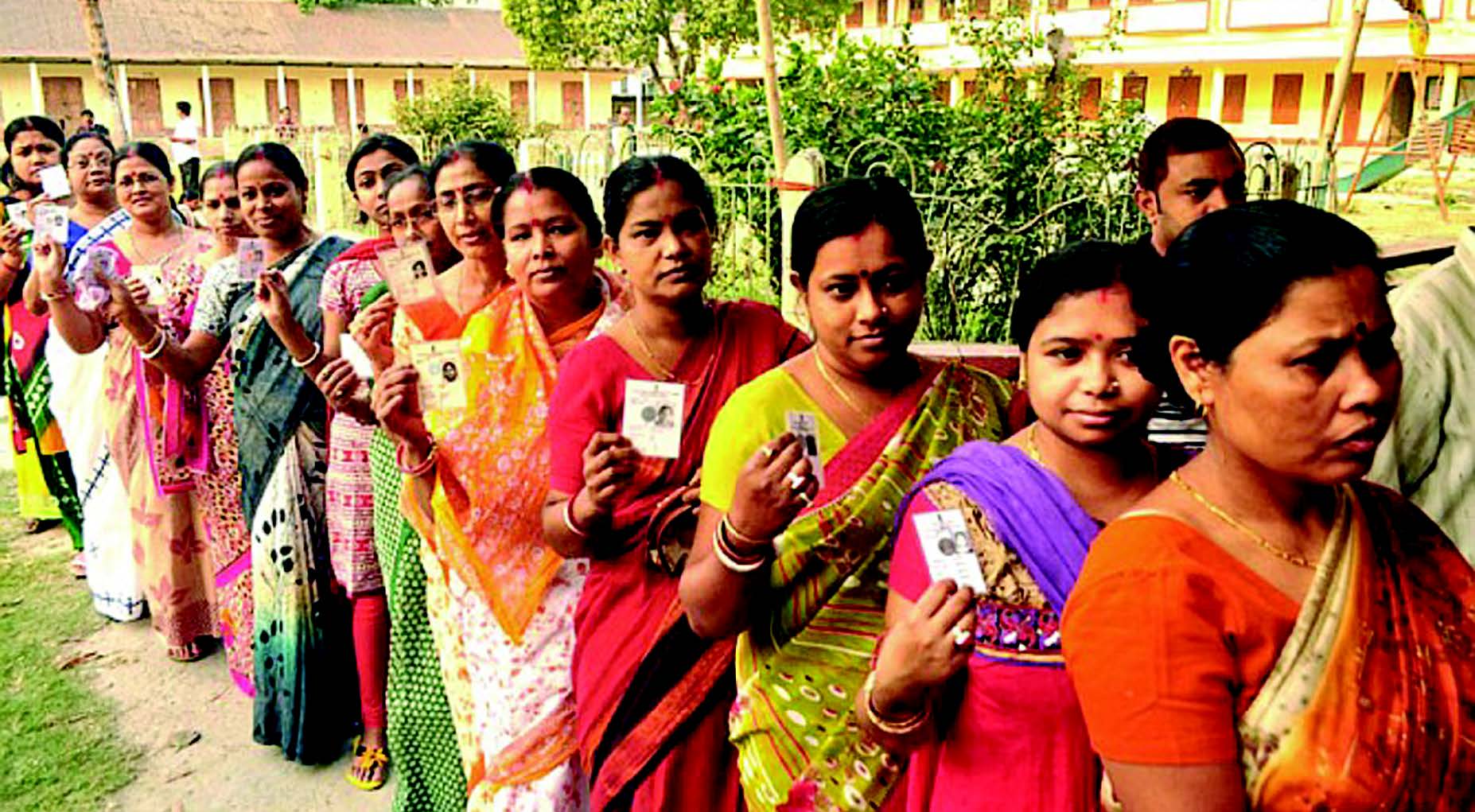
NEW DELHI (TIP): Nearly 66% of the electorate exercised its franchise on Wednesday in the seventh phase of the 16th general election, in line with the heavy turnout that marked the earlier rounds of voting. More than 139 million people were eligible to cast their votes in the phase that decided the electoral fortunes of political heavyweights including the Bharatiya Janata Party’s (BJP) prime ministerial candidate Narendra Modi and his senior colleagues Rajnath Singh, L.K. Advani, M.M. Joshi and Arun Jaitley, besides Congress party president Sonia Gandhi.
The day also marked what Modi claimed was the first police complaint registered against him in his life. The first-information report (FIR) was registered against him at the behest of the Election Commission. The BJP is eyeing at least 62 of the seats up for grabs in Wednesday’s voting, by the end of which elections were completed in 438 of the 543 Lok Sabha constituencies. Elections to the remaining 105 constituencies will he held on 7 May (64 seats) and 12 May (41). The results will be declared on 16 May.
The 438 Lok Sabha constituencies where voting has taken place so far have witnessed a 66.2% voter turnout, compared with 57.6% in 2009. Some 62.4% polling was recorded in Gujarat, where all 26 Lok Sabha constituencies in the state went to the polls on Wednesday. Vadodara, where Modi is in the electoral fray, had witnessed a high turnout of 70% well before polling ended. “There is a phenomenal increase in the voter turnout in Gujarat…,” said Akshay Rout, director general of the Election Commission. “The voter turnout for the state in the 2009 general election was 47.8%.” In the last five Lok Sabha elections, the average voter turnout in Gujarat was less than 50%.
The turnout is expected to be higher this time around following a voter awareness drive carried out by the Election Commission and with Modi being selected the BJP’s prime ministerial candidate, political experts said. After casting his vote in Gandhinagar constituency, Modi told reporters that this was the end of India’s “mother-son government”—a reference to Sonia Gandhi and her son, Congress vice-president Rahul Gandhi. Modi said the Congress appeared to have accepted defeat after signalling it may support a Third Front (non-Congress, non- BJP) government at the Centre to keep Modi out.
“The Congress has accepted defeat as it is now saying that it will support the Third Front to keep me out of the race. The Prime Minister, the finance minister and other senior ministers are not in the contest. Tall leaders of the Congress are running away from the elections,” Modi said. “Now, some are trying to save their chairs, some are trying to save themselves and some are trying to save prestige of the Congress party,” he added. Modi suffered a setback, with the Election Commission asking the Gujarat state authorities to register two first FIRs against him for holding a media briefing outside a polling station in Gandhinagar and also holding the BJP’s symbol, the lotus, while talking to reporters.
“Tone and tenor of the address made by Narendra Modi and the statements made by him, the manner in which the symbol lotus of the BJP was being displayed by him, it is evident that the address was in the nature of political speech intended and calculated to influence and affect the result of elections in the constituencies going to polls today, not only in Ahmedabad but also in all other constituencies in Gujarat and elsewhere in the country,” the poll watchdog said in a statement. Addressing a rally in Tirupati, Modi referred to the FIR. “I will never forget 30 April. Today was the first time an FIR was registered against me,” he said.

Modi claimed he had never violated the law hadn’t even got a parking ticket in his life. Gujarat is considered to be a bastion for the BJP and the party is looking to make a clean sweep in the state this time around. Modi is also contesting from Varanasi in Uttar Pradesh. In the 2009 Lok Sabha election, the BJP won 15 seats and the Congress 11. The BJP increased its tally in by-elections—in the outgoing Lok Sabha, the BJP has 17 seats while the Congress has nine. On Wednesday, Punjab also recorded its highest-ever turnout at 73%. The voter turnout was 76% in Daman and Diu, 81.35% in West Bengal, 73% in Punjab, 59% in Uttar Pradesh, 70% in the Telangana region of Andhra Pradesh, 60% in Bihar, 85% in Dadar and Nagar Haveli, and 25% in Jammu and Kashmir.
Telangana vote
Andhra Pradesh’s Telangana region, which will become India’s 29th and newest state on 2 June, also went to the polls on Wednesday. The region recorded a turnout of 59.3% as of 3pm. Medak (65%) had recorded the highest polling while Hyderabad district (51%) recorded the lowest, a bulletin by the state election commission showed. About 28.1 million voters in Telangana were registered to elect candidates to 17 Lok Sabha and 119 state assembly seats at 30,000 polling stations.While 265 candidates were in the fray for parliamentary constituencies, 1,669 candidates were in the race for the state assembly.Voters in Telangana are simultaneously electing representatives to the Lok Sabha and to what will become the Telangana state assembly. The other part of Andhra Pradesh will exercise its mandate a week later on 7 May. The 294-member Andhra Pradesh state assembly will be divided according to constituencies once Telangana becomes a state. The main parties and groupings in the race to form the first government of Telangana are the Telangana Rashtra Samithi (TRS), and two alliances—one between the Congress and the Communist Party of India and the other between the Telugu Desam Party (TDP) and the BJP. The winner in the 119-member Telangana assembly has to get a simple majority of at least 60 seats to form the new government in the would-be state.
Polling was not devoid of incidents. Actorpolitician K. Chiranjeevi landed himself in an embarrassing position when a youngster objected to him skipping the queue at a polling booth. Chiranjeevi, who is chairman of the Andhra Pradesh Congress Committee, then beat a hasty retreat and stood at the end of the queue. TDP chief N. Chandrababu Naidu, too, landed himself in an embarrassing position when he revealed who he cast his ballot for. “Due to our pre-poll arrangement, I cast both my votes for lotus symbol (of the BJP),” Naidu told waiting media.
The state election commission did not take kindly to this. “Secrecy of vote has to be maintained by every voter,” Andhra Pradesh chief electoral officer Bhanwar Lal said. As a result, the returning officer of the polling booth will declare Naidu’s vote ineligible. “He should act responsibly,” Lal said. “If we don’t delete that (ballot), action will be taken against us.”
-

GOVERNMENT INTENDED TO PUNISH SIKHS: COBRAPOST
NEW DELHI (TIP): The Delhi Police succumbed to anti-Sikh sentiments in 1984, thus abetting rioting and arson, a sting operation by news portal Cobrapost revealed Tuesday, April 22. The expose triggered a political row. The Congress, which was also in power then, sought a probe into the sting operation, while the BJP said it proves that the riots were sponsored by the then ruling party and its coalition ally, the Shiromani Akali Dal reiterated its manifesto resolve to set up fast track courts to nail the guilty and ensure justice for the victims.
The sting operation titled “Chapter 84” claimed that the government did not allow the police to act while creating an impression that police were not performing their duty. “The government’s intention appeared to be that the Sikhs should get some punishment,” said Shoorveer Singh Tyagi, then police station house officer (SHO) at Kalyanpuri area of east Delhi, whom Cobrapost interviewed.
“Messages were broadcast directing police to not take action against rioters who were shouting slogans of ‘Indira Gandhi zindabad’,” Rohtas Singh, SHO at Delhi Cantonment, told Cobrapost. Throwing light on the complicity of the state in the 1984 anti-Sikh riots, the report added that police logbooks were conveniently changed to eliminate evidence of inaction by senior police officials.
Police did not allow the victims of rioting to file first information reports (FIRs or police complaints) or when they filed FIRs, they clubbed many cases of murder and arson that took place in different places under one FIR, according to Cobrapost. Police officers were also guilty of dumping bodies of victims elsewhere to minimize riot-related crimes near their police stations, Cobrapost claimed.
BJP spokesperson Mukhtar Abbas Naqvi said the 1984 riots were a Congress-sponsored pogrom in which not only “human beings but also humanity died”. “The way Congress has tried to justify this saying when a big tree falls, the earth shakes. Today, children who saw their families being burnt are coming forward. There is no question of forgiving the Congress for this,” he said.
Congress’s Rashid Alvi said the claims made by the sting operation should be investigated properly. “It should be inquired into and action should be taken against all those officers who are involved.” “Whoever is responsible whether it is politicians or police officers they should be punished,” he added. Congress spokesperson Randeep Sutjewala alleged that the issue was getting politicized in the atmospherics of election. “SAD and BJP are trying to regain their lost ground.
They seem to be rattled and trying to clutch even a straw to avoid defeat as both the parties are going to lose badly in Punjab,” he said. Akali Dal leader Naresh Gujral said: “When we (NDA) form the government next month, we will nail the culprit and set up fast track courts.” Releasing the party’s manifesto in Punjab’s Bathinda Monday, April 21, Akali Dal president Sukhbir Singh Badal said a commission of inquiry will be set up under a Supreme Court judge to “inquire into the entire political conspiracy behind the massacre and expose and punish the real conspirators”, while fast track courts will come up to try its cases.
Cobrapost interviewed many police officers including S.C. Tandon, who then headed Delhi Police, and Gautam Kaul, the then additional commissioner of Delhi Police.