Tag: Punjab

  • SIKH-AMERICANS: Towards a More Perfect Union

    SIKH-AMERICANS: Towards a More Perfect Union

    It is a speech Dr. I.J. Singh delivered at Vaisakhi Celebrations at the Indian Consulate on April 16.-EDITOR

    Thank you for coming to this very special occasion. This is an important part of the year not just for Sikhs but for many of our non-Sikh neighbors as well. This time of the year we take note of Passover for the Jews and Easter for Christians. For Sikhs it is Vaisakhi that gave final form to the message of Sikhism.

    I see many here who know about the significance of Vaisakhi better than I. But I also see some who are on unfamiliar territory. Very briefly we relive the day – mid-April 1699 when the 10th Founder-Guru of Sikhism called a special convocation of Sikhs – around 80,000 attended. He appeared with a flashing naked sword and asked for a head. Consternation! You bet.

    Finally one man offered his head. Took into a tent. The Guru came out with a bloody, naked sword and repeated the call for a head. Surely, many looked away or slunk away. Finally one by one 5 from distant parts of India and different castes of society volunteered. From this modest beginning a nation was formed. An egalitarian community with no differences of caste, class, color, gender, race, or such trivia. I come to you as an American who is also a Sikh. Rather than addressing in detail the events and message of Vaisakhi 1699 I want to define a place for Sikhs and Sikhism today within the larger framework of contemporary American society.

    I see that we are — all Americans — at one time or another, in one form or another — just off the boat. Many of you came more than two centuries ago; my people – a little over a hundred years; I came 50 years ago. All three are examples of just being off the boat. We are not counting Native Americans here. Like new kids on the block we Sikhs have a checkered and relatively unknown presence in contemporary American society. But Sikhs worked on the Panama Canal when it was built in 1903-04. The West was not opened by the likes of John Wayne alone — Chinese, Italian and Indians, including Sikhs had a hand in it.

    Yes, there were discriminatory laws in place then. The Asian Exclusion Act, prevented Asians from owning land or becoming citizens until 1946. Immigration laws were eased only during Lyndon Johnson’s time as President in the 1960’s. Keep in mind the targeting and profiling of Sikhs in the United States post 9/11. In 1960 when I came here, there were 3 Sikhs in New York. I went to graduate school in Oregon where I was the only one for years. Now there are a tad less than a million in North America. From the day I landed here, the American Dream has been my preoccupation, as it is of all immigrants from anywhere. After a while I began to wonder what exactly we mean when we talk about being and becoming an American.

    The flood of immigrants – about 18 million Europeans – came between 1890 and 1920. Israel Zangwill celebrated them in his Broadway play titled The Melting Pot. Thus this defining expression entered our national dialogue. But in a melting pot, the units blend irretrievably together. The individual identity of each item is lost — homogenized. This reminds me of a hostile takeover, not a model of cooperative interaction. This is not how America is. In this land each wave of immigrants has added inestimable value to society. The creativity, vitality and energy of this culture come from its immigrant roots. A melting pot in which immigrants bring none of their traditions, language, culture, music and cuisine would leave the larger society poorer.

    Sometimes I think of this society as a mosaic, in which small shards that have little value individually create an enthralling whole with much magic to it. A mosaic is an interactive model where every little piece, no matter how small, has a place such that the whole is greater than the sum of the parts. However, it is a Static not a Dynamic model. A better metaphor for this society is a large multi-instrument orchestra. Note that in it the lowly cymbals or the triangle, too, have a place. When they speak, the naturally dominant strings and pianos listen. When the mighty and the small talk to each other without drowning the other, the conversation becomes heavenly music. That’s how a rich performance is born.

    An orchestra, when well and wisely led, has an organic presence to it. The central idea is that the totality is greater than the sum of the parts. And there is a core of American values that defines and unites us. Think with me a moment: A lynch mob is governance by democratic majority, but we would all reject it. Sometimes a majority turns tyrannical. History speaks eloquently of the struggles of Women, Blacks, the Irish, Jews, Germans, East Europeans, Italians and the Japanese for an equal place in this society. My people as well! A democracy mandates that the rights of the smallest minority are equally protected. In a mosaic or an orchestra the smallest bit is not trampled on, but instead allowed its breathing space. The lot of a minority is never easy. And Sikhs would be a minority no matter where they lived in this world, even in India.

    So, there are days when I hear the multiinstrument orchestra in my soul, and the “world’s mine oyster” as Shakespeare said Then there are days that are not so kind. So, I remain particularly sensitive to our place in a multi-ethnic, multi-religious nation such as this; the triangle and the cymbal among the powerful strings and pianos are always on my mind. In Sikh belief, as in many spiritual traditions, the “Word” is God. Sikh scripture – the Guru Granth – opens with an alphanumeric devised by Guru Nanak the founder of the faith over 500 years ago. “Ik Oankar”, he formulated, joining the first numeral, “one” with “Oankar”, a word that stands for Creator or Doer. Ik Oankar then postulates One God – not a partisan Jewish, Christian, Muslim, Hindu or Sikh God, but one that embraces all creation.

    To experience God one needs to discover unity in the diversity of creation. If I can see the oneness in the creator and creation, there is absolutely no room left for distinctions in race, caste, creed, gender, color or national origin. Differences between “them” and “us” vanish. Equality, liberty, fraternity and justice are inherent in that oneness. And, then, as the Sikh scripture says, “I see no stranger.” Vaisakhi today reconnects us to these ideals. This nurturing and celebrating unity in diversity is how I understand this nation’s motto: E Pluribus Unum that defines us — One from the many – that is our motto, and our way to a more perfect union. An equal place at the table for the diversity that comprises this society. This is how I see Sikh presence in this country – small but significant. Fear of the stranger has, at times, produced discriminatory laws. But as FDR said in a different context, “we have nothing to fear but fear itself.”

    Emerson reminds us, “A nation, like a tree, does not thrive well till it is engrafted with a foreign stock”. The idea I am pushing is integration, not assimilation beyond recognition and definitely not pockets of isolation either. Such were the values of this nation’s founding fathers. The inscription “In God We Trust” on our currency, and “One Nation under God” in our Oath of Allegiance would not find approval in their eyes. In fact, these words were added only in the 1950’s during the Joe McCarthy days. Jefferson reminds us: “It does me no harm if my neighbor thinks there are twenty gods or that there is none.” This tells me that much as it is possible to be a good Christian and a good American, or a good Jew and a good American, or even an atheist and a good American, it is similarly possible to be a good Sikh and a good American.

    These are not mutually exclusive ideas. Let me recount a brief story: It was a day or two after 9/11 and I was one of the few people walking about wearing a turban in New York City. I fell into conversation with a bright, educated ‘white’ American. And wellto- do — his brief case was better than mine and his suit more expensive. We talked a while about Sikhs in America. “Tell me,” finally, he said “your people have been here a hundred years. Why did they not leave their religion back home when they came here?” I was taken aback but recovered. So I asked. “Your people have likely been here over 200 years. Tell me, when they came here, why did they not leave their religion back home. No natives here between you and I!” It was his turn to be thoughtfully silent a moment. Then he said: “You have a point. Let’s have a cup of coffee.” We did and remain friends now, so many years later. To understand the meaning of diversity, we need to see “us” in “them” and “them” in “us”. Unity of faiths and peoples is created by the Creator but cultivating this unity and its awareness is not the craft of heaven – it is our awesome duty on Earth.

    About I.J. Singh
    Dr. I. J. Singh came to the United States in 1960 on a Murry & Leonie Guggenheim Foundation fellowship and now is professor emeritus of anatomical sciences at New York University. He earned a PhD in Anatomical Sciences from the University of Oregon Medical School and a DDS degree from Columbia University, New York. Dr. Singh serves on the Advisory Board of the United Sikhs and the Board of the Sikh Research Institute. He also serves on the Editorial Boards of the Sikh Review (Kolkata) and Nishaan (New Delhi), has authored five collections of essays on his journey as a Sikh in North America, is a regular columnist on the Internet and has lectured extensively on interfaith issues.

    Dr. Singh was born in Gujranwala, now in Pakistan. His father was a senior officer with the Punjab Public Service Commission. Strangely enough, while all his brothers chose to serve Indian defense forces, Dr. Singh alone chose the field of academics. One brother was a commander in the navy; the other a commander in the air force. His brother-in-law retired as a brigadier in the Indian army. Only he and his father in the family were civilians.

  • Sikh International Film Festival 2014 – May 2-3 in New York City

    Sikh International Film Festival 2014 – May 2-3 in New York City

    Celebrating 10 years of preserving Sikh Heritage, Culture & Traditions

    NEW YORK (TIP): To celebrate and commemorate Sikh art, culture, leadership, and film, The Sikh Art & Film Foundation is presenting its 10th Sikh International Film Festival (SIFF) on Friday and Saturday, May 2 and 3, 2014.

    The Premiere Night will take place on Friday, May 2 at the McGraw-Hill Conference Center (1221 Avenue of the Americas, 2nd floor) from 6:30pm onwards. The Festival will be held from 1 to 9:30 p.m. on Saturday, May 3 at the NYU Skirball Center for the Performing Arts (566 LaGuardia Place) in New York.

    The Premiere Night on May 2nd will start with Chief Guest and 2014 Honoree Mr. Fakir Syed Aijazzudin, presenting an illustrated lecture on his latest book The Resourceful Fakirs. This remarkable book is set during the reign of Maharaja Ranjit Singh, the Sikh ruler who unified the Punjab for the first and only time in its tumultuous history.

    Mr. Aijazzudin explores this colorful period through the careers of the Fakirs, three brothers who were courtiers at the Sikh Darbar of Lahore. Mr. Aijazzudin, OBE, FCA, is an internationally recognized art historian and author of more than a dozen books which include a catalogue of miniature paintings from the Punjab Hills, the works of 19th century British and European artists who visited the Punjab, a definitive monograph on antique maps of the region and two books on the history of Lahore.

    presentation will be followed by the US East Coast Premiere of Dalip Singh Saund: His Life, His Legacy directed by E. Samantha Cheng. This documentary shares the remarkable story of Dalip Singh Saund – the first Asian/Indian/Sikh-American elected to the US Congress. Born in a small town of Punjab, Saund was a trailblazer who came to study agriculture at the University of California in 1920. At a time of great discrimination against Asian minorities, Dalip persevered and rose to serve California’s 29th district in the House of Representatives three times between 1957 and 1963.

    An inspirational documentary with powerful archival footage, Dalip Singh Saund tells the little known story of a man of high integrity who made history through his contribution to American political life. The night will close with, drinks, dinner, and high energy Bhangra music at the After Party. The May 3rd Film Festival at the NYU Skirball Center will present 11 short films, documentaries, and a feature film based on Sikh stories from across the globe, from both established and emerging filmmakers. Short films will be shown from 1 to 2:45 p.m., short documentaries from 4 to 6:15 p.m., and feature presentation from 7:15 to 8:45 p.m. The event will culminate with an awards ceremony from 9 to 9:30 p.m.

    Six films will compete for the best Short Film at SIFF 2012 including three hardhitting films based on the Sikh Genocide of 1984 in India: Kush, from award-winning filmmaker Shubhashish Bhutiani, inspired by a true story of a teacher protecting a 10 year old Sikh student in her class; Message from Satwant Kaur, directed by Eshvinder Singh, about a message to a powerful politician about the crimes he committed during the anti-Sikh pogroms; and Rab Da Vaasta (For God’s Sake), Chakravarty Devulapalli’s adaptation of Hernando Tellez’s well known story “Just Lather, That’s All”. Four Films will compete in the Documentary session.

    These include Kaur directed by Rasna Kaur Neelam and Harnek Singh Neelam, which shows how diverse, inspiring and unique each Sikh woman can be; a powerful narration on the extra judicial killing of Sikhs in Punjab, as documented in The Last Killing produced by the civil rights group Ensaaf; Raw Conversations, directed by Anureet Kaur on the terrible state of farmers in Punjab; and Wrinkles of Life, directed by Jarnail Singh, which deals with the abandonment and anguish of elderly family members by their children in modern day Punjab. Feature presentation – Empty Inside, will close out the Film Festival on May 3rd.

    Award winning director Satdeep Singh’s film depicts the growing drug addiction menace that has engulfed Punjab’s youth. This powerful film tries to uncover the root causes that lead a person to fall into addiction, but also searches for answers and solutions. Empty Inside speaks to a global audience, showing events in our daily lives which lead to something terrible when they are ignored. Addiction is a broad term, and the movie begins from one root cause of all forms of addictions-the emptiness which prevails inside all of us despite having everything on our side. One of the Sikh Art & Film Foundation’s goals is supporting the work of filmmakers who delve into Sikh themes and culture.

    Winning films in the category of Best Short Film and Best Documentary will be recognized with a cash prize, and each film participating receives a screening fee. The Sikh Art & Film Foundation’s awards, fees, and cash prizes total $15,000. The Sikh International Film Festival was founded in 2003 to create awareness and pride in the diversity, culture and history of the Sikhs, a people rooted in the Punjab region of South Asia who practice the world’s fifth largest religion.

    Announcing the 2014 Film Festival, Tejinder S. Bindra, President of the Foundation, said, “In offering this excellent lineup of films at our 10th Film Festival in New York, we renew our mission to demonstrate Sikh culture and stand with our partners in declaring that intercultural understanding, fighting for the oppressed, and respect for each other’s differences are not just our core Sikh values, they are also our American values”. For the complete schedule, film descriptions, stills, trailers, and ticket information, please visit www.sikharts.com.

  • Ilayas Quraishi

    Ilayas Quraishi

    Professor Saluja and his team has done a commendable job by organizing a successful event of Vaisakhi in association with the Indian Consulate in New York.

    Mr. Saluja and his team presented a beautiful and edifying documentary about Punjab and its culture and people which was useful to understand Punjabi history and culture especially for other communities.

  • Sushma Kotahwala

    Sushma Kotahwala

    Vaisakhi celebration at the consulate was superb . The documentary was very well created. It took our heart back to villages of our dearest motherland. ” Woh Khet-Khaliyan Bahut Yaad Aaye”. It brightened our heart and soul. Even minute aspects of history and culture have been covered.

    It gave a proud feeling of greatness to see our jawans-brave men of Punjab- who had scarified their lives for the country. This documentary teaches us a lot and makes us aware of so many things we need to know. I appreciate the hard work done for this by so many people especially by Professor Salujaji whose ideas have definitely inspired people. The presentation of documentary made Vaisakhi function successful.

  • Director-lyricist Gulzar to get Dadasaheb Phalke award

    Director-lyricist Gulzar to get Dadasaheb Phalke award

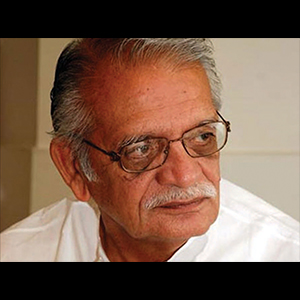
    NEW DELHI (TIP): His lyrics speak of winter afternoons spent soaking the sun in the courtyard, stars walking the streets after rain, the moon being an insomniac and the heart a neighbour. Gulzar, whose song writing brought a range of fresh metaphors to Hindi cinema and whose movies feel like visual literature, will receive the Dadasaheb Phalke award for 2013. “It is national honour.

    It is a feeling of fulfillment of not one song, screenplay, but the total work one does. I feel blessed,” the 79-year-old filmmaker told a TV channel. A seven-member jury has unanimously recommended his name. During Emergency, Gulzar’s film “Aandhi” was banned by the Congress government as the protagonist played by Suchitra Sen was deemed to be modelled on then Prime Minister Indira Gandhi. It is both ironical and heart-warming that Indian filmdom’s biggest official honour comes to the Punjab-born director during the Congress-led UPA rule.

    On Saturday, Twitter was abuzz with congratulatory posts. One of them said, Ab ki baar, Gulzar, a naughty twist to the BJP’s campaign slogan for the ongoing Lok Sabha polls. Gulzar’s finest work, both as a director and a lyricist, are sensitive manuscripts of the human heart. Movies such as “Koshish”, “Achanak”, “Mausam”, “Namkeen”, “Ijaazat” leave you with a sense of loss and ache. But he has also made films of joy and laughter: “Parichay” and “Angoor”, to name a couple.

    Quite a few have also been political in content: “Mere Apne” (youth unrest), “Maachis” (Punjab terrorism), “Aandhi” and “Hu Tu Tu”. And his television series, “Mirza Ghalib”, is regarded as an all-time classic. In his early years, Gulzar assisted the very special Bimal Roy and wrote his first song for the latter’s 1963 classic, “Bandini”, “Mora gora ang le le” (music director: SD Burman). Over the years he also teamed up with classy composers such as Hemant Kumar, Madan Mohan, Kanu Roy, Salil Chowdhury, AR Rahman and Vishal Bharadwaj. With Rahman, he won both the Oscar and the Grammy for the “Slumdog Millionaire” track, “Jai Ho”. But his best work happened with RD Burman.

    Over the years, the lyricist has spoken fondly of the late composer whom he always referred to as Pancham, his pet name. The two were at their collaborative best in films such as “Aandhi”, “Khushboo”, “Masoom”, “Ijaazat”, “Ghar” and “Khoobsurat”. As a lyricist, Gulzar has evolved with the changing times. Without compromising on his craft, he has found the right words to reach out and engage with a new generation. If “Kajra re” (film: “Bunty aur Babli”) is fun and young, “Bidi jalai le” (film: “Omkara”) reeks with erotic passion.

    In “Kaminey”, he uses the expression, “Ek hi lat suljhane mein saari raat bitayee hai” (I have spent an entire night sorting out one knot in your hair) in one track to reaffirm that his delicacy of expression is intact. Like fine wine, Gulzar has improved over the years. The filmmaker has also groomed a lot of talented actors and technicians notably Vishal Bharadwaj, Jimmy Shergil and Tabu. “Mere Apne”, his first film as a director, also had a bunch of newcomers including Danny, Asrani and Dinesh Thakur.

    A popular poet and writer, Gulzar is a crowdpuller at litfests and mushairas alike. Generally dressed in starched white kurta-pyjamas and shawls in the winter, he has come to symbolize the erudite litterateur. He is also a spokesperson for humanism, communal amity and a votary for peace, especially with sparring neighbours. The Dadasaheb Phalke award is a crown jewel in a glittering career.

  • WORLD PUNJABI ORGANIZATION CELEBRATES BAISAKHI

    WORLD PUNJABI ORGANIZATION CELEBRATES BAISAKHI

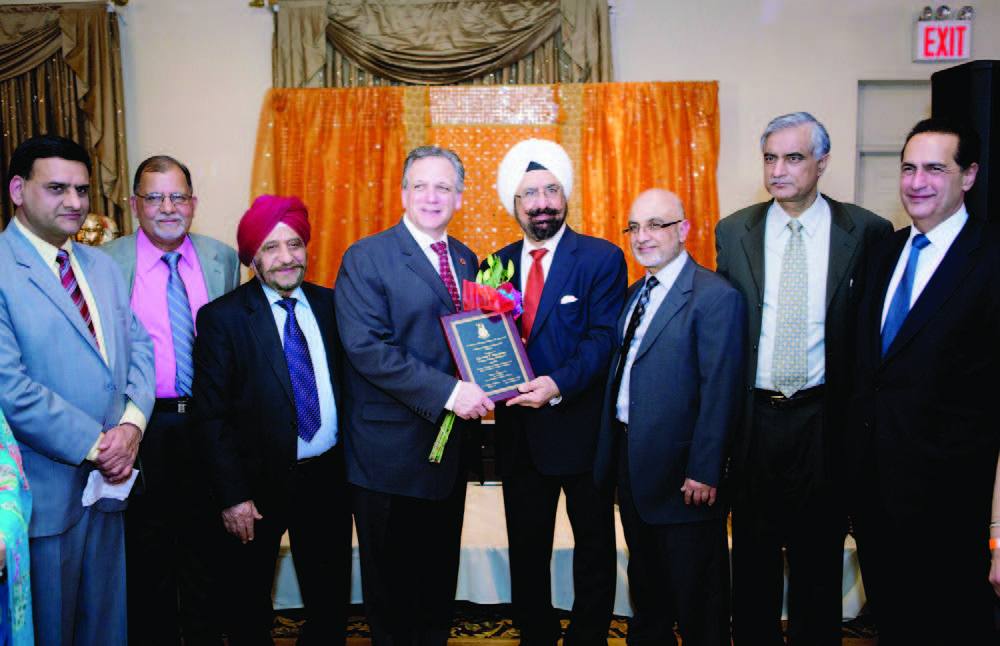
    World Punjabi Organization celebrated Baisakhi earlier this month at Akbar in Garden City, Long Island. The large gathering was entertained to a variety cultural program that included instrumental music, songs and folk dances.

    Nassau County Executive Edward P. Mangano, speaking on the occasion, appreciated the Indian American community for their hard work and contribution to the growth of the County. He offered his warm Baisakhi greetings to the gathering and commended the organizers for the great work they were ding to preserve their cultural heritage.

  • KFC CREATES A VEG MENU FOR INDIA

    KFC CREATES A VEG MENU FOR INDIA

    NEW DELHI (TIP): KFC, the Kentucky-based fast-food chain known for its “finger-lickin’ good” range of chicken fillets and burgers, has finally given in to India’s penchant for vegetarianism. In what appears to be a first across all KFC franchises globally, KFC India has unveiled a segregated vegetarian menu along with a strong message about its newfound bias for vegetarian offerings.

    Paneer Zinger and Veg Twister, in addition to the hot-selling Potato Krisper Burger, Veg Strips, Veg Rockin’ Burger and Veg Rice Bowl will now vie for consumer mind space along with their popular nonveg counterparts. The company has not only introduced new products under its veg range, it has also tweaked its global tagline “So good” to “So veg, so good” to show its commitment towards the category. Executives at the company say the new menu will help them satiate high local demand for vegetarian options.

    “We recognized an opportunity to deliver a significant vegetarian range for the Indian consumer, and to reach out to a broader target audience,” says Dhruv Kaul, director of marketing at KFC India. Around 42% of Indian households are vegetarian, according to the Food and Agricultural Association of the United Nations, and 35% of weekdays are vegetarian for rest of the non-vegetarian population. The apparent split is backed up by consumer choice at various fast food restaurants across the country.

    For instance, last month, on National Breakfast Day, out of the total free breakfast meals offered by fast food chain McDonald’s, 66% customers chose a Veg McMuffin over Egg McMuffin. Interestingly, McDonald’s is the first global fast-food chain to bring in a customized vegetarian menu to India, which boasts of McAloo Tikki burgers, among others. Since then, it has steadily been increasing the number of vegetarian options on its menu, along with other chains such as Subway.

    Nearly 70% of the total pizzas sold in the country are vegetarian pizzas even in regions like Punjab, which is known for its meat-loving populace. “It also helps that vegetarian options are more affordable than non-vegetarian ones,” says Arvind Singhal, chairman of retail consultancy Technopak.

    In the future, vegetarian offerings are expected to play a big role for fast food companies in India, with more and more urban consumers preferring vegetarian food as it is considered healthier. At present, India is emerging as one of the fastest growing fast food markets in the world. According to a National Restaurant Association of India (NRAI) report, the fast food industry in India is estimated at Rs 8,000 crore and is growing at a CAGR of 35-40% annually.

  • PARKASH SINGH BADAL MAKES LIGHT OF GUJARAT’S DEVELOPMENT MODEL

    PARKASH SINGH BADAL MAKES LIGHT OF GUJARAT’S DEVELOPMENT MODEL

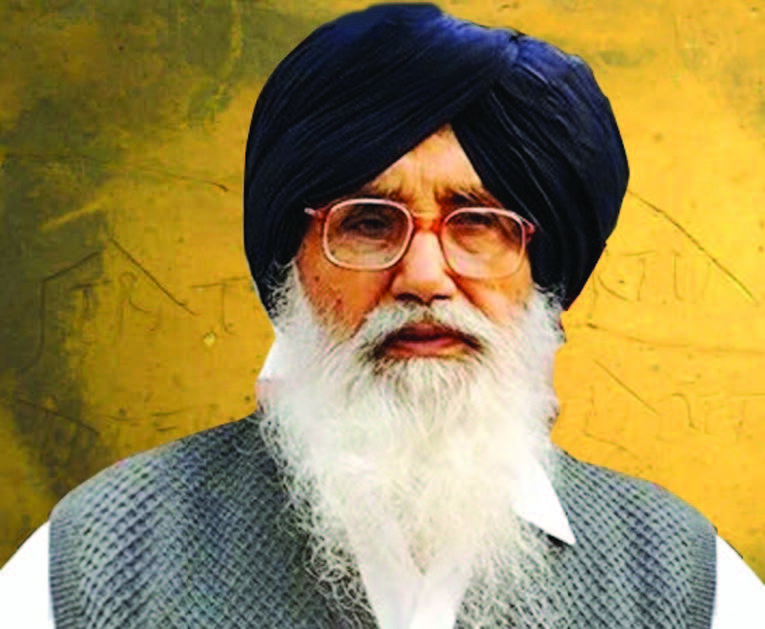
    JALANDHAR (TIP): Punjab chief minister Parkash Singh Badal on April 10 said work in Gujarat was visible more as it started from a very low level on development index while Punjab had already reached a saturation point. Trying to explain reasons for Punjab not emerging as a model, Badal said, “Gujarat started from a very low level on development index while Punjab had already reached a saturation point.”

    He was reacting to a question on if Gujarat could develop despite Congress government at the Centre, why not Punjab as the CM was blaming Congress government at the Centre for all ills of Punjab. Asked if the talk of Gujarat model was hollow in that case, Badal said he (Modi) did a good job but the main reason for visible development was that it started from a low level.

    But he added Gujarat was always considered among the better states in the country on industrialization and development fronts and was never considered very low like Bihar, MP, Rajasthan and UP. Addressing a meeting of industrialists, he blamed Congress government at the centre for all ills of Punjab which was discriminating against Punjab and was not giving enough funds. He had said that if Modi became PM there would be no dearth of funds.

  • Elections lack substantive agenda

    Elections lack substantive agenda

    The author notes that there is no focused debate on real issues. Only cacophony prevails. “Past experience tells us that the so-called “manifestos” of the political parties are hardly ever practically implemented. The consequences of the ‘business-as-usual’ scenario are summed up in this adage, “If you always do what you always did, you always get what you always got”, says he.

    Another season of elections is upon the Indian voters. There are the usual activities – promulgation of model code of conduct, distribution of tickets by political parties, switching parties and turning rebel for not getting the party ticket, tall promises and distribution of liquor/drugs to woo voters, etc.

    However, candidates never seem to engage in constructive debates on issues – only complaining and mud-slinging. Few candidates spell out their vision on education, healthcare, farmers’ plight, agriculture, environment, drug-abuse, traffic reforms, etc. Having lived in the United States for more than four decades, I can unequivocally say that at every level of the democratic election process, there are substantive debates between/among candidates.

    Many times, debates are what makes or breaks a candidate. Debates can expose the shallowness of candidates on issues. Sometimes, the statements that the candidates make or how they treat people can determine the outcome of elections. For example, in 2006, a senatorial candidate of the US Republican Party from the state of Virginia, George Allen, called a field operative (an American of Indian origin) of his Democratic opponent, who was ‘videotracking’ Allen, ‘macaca’ – meaning ‘monkey’. Allen, who was earlier touted as a strong future presidential contender, lost the senate race simply because of this racial slur. Global Language Monitor named ‘macaca’ as the most politically incorrect word of 2006.

    There are plenty of political candidates in India, who call each other worse names than ‘macaca’. In India, there is a need for a Commission on Debates. In the USA, presidential debates are sponsored by the Commission on Presidential Debates that was established in 1987 to provide the best possible information to voters and to conduct research and educational activities related to debates. The League of Women Voters (LWV), a civic organization, founded in 1920 to help women take a larger role in public affairs, also sponsored presidential debates before 1987. Such organizations are needed in India to organize debates among candidates at least during the parliamentary and legislative assembly elections. I am sure there are plenty of highly qualified (hopefully unbiased) TV anchors and newspaper editors who can moderate such debates.

    For example, public debates are a need in Punjab on major issues like drugs and corruption, acknowledged widely but rarely addressed by the political parties. Someone has aptly said if you were intent on bringing down a powerful country that you would not want to confront militarily, orchestrate that country’s destruction from within. Getting the youth – the future of the country – addicted to drugs can destroy that country without firing a shot or destroying infrastructure. In 2012, Jim Yardley, a reporter for New York Times, commented on the issue of drug abuse in Punjab, saying, “Throughout the border state of Punjab, whether in villages or cities, drugs have become a scourge.

    Opium is prevalent, refined as heroin or other illegal substances. Schoolboys sometimes eat small black balls of opium paste, with tea, before classes. Synthetic drugs are popular among those too poor to afford heroin.” An overwhelming majority of addicts were said to be between the ages of 15 and 35, with many of them unemployed and frustrated by unmet expectations. Yardley further wrote that even though around 60 per cent of all illicit drugs confiscated in India were seized in Punjab, during the Punjab state elections of 2012, candidates rarely spoke about drug abuse, and that India’s Election Commission indicated that some political workers were actually giving away drugs to buy votes; party workers in some districts distributed coupons that voters could redeem at pharmacies. This is really a sad commentary on the state of affairs in Punjab that once was the most progressive state of India.

    Those at the helm of affairs seem to be playing Russian roulette with the lives of youngsters who instead of becoming a ‘demographic dividend’ turn out to be a liability for the society. The Corruption Perception Index ranks countries based on the perceived level of corruption in the public sector on a scale of 0 (meaning highly corrupt) to 100 (very clean). India had a score of 36/100. According to researcher Finn Heinrich, corruption hurts the poor most. The poor in poor countries will not be able to get out of poverty until they tackle corruption. Corruption is rampant in India. When someone was asked ‘Where is the capital of India?’ a pejorative answer was “Swiss Banks,” referring to the black money hidden there by politicians. India, where most of the public-sector employees stand with their hand out to do the job that they are already paid to do, has become a laughing stock of the world. Governments must enforce the laws in right earnest to combat this menace of corruption.

    In 2011, India’s overall literacy rate was 74.04 per cent. The literacy rate for men was much higher (82.14 per cent) than that for women (65.46 per cent). Punjab’s comparative literacy rate figures were: 76.2 per cent (overall), 81.5 per cent (men) and 71.3 per cent (women). There is a big gulf between the urban and rural literacy rates. The literacy rate for rural women needs to be improved drastically by creating educational opportunities for them. The highest literacy rates were for Kerala: 93.9 per cent (overall), 96 per cent (men) and 92 per cent (women). Punjab has a long way to go to compete with states like Kerala. We read daily in newspapers about the pitiable condition of infrastructure of government schools, the lack of teachers, flawed educational policies, and scams associated with every educational scheme. Literacy is the core to democracy.

    How many candidates in the Lok-Sabha races are addressing the literacy issue and quality of education in Punjab? In Punjab, water pollution caused by chemical toxicity is a serious problem. According to Sant Balbir Singh Seechewal, laws to control pollution remain on paper only and in realty, very little or no efforts are made to control water and air pollution and poisonous chemicals, such as cyanide that continue to emanate from factories in Ludhiana, Jalandhar and Phagwara, freely flow in river waters. Such chemicals can lead to diseases like cancer. In Muktsar, between 2001 and 2009, 1074 deaths were attributed to cancer. During the same period, 211 cancerrelated deaths occurred in the Lambi constituency. In March 2009, Dr. Carin Smit of South Africa examined hair samples of mentally retarded children from the Malwa region and found that 80 per cent samples contained uranium in such large quantities as could make children sick.

    According to the World Health Organization, 15 microgram of uranium per liter of water is regarded as safe limit, but Bhabha Atomic Research Center found uranium levels ranging from 2.2 to 244.2 microgram in water samples from the Malwa region. Arsenic is also found in Malwa water, and chronic exposure to arsenic increases the chances of getting cancer of the lungs, bladder, and kidneys. High-quality cancer research centers and hospitals in the Malwa region should be a high priority of any government coming to power. Much has been written about the need for crop diversification away from wheat-rice system in Punjab toward high-value crops, such as fruits and vegetables. The problems created by the wheat-rice system are the result of lack of visionary, far-sighted policies. The people entrusted with providing solutions are mostly the same whose shortsighted policies created the problems to begin with. Infusion of fresh ideas is needed. Cultivation of pulses, oilseeds, and cereals such as maize must be added to the mix of crops grown.

    Political agenda must include promotion of an environment beneficial to life through the protection and wise management of natural resources to ensure sustainability of agriculture. I have lived in Ludhiana for a number of years and have traveled the length and breadth of the Punjab. In big cities, one invariably comes across snarling traffic. Generally, it becomes a headache for the travelers. This again is due to the lack of visionary planning. Why allow so many vehicles on the road without first insuring needed infrastructure? Highways should be built first to accommodate the anticipated traffic. Police can and should ensure that only those who have passed both written and road tests be issued a driving license. So many young school-going children are seen running around on scooters; most of them may not even be eligible to get a driving license.

    India is poised to overtake China in population by 2030. Politicians in India rarely talk about tackling this important issue. Greater and greater burden continues to be placed on land and agriculturists to produce more and more food grains to feed the burgeoning population while efforts to control population are non-existent. These are some of the issues that must be debated. All Lok-Sabha candidates must be cognizant of these issues and be able to tell the voters where they stand on each of the issues. Past experience tells us that the so-called “manifestos” of the political parties are hardly ever practically implemented. The consequences of the ‘business-as-usual’ scenario are summed up in this adage, “If you always do what you always did, you always get what you always got.”

  • Punjab’s Fast Changing Election Scenario

    Punjab’s Fast Changing Election Scenario

    The New Jersey based author is in constant touch with Punjab and has an uncanny perception of political climate of the State.

    Ireached Punjab in the last week of February 2014. Electoral scene had not yet warmed up in the state. The general public was a thoroughly scared lot. The fear of the government was writ large on their faces. They were unhappy at the current political situation due to a number of reasons, but no one could muster the courage to speak the truth.

    The ruling Shiromani Akali Dal (SAD) cadres, workers and Jathedars were quite upbeat and they were the only players in the field. The main opposition party, the Congress in Punjab was living in complete fear psychosis generated by their strong arm opponents. Some of the elected legislators of this Congress, with strong business interests, were appearing as sitting ducks, completely at the mercy of the ruling party. Their businesses were being crippled for lack of patronage, or put frankly, due to blatant official discrimination. About a dozen of them were ready to cross over to the ruling party.

    The Aam Aadmi Party (AAP) was new to Punjab. It had a lack luster enrolment drive. No one was giving it a chance. I visited some parts of Ludhiana, Fatehgarh Sahib, Ropar, Nawanshahar, Jalandhar, Kapurthala, Ferozepore and Moga. All these districts witnessed only SAD related activity. It looked as if it was a complete cake walk for the SAD. As the month of March dawned, the Congress Party started some activity at the national level. Preneet Kaur, minister of state for foreign affairs at the centre appeared on the scene as a possible victor for the Congress Party from the Patiala constituency.

    Her SAD opponent is a former Congress worker and a Preneet Kaur loyalist, who defected to the SAD not very long ago. A similar sure shot winner appeared in Bibi Harsimrat Kaur Badal, wife of the SAD President and the Deputy Chief Minister of Punjab Sukhbir Singh Badal and daughter in law of the chief minister Parkash Singh Badal. Manish Tewari, minister of information and broadcasting at the centre, appeared a sure shot winner for the Congress Party from his Ludhiana seat. But quoting health reasons, he expressed his inability to contest. This had a demoralizing effect on the other prospective candidates. No one including Partap Singh Bajwa, President of Punjab Pradesh Congress committee, was willing to contest.

    Bajwa expressed his desire to canvass support for all the other candidates. Then the central leadership used its whip. They asked the most charismatic Congress leader in Punjab, Captain Amarinder Singh ex chief minister to contest from Amritsar. This became necessary, because the BJP fielded one of its senior-most leaders at the centre Arun Jaitley from Amritsar. As soon as the name of Captain Amarinder Singh was announced, there were spontaneous scenes of rejoicing in Amritsar. The thus far demoralized rank and file of the party, exploded fire crackers and distributed sweets to the people.

    The mood became not only upbeat in Amritsar constituency, but there was merriment all over the long ignored Majha and Doaba regions of Punjab. Subsequently the Congress changed its candidate from Anandpur Sahib Constituency and fielded one of its senior leaders Ambika Soni from there. From Ferozepore constituency, they fielded the leader of the Congress Legislative Party in Punjab State Assembly Mr. Sunil Kumar Jakhar. With all these heavy weights jumping in the poll arena the morale of the grass root workers and the other candidates of the Congress Party got a huge boost.

    In the meanwhile, resentment against the government was swelling as the days passed by. Due to chronic nonpayment of salaries to the government employees, none of the state employees was happy. There is rampant educated unemployment in Punjab. The minor minerals like sand and gravel are under the unauthorized “Goonda Tax” imposed by the government supported mafia. The government owned state road transport was being throttled to benefit the private transport companies owned by the people in power. Normal life all over the Punjab comes to a standstill when the people wielding real power are on a visit to any town in the state; this irks a lot of citizens. Power supply in the state was erratic in spite of ever increasing tariffs.

    The industrial sector was reeling under record taxes and the urban population was feeling the pinch of heavy taxation and poor services. All the state owned and municipal roads had developed deep holes and ruts. Only the toll roads built by the central government and private builders were in better condition. Crime rate, like purse snatching and thefts, in urban Punjab was spiraling up. Government provided health and educational facilities were virtually unavailable to the poor masses.

    The pent up resentment in the public was ready to explode. The Aam Aadmi Party (AAP) quickly announced the candidature of attorney H.S. Phoolka from Ludhiana. His honesty, devotion to duty and steadfastness make him stand apart amongst the other candidates. His candidature brought the AAP as a player in the electoral arena. The moment Manpreet Badal of the People’s Party of Punjab (PPP) decided to take the support of the Congress for his candidature from Bathinda Parliamentary constituency, Bhagwant Mann the second most popular leader of the PPP deserted him. The AAP took full advantage of the situation and adopted Bhagwant Mann as its candidate from neighboring Sangrur constituency. Bhagwant Mann’s combative style made him a formidable candidate from Sangrur seat.

    In Chandigarh, the AAP announced the name of Savita Bhatti as its candidate, but she withdrew from the race citing non cooperation from the cadres of the party. She was quickly replaced by a young model actress, a former Miss India Gul Panag as the AAP’s pick for the Chandigarh seat. Gul Panag very quickly swung into action and became a serious contender for the seat from the city beautiful. Later on AAP announced candidates for almost all the seats in Punjab. Some of them are doing really well.

    Now there are three cornered contests all over Punjab. The hitherto invincible looking SAD is finding it hard to fight anti-incumbency in Punjab. The election scene has transformed into a three cornered contest. The most prestigious seats are Amritsar and Bathinda, but fights are evenly poised on every seat.

    The Narendra Modi wave is getting stronger all over the Indo-Gangetic India, but due to the mis-governance in Punjab, there is no such wave anywhere in the state of Punjab. Strong arm tactics will be used in plenty. Booze and drugs may be distributed quite freely and massive vote buying shall also be resorted to. But the election results due on May 16th may still spring some surprises from Punjab.

  • Another round of “Chai Pe Charcha” on community leader Atma Singh’s birthday

    Another round of “Chai Pe Charcha” on community leader Atma Singh’s birthday

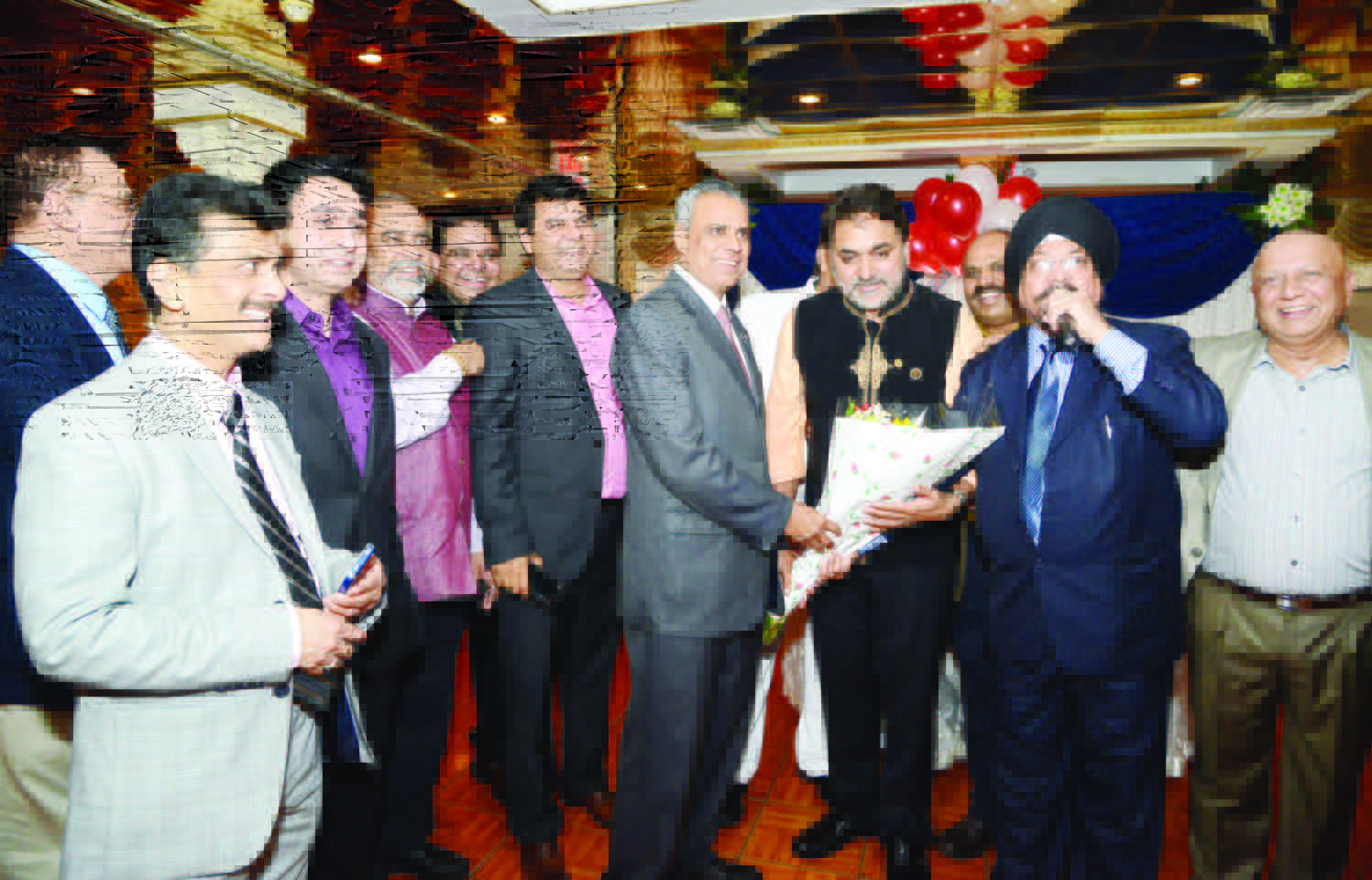
    EDISON, NJ (TIP): ” Chai pe Charcha” organized by the BJP worker and community leader Atma Singh on the occasion of his 52nd birthday, attracted a large number of Modi supporters.

    The event held at Akbar Restaurant in the Indian hub town of Edison on March 29th witnessed huge support for Narendra Modi. The gathering was called upon to reach out to their friends and family to convince them to vote for BJP in the upcoming elections.


    11
    The gathering sings praises of Bharat Mata with Vande Mataram

    “We need a government that provides voting rights for NRIs, improves consular services, promotes better investment opportunities and provides a secure feeling that every NRI looks forward to. They feel this is possible only with a BJP government”, Atma Singh said.


    12
    The birthday boy gets a taste and a feel of cake. Seen to his left is Mrs. Atma Singh

    The event attended by various Indian community leaders, business owners, politicians and media personalities included, among others, HR Shah (CEO of TV Asia), Assemblyman Upendra Chivukula, Prof. Indrajit Saluja (Chief Editor, The Indian Panorama), Surat Singh Padda, Editor, Awaz Punjab Dee, Jaya Sharma, Director Marketing, PTC TV, Councilman Khemraj Ramchal, Rakshpal Sood (OFBJP), Hardeep Goldie( Amantel), Swami Gauravanand ( Divyajyoti Sansthan), Col. Virendra Tavathia( Farmers Insurance) Mukul Bishnoi ( Rudraksham Int’l) , Mahesh Chitnis ( Lions Club), Harkesh Thakur, Raaj Rahhi, Nattu Bhai, Popat Patel and Sarvesh Dhyaran.


    13
    Birthday boy with wife and son Jap Singh

    Senior Citizens Association of Old Bridge honored Atma Singh for his community services. Attendees got to see a special dance performance presented by Navrang Dance Academy. Edison Visionary Lions Club actively participated in the event and Atma Singh requested everyone to donate birthday gifts meant for him to Lions Club Permanent fund.

  • Suresh Arora is new Punjab DGP

    Suresh Arora is new Punjab DGP

    CHANDIGARH (TIP): The Election Commission of India on April 3 appointed Suresh Arora the Director General of Police, Punjab. He was selected from among three officers whose names were forwarded to the ECI by the state government for the post after DGP Sumedh Singh Saini proceeded on a long leave. Arora, a 1982-batch IPS officer, was currently serving as the Director General of Police-cum-Chief Director, Vigilance Bureau.

    The other two names sent to the ECI by the Punjab Government for being considered for appointment as the DGP were that of GD Pandey and Sanjiv Gupta. Saini had reportedly proceeded on leave to avoid his removal from the post of DGP. His leave application was sent to the ECI late last night, following which the hunt for the new DGP began. Top officials in the ECI said the decision to appoint Arora the Punjab DGP was taken at a meeting held tonight. Arora has an unblemished service record.

    He played a crucial role in fighting terrorism. He was posted as the SP (Headquarters), Amritsar, during Operation Black Thunder I and as the SSP, Amritsar, at the time of Operation Black Thunder II. He has served as the SSP in almost all districts, besides serving as the DIG, CM Security, after the assassination of then CM Beant Singh. A postgraduate in law from the University of London, Arora has won various gallantry medals and awards, including the President’s Meritorious Medal, the Distinguished Service Medal and the Prakram Medal

  • Bilawal Bhutto claims receiving threats from banned Lashkar-e-Jhangvi

    Bilawal Bhutto claims receiving threats from banned Lashkar-e-Jhangvi

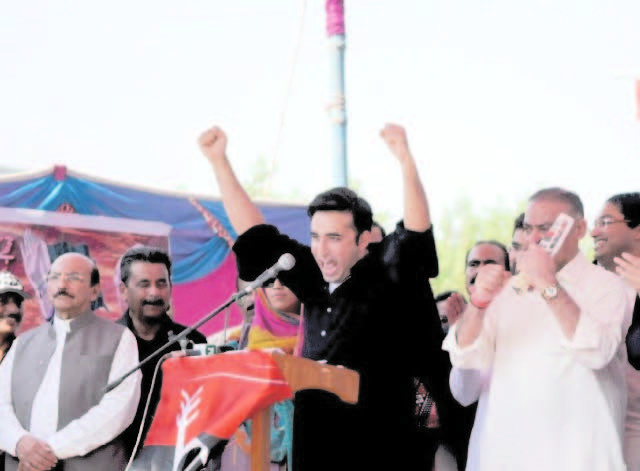
    KARACHI (tip): Bilawal Bhutto, the chairperson of the Pakistan Peoples Party, has claimed he received threats from the banned Lashkar-e-Jhangvi. “Received threat letter from LEJ. Will hold Punjab govt responsible 4 LEJ attacks if Sharif cont 2 give them protection & refuse2 take action,” Bilawal, son of late Prime Minister, Benazir Bhutto and former President, Asif Zardari tweeted on Thursday night.

    The PPP which rules the southern Sindh Province, has in the past accused the Punjab government of sheltering the LeJ, which is also reported to have sent threat letters to the provincial government, warning them to stop “atrocities”, otherwise they would resort to targeting law enforcing agents and government officials.

    The chief minister of Punjab, Shahbaz Sharif, immediately took notice of Bilawal’s tweet and has ordered the inspector-general of Punjab to contact the PPP leader and look into the threats sent to him. A spokesman for Bilawal House, the official residence of the Zardari family, said steps have been taken to increase security for Bilawal and his sisters after the LEJ threats. The PPP leader travels in a heavy convoy of police and personal security vehicles in Karachi. Bilawal’s mother was assassinated shortly after addressing a public rally in Rawalpindi and before that she had survived a suicide bomb attack after returning to Pakistan from an exile.

  • Overseas AAP supporters help its Punjab campaign

    Overseas AAP supporters help its Punjab campaign

    CHANDIGARH (TIP): Aaam Aadmi Party (AAP) supporters in the US and the UK are managing its online campaigns besides running membership drives and giving feedback on the election strategy in Punjab. “A large number of NRIs have filled up the volunteers’ forms in response to the online campaign launched there.

    They are administrators of Facebook pages and running membership campaigns in different countries,” said AAP Punjab convener Sumail Singh. AAP supporter Samarjit Singh said inputs from NRI volunteers have been very helpful and some of them work throughout the night to connect with Punjabis settled abroad.

    “There are about a dozen Facebook pages and groups which are being managed by these volunteers.” He said some are focusing on organizing events in Toronto and British Columbia; others answer general queries of supporters and guide NRIs how to donate for the party. “The local party managers are in constant touch with their offshore teams and they are giving inputs on every aspect of campaigning.” Kamaldeep Singh, an AAP NRI volunteer in Canada, said the objective was to propagate corruption free image of India across the globe besides running membership drives in Canada through various awareness programmes. There are over five lakh NRIs from Punjab but only 138 of them have been registered as voters.

  • CBI BOOKS 6 COMPANIES FOR LOAN DEFAULTS

    CBI BOOKS 6 COMPANIES FOR LOAN DEFAULTS

    NEW DELHI (TIP): The Central Bureau of Investigation (CBI) has registered 10 FIRs against six companies for allegedly defaulting on loans from state-run banks. The companies against whom the agency has filed FIRs include Deccan Chronicle Holdings (DCHL), Zoom Developers, Pixion Media, Century Communications, Rajat Pharma Chem and STCL.

    The CBI has also registered FIRs against some public servants to probe the conspiracy aspect. The agency is expected to include some more “big names” in the days ahead as several preliminary enquiries have also been registered, sources said. CBI is also probing the role of banks in restructuring of loans. Efforts to reach DCHL and some of the other companies for comments, which are named in CBI’s FIRs, did not yield results.

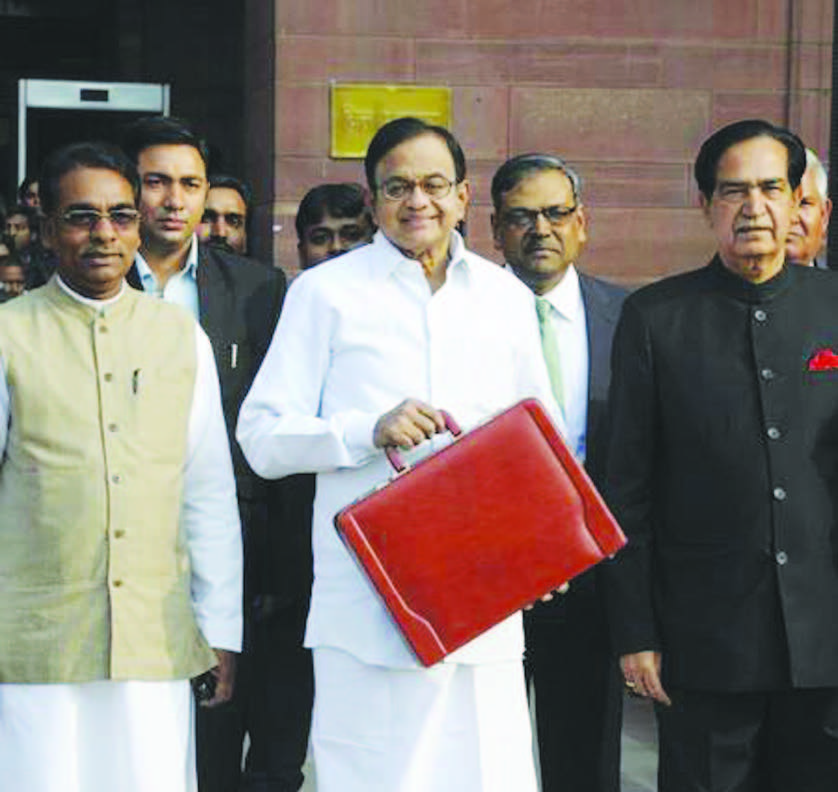
    The finance ministry and RBI have expressed concern over spiralling of bad loans in the banking sector. Finance minister P Chidambaram has said willful defaulters would be sternly dealt with. Indian banks, led by the public sector, have accumulated sticky loans of over Rs 6.5 lakh crore till the end of 2013. Construction, infrastructure, steel and textile companies are the top defaulters.

    The country’s largest lender, State Bank of India, also tops in bad loans, followed by Punjab National Bank and Central Bank of India. The CBI last year began verification of nonperforming assets of banks and thousands of documents were verified by the Bank Securities & Fraud Cell of the agency with the help of financial experts. Sources say that among the 10 FIRs registered, five have been filed against Rajat Pharma.

    The company has outstanding loans of Rs 361 crore with several banks, CBI sources said. The FIR against Zoom Developers says the company has an outstanding of Rs 2,002 crore. Several banks and financial institutions have threatened to auction properties of the group in Mumbai and Indore. DCHL has an outstanding of Rs 1,180 crore, repayable to the banks, CBI sources said. Another major defaulter is STCL, the company which is in the process of winding up. It has an outstanding loan of Rs 1,529 crore, according to the CBI’s FIR. “We will register more FIRs in coming weeks,” said a senior CBI officer, adding that the agency was looking into several other companies.

    The CBI has sought documents from the companies, banks which have given loans and the ministry of finance. The agency’s probe also focuses on the role of banks, as several banks did not file complaints with the authorities despite pending loans for years, CBI source said. CBI director Ranjit Sinha, during a recent conference of vigilance officers, had drawn their attention to the problem of bad loans in the banking sector. “A bulk of NPAs is from the top 30 accounts, which is learnt to be running into thousands of crores,” Sinha had said.

    “At times, there appears to be reluctance on the part of banks to declare bad accounts as frauds despite there being clear-cut manifestations. There is a need to realize that the delay in reporting of a fraud will adversely affect the tracking and recovery of proceeds of crime. Another issue is the fixing of accountability of staff and there are often differences of opinion between the CBI and banks regarding the role of public servants,” Sinha had said.

  • Will canvass rather than contest: Capt

    Will canvass rather than contest: Capt

    NEW DELHI (TIP): The Congress hunt for a strong candidate for the Amritsar seat is likely to stop at senior leader OP Soni with former Punjab Chief Minister Capt Amarinder Singh learnt to have expressed a desire to canvass for the party rather than contest.

    Though Amarinder on March 20 said he would abide by whatever Congress president Sonia Gandhi decided for him, there were indications that he was more interested in campaigning for the party across Punjab and the country. He is part of the 50-member central campaign committee of the party that Sonia heads.

    Amarinder reportedly met Sonia to apprise her of his views. His stand over his preference for campaigning vis-a-vis contesting remained unchanged since his name was first proposed for the Bathinda Lok Sabha seat by some Punjab Pradesh Election Committee members, including state party chief Partap Singh Bajwa. Bajwa today reiterated that Amarinder was a potential candidate against BJP’s Arun Jaitley, provided he decided to contest. “If Amarinder takes on Jaitley, there will be a mega fight and secular forces will win.

    If a leader of Amarinder’s stature fights, Jaitley will be history,” he said. Amarinder, however, maintained that he had left the decision on Sonia Gandhi and it would be worthwhile to wait for her decision. The comment is being seen as a hint that he is unlikely to be fielded. Senior Punjab Congress leaders said Amarinder’s case could not be equated to that of sitting MPs Bajwa and Manish Tewari, who were seen to be running away from elections till the high command forced them into the contest.

  • When Comes another Khushwant?

    When Comes another Khushwant?

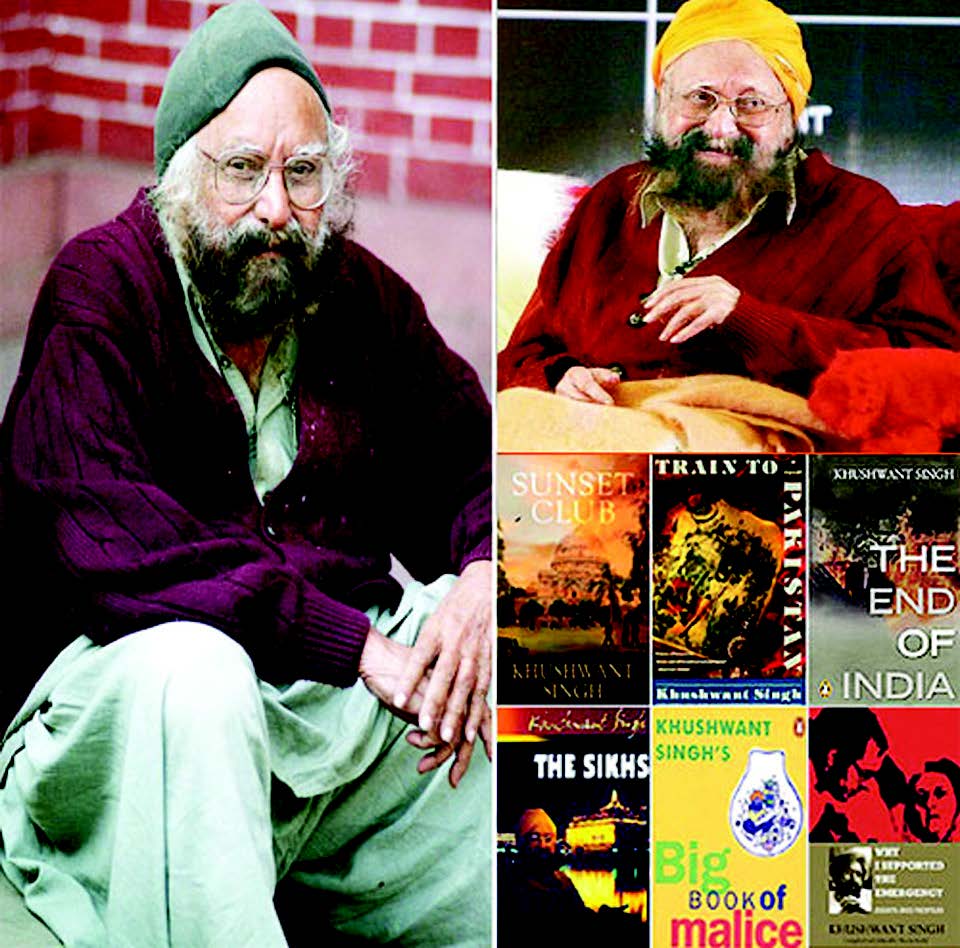
    Iam reminded of Antony’s words in Julius Caesar: “Here was a Caesar! When comes such another?” Yes, here was a Khushwant. When comes such another? A literary monarch who literally held sway over the literary scene of India for more than three quarters of a century decided not to complete a century and bowed out a month after he had completed 99 years.

    The journey that Khushwant Singh started on February 2, 1915, in Hadali, now in Pakistan’s Punjab reached its destination on March 20, in Lutyens’ Delhi in the making of which Khushwant’s father had a great role. Khushwant Singh will be missed by everyone who loves a good reading. A prolific writer, he wrote dozens of novels and short story collections.

    He also edited several magazines and newspapers in the 1970s and 80s. Unstoppable even at 95, he wrote the novel “The Sunset Club” about a group of pensioners. Here was a man who churned out all kinds of literary pieces- from serious novels to satirical writings of immense wit and infectious humor. His classics, such as ‘Train to Pakistan’ and ‘I Shall Not Hear the Nightingale’ will remind the coming generations of the literary art of this grand old man of Indian literature.

    Nor can the coming generations remain unaffected by the wit and saucy humor of the man that readers so hungrily savored in his column “With Malice towards One and All”. His novel “Train to Pakistan” on the heartrending bloody situation at the time of partition of India in 1947 was made in to a film. Khushwant Singh was conferred the third highest civilian award of the nation- Padma Bhushan in 1974 which he returned in 1984, in protest against the storming of the Golden Temple in Amritsar by the Indian Army ( Operation Bluestar) under the then prime minister Indira Gandhi.

    Ironically, earlier, he had defended Indira Gandhi’s Emergency of 1975-77, when opposition leaders were jailed or punished, saying protest had to be suppressed if it turned violent. Khushwant was nominated to Rajya Sabha and was a Member of Parliament from 1980 to 1986. He was awarded the second highest civilian award of the nation- Padma Vibhushan- in 2007. “He liked to call a spade a spade. He hated hypocrisy, fundamentalism, and was a gentle person,” son Rahul Singh said of his father.

    Author Vikram Seth described him as “a fearless writer; a man of great discipline yet full of zest for life; a great Indian who embodied our national values of affection, tolerance and understanding; and a true friend.” And Prime Minister Dr. Manmohan Singh, in his tribute to the great author, wrote on Twitter, “A gifted author, candid commentator and a dear friend. He lived a truly creative life.” For me, it is a personal loss.

    Back in 1995 when I launched a monthly English magazine “Punjab Beat” from Ludhiana, Punjab, I went to his Sujan Singh Park residence to seek his blessings. I vividly recall when I requested him to contribute to the magazine, he asked me to get back to him with dummies for 6 months and he would then consider whether or not to contribute. I learnt a lesson then that in the world of journalism you have to look beyond the present edition. Surely, the lesson learnt has stood me in good stead. Thank you, Khushwant for that lesson. I will miss you. Rest in peace, monarch of literature.

  • GOODBYE KHUSHWANT SINGH

    GOODBYE KHUSHWANT SINGH

    The country is grieving the death of its celebrated Indo-Anglian novelist Khushwant Singh. He was 99 and passed away on March 20. Here’s a look at his story: On February 2, 1915, Khushal Sobha Singh was born in Delhi.

    When boys his age would mock his name, Khushal Singh would grow frustrated. He finally decided to change his name to ‘Khushwant Singh’. As a young boy, Khushwant would often be thrown out of class for his mischief. He despised mathematics and did not follow much of English either.

    After having terrible days at school, he would return home to find solace in his grandmother’s lap. It probably had something to do with the pro masculine society that India abides by, where the children are traditionally seen to be more emotionally connected to the women of the house rather than the men. His father Sobha Singh was a wealthy man. Having constructed huge villas in Delhi and other prominent areas, Sobha Singh had laid down a fairly comfortable future for his children.

    Khushwant Singh, shifted to Lahore for his further studies. It was during this time that he fell in love with music. His drive to learn the Sitar, urged him to move to Kolkata. It was here that he met Rabindranath Tagore. He soon had to leave for London, where he would further pursue Law. When in London, he met his childhood friend Kawal Malik. She was a fair, carefree woman who soon caught his fancy. Before he knew it, they were courting and were married too. When he returned to India, he started practising law. The evil turn of events in India before Independence, took their toll on him.

    He started despising the subject. He would often turn to Kasauli for a break from his saddening life. This is where his romance with creativity and writing started. Soon his heart was set. He finally bid farewell to Lahore and decided to settle down in Kasauli itself. Khushwant Singh was fortunate to have encapsulated the entire event of the Indian Independence. Soon after independence, he was called by Mohammad Ali Jinnah to Lahore. Jinnah promised to make him a judge at the court there but Khushwant Singh refused. He was provided a job to work with the Indian embassy at London.

    However, some unfortunate incidents lead to him giving in his resignation. He soon became the mock of the country. His parents criticized him. He soon jumped jobs. He was given names, people also went to the extent of calling him a communist. However each time, his father was his saviour. He was also a member of the Rajya Sabha from 1980 to 1986. His work was largely inspired by his own life. It is said to have had so much spice, that Khushwant never felt the need to look elsewhere for inspirations. Times changed and Khushwant Singh started writing with vigour. His first book ‘Mark of Vishnu and other stories’ was published in London. His account of his grandmother in the book ‘Portrait of a lady’, remained his personal favourite. He also managed to write another influential book ‘Mano Majra’. This was a documentation of the Indo-Pakistan separation. It was later published as ‘A Train to Pakistan’. How much ever he would write, the monetary returns dissatisfied him.

    His constant dependence on his family, depressed him further. This is when he took to Sikhism. His research on the community, laid the thesis for his books in the series ‘The History of Sikhs’. He turned into a scholar over night and universities all over the world started inviting him for delivering speeches and seminars. He later joined the Illustrated Weekly of India. It was during this tenure that the Weekly reached its peak. The circulations increased manifold. However, exactly a week before his retirement the weekly asked him to leave, thus terminating his employee-ship with the company He also worked with National Herald and The Hindustan Times. “Khushwant Singh may seem like a carefree man, but he was as conservative as his own ancestors,” says Rahul Singh, his son. He would not attend Gurudwaras or even chant his prayers.

    He made fun of astrologers and superstitions too. However, he believed in his faith. He felt extremely responsible and attached to the Sikh community. He was a shy man, always trying to hide away his true colours from the society. Khushwant, often would be portrayed as a lover of wine and woman. However that was just a façade. Khushwant Singh was as rooted to his family, as he was to his passion. His love and respect for his wife was so intense that he vow to shun writing after his wife’s death. However, his romance with his pen was more intense than that with his wife. He continued to write and amuse the masses.

    Today as the world mourns his death, we take a look at his masterpieces.
    1. Mark of Vishnu and other stories: It was the first boom to be written by Khushwant Singh. It is an account of his childhood days and largely draws inspirations from his life.
    2. The History of Sikhs: It was a series of two books which spoke of the Sikh religion like never before. He spent three years to write these books and is yet believed to be one of the best works of Khushwant Singh.
    3. Train to Pakistan: It is a documentation of the Indo- Pakistan separation. It is one of his celebrated works.
    4. The Company of Women: The Khushwant Singh novel “The Company of Women” was considered to be a work reeking with explicit sex, infidelity and questions of the trust and sensuality.
    5. Delhi: A novel: This novel was probably the best reflection of Singh’s life as a writer. Though replete with fictional elements, one cannot help but draw heavy comparisons with his own. It traces the journey of a journalist in Delhi and his rendezvous with the city and its offerings.

    Khushwant Singh is a story untold. His life remains just as interesting as his literary works. His jokes, his love for poetry and his magnificent style and splendour continues to captivate millions, yet making millions fall in love with a man named Khushwant Singh.

    LIFE AND TIMES
    1915:
    Born on 2nd February 1915 in Hadali District Khushab, Punjab (which now lies in Pakistan), in a Sikh family.
    1934-1938: The Modern School, New Delhi; St. Stephen’s College, New Delhi; Government College, Lahore, B.A. 1934: King’s College, London, LL.B. 1938: Called to the bar, Inner Temple, London.
    1938: He began his legal career on the eve of the Second World War and spent eight years practising law at the High Court of Lahore.
    1939-47: Practicing lawyer, High Court, Lahore.
    1947: In 1947 he entered the diplomatic service of a newly independent India and served his country for four years in London and Ottawa.
    1947-51: Press attache, Indian Foreign Service, in London and Ottawa.
    1951: He joined All India Radio in 1951 as a journalist.
    1954-56: Staff member, Department of Mass Communications, Unesco, Paris.
    1956-58: Editor, Yojna, an Indian government publication, New Delhi.
    1956: His first novel, Train to Pakistan, has been in print since 1956.
    1969-78: Editor, Illustrated Weekly of India, Bombay.
    1974: In 1974 he was awarded the Padma Bhushan, the third highest civilian award, which he returned in 1984 in protest against the siege of the Golden Temple by the Indian Army.
    1978-79: Editor-in-chief, National Herald, New Delhi.
    1980-83: Editor-in-chief, Hindustan Times and Contour, both New Delhi.
    1980: He was a member of the Rajya Sabha from 1980 to 1986.
    1999: Prime Minister Manmohan Singh lost the Lok Sabha election from South Delhi in 1999 but he immediately returned Rs.2 lakh he had taken from writer Khushwant Singh for hiring taxis saying he had not used it; This act of Dr. Singh’s integrity finds a mention in a new book “Absolute Khushwant: The Low-Down on Life, Death and Most things In-between” in 2010
    2006: Punjab Rattan for Khushwant Singh by Government of Punjab.
    2007: He was awarded the Padma Vibhushan, the second highest civilian award.
    2013: Khushwant Singh feted with lifetime achievement award by Tata Literature Live! The Mumbai Litfest.
    2014: In recognition of his exceptional achievements in the fields of literature and journalism, King’s College London has awarded esteemed alumnus Khushwant Singh a Fellowship of the College, its highest honour. The award was given by Professor Sir Rick Trainor, Principal and President of King’s College London at a private ceremony at Mr Singh’s home in Delhi on January 12, also attended by Professor Sunil Khilnani.
    2014: Died on March 20.

  • University of Texas, San Antonio wins Bhangra competition

    University of Texas, San Antonio wins Bhangra competition

    DALLAS (TIP): As in the past, competitions in Bhangra- the folk dance of Punjab- and Garba- the folk dance of Gujarat- were held at Southern Methodist University of Dallas. It was a kind of a record breaking event in which a large number of organizations participated and a very large number of audiences turned up.

    The event was jointly managed by Indian Punjabi Students’ Association and Punjabi Cultural Association of Dallas. 7 Bhangra teams and 6 Garba teams vied for honors. It is worth mentioning that spectators were thrilled to watch the Bhangra performances in which the local youth participated who presented the folk dance of Punjab in different styles.

    5

    The performances were so good that the three judges had a great difficulty in deciding their order of merit. However, the three judges unanimously decided that University of Texas, San Antonio Bhangra team was the best performer. The second position went to the Massachusetts team.

    In a joint statement, the PCANT group members Gurinder Daula, Manjit Johal, chairman Kuldip Dhillon and president Jasmel Sandhu, said that the quality of performances was excellent and that the young participants must be encouraged in every way. The ceremonies were conducted by Parminder Singh Deo, Javin Malli, Osama Siddiqui and Nimesh Patel. The organizers had a special word of appreciation and gratitude for Radio Wasda Rahe Punjab and Fun Asia.

  • Rs 45,000 crore ponzi scam busted: CBI

    Rs 45,000 crore ponzi scam busted: CBI

    NEW DELHI (TIP): The Central Bureau of Investigation (CBI) on February 27 busted a massive ponzi scam of Rs 45,000 crore by two Delhi-based private companies of a group, raising money from over five crore gullible investors in the garb of sale and development of agricultural land and booked their managing directors and six directors.

    A series of raids were conducted over the last five days at the office premises and residences of the directors and other suspects at places in Delhi, Chandigarh, Punjab and Haryana, which led to recovery of huge records and data relating to deposits from public and their misutilisation and diversion of funds, besides other incriminating documents.

    A CBI spokesman said only after preliminary analysis of documents the agency came to know of the enormity of the scam. Initially, the investigators did not realise the gravity of the scam when they carried out the probe in the orders of the Supreme Court into the allegation of the companies taking deposits from public through their ponzi scheme promising land until they saw the mindboggling figures in some of the seized laptops.

    Then only they realised that their earlier estimates about the size of the scam were just a tip of the iceberg. The agency has converted the Preliminary Enquiry registered on the Apex Court’s orders to register the case against the managing directors and promoters of the two companies.

    The case has been registered against PACL managing director Sukhdev Singh, PGF managing director Nirmal Singh Bhangoo and six other directors of these companies. In Ponzi schemes, returns are given to investors from the money collected from other depositors in a pyramid-like structure.

    The CBI spokesperson said the inquiry found prima-facie evidence of said companies of the group of Delhi having raised investments by issuing bogus land allotment letters to induce the investors. She said it was revealed only when one of the companies, on being directed by the Punjab and Haryana High Court to wind up the scheme and refund the investors, that a similar fraudulent scheme was operated under the name of the second company of the group.

  • Marital cruelty Enable women to fight it

    Marital cruelty Enable women to fight it

    In a country where domestic violence is not only widely prevalent but also underreported, the Supreme Court’s observation on marital cruelty assumes great significance.

    A Bench comprising Chief Justice P Sathasivam and Justices Ranjan Gogoi and SK Singh has rightly held that the complaint of mental and physical cruelty leveled against the husband and parents-in-law cannot be dismissed at the onset. Its ruling that a trial is essential may not by itself translate into relief for scores of battered women.

    Yet armed with the knowledge that their grievances will not be dismissed on frivolous pretexts, it can enable more women to come forward and seek redress. Even though much is said about women’s growing empowerment, instances of domestic abuse continue to find sanction in the patriarchal system.

    According to the National Family and Health Survey 3, almost two in every five married women in India have experienced domestic violence. In states like Punjab and Haryana, it is one of the major crimes against women. While Haryana reported 18 cases everyday, helplines in Punjab were flooded with complaints of domestic abuse by women in distress.

    Ironically, though domestic violence was recognized as a criminal offence way back in 1983 and the path-breaking Protection of Women Against Domestic Violence Act was passed nine years ago, not many recognize the gravity of the problem. While more heinous crimes like rape are looked at with horror, incidents of spousal violence are invariably brushed aside.

    Sadly, though a host of laws have been passed to enable women to fight oppression, gender inequity and violence is a reality women in high positions too have to live with. Answers lie not only in proper implementation of the existing laws but also a change in attitudes that tend to dismiss cases of domestic violence as mere spousal disagreements. It’s time India realized violence against women, be it on the streets or within the four walls of a home, was abhorrent and must be dealt with severely.

  • In UK, fight for control over gurdwaras reaches top court

    In UK, fight for control over gurdwaras reaches top court

    LONDON (TIP): The UK Supreme Court on Wednesday was due to begin two-day hearing on a petition whether a Punjab-based Sikh leader is the “rightful head” of two gurdwaras in Birmingham and High Wycombe. Sant Baba Jeet Singh, who has never been to the UK, claims to be the rightful controller of the two shrines.

    He claims to have even the right to sell them and remove their funds from the country. “Some are calling Baba Jeet a cult leader. My clients certainly reject him as having any authority or say over their lives,” said Paul Ridge, who represents caretakers of the High Wycombe Gurdwara. “They simply want nothing to do with him and reject entirely his claim that they should follow him, his direction or his teaching.”

    The two gurdwaras were established in 1987 and 1993 for the advancement of the Sikh religion under the spiritual guidance of Sant Baba Gian Singh. The trust documents set up for them also refer to “his successor”. But there has been no agreed successor after his death. No mechanism exists for saying who the successor is or should be. Baba Jeet Singh claims to be the rightful successor.

    But the British Sikh community does not agree with him. Ridge said despite such clear rejection, they are faced with having this man imposed on them by the court as a successor. “It would be absurd for the courts to tell this congregation who they should follow. If the Maharaj succeeds he will be empowered to strip the assets of the charities,” he said. “He would have power to compel a sale of the gurdwaras over the heads of each congregation and have the proceeds of sale and any other assets stripped out of the UK.”

  • Interim Budget 2014: Cars, consumer durables to be cheaper

    Interim Budget 2014: Cars, consumer durables to be cheaper

    NEW DELHI (TIP): Financial markets went in for the interim budget with little expectation, and rightly so, as finance minister P. Chidambaram was not expected to tinker with the existing tax laws. But he still had room to manoeuvre and propose changes that will have an impact on your money, well, for at least three months of the next financial year. The markets were looking for the government to contain its deficit under the budgeted target of 4.8% of the gross domestic product (GDP) for the year.

    The government managed to restrict the fiscal deficit to 4.6% of the GDP, and now expects it to come down further to 4.1% in the next fiscal. Therefore, the two very important indicators—the fiscal deficit and the current account deficit which were worrying the financial markets and individuals alike—are now in a much better shape than a year ago, though the improvement under both the heads can be debated. Beyond this critical number of fiscal deficit, there was not much that markets were looking for.

    25
    As a result, the BSE S&P Sensex closed with a modest gain of 0.48%. However, there were some surprises for individuals. If you plan to buy a new car, there is good news as excise in this segment has been reduced, and so they are likely to be cheaper. There is also relief in store for those struggling with the burden of education loans, taken up to 31 March 2009. We take a close look at some of the proposals that will have an impact on your pocket.

    Relief on student loans
    The budget has extended the education loan subsidy scheme with some significant benefits. The finance minister has proposed a moratorium wherein you will not have to pay the interest on your education loan taken before 31 March 2009. The government will shoulder the burden of the outstanding interest portion as of 31 December 2013. From January 2014 onwards, you pay. Given that these loans were taken about four-and-a-half years back, borrowers are likely to have finished their education and moved on to jobs or are at least looking for one.

    The difficult economic scenario in the country, with the GDP growth having fallen from 6.7% in FY09 to a budget estimate of 4.9% for FY14, jobs are not that easy to come by. Says A. Krishna Kumar, managing director and group executive (national banking), State Bank of India (SBI): “This is definitely a good move and will ease pressure on those who are still looking for jobs.” It is too early for banks to know exactly how much this liability is. SBI’s Kumar says, “We are yet to calculate the exact impact on our outstanding education loans.” The government has given an estimated benefit of around Rs.2,600 crore to about 900,000 borrowers. How does this work for you? We take an example using a calculator on Punjab National Bank’s website. Let’s assume, you took an education loan of Rs.10 lakh in April 2007 for a two-year course.

    The interest rate was 12% per annum for 10 years with no processing fees. Your equated monthly instalment (EMI) per month was likely around Rs.14,350. Let’s say, you got a job after two years and started to repay the loan. But in December 2012, you lost your job and have not been able to pay the EMI since. In this case (assuming that the bank hasn’t invoked the guarantee or declared the loan as a bad debt), your outstanding EMIs for 12 months (as on December 2013) would be about Rs.1,72,200. Of this, the interest would be Rs.63,710. As the proposal suggests, the government will pay this outstanding interest on your behalf.

    You will, however, have to start paying from January 2014. More details are awaited. Also, the relief is only for the outstanding interest and not the principal. Your final benefit will depend on the terms of the loan— when you took the loan, the interest rate, the period for which you haven’t paid, and others. It would be pre-emptive to say that this move will result in borrowers becoming complacent and the unpaid dues in this segment going up. Moreover, these loans are not a big portion of banking credit.

    Cheaper wheels
    Another piece of good news came by the way of the proposal to reduce the excise duty for the auto sector till 30 June. The excise duty has been reduced from 12% to 8% on motorcycles, scooters, small cars and commercial vehicles—such as Maruti Suzuki India Ltd’s Alto, Hyundai Motor India Ltd’s i10, Tata Motors Ltd’s Indica, Bajaj Auto Ltd’s Pulsar and TVS Motor Co. Ltd’s Wego.

    For large and mid segment cars, the reduction is from 27% or 24% to 24% or 20%; and for sports utility vehicles (SUVs), from 30% to 24%. According to Prabhudas Lilladher Pvt. Ltd, the benefit is expected to be Rs.1,500-2,000 for two-wheelers and Rs.15,000-20,000 for small cars.

    SUVs should be cheaper by Rs.48,000-60,000, but “given the current slowdown, the automakers may not be able to pass on the entire benefits for SUVs”, says Surjit Arora, research analystinstitutional equities, Prabhudas Lilladher. This may generate more demand and improve sales. Yaresh Kothari, research analyst-automobiles, Angel Broking Ltd, says, “It is a positive announcement for the sector. The cut in excise duty will be passed on to the consumer. Historically, they (auto manufacturers) have always done it. The benefit will differ based on the price of the vehicle.”

    Says Suresh Sadagopan, a Mumbai-based financial planner: “It’s a one-time kind of savings possibility in the short term. If you plan to buy, try and cash in on this benefit before 30 June.” Consumer goods For the mobile handset segment, the finance minister announced that excise duty for all categories of handsets will now be 6% with central value-added tax (Cenvat) credit or 1% without it. Last year, the excise on mobile phones priced above Rs.2,000 had been raised to 6% from 1%, upsetting the industry as the cost of smartphones went up. The reduced excise, however, may not mean cheaper phones.

    “This will not have any significant impact on prices as it will reduce costs marginally given the competition from Chinese manufacturers and the grey market,” says Hemant Joshi, partner, Deloitte Haskins and Sells. Cenvat credit essentially means that a manufacturer can set off excise or service tax paid on the input cost—for example, of raw materials— against its total excise liability. “This may give an edge to domestic manufactures as importers will continue to pay 6%,” says Bipin Sapra, tax partner, EY.

    Two domestic phone manufacturers—Micromax and Karbonn—were the third and fourth largest mobile handset sellers in India with 10.1% and 9.1% market shares, respectively, at the end of the December-2013 quarter, according to International Data Corp. The leader is Samsung, followed by Nokia. The finance minister also proposed to reduce the excise duty on capital goods and consumer nondurables from 12% to 10% for items falling under chapters 84 and 85 of the Central Excise Tariff Act.

    “What this means is that prices of some products such as basic machinery and electronic goods will be affected,” says Sapra. Prices of items such as washing machines, vacuum cleaners, computers, transistors, batteries, software, basic landline telephones, computer disks, knitting machines, etc., may go down if manufacturers choose to pass on the benefit. Super-rich surcharge The surcharge on the super-rich remains. Last year, a 10% surcharge was applied to those with taxable income above Rs.1 crore. This onetime move was supposed to be only for the assessment year 2014-2015, and was in addition to the education cess of 3%.

    The surcharge and income tax rates will continue for the purpose of deduction of tax at source from salaries during the financial year 2014-15, and for computing the “advance tax” payable during that financial year on current incomes. “Practically, the income tax rates, including surcharge, will apply for tax withholding or payment of advance tax. Salaried individuals who pay taxes every month will have to pay this surcharge till the time the new government drops it.

    But non-salaried individuals, who pay advance tax only in September, may not have to pay the additional surcharge at all if the new government drops it,” says Kuldip Kumar, executive director, PwC India. According to the Finance Bill, the total amount payable as income tax and surcharge shall not exceed the total amount payable as income tax on a total income of Rs.1 crore by more than the amount of income that exceeds Rs.1 crore. Here’s an example.

    The tax liability on a taxable income of Rs.1 crore is around Rs.29 lakh. So, if the income is even Rs.10 more than Rs.1 crore, the tax liability will go up by only Rs.10 and not Rs.2.9 lakh. Overall, while the finance minister managed to deliver on his promise of containing expenditure, the reduction in excise duty on various items and relief on education loans will also benefit a key constituent in elections—the middle class. The excise relief will lapse if the new government decides against it. Investors and consumers now have to wait till the new government presents its budget for the full year and give a fresh direction to economic policy and tax laws.

  • EIGHT SECRET AKALI-CENTRE MEETINGS BEFORE BLUESTAR

    EIGHT SECRET AKALI-CENTRE MEETINGS BEFORE BLUESTAR

    CHANDIGARH (TIP):
    “I received a call from Chief Commissioner Krishna Banerji asking me to see him immediately. As soon as I entered his room, he signalled all those already present there to leave immediately. He told me to make preparations for a top-secret meeting between some top politicians from the Centre and Akali leaders lodged in the Burail jail. I was asked not to involve anyone in the mission, and keep the police out of the loop.”

    “I discussed various possibilities with Sub-Divisional Magistrate TC Gupta. He managed to procure keys of a private house in Sector 2, Chandigarh, for use as the venue of the talks on March 27, 1984.” Three rounds of talks had already taken place between the Akalis and the Union Government in Delhi and the fourth one was to be held in Chandigarh, recalls the then city Deputy Commissioner Raghbir Singh. Since it was a top-secret mission, it was decided to use a car without a flag and replace the original number plates with fake ones. “I myself drove the car to the Burail jail.

    As I was also the IG (Prisons) for Chandigarh, being the District Magistrate, I knew the Jail Superintendent RD Sharma was a smart cookie. I sent him to Ludhiana on a purchase assignment. I opened the gate and huddled the Akalis into the car and ferried them to the venue of the meeting,” he recalls. The meeting was held between senior Akali leaders and the Home Minister PV Narasimha Rao-led Central team. Most Akali leaders were mortally scared of Jarnail Singh Bhindranwale, who had become very powerful, thus depriving Akalis of their political clout.

    The Akalis wanted Bhindranwale neutralised, but till then they had no inclination about the plans of the Centre (about Operation Bluestar). After holding talks at a private residence in Sector 2, Chandigarh, on March 27 and 29, 1984, another meeting took place at the Chandigarh Airport on April 21, 1984. However, no solution could be worked out. Subsequently, the venue of the meetings shifted to Delhi and the eighth and the final meeting took place in a guest house in Delhi on May 26, 1984, just days before Operation Bluestar.

    For the talks that took place months before the Army action on the Golden Temple, Parkash Singh Badal, who was detained in Delhi at that time, accompanied PV Narasimha Rao, Parnab Mukherjee, CR Krishnaswamy, MMK Wali, PC Alexander (Principal Secretary to Prime Minister Indira Gandhi), Union Home Secretary Prem Kumar and Union Minister Shiv Shankar in a special plane to Chandigarh. At Chandigarh, Akali leaders, Surjit Singh Barnala, Balwant Singh Ramoowalia, Gurcharan Singh Tohra and Ravinder Singh Cheema, then lodged in the Burail Jail, were clandestinely brought out and taken to Sector

    2. Raghbir Singh said he received all orders from then Chandigarh’s Chief Commissioner Krishna Banerji. He believes the meetings were aimed at finding a solution to the Punjab tangle. “The homework done during those meetings later took the shape of the Rajiv-Longowal Accord,” he says. Giving specifics to suggest that the Army action was not discussed with Akalis, he says during an overnight stay in Sector 5 here, Indira Gandhi told senior leaders, “You all want a solution, but none of you tells me what can be done to neutralise Bhindranwale.” According to Raghbir Singh, Abinash Singh, the then secretary of Harchand Singh Longowal (who was later gunned down, as was Longowal) was the emissary between the Akalis and the Centre.

  • IPL AUCTION 2014: 154 PLAYERS SOLD IN 2 DAYS, YUVRAJ COSTLIEST AT RS 14 CRORE

    IPL AUCTION 2014: 154 PLAYERS SOLD IN 2 DAYS, YUVRAJ COSTLIEST AT RS 14 CRORE

    BANGALORE (TIP):
    A total of 154 players sold, including 50 overseas players, as the two-day IPL auction ended in Bangalore on February 13, with Yuvraj Singh ending up as the top-earner, bought by Royal Challengers Bangalore for a whopping Rs. 14 crore. After a spending spree on the first day, the franchises were more frugal in their purchase on the concluding day, with only 84 being sold out of total players going under the hammer. Karan Sharma and Rishi Dhawan hit the jackpot on the second and of the auction as they were bought for a mammoth Rs 3.75 crore and Rs 3 crore by Sunrisers Hyderabad and Kings XI Punjab respectively.

    Sharma played a key role in Hyderabad’s campaign last season of the IPL as the franchise managed to reach the last four of the competition. Rishi, Ranji Trophy’s top wicket-taker this season, was signed by Kings XI Punjab using their ‘Right to Match’ after the bowler was bought by the Sunrisers Hyderabad. Also, Kedar Jadhav, Ranji Trophy’s topscorer this season, went to Delhi Daredevils for Rs 2 crore after intense bidding. Delhi also used their ‘Right to Match’ after he was initially taken by Hyderabad. Rishi is primarily a fast-bowling allrounder who bats in the middle-order.

    The 23-year-old has played for Kings XI Punjab in the 2008 IPL and was signed by the Mumbai Indians last season. The 26-year-old Jadhav has had a splendid domestic season and has also shown glimpses of his talent in the IPL. He was with the Royal Challengers Bangalore development squad to start with before being signed by Delhi Daredevils in 2010. Former New Zealand captain Ross Taylor, who had surprisingly gone unsold on the opening day, finally found a buyer as Delhi snapped him for his base price of Rs. 2 crore.

    However, stalwarts like former Sri Lankan captain Mahela Jayawardene, West Indian allrounder Marlon Samuels, Australian allrounders Cameron White and David Hussey and New Zealand batsman Martin Guptill were once again snubbed by the franchises despite being requested back into the auction pool after being unsold on February 12. The other big winners were Rajat Bhatia (Rs 1.70 crore, Rajasthan Royals), Manish Pandey (Rs 1.70 crore Kolkata Knight Riders), Aditya Tare (Rs 1.60 crore, Mumbai Indians), K L Rahul (Rs 1 crore, Sunrisers Hyderabad), Ishwar Pandey (Rs 1.50 crore, Chennai Super Kings), Gurkeerat Singh (Rs 1.30 crore, Kings XI Punjab), Dhawal Kulkarni (Rs 1.10 crore, Rajasthan Royals and Parveez Rasool (Rs 95 lakh, Sunrisers Hyderabad). Also getting decent deals were allrounders Jalaj Saxena (90 lakh, Mumbai Indians) and Akshar Patel (Rs 70 lakh, Punjab), left-arm spinner Shahbaz Nadeem (Rs 85 lakh, Hyderabad) and batsman Karun Nair (Rs 75 lakh, Rajasthan Royals).

    Allrounder Rasool, meanwhile, scored 594 runs from seven matches at an average of 54 including two centuries in the last Ranji season. He also took 33 wickets at an average of 18 with three five-wicket hauls. The 25-year-old had become the first cricketer from Jammu and Kashmir to be a part of the IPL when he bagged a contract with the now-discarded Pune Warriors last season. Promising pacer Jasprit Bumrah was bought by his previous team Mumbai for Rs 1.20 crore. The 20-year-old has played 11 Twenty20 matches, taking 13 wickets. Allrounder Mandeep Singh, former vicecaptain of the Indian Under-19 team, was grabbed for Rs 80 lakh by Punjab through the ‘Right to Match’ provision. The 22-yearold had been a part of the franchise earlier as well.

    Among the foreigners, most of whom went unsold, it was South African pacer Beuran Hendricks, who triggered a bidding competition among the franchises. In the pool at a base price of Rs 30 lakh, Hendricks was bought for Rs 1.80 crore by Punjab. The 23-year-old was the fifthhighest wicket-taker in the South African first-class cricket last season when he grabbed 35 scalps for Cape Cobras at a brilliant average of 17.74. After the uncapped players, the ones who were unsold on Wednesday got another chance at finding a buyer when the franchises gave their preferred names to be called back into the auction pool.

    In the first round of re-bidding, 41 batsmen, 37 bowlers and 24 allrounders went under the hammer. But surprisingly, very few of them found any takers. One such lucky player was promising Australian batsman Chris Lynn, who came in with a base price of Rs 50 lakh. He was snared by Kolkata Knight Riders for a rather handsome purse of Rs 1.30 crore. Another Australian to find a good deal was pacer Patrick Cummins (base price Rs 1 crore).

    Cummins was bought by KKR for the base price in the final round of re-bidding. Indian wicketkeeper-batsman Naman Ojha, who had also gone unsold yesterday, was more lucky today with Hyderabad buying him at his base price of Rs 50 lakh. Some of the other Indian uncapped players such as Apoorv Vijay Wankhede (Rs 10 lakh, Mumbai Indians), Ricky Bhui (Rs 10 lakh, SRH), Tanmay Mishra (Rs 10 lakh, RCB), and Milind Kumar (Rs 10 lakh, DD) found buyers in the second round.

    THE MOST EXPENSIVE PLAYERS

    Yuvraj Singh Rs14 crore to RCB
    Some may say he’s gone for a lot of money, but Vijay Mallya seems happy about the inclusion of another marquee T20 player who will add to the talents of Virat Kohli, Chris Gayle, Ravi Rampaul and AB de Villiers. The World Cup and World T20 winner with India will add more allround ability to the team — however, the price tag will be a burden.

    Dinesh Karthik Rs 12.5 crore to Delhi
    Proven customer in the tournament and a match-winner as he showed last season. It was slightly surprising that Mumbai Indians didn’t retain him and Mitchell Johnson or used their Right to Match card — but Karthik’s not losing out on anything — not money at least. With 1741 runs in 92 IPL games, he may be worth it too.

    Kevin Pietersen Rs 9 crores to Delhi
    KP is cricket’s latest mercenary and he doesn’t have to care about the international calendar anymore. His presence in the batting lineup is unsettling enough for bowlers — but now they’ll have to contend with a fit and available Pietersen for the whole season.

    Mitchell Johnson Rs 6.5 crore to Kings XI Punjab
    Mitchell Johnson is fast, fearsome and in insane form. Enough said.

    Glenn Maxwell Rs 6 crore to Kings XI Punjab
    He went for a million dollars last time out too and his poor showing didn’t deter Kings XI from coughing up the cash. He’s out to prove a point and justify the dollars doled out — so probably worth it. And yes, he can do everything — the perfect T20 player.

    Jacques Kallis Rs 5.5 crore to KKR
    He’s 38 but that didn’t stop KKR from knighting him again. He has a whopping 2276 runs in 90 IPL matches and a strike-rate above 100. Add to that 61 wickets. 5.5 crores? Oh yes, ka-ching!

    David Warner Rs 5.5 crore to Sunrisers Hyderabad
    Last year’s surprise package have added loose-cannon Warner to their side. They’ll be happy to see that side of him on the pitch though, rather than off it. When he’s in the mood, he can devour the opposition bowlers. Also, he had a cracking IPL 6 – scorign 410 runs in 16 matches. His strike-rate was 126.93.

    Robin Uthappa (KKR), Murali Vijay (DD), Michael Hussey (MI) and Mitchell Starc (RCB) Rs 5 crore
    Uthappa’s value has come down a bit but he’s still handy with that bat and a reliable customer. Vijay’s permanent place in the Indian team guarantees quality and we’ll go with the cliche for Huseey. As for Starc, a good fast bowler will always cost good money.