Tag: Punjab

  • Sikhs honor visiting community leader Lakhwinder Singh Lakhi

    Sikhs honor visiting community leader Lakhwinder Singh Lakhi

    Lakhwinder Singh Lakhi is a household name in the districts of Hoshiarpur and Kapurthala in Punjab. An Akali leader, he has recently been elected President of the Punjab Unit of All India Lobana Samaj.

    He was in New York visiting his relations and the Lobana community who gave him a rousing welcome. Lakhi is a brother to well known Sikh community leader Jarnail Singh who owns the Richi Rich Banquet and Restaurant in Richmond Hill.

  • BASANT PANCHAMI

    BASANT PANCHAMI

    BIRTHDAY OF GODDESS SARASWATI

    Basant Panchami is also denoted as Saraswati Puja by the Hindus in India. It is believed that on this day, Goddess Saraswati, the goddess of art, crafts and knowledge was born. She conferred upon humanity the greatest wealth that a human being can ever ask for, the gift of Knowledge. The Hindu mythology popularizes Goddess Saraswati as the immaculate power who bestows upon the worthy with the wealth of knowledge. The color white is associated with the goddess of knowledge as it is the symbol of peace and serenity.

    Images of goddess Saraswati with white adornments, sitting on a white lotus flower which blooms in a wide stretch of water are quite commonly seen on this day. Goddess Saraswati or Maa Saraswati, as called by the people of West Bengal, is worshipped on this auspicious day by the worshippers who are themselves clad in the color yellow, the color of spring. Prasad is offered to the goddess and later the same is distributed among the worshippers. The popular festival is related to the goddess of knowledge; hence, children are initiated towards learning and gaining knowledge.

    This is significant because it is the birth day of goddess Saraswati. As the river Saraswati is associated with the goddess, rituals are performed on the banks of this holy river. Offerings are made but no sacrifices are conducted. Vegetarian food is cooked and had on this day and people abstain from non-vegetarian food. Goddess Saraswati is supposed to be the goddess of art, literature and speech too; hence, hymns are written and sung in praise of the goddess on Basant Panchami. Whenever a new teaching institution is started, goddess Saraswati is worshipped.

    A school is considered to be the temple of learning and hence, a temple of the goddess itself. Schools and colleges organize special functions and cultural activities on this particular day and devote these to goddess Saraswati. Students offer a lot of flowers to the image of Saraswati. They keep all their study materials like books, articles, instruments of music and arts, earthen inkpots and bamboo quills in front of the deity. No one reads anything on this day; it is a way to show their reverence to the deity of knowledge. Most Hindu communities celebrate this festival with great pomp and show as this is the time of the year when goddess Saraswati is remembered by its followers.

    Significance
    This day falls on the fifth day of the Hindu month of Magh, which is also the first day of spring. Goddess Saraswati denotes serenity and calmness. She is generally shown seated on a white lotus, wearing a pure white silk sari and holding a book in her lower left hand.

    The eyes of the goddess are full of compassion. Her four hands denote four facets of human personality namely mind, intellect, alertness and ego. The lotus on her hand symbolizes true knowledge. Her ride is a white swan which is known for its peculiar capability of separating water from the milk. The swan indicates that we should have the ability to discriminate the bad from the good.


    3

    Basant Panchami, also known as the Saraswati Day, is celebrated by the Hindus across the world with great enthusiasm and festivities. The devotees visit temples which are filled with various types of religious activities. Yellow color is given prominence on this day and people dress up in yellow garments and perform rituals. Yellow represents spiritual knowledge, increasing the significance of the festival. People eat yellow sweets and distribute the same among friends and relatives. People feed Brahmans on this occasion and also perform Pitra- Tarpan, the traditional ancestral worship.

    Basant Panchami is the day when children are taught their first words, making it an auspicious occasion which marks the beginning of their learning process. On this day, schools and colleges organize special worships for goddess Saraswati. Traditionally children place their books on the altar, at the goddess’s feet. No one is allowed to touch the books during this period as they believe that goddess Saraswati is blessing the books. Devotees believe that worshipping of goddess Saraswati will lead to spiritual enlightenment. It is generally said that there is no comparison between a king and a learned person as the king is honored only in his land but a learned person is respected everywhere.

    Saintly and learned people who are inclined towards spirituality know the importance of worshipping goddess Saraswati. Other activities performed on this day include worshipping of Kamadeva, the God of Love. On this occasion, people offers prayers to the Sun God and the deities associated with Ganges. The festivities of Basant Panchami include kite flying and a kite festival is observed in Ferozepur, Punjab. Basant Panchami marks the arrival of spring and can be noted from the colored blooms in trees and crops. This is the period when mango flowers start blossoming on trees, representing the beginning of a new life. Basant Panchami spiritually signifies that the days of ignorance and gloom are over and the period of joy and spiritual awakening has begun.

    Kite Festival
    The festival of Basant Panchami is celebrated to welcome the season of spring, a season when the earth replenishes itself. Spring also denotes pleasant weather, during which calm wind whistles in your ear and caresses your face with its light cool touch. It is the season when the weather is neither hot nor cold, when the wind has a cooling effect but not the kind to chill your bones. This kind of weather reminds you of a number of things including Basant Panchami, the primary festival of this season. It is one of the most colorful and wonderful festivals of this effervescent nation and is celebrated on the fifth day of the Indian month of Magh. The festival brings in a number of colors in the form of colorful attires.


    4

    Being the color of spring, yellow gets into vogue as it also denotes prosperity, happiness, intellect and energy. Flying kites is a sport much popular in India. In a clear and pleasant weather, you will see plenty of kites in the sky. Being a part of Basant Panchami, kite flying competitions take place during this festival. Fighter kites were designed in India and Pakistan for decades. Ferozepur, a small town in Punjab, is famous for this sport and a number of children including both girls and boys purchase kites and fly them. Popular among adults too, they get on to their building’s terrace along with the children, play songs at high volume and dance with the rhythm while flying kites.

  • A Panegyric for Arnab Goswami?

    A Panegyric for Arnab Goswami?

    B.V. Rao, editor of Governance Now, explains the name and the phenomenon – Time’s Now’s Arnab Goswami – to a childhood friend who lives in Canada. Readers will surely find the piece a refreshing reading.

    Dear Sharda
    Sometime ago during a Googlegroup discussion you innocently asked: “But who is Arnab?” In India not knowing Arnab is against national interest. You are lucky you live in Canada. But if you don’t want to be deported on arrival on your next visit, you better pay attention to this complimentary crash course on the subject.

    Arnab, as in Arnab Goswami, is India’s most-watched prime time news anchor and editor-in-chief of Times Now. But designations don’t even begin to describe him or what he is famous for. You must have heard about hurricanes Katrina and Sandy. Arnab is also a storm, a news-storm that hits India every night via his show, the “Newshour”.

    Nobody is quite sure how, but somehow Arnab gets to know the questions that the “whole nation” wants answers for, or the sinners the nation wants hanged before midnight that night. In effect then, Arnab speaks for a “billionplus people” each time he takes centre-stage. I can’t say for sure if he took this burden upon himself voluntarily or if his employers made it a contractual obligation. Whatever it is, the fact is that Arnab has come to relish asking the most “simple and direct” questions to the most dubious people demanding instant answers to complex problems because the “nation wants to know” and it wants to know “tonight” as in right now.

    That’s how impatient India has become while you’ve been away, Sharada. The Newshour airs on weekdays from 9 pm and continues till Arnab’s pleasure lasts. Often the show stretches up to 10.50 pm. That’s actually “News hour-and-threequarters- and-then-some” but I guess Arnab has not asked himself a “simple, direct” question: how many minutes make an hour? That, or his primary school maths teacher is not his viewer. In which case it is safe to say Arnab speaks for a billion-plus minus one Indians. You will see that at the altar of national interest it is not just the hour that is stretched.

    About two decades ago, Dileep Padgaonkar was the editor of the Times of India owned by the Jains of Bennett & Coleman who also own Times Now. Padgaonkar had pompously proclaimed that he held the second most important job in the country after the prime minister’s. Arnab hasn’t said it, but I think he disagrees with Padgaonkar on the pecking order: it’s now the prime minister who holds the second most important job in the country. Hence Arnab runs the show like he would run the country or like the prime minister should but doesn’t.

    You see, Sharada, there’s an awful lot of stuff the nation wants to know by nightfall but our prime minister isn’t much of a talker. Arnab fills the need gap. He opens his show with a passionate agenda-setting preamble that spells out all the problems of the day and how he wishes to solve them. We gratefully receive this wisdom and call it Arnab’s Address to the Nation, a prime ministerial duty that has fallen on his broad shoulders because the real guy has abdicated it. Let me tell you this, however. Arnab is a very reluctant power-grabber. It is not his intent to upstage the prime minister or make him look silly.

    He gives the prime minister an entire day to prove his worth and gets to work only at 9 pm when it is clear that the latter can’t handle stuff. He then solves all outstanding national issues of the day in just one 110 minute-hour of feverish debates where he grills the skin off the back of everybody who dares to stand in the way of India’s national interest. He is unrelenting in his pursuit of the truth and doesn’t give up unless everybody has agreed with him.

    “I am worried”, “I am concerned”, “I won’t let you politicize”, “I don’t agree”, “you can’t get away….” are some of the phrases he uses to suggest he is in complete control and that endears him to a nation starved of decisionmakers. Arnab hates home work. He wants to settle everything here and now, tonight. As a result, in Arnab country, there is no trace of the policy paralysis that has grounded the prime minister in the real country. Here you get resolutions, decisions, orders, diktats, judgments, justice and denouements all in one place, one show, by one man.

    The only people paralyzed are the subjects of his grilling and the bevy of experts he gathers around himself, not because he needs them, he doesn’t, but because it must feel awfully good to invite experts and out-talk them on national prime time. Like confused baboons trapped in little boxes, the experts, who are neatly arranged around Arnab’s own imposing self in the centre of the screen, keep staring into nothingness most of the time. Yes, you get the drift, Sharada, Arnab is the main dish here. The rest are just intellectual dips. For most of their airtime the experts keep putting up their hands or calling out “Arnab….Arnab….” to indicate they want to make a point. Arnab is too engrossed in disagreeing with what he has not allowed them to say to care too much. Some clever guests try to appeal to his Assamese roots by hailing “Ornob…Ornob”.

    He ignores them as well. Nationalism, after all, is above parochialism. The cleverer among them have cracked the code: they just agree with Arnab in exchange for a little extra air time. These are usually the people who have paid close attention to Arnab’s Address to the Nation and picked up the right cues on what to say that will get them his benefaction. It is tough to figure out why Arnab needs any experts at all because he knows the answers to all his questions. Times Now insiders say that more often than not he finds questions to the answers he already has. On his show, politicians can’t politicize, bureaucrats can’t beat around the bush, sportspersons can’t play games and lawyers can’t use legalese.

    In fact anybody who is good at something can’t do what they are known to do, to the extent that even civil society can’t be civil, especially if it wants to get a word in sideways. Everybody has to be direct, honest, blunt and keep things simple because that is what the (one-man) nation wants. Corruption, political expediency, opportunism, forked tongues, doublespeak, dishonesty and hypocrisy, are red rags to Arnab. He takes them head-on with the help of his reporters who keep throwing up “documentary” evidence ever so often to expose scamsters. Usually this is a thick sheaf of indistinguishable papers that Arnab holds up threateningly. It could be a bunch of used airline e-tickets for all we know, but since we don’t, he waves the sheaf confidently in the face of the enemies of the nation and it is generally assumed he’s got some incendiary stuff in there. Arnab’s problem-solving repertoire is not restricted to national boundaries.

    In fact, he is at his best when dealing with nations that have evil designs on India. The patriot in Arnab is best aroused when he is dealing with that evil, failed, rogue nation called Pakistan. He deals with Pakistan like no prime minister has ever been able to or decimates it like no Army has ever managed to. Each time a blade of grass bends to the breeze on the LoC, Arnab breathes fire at Pakistan for trying to sneak in terrorists into the country. He lines up a battery of serving and retired generals of Pakistan and conducts the verbal equivalent of a summary execution. Yet, the same generals keep resurfacing on Arnab’s show each time he feels the urge to have a Pakistani or two for dinner. This causes much wonderment among Newshour hounds on the masochist streak that makes the Pakistani generals offer themselves up as bait repeatedly.

    So, it is assumed the money must be good. But since Arnab insists that Pakistan is the way it is only because the generals have sold their country cheap, it is unlikely he is blowing his budget for this routine cross-border target practice. Of course, left to Arnab Pakistan would have existed only as the largest crater on earth since the meteors wiped out all life on the planet. Yes, he would have nuked it many times over by now. The Times of India, the country’s oldest English newspaper and the mother brand from the Times Now stable runs Aman Ki Aasha (Hope for Peace), the widely-acclaimed campaign for ending India-Pakistan hostilities. Just as Arnab doesn’t seem to know of this campaign, the Times of India seems quite oblivious of the fact that the last time there was absolute peace on the LoC was when Arnab took a two-week holiday in early September.

    It could be the marketing genius of the Times group to milk the issue from both ends or it could also be that their internal boundaries are not as porous as our LoC. Apart from conducting war exercises against Pakistan, Arnab land is eyeball-toeyeball with China, exposes the double standards of America in almost anything it does and highlights the hypocrisy of racist Australia which loves the education dollars from India but not the brown students who come along with. His blood boils so much when an old Sikh is roughed up by a bunch of racist women in the UK that he almost gets the whole of Punjab to rise in revolt against the Indian government’s inaction–even though there is nothing it can do as the gentleman is a citizen of the said country–or builds a tide of emotional revulsion against “inhuman” Norway for snatching an infant from his Indian mother’s custody for alleged physical abuse.

    I can go on and on, Sharada, but everything good must come to an end and so must my Arnab eulogy. So, in short and in conclusion, here’s what I have to say: Arnab is not just the editor-inchief of Times Now. He’s India’s protector-inchief. He is the guy who is keeping India safe while you are away on selfish pursuits. You are lucky you can get away by not knowing him.For a billion-plus Indians, minus of course his maths teacher, that is not even a distant option. Because, truth told, Arnab is the best we have got!

  • UK GOVT ORDERS PROBE INTO ‘BRITISH HAND’ IN OPERATION BLUE STAR

    UK GOVT ORDERS PROBE INTO ‘BRITISH HAND’ IN OPERATION BLUE STAR

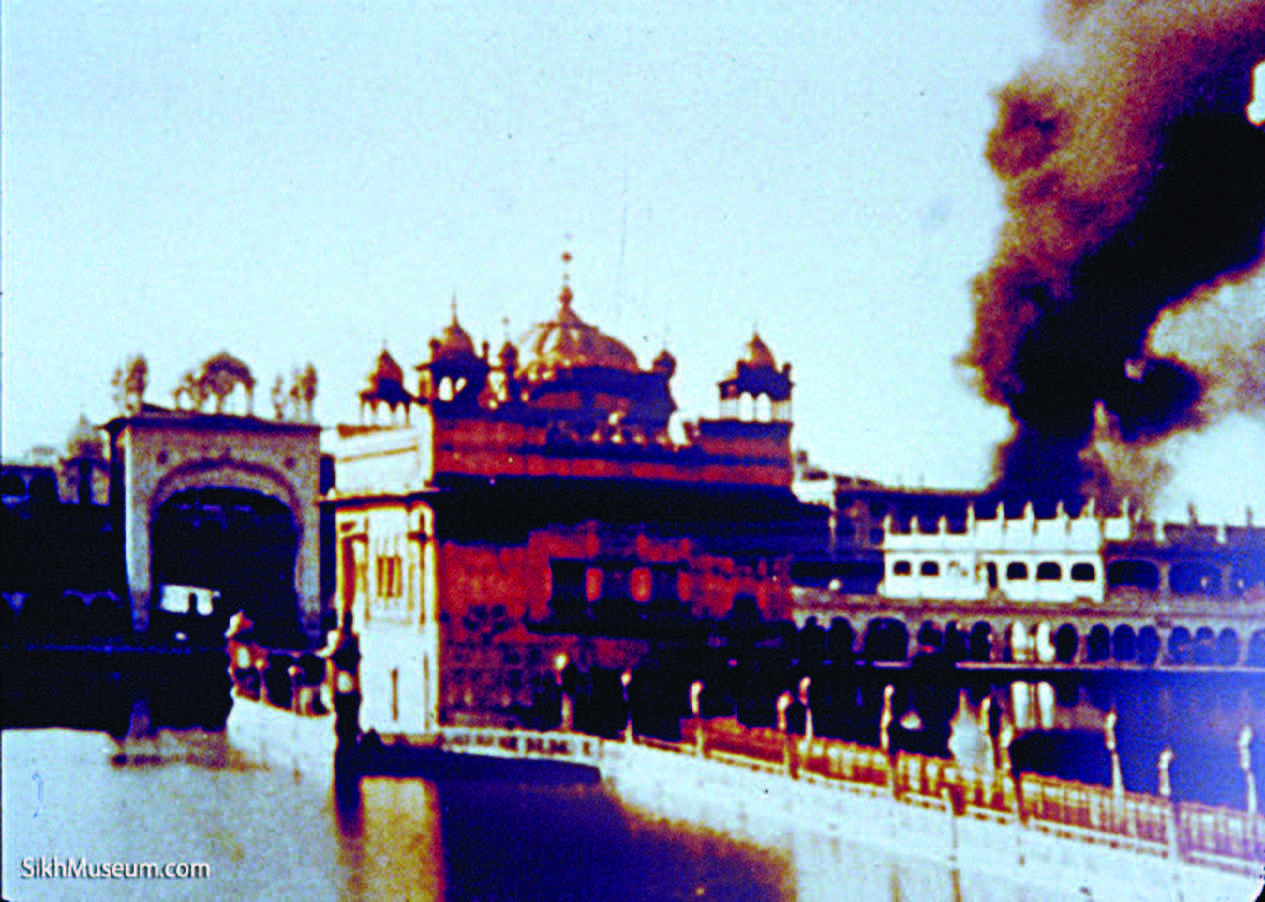
    NEW DELHI (TIP): Three decades after the Army stormed the Golden Temple, freshly declassified British documents show that the UK gave military advice to India on retaking the temporal seat of Sikhs, kicking off political storms in both London and New Delhi. The British government has ordered an inquiry into the revelations and the BJP has demanded an explanation. Intelligence officials involved in operations against Sikh extremists in Punjab during the period and military commanders who led Operation Blue Star have denied using any British plan. They said as far as they were concerned, the entire operation was planned and executed by the Indian Army. Lt Gen K S Brar, who headed the 1984 military operation, said he was not aware of any such British involvement. “As far as I am concerned, Operation Blue Star was planned and executed by Indian Army commanders.

    There was no involvement of anyone from the British government,” he told a TV channel. The bloody and heavily criticized operation led to the assassination of then PM Indira Gandhi in October 1984, which was followed by anti- Sikh riots that saw hundreds being butchered. The revelation is contained in a series of letters declassified recently by the National Archives of UK after the 30-year secrecy rule. In an official communication dated February 23, 1984 titled ‘Sikh Community’, an official with the foreign secretary told the private secretary to the home secretary that “the foreign secretary wishes him to be made aware of some background which could increase the possibility of repercussions among the Sikh communities in this country”. “The Indian authorities recently sought British advice over a plan to remove Sikh extremists from the Golden Temple in Amritsar.

    The foreign secretary decided to respond favourably to the Indian request and, with the prime minister’s agreement, a SAD (probably misspelling SAS) officer has visited India and drawn up a plan which has been approved by Mrs Gandhi. The foreign secretary believes that the Indian government may put the plan into operation shortly,” the letter said. The letter went on to say that the visit of the British special forces officer from SAS was kept a secret in both London and New Delhi. It also expressed apprehension that if the British advice were to emerge in public, it could increase tension in the Indian community in Britain. However, there is no evidence in any of the communication if the British plan was finally used for the June 1984 operation.

    In London, the UK government said it will investigate its involvement. “These events led to a tragic loss of life and we understand the very legitimate concerns that these papers will raise. The prime minister has asked the cabinet secretary to look into this case urgently and establish the facts,” a UK government spokesperson said in a statement. Labour lawmaker Tom Watson said the documents suggest that “Margaret Thatcher made a decision in secret without telling the British parliament to provide military planning support to the government of India in the buildup to the raid on the Golden Temple”.

    ‘Thatcher backed Indira after Operation Bluestar’
    Former Prime Minister Margaret Thatcher fully supported Indira Gandhi’s efforts to apply the ‘healing touch’ in the aftermath of Operation Bluestar in 1984 and assured her of steps to deal with pro-Khalistan elements operating in Britain at the time. Gandhi wrote to Thatcher on 9 and 14 June 1984 (Operation Bluestar ended on 10 June). The letters were about Sri Lanka and developments in trouble-torn Punjab. Her 14 June letter to Thatcher was specifically about Punjab.

    In her reply, Thatcher wrote on 30 June 1984: “These have been anxious weeks for you, involving difficult decisions. I have followed closely your efforts to restore calm there, and I very much hope that the ‘healing touch’ for which you have called will open the way to a peaceful and prosperous future for that troubled region”. Thatcher’s reply sent by telegram to New Delhi is among several documents de-classified and released by National Archives here.

    They include controversial documents of February 1984 that suggest that India sought, and Thatcher agreed to provide, advice from Britain’s special forces to flush out Sikh militants from the Golden Temple. Thatcher’s 30 June letter to Gandhi reflects the close relationship between the two leaders. Gandhi had raised concerns in her letter about pro-Khalistan elements operating from Britain and the effect of their activities on the tense situation in India.

  • Himachal, Uttarakhand sops to continue till 2017

    Himachal, Uttarakhand sops to continue till 2017

    NEW DELHI (TIP): The Cabinet Committee on Economic Affairs (CCEA) extended the special industrial package for Himachal Pradesh and Uttarakhand till 2017, a move that will boost industrialisation and create more employment in the two hilly states. Both the states have seen phenomenal growth in investment and industrial growth in the last 10 years due to the package.

    However, the neighbouring states like Punjab have been opposing the extension of the package on the plea that it is driving industry out of the state towards the hilly states because of special incentives. Welcoming the decision to extend the package, Commerce and Industry Minister Anand Sharma said this would generate gainful employment, especially for the rural youth. “It will also give a fillip to manufacturing and the small and medium enterprises in these two states”, he said.

    A special package for industrial development in both the states was extended by the government in 2003 as these states were lagging in industrial growth. In 2007, it was curtailed, before being restored till 2010. The capital investment subsidy was one of the major components of a special industrial package offered to the states by the union government. The objective of the policy announced in 2003 was to provide the required incentives as well as enabling environment for industrial development, improve availability of capital and increase market access to provide fillip to private investment.

  • 8 PUNJAB COPS GET LIFE TERM FOR MURDER

    8 PUNJAB COPS GET LIFE TERM FOR MURDER

    BATHINDA (TIP): The court of Additional Sessions Judge today sentenced eight policemen, who were found guilty of killing a city resident 22 years ago, to life imprisonment. The body has not been recovered till date. The victim’s relatives had accused the eight policemen of arresting Paramjit Singh, killing him and disposing of the body. The court of MPS Pahwa also imposed a fine of Rs 10,000 on each policeman and ordered that 15 per cent of the total fine be paid as compensation to the victim’s family.

    The policemen’s counsel, advocate Gurjeet Khadial, said that they would appeal in the high court that the “deceased” Paramjit was alive and spotted in Patna and Maharashtra by some Bathinda residents.The accused include dismissed Punjab Police DSP Gurjit Singh (now a proclaimed offender), dismissed Inspector Baljinder Kumar, ASI Lakhvir Singh (now dead), ASI Gurbachan Singh, constable Pal Singh (now dead), retired head constable Mal Singh, head constable Harinder Singh, head constable Kanwaljit Singh now deployed at Civil Lines Police Station, retired constable Tarlok Singh, dismissed home guard jawan Jagsir Singh and Home Guard jawan Jarnail Singh.

  • Canada names park after first Sikh settler

    Canada names park after first Sikh settler

    AMRITSAR (TIP): To commemorate contribution of Sikhs in Canada’s development, the country has named a new park in the city of Calgary after the legendary farmer Harnam Singh Hari, the first Sikh to tame the harsh climes of frigid Alberta province in 1909. Alberta’s minister of human services Manmeet Singh Bhullar, who was in Amritsar on Tuesday, told TOI that the park was dedicated to Hari and his family, who identified fertile farmland and set the pace of agricultural progress in the province. Manmeet accompanied Alberta premier Alison Redford on an official visit to India to set up a trade office for his province in Delhi. With plans to enhance trade and investment opportunities between Alberta and Punjab, the two visited the Golden Temple on Monday to pay obeisance.

    Bhullar spoke about Sikhs’ selfless service in Canada. “We have wings named after Guru Nanak Dev in almost all major hospitals in the country. Sikhs are enjoying great prosperity because of principles learnt from their forefathers, teachings of Gurus and inspiration from the divine,” he said. In reply to a question about Canada’s province of Quebec where the Parti Quebecois government is likely to introduce a bill to regulate religious symbolism, Bhullar said, “Even if they introduce the bill, Canadian Charter will overrule it as it has always protected minority religious and equality rights.”

    Redford told TOI that she has signed two MoUs with Punjab government to boost cooperation and enhance trade and investment activities between the two states. “These agreements are focused on agriculture and animal genetics and would help increase trade in dairy production and piggery. Setting up of an agricultural working group is in the pipeline to encourage communication on projects of importance,” said the Alberta premier.

    Alberta Premier woos Punjabis
    Impressed with the institution of langar (community kitchen), Alison Redford served the devotees in the Golden Temple on Tuesday. “In Alberta, I have visited many temples but visiting Golden Temple, and to see the same spirit of service and worship was an honour,” Alison remarked. Referring to Redford’s keenness in langar, Bhullar, in a lighter vein, said, “Alberta is a major producer of lentils and she got to see where the lentils from Canada go – in feeding tens of thousands of people every day.”

    According to Redford, “India is not only a big market for lentils and other products, but there’s also a close commercial relationship between people in Punjab and Alberta.” She also said that Alberta’s large Sikh community contributes actively to political, social and business activities and thus, help making the province one of the best place to live, work and raise a family.

  • Dr. Jit Chandan – A Game Changer

    Dr. Jit Chandan – A Game Changer

    Most people read history. Few people write history. Very few people make history. Extremely few people change the direction of history. Dr. Jit Chandan is one of those few people whose efforts at making change for the better are well recorded by history. His contributions in the service of community are deeply written in the sands of time, not to be erased by time or winds of change. By the time Dr. Chandan was about 20 years of age, and after completing his B. Sc. degree from Punjab University at Hoshiarpur, Punjab, he left for England in 1957 to pursue higher studies. In the 1950s, there were very few Indians in UK. There were just a few Indian students, a few businessmen and a few immigrants from Kenya. The only Gurudwara in the country was two floors in a 5-6 story building owned by Maharaja of Patiala, in the area of Shepherds Bush in London.

    There were other groups of Sikhs in various cities and especially in Birmingham, Leeds, Wolverhampton, Southall and perhaps at some other places where they celebrated Guru Nanak Dev Ji’s birthday and other religious functions such as Baisakhi in rented halls. Dr. Chandan was the main religious speaker at these functions. He spoke about the lives and teachings of our Gurus. He strongly felt that we should have our own Gurudwaras to promote our religious philosophies among ourselves and among locals. The local Sikh community enthusiastically responded to these dreams and suggestions. Sometime in early 1960, Dr. Chandan formed The Sikh Missionary Society (currently known as Sikh Cultural Society) and started a quarterly Sikh journal “The Sikh Courier”, along with Dr. Ajit Singh Battu (currently in Sudbery, Canada).


    20
    Among the many who are Dr. Chandan’s friends is the present Prime Minister of India, Dr. Manmohan Singh. (A file photo)

    It was a tough journey and it created many financial difficulties. However, with the grace of God and financial help from the Sikh community, the journal kept on going. Mrs. Pamela Wylam joined the editorial board and the journal grew in quantity and quality. Dr. Chandan delivered motivational speeches at Grupurab functions urging Sikhs to contribute one week’s wages to build Gurudwaras. With much effort a beautiful and spacious Gurdwara was built at Birmingham. That was a good beginning. Now Sikhs have over 250 Gurudwaras in the country. As destiny would have it. Dr. Chandan was awarded a coveted and meritorious King George VI Memorial Fellowship award to study at Columbia University in New York in 1963. This Fellowship was unique in the sense that it was the only scholarship awarded to students of Commonwealth countries studying in England and this year was India’s turn.

    When Dr. Chandan left England for America, the management of the Sikh Cultural Society and that of the journal The Sikh Courier was taken over by S. Amar Singh Chhatwal with S. Tirath Singh Lalvani being the President of the Society. Mr. Chhatwal served the interests of the journal and the Sikh community with great devotion for many years until his death a few years ago. When Dr. Chandan came to America to study at Columbia University in New York in 1963, there were very few Indian families and even fewer Sikh families and there was no Gurudwara in the city. Only two Sikh names come to mind, namely Mr. D. W. Singh and Mr. S. S. Sarna. Mr. Sarna was a well established business man with the company name being “Bells of Sarna”. Sikhs celebrated Guru Nanak’s birthday in Indian Consulate in 1963. A few Indian students formed an Indian Students Association at Columbia University and Indian movies were shown on Sundays at the campus.

    The year 1964 brought in a few more Sikhs at the World’s fair and a few more at the Indian Consulate. From that point onwards they started talking about founding their own Gurudwara. Some of the original Sikh thinkers in this regard were Dr. Harbans Singh, Mr. Kirat Singh Sethi. Mr. J. S. Premi, Dr. Jodh Arora, Mr. Bhalla, Mr. I. J. Singh, Mr. S. S. Sarna, Dr. Gurcharan Singh and Dr. Chandan, of course. They started to hold Sunday meetings in St. Michael’s church in Flushing and then at Knights of Columbus, also in Flushing. Sometime in late 60s or early 70s they negotiated and acquired a church on 118 Street in Richmond Hills and converted it into a Gurudwara. They also formed the Sikh Cultural Society with S. S. Sarna as President and Dr. Chandan as Secretary. They also started a journal “The Sikh Message” with Dr. Chandan as the editor. Dr. Chandan was instrumental in promoting the Sikh faith through the Gurudwara as well as through speaking at various churches.

    Dr. Chandan continues his endeavors in the service of Sikh community and the Sikh faith, and Indian community at large in America as well as in India. He has set himself a goal to serve the poor children of India in providing them with resources for quality education. In fact, his desire to serve the poor and the needy to have education dates back to the 80’s when he associated himself with Delhi based Relief Committee that supports the education of poor children. This committee, formed in the wake of anti-Sikh riots in Delhi and elsewhere, with the primary objective of supporting the families of those killed in the riots, is managed by Nishkam Seva Center, headed by Bhai Mohan Singh. In 2012, there were 350 such students from all religions, who were being educated by Niskam Seva Center. Speaking about the quality of being charitable, Dr. Chandan said, “I can relate charity to my faith- Sikhism. The primary principles of my faith are- Kirat karni, vand chhakna and naam japna.

    It is interesting to note that naam japna comes after honest living and sharing with others. “Another well known phrase in our social parlance is dasan nohan dee kirat kamayee karnawhich means following the highest work ethics. I follow my faith, to that extent. I am always ready to help the needy.” Dr. Chandan says, after he retires, he plans to get actively involved in India, particularly in Punjab and the neighboring states to providing primary education to poor children. Asked how he would achieve his objective, he said, “I have earmarked some financial resources for this purpose. I will seek the help of such institutions as Akal Academy, Nishkam Seva Center and others to assist me in utilizing these resources honestly and for the sole purpose of educating poor children.” To the question whether or not he was spiritual and how very important it was to be spiritual, Dr. Chandan said, “There is a lot more intended to look within to have the qualities of a spiritual person.

    I am spiritual, to an extent”. And he added,” With the current state that the world is in where materialistic comfort is considered to be supreme by any means, the sense of contentment is missing. It is a sense of spirituality that brings contentment which is the source of all other qualities that make a human being decent. We all want a peaceful world, and spirituality is the sine qua non for it”. Dr. Chandan is currently a full tenured professor of strategic management at Medgar Evers College, City university of New York and served as the chair of the Department of Business Administration at the college. He is known to be a very successful professor and is respected as a motivational lecturer. Dr. Chandan has authored and co-authored 12 books in the various areas of management. He also writes Punjabi poetry as a hobby and is an active member of such Punjabi organizations as Punjabi Sahit Academy and Punjabi Sahit Sabha. Both organizations hold monthly poetry recital meetings. He is highly community oriented and worked closely with Dr. Surinder Malhotra in Indian National oversees Congress (INOC) in the service of community and developing closer ties between India and America. Dr. Chandan was born in 1937 in Jahania Mandi in district Multan, which now forms part of Pakistan. His father, Gurdit Singh, a landlord, moved to Hoshiarpur in Punjab in India in the wake of partition of India in 1947. Chandan got his school and college education in Hoshiarpur. Having done his B.Sc. from Panjab University in 1956, he moved to England for higher education. Married in 1968 to Sandesh, the couple has a son and a daughter.

  • Punjabis in search of their Punjab

    Punjabis in search of their Punjab

    “NRIs in Punjab face peculiar problems and fear of exploitation keeps expatriate Punjabis from investing in industry in Punjab”, says the US based author

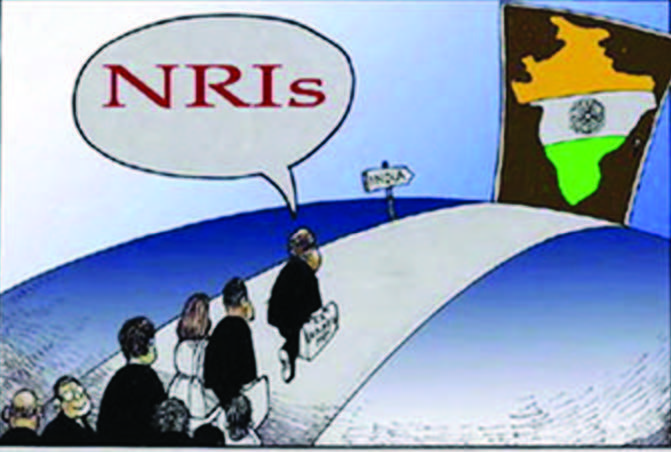
    Most NRIs are very genuinely reluctant to visit Punjab. According to their perception and actual experiences, the crime as reported abroad in the newspapers and Punjabi television channels, is simply too much in the state and that scares them from visiting their villages. On paper, the police in the state and the other government machinery is very helpful, but in actuality, when need arises, the role of the officials is otherwise. The NRI visitors are viewed as prime targets for exploitation. NRIs even dread going to the exclusive NRI police stations. The record of NRI police stations so far in solving the common problems of the expatriate community appears far from satisfactory.

    The NRI office in Jalandhar is a nice place to visit but it does not fare any better. The bornabroad second generation finds Punjab simply devoid of any attraction to visit. Barring a few very affluent NRIs, who visit Punjab at least once every year, on an average an NRI visits Punjab only once in three years. Some have not visited Punjab for more than a decade. The good or bad experiences of their latest Punjab visit linger for years in the psyche of the NRI visitors. Expatriate Punjabis are indeed very hardworking, at least when they earn their livelihood abroad. Finding time for a Punjab visit from their jobs and businesses is very difficult for them. So on coming to Punjab, they don’t want to face unnecessary hassles and procedural wrangles in doing their business. They are simply not used to face clumsy obstructionism in their countries of domicile.

    Woes of expatriates
    Common problems of the Punjabi diaspora include vacation of adverse possession of their land holdings and residential and commercial properties back home. The occupiers are generally their close relatives or politically influential people of their area. Political backing of the illegal occupants of the NRI properties makes it difficult to evict them. In spite of government’s assurances, even the court cases linger for years and the NRIs don’t have time to relentlessly pursuing their cases sitting idle in Punjab for indefinite durations. They also know that once they are airborne, the cases they initiate shall be put on the backburner. Such a scenario sounds scary for the NRIs. Such cases are too numerous to count in Punjab. Every NRI loves Punjab and he/she wants to contribute his/her bit to make things somewhat better in his/her village.

    Promises not kept
    The Punjab Government is very generous in making promises to the NRIs. In 2007, the Punjab Government had made a commitment to match dollar for dollar if the NRI community contributes money for development projects in their villages. Subsequently they hiked the matching grant to twice the contribution of the NRIs. And now the state’s contribution against each dollar contributed by the NRI is three times. The irony is that in most cases neither dollar for dollar was matched, nor twice compared to a dollar was matched nor three dollars for each dollar is being matched these days. The common folks feel cheated in this situation. Why make a promise and then make a mockery of that. According to NRIs, their biggest priorities are improvement of school buildings, panchayat ghars, dispensaries, hospitals and janj ghars in their villages.

    They are more than willing to spend money on common facilities. If we look at the school buildings in the six NRIdominated districts viz Hoshiarpur, Nawanshahar, Jalandhar, Kapurthala, Ludhiana and Moga, thanks to the NRIs, most of their school buildings are relatively in good shape. But if we consider the Punjab Government’s contribution towards it, barring some villages of politically wellconnected people, the government’s role is negligible. The NRIs of Doaba are worried at the fast-depleting underground water in Punjab. The water table is going down even in some underserved canal irrigated areas of Doaba and Majha. The ever-deepening tubewells are a double edged sword.

    It costs a lot to deepen the well and it costs even more to the power companies to foot the bill of free power to the deepened tubewells. The power company’s loss is recovered from industrial and urban consumers. This becomes a never-ending vicious cycle. The Bist Doab Canal primarily serves the districts of Nawanshahar (Shaheed Bhagat Singh Nagar) and Jalandhar. More than half of land owners on both sides of this canal and its distributaries have at least one person settled abroad. In the last one-and-a-half decade, this canal has not been dredged in real sense. As a result, its flow capacity has been seriously inhibited. As of today, this canal can’t carry even half the discharge it was designed to carry. Weeds and cattails are growing in its bed. In some areas, some people have dumped construction and demolition debris in it.

    If the canal is not carrying full quantity of water, it is supplying much less water to the farmers. The shortfall in canal water means that the tubewells will run more. That leads to ever-deepening tubewells. The NRIs end up paying for the cost of deepening of the tubewells. If this cost can be saved, the NRIs and power companies can spend the spared money on other productive works elsewhere. As far as investing in industry in Punjab is concerned, the NRIs don’t appear to be in a serious mood to do so. The past experiences of their friends have not been very pleasant. They are once bitten, twice shy. Those involved in the IT industry are most interested in investing in Gurgaon, Pune, Bangalore and Hyderabad. Some have already done that. Punjab is not yet on their radar. I hope some positive thinking takes shape during the coming two-day NRI conclave.

    Welcome Notes
    An NRI web portal www.nripunjab.gov.in has been opened for expatriate Punjabis. NRIs will be able to register their complaints and grievances online on the portal. The portal also contains a photo gallery, along with information on Punjab. The Punjab Government is contemplating setting up special fast track courts for the speedy redress of complaints of NRIs pertaining to civil cases. The state Cabinet would soon allocate budget for setting up of the courts in the state.

  • A Pakistani Siren in Bollywood

    A Pakistani Siren in Bollywood

    NEW YORK (TIP):
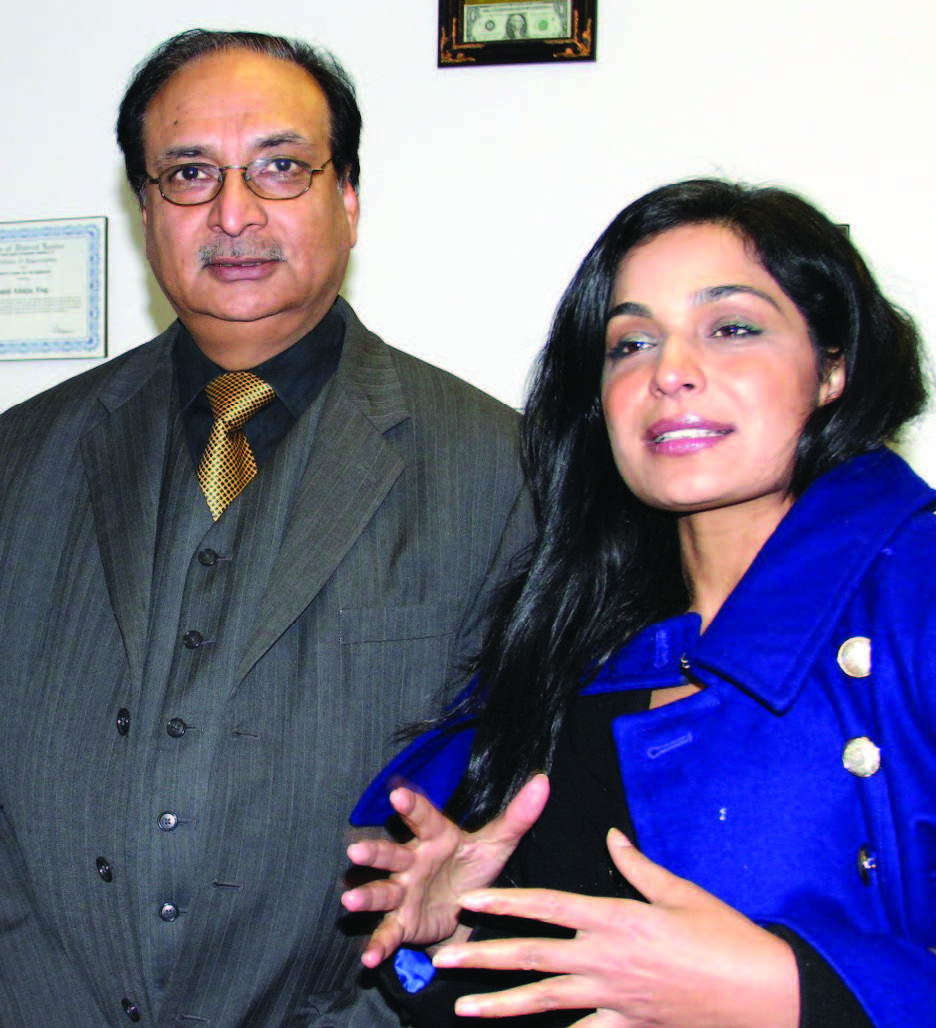
    Meera, a brilliant Pakistani film actress associated with Bollywood for sometimes now, was on short visit in New York in connection with a charitable hospital that she is setting up in Pakistan. In New York, accompanied by her United States’ Attorney, Anand Ahuja, she attended some press conferences and community events. At the blood donation and bone marrow donation camp organized by the INOC (I) Tamil Nadu Chapter, on Saturday, December 07, 2017 in Hicksville, NY, Meera stopped by as a guest of Attorney Anand Ahuja. Addressing the gathering in Hicksville, Meera emphasized on the community service and importance of camps such as blood donation and bone marrow. She also spoke about her own charitable works in Pakistan.

    Later in the evening, while addressing at a press conference in Jackson Heights, she reiterated the importance of charitable works particularly in the field of health care. On Tuesday, December 10, 2013, Meera addressed Desi media at Attorney Anand Abuja’s office. In response to a TV’s reporter’s question, she gave some details about her upcoming Bollywood movie “Bhaddas” which is releasing in the 3rd week of December 10, 2013. “Bhaddas is a Bollywood’s murder mystery movie inspired by Hollywood flick Basic Instincts”, said Meera while addressing media at Attorney Ahuja’s office.

    Further responding to media, she said, “Of course there are some bold scenes in Bhadaas. It’s inspired by Hollywood, does not have songs like other Bollywood movies, out and out on Hollywood pattern, and naturally with some bold scenes”. She was excited to inform the media that next Bollywood movie signed by her is with Akshay Kumar. Meera, as the first Pakistani actress to be seen in India after a very long gap, did her first movie in India, named Nazar about 8 years back. Nazar was a film directed by Soni Razdan and it was the first Indo-Pakistani joint movie venture in 50 years.

    The film introduced Pakistani actress Meera to Bollywood and it also featured a kissing scene. She became the target of many conservatives for doing a kissing scene with her Indian co-star. Her second movie was Kasak starring Lucky Ali. Her third film Paanch Ghantey Mien Paanch Crore managed a decent opening with its limited cinema release. However, The Times of India listed the film in Bollywood’s Top 10 Bold Film category of 2012. Born and raised in Lahore, Punjab, she studied at the Kinnaird College and started her modeling career in television in 1995. She briefly modeled for various multi-international companies, including Pepsi and LUX which helped her to come to national prominence.

    She made her first motion picture debut in 1995, but she earned nationwide critical in 1999 for her leading performance in Khilona, which was released in 1999. Khilona earned her first Nigar Award and earned critical acclaim for her work. With the release of Inteha, another critical and commercial success, Meera won the second consecutive Nigar Award for Best Actress of the year for her breakout performance. In 2004, she played a prominent role in Salakhain which lifted her image internationally.

  • SFJ case against Badal dismissed

    SFJ case against Badal dismissed

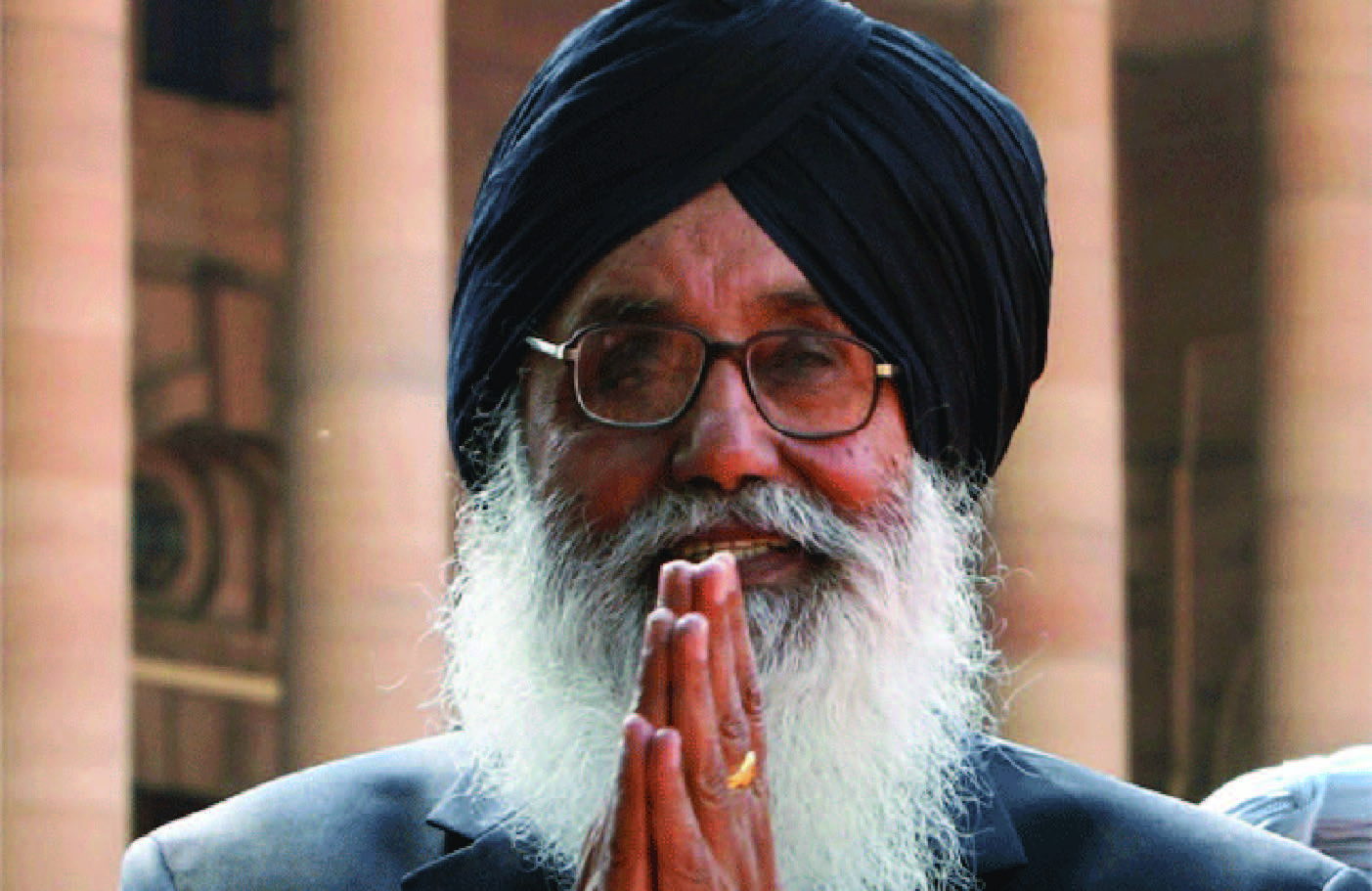
    WASHINGTON (TIP): A US court dismissed on December 23, an alleged human rights violation case against Punjab chief minister Parkash Singh Badal, saying the New York-based Sikh group never physically served the summons on him. Dismissing a petition for “panel rehearing” filed by Sikhs for Justice (SFJ) and Shiromani Akali Dal (SAD-Amritsar) the seventh circuit court of appeals on Monday upheld its decision regarding service of summons to Badal.

    The court also rejected SFJ claim that Badal’s State Department security team was complicit in shielding Badal from suit. The trial court had dismissed the SFJ lawsuit against Badal on the grounds that a Chicago-based Sikh Surinder Pal Singh Kalra was served with the summons instead of Badal at Oak Creek High School, Wisconsin, on August 9 as claimed by SFJ. SFJ petition for “panel rehearing” had argued that 30 days given to plaintiffs were not sufficient to complete jurisdictional discovery to find out whether it was Kalra or Badal who was served or Kalra’s testimony was fabricated or influenced by Badal’s agents.

    SFJ attorney Gurpatwant S Pannun said SFJ and SAD will now file a “motion to remand” the case to district court to establish that alternative service of summons through Hague Service has been accomplished on Badal. The Hague Service is a treaty signed by both India and United States which allows service of judicial papers between the signatory countries without diplomatic involvement, Pannun said. The Sikh groups have retained the services of “Process Forwarding International” (PFI), a Washington based company to accomplish service on Badal in India. The two groups have accused Badal of “protecting and commanding a police force responsible for torture and extra judicial killings of Sikhs in the state of Punjab” during his tenure for more than 12 years from 1997 till 2002 and from 2007 till present. The groups will also file an appeal with the US Supreme Court challenging the appeals court’s order, Pannun said. The plaintiffs have till March 23 to do so.

  • Shahbaz Sharif meets PM, extends invite to visit Pakistan

    Shahbaz Sharif meets PM, extends invite to visit Pakistan

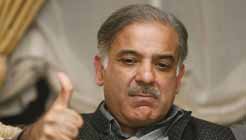
    NEW DELHI (TIP): Pakistan Punjab Chief Minister Shahbaz Sharif met Prime Minister Manmohan Singh on Thursday and handed over an invitation from Pakistan Prime Minister Nawaz Sharif to visit Pakistan. Shahbaz Sharif, the younger brother of the Pakistan prime minister, was with Manmohan Singh for around 20 minutes in the morning. “He extended an invitation from Pakistan Prime Minister Nawaz Sharif to visit Pakistan and his village,” a source told IANS. Sharif called on the prime minister shortly after his arrival in New Delhi. Shahbaz Sharif “delivered a message of goodwill from Prime Minister Nawaz Sharif while emphasizing Pakistan’s desire to forge friendly and cooperative relations with India, in the interest of peace and prosperity of the people of the two countries and of the region”, said a Pakistan High Commission statement.

    The Pakistan Punjab chief minister also underscored the importance of resumption of dialogue and peaceful resolution of all issues. “The meeting was cordial, constructive and forward looking.” Shahbaz Sharif was accompanied by Special Assistant to the Pakistan Prime Minister Tariq Fatemi, Minister of State for Commerce Khurram Dastagir Khan and Provincial Minister for Education Rana Mashood Khan besides outgoing High Commissioner Salman Bashir. Shahbaz Sharif is here on the invitation of his Punjab counterpart in India, Parkash Singh Badal. He is to also to meet Commerce and Industry Minister Anand Sharma. He is slated to be the chief guest at the World Kabaddi Championship final in Ludhiana Saturday.

  • 40 years after war, bridge opens near Hussainiwala border

    40 years after war, bridge opens near Hussainiwala border

    FEROZEPUR (TIP): A strategically important bridge, which was blown up during 1971 India-Pakistan war to save Ferozepur, was opened at Hazara village near Hussainiwala international border on Wednesday. The bridge is a lifeline of nearly 10 villages and their only land link with the country. Militarily, it can support offensive operations in developing a thrust towards Kasur and Lahore in Pakistan. It is also vital for Border Security Force ( BSF) guarding the international border near Ferozepur, as the supply of their ration, weaponry and troops would now be an easy task.

    The bridge was blown up during the 1971 India-Pakistan war to prevent advances of the Pakistan army. Till date, troops and the villagers of adjoining areas used to cross the Satluj using a makeshift wooden bridge. The newly-opened bridge has been named after two Army officers, Maj Kanwaljit Singh Sandhu and Maj S P S Waraich of 15-Punjab Regiment, who had fought valiantly to defend Hussainiwala during the Indo-Pak war exactly 42 years back on December 3-4 in 1971.Wives of these two 1971 war heroes, Jasbir Kaur Sandhu and Rupinder Kaur Warraich, inaugurated the bridge in the presence of other civil dignitaries.

    15-Punjab Regiment lost its 53 men in this battle and two officers – Maj Sandhu and Maj Waraich – while 35 men were taken prisoners. Both the officers were declared prisoners of war (POW) and their whereabouts are not known since 1971 war. According to the Army, Sandhu and Waraich had delayed the Pakistan army attack led by a squadron of enemy’s tank. In the ensuing battle over Hussainiwala barrage was blown up and Ferozepur was saved.

    The strategic bridge has been constructed by Border Road Organization (BRO) under their project “Chetak” at the cost of around Rs 3.80 crore. Project “Chetak” of BRO, which has the mandate of building strategic roads and infrastructure for armed forces, has the jurisdiction over the three states Rajasthan, Punjab and a part of Gujarat.

  • HANSDA PUNJAB DIWALI PICNIC: an enjoyable and unforgettable event

    HANSDA PUNJAB DIWALI PICNIC: an enjoyable and unforgettable event

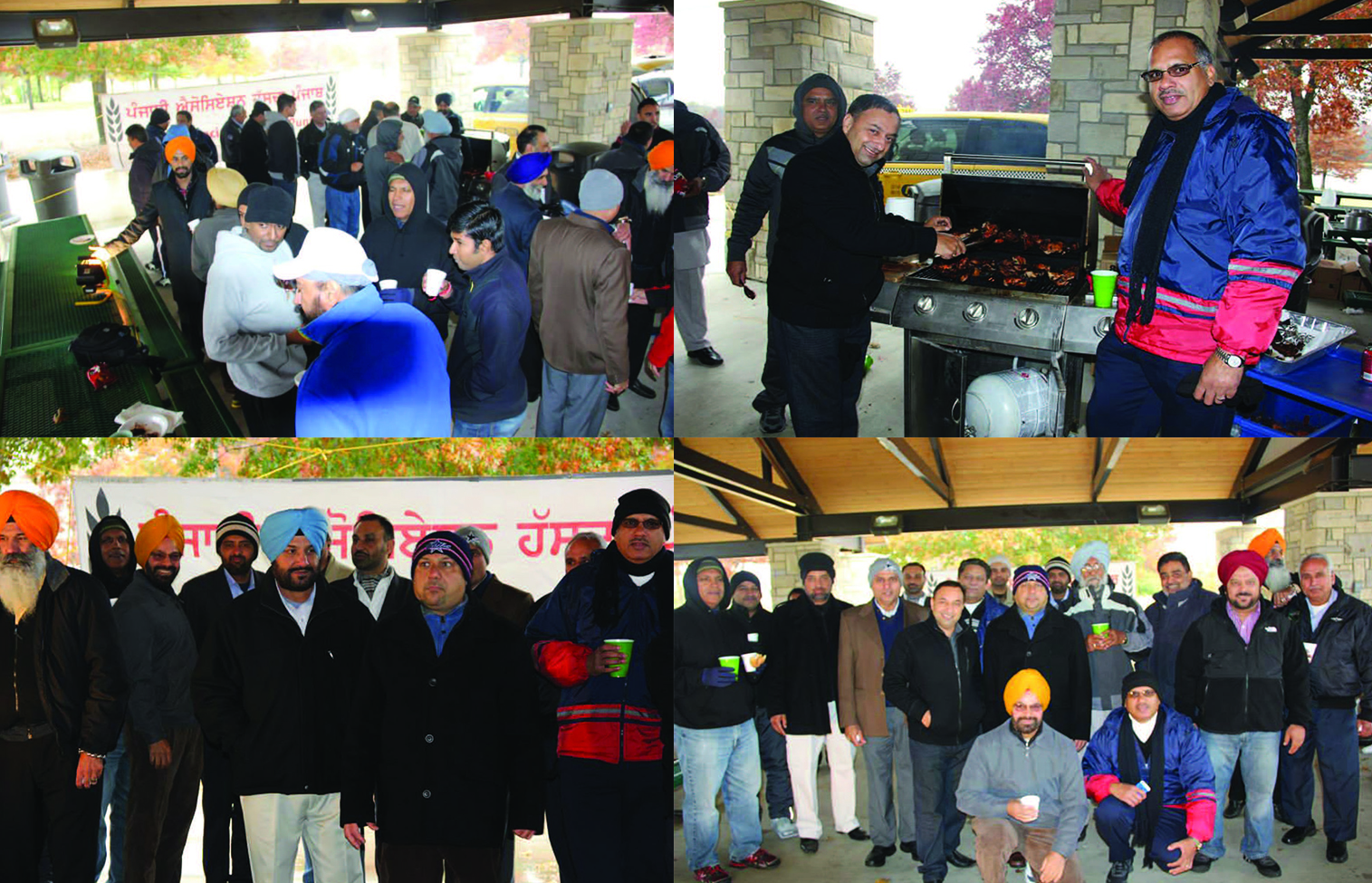
    DALLAS, TX (TIP): The local association of Punjabis, Hansda Punjab, organized November 23, a picnic to celebrate the festival of lights Diwali in the picturesque Bob Woodruff Park. Despite a light drizzle and a cold day, members of the association and their guests from Punjabi and some from non-Punjabi communities participated in the picnic and enjoyed Indian and American delicacies, including the symbol of American picnicking, the bar be cue. The fun filled Picnic was the third entertainment event organized this year by Hansda Punjab, according to a spokesman of the association.

    Besides the organizing committee members, many well known personalities of Dallas joined the Picnic to make it a grand success. Though all contributed to making the event a memorable one, some need to be given special mention. They include Balkar Singh, Parpal Singh Malli, Mandhir Ball, Roop Singh Gill, Billu Benipal, Harbhajan Nijjar, Raja Singh Nijjar and Mukhtar Singh who saw to it that every person present was looked after very well. According to the information obtained from the organizers, the association has plans to organize more fun filled events in which Punjabi artists will display their talent.

    These events will be held indoors and the admission, parking and food will be free. Also, the distinguished Punjabis will be honored at these events. The spokesman of Hansda Punjab, Shere Punjab Singh thanked all for their valuable cooperation in making the event an unforgettable one.

  • Arlington University Crown for Sikh Students Navjot Singh Walia & Sarpreet Kaur

    Arlington University Crown for Sikh Students Navjot Singh Walia & Sarpreet Kaur

    Amarjit Dhillon

    DALLAS, TX (TIP): Arlington University has crowned two Sikh Students Navjot Singh Walia & Sarpreet Kaur as the King and the Queen of the University. The two, brother and sister are students of the large university of Arlington which has an enrolment of around 35,000. The two have been excelling in studies and have been awarded scholarships.

    The father of the two who hails from Phagwara in India’s Punjab State said that he was proud of his kids and felt they have brought honor to the entire Punjabi community. Many community leaders and Punjabi associations have congratulated the two on their spectacular achievement. The announcement of the selection of the two in the huge Basketball stadium of the university was greeted with loud cheers.

  • Patiala Police denies releasing a list of NRIs involved in International Drug Racket

    Patiala Police denies releasing a list of NRIs involved in International Drug Racket

    Harjit Singh Dhesi

    DALLAS (TIP): The arrest of a dismissed Punjab Police officer involved in an international drug racket on November 11near the Haryana-Delhi border has given rise to a variety of news relating to involvement of many NRIs in the racket. The arrested Ex-deputy superintendent of Punjab police Jagdish Bhola is reported to have stated, according to a police officer who requested for anonymity, that the markets spanned up to Britain, Canada and European countries and quite a few well known NRIs were part of the racket. A Canadian newspaper carried the news that Patiala police which had arrested Bhola has identified over 30 non-resident Indians (NRIs), who acted as active and passive couriers for him. There was mention of some of the names in the news report.

    Among those mentioned were John Singh Gill, Jaswinder Choker, and Major Nat who claimed their innocense. According to information available with The Indian Panorama, when Sacramento based journalist representing Ajit of Jalandhar asked the Patiala Police Chief, the Senior Superintendent Hardial Singh Mann whether or not the police had released a list of NRIs supposedly involved in the drug racket, the SSP said that the Police had not released any list carrying the names of persons in question.

    The attorney for John Singh Gill decried such rumors, which he said, were aimed at tarnishing the fair image of his client. A friend of John Singh Gill said it was the handiwork of those who are envious of John Singh Gill who has come to occupy a fair name and position in the community and is known as one of the best promoters of the game of Kabaddi. He added that it is by sheer dint of hard work that Gill, Choker, Nat and people like them came to acquire respectability and commanded admiration of the community. He condemned those who were trying to damage their image by spreading rumors.

  • PUNJAB REFUSES 5-STAR FACILITY TO HC JUDGES IN AMRITSAR

    PUNJAB REFUSES 5-STAR FACILITY TO HC JUDGES IN AMRITSAR

    CHANDIGARH (TIP): The Punjab Government has refused to concede to the demand of the Punjab and Haryana High Court for the construction of an “exclusive five-star guest house” for judges in Amritsar. The government has instead offered to reserve a separate floor in the proposed multi-storey guest house for judges. A committee of High Court judges had asked the state government to construct an exclusive guest house for them on a piece of land near Kachehri chowk in Amritsar, where the old sessions court stood. The old sessions court building is now being demolished as the new judicial complex has become functional.

    The guest house was required since the city was frequented by judges of the Punjab and Haryana High Court as well as other High Courts to pay obeisance at the Golden Temple, the committee had said. An exclusive guest house would have ensured minimum inconvenience to the judges in case other government guest houses, such as the Circuit House, were fully occupied, it had contended. But the land on which the old building of the sessions court stood is now worth hundreds of crores of rupees. The state government proposes to set up a multi-storey guest house there in public-private partnership to be managed by a hotel chain.

    The government proposes to build this facility for all visiting dignitaries and not exclusively for any particular section of VIPs. “We have now informed the High Court that instead of constructing an exclusive guest house for judges, a set of 10-12 rooms in the proposed multi-storey complex will be reserved exclusively for judges,” said a senior official in the Punjab government. The government has also reiterated that some rooms in the Circuit House in Amritsar will always be reserved for the judges.

  • BHARTI TO SPEND RS 800 CRORE ANNUALLY ON RETAIL

    BHARTI TO SPEND RS 800 CRORE ANNUALLY ON RETAIL

    NEW DELHI (TIP): Despite offers for fresh tie-ups, Sunil Mittal-led Bharti Group appears set to go solo in the retail business and expand the footprint of its EasyDay stores through fresh investments, estimated at Rs 700-800 crore annually. Bharti Enterprises and Walmart, which called off their six-year-old relationship last month, are in the final stages of ending their joint venture for wholesale cash-and-carry operations. The partners had set up 20 wholesale stores under the Best Price brand while Bharti handled the front-end operations through the Easy Day chain.

    Although Bharti and Walmart were expected to be among the first movers to tap into the vast retail business in India, the US giant’s eagerness to get a policy regime to its liking is said to be a reason behind the split. At the same time, a joint venture for the multi-brand retail business would have come at a cost as the partners would not have been able to tap into prosperous markets such as Punjab as the state does not permit foreign retailers to set up shop. Punjab has emerged as a hub of sorts for Bharti’s retail foray. Even as regulatory clearances are being sought, sources said, bankers have approached Bharti for fresh tie-ups. But, instead of opting for a new alliance, Bharti is going to expand its presence and look at roping in a partner later.

    “The plan is to grow this format further and expand. New investments will continue to come and Bharti Enterprises remains committed to the venture… There appears to be no immediate need for a foreign partner,” said a senior executive, who did not wish to be identified. The executive said that over the years, Bharti’s executives had worked out the details of the retail business and some of Walmart employees are also joining EasyDay.

    The list includes Raj Jain, the former Walmart India head, who has now joined Bharti as an adviser. While Walmart and Bharti have ended their JV, the US retail major continues to support Bharti in the business. “They are still supporting the Bharti venture in areas such as logistics and IT. There are a lot of things from Walmart which are embedded with the system. We still enjoy a great relationship,” the source said. Despite the split, EasyDay will source goods from Walmart’s wholesale stores.

  • Pak man arrested for sharing blasphemous content on Facebook

    Pak man arrested for sharing blasphemous content on Facebook

    LAHORE (TIP): A young man in Pakistan’s Punjab Province has been arrested for sharing blasphemous content on Facebook, as the government launched a crackdown on the spread of such content on social media. Authorities arrested Raza Kharal in Toba Tek Singh district of Pakistan’s Punjab province, about 200 kilometres from here, for sharing blasphemous content on Facebook. A blasphemy case was registered against Kharal for sharing material containing objectionable language on his Facebook wall, a police official said. He said the police had taken action on the complaint of local cleric Maulana Salim.

    Punjab law minister Rana Sanaullah has said the Pakistan Telecommunication Authority has been requested to remove all objectionable and blasphemous material from the Facebook and other social media. “We have also requested the Federal Investigation Agency to take action against those spreading hate material through social media,” Sanuallah said. This comes after Pakistan government ordered strict action against anyone propagating religious sectarianism through social media or mobile phones in the wake of a series of recent sectarian clashes in the country.

    The army was called in to take control of Rawalpindi city and curfew was imposed on Friday after ten people were killed and 44 others injured in clashes that started when a Shia procession was passing through Raja Bazar. The Shias were observing Ashura, which commemorates the death of Prophet Mohammed’s grandson. Following the incident, sectarian clashes have spread in other districts too and tension still prevails in districts like Multan, Bahwalpur, Hangu and Kohat.

    Punjab chief minister Shahbaz Sharif has appealed to the people not to believe on rumours as there has been not veracity in them. Some people also shared unverified video on Facebook claiming that three youngsters were found slaughtered at a worship place. “Such material and videos are triggering sectarian violence in the county which can not be tolerated. We will not allow the misuse of the social media,” the law minister warned.

  • 544th Birth Anniversary of Shri Guru Nanak Dev Ji

    544th Birth Anniversary of Shri Guru Nanak Dev Ji

    Sikhs Take Out an Impressive Parade to Celebrate

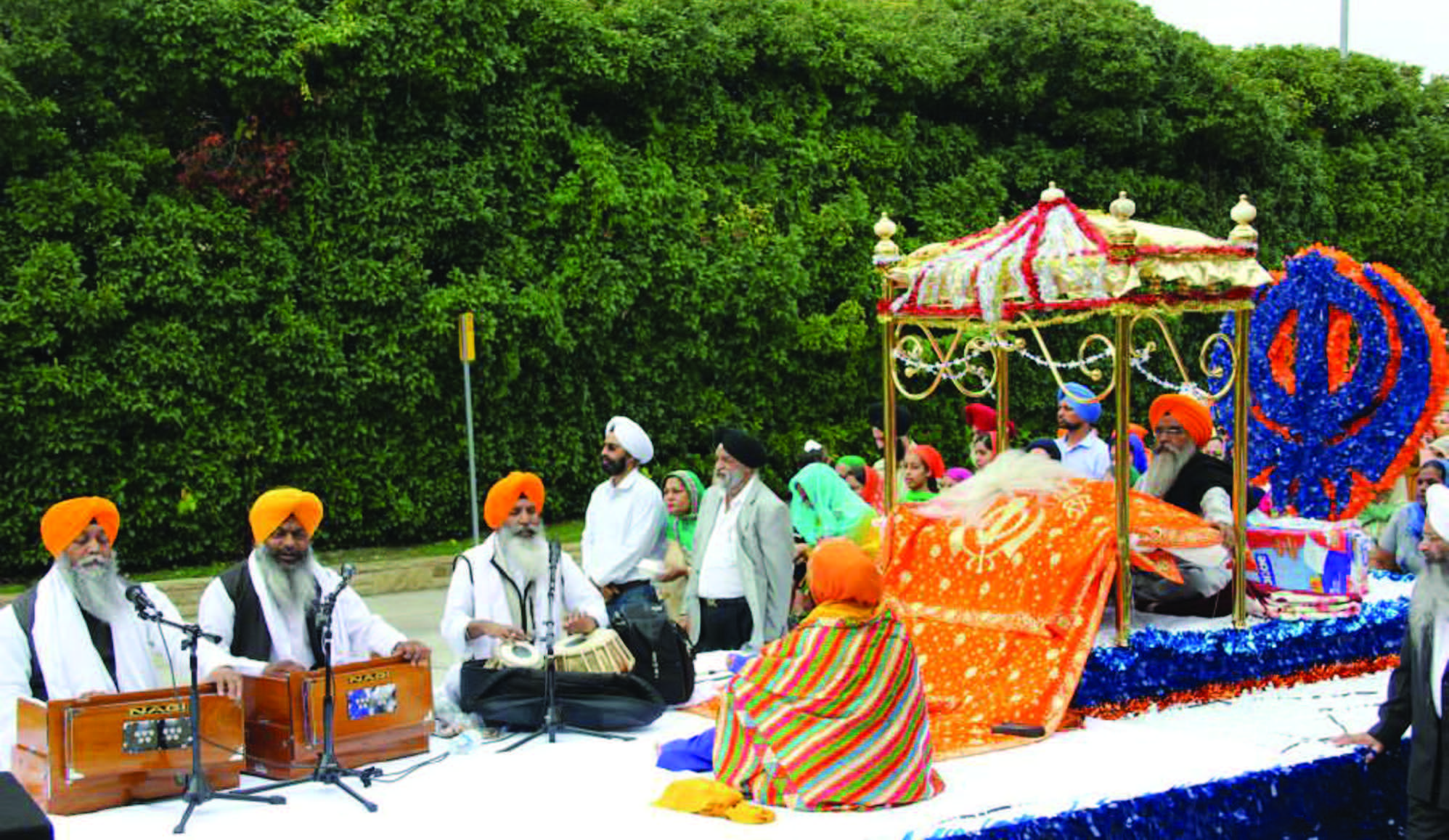
    RICHARDSON, TX (TIP): November 16 appeared to be a bad weather day. But the threatening clouds relented. It was the Grace of Shri Guru Nanak Dev Ji, to celebrate whose 544th birth anniversary his followers were gathered at Gurdwara Singh Sabha, Richardson, to take out an impressive parade that the seemingly hostile weather turned out to be quite friendly. A sea of humanity could be seen at the parade the Sikh community of the Dallas Fort Worth area took out in Richardson. The parade was taken out to celebrate the 544th birth anniversary of a great saint,philosopher and a social reformer who had followers from all major religions of his times. Prior to the parade being taken out, prayers were offered in the Gurdwara Singh Sabha, Richardson.

    After the formal prayers and the kirtan darbar, the Gurdwara management and some guests addressed the congregation. These guests represented various institutions and organizations. Mike Ghouse of Inter Faith Community and an eminent scholar on Sikhism, Dr. Harbans Lal spoke on the life and philosophy of Shri Guru Nanank Dev Ji. Dr. Lal also spoke about Guru Nanak’s relevance to the modern world. Ghouse callled Guru Nanak Dev Ji a man of all climes and ages. Dr. Lal said Guru Nanak Dev Ji’s message is universal and it needs to be followed to bring peace and happiness to the world.

    On this occasion, a few officials were recognized for their services to community. They included Sergeant Kirby Luke of McKinney Police Department, Sergeant Brian Alcorn of Richardson Police Department, Laura Maczka, Mayor of Richardson, Beth Van Duyne, Mayor of City of Irving, Reatha Forte of Justice Department, and Gregory W Rushin, Police Chief of City of Plano. In their address to the congregation, they greeted the Sikhs on the auspicious and happy occasion of the birth anniversary of their First Master. Describing the Sikh community as hard working and honest, they lauded the role of the community in the growth of America.

    The Secretary of the Gurdwara Bhai Surinder Singh Gill who conducted the stage, reminded, from time to time, that Guru Nanak was an apostle of love, liberty and peace, the values that the American nation holds so dear. The United Sikhs representative Bhai Gurvinderjit Singh praised the American administration for providing adequate security for Sikhs in the wake of the attack on Sikhs in a Gurdwara at Oak Creeks. He described the courageous Police Officer Brian Murphy as a great soldier who placed his life in the line of duty and took bullets on himself to save so many lives of innocent Sikhs trapped in the Gurdwara.

    A plaque to honor Lt. Brian Murphy and a check to express community’s gratitude, were handed over to the local law enforcement officers. Bhai Surinder Singh Gill appreciated the local administration for their cooperation in organizing the Parade. He also thanked the cultural organizations- Hansda Punjab and Punjabi Cultural Association of North Texas (PCANT) for their participation and cooperation. Prayers in the Gurdwara Sahib over, the Parade moved on, led by Panj Piaras (Five Beloveds). The Living Master of the Sikhs, Shri Guru Granth Sahib (The Sikh Holy Scripture) was carried in a flower bedecked float that followed the Panj Piaras.


    26

  • Punjabi owners of UK’s Radisson Blu Edwardian hotels in multimillion- pound lawsuit

    Punjabi owners of UK’s Radisson Blu Edwardian hotels in multimillion- pound lawsuit

    LONDON (TIP): Prominent British Sikh hotelier Jasminder Singh, head of Britain’s Radisson Blu Edwardian Hotels group is all set to take on his 86-year-old father in a bitter legal face-off over family wealth worth the £415 million. Bal Mohinder Singh who spent years in Africa before moving to UK in 1973 is suing his eldest son Jasminder (62) for taking full control over the family fortune and refusing to follow the Sikh tradition of sharing the family wealth. The case will come up in the high court in London from Tuesday. Both Bal and Jasminder are highly respected by the Asian diaspora in UK.

    They still share a seven-bedroom home but are not in talking terms. Owners of famous London landmarks like the Vanderbilt, Savoy Court and May Fair, the hotel group is now worth an estimated £415 million. It is believed that Bal had put Jasminder in charge of the business because of his acumen in English and finance. But according to the case filed in Court, Bal alleged that in 2010, his son forced him to retire and then refused to share business profits with the family. “As the head of the family, I have to be respected and the fact that I was forced to retire by Jasminder was very, very painful for me.

    I was devastated with being forced out and since then my health has failed. My wife is unwell too. When I travel to the high court I will be in an ambulance and it will be very difficult and stressful to have to give evidence against Jasminder,” he said. Bal has also told the court that Jasminder has been trying to get him and his wife Satwant Kaur Singh to leave their home and move out.

    Jasminder allegedly also refused to provide a chairlift for his mother who can no longer climb the stairs. Bal has accused his son of abandoning the “Mitakshara” system which calls for sharing of wealth among family members under the Sikh traditions. Bal began his business in the Kenyan port of Kisumu where he ran a restaurant and nightclub. Jasminder was born in Tanganyika in 1951. If successful, Bal could end up claiming a third of the joint family assets.

  • HC STAYS ARREST OF BHANSALI, RANVEER, DEEPIKA

    HC STAYS ARREST OF BHANSALI, RANVEER, DEEPIKA

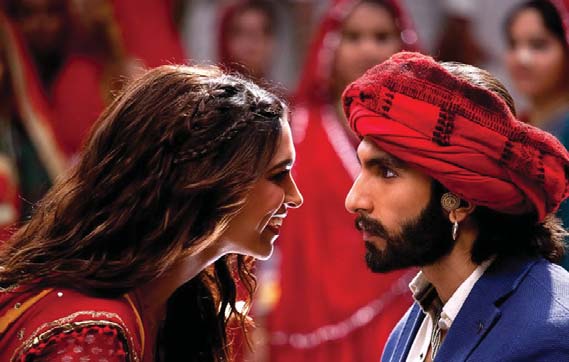
    CHANDIGARH (TIP): The Punjab and Haryana high court, on November 14, stayed the arrest of Bollywood director Sanjay Leela Bhansali and actors Ranveer Singh and Deepika Padukone in connection with an FIR lodged against them in Jalandhar in connection with their movie Ram-Leela. Justice Jitender Chauhan of the high court has issued the order after hearing a petition filed by Bhansali, Ranveer and Deepika. When the case came up for hearing on Thursday, the counsel for the Bollywood stars pleaded that it was strange that the Jalandhar police registered the FIR without even ascertaining the facts. It was further argued that the grievance of the complainant in this case was that the movie’s title, the trailer and photographs were highly objectionable and offended the religious sentiments of general public believing in Hindu mythology. He argued that the story of the movie was contrary to the title, as it had nothing to do with Lord Ram’s life and the Delhi high court has already decided that no organization or individual can claim to be the sole interpreter to Hindu religion and sole proprietor of names of Hindu Gods. Bhansali, Ranveer and Deepika had moved the HC on Tuesday against the registration of case against them in Jalandhar. The police had booked Bhansali, Ranveer and Deepika in September on the basis of a complaint filed by one Lalit Kumar. The FIR was registered under Section 295-A (deliberate and malicious act intended to outrage religious feelings) of the IPC.

  • Planning wave of revenge attacks in Pakistan: Taliban

    Planning wave of revenge attacks in Pakistan: Taliban

    DERA ISMAIL KHAN (TIP): The Pakistani Taliban announced on November 8 they would orchestrate a wave of revenge attacks against the government after naming hardline commander Mullah Fazlullah as their new leader. The rise of Fazlullah, known for his fierce Islamist views and rejection of peace talks, by the Taliban shura, or leadership council, a day earlier follows the killing of Hakimullah Mehsud, the previous leader, in a US drone strike on November 1. “We will target security forces, government installations, political leaders and police,” Asmatullah Shaheen, head of the shura, told Reuters by telephone from an undisclosed location. He said the Taliban’s main target included army and government installations in Punjab province, the political stronghold of Prime Minister Nawaz Sharif. “We have a plan. But I want to make one thing clear. We will not target civilians, bazaars or public places. People do not need to be afraid,” Shaheen added. Pakistan publicly condemns US drone strikes as a breach of its sovereignty but in private officials admit the government broadly supports them. Militants are mainly holed up in remote areas on the Afghan border where the army has no presence.

    “Pakistan has full information about drone attacks,” said Shaheen. “Pakistan is a slave of America. It is an American colony.” The Pakistani Taliban are fighting to topple the government and impose Islamist rule in the nucleararmed nation. Attacks have been on the rise since Sharif came to power in May, a concern for global powers already unnerved by the possible security implications of the planned withdrawal of most US-led troops from neighbouring Afghanistan in 2014. Mehsud and his allies had been tentatively open to the concept of ceasefire talks with the government, but Fazlullah, whose men were behind the attack on schoolgirl Malala Yousafzai last year, strongly opposes any negotiations. No meaningful talks have taken place since Sharif’s election and Fazlullah’s rise could signal the start of a new period of uncertainty and violence in the already unstable region.

  • DR. TINNA RUNS HIS 22ND MARATHON

    DR. TINNA RUNS HIS 22ND MARATHON

    NEW YORK (TIP): Dr. Avtar Singh Tinna, a dentist by profession, has added yet another Marathon to his long career in running Marathons. On Sunday, November 3rd, 2013, he ran his 22nd NYC Marathon. Since 1991, Dr. Tinna has been a regular in the 26.2-mile New York City Marathon-running with his club -Sikhs of America. Donning their signature Tshirts labeled “Proud to be a Sikh” the teammates run with their saffron (kesri) turbans, attracting an enormous crowd of spectators as they trek through the city’s five boroughs. This year, in fact, a staggering 2 million spectators watched the event along on the city’s streets and more than 315 million via international live broadcast. A new addition this year to Dr. Tinna’s loud pageantry was the fact that he ran the entire race while carrying a Nishan Sahib, the sacred flag of the Sikhs. He ran this year alongside his two friends (and strong patrons of the community) Satnam Singh Parhar and Dr. Ashok K. Dogra. Dr. Tinna, a dentist by profession, maintains a practice in Queens, New York City.

    He was born in Punjab, India in the village of Seh Jhangi, Jalandhar. Having studied at DAV College in Jalandhar and graduating from Punjab Government Dental College and Hospital in Amritsar, Dr. Tinna moved to New York in 1980 where he lives with his wife and four children. Famed marathoner Fauja Singh, a 102- year old Sikh from the United Kingdom captured the attention of the Guinness Book of World Records. As it so happened, Dr. Tinna himself personally drew crowds this week-many runners and supporters frantically cheering “Fauja Singh! Fauja Singh!” as he made his trek. Nevertheless, Dr. Tinna and Fauja Singh do share some history: in 2003, Sikhs in America invited Fauja Singh to run the NYC Marathon. This proved to be a pivotal moment for Fauja Singh, earning him the world’s admiration in this prestigious event. Since the 2003 Marathon, the two have maintained an appreciable personal and professional correspondence. According to Dr. Tinna, he runs for Sikh identity.

    Championing for years a place for the Sikhs in an increasingly globalized society, Dr. Tinna encourages young Sikhs to take up the cause and run. Dr. Tinna trained Satnam Singh Parhar and Dr. Ashok Dogra both in their sixties who ran for the first time and completed the Marathon quite comfortably. If anyone is interested in participating in next year’ s Marathon please feel free to contact Dr. Tinna at 718-291-1200. It was heartening to find that many Indian ran the Marathon this year. Besides Satnam Singh Parhar and Dr. Ashok Dogra, others who ran included Mandeep Singh Sobti, Piara Singh, Lakhvir Singh and Hamesh Singh, all of the Sikhs. Is it an impact of Bhaag, Milkha, Bhaag? Marathon 2013 had 50,304 runners participating. It was the 43rd NYC Marathon. Last year there was no Marathon because of the Superstorm Sandy. The Marathon this time had a tighter security in view of an earlier terrorist attack in Boston in the month of April. Geoffrey Mutai of Kenya was the first male to finish in 2:08:24 and the female to finish first was Priscah Jeptoo of Kenya who finished in 2:25:07.

  • Indira was wrongly advised on Bluestar: KPS GILL

    Indira was wrongly advised on Bluestar: KPS GILL

    NEW DELHI (TIP): More than 29 years after the controversial Operation Bluestar in June of 1984, Punjab’s former Director General of Police Kanwar Pal Singh Gill has claimed that then Prime Minister Indira Gandhi would not have allowed the operation, but was wrongly advised to do so as it was presented as the only option by her advisors. The operation – much criticized and scrutinized over nearly three decades — was to storm the Amritsar’s Golden Temple with tanks of the Indian Army to flush out Sant Jarnail Singh Bhindranwale and his band of armed supporters. The official biography of the supercop titled ‘KPS Gill The Paramount Cop’ released in New Delhi on October 31, also the death anniversary of Indira Gandhi, talks candidly of the role played by the 1957-batch Assam cadre IPS officer in tackling militancy in Punjab. Authored by Rahul Chandan, the 244-page book presents Gill’s opinion of Indira Gandhi, Rajiv Gandhi and PV Narsimha Rao and has passing references to VP Singh and Chandrashekhar, all Prime Ministers during the dark days of militancy in Punjab. On Operation Bluestar, the author quotes Gill as having said: “(It) was conducted in a hasty manner and without thinking what impact it would have on the hearts and minds of Sikhs.” The book says Gill told his fellow officers: “Don’t understand how Mrs Gandhi can order such an operation.”