Tag: Punjab

  • BANDI CHHORH DIVAS

    BANDI CHHORH DIVAS

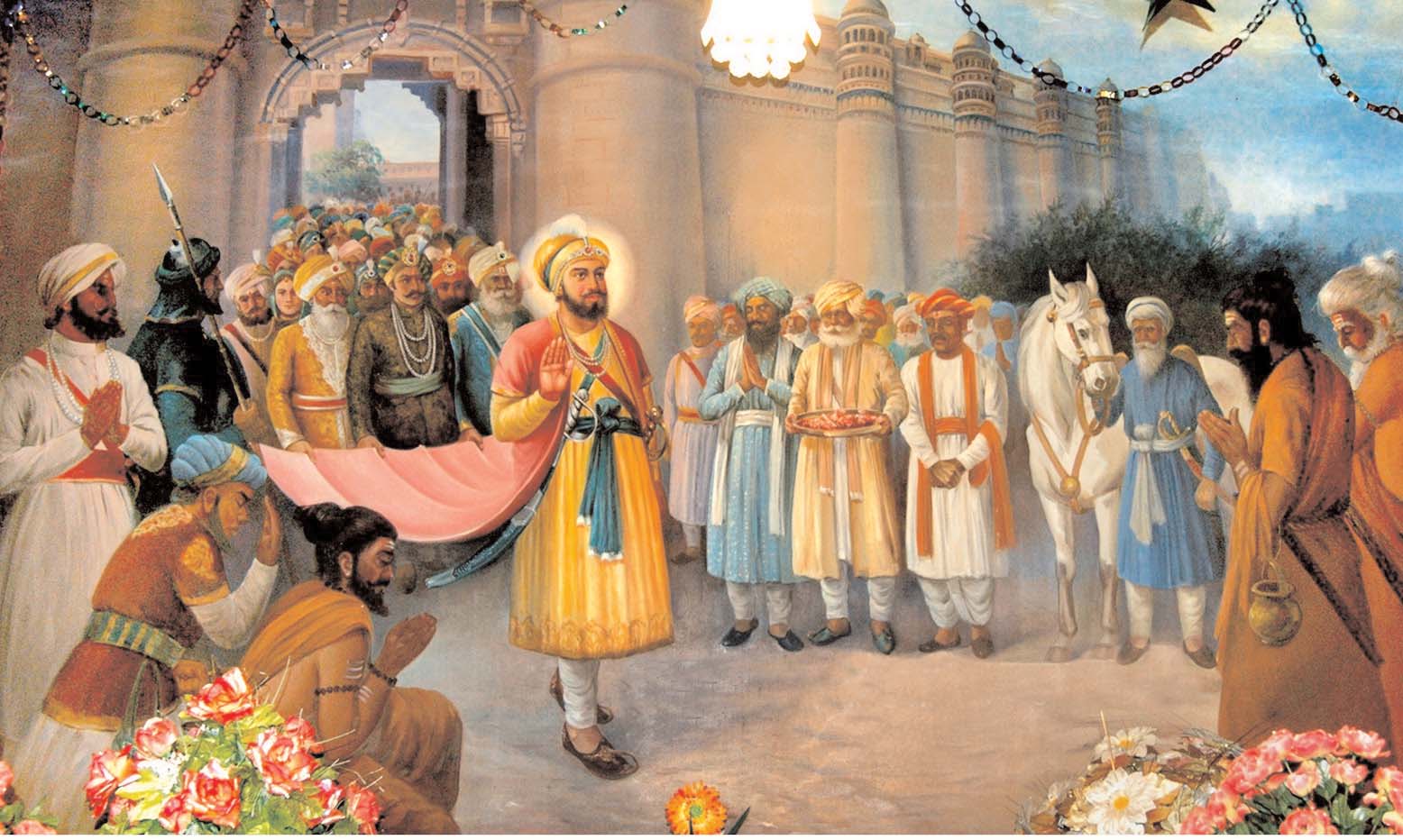
    The Sikh celebration of the return of the sixth Nanak from detention in the Gwalior Fort coincides with Hindu festival of Diwali. This coincidence has resulted in similarity of celebration amongst Sikhs and Hindus. The Sikhs celebrate this day as Bandi Chhorh Divas i.e., “the day of release of detainees”, because the sixth Nanak had agreed to his release on the condition that the other fifty-two detainees would also be released. These other fifty-two detainees were the vassal kings who had done something to annoy the emperor. Emperor Jahangir had imprisoned the sixth Nanak because he was afraid of the Guru’s growing following and power. The Sikhs on this day, which generally falls in october-November, hold a one-day celebrations in the Gurdwaras. So in the evening, illuminations are done with Deewé (earthen oil lamps) or candles and fireworks. The celebrations are held both in the Gurdwaras and in homes. The story of Divali for the Sikhs is a story of the Sikh struggle for freedom. From the time of Guru Nanak (1469 – 1539), the founder of Sikhism, popular seasonal or folk festivals like the harvest festival of Vaisakhi, or ancient mythological festivals like Holi and Divali, or worship rituals like Aarti, began to take on a new significance for the Guru’s students, the Sikhs. The Guru used these festivals and special days e.g. first day of each lunar month, as symbols or pegs for his teaching themes.

    And so the Sikhs were slowly diverted from darkness of superstitious ritualism based on fear and ignorance to an enlightened ideology based on reason and belief in One Creator. The enlightened ideology of Guru Nanak gave new significance to ancient festivals like Divali and Vaisakhi So what about Divali, the festival of lights when, according to Indian lore, Lord Rama returned home after destroying the demon god Ravana who had taken away Rama’s wife, Sita? The story, of course, has no significance in the Sikh tradition. However, in the Sikh struggle for freedom from the oppressive Mughal regime, the festival of Divali did become the second most important day after the Vaisakhi festival in April. The Sixth Guru Hargobind, was freed from imprisonment in the famous fort of Gwalior by Emperor Jahangir in October, 1619. The reason for the young Guru’s imprisonment was no more than religious bigotry. The Guru’s father, Guru Arjan, had been martyred for the same reason. According to Sikh tradition, the Guru agreed to be freed only if the other Indian chiefs (rajahs) imprisoned with him were freed. Jahangir was under pressure from moderate but influential Muslim religious leaders like Hajrat Mian Mir, a friend of the Guru. So he relented grudgingly and ordained, Let those rajahs be freed who can hold on to the Guru’s coat tails and walk out of prison.

    He had in mind no more than four or five being freed with the Guru. However, the Guru was not to be outmanoeuvred in this way. He asked for a special coat to be made with 52 coat tails – same number as the rajahs in prison with him! And so the rajahs were freed and the Guru became known popularly as the Bandi Chhor (Deliverer from prison). He arrived at Amritsar on the Divali day and the Har Mandar (now known as the Golden Temple) was lit with hundreds of lamps i.e. he was received in the same way as the Lord Rama and the day came to be known as the Bandi Chhor Divas (the day of freedom). Guru Hargobind reached Amritsar on the eve of Diwali, after his release from Gwalior fort, during the reign of Jahangir.The People illuminated the Golden Temple and the city splendidly to celebrate the return of their Guru to the city. Thereafter, Diwali is being celebrated at Amritsar with great pump and show, and also with a lot of religious fervour. During the fair, religious congregations are held at Manji Sahib, Akal Takhat and Baba Atal which continue for three days. A large number of poets and singers also participate. Recitation of Granth Sahib is done at Darbar Sahib, Akal Takhat and various gurudwaras in the vicinity of Golden Tample. Early in the morning, pilgrims take a holy dip in the scared tank, while reciting Japji Sahib and thereafter, they go to the Golden Temple for paying their obeisance.

    They make offerings of various kinds both in cash and kind, such as flowers, candy-drops and parched-rice grains, but mostly the offerings are of karah parshad. which is prepared and sold to the pilgrims by the management. Circumambulation of the tank is considered sacred by the pilgrims. Illuminations and pyrotechnic display are the unique features of the Diwali celebrations. A mammoth gathering in the parikarma and on the adjoining buildings witness to their great delight the multicolored lights thrown up in the sky and their reflections in the water of the tank. Chain of the electric lights hang along the causeway and on the Darshani Deorhi. Small earthen lamps lighted and fed with sarson oil are arranged in lines all around the tank. All buildings in the compound are bedecked with coloured lights. Candles and small earthen lamps fed with pure ghee are floated in the tank. This fair is attended by people in the large numbers who come from far and near. A large number of visitors take shelter in the verandahs of the various buildings in the premises. All local inns, rest houses and other common places are packed to capacity. The free mess, called Guru Ram Dass Langar, remains open for all. The whole function is organised by Shiromani Gurudwara Parbhandhak Committee. During the fair, qualified doctors render free medical service to the pilgrims. Thenceforth, the Sikh struggle for freedom, which intensified in the 18th Century, came to be centred around this day. In addition to the Vaisakhi day (now in April), when Khalsa, the Sikh nation was formally established by the Tenth Guru Gobind Singh, Divali became the second day in the years when the Khalsa met and planned their freedom strategy.

    Celebrations
    On the occassion of Bandi Chorrh Divas, Sikhs observe a one-day celebrations in the Gurdwaras. In the evening, illuminations are lighted with Deewé (earthen oil lamps) or candles and fireworks are also bursted. Such celebrations are held both in the Gurdwaras and in homes.

    SACRIFICE OF BHAI MANI SINGH ON THE OCCASION OF DIWALI
    Another important Sikh event associated with Divali is the martyrdom in 1734 of the elderly Sikh scholar and strategist Bhai Mani Singh, the Granthi (priest) of Harmandar Sahib (Golden Temple). He had refused to pay a special tax on a religious meeting of the Khalsa on the Divali day. This and other Sikh martyrdoms gave further momentum to the Khalsa struggle for freedom and eventually success in establishing the Khalsa rule north of Delhi Bhai Mani Singh was a great scholar and he transcripted the final version of Guru Granth Sahib upon dictation from Guru Govind Singh ji in 1704. He took charge of Harmandir Sahib’s management on 1708. Diwali was not celebrated in Golden Temple at that time. In 1737, he received permission from Mogul emperor of Punjab, Zakaria Khan for celebrating Diwali at Golden Temple for a massive tax of Rs. 5,000 (some authors say it was Rs10,000). Invitations were sent to the Sikhs all over India to join Bandi Chhorh Diwas celebrations at Harmandir Sahib. Bhai Singh thought he would collect the tax-money from the Sikhs as subscriptions who would assemble for the purpose of Diwali Celebrations. But Bhai Mani Singh Ji later discovered the secret plan of Zakariya Khan to kill the Sikhs during the gathering. Bhai Mani Singh Ji immediately sent message to all the Sikhs not to turn up for celebrations. Bhai Mani Singh could not manage to arrange the money to be paid for tax. Zakariya Khan was not happy about the situation and he ordered Bhai Mani Singh’s assassination at Lahore by ruthlessly cutting him limb-by-limb to death. Ever since, the great sacrifice & devotion of martyr Bhai Mani Singh Ji is remembered on the Bandi Chhorh Diwas (Diwali) celebration.

  • FIGHTER PILOT RAHA TO BE NEXT IAF CHIEF

    FIGHTER PILOT RAHA TO BE NEXT IAF CHIEF

    NEW DELHI (TIP): Ace fighter pilot Air Marshal Arup Raha has been appointed the next Chief of the Indian Air Force. He will succeed Air Chief Marshal NAK Browne, also a fighter pilot, on December 31. At present, Air Marshal Raha is the Vice-Chief of Air Staff. Air Marshal Raha was commissioned into the IAF on December 14, 1974 in the fighter stream of the flying branch. In his career spanning nearly 39 years, he has commanded the vital Western Air Command which is tasked with the responsibility of Jammu and Kashmir, Punjab, Himachal Pradesh, Haryana and parts of Rajasthan. During Operation ‘Parakaram’, he was the Commanding Officer of the MiG-29 squadron at Bathinda in Punjab. He then went on to be the Air Officer Commanding at the IAF base at Adampur near Jalandhar and Advance Headquarters, Western Air Command at Chandimandir.

  • Sikhs For Justice to present 1984 Genocide Petition to UNHR Commission on November 1

    Sikhs For Justice to present 1984 Genocide Petition to UNHR Commission on November 1

    NEW YORK (TIP): The Sikhs For Justice, a Human Rights Organization based in New York has claimed that on the occasion of 29th anniversary of 1984 anti-Sikh riots in Delhi, a petition signed by around a million Sikhs throughout world, will be filed with the United Nations in Geneva on November 1 2013. The Sikh Genocide Petition will be handed to Navi Pillay, UN human rights chief by a delegation of rights group “Sikhs for Justice” (SFJ), All India Sikh Students Federation (AISSF) and Gurudwara representatives from Europe and North America. Titled “1984 Yes its Genocide”, the petition will be filed with UNHCR under 1503 procedure of the United Nations. SFJ legal adviser Gurpatwant Singh Pannun said, “Under 1503 procedure, UNHCR refers these petitions to the sub-commission on Promotion and Protection of Human Rights which examines complaints regarding gross human rights violations and impunity, as in the case of November 1984 Sikh genocide.”

    The petition requests the United Nations to investigate the systematic, intentional and deliberate killing of Sikhs carried out throughout India during the first week of November 1984 and recognize the killings as “genocide” under UN Convention on Genocide. The complaint invokes UN Convention against Genocide which declares any intentional and deliberate attack on any religious minority to be a “crime” liable to be prosecuted and punished. The evidence of November 1984 killing of Sikhs clearly shows that Sikhs were deliberately attacked in a planned manner throughout India on behest of ruling Congress party. Justifying the UN intervention on the issue of Sikh Genocide, All India Sikh Students Federation President Karnail Singh Peermohamd who spearheaded the campaign for getting signatures on the petition in India and managed to get a few lakh signatures from Punjab and other states, said that they were constrained to move the UN after failing to get justice in India. “The justice delivery system of our country has failed the hapless victims of largest massacre of people after 1947 and till date the perpetrators of the mass murders are roaming free and rather enjoying power,” he said.

    “We have been knocking at every door here to get justice but the establishment failed all attempts to allow justice to the victims,” he added. Meanwhile attorney Pannun said, “Rights group will present to the UN evidence and documents regarding use of local administration and government resources by the Congress leaders to organize genocidal attacks on Sikhs during November 1984.” “A Justice Rally will also be held outside UN in Geneva on November 1 to remind the world that even after 29 years, organizers and perpetrators of November 1984 have not been convicted by the Government of India. More than 10,000 Sikhs from across Europe and North America are expected to attend the Justice Rally in Geneva,” Pannun and Peermohammad said.

  • PROGRESS BLOW TO GUJARAT

    PROGRESS BLOW TO GUJARAT

    Human indicators put state that brags about growth behind Tripura and Sikkim

    NEW DELHI (TIP): A new development index has identified Gujarat as a less developed state, while ranking Odisha and Bihar along with eight others as “least developed” and Goa and Kerala among the seven “relatively developed” states. A panel headed by Raghuram Rajan, now the RBI governor, which submitted its report to finance minister P Chidambaram, also recommended a fresh approach to devolution of funds to states and moved away from the special category classification to devise three categories – least developed, less developed and relatively developed. According to the index, there are 10 least developed states, 11 less developed and seven relatively developed states in the country. The slotting of Gujarat, which has attracted attention due to its development model, in the “less developed” category is likely to escalate the already bitter political debate on the ‘Gujarat model of development’.

    The other states in this category are Manipur, West Bengal, Nagaland, Andhra Pradesh, Jammu and Kashmir, Mizoram, Tripura, Karnataka, Sikkim and Himachal Pradesh. The least developed states include, apart from Odisha and Bihar, Madhya Pradesh, Chhattisgarh, Jharkhand, Arunachal Pradesh, Assam, Meghalaya, Uttar Pradesh and Rajasthan. The relatively developed states according to the index are Haryana, Uttarakhand, Maharashtra, Punjab, Tamil Nadu, Kerala and Goa. The panel has developed a multidimensional index of backwardness based on monthly per capita consumption expenditure, education, health, household amenities, poverty rate, female literacy, percent of SC-ST population, urbanisation rate, financial inclusion and connectivity.

    The panel said less developed states rank higher on the index and would get larger allocations based on the need criteria. “The committee has proposed a general method for allocating funds from the Centre to the states based on both a state’s development needs as well as its development performance,” Chidambaram told reporters. “The committee has recommended that each state may get a fixed basic allocation of 0.3% of overall funds, to which will be added its share stemming from need and performance to get its overall share,” Chidambaram said. The panel was set up after persistent demand from Bihar CM Nitish Kumar who insisted a the special category status to help access more funds for its development. This sparked off a demand from several other states such Odisha for the special category state status. While the new index will ensure more funds for Bihar from the central kitty, it has stopped short of conferring the “special category” tag on the state, Shaibal Gupta, seen as Nitish’s nominee on the panel to submit a 10-page dissent note.

    However on Thursday, Nitish concealed his disappointment, if any, to celebrate the recommendation as a triumph even as BJP taunted him for failing to have his way despite cozying up to Congress. “It is a very decent report. For example under this index Odisha is at the bottom of the list and then Bihar. Therefore it recognizes that Odisha, Bihar, Madhya Pradesh are among the most backward states of India. That is I think the demand,” Chidambaram said. “The demand of these states is please recognize the fact that for a variety of reasons we are the most backward states. I think this index captures the degree of backwardness and acknowledges that Bihar is among the most backward states of India. Special category is the present categorisation. Now they are moving away from that,” finance minister said while detailing the recommendations of the panel.

    “This is not an answer to all the demands of the states. This is meant only to be a way forward on how to devolve funds to the more backwards states and areas of India. He said the index better captures the stage of development in a state, how backward it is or how relatively less backward it is and is a good measure for planning and devolution of funds. “Because some states are small very limited resources it is necessary to have a threshold below which the devolution of funds does not fall. So the committee has recommended that each one of the states will get a basic allocation of 0.3%,” Chidambaram said. The finance minister said that the report will be examined by various stakeholders before being implemented. “It will not be in the current year. It has to go through the examination process and will be implemented in an appropriate time in the next financial year.

    To which funds this should be applied a decision will be taken,” Chidambaram said. The report said that the National Development Council had accorded the status of special category state to eleven out of 28 states. They were based on a number of characteristics such as hilly and difficult terrain, low population density and or sizeable share of tribal population, strategic location along the borders with neighbouring countries, economic and infrastructural backwardness and non-viable nature of state finances. State under this category have a low resource base and are not in a position to mobilise resources for their developmental needs even though the per capita income of some of these states is relatively high, the report said.

  • US COURT ISSUES SUMMONS TO MANMOHAN SINGH

    US COURT ISSUES SUMMONS TO MANMOHAN SINGH

    JALANDHAR (TIP): Weeks after securing a summons from a US court against Congress president Sonia Gandhi for protecting perpetrators of the 1984 anti-Sikh riots, rights group Sikhs For Justice has now obtained another summons from a federal court in Washington against Prime Minister Manmohan Singh for his alleged role in sanctioning cash rewards in the 90s for Punjab cops involved in fake encounters and protecting the architects of the riots. The case has been docketed and assigned to US district judge James E Boasberg. The plaintiffs have 120 days to serve summons on the PM, who will be in Washington this week to meet US president Barack Obama. However, SFJ legal advisor Gurpatwant Singh Pannu said that since it was an uphill task to serve summons to the PM through regular process during his meeting with Obama in White House, an emergency motion will be filed in the court seeking alternative means to deliver it to the White House staff and members of PM’s security personnel.

    Justifying the filing of rights violation lawsuit against the Prime Minister, SFJ said that he should be held accountable for funding crimes against humanity and protecting security force personnel involved in extrajudicial killings of Sikhs in Punjab. The human rights violation suit, filed under Alien Tort Claims Act (ATCA) and Torture Victim Protection Act (TVPA) for funding several counter-insurgency operations in Punjab resulting in killings of people, is seeking compensatory and punitive damages. Under ATCA and TVPA, US federal courts have jurisdiction over cases of human rights violations even though incidents occurred on foreign soil. The complaint filed on September 25 alleged that Manmohan’s culpability in the crimes started in 1991 when he took office of the finance minister. Manmohan approved and financed, as head of finance ministry, “cash rewards” for killing Sikhs through extra-judicial means. The 24-page complaint also claimed that during his tenure as PM, Manmohan has been actively shielding and protecting members of his political party who were involved in anti-Sikh riots. Sikh groups are also holding a “justice rally” on September 27 in front of the White House during Obama-Manmohan meeting.

  • LALIT MODI EXPELLED FROM BCCI

    LALIT MODI EXPELLED FROM BCCI

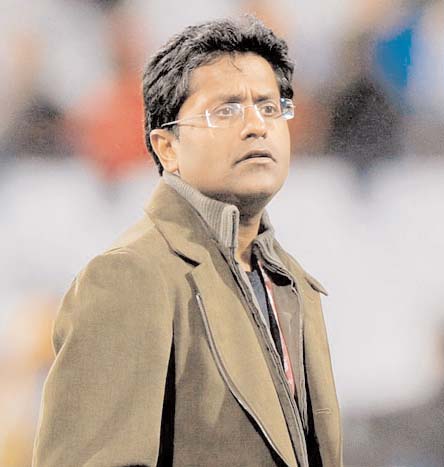
    CHENNAI (TIP) : The decision to ban Lalit Modi from BCCI for life was taken much ahead of the board’s special general meeting (SGM), which started at 2:05 pm on September 25 and was over by 2:20 pm. Modi the maverick became history as his sworn enemy, president-in-exile N Srinivasan, clinically packed him off, gaining a huge advantage ahead of the annual general meeting (AGM) on Sunday. The 29-0 scoreline in an electorate of 30 (the J&K representative was absent) said it all. There was no voice of support for Modi who was desperately trying to prolong his administrative career. All Srinivasan needed was a two-thirds majority (21 votes), but there was no voice of dissent, proving beyond doubt who is the supreme boss in BCCI at the moment. “Modi is guilty of committing acts of misconduct and indiscipline, and therefore, in exercise of powers as per Regulation 32 of the Memorandum of Rules and Regulations of the BCCI, Modi is hereby expelled from the board,” a terse note written by BCCI secretary Sanjay Patel was sent to the media. Modi’s Special Leave Petition in the Supreme Court to stop the SGM was rejected and a letter that he had sent to BCCI urging the members to allow him to present his case or defer the meeting to a date after the Sunday AGM wasn’t paid attention to.

    “Please note that I do intend to appear before the SGM and place my version and the facility that was extended to the BCCI witnesses for the purposes of recording of their evidence, that is by way of video conferencing, may kindly be extended to me as well,” Modi had said in his letter. According to a BCCI member present in the meeting, they were informed about the contents of Modi’s letter but they didn’t feel it important enough to attach importance to it. “He was found guilty by the disciplinary committee and there was no reason to waste too much time on it any longer. And Modi wasn’t available for video conferencing either,” a BCCI member present in the meeting said. “It was a unanimous choice to ban Modi. The proposer was Anirudh Chaudhury from the Haryana Cricket Association and the seconder was Ranjib Biswal from Orissa Cricket Association. There was no voice of opposition,” Rajeev Shukla said. IS Bindra, the president of Punjab Cricket Association and a known Modi sympathizer, didn’t attend the meeting and MP Pandove, who represented the association, went in favour of the motion. The only office-bearer absent from the meeting chaired by Srinivasan was North Zone vice-president Arun Jaitley, who was busy with a BJP rally in Bhopal.

    Officials only interested in themselves: Lalit Modi
    In a video interview to ESPN Cricinfo, Modi said: “Board officials are not interested in doing what is good for cricket. They are only interested in what they are getting out of it.” Modi spoke about how ridiculous it was for Srinivasan to stand for elections in the midst of a burning spot fixing controversy involving his son-inlaw. “There is unanimity in allowing him to continue. You never see a lone ranger standing out because they shut them all up. Only I S Bindra and myself have been lone rangers in the past, “ he said.

  • PRIYA DUTT, MEMBER OF PARLIAMENT PATRON OF NARGIS DUTT MEMORIAL FOUNDATION

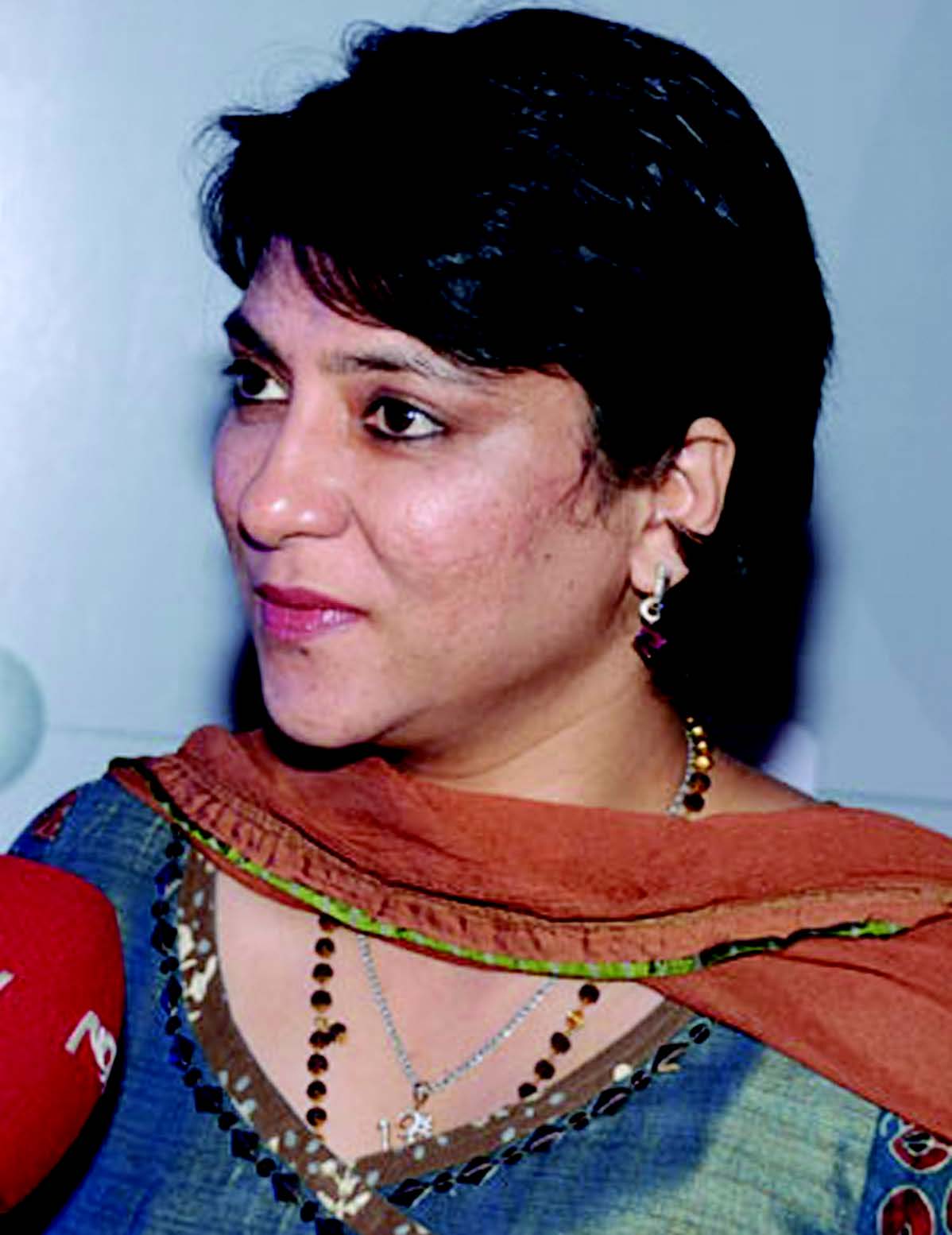
    PRIYA DUTT, MEMBER OF PARLIAMENT PATRON OF NARGIS DUTT MEMORIAL FOUNDATION

    My Vision
    YOUTH AFFAIRS: India is one of the youngest countries in the world, with a population of over 50 crore in the youth category. This youth power is one of our country’s greatest resources if canalized correctly. Great impetus must be put into youth development, and I intend to initiate programs centered on youth development, self-empowerment and education. INFRASTRUCTURE DEVELOPMENT: For bettering the lives of the people of my constituency my major concern is refining infrastructure within our area. I set up elaborate plans with serious deadlines and priorities. My priorities are roads, water supply drainage, sanitation, health care and transport. WOMEN’S WELFARE: Being a woman, it is my moral responsibility to address this issue.Women form the backbone of our social structure, and I will do everything in my power to strengthen this backbone. SPORT & RECREATION: Ironically, a fun thing like sports needs to be taken more seriously. I will initiate measures to improve sporting facilities, and make them more accessible to every strata of society. PEACE & COMMUNAL HARMONY: The fundamentals of my philosophy, efforts to propagate peace and communal harmony will continue not only in my constituency, but the country and world at large.

    Social Activities
    PEACE MARCH (1987): It was a time when the country was under a cloud of violence and communal discord; when words like terrorism and racism were becoming a major share of everyday discussion. Punjab was going through a terrible turmoil. A gesture of peace, brotherhood and a healing touch was most needed. Putting our life in danger, I accompanied my father on a 78 days peace march from Mumbai to Amritsar, covering a distance of over 2700 kms with a message “Give Peace a Chance”. This walkathon gave me unforgettable insights into the real India. These were the learning years and issues as these touched me deeply. NUCLEAR DISARMAMENT: My father was a stalwart of the doctrine of Peace and strongly pursued the philosophies of the great Mahatma Gandhi. He taught us the values of brotherhood, understanding and non-violence. In 1988,my father along with like-minded people and myself went to Japan to spread the message of Gandhiji. On 6th March 1988, we marched from Nagasaki to Hiroshima, Japan for World Peace and Nuclear Disarmament.

    Many may question the results of our efforts, and to them I say “I tried, did you?” NARGIS DUTT MOBILE HOSPITAL: Equipped with a minor operation theatre, X-ray machine, ECG, pathology setup, ENT specialist and doctor’s cabins, designed to specially benefit the poor. GANDHIGIRI MARCH: Peace march on Oct.2, to bring about awareness and spread the message of Peace and Ahimsa. MUMBAI BLAST 2006: Easy admission of injured to hospitals, arranging for medical supplies, help line to assist relatives, quick release of funds to deceased and injured. RAJIV GANDHI COMPUTER EDUCATION PROJECT: Every year during summer and Diwali vacation free computer education classes are conducted. Over 3000 are trained in this project. This course includes various job oriented computer courses meant for educated unemployed and economically underprivileged. This computer education is imparted not only to students but also to housewives and senior citizens.

    ANTI-DRUG CAMPAIGN: Campaigns in Mumbai especially slum areas, focused on issues like early detection, treatment, counseling and gearing up families as a support system for addicts. AIDS: awareness campaign focused on the Red Light area and other sections of society. SPASTIC SOCIETY OF INDIA: Rehabilitation and inclusive education and improving their chances for employment in the real world. Presently, one of the Trustees of the Spastic Society. Also, I chair the Fundraising and Networking Committee, which deals with community participation and corporate involvement. And Priya Dutt is ably assisted by a team of men and women dedicated to realizing the vision of Nargis Dutt and Sunil Dutt. They are the Board members who, under the guidance of Priya Dutt manage the affairs of the Foundation.

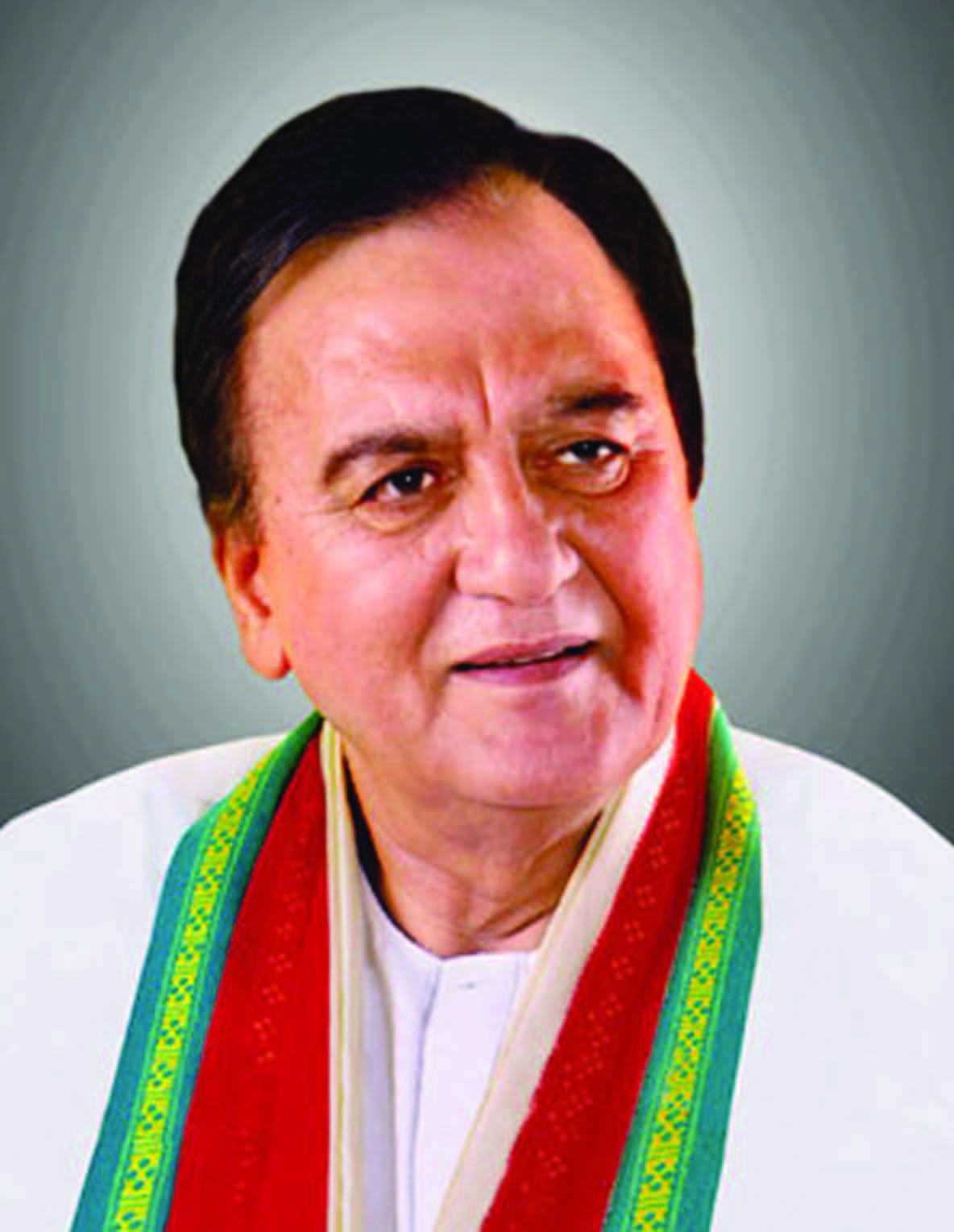
  • Sunil Dutt(1929-2005)

    Sunil Dutt(1929-2005)

    Founding Patron of Nargis Dutt Memorial Foundation
    Afilm artist, director and producer, agriculturist, political and social worker, and fighter against religious fanaticism, Sunil Dutt was born in 1929 in Jhelum (now in Pakistan). Mr. Dutt acted in nearly 84 movies, produced eight movies and directed six movies and won Filmfare Best Actor award twice for the films, Mujhe Jeene Do and Khandan. Important international film landmarks include entry of Mujhe Jeene Do at Cannes Film Festival, 1964; Yaadein at Frankfurt International Film Festival, 1967 (Won Grand Prix Award); and Reshma Aur Shera at Tashkent Film Festival and Berlin Film Festival, 1972. After serving as the Sheriff of Bombay, Mr. Dutt was elected to the eighth Lok Sabha in 1984, re-elected for a second term in 1989, and a third term in 1991.

    He organized and led Mahashanti Padyatra from Mumbai to Amritsar in 1987, traveling 2,000 kilometers with daughter Priya and 80 other individuals for peace and harmony in Punjab; undertook a peace march with 14 persons and Priya in 1988, from Nagasaki to Hiroshima (Japan) covering 500 Kilometers for world peace and nuclear disarmament. After the 1992-93 Hindu-Muslim riots he resigned as a Member of Parliament in protest aginst the riots. In 1999, he was elected to the 13th Lok Sabha. In May, 2004, he was once again elected to the 14th Lok Sabha and served as the union Minister for Youth Affairs & Sports. In 1958, he married Nargis Dutt. They have three children, two daughters, and a son, the actor Sanjay Dutt. Mr. Dutt was a Patron of the Spastic Society of India. Following his wife’s death, he made a film, Dard Ka Rishta on cancer and its cure and donated its profits to Tata Memorial Cancer Hospital and offered the film free to Bangladesh for raising funds for cancer treatment; brought drugs from U.S.A for India’s first bone marrow transplant operation at Tata Memorial Cancer Hospital; established the Nargis Dutt Memorial Foundation in U.S.A., U.K., Canada, Germany and Holland and with the help of this fund, supplied medical equipments worth 5 million U.S. dollars to different charitable hospitals in the country for treatment of cancer.

    He received numerous awards and honors including the Padma Shri in 1968; ” The Shiromani Award ” by the Institute of Sikh Studies; ” The Order of the Peoples ” National Award by the All India Artiste Association, Simla, 1984 for work in the field of cancer treatment and aid for physically handicapped; ‘ The Man Of The Year ‘ Award for 1987 for contribution to the field of cinema, social arts and politics by Marine Lines Jaycees, Mumbai; ” The Khan Abdul Gaffar Khan Award ” for International Peace & Communal Harmony, Unity and National Integration., by Alaami Urdu Conference, New Delhi, 1988; ” The National Integration Award ” from Priyadarshini Academy, Mumbai in July 1989 for outstanding contribution to the cause of National Integration; ” The Maulana Abul Kamal Azad Award ” for National Integration and Communal Harmony in 1997; ” The Great Son of the Soil Award ” by All India Conference of Intellectuals, 1997; ” The Rajiv Ganghi National Sadbhavana Award ” in 1998, by the late Dr. Shankar Dayal Sharma, former President of India for promoting peace, harmony, fought against violence and terrorism; and ” The Lifetime Achievement Award ” by Screen Videocon for services to the Film Industry, 1999. And, after Sunil Dutt died in 2005, the illustrious daughter of illustrious parents, Priya Dutt, the present Member of Parliament took upon herself to carry forward her late mother’s vision. She has given to the Foundation all her attention and time, with the result that the Foundation could achieve splendid goals. Here are some of her thoughts.

  • Gurdwara Plainview organizes a fabulous Punjabi Mela

    Gurdwara Plainview organizes a fabulous Punjabi Mela

    MALKIT SINGH OF TOOTAK TOOTAK TOOTIYAN FAME ENTHRALLS


    img45

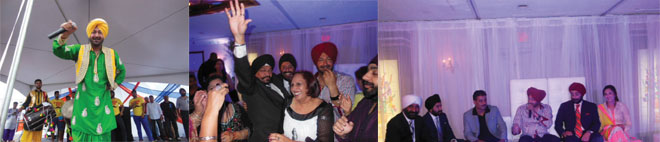
    LONG ISLAND, NY (TIP): Long Island located Gurdwara Plainview organized a fabulous Punjabi Mela (carnival) on September 1 at Eisenhower Park. Mela Coordinator Sonia Bawa told The Indian Panorama that the purpose of the mela was to “depict our precious culture & heritage, and also to increase awareness regarding Sikh community’s presence. We had many ethnic booths such as turban tying, and exhibitions that defined our identity as Sikhs”. There were variety of authentic delicious food stalls. All were donated by many local restaurants. Punjabi mela also had various vendors successfully promoting their businesses. There was a large variety of entertainment for kids & adults.


    img46

    Kids enjoyed various carnival games and rides, enjoyed cotton candy too. Many prestigious Universities such as NYU & Stonybrook participated as also other Bhangra teams such as Virsa & Bollywood Hicksville performed. DJ Kucha added gusto with his energetic Punjabi music. Icing on the cake was King of Bhangra Malkit Singh’s rocking performance on his famous songs. Raffle draw was another big attraction. It offered a number of prizes such as IPads, IPhones, flat screen TVs, cash prizes, cruise tickets, tickets to India’s Golden Temple &, the best of the prizes-a Honda Accord 2013. The Punjabi Mela will long be remembered by the thousands who visited the mela on a very pleasant first day of the month of September. Incidentally, it was an auspicious and historic day, being the day when Shri Guru Granth Sahib was installed as the Guru of the Sikhs who are around 25 million the world over.

  • Nikki Haley wants Indian companies to open shops in S Carolina

    Nikki Haley wants Indian companies to open shops in S Carolina

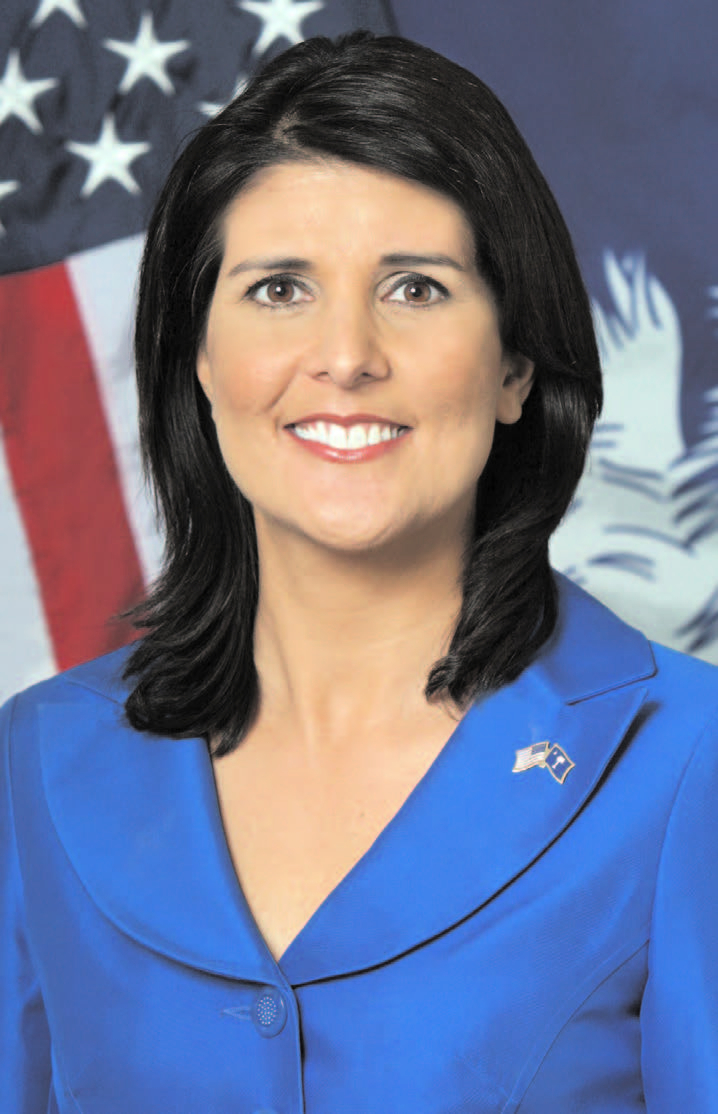
    CHARLOTTE (TIP): South Carolina Governor Nikki Haley said she is keen on working with Indian private sector to help set up manufacturing facilities in her home state. She said India has made great strides in manufacturing and technology and would welcome Indian industrialists to set up facilities that would help create more jobs. “I am in touch with Indian Ambassador to the US Nirupama Rao in this connection and hopefully very soon something would turn out,” she said. Haley encouraged fellow Indian- Americans to run for elected office in large numbers to make a better America and give it back to the nation that helped shaped their destiny. She is seeking another term as governor and has announced that she is contesting again.

    The contribution of Indian-Americans in the field of medicine, law, academics, science and technology was phenomenal and now its time for them to serve the nation entering politics, she added. “We have to see how much our parents have sacrificed in this country and how much our parents went through in the formative years. Its only our generation could push beyond what they did and make our voices heard as well in the right corridors of power.” Answering questions on the large number of Indian-Americans in fray in different states at different levels including three Indian-Americans running for office in Nassau County near New York City, Haley said the contribution of Indian- Americans She was born Nimrata Nikki Randhawa in Bamberg, South Carolina on Jan 20, 1972, to an Indian Sikh family – Dr. Ajit Singh Randhawa and Raj Kaur Randhawa who immigrated from Amritsar district in Punjab.

    Haley is the first woman to serve as Governor of South Carolina. At the age of 41, Haley is the youngest current governor in the United States. She is one of two sitting Indian- American governors in the US, the other being fellow Republican Bobby Jindal of Louisiana. She is also the third person of color elected as governor of a Southern state, after Viriginia’s L. Douglas Wilder and Louisiana’s Jindal She was later joined on Monday by Wisconsin Governor Scott Walker, Louisiana Governor Bobby Jindal and Texas Gov. Rick Perry in her re-election campaign at Greenville, South Carolina. Nikki Haley rose from obscurity after winning a crowded Republican primary in 2010. She won by less than 5 percent of the vote in the Nov 2010 general election Political experts expect her to face the same Democrat she defeated in 2010. She is also one of the national Republican Party’s most promising rising stars. She is smart and serious about policy and a charismatic campaigner who dresses stylishly and can deliver barbed attacks with a smile.

  • The Good Samaritans

    The Good Samaritans

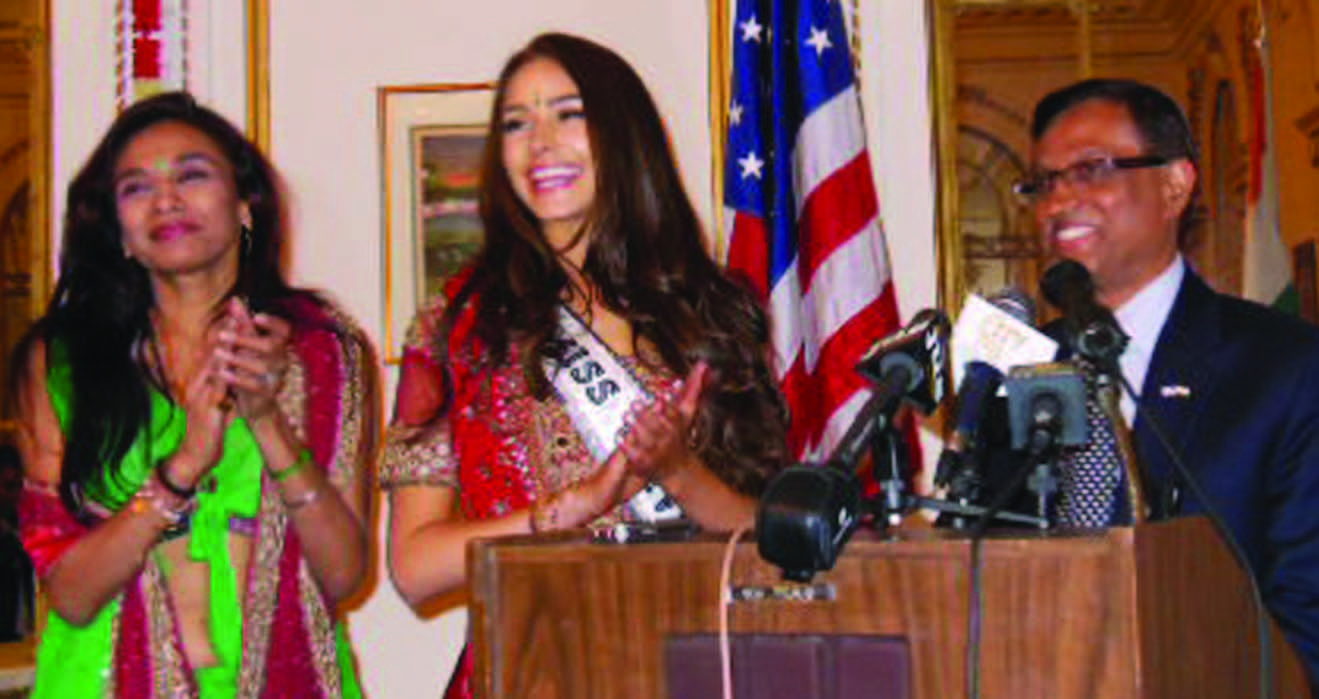
    NEW YORK, NY (TIP): Consul General of India, Ambassador Dnyaneshwar M. Mulay announced, August 21, the Sanjana Jon Tour to India with Olivia Culpo, the current Miss Universe from the 27th of September to the 6th of October. Mr. Mulay emphasized on the importance of cultural ambassadors and cultural tours to build closer ties between the two countries and globally The tour will be to the capital New Delhi, Mumbai, Agra and several key cities in India to promote and propagate “Celebrate the Girl Child”, Women Empowerment and AIDS Awareness. Actress Manisha Koirala joined and supported the initiative.

    The focus would be to eradicate female feticide especially in states like Punjab, Haryana, Rajasthan where the incidence is very high. The awareness tour initiated by Sanjana Jon in 2004 with the then Miss Universe Jennifer Hawkins has grown monumentally as an amazing positive movement and currently is the 6th Sanjana Jon Tour to India with Miss Universe for charity. The Tour has been supported by Salman Khan to highlight the different causes and several other celebrities like Sohail Khan, Sajid- Wajid Khan, Suhasini-ManiRatnam, Venkatesh, Padmabhushan Padmashri Dr KJ Yesudas, Padmashri Shobana, Usha Uthup, to name a few.

    “This time the tour will effectively reach out to the masses and try to bring more creative constructive support on the whole by creating “Community of Love n Light” a movement to ‘Share n Care’,” said Sanjana. Sanjana Jon started her career working with her brother Anand Jon in New York and they created a jewelry line together which was highly appreciated by Iman, David Bowie, Barbara Hershey while supporting AMFAR. Then they worked on the mens collection which was highlighted by Bruce Springsteen, Backstreet Boys, Prince, Collective Soul, Matchbox 20 to name a few. Her acclaimed debut was at Cannes for the Film Festival was supported by Prince Albert of Monaco, Princess Sorayya, Princess Sara Al Saud, Princess Olivia de Borbon and more. This led to the New York Fashion Week debut and Vancouver Fashion Week where she won International Rising Star award. Fashion with heart has been propagated by her where at every show or event she supports a charity or cause.

    Sanjana Jon has been a socially motivated person since her school and college days with her brother Anand Jon used to provide food and clothing to the underprivileged kids and read for the blind students. A special sanctuary was set for more than a 100 tigers in Florida and special campaign was organized with Anand Jon & Michelle Rodriegez to save tigers and animals globally. Paws for style where celebs walked with their pets was again highlighted and supported by Sanjana and Anand Jon to create love for animals. She has been creating awareness about various issues such as AIDS Awareness and HIV testing , Save the Girl Child ,Human and Animal Rights by involving celebrities like Bollywood stars, more than 10 Miss Universe over the years. She tied up with United Nations and held a press conference in the New York headquarters. In India, she worked with CARE International in hopes of a united front to combat the increasing pandemic of AIDS. Fashion to Sanjana is not the end but the means to the end which is to make the world a better place filled with love and light.

    The Sanjana Jon AIDS Awareness Tour toured most major Indian cities. She has also organized events to fight for Truth and Justice against racism with various models and celebrities and initiated several promotional campaigns in NY and LA against racism. She organized protests against racism in Bombay and Delhi and put together a show for Save the Girl Child against female infanticide with 16 celebrity siblings including Salman Khan, Sohail Khan, Sushmita Sen, Riya and Raima Sen, Sajid and Wajid Khan. Recently, she organized a Sanjana Jon Creative Tihar show and project in Tihar with inmates- for the inmates, by the inmates and of the inmates and tried to create a constructive creative training program to make the inmates a more resourceful progressive part of the community. Currently working on Pride of India Show by Sanjana Jon an attempt to break the Guinness Book of Work Records with more than 500 models in a show also promoting and highlighting traditional and cultural wear of every state in India and with celebrities representing the pride of every state and highlighting and propagating the Celebration of the Girl Child and in support of Global Human Rights. Winner of innumerable awards including Karamveer Puraskar, Paramveer Award, Indira Gandhi Award, Rajiv Gandhi Excellence awards to name a few, Sanjana has miles to go and not sleep.

  • Sukhbir Singh Badal Cancels Canada Trip For Fear Of Litigation

    Sukhbir Singh Badal Cancels Canada Trip For Fear Of Litigation

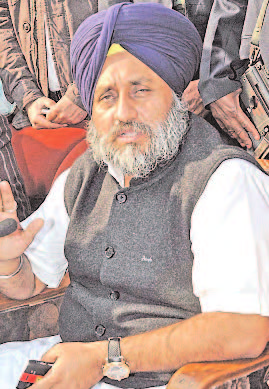
    TORONTO, CANADA (TIP): Punjab deputy chief minister Sukhbir Singh Badal cancelled his planned 10-day visit to Canada on Thursday, August 30 after the Canadian government said that they will not offer any immunity to him against any civil suit that may be filed against him there. They have also allegedly refused to provide him security during the trip. Sukhbir was scheduled to tour Canada to hold meetings with Canadian officials and business leaders from September 13 to 22. Holding Sukhbir and Punjab police chief Sumedh Singh Saini responsible for “war crimes and crimes against humanity”, American Sikhs groups through an NGO Canadian Sikh Coalition had tried to file a case against Sukhbir in a Canadian court. A confidential note sent on August 6 by the ministry of external affairs to the Punjab government, of which TOI has a copy, had warned Sukhbir to not go ahead with his scheduled visit. “MEA’s assessment is that the proposed visit is not without significant risks to dignity and legal standing of the deputy CM.

    The Canadian government has also refused to provide any assessment of legal risks that Sukhbir may be exposed to if he visits Canada,” the note by MEA joint secretary Vikram K Doraiswami said. The MEA admitted to having received inputs in the past of plans by a radical group Sikhs For Justice (SFJ) to file a criminal case against deputy CM if he were to visit Canada in the note. It said that it was unclear if there is immunity against criminal suit against Badal. Gurpatwant Singh Pannun, who practices human rights law in the United States says, “We are seeking the prosecution and arrest warrants of Badal under the Criminal Code of Canada (R.S.C., 1985, c. C-46) (Section 269.1) which provides that “every official, or every person acting at the instigation of or with the consent or acquiescence of an official, who inflicts torture on any other person is guilty of an indictable offence”. The SFJ which recently opened a branch in Canada had filed a similar case against Punjab chief minister Prakash Singh Badal last year during his visit to Milwaukee in the US, forcing him to cancel his planned visit to the US in June.

    The note was sent to Punjab chief secretary Rakesh Singh and additional director general of police of law and security Dinkar Gupta and also said that the Canadian government has refused to provide security to Sukhbir. “The Royal Canadian Mounted Police will provide security cover to a visiting dignitary only if he or she is an international protectee and is so recognized by the government of Canada…It is therefore likely that security may not be afforded to our visitors,” the note said citing the Canadian government’s reply. The MEA note went on to say that the Indian high commissioner in Canada has suggested that such an advance visit may not be necessary. “It is distinctly unlikely that a visit to the Canadian Prime Minister will materialize,” the letter said. Sukhbir hit back at the Canadian government, calling their decision “unfortunate”. “Whenever their heads of states visit we provide them full security. I am also heading a state. But it’s unfortunate that they have refused to give me security during this visit, which now stands cancelled,” he said. P

  • Pakistan Gun-Toting Man Arrested Alive After Six-Hour Ordeal

    Pakistan Gun-Toting Man Arrested Alive After Six-Hour Ordeal

    ISLAMABAD (TIP): A gun-toting man brought the Pakistani capital to a standstill for six hours on August 15 after he started firing near parliament, with the drama ending shortly before midnight when police arrested him. Sikandar Hayat, who was carrying two locally made automatic weapons, was firing in the air at short intervals after parking his black Toyota Corolla car at about 5 pm at Jinnah Avenue near parliament.

    He had his wife and two children with him, using them as human shield against any police action. Zamurd Khan of Pakistan People’s Party went to the man as a sympathiser but suddenly jumped at him but could not overpower him. However, police commandoes already in position nearby opened fire and shot him in the leg. He first raised his arms and then fell down and was arrested. His wife and two children were safely released, as the high drama ended after about six hours. The man, who belongs to Hafizabad area of Punjab province, made several demands, including the imposition of Shariah or Islamic law and removal of the government before his arrest.

    He said he should be given safe passage to leave the area. He was also heard saying that he wanted to negotiate with the Prime Minister. Interior Minister Chaudhry Nisar Ali Khan earlier asked police to try to capture the man alive without harming his wife and children. The media quoted police as saying that the man had a history of drug and alcohol abuse and was not mentally sound.

    Some reports said he was violent to his wife and children. Analysts said the incident raised serious questions about security in the heart of Islamabad. Noting that the man was engaged in a standoff with police less than a kilometre from key buildings like the presidency and parliament, they questioned how the man had been able to enter Islamabad’s “Red Zone” with weapons. The incident also raised serious question about the PML-N government to handle such situations, analysts said.

  • Pakistan Monsoon Flood Death Toll Rises To 96

    Pakistan Monsoon Flood Death Toll Rises To 96

    ISLAMABAD (TIP): Floods triggered by monsoon rains have killed 96 people across Pakistan in the past two weeks and affected nearly 90,000 others, officials said on August 15. “Up to 96 people have been killed so far and 99 others have been injured during the monsoon rains and floods so far,” an official in the National Disaster Management Authority (NDMA), told AFP. “A population of 89,439 have been affected and 2372 houses were destroyed. Other 1909 houses were partially damaged by the rains and floods,” Rima Zuberi, a spokeswoman of NDMA, said.

    Officials in the most populous province of Punjab, which has been hit hard this week by particularly heavy rains, said that they were still collecting damage reports from different districts. Pakistan has suffered monsoon floods for the last three years and been criticised for not doing more to mitigate against the dangers posed by seasonal rains washing away homes and farmland.

    In 2010, the worst floods in the country’s history killed almost 1,800 people and affected 21 million. Streets in all major cities including Karachi, Lahore and Islamabad suffered intermittent flooding due to downpours over the last two weeks, damaging roads, buildings and houses.

  • INDIA CELEBRATES 66TH ANNIVERSARY OF INDEPENDENCE

    INDIA CELEBRATES 66TH ANNIVERSARY OF INDEPENDENCE

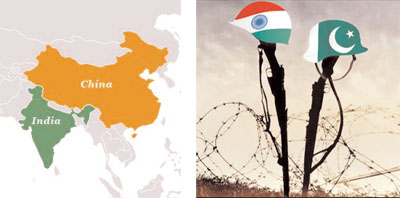
    Independent India is 66 years old today, as is Pakistan. Both countries got their Independence from British rule on August 14/15, 1947. Pakistan celebrates August 14 as its Independence Day. Mohammed Ali Jinnah was Pakistan’s first Governor- General and the main driving force for the formation of that country. Jawaharlal Nehru was India’s first Prime Minister but Mahatma Gandhi is considered the father of the nation.

    Both Jinnah and Gandhi died soon after their countries’ independence, but Nehru remained to guide India. In Pakistan, an elected government has recently given way to another democratically-elected, an unprecedented devolution for Pakistan, bedeviled as it has been with coups and long bouts of military rule. Indeed, a disastrous army dictatorship, that of the bumbling General Yahya Khan, led to a humiliating defeat at the hands of India, the break-up of Pakistan and the creation of Bangladesh.

    Fortunately, India has not broken up, though the doomsayers predicted that it would, since it was much more diverse than Pakistan, with more languages, communities and faiths that threatened to pull it apart. Pakistan imagined that religion was the glue that would bind it together. It was wrong. India’s democracy proved to be a much stronger binding force than religion. First, there was the revolt of the Nagas in the northeast who wanted an independent Nagaland.

    Despite the continuing unrest in the region, many former rebels have become elected leaders. Similarly, in Tamil Nadu, in the south, there was a powerful separatist movement, the demands of which were much more radical than those of the Bengalis in East Pakistan. Yet, the Tamil separatists moderated their demands once they were elected to power – and got them – whereas East Pakistan was forced to rise up in revolt when it was denied its representative rights.

    Democracy has kept India united; the lack of it broke up Pakistan. India has, of course, had other serious divisive threats, mainly in Punjab and the State of Jammu and Kashmir. In Punjab, Indira Gandhi made a fatal error by sending in troops into Amritsar’s Golden Temple, the holiest shrine of the Sikhs. Her advisers told her that the army would clear the Sikh militants, who were holed up in the shrine, in no time at all with little loss of life.

    And she would be seen as upholding the unity of the country against terrorists. Her advisers were grievously wrong. It took the army two days and nights to defeat the heavily-armed and well-trained terrorists. Hundreds of Sikh militants, soldiers and innocent pilgrims (who were caught in the crossfire) were killed in the fighting (the exact toll has never been released by the Indian authorities). Indira Gandhi paid for the blunder with her life, when two of her Sikh bodyguards gunned her down in her garden.

    Eventually, the traumatized Sikh community returned to the mainstream, the election of a Sikh, the gentle and upright Dr Manmohan Singh, as Prime Minister being symbolic of the change. Again, democracy had provided the healing touch and rescued India. Meanwhile, Kashmir had also gone up in flames, thanks partly due to a rigged election and corrupt misgovernance. Kashmir remains one of India’s major unresolved problems and the main sticking point in better ties between India and Pakistan.

    So, is India’s glass half full, or half empty? The empty part relates to insufficient progress in two main areas: Education and health. India’s literacy rate is still only a little over 70 per cent, which means that over 300 million Indians, mostly girls, cannot read or write. And the expectancy of life – the surest indicator of health – is still less than 70 years. Countries like China, Indonesia and even Sri Lanka, which were behind India in these social parameters six decades ago, have done better than India.

    Where the glass is half full is in the rapid economic growth India has made in the past two decades, next only to China’s, creating a middle class of around 300 million Indians. India has become a giant in the information and technology (IT) areas and a major base for outsourcing jobs and skills for major western multinational companies. Indian companies like the Tatas and Birlas have also successfully ventured abroad. A quarter century ago, India did not figure among the nations that mattered in the world.

    It now matters and Indians can justifiably be proud of that. Major challenges remain, but they can hold their heads up high, in India and abroad. The same, sadly, cannot be said for Pakistan. However, with a stable democratic government in power and the army in the background, it may be about to finally turn the corner. On August 15, 1947, Jawaharlal Nehru made perhaps his most eloquent speech. He spoke about his nation stepping out “from the old to the new” and of India’s “tryst with destiny”. That tryst still needs to be fulfilled.

  • INDIA’S HIGHS AND THE LOWS

    INDIA’S HIGHS AND THE LOWS

    The transition of India from a British colony to a sovereign, secular, and democratic nation was indeed historical. It was a long journey of around two decades that started with the conceptualisation of the dream in 1930 to its actual realization in 1950. A look into the journey that led to the birth of Indian Republic will make our celebrations more meaningful.

    Lahore Session of the Indian National Congress The seeds of a republican nation were sowed at the Lahore session of the Indian National Congress at the midnight of 31st December 1929. The session was held under the presidency of Pt. Jawarhar Lal Nehru. Those present in the meeting took a pledge to mark January 26 as “Independence Day” in order to march towards realizing the dream of complete independence from the British. The Lahore Session paved way to the Civil Disobedience movement.

    It was decided that January 26, 1930 would be observed as the Purna Swaraj (complete Independence) Day. Many Indian political parties and Indian revolutionaries from all over the country united to observe the day with honour and pride.

    Indian Constituent Assembly Meetings
    The Indian Constituent Assembly, which was constituted as a result of the negotiations between the Indian leaders and members of the British Cabinet Mission, had its first meeting on December 9, 1946.The Objective of the Assembly was to give India a constitution, which would serve a lasting purpose and hence appointed a number of committees to thoroughly research the various aspects of the proposed constitution. The recommendations were discussed, debated and revised many times before the Indian Constitution was finalized and officially adopted three years later on November 26, 1949.

    Constitution came into force
    Though India became a free nation on August 15, 1947, it enjoyed the true spirit of Independence on January 26, 1950 when the Constitution of India finally came into force. The Constitution gave the citizens of India the power to govern themselves by choosing their own government. Dr. Rajendra Prasad, took oath as the first President of India at the Durbar Hall in the Government House and this was followed by the Presidential drive along a five-mile route to the Irwin Stadium, where he unfurled the National Flag.

    Ever since the historic day, January 26 is celebrated with festivities and patriotic fervor all around the country. The day owes its importance to the constitution of India that was adopted on this day. On this Republic Day, read what the great Constitution of India, that propounds liberal democracy, has in its store. Let’s also feel proud in pronouncing what the Preamble to our Constitution (External website that opens in a new window) says.

    1971 Indo Pak War As in the 1965 Indo-Pak War, the main battles in 1971 between armoured formations was relegated to Chamb and Shakargarh sectors – located in the Western Theatre. Sporadic tank battles took place in the East Theatre, but these were one-sided battles weighed heavily in India’s favour. No action had taken place in the Punjab sector, but the South-Western sector in Rajasthan did see much activity. An offensive by the Pakistanis was blunted here solely on the use of air power.

    The Indian Army had two armoured regiments and three independent armoured squadrons supporting Lieutenant General Jagjit Singh Aurora’s Eastern Command’s thrust into East Pakistan. India had one T-55 tank regiment in the northern sector supporting the XXXIII Corps’ offensive in the Hilli-Bogra area, with one PT-76 regiment in the western area supporting the II Corps’ thrust.

    Finally three independent armoured squadrons (one PT-76, one AMX- 13 and one Ferret armoured car) were supporting the IV Corps’ offensive from the east. Opposing them were a Pakistani armoured force of a regiment of M-24 Chafees in the Bogra area, countering India’s T-55 regiment and two squadrons of Chafeee tanks supporting the west and Dacca sectors.

    When full scale hostilities began, half the tanks were either knocked out or captured by the time the Indian troops were on the outskirts of Dacca. After which the rest of the tanks were finally accounted for, as part of the surrender deal. In it’s offensive, Indian losses were heavy. At least thirty PT-76 tanks were destroyed or damaged, another four T-55s had their tracks blown up over mines.

    The high loss rate among the PT-76 tanks was due to the fact that this type of tank had very thin armour plating to help assist its amphibious capabilities and was an easy target for mines. However all, but eleven, of the PT-76s were repaired after the war. The AMX-13s did not see much action and the Ferrets had no battle casualties. One very interesting situation, had the tank squadron of the 7th Light Cavalry recovering one of their own tanks lost to the Pakistan Army during the 1965 War, which was displayed at the East Bengal Regimental Center as a war trophy.

    The tank was then handed to the Army Ordnance Corps, which in turn handed it back to the East Bengal Regimental Center! The Battle of Basantar took place during the 1 Corps’ offensive in the Shakargarh Sector. India employed two armoured brigades to support its offensive by three infantry divisions and the Pakistani reaction was swift. On December 16th and 17th, when Indian infantry captured certain villages at the River Basantar, Pakistan sent in an armoured brigade.

    The 17 Poona Horse equipped with the Centurion tank, blunted the Pakistani armoured offensive. One particular action at Barapind saw one lone tank troop (three tanks) of the 17 Poona Horse – Indian Army take on an entire squadron of Pattons of the 13th Cavalry – Pakistan Army. When one of the tanks was hit & disabled and another tank’s gun was jammed, the troop commander, Captain V Malhotra gave the order for the last remaining tank to withdraw.

    But this tank led by Second Lieutenant Arun Khetarpal, stuck to its position and kept firing at the Pattons till the last moment when Second Lieutenant Khetarpal was hit and killed. These three tanks accounted for more than the ten tanks out of the squadron. So impressed were the Pakistanis with this action, that the Squadron Commander of Pakistan’s 13 Cavalry – Major Nissar came over to the Indian lines after the ceasefire to talk to the tank commanders who had blunted his offensive.

    At the end of which, 66 Pakistani tanks were claimed as destroyed. Indian casualties were about 23 tanks, however the efforts of the EME (Electrical & Mechanical Engineers) saw to that all, but 10 of the tanks, were back on the road again.

    Period of Liberalization
    The arrival of the East India Company in India caused a huge strain to the Indian economy and there was a twoway depletion of resources.The British would buy raw materials from India at cheaper rates and the finished goods were sold at higher than normal price in Indian markets. During this phase India’s share of world income declined from 22.3% in 1700 AD to 3.8% in 1952. Post Colonial Indian Economy: After India got independence from colonial rule in 1947, the process of rebuilding the economy started. For this various policies and schemes were formulated. First five year plan for the development of Indian economy came into implementation in 1952.

    These Five Year Plans, started by Indian government, focused on the needs of the Indian economy. If on one hand agriculture received the immediate attention on the other hand the industrial sector was developed at a fast pace to provide employment opportunities to the growing population and to keep pace with the developments in the world. Since then the Indian economy has come a long way.

    The Gross Domestic Product (GDP) at factor cost, which was 2.3 % in 1951-52 reached 6.5 in the financial year 2011-2012 Trade liberalization, financial liberalization, tax reforms and opening up to foreign investments were some of the important steps, which helped Indian economy to gain momentum. The Economic Liberalization introduced by Man Mohan Singh in 1991, then Finance Minister in the government of P V Narsimha Rao, proved to be the stepping-stone for Indian economic reform movements.

    To maintain its current status and to achieve the target GDP of 10% for financial year 2006-07, the Indian economy has to overcome many challenges. Challenges before Indian economy: Population explosion:The rising population is eating into the success of India. According to 2011 census of India, the population of India has crossed one billion and isgrowing at a rate of 2.11% approx. Such a vast population puts lots of stress on economic infrastructure of the nation.

    Thus India has to control its burgeoning population. Poverty:As per records of National Planning Commission, 36 crore people are living below the poverty line in India in 2012. Unemployment:The increasing population is pressing hard on economic resources as well as job opportunities. Indian government has started various schemes such as Jawahar Rozgar Yojna, and Self Employment Scheme for Educated Unemployed Youth (SEEUY). But these are proving to be a drop in an ocean. Rural Urban Divide:It is said that India lies in villages, even today when there is lots of talk going about migration to cities, 70% of the Indian population still lives in villages.

    There is a very stark difference in pace of rural and urban growth. Unless there isn’t a balanced development Indian economy cannot grow. These challenges can be overcome by the sustained and planned economic reforms. These include: Maintaining fiscal discipline Orientation of public expenditure towards sectors in which India is faring badly such as health and education. Introduction of reforms in labour laws to generate more employment opportunities for the growing population of India. Reorganization of agricultural sector, introduction of new technology, reducing agriculture’s dependence on monsoon by developing means of irrigation. Introduction of financial reforms including privatization of some public sector banks.

    Scams That Rocked India
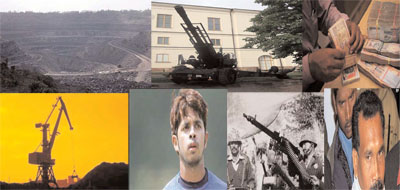
    Ever since India has achieved her freedom, she has also been known as a corrupted land. The extend of corruption has increased to such an extend that, any person joining political parties does have an intention of making easy and fast money within the shortest period of time. If all the amounts that have been disclosed, for every scam till date is pooled up, I guess , India is most richest country and the power and strength She holds could not be compared with any other.

    However, since people are getting more and more selforiented, when it comes to progress and wiping away poverty, nobody is least bothered. A few of the top scams that have taken place since the year 1947 is discussed here, just to bring to the notice of the public where we stand and how things are working. Let us get from the latest to the oldest.
    1. The Indian Coal Allocation Scam: This is one among the latest scams that has occurred concerning the Indian government’s allocation of the nation’s coal deposits to public sector entries and private companies. According to the CAG (Comptroller and Auditor General of India), the Indian Government was accused of allocating coal blocks, in an in-efficient manner during the period 2004-2009.

    The reason for this allegation was because, the Government had the authority to check on the allocation of coal blocks by a process of competitive bidding, but they failed to do so, resulting in lower payment by the public sector enterprises and the private firms. According to the CAG report, an amount of near to Rs. 185,591 crore (USD $ 35.08 billion) was lost to the government because of this improper screening in procedures, which might have happened due to bribery is what studies says. Whatever it may be, loosing such a huge amount by the Government is a fall from the Governments side.
    2. The 2G Spectrum Scam: This scam was one which involved the politicians and government officials equally. The scam involved in issuing frequency allocation licenses by the telephone companies in re-creating 2G subscriptions for cell phones. When valued by the Comptroller and Auditor General ( CAG ) of India about the money composed from the 2G licenses , the defeat for the exchequer was Rs. 176,369 crore ( USD $ 39.16 billion ). The issuing of licenses began in 2008; however it came to public attention when the Indian Income tax Department conducted an investigation on the political campaigner Niira Radia.

    The Supreme Court on February 2012 declared cancellation of all licenses issued in 2008 during the tenure of A. Raja, who was the minister of telecom then. There were about 122 licenses that were cancelled. The actual plan for awarding the licenses was on a first come first served policy. However, A. Raja manipulated the rules and instead pf the first who applied for the licenses, it was first who tipped Raja got the license. 3.

    Commonwealth Games Scam:
    This was a scam that was harshly criticized by several well-known social activists and politicians as billions of dollars were being spent on sporting event, although the fact that we have the leading concentration of poor people. Some of the other major problems that was being highlighted was grave corruption by the games organizing committee, delay in the erection of the main Games venues, and infrastructural compromise. Indian businessman Azim Premji called the Commonwealth games a “drain on the public funds” and also said that hosting such an expensive game event was not the priority for India, and India had other priorities to look into like education, public health and infrastructure.

    4. Satyam Scam:
    In the history of the corporate, Satyam Computer Services Scandal is biggest ever and the chairman, Ramalinga Raju confessed that the company’s accounts were falsified. For near to a decade, Raju kept the accounts details in the dark by pumping up revenues and earning up figures of Satyam. He confessed that , as per the balance sheet of 30th September 2008, the company had exaggerated figures for cash and bank balances of Rs. 5040 crore ( USD $ 1.12 billion ) as next to Rs. 5361 Crore ( USD $ 1.19 billion ) in the book thus acquiring an interest of Rs. 376 Crore , which was not existing.This scam was in tune of near to Rs. 14000 Crore.

    5. Bofors Scam:
    This scandal is also known as the hallmark of Indian Corruption. This was a most important corruption during the 1980`s where the then Prime Minister Rajiv Gandhi and quite a few others which also includes a powerful NRI family named the Hindujas were accused of receiving bribe from Bofors AB for engaging a proposal to supply India’s 155 mm field howitzer. The scale of the corruption was so worse that it led to the crush of Gandhi’s ruling in the Indian national Congress party.

    It was hypnotized that the level of the scandal was tuned to be about Rs. 400 million. The middle man who was associated with this scandal was an Italian businessman named Ottavio Quattrocchi and who also represented the petrochemicals firm, Snamprogetti. Quattrocchi was very intimate to the family and emerged as a influential broker in the 1980`s between big business and the Government of India. Despite the controversy, the Bofor gun was used extensively during the Kargil War with Pakistan and gave India ‘an edge’ over Pakistan according to battlefield comrades.

    6. The Fodder Scam:
    This scam involved the misappropriation of about Rs. 950 crore (USD $ 179.55 million) from the government treasury, of Bihar. The scheme involved the manufacture of ‘vast herds of invented stock’ for which food, medicines and animal husbandry equipment was apparently acquired. In this scam even the Chief Minister of Bihar, Laloo Prasad Yadav was included then which finally led to his resignation. The scam had its origins in small scale by some government employees by submitting false expense reports, which grew in magnitude and drew additional elements over a period of time which ultimately led to the forming of a mafia. This scam still continues to be exposed by the media due to the widespread links between tenured bureaucrats, elected politicians and businesspeople involved.

    7. The Hawala Scandal:
    This was an Indian political scandal, which involved payments allegedly acknowledged by politicians through four hawala brokers, mostly the Jain brothers. It was about $ 18 million bribery humiliation. In an arrest linked to the militants in Kashmir is what gave way to the raid of the hawala brokers and the scandal through them, which revealed large scale payments to national politicians.

    8. The IPL Scam:
    Cricket is a game where lot of commotions occur and there hare many hurdles to cross over and the IPL (Indian Premier League) is no better at it. The BCCI (Board of Control for Crocket in India) has found itself in the middle of many conflicts with the coming of IPL. The IPL had set forth many terms at many occasions, which were not accepted and had to be terminated. There were conflicts with the Cricket Club of India, with the England and Wales Cricket board, with Cricket Australia and many more. The IPL chairman Lalit Modi was suspended in 2010 for alleged act of individual transgression by the BCCI. There was also spot fixing among the players during the IPL in 2012.

    9. Harshad Mehta Scam:
    Mehta was a famous stockbroker of his time. He was well known for his high record breaking profits from the stock market and trading and later was involved in the scandal worth Rs. 5000 crore ( USD $ 945 million) in Bombay Stock Exchange. He had a great way in convincing the public that through the banking system he could finance his buying. Two small and little known banks helped him in this and he made a great fraudulent price hikes in the stock markets. By the time the scandal came to limelight, many banks were left blank and in fact Managers from two reputed banks committed suicide.

    10. Kinetic Finance Limited Scam:
    In this scam, various banks lost about Rs. 200 crore (USD $ 37.8 million). The promoters of kinetic finance limited borrowed about Rs. 145 crore from an association of banks led by SBI, and Bank of Baroda. After borrowing the money, they used it for other purposes of the Kinetic group and eventually the promoters resigned and the firm was renamed in another name. A special Investigation Audit was conducted and based on the report it was found that about five banks filed criminal cases against the promoters.

    11. Adarsh Housing Scam
    In this scam, land was allotted to the war widows of Kargil war and also for the retired personal of The continued on page 48 Defense Services. Over a period of 10 years, the top politicians and bureaucrats bend several rules and commit various acts of commission and omission to have the building in order and finally they got themselves allotted with flats at the premium locality at a much cheaper cost. This scam is noticeable as it took keen planning and almost 10 years to execute this kind of brutality to the poor and left alone in the defense.

    12. Citibank Fraud:
    This was a fraudulent done by the bank employee by promoting false promises to the customers. Shivraj Puri, the Relationship manager of Gurgaon branch had convinced his customers to invest in a fake scheme that gave high interests. He made forged circulars from SEBI. He opened joint accounts in several names and made customers deposit into those accounts and he invested in places of his interests. This was bought to lime light when customers started complaining about being asked to invest in a scheme that was not available to the bank.

    13. Madhu Koda Scandal:
    Madhu Koda is the ex-chief Minister of Jharkhad. He was bought to limelight by the IT department by charging for laundering money for about Rs. 4000 crore and other disproportionate income. Almost five currency counting machines were seized from his residence. The amount was used to purchase hotels, mines, and companies, in foreign countries like Thailand, Liberia, Dubai and many other places. With this kind of laundering and investments, he builds an empire, but bigger to the most successful businessmen within a short period of time.

    14. Barak Missile Scandal:
    This is a case of alleged defense corruption which was related to the purchase of Barak 1 Missile Systems by India from Israel. The contracts have been signed by the Indian government to procure seven Barak systems at a total cost of Rs. 199.50 million. This was done despite objections raised by several groups, including members of the team that had actually visited Israel to observe the performance of the missile.

    15. Kargil Coffin Scam:
    This is one of a kind of scam, where even the coffins for the soldiers who died in the Indo-Pak war, were bought for low quality and at higher price. The government had paid about $2500 per coffin, which was earlier purchased for $172 per coffin. And moreover the quality was very poor. This led to range among the public and led to the resignation of the defense minister.

    16. Mining Scam in India:
    This scam is related to the ore-rich states of India and has generated controversies in India which spans encroachment of forest areas, underpayment of government royalties, and conflict with tribal regarding land-rights.

    17. Sukh Ram Telecom Scam:
    Sukh Ram is a former union communication minister in Indian National Congress Government. He was the telecom Minister during the P.V. Narasimha Rao`s cabinet. He was caught with allegations regarding irregularities in awarding a telecom contract. The CBI seized around Rs. 3.6 crores from his residence. He has been imprisoned for the fraud that he has done.

    18. SNC Lavalian Scam:
    This is a financial scam related to the government with a Canadian company. A loss of about Rs. 374.50 crores, for the renovation and modernization of the hydroelectric power stations at Pallivasal, Sengulam, and Panniar (The PSP Project as it is called) at the Idduki district in Kerala.

    19. Belekeri Port Scam:
    This scam relates to about 3.5 million of sequester iron ore that was exported illegally from Belekeri Port in Karnataka. This scam is said to be worth about Rs. 60,000 crore (USD $ 12 billion). The iron ore was illegally mined after giving a minimal pay to the government.

    20. Telgi Scandal: The Telgi scandal is after the great Abdul Karim Telgi who issued counterfeit stamp papers. Had appointed about 300 people as agents to sell these counterfeit stamp papers to bulk purchasers like banks, insurance companies, and share broking firms. The size of the scam is about 20,000 crores (USD $3.78 billion). In this scam, many high ranked governmental officials were also recorded.

  • MOVERS & SHAKERS

    MOVERS & SHAKERS

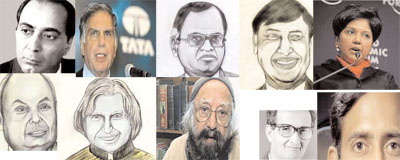
    Famous Indian nuclear physicist Homi Jehangir Bhabha was born on 30 October 1909 in Mumbai. Bhabha played a key role in the development of the Indian atomic energy program. Widely referred to as the father of India’s nuclear weapons program, Bhabha had his education at the Elphinstone College and the Royal Institute of Science before obtaining his doctorate from the University of Cambridge in 1934.

    He was influenced greatly by the legendary Paul Dirac. Bhabha was a research scientist at the Cavendish Laboratories at Cambridge. When he was stranded in India as a result of the Second World War, he set up the Cosmic Ray Research Unit at the Indian Institute of Science, Bangalore under Nobel Laureate C. V. Raman in 1939. Dr. Bhabha is credited with establishing the Tata Institute of Fundamental Research(TIFR) with the help of eminent industrialist J. R. D. Tata.

    After India won independence from the British, Bhabha established the Atomic Energy Commission of India in 1948. He represented India in various international forums including the United Nations and his tenure represented a high in terms of the progress of India’s atomic energy programme. The climax of this programme came on May 18, 1974 when India exploded a nuclear device at Pokhran, Rajasthan joining a select club of nations.

    Ratan Tata
    Ratan Tata is one of the most well-known and respected Indian businessman. He served as the Chairman of the Tata Group from 1991 till 2012. As a Mumbaibased conglomerate, he is also a member of the prominent Tata family of Indian industrialists and philanthropists. Ratan Tata was born on December 28, 1937 in Mumbai. When he was a child his parents separated and he was brought up by his grandmother Lady Navajbai.

    He went to Campion School in Bombay, Bishop Cotton School in Shimla and finished his schooling from Cathedral and John Connon School in Mumbai. He graduated with a degree in Architecture and Structural Engineering from Cornell University in 1962 and also did the Advanced Management Program from Harvard Business School in 1975. He is also a member of the Alpha Sigma Phi fraternity of Yale University, United States. In 1962, Ratan Tata began his career in the Tata group.

    At first he used to work on the shop floor of Tata Steel, shoveling limestone and handling blast furnace. In 1991, JRD Tata stepped down as the chairman of Tata Industries and named Ratan Tata as his successor. Under Ratan’s stewardship, Tata Tea attained Tetley, Tata motors attained Jaguar Land Rover and Tata Steel attained Corus. These triumphs turned Tata from a large India-centric company into a global business with 65% revenues from abroad. He also contributed in the development of Indica and Nano.

    Ratan Tata has also served in various organizations in India and abroad. He is a member of the Prime Minister’s Council on Trade and Industry and he is also on the board of governors of the East-West Center, which is the advisory board of RAND’s Center for Asia Pacific Policy. He also serves on the program board of the Bill & Melinda Gates Foundation’s India AIDS initiative. He was awarded the Padma Bhushan by the Government of India in January 2000.

    He serves on the boards of several leading organizations, both in the public as well as the private sector in India. He is a member of the International Investment Council set up by the President of South Africa and serves on the programme board of the Bill & Melinda Gates Foundation’s India AIDS initiative. Ratan Tata is credited for leading Tatas’ successful bid for Corus, an Anglo-Dutch steel and aluminum producer, which was acquired for an estimated £6.7 billion by Tata Sons.

    N.R. Narayanamurthy
    N.R. Narayana Murthy, the founder of Infosys Technologies is one of the most famous personalities in India’s I-T sector. Born on August 20, 1946, he obtained a degree in electrical engineering from the National Institute of Engineering under University of Mysore in 1967 and went on to do his Masters from IIT Kanpur in 1969. He joined Patni Computer Systems in Pune. While at Pune, he met his wife Sudha Murty.

    In 1981, he founded Infosys alongwith with six otherpeople. He served as president of the National Association of Software and Service Companies, India from 1992 to 1994. Murthy was the CEO of Infosys for twenty years, and was succeeded by Nandan Nilekani in March 2002. He functioned as the Executive Chairman of the Board and Chief Mentor from 2002 to 2006.

    Dhirubhai Ambani
    Dhirajlal Hirachand Ambani was born on 28 December 1932, at Chorwad, Junagadh in Gujarat, When he was 16 years old, he moved to Aden,Yemen. Initially, Dhirubhai worked as a dispatch clerk with A. Besse & Co. Married to Kokilaben. Dhirubhai also worked in Dubai for sometime. He returned to India and founded the Reliance Commercial Corporation with an initial capital of Rs 15000.

    Dhirubhai set up the business in partnership with Champaklal Damani from whom he parted ways in 1965. Dhirubhai started his first textile mill at Naroda, near Ahmedabad in 1966 and started the brand “Vimal”. Dhirubhai Ambani is credited with having started the equity cult in India.With the passage of time, Dhirubhai diversified into petrochemicals and sectors like telecommunications, information technology, energy, power, retail, textiles, infrastructure services, capital markets, and logistics.

    Lakshmi Nivas Mittal
    Lakshmi Nivas Mittal was born on June 15, 1950 in Sadulpur, Rajasthan, India and is presently the CEO & Chairman of Arcelor Mittal. Lakshmi Nivas Mittal was listed in the Forbes List of Billionaires in 2006 as the the richest Indian and the fifth richest man in the world with an estimated wealth around of $25.0 billion and is the richest man in the United Kingdom. Young Lakshmi Nivas Mittal spent his first years in Sadulpur, before his father moved to Kolkata. Lakshmi graduated from St. Xavier’s College, Calcutta. He founded Mittal Steel in 1976, which soon became a global steel producer with operations on 14 countries. His success mantra lies in the identification, acquisition and turnaround of many loss making steel companies all across the world.

    Dr. A.P.J. Abdul Kalam
    Dr. A.P.J. Abdul Kalam, former President of India, graduated in aeronautical engineering from the Madras Institute of Technology in 1958 and joined the Defense Research and Development Organization (DRDO). In 1962, Kalam joined the Indian Space Research Organization (ISRO). In 1982, he rejoined DRDO as the Chief Executive of Integrated Guided Missile Development Programme (IGMDP). Dr. Kalam is credited with the development and operationalization of India’s Agni and Prithvi missiles.

    He worked as the Scientific Adviser to the Defence Minister and Secretary, Department of Defence Research & Development from 1992 to 1999. During this period, the Pokhran-II nuclear tests were conducted. Dr. Kalam held the office of the Principal Scientific Advisor to the Government of India from November 1999 to November 2001. Dr. Kalam has received a host of awards both in India and abroad. He was awarded the Padma Bhushan in 1981, Padma Vibhushan 1990 and the Bharat Ratna in 1997.

    He is of the view that we should work wholeheartedly to make India a developed nation by 2020. Besides being a bachelor, Kalam is a strict disciplinarian, a complete vegetarian and teetotaler. Among the many firsts to his credit, he became India’s first President to undertake an undersea journey when he boarded the INS Sindhurakshak, a submarine, from Visakhapatnam. He also became the first president to undertake a sortie in a fighter aircraft, a Sukhoi-30 MKI.

    Khushwant Singh
    One of the most prominent novelists and journalists of India, Khushwant Singh was born on 2 February 1915 in Hadali, presently in Pakistan. He writes a weekly column, “With Malice towards One and All”, published in several leading newspapers all over the country. He graduated from Government College, Lahore before studying law at King’s College, London. He has been the editor of Yojana, The Illustrated Weekly of India, The National Herald and the Hindustan Times.

    He also served as a member of the Rajya Sabha. Though he was awarded the Padma Bhushan in 1974, he returned it in 1984 to protest the siege of the Golden Temple by the Indian Army. He was awarded the Padma Vibhushan in 2007. Some of his notable works include: The Sikhs; Train to Pakistan; The Sikhs Today; Ranjit Singh: The Maharajah of the Punjab; Delhi: A Novel; Sex, Scotch and Scholarship: Selected Writings; Not a Nice Man to Know: The Best of Khushwant Singh; Paradise and Other Stories; Death at My Doorstep; The Illustrated History of the Sikhs etc.

    Amartya Sen
    Nobel Prize winner Amartya Sen was born on 3 November 1933 in Santiniketan, West Bengal. Besides being a worldrenowned economist, Amartya Sen is also a philosopher. He served as a Master at the Trinity College at Cambridge University, the first Asian academic to head an Oxbridge college. Currently the Lamont University Professor at Harvard University, Amartya Sen traces his roots to an illustrious lineage. His father, Ashutosh Sen, taught chemistry at the Dhaka University.

    Amartya completed his high-school education from Dhaka in Bangladesh in 1941. After his family migrated to India in 1947, Sen studied at the Presidency College, Kolkata and at the Delhi School of Economics before moving over to the United Kingdom to complete his higher studies. He earned his doctorate from the Trinity College, Cambridge in 1959. He has taught at various reputed Universities including the University of Calcutta, Jadavpur University, Oxford, London School of Economics, Harvard and many others. His works helped to develop the theory of social choice.

    In 1981, he published his famous work Poverty and Famines: An Essay on Entitlement and Deprivation, where he showed that famine occurs not only due to shortage of food, but from inequalities in the mechanisms for distributing food. He had personally witnessed the Bengal famine of 1943. He has done valuable work in the field of development economics, which has had a tremendous influence on the formulation of the United Nations Development Programme’s Human Development Report.

    Sabeer Bhatia
    Sabeer Bhatia-co-founder of Hotmail, is one among select group of people who have made it big in America’s Silicon Valley. Born in Chandigarh, Sabeer Bhatia did his schooling from St. Joseph’s Boys’ High School, Bangalore. He graduated from Caltech and went to Stanford to pursue his MS in Electrical Engineering. Sabeer attended many lectures by famous like Steve Jobs and was determined to make it big. After completing his Masters, he joined Apple computers. He left Apple soon after.

    He teamed up with his partner to create a web-based e-mail system Microsoft bought Hotmail on December 30th, 1997, for a reported sum of $400M. After the success of Hotmail, Bhatia in April 1999, he started another venture, Arzoo Inc, which however had to be shut down. In 2006, Arzoo was relaunched. Bhatia has won many awards. Among the notable ones include the “Entrepreneur of the Year” awarded by the venture capital firm Draper Fisher Jurvetson in 1997, the “TR100” award, presented by MIT to 100 young innovators expected to have the greatest impact on technology in the next few years. Besides, he was named by TIME magazine as one of the “People to Watch” in International Business in 2002.

    Indra Nooyi
    Indra Nooyi is the president and chief executive officer of PepsiCo and is the highest-ranking Indian-born woman in corporate America. She helped to start PepsiCo’s fast-food chains in 1997. After a Bachelor’s degree from Madras Christian College and a Post Graduate Diploma in Management from the Indian Institute of Management Kolkata, she moved on to the Yale School of Management.

    She started her career with The Boston Consulting Group (BCG), moving on to companies like Motorola and Asea Brown Boveri.She serves on the board of directors of several organizations. In August 2006, she succeeded Steve Reinemund as chief executive officer of PepsiCo. She has been named the Most Powerful Woman in Business in 2006 by Fortune Magazine. Her name was included in the Wall Street Journal’s list of 50 women to watch in 2005.

    Kiran Bedi
    The first woman to join the coveted Indian Police Service (IPS) in 1972, Kiran Bedi was born on 9 June 1949 in Amritsar, Punjab. Recently appointed as Director General of India’s Bureau of Police Research and Development, Kiran Bedi has had an illustrious career, earning widespread adulation for her no-nonsense attitude and devotion to work. She served as Police Advisor in the United Nations peacekeeping department and was honored with the UN medal for outstanding service. She earned the nickname ‘Crane Bedi’ for towing away the then Indian PM Indira Gandhi’s car for parking violation.

    Kiran Bedi graduated in English before securing a Master’s degree in Political Science from Punjab University, Chandigarh. This gutsy police officer went on to secure an LL.B degree in 1988 from Delhi University and a Ph.D. from the Indian Institute of Technology, New Delhi, even while she was in service. She was good at sports too, having been an all- India and all-Asian tennis champion.

    She has served creditably in a host of appointments ranging from Deputy Inspector General of Police, Mizoram, Advisor to the Lieutanent Governor of Chandigarh, Director General of Narcotics Control Bureau and many others.

    Rakesh Sharma
    The first Indian to fly into space, Rakesh Sharma was born on January 13, 1949 in Patiala, Punjab. He was a squadron leader with the Indian Air Force, when he flew into space in 1984 as part of a joint programme between the Indian Space Research Organisation (ISRO) and the Soviet Intercosmos space program.

    He spent eight days in space on board the Salyut 7 space station. He joined two other Soviet cosmonauts aboard the Soyuz T- 11 spacecraft which blasted off on April 2, 1984. He was awarded the Hero of Soviet Union award on his return from space. The Government of India honoured him with the Ashok Chakra. He retired with the rank of Wing Commander. He joined the Hindustan Aeronautics Limited in 1987 and served as Chief Test Pilot in the HAL Nashik Division until 1992, before moving on to Bangalore to work as the Chief Test Pilot of HAL. He retired from test flying in 2001.

    Dr. Verghese Kurien
    The “father of the white revolution” in India, Dr. Verghese Kurien is acknowledged worldwide as the brain behind the success of the largest dairy development programme in the world by the name of Operation Flood. Also known as the “Milkman of India”, he was the chairman of the Gujarat Co-operative Milk Marketing Federation Ltd. (GCMMF) and his name became synonymous with the Amul brand. Born on November 26, 1921 in Kozhikode, Kerala, he graduated in Physics from Loyola College, Madras in 1940 and pursued a B.E.(Mechanical) course from the Madras University. He was instrumental in the success story of AMUL.

  • INDIA’S RELATIONS WITH NEIGHBOURING COUNTRIES

    INDIA’S RELATIONS WITH NEIGHBOURING COUNTRIES

    India has formal diplomatic relations with most nations; it is the world’s second most populous country, the world’s most-populous democracy and one of the fastest growing major economies. With the world’s seventh largest military expenditure, ninth largest economy by nominal rates and third largest by purchasing power parity, India is a regional power, a nascent great power and a potential superpower. India’s growing international influence gives it a prominent voice in global affairs.

    The Economist magazine argues, however, that underinvestment in diplomacy and a lack of strategic vision have minimised India’s influence in the world. India is a newly industrialised country, it has a long history of collaboration with several countries and is considered one of the leaders of the developing world along with China, Brazil, Russia and South Africa (the BRICS countries). India was one of the founding members of several international organisations, most notably the United Nations, the Asian Development Bank, G20 industrial nations and the founder of the Nonaligned movement.

    India has also played an important and influential role in other international organisations like East Asia Summit, World Trade Organisation, International Monetary Fund (IMF), G8+5 and IBSA Dialogue Forum. Regionally, India is a part of SAARC and BIMSTEC. India has taken part in several UN peacekeeping missions and in 2007, it was the secondlargest troop contributor to the United Nations. India is currently seeking a permanent seat in the UN Security Council, along with the G4 nations.

    Relations with PakistanDespite historical, cultural and ethnic links between them, relations between India and Pakistan have been plagued by years of mistrust and suspicion ever since the partition of India in 1947. The principal source of contention between India and its western neighbor has been the Kashmir conflict. After an invasion by Pashtun tribesmen and Pakistani paramilitary forces, the Hindu Maharaja of the Dogra Kingdom of Jammu and Kashmir, Hari Singh, and its Muslim Prime Minister, Sheikh Abdullah, signed an Instrument of Accession with New Delhi.

    The First Kashmir War started after the Indian Army entered Srinagar, the capital of the state, to secure the area from the invading forces. The war ended in December 1948 with the Line of Control dividing the erstwhile princely state into territories administered by Pakistan (northern and western areas) and India (southern, central and northeastern areas). Pakistan contested the legality of the Instrument of Accession since the Dogra Kingdom has signed a standstill agreement with it.

    The Indo-Pakistani War of 1965 started following the failure of Pakistan’s Operation Gibraltar, which was designed to infiltrate forces into Jammu and Kashmir to precipitate an insurgency against rule by India. The five-week war caused thousands of casualties on both sides. It ended in a United Nations (UN) mandated ceasefire and the subsequent issuance of the Tashkent Declaration. India and Pakistan went to war again in 1971, this time the conflict being over East Pakistan.

    The large-scale atrocities committed there by the Pakistan army led to millions of Bengali refugees pouring over into India. India, along with the Mukti Bahini, defeated Pakistan and the Pakistani forces surrendered on the eastern front. The war resulted in the creation of Bangladesh. In 1998, India carried out the Pokhran-II nuclear tests which was followed by Pakistan’s Chagai-I tests. Following the Lahore Declaration in February 1999, relations briefly improved. A few months later however,Pakistani paramilitary forces and Pakistani Army, infiltrated in large numbers into the Kargil district of Indian Kashmir.

    This initiated the Kargil conflict after India moved in thousands of troops to successfully flush out the infiltrators. Although the conflict did not result in a full-scale war between India and Pakistan, relations between the two reached all-time low which worsened even further following the involvement of Pakistan-based terrorists in the hijacking of the Indian Airlines IC814 plane in December 1999. Attempts to normalise relations, such as the Agra summit held in July 2001, failed.

    An attack on the Indian Parliament in December 2001, which was blamed on Pakistan, which had condemned the attack[105] caused a military standoff between the two countries which lasted for nearly a year raising fears of a nuclear conflict. However, a peace process, initiated in 2003, led to improved relations in the following years. Since the initiation of the peace process, several confidence-buildingmeasures (CBMs) between India and Pakistan have taken shape. The Samjhauta Express and Delhi–Lahore Bus service are two of these successful measures which have played a crucial role in expanding people-to-people contact between the two countries.

    [106] The initiation of Srinagar–Muzaffarabad Bus service in 2005 and opening of a historic trade route across the Line of Control in 2008 further reflects increasing eagerness between the two sides to improve relations. Although bilateral trade between India and Pakistan was a modest US$1.7 billion in March 2007, it is expected to cross US$10 billion by 2010. After the Kashmir earthquake in 2005, India sent aid to affected areas in Pakistani Kashmir & Punjab as well as Indian Kashmir.

    The 2008 Mumbai attacks seriously undermined the relations between the two countries. India alleged Pakistan of harboring militants on their soil, while Pakistan vehemently denies such claims. Relations are currently hampered since India has sent a list of 40 alleged fugitive in various terror strikes to Pakistan, expecting them to be handed over to India. Pakistan, on the other hand, has declared that it has no intentions whatsoever of carrying out their extradition. The August 2013 attack by the Pak army on the LoC killed five Indian army men,which further strained the relations between the two nations.

    China Despite lingering suspicions remaining from the 1962 Sino-Indian War and continuing boundary disputes over Aksai Chin and Arunachal Pradesh, Sino-Indian relations have improved gradually since 1988. Both countries have sought to reduce tensions along the frontier, expand trade and cultural ties, and normalise relations. A series of high-level visits between the two nations have helped improve relations. In December 1996, PRC President Jiang Zemin visited India during a tour of South Asia.

    While in New Delhi, he signed with the Indian Prime Minister a series of confidence-building measures for the disputed borders. Sino-Indian relations suffered a brief setback in May 1998 when the Indian Defence minister justified the country’s nuclear tests by citing potential threats from the PRC. However, in June 1999, during the Kargil crisis, then-External Affairs Minister Jaswant Singh visited Beijing and stated that India did not consider China a threat. By 2001, relations between India and the PRC were on the mend, and the two sides handled the move from Tibet to India of the 17th Karmapa in January 2000 with delicacy and tact.

    In 2003, India formally recognised Tibet as a part of China, and China recognised Sikkim as a formal part of India in 2004. Since 2004, the economic rise of both China and India has also helped forge closer relations between the two. Sino-Indian trade reached US$36 billion in 2007, making China the single largest trading partner of India. The increasing economic reliance between India and China has also bought the two nations closer politically, with both India and China eager to resolve their boundary dispute.

    They have also collaborated on several issues ranging from WTO’s Doha round in 2008 to regional free trade agreement. Similar to Indo-US nuclear deal, India and China have also agreed to cooperate in the field of civilian nuclear energy. However, China’s economic interests have clashed with those of India. Both the countries are the largest Asian investors in Africa and have competed for control over its large natural resources. India and China agreed to take bilateral trade up to US$100 billion on a recent visit by Wen Jiabao to India.

  • Roads In Punjab Most Fatal In India

    Roads In Punjab Most Fatal In India

    NEW DELHI (TIP): Chances of getting killed in a road accident is the highest in Amritsar and in the country’s Mercedes capital Ludhiana. Latest data on road fatalities shows that at least six people died in every 10 road crashes in these two cities in 2012 against only three in Delhi, which recorded maximum fatalities in 2012.

    Though Mumbai recorded the highest number of accidents among 50 millionplus cities, the fatality rate was only 2%. The ‘Road Accidents in India’ report prepared by the transport research wing of the road ministry also shows that roads in Punjab are proving to be fatal for commuters. The severity of accident – deaths per 100 mishaps – in the state has been increasing in the past four years.

    While it was 65.9% in 2009, this increased to 76% in 2012. “Ludhiana and Amritsar are the worst examples. But the state as a whole is also losing over 4,800 lives in road accidents. We have heterogeneous traffic, little enforcement of no-entry timings and huge problem of drink driving,” said Dr Kamalzit Singh Soi, vicechairman of Punjab Road Safety Council.

    The industrial city of Ludhiana has around 1.4 million vehicles for its 3.5 million people, of whom 20- 30% are migrant labourers. Soi said traffic coming from six districts passed through the city and almost 23 km of the under-expansion Panipat-Jalandhar highway runs through the urban area. “On top of this, annually around 35 crore bottles of liquor are sold in the state that has a population of only 2.7 crore.

    Out of this, around 1.49 crore are women. So, we can make out how many times and how many people drive in a drunken state,” he said. The ministry’s data also exposes how over 80% of road fatalities are reported from smaller towns and rural areas where there is little or no traffic regulation. Out of the 1.38 lakh fatalities in road accidents last year, 1.21 lakh people died in these areas. States including Andhra Pradesh, Gujarat and Haryana have put a check on fatalities with Uttar Pradesh bringing it down from 21,512 in 2011 to 16,149 last year.

    Road safety expert Rohit Baluja said there was no traffic regulation or penalty on violations responsible for accidents on highways. “There are all kinds of violations including lane changing, speeding and drunk driving. We talk of traffic rule enforcement only in 12-13 cities, all important state capitals.

    In urban areas, where deaths have reduced, the main reason is increasing congestion. Focus of traffic police in cities has now shifted to dealing with congestion than managing traffic or enforcement,” he said. Baluja also said the crackdown on drunk driving was only confined to private vehicles in cities.

  • Xoom Announces Money Transfer Service to NRE and NRO Bank Accounts in India

    Xoom Announces Money Transfer Service to NRE and NRO Bank Accounts in India

    Money transfers to India bank accounts within four hours

    SAN FRANCISCO, CA (TIP): Xoom Corporation (NASDAQ: XOOM), a leading digital money transfer provider, announced July 30 that NRIs (Non-Resident Indians) can now use Xoom’s money transfer service to send bank deposits directly to their NRE (Non-Resident External) and NRO (Non-Resident Ordinary) bank accounts in India. NRIs can now send bank deposits within four hours to recipients with NRE/NRO accounts, with great locked-in exchange rates.

    “In a continued effort to provide superior services to our customers, Xoom now introduces bank deposits to NRE/NRO accounts, giving NRIs every reason to use Xoom,” said Julian King, Senior Vice President of Marketing and Corporate Development for Xoom. “Plus, with our new App for Android and iOS devices, Xoom is committed to making money transfers easy and trustworthy for everyone.” “Xoom takes care of all your money transfer needs,” said India’s biggest superstar and Xoom brand ambassador Amitabh Bachchan.

    “No one gets your bank deposits to India faster than Xoom.com, and now to NRE and NRO accounts too!” Bank deposits are processed in India through Xoom’s partner Punjab National Bank. “We are pleased to partner with Xoom to provide NRIs a fast and easy way to send remittance to their NRE/NRO accounts, and other Rupee denominated Bank accounts in India,” said Mr. Thyagarajan, GM IBD, Punjab National Bank. With Xoom, customers can send money to all Rupee-denominated bank accounts in India, including NRE/NRO accounts within four hours, when sent during India bank processing hours. Service is available to all major banks in India including Punjab National Bank, ICICI, HDFC, SBI, Axis Bank, Citibank and many more.

    Customers can send up to $2,999 per transaction. Indian bank processing hours are generally Monday through Friday, 9:00 A.M. – 4:00 P.M. (India Standard Time), and Saturday, 9:00 A.M. to noon (India Standard Time). Individual bank branch operating and processing hours may vary. Customers can visit https://www.xoom.com/india for more information. About Xoom Xoom is a digital money transfer provider, focused on helping consumers send money in a secure, fast and cost-effective way using a smartphone, tablet or computer. During the 12 month period ended June 30, 2013, Xoom’s more than 915,000 active customers sent more than $4.3 billion to family and friends in 30 countries. The company is headquartered in San Francisco and can be found online at ww.xoom.com.

  • Freedom of speech? Not in India’s Punjab

    Freedom of speech? Not in India’s Punjab

    Kanwar Sandhu is synonymous with journalism in Punjab. Beginning his career with “The Tribune”, the region’s leading English daily published from Chandigarh he was soon spotted by “India Today”, India’s leading news magazine. During the days of insurgency in Punjab, he frequently wrote investigative reports about the militancy afflicting the state. During this period of turmoil his name and fame spread far and wide.

    Later the “Indian Express” picked him up as the resident editor of the Chandigarh and Punjab edition of the national newspaper. His reporting and writings always covered all aspects of the story, including the often ignored opposition’s point of view. This was appreciated by the newspaper readers of the region. When “Hindustan Times” launched its Chandigarh edition, they entrusted the resident editorship of the newspaper to Kanwar Sandhu. In 2010, a Chandigarh based business house expressed its desire to launch a news channel from Chandigarh. Kanwar Sandhu offered his services as the managing editor.

    On August 11, 2010, a twenty four hour trilingual (Punjabi, Hindi and English) news channel, known as DAY & NIGHT NEWS was launched with a lot of fanfare. This news channel was very different from the other channels in the region. It gave full coverage to all the divergent political points of view. The people in power did not like his independence. They wanted their side of the story only to be carried. Within two months, the powerful cartel of cable operators in Punjab started harassing this channel.

    At times their sound was cut and at other times the picture was scrambled. After sometime, the channel was forcibly withdrawn from all cable systems in Punjab. This channel approached the Punjab and Haryana High Court, which ruled in favor of the channel. In spite of the orders of the high court, the powerful cartel of cable operators in Punjab known as FAST WAY Communications did not let this channel get on to the cable systems in Punjab. The advertisers were forced not to give commercials to this channel.

    This adversely affected the fiscal health of the channel. Initially carried by six DTH dish platforms, this channel got confined to just two i.e. DD Direct+ and Dish TV. On August 1, 2013, the financiers of the channel, citing reasons of fiscal difficulties, refused to pay dues to the remaining two dish platforms also. Seeing no platform on which this channel could be seen, Mr. Kanwar Sandhu was forced into resigning. Along with him, a lot of senior staff also resigned. There are rumors that Kanwar Sandhu was ousted by the people in power in Punjab for refusing to toe their line. In April 2013, Kanwar Sandhu launched a new phone-in program for the viewers in North America. The name of the show was “HELLO NORTH AMERICA”. This program became instantly very popular. Sandhu was flooded with lots of calls and e-mails from all over the world.

    Most callers were highly critical of the Punjab Government. The people in power did not like this and now we see Mr. Kanwar Sandhu has been ousted from a news channel, which was his own baby. Mr. Kanwar Sandhu has paid the price for his honesty, fair mindedness and brilliance. After Kanwar Sandhu’s ouster it appears that light has gone out of the channel. The editorial policy of the channel has changed from absolutely fair stand to all to pro- Punjab Government. Now there is no channel in Punjab, which can dare to criticize the government for its wasteful and flawed governance.

    The state government wanted all Punjabi TV channels in Punjab to be completely pliant and by hook or crook they have subjugated the last citadel of independence in Punjab. Now the tyranny will increase and no one will be able to raise the voice of dissent. We are claiming that India is a democracy, but in actuality we are heading towards a feudal autocracy. You can contact Mr. Kanwar Sandhu by email at sankanwar@gmail.com

  • HONESTY PUNISHED

    HONESTY PUNISHED

    How sand mafia framed IAS officer Durga

    NEW DELHI (TIP): Indian Administrative Service office Durga Shakti Nagpal was suspended for demolishing a mosque, thereby “disturbing” communal harmony “Arrey, Madamji, who gives their own land to build a mandir, masjid or gurdwara? Of course, they are built on government land, which is grabbed for this purpose…” a criminal lawyer in the Noida district court says laughingly when quizzed about the alleged action of razing a wall purportedly belonging to a mosque on government land that got Sub- Divisional Magistrate Durga Shakti Nagpal suspended and put in the doghouse.

    At 28, the 2009 batch IAS officer who was 20th on the merit list and who got her cadre changed from Punjab to Uttar Pradesh to be closer to her husband Akhilesh, also an IAS officer, might have been naiive enough to believe that she was sincerely upholding the law. But her seniors in the district say that she may have contributed to creating a law and order problem when she ordered the demolition of a structure coming up illegally on public land. They probably knew that if they did not comply with the verbal orders emanating from the chief minister’s secretariat, the same fate that has befallen Nagpal may have been reserved for them.

    The way the state government works is as follows: if there is misconduct on the part of a junior officer, the senior officer’s report is sought. Then action is taken. It would be interesting to know what Gautam Budh Nagar District Magistrate Ravi Kumar Singh wrote in his report about Nagpal’s action. Locals say it is not clear whether he tried to defend her. This much is certain: ever since builders descended on Noida and Greater Noida, sand mining along the Yamuna has become big business.

    The government gives out contracts for sand mining, but enormous amount of illegal mining goes on alongside. Hundreds of dumpers transport sand from the Yamuna riverbed every day and money in lakhs changes hands. Locals say regardless of the nature or colour of the government, miners who have the protection of the local representatives carry on their trade unabashedly; governments come and go but the ‘rate’ doesn’t change.

    Nagpal was an impediment to this high-level complicity. She took on the sand mafia, ordered the seizure of dumpers and got many offenders arrested last month. Besides, she also deployed a flying squad to rein in the menace. The sand mafia was obviously annoyed and was waiting to even the score. The opportunity came in the socalled demolition of a religious structure.

    Locals also say an illegal wall on government land was built in a village near Dankaur in Greater Noida. Some say the wall even had a plaque saying Narendra Singh Bhati, the local MLA and minister in the UP government, had laid the foundation stone of the mosque. Others say nobody even knew it was a mosque, it was just a wall. At any rate, Nagpal told residents that it was illegal to build a structure on government land, and it was demolished by residents voluntarily.

    But her intervention in preventing the sand mafia from its trade has had unintended consequences, for it brought into spotlight, the activities of people who are politically powerful. What’s more, the political subtext and rivalries came spilling out. While Chief Minister Akhilesh Yadav’s uncle Shivpal said the officer needed to be suspended for fomenting religious tension, his other uncle, Ram Gopal, suggested an enquiry be started and the officer be reinstated. For another ‘uncle’, Azam Khan, who is a close associate of Samajwadi Party chief Mulayam Singh Yadav, it was an opportunity to vent out his dislike for Akhilesh.

    “Ram Raj mein loot machi hai, loot sake to loot (there is mayhem in paradise, make the most of it if you can),” he said. It is the world’s worse kept secret that Azam Khan was extremely critical of Akhilesh being made the chief minister of UP and virtually revolted at the time. All this usually happens when there is a combined deficit of political authority and administrative competence. Surrounded by family, Akhilesh is as hamstrung as Arjun was when he saw all his brothers and uncles standing across him in the battlefield.

    An enquiry is going on against the contractors Akhilesh’s uncle Shivpal appointed for road building in Etawah and Mainpuri. His half brother Prateek wants to join politics and contest the Lok Sabha seat of Azamgarh, but another Yadav, Balram Singh, already represents the seat. Akhilesh is caught in the vortex of all these crosscurrents. It can’t help that frequently father and son appear not to be on the same page.

    The UP IAS Association, an extremely powerful body, has taken on the chief minister and has petitioned the government of India against the suspension of Durga Shakti Nagpal. The Lucknow bench of the Allahabad High Court is hearing a petition on her suspension on Friday. UP is under the scanner again.

  • Punjab Govt Appoints Sarabjit Singh’s Daughter As Naib Tehsildar

    Punjab Govt Appoints Sarabjit Singh’s Daughter As Naib Tehsildar

    CHANDIGARH (TIP): Fulfilling the promise made to the family of Sarabjit Singh, who had died after a deadly attack in a Pakistan jail, Punjab Chief Minister Parkash Singh Badal today appointed his daughter Swapandeep Kaur as Naib Tehsildar. Handing over the letter to Swapandeep Kaur at Jalandhar after her appointment as the revenue official, the Chief Minister said that Sarabjit Singh was a “national martyr as he had suffered endless agonies in the Pakistani jail for being an Indian”.

    Badal, according to an official release, said that the appointment of Swapandeep Kaur as Naib Tehsildar was a humble tribute from the state government “in recognition to Sarabjit’s supreme sacrifice for the national cause”. “We have fulfilled our moral duty as it was a basic responsibility of every government to respect the heroes who had laid down their life for the national cause,” he added. Extending his best wishes to Swapandeep Kaur, the Chief Minister hoped that she would perform her duty with utmost sincerity and dedication.

    The Chief Minister had announced to offer government job to Swapandeep Kaur at a prayer function held in memory of Sarabjit Singh and subsequently the Cabinet had given approval for it on May 28 this year. 49-year-old Sarabjit died of cardiac arrest in a Pakistani hospital on May 2 after being comatose for nearly a week following a brutal assault by fellow inmates in a high- security jail.

  • MOVIE REVIEW –  BHAAG MILKHA BHAAG

    MOVIE REVIEW – BHAAG MILKHA BHAAG

    Cast: Farhan Akhtar, Sonam Kapoor, Divya Dutta, Prakash
    Raj, Pavan Malhotra, Yograj Singh, Rebecca Breeds
    Direction: Rakeysh Omprakash Mehra
    Genre: Biopic
    Duration: 3 hours 8 minutes

    STORY: A film inspired by the legendary Indian athlete, Milkha Singh’s life and journey. REVIEW: He doesn’t sing for his supper. He runs. Every sinew tugging and rippling to be fed. For that one glass of milk(ha!). He had a choice to run away, or to run. He did the right thing, he ran. Oh yes, the eternal metaphor ‘the race of life’. We’re all runners. With reason enough? A finish line to shred? Milkha Singh did. He ran his first race for ek glass doodh.

    And he never stopped. Untiringly. He ran because it was his religion. ‘BMB’ traces his scarred childhood, brutalized by India’s Partition; followed by penury and petty crimes. He finds purpose in life when romance blooms with Beero (Sonam). Joining the Indian Army, where his mentor (Malhotra) inspires him to take the big ‘leap’. Thereon, Milkha just runs. Barefooted, bruised, and with the weight of a suffering soul.

    He goes on to break records, but faces heartbreaking defeat at the Rome Olympics(1960). He takes it in his stride, overcomes his catastrophic past and ultimately emerges a winner. Mehra is brilliant at his craft; he infuses realism into drama, and explores characters so deeply and sensitively through tragedy and triumph, that it sparks an emotional deluge.

    The movie transitions from flashback sepia tones to moods of present, without losing the grip of emotions, ever. Cinematography is ace (Binod Pradhan); the music (Shankar-Ehsaan-Loy) heightens the drama. Prasoon’s writing is powerful, lyrics are pure poetry and emotions robustly sweep the scenes with few dialogues. While there’s a lot to marvel at, a hint of the director’s overindulgence in the art, results in a long ‘runtime’ and prolonged scenes that distract. Farhan is fantastic! He peeps through Milkha’s core to essay this role.

    With an awe-inspiring body, grit and guts, he puts blood and sweat into Milkha. He races like an athlete, breaks into bhangra like a proud sardar and shows prowess of a Punjab-da-sher. In a brief role, Sonam prettily breezes through. Pavan and Divya (Singh’s sister) are outstanding. Overall, ‘BMB’ pulsates with the storyteller’s sheer passion all the way to the finish line. While you are on-the-run, pause to watch this one.

  • Book Scam: Punjab Minister Indicted

    Book Scam: Punjab Minister Indicted

    NEW DELHI (TIP): A government-instituted inquiry into the allegations of financial irregularities in the purchase of school library books and science kits in Punjab has found the state government guilty of misappropriating Central funds meant for the purpose by flouting financial norms mandated under the Sarva Shiksha Abhiyan (SSA) and Rashtriya Madhyamik Shiksha Abhiyan (RMSA).

    The committee, while establishing financial irregularities worth Rs 41.68 lakh, found that out of this money Rs 39.33 lakh was paid to a book dealer named M/s Friends Enterprises in an unauthorised manner. The books he supplied were not age appropriate and comprised content not fit for instruction to elementary (Classes I to VIII) level students. The committee calculated a financial loss of Rs 41.68 lakh on the grounds that this amount was actually spent by schools on purchase of library books in violation of financial norms.

    Punjab Sarva Shiksha Abhiyan in all released Rs 928.24 lakh to districts for the purchase of library books with a direction that books be purchased from Language Department or Punjab State University Textbook Department. However, schools bought books worth around Rs 40 lakh from Friends Enterprises, a private dealer. A sum of only Rs 2.25 lakh was spent on books from Languages Department.

    How the remaining money was spent is a matter of investigation, HRD Ministry sources said. Indicting state Education Minister Sikander Singh Maluka in the book scam, the Central team which HRD Minister MM Pallam Raju constituted on June 6 said in its report to the government that procurement procedures were violated because centralised procurement was ordered by the minister against decentralised purchases which are mandated under the SSA and the RMSA.

    “The procurement of library books for primary and upper primary schoolchildren by a three-member committee constituted with the approval of state education minister is not as per the procurement procedure prescribed in the Manual on Financial Management and Financial Rules and Regulations 2004 adopted for SSA, Punjab,” states the report.

    Reaching the same conclusion on science kits bought by Punjab under the RMSA, which covers children from Classes VIII to X, the four-member Central team said, “The committee set up by the orders of Punjab Education Minister for procurement of science kits exceeded its brief. Procurement was against the Manual of Financial Management and Procurement for the RMSA.”