Tag: Punjab

  • Half Of India’s Dalit Population Lives In 4 States

    Half Of India’s Dalit Population Lives In 4 States

    CHENNAI (TIP): Four states account for nearly half of the country’s dalit population, reveals the 2011 census. Uttar Pradesh stands first with 20.5% of the total scheduled caste (SC) population, followed by West Bengal with 10.7%, says the data released by the Union census directorate on Tuesday. Bihar with 8.2% and Tamil Nadu with 7.2 % come third and fourth. Dalits form around 16.6% of India’s population. The 2011 census recorded nearly 20.14 crore people belonging to various scheduled castes in the country. As per the 2001 census, the number was 16.66 crore.

    The dalit population showed a decadal growth of 20.8%, whereas India’s population grew 17.7% during the same period. “Though there is an increase in the population of dalits in the country, many states with a considerable number of dalits don’t have any legislation to protect the interests of the community. Dalit empowerment is very poor in many states,” said former Viduthalai Chiruthaigal Katchi (VCK) MLA D Ravikumar. Many scheduled caste families don’t own land or any other property, said Ravikumar.

    “Many dalits are landless and efforts to empower them by giving free land have not been successful in Tamil Nadu. Unlike Punjab, which has a considerable number of dalits as industrialists, here there is hardly any industrialist from our community,” the leader of the dalit party said. There are around 9.79 crore women among the total SC population, and the sex ratio works out to 946 females per 1000 males. Nagaland, Lakshwadeep and Andaman and Nicobar islands have no scheduled castes among their population.

    Though UP has the largest chunk of the total SC population, Punjab has the largest share of dalits in its population at 31.9%. Himachal Pradesh and West Bengal follow Punjab with 25.2% and 23.5%. In Tamil Nadu, dalits account for about 18% of the population. The state budget should also allocate funds for creation of assets for dalits, said Ravikumar.

    “Instead of distributing freebies, the state governments can set aside a portion of the total allocation for dalits. In many cases, funds are being diverted and dalits lose whatever is due to them,” he said. The states with considerable number of dalits in their population must pass a separate legislation on the lines of Andhra Pradesh, which has passed the SC/ST Sub Plan Act, said a dalit activist.

  • Vaisakhi a vibrant harvest festival of Punjab

    Vaisakhi a vibrant harvest festival of Punjab

    Vaisakhi is one of the major festivals of Sikhs and is celebrated with lot of enthusiasm and gaiety in the state of Punjab and all throughout the world where there is a significant Sikh population. For the large farming community of Punjab, Baisakhi Festival marks the time for harvest of rabi crops and they celebrate the day by performing joyful bhangra and gidda dance. For the Sikh community, Baisakhi Festival has tremendous religious significance as it was on a Baisakhi Day in 1699, that Guru Gobind Singh, the tenth Sikh Guru laid the foundation of Panth Khalsa-the Order of the Pure Ones.

    Date of Vaisakhi
    Vaisakhi Festival falls on the first day of Vaisakh month (April-May) according to Nanakshahi or Sikh Calendar. For this reason, Baisakhi is also popularly known as Vaisakhi. According to English calendar, the date of Vaisakhi corresponds to April 13 every year and April 14 once in every 36 years. This difference in Baisakhi dates is due to the fact that day of Baisakhi is reckoned according to solar calendar and not the lunar calendar. The auspicious date of Baisakhi is celebrated all over India under different names and different set of rituals and celebrations. Baisakhi date coincides with ‘Rongali Bihu’ in Assam, ‘Naba Barsha’ in Bengal, Puthandu in Tamil Nadu and ‘Pooram Vishu’ in Kerala.

    Vaisakhi Celebrations
    People of Punjab celebrate the festival of Baisakhi with exuberance and devotion. As the festival has tremendous importance in Sikh religion, major activities of the day are organized in Gurdwaras. People wake up early to prepare for the day. Many also take bath in the holy river to mark the auspicious occasion. After getting ready people pay a visit to their neighborhood gurdwara and take part in the special prayer meeting organized for the day. At the end of the Baisakhi ardas, congregates receive specially prepared Kara prasad or sweetened semolina. This is followed by a guru ka langar or community lunch. Later, during the day people of Sikh faith take out a Baisakhi procession under the leadership of Panj piaras. The procession moves through the major localities of the city amidst the rendition of devotional songs by the participating men, women and children. Mock duels, bhangra and gidda performances make the procession joyous and colourful.

    Celebrations by Farmers
    For the large farming community of Punjab and Haryana, Baisakhi marks a New Year’s time as it is time to harvest rabi crop. On Baisakhi, farmers thank god for the bountiful crop and pray for good times ahead. People buy new clothes and make merry by singing, dancing and enjoying the best of festive food. Cries of “Jatta aai Baisakhi”, rent the skies as gaily men and women break into the bhangra and gidda dance to express their joy. Everyday farming scenes of sowing, harvesting, winnowing and gathering of crops are expressed through zestful movements of the body to the accompaniment of ballads and dhol music. In several villages of Punjab Baisakhi Fairs are organized where besides other recreational activities, wrestling bouts are also held.

    History
    Baisakhi or Vaisakhi Festival is celebrated as the Sikh New Year and the founding of the Khalsa Panth. History of Baisakhi traces its origin from the Baisakhi Day celebrations of 1699 organized by the Tenth Sikh Guru, Guru Gobind Singh to form Khalsa – Brotherhood of Saint Soldiers to fight against tyranny and oppression.

    Story of Vaisakhi
    The story of Baisakhi Festival began with the martyrdom of Guru Teg Bahadur, the ninth Sikh Guru who was publicly beheaded by the Aurungzeb, the Mughal ruler. Aurungzeb wanted to spread Islam in India and Guru Tegh Bahadur stood up for the rights of Hindus and Sikhs and the Mughals therefore saw him as a threat. After the death of Guru Teg Bahadur, his son, Guru Gobind Singh became the next Guru of the Sikhs. Guru Gobind Singh wished to instill courage and strength to sacrifice among his fellow men. To fulfil his dream, Guru Gobind Singh called on the historic Baisakhi Day congregation of Sikhs at Keshgarh Sahib near Anandpur on March 30, 1699.

    When thousands of people assembled for Guru’s blessing, Guru Gobind Singh came out of the tent carrying an unsheathed sword. He gave a powerful speech to infuse courage amongst fellowmen. At the end of the speech he said that every great deed was preceded by equally great sacrifice and demanded that anyone prepared to give his life come forward. On the Guru’s third call, a young man offered himself. The Guru took the man inside a tent and reappeared alone with a bloodied sword. Guru Gobind Singh asked for another volunteer. This was repeated another four times until a total of five Sikhs had gone into the tent with the Guru. Everyone present was worried and though that Guru Gobind Singh has killed five Sikhs. At this point Guru presented all the five men before the people.

    Every one present was surprised to see all five men alive and wearing turbans and saffroncolored garments. These five men were called Panj Piara or ‘Beloved Five’ by the Guru. The Guru blessed them with a Pahul ceremony. In an iron vessel, the Guru stirred with a sword called Khanda Sahib, the batasha that his wife, Mata Sundari Ji had put into water. The congregation recited verses from scriptures as the Guru performed the sacred ceremony. The water was now considered the sacred nectar of immortality called amrit.

    It was first given to the five volunteers, then drunk by the guru and later distributed amongst the crowd. With this ceremony, all those present, irrespective of caste or creed, became members of the Khalsa Pantha (the Order of the Pure Ones). The Guru regarded the Panch Piaras as the first members of the Khalsa and the embodiment of the Guru himself. With the constitution of the Panj Pyare the high and low castes were amalgamated into one as among the original Panj Pyare, there was one Khatri, shopkeeper; one Jat, farmer; one Chhimba, calico printer; one Ghumar, water-carrier; and one Nai, a barber. The Guru gave the surname of Singh (Lion) to every Sikh and also took the name for himself. From Guru Gobind Rai he became Guru Gobind Singh. This was seen as a great step in national integration because society at that time was divided on the basis of religion, caste and social status.


    img7

    The five Ks
    Guru Gobind Singh also bestowed on Khalsa, the unique Sikh identity. He directed Sikhs to wear five K’s: Kesh or long hair, Kangha or comb, Kripan or dagger, Kachha or shorts and a Kara or bracelet. Guru Gobind Singh also discontinued the tradition of Gurus and asked all Sikhs to accept the Grantha Sahib as their eternal guide. He urged them to come to him with their hair and beard unshorn to get baptized by the sword.

    Baisakhi Rituals at Gurdwaras
    People following Sikh faith wake up early in the morning on a Baisakhi day and pay visit to gurdwaras to attend special prayer meetings.While most Sikhs strive to visit the revered Golden Temple or Anandpur Sahib, where the Khalsa was pronounced, those who are unable to do so visit their neighborhood gurdwara. At a gurdwara, the Guru Granth Sahib, the holy book of Sikhs is ceremonially taken out and is given a symbolical bath with milk and water. After these simple rituals, Guru Granth Sahib is placed on its throne with care.

    The book is then read out to the followers gathered in the gurdwara. Just as on a Baisakhi Day ceremony held in 1699 under the guidance of Guru Gobind Singh where Panch Pyaras or the Five beloved ones chanted verses, five priests going by that name chant verses recited by the five originals. Similarly, just as Guru Gobind Singh Ji had used amrita prepared in an iron vessel to bless the panch pyare, even to this date amrit or holy nectar is prepared in an iron vessel and is distributed amongst all gathered after the chanting of sacred verses.

    As a tradition, devotees sip amrita five times and take a vow to work for the brotherhood, the Khalsa Panth. Religious songs (kirtans) are sung after the amrit is drunk for the spiritual upliftment of those gathered. At noon, after the Baisakhi ardas, the Karah Prasad or sweetened semolina is offered to the guru for his blessings. It is then distributed to the congregation. The ceremony culminates with a special guru-kalangar or the community lunch. People sit in rows with their heads covered as volunteers serve them with vegetarian meal.

    Vaisakhi Processions
    Later, during the Baisakhi day, sacred Guru Granth Sahib is taken out in a procession. At the head of the procession are the Panj Piaras, symbolizing the journey made by the five fearless devotees from their homes to Anandpur, to be baptised by Guru Gobind Singh.

    Baisakhi processions are attended by men, women and children alike with faith and enthusiasm. The procession moves through major localities of the city and is welcomed by citizens and members of social and cultural societies. Colourful bhangra and gidda dance apart from mock duels are performed during Baisakhi processions. Another fascinating part of Baisakhi celebrations is the accompaniment of drummers, bands playing religious times, devotees singing religious songs and men swinging swords.

    Loud Sikh chants of ‘Bole so nihal’, ‘Deg teg fateh’ and rhythmic chants of ‘Sat nam’ and ‘Wahe guru’ ring out from the middle of the singing and drumming. Some men may wear the headgear (bana) of Guru Nanak, others that of Guru Gobind Singh. In their discourse at the end of the ceremony, Sikh religious leaders strive to promote the feeling of charity amongst people, especially children in honor of Guru Gobind Singh. In some places, especially Punjab, such processions are taken out even before Baisakhi.

    Celebrations in the Fields
    Since Baisakhi is also celebrated as a harvest festival, farmers in Punjab celebrate Baisakhi with energetic performance of bhangra and gidda dance. Men and women clad themselves in their traditional Bhangra dress and dance to the beat of dhol in a joyful festive atmosphere.


    img8

    LEGENDS
    Birth of Khalsa
    The day of Baisakhi marks the birth of Khalsa Panth and therefore holds tremendous significance for the Sikhs. It was on the Baisakhi Day meeting organized at Anandpur Sahib, in 1699, that the tenth Guru of Sikhs, Guru Gobind Sigh laid the foundation of Khalsa Panth and called on the Sikhs to sacrifice themselves for their community. Besides, it was on the Baisakhi Day that Guru Gobind Singh administered amrit (nectar) to his first batch of five disciples, the Panj Piaras making them Singhs, a martial community. After the Baisakhi Day in 1699 the tradition of gurus was discontinued, and the Granth Sahib – the Holy book of the Sikhs was declared the eternal guide of the Sikhs.

    Day to Receive Guru’s Blessings for Sikhs
    According to a popular legend in Sikhism, it was on the day of Baisakhi in 1567 that Guru Amar Das had first institutionalized Baisakhi as one of the special days when all Sikhs would gather to receive the guru’s blessings at Goindwal.

  • ‘Don’t despair; you can still buy a home!’ The Ace Real Estate Guy Kenny Singh says

    ‘Don’t despair; you can still buy a home!’ The Ace Real Estate Guy Kenny Singh says

    Early predictions in 2013 seem to point that the real estate market is on the road to recovery. Kenny Singh also
    advertises this fact. He says, “In 2012, we were doing okay but this year, I can confirm we are better off. The market
    is gradually improving by 6 to 7 percent. This is a strong indicator that the meltdown is soon to dissipate.”

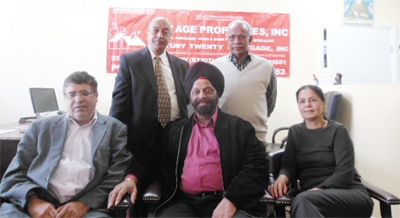
    After the terrible meltdown of 2008, some harsh truths came to the surface.Who cheated, who lied and who bent the rules to make quick money? But the biggest truth of it all was that those who remained true to the books, survived. Kenny Singh, founder and owner of New Age Properties, Inc. is a jack of many trades and master at real estate. Endowed with perhaps the most loyal and experienced staff, Kenny Singh has been able to face the meltdown without losing a lot. His knowledge in the real estate market of Long Island is perhaps unmatched and unquestioned. But before Kenny Singh learnt the nittygritty of real estate he was involved in many other trades. “I came in the United States in 1976 and that time I was working for an import and handicraft business. Soon after that, I worked with a tracking business. Then I worked in the retail industry in the garment section.

    I had heavy trades from Nepal and India. But the investment that I put in this trade was a sheer waste. Because, people from Nepal cheated me and I lost a lot of my hard earned money. I finally gave up. And in early 1990s, I changed my profession to real estate. From that time till now, I have been in this business,” says Singh. He made the switch to real estate for monetary reasons. Also, there was lower risk of direct investments in this profession. He made a sizeable amount in the 1990s as he soon began climbing the ladder of competition. He bent every competition from the time he established his own company in 1995. “There were not many contenders at that time during my rise in real estate. There was Usha Chandra and another, Salma in the Long Island area.


    img39

    I was number three at that time. But I learned the trade fast. I soon became a broker while my competitors were still agents.” While many mimic the work ethics and performances of other role models, Kenny does not believe in having any external inspiration. He was driven to derive the best of him and believed only in himself. “I learnt on my own from everywhere. I worked as an agent. No role model. Just me. And because I had faith in myself, by 1995, I was the unquestioned king in this sector at Long Island.” Since 1995, he has sold a couple of hundred houses. He never kept a record of the actual number in his memory. Everything was sailing perfectly.

    The 1990s were considered the effervescent period for the real estate market in the US. There was an uncontainable demand for housing which was made possible to due to a more lenient loaning options made plausible by financial institutions and the Federal government. But the loom of a meltdown was predicted by many real estate developers, brokers and agents. One among them was Kenny Singh. “In 2008, we faced the downturn. But I survived. I had good savings and I made wise decisions before the meltdown. Also the threat of the meltdown was foreseen by many of us. But there was very little we could do except make moves to encourage savings.

    Despite it all, even I faced a loss of over $500,000,” he says. Early predictions in 2013 seem to point that the real estate market is on the road to recovery. Kenny Singh also advertises this fact. He says, “In 2012, we were doing okay but this year, I can confirm we are better off. The market is gradually improving by 6 to 7 percent. This is a strong indicator that the meltdown is soon to dissipate.” Many theories and conspiracies have been spewed over the reasons for financial crisis of 2008. Kenny simplifies it for us. “The banks were lenient and did not conduct proper checking of the buyer. The prices kept increasing but it was very easy to lend money at that time. So if you had a good credit, you could buy a house with 0% down payment and 4 percent interest.

    Naturally, we slumped. The money was never being protected. It was being offered to anyone and the hawks in the real estate business that thrived on making quick money paved easier way to this.” The federal government has taken immediate measures to dissolve the crisis and to avoid a repetition. And therefore, the market trend has changed immensely. Kenny explains, “The market trend has changed so much recently.

    For example, I was showing a house recently to a few people.We got an offer of more than our asking price many of the buyers. Most buyers are paying in all cash these days. This is an upward trend. Also according to our preliminary research for this year, the houses in the market do not become available for more than 63 days. It doesn’t matter if it they are good houses or bad houses. They all are gone. At this time, last year’s research shows that not only did we sell lesser number of houses compared to this year but the houses stayed for as long as 110 days in the market.

    In Hicksville during last year, only 508 houses were sold by all brokers. And this year we have sold an additional of 26 houses already with the rest of the year still to go. So there has been a 25% increase in the buyers demand.” More people in the Long Island area are opting for no-mortgage payment options by paying full amounts in cash. Besides that, many other loopholes are found by our community members while buying houses. Kenny explains why, “Mortgage is of course a very difficult financial process.

    Besides, the rate of interest is low as of now. What used to 7-8 percent five years ago is now 3.75 percent. Also, mortgage is not very easily available these days either. In Long Island, we have a ‘no income-full asset’ concept. This means that the person who is applying for mortgage must be self-employed. They don’t show their full income on paper.

    So while the banks offer 1% higher rate of interest for these people and ask for 35% down payment, it is not an issue for them because they have the money and they are not bound by life-long payment of mortgage. This proves beneficial to the bank also because no matter what the 35% down payment ensures easier and lower risks of payment for the buyer. But of course, it is all possible if you have good credit record.” So if you have the money and good credit history, it is plausible to buy a house without the hassle of long bound mortgages? “Yes. Of course, you have to go to the right people for this. I strongly recommend a good company which has the expertise, experience and people who understand real estate better than anyone else.” Yet, after the meltdown that hit almost every corner of the world, it is almost impossible to not ask this question.Will we face another meltdown? Kenny is quick to respond. “No. There will not be any downturn anytime now.

    The changes made by the government are enough to make sure the market stays up. It now conducts proper checking of the buyer and it also has asserted a few conditions on financial institutions. Besides, the last meltdown before 2008 was in 1931. Meltdown is not a quarterly or a five year recurring factor.” The realtors at Long Island belong under the banner of Long Island Board of Realtors.

    It is a multiple listing service that controls all the members of its board. There are regular training conducted every 2 years and violations of any rule and regulation is penalized for $1000 or license revokes. Kenny Singh was born in Moga in Punjab. He completed Engineering in Instrumental Technology from Chandigarh. He is married to Paramjit . He has a son Rimpoo Singh, and two daughters Jessica Singh and Monica Singh and a nephew Jeffrey Jeet Singh. Kenny and his family live with his parents in Long Island.

  • Badals Meet Prez, Seek Mercy For Bhullar

    Badals Meet Prez, Seek Mercy For Bhullar

    NEW DELHI (TIP): Punjab Chief Minister Parkash Singh Badal on April 17 filed a review mercy petition with President Pranab Mukherjee seeking clemency for 1993 Delhi bomb blast convict Devinder Pal Singh Bhullar and cautioned that hanging of the death row convict could disturb peace and harmony in the state.

    The 17-page mercy petition filed by Shiromani Akali Dal (SAD) president Sukhbir Badal urges the President to go into “the merits of the case” and says “it does not fall within the definition of rare of the rarest cases”. Justifying the second mercy petition, SAD said “changed circumstances” necessitate a review and cites an SC judgment of 2010 to argue “there is no bar in filing a second clemency petition”. Emerging from the meeting, Badal told mediapersons, “We have sought clemency for Bhullar and the main reason is that the hanging will affect communal harmony and peace in Punjab.” On whether he was in favour of abolishing the death penalty, Badal said, “That is a big issue and needs a wider debate”. The petition says, “The Akali Dal is extremely concerned about the volatile law and order situation in the state. The fallout of the Supreme Court order has led to is a surcharged atmosphere in the state.

    Our apprehension is if the death sentence is executed, it will create serious law and order problem and will give fresh breeding ground to the people who are averse to the idea of peace and communal harmony”. The petition comes just three days after Badal met Prime Minister Manmohan Singh and Home Minister Sushil Kumar Shinde on the same issue and submitted representations. Bhullar’s first mercy petition was rejected last year by former President Pratibha Devi Singh Patil.

    The Supreme Court had on April 12 rejected a plea that there had been a delay in deciding a mercy petition and upheld his death sentence. The petition said, “The Akali Dal is extremely concerned about the volatile law and order situation in the state. The fallout of the Supreme Court order has led to is a surcharged atmosphere in the state. Our apprehension is if the death sentence is executed, it will create serious law and order problem and will give fresh breeding ground to the people who are averse to the idea of peace and communal harmony”. SAD argued that Bhullar’s death penalty was confirmed following a split verdict of the Supreme Court. “Mr Justice MB Shah had dissented and held that if death sentence is altered to imprisonment for life, it would the sufficient to meet the ends of justice… the confession of the accused (Bhullar) is not voluntary.

    The main accused (Daya Singh Lahoria) has already been acquitted and further held that the accused is not guilty and deserves to be acquitted,” the SAD petition says while quoting the SC verdict. Badal’s plea is that the SC, while deciding Bhullar’s main appeal as well as review petition, had said “the President of India would keep in mind the view of Mr Justice MB Shah while deciding the clemency petition.” The Petition goes on to remind the President about powers under Article 161 of the Constitution of India: “The Constitutional powers are meant to do substantial justice.” Further citing a 1989 apex court judgment and referring to Article 72 of the Constitution, the petition says, “The President can go into the merits of the case decided by the courts and can take a different view. That would not amount to suppression of the judicial verdict”.

    The petition reminds the President how Daya Singh Lahoria, the principal accused for the 1993 Delhi blast in which Bhullar was convicted, was acquitted on the same set of evidence. “It is a travesty of justice that the person who is alleged to have only abetted is being hanged to death and the principal accused has been acquitted,” the SAD argument says.

    The party says Bhullar’s case is exceptional. He is mentally sick and under treatment. Further, India has assured Germany, from where Bhullar was extradited, of no death sentence.

  • Sikhs For Justice to promote ‘Sadda Haq’ worldwide

    Sikhs For Justice to promote ‘Sadda Haq’ worldwide

    NEW YORK (TIP): After Punjab government banned the Punjabi movie “Sadda Haq” which has generated a lot of controversy, rights group Sikhs for Justice (SFJ) has said that it would not only promote the movie but would also sponsor a movie on similar lines in English for world wide release. “In the past SFJ and All India Sikh Students Federation prepared a few documentaries on 1984 massacre of Sikhs in Delhi and the next movie would be more comprehensive to have documentation of systematic and organized killing of Sikhs, use of “Black cats” to kill and defame, and will have human rights violations as its theme, said SFJ legal advisor Gurpatwant Singh Pannun. He revealed that they were already campaigning with people to watch ‘Sadda Haq’ and the group also participated in radio and TV talk shows, etc to oppose the ban and to promote the movie.

    It may be mentioned here that after the controversy generated by the ban, there are expectations that the film would find more craze abroad among the Punjabis diaspora. “The ban on the movie is imposed on the grounds of creating “communal disharmony”, but actually the movie is a perfect example of “communal harmony” between the communities as the producer is a Sikh while the director and financer is a Hindu. “The ban on the movie also reflected double standards of Shiromani Akali Dal and its leader Parkash Singh Badal as SAD controlled SGPC supported the movie but the government banned it,” he said. “If SAD (Badal) would not have been in power today then its activists would have been holding a statewide protest for the release of the movie,” added Pannun. “CM Badal has a history of supporting only such Sikh issues that collide with the Central government in order to show that government is following anti-Sikh policies and to gain the Sikh votes in the state of Punjab.

    CM Parkash Singh Badal has previously rejected Article 25 of the Indian Constitution, supported the struggle for independent Sikh state and currently supports the commutation of Balwant Singh Rajoana and Prof Devinder Pal Singh’s death sentences”, SFJ said while pointing out the inconsistencies in Badal’s politics.

  • Finch, Uthappa end Pune’s losing streak

    Finch, Uthappa end Pune’s losing streak

    PUNE (TIP): When Pune Warriors stumbled to 99 for 9 after choosing to bat against Kings XI Punjab and crashed to their 11th successive defeat, their captain Angelo Mathews said his batsmen needed to sort their “intent and attitude” towards the first six overs. Warriors had made 24 for 2 in the first six overs that evening. Four days later, Robin Uthappa and Aaron Finch blasted them to 64 for 1 in the same period, and Warriors made short work of the target of 146 set by Rajasthan Royals to break the longest losing streak in the IPL.

    Finch was playing only because Marlon Samuels was injured, and his arrival heralded a complete change in the way Warriors approached the Powerplay. Instead of starting overcautious and getting tied down, they started aggressively and never looked back on a slowish pitch. Royals captain Rahul Dravid gambled with India Under-19 left-arm spinner Harmeet Singh for a couple of overs at the start, ahead of James Faulkner, Kevon Cooper and Siddharth Trivedi. Harmeet was making his Twenty20 debut, and while his first over went for just six, the next one was taken for 17.

    There was no gamble with giving Sreesanth two overs from the other end. And while the first went for just seven, the second was shredded for 21. Uthappa did most of that damage, pulling successive long-hops from Harmeet for six and also lifting Sreesanth over long-on and deep square leg for two more sixes.

    Warriors catapulted to 51 for 0 in four overs, the frenetic start all but ending Royals’ hopes. Though Uthappa went for 32 off 16 deliveries to a brilliant one-handed take by Dravid in an opening partnership of 58 in 4.5 overs, Finch kept going and going. He’d already lofted Harmeet and Sreesanth for a couple of straight sixes and went on punishing slight width either side of the wicket, swinging Cooper over deep square leg to reach his fifty off 36 balls. Yuvraj Singh returned after missing the previous game with an injury to finish the chase in the 19th over with a huge six over deep midwicket off Sreesanth. It wasn’t that Royals had ended short of expectations in setting the target. Rahane said during the innings break they had aimed for anything between 140 and 150.

    Kusal Perera had gone first ball of the match to a Bhuvneshwar Kumar inswinger, but Dravid and Rahane had set the platform with a second-wicket stand of 81 off 67. Dravid was in superb touch on his way to 54 off 48, timing several pleasing drives through the off side. Rahane rotated the strike well, but both batsmen fell to sharp catches off the spinners as Royals lost their way in the middle of the innings. Rahul Sharma was especially difficult to get away with his full and quick legbreaks. Royals did scrap some runs towards the end, but the way Uthappa and Finch batted, Warriors’ losing streak had no chance of getting extended.

  • The Sikh Temple of North Texas,Garland Organizes Sports Mela

    The Sikh Temple of North Texas,Garland Organizes Sports Mela

    DALLAS (TIP): Despite bad weather conditions, the Sports Mela organized by the Sikh Temple of North Texas, Garland, March 30th, attracted a large number of sportspersons and sports lovers. It was the 13th annual sports event organized by the Temple management with the tremendous support of the 400 families strong congregation. The organizers had expected some 400 participants in about a dozen events. But weather played foul and held back some of them. However, hundreds of men, women and children participated in the events.

    Hundreds cheered the participants. Women seemed to be more enthusiastic and were seen constantly cheering up the participants, particularly, if the participants were members of their family. The sports included races, basket ball, skipping, volleyball, soccer, tug-o-war etc.

    The organizers had very thoughtfully created age groups for participants. It was sheer joy to see the participants vying for honors in the true spirit of sportsmanship. Among the more interesting sports were the three legged race and spoon in mouth carrying a ball. Kids really enjoyed the fun a lot. The prize winners were surely on the ninth cloud but their relations and friends were no less delighted. They were seen rushing to congratulate and hug the prize winners. Prizes were given away by senior citizens. Gurjit Kaur, a senior citizen, has been coming every year in the last 13 years to watch the sports.

    Her daughter Rashpal Kaur and her grand daughter Raman Kaur who is 8 were with her. They said they enjoyed the event immensely. Jarnail Singh, 40, had his three kids participating. His 15 year old daughter Charanpreet Kaur who participated in a race won 2nd position. Navjot Johl, 11 years old, won 2nd position in Jumps. His third daughter, 9 year old Pritpal Johal got a 3rd position. Jarnail Singh was very pleased and said to this reporter that it was worth the while to bring the kids for sports events. However, he had some suggestions for the organizers. First, he said, the organizers should have a time schedule for each sporting event. Second, there should be some entertainment also.

    It should be in the form of dances, like Bhangra and songs. A community event, it had full community support, according to Manjit Singh Sahota, President of Garland Sikh Temple. He gave credit for the success of the sports mela to the community and his colleagues on the managing committee. He had special word of appreciation and gratitude for the sponsors. He mentioned to me that almost every food item and medals for prize winners were sponsored. Nat Family sponsored medals in the memory of Jasjeet Singh Nat. Langar was sponsored by Noni Toor, Sodhi Toor and Toor family. Water and soft drinks were sponsored by Davinder Singh Toor.

    The much liked Kulfi was sponsored by S. Haripritam Singh of Karinas Kulfi and the delectable Jalebi by Lalli Sandhu. Others recognized included donors and senior citizens who were kind enough to come and give away the prizes. Mr. Sahota also recognized Vijay Handa for his services.

    The most appreciation was reserved for the sports committee that organized the sports mela. It included Noni Singh Toor, Avtaar Singh Parvagga,Mandhir Singh Bal, Balkar Singh, Rakesh Saini, Harjit Singh Randhawa, Shera Punjab Singh Randhawa, Jeeta Randhawa,Sodhi Singh Toor, Gurshant Singh,Paramjit Sodhi, and Manjinder Kaur Banipal. The managing committee members who call themselves sevadars, are Manjit Singh Sahota, Balbir Singh Dhillon, Manmohan Singh, Amrik Singh Grewal , Dyal Singh Saini, Mukhtar Singh, Gobind Dhiman, Rupinder Singh, Langar Sevadar Santokh Singh Nijjar, Ranbir Singh Bunti, Bahadhar Singh Sahota, Parpal Singh Malhi and Tajinder Singh Teji. Gurjeet Kaur (first from right), Rashpal Kaur (first from left) and Raman

  • President Confers Padma Awards

    President Confers Padma Awards

    NEW DELHI (TIP): President PranabMukherjee on April 5 conferred Padma Awards, the country’s highest civilian awards, to 108 personalities. The awards comprise 4 PadmaVibhushan, 24 PadmaBhushan and 80 PadmaShri Awards on Friday. 24 of the awardees are women and the list also includes 11 people in the category of foreigners, NRIs, PIOs and posthumous awardees. Noted physicist Yash Pal and space scientist Roddam Narasimha were chosen the second highest civilian honour Padma Vibhushan. Batting great Rahul Dravid and Olympic bronze medallist MC Mary Kom and late Bollywood actor Rajesh Khanna were named for the prestigious Padma Bhushan award, the third highest civilian award of the country. Renowned sculptor Raghunath Mohapatra and painter S Haider Raza were chosen for Padma Vibhushan.

    The list of 108 Padma awardees for this year also includes actress Sridevi, actors Nana Patekar and Malayalam star Madhu of Chemmeen fame and Olympians Yogeshwar Dutt and Vijay Kumar. Nobody was named for Bharat Ratna for this year too. The last awardee was late Bhimsen Joshi in 2008. Satirist Jaspal Bhatti, who died in a road accident last year, film maker D Rama Naidu, noted South Indian playback singer S Janaki, Bharatnatyam dancer Saroja Vaidyanathan, missile scientist Dr A Sivathanu Pillai of BrahMos programme, Industrialist Adi Godrej and R Tyagarajan, former bureaucrat M K Bhan were among the 24 Padma Bhushan awardees. In all four personalities were awarded Padma Vibhushan, 24 for Padma Bhushan and 80 Padma Shri. Of the awardees 24 are women, 11 belong to the category of foreigners, NRI, PIOs and posthumous.

    Padma Awards, the country’s highest civilian awards, are conferred in three categories, namely Padma Vibhushan, Padma Bhushan and Padma Shri.

    PADMA VIBHUSHAN
    Raghunath Mohapatra, Art, Orissa
    S Haider Raza, Art, Delhi
    Prof Yash Pal, Science and Engineering, Uttar Pradesh
    Prof Roddam Narasimha, Science and Engineering,Karnataka

    PADMA BHUSHAN
    Dr Ramanaidu Daggubati, Art, Andhra Pradesh
    Sreeramamurthy Janaki, Art, Tamil Nadu
    Dr (Smt) Kanak Rele, Art, Maharashtra
    Sharmila Tagore, Art, Delhi
    Dr (Smt) Saroja Vaidyanathan, Art, Delhi
    Abdul Rashid Khan, Art, West Bengal
    Late Rajesh Khanna, Art, Maharashtra
    Late Jaspal Singh Bhatti, Art, Punjab
    Shivajirao Girdhar Patil, Public Affairs, Maharashtra
    Dr Apathukatha Sivathanu Pillai, Science, Engineering,Delhi
    Dr Vijay Kumar Saraswat, Science and Engineering,Delhi
    Dr Ashoke Sen Science and Engineering,Uttar Pradesh
    B N Suresh, Science and Engineering, Karnataka
    Prof Satya N Atluri, Science and Engineering, USA
    Prof Jogesh Chandra Pati, Science and Engineering,USA
    Ramamurthy Thyagarajan, Trade and Industry,Tamil Nadu
    Adi Burjor Godrej, Trade and Industry, Maharashtra
    Dr Nandkishore Shamrao Laud, Medicine,Maharashtra
    Mangesh Padgaonkar, Literature and Education,Maharashtra
    Prof Gayatri Chakravorty Spivak, Literature & Education USA
    Hemendra Singh Panwar, Civil Service,Madhya Pradesh
    Maharaj Kishan Bhan, Civil Service, Delhi
    Rahul Dravid, Sports, Karnataka
    H Mangte Chungneijang Mary Kom, Sports, Manipur

    PADMA SHRI
    Gajam Anjaiah, Art, Andhra Pradesh
    Swami G C D Bharti alias Bharati Bandhu, Art,Chhattisgarh
    B Jayashree, Art, Karnataka
    Sridevi Kapoor, Art, Maharashtra
    Kailash Chandra Meher, Art, Orissa
    Brahmdeo Ram Pandit, Art, Maharashtra
    Vishwanath D Patekar alias Nana Patekar, Art,Maharashtra
    R Nageswara Rao alias Surabhi Babji, Art, Andhra Pradesh
    Lakshmi Narayana Sathiraju, Art, Tamil Nadu
    Jaymala Shiledar, Art, Maharashtra
    Suresh Dattatray Talwalkar, Art, Maharashtra
    P Madhavan Nair alias Madhu, Art, Kerala
    Apurba Kishore Bir, Art, Maharashtra
    Ghanakanta Bora Borbayan, Art, Assam
    Hilda Mit Lepcha, Art, Sikkim
    Sudha Malhotra, Art, Maharashtra
    Ghulam Mohammad Saznawaz, Art,Jammu and Kashmir
    Ramesh Gopaldas Sippy, Art, Maharashtra
    Mahrukh Tarapor, Art, Maharashtra
    Balwant Thakur, Art, Jammu and Kashmir
    Puran Das Baul, Art, West Bengal
    Rajendra Tikku, Art, Jammu and Kashmir
    Pablo Bartholomew, Art, Delhi
    Shri S Shakir Ali, Art, Rajasthan
    S K M Maeilanandhan, Social Work, Tamil Nadu
    Nileema Mishra, Social Work, Maharashtra
    Reema Nanavati, Social Work, Gujarat
    Jharna Dhara Chowdhury, Social Work, Bangladesh
    Late Dr Ram Krishan, Social Work, Uttar Pradesh
    Late Manju Bharat Ram, Social Work, Delhi
    Prof Mustansir Barma, Science and Engineering,Maharashtra
    Avinash Chander, Science and Engineering, Delhi
    Sanjay Govind Dhande, Science and Engineering,Uttar Pradesh
    Prof (Dr) Sankar Kumar Pal, Science, Engineering,West Bengal
    Deepak B Phatak, Science and Engineering,Maharashtra
    Dr Mudundi Ramakrishna Raju, Science and Engg,Andhra Pradesh
    Prof Ajay K Sood, Science and Engineering, Karnataka
    Prof Krishnaswamy Vijayraghavan, Science & Engg,Karnataka
    Dr Manindra Agrawal, Science and Engineering,Uttar Pradesh
    Dr Jayaraman Gowrishankar, Science & Engineering,Andhra Pradesh
    Prof Sharad Pandurang Kale, Science & Engineering,Maharashtra
    Vandana Luthra, Trade and Industry, Delhi
    Rajshree Pathy, Trade and Industry, Tamil Nadu
    Hemendra Prasad Barooah, Trade and Industry,Assam.
    Milind Kamble, Trade and Industry, Maharashtra
    Kalpana Saroj, Trade and Industry, Maharashtra
    Dr Sudarshan K Aggarwal, Medicine, Delhi
    Dr C Venkata S Ram alias Chitta, Venkata Sundara Ram, Medicine, Andhra Pradesh
    Dr Rajendra Achyut Badwe, Medicine, Maharashtra
    Dr Taraprasad Das, Medicine, Orissa
    Prof (Dr) T V Devarajan, Medicine, Tamil Nadu
    Prof (Dr) Saroj Chooramani Gopal, Medicine,Uttar Pradesh
    Dr Pramod Kumar Julka, Medicine, Delhi
    Dr Gulshan Rai Khatri, Medicine, Delhi
    Dr Ganesh Kumar Mani, Medicine, Delhi
    Dr Amit Prabhakar Maydeo, Medicine, Maharashtra
    Dr Sundaram Natarajan, Medicine, Maharashtra
    Prof Krishna Chandra Chunekar, Medicine,Uttar Pradesh
    Dr Vishwa Kumar Gupta, Medicine, Delhi
    Prof (Capt) Dr M Sharaf-eAlam, Literature & Education, Bihar
    Dr Radhika Herzberger, Literature & Education,Andhra Pradesh
    J Malsawma, Literature and Education, Mizoram
    Devendra Patel, Literature & Education, Gujarat
    Dr Rama Kant Shukla, Literature & Education, Delhi
    Prof Akhtarul Wasey, Literature & Education, Delhi
    Prof Anvita Abbi, Literature & Education, Delhi
    Nida Fazli, Literature & Education, Madhya Pradesh
    Surender Kumar Sharma, Literature & Education,Delhi
    Dr Jagdish Prasad Singh, Literature & Education,Bihar
    Late Shaukat Riaz Kapoor Alias Salik Lakhnawi,
    Literature & Education, West Bengal.
    Prof Noboru Karashima, Literature & Education, Japan
    Christopher Pinney, Literature & Education, UK
    Premlata Agrawal, Sports, Jharkhand
    Yogeshwar Dutt, Sports, Haryana
    Hosanagara Nagarajegowda Girisha, Sports,Karnataka
    Subedar Major Vijay Kumar, Sports, Himachal Pradesh
    Ngangom Dingko Singh, Sports, Maharashtra
    Naib Subedar Bajrang Lal Takhar, Sports, Rajasthan
    Ritu Kumar, Fashion Designing, Delhi
    Dr Ravindra Singh Bisht, Archaeology, Uttar Pradesh.

  • The Sikh Temple Of North Texas, Garland Organizes Sports Mela

    The Sikh Temple Of North Texas, Garland Organizes Sports Mela

    DALLAS (TIP): Despite bad weather conditions, the Sports Mela organized by the Sikh Temple of North Texas, Garland, March 30th, attracted a large number of sportspersons and sports lovers. It was the 13th annual sports event organized by the Temple management with the tremendous support of the 400 families strong congregation. The organizers had expected some 400 participants in about a dozen events. But weather played foul and held back some of them. However, hundreds of men, women and children participated in the events.

    Hundreds cheered the participants. Women seemed to be more enthusiastic and were seen constantly cheering up the participants, particularly, if the participants were members of their family. The sports included races, basket ball, skipping, volleyball, soccer, tug-o-war etc. The organizers had very thoughtfully created age groups for participants. It was sheer joy to see the participants vying for honors in the true spirit of sportsmanship. Among the more interesting sports were the three legged race and spoon in mouth carrying a ball. Kids really enjoyed the fun a lot. The prize winners were surely on the ninth cloud but their relations and friends were no less delighted. They were seen rushing to congratulate and hug the prize winners. Prizes were given away by senior citizens. Gurjit Kaur, a senior citizen, has been coming every year in the last 13 years to watch the sports.

    Her daughter Rashpal Kaur and her grand daughter Raman Kaur who is 8 were with her. They said they enjoyed the event immensely. Jarnail Singh, 40, had his three kids participating. His 15 year old daughter Charanpreet Kaur who participated in a race won 2nd position. Navjot Johl, 11 years old, won 2nd position in Jumps. His third daughter, 9 year old Pritpal Johal got a 3rd position. Jarnail Singh was very pleased and said to this reporter that it was worth the while to bring the kids for sports events. However, he had some suggestions for the organizers. First, he said, the organizers should have a time schedule for each sporting event. Second, there should be some entertainment also. It should be in the form of dances, like Bhangra and songs. A community event, it had full community support, according to Manjit Singh Sahota, President of Garland Sikh Temple. He gave credit for the success of the sports mela to the community and his colleagues on the managing committee.

    He had special word of appreciation and gratitude for the sponsors. He mentioned to me that almost every food item and medals for prize winners were sponsored. Nat Family sponsored medals in the memory of Jasjeet Singh Nat. Langar was sponsored by Noni Toor, Sodhi Toor and Toor family. Water and soft drinks were sponsored by Davinder Singh Toor. The much liked Kulfi was sponsored by S. Haripritam Singh of Karinas Kulfi and the delectable Jalebi by Lalli Sandhu. Others recognized included donors and senior citizens who were kind enough to come and give away the prizes. Mr. Sahota also recognized Vijay Handa for his services.

    The most appreciation was reserved for the sports committee that organized the sports mela. It included Noni Singh Toor, Avtaar Singh Parvagga,Mandhir Singh Bal, Balkar Singh, Rakesh Saini, Harjit Singh Randhawa, Shera Punjab Singh Randhawa, Jeeta Randhawa,Sodhi Singh Toor, Gurshant Singh,Paramjit Sodhi, and Manjinder Kaur Banipal. The managing committee members who call themselves sevadars, are Manjit Singh Sahota, Balbir Singh Dhillon, Manmohan Singh, Amrik Singh Grewal , Dyal Singh Saini, Mukhtar Singh, Gobind Dhiman, Rupinder Singh, Langar Sevadar Santokh Singh Nijjar, Ranbir Singh Bunti, Bahadhar Singh Sahota, Parpal Singh Malhi and Tajinder Singh Teji.

  • Pervez Musharraf barred from one Pakistani election constituency

    Pervez Musharraf barred from one Pakistani election constituency

    ISLAMABAD (TIP): Pakistan’s election board barred on Friday former President Pervez Musharraf from contesting polls in one constituency and the Supreme Court agreed to look into a treason complaint against him, hurting his efforts to win back influence. The former army chief returned last month after nearly four years of self-imposed exile to contest a May 11 general election despite the possibility of arrest on various charges and death threats from the Pakistani Taliban. The Election Commission barred Musharraf from the polls in Kasur in Punjab province because of court cases against him, commission officials said. He could also face disqualification in the three other constituencies where he plans to run.

    The officials, who declined to be identified, also said the decision was based on a clause in the constitution which requires candidates to be of good character and the fact that he had not declared all of his assets. “Musharraf has been disqualified under articles 62 and 63 of the constitution, among other reasons,” an election commission official said, referring to clauses that require a candidate to be “of good character”, among other things. Neither Musharraf nor a spokesman for him were available for comment.

    Musharraf faces charges of failing to provide adequate security to former prime minister Benazir Bhutto before her assassination in 2007. He also faces accusations in connection with the death of a separatist leader in the southwestern province of Baluchistan. He denies any wrongdoing. A petition which will be heard by the Supreme Court on Monday accuses Musharraf of committing treason when he sacked senior judges and declared emergency rule while in power.

    The current chief justice, Iftikhar Chaudhry, was embroiled in a confrontation with Musharraf, who removed him from office in 2007 after he opposed plans to extend the general’s term in office. He was later reinstated. Musharraf had hoped to compete in the election. Former Prime Minister Nawaz Sharif, the man Musharraf ousted in a coup in 1999, is seen as the front runner. Musharraf, a former commando, has been far removed from Pakistan’s troubles during his exile in London and Dubai, where he lived in a posh part of the Gulf Arab emirate.

    Pakistan’s military has ruled the nation for more than half of its 66- year history, through coups and from behind the scenes. It sets foreign and security policy, even when civilian administrations are in power. But current commanders have meddled far less in politics than during Musharraf’s era, preferring instead to let civilian governments take the heat for the country’s failures.

  • Punjab Government needs to discipline Punjab Police

    Punjab Government needs to discipline Punjab Police

    Punjab Police have never been known to be decent. At best, it has been indifferent to people, to situations and to the state. However, strangely, no people’s government of Punjab has ever acted to discipline the obviously undisciplined force. In the recent case of police assault on a woman who had wanted to register a complaint at a police station in Tarn Taran, Punjab government seems to be dragging its feet.

    The assault was videotaped and Indian TV channels showed it time and again. Obviously, if the whole of India got to know how brutally the woman was assaulted, it is unimaginable that the Chief Minister or the Deputy Chief Minister who holds the Home portfolio was ignorant about the incident. The Tribune, Chandigarh has rightly said that the Punjab government seems to be bent upon embarrassing itself in the case of assault by the Tarn Taran police on a woman. All apparently out of a misplaced sense of solidarity with policemen who have plainly been seen behaving outrageously with a defenseless woman. Beginning with denial of any wrongdoing, to minimizing the loss of image, to obfuscating the matter with statements like there was another woman, the police have attempted to protect and then delay action against the guilty. The drivers involved in the fracas have conveniently been able to evade arrest.

    The woman has been accused of attacking the police. That begs a simple question: Why would a woman and her father, out attending a wedding, assault policemen in uniform without reason?

    The Supreme Court, which has taken up the matter suo motu and trashed a magisterial inquiry report submitted in this regard as a cover-up, has raised a pertinent question – were the woman and her father armed? Whatever wrong they may have committed, a whole bunch of policemen definitely did not need to assault them with sticks in public.

    The police has even claimed the father has submitted an apology for his mistake. In today’s world of media activism and public awareness, to even attempt this seems farcical on the part of the police. However, it must be admitted, the matter would never have become an issue had the assault not been recorded on camera, or the courts not intervened. What defies answer is why the police top brass and the government are trying to defend the indefensible. Perhaps they sincerely believe that the policemen were not wrong in acting the way they did because there was indeed instigation from the woman. This view is also evident from the inquiry report that has pointed out that such action is required for law and order. This assessment comes from a certain attitude that has its roots in the centuries of British rule and an even longer feudal approach to the masses, previously ‘subjects’. That attitude needs to change as India prepares for a global stature – development is not just expressways.

  • Richmond Hill Punjabi Merchants Association holds maiden meeting

    Richmond Hill Punjabi Merchants Association holds maiden meeting

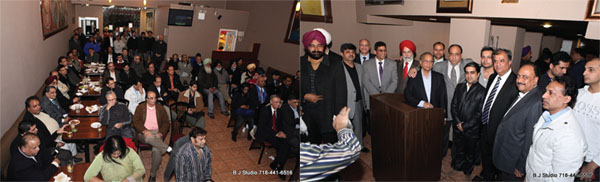
    NEW YORK (TIP): The recently constituted Richmond Hill Merchants Association held its maiden meeting last week at Royal Indian Palace Restaurant. Speaking at the meeting, the Association Chairman, Jaswinder Johal of Apna Bazar described creation of the association as a good step in the direction but cautioned members against an environment of bitterness within the organization. Association President Pritam Singh Gilzian said many wanted to be members of the association and he expected membership to grow to a hundred. Others who spoke on the occasion included Raghbir Singh Subhanpur, Vice President Himat Singh Sarpanch and General Secretary Kashmir Singh Pehowa.

    For any further information on membership, please contact Pritam Singh Gilzian at 917-687-3701

  • Punjab announces 10 per cent housing quota for NRIs

    Punjab announces 10 per cent housing quota for NRIs

    CHANDIGARH (TIP): The Punjab government on April 5 said under the proposed industrial investment and the real-estate policy, 10 per cent quota will be reserved for NRIs. The industrial investment policy and the real-estate policy “for comprehensive development of the state” is expected to be launched later this month. Deputy chief minister Sukhbir Singh Badal said, “The government has evolved a comprehensive plan to make NRIs equal partners in the industrial progress of the state and a 10 per cent quota of projects and plots is being reserved for Punjabi diaspora.” All new colonies of PUDA, GMADA and other urban development agencies will also have 10 pc quota in residential plots for NRIs. “All new colonies and other urban development agencies would also have 10 per cent quota in residential plots for NRIs,” he said. Accompanied by NRI affairs minister Bikram Singh Majithia, Sukhbir reviewed schemes promised to NRIs in the two day NRI sammelan held at Chandigarh and Jalandhar in January this year, an official spokesman said. Sukhbir said that he was satisfied that all departments of the Punjab Government have worked unitedly to fulfil most of the promises made to NRIs. However, he expressed concern over fraudulent marriages involving NRIs and said that they are being dealt with firm hand.

    Sukhbir said that Punjab is the first state in the country that has made registration of marriages by NRIs mandatory and the Punjab Compulsory Registration of Marriages Act-2012 has been notified and district authorities have been instructed to ensure its total compliance.

  • Drugs case: Boxer Ram Singh dismissed from Punjab Police

    Drugs case: Boxer Ram Singh dismissed from Punjab Police

    CHANDIGARH (TIP): The Punjab Police has dismissed two officials from service – including international boxer Ram Singh – following their alleged involvement in a drugs racket busted in the state recently. The other person dismissed on March 28 is sub-inspector Sarabjit Singh. Ram Singh, a head constable in the force, is a fellow boxer with Olympics bronze medal winner Vijender Singh, whose name also figured in the drugs controversy. He is being questioned in the case.

    The Fatehgarh Sahib district police had on March 7 recovered over 28 kg heroin, worth Rs.130 crore in the international market, from the possession of Canadabased drugs dealer Anoop Singh Kahlon and had arrested him. The drug haul was made from Kahlon’s flat in Zirakpur, near Chandigarh, and his car. Police also found a SUV, registered in the name of Vijender Singh’s wife Archana, parked outside Kahlon’s flat. Kahlon reportedly told police that Vijender and fellow boxer Ram Singh were his “clients”.

    Police have already questioned Vijender in connection with the drugs racket. The boxer has refused to give his blood and hair samples to the police. Vijender, who is a deputy superintendent of police (DSP) in the Haryana Police, was questioned by the Punjab Police team recently. A Punjab Police spokesperson said subinspector Sarabjit Singh’s house at Naya Gaon near Chandigarh was raided Tuesday night and drugs and weapons were recovered. The police official has been absconding since the raids. Another dismissed police official, Jagdish Bhola, who is wanted in the drugs haul case, and is absconding, had gone to Sarabjit’s house on March 11, police said. “Sarabjit Singh is an active member of gang of smugglers headed by Anoop Singh Kahlon and Jagdish Bhola.

    He aided Jagdish Bhola in absconding and arranged hideouts for Bhola,” the spokesperson said. He said that 10 kg powder used as a rave drug in parties and worth Rs. 10 crore, was recovered from Kulbir Singh, a resident of Karnal, who has earlier been arrested in this case. Amongst those arrested in the case are a Britain-based NRI, a retired deputy superintendent of Uttar Pradesh Police and a Canadian national.

  • Ghanchakkar Vidya Balan Turns Punjabi Kudi

    Ghanchakkar Vidya Balan Turns Punjabi Kudi

    Vidya Balan plays a loud, robust Punjabi housewife with a bizarre sense of fashion in Raj Kumar Gupta’s quirky comedy Ghanchakkar. Vidya says, “I had great fun playing Nitu Bhatia. She’s the hatti-katti Punjabi housewife who we all know. She is the cat’s whiskers when it comes to fashion. She is the sort of woman who goes for a walk one day and feels ‘exercise kar li na toh ek aur samosa khaane mein koi harj nai.’ My costume designer, Subarna Rai Chaudhari, went mad trying to put together the look. What she wears is almost outlandish and even bizarre sometimes… but that’s Nitu for you!” Ghanchakkar, produced by UTV Motion Pictures, releases on June 28

  • The Taliban threat to elections

    The Taliban threat to elections

    Having divided the political class and once again confused society with talk of talks, the TTP has now “suspended” its offer of negotiations with the government. Ehsanullah Ehsan, the TTP spokesperson, has claimed that the government’s lack of seriousness about negotiations with the Taliban is behind the TTP’s move. More realistically, the TTP has achieved much of what it set out to do by mooting the idea of talks. In the two craven multi-party conferences that took place in quick succession, the religious right and large segments of the political mainstream all but suggested that the state give up on the idea of Pakistan as a modern nation-state with a monopoly over legitimate violence and in which the citizenry enjoy freedoms and rights. Given that the TTP’s offer of talks coincided with a wave of militant violence, it never really appeared to be a meaningful offer.

    What the focus should switch to now is how best to secure the upcoming elections from militant violence. Ehsanullah Ehsan’s warning to the public to stay away from electoral activities is particularly ominous because the TTP has already made it clear that it regards elections as un-Islamic and that it will target “secular” politicians during the campaign. The mere threat of violence by the TTP is enough to potentially skew elections in parts of the country because both the voter and a certain kind of candidate in areas such as Fata and parts of Khyber Pakhtunkhwa, Balochistan, Punjab and Karachi may opt to stay at home, opening the door further to pro- Taliban political forces that will be able to campaign and vote more freely.

    If the TTP is to be stopped from indirectly shaping the composition of the elected assemblies, a comprehensive security plan must be drawn up – one that will require close cooperation between the Election Commission of Pakistan, the caretaker governments and security apparatus.

    Securing the election from militant threats is neither beyond the realm of possibility nor something we can afford to overlook. True, elections by their very nature present a plethora of potential targets to those bent on violence and there is a trade-off between security and openness. But the stakes are too high to let a business-as-usual attitude prevail. The ECP, already burdened with a number of duties and crises, needs to put security near the top of the list of its priorities – and win the cooperation of the necessary institutions as quickly as possible.

  • Bhagat Singh

    Bhagat Singh

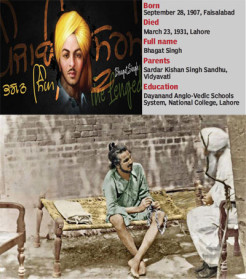
    Bhagat Singh was one of the most prominent faces of Indian freedom struggle. He was a revolutionary ahead of his times. By Revolution he meant that the present order of things, which is based on manifest injustice must change. Bhagat Singh studied the European revolutionary movement and was greatly attracted towards socialism. He realised that the overthrow of British rule should be accompanied by the socialist reconstruction of Indian society and for this political power must be seized by the workers. Though portrayed as a terrorist by the British, Sardar Bhagat Singh was critical of the individual terrorism which was prevalent among the revolutionary youth of his time and called for mass mobilization. Bhagat Singh gave a new direction to the revolutionary movement in India. He differed from his predecessors on two counts. Firstly, he accepted the logic of atheism and publicly proclaimed it. Secondly, until then revolutionaries had no conception of postindependence society.

    Their immediate goal was destruction of the British Empire and they had no inclination to work out a political alternative. Bhagat Singh, because of his interest in studying and his keen sense of history gave revolutionary movement a goal beyond the elimination of the British. A clarity of vision and determination of purpose distinguished Bhagat Singh from other leaders of the National Movement. He emerged as the only alternative to Gandhi and the Indian National Congress, especially for the youth. Bhagat Singh was born in a Sikh family in village Banga in Layalpur district of Punjab (now in Pakistan). He was the third son of Sardar Kishan Singh and Vidyavati.

    Bhagat Singh’s family was actively involved in freedom struggle. His father Kishan Singh and uncle Ajit Singh were members of Ghadr Party founded in the U.S to oust British rule from India. Family atmosphere had a great effect on the mind of young Bhagat Singh and patriotism flowed in his veins from childhood. While studying at the local D.A.V. School in Lahore, in 1916, young Bhagat Singh came into contact with some well-known political leaders like Lala Lajpat Rai and Ras Bihari Bose.

    Punjab was politically very charged in those days. In 1919, when Jalianwala Bagh massacre took place, Bhagat Singh was only 12 years old. The massacre deeply disturbed him. On the next day of massacre Bhagat Singh went to Jalianwala Bagh and collected soil from the spot and kept it as a memento for the rest of his life. The massacre strengthened his resolve to drive British out from India. In the face of actions by the revolutionaries, the British government enacted the Defence of India Act to give more power to the police.[citation needed] The purpose of the Act was to combat revolutionaries like Bhagat Singh. The Act was defeated in the council by one vote.[citation needed] However, the Act was then passed under the ordinance that claimed that it was in the best interest of the public.

    In response to this act, the Hindustan Socialist Republican Association planned to explode a bomb in the Central Legislative Assembly where the ordinance was going to be passed. Originally, Chandrashekhar Azad, another prominent leader of the revolutionary movement attempted to stop Bhagat Singh from carrying out the bombing. However, the remainder of the party forced him to succumb to Singh’s wishes. It was decided that Shahid Bhagat Singh and Batukeshwar Dutt, another revolutionary, would throw the bomb in the assembly. On April 8, 1929, Singh and Dutt threw a bomb onto the corridors of the assembly and shouted “Inquilab Zindabad!” (“Long Live the Revolution!”). This was followed by a shower of leaflets stating that it takes a loud voice to make the deaf hear. Bhagat Singh was known for his appreciation of martyrdom. His mentor as a young boy was Kartar Singh Sarabha. Singh is himself considered a martyr for acting to avenge the death of Lala Lajpat Rai, also considered a martyr. In the leaflet he threw in the Central Assembly on 9 April 1929, he stated that It is easy to kill individuals but you cannot kill the ideas. Great empires crumbled while the ideas survived.

    After engaging in studies on the Russian Revolution, he wanted to die so that his death would inspire the youth of India which in turn will unite them to fight the British Empire. While in prison, Bhagat Singh and two others had written a letter to the Viceroy asking him to treat them as prisoners of war and hence to execute them by firing squad and not by hanging. Prannath Mehta, Bhagat Singh’s friend, visited him in the jail on March 20, four days before his execution, with a draft letter for clemency, but he declined to sign it.

    Philosophy of Bhagat Singh
    Bhagat Singh was a visionary whose battles against the British were based on the foundation of the principles he staunchly believed in and cherished. Even though Bhagat took the plunge in the noncooperation movement called by Gandhi at an early age, he soon became disenchanted with Gandhian philosophy and gradually embraced the socialist way of thought. Bhagat Singh’s 404 page jail diary, later published as ‘A Martyr’s Book,’ offers a glimpse into the philosophy and thoughts of Bhagat Singh.

    Marxism
    Bhagat Singh was attracted to Marxism at a young age and the Russian Revolution of 1917 greatly kindled the revolutionary zeal running in his veins. He was greatly influenced by the thoughts of Marxist luminaries such as Karl Marx and Friedrich Engels. After joining the Hindustan Republican Association, Bhagat Singh and his comrades rechristened the organization as Hindustan Socialist Republican Association and partook in many revolutionary activities. Regarded as one of the earliest Marxists in India, Bhagat Singh envisioned a socialist India with equality for all.

    Atheism
    Bhagat Singh was a staunch atheist and he refused to acknowledge the existence of an omnipresent God. He opined that God is the imaginary creation of the man who is too conscious of his weaknesses, limitations and shortcomings and each time he is confronted with trying circumstances or dangers, he conveniently takes recourse to this almighty God. Because of such extreme beliefs, Bhagat Singh was criticized as being arrogant and vain even by his fellow revolutionaries. During his period of incarceration in 1931, while waiting for the hangman’s noose, Bhagat Singh wrote a pamphlet entitled ‘Why I am an Atheist’ to silence all the criticism.

  • Parents are Responsible for Daughter’s Plight

    Parents are Responsible for Daughter’s Plight

    Iam writing this letter about Mumbai girl victim compiled by Dave Makkar in March 1 edition. I read the sad story of Mumbai girl who became victim of matrimony fraud. It has happened to many girls. Punjab has most of these cases. In these cases, girl’s parents are fully responsible for this situation. Because they don’t show any courage to ask the boy about the proof of his job, income etc.

    They know that there is big lines of girls for that boy and they don’t want to lose that boy. The boy’s parents take big advantage of that. In old days, the girl’s parent only saw the khandan of the boy. It is the same thing that girl’s parent only saw the boy is from abroad. It is strange that educated parents and even educated girls become ready to marry a boy without asking about his job and qualification. In many cases, the girl’s parents blindly believe on boy and his parents’ stories. There are many educated girls who are doing those jobs which need no qualifications abroad. Those girls could get good qualified jobs and husband in India.

  • Bansal For Rail-Based Trade Between India, Pak

    Bansal For Rail-Based Trade Between India, Pak

    NEW DELHI (TIP): Railway minister Pawan Kumar Bansal on March 14 said the best way forward to normalize ties between India and Pakistan would be “normalization of trade flows” between the two neighbours. “Bilateral trade relations are now at a point where significant economic gains could serve as powerful means for conflict resolution,” he said, favouring rail-based container movement between two countries to cut transaction cost and ease road traffic. “Trade facilitation measure such as development of integrated check posts will give a boost to bilateral trade between India and Pakistan through land route. One other step to give further fillip to bilateral trade could be introduction of containerization,” the minister said at a conference.

    Bansal said railways had an important role to play to boost trade between the both countries. “Railbased movement of containers across the boundary will not only ease road traffic, but also help trade in offering door-to-door service to its customers, which would also help in cutting down the transaction cost,” he stressed. At present there are two points where rail link is established – Attari and Munnabao. “There is potential of starting the containerization movement. We can negotiate to take forward the containerization,” he said, adding that two countries can work together to develop technology solutions in railway sector for common needs.

    With a view to address the need and aspirations of people of both the countries, Railways of the two countries have taken a lead with introduction of Samjhauta Express running via Attari-Wagah border in Punjab and Thar Express running via Munabao-Khokrapar border in Rajasthan.

    Successful running of these two services symbolizes the resolve of the people of both the countries to cut across the barriers of a political boundary.

  • NADA rubbishes boxer Vijender Singh’s claim

    NADA rubbishes boxer Vijender Singh’s claim

    Says boxer hasn’t given samples for test in the last 6 months
    CHANDIGARH (TIP): Troubles seem to be mounting for Olympic bronze medallist Vijender Singh , who has been accused by the Punjab Police of not cooperating in a heroin smuggling case . The National Anti-Doping Agency (NADA) on Wednesday rubbished the ace boxer’s claim that he had given samples to it for test in the last six months. In an interview to Headlines Today, NADA Director General Mukul Chatterjee said that Vijender had last given his sample in July 2012. He said heroin is a performance enhancing drug and if Punjab Police implicates the Olympian the agency would ban the boxer.

    “We last took his samples in July last year… Heroin not only relaxes you, but relieves your pain and enhances performance… Once Punjab Police implicates him, we can ban him,” Chatterjee said. “Vijender is reluctant because he knows that if he gives hair and blood samples to Punjab Police, he will be caught. He is denying them and playing the game. He knows hair sample can prove his innocence or otherwise,” the NADA chief said. Following a raid in Punjab’s Fatehgarh Sahib district, the police had found that the international boxer from Haryana was somehow linked to the drug peddling racket. Vijender’s friend and former sparring partner- national boxer Ram Singh, who was arrested by the police in the case after 26 kg heroin was recovered from an apartment recently- has admitted to consuming heroin with the Olympian.

  • Boxer Ram Singh expelled from national camp

    Boxer Ram Singh expelled from national camp

    PATIALA/ NEW DELHI (TIP): Indian boxing’s image continued to take a massive beating with the Sports Authority of India expelling Olympic medallist Vijender Singh’s roommate Ram Singh from the national camp here after he confessed to consuming drugs. Executive director of NIS LS Ranawat confirmed Ram Singh’s expulsion here after his questioning by the Punjab Police in connection with a case of drug haul in Fatehgarh Sahab district. “Ram will be relieved from the camp here from tomorrow,” said Ranawat adding that Vijender would continue to remain in the camp.

    The official communication regarding Ram’s expulsion from the camp has not yet been received but information for his expulsion has been received telephonically, he added. Asked about Ram Singh’s presence in the national camp he said initially he was not in the list and was inducted only after the recommendation of Vijender. Ram is being summoned daily for questioning by the Fatehgarh Sahab Police following the arrest of two persons with 26 kg of heroin from a flat in Zirakpur area of Mohali district.

  • Day after Assembly chaos, 9 Cong MLAs suspended

    Day after Assembly chaos, 9 Cong MLAs suspended

    CHANDIGARH (TIP): Nine Congress legislators were on March 14 suspended from the Punjab Assembly for the remainder of the budget session. The House had witnessed acrimonious scenes yesterday with Congress legislators taking over the Speaker’s chair after leading a protest against a “raid” on the office of Congress Legislature Party leader Sunil Jakhar. The watch and ward staff led by police officers had entered the CLP leader’s office to check on the Tarn Taran police assault victim who had unauthorisedly been brought into the Assembly by Jakhar.

    Those suspended include former minister Jagmohan Singh Kang, who took over the Speaker’s chair, Charanjit Singh Channi, Amarinder Singh Raja Warring, Hardyal Singh Kamboj, Rana Gurjit Singh, Sukhwinder Singh Randhawa, Parminder Singh Pinky, Balbir Singh Sidhu and Kuljit Singh Nagra.

    Sources said Speaker Charanjit Singh Atwal first suspended the nine legislators for a day. But the SADBJP alliance hardened its stance on the issue over two things – One Jakhar tried to move a privilege motion against yesterday’s alleged trespass by the police on his office when the House reassembled this morning and second there was lack of “remorse” on part of the CLP leader and the legislators responsible for the unruly scenes yesterday.

    Senior leaders approached SAD president Sukhbir Singh Badal saying the party must take harder stance against those responsible for the “lawlessness. Subsequently, the Treasury Benches started the process of creating the ground for strict action by insisting in their addresses in the House that a day’s suspension was not commensurate with the “crime” committed by the Congress legislators. The Treasury Benches also made the manhandling of a policeman doing watch and ward staff duty a “Dalit” issue by alleging that the Congress legislators knew they were attacking a “Dalit’ but did not care less.

  • Punjabi Merchants’ Association, Richmond Hill Formed

    Punjabi Merchants’ Association, Richmond Hill Formed

    NEW YORK (TIP): March 12 witnessed the fruition of a long time cherished desire of the business community of the Richmond Hill neighborhood to have an organization to promote their businesses and protect their interests. The neighborhood has a number of big and small business establishments, owned mostly by the Punjabi and Guyanese communities. With the coming in to being of this association, merchants hope to collectively work for a better business climate in the neighborhood.

    The association has been named as “Punjabi Merchants’ Association Richmond Hill”. Pritam Singh Gilzian, a well known businessman and a former President of Gurdwara Baba Makhan Shah Lobana has been elected President while Jaswinder Singh Johl of Apna Bazar has been elected Chairman. Jarnail Singh of Atlantic Farm, Himat Singh Sarpanch, a prominent businessman and a former President of Gurdwara Baba Makhan Shah Lobana, and Amrik Singh Sachdeva, another prominent businessman have been elected Vice Presidents. A number of other offices were also filled Pritam Singh Gilzian announced that soon the association will be got registered and a constitution framed.

  • Congress Removes Amarinder Singh As Punjab Chief

    Congress Removes Amarinder Singh As Punjab Chief

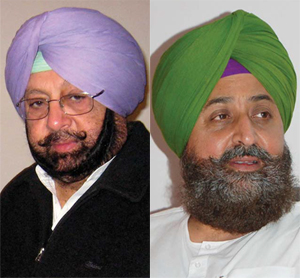
    NEW DELHI (TIP): The Congress on March 5 effected a generational shift in its Punjab unit. Capt Amarinder Singh, 71, was removed from the post of Punjab Pradesh Congress Committee (PPCC) president and replaced by Gurdaspur MP Partap Singh Bajwa. Harish Chowdhary, an MP from Barmer and secretary of the All-India Congress Committee, has been entrusted with the responsibility of looking after party affairs in Punjab. The announcement about the change of guard in the Punjab Congress was made by AICC general secretary Janardan Dwivedi around 10.35 pm. The change would come into force with immediate effect, he said. The appointment of Bajwa, 55, also indicated the shift in power centre from the Malwa region of the state to the Majha region — north of the Beas. Bajwa, was a minister in the Amarinder Singh-led Congress government in the state between 2002- 07. A student of DAV College, Sector 10, Chandigarh, he was first elected to the Punjab Assembly in 1992 when the Akalis had boycotted the poll and Beant Singh had gone on to form the government . In 2009, just ahead of the Lok Sabha poll, Bajwa, then a sitting MLA, was picked to challenge sitting three-time BJP MP Vinod Khanna from Gurdaspur, and Bajwa won.

    The removal of Amarinder Singh, a former Chief Minister and confidante of the Gandhi family, comes in the backdrop of Moga Assembly debacle in which a sitting Congress MLA, Joginder Pal Jain, first resigned from his seat and contested on the Akali Dal ticket to emerge victorious. The defeat led to schisms and a public spat with Amarinder Singh having issued show-cause notices to two sitting MLAs, Brahm Mohindra and Randeep Singh Nabha, for allegedly not participating in the Moga bypoll with full vigour. Amarinder Singh, whose wife Preneet Kaur is the Minister of State for External Affairs, was first appointed the PPCC chief in 1998. He went on to become the Chief Minister of the state in 2002.

    Just ahead of the 2009 Lok Sabha poll he was again made the PPCC Chief with the Congress hoping for good performance. Being former Prime Minister Rajiv Gandhi’s schoolmate, Amarinder Singh was on very good terms with him, and hence he enjoyed a good rapport with Sonia Gandhi, too. From here on, unless he is absorbed into the central party leadership, it will be a politically slippery ride for the scion of the Patiala royal family.

    For Bajwa, things had been changing fast. On December 5, 2012, during a debate on FDI in Parliament, Akali Dal MP Harsimrat Badal chided him when she got up to oppose the decision of the government to bring in the FDI.

    A verbal duel ensued and Bajwa waved a letter written by Punjab Deputy Chief Minister Sukhbir Singh Badal last year in support of the Centre’s move to allow the FDI. “What happened to your stand? Here is the letter that your husband wrote last year supporting the FDI. Don’t you consult each other at home?” Bajwa needled Badal who hooted him down saying he was speaking to impress UPA chief Sonia Gandhi so that he could get appointed as the Punjab Pradesh Congress chief.

  • Gulzar Singh Ranike Returns As Punjab Animal Husbandry Minister

    Gulzar Singh Ranike Returns As Punjab Animal Husbandry Minister

    CHANDIGARH (TIP): Shiromani Akali Dal MLA Gulzar Singh Ranike, who had resigned on moral grounds in September last year following allegations of misappropriation of public funds in Attari constituency in Amritsar, was re-inducted into the Punjab cabinet as minister for animal husbandry and welfare of SC and OBC on March 7. Allegations of siphoning funds worth Rs 2.5 crore from money meant for central-funded Border Area Development Programme to fake accounts in Attari had been leveled against Ranike’s department. However, On February 27 this year, Punjab and Haryana high court had disposed of a petition for an investigation by the CBI or the Central Vigilance Commission (CVC), making the way clear for Ranike into the cabinet.

    Earlier, the vigilance bureau had given the clean chit to Ranike in the scam, while his former personal assistant (PA) Sarabdyal Singh was arrested and the case is pending in the court. “I stand vindicated today. My resignation last year was to uphold moral ethics in politics as well to maintain the dignity of the office so as to enable the inquiry by the Vigilance Bureau to proceed in a transparent and impartial manner” Ranike told TOI. Ranike’s induction has now brought the cabinet’s strength to 18 ministers in the 117-seat Vidhan Sabha assembly. Earlier, senior Akali leaders Tota Singh and Bibi Jagir Kaur had resigned from the cabinet in quick succession due to convictions by court. Their portfolios are with chief minister Parkash singh Badal.