Tag: Punjab

  • More Cases Of Alleged Sexual Assault Reported From Punjab, Haryana

    More Cases Of Alleged Sexual Assault Reported From Punjab, Haryana

    CHANDIGARH (TIP): Amid outrage and condemnation against the brutal Delhi gang-rape, more cases of alleged sexual assault were reported from Punjab and Haryana on Monday. However, the demand for immediate action against the perpetrators seems to have ensured swift action and police arrested the accused in most cases. Jhajjar police have booked two persons for allegedly abducting and raping a 19-year-old girl from Bahadurgarh. In her complaint, the victim said that she had gone for a walk in a park on Sunday when two persons – – Anil Kumar, 20, of Barahi village and Subhash Kumar, 30, of Sonipat district – – bundled her into a car and sped away.

    They raped her before dumping her near her residence the next morning. Jhajjar SP Anil Dhawan said the accused were booked under sections 365 (kidnapping or abducting) and 376 (rape) of IPC and arrested within hours of the complaint being lodged. In another case, a doctor allegedly raped a girl after inviting her to Ludhiana with the promise of getting her admission in a post-graduate course. He has been arrested and sent to police remand till January 1.

    According to the police, Kanwar Samrat was arrested after a complaint by a 29-year-old divorcee woman, who had got in touch with the accused from Samana through the internet. They had got engaged on May 22. Samrat called her to Ludhiana city on October 10 and violated her .When he neither got her an admission nor married her, she went to the police. “We have registered a case of cheating and rape against the accused on the basis of complaint. He was produced before the court which sent him to two days police remand.We are interrogating him,” a police officer said. Two more cases were reported in Amritsar.

    While police arrested a migrant worker for allegedly raping a minor girl for over four months, they have registered a case against a local, Milan Kapoor, for raping a woman on the pretext of marrying her and is now absconding. Police said Dhoti Yadav, a resident of Bihar, allegedly raped the 13-year-old girl repeatedly for months. In a similar case in Mansa, an Armyman has been booked for raping a 24-year-old woman for about two years on the pretext of marriage.When the girl came to know that her perpetrator, Sukhpal Singh, was already married, she approached the police on Saturday and was registered. Sukhpal is a resident of Chak Bhai Ka village and at present posted in Rajasthan.

    Similarly in Ferozepur’s Jhirka town, three youths were arrested for allegedly raping and blackmailing an 18-year-old girl for six months, said SP Sukhbir Singh. The victim, in her complaint, had alleged that the accused had raped her and made an MMS of the same for the purpose of blackmailing, he said. In Gurdaspur district, a labourer Radhey Shyam was arrested on Saturday for allegedly raping and killing a minor girl, police said. The 13- year-old’s body was found in a sugarcane field at Hassanpur village. In Jalandhar, four persons were arrested for allegedly raping a minor girl in Bhogpur area and making her pregnant, local SHO B S Bajwa said. A youth Abhimanyu was arrested by the Mohali police for allegedly molesting a girl and making an MMS of the act after taking the victim to Kasauli in Himachal Pradesh on the pretext of attending a marriage, SSP (Ludhiana) G P S Bhullar said.

    Meanwhile, a 19-year-old student of a private engineering college, arrested for allegedly abducting and raping his dalit classmate in Kurukshetra, was produced in a court on Monday and remanded in judicial custody. Both the victim and the accused, Gugandeep Virk, are BTech students of a private engineering college in Karnal.In Sirsa, students blocked the Sirsa-Hisar-Delhi highway for more than an hour on Monday, demanding death penalty for the Delhi gang rape and murder accused and a new legislation to curb crime against women. The entire traffic on NH-10 had to be diverted from Sirsa bypass as students refused to lift the blockade and raised slogans demanding death penalty to the rapists and murderers. Roshan Suchan, a student, said, “The rapists must be hanged and the government must bring fast track courts to dispose of all rape case.” Heavy police force was rushed to the spot and students were finally persuaded to lift the blockade.

  • Maharaja Ranjit Singh Haveli In Pak Losing Its Sheen

    Maharaja Ranjit Singh Haveli In Pak Losing Its Sheen

    AMRITSAR (TIP): Land grabbers in Pakistan have completely brought down the front portion of the haveli of “Sher-e-Punjab” Maharaja Ranjit Singh situated in Gujranwala, historian Surinder Kochhar said. Earlier, Pakistan government had converted a portion Maharaja Ranjit Singh’s ancestral haveli into a garbage dump. Maharja Ranjit Singh was born in this haveli, the lower floor of which was being used as a police station for long after the partition.

    Expressing differences with the recent statement of minister of state for external affairs Preneet Kaur,who had claimed that the haveli was safe, Kochhar said that he obtained a photograph of the haveli from his acquaintance in Gujranwala on Monday morning which revealed the present condition. He said that the process of razing the haveli had started on instigation of a Member National Assembly of Muslim League in January 2012. He said that Pakistani government had removed the garbage dump but had started using the place as a parking area. He said that many locals use the haveli as a gambling den which was seen in the photograph. He appealed the government to take a swift action and save the haveli.

  • Punjab Assembly Standoff Continues

    Punjab Assembly Standoff Continues

    Cong ‘battles’ outside House; mediator Madan Mohan Mittal jostled, falls
    CHANDIGARH (TIP): An attempt by the SAD-BJP government to end the standoff with the Opposition Congress in the Punjab Assembly failed on December 20. Mediator Madan Mohan Mittal was jostled and suffered a fall even as the Congress took its agitation outside the Assembly by holding a candlelight vigil at Sector 17 Plaza in Chandigarh this evening. There was high drama in the Assembly building, too. Congress legislators tried to walk into the Speaker’s chamber, but found their way blocked by police personnel. Police personnel misbehaved with two women members, the Congress alleged.

    The SAD, which had been changing its strategy in the Assembly frequently, did so again this morning with Deputy Chief Minister Sukhbir Singh Badal moving a resolution to reinstate Congress legislator Rana Gurjit Singh who was expelled yesterday for advancing menacingly towards Revenue Minister Bikram Majithia and abusing him. Though Sukhbir maintained the reinstatement of Rana Gurjit was made in an effort of reconciliation, the SAD was apparently keen to get the Opposition back to the House to listen to the Deputy CM’s reply on law and order issues raised by Congress legislature party leader Sunil Jakhar.

    Parliamentary Affairs Minister Madan Mohan Mittal proposed an adjournment and a meeting in Speaker Charanjit Singh Atwal’s chamber to effect reconciliation. Accordingly first secretariat staff and then senior Akali leaders Parminder Dhindsa, Sharanjit Dhillon and Daljeet Singh Cheema requested the Opposition to come to the Speaker’s chamber for a meeting. The Opposition, however, refused to do so.Madan Mohan Mittal went to the agitating Congress legislators staging a dharna in the Assembly lobby.When he approached the Congress members, there was some pushing and jostling during arguments and he, along with Congress MLA Brahm Mohindra, fell on the floor.

    Mittal came back to the Assembly and “reported” that Congress members had misbehaved and manhandled him following which the House passed a resolution condemning the action. On behalf of the Congress, Jakhar said the party had lost faith in both the Deputy CM and the Speaker and that it would hold talks with only Chief Minister Parkash Singh Badal. That could not be done because the CM was away to Nabha to attend the last rites of former minister Raja Narinder Singh. The Congress went on to hold a candlelight vigil in the Sector 17 Plaza in Chandigarh.

    During the candlelight vigil, it telecast what Bikram Majithia said against Rana Gurjit in the Assembly yesterday. Meanwhile, Speaker Charanjit Atwal has denied that that he had been partial towards anyone. Terming whatever happened in the Assembly yesterday as unfortunate, he said he did not hear either Rana Gurjit or Bikram Majithia uttering abuses. “But the SAD-BJP moved a resolution demanding Rana’s expulsion in case he did not apologise for abusing Majithia, which I put to vote. This was my duty,” he said.

  • Don’t expect Modi to be BJP’s next PM candidate: Swaminathan S Anklesaria Aiyar

    Don’t expect Modi to be BJP’s next PM candidate: Swaminathan S Anklesaria Aiyar

    It is a fantastic achievement that he has won the third election in a row with an increased majority and higher vote share. Does this mean that he is the next prime ministerial candidate? I am afraid, absolutely no. Do not just look at the result in Gujarat, look at the result in Himachal. Narendra Modi went to campaign for the party in Himachal Pradesh. In Himachal Pradesh, you had a party which had been doing about 8% GDP growth, good social indicators, doing quite well. Modi went and campaigned out there and it was a complete flop show.

    Earlier this year, there were state elections in Uttar Pradesh, Punjab and Uttarakhand where Modi was asked to campaign. He refused to do it. He was busy with Sadbhavana Programme. So we do not know what impact Modi would have done. However, while the BJP did badly in Uttar Pradesh, it won along with the Akali Dal in Punjab and it only lost in Uttarakhand. Overall, it was not a bad performance of the BJP, minus Modi. Now that has to be compared with what the performance of Himachal Pradesh with Modi was and that was a total flop show. So I would say the big thing that comes out is that the moment Mr Modi goes outside Gujarat, his midas touch disappears and if this is the case, what are his credentials as a national leader?

  • World Kabaddi Cup a Step in the Right Direction

    World Kabaddi Cup a Step in the Right Direction

    The ancient game of Kabaddi is enshrined permanently in the mind of every son of the soil Punjabi. In olden times, it used to be played on the dusty grounds of village common land. There used to be no hard and fast rules of the game. Sometimes the raiders indulged in tactical cheating during chanting of words “Kabaddi Kabaddi” or “Kaudi Kaudi”. In Punjabi style one raider was the attacker and one defender used to stop him. A deliberate touch by a raider targeting two attackers resulted in the point going to the defenders. In a reverse situation, if two stoppers tried to stop the raider one after the other or simultaneously, the point went to the raider.

    Throwing the opponent, raider or defender, out of the ground resulted in a point. This has always been the game of strength, stamina, lung power and agility on the part of the raiders and the defenders. Prior to the independence of India, this game was quite popular in all the five administrative divisions of the Province of Punjab. It was more popular in Lahore and Jalandhar divisions and least popular in Ambala division.

    But now it is popular all over the Indian Punjab and is played equally passionately across the Radcliffe Line in Pakistan’s Punjab. Needing just a pair of shorts and not even requiring formal shoes, this used to be and still is a very inexpensive game. But in order to stay physically fit, the player has to be given strength and stamina building diet and exercise. In olden times a lot of stress was laid on eating butter.

    This culture still prevails, but now some of the athletes are eating a lot more diverse diet. During the nineteen fifties, a lot of Sikh youths settled in the United Kingdom. At about the same time and a decade and two later, Sikh Diaspora spread to Canada also. These expatriate Sikhs passionately love Kabaddi. When they visit their ancestral homes in India, they want to see Kabaddi being played in their respective villages. In order to see that they spend quite a considerable amount of money to arrange Kabaddi tournaments in their mostly non-descript villages. These impromptu tournaments have become very popular in the rural areas of the Punjab.

    In the last two decades there were hundreds of such tournaments held in villages all across Punjab during the six month window from October to April. As the game is flourishing, rules are also getting defined and enforced meticulously. Now the raider has to return to the dividing line in half a minute. Crossing to one’s own side after touching a defender at any spot, other than the designated return line, results in a point being awarded to the defender.

    Slapping the opponent, raider or the defender, results in point being awarded to the opponent. Sensing the enormous popularity of Kabaddi, the Punjab Government in India decided to embrace it. Deputy Chief Minister Sukhbir Singh Badal started the first edition of World Kabaddi Cup in 2010 in a grand style. The matches were held over several venues all over the Punjab. Kabaddi is now played regularly in Pakistan, the United Kingdom, Canada and the United States. India won the inaugural cup and a handsome amount of money.

    The tournament was telecast by PTC TV channel all over India and in several countries, where PTC’s footprint exists. Last year (2011) saw more teams participating. Nice arrangements were made for board and lodging of the teams. Italy was a surprise entry into the semifinal. Several players from the United States and the Canadian teams were disqualified after being found positive in dope tests. In addition to men, several women’s teams were also invited to participate. This created gender equality in this hitherto rural sport. India had a decisive edge in women’s group. In the year 2012, the “Third World Cup Kabaddi Tournament” was held from the first to the 15th of December. The matches were spread in several locations all over the state.

    A glittering several hours long opening ceremony was held in Bathinda on December 1st. The other venues included the holy and premier tourist city of Amritsar, Gurdaspur, Chohla Sahib (Tarntaran), Jalandhar, Hoshiarpur, Fazilka, Faridkot, Mansa, Sangrur, Ropar, Bathinda and Ludhiana. In the men’s category in addition to the host nation India, Argentina, the USA, Canada, England, Scotland, Norwey, Italy, Sierra Leone, Kenya, Iran, Afghanistan, Pakistan, New Zealand and Srilanka accepted the invitation to participate.

    In the women’s section, USA, Canada, England, Denmark, Malaysia, Turkmenistan and India participated. Nepal eventually failed to show up for the matches. The winning team in men’s section in 2012 was offered two crore of rupees and the runners-up team was offered a prize of one crore of rupees. The team finishing at number three was offered half a crore of rupees. These are indeed huge prizes unseen in the history of the game. There have been some problems in the organizational structure of the tournament.

    The buildings of the stadiums are quite good, but the playing fields left much to be desired. Barring a couple of stadiums in Amritsar and Ludhiana, rest of the playing fields were devoid of a decent grass cover and the soil was very hard. Kabaddi players in the European and American countries are used to play on lush green grass turfs. When they are made to play on hard dry soil, their performance level suffers. That is one reason as to why the Canadian and the American teams could not perform to their capacity.

    The teams that entered the semifinal included three teams from Asia. These are Iran, Pakistan and India. The fourth qualifier was the Canadian team. The team from the USA was narrowly beaten by Iran. Both India and Pakistan toyed with their semifinalist rivals. Indian crushed Iran and Pakistan mauled team Canada. In the women’s group also the competition in 2012 was of a much higher level. The Canadian and the Malaysian teams consisted of mostly players of Indian descent. The out of practice Canadian girls played poorly, but the hard working Malaysians covered themselves with glory and entered the final. Two European teams, the English and the Denmark teams also were impressive. Turkmenistan team was very good too. But the Indian players were outstanding.

    This successfully conducted tournament is likely to boost the economy of Punjab. A lot of tourists have been visiting the state to watch this tournament. Some of the participating teams are staying behind in Punjab to play in several village level tournaments to be held in the months of December and January. The two African teams Kenya and Sierra Leone are also staying behind to get more match practice and to master the finer points of the game.

    Both finals and the grand closing ceremony were held in the multipurpose Guru Nanak Stadium in Ludhiana on the night of Saturday December 15th. In the men’s final India crushed arch rivals Pakistan by 59 points to 22. Canada crushed Iran on December 13th in Jalandhar to win the third place and a prize of one hundred thousand dollars. In the final of women’s category on December 15th, in a one sided encounter India toyed with Malaysia.

    The third place in women’s group was won by Denmark by defeating England on December 13th. This was a very closely contested match. The young school and college going girls from Denmark impressed everyone. The dazzling closing ceremony was dominated by the film industry of Bollywood. Katrina Kaif was the star of the night. Film and pop singers Diljit Singh and Sukhvinder Singh kept the jam-packed stadium entertained. Punjab’s most popular TV anchor Satinder Satti was the master of ceremony. In the end there was an impressive show of fireworks. At the end the flame was extinguished, with a promise to hold another edition in 2013. Katrina Kaif and troupe entertain at one of the venues

  • SAD Sarpanch Held for Slapping Sanaur Superintendent

    SAD Sarpanch Held for Slapping Sanaur Superintendent

    PATIALA (TIP): The Civil Lines police arrested the Shiromani Akali Dal (SAD) sarpanch of Rathiya village late on December 12 night for allegedly slapping the superintendent of panchayat and rural development department posted in Sanaur office of department. Superintendent Jaspal singh had alleged on Wednesday that he was slapped by SAD sarpanch of Rathiya village Sukhjit Singh .

    “We have registered a case against sarpanch for assaulting government employee and arrested Sukhjit on Wednesday night,” said SHO Civil Lines police station Ranbir Singh. Sukhjit was sent in judicial remand by a court on December 13. Immediately after the incident, Tejinderpal Sandhu , area incharge of ruling SAD, had disowned the sarpanch and even said that he belongs to Congress party. But sarpanch himself and senior Congress leaders of Patiala said, sarpanch belongs to SAD as he joined it before last assembly elections and campaigned for Sandhu.

    Vice president of Punjab Pradesh Congress Committee and former minister Lal Singh had also said, Sukhjit had leftCongress before last assembly elections and joined the SAD.

  • Malawi appoints Bobby K. Kalotee ‘Liaison Envoy’

    Malawi appoints Bobby K. Kalotee ‘Liaison Envoy’

    NEW YORK (TIP): President Joyce Banda of the Republic of Malawi has appointed a prominent Indian American Bobby K. Kalotee as Malawi’s “Liaison Envoy” to India, Pakistan and Bangladesh. President said Bobby will be the bridge to fill in the gap between Malawi and the South Asian Countries. It’s an endeavor to rebuild Malawi’s economy. The Government of Malawi has instituted a recovery program called Malawi Economic Recovery Program (ERP). This is an economic road map that has identified five strategic sectors that collectively constitute the driver of the Economic Recovery Process.

    The President added Malawi being an Agro Based economy, agriculture is at the heart of the program as it seeks to fully commercialize and industrialize the sector.

    President is confident that Bobby will utilize the knowledge he gained growing up in the farmland of Punjab (Punjab is known to be the bread basket of India). President has sent a directive to all embassies of Malawi in South Asian Region to assist the new Envoy in achieving “our goals for the best interest of Malawians”. Jack Brewer former NFL legend and presently Senior Advisor to Hon. President Joyce Banda read out the Letter of Appointment to the attendees at the special function held in Long Island to celebrate the appointment.

    The appointment letter, inter alia, said,” Bobby’s goal will be to facilitate relationships and make improvements in the area of Agriculture and health care in Malawi”. Bobby K. Kalotee said he humbly accepted the honor which “the President, the People and the Government of Malawi have bestowed on me.” He said, “I will devote and work hard to assist and help Malawi to achieve the goals of the President’s initiatives.

    I ask all my fellow South Asians to graciously join me in this humanitarian effort to empower the People of Malawi in the field of agriculture and health care. Just as Punjab has become the agricultural pinnacle of India and Pakistan, they will be used as a model to show the people of Malawi how to achieve the same”. Bobby firmly believes that Malawi can be the bread basket of south east Africa. The special event was attended by over 400 People, with over 25 prominent leaders from different communities who spoke and echoed similar feelings about Bobby’s charitable disposition.

    At times of crises, such as the earthquake, floods or other natural disasters anywhere in the world, Bobby was at the forefront with containers of clothes, food, blankets, medicine, tents and basic items for kids at the time of their needs. NYC Public Advocate Bill DeBlasio was the guest of Honor.

  • Inder Kumar Gujral A Gentle Statesman Prime Minister

    Inder Kumar Gujral A Gentle Statesman Prime Minister

    Born on the 4th of December in 1919, in the district headquarter town of Jhelum in the then Rawalpindi division of pre-1947 united Punjab, former Prime Minister of India Shri Inder Kumar Gujral died just four days short of turning ninety three on October 30, 2012.

    Throughout his long eventful life, he remained a very decent and gentle human being. He never ruffled any feathers. His father Avtar Narain Gujral, a freedom fighter, and mother Pushpa Gujral were both very suave and soft spoken individuals and social workers. Academically Inder Kumar Gujral was a very bright student. He completed his education up to 10th standard from his native place Jhelum. For his college education he moved to Punjab’s capital of Lahore, from where he graduated in arts.

    While studying in Lahore, he inculcated love and affinity for Urdu/Persian as a language and developed special interest in Urdu poetry and became an ardent listener of “Ghazals. He especially liked the voices of Kundan Lal Saigal, Mallika Pukhraj, Mehdi Hassan and Begum Akhtar.While studying in Lahore, he came in contact with some freedom fighters and some left leaning student activists. He was always considerate towards the poor and the under privileged and this tendency brought him into the fold of the Communist Party of India for some time.

    In 1947, India attained its hard fought independence from the British Raj, which resulted in painful partition of the province of Punjab. Ugly riots of unseen dimensions erupted thereafter and a lot of humanity was massacred for no reason or rhyme. Inder Kumar Gujral’s parents entered India through the bloody Lahore – Amritsar corridor and finally settled in Jalandhar, but Inder Kumar Gujral himself, along with his wife traveled all the way to Karachi, from where they sailed to Bombay. From Bombay they came by train to New Delhi, where they virtually starved at the railway station for three days and nights.

    Eventually Inder Kumar Gujral settled in New Delhi, but maintained a strong bond with his parental place of residence in Jalandhar. Mrs. Indira Gandhi liked Mr. Gujral’s uncommon humility and intellectual brilliance. She made him the union minister for information and broadcasting during early nineteen seventies. As a minister Mr. Gujral strengthened the Urdu Service of All India Radio with high powered medium-wave transmitters located at Rajkot and Jalandhar. He streamlined all the language services to the neighboring countries like Pakistan, Bangladesh, Tibet, China, Afghanistan, the Middle-East and Iran.

    He was also instrumental in taking first steps towards expansion of government owned television services in several important areas away from New Delhi. Under his able stewardship, government television was successfully introduced in Bombay, Amritsar and Srinagar and several other projects all over India were planned, which included the establishment of a modern television studio complex for the state of Punjab in Jalandhar. After the promulgation of national internal emergency in 1975, Mrs. Indira Gandhi took away the portfolio of information and broadcasting from I.K. Gujral.

    She sent him to Moscow as India’s Ambassador to the Soviet Union. This was a very important assignment. His stay in Moscow was instrumental in furtherance of Indo-Soviet cooperation. When Mrs. Indira Gandhi lost power in the general elections of 1977, her successor Morarji Desai did not replace him and kept him in his Moscow assignment throughout his own two year long tenure. After P.V. Narsimha Rao’s scandal ridden five year tenure was over in 1996, the Congress was badly defeated.

    Even the main opposition the Bharatiya Janata Party could not win enough seats to form a government on its own. At that time a coalition government under the banner of united front government headed by Deve Gowda of Karnataka was formed in New Delhi. It was supported by the Congress from outside. Mr. Gujral served as the Union Minister of External Affairs of India.

    Within ten months the patience of Congress ran out and Dewe Gouda was shown the door. He was replaced by his most gentle foreign minister, a suave and humble parliamentarian Inder Kumar Gujral. During his scandal free but not too long prime ministerial tenure in 1997, Mr. Gujral improved India’s relations with all the neighboring countries including Pakistan, China and Bangladesh.

    Unfortunately his term was also abruptly cut short. As the Prime Minister I.K. Gujral did a lot for Punjab. He wrote off entire loan obtained by the Government of Punjab to fight militancy during the eighties and nineties. He strengthened the broadcasting services in Punjab by strengthening the existing medium-wave transmitters with high powered ones. He wanted to establish an international airport in Punjab, which could serve the needs of the Punjabi diaspora spread all over the world.

    His desire was to establish this airport on the Jalandhar – Kapurthala Highway. But land was too expensive in that area. Eventually he agreed to let the existing Rajah Sansi Airport on the outskirts of Amritsar to be upgraded to an international airport. For Jalandhar, however he did a lot. As prime minister he took personal interest to sanction money for a lot of road over rail bridges.

    In Kapurthala, he sanctioned the establishment of an ultra-modern high tech science city, which is now the biggest tourist attraction of Kapurthala and the Bist Doab region.

    For the past few months in 2012, he was not keeping good health. When he breathed his last on Friday November 30, the entire nation was plunged into mourning for a departed gentle statesman. A seven day mourning has been ordered by the Government of India.

    During this periods, the national flag of India will fly all over the world at half mast.We salute Inder Kumar Gujral for what he was and what he stood for.

  • Former Prime Minister Inder Kumar Gujral Passes Away at 92

    Former Prime Minister Inder Kumar Gujral Passes Away at 92

    Govt declares 7-day national mourning | Prez, PM, top leaders express grief
    NEW DELHI (TIP): Former Prime Minister Inder Kumar Gujral, who headed a Congress-supported coalition government in 1997-98, died at a hospital in Gurgaon November 30 afternoon following a brief illness. He was 92. Gujral was hospitalized on November 19 after a lung infection. He had been put on ventilator as his condition had deteriorated. He had been on dialysis for a year. Gujral is survived by his sons, Naresh, an Akali Dal MP in Rajya Sabha, and Vishal, two grand-daughters and a grandson. His brother is noted artist Satish Gujral and he has three sisters. His wife Shiela had died last year. Gujral’s body was taken from hospital to his official residence, 5 Janpath, where it will be kept for the public to pay their respects till noon.

    The Government has declared a seven-day state mourning throughout India and cancelled all functions till December 6. Gujral was born to Avtar Narain and Pushpa Gujral at Jhelum in undivided Punjab on December 4, 1919. He belonged to a family of freedom fighters and participated in the freedom struggle. Educated at DAV College, Hailey College of Commerce and Forman Christian College, Lahore (Pakistan), Gujral was sworn in as the 12th Prime Minister of India on April 21, 1997. Known for his Left-leaning yet liberal ways, Gujral was very close to Indira Gandhi at one point of time. He became a member of the Rajya Sabha in April 1964 and was part of the “powerful coterie” around Indira that helped her become Prime Minister in 1966 following Lal Bahadur Shastri’s death.

    He became the Information and Broadcasting Minister in 1975 during the time of permit-quota raj when the I&B Minister could virtually control the supply of newsprint. Television, other than Doordarshan, was non-existent. Gujral was tasked to manage the much-criticized job of press censorship during Emergency. Before becoming PM, Gujral was External Affairs and Water Resources Minister. He also served as India’s Ambassador to the USSR. He was a Rajya Sabha member twice between 1964 and 1976 and a member of the Lok Sabha from 1989 to 1991. With Lalu Prasad’s help, he became a member of Rajya Sabha in 1992 after his election from Patna Lok Sabha constituency was countermanded. He was re-elected to the Lok Sabha in 1998 from Jalandhar as an Independent with Akali Dal’s help.

    The equation between the Gujral family and Akalis changed forever. PS Badal was so happy at the militancy-period loan waiver given by Gujral as PM that it blossomed into a personal friendship. During his tenure as PM, Gujral recommended President’s Rule in UP in 1997, which the then President KR Narayanan refused to sign. He propounded the “Gujral Doctrine” of five principles for maintaining good relations with the neighboring countries. That became the hallmark of his policy with countries in South Asia, especially Pakistan.

    Tributes
    I personally have lost a friend of long standing, whose wisdom, idealism and deep concern for social equity left a reat impression on me and whose counsel and opinion I often sought and valued greatly. – Manmohan Singh,Prime Minister

    Ability, sagacity and deep understanding of national and international affairs coupled with genuine warmth made him widely admired and respected. – Sonia Gandhi,Congress president

    Gujral was a versatile politician and a thinker who served the nation in various capacities with utmost dedication and sincerity. – Nitin Gadkari, BJP president

    Gujral was a good administrator who strove for the uplift of the poor. My heartfelt sympathies to his family members. – Shivraj V Patil, UT Administrator

    Gujral was a seasoned parliamentarian. My heartfelt sympathies to the members of the bereaved family. – Bhupinder Singh Hooda, Haryana CM

    Gujral’s demise is a great loss for the country. The void created by his death will be difficult to fill. – Vijay Bahuguna, Uttarakhand CM

    He was a nice human being, a gentleman to the core and a good friend. He was the PM when I was given peerage in 1996. He called me up to congratulate me and suggested that I be called ‘Lord Paul of Jalandhar’ as he knew I was born in
    Jalandhar. – Lord Swraj Paul

    Gujral was a real statesman who took active part in the Indian Freedom Struggle and was imprisoned for taking part in the Quit India Movement. His contribution as PM and External Affairs Minister will always be remembered. – PK Dhumal, Himachal Pradesh CM

    He was a veteran statesman who served the nation with distinction as Ambassador to the USSR, as a Union Minister and
    finally as the Prime Minister. – Pawan Kumar Bansal, Union Minister of Railways

    Gujral was an eminent statesman, a distinguished parliamentarian and above all, a great human being. – Farooq Abdullah, Union Minister for Renewable Energy

    Gujral was a true son of the soil as he was instrumental in waiving the longpending debt of Punjab during his stint as
    Prime Minister. He had deep regard and passion for Punjabi culture, language and literature. He was a true votary of Punjab, Punjabi and Punjabiat.

  • Indian American Killed in Home Invasion

    Indian American Killed in Home Invasion

    MONTE SERENO (TIP): Raveesh ‘Ravi’ Kumra, an Indian American multimillionaire venture capitalist was killed in his home in Monte Sereno on Nov 30.

    The victim’s wife Harinder informed police that their house was attacked by four burglars, who killed her husband, reports The Daily Mail. Kumra is the director of Oneness Foundation and the former owner of The Mountain Winery, a prominent vineyard in Saratoga. Later on in the year 2002 he founded the venture capital firm Tesla Capital, a foreign LLC.

    The people of Monte Sereno are shocked and surprised regarding the news, since the area is very quiet, without any incidents of crime reported so far. ‘It’s a neighborhood of very large homes, and several have expansive estates,’ police Sgt. Kerry Harris said. ‘Monte Sereno is an extremely safe community. We consider this to be an isolated incident. There’s no indication that this is the beginning of a violent crime wave in Monte Sereno’, as reported by The Daily Mail. Kumra, a native of Kartarpur in Punjab had emigrated to the U.S. in 1970.

  • Punjab Policeman Killed for Confronting Daughter’s Stalkers

    Punjab Policeman Killed for Confronting Daughter’s Stalkers

    AMRITSAR (TIP): Three men including an activist of Akali Dal allegedly murdered an Assistant Sub Inspector (ASI) of the Punjab Police in broad day light for stopping them from teasing his daughter. The incident that took place on the main GT road, meters away from Chehhertta Police station sent shock waves across Amritsar. The deceased ASI was identified as Ravinder Pal Singh posted the Gharinda Police station near Attari Border. The Police have registered a case under section 302 and arms Act against one Ranjit Singh Rana, Gurveer Singh and one unidentified person. Rana is learnt to be one of the general secretaries in the district body of the Akali party. The incident took place between 3:00pm to 3:30pm and even after the residents there raised alarm, the city police failed to reached the spot. The accused fired three bullets at the ASI. Two hit his leg and foot while the third hit him near his chest. Daughter of the cop was also injured. Police claimed that some splinter hit the girls arm. Some men near Chehhertta area would tease ASI’s daughter. On December 5 afternoon again when the girl spotted the SUV of the persons who teased her, she called up her father ASI Ravinder Pal Singh.

    As the ASI reached the spot, there was some altercation between the cop and the accused after which the accused fired in the legs of the ASI with a pistol. Thereafter they ran away but after about 20 minutes, the accused came back again with a rifle and fired in the chest of the ASI. And after murdering the cop, the accused drove away. Although the ASI was rushed to a local hospital, he was declared dead. SSP Amritsar (rural) P.S. Virk, who reached the hospital said, “The daughter of the ASI studied in a tuition and was teased by the accused. We have learnt that there were three people in the SUV. The accused have been identified.” When contacted Amritsar Police Commissioner Ram Singh said, “The girl had told her father ASI Ravinderpal Singh that she was teased by some boys. When again on Wednesday, the girl spotted the boys, she called her father. AS ASI reached there, there was some argument and later the accused fired at the cop, who died.” On a question regarding Akali connection of accused Rana, the Commissioner of Police Ram Singh said, “ I am unaware of that.” No accused has been arrested yet, he added. Although the police did not confirm, but sources claimed that Rana had fired at the cop. “We are still investigating this,” said Commissioner Ram Singh.

  • I.K. Gujral – a Profile

    I.K. Gujral – a Profile

    A suave gentleman, Gujral who was easy in every role, was passionately committed to friendship between India and Pakistan

    Inder Kumar Gujral was a rare breed of political persona who switched roles seamlessly from a practitioner of diplomacy to the rough and tumble of politics that took him to the pinnacle of political power as the Prime Minister of India.

    For someone born in a family of Congress workers at Jhelum, now in Pakistan on December 4, 1919, Gujral’s early political thoughts were influenced by the communist, worked closely with Prime Minister Indira Gandhi in the middle and drifted towards socialists in the end.

    Gujral’s family was among the thousands that crossed over to India from Pakistan post-Partition, and in his autobiography “Matters of Discretion”’, the former Prime Minister dwelt at length speaking nostalgically of his childhood days in Jhelum in West Punjab and the pangs of separation.

    It is perhaps the umbilical ties with undivided Punjab that drove the process to take India-Pakistan relations on a
    different plane. In fact, a few months before he was chosen by the Janata Dal to lead the United Front Government at the Centre, the then Pakistan Premier Nawaz Sharief had commented that India never had a Prime Minister from Punjab.

    Gujral began his career in politics as a student leader. He was arrested in 1942 and jailed for his involvement in the Quit India movement. Gujral got elected first to the Electoral College of Delhi and served as the Vice President of New Delhi Municipal Council. At the end of the tenure in 1964, he was elected to the Rajya Sabha where he served two consecutive terms till 1976.

    It was during this period that a storm was brewing in the Congress. The post-Nehru and Shastri-era saw the emergence of Indira Gandhi and her struggle against the ‘old guard’. The phase saw the young Gujral being drawn into the vortex marking his presence in the corridors of power.

    Such was his rise and proximity to the changing structure of power that Gujral was bracketed as someone in the early version of Indira Gandhi’s ‘kitchen cabinet’.

    Interestingly, in his book Gujral describes Indira Gandhi as a “split and very complex personality,” who could be mean, petty, and vicious yet large-hearted, gracious and charming.

    Gujral, however, held grudging respect for Indira Gandhi in whose Council of Ministers he served as a Minister of State for Parliamentary Affairs and Communications, Information and Broadcasting, Works, Housing and Urban Development and later Planning.

    While students of politics were fortunate that Gujral left behind his memoirs for posterity, unfortunately he preferred not to elaborate as to why he fell out of favour with Indira Gandhi. Reports later suggested that he was not particularly keen to implement censorship that came in the wake of internal emergency. It is perhaps the gentleman-politician him that made Gujral avoid reference to the period or that of the rise of Sanjay Gandhi.
    For Gujral, a self-confessed Communist, his posting as India’s Ambassador to the then USSR between 1976-1990 served as springboard for his role later as the External Affairs Minister during the 1989-90 VP Singh’s Government.
    His days in Moscow allowed Gujral to follow the India’s foreign policy from close quarters especially since Indira Gandhi had excellent personal equations with the top Soviet leaders and the back and forth communication between New Delhi and Moscow through him.

    After his return from Moscow in 1980, amid growing distance from the Congress under Indira Gandhi, his intellectual and political thought was stimulated in the company of the leaders with socialist leanings.
    The period saw national upheavals and Gujral attending Opposition conclaves in various parts of the country, studying trouble in Jammu and Kashmir, the ‘Mandal’ upsurge and the ‘Mandir-Masjid’ issues that dominated political discourse in the country.

    During his tenure as the External Affairs Minister in the VP Singh Government, he expounded the Gujral doctrine which he expanded later first in his second stint in the Ministry of External Affairs under H D Deve Gowda and later as Prime Minister between April 1997 and March 1998. Among the books he published is one on ‘A Foreign Policy for India’.
    At a time when the United Front was under pressure to change Prime Minister Deve Gowda, Gujral emerged the front-runner. In fact, Gowda cautioned Gujral against assuming the mantle under such circumstances. The Congress withdrew support to the Janata Dal Government during March 1998 over the continuation of the DMK in the coalition Government in the wake of Jain Commission of Inquiry into Rajiv Gandhi assassination.

    During his tenure, a controversial decision to impose President’s Rule in Uttar Pradesh was returned by President KR Narayanan.

    IK GUJRAL-TIMELINE

    Born on December 4, 1919 in Jhelum town now in Pakistan
    Actively participated in the Freedom Struggle and was jailed in 1942 during the Quit India Movement
    Educated at DAV College, Haily College of Commerce and Forman Christian College, Lahore
    Gujral became vice-president of the New Delhi Municipal Committee in 1958
    He formally joined Congress and six years later, Indira Gandhi gave him a ticket with which he entered Rajya Sabha in April 1964
    He was part of the ‘coterie’ that helped Indira Gandhi become Prime Minister in 1966
    In Indira Gandhi’s government, he held several portfolios as Union Minister for Communications, Parliamentary Affairs and Housing
    He was Information and Broadcasting Minister when Emergency was imposed (on June 25, 1975), which brought in arbitrary press censorship
    As he refused to kowtow to the powers-that-be, he was taken out of the ministry and sent by Indira Gandhi as Ambassador to Moscow
    He continued even during the tenures of her two successors – Morarji Desai and Charan Singh
    He left the Congress to join the Janata Dal in the late-1980s
    Gujral became External Affairs Minister in the VP Singh-led National Front government in 1989
    He had a second stint as External Affairs Minister in the United Front government under HD Deve Gowda, whom he later replaced as PM after the Congress withdrew support in the Summer of 1997
    Gujral served as the 12th Prime Minister of India from April 1997 to March 1998
    He breathed his last in a private hospital in Gurgaon at 3.27 pm on November 30, 2012 after a multi-organ failure. He was admitted to the hospital on November 19 with a lung infection

  • Former Prime Minister Inder Kumar  Gujral passes away at 92

    Former Prime Minister Inder Kumar Gujral passes away at 92

    Former Prime Minister Inder Kumar Gujral passes away at 92

    Govt declares 7-day national mourning Prez, PM, top leaders express grief


    NEW DELHI (TIP): Former Prime Minister Inder Kumar Gujral, who headed a Congress-supported coalition government in 1997-98, died at a hospital in Gurgaon November 30 afternoon following a brief illness. He was 92.

    Gujral was hospitalized on November 19 after a lung infection. He had been put on ventilator as his condition had deteriorated. He had been on dialysis for a year.

    Gujral is survived by his sons, Naresh, an Akali Dal MP in Rajya Sabha, and Vishal, two grand-daughters and a grandson. His brother is noted artist Satish Gujral and he has three sisters. His wife Shiela had died last year.
    Gujral’s body was taken from hospital to his official residence, 5 Janpath, where it will be kept for the public to pay their respects till noon. The Government has declared a seven-day state mourning throughout India and cancelled all functions till December 6.

    Gujral was born to Avtar Narain and Pushpa Gujral at Jhelum in undivided Punjab on December 4, 1919. He belonged to a family of freedom fighters and participated in the freedom struggle. Educated at DAV College, Hailey College of Commerce and Forman Christian College, Lahore (Pakistan), Gujral was sworn in as the 12th Prime Minister of India on April 21, 1997.

    Known for his Left-leaning yet liberal ways, Gujral was very close to Indira Gandhi at one point of time. He became a member of the Rajya Sabha in April 1964 and was part of the “powerful coterie” around Indira that helped her become Prime Minister in 1966 following Lal Bahadur Shastri’s death.

    He became the Information and Broadcasting Minister in 1975 during the time of permit-quota raj when the I&B Minister could virtually control the supply of newsprint. Television, other than Doordarshan, was non-existent. Gujral was tasked to manage the much-criticized job of press censorship during Emergency.

    Before becoming PM, Gujral was External Affairs and Water Resources Minister. He also served as India’s Ambassador to the USSR. He was a Rajya Sabha member twice between 1964 and 1976 and a member of the Lok Sabha from 1989 to 1991. With Lalu Prasad’s help, he became a member of Rajya Sabha in 1992 after his election from Patna Lok Sabha constituency was countermanded.

    He was re-elected to the Lok Sabha in 1998 from Jalandhar as an Independent with Akali Dal’s help. The equation between the Gujral family and Akalis changed forever. PS Badal was so happy at the militancy-period loan waiver given by Gujral as PM that it blossomed into a personal friendship.
    During his tenure as PM, Gujral recommended President’s Rule in UP in 1997, which the then President KR Narayanan refused to sign. He propounded the “Gujral Doctrine” of five principles for maintaining good relations with the neighboring countries. That became the hallmark of his policy with countries in South Asia, especially Pakistan.

    Tributes

    I personally have lost a friend of long standing, whose wisdom, idealism and deep concern for social equity left a great impression on me and whose counsel and opinion I often sought and valued greatly.
    — Manmohan Singh, Prime Minister

    Ability, sagacity and deep understanding of national and international affairs coupled with genuine warmth made him widely admired and respected.
    — Sonia Gandhi, Congress president

    Gujral was a versatile politician and a thinker who served the nation in various capacities with utmost dedication and sincerity.
    — Nitin Gadkari, BJP president

    Gujral was a good administrator who strove for the uplift of the poor. My heartfelt sympathies to his family members.
    — Shivraj V Patil, UT Administrator

    Gujral was a seasoned parliamentarian. My heartfelt sympathies to the members of the bereaved family.
    — Bhupinder Singh Hooda, Haryana CM

    Gujral was an eminent statesman, a distinguished parliamentarian and above all, a great human being.
    — Farooq Abdullah, Union Minister for Renewable Energy

    Gujral’s demise is a great loss for the country. The void created by his death will be difficult to fill.
    — Vijay Bahuguna, Uttarakhand CM

    He was a nice human being, a gentleman to the core and a good friend. He was the PM when I was given peerage in 1996.
    He called me up to congratulate me and suggested that I be called ‘Lord Paul of Jalandhar’ as he knew I was born in Jalandhar.
    — Lord Swraj Paul

    Gujral was a real statesman who took active part in the Indian Freedom Struggle and was imprisoned for taking part in the Quit India Movement. His contribution as PM and External Affairs Minister will always be remembered.
    — PK Dhumal, Himachal Pradesh CM

    He was a veteran statesman who served the nation with distinction as Ambassador to the USSR, as a Union Minister and finally as the Prime Minister.
    — Pawan Kumar Bansal, Union Minister of Railways

    Gujral was a true son of the soil as he was instrumental in waiving the long-pending debt of Punjab during his stint as Prime Minister. He had deep regard and passion for Punjabi culture, language and literature. He was a true votary of Punjab, Punjabi and Punjabiat.

  • PM, Judiciary be Brought Under Lokpal: Hegde

    PM, Judiciary be Brought Under Lokpal: Hegde

    NEW DELHI (TIP): There is nothing wrong in bringing the Prime Minister under the jurisdiction of Lokpal as like others he is also a public servant, former Supreme Court judge and erstwhile Karnataka Lokayukta N Santosh Hegde said. “What is wrong in the Lokpal having jurisdiction over the Prime Minister? Is the Prime Minister not a public servant? Aren’t there cases of corruption against PMs in other countries?

    In Japan, you find every other year a Prime Minister is prosecuted. (Former US President Richard) Nixon was prosecuted… What is so great about the PM?,” he asked Noting that the position of the Lokpal was akin to “giving a dog a bad name and kicking it”, he said there have been allegations of corruption against PMs in the past and added that only the President and governors are excluded from being prosecuted and not the PM. “We have had allegations of corruption against two former PMs – Bofors and the JMM bribery case.

    In a democracy, how can a person merely because he is holding an office be excluded from prosecution? The Constitution excludes the prosecution of the President and the Governors in some cases…One can’t apply the same principle on a man who passes executive orders on a daily basis,” he told PTI. Responding to a query as to how he expects Arvind Kejriwal’s newlylaunched Aam Aadmi Party to perform, Hegde raised doubts about its success saying it was not an “easy job”. “My only apprehension is how far will a political party survive because of the very many demands of the political system, these days.

    It requires a huge amount of money to elect nearly 546 Members of Parliament from Kashmir to Kanyakumari. It is not going to be an easy job. “It is a good thing in principle, but in reality, can it succeed?” he asked. On being queried on Kejriwal’s possible expose on corruption in judiciary, Hegde said, “Haven’t we heard of malpractices in judiciary? We have had one Supreme Court judge against whom impeachment proceedings had started, but it was not completed. We had one Chief Justice against whom impeachment proceedings had been initiated- Justice Dinakaran- he resigned, so it came to an end.” “We had Soumitra Sen from Calcutta high court. Impeachment process started against him (and then) stopped didn’t go anywhere. We have a charge sheet filed against Justice Nirmal Yadav of Punjab high court. We have 34 judges of the Allahabad high court, who are being investigated by the CBI. “So, there is corruption there and therefore, he must be having some material against some judges,” he said.

  • Movie Review:Son of Sardaar

    Movie Review:Son of Sardaar

    Cast: Ajay Devgn, Sonakshi Sinha, Sanjay Dutt, Juhi Chawla
    Direction: Ashwni Dhir
    Genre: Comedy
    Duration: 2 hours 20 minutes

    STORY: A strapping sardaar travels home (Punjab) from UK, to claim ancestral property; only to be welcomed by another family of sardaars who’re age-old clandushmans. And the only escape is living-in with the enemy.

    REVIEW: Move over Chicken Khurana, the real butter kukkad is here. And he’s here with a bang this Diwali – singing, dancing, flipping in the air – all in the mustard fields of Phagwara (that’s in Punjab, FYI), classic Bollywood ishtyle.

    Except that this is a Singham getting Dabangg and Rowdier than any Rathore – on Punjabi steroids – and in total sardaar avatar. Hadippa! So bring out that tall glass of chilled lassi and let’s figure the why, what, who of this desi-ghee story. Jassi (Ajay Devgn) jaisa koi nahi.

    He falls in love-at-first-sight, in a train with Sukhmeet (Sonakshi), call her Sukh please (she’s quite a ‘peace’ of work); and ends up as a guest in her mad-house full of comical sardaars – The Sandhus.

    There’s the head-of-the-house Billu paaji (Sanjay Dutt), bros Tony (Mukul Dev) and Tito (Vindoo Dara Singh), who’ve sworn to never have ice-cream and cold-drinks (rumon- the-rocks is all he’s ever had, poor liver, sigh!) until they avenge their father’s death; and a kid sardaar who talks about ‘pegs’ (Patiala types).

    Adding solid femme power to this macho sardaar story is Pammi (Juhi Chawla, delightful) Billu’s mooh-boli-biwi, Bebe (Tanuja) suffering from part-time memory lapses; and lastly Rajpreet the loved buffalo (who mooed this cheez?) The problem? The Sandhus have been vengefully thirsting for Jassi’s head, but can’t lay a sword on him because he’s their (unwanted) house-guest (mehmaan equals bhagwan, remember?), he even feigns ‘paira-te-laces’ (paralyses) to stay ‘home’ to save his life. Ajay Devgn convincingly plays son-of-thesoil with power, playfulness and colorful pagdis in every scene. He switches from comedy, action and romance flippantly, impressing with funny lines, gimmicks atop a ghodi (Jassi again) and tons of PJJs (poor-Punju-jokes).

    Sonakshi throws in another ‘heavy-weight’ performance. In Ajay’s own words, “kaafi bhaari hai” (read: weight). She does her usual dance routine (with ceetees et al), spouts ‘chal jhoota’ to all men, and plays the moophat girl in true sardarni style. Sanjay Dutt, as the supporting sardaar, is a delight to watch

    His gussa makes you giggle and his angry outbursts are adorable. Juhi Chawla lights up the screen with her comic timing as impeccable as ever. The coy-cum-cutesy scenes between Dutt and Chawla are amongst the highlights of this one.

    The other members of this madhouse, Vindoo Dara Singh and Mukul Dev also pack a knockout Punjabi-punch with their dumb’n’dumber act. Ashwni Dhir entertains in parts, with a plenty of Punju humour and goofy oneliners that crack you up. While handling all the Jaswinders, Parminders, Happys and Sweetys, he loses the plot, stretching it all around the sarson-ka-khet (and leaving some behind).

    This is a mass-entertainer, strung together with a series of Santa- Banta jokes, spiked solidly with macho sardaarisms. Like Jassi says, “Kabhi toh hasliya karo”, this one makes you laugh – in parts!

  • Movie Review: Luv Shuv Tey Chicken Khurana

    Movie Review: Luv Shuv Tey Chicken Khurana

    Cast: Kunal Kapoor, Huma Qureshi, Rajesh Sharma, Vinod Nagpal, Dolly Ahluwalia
    Direction: Sameer Sharma
    Genre: Comedy
    Duration: 2 hours 10 minutes
    STORY: On-the-run from the London mafia, Omi returns to his ancestral village – a place he’d flown from with his grandad’s money and grander ‘London Dreams’. Will Omi be able to hide his failures while chasing love, and the lost recipe of the infamous dish, ‘Chicken Khurana’? MOVIE REVIEW: One plate Chicken Khurana coming up. Everyone’s welcome to dig in. Pure vegetarians, hard-core nonveggies and others. Because, this dish is more a slice of life, than a chicken drumstick, really. So bite into it (with a pinch of salt, of course).

    A decade after fleeing to the Punjus’ very own phoren land, UK, Omi Khurana (Kunal Kapoor) returns home to Lalton village, Punjab, only for selfish reasons. A UK gangster wants his ‘pound’ of flesh (Omi owes him big moolah) and the only way to ‘chicken’ out of this mess is to run home to the rest of the Khuranas (he ‘makes no bones’ about being a good-for-nothing, loser). His homecoming is met with mixed reactions, while some are overwhelmed, like cousin Jeet (Rahul Bagga) and maa-like-chachi, the rest like the curious chachu and bhooka Titu Mama (Rajesh Sharma) don’t break into a bhangra routine immediately.

    The head-of-the-house, Daarji (Vinod Nagpal), has lost his memory, and with it the family has lost its biggest secret – his trademark Chicken Khurana recipe, which was the hottest item on their dhaba menu. Everyone remembers the taste, but no one has cracked the secret ingredient. Hungry for more, read on. Omi’s plan to swindle money off his family goes kaput, and in the meanwhile luv-shuv steams with doctorani Harman (Huma Qureshi), and with zero culinary skills he’s on a new mission to rediscover the lost recipe, reopen the family dhaba, and reawaken his other senses (of love and life).

    A lot of interesting characters blend into this mix: a half-crack Mama (Rajesh Sharma) who lives to eat ‘Chicken Khurana’ once again, Jeet who’s spineless and confused, Daarji who believes that a kala kaua is his long-gone dead wife, and the as-holyas- hep, buaji (Dolly Ahluwalia)who preaches and ‘pots’ with as much gusto.

  • 15 Ground-Breaking Documentaries premiered at SAFF’s 9th Annual International Film Festival

    15 Ground-Breaking Documentaries premiered at SAFF’s 9th Annual International Film Festival

    NEW YORK,NY (TIP): Despite the Hurricane Sandy onslaught, a large number of people attended the Sikh International Film Festival at the Asia Society to celebrate and commemorate Sikh art, culture, leadership, and films on Saturday, Nov. 3. Presented by the Sikh Art & Film Foundation (SAFF), the film festival premiered 15 short films and documentaries featuring Sikh stories from across the globe, from both established and emerging filmmakers. Short films were shown from noon to 2 p.m.; short documentaries from 3 to 5 p.m., and premiere documentaries from 7:00 to 9:00 p.m. The event culminated with an after-party and awards ceremony from 9:00 p.m. to midnight. The winners were:
    Brendan Nehmias for “Humble the Poet” – Best Short Film Michael Singh for “Visionary” – Best Short Documentary

    Winning films in the category of Best Short Film and Best Documentary were recognized with cash prizes that totaled $15,000.

    Five films made their World Premiere at Sikh International Film Festival 2012 including: Oak Creek: In Memoriam, from award-winning filmmaker Valarie Kaur (Divided We Fall), a recently completed short documentary commemorating the tragic shootings at Oak Creek; We Are Sikhs: a Poem, a short by Amardeep Kaleka, whose father was killed at Oak Creek; The Volunteers, British director Mark Hammett’s short feature about a young nursing home volunteer learning about Sikhs during World War II and the Burmese War; Injustice 1984, a film by Jarnail Singh which uncovers ugly truths behind the 1984 massacre from one family’s perspective, and The Sikhs of Kabul, a hard-hitting look at the minority Sikh population still living in Kabul, Afghanistan, where, during Taliban rule, they fell to the lowest rungs of society, and remain confined to a compound. Making its U.S. Premiere was Hola! The Mighty Colors, filmmaker Teena Kaur’s story about the Sikh celebration.

    Other titles shown were the short Humble the Poet about the tattooed hip-hop artist who is also a practicing Sikh in Toronto; Namrata, a true story of Namrata “Mona” Gil, an abused Sikh woman who becomes a police officer in Canada; The Visionary, a new film by controversial director Michael Singh; Sikhs@War, the story of the Sikhs who were recruited to fight for the Allies during WWI and WWII; #MyTurban, interviews with prominent Sikhs that were created from a social networking initiative; Beyond the Gardens’ Wall, about the harsh treatment of Sikh and Chinese immigrants who came to work in British Columbia in the early 1900s; Kartiviya, a short narrative film about a New York Sikh cab driver and grandiose promises made by a passenger; Remembrance: A Sikh Story about Sikhs in the Great Wars, and Five Folds, a narrative father-son drama.

    During the 7:00 p.m. documentary premiere series, the Sikh Art & Film Foundation premiered a multi-million dollar public service announcement campaign called Be Proud, created by Gurbaksh Chahal, Be Proud Foundation Founder and Founder & CEO of RadiumOne. The Be Proud campaign, created in the wake of the tragic Gurudwara shootings of six innocent Sikhs in Wisconsin in August, will begin airing nationwide in mid-November 2012, bringing its anti-hate, pro-unity message to Americans from all walks of life. The campaign, which is backed by renowned figures such as Sir Ben Kingsley, Deepak Chopra, Jay Sean, Gurinder Chadha, Kabir Bedi, Vikas Khanna, RDB, Anupam Kher, Lisa Ray,Priyanka Chopra, Eva Longoria, and Aamir Khan, is about eliminating hate with the “unifying truth that we are all a little different and we should be proud of what makes us unique,” according to Mr. Chahal. Be Proud will also be recording videos at the Gala that will be used on the Be Proud website, www.beproud.org.
    The Sikh International Film Festival was founded in 2003 to create awareness and pride in the diversity, culture and history of the Sikhs, a people rooted in the Punjab region of South Asia who practice the world’s fifth largest religion. Announcing the 2012 Film Festival and Sikh Heritage Gala, Tejinder S. Bindra, President of the Foundation, said, “In offering this year’s excellent lineup of films and events and sponsoring the Be Proud campaign, we renewed our mission to demonstrate Sikh culture and stand with our partners in declaring that intercultural understanding, fighting for the oppressed, and respect for each other’s differences are not just our core Sikh values, they are also our American values.”

    The Film Festival was sponsored by Habib Bank. The bank’s Senior Vice President Rizwan Qureshi, in his brief remarks extolled the work being done by the Sikh Art & Film Foundation and said Habib Bank was happy to associate itself with the organization.

    The Guest of Honor, Pratap Singh Bajwa, a Member of India’s Parliament was moved to see the plight of Sikhs in Afghanistan in the documentary ‘The Sikhs of Kabul’. He said he would take up the cause of Afghanistan Sikhs with the Prime Minister of India and make sure effective steps are taken by government of India to help them.
    Among the more prominent Sikhs present included hotelier Sant Singh Chatwal and Master Card CEO Ajay Banga.

  • Chilling reality: Madhya Pradesh tops in child rape, foeticide

    Chilling reality: Madhya Pradesh tops in child rape, foeticide

    BHOPAL (TIP): It is sure to come as an eye opener for the state government that claims to have left no stone unturned for the welfare of minor girls.

    Madhya Pradesh has recorded the highest number of child rape and foeticide cases in the country. Overall, the state is only second after Uttar Pradesh in crimes against minors.

    The startling revelation has been made in ‘Children in India 2012 – A statistical appraisal’, a recently-released report of ministry of statistics and programme implementation of the government of India. It states that 7,112 cases of child rape cases were reported in the country during 2011, as compared to 5,484 in 2010. The state reported the highest number of rape cases of minor girls (1,262) followed by UP (1,088) and Maharashtra (818). Similarly, 132 cases of foeticide were reported in 2011, of which the highest number was registered in MP, followed by Chattisgarh and Punjab. In 2011, the crime against children reported a 24% increase from the previous year with 33,098 cases of crime against minors reported in the country during 2011 compared to 26,694 cases a year earlier.

    Uttar Pradesh accounted for 16.6% of total crimes against children in 2011, followed by Madhya Pradesh (13.2%), Delhi (12.8%), Maharashtra (10.2%), Bihar (6.7%) and Andhra Pradesh (6.7%).

  • Economic Development of Africa is a Priority of  India-Preneet Kaur

    Economic Development of Africa is a Priority of India-Preneet Kaur

    NEW YORK (TIP): Almost every year since her induction into the Indian Central Government, Mrs. Preneet Kaur, the Union Minister of State for External Affairs has been paying an October visit to New York in connection with the activities of the United Nations Security Council and the general assembly. Her October 2012 visit has been especially busy, effective and eventful. She was engaged in the United Nations in connection with the Indian Government’s special initiatives and activities geared towards the Indian partnership and cooperation towards economic development of the African continent. Last year Prime Minister Dr. Manmohan Singh extensively dwelt on the subject of India’s special schemes, like soft loans, for the economic betterment of the African Continent. This time Mrs. Preneet Kaur’s speech to the United Nations on October 17, 2012, picked up from where Dr. Manmohan Singh had left last year and she dwelt in detail on the subject and India’s role for the economic betterment of Africa. A lot of delegates especially from the African nations applauded her speech and the far reaching Government of India economic initiatives for Africa.

    Another problem that afflicts the human society in several nations of today’s world is the utter disregard and non adherence to rule of law by some individuals, who become a law unto themselves. This exhibition of mass scale lawlessness has become an impediment to the establishment of healthy nation to nation relationship and economic development of the lax nations. Mrs. Preneet Kaur dwelt in detail on this vital issue too. In fact a lot of investors are reluctant to invest in such countries, where non-state actors act as centers of power, giving scant respect to the rule of the law.

    Outside the United Nations also, Mrs. Preneet Kaur had a very busy schedule. On the evening of Tuesday October 16, she attended a grand function of the Indian National Oversees Congress in World’s Fair Marina in Flushing area of the Borough of Queens, New York City.

    On the evening of Thursday October 18, 2012, a dinner was hosted by the Consul General of India, in New York, Ambassador Prabhu Dayal in honor of Mrs. Praneet Kaur. About sixty guests attended. Amongst the guests were Ananth Kumar BJP MP, former Union Minister of Civil Aviation of India and an MP of TMC of West Bengal Mr. Derek O’Brian and some officials of the Government of India, including Ambassador Manjeev Singh Puri at India’s permanent mission to the United Nations.

    In reply to a question from The Indian Panorama Reporter Pooja Premchandran whether she felt embarrassed when people addressed her as “Maharani” Preneet Kaur explained such referral was very common among the people of Punjab and she did not deem it embarrassing. “It’s something that through love and respect the people of Patiala and Punjab do refer to us by. I think it’s more of an expression of respect and love and that’s how I take it. It doesn’t matter how they say it, either calling me Shrimati or Maharani. It is about who says it and where. And I appreciate whichever way anyone speaks to me,” added the Minister.

    In reply to a question from freelance journalist Harjap Singh Aujla, Mrs. Preneet Kaur replied, “One of the several reasons for the unexpected loss of the Congress Party in the elections to the Punjab Assembly was the imbalance in coverage by the electronic media. The entire cable TV private media available to the public in Punjab was for the ruling alliance. The point of view of the Congress and the PPP led Left Front was blacked out by the electronic media. The independent thinking channels were not available on the cable systems in Punjab”.

  • MOVE COURT IF VADRA-DLF ORDER INCORRECT, DARES KHEMKA

    MOVE COURT IF VADRA-DLF ORDER INCORRECT, DARES KHEMKA

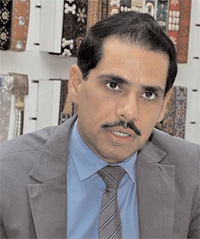
    CHANDIGARH (TIP): The Robert Vadra- DLF land deal has stirred up a fresh controversy with the Town and Country Planning chief of Haryana, TC Gupta, claiming there were “factual inaccuracies” in the orders issued by Ashok Khemka who stood by his decision and said the aggrieved parties were free to move court. Khemka as Director General of Consolidation had cancelled the sale deed of 3.5 acre of land to realty major DLF following a deal with Vadra and had ordered probe into the entire episode.

    He said any party could approach the high court if they felt aggrieved with his recent order. The 1991 batch IAS officer met Haryana Chief Secretary PK Chaudhary here for about 50 minutes, his first meeting after the recent controversy arising out of his order and his subsequent transfer from the post of Director General of Consolidation. Earlier, Gupta had taken on Khemka, a 1991 batch IAS officer, saying his order cancelling the mutation of the land deal contained “factual inaccuracies” and had been passed in “total disregard of administrative propriety”.

    In a strongly worded letter to State Chief Secretary PK Chaudhary, Gupta, Director General of Haryana’s Town and Country Planning Department, referred to “orders of Director General, Consolidation of Land Holdings & Land Records-cum-Inspector General of Registration issued on October 15.” Khemka had observed that the Town and Country Planning department should not have renewed the LOI / licence granted to the vendor when a major portion of the consideration money had already been paid to it by the DLF. Gupta said the original copy of Khemka’s order has still not been received by his department, “even though the same has found its way to all newspapers / electronic media”. “In these orders, certain comments have unnecessarily been made against the working of this department which are not only unfounded but totally uncalled for,” he said. Talking to reporters after his meeting with the Chief Secretary, Khemka said, “The talk with the CS is privileged communication. It cannot be disclosed to the media.”

    “I have left the post of DG Consolidation. If any party or government has any grievance following my order, the remedy for them is to approach the (Punjab and Haryana) High Court,” he said. In his letter, Gupta said that concerned officer (Khemka) is clearly not aware of the difference between licence and LOI. Licence is issued only after requirements mentioned in LOI are fulfilled. He said “these observations show lack of knowledge on the part of the officer not only about Haryana Development & Regulation of Urban Areas Act, 1975 and Rules, 1976 framed thereunder which these licences are granted / renewed but also about the provisions of Transfer of Property Act, which the officer, in the capacity of Inspector General of Registration, was supposed to know.”

  • Indian Economy will Resurge, says minister Preneet Kaur

    Indian Economy will Resurge, says minister Preneet Kaur

    NEW YORK (TIP): Preneet Kaur, Minister of State for External Affairs was highly optimistic of Indian economy’s resurgence at a reception organized by the Consulate General of India, in New York, in her honor October 18. The minister admitted that although India braved the first global meltdown in the year 2008, the second one has left the country slightly affected.

    “We all know that in this century, India has done very well. However, we are slightly affected by the current meltdown, although we managed the first one. But this one has surely affected us more,” said the Minister during her address at the event. However, the minister said that she is hopeful that the economy will resurface from the current growth bracket of 5 to 6 percent and once again regain the title of fastest growing economy.

    After speaking at the UN Security Council on the subject of tackling global terrorism, Preneet Kaur once again stressed on the importance of having all UN member states to stand united for the fight against terrorism. “We expect that the UN will pass this law against terrorism. We have been asking for this for many years now. And we hope to see it coming to a logical conclusion. Terrorism is not standalone, it can surface anywhere in the world. It knows no religion or citizenship and the world must unite to fight it,” said the Minister

    The minister has continually been addressed by the title of ‘Maharani’. Besides the term being considered ancient and out of usage, many politicians including President Pranab Mukherjee have asked for the removal of such titles for politicians

    When asked whether she felt embarrassed when people addressed her as “Maharani” Preneet Kaur explained such referral was very common among the people of Punjab and she did not deem it embarrassing. “It’s something that through love and respect the people of Patiala and Punjab do refer to us by. I think it’s more of an expression of respect and love and that’s how I take it. It doesn’t matter how they say it, either calling me Shrimati or Maharani. It is about who says it and where. And I appreciate whichever way anyone speaks to me,” added the Minister.

    The Minister also advised the dignitaries and guests present at the event to give first priority to India and then consider other affiliations and accreditations in order to uphold India’s honor. The minister refrained from remarking on further issues, as she was feeling severely under the weather. Other prominent dignitaries at the event included the host Consul General Mr. Prabhu Dayal, Members of Parliament, Mr. Nandkumar Sai of BJP, Trinamool Congress’s Derek O’Brien and Ambassador Manjeev Singh Puri.

  • Rahul Gandhi’s controversial remarks on Punjab youth

    Rahul Gandhi’s controversial remarks on Punjab youth

    CHANDIGARH (TIP): Congress leader Rahul Gandhi said on October 11 at Panjab University here that “Seven out of 10 youth in Punjab have drug problems.” He said “A diplomat told me that 21st century’s Saudia Arabia is India.” Rahul said the diplomat had told him that just as the 20th century was dominated by Saudi Arabia because of its oil reserves, the 21s century belongs to India because of its young population and “human resources”.

    Referring to Punjab, Gandhi said: “What is happening to human resource in Punjab. Seven out of 10 youths have the problem of drugs.” Mr Gandhi, wearing a white kurta and jeans, said that the government in Punjab, run by the Akali Dal and the Bharatiya Janata Party (BJP) is not providing opportunities for the state’s youth. “We send scholarship money for SC, ST (Scheduled Castes/Tribes) categories. It is not utilized here (in Punjab) and is sent back,” he said. ‘We want you to come into politics, cleanse it and change it,’ Mr Gandhi told Congress youth workers at the Punjab University campus in Chandigarh.

    ‘I have been in politics for eight years. One thing I see clearly, the level of participation of youths is not there. Whether in jobs, corruption, development, you are the solution. You have to run this country. You have the power and the knowledge to run it,’ he said. Gandhi said that the NSUI and the Youth Congress, the student and youth wings of the 127-year-old party, were the only ones to give youths a chance to enter politics. ‘Doors of politics were closed for you. We opened them in NSUI and Youth Congress. Today, lakhs of youths, who do not have any relatives in politics, are in our organization. When we talked of elected NSUI and Youth Congress in Punjab, other parties said this cannot be done. We did it and showed to them not only in Punjab but whole of India,’ he asserted.

    He said that when other parties are asked about elections (for youth), they do not reply. Gandhi said that the Bharatiya Janata Party (BJP) and the National Democratic Alliance it leads were opposing the Congress policies without any basis. ‘Our government brought FDI. Its meaning is giving the farmer his rightful share. When the BJP and NDA government were in Delhi, they were not opposed to FDI. We did it, they are opposing it. We gave MGNREGA (rural employment scheme) and land acquisition bill, they have opposed it too.’ ‘They want to stop work. Ask them what you want to do, they will not reply. Whatever Congress wants to do, they want to stop. Because they know that if they let us work, we will change this country. But we will not stop. We have the power of the youth and the future,’ he added. Earlier, Gandhi met senior Congress leaders at the Punjab state Congress headquarters here to get a feedback on the party’s situation in the state.

  • Congress, BJP slam SGPC move to honour A S Vaidya’s assassins

    Congress, BJP slam SGPC move to honour A S Vaidya’s assassins

    NEW DELHI (TIP): SGPC’s controversial move honouring family members of the two assassins of General A S Vaidya in the Golden Temple complex came in for attack from Congress as well as the BJP. BJP, sharing power with the Shiromani Akali Dal in Punjab, criticised the move with its chief spokesman Ravi Shankar Prasad dubbing it “regrettable and unjustifiable”

    Making it clear that politics on such a sensitive issue will not be tolerated, Congress warned that those who will fool around with serious subject like terrorism,…. will have to pay.” “It is for the Punjab government to sort it out if these kind of schizhophrenic statements are coming out”, party spokesperson Renuka Chowdhary said when asked to react over the move, which is being confirmed by the Shiromani Gurdwara Prabandhak Committee (SGPC), but denied by the state government.

    The move has come amid a raging debate over raising of a memorial for those killed during Operation Blue Star in 1984. The kin of Harjinder Singh Jinda and Sukhdev Singh Sukha, who were executed on October nine, 1992, were honoured by the Shiromani Gurudwara Prabhandhak Committee at the Akal Takht, the highest temporal seat of the Sikhs, two days back. The SGPC, controlled by the ruling SAD, also hailed the General’s killers as Sikh martyrs sparking a row. The SGPC organised an Akhand Path at the Akal Takht to mark the 20th execution anniversary of the two assassins.

    The function was presided over by SGPC secretary Dalmegh Singh. Gen Vaidya was the Chief of Army Staff when Operation Blue Star was launched by the Army to flush out militants led by Jarnail Singh Bhindrawale from the Golden Temple. A number of militants, soldiers and pilgrims were killed during the Operation. Sukha and Jinda had assassinated General Vaidya in 1986 in Pune where he had settled down after his retirement. They were hanged in 1992 and since ’93 the SGPC has been been organising their death anniversary every year on October nine and honouring their family members.

  • Readers Write : FIA Expose

    Readers Write : FIA Expose

    Ramesh Patel making FIA expose disrespect to Gujaratis

    It has come to my notice that Mr. Ramesh Patel is making the issue of exposure of FIA’s various violations as an issue of disrespect to entire Gujarati community. He is being supported by those who are defrauding charitable organizations FIA style. For me exposing FIA is about exposing individuals who are bringing bad name to their own community, doing corruption and misusing public funds. I am not against any community as my past speaks for itself I have raised issues against Hindu, Sikh, Muslim and Christian Leaders of Indian origin from different states as well as politicians of NJ and Washington.

    Although I respect all the states, union territories and every religion of India for India being the birth place of my religion Hinduism but two states have special place in my life. First is Punjab for being the birth place of my ancestors and second is Gujarat being the birth place of my idol Mahatma Gandhi. Then who will not admire Sardar Vallabhbhai Patel for integrating 565 princely estates in to one nation India? I had the good luck to briefly associate with the architect of modern India; Dhirubhai Ambani. Then I admire Gujaratis like Lord Bhikhu Parekh an eminent political theorist, Dr. Bhupi Patel in the field of medicines, a philanthropist and a great New Yorker, Kal Penn aka Kalpesh Modi a Great New Jerseyan, actor, producer and civil servant with the distinction of serving President Obama; for bringing glory to every Indian.

    I do not consider any one as my enemy even if I have differences with them on matters of principles and the system that is being advocated and recommended. I strongly believe multi racial, lingual and religious history of India is indeed very complex. It is culturally, socially and politically intertwined extending beyond thousands of years with a message that we are all brothers and sisters the children of one God.

    Dave Makkar

    Congratulations FIA for inducting first Pakistani Islamic member to your board

    I would like to take this opportunity in congratulating, through the columns of your esteemed weekly, the FIA on inducting Sam Khan, the first Pakistani Islamic member to their board. It is really heartening to see that an organization such as FIA has taken such a huge step keeping aside all racial indifferences. In today’s day with such religious turmoil brewing all over the world between USA and the Islamic community, they have not forgotten that the human bond comes first and I believe this step has been taken keeping only that in mind. I, as a fellow human being, salute the FIA and support them in this decision. We cannot judge others by their ethnicity but by their deeds.
    Thanks & Regards,

    Alisha Khan

  • Himachal polls Nov 4, Gujarat Dec 13 and 17

    Himachal polls Nov 4, Gujarat Dec 13 and 17

    EW DELHI (TIP): Himachal Pradesh and Gujarat will pick new assemblies in elections on November 4 and December 13 and 17, respectively, in what will be a virtual straight fight between the ruling BJP and the Congress in both states.
    Chief election commissioner (CEC) VS Sampath told reporters here that votes in both states will be counted on December 20.

    These will be the most important state elections since Uttar Pradesh, India’s most populous state, voted in February-March this year, along with Goa, Punjab, Uttarakhand and Manipur.

    Both Himachal Pradesh (68 seats) and Gujarat (182 seats) are ruled by the Bharatiya Janata Party (BJP), with the Congress desperate to dislodge it.

    The announcement came hours after Congress president Sonia Gandhi unleashed the party’s campaign in Gujarat with a stinging attack on the BJP.

    The Congress welcomed the polls and said these would not be a referendum on the performance of the central government.

    “We welcome poll dates. Every election is a local election, even parliamentary elections are decided by local issues. No state poll is a referendum on the performance of the national government,” Congress spokesperson Manish Tewari told reporters later.

    “The only one is the Lok Sabha poll, which we won decisively,” he said.

    BJP spokesperson Rajiv Pratap Rudy said, “We are sure of victory in the two states. Our workers have worked hard.”
    “We are making foolproof security arrangements in both states by deploying adequate strength of central police forces,” said Sampath.

    Armed police forces from other states would also be deployed in the two states for peaceful conduct of elections.
    Sampath said there would be strict monitoring of expenditure by political parties and candidates as well as of “paid news”.

    “Paid news is a learning process for us,” said Sampath, adding that “it will be monitored at the district, state and commission level”.

    He said all candidates would be required to open separate bank accounts and incur expenditure only from these accounts.

    The Election Commission, Sampath said, expects “the highest standards” of conduct and neutrality in election work from officials.

    “Their work will be under constant watch and scrutiny,” he said, and added that the model code of conduct for political parties would be strictly enforced.

    Sampath said the polling dates have been determined after taking into account climatic conditions, particularly in Himachal Pradesh, academic calendar, festivals, law and order, and availability of security forces.

    The number of eligible voters in Himachal Pradesh is 45.16 lakh against 3.78 crore in Gujarat. The electors will be given their voting slips a few days before the polling dates, said Sampath.

    To facilitate voting, the poll panel has increased the number of polling stations by 10 percent to 44,496 in Gujarat and by 16 percent in Himachal Pradesh to 7,252, he said. The CEC said the candidates will have to file only one affidavit, from two required earlier, to provide information if they have been charged or convicted in any criminal case and declaring their assets and educational qualifications.