There appears just no respite for Volkswagen in the infamous ‘Diesegate’ scandal and the car maker has now lost a case in the European Union’s top court which ruled that it had breached the law by installing ‘cheat’ devices on its cars undergoing emission tests. It also ruled that the car maker’s argument that the devices were used to protect the engines was on weak footing.
Volkswagen has been facing massive heat since the US Environmental Protection Agency first accused it of a software rig on its ‘clean diesel’ vehicles in the country. This was five years ago, five years of denial, admission and a whole lot of legal tussle and brand image deterioration.
Volkswagen did admit that millions of its vehicles – 11 million – had been fitted with such devices and that it was not in the US alone. The scandal has cost Volkswagen 30 billion euros ($35 billion) in fines and civil settlements and led to the recall of millions of vehicles.
The EU top court on Thursday ruled that car makers cannot fit their offerings with devices which go on to help control figures of emissions for the purpose of passing a test.
Tag: Punjab
-
More trouble for Volkswagen in diesel scandal, loses case in top EU court
-

GDP of India to contract 7.8 pc in FY 2021: Icra
Domestic rating agency Icra Ratings expects the technical recession in the country’s economy to end in the fourth quarter of the current fiscal, limiting the contraction in the GDP to 7.8 per cent in the financial year 2021.
In the second quarter of financial year 2021, GDP contracted 7.5 per cent as against a decline of 23.9 per cent in the April-June quarter.
With a steady performance of the agricultural sector and a lagged recovery in the contact-intensive parts of the services sector, the agency forecasts a small contraction of one per cent in the Indian GDP in the third quarter of financial year 2021.
The rating agency’s Principal economist Aditi Nayar said healthy procurement and a favourable outlook for the rabi season, as well as greater visibility of an approaching Covid-19 vaccine rollout, will strengthen demand and economic activity in the fourth quarter of financial year 2021.
4G spectrum sale cleared, reserve price lower than TRAI advice
The Union Cabinet on Wednesday, Dec 16, approved the sale of 2251.25 MHz of spectrum across seven frequency bands at a reserve price of Rs 3.92 lakh crore.
These auctions are only for 4G services, as the Department of Telecommunications (DoT) is yet to finalize the spectrum bands for auction of 5G spectrum.
The notice inviting applications from telecom service providers will be issued later this month, and the government hopes to complete the sale by March 2021, Telecom Minister Ravi Shankar Prasad said.
The new round of auctions is likely to provide a boost to government revenue collections. -
Coca-Cola to cut 2,200 jobs worldwide amid Covid challenges
Coca-Cola Co. is cutting 2,200 jobs worldwide, including 1,200 in the US, as the soda maker deepens its restructuring efforts amid ongoing shutdowns of soft-drink friendly venues like movie theaters, bars and stadiums.
The reductions, totaling 2.5% of the company’s total workforce, involve a combination of voluntary buyouts and layoffs, a spokesman said Thursday via email. Coke had about 86,200 employees at the beginning of the year, including 10,400 in the US.
“We are in the process of building an organizational structure that will address” customers’ needs and behaviors, the company said. “The pandemic was not a cause for these changes, but it has been a catalyst for the company to move faster.” -
Gita Jayanti
The Bhagavad Gita is the most sacred, important Hindu script that influences numerous people, and Gita Jayanti is the birthday of Bhagavad Gita. This day falls on Shukla Ekadashi of the Margashirsha month. According to the English calendar, this festival occurs during November or December. It is that sacred day when Lord Krishna gave the immortal message to Arjuna in Kurukshetra. Followers of Lord Krishna all over the world celebrate this day. Gita Jayanti is celebrated by reading the Bhagavad Gita and discussing it with learned priests and scholars about how it has been benefiting humanity even today. Followers of Lord Krishna also fast on this as it falls on Ekadashi. Many devotional songs are sung and danced on together. People perform puja and distribute sweets. The main purpose of celebrating Gita Jayanti is to recall the words of Gita and to apply it in our daily life. It allows individuals and families to lead a courageous as well as an active life that is productive.
Rituals of the Festival
– Temples dedicated to Lord Krishna celebrate this day with great enthusiasm, which includes performing puja along with special prayers.
– Devotees from different parts of India and abroad, like to visit Kurukshetra on this day and take a holy bath in the sacred ponds.
– Apart from holy bath, puja of Lord Krishna can be performed at home with aarti at the end.
– Since, it is celebrated on Ekadashi, it is important that devotees who fast on this day do not consume any kind of grains like rice, wheat, and barley.
– There have been many organized celebrations taking place to teach the value of Dharma to the youth of today through explanation of the Gita on this special day.
– Over the years, Gita Jayanti is being celebrated in not only India but also Singapore and Malaysia in large scale. Temples in India who have deity of Lord Krishna also celebrate this day. Observing this day allows individuals to act correctly for the near future because one reads the holy book of Gita. It has also increased the popularity of Hinduism all over the world. All temples of ISCKON in the globe celebrate this day with proper rituals and offerings to the God.
Gita, The Crux Of Indian Spiritual Wisdom
It is said that the Vedas are vast and not very direct when it comes to the conveyance of their message. Several scholars believe that Bhagavad Gita is actually the crux of Vedic wisdom and the summary of Indian Spiritual Knowledge. In fact, Bhagavad Gita contains an ocean of wisdom, which has influenced Indian tradition for the last several millennia. Thus, reading Gita is like knowing a lot about Indian spiritual and philosophical wisdom.
Sanjay’s Narration Of
Bhagwad Gita
The text in Bhagavad Gita is written in the 3rd person, as it was narrated by Sanjay to King Dhritarashtra as it went on between Lord Krishna and Arjun. Sanjaya, the assistant to the visually challenged king Dhritarashtra, was blessed by his Guru Ved Vyas.; Sanjay was given the power to remotely view things on the battlefield as they were happening on the battlefield.
Importance Of Gita
Jayanti Festival
On Gita Jayanti day, devotees read the Bhagavad Gita and discuss it with learned priests and scholars on how is the Gita relevant and most helpful even today. Krishna devotees also fast on this day as it falls on Ekadashi. People sing devotional songs and also dance together. They do puja and distribute sweets (as prasad). The chief purpose of celebrating Gita Jayanti is to remember the words of Bhagavad Gita and make use of its wisdom in practical living. Inspired by Gita, people lead a courageous and active life.
Gita Jayanti Date
And Tithi 2020
– Date for Gita Jayanti: 25th December 2020
– Ekadashi Tithi Begins – 11:17 PM on Dec 24, 2020
– Ekadashi Tithi Ends – 01:54 AM on Dec 26, 2020
Lasting Influence
The Bhagavad Gita is not just an ancient scripture but also serves as an essential guide to better living, conducting business, and communicating to the modern world. The greatest quality of Bhagavad Gita is that it prompts an individual to think, to make a fair and right decision, and to look at life differently and refreshingly without surrendering one’s identity. The Gita has been addressing contemporary issues and solving for everyday problems of humanity for millennia.
Kurukshetra, the Birthplace
This Hindu holiday is celebrated with great devotion and dedication, across the country and around the world, especially in the city of Kurukshetra, in the northern Indian state of Uttar Pradesh (UP), where the famous epic battle of the Mahabharata took place. This place is sacred not only for the battle and the birthplace of the Gita but also because it is the place where the famous sage Manu wrote the Manusmriti and where the Rig and Sama Vedas were composed. Divine personalities like Lord Krishna, Gautama Buddha, and the Sikh Gurus’ visit also consecrated this place.
Celebrations in Kurukshetra
The day is observed with the reading of the Bhagavad Gita, followed by discussions and seminars by eminent scholars and Hindu priests to throw light upon the various facets of the holy book and its perennial influence on humankind for generations. Hindu temples, especially those dedicated to Lord Vishnu and Lord Krishna, conduct special prayers and pujas on this day. Devotees and pilgrims from all over India gather in Kurukshetra to take part in the ritual bath in the hallowed water of the sacred ponds – Sannihit Sarovar and Brahm Sarovar. A fair is also organized that lasts for about a week and the people participate in prayer recitals, Gita reading, bhajans, aartis, dance, dramas, etc. Over the years, the fair known as Gita Jayanti Samaroh has gained immense popularity, and a large number of tourists visit Kurukshetra during the event to participate in this sacred gathering.
Celebrations by ISKCON
At the temples of ISKCON (International Society for Krishna Consciousness) across the globe, Geeta Jayanthi is celebrated with special offerings to Lord Krishna. Mass recital of the Bhagavad Gita is performed throughout the day. Gita Jayanti is also celebrated as Mokshada Ekadashi. On this day, devotees observe fast and on Dwadashi (or 12th Day) fast is broken by taking a ritual bath and performing Krishna Puja. -
India, Bangladesh ink 7 pacts, restore cross-border rail link
India and Bangladesh on Thursday, Dec 17, sealed seven agreements to broaden cooperation, and restored a cross-border rail link snapped in the 1965 war with Pakistan.
The restoration of the Chilahati-Haldibari rail link and signing of the pacts, providing for cooperation in areas of hydrocarbons, agriculture and textiles among others, came at a virtual summit between Prime Minister Narendra Modi and his Bangladeshi counterpart Sheikh Hasina. Modi said the holding of the summit immediately after the celebration of Vijay Diwas (Victory Day) assumed “special significance” and noted that Bangladesh is a key pillar of India’s ‘Neighbourhood First’ policy.
“Today, when Bangladesh is celebrating 49 years of independence, I pay homage to the soldiers of both countries who laid down their lives,” he said. The two leaders are slated to meet three months later to celebrate the birth centenary of Bangladesh’s tallest leader , Sheikh Mujibur Rahman. The two PMs jointly inaugurated a digital exhibition on Sheikh Mujibur and Mahatma Gandhi. The inauguration of the old rail route between Sealdah and Darjeeling used to be taken by the old Darjeeling Mail. Source: Tribune India
-
Centre encroaching on rights of states: Kejriwal on transfer of 3 IPS officers from WB
Delhi Chief Minister and AAP convener Arvind Kejriwal on Friday, Dec 18, accused the Centre of blatantly interfering in the West Bengal administration, saying it move to transfer police officers in the state was an “assault” on federalism.
The TMC government in Bengal led by Mamata Banerjee is strongly opposing the Centre’s move to send three IPS officers, who were involved in the security of BJP chief JP Nadda during his recent visit to West Bengal, on central deputation.
“I condemn the Centre’s blatant interference in the Bengal administration. Encroaching on the rights of states by attempting to transfer police officers to Centre just before elections, is an assault on federalism and an attempt to destabilize,” Kejriwal tweeted.
The three IPS officers were responsible for the security of Nadda whose convoy was attacked during his recent visit to the state scheduled for Assembly polls in 2021.
The Centre wants them shifted on account of alleged dereliction of duty that led to the attack on Nadda’s convoy in Diamond Harbour constituency of TMC MP and Banerjee’s nephew Abhishek Banerjee.
-
We expect further talks will help in achieving agreement on resolution: India
New Delhi (TIP): India on Thursday, Dec 17, hoped that further discussions with China will help both sides to achieve an agreement on a mutually acceptable solution for ensuring complete disengagement in all friction points along the Line of Actual Control (LAC) in eastern Ladakh.
External Affairs Ministry Spokesperson Anurag Srivastava told a media briefing the two sides continue to maintain communication through diplomatic and military channels and these discussions have helped both sides to enhance understanding of each other’s positions.
Asked about reports that at least one member of the Chinese Community Party was recruited by Indian consulate in Shanghai, Srivastava said he was not in a position to independently verify the information.
“We have noted the media reports in this regard. We are not in a position to independently verify the data. In certain countries, hiring of local staff requires the approval of local authorities. However, all our missions and posts ensure due security precautions in this regard,” he said.
Responding to a media query on the matter, a Chinese embassy spokesperson said the allegation is “groundless”.
Srivastava, when asked about the next round of Sino-India military and diplomatic talks on the over seven-month-long border standoff, did not give a direct reply but said India expects that further talks will help in reaching an agreement for complete disengagement of troops in eastern Ladakh.
“It is our expectation that the further discussions will help both sides to achieve an agreement on a mutually acceptable solution for ensuring complete disengagement in all friction points along the LAC in the Western sector and full restoration of peace and tranquillity as early as possible,” Srivastava said.
Nearly 50,000 Indian Army troops are deployed in a high state of combat readiness in various mountainous locations in eastern Ladakh in sub-zero conditions as multiple rounds of talks between the two sides have not yielded concrete outcome to resolve the standoff.
-

COVID recovery rate in India among highest in world: Govt
New Delhi (TIP): India’s COVID-19 recovery rate is amongst the highest in the world, the Union Health Ministry said on Thursday, Dec 17, underlining that countries like the US, Brazil, Russia, and Italy are reporting lesser recovery rates. With focussed strategy and proactive as well as calibrated measures of the Centre along with the States and UTs, India has sustained a very high COVID-19 recovery rate along with rapidly declining active cases and low mortality rate, it said.
“While the global figure for recovery rate is 70.27 per cent, India is recording 95.31 per cent. The USA, Brazil, Russia, and Italy are reporting lesser recovery rates,” the ministry said.
Recoveries outnumbering new cases on a daily basis have ensured a high recovery rate amongst patients.
The total recovered cases are nearing 95 lakh.
“The gap between recoveries and active cases is also increasing consistently and presently stands at 91,67,374,” the ministry said.
The rising recoveries have also led to a continuous contraction of India’s active caseload which presently stands at 3,22,366 and consists of just 3.24 per cent of India’s total infections.
Following the national pursuit, 18 states and UTs have a recovery rate more than the national average.
India has registered 33,291 new recoveries in a span of 24 hours.
The ministry said that 75.63 per cent of these new recovered cases are contributed by ten states and UTs.
With 5,728 persons recovering from COVID-19, Kerala has recorded the maximum number of recoveries. Maharashtra registered another 3,887 daily recoveries while West Bengal registered 2,767 new recoveries.
A total of 24,010 new daily cases were registered in a span of 24 hours.
Ten states and UTs have contributed 78.27 percent of the new infections.
Kerala reported 6,185 cases in a span of 24 hours. West Bengal recorded 2,293 new cases while Chhattisgarh registered 1,661 new cases yesterday.
Of the 355 new fatalities, 79.15 percent have been reported in a span of 24 hours by ten states and UTs.
Maharashtra reported 26.76 per cent of new fatalities. West Bengal saw a fatality count of 46 while Delhi reported 32 new deaths. India has registered a steady decline in the number of daily deaths. The case fatality rate is sustained at 1.45 per cent and is consistently decreasing. India’s fatality rate is one of the lowest in the world, the ministry said.
India’s total cases have risen to 99,56,558 with 355 new deaths. Total active cases now stand at 3,22,366. The total number of discharged cases.
53% Indian unsure about taking Covid vaccine
More than 50 per cent of India’s population has expressed a caution towards taking the virus vaccine, a new survey revealed.
‘The GOQii Covid-19– The Way Forward’ survey was conducted with approximately 11,000 respondents to understand the openness to take the vaccine, the perception about the government measures to combat Covid-19, the possible future measures including a lockdown.
It revealed that 53 per cent of the population is unsure about taking Covid vaccine.
It added that 43 per cent of them are not sure and will only make a solid opinion post initial results about the effectiveness of the vaccine while 10 per cent are firmly against taking the vaccine as of now.
On an optimistic note, 47 per cent of the respondents said that they are willing to take the vaccine and are actually waiting for it.
Women are more cautious than men with 48 per cent of the male population willing to get vaccinated while the female readiness is around 42 percent.
-
Rafale cruise missile range given key boost
Confronted with the prospect of having to fight an adversary each on both the western and eastern fronts, the Indian Air Force (IAF) has got the French missile manufacturer MBDA to recalibrate the software of the SCALP long-range, air-launched cruise missile to ensure the subsonic weapon can hit targets up to 4,000 metres above the sea level, Hindustan Times has learnt.
The missile with a range in excess of 300 kilometres and a 450-kilo warhead is part of the weapon suite on the IAF’s Rafale omnirole fighter planes manufactured by France’s Dassault Aviation SA.
In simple terms, it means the IAF’s Rafale jets can demolish targets located in the mountains and high plateaus at an altitude of 4,000 metres, double the SCALP’s previous calibration of 2,000 metres. MBDA has tweaked the software n consultation with the top brass of the IAF, people aware of the development said.
The development comes amid a military standoff between India and China in the eastern Ladakh theatre along the Line of Actual Control where troops of both countries have dug in for a harsh winter.
The next batch of three Rafale fighters are expected to arrive after the 2021 Republic Day, and plans have been made for the aircraft to be refuelled mid-air using the Airbus 330 multi-role transport tankers of the United Arab Emirates air force when they fly towards the Ambala airbase. As of now, seven Rafales are being used for training IAF pilots in France. The complete fleet of 36 aircraft is scheduled to reach India by the end of 2021. One squadron of this potent fighter will be based at Ambala.
Source: HT
-

Christmas
Christmas Day, on December 25, is one of the most festive Christian holidays in many countries around the world. It celebrates Jesus’ birth. It is that time of the year again! You can feel it in the air. Around mid-December every year, the atmosphere slowly starts changing from mundane to festive. Those who live away from their family start packing their bags to get back home and those who can’t make it start feeling nostalgic thinking about all the happy times. Home decorations take full steam and so does shopping for new clothes and presents for loved ones. Kids begin to get excited about a visit from a certain jolly saint dressed in red. No matter where you go, you get a hint that Christmas is just round the corner. Christmas is undoubtedly the world’s biggest festival. It is celebrated with a lot of zest and enthusiasm all around the globe. After a year full of hard work, ups and downs, and the many challenges life brings with it, this is the time when people begin to forget all their worries and feel good and grateful for all that they have. Celebrated on a wide scale on December 25 to commemorate the birth of Jesus Christ, it is difficult to escape the Christmas festivities wherever you are in the world. It is a public holiday across most countries in the world.
While Christmas is celebrated on December 25 to commemorate the birth of Jesus Christ, the fact is that Jesus’ birth date is actually unknown. According to the New Testament, Jesus was born in a stable in Bethlehem when Joseph and Mary took shelter there as there were no rooms available at the inn. Angels then proclaimed this news to shepherds who then disseminated the message of Christ’s birth furthermore. Even though the date of the birth is not mentioned in the Bible, by the early to mid 4th century, the Western Christian Church placed Christmas on December 25 and the East slowly came to adopt the same date. Today, Christmas is commonly celebrated on December 25 as per the Gregorian calendar although some Eastern Christian Churches still follow the older Julian calendar, according to which Christmas date corresponds to January 7 in the Gregorian calendar. This day happens to fall one day after the Western Christian Church celebrates Epiphany. So, in order to be universal, the Church declared the twelve days between Christmas and Epiphany to be one unified festal cycle thus giving significance to both the Western and Eastern dates of Christmas.
There are several hypotheses on why December 25 could have been chosen as the date for Christmas. The major and commonly accepted ones are that December 25 was the date of the winter solstice on the Roman calendar; it was about nine months after March 25, the date of the vernal equinox and a date linked to the conception of Jesus; and that it was the date of a Roman pagan festival in honor of the Sun god Sol Invictus. The winter solstice hypothesis gathered steam from Jesus’ title as the ‘Sun of righteousness’. It came to be believed that Jesus chose the shortest day of the year for his birth as he was the light of the world and the days after his birth kept increasing in length. The Calculation hypothesis proposed by French writer Louis Duchesne in 1889 is based on the celebration of Annunciation on March 25 which is the traditional date of equinox. Annunciation is the Christian celebration of the announcement by the angel Gabriel to the Virgin Mary that she would conceive and become the mother of Jesus, the Son of God. According to the the calculation hypotheses, an earlier holiday held on March 25 became associated with the incarnation thus making December 25 (nine months later) the day of Christmas. The third hypothesis called the ‘history of religions’ hypothesis suggests that December 25 was the date selected as Christmas in order to appropriate other Roman festivities held in honor of the Sun god Sol Invictus. In 1743, German Protestant Paul Ernst Jablonski argued that Christmas was placed on December 25 in order to correspond with the Roman solar holiday Dies Natalis Solis Invicti. He inferred that Christmas was therefore a paganization. As a counter argument, Christians affirmed that, on the contrary, the Emperor Aurelian instituted the holiday of the Dies Natalis Solis Invicti in 274 as an attempt to give a pagan significance to an important date which had already gained prominence for Christians in Rome. A manuscript of a work by 12th-century Syrian bishop Jacob Bar-Salibi mentions that “It was a custom of the Pagans to celebrate on the same 25 December the birthday of the Sun, at which they kindled lights in token of festivity. In these solemnities and revelries the Christians also took part. Accordingly when the doctors of the Church perceived that the Christians had a leaning to this festival, they took counsel and resolved that the true Nativity should be solemnized on that day.”
Santa Claus
Santa Claus, also known as Father Christmas, Saint Nicholas, Saint Nick, Kris Kringle, or simply Santa, is a legendary character originating in Western Christian culture who is said to bring gifts to the homes of well-behaved children on the night of Christmas Eve (24 December) or during the early morning hours of Christmas Day (25 December) and coal to naughty kids.
The modern character of Santa Claus was based on traditions surrounding the historical Saint Nicholas (a fourth-century Greek bishop and gift-giver of Myra), the British figure of Father Christmas, and the Dutch figure of Sinterklaas (himself also based on Saint Nicholas). Some maintain Santa Claus also absorbed elements of the Germanic deity Wodan, who was associated with the pagan midwinter event of Yule and led the Wild Hunt, a ghostly procession through the sky. Santa Claus is generally depicted as a portly, jolly, white-bearded man—sometimes with spectacles—wearing a red coat with white fur collar and cuffs, white-fur-cuffed red trousers, red hat with white fur, and black leather belt and boots and carrying a bag full of gifts for children. This image became popular in the United States and Canada in the 19th century due to the significant influence of the 1823 poem “A Visit from St. Nicholas.” Caricaturist and political cartoonist Thomas Nast also played a role in the creation of Santa’s image. This image has been maintained and reinforced through song, radio, television, children’s books, films, and advertising.
Christmas Tree
The evergreen fir tree has traditionally been used to celebrate winter festivals (pagan and Christian) for thousands of years. Pagans used branches of it to decorate their homes during the winter solstice, as it made them think of the spring to come. The Romans used Fir Trees to decorate their temples at the festival of Saturnalia. Christians use it as a sign of everlasting life with God.
Nobody is really sure when Fir trees were first used as Christmas trees. It probably began about 1000 years ago in Northern Europe. Many early Christmas Trees seem to have been hung upside down from the ceiling using chains (hung from chandeliers/lighting hooks).
Other early Christmas Trees, across many parts of northern Europe, were cherry or hawthorn plants (or a branch of the plant) that were put into pots and brought inside so they would hopefully flower at Christmas time. If you couldn’t afford a real plant, people made pyramids of woods and they were decorated to look like a tree with paper, apples and candles. Sometimes they were carried around from house to house, rather than being displayed in a home.
-

Martyrdom of Sahibzadas
The four Sahibzade Khalsa warriors princes were the sons of Guru Gobind Singh (1666–1708), the of Sikhs during the Mughal empire (1526–1857). In 1699, Guru Gobind Singh (born Gobind Rai) created the Khalsa, an elite warrior band of initiated devout orthodox Sikhs to protect the innocent from religious persecution. Guru Gobind Singh had three wives and four sons: Ajit, Jujhar, Zorawar, Fateh. All four of his sons were initiated into the Khalsa and all were executed by Mughal forces before the age of 19.
Sikhism honors the illustrious martyred sons of Guru Gobind Singh in the prayer of ardas for their valor and sacrifice as “Char Sahibzade,” the four princes of the Khalsa warrior order.
The martyrdom of the four sons of Guru Gobind Singh, the founder of Sikh religion is one of the most tragic and yet most glorious part of the proud community’s history.The Sikhs have a long history of heroic struggle and sacrifice.The 5th Master of the Sikhs, Guru Arjan Dev Ji and the 9th Master of the Sikhs, Guru Tegh Bahadur Ji made supreme sacrifices for humanity, at large.The 10th Master and the Founder of the Khalsa which means pure (that is how the Sikhs came to be known) made sacrifices that stood out in the realms of world history.The martyrdom of the four Sahibzadas, Guru Gobind Singh’s sons, has to be seen in that glorious tradition that Sikhs take pride in and derive inspiration from.
The four young princes of genteel birth – The Char Sahibzade – is the term endearingly used for the four sons of Guru Gobind Singh, all of whom died as martyrs while still in their tender age.Their names are reverently preserved in Sikh memory and are recalled every time the Sikh Ardas or prayer of supplication is recited at every religious ceremony in a congregation and privately twice a day (after the morning and evening prayer) by an individual. Sahibzada Ajit Singh, the eldest son of Guru Gobind Singh, was born to Mata Sundri at Paonta on 26 January 1687.The following year the Guru and his family returned to Anandpur. Sahibzada Jujhar Singh, the second son of Guru Gobind Singh, was born to Mata Jito-ji at Anandpur on 14 March 1691. From a very young age both brothers were taught the religious texts, philosophy and history alongside their training in swordsmanship, archery and horse riding. Soon they grew up into handsome young men, strong, intelligent and natural leaders of men.
In 1699 both Sahibzade Ajit Singh and Jujhar Singh, 12 years and 8 years of age respectively, received the rites of Khalsa initiation. Soon after the creation of Khalsa on 30 March 1699, Ajit Singh had his first test of skill. A Sikh Sangat coming from Pothohar was attacked and looted by Ranghars on the way, a short distance from Anandpur across the River Sutlej. Guru Gobind Singh sent Sahibzada Ajit Singh, then barely 12 years of age, at the head of about 100 Sikhs to punish the Ranghars and to recover the loot.The following year, 29 August 1700,when the hill Rajas, backed by Imperial troops, attacked Anadpur. Ajit Singh was made responsible for the defense of Taragarh Fort which became the first target of attack. Ajit Singh, assisted by Bhai Ude Singh, a seasoned soldier, repulsed the attack. On 15 March 1701 a column of Sikh devotees coming from Darap area (present Sialkot district) was waylaid by Gujjars and Ranghars. Sahibzada Ajit Singh led a successful expedition against them.
Instructed by his father, on 7 March 1703, he took out 100 horsemen to Bassi, near Hoshiarpur and rescued a young Brahman bride forcibly taken away by the local Pathans. During the prolonged siege of Anandpur, it became necessary to leave the city under the pressure of pursuing enemy. Both the Sahibzade were experienced warriors, strong and fearless, displaying qualities of courage and steadfastness. On the night of 5 December 1705 Guru Gobind Singh gave each of his sons the command of a band of brave Sikhs to wade through the flooded Sarsa river on horseback and head towards the Fort of Chamkaur. Amidst the fierce fighting in the darkness of night and the hazardous long journey the Guru and the Sikhs, together with his family and both the elder Sahibzade in command of their bands, made their way to Chamkaur.
Further reduced in numbers by casualties at the hands of the enemy they reached Chamkaur by nightfall on 6 December 1705 and took up position in the Garhi – high walled fortified house.The enemy,with extra reinforcements from Malerkotla and Sirhind and from among local Ranghars and Gujjars, threw a tight ring around the fort of Chamkaur. An unequal but grim battle commenced with the dawn of 7 December 1705 – in the words of Guru Gobind Singh’s Zafarnama — ‘a mere forty defying a million’.The Sikhs, after they had exhausted the meager stock of ammunition and arrows, made sally in batches of five to engage the encircling enemy with sword and spear. Sahibzada Ajit Singh led one of the sallies and laid down his life fighting in the bloody battle, followed by his younger brother Sahibzada Jujhar Singh who led the next sally. Sahibzada Ajit Singh and Sahibzada Jujhar Singh, 18 and 14 years old respectively,who like the other brave Sikhs, fell fighting heroically.The velour displayed by the young sons of Guru Gobind Singh has been sympathetically and vividly narrated in the poems of a devout Muslim, Allahyar Khan Jogi.
Today Gurdwara Qatalgarh Sahib (Shahid Ganj) is the main shrine at Chamkaur.This marks the site where the most fierce hand-to-hand combat took place on 7 December 1705 between the Mughal army and a handful of brave Sikhs, including Sahibzade Ajit Singh and Jujhar Singh, and three of the original Panj Piare (Guru’s Five Beloved ones). Unfortunately, during the crossing of the flooded river Sarsa,Mata Gujri and the two younger Sahibzade Zorawar Singh and Fateh Singh, aged 9 and 7 years respectively, together with their cook, Gangu,were separated from the Guru and the Sikhs. Seizing the opportunity of a reward Gangu spied on them and handed them over to the enemy. Both the young Sahibzade were executed on 12 December 1705 in Sirhind. Sahibzada Zorawar Singh was born on 17 November 1696 and Sahibzada Fateh Singh on 25 February 1699. After the tragic death of their mother Mata Jito-ji (5 Dec 1700) they were brought up under the care of their grandmother Mata Gujri Ji.
Both the princes were closely attached to their grandmother.Mata Gujari took charge of both the princes as the column moved out of Anadpur. As Guru Gobind Singh evacuated Anandpur on the night of 5 December 1705, he was pursued by the host. In front ran the river Sarsa, swollen with rain water. Under cover of a quick rearguard action fought on the river bank, the Guru, his brave Sikhs and his family succeeded in crossing the Sarsa. Unfortunately, in the commotion of confused cries in the dark,Mata Gujri and the two younger Sahibzade, along with their cook, Gangu,were separated from the Guru and his band. Not knowing where to go Gangu offered to shelter them at his house in village Kheri, now known as Saheri, near Morinda.The journey being hazardous and dark they reached Kheri the following night. Tired and hungry they were asked to rest in the attic. But Gangu proved deceitful. During the night Gangu stole Mata Gujri’s saddlebag containing cash and valuables. In the hope of a reward from the government he spied on them.With the help of the village headman he betrayed them to Jani Khan and Mani Khan, the Ranghar officials of Morinda.
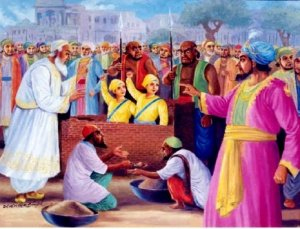
The latter took Mata Gujri and the two Sahibzade into custody and in the morning dispatched them to Sirhind where they were confined in the Cold Tower – Thanda Burj – of the Fort. On the morning of 9 December 1705 Zorawar Singh and Fateh Singh, aged 9 and 7 respectively, were summoned before the faujdar,Nawab Wazir Khan.Wazir Khan tried to lure the Sahibzade to embrace Islam with promises of riches and honors. But the brave and fearless sons of Guru Gobind Singh spurned the suggestion. He then threatened them with death but they remained undaunted. Nawab Sher Muhammad Khan, a high ranking officer and chief of Malerkotla,who was also present in the court, intervened for the innocent children to be spared their lives; to be given some more time to ponder over the suggestion to convert. As a result the two Sahibzade spent another two days of severe winter in their grandmother’s lap in the Cold Tower. Still adamant as ever, on 11 December 1705 Nawab Wazir Khan ordered their death by bricking them alive.Nawab Sher Muhammad Khan pleaded against the death sentence on the grounds that the boys were too young to be given such a harsh penalty.
They could not, in any case, be held responsible for the actions of their father. As Wazir Khan began to waver at the just reproof of his peer, Suchchanand put in a remark “The progeny of a serpent shall grow up as serpents, and should therefore be shown no mercy.” Wazir Khan was encouraged by these words and thereupon reiterated his order for the children to be bricked alive in a wall. By Divine Will, as the masonry around their tender bodies reached chest high, it crumbled.Wazir Khan’s anger at this failure ordered the princes back to the Cold Tower for another night.The next day, 12 December 1705, the Sahibzade were once again offered the choice to convert to Islam or face death by execution.The brave Sahibzade chose the latter and were executed. The aged Mata Gujri,who had all along been kept in the Cold Tower, only a short distance away, breathed her last as the news of the execution reached her ears. After the death of Mata Gujri and the two Sahibzade, Seth Todar Mall, a wealthy merchant and an influential citizen of Sirhind, made arrangements to perform the last rites. But no one would give him a patch of land in the locality to be used as cremation ground.Then one Chandhari Atta, a local resident, agreed to sell him a small plot.
He stipulated that Todar Mall could take only as much land as he could cover with gold nuggets, mohran.The Seth produced the mohran and bought the piece of land he needed. After the cremation a Sikh, Jodh Singh, of village Attevali buried the ashes. Sirhind suffered a full fury of Sikh ire when Banda Singh Bahadur marched upon it with his daring host.Wazir Khan was killed. Diwan Suchchanand,who explicitly championed the penalty laid upon the young Sahibzade,was captured and killed. Sirhind and the Fort were razed to the ground. A memorial was erected marking the spot where the two princes were executed. In 1764 Maharaja Karam Singh of Patiala built the Gurdwara Fatehgarh on the site and ordered to search for and determine the exact spot where the three were cremated. At the spot, in 1843, the Gurdwara Joti Sarup was built. In 1888 Giani Thakar Singh started the annual Jor-Mela (fair) held during the last week in December to commemorate the martyrdom of Guru Gobind Singh’s mother,Mata Gujri Ji, and his two sons Sahibzadas Zorawar Singh and Fateh Singh.A century later, in 1944, Maharaja Yadavinder Singh set up a committee for the improvement of Gurdwara Fatehgarh Sahib and Gurdwara Joti Sarup Sahib.Today Gurdwara Fatehgarh, with all the affiliated shrines, is administered directly by Shiromani Gurdwara Parbandhak Committee.
Sahibzada Ajit Singh (1687–1699)
Birth
Ajit Singh was born on January 26, 1687 CE, according to the Sikh calendar called the Vikram Samvat (SV) on the fourth day of the waxing moon in the month of Magh, SV year 1743. He was Guru Gobind Rai’s eldest son, and he was born to the guru’s second wife Sundari at Paonta, and at birth named Ajit, meaning “Invincible.”
Initiation
Ajit was given the name Singh when he was initiated into the Khalsa at the age of 12 and drank of the immortal nectar along with his family on the first Vaisakhi Day, April 13, 1699, at Anandpur Sahib, where his father took the name Tenth Guru Gobind Singh.
Martyrdom
Ajit Singh was martyred at the age of 18, on December 7, 1705 CE at Chamkaur, after he volunteered to leave the besieged fortress with five Singhs and face the enemy on the battlefield.
Sahibzada Jujhar Singh (1691–1705)
Birth
Sahibzada Jujhar Singh was born on Sunday, March 14, 1691 CE, in the seventh of the month of Chet, SV year 1747. He was the second eldest son of Guru Gobind Rai, was born to his first wife Jito at Anandpur, and at birth named Jujhar, meaning “Warrior.”
Initiation
Jujhar was initiated at eight years of age along with his family and given the name Singh at Anandpur Sahib on Vaisakhi, April 13, 1699, when his father Guru Gobind Singh created the Khalsa order of warrior saints.
Martyrdom
Jujhar Singh was martyred at the age of 14, on December 7, 1705 CE at Chamkaur where he earned the reputation of being likened to a crocodile for his fierceness in battle, when he volunteered to leave the besieged fortress with five of the last Singhs standing, and all achieved immortality on the battlefield.
Sahibzada Zorawar Singh (1696–1699)
Birth
Wednesday, November 17, 1696, on the first day of the waning moon in the month Maghar, SV year 1753. The third son of Guru Gobind Singh, he was born to the Guru’s first wife Jito at Anandpur, and at birth named Zorawar, meaning “Brave.”
Initiation
Zorawar was given the name Singh at the age of five and was initiated along with his family members Anandpur Sahib in the first Amritsanchar ceremony held on Vaisakhi Day, April 13, 1699.
Martyrdom
Sahibzada Zorawar was martyred at the age of six, at Sirhind, Fatehgarh, December 12, 1705 CE, on the 13th day of the month of Poh, SV year 1762. Zorawar Singh and his younger brother Fateh Singh were captured with their grandmother Gujri, the mother of Guru Gobind Singh. The sahibzade were imprisoned with their grandmother and put to death by cruel Mughal rulers who attempted to suffocate them inside a brick enclosure.
Sahibzada Fateh Singh (1699–1705)
Birth
Born on Wednesday, February 25, 1699 CE, the 11th day of the month Phagan, SV year 1755, the youngest son of Guru Gobind Rai was born to the guru’s first wife Jito at Anandpur, and at birth named Fateh, meaning “Victory.”
Initiation
Fateh was given the name Singh when initiated at the age of three along with his family members on Vaisakhi Day April 13, at Anandpur Sahib 1699, where he partook of baptism by the sword, created by his father, and his mother took the name Ajit Kaur, and brought sugar to sweeten the immortal Amrit nectar.
Martyrdom
Fateh was martyred at the age of six on Sirhind Fatehgarh, December 12, 1705 CE, the 13th day of the month of Poh, SV year 1762. Fateh Singh and his brother survived being bricked up alive, but then the order was given for them to be beheaded. Their grandmother Mata Gujri died of shock in the prison tower.
-

Kejriwal, AAP MLAs tear copies of Centre’s farm laws in Assembly
New Delhi (TIP): In a show of solidarity with the agitating farmers, Delhi Chief Minister Arvind Kejriwal, along with other Aam Aadmi Party (AAP) MLAs, tore up copies of the Centre’s three new farm laws in the Assembly on Thursday, Dec 17. The AAP government also passed a resolution in the Delhi Assembly seeking the repeal of the farm laws.
Addressing the Delhi Assembly, Kejriwal alleged that the laws “have been made for electoral funding of the BJP and not the farmers”. “I am pained that I have to do this. I did not intend to, but I cannot betray the farmers of my country who have been sleeping on the streets in the cold when the temperature is just 2 degrees Celsius,” Kejriwal said.
“I am a citizen of this country first, a chief minister later. This assembly rejects the three laws and appeals to the central government to meet the demands of farmers,” he said.
“What was the hurry to get the farm laws passed in Parliament during pandemic? It has happened for first time that three laws were passed without voting in Rajya Sabha. I hereby tear the farm laws in this assembly and appeal Centre not to become worst than Britishers,” Kejriwal said as he tore a copy of the farm laws.
Raking up the issue of the death of farmers sitting at protest near Delhi borders, Kejriwal said, “I want to ask Centre how many sacrifices farmers will have to make, to get their voices heard. Every farmer has become Bhagat Singh. The government is saying that they are reaching out to farmers and trying to explain the benefits of Farm Bills. UP CM told farmers that they’ll benefit from these bills as their land won’t be taken away. Is it a benefit?”
-

BKU chief Naresh Tikait asks Centre to call all party meet to resolve farmers’ stir
New Delhi (TIP): Bharatiya Kisan Union (BKU) chief and head of Baliyan Khap Naresh Tikait advised the Union government on Thursday, Dec 17, to resolve the issue of farmers’ stir over three farm laws by calling an all party meeting. Tikait was interacting with mediapersons after a meeting with khap heads in Baraut area of Baghpat in Uttar Pradesh. He later left for Delhi to attend the BKU’s Mahapanchayat at Ghazipur border on Thursday, Dec 17.
Tikait said that the government should resolve the issue of protests over the farm laws through dialogue instead of adopting a stiff attitude. He added that since six rounds of talks between farmers and the government had yielded no results, the government should call an all party meeting to resolve the impasse.
The farmer leader accused the government of a stubborn attitude while farmers were braving acute cold under the open skies since the past 21 days. He said that the government wanted a confrontation between different groups of farmers. “They are farmers who want a solution for their problems, not confrontation, either with the government or with each other,” he said and explained that the farmers might be associated with different organizations but they had a common goal.
Tikait’s comments come at a time when Union agriculture minister Narendra Singh Tomar has reached out to protesting farmers with an open letter, saying a “misunderstanding” has been created among some farmer unions and “white lies” are being spread on the issue of minimum support price for crops.
Protesting farmers fear the new farm laws would pave the way for the dismantling of the minimum support price system, leaving them at the ‘mercy’ of big corporations. However, the government has maintained that the new laws will bring farmers better opportunities and usher in new technologies in agriculture.
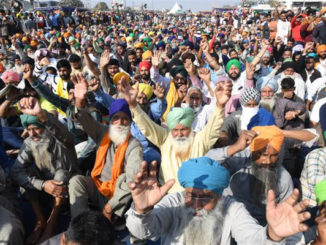
Hundreds of farmers have been protesting on different borders of the national capital since November 26 against the three newly enacted farm laws- Farmers’ Produce Trade and Commerce (Promotion and Facilitation) Act, 2020, the Farmers (Empowerment and Protection) Agreement on Price Assurance and Farm Services Act, 2020, and the Essential Commodities (Amendment) Act, 2020.
(Source: HT)
DMK, allies begin hunger strike in support of protesting farmers
The DMK-led opposition in Tamil Nadu on Friday, Dec 18, embarked on a day-long hunger strike in support of farmers protesting against the three farm laws enacted by the Centre recently. Farmers, mainly from Punjab and Haryana, have been protesting outside Delhi for over three weeks against the central legislations. On Friday, DMK chief and Leader of Opposition, MK Stalin, party MP Kanimozhi and leaders of alliance parties participated in the protest here.
-

Global Covid-19 cases surpass 74.8 million: Johns Hopkins
The overall number of global coronavirus cases has topped 74.8 million, while the deaths have surged to more than 1.66 million, according to the Johns Hopkins University. In its latest update on Friday, Dec 18, the University’s Center for Systems Science and Engineering (CSSE) revealed that the current global caseload and death toll stood at 74,875,300 and 1,660,132, respectively.
The US is the worst-hit country with the world’s highest number of cases and deaths at 17,192,376 and 310,424, respectively, according to the CSSE. India comes in second place in terms of cases at 9,956,557, while the country’s death toll soared to 144,451. The other countries with more than a million confirmed cases are Brazil (7,110,434), Russia (2,736,727), France (2,483,524), Turkey (1,955,680), the UK (1,954,268), Italy (1,906,377), Spain (1,785,421), Argentina (1,524,372), Colombia (1,468,795), Germany (1,438,438), Mexico (1,277,499), Poland (1,171,854) and Iran (1,138,530), the CSSE figures showed. Brazil currently accounts for the second highest number of fatalities at 184,827. The countries with a death toll above 20,000 are Mexico (115,769), Italy (67,220), the UK (66,150), France (59,733), Iran (53,095), Spain (48,777), Russia (48,568), Argentina (41,534), Colombia (39,787), Peru (36,858), Germany (24,611), Poland (24,345) and South Africa (24,011).
-
2 doses of Oxford coronavirus vaccine provoked good immune response, data shows
Oxford University’s coronavirus vaccine candidate provokes a better immune response when a two full-dose regime is administered rather than a full-dose followed by a half-dose booster, the university said. It citing data from early trials of its coronavirus vaccine.
The developers of the Oxford vaccine candidate, which has been licensed to pharmaceuticals company AstraZeneca, had earlier showed higher efficacy when a half dose is followed by a full dose, compared to a two full-dose regime. The latest data from the Oxford coronavirus vaccine Phase I and 2 clinical trials released on Thursday made no reference to the half-dose/full-dose regime, which Oxford has said had been “unplanned” but approved by regulators.
Once seen as the frontrunner in the development of a coronavirus vaccine, the British team has been overtaken by US drugmaker Pfizer, whose shots have been rolled out in Britain and the United States this month. The data which was published earlier showed Oxford coronavirus vaccine was 62 per cent effective for trial participants given two full doses. It showed a more robust 90 per cent for a smaller sub-group when it was given half in the beginning, then a full dose of the coronavirus vaccine.
-
Canada continues to record soaring Covid-19 cases
Covid-19 cases continued to rise in Canada as 486, 393 new infections and 13, 865 deaths were recorded on Thursday, the media reported. Ontario, Canada’s most populous province, reported 2, 432 new cases of Covid-19 on Thursday, Dec 17, the highest number of cases recorded in a single day since the start of the pandemic in the country, Xinhua reported.
Thursday marked the third straight day in which the province logged more than 2, 000 cases of the novel coronavirus. The Ontario Hospital Association called for a four-week lockdown in every public health unit where there is an infection rate of 40 per 100, 000 people or higher. There are 75, 885 active cases across the country with a daily average of 6, 614 new cases reported in the past seven days, according to the Public Health Agency of Canada on Thursday.
-

‘The fear is intense’: Afghan ‘sticky bombs’, used by Taliban, on the rise
Kabul (TIP): Killings by small, magnetic bombs slapped under vehicles are unnerving Afghan officials, activists and journalists, who blame the Taliban for the attacks that are increasing despite peace talks aimed at ending two decades of war.
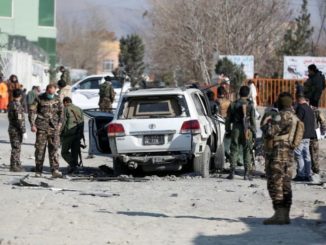
At least 10 government officials and their aides have been killed by “sticky bombs” in recent weeks, mostly in the capital Kabul. The tactic, senior security officials and Western diplomats say, is meant to instil fear while avoiding large-scale civilian casualties.
“Internal intelligence memos reveal that the Taliban are systematically eliminating mid-career, ambitious government officials and other prominent individuals who are clearly against their hardline stance,” said a senior Western diplomat responsible for Afghanistan. “The rebels are not killing the government’s top brass as they can’t afford to generate large-scale furore, for it would impinge upon the peace process,” the diplomat told Reuters on condition of anonymity, as he is not authorised to speak to the press. A Taliban spokesman said the group was behind some of the attacks but targeted only officials of the government that the group is both warring and negotiating with.
“We will continue to target the enemy and continue to eliminate important government figures, but not journalists or social activists,” said Zabihullah Mujahid, a spokesman for the militant group. “We are directly attacking those people who are fighting against us either on the battlefield or those plotting against us from their government offices.” Afghanistan’s Interior Ministry blames the Taliban for all sticky bomb attacks. Eight senior Afghan government officials, three local journalists and two female professors in Kabul told Reuters they have recently changed their modes of transport and now regularly alter their routes to work.
Taliban leaders are in neighbouring Pakistan during a break in the peace talks in the Qatari capital Doha, which have taken three months to agree on procedural ground rules. The rise in violence mars the best hope for ending the war that has ravaged Afghanistan since the 2001 attacks on the United States. “Despite the talks, the militants were achieving desired the results of inculcating tremendous fear,” the diplomat said. The militants have also stepped up widespread attacks against government forces in the provinces in an effort to establish new strongholds.
QUICK AND DIRTY
Sticky bombs, assembled in Afghanistan, can be detonated remotely or with a time-delay fuse and are powerful enough to blow up a car. They have been used since the early years of the war to sow terror among Afghans and expatriates working to safeguard the economy and fragile democracy.
The devices can be crude or sophisticated — but planting them is cheap, simple and hard to defend against. Recent arrests reveal that target vehicles were stuck in traffic, where attackers on motorbikes or on foot could attach a bomb.
“In most cases young men were also involved in sticking magnetic bombs for a small amount of cash,” said Rahmatullah Andar, a spokesman for the National Directorate of Security, Afghanistan’s anti-terror agency. Rising unemployment due to COVID-19 has made it easier for the Taliban to recruit young boys who wash cars on the side of the roads, vendors and beggars to collect information on intended targets, said another official at the directorate.
Although the sticky bomb attacks remain sporadic, they are having a psychological effect.
“After breakfast, I take a few minutes to think which route I should take to work to stay alive,” said Rahmatullah Rahim, a bureaucrat in the Ministry of Law and Justice, adding: “The fear is intense.” Reuters
-

In a first, UK court rules pollution as cause of child’s death
London (TIP): In a first in the UK and potentially the world, a British court made legal history after ruling air pollution as one of the causes of the death of nine-year-old Ella Kissi Debrah.
Following the ruling on Wednesday, it will now be stated in her death certificate that she died from the following causes: acute respiratory failure, severe asthma and air pollution exposure.
The coroner found that air pollution levels near Ella’s home near a busy road in London exceeded the World Health Organization’s (WHO) guidelines.
The principal source of her exposure was traffic emissions.
It stated that there was a recognised failure to reduce the level of NO2 that possibly contributed to her death.
He also recognised the lack of information given to Ella’s mother, which possibly contributed to her death.
Ella’s mother, Rosamund, gave evidence during the inquest and said her daughter had been taken to the hospital about 28 times during her life after suffering acute asthma attacks and seizures.
Hours before she died in February 2013, Rosamund said she had read to Ella in bed after the family had eaten a meal together on Valentine’s Day evening.
“I had printed off Beethoven’s love letters that day, so that was the last thing I read to her.” A few hours later her daughter woke and needed her asthma pump. She woke again struggling to breathe and her mother called an ambulance that took her to Lewisham hospital, where her condition deteriorated. “I begged the consultant, I knew we were in trouble,” her mother said. But they were unable to save her daughter, she told the inquest.
Ella was declared dead at 3.27 a.m. on February 15.
Studies say 93 per cent of the world’s children under the age of 15 breathe bad air and researchers have found that air pollutants can breach a mother’s placenta and potentially reach foetuses in the womb.
The WHO estimates that in 2016, 600,000 children died from acute lower respiratory infections caused by bad air.
Currently, half the world does not have access to the necessary data to address the health threat while countries with air pollution laws regularly breach them.
In response to the ruling, Rosamund said: “Today was a landmark case, a seven-year fight has resulted in air pollution being recognised on Ella’s death certificate.
“Hopefully this will mean many more children’s lives being saved. Thank you everyone for your continued support.” –IANS
-
Australia describes couple’s death as ‘terrorism incident’
Brisbane (TIP): Australian detectives suspect the deaths of an elderly couple in their Brisbane home is a “terrorism incident” perpetrated by a knife-wielding man who was shot dead by police, officials said on Friday. Raghe Abdi, 22, threatened police with a knife before he was shot dead on a highway on the outskirts of Brisbane on Thursday morning, officers said.
The bodies of an 87-year-old man and an 86-year-old woman were found in their home later Thursday near where Abdi died, Queensland state Police Deputy Commissioner Tracy Linford said.
Linfold declined to detail how they had died but homicide detectives had found evidence that Abdi had been in the house, she said.
Police Commissioner Katarina Carroll said the known extremist had been acting alone.
“We had no choice but to declare this as a terrorism incident,” Carroll told reporters.
Australia Federal Police suspect Abdi had been influenced by the Islamic State group. He was arrested on suspicion that he was trying to join extremists when he attempted to depart Brisbane Airport for Somalia in May 2019. He was released without charge due to insufficient evidence, but his passport was cancelled.
In June 2019, he was charged with further offences including refusing to give detectives the passcode for his phone.
He was free on bail and had been forced to wear a GPS tracking device, which he had cut off before he was shot. —AP
-
Pakistani actress Firdous Begum dies at 73
Lahore (TIP): Firdous Begum, the famous Pakistani veteran actress who shot to fame for her iconic role in 1970’s movie ‘Heer Ranjah’, passed away here on Wednesday. She was 73.
Firdous was shifted to a hospital here on Tuesday due to a brain haemorrhage where she breathed her last here on Wednesday, according to her family. A leading lady of Pakistani films from 1970s to 1980s, Firdous started her film career in 1963 with a movie ‘Fanoos’ in which she had a supporting role. She got a break from movie ‘Malangi’ in 1965 and thereafter there was no looking back. Her iconic role in ‘Heer Ranjah’ made her the most sought-after actress in 1970s. Firdous performed in over 150 Punjabi, Urdu and Pashto films. She married to fellow actor Akmal Khan who died in 1967. Later she married actor Ijaz Durani who played male lead in ‘Heer Ranjah’. She is survived by her three children, two sons and a daughter. —PTI
-

Indian American Pentagon Official Kash Patel Files $50 Million Defamation Suit Against CNN
WASHINGTON (TIP): Kash Patel, the highest-ranking Indian American in the Pentagon, has filed a USD 50 million lawsuit against CNN and several of its top reporters for allegedly defaming him by publishing a series of “false and defamatory statements”.
Patel, currently the Chief of Staff to Acting US Defense Secretary Christopher Miller, filed the lawsuit in a Virginia court against CNN and several CNN reporters on Friday, according to Fox News.
In his lawsuit, Patel, who previously served in the White House before being moved to the Pentagon, alleged that CNN between November 24 and December 4 published a series of articles that “contain a series of false and defamatory statements” about him, according to the complaint reported by Fox News.
The CNN articles described Patel, who was previously a top aide to Republican Representative from California, Devin Nunes, as a pro-Trump conspiracy theorist, the report said.
“..publication of the defamatory statements is part of a general pattern of retaliation and discrimination against Kash… a larger conspiracy undertaken between 2018 and the present to discredit Kash through the publication of false statements and the promotion of unfounded left-wing political narratives,” his attorney Steven S Biss said. Patel “uncovered many inconvenient facts undermining the fake political narrative about collusion between members of the Trump campaign and Russians when he was counsel for Nunes, then-chairman of the House Permanent Select Committee on Intelligence,” Biss said. CNN did not immediately respond to a request for comment, Fox News said. New York-born Patel has his roots in Gujarat. His parents are from East Africa – mother from Tanzania and father from Uganda. They came to the US from Canada in 1970.
-

Indian American mechanic crushed to death at Chicago airport
CHICAGO (TIP): Jijo George emigrated from India’s Kerala state 17 years ago to make things better for his family.
But their American dream was dashed Sunday as the Indian American mechanic was crushed to death in a horrific accident at Chicago’s O’Hare International Airport.
George, 35, died after being crushed by an “aircraft drivable pushback apparatus” at hangar 764, Chicago Sun Times reported citing the Cook County medical examiner’s office.
Chicago police said they were called about 2 p.m. and found him unresponsive under the vehicle. George died less than two hours later at Resurrection Medical Center. An autopsy ruled his death an accident.
George earned an associates degree in mechanical engineering and landed a job as a mechanic at Envoy Air at O’Hare International Airport about two years ago, his family told the Times.
What’s more, he and his wife had a 2-year-old child and were expecting another within the next month, his cousin Blesson George said.
“It took him 17 years to get where he is now — by working hard — and then suddenly it’s all gone,” Blesson George was quoted as saying.
Jijo George was the main provider for his Des Plaines household, which also included his parents and brother’s family.
“He was taking care of everyone,” Blesson George said. “They lost the person who had been taking care of them. They’re all crying. … Life was about to get better for him, and that’s when this happened to him.”
Jijo George’s family was given few details about his death from Envoy Air, Blesson George said.
“That’s the hardest part,” Blesson George said. “The only thing we heard from them is that he got in an accident.”
After pressing the company, the company told them he was crushed by a piece of equipment he was working on.
“Envoy, they never let us know anything,” Blesson George told the Times.
“We were in the dark for hours after this tragedy. We tried to reach these people for 24 hours, and no one picked up the phone. Finally, they flew eight or nine people to investigate this matter. The company isn’t ready to tell us what really happened.”
As word of George’s death spread in Chicago’s Indian community, Nisha Eric, an organizer in the community, told the Times she felt compelled to help raise funds for the family.
“It’s a tragedy,” Eric said. “Even if you don’t know people like him, it’s important for us to extend a helping hand to his family.”
In a statement, a spokeswoman for Envoy Air said George was fatally injured at its ground equipment shop.
“We are providing support to the family and our employees to help them through this loss,” the spokeswoman, Minnette Vélez-Conty, was quoted as saying.
“Currently, the situation is under investigation by our safety organization. We reiterate our commitment to safety and security as we conscientiously maintain policies, processes and systems to achieve the highest levels of safety in the workplace,” she said.
The Occupational Safety and Health Administration is also investigating the death, and has up to six months to issue workplace safety citations, the Times said citing a US Department of Labor spokesperson.
-

Indian American Hindu community donates over 1.3 lakh kg food to needy during Diwali
WASHINGTON (TIP): The Hindu-American community donated more than 1,33,000 kilograms of food to the poor and needy as part of its “Sewa Diwali” drive. The food drive, a collective effort of cultural and religious communities, yoga institutions, and numerous other organizations rooted in the Dharmic value, has been recognized by many states, cities and local governments, a belated community release issued said. It said nearly 179 organizations and numerous individuals came together to collect food for food pantries across the country.
For over two months, 294,000 lb of food was collected across 26 states and 225 townships in the US, and donated to 199 pantries, soup kitchens, and shelters under the “SewaDiwali” initiative, the release said.
During this drive, hundreds of people made their homes “collection centers” for their neighbors to contribute. People were encouraged to donate canned goods and non-perishable items, which could be donated to food pantries or homeless shelters, it said.
Jennifer Apostol, department head, MCFOODS, NJ, said. “With 9,000 lb of food donated, the food pantries know they can have shelves stocked and ready for visiting families. Some families are still paying bills.”
“This was a two-month program, with the plan to collect food and give it to the local food pantries,” said Venkat Gade, president of Chinmaya Mission in Connecticut.
The initiative began in New Jersey in 2018, when over two dozen organizations collected 18,000 pounds of food during the festival of Diwali with the goal of supporting the local community. The project expanded to 11 states in 2019 and collected over 55,000 pounds of food items across over 40 townships throughout the northeast region, according to the release. -

87-year-old Indian-origin man first to get COVID-19 vaccine in UK
NEWCASTLE, UK (TIP): 87-year-old Hari Shukla is an Indian-origin man from the north east of England. He will become one of the first people in the world to get a vaccine against COVID-19 when he receives his Pfizer/BioNTech jab at a hospital in Newcastle on Tuesday. Hari Shukla from Tyne and Wear said he feels it is his duty to receive his first of the two-dose vaccine. “I’m so pleased we are hopefully coming towards the end of this pandemic and I am delighted to be doing my bit by having the vaccine, I feel it is my duty to do so and do whatever I can to help,” said Shukla.
Shukla was notified by the UK health authorities on the criteria set by the UK’s Joint Committee on Vaccination and Immunization as part of a phased rollout plan based on those at the highest risk of death from the deadly virus. People aged 80 and over, care home workers as well as NHS workers who are at higher risk will be first in line to receive the “life-saving jab”.
UK will vaccinate people over-80s and frontline health and care staff receiving from today. The NHS said it is undertaking the biggest and most highly anticipated immunization campaign in history at 50 hospital hubs, with more starting vaccinations over the coming weeks and months as the program ramps up after the first set of doses arrived from Pfizer’s manufacturing site in Belgium.
Pfizer/BioNTech vaccine got the green light from the UK’s Medicines and Healthcare products Regulatory Agency (MHRA) last week. The Pfizer/BioNTech formula is an mRNA vaccine that uses a tiny fragment of genetic code from the pandemic virus to teach the body how to fight Covid-19 and build immunity. It is delivered in two doses of 21 days apart and, according to experts, it has shown a strong immunity response kicking in after seven days of the second dose. The Pfizer vaccine needs to be stored at -70C before being thawed out and can only be moved four times within that cold chain before being used.