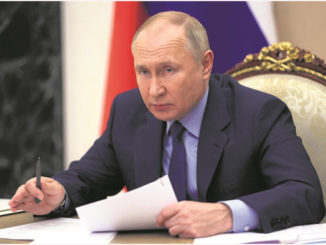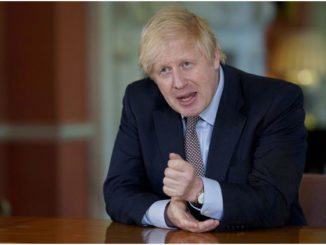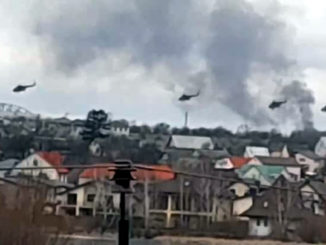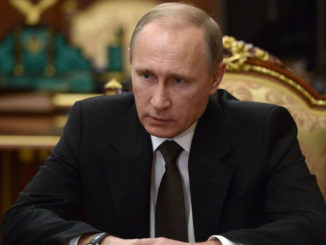
THE GREAT GAME: Can the PM, whose foreign policy dexterity must be applauded, take a leaf out of Virat’s book?
“Only the Chinese are standing up for now. You know what that means. That Trump has recognized that his real antagonist is Xi Jinping, not Putin. That the Chinese, no one else, have the strength and the wherewithal to take on the Americans. Perhaps that’s why Trump wants to embrace the Russian bear — he wants to wean him away from the dragon-like clasp of the Chinese leader. It’s incredible that Trump has realized this basic truth so quickly, but that it eluded the rest of Washington DC for years.”
By Jyoti Malhotra
The blow-up between Donald Trump and Volodymyr Zelensky a week ago is already a thing of the past. The world changed that Oval Office morning and the world saw the raw exercise of power. If Europe — and the Ukrainians — fulminated about the lack of grace and courtesy in the exercise of that power, perhaps they’re right. But they also know that it’s not easy to make omelets if you can’t break a few eggs.
What is amusing is that the Europeans and Britain are this shocked. The British and the French, both Security Council permanent veto powers — as well as all those other nations on the Continent trying desperately to assert themselves on the world stage — have kowtowed to the Americans at least since the end of the Second World War, riding piggyback on the strength of the American dollar.
Europe’s worst-kept secret is the barely hidden contempt the Europeans have for the ugly American – except they want their money. The most overpriced baguettes the other side of Suez are manufactured by Parisians in the summer — when Paris empties itself in anticipation of the hordes of American tourists descending upon the French capital, all looking for one or another version of A Moveable Feast a la Hemingway.
The thing about Trump & Co — JD Vance, Elon Musk and the lot — is that they have no time for what well-known journalist Shekhar Gupta calls “tanpura-setting.” Meaning, all the frills and the fuss that Europe loves so much, couched in words like “egalite” and “liberte” and even “fraternite” — although you should, dear Reader, check out France’s not-long-ago record in North Africa, especially Algeria, where even the White French were dismissively known as “pied noir” or “black feet,” because they weren’t white enough for Mainland French — is all so soul-stirring and uplifting because at the end of the day they know that the bill will be picked up by the Americans across the pond.
Well, Trump & Vance just announced that the time for all this “tanpura-setting” is over. Or, you can continue to set your tanpura, but not on our time or our cheque book. So, Ukraine is welcome to fight till the last Ukrainian, but not on American money. At least Afghanistan taught the US & Europe one thing — fighting someone else’s war doesn’t mean your boys should die for it. Perhaps that’s why they loosened their purse strings, to assuage their guilt.
Trump called out Europe’s hypocrisy that morning in the Oval Office. For three years, Europe and Canada have been encouraging Zelenskyy to fight Vladimir Putin, except, unlike in Afghanistan, they have not been willing to put their body bags where their mouths are.
It’s taken less than a week for the world to fall in line. Not just Zelenskyy, everyone else is also preparing for a Trump-led brave new world, because they know they have no other choice.
Only the Chinese are standing up for now. You know what that means. That Trump has recognized that his real antagonist is Xi Jinping, not Putin. That the Chinese, no one else, have the strength and the wherewithal to take on the Americans. Perhaps that’s why Trump wants to embrace the Russian bear — he wants to wean him away from the dragon-like clasp of the Chinese leader. It’s incredible that Trump has realized this basic truth so quickly, but that it eluded the rest of Washington DC for years.
What, then, must one make of Indian foreign policy in the Age of Trump? Clearly, the Modi government did well by going to meet Trump early, even though this happened around the same time Indians were being deported by the US President in handcuffs and chains. So, Modi swallowed the bitter pill quickly because he knew he had to — quickly get out in front, meet the American President and say your piece.
Modi’s presence in DC was also a reminder of his old slogan, “Ab ki baar, Trump Sarkar”, the stark opposite of Zelenskyy’s support for Biden.
External Affairs Minister S Jaishankar is smartly tying up the rest. That’s why he announced that India will not be in favour of a de-dollarization move, although that is exactly what India had signed up for at the China-led BRICS summit in Russia’s Kazan; before the Budget, tariffs for luxury motorcycles were brought down, because Trump had wanted that to happen in his first administration.
In short, try and please Trump, or at the very least pacify him, show him you mean no harm. You know he’s unpredictable – he has just reversed the tariffs he had set for Mexico and Canada — so get on his right side. Don’t pretend you’re non-aligned, because you’re not, nor publicly blather about your friendship as is the usual wont of insecure allies.
As for the upcoming US-Russia entente, India has just been thrown a roll of dice and come up trumps. If Modi plays this well, he can leverage India’s standing both in the West and in the East. A Trump-Putin-Modi summit is no longer out of the realm of possibility.
It follows that the Modi government should pick up some tips about the exercise of power — making friends with your enemies is far more important than with your friends, for example. If Modi wants India to become a regional power, he cannot allow the old prejudices about Pakistan to come in the way. This is far more important than the desire for people-to-people contact — although it would be wonderful to have friends from Pakistan visit for life-changing events like celebrations and marriages in Delhi — and amounts to a fundamental strategic shift in PM Modi’s world-view.
India can never be strong if it is faced by a China-Pakistan axis on either side. Why not drive a wedge between the two by making friends with your weaker, western neighbor, one with whom you also have so much more in common? Instead, India has restored the relationship with China and continues to blacklist Pakistan.
Virat Kohli, about whom the PM admirably tweets and often, showed the way some days ago when he bent over to tie the shoe-laces of the Pakistani batsman he was playing against — a calm confidence about himself, his game and his place in the world.
Can the PM, whose foreign policy dexterity must be applauded, take a leaf out of Virat’s book?
(Jyoti Malhotra is Editor-in-Chief of The Tribune group of newspapers. She has been a journalist for 40 years, working in print, TV and digital, both in English and Hindi media, besides being a regular contributor on BBC Radio. She is also interested in the conflation between politics and foreign policy. Her X handle is @jomalhotra Insta handle @jomalhotra Email: jyoti.malhotra@tribunemail.com)
Trump also discussed the plans with Ukrainian President Volodymyr Zelenskyy. Zelenskyy is due to meet with Vice President Vance on Feb. 14.
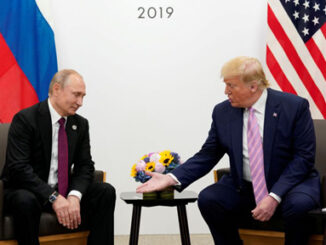
WASHINGTON, D.C. (TIP): Following phone calls with his Russian and Ukrainian counterparts on Feb. 12, President Donald Trump announced Russia has agreed to “start negotiations immediately” to end the war in Ukraine. “I just had a lengthy and highly productive phone call with President Vladimir Putin of Russia,” Trump announced in a Feb. 12 post on Truth Social. The call marks Trump’s first known conversation with Putin since taking office.
“First, as we both agreed, we want to stop the millions of deaths taking place in the War with Russia/Ukraine.”
Speaking with reporters at the White House later on Feb. 12, Trump said he may soon meet with Putin in person in Saudi Arabia, though he didn’t provide an exact timeline for such a meeting.
So far, the Russian side has provided few additional details about the call between Trump and Putin.
In remarks carried by Russia’s state-sponsored TASS news agency, Kremlin spokesman Dmitry Peskov said the two leaders spoke for about an hour and a half.
Immediately after speaking with the Russian leader, Trump called Ukrainian President Volodymyr Zelenskyy. In another post on Truth Social, Trump said that conversation “went very well” and that Zelenskyy also wants to negotiate a peace agreement.
Treasury Secretary Scott Bessent also met with Zelenskyy in person in Kyiv on Feb. 12.
Vice President JD Vance and Secretary of State Marco Rubio will lead another U.S. delegation to meet with Zelenskyy in Germany on Feb. 14.
Putin and Trump’s phone conversation comes a day after the Trump administration secured the release of Marc Fogel, who had been held in Russia since 2021 over a marijuana possession charge.
Trump thanked his Russian counterpart for agreeing to Fogel’s release.
Announcing Fogel’s release on Feb. 11, national security advisor Mike Waltz said, “[The exchange] serves as a show of good faith from the Russians and a sign we are moving in the right direction to end the brutal and terrible war in Ukraine.”
The call between Trump and Putin also came on the same day Defense Secretary Pete Hegseth met with Ukraine’s network of international backers in Belgium. At the meeting, Hegseth reiterated the Trump administration’s calls to negotiate an end to the war.
Hegseth also pushed back on Ukraine’s ambitions to retake all of the territory it has lost to Russia throughout the war, and its wish to join NATO. Speaking with reporters on Feb. 12, Trump stood by Hegseth’s assessment of Ukraine’s war time prospects and reinforced his opposition to Ukraine joining NATO.
While Trump has called for negotiations to end the war, he has left open the possibility of continuing U.S. support for Ukraine. This week, he announced he had taken steps on an agreement in which Ukraine would trade access to its rare earth minerals in exchange for U.S. aid.
“No one wants peace more than Ukraine. Together with the U.S., we are charting our next steps to stop Russian aggression and ensure a lasting, reliable peace,” Zelenskyy said in a post on social media platform X after his conversations with Trump and Bessent.
The Ukrainian leader also announced that a document is in the works that will cover a “security, economic cooperation, and resource partnership.”
Perhaps the middle powers could take a leaf from Qatar’s book and play the mediating role to make things happen
“As these things go, the shift of global power will have to play out before countries agree to talk — after the great powers test the limits of what they can achieve through aggression, or aggressive posturing. That is when a new modus vivendi might be thrashed out. One assumes China will manage to push the US back in the Western Pacific but not push it out altogether, and Russia will get what it seeks: a near-abroad as its zone of influence. Whether this will be a stable arrangement depends on the answers to key questions: Who will come in place of today’s rulers; can the great powers agree to live and let live; and what roles the middle powers will play?”
By TN Ninan
As Donald Trump assumes office again as US President, the world is caught amidst seminal change. Since World War II, even the most powerful countries were willing to limit national sovereignty, in that they agreed for the most part to abide by global rules and cooperative action. Such rules were framed on a wide range of subjects. Not just trade and tariffs, but also nuclear arms, the law of the sea and the sanctity of national borders.
This has changed, for two reasons. The first is the rise of China, and the accompanying shift of global power. China is not a status quo power, so it wants to shake things up and challenge the US. The second is the rise of strongmen as rulers in the great-power countries: Vladimir Putin, Xi Jinping and now Trump.
These two developments have revived something that had more or less died out after World War II — wars of choice by the great powers, aimed at territorial conquest. The US war on Iraq served advance notice of what was to come. Three years ago, Putin invaded Ukraine. Xi seems to be preparing a Chinese assault on Taiwan. And Trump now threatens the use of force to acquire the Panama Canal and Greenland.
This has been accompanied by other changes. A preference for unilateral action over multilateralism. A diminished role and utility for the United Nations and the World Trade Organisation, and for action to meet climate change targets. Geopolitics was always about power, but increasingly it is about power unrestrained by rules. That’s true in the South China Sea, genocide in Gaza, a huge new dam upstream of the Brahmaputra in Tibet and economic sanctions that affect non-combatant third countries.
Underlying these is a change in mindset, from seeing interdependence and trade networks as an advantage to viewing them as vulnerability. So, we see a movement away from more than half a century of trade liberalization. Out, therefore, with globalization, in with ‘my country first’. Out with networked economies, in with self-reliance. Out with market efficiency, in with national security. This approach didn’t work well the last time it was tried, a century ago, but the lessons of history don’t seem to hold much sway.
Perhaps the most important change is that the country that originated much of the rule-making of the past, the United States, is now the most unreliable nation on earth. A Financial Times columnist asked the other day whether America had become a rogue state. No one knows what it will do next, least of all its allies. All of this makes the world a more turbulent place, with many more uncertainties and risks than before.
Laws and agreements reflect pre-existing power structures, and the cooperative agendas that were hammered out since World War II were made possible by the pre-eminence of a Western paradigm. And put in place by the most powerful country to emerge from the war. If that world order, so to speak, is now breaking down, we have to go back to the root cause: The threat posed to the West by the rise of China, at a speed and on a scale without precedent. The Western response — fueled by perceptions that China has not played by accepted trade rules, systematically worked to de-industrialize the West and also stolen Western technologies — has been trade sanctions, tariffs, technology denials and such.
These may have come too late in the day. China’s industrial pre-eminence will remain unchallenged. Last year, it produced 12.6 times as much steel as the US, 22 times as much cement and three times as many cars — with whose electric models it now threatens to overwhelm the Japanese and German car markets. China’s shipyards also accounted for over half the ship output. By 2030, China’s manufacturing sector is projected to be bigger than that of the entire Western world. It is already far and away the global leader in every sunrise industry.
These strengths are useful only if China can continue to access world markets, which are progressively sought to be denied. Yet China enjoyed a record trade surplus in 2024, approaching a trillion dollars. In several areas, it is now ahead of the West in technology. To be sure, the Chinese economy now faces serious structural problems that could undermine its continued rise. But one could argue that it is dealing with them at least as successfully as Western countries with structural problems, like the UK and Germany, even the US.
The reality to be dealt with is that the more the West feels threatened, the quicker it has abandoned whatever rules it once played by. In the new world, it is every country for itself, and might is right. Indeed, every country’s defense budget is being raised, and one must hope that does not spur wider conflict. Even if this is avoided, the old world isn’t coming back. But can the new world agree to new rules?
As these things go, the shift of global power will have to play out before countries agree to talk — after the great powers test the limits of what they can achieve through aggression, or aggressive posturing. That is when a new modus vivendi might be thrashed out. One assumes China will manage to push the US back in the Western Pacific but not push it out altogether, and Russia will get what it seeks: a near-abroad as its zone of influence. Whether this will be a stable arrangement depends on the answers to key questions: Who will come in place of today’s rulers; can the great powers agree to live and let live; and what roles the middle powers will play?
Reform of today’s global institutions like the Security Council will have to be addressed. Ideally, the Council should abolish the veto and adopt the weighted voting that prevails in the European Union, the International Monetary Fund and the World Bank. This should make today’s veto countries more responsive to international opinion, and reflect the new global power reality. In trade, plurilateral arrangements are more likely than fully global trading rules. A new global compact on how to help African countries, home to most of the world’s poorest, will be essential. None of this will be easy, or the outcomes certain. Perhaps the middle powers could take a leaf from Qatar’s book and play the mediating role to make things happen.
MOSCOW (TIP): Russian President Vladimir Putin said on Thursday, December 20, that he was ready to compromise over Ukraine in possible talks with US President-elect Donald Trump on ending the war and had no conditions for starting talks with the Ukrainian authorities, a Reuters report says.
Trump, a self-styled master of brokering agreements and author of the 1987 book “Trump: the Art of the Deal”, has vowed to swiftly end the conflict, but has not yet given any details on how he might achieve that.
Putin, fielding questions on state TV during his annual question and answer session with Russians, told a reporter for a US news channel that he was ready to meet Trump, whom he said he had not spoken to for years.
Asked what he might be able to offer Trump, Putin dismissed an assertion that Russia was in a weak position, saying that Russia had got much stronger since he ordered troops into Ukraine in 2022. “Soon, those Ukrainians who want to fight will run out, in my opinion, soon there will be no one left who wants to fight.
We are ready, but the other side needs to be ready for both negotiations and compromises.” Putin said on Thursday that Russia had no conditions to start talks with Ukraine and was ready to negotiate with anyone, including President Volodymyr Zelenskyy. Zelenskyy, whose term has technically expired but who has delayed an election because of the war, would need to be re-elected for Moscow to consider him a legitimate signatory to any deal to ensure it was legally watertight, said Putin.
‘Pulled back Russia from edge of abyss’
President Vladimir Putin said he had pulled Russia back from the edge of the abyss after the chaos which accompanied the fall of the Soviet Union, and had built the country into a sovereign power able to stand up for itself. He admitted there was inflation but said that Russian growth rates outstripped those of Britain.
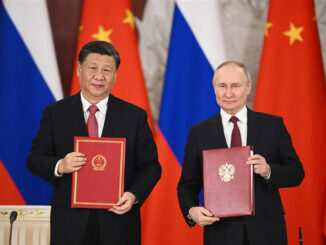
China and Russia agree to stand together on issues involving security interests
“The declaration is a clear signal from Russia and China that they are prepared to stand together on issues involving each other’s security interests. While India finds mention on some issues of regional cooperation, there is nothing in the declaration to which it could take objection to. What now emerges is that Russia and China have much in common in dealing with the US and its allies. China prefers to keep out any mention of India. This should not surprise anyone with even a cursory understanding of China’s growing hubris, as it moves to attain global recognition of its economic clout and military potential. Moreover, there is considerable focus by China on Sino-Russian cooperation to build a security framework in the oil-rich Gulf region. China and Russia appear more than pleased that thanks to clumsy diplomacy by the Biden administration, they have been able to commence a rapprochement process between Iran and Saudi Arabia. Similar efforts are underway to forge normal ties between Syria and Saudi Arabia. These developments have resulted in a stronger Russian and Chinese presence in the region.”
By G Parthasarathy
The US and its Western allies were hoping that the Putin-Xi Jinping summit would turn out to be a damp squib. The recent Moscow summit has, however, produced a comprehensive plan by China and Russia to jointly meet the challenges they face from the US-led global order. The US and its allies have been repeatedly calling for sanctions against Russia, following its conflict with Ukraine. Some hope was also unrealistically expressed that China could follow through on its Ukraine plan by joining them in persuading Russia to pull out of Ukraine on Western terms. That hope now lies shattered. The joint declaration ends any illusion that Western powers may have had about China backing them on how the Ukraine conflict should be ended.
The joint declaration states that the US and its allies would have to respect the legitimate security concerns of all countries, while adding that confrontation must be avoided. Russia and China have emphasized that ‘responsible dialogue’ is the best way to resolve problems and the international community should support constructive efforts. The declaration, in fact, calls on all parties to stop actions that promote tension to prevent the crisis from further aggravating, and even getting out of control. It concludes that China and Russia are opposed to unilateral sanctions not authorized by the UN Security Council.
The US has, rather unconvincingly, been denying allegations made by one of its best-known investigative journalists, Seymour Hersh, that Washington had a hand in, and indeed organized, the bomb attack that destroyed the undersea Beixi gas pipeline (known also as Nordstream) carrying gas from Russia to Germany. Russia and China have bluntly noted, ‘The banner of extremism and the use of terrorist and extremist organizations to interfere in the internal affairs of other countries and achieve geopolitical goals.’ They have also demanded ‘an objective, impartial and professional investigation should be conducted on the Beixi pipeline explosion.’ It is going to be difficult for the US, and even Germany, which is reputed for observing high standards of respect for international law, to claim that they do not know who was responsible for blowing up the pipeline.
Expectations in the international community that Russia may be persuaded by China to be more flexible on the withdrawal from Ukraine have been dashed. Russia and China announced that the ‘legitimate security concerns of all countries must be respected’, and that confrontation between camps, ‘adding fuel to the flames’, must be avoided. China firmly backs Russia’s position on the Ukraine crisis, averring that ‘responsible dialogue is the best way to solve problems steadily’. Most importantly, Russia has been assured of Chinese backing in the UN Security Council to ensure that ‘parties to the conflict stop all actions that promote tension and delay the end of war.’ Putin could not have asked for anything more from his Chinese guest. What remains to be seen is whether China will provide the military supplies that Moscow needs. The countries that would be most concerned by these developments are the US and its NATO allies. The declaration ends any illusion that Western powers, who speak for the so-called international community, have about China backing them on how the Ukraine conflict should be ended. China and Russia have also signaled that they have no regard for sanctions being imposed by Western powers. President Zelenskyy and the US would also have to think afresh on Russia’s concerns about the safety and security of Russians living in south-eastern Ukraine, while facing the reality that Russia intends to stay in Crimea, where it has exercised sovereignty for three centuries now.
The declaration is a clear signal from Russia and China that they are prepared to stand together on issues involving each other’s security interests. While India finds mention on some issues of regional cooperation, there is nothing in the declaration to which it could take objection to. What now emerges is that Russia and China have much in common in dealing with the US and its allies. China prefers to keep out any mention of India. This should not surprise anyone with even a cursory understanding of China’s growing hubris, as it moves to attain global recognition of its economic clout and military potential. Moreover, there is considerable focus by China on Sino-Russian cooperation to build a security framework in the oil-rich Gulf region. China and Russia appear more than pleased that thanks to clumsy diplomacy by the Biden administration, they have been able to commence a rapprochement process between Iran and Saudi Arabia. Similar efforts are underway to forge normal ties between Syria and Saudi Arabia. These developments have resulted in a stronger Russian and Chinese presence in the region. There have sometimes been concerns about the impact of the growing Sino-Russia cooperation on Russia’s relations with India. Russia has for long been India’s largest supplier of modern weapons systems and has been helpful in India’s production of nuclear submarines. India is also manufacturing Russian-designed BrahMos missiles, which it has provided to friendly countries, with prospects of more buyers. Moreover, purchases of petroleum products at very reasonable prices from Russia have been helpful in managing India’s balance of payments. Russia, in turn, evidently understands that India’s defense cooperation with the US, together with its security links in groupings like Quad and I2U2 across the Indo-Pacific, are set to grow. While Russia is furious with Pakistan for supplying weapons to Ukraine, China would make every effort to get Moscow to assist Pakistan. Strategic autonomy, meanwhile, has been, and should remain, the hallmark of India’s defense and foreign policies.
(The author is Chancellor, Jammu Central University & former High Commissioner to Pakistan)
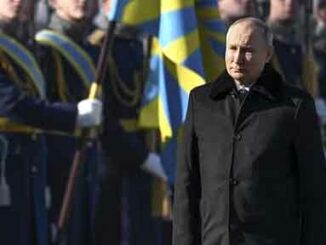
MOSCOW (TIP): President Vladimir Putin on Februray 23 called Russia’s army a guarantor of national stability, promising to boost arms production nearly a year after the start of the Ukraine offensive.
“A modern, efficient army and navy are a guarantee of the country’s security and sovereignty, a guarantee of its stable development and its future,” Putin said in a video address on the occasion of the annual “Defender of the Fatherland Day” holiday in Russia.
“That’s why, as before, we will pay priority attention to strengthening our defence capabilities,” he added on the eve of the first anniversary of Moscow’s offensive in Ukraine. Putin said Russia will “conduct the balanced and high-quality development of all components of the armed forces” in particular by equipping troops with “new strike systems, reconnaissance and communication equipment, drones and artillery systems”.
“Now our industry is rapidly increasing the production of an entire range of conventional weapons,” he said in the video released by the Kremlin.
The president also hailed Russian soldiers, who are fighting “heroically” in Ukraine and “defending our people in our historical lands”.
Russia’s “unbreakable unity is the key to our victory,” he said.
Putin sent Moscow’s troops to Ukraine on February 24, 2022, launching what he called a “special military operation” there. In the autumn he announced the mobilisation of 300,000 reservists to boost Russia’s ranks in Ukraine, which is backed financially and militarily by Washington and several European capitals. During his two decades in power, Putin has made strengthening the armed forces a top priority and introduced hypersonic weapons, which he described as “invincible”, to Russia’s arsenal. (AFP)
Kyiv (TIP): Russian President Vladimir Putin and Chinese leader Xi Jinping vowed on December 30 to deepen their bilateral cooperation against the backdrop of Moscow’s 10-month war in Ukraine, which weathered another night of drone and rocket attacks following a massive missile bombardment.
Putin and Xi made no direct mention of Ukraine in their opening remarks via video conference, which were broadcast publicly, before going into private talks.
But they hailed strengthening ties between Moscow and Beijing amid what they called “geopolitical tensions” and a “difficult international situation,” with Putin expressing his wish to extend military collaboration.
“In the face of increasing geopolitical tensions, the significance of the Russian-Chinese strategic partnership is growing as a stabilising factor,” said Putin.
The Russian leader said he expected Xi to visit Moscow in the spring. Such a trip “will demonstrate to the whole world the strength of the Russian-Chinese ties on key issues, will become the main political event of the year in bilateral relations,” he said.
Putin said the Kremlin aimed to “strengthen the cooperation between the armed forces of Russia and China.” Xi, in turn, said that “in the face of a difficult and far from straightforward international situation,” Beijing was ready “to increase strategic cooperation with Russia, provide each other with development opportunities, be global partners for the benefit of the peoples of our countries and in the interests of stability around the world”.
Ties between Moscow and Beijing have grown stronger since Putin sent his troops into Ukraine. Last week, Moscow and Beijing held joint naval drills in the East China Sea. — AP
Kyiv (TIP): Russian President Vladimir Putin ordered his forces not to storm the last remaining Ukrainian stronghold in the besieged city of Mariupol on April 21 but instead to block it “so that not even a fly comes through”. His defence minister, Sergei Shoigu, said the rest of the city beyond the sprawling Azovstal steel plant where Ukrainian forces were holed has been “liberated” – as Russian officials refer to areas of Ukraine they have seized. Putin hailed that as a “success”. But leaving the plant in Ukrainian hands robs the Russians of the ability to declare complete victory in Mariupol, which has seen some of the most dramatic fighting of the war and whose capture has both strategic and symbolic importance. The scale of suffering there has made it a worldwide focal point, and its definitive fall would deprive Ukraine of a vital port, complete a land bridge between Russia and the Crimean Peninsula, and free up Russian troops to move elsewhere in the Donbas.
Shoigu said the plant was “securely blocked”. Putin and Shoigu’s comments appeared to reflect a change in strategy in Mariupol, where the Russians previously seemed determined to take every last inch of the city. But it was not clear what it would mean in practical terms.
Ukrainian officials did not comment on the latest remarks, but earlier said four buses with civilians managed to escape from the city after several unsuccessful attempts. Thousands more remain the city, much of which has been reduced to a smoking ruin in a nearly two-month siege, with over 20,000 people feared dead.
Ukraine’s Deputy Prime Minister IrynaVereshchuk said another attempt to evacuate civilians from Mariupol would be made on Thursday – though it was not clear how the latest comments would affect that.
In Kyiv, Spain’s Prime Minister Pedro Sánchez and Denmark’s MetteFrederiksen became the latest European leaders to show support with a visit to the capital.
They were due to meet with President VolodymyrZelenskyy, who warned in a video address overnight that the Russians were not “abandoning their attempts to score at least some victory by launching a new, large-scale offensive”.
“The West stands together to support the Ukrainian people,” Frederiksen, the Danish prime minister, said in a statement. Meanwhile, the Kremlin said it submitted a draft of its demands for ending the war, and the West raced to supply Ukraine with heavier weapons to counter the Russians’ new drive to seize the industrial east. (AP)
Kyiv (TIP) : President Vladimir Putin vowed on April 12 that Russia’s bloody offensive in Ukraine would continue until its goals are fulfilled, and insisted the campaign was going as planned, despite a major withdrawal in the face of stiff Ukrainian opposition and significant losses.
Russian troops, thwarted in their push toward Ukraine’s capital, are now focusing on the eastern Donbas region, where Ukraine said Tuesday it was investigating a claim that a poisonous substance had been dropped on its troops. It was not clear what the substance might be, but Western officials warned that any use of chemical weapons by Russia would be a serious escalation of the already devastating war. Russia invaded on February 24, with the goal, according to Western officials, of taking Kyiv, toppling the government and installing a Moscow-friendly one.
In the six weeks since, Russia’s ground campaign stalled, its forces suffered losses that may number in the thousands and it stands accused of killing civilians and other atrocities.
Putin insisted Tuesday that his military action aimed to protect people in areas in eastern Ukraine controlled by Moscow-backed rebels and to “ensure Russia’s own security.”
He said Russia “had no other choice” but to launch what he calls a “special military operation,” and vowed it would “continue until its full completion and the fulfillment of the tasks that have been set.” For now, Putin’s forces are gearing up for a major offensive in the Donbas. which has been torn by fighting between Russian-allied separatists and Ukrainian forces since 2014, and where Russia has recognized the separatists’ claims of independence.
Military strategists say Russian leaders appear to hope local support, logistics and terrain in the region favor Russia’s larger and better-armed military, potentially allowing its troops to finally turn the tide in their favour.
In Mariupol, a strategic port city in the Donbas, a Ukrainian regiment defending a steel mill claimed a drone had dropped a poisonous substance on the city.
It indicated there were no serious injuries. The assertion by the Azov Regiment, a far-right group now part of the Ukrainian military, could not be independently verified.
It came after a Russia-allied separatist official appeared to urge the use of chemical weapons, telling Russian state TV on Monday that separatist forces should seize the plant by first blocking all the exits.
“And then we’ll use chemical troops to smoke them out of there,” the official, Eduard Basurin, said. (AP)
London (TIP): British Prime Minister Boris Johnson hosts Canadian Prime Minister Justin Trudeau and Dutch PM Mark Rutte at Downing Street in London on March 7, as the trio visit a Royal Air Force (RAF) base to meet members of the UK armed forces.
Downing Street said it marks the start of a week of “focused engagement” with world leaders to mobilise a global outcry at the “atrocities of Russian aggression” into practical support for Ukraine.
The three prime ministers will convene for separate bilateral meetings and a joint trilateral meeting to discuss the next steps to counter attacks ordered by Russian President Vladimir Putin on Ukrainian cities. “In the time since Russia’s illegal and brutal assault we have seen the world stand up tall in solidarity with the indomitable people of Ukraine,” said Johnson.
“UK aid is already reaching those who need it most, delivering essential supplies and medical support. While only Putin can fully end the suffering in Ukraine, today’s new funding will continue to help those facing the deteriorating humanitarian situation,” he said.
It comes as the UK said it has allocated an additional USD 100 million directly to the Ukrainian government budget to mitigate financial pressures created by Russia’s unprovoked and illegal invasion.
This grant could be used to support public sector salaries, allowing critical state functions to keep operating, as well as to support social safety nets and pensions for the Ukrainian people. The grant will be provided through the World Bank Multi-Donor Trust Fund, established last week to support the Ukrainian government.
It is said to be on top of the UK training 22,000 soldiers, supplying 2,000 anti-tank missiles, providing 100 million pounds for economic reform and energy independence, and providing 120 million pounds of humanitarian aid including 25 million pounds of match funding to the Disasters Emergency Committee (DEC) appeal.
The move comes as the UK Parliament is for a vote on Monday on the government’s amendments to the Economic Crime (Transparency and Enforcement) Bill, which fast-tracks action against Russian oligarchs close to the Kremlin and with UK assets.
The UK Foreign, Commonwealth and Development Office (FCDO) said that streamlining current legislation will allow the government to move faster and harder when sanctioning billionaires and businesses associated with the Russian government.
“These amendments give us the chance to bring even more crippling sanctions against Putin and his regime,” said UK Foreign Secretary Liz Truss. “The UK has already led the way by bringing in the largest and strongest package of sanctions in history in response to illegal and unprovoked Russian aggression against Ukraine,” she said.
The UK has imposed what it brands as the “largest sanctions package in history” on Russia for its invasion of Ukraine.
Most recently, this included a full asset freeze and travel ban imposed against AlisherUsmanov and Igor Shuvalov, two of Russia’s leading oligarchs with significant interests in the UK and close links to the Kremlin. The sanctions also cover Russian President Putin, Sergey Lavrov and more than 300 individuals and entities at the heart of Putin’s regime, and Belarus.(PTI)
An order that does not accommodate Russia’s concerns through genuine negotiation cannot be stable in the long term
By P.S. Raghavan
“It is too early to say what Mr. Putin’s endgame is, and how costly this adventure will be, in terms of lives and destruction, as well as in its political and economic impact. Without justifying the manner in which Russia has chosen to “right” the perceived “wrongs”, it has to be said that this crisis results from a broken security architecture in Europe. A sustainable security order has to reflect current realities: it cannot be simply an outgrowth of the Cold War order, and it has to be driven from within. Also, a European order that does not accommodate Russia’s concerns through genuine negotiation cannot be stable in the long term. France’s President Emmanuel Macron has been making this point forcefully, arguing for Europe to regain its strategic autonomy. He has called NATO “brain-dead” and said that Europe, as a “geopolitical power” should control its own destiny, regaining “military sovereignty” and re-opening a dialogue with Russia, managing the misgivings of post-Soviet countries.”
The commencement of Russian military action in Ukraine brings down the curtain on the first act of a bizarre drama that has been playing out over the past eight months. At the heart of it is the instability in the post-Cold War security order.
The first act began with a meeting between U.S. President Biden and Russia’s President Vladmir Putin in June last year, promising to reverse seven years of relentless U.S.-Russia acrimony. Mr. Biden’s decision to reach out to Mr. Putin signaled a U.S. geopolitical rebalancing, seeking a modus vivendi with Russia and disengagement from conflicts in Europe and West Asia, to enable a sharper U.S. focus on domestic challenges and the external challenge from its principal strategic adversary, China.
These were Putin’s terms: Mr. Putin saw this reengagement as an opportunity to revive Russia’s flagging economy and expand its freedom of political action globally. However, he wanted this engagement on equal terms. Russia would cooperate in this geopolitical rebalancing if its concerns are met, so that it does not constantly have to counter moves to probe its territorial integrity and constrain its external influence – which is how Russia sees the strategic posture of the North Atlantic Treaty Organization (NATO) and U.S. policies. Russia has repeatedly articulated its grievances: that NATO’s expansion violated promises made prior to the breakup of the Soviet Union; that Ukraine’s accession to NATO would cross Russia’s red lines; and that NATO’s strategic posture poses a continuing security threat to Russia. NATO’s expansion as a politico-military alliance, even after the dissolution of the Soviet Union and the Warsaw Pact, was at the U.S.’s initiative. It was intended to temper European ambitions for strategic autonomy from the sole superpower and to counter Russia’s resurgence. Recent experience shows it may not be succeeding in either goal.
NATO’s weakened glue: NATO countries today span a geography of uneven economic development and a diversity of political traditions and historical consciousness. Moreover, the original glue that held NATO together — ideological solidarity (free world against communist expansion) and an existential military threat — dissolved with the collapse of communism and the Warsaw Pact. There is no ideology to oppose and threat perceptions vary, depending on geographical location and historical experience. This heterogeneity means a diversity of interests. American leadership has normally succeeded in papering over differences, but the growing ambitions of countries is making this increasingly difficult. The current crisis in Ukraine has illustrated the divisions and exposed the limitations of the U.S.’s ability to bridge them. The irony is that the divisions are of the U.S.’s making. Its pressure on NATO in 2008 to recognize Ukraine’s membership aspirations and its encouragement for a change of government in Kyiv in 2014, provoked the Russian annexation of Crimea. The subsequent armed separatist movement in eastern Ukraine (Donbas) led to the Minsk accords of 2014-15, which provided for a special status for this region within Ukraine.
Ukraine considers this an unfair outcome, and the U.S. has supported its efforts to reinterpret the accords to its advantage. While some European countries supported this line, France and Germany — which brokered these agreements — have periodically tried to progress implementation, in the effort to break the impasse and resume normal engagement with Russia, which serves their economic interests.
In recent months, the U.S. signaled that it would support the full implementation of the Minsk accords, but apparently found it difficult to shake the entrenched interests sufficiently to make it happen. This may have finally convinced Mr. Putin that his concerns would not be met through negotiations.
Energy security: U.S. interests have also divided NATO on energy security. For Germany, the Nord Stream 2 (NS2) Russia-Germany gas pipeline is the cheapest source of gas for its industry. Others deem it a geopolitical project, increasing European dependence on Russian energy. This argument masks self-serving interests. Ukraine fears the diminution of gas transit revenues, and also that if its importance for gas transit declines, so will Europe’s support in its disputes with Russia. The U.S.’s “geopolitical” argument against NS2 dovetails neatly with its commercial interest in exporting LNG to Europe, reinforced by U.S. legislation for sanctions against companies building gas pipelines from Russia. Increasing LNG exports to Europe is explicitly stated as a motivation for the sanctions. European countries that oppose NS2 are ramping up their LNG import infrastructure to increase imports from the U.S.
The manner in which NATO countries implement the promised harsh sanctions against Russia will demonstrate whether, how much and for how long, this crisis will keep them united.
It is too early to say what Mr. Putin’s endgame is, and how costly this adventure will be, in terms of lives and destruction, as well as in its political and economic impact. Without justifying the manner in which Russia has chosen to “right” the perceived “wrongs”, it has to be said that this crisis results from a broken security architecture in Europe. A sustainable security order has to reflect current realities: it cannot be simply an outgrowth of the Cold War order, and it has to be driven from within. Also, a European order that does not accommodate Russia’s concerns through genuine negotiation cannot be stable in the long term. France’s President Emmanuel Macron has been making this point forcefully, arguing for Europe to regain its strategic autonomy. He has called NATO “brain-dead” and said that Europe, as a “geopolitical power” should control its own destiny, regaining “military sovereignty” and re-opening a dialogue with Russia, managing the misgivings of post-Soviet countries.
Outlook for India: India has to brace itself for some immediate challenges flowing from the Russian actions. It will have to balance the pressure from one strategic partner to condemn the violation of international law, with that from another to understand its legitimate concerns. We were there in 2014 and managed the pressures. As Russia-West confrontation sharpens further, the U.S. Administration’s intensified engagement in Europe will inevitably dilute its focus on the Indo-Pacific, causing India to make some tactical calibration of actions in its neighborhood. Geopolitics, however, is a long game, and the larger context of the U.S.-China rivalry could, at some point in the not-too-distant future, reopen the question of how Russia fits into the European security order.
(The author is a former Ambassador to Russia and former Chairman of the National Security Advisory Board)
Putin seems unwilling to engage diplomatically to address Russian security concerns
Russia’s unjustifiable incursion into Ukraine following weeks of military troop build-up on their shared border has drastically raised tensions in the region with broader ripple effects across the world, particularly for NATO countries and others with strategic connections to the two nations. Reports said that several Ukrainian cities, including capital Kyiv came under attack on Thursday morning, even as the UN Security Council held an emergency meeting to stop the invasion. U.S. President Joe Biden and the NATO and European Commission leadership vowed to impose “severe sanctions” on Russia. This round of sanctions will overlay prior economic penalties imposed on Russian entities and individuals close to the political leadership, and they are expected to include cutting off top Russian banks from the financial system, halting technology exports, and directly targeting the Russian President. Moscow can hardly be surprised at this backlash, for it has shown little sympathy toward the idea of engaging diplomatically on the Ukraine question to address Russian security concerns. Ever since Russia began amassing troops on the Ukrainian border, the U.S., NATO, and Europe have sought to press for diplomatic solutions. This includes direct U.S.-Russia negotiations, and French President Macron’s meeting with Mr. Putin.
While the sense of frustration in western capitals over Mr. Putin’s intractability and aggression are palpable, and the use of severe sanctions stemming from that is a strategic inevitability, it is unlikely that the prospect of escalating violence and a devastating toll on human life and property in Ukraine can be ruled out until Mr. Putin’s broader questions on NATO are answered. At the heart of his fears is the prospect of Ukraine joining NATO and NATO troops potentially stationed at the border with Russia. NATO’s historical record, of its penchant for expansionism, has likely fueled such insecurities. After the dissolution of the former Soviet Union, the Eastern European military alliance, NATO, and Russia in 1997 signed the “Founding Act” on mutual relations, cooperation, and security. Disregarding the spirit of this agreement, NATO quietly underwent five rounds of enlargement during the 1990s, pulling former Soviet Union countries into its orbit. Cooperative exchanges, communications hotlines, and Cold War fail-safes such as arms control verification have fallen by the wayside, even more since Russia’s annexation of Crimea in 2014. It may be the case that owing to Mr. Putin’s failure to develop Russia into an economic powerhouse that naturally attracted neighboring countries and international capital to itself partly explains Moscow’s deflection of attention to strategic questions relating to NATO and Russia’s territorial integrity. But unless western nations give assurances to Mr. Putin that NATO will not seek to relentlessly expand its footprint eastwards, Moscow will have little incentive to return to the negotiating table. But Russia and Mr. Putin must realize that war is not the means to peace and security.
“President Joe Biden almost hourly promises, “We are not going to war in Ukraine.” Why would he then not readily rule out NATO membership for Ukraine, which would require us to do something Biden himself says we Americans, for our own survival, should never do: go to war with Russia?”
“Whatever we may think of Putin, he is no Stalin. He has not murdered millions or created a gulag archipelago. Nor is he “irrational,” as some pundits rail. He does not want a war with us, which would be worse than ruinous to us both. Putin is a Russian nationalist, patriot, traditionalist and a cold and ruthless realist looking out to preserve Russia as the great and respected power it once was and he believes it can be again.”
When Russia’s Vladimir Putin demanded that the U.S. rule out Ukraine as a future member of the NATO alliance, the U.S. archly replied: NATO has an open-door policy. Any nation, including Ukraine, may apply for membership and be admitted. We’re not changing that. In the Bucharest declaration of 2008, NATO had put Ukraine and Georgia, ever farther east in the Caucasus, on a path to membership in NATO and coverage under Article 5 of the treaty, which declares that an attack on any one member is an attack on all. Unable to get a satisfactory answer to his demand, Putin invaded and settled the issue. Neither Ukraine nor Georgia will become members of NATO. To prevent that, Russia will go to war, as Russia did last night.
Putin did exactly what he had warned us he would do. Whatever the character of the Russian president, now being hotly debated here in the USA, he has established his credibility. When Putin warns that he will do something, he does it. Thirty-six hours into this Russia-Ukraine war, potentially the worst in Europe since 1945, two questions need to be answered:
How did we get here? And where do we go from here?
How did we get to where Russia — believing its back is against a wall and the United States, by moving NATO ever closer, put it there — reached a point where it chose war with Ukraine rather than accepting the fate and future it believes the West has in store for Mother Russia?
Consider. Between 1989 and 1991, Mikhail Gorbachev let the Berlin Wall be pulled down, Germany be reunited and all the “captive nations” of Eastern Europe go free. Having collapsed the Soviet empire, Gorbachev allowed the Soviet Union to dissolve itself into 15 independent nations. Communism was allowed to expire as the ruling ideology of Russia, the land where Leninism and Bolshevism first took root in 1917. Gorbachev called off the Cold War in Europe by removing all of the causes on Moscow’s side of the historic divide. Putin, a former KGB colonel, came to power in 1999 after the disastrous decadelong rule of Boris Yeltsin, who ran Russia into the ground. In that year, 1999, Putin watched as America conducted a 78-day bombing campaign on Serbia, the Balkan nation that had historically been a protectorate of Mother Russia.
That year, also, three former Warsaw Pact nations, the Czech Republic, Hungary and Poland, were brought into NATO.
Against whom were these countries to be protected by U.S. arms and the NATO alliance, the question was fairly asked.
The question seemed to be answered fully in 2004, when Slovenia, Slovakia, Lithuania, Latvia, Estonia, Romania and Bulgaria were admitted into NATO, a grouping that included three former republics of the USSR itself, as well as three more former Warsaw Pact nations. Then, in 2008, came the Bucharest declaration that put Georgia and Ukraine, both bordering on Russia, on a path to NATO membership. Georgia, the same year, attacked its seceded province of South Ossetia, where Russian troops were acting as peacekeepers, killing some.
This triggered a Putin counterattack through the Roki Tunnel in North Ossetia that liberated South Ossetia and moved into Georgia all the way to Gori, the birthplace of Stalin. George W. Bush, who had pledged “to end tyranny in our world,” did nothing. After briefly occupying part of Georgia, the Russians departed but stayed as protectors of the South Ossetians.
The U.S. establishment has declared this to have been a Russian war of aggression, but an EU investigation blamed Georgian President Mikheil Saakashvili for starting the war.
In 2014, a democratically elected pro-Russian president of Ukraine, Viktor Yanukovych, was overthrown in Kyiv and replaced by a pro-Western regime. Rather than lose Sevastopol, Russia’s historic naval base in Crimea, Putin seized the peninsula and declared it Russian territory. Teddy Roosevelt stole Panama with similar remorse.
Which brings us to today.
Whatever we may think of Putin, he is no Stalin. He has not murdered millions or created a gulag archipelago.
Nor is he “irrational,” as some pundits rail. He does not want a war with us, which would be worse than ruinous to us both. Putin is a Russian nationalist, patriot, traditionalist and a cold and ruthless realist looking out to preserve Russia as the great and respected power it once was and he believes it can be again.
But it cannot be that if NATO expansion does not stop or if its sister state of Ukraine becomes part of a military alliance whose proudest boast is that it won the Cold War against the nation Putin has served all his life.
President Joe Biden almost hourly promises, “We are not going to war in Ukraine.” Why would he then not readily rule out NATO membership for Ukraine, which would require us to do something Biden himself says we Americans, for our own survival, should never do: go to war with Russia?
(The author is a former White House Communications Director. Visit Buchanan.org to read his articles and books)
From US perspective, the summit’s aim is to announce that ‘America is back’
By Shyam Saran
“From the US perspective, the objective of the summits is to announce that ‘America is back’ and ready to lead the world after the debilitating disruption of western alliances and partnerships and a retreat from global engagement during the Trump years. What Biden is signaling is that the revival of American leadership and diplomatic activism will be anchored in the web of its transatlantic relationships, even as the Indo-Pacific strategy will be its key preoccupation, given the acknowledged challenge posed by China. The emphasis on the transatlantic alliance and partnership is also important in countering the Russian threat.”
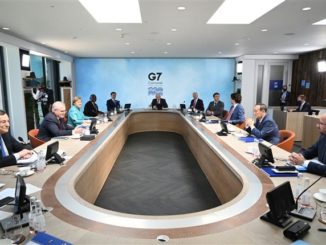
The three-day G7 summit concluded on June 13 and released an unusually long and detailed joint statement of 70 paragraphs and a separate Open Societies Statement. The latter statement was on behalf of the G7 and the four invitees to the summit, namely Australia, India, South Korea and South Africa. The summit is only the first of three key meetings involving western countries. This week includes a meeting of the EU and the US and a meeting of the NATO military alliance, both in Brussels. Fortified by the display of solidarity at these three summits, President Biden will have his first summit with Russian President Putin in Geneva on June 16.
From the US perspective, the objective of the summits is to announce that ‘America is back’ and ready to lead the world after the debilitating disruption of western alliances and partnerships and a retreat from global engagement during the Trump years. What Biden is signaling is that the revival of American leadership and diplomatic activism will be anchored in the web of its transatlantic relationships, even as the Indo-Pacific strategy will be its key preoccupation, given the acknowledged challenge posed by China. The emphasis on the transatlantic alliance and partnership is also important in countering the Russian threat. While Biden has described China as a competitor, Russia is the ‘enemy’, even though the US is prepared to work together with both on areas where there are convergent interests on global issues, such as climate change, cyber security and nuclear non-proliferation. Has Biden succeeded in convincing his western allies and partners and his adversaries that the US is back? The answer to that, as judged from the joint statement, should be a yes. But then, the Trump years were a low base to compare to.
Has Biden achieved a degree of western consensus in presenting a united front against Russia and China? Perhaps more against Russia and less against China. For example, the launch of the Build Back a Better World (B3W) partnership was launched as a ‘values driven, high standard and transparent infrastructure partnership led by major democracies’ but stopped short of explicitly posing it as an alternative to China’s Belt and Road Initiative. There are few details of how this partnership is going to be financed beyond saying that this will be private financed but with ‘catalytic investment’ from public and multilateral sources. We may conclude that there are simply not enough resources available to be deployed by the G7 which could match what China has been offering, despite concerns over lack of transparency and exacerbation of the debt overload on several developing countries.
There are several other references to Chinese misdemeanors which taken together do represent a broad western consensus on the need to confront China. These include the importance of maintaining peace and stability in the Taiwan Strait, ‘a free and open Indo-Pacific’, of avoiding ‘unilateral attempts to change the status quo and increase tensions in the East and South China Seas.’ In addition, there are references to human rights issues in Xinjiang and Hong Kong, both of which are regarded as ‘core issues’ by China. Overall, therefore, one could say that Biden has been able to fashion a consensus on acknowledging the Chinese security challenge and ideological challenge.
Will this impress China? Up to a point. The economic and commercial relationship between Europe and China is deep and broad ranging as is that between China and Japan. The EU and China have been working together, for example, for several years on developing benchmarks for climate finance, including green bonds, disclosure norms and the running of carbon markets. The area of climate finance will assume critical importance as climate change action gets into high gear after the Glasgow summit later this year. There is a limit to disengaging from the world’s second largest economy and the central node in global supply chains.
China has reacted by dismissing the G7, pointing out that a small group of countries cannot rule the world. There is another important shift the summit represents. After the global financial and economic crisis of 2007-8, it is the G20 which was established as the premier forum for international economic coordination. It worked very well in dealing with the immediate crisis, but its role has steadily diminished since then. With renewed tensions between the US and China and with Russia, the utility of the G20 is not so obvious currently. This adds to the significance of the revival of G7, even though its economic heft is much less than in its heyday. It constitutes only 30% of world GDP as against 60% at the end of the Cold War. However, the global trading system and its financial infrastructure continue to be dominated by the G7 so one should not underestimate its influence. It has the potential to emerge as a core of a broader coalition to achieve a degree of balance in the power equations that the emergence of China has upturned in the new millennium.
The adoption of the Statement on Open Societies reflects Biden’s renewed emphasis on the importance of preserving and promoting ‘open societies, democratic values and multilateralism as foundations for dignity, opportunity and prosperity for all.’ For all the cynicism that attends the expression of such lofty statements, they have value in contesting China’s confident belief in the efficacy of its authoritarian ideology and system of governance. Biden is taking head on the prevailing pessimism about democracy within democracies themselves. One should welcome PM Modi being honored as the lead speaker at the session on Open Societies. His remarks were unexceptionable and worthy of a leader of the world’s largest democracy. One hopes that this is followed by a renewed commitment to democratic values which are enshrined in the Indian Constitution, but also constitute, as PM Modi said, the civilizational values of India.
(The author is a former Foreign Secretary of India and senior fellow, Centre for Policy Research)
Moscow (TIP); Russian President Vladimir Putin condemned weekend protests demanding the release of jailed Kremlin critic Alexei Navalny as dangerous and illegal, as the opposition politician’s allies said they planned a similar protest for Sunday. Police detained more than 3,700 people and used force to break up rallies across Russia on Saturday as tens of thousands of protesters ignored the extreme cold and police warnings to demand Navalny be freed from jail, where he is serving a 30-day stint for alleged parole violations that he denies. In a rare public rebuttal of a Navalny accusation, Putin rejected an allegation the critic made last week in a video — which has since garnered more than 86 million views on YouTube — that the Russian leader owned an opulent Black Sea palace paid for by his friends, sometimes using public money. Putin, who avoids mentioning Navalny by name, also told students on Monday that people should not use illegal protest action to further their own political interests.
“Everyone has the right to express their point of view within the framework provided by the law. Anything outside the law is not just counter-productive but also dangerous,” said Putin.
He cited upheaval caused by the 1917 Russian Revolution and the 1991 collapse of the Soviet Union as examples of how illegal action could cause people misery and should therefore be avoided. Reuters
“Do you see a correlation in getting the innocent Hindus to develop anti-Muslims sentiments through the communal riots, leading into to complete takeover of the Uttar Pradesh? The likes of which were done here in the United States. Did Russia pay for those riots through the Sangh Parivar organizations to weaken the Indian Democracy? Both Modi and Trump have a special affection for Putin; and both of them want to emulate Putin”, says the author.
Deepa Seetharam, a reporter from Wall Street Journal called me and asked if I spoke in a rally at White House in September 2016? I said no, and then she reminded me that my name was a listed as a speaker.
Seetharam wrote in WSJ’s October 30, 2017, publication, “Representatives from the Facebook page “United Muslims of America” asked Mike Ghouse, an interfaith activist, to speak at a Sept. 3, 2016, event in Washington, D.C. billed as “a peaceful rally, to make mosques and their neighborhood safe!”
The group sent Mr. Ghouse placards they intended to use that included anti-Trump messages, causing him to back out, he said. “I said they should be more pluralistic, more inclusive because there’s no need to attack Trump,” Mr. Ghouse said. “They wouldn’t, so I didn’t go.” Obviously, I did not speak there either.
“Some events stoked public discord. At the rally in front of the Islamic center in Houston, about a dozen protesters gathered, some waving confederate flags or holding a sign that said “#WhiteLivesMatter,” according to video footage.”
Russians had an elaborate plan of pitting one American against the other, their end goal was to weaken democracies and create discord within each nation – their logic was; for Russia to shine, other countries have to be weakened, and Russia will stand out as the strongest nation in the world with a strong man running the nation. Putin is the Czar under his skin.
CNN reports that “80 times Trump talked about Putin.” Indeed, “Throughout the 2016 presidential campaign, Donald Trump consistently broke from political orthodoxy in his effusive praise of Russian President Vladimir Putin. His glowing statements on Putin have become central in stoking the suspicion that he and his campaign were somehow connected to Russian interference in the election.”
Narendra Modi in Russia praises President Vladimir Putin’s family for sacrificing lives for the country. Modi praises Putin’s effort in convening 1st Tiger conservation Summit.
Both Modi and Trump think Putin is awesome, someone to be modeled after, as they want to dictate to the public.
Senator John McCain said in an interview that Putin is determined to prove to the world that Democracies don’t work. Indeed, that is what the fascists think about democracies – they get their devoted slaves to do whatever they want – attacking others as Sikularist and calling the news that goes against them as fake news. It’s amazing how many people buy that stuff in India and the United States.
Both Modi and Trump have resorted to divide and rule policies; they are determined to pit one Indian against the other in case of Modi, and one American against the other by Trump.
Russians staged “Anti-Trump rallies’ in the name of American Muslims. Perhaps, that may be the reason Trump is so anti-Muslim. Some of the rallies were held against Hillary to give the impression that it is the work of public, and some were devised against Trump just to make it look real.
What happens in India? Manohar Joshi writes in the Wire, “The fact that communal violence is rising in India is not hidden. Even the government acknowledges that there has been a steady uptick in communal incidents. In response to a question in parliament on Tuesday (February 6), minister of state Hansraj Ahir disclosed that as many as 111 people were killed and nearly 2,500 injured in 822 communal incidents in 2017, as compared to 751 incidents in 2016 that took the life of 97 people and 703 in 2016 when 86 were killed.”
Did the Russians stage these events? Did they pay these men to stage communal riots and murder people?
The fake encounters set up by the Gujarat police earned further support for BJP from an average innocent Hindu. Of course, Musharraf’s Kargil invasion strengthened the hold of BJP in power.
Putin failed in France and Germany but succeeded in Austria, India,United States and other nations.
Most Indians will resist the idea of an investigation; they simply do not want to believe that the Indian Elections may have been rigged. They are afraid of even exploring the possibilities. If they have lost their loved ones, they would want to know if Russia is paying the goons to create chaos. Is Yogi Adityanath paid agent of Russia? The purpose of the investigation is to find the truths if they are clean, that would be good news. What if they were not? Should they continue in governing India and continue to pit one Indian against the other?
Do you see a correlation in getting the innocent Hindus to develop anti-Muslims sentiments through the communal riots, leading into to complete takeover of the Uttar Pradesh? The likes of which were done here in the United States. Did Russia pay for those riots through the Sangh Parivar organizations to weaken the Indian Democracy? Both Modi and Trump have a special affection for Putin; both of them want to emulate Putin.
Neither Trump nor Modi was expecting to win; all the surveys, reports and polls indicated the win for Congress in India and Democrats in America. Both the men were surprised with the win, let alone land-slide wins.
The Russians publicized or financed at least 60 events – on all sides of most polarizing issues – before and after the 2016 election. What about India’s 2014 election?
Is it worth investigating Russian hand in the mess that is created in India? Should we save the nation from divisive men? These men will come and go in one or two terms, but it is the common men and women in India that will bear the brunt of their karma.
(The author is an Indian-American committed to building cohesive societies and offers pluralistic solutions on issues of the day. As we learn to respect the “otherness” of others and accept the God-given uniqueness of each one of us, conflicts will fade and solutions emerge. He is the president of the Center for Pluralism in Washington, DC.)
COMMENTS
Dr. Ghouse’s article invited a quick reaction from a reader. Here is the unedited comment of Desh D Kapoor (desh.kapoor@gmail.com) received at 11.07 A.M., a few minutes after the article was published.
“This is just a piece of trashy writing based on nothing but conjectures and hyperbole! Amazed. In fact, if at all, with Cambridge Analytics (firm that helped Trump) working for Congress, 2019 will be where Foreign meddling (Mani Shankar Aiyar’s home meeting with Pakistani officials – a Trump Tower moment?!) will be tested.
“In fact, Modi has NEVER appealed on religious basis. Even the honest Pakistani commentators say that clearly (check Najam Sethi’s analysis post 2014). But how do you stop the ideologically compromised Indian Muslim commentators who would rather use religion for their own purpose than for the good of the community! Reminded of the Tata Nano move, where Mamata created issues and Modi brought that in to Gujarat. The villages near the plant were predominantly Muslim. And within 4-5 years, their land prices went up 25 times making everyone a millionaire. When indiscriminate development happens – there is no color. But who can explain to the ideologically compromised who still hold Mamata as the paragon of virtues as she keeps everyone poor.
So excuse me, but this Machiavellian piece is not even worth the paper it was probably published on.”
********
We received a rejoinder from Dr. Ghouse at 12.30 P.M. nearly an hour and a half after Mr. Desh D. Kapoor’s comment, which is being published here, without being edited.
Desh,
“I wrote the essay as an Indian, and not as a Muslim. I wish you learn to hold on to your communalism and see the validity of the argument.
“Thank God, none of your relatives or mine were killed by the extremists in Muzaffar Nagar and other riots, but you should be human enough to have empathy for those whose families have suffered. If Russia had paid the goons to lynch and harass fellow Indians, then don’t you think it should be investigated? Are you against finding the truth?
“The success of a nation hinges on its two solid feet; economic prosperity which brings sab ka Vikas, not just mitron ka Vikas, and the other is sab ka saath, every Indian should feel included – that is a cohesive India, where no Indian feels excluded or lives in apprehension. Both the economy and social fabric must remain intact, one will not happen without the other, otherwise what we will witness would a langda India and ultimately everyone will suffer. Injustice to one is injustice to all.
“Mani Shankar Aiyar’s meeting at his home has been clarified, you still give it a religious color to it and Modi was too eager to paint it for electoral gains.
“A true patriot is the one who criticizes the government incessantly to keep them on the toes, on the other hand, if you toe the line of the government and kiss-ass of the leaders, you are not serving the nation.
“We need to rise about the pettiness and start looking to every Indian as an Indian and be patriotic Indians who think of making India and all her people successful and included.”
Mike Ghouse
Mr. Desh D Kapoor commented at1.04 P.M. 02/19/ 2018. (Unedited)
“Mike, excuse me, but I don’t give you the right to create your own Halos and abuse others. From where I see, you are always talking as a Muslim and not as an Indian. Further, I don’t see you as a secular at all. I think this self-congratulatory stuff should end if you even want to hold any dialog. Just like ‘Allah is the ONLY God…” Or “Jesus is the ONLY Savior..” are a non-starter to any useful discussion and inherently Supremacist in ethos – your fetish for constructing your own halo and calling other communal is damning for any dialog and shows your real self. So, time to stop the tricks!
“Like I said, I have never ever seen Modi say anything even remotely communal. If you have any evidence, then talk. On the other hand, AIMIM, Congress, Samajwadi and Trinamool folks are rabidly communal.
“And that leads me to another point – criticizing someone’s Muslim appeasement is not communal. To be an apologist for Jihad and acting as apologist for communal people in India is inherently Hinduphobic.
“It is this realization that has led to the awakening in India. What you see in the US, is also something similar. Where the rabid apologists for Islamism in the US left are being trashed all over. The problem in the US is a little different – because the challenge to Islamic Supremacism (which is what you represent however you may try to camouflage) is actually now coming from the White Supremacists, because left has chosen to back one end of Supremacism (between White/Christian Supremacism and Islamic Supremacism).
“In India, most folks who feign Secularism like John Dayal and Taslim Rehmani – are either Christian fanatics (check his hinduphobic testimonies in US) or Islamic fanatics (check how Rehmani declares “We ruled over Hindus for 1000 years”). And, most common laymen who were not into any religious debate are now waking up to the war of boiling the frog slowly.
“So, nice try, Mike. but you cannot construct your own Halo and wear it.”
Dr. Mike Ghouse at 2.27 P.M. 02/19/2018 replied to Mr.Deepak. (Unedited)
“Desh,
“Here you go again, you are “assuming’ this, ” Just like ‘Allah is the ONLY God…” Or “Jesus is the ONLY Savior.”
“You also made an assumption I support ” AIMIM, Congress, Samajwadi and Trinamool folks are rabidly communal.” I don’t, they are indeed communal, except the Congress which has a few rats in it, but the party as such is secular.
“BJP, on the other hand, is very communal – of the 400 plus candidates they gave tickets to run as their member, there may be one or two Muslims. They found a way to dupe innocent Indians – play the religion card, they fooled once, but could not do it again, but they staged communal riots, ghar wapasi and other tricks to pit one Indian against the other. You are a journalist, track down the history – the communal riots have occurred with the clear presence of RSS in the town, where they are not, there are fewer clashes.
“Let me be clear – the problem is not with Hinduism or Islam, Hindus or Muslims, it is the extremist positions that BJP has taken with their fascist political ideology – they want to force what you eat and what you believe down the throats.
“Modi’s fake reference to Pakistan collusion was communal politics, he generated ill-will among Hindus by the way he presented Mani Shankar Aiyar’s meeting
Modi wore every headgear wherever he went but clearly refused to wear a cap given by a Muslim.
“Would you agree that a cohesive India is what we need to work for – that requires that everyone minds his own business, and every Indian would be free to breathe, eat, drink, wear and believe whatever he or she wants to. Is that the India you want?
“Mike Ghouse”
Mr. Desh D. Kapoor countered at 2.47 P.M. 02/19/2018 . (Unedited)
“Mike, Again – lots of assumptions and lots of “I am Good- You are bad” attitude.
I never said that you support those parties. I said they are communal because they practice appeasement and their politics is purely casteist and communal.
There is no reason to believe that BJP is communal. Looking at candidates purely from religious angle is a sickness and something that plays along with Jinnah’s idea of Equal representation which caused partition. So, not looking at representatives from their religious affiliation is the right and secular way.
Ghar Wapasi is Communal and Conversions / Evangelism is Secular? Really?!! like i said stop the tricks, please.
RSS and riots: I have read about the riots pretty carefully and I don’t know of a single evidence to say that RSS started any riot.
ban on Beef is a law that BJP did NOT create. It was and you are trying to say that someone should not follow the law? Are you for lawlessness? I think you need to clear your stand please.
Reference to Pakistan for Collusion by Congress – was “Communal politics”?!! Wow, Really?!! So you equate Pakistani with Indian Muslims? From how I and most people saw it was – Pakistan means PAKISTAN.. the COUNTRY! Period! You see how your slip shows through? :)
“I want a cohesive India. But like MLK Jr said “I want White man to be my brother, not Brother in law”. From where most Hindus see now – Kalma and the Creed are at the root of Communal violence in India and around the world. Change the supremacism and peace will follow. if you try to hood-wink and play such tricks and play vote bank politics (how many Muslims candidate type), then the vote bank of today will go against that politics.
“I want an India where development is indiscriminate and blind to the religion or caste. Where transformation is at the grass root. And that is where Modi is working on. So, I will back him to back the India that is the future of the world. Not one of Congress or pseudo-Seculars who see Muslim communalism in references to Pakistan. Amazed honestly!!!”
The Indian Panorama invites readers to participate in the debate.
NEW YORK (TIP): Film director Oliver Stone, whose series of conversations with Vladimir Putin air next week on Showtime, said he watched Megyn Kelly interview the Russian president on NBC and concluded that “he knew his stuff and she didn’t.” Kelly’s interview, which aired on the debut of her newsmagazine, “Sunday Night with Megan Kelly,” on Sunday, “became machine-gun like,” Stone said, and was an example of how American journalism frequently leaves little room for nuance.
“I think she was attractive and she asked hardball questions, but she wasn’t in position to debate or counter him, because she didn’t know a lot of things,” he said. NBC News President Noah Oppenheim shot back that “no one here is interested in Oliver Stone’s unsolicited thoughts on Megyn Kelly’s appearance or his ill-informed opinion of her journalism.”
“But so long as we’re offering each other professional feedback, please let him know I don’t think he’s made a decent movie since the early `90s,” he said. Putin was combative when asked in the NBC interview about hacking in the US presidential election and relations between Russia and President Donald Trump’s team. He’s more serene on Showtime, where more than a dozen interviews that Stone conducted with the Russian president between 2015 and early this year unfold one hour per night for four nights starting Monday.
As an example of where he believed Kelly was mistaken, Stone said the claim that 17 US intelligence agencies had concluded the Russians were behind election year hacking and used as a preface for a question had been “walked back.” It was a reference to testimony from James Clapper, former director of national intelligence, about a hacking report by three specific agencies. The independent organization Politifact has produced a report that backs Kelly, however, because Clapper had earlier said that all 17 intelligence agencies he had supervised agreed about Russia’s involvement.
Stone, a controversial figure who has interviewed Fidel Castro and Hugo Chavez and produced a documentary backing Putin’s version of events in the Ukraine, conducts a Putin interview far less confrontational than Kelly’s, at least on the basis of two episodes provided for screening by Showtime. One critic, Marlow Stern in The Daily Beast, called in a “wildly irresponsible love letter” to Putin.
The filmmaker’s style does include its share of ingratiating remarks. “You have a lot of discipline, sir,” he says at one point. “You are an excellent CEO. Russia is your company,” he says at another.
Besides office sit-downs, Putin is interviewed driving a car, walking through horse stables at his home and after he played in a hockey game. When Putin makes a claim about a letter he received from the CIA and Stone asks him to produce it, the Russian president says, “My words are enough.” Yet Stone also challenges Putin on his authoritarian style and questions his claims of democratic reform. The filmmaker said in an interview that there are more direct questions about relations with the United States in the unseen third and fourth episodes.
He asks Putin about assassination attempts and, while it was inadvertent in one case, captures a couple of eyeopening moments. Asked if he ever have bad days, Putin replies that “I am not a woman so I don’t have bad days,” adding a reference to “natural cycles” affecting behavior.
During a discussion about gay rights, Putin said about a homosexual male: “I prefer not to go in the shower with him. Why provoke him?” Stone is aware that he’ll receive criticism for not pushing Putin hard enough. “I’m not a journalist,” he said. “I’m a filmmaker and I was taking a different approach.”
The project’s value comes in seeing Putin talking about his life and world view in an extended format, seeing the personal and political history that drives policy for the US’s biggest adversary, and simply how his mind works. At one point Stone asks Putin about a 13 percent inflation rate, and is quickly corrected. “Twelve point nine,” he said. “It’s crucial for the United States to understand another point of view,” Stone said. “I’m interested in preventing a further deterioration in relations.”
The film also features Stone screening a copy of the Cold War-era satire “Dr. Strangelove” for the stone-faced Russian leader. “I pushed him where I felt he should be pushed,” Stone said. “At a certain point, you know that that person is not going to change his approach. He’s a leader. He thinks things through and he’s made his point. I can’t think of anything more that I could have said or done.” (AP)
Signup to our Newsletter!
Don’t miss out on all the happenings around the world