Tag: Qatar

  • Is Global ‘Democracy’ America’s Mission?

    Is Global ‘Democracy’ America’s Mission?

    By Patrick J. Buchanan

    “America’s founding mission was not democracy, nor any other ideology. It was what we declared it to be in the document our fathers agreed to at the Constitutional Convention of 1787:

    “We the People of the United States, in Order to form a more perfect Union, establish Justice, ensure domestic Tranquility, provide for the common defense, promote the general Welfare, and secure the Blessings of Liberty to ourselves and our Posterity, do ordain and establish this Constitution for the United States of America.” “Democracy” is not even mentioned in the Constitution or in the Bill of Rights.”

    To pursue global “democracy” is thus a formula for endless interventions in the internal affairs of other nations, endless conflicts and eventual war

    “Is “democracy” really America’s cause? Is “autocracy” really America’s great adversary in the battle for the future?   Not all autocrats, after all, are our enemies, nor are all democrats our reliable friends.”

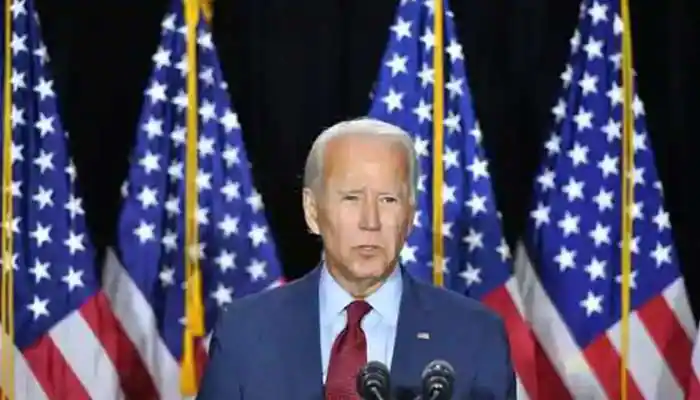
    “In the battle between democracy and autocracy, democracies are rising to the moment, and the world is clearly choosing the side of peace and security,” said President Joe Biden in his State of the Union address.

    “This is a real test. It’s going to take time.” Thus did Biden frame the struggle of our time as the U.S. leading the world’s democracies, the camp of the saints, against the world’s autocrats, the forces of darkness. But is “democracy” really America’s cause? Is “autocracy” really America’s great adversary in the battle for the future?

    Not all autocrats, after all, are our enemies, nor are all democrats our reliable friends.

    When Ukraine was invaded, the U.N. General Assembly voted on a resolution which “deplores in the strongest terms” Russia’s “aggression” against Ukraine. Among the 35 nations that abstained was India, the world’s largest democracy. Whose side is India on in the great struggle?

    Freedom House ranks Egypt, the United Arab Emirates, Bahrain, Qatar, Oman, Saudi Arabia and Jordan, all friends, partners and sometime allies of the United States, as “not free.”

    Have something to say about this column?

    Are we in a global struggle against all of these nations, all of these regimes, because all of them are autocracies?

    As for America’s own wars, democracy-versus-autocracy would seem to be a misguided way to describe any of them. In the Revolution, we were military allies from 1778 on with King Louis XVI of France, against Great Britain, the Mother of Parliaments. Our goal was not establishing a democracy, but our independence, separation, from the most democratic nation on earth.

    When we declared war on the kaiser’s Germany in April 1917, we allied ourselves with four of the greatest colonial empires on earth: the British, French, Russian and Japanese empires. When that Great War began, Germany’s Second Reich was a good deal more democratic than the czarist regime of Russia’s Nicholas II.

    In World War II, we allied with the world’s largest colonial empire, Great Britain, and the USSR of Joseph Stalin. Democracy was not the cause for which we went to war, but payback to Japan for the sneak attack on Pearl Harbor. Our most important ally in that Asian war was the Nationalist China of Generalissimo Chiang Kai-shek, no democrat.

    History, religion, race, culture, tribe and territory more often define the 100-plus nations of Africa, the Middle East and Asia than whether they are democracies or autocracies.

    During the Cold War, we collaborated openly with dictators — Rafael Trujillo in the Dominican Republic, Anastasio Somoza in Nicaragua, Chiang Kai-shek in China, Syngman Rhee in South Korea, Augusto Pinochet in Chile, Ferdinand Marcos in the Philippines, the shah of Iran, Ngo Dinh Diem, and a succession of generals after his assassination, in South Vietnam.

    If they stood with us against the Communists in the Cold War, we stood by them. “He may be a SOB, but he’s our SOB,” FDR said of Somoza.

    Communism was our ideological enemy, not autocracy. If you were an enemy of communism in the Cold War, autocrat or not, you were likely to be treated as a friend by the USA.

    If we make global “democracy” the measure of success in the great struggle of our time, our victory or defeat in that cause depends on political decisions and internal choices of scores of nations not our own.

    But when did the internal politics of other lands become either the business of the United States or the yardstick of our success as a nation?

    To make global democracy our goal in this century’s great “battle” is to allow America’s success or failure as a nation to be judged and measured by what other nations, not our own, succeed or fail in doing.

    America’s founding mission was not democracy, nor any other ideology. It was what we declared it to be in the document our fathers agreed to at the Constitutional Convention of 1787:

    “We the People of the United States, in Order to form a more perfect Union, establish Justice, ensure domestic Tranquility, provide for the common defense, promote the general Welfare, and secure the Blessings of Liberty to ourselves and our Posterity, do ordain and establish this Constitution for the United States of America.”

    “Democracy” is not even mentioned in the Constitution or in the Bill of Rights. If whether other nations are democratic or autocratic is the measure by which we judge America’s success, this must lead invariably to U.S. interference in the internal affairs of those nations not our own — to ensure success in the great struggle. To pursue global “democracy” is thus a formula for endless interventions in the internal affairs of other nations, endless conflicts and eventual war. The antidote is John Quincy Adams’ formulation:

    “(America) goes not abroad in search of monsters to destroy; she is the well-wisher to the freedom and independence of all; she is the champion and vindicator only of her own.”

    (The author is a political commentator, columnist, politician and broadcaster)

  • UAE to reopen all entry points with Qatar

    Dubai (TIP): The United Arab Emirates announced on Friday that it would reopen its borders and airspace to Qatar after boycotting the tiny energy-rich country alongside its Gulf allies since 2017.
    The decision to restart commerce and travel would take effect on Saturday, Foreign Ministry official Khalid Abdullah Belhou was quoted as saying by the UAE’s state-run WAM news agency. The move comes after Saudi Arabia declared a breakthrough in settling the years-long rift with Qatar during the annual Gulf summit this week, saying the kingdom would restore diplomatic ties and that its allies would follow suit. — AP

  • Qatar gets first boycott busting cows

    Qatar gets first boycott busting cows

    AL KHOR, QATAR (TIP): A first herd of boycott-busting cows has been airlifted to Qatar to boost milk supplies five weeks after neighbouring Gulf states cut links with the emirate . The several dozen Holsteins were flown in from Budapest, the first of 4,000 cattle to be imported by August.

    The bemused bovines took to their new surroundings at a farm 80 kilometres (50 miles) north of Doha on Wednesday, despite being the centre of attention from journalists and the pride of Qatar, which sees their arrival as a sign of its defiance in the Gulf crisis . “We brought in 165 Holsteins, all highly bred Holsteins, especially for dairy,” said John Dore, a senior manager at Baladna Livestock Production.

    “There are 35 milking cows, that are in milk at present and there’s 130 that will calve in the next two-to-three weeks.” Saudi Arabia, the United Arab Emirates, Bahrain and Egypt cut all ties with Qatar last month, closed the only land border and halted all exports of food to the emirate.

    The Gulf states accuse Qatar of supporting extremism, a charge it denies.

    Prior to the crisis, Qatar largely relied on dairy imports from Saudi Arabia, especially of milk.

    Its population of 2.7 million was dependent on foodstuffs from Gulf countries, which made up almost half of all imports.

    However, since the political crisis began Qatar has resorted to importing food from different countries including Turkey, Iran and Morocco.

    Qatar aims to increase by five-fold the number of cattle it has in the country as it looks to lessen its food dependency on imports because of the ongoing crisis. Dore said the livestock were the first steps in Qatar trying to become “self sufficient in beef”, and it aims to boost cattle numbers in the country from a current 5,000 to some 25,000 in the near future.

    The cattle will be farmed for both milk and meat.

    “Local supply covers between 10 and 15 percent at present” of Qatar’s needs, Dore told reporters at the farm, as the cows quietly munched on grass laid down next down to the large pens in which they are housed.

    Despite their journey of more than 3,700 kilometres and adjusting to new heats of 41 degrees Celsius (106 Fahrenheit), the animals seemed unworried by their new surroundings, and certainly unaware of their political significance.

    “Before, most of the milk in Qatar was imported from Saudi Arabia and the UAE,” said Dore.

    “At the moment the gap is being filled by Turkish imports, which are welcome for the present but the quality won’t compare with local produce.” Qatari officials have confidently claimed they can withstand the boycott “forever”.

    The cows were brought in by a Qatar Airways cargo plane on Tuesday.

    Moutaz al-Khayyat, the chairman of Qatari firm Power International which bought and imported the cows, told Bloomberg News that once all the 4,000 cows arrive in Qatar, they will meet around 30 percent of the country’s dairy needs.

    He said it could take up to 60 flights to bring all the cattle into Qatar. (AFP)

  • Government asks Indians in Qatar to ‘stay alert’

    Government asks Indians in Qatar to ‘stay alert’

    NEW DELHI (TIP): As the Gulf crisis deepened between Saudi Arabia-led allies and Qatar, India is beginning to worry about its over 630,000 nationals who live and work in Qatar.

    An advisory by the Indian embassy in Doha has asked Indians to “stay alert”. In addition, they said, “The Embassy of India is monitoring the situation closely and is in touch with Qatari authorities to ensure the safety and security of Indian nationals in Qatar.”

    Qatar has only one land route to Saudi Arabia, which is used for transport of essential commodities, that route is now closed. There should be no immediate sense of panic or shortage, sources said, largely because Qatar is well stocked.

    Secondly, Qatar, as the richest per capita country in the world is likely to put its considerable resources to the task of maintaining its people.

    “The Qatari authorities have conveyed that they will take all necessary steps to ensure that normal life, including supplies of food items, is not affected,” said the advisory. Reports have also suggested that the Indian government has offered to send in supplies to Qatar. (PTI)

  • US military praises Qatar, despite Trump tweet

    US military praises Qatar, despite Trump tweet

    WASHINGTON (TIP): The Pentagon on June 3 renewed praise of Qatar for hosting a vital US air base and for its “enduring commitment to regional security,” sticking to a message of reassurance even as President Donald Trump, via Twitter, applauded a decision by Arab powers to cut ties to the Gulf ally.

    It was the latest example of the tightrope that US officials are walking as Trump’s tweets raise questions about existing US policy and the carefully scripted talking points used to explain it.

    In the case of Qatar, the stakes are high. More than 11,000 US and coalition forces are deployed to or assigned to al Udeid Air Base, from which more than 100 aircraft operate.

    Of those 11,000, nearly 1,000 work in a combined air operations center that helps oversee missions for campaigns in Iraq, Syria and Afghanistan, the military says. US officials had said on Monday that the United States would quietly try to calm the waters between Saudi Arabia and Qatar, arguing that the small Gulf state was too important to US military and diplomatic interests to be isolated.

    But Trump, wading into the worst split between powerful Arab states in decades, said on Tuesday his trip to the Middle East was “already paying off” with leaders there taking a hard new line in accusing Qatar of funding of militant groups.

    The Pentagon, which seeks to steer clear of political matters, was unable to reconcile Trump’s support for Qatar’s isolation with its own praise for its commitment to regional security.

    Asked directly about the disconnect, spokesman Navy Captain Jeff Davis told a news briefing: “I can’t help you with that.” “We continue to be grateful to the Qataris for their longstanding support for our presence and their enduring commitment to regional security,” Davis said, adding the United States had no plans to alter its presence in Qatar.

    The US envoy to Qatar, Dana Shell Smith, retweeted on Monday a message from October in which she praised the US partnership with Qatar, citing “real progress to counter terrorist financing.”

    US Air Force Secretary Heather Wilson told a Senate committee on Tuesday she was not concerned about the US air base in Qatar and added that US operations continued without interruption.

    The Pentagon also declined to answer a question about whether Qatar supported terrorism, the accusation made by Arab states who appeared to now have the political backing of the US president.

    Davis, sticking to US military-related matters, said: “I’m not the right person to ask that. I consider them a host to our very important base at al Udeid.”

    (Reuters)
