Tag: Queen Victoria

  • British Indian author reinvents Princess Sophia Duleep Singh as a role model for children

    British Indian author reinvents Princess Sophia Duleep Singh as a role model for children

    Nirpal S Shergill

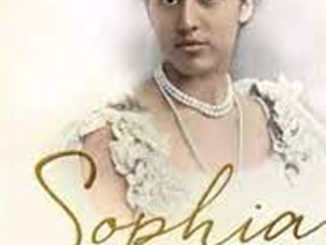
    LONDON (TIP): Princess Sophia Duleep Singh deserves more attention as a role model for young girls in Britain, says British Indian author Suifya Ahmed about her new children’s book on the granddaughter of Maharaja Ranjit Singh and goddaughter of Queen Victoria. ‘My Story: Princess Sophia Duleep Singh’, released this month, is intended to complement Britain’s school curriculum for nine to 13-year-olds around the country’s suffragette movement as it celebrates the royal’s tireless campaign for women’s right to vote.

    Ahmed felt a gap in the knowledge about this inspiring historical figure during school workshops, where she encountered very little awareness about Sophia Duleep Singh among not only pupils but also teachers.

    “I wanted to change that and so I wrote her story for children. Sophia’s story is inspirational because she puts the cause she believes in ahead of herself,” Ahmed told media

    “Sophia believed in a woman’s right to vote. She stood up for what she believed in and played a role in a defining historical event of the 20th century,” she said.

    Sophia Duleep Singh was the daughter of Maharaja Duleep Singh – the last maharaja of the Sikh Empire and the youngest son of Ranjit Singh. He was famously exiled to England as a little boy during colonial rule and grew up in the midst of the British royal family, based at Elveden Hall in Norfolk, eastern England. As a young woman in the early 1900s, Sophia was introduced to the Women’s Social and Political Union and threw herself into efforts to campaign for women’s right to vote, using her position as a princess to bring publicity to the movement.

    From selling newspapers to protesting outside Parliament, Sophia was actively engaged in the suffragette cause. Her activism extended to the First World War, during which she tended to wounded Indian soldiers.

    “When I first heard about Princess Sophia, I was sad for that younger me who was always interested in women’s rights and who always felt like I was looking into someone else’s history. When really, it was my history too,” said Ahmed, whose familial roots are in Surat, Gujarat.

    “Sophia was a woman who looked like me in the suffragette movement and knowing about her when I was a schoolgirl would have made a huge difference to my sense of belonging in this country. These are role models who contributed to Britain,” she said.

    The London-based author has also written a similar children’s story about Noor Inayat Khan, a descendant of Mysore ruler Tipu Sultan who lost her life behind Nazi enemy lines in France during World War II as a British spy.

    “There are so many women from Indian history that we need to celebrate. I would love to write a book on Queen Laxmi of Jhansi, Razia Sultan, Nur Jahan… All wonderfully empowered women whose stories should be more widely known,” said Ahmed.

    For the moment, however, the author’s focus is on a fictional tale entitled ‘Rosie Raja – Churchill’s Spy’.

    “It is a thrilling and empowering World War II adventure about the French Resistance and their British allies, with a determined, mixed-race heroine,” the author said, of her next book to be published soon.

  • History This Week- December 31 – Jan 6

    “The great force of history comes from the fact that we carry it within us, are unconsciously controlled by it in many ways, and history is literally present in all that we do.”― James Baldwin

    December 31

    December 31st – New Year’s Eve, the final evening of the Gregorian calendar year, traditionally a night for merry-making to welcome in the new year.

    December 31, 1781 – The first bank in the U.S., the Bank of North America, received its charter from the Confederation Congress. It opened on January 7, 1782, in Philadelphia.

    Thomas Edison

    December 31, 1879 – Thomas Edison provided the first public demonstration of his electric incandescent lamp at his laboratory in Menlo Park, New Jersey.

    December 31, 1971 – Austrian Kurt Waldheim became U.N. Secretary-General following the retirement of U Thant. Waldheim served until 1981 then resumed his career in Austrian politics. In 1986, he ran for the presidency. During the campaign, it was revealed he had likely given false information concerning his military service in the German Army during World War II. He claimed he left the army in 1942 after being wounded on the Russian Front, but allegations arose that he was actually lieutenant in 1943-44 stationed in the Balkans when Greek Jews were rounded up and sent to Nazi death camps and when atrocities were committed against Yugoslav resistance fighters.

    Birthday George C. Marshall (1880-1959) was born in Uniontown, Pennsylvania. He had genius for organization and served as Chief of Staff of the U.S. Army throughout World War II, expanding the Army from 130,000 to 8,300,000 men. He then served as Secretary of State under President Truman and designed the Marshall Plan for the relief of war-torn Europe and to halt the spread of Communism.

    January 1

    New Year’s Day – The most celebrated holiday around the world.

    January 1, 1502 – Portuguese explorers landed at Guanabara Bay on the coast of South America and named it Rio de Janeiro (River of January). Rio de Janeiro is currently Brazil’s second largest city.

    January 1, 1660 – Samuel Pepys began his famous diary in which he chronicled life in London including the Great Plague of 1664-65 and the Great Fire of 1666.

    January 1, 1776 – During the American Revolution, George Washington unveiled the Grand Union Flag, the first national flag in America.

    January 1, 1801 – Ireland was added to Great Britain by an Act of Union thus creating the United Kingdom of Great Britain and Ireland.

    January 1, 1863 – The Emancipation Proclamation by President Abraham Lincoln freed the slaves in the states rebelling against the Union.

    Queen Victoria

    January 1, 1877 – Queen Victoria was proclaimed Empress of India.

    January 1, 1892 – Ellis Island in New York Harbor opened. Over 20 million new arrivals to America were processed until its closing in 1954.

    January 1, 1901 – The Commonwealth of Australia was founded as six former British colonies became six states with Edmund Barton as the first prime minister.

    January 1, 1915 – During World War I, the British Battleship Formidable was hit by a torpedo in the English Channel, killing 547 crewmen.

    January 1, 1942 – Twenty-six countries signed the Declaration of the United Nations, in Washington, D.C., reaffirming their opposition to the Axis powers and confirming that no single nation would make a separate peace.

    January 1, 1958 – The EEC (European Economic Community) known as the Common Market was formed by Belgium, France, West Germany, Italy, Luxembourg and The Netherlands in order to remove trade barriers and coordinate trade policies.

    January 1, 1959 – Fidel Castro seized power in Cuba after leading a revolution that drove out Dictator Fulgencio Batista. Castro then established a Communist dictatorship.

    January 1, 1973 – Britain, Ireland and Denmark became members of the Common Market (EEC).

    January 1, 1975 – During the Watergate scandal, former top aides to President Nixon including former Attorney General John Mitchell, Domestic Affairs Advisor John Ehrlichman and Chief of Staff H.R. Haldeman, were found guilty of obstruction of justice.

    January 1, 1979 – China and the U.S. established diplomatic relations, 30 years after the foundation of the People’s Republic.

    January 1, 1993 – Czechoslovakia broke into separate Czech and Slovak republics.

    January 1, 1999 – Eleven European nations began using a new single European currency, the Euro, for electronic financial and business transactions. Participating countries included Austria, Belgium, Finland, France, Germany, Ireland, Italy, Luxembourg, Netherlands, Portugal and Spain.

    Birthday – American Patriot Paul Revere (1735-1818) was born in Boston, Massachusetts. Best known for his ride on the night of April 18, 1775, warning Americans of British plans to raid Lexington and Concord.

    Birthday – Betsy Ross (1752-1836) was born in Philadelphia, Pennsylvania. She was a seamstress credited with helping to originate and sew the Stars and Stripes flag of America in 1776.

    January 2

    January 2, 1905 – The Russians surrendered to the Japanese after the Battle of Port Arthur during the Russian Japanese War. A peace conference was later held in Portsmouth, New Hampshire, with President Theodore Roosevelt serving as a mediator. In September of 1905, the Russians agreed to the Treaty of Portsmouth yielding Port Arthur and the Liaodong Peninsula to Japan. Russia also agreed to evacuate Manchuria and recognize Japan’s interests in Korea.

    January 2, 1942 – During World War II in the Pacific, the Japanese captured the Philippines capital of Manila and the nearby air base at Cavite.

    John F. Kennedy

    January 2, 1960 – In Washington, D.C., Senator John F. Kennedy announced his intention to seek the Democratic presidential nomination.

    January 3

    January 3, 1777 – During the American Revolution, General George Washington defeated the British at Princeton and drove them back toward New Brunswick. Washington then established winter quarters at Morristown, New Jersey. During the long harsh winter, Washington’s army shrank to about a thousand men as enlistments expired and deserters fled.

    January 3, 1924 – British Egyptologist Howard Carter found the sarcophagus of Tutankhamen in the Valley of the Kings near Luxor after several years of searching.

    January 3, 1946 – An Englishman known during World War II as “Lord Haw Haw” (William Joyce) was hanged for treason in London. Joyce had broadcast Nazi propaganda via radio from Germany to Britain during the war.

    January 3, 1959 – Alaska was admitted as the 49th U.S. state with a land mass almost one-fifth the size of the lower 48 states together.

    January 3, 1961 – President Dwight D. Eisenhower broke off diplomatic relations with Cuba two years after Communist dictator Fidel Castro had seized power and just weeks before John F. Kennedy was inaugurated as the next president.

    January 3, 1990 – Manuel Noriega, the deposed leader of Panama, surrendered to American authorities on charges of drug trafficking after spending 10 days hiding in the Vatican embassy following the U.S. invasion of Panama.

    January 3, 1993 – President George Bush and Russian President Boris Yeltsin signed the Start-II (Strategic Arms Reduction Talks) Treaty, eliminating about two-thirds of each country’s long range nuclear weapons.

    January 4

    January 4, 1790 – President George Washington delivered the first State of the Union address.

    January 4, 1974 – President Richard Nixon rejected subpoenas from the Senate Watergate Committee seeking audio tapes and related documents.

    Louis Braille

    Birthday – Louis Braille (1809-1852) was born in France. Blinded as a boy, he later invented a reading system for the blind using punch marks in paper.

    January 5

    January 5, 1919 – German Communists in Berlin led by Rosa Luxemburg and Karl Liebknecht attempted to take over the government by seizing a number of buildings. However, ten days later, they were both assassinated by German soldiers.

    January 5, 1919 – The German Workers’ Party (Deutsche Arbeiterpartei) was founded by Anton Drexler in Munich. Adolf Hitler became member No. 7 and changed the name in April of 1920 to the National Socialist German Workers’ Party (Nationalsozialistische Deutsche Arbeiterpartei) commonly shortened to Nazi or Nazi Party.

    January 5, 1925 – Nellie Tayloe Ross of Wyoming became the first female governor inaugurated in the U.S.

    January 5, 1968 – Alexander Dubcek became first secretary of Czechoslovakia’s Communist Party. He introduced liberal reforms known as “Communism with a human face” which resulted in Soviet Russian troops invading Prague to crack down.

    January 5, 1972 – President Richard Nixon signed a bill approving $5.5 billion over six years to build and test the NASA space shuttle.

    January 5, 1976 – In Cambodia, the Khmer Rouge led by Pol Pot announced a new constitution which legalized the Communist government and renamed the country as Kampuchea. During the reign of Pol Pot, over 1 million persons died in “the killing fields” as he forced people out of the cities into the countryside to create an idyllic agrarian society. Educated and professional city people were especially targeted for murder and were almost completely annihilated. In January of 1979, the Pol Pot was overthrown by Cambodian rebels and Vietnamese troops.

    Birthday – King Juan Carlos I of Spain was born in Rome on January 5, 1938. He was chosen by Francisco Franco to inherit his right-wing dictatorship and was sworn in as King on November 22, 1975, two days after Franco’s death. The new King then announced his intention to mold Spain into a broadly based democratic society.

    January 6

    January 6, 1066 – Harold, Earl of Wessex, was crowned King of England following the death of his brother-in-law Edward the Confessor. Harold II was England’s last Anglo-Saxon king. In October of 1066, Harold met the invading army of William the Conqueror at Hastings and died on the field of battle.

    January 6, 1941 – President Franklin Roosevelt delivered his State of the Union address to Congress asking for support for the lend-lease program aiding Allies fighting the Axis powers. Roosevelt also defined four essential freedoms worth defending; freedom of speech, freedom of worship, freedom from want, and freedom from fear.

    January 6, 1990 – Poland’s Communist Party disbanded and then reorganized as the Social Democratic Party, an opposition party to Solidarity.

    Capitol in Washington is attacked

    January 6, 2020-President Donald Trump’s supporters stormed the Capitol in Washington with the intention of disrupting the certification of election results by the Congress. The violent mob assaulted law enforcement officers, vandalized property and occupied the building for several hours. Five people died either shortly before, during, or following the event: one was shot by Capitol Police, another died of a drug overdose, and three died of natural causes. Many people were injured, including 138 police officers. Four officers who responded to the attack died by suicide within seven months.

    Joan of Arc

    Birthday – Joan of Arc (1412-1431) was born in France. After a series of mystic visitations by saints, she inspired French troops to break the British siege at Orleans and win several important victories during the Hundred Years’ War (1337-1453) between France and Britain. She was eventually captured and sold to the British who tried her for heresy and burned her at the stake. In 1920, Joan of Arc was canonized a saint by the Roman Catholic Church.
