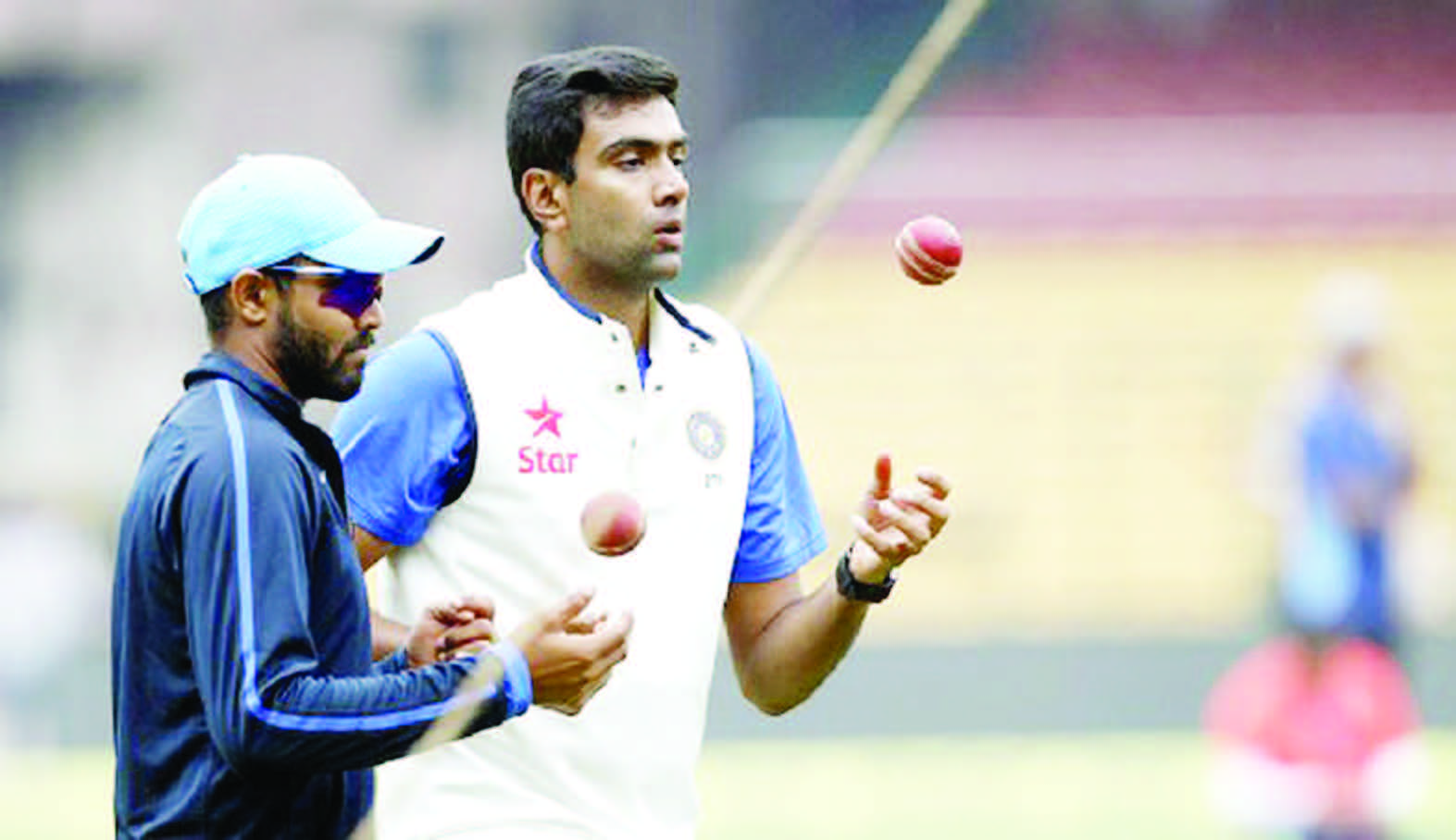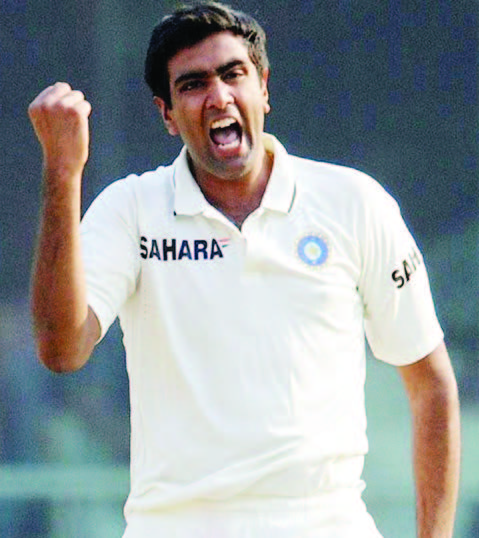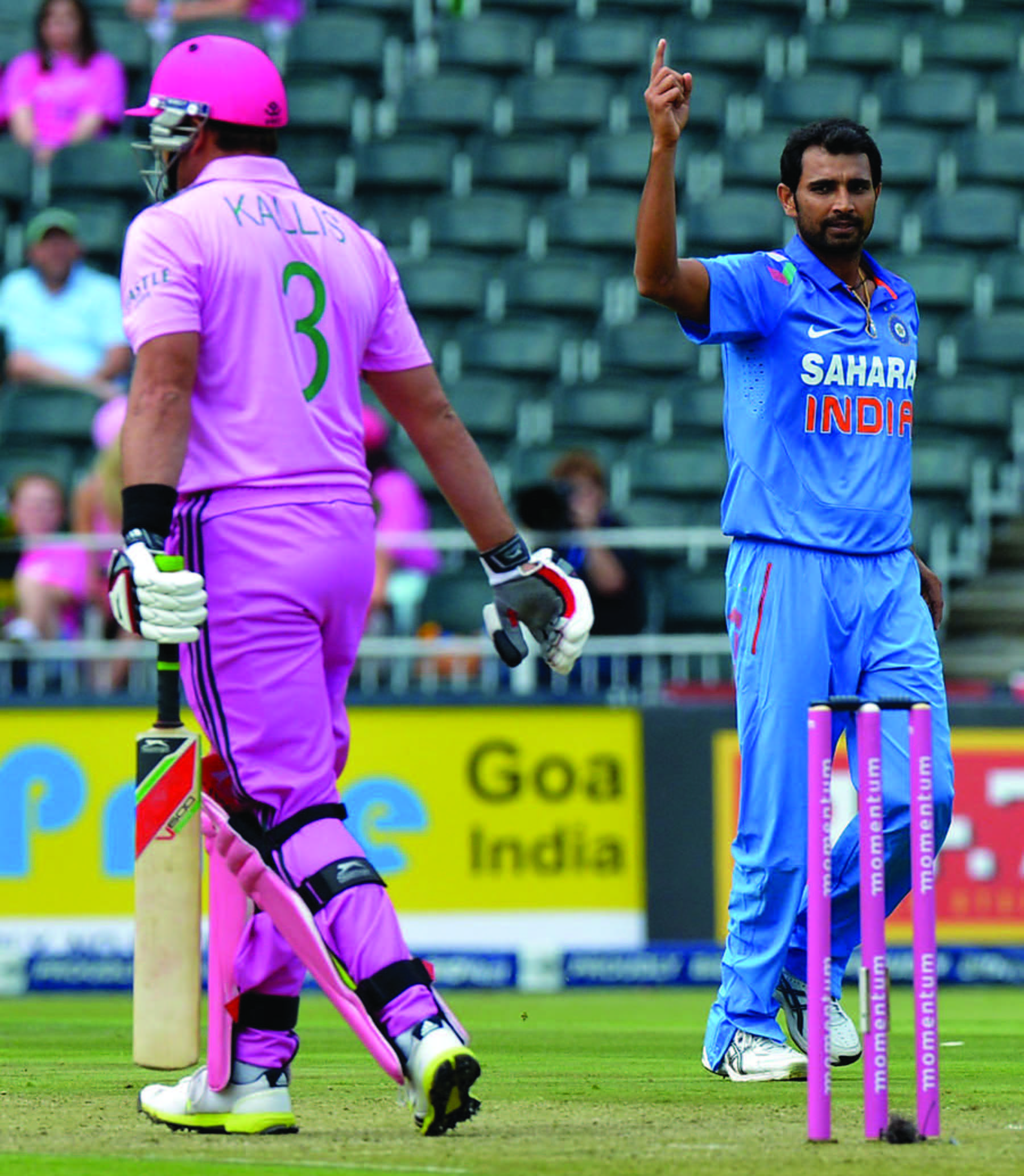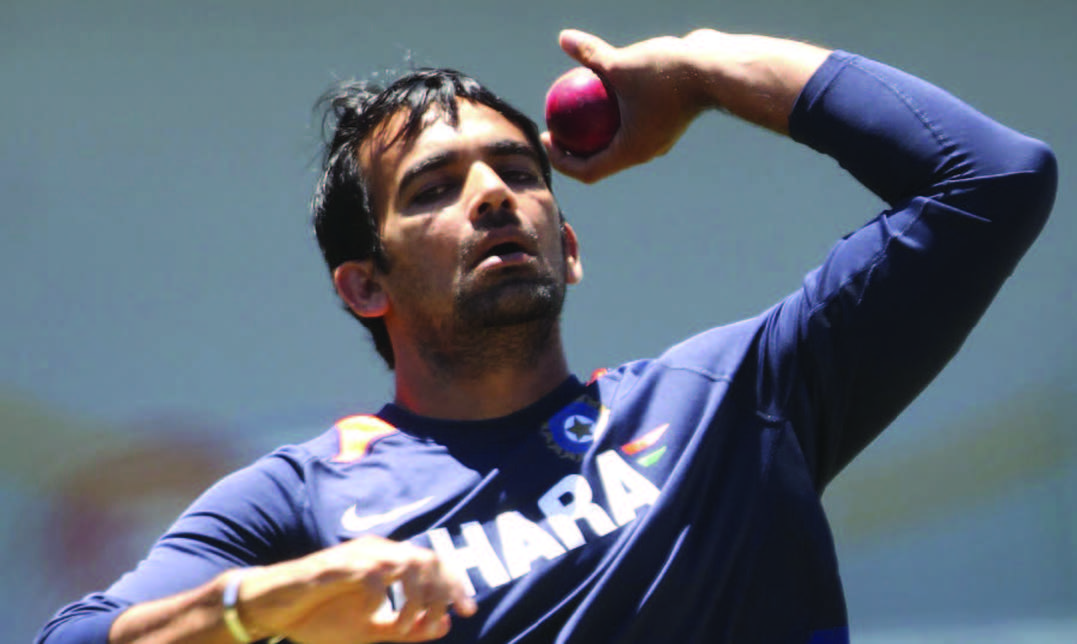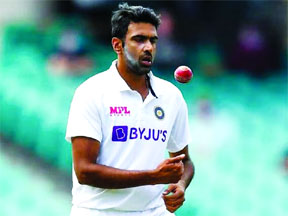
Brisbane (TIP)- Indian cricket team spinner R Ashwin announced his retirement from international cricket following the third Test match against Australia in Brisbane on Wednesday, December 18 . Ashwin made the announcement in the post-match press conference along with skipper Rohit Sharma after the game ended in a draw. Ashwin played the second match of the five-Test series in Adelaide but was replaced by Ravindra Jadeja for the match in Brisbane. Ashwin retires from the game as the second highest wicket-taker for India in Tests with 537 scalps in 106 games, leaving him only behind Anil Kumble (619 wickets). Ashwin will continue to play T20 tournaments and he will represent Chennai Super Kings in IPL 2025.
“I won’t take too much of your time. Today will be the last day for me as an India cricketer,” Ashwin said at the end of the drawn third Test here in a joint press conference with captain Rohit Sharma during which he declined to take any questions and left after making the announcement. The 38-year-old played the day-night Test in Adelaide and picked up one wicket. “He was very, very sure of his decision. We should stand by what he wants,” said Rohit after Ashwin left the stage.
He was seen sharing an emotional moment with star batter Virat Kohli in the dressing room hours before the announcement. “A name synonymous with mastery, wizardry, brilliance, and innovation,” said the BCCI in its tribute post on X.
With Ashwin stepping down from the international stage, he is truly leaving behind a tremendous legacy and massive boots to fill for the youngsters who will come in to make up for his presence.
Ashwin spearheaded the bowling attack and was a major face behind India’s rise to the top and eventual domination in Test cricket that lasted from 2014 to 2019.
When one turns to look at his dominance in the home conditions, he was a phenom. His expertise wasn’t just limited to the ball but also some impactful contributions with the bat.
In the white-ball format, Ashwin made 181 appearances and snatched 228 wickets. He made 116 ODI appearances and took 156 wickets at an average of 33.20, with best figures of 4/25. He also made 707 runs at an average of 16.44, with one fifty, a knock of 65 in 63 innings. He is the 13th-highest wicket-taker in ODIs for India.
In 65 T20Is, he took 72 wickets at an average of 23.22. His best figures are 4/8. He also scored 184 runs in 19 innings at an average of 26.28, with best score of 31. He is the sixth-highest wicket-taker for India in T20Is. With 765 scalps in 287 matches, he is India’s second-highest wicket-taker across all formats, next to Kumble (953). He also won the 2011 50-Over World Cup and 2013 Champions Trophy with India.
Tag: R Ashwin
-

R Ashwin announces retirement from international cricket
-

Ashwin rewarded with wages of spin
CHENNAI (TIP): It was late August and R Ashwin was playing a T20 game against West Indies in Florida. On a small ground, the Indian bowlers had conceded 245, with Ashwin finishing with 2-39 off three overs.
A commentator asked him at the end of the innings if he was worried about his recent “indifferent form” in the shortest version of the game. Ashwin looked straight at the commentator with the smile still intact and said: “It’s surprising to hear about my indifferent form. As far as I am concerned, I feel I have been the No. 1 strike bowler for my team in the shorter version.”
That’s Ashwin for you – a man with extreme self-belief who never stops backing himself at difficult times. A cricketer’s life is a topsy-turvy ride with a bad day in office lurking round every corner. In an age of extreme scrutiny, anything that is not top drawer gets magnified, but Ashwin’s biggest strength is that he never loses faith in himself. Forget the numbers, it has been spoken of time and again -it’s the man of steel behind the smiling face that makes Ashwin the No. 1 cricketer.
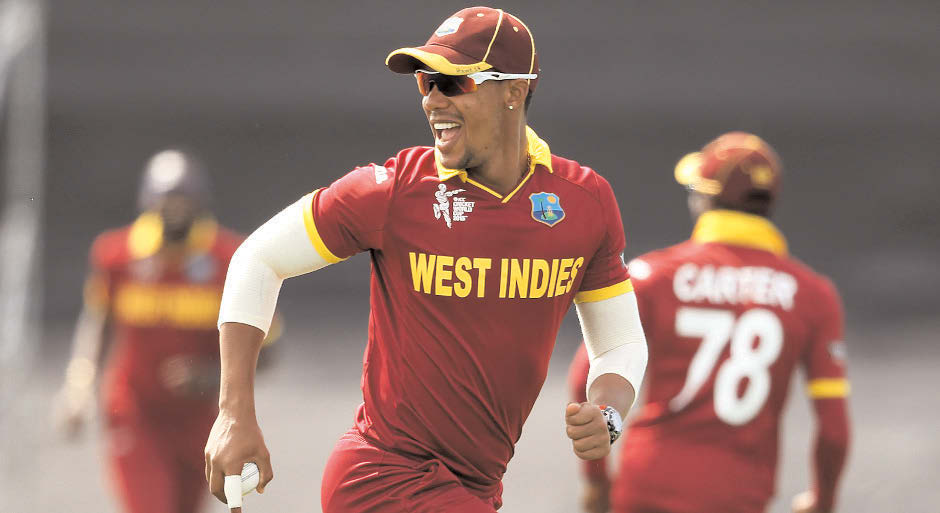
The first half of 2016 didn’t indicate that he would end up with the Sir Garfield Sobers Trophy. Ashwin had bowled a crucial no-ball in the semi-final of the T20 World Cup against West Indies that fetched a wicket. Lendl Simmons stayed on and ensured India’s ouster from the tournament where they were overwhelming favourites. By the offspinner’s own admission, he felt that the entire nation was pointing finger at him for the defeat. It can break many careers, but not Ashwin’s.
He let the storm die down -he knew there was a West Indies tour followed by a couple of home series coming up. And what he has done since then will probably become Indian cricket folklore. He has smashed one record after another, scored runs at crucial junctures and even making Kapil Dev say, “Ashwin is better than me as an all-rounder.”
But that’s only part of the story. The Ashwin saga of 2016 is of a man who is at the peak of his creative powers. India have produced many offspinners in recent times. There have been quite a few who have been successful as well, but hardly anyone who makes the art of spin bowling look beautiful. No wonder, L Sivaramakrishnan says, “Ashwin purely deserves the award for reviving the art of spin bowling at the highest level.”
Take the recently-concluded Chepauk Test against England for example. He was closing in on a record -that of the fastest to 250 wickets in Tests – ahead of Dennis Lillee.
But the record didn’t happen and Ashwin went for 217 runs with one wicket to show. But anyone who has followed the Test would know how well the Chennai boy bowled.
The flight, the loop, the subtle changes of pace -it was an exhibition of an artist at work on a dead pitch. A catch was dropped off him in the first over of the fifth day, but it was Ashwin who created the pressure at one end as Ravindra Jadeja ran away with the rewards.
The Ashwin-Jadeja combo is a crucial cog in the Chennai man’s success story. They are vastly different characters -one is the erudite intellectual, the other a bit of a maverick. But when it comes to performing on the field, the way they complement each other is a treat. “Ask Ashwin and he will tell you how big a role Jadeja plays in Ashwin taking the wickets,” Virat Kohli said the other day after India won at Chepauk. While Jadeja stifles at one end with his nagging line and length, it’s Ashwin who expresses himself with his subtle variations which makes life difficult for batsmen. “You know, I won’t mind captaining these two together,” Alastair Cook explained how difficult it is to play the two together.
While Jadeja isn’t much of a thinker, Ashwin’s mind seems to be a laboratory of ideas. Talk to him during a break in international cricket and he will invariably tell you he is working on some new idea. It can be a new delivery or a new method to get the star opposition batsman out. He will never say it before the series, but Ashwin invariably targets the No. 1 batsman in the opposition ranks.
That’s why it’s Kumar Sangakkara who falls to him time and again when India play Sri Lanka, Kane Williamson when it’s New Zealand or Joe Root when it’s England. Unlike many in his profession, Ashwin loves watching the game even when he is not playing it -at times he is an enthusiast and a cricketer rolled into one.
The other crucial element that has worked wonders in favour of Ashwin is Kohli’s rise to Test captaincy. Just after a Test match against Bangladesh in Dhaka, Ashwin had said: “Even if Kohli errs, it will be on the attacking side.”
The statement showed that the two are on the same page and Kohli has given him the freedom to express himself. The fact that the skipper promoted him to bat at No.6 in Tests was also a boost, not just in his batting but to his entire approach as a cricketer.
Ashwin started believing that he could realize his own potential. And how well he has done it in 2016!
-

Ashwin named ICC Cricketer of the Year, Test Player of the Year
NEW DELHI (TIP): India off-spinner R Ashwin has claimed the top ICC awards for 2015-16, having been named the ICC Cricketer of the Year and the Test Cricketer of the Year. Ashwin is the third Indian, after Sachin Tendulkar and Rahul Dravid, to win the Sir Garfield Sobers Trophy for Cricketer of the Year.
Ashwin, currently the top-ranked Test bowler, had picked up 48 wickets and scored 336 runs in eight Tests during the ICC’s voting period from September 2015 to 2016, in addition to 27 wickets in 19 T20Is. In 2016 alone, he picked up 72 wickets in 12 Tests and became the second-fastest bowler to 200 wickets during the Kanpur match against New Zealand.
Ashwin said he was overwhelmed by the recognition. “It’s a bit overwhelming and it is yet to sink in completely. At the same time, I was expecting to land one but to end up with two awards was extremely special,” he said. “To be bracketed alongside Rahul Dravid and Sachin Tendulkar is indeed a matter of great pride.
“I want to dedicate this award to my family who have been a pillar of strength. And not to forget all my teammates and coach Anil Kumble who push me to give my best with their support and guidance.” The off-spinner rated his 7 for 83 in the Antigua Test against West Indies as the performance he enjoyed the most. That haul helped India to an innings-and-92-run win, and he finished the series as the leading wicket-taker with 17 dismissals. Another performance Ashwin rated highly was his knock of 118 in the first innings in St Lucia, which helped rescue India from 126 for 5 to 353. They went on to win the match by 237 runs. It was also Ashwin’s fourth Test hundred.
South Africa wicketkeeper-batsman Quinton de Kock was named ODI Player of the Year. De Kock has been South Africa’s leading run-getter in ODIs since September last year, and tallied 793 runs in 16 ODIs during the voting period. Overall, since September 2015, he has scored 1175 runs in 22 matches in the format, with five centuries and three fifties, ahead of senior batsmen like Faf du Plessis, AB de Villiers and Hashim Amla. One of de Kock’s most prolific phases came between October 2015 and February 2016, when he scored four centuries in six innings during the tour of India and the home series against England. He enjoyed the same form in the longest format, with five successive fifty-plus scores between August and November 2016. De Kock is the second South Africa player after AB de Villiers to win the award.
West Indies all-rounder Carlos Brathwaite’s match-defining 34 not out off 10 balls in the World T20 final against England earlier this year was named the T20 Performance of the Year. The all-rounder, who took over as the T20 captain in August, sealed a second World T20 title for West Indies by slamming four successive sixes to end a chase of 156 in Kolkata. Bangladesh seamer Mustafizur Rahman was named Emerging Cricketer of the Year, having notched up impressive performances since his international debut in April 2015. The first Bangladesh cricketer to win an annual ICC award, Mustafizur picked up eight ODI wickets and 19 T20I wickets in the voting period.
-

DHONI WINS TRI-SERIES FOR INDIA
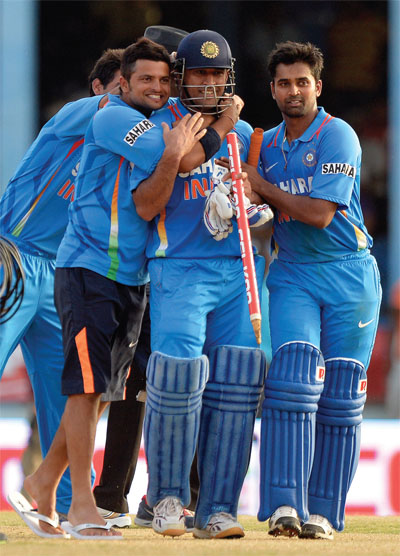
PORT-OF-SPAIN (TIP): Leave it to me, he says. I want to take this to the last over. Me against one man. One on one. I know I am better than the last man the other team can put up against me. Once again, MS Dhoni reduced a lost match into a one-on-one contest with an opposition bowler, and knocked off the 15 required in just three hits.
You could see the bowler – Shaminda Eranga, 9-2-34-2 until then, wickets of Shikhar Dhawan and Virat Kohli to his name – was intimidated the moment he saw the first one fly into the top of the top tier. Bear in mind that this was a treacherous pitch with seam, spin and uneven bounce. Dhoni was injured, and had come back only for this match. He wasn’t running as hard as he does, and wickets were falling at the other end.
When Dhoni came in, the asking-rate was 3.35, but with falling wickets and turned-down singles, it hit the improbable towards the end. Dhoni, though, kept refusing singles, kept admonishing the last man Ishant Sharma for taking off for panic-stricken singles.
Ishant couldn’t be blamed. The game had unravelled fast for India. They were cruising when Rohit Sharma had braved for yet another fifty despite another painful blow to his body (which makes it atleast four in two innings against Sri Lanka), despite many balls that seamed past his edge, despite the slow start. When India were 139 for 3 in the 32nd over, though, Rangana Herath delivered a grubber, and it squeezed under Rohit’s bat. Things were about to change. The pitch was still difficult to bat on as Suresh Raina soon found out.
He thought he had a half-volley from Suranga Lakmal when he went for the drive, but even after pitching that full the ball seamed away appreciably and took his edge. The accurate and wily Herath saw an opening now. And burst through it. In the 38th over, his last, Herath trapped Ravindra Jadeja and R Ashwin – whose combined figures had been 17.5-1-65-6 – in successive deliveries.
India 152 for 7. The drama had begun. Only a few minutes earlier, Mahela Jayawardene and Kumar Sangakkara had gone on and on – for overs it seemed – about an obstructing-the-field appeal against Dhoni. He had taken two steps down the wicket, and then realised he would have hit the other batsman if he ran straight. So he ran, nay hared on a bad hamstring, at an angle, but didn’t change his direction for the remaining 20 yards. The throw hit him, and the two senior Sri Lankans would not leave the umpire’s side.
They knew they needed this man out as soon as possible. For the next half hour, though, Sri Lanka would have thought they didn’t need to get Dhoni out. Dhoni tried to intimidate Lakmal once during the Powerplay, but after that he began playing the percentage game. Sri Lanka knew Dhoni couldn’t manipulate the strike with that hamstring, and controlled the game well. Lasith Malinga – seven overs for 54 runs until then – finally got his radar right, and got Bhuvneshwar Kumar toe before wicket with his dipping slower yorker.
In the tense overs that followed, R Vinay Kumar lost his cool, and slogged and got out. India 182 for 9 after 46.2 overs. With any other batsman than Dhoni, you would expect panic. Dhoni, though, wanted to corner just one man. He wanted to bring it down to that one man. He was also daring Sri Lanka to keep back Malinga, who had one over left, for the last. Sri Lanka didn’t. Malinga bowled the 48th. Dhoni faced the whole over, looking unhurried, for just a scrambled couple.
The only man hurried was Ishant, who tried a suicidal single off the last ball of Malinga’s over to keep Dhoni on strike. The ball, though, had gone straight to the fielder, and Dhoni was miffed Ishant tried such desperation. It was not becoming of someone batting with the coolest and the best batsman in ODI cricket. Ishant would do that again off the first ball of the next over. Twice Dhoni let Ishant know what he did was not right. Ishant faced another dot. Then another dot. Seventeen off nine. Dhoni was cool at the other end.
He had marked out his man. He knew it wouldn’t be an experienced bowler in the last over. Two runs came off the last three balls of the 49th over, but Ishant was made to feel under no pressure. He had been told to leave it to the man who knew his way around these lanes. Then began the great show. As soon as Ishant left alone – yes, left alone – the last ball of the 49th over, Dhoni signalled to the dressing room for a new, heavier bat.
As Angelo Mathews psyched Shaminda Eranga up for the last over, Dhoni practised a few swings with two bats held together. Calculatedly he picked out one. Eranga went to his mark. This match should not have been on, but in Dhoni’s book this was even odds. Eranga bowled a nervous first ball: a wide length ball, which Dhoni swung hard at. That was a nervous ball, and would have been out of the ground had Dhoni connected. Dhoni didn’t. The second ball, though, was closer to Dhoni – swing, and met that hunk on the up.
And up it went. And far. And kept going. Over the top of the stands. You could see it in Eranga’s eyes now. It was now going to be nigh impossible for Eranga to execute his skill. In one hit, Dhoni had brought it down to just luck for Sri Lanka. The luck was not with them. Eranga bowed length again, Dhoni went hard again, and the ball flew off the outside half of the bat, and over point. It was over already.
Eranga just ran up for the formalities, delivered another length ball, and was dispatched over extra cover. The iceman had done it again, but he hadn’t had a great first half of the day as a keeper and a captain. Apart from not having been at his best with the gloves, Dhoni had also let Sri Lanka off the hook with his choice of part-time bowlers ahead of the specialist spinners, who would eventually go on to cut Sri Lanka’s effort short.
Bhuvneshwar had given India his customary breakthroughs in the first spell, the scoring was difficult, but Virat Kohli and Raina provided Sangakkara and Lahiru Thirimanne relief with their odd long hop or big wides. Their partnership took Sri Lanka to 171 for 2, but then Thirimanne made a mistake, and almost every batsman that followed.
In over-aiming during that Powerplay, Sri Lanka had lost their last eight wickets for 30 runs, letting Dhoni off the hook now. You will be justified to think of Dhoni’s choice of bowlers as odd. As you would have been with his persistence against all logic with Ishant in the Champions Trophy final. Just that the results were drastically different.