Tag: Radhika Ramaseshan

  • BJP takes Hindutva route in TN, Bengal

    BJP takes Hindutva route in TN, Bengal

    Saffron party gears up to overpower strong regional forces in 2026 Assembly elections

    “Undaunted by the not-so-encouraging statistics, Prime Minister Narendra Modi framed the Bengal battle with an image and a metaphor that he believed its voters could relate to. On the day the BJP celebrated the Bihar mandate at its Delhi headquarters, Modi declared, “The Ganga flows from Bihar to Bengal”, as though the mighty river would also deposit a bounty of votes in the BJP’s catchment areas. It was not an oratorical flourish because on cue, Modi’s chief strategist and Union Home Minister Amit Shah formed a team to act on the Bengal blueprint, some elements of which are already visible. On top of the BJP’s playbook is the Hindutva card that has not yet brought in the expected gains in West Bengal and much less in Tamil Nadu, a state abounding in paradoxes that ultimately do not favor Hindu majoritarian politics.”

    By Radhika Ramaseshan

    Having wrapped up Bihar with an impressive win, the BJP’s dream run of electoral wins faces formidable challenges in two states which will vote in April-May 2026: West Bengal and Tamil Nadu. Politics in these states pivots around strong regional forces that have persistently walled out the mainline parties or forced the BJP and the Congress to transact electoral arrangements on their terms.

    These parties — the Dravida Munnetra Kazhagam (DMK) in Tamil Nadu and the Trinamool Congress (TMC) in West Bengal — are again expected to dominate the show.

    While the Congress seems at peace riding on its ally DMK’s back in Tamil Nadu, it finds virtually no purchase in Bengal, not after the disastrous showing in Bihar. Both in the 2024 Lok Sabha polls and the 2021 Assembly elections, the Congress had an alliance with the Left Front (LF) that yielded nothing for both partners, but two LF constituents — the All India Forward Bloc and the Revolutionary Socialist Party — recently raised objections to striking yet another deal with the Congress. The TMC, too, is unlikely to have any truck with the Congress.

    On the other hand, true to its character, the BJP, notwithstanding its endeavor to cement a broad coalition in Tamil Nadu, is determined to put up a fight in both states, particularly Bengal. Buoyed by its success in the 2019 parliamentary elections, the BJP was convinced that it was a matter of time before it ‘conquered’ the eastern state. However, in the 2021 Assembly elections, it came nowhere close to its target of winning 200 of the 294 seats. It won only 77 (the tally fell to around 65 due to defections and by poll losses), but the BJP had the satisfaction of getting 38 per cent of the votes and emerging as the principal Opposition party.

    Undaunted by the not-so-encouraging statistics, Prime Minister Narendra Modi framed the Bengal battle with an image and a metaphor that he believed its voters could relate to. On the day the BJP celebrated the Bihar mandate at its Delhi headquarters, Modi declared, “The Ganga flows from Bihar to Bengal”, as though the mighty river would also deposit a bounty of votes in the BJP’s catchment areas. It was not an oratorical flourish because on cue, Modi’s chief strategist and Union Home Minister Amit Shah formed a team to act on the Bengal blueprint, some elements of which are already visible.

    On top of the BJP’s playbook is the Hindutva card that has not yet brought in the expected gains in West Bengal and much less in Tamil Nadu, a state abounding in paradoxes that ultimately do not favor Hindu majoritarian politics.

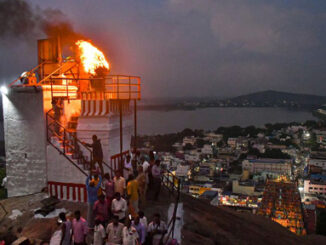
    The underlying political irony was reflected in the recent controversy ignited by the lighting of a lamp in the Subramanya Swamy temple at Thiruparankundram Hill in Madurai district. The temple is supposed to be one of the six abodes of Murugan, the second son of Shiva-Parvati and the most revered deity in Tamil Nadu. The Sultan Sikandar Avulia Dargah is located meters away, but barring occasional skirmishes, the lamp-lighting — an old and important ritual performed during the Karthigai Deepam festival to symbolize the triumph of light over darkness — passed off peacefully because of a court order to light the lamp away from an ancient pillar called Deepathoon, which is just 15 meters from the dargah and became a bone of contention.

    This time, a petition filed in the Madurai bench of the Madras High Court sought permission to perform the ritual at the pillar. The BJP and its allies celebrated when the court allowed the petitioner to light the lamp at the spot, but the district administration promptly issued prohibitory orders which were enforced by the police. Armed with a legal sanction, the BJP and its supporters protested vociferously against the cops.

    Mohan Bhagwat, the RSS chief, weighed in on the matter, saying that the “awakening of Hindus was sufficient to achieve the desired outcome” — it sounded like a veiled call for a confrontation if such a situation arose. Congress MP Karti Chidambaram said the BJP’s understanding of Tamil Nadu’s cultural and religious fabric was “fundamentally misplaced”. “The people of Tamil Nadu are most god-fearing, ritualistic, orthodox and temple-going, but faith does not mix with politics,” he added.

    While the ruling DMK has stuck to its position, the ‘dispute’ can gain traction if the BJP and the RSS — which are bereft of strong local networks except in small parts — can sustain the momentum aimed at polarizing a polity largely fed on the ideology of Dravida Kazhagam leader Periyar EV Ramasamy. A key feature of Periyar’s Self-Respect Movement was portraying Muslims as Dalits who converted to Islam to escape the caste oppression inherent in Hinduism. Most Tamil-speaking voters have no problem with Periyar’s postulate.

    In West Bengal, after three successive terms in office, the TMC appears vulnerable over issues such as the alleged corruption by Chief Minister Mamata Banerjee’s trusted lieutenants and the anger that spilled over on the streets after the brutal rape-murder of a young doctor in a Kolkata hospital. Then there are the quotidian experiences of people who have to deal with the ruling party’s musclemen and power-brokers, taking them back to the era of Left Front toughies who made survival possible only on their terms.

    But the BJP has tied itself in knots over the issue of illegal migrants — data suggests that there are more Hindu than Muslim migrants in West Bengal. The Special Intensive Revision (SIR) of electoral rolls by the Election Commission has caused anxiety within the BJP’s own vote bank, along with the affront to the Bangla language, infamously described by the Delhi Police as “Bangladeshi language”.

    Banerjee tried hard to depict herself as a “friend of the Hindus” with measures like the payment of monthly salaries to Hindu priests and organizing the Durga carnival. The experience of other states demonstrates that the Opposition still finds it hard to beat the BJP over Hindutva; so, Banerjee will have to target the BJP’s other shortcomings.

    The politics of Tamil Nadu and West Bengal is centered around a strong regional distinctiveness, unlike the Hindi belt where voters identify themselves seamlessly with the Hindutva narrative because religious identity is overarching. Can the BJP subsume markers of language and culture into the Hindutva theme?
    (Radhika Ramaseshan is a senior journalist)

  • Sense of consensus eludes INDIA

    Sense of consensus eludes INDIA

    At core of predicament is Congress’s inability to mold itself into a leader of a heterogeneous bloc

    “What do the circumstances portend for the Opposition’s coalition? The constituents of INDIA met in New Delhi on December 19, apparently to clear the air of disunity that had begun to cloud the coalition after its earlier sessions and following the differences over seat-sharing between the Congress and the Samajwadi Party, Janata Dal (United) and the Rashtriya Lok Dal before the recent state elections. A sense of cooperation and consensus among the parties —which included a Shiv Sena faction headed by Uddhav Thackeray, the Mandalised bloc from Uttar Pradesh and Bihar, the DMK and its allies and the Aam Aadmi Party — continued to be elusive. It still isn’t clear if the participants were out to score an own-goal by flagging issues that were earlier deemed as ‘irrelevant’ or quite happy to articulate their contradictions.”

    By Radhika Ramaseshan

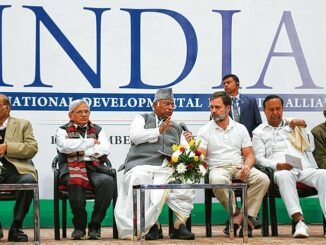
    To see the glass as half full or half empty depends on how buoyant or cynical an observer is. Since its inception in June, the Indian National Developmental Inclusive Alliance (INDIA), comprising 28 parties, has envisaged roping in as many Opposition forces as it can mobilize in a joint front to fight the BJP in the 2024 General Election. The formation of the bloc, in which the Congress is as important an investor as the regional parties, was an admission on the part of the Gandhis that their political legacy was no longer remarkable enough to take on the BJP single-handedly. The series of meetings INDIA held iterated the Congress’s position as an equal and not a first among equals. It still isn’t clear if the participants were out to score an own-goal by flagging issues that were earlier deemed as ‘irrelevant’ or quite happy to articulate their contradictions.

    Ideally, recent events ought to have underscored the need for such a front even more deeply, especially for the Congress, because the favorable atmospherics that prevailed during INDIA’s first congregation at Patna had dissipated. Seven months before that, there was a sense of hope. Rahul Gandhi had completed his marathon Bharat Jodo Yatra, which went some way in reimagining popular perception of the leader who had been seen as a reluctant and naive politician. The Congress scored an impressive win over the BJP in Karnataka and decimated the Janata Dal (Secular), which went on to seek refuge in the NDA’s fold.

    With 2023 nearing its end, the scenario has turned depressing for the Opposition. The BJP swept the elections in three states in the Hindi heartland in a direct faceoff with the Congress. The Congress now exists in slivers in this region. In the ongoing winter session of Parliament, the BJP has reasserted its near-hegemonic position amid projections of a comeback in 2024. It has pulverized the Opposition, which had sought a statement from the government regarding the security breach in Parliament but was rebuffed. Not only did the government reject the suggestion of being accountable to elected MPs, it also passed Bills with far-reaching implications for data security and amendments in the criminal laws without debate and discussion. After the mass suspension of MPs, the Opposition’s presence in the Lok Sabha and Rajya Sabha has shrunk alarmingly. The picture which both Houses presented marked the culmination of a long-cherished RSS project to install an overbearing Centre with the states orbiting around it like satellites.

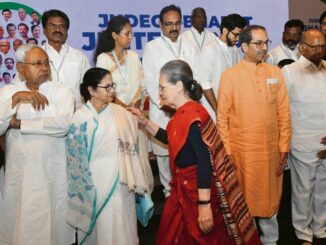
    What do the circumstances portend for the Opposition’s coalition? The constituents of INDIA met in New Delhi on December 19, apparently to clear the air of disunity that had begun to cloud the coalition after its earlier sessions and following the differences over seat-sharing between the Congress and the Samajwadi Party, Janata Dal (United) and the Rashtriya Lok Dal before the recent state elections. A sense of cooperation and consensus among the parties —which included a Shiv Sena faction headed by Uddhav Thackeray, the Mandalised bloc from Uttar Pradesh and Bihar, the DMK and its allies and the Aam Aadmi Party — continued to be elusive. It still isn’t clear if the participants were out to score an own-goal by flagging issues that were earlier deemed as ‘irrelevant’ or quite happy to articulate their contradictions.

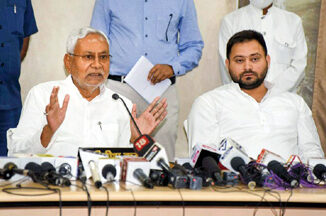
    Mamata Banerjee of the Trinamool Congress and AAP’s Arvind Kejriwal proposed Congress president Mallikarjun Kharge’s name as INDIA’s prime-ministerial candidate. It seemed as if they had only discussed the matter among themselves, believing they could persuade their associates that the time was ripe to raise the pitch for India’s first Dalit PM and counterbalance the BJP’s strategy of consolidating the Other Backward Classes (OBCs). Although JD(U) leader and Bihar CM Nitish Kumar consistently maintained that he did not aspire for the PM’s post, his latent ambitions surfaced through statements by his colleagues in the past. A structured discussion on the PM candidate never took off, especially after Kharge scotched the idea, although some reports quoted him talking about his long years in public service and his conduct as a ‘fighter’ to mean that he was not averse to handling the Mamata-Kejriwal googly. Uddhav stressed that the question of electing a PM arose only if the coalition brought in enough MPs and what INDIA needed immediately was a convener to hold the grouping together.

    Certain red lines, accentuating the existence of a regional cleave and intra-state pinpricks, were drawn. When TR Baalu, a senior DMK representative, sought a translation of Nitish’s speech, he was snubbed by the Bihar CM, who demanded that Baalu should learn Hindi, a ‘national’ language. By juxtaposing the north-south divide that was displayed in Tuesday’s meeting with the BJP’s persistent attempts to shed the tag of being a Hindi-belt party, visible in Prime Minister Narendra Modi’s overtures to Tamil Nadu and Kerala, it becomes clear who — the NDA or INDIA — has the big picture in front and what correctives need to be made.

    While there was a general agreement that the seat-sharing process should be completed by the year-end, where do things stand now? Samajwadi leader Ram Gopal Yadav made it clear that his party would quit INDIA if there was a proposal to accommodate the Bahujan Samaj Party. As Mamata pitched for a year-end deadline, there was no indication from her of wanting to forge a broader alliance involving the TMC, the Left Front and the Congress. Given the mutual antagonism on the ground, it seems unlikely the idea would take off. In Maharashtra, it appears that while Uddhav’s Sena and Sharad Pawar’s Nationalist Congress Party have their terrain mapped out, the Congress is in a quandary over its strong areas, if indeed there are any.

    At the core of the predicament faced by INDIA is the Congress’ inability to mold itself into the leader of an admittedly heterogeneous formation, struggling for a helmsman and a narrative. While everybody conceded the need for a shared agenda and holding collective meetings that didn’t seem unwieldy, the question is: Who will hold the baton for INDIA?
    (The author is a senior journalist)

  • Challenge to Hindutva

    Challenge to Hindutva

    • The clamour for a caste census can redefine political equations and alliances in the run-up to Lok Sabha polls

    It’s premature to conjecture if caste is a robust counter to the BJP’s Hindutva. But the BJP’s strategy of employing religion to heighten a pan-Hindu identity among the non-upper castes might be past its shelf life, at least in the state elections.

    “The belated wisdom of a national party such as the Congress plunging headlong into sectional politics discomfited some of its insiders, who believed that it should focus on the economy’s big picture, inflation and livelihood and leave matters like a caste count to the identity-wedded entities it is aligned with in the regions. Insiders said that would be more in keeping with the ‘character’ of these players, some of whom, incidentally, are products of the post-Mandal period.”

    By Radhika Ramaseshan

    The upcoming Assembly elections in Madhya Pradesh, Chhattisgarh, Rajasthan and Telangana have got inextricably linked with three factors — the Bihar Government’s release of a comprehensive caste survey (CCS), the Congress’ promise to conduct a similar caste count if elected to power in these states and the BJP’s response to frame the discourse in a different idiom, featuring leitmotifs drawn from the Hindutva ideology. As the BJP garnered a little over 40 per cent of the OBC votes in the 2019 elections, largely by projecting Modi both as an OBC mascot and a Hindu icon, the Congress was bereft of any such attribute.

    A little before and immediately after the Bihar CCS demonstrated the potential of resurrecting the issue of the empowerment of Other Backward Classes (OBCs) or backward castes, the Congress strongly advocated for a caste count. Former party president Rahul Gandhi described it as an ‘X-ray’ that would reveal the socioeconomic condition of the OBCs, Dalits and Adivasis and challenged Prime Minister Narendra Modi to lay bare the findings of a socioeconomic caste survey undertaken during then PM Manmohan Singh’s tenure. Rahul claimed that the Congress governments in Rajasthan and Chhattisgarh had initiated a process to carry out a CCS — brave words from the Congress, which belatedly recognized and acknowledged the seriousness of OBC empowerment in shaping the politics of the Hindi heartland. Successive Congress Prime Ministers — from Jawaharlal Nehru to Rajiv Gandhi — did not pursue the recommendations of the Kaka Kalelkar Commission, the first Backward Classes panel, which submitted its report in 1955. It identified 2,399 backward castes in the country, with 837 of them classified as ‘most backward’. The commission also recommended undertaking a caste-wise enumeration of the population during the 1961 census and establishing a connection between the social backwardness of a caste and its low position in the traditional caste hierarchy, among other suggestions.

    The Congress ignored the Mandal Commission’s report mandated to identify the socially and educationally backward castes and adopt ameliorative measures to bring them on a par with the upper and intermediate castes. While the BJP was quick to grasp the political ramifications of the Mandal report and co-opted large OBC sub-groupings under the Hindutva umbrella, the Congress was convinced that its time-tested coalition of the upper castes, Muslims and Dalits/Adivasis would endure an epic churn. As it happened, the amalgam came apart and the party lost its base in the heartland, except in pockets. As the BJP garnered a little over 40 per cent of the OBC votes in the 2019 elections, largely by projecting Modi both as an OBC mascot and a Hindu icon, the Congress was bereft of any such attribute. Now, the party is making a concerted effort to position, front and center, its OBC Chief Ministers Siddaramaiah (Karnataka), Bhupesh Baghel (Chhattisgarh) and Ashok Gehlot (Rajasthan), despite the high command’s express misgivings about Gehlot.

    The belated wisdom of a national party such as the Congress plunging headlong into sectional politics discomfited some of its insiders, who believed that it should focus on the economy’s big picture, inflation and livelihood and leave matters like a caste count to the identity-wedded entities it is aligned with in the regions. Insiders said that would be more in keeping with the ‘character’ of these players, some of whom, incidentally, are products of the post-Mandal period.

    There is more than a grain of truth in this belief if the rejoinder coming from a regional party is an indication. Flagging the caste count issue in Telangana, Rahul contextualized his rationale with the alleged corruption by the Bharat Rashtra Samithi government, Chief Minister K Chandrashekar Rao and his family. A caste survey, Rahul claimed, would bring to light the extent to which the KCR clan had ‘looted’ Telangana. Can caste become a synonym for corruption, considering that the party of Lalu Prasad, whose household is enmeshed in graft charges, is a Congress ally and the Rashtriya Janata Dal draws its sustenance from identity politics? Can the RJD survive without its Muslim-Yadav support?

    The Telangana Government was not in slumber. In 2014, it carried out a household survey of the OBCs which showed that they made up 51 per cent of its 3.6 crore population. With the Dalits and Adivasis, the figure went up to 85 per cent.

    The Chief Minister is from the Velama community, a dominant caste of agriculturists, but in his two stints in office, he made space for OBCs such as the Gouds, Yadavs, Munnuru Kapu and Padmashali as ministers and Rajya Sabha MPs. Having been vociferous about a caste count, the Congress might be hoist by its own petard because its OBC leaders have clamored for three Assembly seats each in Telangana’s 17 Lok Sabha constituencies that add up to 51 OBC candidates in the 119 Assembly segments.

    The Chhattisgarh Government’s OBC survey in 2022 puts their population at 43.5 per cent, while as per the Madhya Pradesh and Rajasthan Backward Classes Commissions, the figures stand at 48 per cent and 42 per cent, respectively. Confronted with the data, the three governments — Chhattisgarh and Rajasthan are Congress-ruled, while MP is BJP-helmed — have made OBCs the centerpiece of their policies and welfare initiatives.

    Madhya Pradesh CM Shivraj Singh Chouhan set up dedicated welfare boards for specific sub-castes, as have Gehlot and Baghel. Rajasthan earmarked 64 per cent reservation in government employment and educational institutions with 16 per cent for the Dalits, 12 per cent for the Adivasis, 26 per cent for the OBCs and most backward castes and 10 per cent for the ‘economically weaker’ sections. In MP, despite the BJP high command’s manifest distrust of Chouhan, he was nominated again from his Budhni seat shortly after the caste census and the accent on OBC empowerment gained currency. Chouhan is from a backward caste. In Chhattisgarh, Baghel legislated an increase in the OBC reservation quota from 14 to 27 per cent and that of the Adivasis (a sizeable population) from 12 to 13 per cent in public employment and educational admissions.

    It’s premature to conjecture if caste is a robust counter to the BJP’s Hindutva. But the BJP’s strategy of employing religion to heighten a pan-Hindu identity among the non-upper castes might be past its shelf life, at least in the state elections.
    (The author is a Senior Journalist)

  • Challenge for INDIA to craft a narrative

    Challenge for INDIA to craft a narrative

    Parties well aware that a third term for Modi could wipe them off the national political landscape

    Indeed, this year’s Assembly polls will shed light on where INDIA stands vis-a-vis the BJP on a host of issues.

    “However, the biggest challenge for INDIA is to craft a narrative. At every step in the march towards electioneering, the BJP has stumped the Opposition by drawing upon various manifestations of the Hindutva discourse that are loaded with the potential to polarize the polity. If Rahul Gandhi strove to answer the BJP’s provocation by drawing a distinction between the Hindu religion and the political Hindutva espoused by the Sangh, the Congress’s ally, the DMK — a valuable INDIA constituent — took the debate to another level, questioning the basic tenets of Hinduism. On his ongoing European tour, where he has met parliamentarians and academics, Rahul described the Opposition’s battle against the BJP as a “fight for the soul of India” and maintained that based on his reading and understanding of Hindu religious texts, nowhere did the faith advocate terrorizing and harming people weaker than the oppressor. “So, this idea, the word Hindu nationalism, this is a wrong word,” he stated.”

    By Radhika Ramaseshan

    The Union Government’s grandiose mission to reaffirm India’s primacy in the global order gained momentum with Chandrayaan-3’s insertion into the lunar orbit and successfully culminated in the G20 summit last week in New Delhi before Prime Minister Narendra Modi handed over the presidency baton to Brazilian President Luiz Inacio Lula da Silva. This year’s Assembly polls will shed light on where INDIA stands vis-a-vis the BJP on a host of issues.

    The overwhelming ‘Vishwaguru’ honorific was affixed to Modi in 2022 itself, before the Uttar Pradesh elections. Among the themes then running through the BJP’s campaign was a depiction of the PM as a world leader whose ‘strong’ mediation in the Russia-Ukraine conflict thwarted the outbreak of the third World War. The claim gained currency in the political chatter heard even in UP’s boondocks. The success of the G20 summit — with its key takeaways being the please-all New Delhi Declaration which refused to condemn Russia’s invasion of Ukraine, the announcement of an ambitious economic corridor connecting Europe, West Asia and India, and the induction of the African Union — is bound to enhance Modi’s larger-than-life persona in the run-up to this year’s state polls and the 2024 Lok Sabha battle.

    Where does the build-up leave the Indian National Developmental Inclusive Alliance (INDIA), encompassing as it does a wide swath of the Opposition, the Congress included, that has banded together for sheer survival? The parties in the alliance are cognizant of the possibility that a third term for a Modi-led BJP could wipe them off the national political landscape.

    Hope, even in slivers, sometimes comes from unexpected quarters. On the day the summit began with the expected fanfare and extravaganza, the results of seven bypolls across six states were announced. These were the first to be held after INDIA’s formation. While the bloc’s leaders did not go as far as to claim that the outcome would be a referendum on the coalition, INDIA constituents won four seats, including Ghosi (Uttar Pradesh) and Dumri (Jharkhand). Ghosi was held by the Samajwadi Party since 2022, but a by-election was necessitated when its legislator Dara Singh Chauhan resigned and joined the BJP. The SP retained the seat with a huge margin (for an Assembly byelection) of over 40,000 that was brought about not by a carefully wrought caste equation but by the pooling of votes of all representative castes and Muslims. Even Dalits voted for the SP possibly because the BSP had not put up a candidate. BSP chief Mayawati’s directive to her voters was to go for NOTA but few, if any, heeded her order.

    What did the bypolls portend for the Opposition bloc? Akhilesh Yadav, the SP president, who lost the 2014 and 2019 Lok Sabha polls, apparently realized the criticality of putting up a joint front against the BJP because he did not appropriate the credit for the Ghosi victory. “It is a victory for positive politics and a defeat for negative communal politics. It is Bharat starting towards INDIA’s victory,” he said. This despite the marginal role the Congress played in the by-election. INDIA stands as a durable coalition in Jharkhand, helmed by the Jharkhand Mukti Morcha, unlike its neighbor Bihar, where Chief Minister and JD(U) chief Nitish Kumar’s subjective reactions to events and developments cause unwanted conjectures about his intent. In Maharashtra, NCP chief Sharad Pawar’s periodic meetings with his supposedly estranged nephew Ajit Pawar (now the deputy CM in a BJP-forged coalition government) prompted the Congress and the Uddhav Thackeray-helmed Shiv Sena faction to pencil a ‘Plan-BJP’ without the NCP.

    The existing political dynamics rule out a non-BJP alliance in West Bengal and Kerala, while the Left Front might be forced to seek the Congress’s hand in Tripura, where it has been steadily marginalized by the BJP.

    However, the biggest challenge for INDIA is to craft a narrative. At every step in the march towards electioneering, the BJP has stumped the Opposition by drawing upon various manifestations of the Hindutva discourse that are loaded with the potential to polarize the polity. If Rahul Gandhi strove to answer the BJP’s provocation by drawing a distinction between the Hindu religion and the political Hindutva espoused by the Sangh, the Congress’s ally, the DMK — a valuable INDIA constituent — took the debate to another level, questioning the basic tenets of Hinduism. On his ongoing European tour, where he has met parliamentarians and academics, Rahul described the Opposition’s battle against the BJP as a “fight for the soul of India” and maintained that based on his reading and understanding of Hindu religious texts, nowhere did the faith advocate terrorizing and harming people weaker than the oppressor. “So, this idea, the word Hindu nationalism, this is a wrong word,” he stated.

    DMK scion Udhayanidhi Stalin’s remarks against Sanatan Dharma were rooted in the Dravidian ideology, which was founded on the premise of weeding out Brahminism that was equated with Hinduism and Sanatan Dharma. While Stalin junior’s speech, delivered at a ‘Sanatan abolition’ conclave in Chennai, served the DMK’s political intent, it put the Congress in a quandary after the BJP demanded answers and clarifications from its leaders. Some took a safe middle path and steered clear of giving a straight reply, while former CM Kamal Nath, who unabashedly advocates Hindutva in his fight to wrest Madhya Pradesh from the BJP, repudiated Udhayanidhi.

    Indeed, this year’s Assembly polls will shed light on where INDIA stands vis-a-vis the BJP on a host of issues.

    (The author is a senior journalist)

  • Opposition unity remains a bridge too far

    Opposition unity remains a bridge too far

    Sisodia’s arrest has profound national implications for the direction the Opposition will eventually pursue. After tarring the TMC and AAP with the corruption taint, it is inconceivable that the Congress could include the Opposition in its anti-corruption blitzkrieg. That’s expecting too much. The core of its 2024 blueprint has only one strategy, and that is to position Rahul as Modi’s sole adversary.

    “Refusing to reconcile with the reality that its pre-eminence as the Grand Old Party might be dated by now, Congress president Mallikarjun Kharge qualified his imploration to the Opposition with the caveat that the exercise would follow the UPA template with the Congress heading the coalition because it was the only party that had never done business with the BJP. It’s a fact few would dispute, but should the Congress grandstand at every opportunity on its ‘unsullied’ ideological ‘credentials’? Can parties such as the SP be labelled as BJP’s accomplices even as the subject of whether their campaigns against Hindutva were sufficiently robust should be debated? Has the Congress scored over other non-BJP entities on this marker? If the Congress’s pro-secular, pro-minority credentials were impeccable, why did Thiruvananthapuram MP Shashi Tharoor intervene at the AICC plenary to emphasize that his party could have been ‘more vocal’ on the release of Bilkis Bano’s rapists in Gujarat, the attacks on churches, lynchings in the name of cow vigilantism and the bulldozing of Muslim homes.”

    By Radhika Ramaseshan

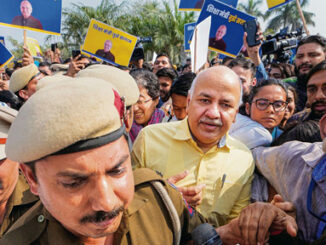
    The ruling BJP could be sanguine in the belief that the country’s attention has been deflected from the Hindenburg-Adani row by the arrest of Delhi minister and Aam Aadmi Party’s backbone Manish Sisodia.

    The development has profound national implications for the direction the Opposition will eventually pursue. The early indications augur well for the BJP because the arrest has reopened the fault lines running through the Congress and the regional parties, some of which it is counting on as its allies in the prelude to the 2024 General Election.

    Delhi offers only seven parliamentary states. It is a quasi-state that is partially governed by the Centre, which has increasingly shrunk the space for the exercise of powers by the Arvind Kejriwal government after the BJP lost the 2015 and 2020 Assembly polls to the AAP.

    Delhi is significant for the BJP because the seeds of the downfall of the Congress-helmed United Progressive Alliance (UPA) government were sown in the national capital in a long-drawn-out protest against the UPA’s ‘corruption’ and ‘misrule’; Kejriwal was then closely associated with the anti-corruption movement piloted by Anna Hazare. The India Against Corruption stir became a launch pad for Kejriwal’s political career, which was carefully camouflaged by his ‘activism’ with a moral underpinning. The Congress was the principal casualty of the protests and the BJP the eventual gainer.

    The arrest of Sisodia, a founding member of the AAP, provoked strong reactions from regional forces, but invited the Congress’s endorsement. KT Rama Rao, working president of the Bharat Rashtra Samithi (BRS), accused the BJP of “resorting to stealth politics by inciting Central agencies against Opposition parties in states where it can’t come to power (on its own).” For the BJP, BRS-ruled Telangana is analogous to Delhi. The party’s exertions have not fructified into tangible political gains. At best, the BJP can hope to unseat the Congress as the main Opposition party in Telangana, unless the ground situation dramatically changes. Samajwadi Party (SP) chief Akhilesh Yadav lauded Sisodia’s record in making quality education accessible to Delhi’s underprivileged children and remarked, “The BJP proved that it is not only against education, but also against the future of Delhi’s children.”

    The approval by the Congress’s Delhi unit stood out all the more against the backdrop of the party’s call for forging ‘Opposition unity’ before the next Lok Sabha battle at its just-concluded plenary in Raipur. Refusing to reconcile with the reality that its pre-eminence as the Grand Old Party might be dated by now, Congress president Mallikarjun Kharge qualified his imploration to the Opposition with the caveat that the exercise would follow the UPA template with the Congress heading the coalition because it was the only party that had never done business with the BJP. It’s a fact few would dispute, but should the Congress grandstand at every opportunity on its ‘unsullied’ ideological ‘credentials’? Can parties such as the SP be labelled as BJP’s accomplices even as the subject of whether their campaigns against Hindutva were sufficiently robust should be debated? Has the Congress scored over other non-BJP entities on this marker? If the Congress’s pro-secular, pro-minority credentials were impeccable, why did Thiruvananthapuram MP Shashi Tharoor intervene at the AICC plenary to emphasize that his party could have been ‘more vocal’ on the release of Bilkis Bano’s rapists in Gujarat, the attacks on churches, lynchings in the name of cow vigilantism and the bulldozing of Muslim homes? “If we don’t speak out in such cases, we are only surrendering our core responsibility of standing up for India’s diversity and pluralism, which should be central to the Congress’s core message,” Tharoor had stated.

    More evidence followed to demonstrate that the Congress was unwilling to cede the leadership position to a leader from a prospective ally. Addressing a meeting in Shillong, Rahul Gandhi aggressively engaged with the Trinamool Congress (which fought the Meghalaya elections solo) and listed the violence in West Bengal, the Saradha scam and the alleged profligacy exhibited by the TMC in the Goa elections as proof of its ‘tradition’ and its propensity to ‘help’ the BJP and defeat the Congress. Meghalaya’s last Congress Chief Minister Mukul Sangma had crossed over to the TMC with a dozen legislators. At the same time, at a rally in Nagaland, Kharge made it amply clear that the Congress would lead the Opposition alliance that will come to power at the Centre in 2024. “The Congress will lead. We are talking with other parties. Because otherwise, democracy and the Constitution will go,” claimed the Congress president.

    Secularism apart, it is apparent that the Congress has acquired a sense of proprietorship over the public articulation and projection of corruption, exemplified in the Centre’s alleged patronage to Adani and its silence on the questions raised by Rahul in Parliament. In his speech at the Raipur session, Rahul compared the Adani conglomerate with the East India Company and said, “History is being repeated.” “The Independence struggle was against the East India Company. That was also a company, the company that took away India’s wealth, infrastructure, ports….” he stressed.

    After tarring the TMC and AAP with the corruption taint, it is inconceivable that the Congress could include the Opposition in its anti-corruption blitzkrieg. That’s expecting too much. The core of its 2024 blueprint has only one strategy, and that is to position Rahul as Narendra Modi’s sole adversary.

    (The author is a senior journalist)


  • Hindutva to the fore in BJP’s scheme of things

    Hindutva to the fore in BJP’s scheme of things

    By Radhika Ramaseshan

    “The BJP has travelled a long way from the early 2000s, when Vajpayee had to be mindful of his allies’ seeming distaste for communal politics. The Maharashtra and Delhi civic polls will test the BJP’s reinvigorated Hindutva programme. In Maharashtra, it has tied up with Raj Thackeray’s Maharashtra Navnirman Sena and backed its call to remove loudspeakers from mosques. In Delhi, the Hindu-Muslim fault lines evident after the Jahangirpuri violence might resonate across the city.”

    It is incomprehensible what program of action the Rashtriya Swayamsevak Sangh (RSS) and its cohorts will spring upon the country each day. For decades, the BJP grappled with the dilemma of whether a linear progression of Hindutva best suited its politics, although the paterfamilias, residing at Nagpur, was clear that the doctrine of Hindu supremacy should be at the heart of the agenda it laid out for its political progeny. The BJP cut the first turf every now and then, but only just because it never lost sight of the fact that as it grew through childhood and adolescence, it relied on the parent for mid-course correction.

    When Atal Bihari Vajpayee advocated Gandhian socialism and JP’s legacy after the BJP lost elections serially, his theories were rebuffed once the party was routed in the 1984-85 elections. Vajpayee was critiqued for missing the mark. Sikh militancy had overrun north India and the Congress played to Hindu angst and anger. LK Advani stepped in to lead the Rath Yatra across the country and create a narrative against Islamic rule, symbolized by the ‘destruction’ of hallowed places, notably the birthplace of Lord Ram in Ayodhya. Of course, he was fortunate in that the RSS and the Vishwa Hindu Parishad (VHP) had done the spadework before his chariot rolled. Advani put his finger on the pulse and handed out the BJP’s initial victories, enabling it to reach that critical mass which made it a contender to lead an anti-Congress Opposition. However, when it came to heading a coalition government, Vajpayee was chosen as the BJP/NDA’s PM candidate because his ‘moderate’ visage, in contrast to Advani’s militant Hindu image, appealed to allies who had to rationalize their decision to go with the BJP before their ‘secular’ constituents. Everything has changed unrecognizably now. Like Vajpayee’s socialism of 1985, Advani’s project to refurbish perceptions about himself by endorsing Muhammad Ali Jinnah publicly in Karachi almost broke the BJP’s back. The BJP’s architect had to go.

    Narendra Modi, Advani’s successor, resolved every dilemma confronting the BJP and the Parivar seamlessly to take the party to heights the RSS never imagined. He was so powerful as the Gujarat chief minister — a position he consolidated by pursuing and embracing a radicalized stream of Hindutva without qualms, unlike Advani — that he could put down the occasional transgressions by the VHP or another Parivar member with ease. Modi successfully persuaded voters in northern and western India to give the Gujarat admixture of radical Hinduism — underpinned with deep-rooted antagonism towards the minorities — and ‘development’ fashioned after his notions of capitalism (welfare and populism were remarkably absent from the model because he often said he subscribed to people’s empowerment and not their entitlement) a chance to ‘prove’ itself at the Centre.

    Modi’s 2014 campaign astutely centered ‘development’ (signified by the promise of investments and infrastructure) over Hindutva but he allowed the others in the BJP to talk up his credentials as the ‘Hindu hriday samrat’ (monarch of the Hindu heart) so that voters were convinced that they were in for a double bonanza: economic prosperity and Hindu asmita (identity) which ‘vanished’ during colonial rule. The formula worked quite successfully, although its limitations were exposed in the eastern and southern regions where the BJP still struggles to break through. The BJP might not have won every state election but once victory came its way, it fought hard to retain it in a successive election. However, the BJP’s recent second-time triumphs were determined by using Hindutva laced with populist welfare.

    Assam and Uttar Pradesh are examples of the BJP’s determination to hold on to states wrested the hard way. The outcomes in both cases are similar. Assam is characterized by multiple ethnic, religious and linguistic identities. Even a party in pole position such as the Congress earlier and now the BJP had perforce to weave a coalition by making common cause with smaller entities with a niche following. The BJP’s use of Hindutva did not prevent the latest incarnation to emerge from the Adivasi-dominated Bodo region from joining hands and trumping its adversaries. Likewise, in UP, the leadership by an individual in saffron robes, who unabashedly swore by and deployed Hindutva to fulfil his agenda, never deterred identity-based outfits from taking shelter under the BJP umbrella and looking the other way when minorities were hunted down and victimized. Obviously, the party has travelled a long way from the 1990s and early 2000s, when Vajpayee had to be mindful of his allies’ seeming distaste for communal politics.

    Modi’s victories in Gujarat were the tipping point of the BJP’s ascendancy. The social sanction for the 2002 violence spurred an active debate on the secular-communal issue and tilted the ideological balance in the latter’s favor. Therefore, it is highly improbable that the BJP will go back on the path it walked since 2019. In his first tenure, Modi mixed ‘governance’ and Hindutva almost in equal measure and was a tad defensive when the Parivar’s cattle vigilantes and ‘reconversion’ (shuddhikaran) crusaders showed their intent through lynching and coerced conversion. Post 2019, the Hindutva zealots felt so empowered that when the police tried to crack down on the VHP after the recent Jahangirpuri occurrences in Delhi, the VHP protested, and the cops promptly pulled back. Contrast the VHP’s withdrawal with Modi’s clampdown on Parivar constituents, notably the VHP, in Gujarat whenever they disagreed and protested government policies.

    The Maharashtra and Delhi civic polls scheduled to be held this year will test the BJP’s reinvigorated Hindutva programme. In Maharashtra, it has tied up with Raj Thackeray’s Maharashtra Navnirman Sena and backed its call to remove loudspeakers from mosques. In Delhi, the Hindu-Muslim fault lines evident after the Jahangirpuri violence might resonate across the city.

    (The author is a senior journalist)

  • BJP’s new power orderTweaked hierarchy gives it full control, reducing RSS’s interventions

    BJP’s new power orderTweaked hierarchy gives it full control, reducing RSS’s interventions

    By Radhika Ramaseshan

    The BJP took advantage of its commanding position to minimize the presence of the RSS pracharaks in Nadda’s team and overturned an arrangement ostensibly cast in stone.

    An organizational restructuring in the BJP is rarely newsworthy unless the change is effected at the top or a big-time functionary such as Ram Madhav is dropped from the central team of office-bearers and Vasundhara Raje is shafted to pave the way for a leadership makeover in Rajasthan. Recently, JP Nadda, the BJP president, quietly tweaked the organizational hierarchy to reinforce a significant political message: the BJP will exercise complete control over the party and its apparatuses and the patriarch RSS’s interventions could become minimal, if not nominal. The Sangh-BJP equation that was in a permanent flux has settled into a constant in the Modi regime. PM Modi rules over a BJP-majority government that is not rocked by the coalition partners or an Opposition. Until he confronted his first challenge in the farmers’ movement, his authority appeared incontestable. The RSS is hands-off towards the protests. Its farmers’ front, the Bharatiya Kisan Sangh (BKS) issued innocuous statements. The paterfamilias is in no mood to rock the boat.

    The BJP took advantage of its commanding position to minimize the presence of the RSS pracharaks in Nadda’s team and overturned an arrangement ostensibly cast in stone. BL Santhosh remains the general secretary (organization), and there is no dilution in the power he wields as the second-most important person in the party. In the past, a general secretary, however influential, had two or more deputies ‘assisting’ him. This line-up of the general secretary and the joint general secretaries (organization) under him was generally made up of obscure figures who avoided the media, although Sunder Singh Bhandari and KN Govindacharya were exceptions and liberally shared information and political insights. Santhosh and Ramlal, his predecessor, had a trio under them, comprising V Satish, Saudan Singh and Shiv Prakash all of who were ‘loaned’ to the BJP for long-term work.

    Last week, the loanees were relocated in the BJP with new designations, their mandate vastly diminished. It is unclear whether the joint general secretary’s post will remain. Essentially the recast means the Sangh will have only Santhosh to deal with. He will be the sole conduit between the RSS and the BJP, and for all intent and purpose both will depend largely on the feedback he gives and the inputs he shares. A quintessential pracharak from Karnataka, he earned the moniker, poornavadi karyakarta (full-time volunteer). Every pracharak is a full-time volunteer but the sobriquet denoted Santhosh’s ‘exceptional dedication’. During his stint in the Karnataka BJP, also as a general secretary, he allegedly played his share of intra-BJP politics and was rarely on the same page as CM Yediyurappa. But he is credited with ‘discovering’ and nurturing young ‘talent’ such as Lok Sabha MPs Tejaswi Surya and Prathap Simha and the Karnataka BJP president, Nalin Kumar Kateel. The choice of protégés reveals Santhosh’s unmistakable preference for those who are wedded to hard Hindutva.

    In that sense, Santhosh, as also the BJP brass, sorted out the existential dilemma that dogged Vajpayee when he was the PM. Vajpayee had the RSS snapping at his heels. If the VHP got aggressive and amped up the Ram temple demand with violent consequences, on occasions, it was the Swadeshi Jagran Manch (SJM) and the Bharatiya Mazdoor Sangh (BMS) that scuttled Vajpayee’s pet reforms. He was disinclined to give the Sangh fronts unbridled latitude, and suffered as a result.

    Modi has no such issues, regardless of the problems he lived with in Gujarat from the VHP and BKS. He is adept in managing their occasional tantrums. In December 2019, when the VHP threatened to besiege the government if it would not intervene decisively to seek a ‘resolution’ of the Ayodhya ‘dispute’ and got the RSS sarsanghachalak’s endorsement for the agenda, the Centre earned more than a breather when the apex court cleared the way. For Modi, it was an opportune moment to dispel the few misgivings the VHP cast over his ‘commitment’. He presided over an elaborate ground-laying ceremony in Ayodhya to mark the start of the construction.

    Of all RSS fronts, the VHP has the greatest potential to marshal agent provocateurs, whip up communal passions and immobilize an administration. If the outfit is given a free pass to flout the law, a government can breathe easy. This is what has happened in MP. The VHP galvanized its storm-troopers to strike terror in the minority-dominated pockets in the guise of collecting funds for the temple. CM Shivraj Singh Chouhan has embraced hard-core Hindutva, and giving the VHP leeway suits him politically. In UP, the temple’s epicenter, the VHP does little or nothing because CM Yogi Adityanath has everything laid out: a pliant state machinery, public opinion and the voluntary militia of his Hindu Vahini in case action was demanded.

    In contrast, an issue stares the BKS in the face, but it refused to react. In the Centre-farmer face-off, all that the Sangh’s peasant wing asked for was guaranteeing the MSP in the open market and a designated court to adjudicate disputes related to contract farming. At no point did it suggest that the farming laws should be relooked, let alone repealed. Like the BKS, the SJM opted for the straight and narrow.

    Had the RSS, the BKS and the SJM confronted the Centre on the peasantry, it would have been forced to respond and perhaps withdraw the laws. In 2015, it was an ultimatum the SJM served that nudged the government to freeze the proposed amendments in the Land Acquisition Act. The RSS astutely figured that keeping the peace with the Modi dispensation is mutually advantageous and disputes must be buried.

    (The author is a senior journalist)