Tag: Raghuram Rajan

  • Yatra lends purpose to Rahul’s political journey

    Yatra lends purpose to Rahul’s political journey

     In Indian electoral politics, alliances are formed on the basis of strengths rather than weaknesses of the participants. The aura of success surrounding Rahul’s Bharat Jodo Yatra is set to provide him with moral authority to play a pivotal role. In addition, in Sonia Gandhi, Rahul has a reserve bench of sorts; the former party chief can act as a line of communication with many non-NDA allies, including the Left, to keep the mahagathbandhan going. 

    This year, the Congress faces a litmus test in Karnataka, Madhya Pradesh, Rajasthan and Chhattisgarh. If it can win these states, the grand old party would emerge as a serious challenger for the 2024 General Election.

    By Rashid Kidwai

    There are many quotes that have been attributed to Mahatma Gandhi. In the Congress party office at 24, Akbar Road, one of them reads, “Kabhi kabhi hum apne virodhiyon ke karan aage badhte hain.” (At times, we move ahead due to our opponents). Then there is another one saying, “Pehle woh aap par dhyan nahin denge, phir who aap par hasenge, phir aapse ladengen, aur tab aap jeet jayenge.”(First they would not pay any attention to you, then they would mock you and then they would fight with you. You would win once these stages are completed).

    In the context of Rahul Gandhi’s ongoing abstract, yet arduous, Bharat Jodo Yatra, these quotes ring a bell, bringing some relevance and hope for the Congress leader.

    There is a broader and growing consensus of sorts among Rahul’s detractors and well-wishers that finally, the Gandhi scion is showing signs of purpose, perseverance and hope in his political journey that began in 2004.

    Politically, the yatra may or may not be a game-changer, but it has succeeded in establishing Rahul as a credible politician who can walk the talk, intermingle with the masses and get support from a range of politicians and celebrities — from MK Stalin, Aaditya Thackeray, Supriya Sule and Farooq Abdullah to Raghuram Rajan, AS Dulat, Swara Bhaskar and Kamal Haasan.

    More importantly, the BJP’s stringent criticism, Union Health Minister Mansukh Mandaviya’s ‘appeal’ to suspend the yatra over Covid concerns, and the outrage over Rahul’s comments on China allegedly entering Indian territory have helped him become a singular dissenting voice.

    When the yatra began from Kanyakumari, Rahul’s popularity ratings were at an all-time low. The Congress organization was in a shambles and the leadership issue was far from settled. While the yatra was on the Kerala-Karnataka border, Rajasthan Chief Minister Ashok Gehlot, at that time tipped to be the next AICC president, stunned friends and foes alike by showing defiance, a throwback to the bygone era of Devaraj Urs, Arjun Singh and other party chief ministers.

    But throughout the Congress organizational election process, Rahul stayed away and focused on the yatra. The Assembly polls of Himachal Pradesh and Gujarat offered a mixed bag as the Congress went on to win HP. It was a surprise for those predicting the Congress’ death. The ‘corpse’ is, in fact, very much alive and kicking.

    This year, the Congress faces a litmus test in Karnataka, Madhya Pradesh, Rajasthan and Chhattisgarh. If it can win these states, the grand old party would emerge as a serious challenger for the 2024 General Election.

    We need to remember that the fortunes of the Congress and other non-BJP parties are closely linked to the 2024 Lok Sabha polls where the non-BJP, non-NDA Opposition and the Congress-UPA partners will have to target the ‘half of half’, i.e. half of the 272 Lok Sabha seats on their own — a challenging but not unmanageable number in the 2024 battle.

    There are four crucial states of West Bengal, Bihar, Maharashtra and Karnataka where the BJP-NDA had done exceedingly well in 2019 but the subsequent political developments have unfolded a new scenario. In West Bengal, for example, the BJP had won 18 Lok Sabha seats out of 42, while in Bihar, the alliance with the JD(U) had resulted in its netting 39 out of 40 parliamentary seats. In Karnataka, the BJP had won 25 out of 28 seats, while in Maharashtra, the alliance with the undivided Shiv Sena  had resulted in the NDA allies winning 42 out of 48 seats. Imagine a situation if the BJP’s strength from these four states gets reduced to half. A simple majority of 272 would become a distant dream and prospects of a khichdi government a reality.

    The Congress, in order to be a contender, has to win 100 or more Lok Sabha seats from states such as Kerala, Chhattisgarh, Maharashtra, Rajasthan, Madhya Pradesh, Assam, Karnataka, Uttarakhand, Himachal Pradesh and a few others where the grand old party has been in direct contest with the BJP or traditionally has a strong presence.

    Next year’s parliamentary polls are set to be contested in contrasting styles. If Team Modi is set to make full use of the Prime Minister’s personal ratings, big-ticket projects, Covid-19 handling in the context of the massive vaccination programme, achievements on the diplomatic front and reliance on emotive issues like the Ram Temple, the Congress and its potential allies are prepared to take the battle to the states where regional players are expected to hold sway.

    So, if the parties led by Mamata Banerjee, Nitish Kumar, Uddhav Thackeray, Sharad Pawar, MK Stalin, Naveen Patnaik, HD Kumaraswamy, Chandrababu Naidu and Akhilesh Yadav together manage to hold on to a chunk of the parliamentary seats, the Congress has the task of doing well in most of the Hindi-belt states and the Northeast.

    In Indian electoral politics, alliances are formed on the basis of strengths rather than weaknesses of the participants. The aura of success surrounding Rahul’s Bharat Jodo Yatra is set to provide him with moral authority to play a pivotal role. In addition, in Sonia Gandhi, Rahul has a reserve bench of sorts; the former party chief can act as a line of communication with many non-NDA allies, including the Left, to keep the mahagathbandhan going.

    (Rashid Kidwai is a Senior Journalist and Author)

  • India’s economy has some bright spots, a number of very dark stains, says Raghuram Rajan

    India’s economy has some bright spots, a number of very dark stains, says Raghuram Rajan

    New delhi (TIP)-The Indian economy has “some bright spots and a number of very dark stains” and the government should target its spending “carefully” so that there are no huge deficits, noted economist and former RBI governor Raghuram Rajan said on Sunday.

    Known for his frank views, Rajan said the government needed to do more to prevent a K-shaped recovery of the economy hit by the coronavirus pandemic.

    Generally, a K-shaped recovery will reflect a situation where technology and large capital firms recover at a far faster rate than small businesses and industries that have been significantly impacted by the pandemic.

    “My greater worry about the economy is the scarring to the middle class, the small and medium sector, and our children’s minds, all of which will come into play after an initial rebound due to pent-up demand. One symptom of all this is weak consumption growth, especially for mass consumption goods,” Rajan told PTI in an e-mail interview.

    Rajan, currently a Professor at the University of Chicago Booth School of Business, noted that as always, the economy has some bright spots and a number of very dark stains.

    “The bright spots are the health of large firms, the roaring business the IT and IT-enabled sectors are doing, including the emergence of unicorns in a number of areas, and the strength of some parts of the financial sector,” he said.

    On the other hand, “dark stains” are the extent of unemployment and low buying power, especially amongst the lower middle-class, the financial stress small and medium-sized firms are experiencing, “including the very tepid credit growth, and the tragic state of our schooling”.

    Rajan opined that omicron is a setback, both medically and in terms of economic activity but cautioned the government on the possibility of a K-shaped economic recovery.

    “We need to do more to prevent a K-shaped recovery, as well as a possible lowering of our medium-term growth potential,” he said.

              Source: PTI

  • NARENDRA MODI: FROM TEA SELLER AT TRAIN STATION TO MASTER OF POLITICAL THEATRE

    Narendra Modi, who once sold tea at a railway station has become the most influential Indian leader in generations, winning a landslide in election results announced, May 23, 2019.   Modi’s own party, BJP won an absolute majority – 302 seats.  The BJP combined with its alliance, the NDA, won 351 seats.   As votes were tallied early Thursday, May 23 afternoon, Modi’s chief rival, the Indian National Congress, was leading in just 50 races, the second consecutive dismal showing in a national election for what was once India’s most powerful political party.

    Modi, 68, was born to a poor family in Gujrat State, where he developed a strong dislike for the ruling Congress Party as a result of hanging around a political office near his father’s tea stall.  While still a child, he started attending daily meetings of the RSS (Rashtriya Swayamsevak Sangh), said to be the world’s largest volunteer organization, whose Hindu nationalist ideology envisions the country’s diverse Hindu population as a single nation with a sacred culture that should be given primacy in India.

    Hindu nationalists were sidelined by India’s founding Prime Minister, Jawaharlal Nehru, whose vision of India was of a secular nation at ease with its bewildering plurality.  Their parties, including Modi’s Bharatiya Janata party (BJP), struggled to win more than 10% of the national vote for decades until the 1990s, when they started to expand on the back of a national campaign to demolish a 16th-century Mughal mosque in Ayodhya, U.P. and replace it with a Hindu temple.  That push culminated in the destruction of the mosque by a mob of 150,000 Hindu activists, which triggered rioting across India that killed estimated 2000 people.  Still, the BJP’s support was limited to wealthier Hindus in the country’s north and west, with resistance to the party from poor, marginalized Hindus, Muslims, and South Indians thought to be permanent hurdles to Hindu nationalist domination.

    Modi’s magnetism, especially his personal branding as a tea boy who climbed to the country’s highest ranks, has changed those calculations, drawing vast support from the country’s emerging middle and lower-middle classes.   “He has managed to create this voting bloc—other party’s voters who are voting for the BJP just for Modi,” said Rahul Verma, a fellow at the Delhi-based Center for Policy Research.  “The shifts are actually happening among the more aspirational voters, who think Modi can fulfil their economic aspirations…This leader, who has risen from the ranks of a poor family, has become a symbol.”   This symbolism was especially potent among young Indians, a vital and growing electorate in a country with a median age younger than 28.  “They have grown up seeing the way of life in the West and in places like Singapore and China,” said Vivan Marwana, a journalist who is writing a book on young Indians.  “And Modi came on to the scene in 2014 and promised them bullet trains, a million new jobs, the world’s largest statue of Sardar Vallabhbhai Patel, a former Dy. Prime Minister and Minister of Defense.  It is all very aspirational.”

    Young Indians had grown up being told their country was on the cusp of becoming a superpower.  In Modi, they had a leader who spoke as if it already was.   Alongside aspiration, the BJP promotes a vision of Hindu cultural supremacy that sidelines the country’s 300 million minority population.  As Chief Minister of Gujarat state, Modi was a firebrand Hindutva campaigner.  In 2002, anti-Muslim riots in his state killed at least 1,000 people, resulted in the future Prime Minister becoming an international pariah who was banned from entering the U.S.  In response, Modi presented himself as an outsider being attacked by elites: a refrain that would become a central part of his political messaging.  “He would say he was constantly being targeted by the English-speaking media out of Delhi,” said Nilanjan Mukhopadhyay, author of a biography of the Indian leader.  “He made himself the symbol of the underdog, projected himself as somebody who is against the status quo forces.   The times came to suit Modi.  When the popular disgust at corruption scandals plaguing the previous Congress government boiled over into street protests in 2011, it provided the rightwing populist leader a national springboard.

    “Modi was at the forefront of projecting this strong, centralizing leadership,” said Milan Vaishnav, the director of the South Asia program at the Carnegie Endowment for International Peace.  “He realized what people are looking for is somebody who gets stuff done.”

    HIS MASTERY OF POLITICAL THEATRE, AND FINGER ON THE PULSE OF INDIANS, HAS NOW SECURED HIM THE STRONGEST MANDATE OF ANY LEADER IN DECADES.

    But it will do little to create jobs, alleviate financial stress in the country’s vast agriculture sector or grow the economy on the backdrop of a US trade war and a global slowdown.

    “Issues of economy will be the focus of his first 100 days,” said Rajat Sethi, a fellow at the influential BJP-aligned India Foundation think-tank.   He said Modi could also look to broaden a program of targeted payments to farmers and other struggling groups.

    The scale of Thursday’s victory creates room for Modi to ram through reforms, but also the possibility that he may not have to, said Giles Verniers, a political scientist who teaches at Haryana State’s Ashoka University.  “It is a peculiar result because there were a multitude of ground realities that were clearly going against the BJP.   It won despite jobless growth, rural distress, a tepid economy,” said Verniers.  “It’s as if all those adverse factors did not matter at all.  “And so the worry is that it could translate into a belief that the BJP can win despite poor performance, and that may not necessarily translate into incentives to address the deeper issues with the economy.”

    UNEMPLOYMENT has gone up from 2.2% in 2011 to 6.1% in 2019.  It is hoped that Modi will finally build the necessary infrastructure to build large scale factories to manufacture 100 million pieces of varieties of clothing needed by American consumers.   The former Reserve Bank of India Governor, Raghuram Rajan, now Professor at the University of Chicago has argued that India needs to create an export-oriented economy.   Fortunately, President Trump currently negotiating terms of trade with China is anxious not to depend on China for many of its imports.  President Trump will be happy to do business with India provided India has the capacity and capability to deliver the needs of American consumers.

    100% TRANSFER OF TECHNOLOGY will allow India to manufacture for several reasons.  First, India has a large supply of engineers and professionals. Second, India has a comparative advantage with China and the USA. Third, President Trump must also cope with the skyrocketing prices of drugs manufactured in the U.S.A. Fourth, India has a large supply of biotechnologists, microbiologists, and other health care scientists and professionals. Sixth, making drugs in India will cost a miniscule of what it costs in the USA.   The US drug industry can expand its global market share by making drugs in India.

    Lockheed Martin, United Technologies, Ratheyon, General Dynamics and other military manufacturers can cut the cost of production if they were to make their products in India.   Thus, a confluence of factors such as supply of engineers, scientists and professional managers; comparative advantage in wages and salaries; skyrocketing prices of drugs and military hardware in the US; deterioration of US-China relations in trade; national security and cybersecurity problems; and others look attractive for Prime Minister Modi.  He has a huge mandate now and nothing but a Modi economic revolution could solve many problems with one stroke.

    Never before, Modi had the good fortune of not facing any major opposition for his initiatives or policies.  Modi has almost two thirds majority in the Parliament.   Modi must translate the mandate and the extraordinary goodwill from the electors and the global community into Modi economic revolution that will modernize India.   The roadmap should call for GDP growth of 10 to 12% for the next decade.    Hope Prime Minister Modi comes up with a roadmap for the next 100 days.

    (The author, former CEO, First Asian Securities Corporation, NY and Senior Adviser, Imagindia Institute, a New Delhi think tank lives in Scarsdale, NY.  He can be reached at vpwaren@gmail.com)

  • Raghuram Rajan recognized with distinguished service professorship

    Raghuram Rajan recognized with distinguished service professorship

    Former governor of the Reserve Bank of India Raghuram Rajan has been named the Katherine Dusak Miller Distinguished Service Professor of Finance by University of Chicago’s Booth School of Business. Another Indian American economist Oeindrila Dube was named the Philip K. Pearson Professor, an inaugural named professorship in The Pearson Institute for the Study and Resolution of Global Conflicts.

    Rajan was governor of the Reserve Bank of India from September 2013 to September 2016. Between 2003 and 2006, Rajan served as the chief economist and director of research at the International Monetary Fund.

    Rajan’s research interests are in banking, corporate finance and economic development, especially the role finance plays in it. He is co-author of Saving Capitalism from the Capitalists and author of Fault Lines: How Hidden Fractures Still Threaten the World Economy, for which he was awarded the Financial Times-Goldman Sachs prize for best business book in 2010.

    Rajan is a member of the Group of Thirty and served in 2011 as president of the American Finance Association. He is a member of the American Academy of Arts and Sciences. In 2003, the American Finance Association awarded Rajan the inaugural Fischer Black Prize for the best finance researcher under the age of 40. His other awards include the Infosys prize for the Economic Sciences, the Deutsche Bank Prize for Financial Economics, Euromoney Central Banker Governor of the Year in 2014, and Banker Magazine (FT Group) Central Bank Governor of the Year in 2016.

    Dube is an economist and political scientist who studies conflict and crime, primarily in Latin America and Sub-Saharan Africa. Her research examines the root causes of violence and sheds light on strategies for promoting post-conflict stability. For example, her work has demonstrated how economic shocks influence civil war and has shown how reconciling after civil war shapes the psychological and economic development of individuals and their societies.

    Her research has been published in leading journals including Science, Review of Economic Studies, Journal of Politics and American Political Science Review.

    Dube’s conflict and crime work is enriched by her affiliations with the National Bureau of Economic Research, the International Growth Center, the University of Chicago Crime Lab and the Abdul Latif Jameel Poverty Action Lab at MIT. She also held the Louis Dyer Peace Fellowship at Stanford University’s Hoover Institution over 2013-2014, and was a recipient of the Rhodes Scholarship in 2002.

  • Ex-Professor Of Raghuram Rajan At IIT Delhi, Has Been Living With Tribals For 32 Years!

    Ex-Professor Of Raghuram Rajan At IIT Delhi, Has Been Living With Tribals For 32 Years!

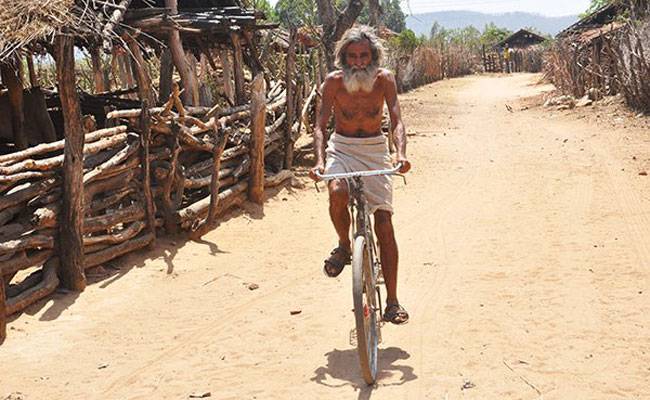
    Alok Sagar, a former IIT professor, who used to teach Ex-RBI governor Raghuram Rajan, has been living in a remote village of Madhya Pradesh for 32 years.

    Sagar, who has an bachelor’s and a master’s engineering degree from IIT Delhi, used to teach at IIT Delhi back in the 1980s after completing a PhD from Houston University in Texas.

    Sagar soon quit his job at IIT, leaving his bright career behind, to help the underprivileged sections of the society.

    Following his resignation, Sagar moved to a remote village in Madhya Pradesh where he helped tribals in Betul and Hoshangabad districts.

    26 years ago, Sagar moved to Kochamu, a village with a population of 750, where he helped in the betterment of the environment, planting over 50,000 trees himself!

    Sagar shares the belief that India’s problems are ones that are to be fixed at the grassroot level

    The Hindustan Times reported him saying, “In India, people are facing so many problems, but people are busy proving their intelligence by showing their degrees rather than serving people.”

    Sagar, who prefers to lay low, came under the spotlight during the Ghodongari assembly elections. When locals grew suspicious of Sagar, local authorities asked him to leave, following which, Alok revealed his identity, which were then verified.

    A once reputed professor at one of the leading universities, now lives humbly, owing only three sets of kurtas. Alok now spends most of his days distributing seeds to villagers, working for the advancement of the poverty-stricken.

  • RAGHURAM RAJAN WARNS AGAINST LOW RATES WORLDWIDE

    RAGHURAM RAJAN WARNS AGAINST LOW RATES WORLDWIDE

    MUMBAI (TIP): Three years before the 2008 global financial crisis, an Indian economist named Raghuram G Rajan+ presciently warned a skeptical audience of top economic thinkers that excessive risk threatened the entire global financial system. As Rajan stepped down+ on Sunday as India’s top central banker, following intense criticism at home, he offered a new warning: Low interest rates globally could distort markets and would be difficult to abandon.

    Countries around the world, including the United States and Europe, have kept interest rates low+ as a way to encourage growth. But countries could become “trapped” by fear that when they eventually raised rates, they “would see growth slow down,” he said. Low interest rates should not be a substitute for “other instruments of policy” and “various kinds of reforms” that are needed to encourage growth, Rajan said. “Often when monetary policy is really easy, it becomes the residual policy of choice,” he said, when deeper reforms areneeded. His warning comes at a time when the world’s central banks appear to be at a loss about how to get global growth moving again. A growing number of voices say that low rates are not doing the job and that governments must take other, more politically difficult steps to reinvigorate growth. The warning by Rajan, now 53, came as he stepped down from a position that had helped make him something of a rock star — albeit a controversial one — in India. He disputed the view that his tight monetary policies had cost him the support of the government, and he said that his departure was based on his inability to reach an agreement with the government on serving longer but not serving another full three-year term.


  • RBI LETS BANKS ISSUE MASALA BONDS, TO ACCEPT CORPORATE BONDS IN LAF

    RBI LETS BANKS ISSUE MASALA BONDS, TO ACCEPT CORPORATE BONDS IN LAF

    MUMBAI (TIP): Reserve Bank on Thursday announced a slew of changes in fixed income and currency markets such as allowing lenders to issue ‘masala bonds’ and to accept corporate bonds under the liquidity adjustment facility (LAF).

    “These measures are intended to further deepen market development, enhance participation, facilitate greater market liquidity and improve communication,” an RBI release said.

    To encourage overseas rupee bonds market, banks are being permitted to issue rupee-denominated bonds overseas (masala bonds) for their capital requirements and for financing infrastructure and affordable housing.

    Currently, masala bonds can be issued only by corporates and non-banking lenders like, HFCs and large NBFCs. Masala bonds are instruments through which Indian entities can raise funds by accessing overseas capital markets, while the bond Investors hold the currency risk.

    These will constitute for additional tier-I and tier-II capital for the lenders, it said, adding such overseas bonds can also be issued to finance infrastructure and affordable housing under a current dispensation which applies for foreign currency bond raising.

    It can be noted that so far two Indian corporates — HDFC and NTPC — have made use of this facility to raise over Rs 5,000 crore, but the segment was not open to banks.

    The RBI will be seeking amendments to enable the central bank to accept corporate bonds under the LAF which is used to bridge temporary liquidity issues by lenders, it said.

    Outgoing Governor Raghuram Rajan had earlier said RBI would be announcing a series of measures aimed at bonds and currency markets by end of the month. Rajan, whose tenure ends on September 4, is likely to handover charge to Governor designate Urjit Patel on September 6.

    Stating the absence of an overarching ceiling on total borrowing by a corporate entity from the banking system has resulted in banks collectively having very high exposures to some of the large corporates, the RBI will be coming out with draft guidelines on the ‘large exposure framework’, it said.

    To give an impetus to the corporate bonds market, RBI has also decided to expand limit of partial credit enhancement (PCE) provided by banks.

    “The aggregate PCE that may be provided by the financial system for a given bond issue will be increased from the present 20 per cent to 50 per cent of the bond issue size subject to the PCE provided by any single bank not exceeding 20 per cent of the bond issue size and the extant exposure limits,” the RBI said.

    RBI has constituted a working group to review the guidelines for hedging of commodity price risks by resident investors in the overseas markets.

  • WHY MODI CHOSE URJIT PATEL AS RBI GOVERNOR

    WHY MODI CHOSE URJIT PATEL AS RBI GOVERNOR

    NEW DELHI (TIP): How the governor of the Reserve Bank of India came to be finalised is an interesting story.

    Urjit Patel was Prime Minister Narendra Modi’s first choice for the top job, according to the first tweet from the closed circle of officials privy to the process of selection.

    The appointment had to be made based on the recommendation of the Financial Sector Regulatory Appointments Search Committee (FSRASC), headed by the cabinet secretary. The committee undertook an extensive exercise to suggest a panel of names to the Appointments Committee of Cabinet (ACC)

    There were at least six names before the committee [ACC] that did the shortlisting. The ACC had to pick some and leave some to start with.

    The names that got picked were Urjit Patel, Arvind Subramanian and Kaushik Basu – the first, the present RBI deputy governor; the second, the current Chief Economic Adviser (CEA) and the third, of course, some of us may remember as the former CEA.

    The names that had to be left out in the first round were Arundhati Bhattacharya, SBI chief; Subir Gokaran, who was deputy governor, RBI some time ago, but presently at World Bank; and Shaktikanta Das, the present economic affairs secretary and an old hand at budgets, including the first Modi Budget.

    There was an hour-long meeting between the PM and finance minister Arun Jaitley, a week before the actual process of selection commenced over the appointment of a new RBI governor, a post that will fall vacant on September 4. It is to be noted that the FM was not a part of the committee of selection.

    After Raghuram Rajan having opted out already from continuing for a second term, the three under consideration were Urjit Patel, Arvind Subramanian and Kaushik Basu.

    Senior officials familiar with the ACC’s selection process confided that Patel was chosen by Modi himself at first to be a contestant. In the second round, the choice had come down to a contest between Urjit Patel and Arvind Subramanian. Officials are believed to have said later that Patel was the final pick since he was always Modi’s first choice.

    The reason, it is believed, is that Modi was particular to have a chief from within the RBI itself. This is not to understate the competence of any of the contestants and rank them second or last.

  • Rajan wants longer term for RBI governor, says 3 years too short: Report

    Rajan wants longer term for RBI governor, says 3 years too short: Report

    NEW DELHI (TIP): RBI governor Raghuram Rajan, whose three-year term comes to an end this September, pitched for a longer tenure for the central bank head, saying on June 30 that the global practice has to be emulated in India as well.

    Rajan, who briefed Parliament’s Standing Committee of Finance on various aspects of economy and NPA in banks, was asked by members on what should be the tenure of the RBI governor, sources said.

    He told the members that a three-year term was “short”.

    On whether it should be five years, Rajan was believed to have cited the case of US Federal Reserve.

    In the US Fed, in addition to serving as members of the board, the chairman and vice-chairman serve terms of four years and may be reappointed to those roles who in turn serve until their terms as Governors expire.

    Rajan, whose current three-year tenure ends on September 4, had said no to a second term.

    Sources further said that during the meeting that lasted for over three hours, the governor briefed the panel, headed by senior Congress leader M Veerappa Moily, on state of the economy, reforms and restructuring of RBI, challenges in the banking sector in India and the way forward.

    The committee was apprised by Rajan of the various steps taken to deal with the bad loan problem, said the sources.

    The Reserve Bank has said the gross non-performing assets of the banks can rise to as high as 9.3%?in 2016-17 after hitting 7.6%?in March 2016.

    Rajan, the sources added, also briefed MPs about the credit scenario of the banks. He is believed to have told the MPs that private lenders are more active on the lending front, but PSU banks are found to be reluctant even when there is no shortage of funds.

    The governor also explained to MPs the impact of Brexit on India and the global economy.

    Earlier in the day, Rajan called on finance minister Arun Jaitley as the central bank and the government seek to quickly put in place a new interest rate-setting mechanism.

  • CHICAGO UNIVERSITY  WELCOMES RAGHURAM RAJAN BACK TO ACADEMICS

    CHICAGO UNIVERSITY WELCOMES RAGHURAM RAJAN BACK TO ACADEMICS

    WASHINGTON (TIP): Welcoming Raghuram Rajan back to academics, the prestigious University of Chicago has said the outgoing RBI Governor’s experience as head of India’s top central banker will be of great benefit when he returns to research and teaching later this year.

    “We are eager to welcome Professor Rajan back to the Chicago Booth faculty,” said University of Chicago Booth School of Business Dean Sunil Kumar.

    Last week, Rajan, 53, announced that he will not seek renewal of his position as RBI Governor when his term expires in September and “will be returning to academia”.

    “His experience as leader of the central bank of India will be of great benefit when he returns to his research and teaching at the school. We could not be more delighted to have this great scholar back in Chicago,” Kumar said yesterday.

    Appointed to a three-year term in August 2013, Rajan took the helm as RBI Governor on September 5 of that year.

    Shortly thereafter, he appointed an expert committee to revise and strengthen India’s monetary policy and he is viewed as having adeptly handled the country’s high inflation and debt problems, the Booth School said.

    An International Monetary Fund chief economist from 2003-06, Rajan is also widely known for his foresighted warnings of the 2008-09 global financial crisis.

    Rajan studied engineering at Indian Institute of Technology in Delhi then obtained an MBA from the Indian Institute of Management, Ahmedabad. He received his PhD from the Massachusetts Institute of Technology.

    Rajan’s book, “Fault Lines: How Hidden Fractures Still Threaten the World Economy” was published in 2010 and was named Winner of Financial Times/Goldman Sachs Business Book of the Year.

    Source: PTI

  • SWAMY FIRES ANOTHER SALVO AT RAJAN

    SWAMY FIRES ANOTHER SALVO AT RAJAN

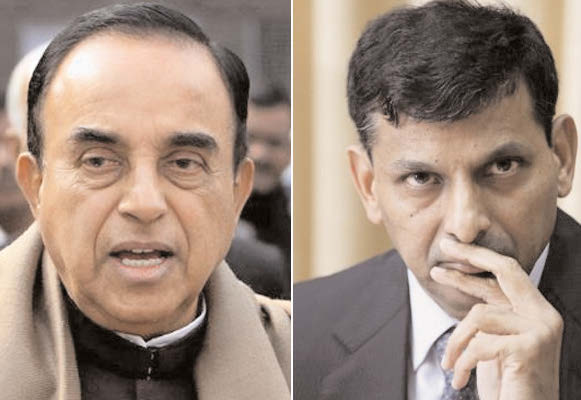
    NEW DELHI (TIP): Firing yet another salvo at RBI Governor Raghuram Rajan, BJP MP Subramanian Swamy on June 9 alleged that the former IMF chief economist had planted “a time bomb” in the Indian financial system that will explode in December.

    Swamy, who had last month written twice to Prime Minister Narendra Modi seeking ouster of Rajan for keeping interest rate high, took to Twitter to criticise the Governor.

    “R3 (Raghuram Rajan) planted a time bomb in our financial system in 2013. It is timed for December 2016. The redeemable USD 24 billion in f.e. to be paid out by banks,” he tweeted.

    He did not specify further. The ‘f.e’ in the tweet apparently refers to foreign exchange.

    There was no immediate response to the query sent to RBI spokesperson Alpana Killawala in this regard.

    On May 26, Swamy had levelled six allegations against Rajan, including that of sending confidential and sensitive financial information around the world, and asked the Prime Minister to sack him immediately.

    Prior to that, Swamy had claimed that Rajan was “mentally not fully Indian” and alleged that he has “wilfully” wrecked the economy.

    On Swamy’s earlier comment, Rajan yesterday said, “There are certain allegations which are fundamentally wrong and baseless and addressing them would amount to giving them legitimacy.” He further said: “I think when you think about Indianness, when you think about love for your country, it’s a very complicated thing. For every person, there is a different way that you show respect for your country… my mother-in-law will say karmayogi is the way to go — do your work.” The Governor clarified that he “welcomes genuine criticism of our policy, but will not address ad hominem attacks” or allegations against him as an individual instead of the policies and the position he holds.

  • RAJAN NOT ‘FULLY INDIAN’, SAYS SWAMY

    RAJAN NOT ‘FULLY INDIAN’, SAYS SWAMY

    NEW DELHI (TIP): In a fresh salvo at RBI Governor Raghuram Rajan, BJP MP Subramanian Swamy has written to Prime Minister Narendra Modi seeking immediate sacking of the former IMF Chief Economist while alleging he was “mentally not fully Indian” and has “wilfully” wrecked the economy.

    Following up his barb against Rajan at the end of Parliament session last week, Swamy yesterday wrote to Prime Minister seeking termination of Rajan’s services with immediate effect.

    “The reason why I recommend this is that I am shocked by the wilful and apparently deliberate attempt by Dr Rajan to wreck the Indian economy,” he wrote adding his concept of raising interest rates to contain inflation was “disastrous.”

    Also, bad loans with public sector banks has doubled to Rs 3.5 lakh crore in two years, he said.

    Rajan was appointed RBI Governor by the previous UPA government in September 2013 for a three-year term, which can be extended.

    “These actions of Dr Rajan lead me to believe that he is acting more as a disrupter of the Indian economy than the person who wants the Indian economy to improve.

    “Moreover he is in this country on a Green Card provided by the US government and therefore mentally not fully Indian. Otherwise why would he renew his Green Card as RBI Governor by making the mandatory annual visit to the US to keep the Green Card current?” he wrote.

    Swamy had last week stated that Rajan was “not appropriate for the country” as he had in the garb of controlling inflation raised interest rates leading to “collapse of industry and rise of unemployment in the economy.”

    “The sooner he is sent back to Chicago, the better it would be,” he had told reporters in Parliament House.

    Rajan is the on-leave Professor of Finance at the University of Chicago’s Booth School of Business. Rajan’s three-year term ends in early September and if an extension is denied, he will be the first RBI Governor since 1992 to not have a five-year term.

    His predecessors — D Subbarao (2008-2013), Y V Reddy (2003-2008), Bimal Jalan (1997-2003) and C Rangarajan (1992-1997) had five-year terms.

    After assuming charge as RBI governor in September 2013, Rajan gradually raised the short-term lending rate from 7.25 per cent to 8 per cent and had retained the high rates throughout 2014.

    He kept the rates high, citing inflationary concerns despite intense pressure from the Finance Ministry and the industry for softening them with a view to boosting growth. The Governor began the process of lowering the rates in January 2015 and since then it has come down by 1.50 per cent to 6.50 per cent.

    Swamy in the letter to Modi said the BJP came to power under his inspiring leadership. “I cannot see why someone appointed by the UPA Government who is apparently working against Indian economic interests should be kept in this post when we have so many nationalist minded experts available in this country for the RBI Governorship.”

    He urged Modi “to terminate the appointment of Dr Raghuram Rajan in the national interest.”

    Swamy, who was earlier this month nominated to Rajya Sabha by the BJP government, said Rajan’s concept of containing inflation by raising interest rates was
    “disastrous.”

    “When the Wholesale Price Index (WPI) started to decline due to induced recession in the small and medium industry, he shifted the target from WPI to the Consumer Price Index (CPI) which has not however declined because of retail prices. On the contrary it has risen.

    “Had Dr Raghuram Rajan stuck to WPI interest rates would have been much lower today and given huge relief to small and medium industries. Instead they are squeezed further and consequent increasing unemployment,” he wrote.

    Rajan, Swamy said, was “acting more as a disrupter of the Indian economy than the person who wants the Indian economy to improve.”

  • Newly designed Indian currency notes likely soon

    Newly designed Indian currency notes likely soon

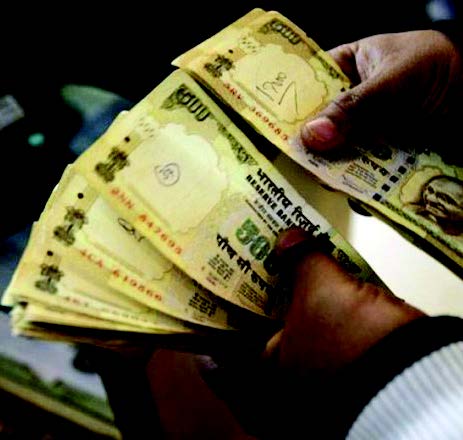
    NEW DELHI (TIP): Newly-designed currency notes are likely to circulate in the country soon with the Reserve Bank of India board on Thursday recommending a new set of designs for the banknotes. “The Central Board also discussed and recommended to the government a set of designs for the new banknotes series which, on approval from the government, will be introduced in due course,” said an RBI statement said.

    At its 557th meeting here, the board discussed the national and international macroeconomic scenario and also reviewed the working of specific areas of operations of the RBI, including information technology and cyber security, and setting up of an IT subsidiary, the statement added.

    Operations relating to government banking business, statistical and information management related activities, customer complaints of banking services and currency management operations were also reviewed.

    “Certain other issues of immediate concern to the working of the bank were also discussed and approved,” RBI said.

    The meeting was chaired by RBI Governor Raghuram Rajan, and attended by the four deputy governors, among others. Economic Affairs Secretary Shaktikanta Das, who is the government nominee director on the board, also attended the meeting, the statement added. Source: IANS

  • Raghuram Rajan unfit to be RBI governor, should be removed: Subramanian Swamy

    Raghuram Rajan unfit to be RBI governor, should be removed: Subramanian Swamy

    NEW DELHI (TIP): BJP leader Subramanian Swamy on May 12, suggested that Reserve Bank Governor Raghuram Rajan be removed from the post as he was responsible for “unemployment and collapse” of industrial activity. ” In my opinion, RBI Governor is not appropriate for the country. I don’t want to speak much about him. He has hiked interest rates in the garb of controlling inflation that has damaged the country,” he told reporters in Parliament House.

    The Governor’s actions have “led to collapse of industry and rise of unemployment in the economy”, he said. “The sooner he is sent back to Chicago, the better it would be.”

    Raghuram Rajan
    Raghuram Rajan

    Rajan is the on-leave Professor of Finance at the University of Chicago’s Booth School of Business. After assuming charge as RBI governor in September 2013, Rajan gradually raised the short-term lending rate from 7.25 per cent to 8 per cent and had retained the high rates throughout 2014.

    He kept the rates high, citing inflationary concerns despite intense pressure from the Finance Ministry and the industry for softening them with a view to boosting growth. The Governor began the process of lowering the rates in January 2015 and since then it has come down by 1.50 per cent to 6.50 per cent.

  • Cut in repo rate may lead to cheaper home, vehicle loans

    Cut in repo rate may lead to cheaper home, vehicle loans

    NEW DELHI (TIP): The cut in repo rate, measures to enhance liquidity in the banking system and the new methodology to calculate lending rates will give banks a freer hand in transmitting the reduction in interest rates faster, Reserve Bank of India (RBI) governor Raghuram Rajan said on Tuesday.

    Apart from the 0.25 percentage point reduction in repo rate, the RBI on Tuesday also brought down the minimum daily maintenance of the cash reserve ratio (CRR) from 95% of the requirement to 90% with effect from the fortnight beginning April 16, 2016. The CRR was unchanged at 4%.

    Repo is the rate at which banks borrow from the central bank. A cut in the repo rate leads to lower cost of funds for banks. If banks pass on this cost, it will mean cheaper home, auto and corporate loans for borrowers.

    “The comprehensive approach towards systemic liquidity that the governor has articulated is very positive. This should support transmission of RBI’s accommodative policy stance,” said Chanda Kochhar, MD and CEO of ICICI Bank.

    The measures also indicate a clear shift from rate cuts to liquidity management. After six years, the central bank kept liquidity in the banking system in a deficit mode on an average. “The new proposals were done primarily to aid the transmission of monetary policy,” said Abheek Barua, chief economist, HDFC Bank.

    Apart from the policy rate cut, customers will also see a 0.25-0.50 percentage point reduction in interest rates while buying loans due to the new marginal cost-based lending rate (MCLR) calculation, which came into effect from April 1. “Borrowing rates are coming down significantly in this economy,” Rajan said.

  • STEEL LOANS WORTH 50K-CR MAY TURN BAD IN FEW MONTHS

    STEEL LOANS WORTH 50K-CR MAY TURN BAD IN FEW MONTHS

    MUMBAI (TIP): As banks close their books for the financial year, they are talking tough with stressed steelmakers and making clear their intent to classify them as defaulters. Banks have also asked the government to seriously consider a specialized funding organization for the steel industry on the lines of the Power Finance Corporation for the power sector.Last week, lenders met highly leveraged steel manufacturers and put them on notice. Although classifying loans to these companies as non-performing assets (NPAs) will mean banks taking a hit on their profits, it will shift the balance of power in favour of the lenders as they will now stop coaxing borrowers and instead initiate recovery proceedings.

    The immediate impact would be that Rs 50,000 crore worth of steel loans could be added to non-performing assets. Some of them will be recognized as default cases in the fourth quarter of this fiscal while others would be classified as bad loans in the first quarter of FY17. The companies that banks are holding discussions with include Essar, Bhushan, Visa and Electro Steel.

    Ironically , some of these lenders have had their loans restructured under the 525 scheme. The scheme was introduced in 2014 by Reserve Bank of India governor Raghuram Rajan, where loans were extended to 25 years with a condition that interest rates would be reset after every five.The 525 scheme involved zero sacrifice from lenders but it made repayment easier for the borrower by reducing the instalment size. Around 21% of the restruc tured loans as of December 2015, amounting to Rs 54,051 crore, were from the iron & steel industry. The gross non-performing assets in the steel sector as of September 2015 stood at 8.4%. This is expected to rise to nearly 12% by March 2017.The steel industry is the highest leveraged sector in India and banks are not in a position to extend fresh loans.

    In a recent industry note, State Bank of India managing director B Sriram had said, “We think time has come for the government to seriously look into the possibility of setting up a funding agency for the steel sector, as well, on the same lines of PFC or REC for the power sector. For, the industry will be requiring more than Rs 10 lakh crore to raise its capacity to 300 MTPA by 2025.”

    The note pointed out that government measures on safeguard duty and minimum import price were benefiting steelmakers, but the impact of this on margins of user industry such as automobile, appliances and engineering needs to be seen.

    Lenders hope that the demand for steel will go up with the government’s push to infra and construction sector through its thrust on highways, railways and smart cities. The 26 nationalized banks, which are expecting a Rs 25,000 crore government bailout in the coming financial year, have lost at least Rs 30,873 crore to frauds in four years -2011-12 to 201415. According to finance ministry documents, these losses are only due to frauds of Rs 1 lakh or more. Some of these cases are being probed by investigating agencies.

    In the latest development, the Central Bureau of Investigation, which is also probing the Kingfisher Airlines case, arrested a chartered accountant of Udaipur and a businessman of Jaipur in an ongoing investigation of a case re ating to an alleged loss of approximately Rs 1,000 crore to Syndicate Bank.

    Syndicate Bank is headquartered in Karnataka. In the said period, the bank has lost Rs 1,133 crore and has reported 445 cases of fraud involving Rs 1lakh or more.

    SBI and its five associate banks have lost Rs 5,881crore in the said period. SBI, which reported 2,049 fraud cases.lost the majority of this amount (Rs 3,461 crore), followed by State Bank of Hyderabad which lost Rs 876 crore and reported 139 fraud cases.

    IDBI, which is also being probed in the Kingfisher Airlines case, has lost Rs 1,350 crore in the period, while reporting 388 fraud cases.

    The four banks headqu artered in Karnataka -Syndicate, Corporation, Canara and Vijaya -have lost a cumulative Rs 4,342 crore, with the highest by Canara Bank (Rs 1,309 crore), which reported 334 cases of frauds.

    The CBI, which is investigating the Syndicate Bank case, has registered a case under several sections of the IPC, besides the Prevention of Corruption Act, indicating involvement of insiders.

    In March last year, the CBI investigated a case against a private firm in Ahmedabad and its director after a joint complaint received from State Bank of India, Vijaya Bank and Canara Bank.

    It was alleged that the firm had got the fund released, expressing urgency , pending execution of documents. Sources had pointed out that after the release of the money , the man (owner) disappeared from India.

  • SAVE INDIVIDUALS, NOT ‘LIVING DEAD’ COS: RAJAN

    SAVE INDIVIDUALS, NOT ‘LIVING DEAD’ COS: RAJAN

    MUMBAI (TIP): RBI governor Raghuram Rajan has made a strong pitch for allowing inefficient organizations to die even as he called for a safety net for individuals. Rajan’s statement assumes significance in the backdrop of the government preparing to introduce the bankruptcy bill in Parliament.

    The governor also called for global agreements on taxing corporates that sought to avoid taxes through offices in havens such as the Cayman Islands.

    “In India we have a lot of empty sheds in industrial parks. Those sheds are not empty because we do not need space, they are empty because there is some dead firm which is not allowed to die. Which is the living dead. It is not allowed to go out of business and it has a hold over that shed. Can we terminate it for the benefit of all concerned and put in a new entrepreneurial firm?” asked Rajan while delivering the 13th Nani A Palkhivala Memorial Lecture in Mumbai in Tuesday.

    “Entry is important in a free market but exit is equally important. Once the resources are allocated, if they are not being used effectively, it makes sense to take those resources away and give them to somebody who can use them more effectively,” said Rajan. Stating that organizations that fall behind should be taken out through the Bankruptcy Code, Rajan said that there was a need for individual safety nets. “We need a safety net. Any free enterprise would have ups and downs.

    Without a safety net, the way down can be steep indeed,” he said. According to the governor, a safety net was needed so that individuals can take risks and feel confident in day to day activities and so that they are kept off the streets and don’t rebel to overthrow the system when there is adversity. On the role of taxation, Rajan said that the debate over retrospective taxation has allowed us to clarify our thinking on the issue. But he also said that it was true that multinational corporations across the world tend to find tax evasion and tax avoidance as appropriate techniques. “Some corporations find that all the intellectual property is manufactured in the Cayman Islands. I have not seen a lot of smart scientists sitting in the Cayman Islands. So clearly there is an issue there.

  • Need to relook at method of calculating GDP growth: Rajan

    Need to relook at method of calculating GDP growth: Rajan

    MUMBAI (TIP): Reserve Bank of India (RBI) governor Raghuram Rajan on Thursday revived the debate on the method of calculating gross domestic product (GDP), saying there are problems as it only talks about growth and leaves out a wider context.

    “On the point about GDP, there are also problems with the way we count GDP… Sometimes we get growth when people move to a different area but we have to ensure that when people move, they do something that is value adding (to the economy)… We do lose some, we gain some and what is the net, let us be careful about how we count that,” Rajan said while addressing students at the 13th convocation ceremony of the Indira Gandhi Institute of Development Research.

    Rajan illustrated his point by saying that if two mothers were to take care of each other’s children and pay each other for that work, there would be some growth in GDP due to the sum of their earnings. However, this growth would not add anything to the economy.

    The new methodology of calculating GDP, which was launched in January last year, relies on linking economic activity to market prices instead of the earlier method of basing it on the cost of production. While the new method is reflective of the trend used in most countries, the shift in calculation fuelled criticism as it showed a sharper economic recovery last year; the old method would have indicated stagnation.

    Rajan highlighted the importance of examining whether GDP growth reflects jobs in the economy. “Let’s be careful how we count and how we improve our accounting of GDP, which is something we have to think about as we go forward. “A good job is the best form of inclusion but also difficult to create conditions for jobs. Of course we need infrastructure, roads, marketing of small business products…,” the RBI governor said, adding, across the world, governments are looking for new models because the effects of technology and globalisation have an impact on employment. Economies should also move subsidies away from capital and towards subsidising labour. “Trying to incentivise employment of labour, especially employment which will add skills to labour, is extremely important,” Rajan said. Pranab Bardhan, professor of graduate school at the department of economics, University of California, Berkeley, who was the guest of honour at the ceremony, said 30% of India’s youth is neither in the workforce nor in education, the largest in top 10-15 economies. This means that these young people are not immediately employable, which is one of the biggest hurdles in percolation of economic growth to the entire population, Bardhan said.


  • RBI gets tough on debt issue

    RBI gets tough on debt issue

    Two months after putting together a draft framework for rules on external commercial borrowings (ECBs), the Reserve Bank of India has issued a document overhauling the existing regulations. The ramifications of the changes are slowly starting to sink in, with the impact expected to be especially hard for Indian stateowned banks. This is because NBFCs are now only eligible to raise rupeedenominated debt offshore but Indian lenders and their overseas subsidiaries have been barred from participating in offshore loans that fall under the rupee denominated debt category.

    A tool provided by the RBI to help lenders tackle bad debts is instead helping to camouflage the scale of the problem, evidence of how the country’s banks will struggle to meet an ambitious cleanup target in 16 months’ time. India’s banks are grappling with more than $110 billion of corporate stressed debt, a burden that is holding back fresh loans and hampering a speedier economic recovery.

    Hoping to press banks to acknowledge the size of bad debts and tackle them, the RBI last week set a March 2017 goal, although it did not specify exactly what would have to be achieved by that date. Emphasising the challenge ahead for governor Raghuram Rajan is the growing debate around the most high profile tool the RBI has offered lenders to date strategic debt restructuring (SDR), a provision aimed at helping banks swap unpaid debt for majority control.

    Rajan has campaigned to get banks to classify debt correctly, and to oust errant company owners. Commercial banks say his team has been active, checking provisions and exactly how loans are recorded and reported. Yet while banks, including India’s largest, have taken advantage of the benefits of SDR, none have yet used it to effectively tackle the underlying problems.

    Crucially, SDR allows debt in the process to be classed as “standard”, without extra provisions or writedowns, for 18 months. But without other changes, that may create trouble down the line, analysts warn.

    “As banks through SDR are able to delay provisions on the stressed SDR accounts by 18 months, it would result in bunched up provisioning,” Credit Suisse analysts said in a note, adding this could add to banks’ already elevated credit costs.

    So far, since SDR was introduced in June, it has been invoked by banks in nine cases, with at least one other due. Most are steel, resources and infrastructure firms.

    In total, according to brokerage Religare, known SDR debts amount to some Rs 641 billion ($9.6 billion), or about 1 percent of all loans. But none of these cases have seen banks swap debt for equity, take control or significantly cut debt.

    The first SDR was invoked in July for Electrosteel Steels, to tackle 106 billion rupees ($1.6 billion) of debt, more than 11 times its market capitalisation. But its lenders, including State Bank of India and ICICI Bank, have yet to complete the swap or decide on a new investors, although bankers say there are suitors.

    According to Credit Suisse, private sector bank ICICI has the largest proportion of SDR loans as a percentage of its total, followed by staterun United Bank of India and Canara Bank. “We are unsure whether banks will benefit. This is just to delay the recording in the NPAs (nonperforming assets) at present,” said Priyanka Poddar, an analyst at Fitch Ratings’ Indian affiliate, India Ratings and Research.

    A sharp drop in the share prices of the troubled firms at the heart of the SDR provision also spells trouble for the plan to use a swap to turn all debt into equity in one fell swoop. For these firms, even swapping debt for a majority stake will barely dent the arrears, as most have debts between 15 and 20 times the size of their market capitalisation.

    For example, Monnet Ispat, a manufacturer of sponge iron, steel and ferroalloys, should see banks take control by swapping just 3% of its more than 118 billion rupees of debt for equity. But bankers say the efforts may not be in vain and the process has a timeframe, making any bid to hide bad debts with SDR a shortlived one.

    “We may fail, though I’m not saying that we will. But it is not that we are trying to avoid NPA,” said one senior banker at a staterun bank involved in SDR.

    He said banks were facing hitches including resistance from shareholders and difficulty agreeing on a debt haircut. RBI deputy governor SS Mundra said on Tuesday the central bank would look into the use of the tool, but cautioned the market against writing it off too soon. “It is work in progress,” he told reporters.

  • RBI’s status quo on policy rates confirms economic recovery on track

    RBI’s status quo on policy rates confirms economic recovery on track

    MUMBAI (TIP): The Reserve Bank of India (RBI) left policy rates unchanged at its final monetary policy review for 2015, even as it confirmed that an economic recovery was on, and appears “sustainable”.

    The central bank’s views on the economy come a day after the government released data that showed that gross domestic product (GDP) in the second quarter of 2015-16 expanded at the rate of 7.4% on the back of a pick-up in investment demand.

    Following review, the benchmark repo rate, or the rate at which RBI lends money to banks, remains unchanged at 6.75%. Since January, RBI has cut rates by 125 basis points. One basis point is one-hundredth of a percentage point.

    The cash reserve ratio (CRR), or the portion of a bank’s deposits that has to be maintained in cash with RBI, stands unchanged at 4%. The statutory liquidity ratio (SLR), which is the amount that banks hold in government bonds, also remains steady at 21.5%.

    All 10 analysts polled by Mint expected a status quo policy.

    The RBI’s last review of 2015 capped a year in which interest rates have seen the steepest reduction since the global financial crisis.

    Will there be more rate cuts?

    RBI governor Raghuram Rajan indicated that this depends on the effects of the Seventh Pay Commission recommendations on the government’s fiscal math and inflation remaining low.

    Most economists do not expect any more easing until the Union Budget in February.

    RBI’s view that the economy is in the “midst of a recovery” could also reduce urgency for more monetary stimulus, they point out.

    The RBI itself gave few hints of further rate cuts except to say that the central bank remains
    “accommodative” in its stance.

    “The Reserve Bank will use the space for further accommodation, when available, while keeping the economy anchored to the projected disinflation path that should take inflation down to 5% by March 2017,” the central bank said in its statement.

    “Today’s policy undertone has leaned towards the neutral-to-dovish side. The governor’s indication of being accommodative sends a positive signal for the Indian economy,” said Arundhati Bhattacharya, chairperson of State Bank of India, in an emailed statement.

    Others differed. The bar for further rate cuts, though not impossible, is high, said Pranjul Bhandari, chief India economist at HSBC.

    In its policy statement, RBI said there was a downside bias to its retail inflation forecast of 5.8% by January 2016, while adding it will track developments on commodity prices, household inflation expectations and the impact of the Seventh Pay Commission proposals closely.

    The central bank, however, said it expects that the direct impact of the pay commission report on aggregate demand in the economy to be offset by the government’s plan to reduce its fiscal deficit to 3.5% next year.

    “I am hoping that the government is able to maintain and enhance the quality of the budget. We don’t feel there would be a significant effect on aggregate demand so long as the government maintains its fiscal path,” said Rajan in a press conference after the policy announcement.

    In a conference call with analysts, Rajan said RBI may look through the “technical” impact of higher house rent allowance (HRA) built into the pay commission recommendations unless it has a broader impact on the rental market.

    House rents are a component of the consumer price inflation (CPI) index.

    The markets saw these statements as dovish.

    “While the status quo was as expected, comments by the governor have been rather dovish on inflation,” said Jayesh Mehta, country treasurer, Bank of America-Merrill Lynch (BofA-ML).

    Bond yields eased and the 10-year benchmark yield ended 6 basis points (bps) lower at 7.72% on Tuesday. The rupee closed 0.26% stronger at 66.49/$.

    Equity markets ended flat. The benchmark BSE Sensex closed at 26,169, up 23 points or 0.09%.

    The conclusion: there may be some more monetary easing in 2016, especially if inflation stays low and government presents a tight Union Budget in February.

  • SUBIR GOKARN IS EXECUTIVE DIRECTOR AT IMF

    SUBIR GOKARN IS EXECUTIVE DIRECTOR AT IMF

    NEW DELHI: Former RBI Deputy Governor Subir Gokarn was on November 12 appointed as an Executive Director on the board of the International Monetary Fund (IMF).

    Gokarn will represent India, Bangladesh, Sri Lanka and Bhutan on the Washington-based IMF’s Executive Board, which is responsible for conducting the day-to-day business of the multilateral institution.

    The name of 56-year-old economist was cleared by Appointments Committee of Cabinet headed by Prime Minister Narendra Modi, as per an order issued by the Department of Personnel and Training.

    On the IMF Executive Board, Gokarn will replace Rakesh Mohan, whose three year tenure ends this month. The order did not mention the tenure for Gokarn.

    Mohan has also been a Deputy Governor at RBI. The current RBI Governor Raghuram Rajan has incidentally been Chief Economist at IMF.

    The Board is composed of 24 Directors, who are appointed or elected by member countries or by groups of countries, and the Managing Director, who serves as its Chairman. The Board meets several times each week and carries out its work largely on the basis of papers prepared by IMF management and staff.

    The grouping of India, Bangladesh, Sri Lanka and Bhutan would be represented by Gokarn with a total casting vote of 2.8 per cent. This includes more than 2.3 per cent for India.

    The US, Japan, Germany, France and UK are among the major countries with individual representatives, while the highest vote is for the US at 16.74 per cent. Other countries with individual representatives on the Board include China, Russia and Saudi Arabia.

    Rated as one of the finest economists, Gokarn has in past served as Deputy Governor of the Reserve Bank of India, Chief Economist of global rating agency Standard and Poor’s (S&P) and head of CRISIL’s Research and Information business and also a nominee Board Member of the State Bank Of India.

    He was appointed Deputy Governor of RBI in 2009 for a term of three years and had a distinction of being the youngest Deputy Governors of the central bank at that time.

  • RBI chief Rajan wants IMF to check monetary easing policies

    RBI chief Rajan wants IMF to check monetary easing policies

    Mumbai – The International Monetary Fund (IMF) should play an active role in questioning the easy monetary policies, or so called quantitative easing measures, adopted by the developed economies rather than sitting on the sidelines, Reserve Bank of India governor Raghuram Rajan said in a speech.


    TH19_BU_RAGHURAM_R_2590974e“The IMF has been sitting on the sidelines and applauding these kinds of policies right from when they have been initiated, and hasn’t really questioned the value of these kinds of policies,” he told a G20 consultation meeting in Mumbai.

    Dr. Rajan said developed countries were adopting monetary policies without consideration for the negative impact they have on the global economy, while emerging markets were engaging in currency intervention that sparked competitive devaluations. He did not single out any one country.

    Dr. Rajan, a former chief economist at the IMF, said that it was time for policymakers, led by the IMF, to address the “extreme” policies, otherwise “we have to worry where this ends”.

    A number of developed economies, most notably the United States, have engaged in significant monetary easing to boost their economies as global growth slows.

    But Rajan said some of the policies had been “extreme” and ultimately detrimental to emerging markets, which struggled to cope with large inflows of capital which then disappeared when the easing stopped.

    Rajan, the former IMF chief economist, said in his address that the policies initially encourage growth but the effect quickly wears off, leading to a “musical (chair-like) crisis”.

    “We are in dangerous territory,” he said in the speech, which comes ahead of the G20 summit in Turkey next month.

    India, whose economy is expanding at around seven percent, is presently the best performer of the group of emerging markets known as the BRICS, which is also composed of Brazil, Russia, China and South Africa.

    Last month, Rajan said Brazil’s current economic malaise stemmed from trying to grow too quickly by “overemphasising old and ineffective methods of stimulus”.

    India should address supply side constraints

    Dr. Rajan also said India needs to address supply side constraints in order to achieve the potential growth rate of 9 per cent.

    To a question on whether India can attain higher growth without inflation, he added: “The answer is no. We have to create underlying supply conditions that would allow us to sort of have much higher demand. In some sense, I see 9 per cent growth as a situation where we are investing tremendous amount and thus creating the supply which will then help the demand.”

    “It is a steady process rather than an overnight process. It will take some time.

  • Reserve Bank of India gives 50-Basis-Point Rate Cut: Markets surprised

    Reserve Bank of India gives 50-Basis-Point Rate Cut: Markets surprised

    In a surprise move Reserve Bank Governor Raghuram Rajan on Tuesday, Sep 29 announced to cut repo rate by 50 basis points to 6.75 per cent.

    The governor said many conditions laid down by the RBI in the previous policy announcement in August have been met, paving way for a sharper rate cut.

    The rate cut will help boost domestic demand at a time when the industry is still struggling with overcapacity and weak corporate investment. It will allow commercial banks to lower their own lending rates for personal, automobile, housing and commercial loans, translating into lower EMIs. The RBI also signaled that it will be “accommodative” in its stance despite the sharp 50 basis points repo rate cut today.

    Domestic retail inflation sank to a record low of 3.66 per cent in August, much below the central bank’s projection of 6 per cent inflation by January 2016.

    Dr Rajan also attributed the deterioration seen in external environment for the sharper-than-expected reduction in repo rate.

    “There has been a dramatic reduction in external environment including news on China, which had tremendous impact on commodity prices around the world… In general sense, global activity will be further downgraded from August,” Dr Rajan said.

    Earlier, a Reuters poll last week showed only one out of 51 economists had expected a 50 basis points rate cut, while 45 had expected a 25 bps cut.

    Here are the highlights from RBI monetary policy review

    RBI cuts policy rate by 50 basis points to 4-year low  from 7.25 per cent of 6.75 per cent.
    -RBI keeps CRR unchanged at 4 per cent.
    -GDP growth estimate to 7.4%; expects pick up towards the latter part of the fiscal
    -Inflation to stay below January 2016 target of 6% in FY16; will average 5.5% for FY17
    – RBI says inflation is expected to reach 5.8% in January 2016
    – RBI to issue final guidelines on base rate computation by November-end
    -Limit for FPI investment in govt bonds to be increased in phases to 5% of outstanding stock by March 2018
    – continue to provide liquidity under overnight repos at 0.25 per cent of bank-wise net demand and time liability (NDTL) at the LAF repo rate and liquidity under 14-day term repos as well as longer term repos of up to 0.75 per cent of NDTL of the banking system through auctions; and
    – continue with daily variable rate repos and reverse repos to smooth liquidity
    – Limits for FPI investment in debt securities will be henceforth announced or fixed in rupee terms
    – RBI to issue final guidelines on base rate computation by November-end
    -Fifth Bi-monthly Monetary Policy on December 1

    The rate cut will help boost domestic demand at a time when the industry is still struggling with overcapacity and weak corporate investment. The RBI also signaled that it will be “accommodative” in its stance despite the sharp 50 basis points repo rate cut today.

  • RBI GOVERNOR RAJAN COMPLETES 2 YRS, PRESSURE MOUNTS TO CUT RATES

    RBI GOVERNOR RAJAN COMPLETES 2 YRS, PRESSURE MOUNTS TO CUT RATES

    MUMBAI (TIP): As Governor Raghuram Rajan, known for his hawkish approach to inflation, completes tumultuous two years at RBI on Friday, calls for rate cuts have become shriller with the finance ministry raising alarm bells over a possible deflation demon gobbling up the economy.

    Raghuram Govind Rajan took charge as the 23rd Governor of RBI on September 4, 2013 for a three-year term, amid a bleeding rupee threatening to plunge to 70 levels, very high current account deficit, growth screeching south and rating agencies threatening to junk the sovereign.

    On his inauguration, the noted monetary economist made several big-bang announcements that promised to change the financial sector landscape radically and to his credit he has successfully implemented many of them in the past two years.

    The Governor successfully brought down retail inflation to 3.8 per cent in July from 9.8 per cent in September 2013.

    Also, many analysts and marketmen described chief economic advisor Arvind Subramanian’s Thursday’s statement that Rajan should start fearing deflation and not inflation, as a political statement to arm-twist the Governor and devoid of any merit.

    The only few big misses of Rajan are the sudden fall of the rupee following the China crisis, and the massive spike in bad loans that almost doubled. But his achievements, on every other front dwarf these shortcomings.

    Also, probably the biggest criticism that he will face when he leaves the 19th floor corner room at Mint Road, will be that Rajan was a party to the Reserve Bank losing most of its powers and autonomy -as he has accepted the government formula of not having a veto power for the Governor in the proposed Monetary Policy Committee.

    Leading economist and industry veteran DK Pant, chief economist at India Ratings, has described Rajan as “a person with a vision”.

    “Rajan has brought in a new dimension to the monetary policy. When he initially took over, the rupee was in a tailspin but his reforms have restored investor confidence,” Pant said.

    Marketmen are more enthused with Rajan, stating that he is the best that has happened to the country in the last two years.

    “You could not have a better person during the last two crisis years. He has brought in structural changes which may not have immediately yielded results, but we may see it happening in future,” said a market dealer who wished not to be named.

  • INDIA’S EXPOSURE TO GREECE IS LIMITED, SAYS RBI GOVERNOR

    CHENNAI (TIP): The governor of the Reserve Bank of India, Raghuram Rajan on July 2  said that the Indian economy was in a recovery phase. “There are signs of pick up in capital investments,” he said. But he added that sustainable growth would require greater reforms and putting stalled projects back on track.

    The governor was in the city for a RBI board meet. Rajan also said that India’s exposure to Greece was very, very limited. “The direct exposure is very limited for India. But there is some indirect exposure like how the Euro would react to the Greece situation.” He added after the initial burst of volatility, investors will start differentiating. “Our growth prospects are good and the buffers that we have are reasonable, including foreign exchange,” Rajan said.

    He added that exports remained an area of relative concern but they have been weak across all Asian economies, barring China. On monsoon, the governor said the news on the rain front has so far been good. “The monsoon thus far has been above normal. Of course, there are varying predictions moving forward,” he said.

    The central bank and SEBI will discuss a plan to examine the foreign investment limits in government debt. “We have broadly decided to look at limits twice a year. We are committed to a steady expansion in FII participation,” Rajan said. On asset quality in the banking system, Rajan said the RBI was working with banks to ensure that they recognize the problem early and take remedial actions. “Clearly the government has to play a role here as well by helping resolve the large stuck projects and that is being worked on,” Rajan said. He also said that the RBI was tracking implementation of schemes such as the 5/25. This scheme allows banks to extend long-term loans of 20-25 years to match project cash flows, while refinancing them every five or seven years.

    At the RBI board meet on July 2, members also discussed the setting up of a NBFC (non banking finance company) that would essentially be an account aggregator for the common man. This common account aggregation facility, will allow people to get details of all their financial assets in one place.