Tag: Rajesh Ramachandran

  • The message from two SC verdicts

    The message from two SC verdicts

    • The ruling party’s confidence should not prompt its supporters to shake foundations of Indian democracy

    “The Election Commission of India (ECI) was a fiercely independent institution when it was helmed by TN Seshan. Herein lies the sad story of Indian institutions. The character of most of these institutions changes with the person at the top. The court’s order on electoral bonds is a wake-up call for the ECI. Indian elections are free and fair. But the first-past-the-post system seeks its credibility entirely from the institution that conducts the polls. And if the conductor falters, the process gets easily accused of manipulation.”

    By Rajesh Ramachandran

    The Supreme Court’s judgments on the electoral bonds and the Chandigarh mayoral election are epoch-making. There cannot be a graver offence to democracy than anonymous election funding. Anonymity is synonymous with deception and corruption. While nameless funders possibly conceal their business and personal objectives, only transparency can help make the voter do a cost-benefit analysis between a funder and the funded political entity. So, it is imperative for the voter to know who is funding his or her chosen candidate.

    A local poll to elect a mayor became a test case, and the court has majestically ensured that the Indian system passes it to prove that it still works.

    By delivering a verdict annulling the electoral bond scheme, the apex court Bench headed by Chief Justice of India DY Chandrachud has saved the constitutional foundations of the Republic. This ruling, while enhancing the SC’s stature as the final institutional bulwark of constitutional morality, also points fingers at other constitutional bodies that have begun to behave like government appendages.

    The Election Commission of India (ECI) was a fiercely independent institution when it was helmed by TN Seshan. Herein lies the sad story of Indian institutions. The character of most of these institutions changes with the person at the top. The court’s order on electoral bonds is a wake-up call for the ECI. Indian elections are free and fair. But the first-past-the-post system seeks its credibility entirely from the institution that conducts the polls. And if the conductor falters, the process gets easily accused of manipulation.

    That is something the Indian democracy can ill afford, particularly in the context of all the barbs of it being an elected autocracy hurled by the Western academia and its media.

    Equally important is the SC verdict reversing the Chandigarh mayoral poll result. Presiding officer Anil Masih was caught on camera blatantly defacing ballot papers to make valid votes for the AAP-Congress candidate invalid. This was nothing short of ‘murder of democracy’, no doubt.

    A local poll to elect a mayor became a test case, and the court has majestically ensured that the Indian system passes it to prove that it still works. But how many such tests and shocks can the system withstand before it capitulates is a question that the votaries of the strong government need to ask themselves. A strong government derives its strength from the people’s conviction, not from arm-twisting tactics of its storm-troopers.

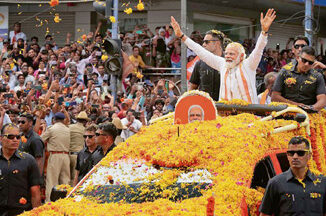
    Despite the two setbacks from the top court, the BJP is on an unassailable electoral upswing. The consecration of the Ram Temple in Ayodhya has created such a groundswell of religious goodwill for PM Modi among temple-going ordinary Hindus that it is now a mundane exercise for him to convert it into political capital for the polls. Then, of course, there is the added advantage of the Opposition remaining a house divided. Going by the last election’s schedule, there are less than 50 days left for the first phase of polling. Yet, the Opposition has not firmed up poll tie-ups.

    All those who may call the Indian democracy names after the elections should seriously look at the sorry state of the Opposition right now. As of today, it is not clear whether AAP and the Congress will have an alliance in Punjab. Even in Delhi, where a 4-3 formula of seat-sharing is being talked about, there is no official announcement so far. The Samajwadi-Congress alliance in Uttar Pradesh is the only one that has been sealed. Meanwhile, Rahul Gandhi has taken a break from his yatra to lecture at Cambridge, as if Oxbridge scholars’ votes count in Amethi or Wayanad.

    The urgency of a group preparing to take on a juggernaut is glaringly missing in the terribly slow pace at which Opposition parties move. Incidentally, the Left, which is the fulcrum on which the Opposition in Delhi turns, has announced its candidates, including the one who would take on Rahul, if he contests from Wayanad. But a political understanding with Mamata Banerjee that could have altered the scene in West Bengal is still eluding the Congress as the BJP tries to project itself as her biggest challenger in the state.

    Unless there is an unseen anti-incumbency storm gathering amongst the masses, there is no chance of a serious challenge to PM Modi’s electoral pole position in these circumstances. The possibility of a third term for Modi looks strong. However, that confidence should not prompt his followers to shake the foundations of Indian democracy — which is the message from the SC verdicts.

    A recent issue of The Economist magazine has a brilliant leader on the perils of national conservatism. In the context of the American elections, the magazine talks about Trump’s aides readying a programme “to capture the federal bureaucracy”. To eulogize Ronald Reagan and Margaret Thatcher as torchbearers of virtuous conservatism while condemning all newbie national conservatives as liberals opposed to multilateralism abroad and pluralism at home is obviously polemical. Reagan’s initiation into politics was as an FBI informer ratting out communists in Hollywood; but for the Falklands War, Thatcher would never have found her feet. Both appealed to fiercely nationalist sentiments.

    Nationalism is undeniably the core of conservatism. It suddenly cannot become dirty when bandied about by populists and anti-elites. But the difference now is the new attempt to subsume the entire system within the underbelly of the political executive. Indian bureaucracy has for some time now been caged parrots and pet falcons who sing and hunt for their political master. This situation cannot be blamed on any one party. A former bureaucrat, who had hunted down Subrata Roy for the UPA, was given cabinet rank long after retirement by a Left government this week.

    Well, the capture of the bureaucracy by the Indian political class predated the global trend of national conservatism. Nevertheless, the two SC verdicts point towards the slippery slope we have reached. All that is left between the pinnacle of proud national achievements and the abyss of complete systemic breakdown are a few constitutional bodies. Remember, there can be no Ram Rajya without strong democratic institutions!
    (The author is editor-in-chief of Tribune Group of Newspapers)

  • Make the farmer feel heard & honored

    Make the farmer feel heard & honored

    Let the ongoing protest not fester into a wound that becomes gangrenous

    “This protest could become a golden opportunity for PM Narendra Modi if he decides to turn the tables — offer ‘Modi ki guarantee’ to the farmers as well. Accept their demands; make them feel victorious. There is nothing that an Indian farmer won’t give when he feels heard and honored.”

    Rajesh Ramachandran

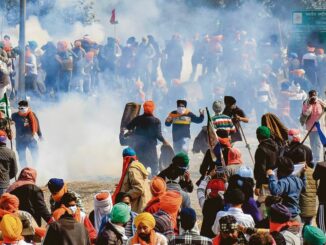
    It is the kinnow season, and the fruit is sold at the doorstep for Rs 50 a kilo. Well, nothing out of the ordinary for most of the readers who are consumers. But this year’s kinnow crop has a story of toil and tears. The fruit is selling at Rs 3-10 in the Abohar mandi, which is probably the biggest kinnow trading place in the world. What is being sold by the farmer for Rs 3 is being bought at Rs 50 by the consumer from the rehriwala in Chandigarh. If this anomaly does not call for a strident agitation, what does? And that’s what is happening at the Punjab-Haryana border.

    Verghese Kurien ensured that all that was sold by a farmer was bought by an organization that made profit and distributed it in terms of a better price for the farmer’s produce.

    Gurpreet Singh of Patti Sadiq village in Abohar tehsil of Fazilka district wants answers to this basic question. The Union Government had honored him with a national award for his successful farm diversification efforts. There cannot be a better example of a progressive and articulate farmer than Gurpreet, who has done his masters and then bachelors in education and yet chose to be a full-time farmer. He diversified into kinnow from the wheat-paddy cycle, keeping 20 of the 27 acres of his ancestral land just for the fruit crop. But he is thoroughly disappointed.

    All he has got is Rs 10.30 per kg of kinnow, which is just one-fifth of what the consumer pays the retailer. Punjab Agro, which entered the market in November-December, Gurpreet claims, has skipped his farm and bought the fruit from political influential people at the rate of Rs 12.60 per kg. His claims are unverified. But the fact is this year, the crop is good. And suddenly, all the buyers who had paid Rs 27/kg last year, encouraging the farmers to grow kinnow vigorously, have vanished. It could be because of higher import duty levied by a neighboring country. But these reasons are just excuses for the ears of the farmer, who is reduced to penury for the fault of having a bumper crop.

    The fact remains that what is bought at one end of the chain for Rs 3 is sold at the other at Rs 50 within a distance of 300 km. The Punjab farmers who are protesting at the Haryana border are seeking a correction to this fundamental flaw in the Indian agri-commodity market. The city slickers who incessantly attack Punjab’s farmers for demanding a legal guarantee for the minimum support price (MSP) and those who justify the abominable use of drones against protesters should pause and wonder: will they sell their products or services below the cost price? Will they suffer seeing their products being resold for 5-18 times the original price without an iota of value addition in their own neighborhood?

    Gurpreet, the progressive farmer who cares for his land, soil and water table and is concerned about the water-guzzling paddy crop, has a fairly simple solution — marketing and value addition through research and development. The Bharat Ratna for agriculture scientist Dr MS Swaminathan could not have come sooner (this time around, Gurpreet has not made money from his crop, going by the Swaminathan comprehensive cost formula). But there is another greater Ratna of Bharat, who needs to be talked about in the context of Gurpreet’s concerns about marketing — Verghese Kurien.

    He ensured that all that was sold by a farmer was bought by an organization that made profit and distributed this profit in terms of a better price for the farmer’s produce. Can there be a greater model for agricultural marketing than Amul? What Amul’s producer-shareholders have received is what every Indian farmer deserves. Unless the produce is bought at the farmgate at a profit, the Indian farmer will be reduced to begging for government intervention and legal guarantees.

    India is the biggest buyer of edible oil with an annual import bill pegged at $20 billion, yet sunflower seed farmers had to block roads at Shahabad near Kurukshetra in Haryana last year to get what is their due — the MSP of Rs 6,400 per quintal at which the government was supposed to buy the crucial commodity that burns a hole in the consumer’s pocket. That year, farmers sold their mustard crop to traders at Rs 4,400 per quintal when the MSP was supposed to be Rs 5,450 (Nous Indica: ‘Pamper the farmers, make them rich’)

    Every year, there are some farmers who dump their produce on the roads or run tractors over vegetables or fruits to make visuals that would pry open the eyes of the government. They obviously don’t find a way out other than the MSP backed by a legislation and assured procurement. The pro-government economists and commentators who talk about a fiscal disaster and throw numbers totaling many lakhs of crores of rupees do not even understand that the consumer is already paying those many lakhs of crores and much more without farmers getting any of it. If the market is playing foul, it’s the responsibility of the government to discipline it, offering sustainable profits to the producer. And if he does not get it, he will block the road at an opportune moment when the government is most vulnerable. It is obvious that the empowered farmers of Punjab are talking for all their brethren across the country and trying to corner the government, making it commit the blunder of tear-gassing them using drones and suffer a public relations disaster. This is legitimate oppositional politics. Sadly, a protester died of a heart attack at the Shambhu border on Friday, adding to the government’s discomfiture in the run-up to the polls.

    At the same time, this protest could become a golden opportunity for PM Narendra Modi if he decides to turn the tables — offer ‘Modi ki guarantee’ to the farmers as well. Accept their demands; make them feel victorious. There is nothing that an Indian farmer won’t give when he feels heard and honored. Let the protest not fester into a wound that becomes gangrenous.

    (The author is editor-in-chief of Tribune India)

  • Piety hostage to power politics

    Suddenly, Everyman becomes the Other and their common sentiment is fear

    “The Mehrauli and Haldwani incidents do not endorse Yogi’s statement asking for just three temples the way Krishna asked for five villages. Even the Indian Union Muslim League (IUML), the post-Independence remnant of Jinnah’s Muslim League and the biggest party of the Muslims, had officially welcomed the consecration of the Ram temple at Ayodhya built after the demolition of the Babri Masjid. Two days after the event, the Kerala unit president of the IUML, Sayyid Sadiq Ali Shihab Thangal, termed the Ram Temple a reality and said: “We cannot go back from that. There is no need to protest against it. The temple came up based on a court order and the Babri Masjid is about to be constructed. These two are now part of India. The Ram Temple and the proposed Babri Masjid are two best examples that strengthen secularism in our country.”

    By Rajesh Ramachandran

    The head of the powerful Gorakshapeeth denomination of the Nath tradition, who also happens to be the Chief Minister of Uttar Pradesh, seems to have taken liberties with the Mahabharata in the context of the dispute over the Gyanvapi and Shahi Idgah mosques in Varanasi and Mathura, respectively. CM Yogi Adityanath invoked Krishna, saying in the UP legislative assembly that he is seeking just three religious places, like the Lord who had sought only five villages for the Pandavas, adding that when these villages were denied, the Mahabharata war became inevitable.

    When two more mosques are being demanded, what is the guarantee that 20 more will not be demolished?

    Well, Krishna, as the Pandava emissary to the Kaurava court, first asked for half the kingdom, then five villages, then one village, then five houses, then one house; when he was told that the Pandavas would not be given a place even to put a needle and when the Kauravas tried to take Krishna a prisoner, his mission failed. The epic says he exhibited his vishwaroopam (the magnificent self) before exiting the court. These stories are played and replayed in classical culture across the east and south of India.

    In fact, despite demolishing the Kashi Vishwanath temple in Varanasi and the Krishna temple in Mathura, Aurangzeb could not do much to the native Indian culture. For instance, it was just the other day I was searching on YouTube the famous “yahi madhava yahi keshava” song from Jayadeva’s Gita Govindam when the search threw up many versions: As accompaniment for Kelucharan Mohapatra’s Odissi performance and a bharatanatyam recital, then as vocal rendition by Kishori Amonkar and then again in the sopana sangeetham tradition of Kerala, and even as film lyrics, the same Sanskrit song creates multiple worlds of musical brilliance.

    If Jayadeva, who lived in the 12th century in a village between Bhubaneswar and Puri, is celebrated every day in another remote corner of the country — once ravaged by Hyder Ali, Tipu Sultan, the Dutch, the Portuguese, the French and the British — Jayadeva’s Krishna does not really need another temple. For all its faults, it is piety that preserved the Indian classical culture, not power politics. It is this piety that bound India together as it expressed itself in Gandhian nationalism.

    Now, when the same traditions and symbols of piety and penance are used to seek political power, it evokes fear in the minds of those rendered as the Other. A madrasa was demolished in Haldwani, Uttarakhand, two days ago, leading to a riot that claimed six lives on Thursday. Earlier this week, a 600-year-old mosque was demolished at Mehrauli in Delhi. Some of these structures might have had encroachments, but then the due process of law would have made the local residents feel secure instead of turning them violently aggrieved.

    The Mehrauli and Haldwani incidents do not endorse Yogi’s statement asking for just three temples the way Krishna asked for five villages. Even the Indian Union Muslim League (IUML), the post-Independence remnant of Jinnah’s Muslim League and the biggest party of the Muslims, had officially welcomed the consecration of the Ram temple at Ayodhya built after the demolition of the Babri Masjid. Two days after the event, the Kerala unit president of the IUML, Sayyid Sadiq Ali Shihab Thangal, termed the Ram Temple a reality and said: “We cannot go back from that. There is no need to protest against it. The temple came up based on a court order and the Babri Masjid is about to be constructed. These two are now part of India. The Ram Temple and the proposed Babri Masjid are two best examples that strengthen secularism in our country.”

    There cannot be a more categorical acceptance of the ‘reality’ than this. Still, when Yogi asks for two more temples, how should the Muslim community respond? I know of three non-Hindu students of Delhi University who use Hindu names on their cab-hailing and food-delivery mobile apps because they are scared of a possible hate crime. Nothing has happened to them yet, but when the fringe elements are on the loose, trying to establish the primacy of their partisan banner over the national flag or when they do not lower their saffron banners even on Republic Day for the Tricolor to be unfurled in all its glory or when a saffron flag flies over the national flag in a group housing society of civil servants, fear envelops everyone who thinks and votes differently. Suddenly, Everyman becomes the Other and their common sentiment is fear — so fearful that nobody dare ask why the saffron flags cannot be removed long after the temple consecration.

    Like Thangal, everybody, every Muslim, wants to move on. But they cannot when they are asked to pay something akin to jaziya for Aurangzeb’s atrocities. When two more mosques are being demanded, what is the guarantee that 20 more will not be demolished? All those who were present at the consecration of the Ram temple — the Prime Minister, the RSS chief, the UP Governor and Chief Minister — can again sit together and offer a solemn, sacred guarantee to the Muslim community that but for Kashi and Mathura, no mosque will be surveyed or demanded. And drives against encroachments should no longer be ‘special’ or ‘targeted’.

    India is an overly religious country. Encroachments in the name of religion turn into extortionist enterprises and hence they ought to be cleared promptly, whenever and wherever they happen. At The Tribune Chowk, there is always a threat of a Shivling appearing miraculously. Whenever it does, we ring the alarm bells to get the encroachment cleared so that Lord Shiva is not demeaned by some roadside racketeer. Similarly, all illegal madrasas (actually, religious education should be actively discouraged) should be removed, but only after following the due process of law.

    One of the greatest aphorisms from the Mahabharata is “yato dharmas tato jaya”, uttered by a mother refusing to bless her son who wouldn’t give his cousins what is rightfully theirs.
    (The author is Editor-in-Chief of Tribune, India)

  • Dog whistle for caste mobilization

    Dog whistle for caste mobilization

    In Tamil Nadu’s backward-caste electoral politics, Sanatan Dharma is a phrase to abuse Brahmins

    “So, Periyar’s politics suited the upsurge of backward-caste pride and empowerment, as it turned electorally insignificant Brahmins into a racial ‘other’. The Congress had a considerable number of Brahmin leaders, and in all probability, it was to attack the Congress and Mahatma Gandhi that Periyar turned Sanatan Dharma into a catchphrase of abuse. His pro-British leanings were evident in his opposition to the freedom movement and his refusal to accept freedom in 1947. It was this pro-British, anti-Brahmin politics that laid the intellectual framework for Tamil secessionism, which has cost the nation the lives of many, including that of former Prime Minister Rajiv Gandhi — the LTTE leadership of Sri Lanka always relied on the extremist Dravidar Kazhagam cadre for intellectual succor on the mainland.”

    At the national level, the Stalins’ attack on Sanatan Dharma has embarrassed the INDIA coalition no end. And therein lies the irony of Indian politics — what is a dog whistle for caste mobilization in one state can turn into a communal own-goal alarm in another. When all is said and done, here is a request to these great progressive leaders — please don’t stigmatize diseases like HIV and leprosy by turning them into metaphors of hatred.

    By Rajesh Ramachandran

    Sanatan Dharma means eternal values. Then, why should the DMK leadership have any quarrel with everlasting virtues, leave alone abuse it in the vilest possible terms by equating them with deadly diseases? Herein lies the dog whistle of the so-called Dravidian politics. In Tamil Nadu’s backward-caste electoral politics — otherwise known as Dravidian ideology, which has no currency in other South Indian states — Sanatan Dharma is a code word or phrase to abuse and demean Brahmins.

    If Periyar used the attack against Sanatan Dharma to delegitimize Congress, the tactic is being used by the Stalins to paint the BJP as a Brahminical enterprise out to disempower TN’s backward castes.

    For the backward-caste politicians of Tamil Nadu and their voters, Sanatan Dharma symbolizes Brahminical hegemony, ritualism, superstition and feudal overlordship of the Brahmins. Just as a Hindutva politician may use the dog whistle of the Muslim ‘other’, the backward-caste politicians of Tamil Nadu use Sanatan Dharma to whip up anti-Brahmin sentiments and mobilize their own caste brethren. In fact, EV Ramasamy Naicker — famous as Periyar — had packaged hatred for Brahmins into an ideology, terming the platform Dravidar Kazhagam.

    Intriguingly, both RSS and Dravidar Kazhagam were formed in the same year, 1925, and both have been accused by their detractors of being British stooges. Periyar, when he was the Madras Presidency Congress Committee chief, had an epiphany to fight the Brahmins instead of the British and joined hands with the pro-British Justice Party, led interestingly by a Nair (for Periyar, all non-Brahmins were oppressed, however big landlords they were). Then, Dravidian politicians are mostly from the middle castes, though technically categorized as backward or most backward castes. Most of those who claim Chola and Pandya lineage are now beneficiaries of backward-caste quotas in Tamil Nadu.

    So, Periyar’s politics suited the upsurge of backward-caste pride and empowerment, as it turned electorally insignificant Brahmins into a racial ‘other’. The Congress had a considerable number of Brahmin leaders, and in all probability, it was to attack the Congress and Mahatma Gandhi that Periyar turned Sanatan Dharma into a catchphrase of abuse. His pro-British leanings were evident in his opposition to the freedom movement and his refusal to accept freedom in 1947. It was this pro-British, anti-Brahmin politics that laid the intellectual framework for Tamil secessionism, which has cost the nation the lives of many, including that of former Prime Minister Rajiv Gandhi — the LTTE leadership of Sri Lanka always relied on the extremist Dravidar Kazhagam cadre for intellectual succor on the mainland.

    All this would have been fine had it not been for the inherent hypocrisy. Now, the Brahmins are a defeated, minuscule minority in Tamil Nadu, fleeing their homeland in search of prosperity. The old Brahmin hegemony over temples and the community at large is a thing of the past. And the sweetest irony is that the Dravidian cadres are great believers and temple-goers. Since Sanatan Dharma is for them only a term of racial abuse against Brahmins, the DMK voters do not see a dichotomy in their contempt for Brahminism and their belief in Hinduism or temples.

    Tamil Nadu Chief Minister MK Stalin’s son Udhayanidhi Stalin, thus, can afford to read out a written speech seeking the ‘eradication’ of Sanatan Dharma because it is now being equated with the politics of Hindutva and the Sangh Parivar, thereby very significantly drawing a parallel between Brahminism and the BJP, delegitimizing the Hindutva party as an organization that perpetuates Brahminical hierarchy in society. If Periyar used the attack against Sanatan Dharma to delegitimize the Congress, the tactic is being used by the Stalins to paint the BJP as a Brahminical enterprise out to disempower the backward castes of Tamil Nadu.

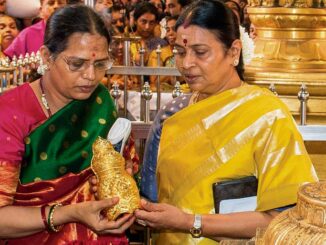
    This is politics of caste hatred nuanced as electoral messaging which the speaker and the listener understand. And it doesn’t mean anything more than that. For, it was only last month that Durga Stalin, Udhayanidhi’s mother, offered a gold crown to the deity of the famous Guruvayoor Krishna temple in Kerala, where daily prayers are done according to Vedic rituals. Only the most devout make the trip to Guruvayoor or an astrologer ought to prescribe it as a remedy for some dosha. Either way, Durga wouldn’t have made this expensive gift had it not been to seek Lord Krishna’s blessings for her husband and son.

    Worse hypocrisy is to explain Sanatan Dharma in terms of casteism and untouchability. For, terrible caste discrimination exists in established TN Christian churches and even in village tea shops, where the two-tumbler system prevailed for long — one for forward/backward castes and the other for the Dalits. Why, even Periyar is accused of not having visited the site of the massacre of 44 Dalits at Keezhvenmani in 1968.

    A Dalit activist-writer has quoted Periyar’s magazine Viduthalai, in which he is alleged to have spoken thus about Keezhvenmani: “The Communists are pretending to help you. They give promises of a pay hike and a better life. But a wage hike is not possible through political agitations. It is only possible from the market value of the commodities. Instead of teaching you (Dalits) how to live peacefully with the wages you get, they want to create riots in the state and they want to get the DMK government disturbed.”

    The landlord of Keezhvenmani, prime accused Gopalakrishna Naidu, belonged to Periyar’s caste. Not surprisingly, the DMK government till today is in the dock for having made the police mute spectators to the massacre and then later letting Naidu get acquitted after an appeal. So, the DMK’s anti-caste talk should be tempered with the understanding of anti-Dalit atrocities, just as all talk of Dravidian rationalism should be counterpoised with the donation of a gold crown to Lord Krishna by the first family.

    At the national level, the Stalins’ attack on Sanatan Dharma has embarrassed the INDIA coalition no end. And therein lies the irony of Indian politics — what is a dog whistle for caste mobilization in one state can turn into a communal own-goal alarm in another. When all is said and done, here is a request to these great progressive leaders — please don’t stigmatize diseases like HIV and leprosy by turning them into metaphors of hatred.

    (The author is editor-in-chief of Tribune group of publications)

  • Indian womanhood getting demeaned

    Indian womanhood getting demeaned

    The country is appalled by the Centre’s response to the allegations made by sports celebrities

    “Yet, the government of a party that swears by Hindu family values and traditions refuses to ask this alleged molester to even step down. Why? Custodial interrogation is a sign of an accused losing his immunity or political clout. Since he has not been taken into custody by the Delhi police, it can be safely assumed that he has not fallen from the government’s grace. So, those victims waiting to see what turn the case takes would obviously hesitate to come forward with their complaints. All this leads to the most obvious question: what is so special about Brij Bhushan?”

    By Rajesh Ramachandran

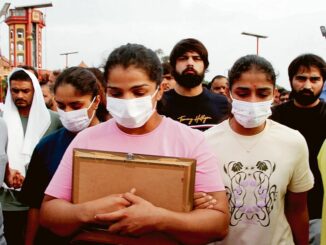
    When Cassius Marcellus Clay Jr threw his Olympic boxing light heavyweight gold medal into the Ohio river, it was an act of rebellion, followed by the rejection of his Christian identity, which did not guarantee him basic human dignity and equality. He embraced Islam and as Muhammad Ali, remained one of the greatest sporting icons; his 1960 Rome medal was restored and replaced in 1996 as a mark of universal respect. He achieved what he set out to do. When the protesting Indian wrestlers decided to throw their medals into the Ganga, they were upholding their Hindu identity against injustice. There is nothing more holy, sublime or revered than the Ganga for the average Indian. After a parent’s death, a handful of ashes is immersed into the river as a ritual of purification for the departed soul in its eternal journey. And of all places, Haridwar holds the utmost significance for this ritual.

    The wrestlers’ protest is not a Jat issue, but a fight against naked patriarchy which will have resonance all over the country.

    Agitating women wrestlers should not have dithered on the Haridwar ghats at the last minute. They should have hired a boat, gone into the river and reverentially ‘immersed’ their medals in an act of Gandhian satyagraha, symbolically purifying their sport of the grave sins of its administrators. According to the Hindu tradition, Mother Ganga purifies everything and hence the offering of the medals would have helped the wrestlers purify society of the evil deeds of a demon, who was once jailed for harboring Dawood Ibrahim’s sharpshooter. Such an act would have shaken the nation’s conscience, leaving a lasting impact on the politics of religious symbolism — victims of sexual harassment making a ritualistic offering of their most precious possessions to Ganga Ma.

    Unfortunately, khap leaders intervened, thereby turning into a caste issue a non-denominational gender struggle for women’s rights against a sexual predator in a position of power. The khaps are caste-based organizations of the Jat community of Haryana and western Uttar Pradesh, often accused of extreme patriarchy and even supporting honor killings. They are not champions of women’s empowerment or modernity. In fact, all that these upholders of the old order could achieve was to proclaim to the world the caste of the women wrestlers and to reduce them to their Haryanvi Jat identity. These athletes — role models for the entire nation — have now been made part of a reductive, exclusionary cattiest performance by khap leaders, who after their intervention in Haridwar met at Muzaffarnagar and Kurukshetra, reinforcing their regional and caste identities.

    The khap’s intervention has helped the government wriggle out of an extremely difficult situation by painting the protest as that of a single community which is angry with the ruling party, whereas the whole country is appalled by the Central government’s response to the allegations made by sports celebrities, including a minor. The practice in all such cases, particularly involving a minor, is to register a First Information Report and arrest the person immediately. However, all the norms have been violated to shield Wrestling Federation of India president Brij Bhushan Sharan Singh. Why? Obviously, this ruling party MP representing UP’s Kaiserganj constituency is more equal than other Indian citizens and the norms of custodial interrogation in cases registered under the Protection of Children against Sexual Offences (POCSO) Act do not apply to him.

    In fact, investigators seem to be keen to recheck the minor complainant’s age. Such leeway is not normally offered to an accused whose defense lawyer can always take up discrepancies, if any, in the complainant’s age certificates during the trial. Then, Brij Bhushan is not a regular politician accused of a sexual offence, but the head of the country’s wrestling fraternity, expected to nurture, groom and inspire generations of athletes. A 66-year-old person holding such a position of guardianship of India’s wrestling fraternity has been accused of demanding sexual favors, stalking young women and touching them inappropriately. A criminal breach of trust has happened. This ought to be treated like an accusation of incest in a society that tries to bring in familial metaphors in all kinds of administrative situations. A man accused of incestuous advances loses his moral right to head the family.

    Yet, the government of a party that swears by Hindu family values and traditions refuses to ask this alleged molester to even step down. Why? Custodial interrogation is a sign of an accused losing his immunity or political clout. Since he has not been taken into custody by the Delhi police, it can be safely assumed that he has not fallen from the government’s grace. So, those victims waiting to see what turn the case takes would obviously hesitate to come forward with their complaints. All this leads to the most obvious question: what is so special about Brij Bhushan? Politicos who perennially search for logic in illogical situations claim that the BJP central leadership is nurturing him as a counterpoise to UP Chief Minister Yogi Adityanath within the party in a possible power struggle as both belong to the same caste. But such a far-fetched reasoning only proves the utter lack of reason for anyone to protect Brij Bhushan’s interests.

    The Central government has handed over an emotive gender issue on a platter to the Opposition in the run-up to the 2024 Lok Sabha polls. The government is badly mistaken if it thinks this is a mere Jat issue. It is not a Jat issue, but a fight against naked patriarchy which will have resonance all over the country. The wrestlers may well have political ambitions, may be supported by the Opposition, may even be motivated by the lure of high offices and post-retirement sinecures. But all that does not take anything away from their accusations that have been amplified by international wrestling bodies. It is India’s pride that is getting hurt; Indian womanhood that is getting demeaned. This could well become something akin to the then UPA government’s Commonwealth Games fiasco, which marked the beginning of its unravelling.
    (The author is editor-in-chief of Tribune Group of Newspapers)

  • Double-engine anti-incumbency

    Double-engine anti-incumbency

    Loss of legitimacy due to corruption taint proved to be the BJP’s undoing in Karnataka

    Modi had won in 2019 on a pro-incumbency platform, which is getting frayed at the edges. Pomp and pageantry cannot replace political credibility. He has about 10 months to reclaim his legitimacy.

    “But the Karnataka election proved that India is a functioning democracy that does not brook depravity in public life. PM Modi or the BJP cannot make Hindus vote in a particular manner when the ground situation does not merit so. Communal polarization or the politics of hatred for the “other” cannot override the people’s contempt for a candidate. And this local sentiment got reinforced with anti-incumbency against the Centre, which faces allegations of crony capitalism over Adani’s relationship with the Modi government following the release of US short-seller Hindenburg’s report. Probably more damaging than the Adani allegation are the tearful complaints made by India’s star athletes against one of the worst examples of goons in politics.”

    By Rajesh Ramachandran

    Anti- Incumbency is a loss of legitimacy — the cornerstone of all democratic enterprises. No amount of electoral engineering, caste and communal polarization, or media manipulation can reverse the process of loss of legitimacy. That remains the strength of a truly democratic exercise, which manifests the people’s will; and that was on grand display in Karnataka late last week. The people perceived the Karnataka government as corrupt; a government that demands an inconceivable amount of bribe — a cut of 40 per cent from all government contracts. This perception was not created by Opposition propaganda but was conveyed to the people by the Karnataka State Contractors’ Association in a letter to the Prime Minister. Modi had won the 2019 Lok Sabha polls on a pro-incumbency platform, which is getting frayed at the edges.

    This is not to wish away caste and communal considerations, but to underscore the utter disgust the voters have for a rapacious government. When two parties put up candidates from the same community or caste, the choice is easier: why vote for a tainted person who represents a corrupt entity? It is a matter of immense reassurance that the small man/woman prevailed over crooked godmen and families that claim to represent a whole community. Any objective observer of politics ought to exult in the result as the Karnataka poll was a fine contest of people’s patience against political greed.

    Then, this was not just the reflection of state-level anti-incumbency against the Basavaraj Bommai government, but also a vote against the Central government led by PM Narendra Modi. For, he had promised, “na khaoonga, na khane doonga (neither will I make money nor will I let others do it)” and the Karnataka situation was a breach of this promise. The entire BJP party edifice in Karnataka was complicit and the central leadership either winked at it or remained captive to the caste calculus. There are those who believed that even Bommai could have fared better had he got a freer hand. However, the BJP’s central leadership seems to have a strange belief in the supernatural powers of polarization. In fact, it tends to have bought into its Western detractors’ accusations of India being an elected autocracy or an ethnic democracy.

    But the Karnataka election proved that India is a functioning democracy that does not brook depravity in public life. PM Modi or the BJP cannot make Hindus vote in a particular manner when the ground situation does not merit so. Communal polarization or the politics of hatred for the “other” cannot override the people’s contempt for a candidate. And this local sentiment got reinforced with anti-incumbency against the Centre, which faces allegations of crony capitalism over Adani’s relationship with the Modi government following the release of US short-seller Hindenburg’s report. Probably more damaging than the Adani allegation are the tearful complaints made by India’s star athletes against one of the worst examples of goons in politics.

    Brij Bhushan Sharan Singh had spent time in jail in a case under TADA — Terrorist and Disruptive Activities (Prevention) Act — over charges of aiding India’s most-wanted criminal Dawood Ibrahim. What is this sort of a man doing in Parliament as a BJP member? Why is he heading the Wrestling Federation of India? Why are the police not arresting him and taking him into custody despite victims narrating instances of sexual harassment? If the BJP thinks that these questions did not exercise the minds of Karnataka voters, the party is living in a fool’s paradise. It is indeed a national issue and will continue to haunt the national conscience in every nook and corner of the country and not just the Jat land of Haryana or western UP. The question of Indian heroes’ izzat or honor cannot be reduced to the caste or political ambitions of the accusing wrestlers.

    Then, the proposed ban on Bajrang Dal, promised by the Congress to consolidate Muslim votes, worked well for itself, with the BJP failing to link up Bajrang Dal with Bajrang Bali or Hanuman, one of the most important deities in the Hindu pantheon. The reason, in hindsight, is simple: goons calling themselves Bajrang Dal activists or by other similar-sounding names have been attacking farmers who want to sell cattle to make dairy farming economical. Cow vigilantes have been wreaking havoc on the rural economy, blackmailing and extorting money from those who can’t afford to worship their cattle, all in the name of cow protection. The anger against cow vigilantes is spilling on to the streets of Haryana, where most people abhor non-vegetarian food.

    Along with the Karnataka polls, the Jalandhar by poll result too is heartening primarily because it proved there is no constituency for religious secessionism in Punjab and that the arrest of Khalistan activist (apparently someone’s stooge) Amritpal did not make any difference to the wise people of this state. And also, that last year’s Sangrur by poll result was just a flash of anger in the Malwa pan. People seem to have forgiven the AAP government for nominating Delhiites to the Rajya Sabha as its first big political decision and for foisting some of them on the state. A pro-incumbency mood seems to have set in with the slashing of the power bills. But it does not take too long for the tide of public opinion to turn, particularly when politicos get caught with their hands in the till. The BJP had lost the Assembly elections in Madhya Pradesh, Rajasthan and Chhattisgarh in 2018 before it went on to win the 2019 Lok Sabha polls by a bigger margin. So, the Karnataka result should not be given more importance than what it deserves while analyzing the national poll situation. But the question that remains is: will Adani, Brij Bhushan Sharan, cow vigilantes and other factors derail a repeat of 2019 or not? Modi had won in 2019 on a pro-incumbency platform, which is getting frayed at the edges. Pomp and pageantry cannot replace political credibility. He has about 10 months to reclaim his legitimacy.
    (The author is editor-in-chief of the Tribune group of newspapers)

  • Time to cleanse Punjab

    Time to cleanse Punjab

    Drug lords with influential backers are saved by shoddy probe and lack of political will

    By Rajesh Ramachandran

    “Big or small, all drug operators of Punjab have a police connection and in that sense, Punjab’s drug problem is, of course, a cop cancer. Take, for instance, Jagdish Singh ‘Bhola’, a DSP arrested in 2013 and convicted in 2019 for peddling synthetic drugs. His case had thrown open a drug empire worth thousands of crores of rupees, wherein it was proven that synthetic drugs were being manufactured, trafficked and exported to Canada and Europe. Bhola’s case unearthed a lot of possibilities for Punjab’s top cops and politicians to understand and fix the drug problem, but they did not — for the rot was allegedly at the very top. Bhola had named then revenue minister Bikram Singh Majithia as a co-accused.”

    It is a cliché to say that Punjab has a drug problem or that it is reeling under an addiction menace. That, however, is not entirely true. In fact, Punjab actually has a politician problem and is suffering from a cop menace; and these two diseases manifest themselves in various ways, including drug trafficking and addiction. The Bhagwant Mann government has now acted against AIG Raj Jit Singh by dismissing him from service and also filing cases against him. A very welcome step indeed. But is that all? Does the people’s mandate to wage war against drug lords end with the arrest of one of the many minor cogs in the huge wheel of Punjab’s drug mafia facilitated by fraudster politicos and crooked cops?

    Bhola’s case unearthed possibilities for Punjab’s top cops and politicians to understand and fix the drug problem, but they did not — for the rot was allegedly at the very top.

    Big or small, all drug operators of Punjab have a police connection and in that sense, Punjab’s drug problem is, of course, a cop cancer. Take, for instance, Jagdish Singh ‘Bhola’, a DSP arrested in 2013 and convicted in 2019 for peddling synthetic drugs. His case had thrown open a drug empire worth thousands of crores of rupees, wherein it was proven that synthetic drugs were being manufactured, trafficked and exported to Canada and Europe. Bhola’s case unearthed a lot of possibilities for Punjab’s top cops and politicians to understand and fix the drug problem, but they did not — for the rot was allegedly at the very top. Bhola had named then revenue minister Bikram Singh Majithia as a co-accused.Like Inspector Inderjit Singh and Raj Jit getting sacked or punished now, Bhola was made the prime accused earlier and his political patrons were not even investigated. This time around, when the AAP government makes tall claims of tackling the drug menace in Punjab, it needs to closely read the High Court’s bail order to understand that it was shoddy investigation  — first by the Congress government and then the AAP dispensation — that led to Majithia securing regular bail. The whole case seems to be hinging on a couple of statements made by the arrested accused, and also the findings of Special Task Force head Harpreet Singh Sidhu, which various governments consistently refused to pursue.

    In a status report filed in 2018, Sidhu had told the court that Majithia had a close relationship with Satpreet Singh ‘Satta’, Parminder Singh ‘Pindi’, Jagjit Singh Chahal, Maninder Singh Aulakh and Amrinder Singh ‘Laddi’; Bhola was allegedly involved in the drug trade in association with Chahal, Aulakh, Laddi, Pindi and Satta; Majithia had a role in facilitating the supply of pseudoephedrine to Satta and Pindi; and the matter regarding money transactions of Majithia with Chahal and others needed to be investigated further, as also whether funds had been converted into assets abroad. Sidhu’s report referred to confession statements made to the Enforcement Directorate (ED) under the Prevention of Money Laundering Act by Bhola, Chahal and Aulakh.

    But that was that — neither the ED nor Punjab Police made any further inquiry into the international drug trade originating in Punjab with obvious political patronage. Gradually, all talk of this flourishing multi-billion-rupee synthetic drug industry was drowned in the drone of seizures of a few grams of heroin here or some weed there. The real big fish were splashing in the pool while the Capt Amarinder Singh government looked askance. Shockingly, even the ED did not pursue its own case. Its former deputy director, Niranjan Singh, made a statement in December 2021 explaining that he had not disclosed any material in his possession about Majithia’s involvement in ‘financing’ of the narcotic drug-related activities either prior to 2004 or later. No wonder the ED is blamed for targeting only the Opposition. Till 2020, Majithia and his family were part of the ruling coalition at the Centre.

    But why blame just Niranjan Singh, every bit of this case is outrageous. After the High Court constituted a Supervisory Investigating Team of three senior IPS officers, about 10 supplementary challans were filed on the original FIR against Bhola, but Majithia was never made an accused. It was only Harpreet Sidhu’s STF that took a bold stand against Majithia. And finally, when the Channi government did file an FIR against Majithia, it was based on Sidhu’s STF report. But again, the police never took Majithia into custody, making a mockery of the arrest. If the police did not want to interrogate him or take him to crime sites to collect evidence, or involve him in other means of establishing crime, why keep him in judicial custody? The FIR against Majithia and his arrest were, obviously, Channi’s election stunt. Once the election got over and as the case dragged on without a shred of material proof against Majithia, the High Court correctly ruled that the evidence was fragile and not credible. In fact, apart from Sidhu’s report, the prosecution had not made out a case.

    But then, lack of evidence is no proof of innocence. Lack of evidence despite Sidhu’s statement — that there is sufficient evidence to investigate the role of Majithia in using government machinery, including vehicles, security personnel and other facilities for assisting, facilitating and abetting narcotic drug-related activities — only exposes bad policing. The investigators and the prosecution, which slept for over a decade, first during the Akali regime and then during Captain’s rule, have not yet woken up to file a challan in the Majithia case, making do with the dismissal of Raj Jit instead. Now, with PM Modi visiting the Akali Dal office to pay respects to Parkash Singh Badal, BJP president JP Nadda attending his funeral, and despite Union minister Hardeep Puri’s statement, there is speculation of a reunion of old partners. The people will get enraged if the political patrons of the drug trade don’t get caught by the Central and state governments, forcing them to look around for an alternative all over again.
    (The author is editor-in-chief of The Tribune Group)