Tag: Rajnath Singh

  • India celebrates 76th Republic Day with military prowess on full display

    India celebrates 76th Republic Day with military prowess on full display

    The parade, held at the Kartavya Path in the heart of the national capital, featured key moments of pageantry and precision, with Indonesian President Prabowo Subianto serving as the chief guest

    NEW DELHI (TIP): India celebrated its 76th Republic Day on Sunday with a grand display of its military might that included elite marching contingents, missiles and indigenous weapon systems, with Indonesian President Prabowo Subianto gracing the occasion as the chief guest.

    In a first, a tri-services tableau, depicting the broader spirit of “jointness” among the armed forces, rolled down Kartavya Path, the centerpiece boulevard of the National Capital.

    It displayed a battlefield scenario, demonstrating a synchronized operation in land, water and air with the indigenous Arjun battle tank, Tejas fighter aircraft and Advanced Light Helicopter.

    The theme of the tri-services tableau was “Shashakt aur Surakshit Bharat” (strong and secure India).

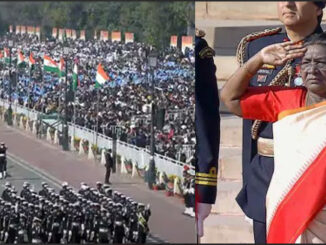
    The parade commenced with President Droupadi Murmu taking the salute shortly after she and Subianto, flanked by the Indian president’s bodyguards, arrived at Kartavya Path in a “traditional buggy”.

    Prime Minister Narendra Modi, Defense Minister Rajnath Singh, several other Union ministers, the country’s top military brass, foreign diplomats and senior officials were among the spectators on both sides of Kartavya Path. The first Army contingent leading the mounted column was 61 Cavalry, led by Lieutenant Ahaan Kumar.

    Raised in 1953, 61 Cavalry is the only serving active horsed cavalry regiment in the world. It was followed by nine mechanized columns and nine marching contingents.

    Tank T-90 Bhishma, NAG missile systems, the BrahMos supersonic cruise missile, the Pinaka multi-launcher rocket system, the Agnibaan multi-barrel rocket launcher, the Akash weapon system, the integrated battlefield surveillance system and all-terrain vehicle Chetak were among the key displays by the mechanized columns. Light specialist vehicle Bajrang, vehicle-mounted infantry mortar system Airawat, quick reaction force vehicles Nandighosh and Tripurantak and the short-span bridging system were also on display.

    The Army’s marching contingents included the Brigade of the Guards, the Jat Regiment, the Garhwal Rifles, the Mahar Regiment, the Jammu and Kashmir Rifles Regiment and the Corps of Signals.

    The Indian Navy’s contingent consisted of 144 personnel led by Lieutenant Commander Sahil Ahluwalia as the contingent commander and Lt Commander Indresh Choudhary, Lt Commander Kajal Anil Bharani and Lt Devender as platoon commanders.

    It was followed by the Naval tableau, depicting a strong “Aatmanirbhar” (self-reliant) Navy, capable of protecting India’s maritime interests.

    The tableau showcased the newly-commissioned indigenous frontline state-of-the-art combatants, including destroyer INS Surat, frigate INS Nilgiri and submarine INS Vaghsheer, highlighting India’s rapid progress in indigenous warship design and construction.

    The tableau showcased the Indian Navy’s commitment to build a robust and self-sufficient defense ecosystem.

    The Indian Air Force’s (IAF) contingent comprised four officers and 144 personnel, led by Squadron Leader Mahender Singh Garati. It was followed by a fly-past by three MiG-29 aircraft in “Baaz formation”.

    Another highlight of the parade was the veterans’ tableau on the theme “Viksit Bharat ki Ore Sadaiv Agrasar”, a heartfelt tribute to the unwavering spirit of the ex-servicemen towards the nation.

    Several veterans who brought glory to India in sports were also part of the parade.

    Representing “Nari Shakti” (women power) at the parade were veteran women officers — Lieutenant Colonel Ravinderjeet Randhawa, Lieutenant Commander Mani Agarwal and Flight Lieutenant Ruchi Saha.

    In its tableau, the Defence Research and Development Organisation (DRDO) displayed many home-grown critical systems and technologies developed by it.

    The DRDO tableau, with the theme “Raksha Kavach — Multi-layer Protection against Multi-domain Threats” featured the quick reaction surface-to-air missile, the airborne early warning and control system, the 155 mm/52-calibre advanced towed artillery gun system and the drone detect, deter and destroy system.

    It also showcased the satellite-based surveillance system, medium power radar Arudhra, advanced lightweight torpedo, electronic warfare system Dharashakti, the laser-based directed energy weapon, the very short range air defense system and the unmanned aerial system.

    It was for the first time that the indigenously-developed Pralay missile system was showcased.

    A 352-member marching and band contingent from Indonesia also participated in the Republic-Day parade. This was the first time that an Indonesian marching and band contingent participated in a national-day parade abroad.

    Among the contingents marching down Kartavya Path were a 148-member all-women marching contingent of the Central Reserve Police Force (CRPF), led by Assistant Commandant Aishwarya Joy M. The Assam Rifles contingent was led by Captain Karanveer Singh Kumbhavat of 29 Assam Rifles. It comprised soldiers recruited from all over the country.

    The Camel contingent of the Border Security Force (BSF) was under the command of Deputy Commandant Manohar Singh Kheechee.

    The all-girls marching contingent of the National Cadet Corps (NCC) was led by Senior Under Officer Ekta Kumari of the Jammu Kashmir and Ladakh Directorate.

    The all-boys marching contingent was led by Senior Under Officer Prasad Prakash Waikul of the Maharashtra Directorate. The National Service Scheme (NSS) marching contingent of 148 volunteers was led by Deepak from Punjab.

    The Corps of Signals motorcycle rider display team, famously known as “The Dare Devils”, carried out breath-taking stunts during a motorcycle display.

    The team showcased its bravery and determination through a number of formations, including Bullet Salute, Tank Top, Double Jimmy, Devils Down, Ladder Salute, Shatrujeet, Shraddhanjali, Mercury Peak, Info Warriors, Lotus and Human Pyramid.

    The celebrations ended with a jaw-dropping flypast by 40 aircraft and helicopters of the IAF.

    The fleet included 22 fighter jets, 11 transport aircraft and seven helicopters.

    These included Rafale, Su-30, Jaguar, C-130, C-295, C-17, AWACS, Dornier-228 and An-32 aircraft. The helicopters were Apache and Mi-17.

    The platforms displayed a variety of formations, including Dhwaj, Ajay, Satluj, Rakshak, Arjan, Netra, Bheem, Amrit, Vajrang, Trishul and Vijay. The concluding Vertical Charlie manoeuvre was performed by a Rafale fighter aircraft.
    (With inputs from agencies)

  • Rajnath Singh ‘lied’ in Parliament on compensation to families of martyred Agniveers, alleges Rahul Gandhi; Army rebuts claims

    Rajnath Singh ‘lied’ in Parliament on compensation to families of martyred Agniveers, alleges Rahul Gandhi; Army rebuts claims

    NEW DELHI (TIP): Leader of Opposition in Lok Sabha Rahul Gandhi on July 3 alleged that Defence Minister Rajnath Singh “lied” in Parliament about the issue of compensation to families of martyred Agniveers and demanded an apology for it. The Army on Wednesday refuted Gandhi’s claim, stating that the family of the Agniveer had been paid Rs 98 lakh.
    The Congress leader also shared a video on X purportedly of the father of a deceased Agniveer who stated that Rajnath Singh had claimed that Rs 1 crore compensation had been given to the next of kin of martyred Agniveers but no such assistance was received by his family.
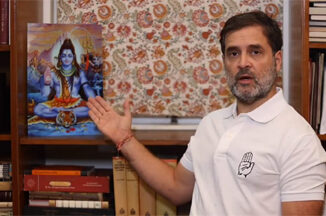
    Sharing the video message posted by her brother, Congress leader Priyanka Gandhi Vadra also accused the BJP of “insulting the sacrifice of the families” who gave up their sons for the country In his video, Rahul Gandhi said that he had stated in his speech in Parliament that the protection of truth is the basis of every religion.
    “In reply, Defence Minister Rajnath Singh, before Lord Shiva’s photo, lied to the country, its armed forces and Agniveers about compensation,” Gandhi said in the video.
    He then referred to the purported statement by the father of an Agniveer martyr Ajay Singh.
    Ajay Singh’s father said that Rajnath Singh made the statement that families of martyrs have been given Rs 1 crore compensation but no such assistance had been received by his family.
    “Rahul Gandhi is raising our voice in Parliament that families of martyrs must get all necessary help. Agniveer recruitment must stop and regular recruitment should be reinstated,” he said. (PTI)

  • The final assault of the 2024 battle!

    The final assault of the 2024 battle!

    Ballots, not bullets, Punjabis fire differently.
    “When the high-pitched campaign was drawing to its conclusion, leaders like Prime Minister Narendra Modi, Home Minister Amit Shah, Defense Minister Rajnath Singh, Finance Minister Nirmala Sitharaman, Chief Ministers of various States, including those governed by BJP and AAP, were in the State promising moon to the State tormented by continuous neglect by the Centre as well as its sinking fiscal health and its strong farm force out in streets demanding acceptance of its long-standing demands.”

    By Prabhjot Singh

    Punjabis are unique as they have a style of saying things differently. While the rest of the country was engaged in a war of “hatred”, “communal and religious divides” and “character assassinations” during the first six phases of polling in the Lok Sabha elections, they were greatly amused. Political discourse had touched a new low.

    For the last five days, anyone and everyone who matters in the Indian political system, was in Punjab, heaping praises on the people of this border State for their unprecedented contribution not only to the freedom struggle but also in rebuilding the nation after the hard-earned 1947 freedom.

    When the high-pitched campaign was drawing to its conclusion, leaders like Prime Minister Narendra Modi, Home Minister Amit Shah, Defense Minister Rajnath Singh, Finance Minister Nirmala Sitharaman, Chief Ministers of various States, including those governed by BJP and AAP, were in the State promising moon to the State tormented by continuous neglect by the Centre as well as its sinking fiscal health and its strong farm force out in streets demanding acceptance of its long-standing demands.

    The farm force wanted in a democratic way to question the national political leadership in general and the BJP in particular as to why the farmers were being labelled as “urban Naxalites”, “Khalistanis” or “anti-national elements” for their peaceful agitations in support of their long-standing demands, including guaranteed Minimum Support Price for their produce.

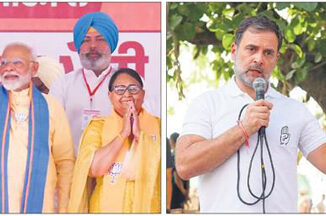
    It was this final phase of campaigning that brought the two Prime Ministers – the incumbent and his immediate predecessor – face to face on how democracy should be run or governed.

    Intriguingly, it did not happen in any of the first six phases that saw polling for 486 of 543 seats completed. But the last 57 seats that will go to poll on June 1 are different.

    Polling is scheduled in all 13 seats of Punjab and four of Himachal Pradesh, 13 constituencies in Uttar Pradesh, nine in West Bengal, eight in Bihar, six in Odisha and three seats in Jharkhand besides Chandigarh. Prime Minister Narendra Modi is seeking a third consecutive term from Varanasi.

    The turnout in the first six phases was 66.14%, 66.71%, 65.68%, 69.16%, 62.2% and 63.36% respectively. Counting of votes will be taken up on June 4.

    There was nothing unusual in the campaigning as the BJP leaders led by Prime Minister Narendra Modi spared no chance to heap accusations on the Congress and the INDIA alliance leaders of being corrupt, anti-Hindu and engaging in loot, appeasement and dynastic politics. The Opposition parties, too, shot back alleging that the BJP was anti-farmer, anti-youth and was itching to change and scrap the Constitution.

    Appealing to emotive voters is an art in which Indian politicians excel. Historic and religious references were galore as they did not stop short of creating wedges among communities to suit their political game plans.

    In Punjab, realizing that farmers come from the Jat families, the BJP and others played a calculated plan to woo non-Jats, especially Dalits. In his last rally at Hoshiarpur, PM Modi attempted to strike a rapport with the Dalit dominated audience saying he represented Varanasi, the birthplace of Guru Ravi Dass, and he had come to pay his obeisance at “Chotti Kashi” of Ravidasias (Hoshiarpur).

    Elsewhere, PM Modi was going out of way to heap praise on the Sikh community holding that one of “Panj Piaras” of Sri Guru Gobind Singh ji came from Gujarat. Intriguingly, it was during his tenure as Chief Minister of Gujarat, a national holiday on the birth anniversary of the founder of Sri Guru Nanak Dev Ji, was cancelled by him. The Sikh community of Ahmedabad and the rest of Gujarat had strongly protested against the decision of the then BJP government of the State.

    As the election campaigning was coming to an end, former Prime Minister, Dr Manmohan Singh, issued a three-page letter to the voters of Punjab. This surprise move by Dr Manmohan Singh has created a furor as he is known to be a man of principles. Dr Manmohan Singh accused Modi of lowering the dignity of public discourse and the gravity of the office of the prime minister by giving “hateful speeches” during the poll campaign. In an appeal to voters of Punjab, Dr. Singh asserted that only the Congress can ensure growth-oriented progressive future where democracy and Constitution will be safeguarded. He also hit out at the BJP government for imposing the “ill-conceived” Agnipath scheme on the armed forces. PM Modi took upon himself the onerous responsibility of spearheading the election campaign. As such he had 206 public outreach programs, including rallies and roadshows, after elections to 18th Lok Sabha were announced on March 16.

    In Punjab, where the ruling AAP and its INDIA bloc partner Congress are fighting separately in a multi-cornered contest, the high-decibel campaign saw the participation of almost all top politicians of the country..

    For the Congress, Kharge, Rahul Gandhi and Priyanka Gandhi Vadra led the campaign. For AAP, its convener and Delhi CM Arvind Kejriwal, got interim bail from the Apex Court to campaign for party candidates in Punjab, Delhi and Haryana. Delhi Chief Minister Arvind Kejriwal, out on interim bail in the excise policy case, also led an aggressive campaign for his party candidates along with Punjab Chief Minister Bhagwant Mann.

    Modi, while addressing a rally at Hoshiarpur in Punjab, attacked the Congress for “ranting” about the Constitution when it was the one that “strangled” it during the Emergency and did not care about it when Sikhs were killed in the 1984 riots. He also talked about various other issues, including reservations, corruption and Ram Temple.

    Hitting out at the Opposition for questioning the Agnipath scheme, he accused the INDIA bloc of making the Army a “weapon of politics” and said there could not be a “bigger sin than this”.

    Punjab is known to set new political trends. 2024 is not going to be any different. The results of 13 Punjab seats may have a pack of surprises for many as both national and regional parties are expected to perform differently than anticipated.
    (Prabhjot Singh is a senior journalist. He can be reached at prabhjot416@gmail.com)

  • BJP appoints central observers as suspense over new CMs in 3 states continues

    BJP appoints central observers as suspense over new CMs in 3 states continues

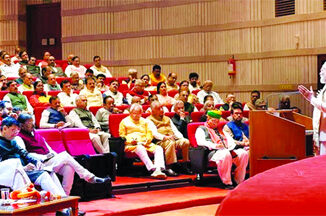
    New Delhi (TIP) – Five days after the assembly election results for Madhya Pradesh, Chhattisgarh and Rajasthan were declared, the Bharatiya Janata Party (BJP) on Friday, December 8, named central observers for electing the leaders of its legislature parties in the state amid indications that new chief ministers may be named over the weekend, ANI reported. The party has named Union defence minister Rajnath Singh, Vinod Tawade and Saroj Pandey as observers of Rajasthan.
    For Madhya Pradesh, the party has appointed Haryana Chief Minister Manohar Lal Khattar, K Laxman and Asha Lakra. In Chhattisgarh, Union Ministers Arjun Munda, Sarbananda Sonowal and Dushyant Gautam have been appointed as observers.
    An unidentified BJP leader told PTI that the observers are likely to travel to the respective state to oversee the meetings of newly elected MLAs where the future chief ministers will be named. He added that no decision has been taken yet on the choices of the chief minister and the party will keep in mind social, regional, governance and organisational interests in picking the new chief ministers, according to PTI. The BJP ousted incumbent Congress from Rajasthan and Chhattisgarh and retained Madhya Pradesh with a landslide victory. This led to the saffron party tightening its hold in the Hindi heartland and gave a big boost to Prime Minister Narendra Modi for the 2024 Lok Sabha elections.
    With an absolute majority in the 90-member Chhattisgarh assembly, the BJP won 54 seats while the Congress trailed at 35 seats. In Rajasthan, the saffron party won a total of 115 out of 199 seats. In Madhya Pradesh, BJP managed to stave off anti-incumbency after winning 163 seats in the 230-member assembly. However, the BJP bagged only eight seats in the 119-member Telangana assembly as Congress won the southern state by ousting K Chandrasekhar Rao-led Bharat Rashtra Samithi (BRS). Revanth Reddy of the Congress took oath as the new chief minister of Telangana on Thursday, December 7.
    Since the poll results on Sunday, leaders from the three states have been meeting the top party brass, including Home Minister Amit Shah and party president J P Nadda. However, sources within the party have played down their significance, saying such meetings are routine, according to PTI.
    On Thursday, December 7, morning, former Rajasthan chief minister and one of the frontrunners for the CM post Vasundhara Raje reached Delhi on Wednesday night but dodged any question on the meeting or the CM pick. “I have come to Delhi to see my daughter-in-law,” she told reporters outside the airport.
    Narendra Singh Tomar, a seasoned BJP leader from Madhya Pradesh whose resignation as Union minister was accepted on Thursday, and Baba Balaknath, who is from Rajasthan, also met Shah on Thursday. Both quit Lok Sabha after becoming members of assemblies of their states. Tomar and Union minister Prahlad Singh Patel, who comes from politically significant Other Backward Classes, are seen as possible chief ministerial choices in Madhya Pradesh along with the incumbent Shivraj Singh Chouhan. In Chhattisgarh, BJP president Arun Sao, an OBC leader, Union minister Gomati Sai and Lata Usendi, both of whom come from Scheduled Tribes, are seen as serious contenders for the top seat.

  • Antony Blinken and Llyod Austin to travel to India for 2 plus 2 ministerial dialogue

    Antony Blinken and Llyod Austin to travel to India for 2 plus 2 ministerial dialogue

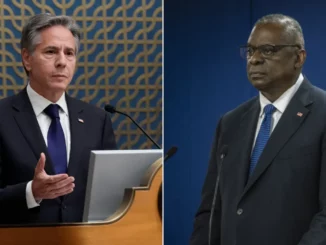
    WASHINGTON, D.C. (TIP): US Secretary of State Antony Blinken and Defense Secretary Lloyd Austin would be travelling to India for the 2+2 Ministerial Dialogue with their Indian counterparts External Affairs Minister S Jaishankar and Defense Minister Rajnath Singh in New Delhi this month, the State Department has said.

    In a statement issued on Wednesday, , November 1, State Department Spokesperson Matthew Miller said that Blinken’s trip to India comes at the end of a more than a week-long trip – November 2 to November 10 – beginning with Israel and Jordan, following which he would continue with his Indo-Pacific travels to Japan, S Korea and India. The exact dates of his trips to these countries have not been announced. In New Delhi, the US delegation will participate in the 2+2 Ministerial Dialogue.

    “The delegation will meet with Minister for External Affairs S Jaishankar, Minister of Defense Rajnath Singh, and other senior Indian officials to discuss both bilateral and global concerns and developments in the Indo-Pacific,” Miller said. Blinken is leaving for Tel Aviv on Thursday.

    “In Israel, Blinken will reiterate US support for Israel’s right to defend itself against terrorism consistent with international humanitarian law and discuss efforts to safeguard US citizens in Israel, the West Bank, and Gaza, work to secure the immediate release of hostages, increase the pace and volume of humanitarian assistance entering Gaza for distribution to Palestinian civilians, and prevent the conflict from spreading,” Miller said.

    In Jordan, he will underscore the importance of protecting civilian lives and their shared commitment to facilitating the increased, sustained delivery of life-saving humanitarian assistance to civilians in Gaza, the resumption of essential services, and ensuring that Palestinians are not forcibly displaced outside of Gaza.

    “He will also discuss urgent mechanisms to stem violence, calm rhetoric, reduce regional tensions, and reaffirm the US commitment to working with partners to set the conditions necessary for a durable and sustainable peace in the Middle East, to include the establishment of a Palestinian state,” Miller said.

    Blinken will then lead US delegations to Tokyo, Seoul, and New Delhi to advance collaborative efforts to support a free and open Indo-Pacific region that is prosperous, secure, connected, and resilient.

    In Tokyo, he will participate in the second G7 Foreign Ministers’ Meeting of 2023, where G7 foreign ministers will build on the commitments made by leaders at the G7 Hiroshima Summit. Secretary Blinken will also thank Japan for its successful G7 presidency.

    Blinken will also have bilateral meetings with Prime Minister Kishida Fumio and Foreign Minister Kamikawa Yoko to discuss bilateral priorities, including supporting Ukraine’s economic recovery and energy needs and strengthening their cooperation in the Indo-Pacific, Miller said.

    Blinken will then travel to Seoul to meet with President Yoon Suk Yeol, Foreign Minister Park Jin, and National Security Advisor Cho Tae-yong. “The Secretary will discuss ways the United States and the ROK can respond to global challenges, including Russia’s war against Ukraine and Russia’s growing military cooperation with the DPRK, as well as instability in the Middle East. They will also discuss mutual efforts to support bilateral investment and economic security,” he said.

    “In Tokyo and in Seoul, the Secretary will underscore the United States’ ironclad commitment to the defense of Japan and ROK and reaffirm the importance of robust and sustained trilateral engagement following the historic Camp David Summit in August,” Miller said.

    (Source: PTI)

  • LAC actions have eroded basis of ties, Rajnath Singh tells his Chinese counterpart

    LAC actions have eroded basis of ties, Rajnath Singh tells his Chinese counterpart

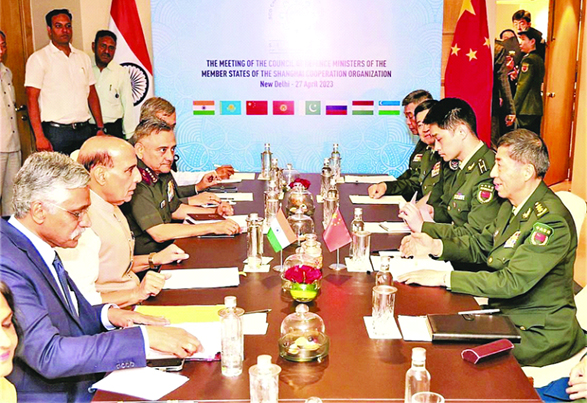
    New Delhi (TIP)- Defence Minister Rajnath Singh On April 27 told his Chinese counterpart that Beijing’s actions along the Line of Actual Control (LAC) of violating existing agreements had “eroded the entire basis of bilateral relations”. Rajnath Singh led a team of senior Defence Ministry officials for a bilateral meeting with State Councillor and Minister of National Defence of China, Gen Li Shangfu, in New Delhi today. This is the first visit by a Chinese Defence Minister to India after the armies of the two countries have been locked in a stand-off along the LAC in Eastern Ladakh since April 2020. General Shangfu is here for the Shanghai Cooperation Organisation (SCO) Defence Ministers’ meeting to be held tomorrow. “The two ministers had frank discussions on the developments in the India-China border areas as well as bilateral relations,” a Defence Ministry statement said.
    Rajnath Singh categorically conveyed that “development of relations between India and China is premised on prevalence of peace and tranquillity at the borders”. “All issues at the LAC need to be resolved in accordance with the existing bilateral agreements and commitments. Violation of existing agreements has eroded the entire basis of bilateral relations”.
    On the present situation along the LAC, Rajnath Singh said disengagement of troops at the border would logically be followed with de-escalation. Rajnath Singh held separate bilateral meetings with the Minister of Defence of Kazakhstan, Col Gen Ruslan Zhaxylykov, and the Minister of Defence of Tajikistan, Col Gen Sherali Mirzo, today. The Indian delegation had a bilateral meeting with Iran’s Minister of Defence, Brig Gen Mohammed Reza Gharaei Ashtiyani.
    Russian Foreign Minister Sergey Lavrov will be on a two-day India visit from May 4 for the SCO Foreign Ministers’ meet in Goa. He will also hold a bilateral with EAM. Source: TNS

  • Will not compromise on national security for good relations with neighbours: Rajnath Singh

    Will not compromise on national security for good relations with neighbours: Rajnath Singh

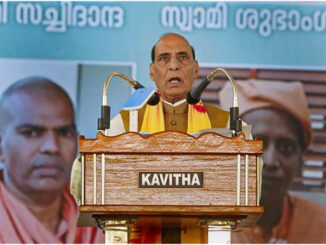
    Thiruvananthapuram (TIP)- Defence Minister Rajnath Singh on Friday, December 30,  said India wants to have and maintain friendly relations with its neighbours, but it will not be done at the cost of national security.

    Speaking at the 90th annual pilgrimage of Sivagiri Mutt here, Singh recalled former Prime Minister Atal Bihari Vajpayee’s remark that we can change friends but not our neighbours.

    “Therefore, we need good and friendly relations with our neighbours. However, we will not compromise on national security to maintain good relations. We do not want good relations with anyone at the cost of our national security,” the Defence Minister said.

    Singh also spoke about Kerala-based social reformer Sree Narayana Guru’s teachings, like ‘prosperity through industry’ which is the basis of the Indian’s government’s ‘Atma Nirbhar Bharat’ policy.

    As a result of the same, the country is considered as one of the top five economies in the world and our military is seen as a force to be reckoned with, he contended.

    “His preaching of prosperity through industry is the basis of the Government of India’s resolution of ‘Self-reliant India’. Today, India is one of the largest economies of the world because of its hard work and enterprise. Today, India has become one of the top five economies of the world.” “The world today recognises India as military power to be reckoned with, due to the government’s pitching for ‘Self-reliant India’ which is based on ‘Prosperity through industry’ preaching of Sree Narayana Guru,” the Defence Minister said.

    Singh said that self-reliance has been an intrinsic part of India’s culture and Sree Narayana Guru spread this message in the public through his teachings, and Sivagiri Mutt was also working to take it forward continuously.

    He further said that while he was working to protect the “body”—boundaries—of India with the help of the armed forces and under the guidance of Prime Minister Narendra Modi, the saints of the math were working to protect the soul of the country.

    “I appreciate the work you are doing. We can survive as a nation only when both the body and soul are safe,” Singh said and expressed confidence that this year’s annual pilgrimage would also be a success.

    In January 1928, Vallabhasserry Govindan Vaidyar and T K Kittan jointly requested Guru to have a Sivagiri pilgrimage as all the higher classes and others had their own pilgrim centres, but ‘avarnas’ had nowhere to go, according to the math website.

    Guru gave his consent to the proposal and fixed a date of first of January of every year for the pilgrimage, prior to which pilgrims have to maintain a 10-day long austere life and wear only yellow clothes, the website said.

    The Defence Minister, at the event, also condoled the death of Prime Minister Narendra Modi’s mother—Hiraben.

    Singh said that when he learned about the tragic news he was contemplating returning to Delhi, but the Prime Minister told everyone that all should fulfill their official commitments before coming back.

    “So on behalf of everyone here, the Sivagiri Mutt and myself, I would like to pay tribute to Ma Hiraben,” he said.

    Thereafter, a one-minute silence was observed by everyone present there.

    Earlier, in his speech, he said many allege liberty, equality and fraternity are not part of Indian tradition and ideologies and that it reached us through the French Revolution.

    “However, that is incorrect. Sources of liberty, equality, fraternity and world peace can be seen in Indian culture. In fact, the concept of human equality can be seen in our ancient texts and the preaching and literary works of saints, philosophers and poets of the ‘Bhakti’ period.              Source:PTI

  • Over 100 more military items face import ban

    Defence Minister Rajnath Singh on Thursday, March 7,  released the third list of more than 101 military systems and weapons that will come under an import ban over the next five years and be developed indigenously, in a fresh impetus to the Indian armament industry. The list includes naval utility helicopters, lightweight tanks, submarine-launched cruise missiles, naval anti-drone systems, battlefield surveillance radars and artillery gun systems.

    “Today, it gives me great pleasure to release the third positive indigenisation list of 101 defence equipment and platforms to the nation. The release of this list shows the fast pace of our self-reliance in the defence sector,” he said.

    The third list also comprised next generation offshore patrol vessels, MF Star radars for ships, medium-range anti-ship missiles, advanced lightweight torpedos, high endurance autonomous underwater vehicles, medium altitude long endurance unmanned aerial vehicles and loitering munitions.

    The first “positive indigenisation” list of 101 items that included towed artillery guns, short-range surface-to-air missiles, cruise missiles and offshore patrol vessels was issued in August 2020.   Source: PTI

  • India’s national security challenges becoming complex, says Rajnath Singh

    India’s national security challenges becoming complex, says Rajnath Singh

    New Delhi (TIP): Noting that India’s national security challenges are increasing and becoming “complex” in view of the changing geopolitical situation globally, Defense Minister Rajnath Singh on Thursday, August 19,  strongly pitched for a strong, capable and completely ‘self-reliant’ defense industry in the country.

    Singh’s comments came amid growing concerns in India and elsewhere over the Taliban sweeping across Afghanistan this month, seizing control of Afghanistan following the collapse of the US-backed government.

    “Today, the security scenario in the whole world is changing very fast. Because of this, the challenges to our national security are increasing and becoming complex. There are constant changes in the global geopolitical situation,” Singh said, without making specific references.

    He was speaking after launching the ‘Defense India Startup Challenge 5.0’, an initiative under the Innovations for Defense Excellence (iDEX) that acts as an umbrella organization to promote technology development for the defense sector. Singh said considering the fast-changing security challenges, India must focus on having strong, capable, and ‘self-reliant’ defense industry to cater to the needs of the armed forces.

    “It is necessary that we not only create strong, modern and well-equipped forces, but also develop our defense industry, which is equally strong, capable, and most importantly, completely ‘self-reliant’,” the defense minister said.       Source: PTI