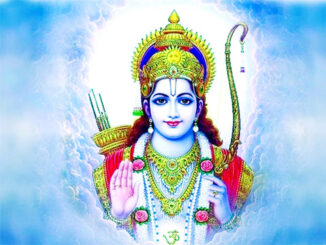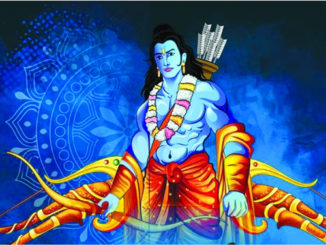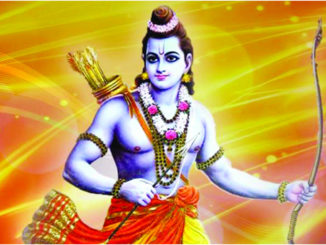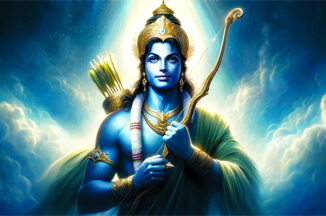
Ram Navami is a joyous occasion celebrated by millions of people around the world. It marks the birth anniversary of Lord Rama, the seventh avatar of the Hindu deity Vishnu. This auspicious festival falls on the ninth day of the Chaitra month in the Hindu calendar, typically during the months of March or April. In 2024, Ram Navami falls on Wednesday, April 17th, is a day to remember Rama’s birth and celebrate the ideals he represents, it brings communities together to honor the beloved hero, Lord Rama. Let’s delve into this vibrant festival’s rich history, significance, and traditions.
The Birth and Legacy of Lord Rama
To truly appreciate Shree Ram Navami, we must first understand the captivating tale of Lord Rama. According to Hindu mythology, Lord Rama was born to King Dasharatha and Queen Kausalya in the ancient city of Ayodhya. His birth is believed to have occurred thousands of years ago, during the Treta Yuga, a time of great virtue and righteousness.
The story of Lord Rama’s life is chronicled in the epic Ramayana, written by the sage Valmiki. It narrates the journey of Rama, his wife Sita, and his loyal companion Hanuman, as they face numerous trials and tribulations. From his exile to the forests to his epic battle against the demon king Ravana, Lord Rama exemplifies courage, compassion, and devotion to righteousness.
Ram Navami marks the auspicious day when Lord Rama incarnated on earth to rid the world of evil and establish dharma, or righteousness. His life serves as an inspiration to millions, embodying the values of honor, sacrifice, and love for all beings.
Ram Navami Importance
Ram Navami holds immense significance in Hindu culture and spirituality. It symbolizes the victory of good over evil and the triumph of righteousness over injustice. Devotees believe that by observing this festival with devotion and piety, they can seek the blessings of Lord Rama for peace, prosperity, and spiritual growth.
For many, Ram Navami is not just a religious observance but a time for introspection and renewal of one’s commitment to leading a virtuous life. It serves as a reminder of the enduring values embodied by Lord Rama and the importance of upholding them in our daily lives.
Celebrations and Traditions
Ram Navami is celebrated with great fervor and devotion by Hindus worldwide. The festivities typically begin with devotees taking a holy bath before sunrise, followed by prayers and rituals dedicated to Lord Rama. Temples are adorned with flowers and lights, and special ceremonies are conducted to honor the deity.
One of the highlights of Ram Navami is the recitation of the Ramayana, the epic saga of Lord Rama’s life. Devotees gather in temples or community halls to listen to the enchanting tales of Rama, Sita, Hanuman, and other characters from the epic. The recitation is often accompanied by devotional songs and hymns praising the virtues of Lord Rama.
Another integral part of Ram Navami celebrations is the procession or ‘Rathayatra’ of Lord Rama. Idols or images of Lord Rama, along with his consort Sita, his loyal brother Lakshmana, and devotee Hanuman, are placed on elaborately decorated chariots and paraded through the streets amidst chanting of hymns and mantras. Devotees throng the streets to catch a glimpse of the divine procession and seek blessings from Lord Rama.
Feasting is an essential aspect of Ram Navami celebrations, with devotees preparing and sharing delicious vegetarian dishes as offerings to the deity. Special sweets like ‘Panakam’ (a sweet drink made of jaggery and spices) and ‘Neer mor’ (buttermilk) are prepared to mark the occasion. Sharing food with family, friends, and neighbors is believed to be a way of spreading joy and goodwill during the festival.
Ram Navami Significance and Symbolism
Ram Navami holds profound symbolism and significance in Hinduism. The birth of Lord Rama symbolizes the victory of righteousness and dharma over adharma (evil). It serves as a reminder of the importance of upholding moral values, respecting one’s duties and responsibilities, and standing up against injustice and tyranny.
The festival also signifies the beginning of spring, a season of renewal, growth, and prosperity. Just as the earth blossoms with new life during spring, Ram Navami rejuvenates the spirit of devotees, filling their hearts with hope, joy, and devotion.
Ram Navami also promotes unity and harmony among people of different communities and backgrounds. Regardless of caste, creed, or nationality, devotees come together to celebrate the universal ideals of love, compassion, and righteousness embodied by Lord Rama.
Teaching Lessons from Ram Navami
Ram Navami offers valuable lessons that can be imparted to students, fostering moral and spiritual development. Here are some teaching points inspired by the festival:
The Importance of Virtue: Ram Navami teaches students the significance of leading a virtuous life guided by principles of truth, compassion, and integrity, as exemplified by Lord Rama.
Resilience and Perseverance: The story of Lord Rama’s exile and his subsequent triumph over adversity teaches students the importance of resilience, perseverance, and determination in overcoming challenges.
Respect for Diversity: Ram Navami promotes inclusivity and respect for diversity, encouraging students to embrace people from different backgrounds and cultures with understanding and compassion.
Service and Sacrifice: The devotion of Hanuman and other characters in the Ramayana highlights the virtues of selfless service and sacrifice, inspiring students to contribute positively to society.
Upholding Dharma: Ram Navami emphasizes the importance of upholding dharma (righteousness) and fulfilling one’s duties and responsibilities with sincerity and dedication.
Tag: Ram Navami
-

Ram Navami: Celebration of Lord Rama’s birth
-

Ram Navami: The birth of Lord Rama
Ram Navami, also marks as the birth of Lord Rama, the seventh incarnation of Lord Vishnu, is being observed on Thursday, March 30, this year. The auspicious festival of Ram Navami coincides with the last day of Chaitra Navratri. Chaitra Navratri is an auspicious nine-day festival starting next week. The word “Rama” literally means one who is divinely blissful and who gives joy to others, and one in whom the sages rejoice.
According to Hindu mythology, Lord Rama was born on Navami Tithi during Shukla Paksha of Chaitra month. And hence, this day is celebrated as the birthday of Lord Rama each year.
It is believed that Lord Rama was born during the Madhyahna period which is the middle of the Hindu day. Madhyahna which prevails for six Ghatis (about 2 hours and 24 minutes) is the most auspicious time to perform Ram Navami Puja rituals, according to Drik Panchang.
Bhagwan Rama exemplified the perfect person (maryada purushottam). He was the embodiment of compassion, gentleness, kindness, righteousness and integrity. Although he had all the power in the world, he still was peaceful and gentle.
His reign in Ayodha is referred to as Ramarajya, the epitome of perfect governance. Ayodhya was the capital founded by the king-rishi Manu. During the reign of King Dasharath, Ayodhya reached a period of great prosperity. But Dasharath had one problem–he had no children. Therefore he decided to perform the ashvamedh sacrifice. Elaborate and difficult rituals had to be observed. Rishi Rishyashring presided over the yagya. The performance of this sacrifice was a great event in Ayodhya. At the end, Rishyashring recited a Mantra and made an offering to the fire. Then the gods, gandharvas, siddhas, and rishis present around began to pray to Brahma. During that time Ravana, the king of Lanka, was terrorizing the people, and they were longing for liberation from his menace. Ravana had acquired great power because he had obtained from God Brahma the boon that he would never die at the hands of gods, or gandharvas, or yakshas (demigods) or demons. As he was not afraid of men, he did not care to include men in the list of his potential slayers. So Brahmadev declared that Ravana would die at the hands of a man. Then the gods went to Vishnu for help and requested him that since Dasharath was a glorious king, that He take birth in the wombs of his three queens in four different incarnations of His divinity. When Dasharath’s sacrifice came to an end, a shining figure appeared over the sacrificial kund, and offered the king a divine beverage called “payasam”, which was to be given to his queens Kausalya, Kaikayi, and Sumitra. In due time, Kausalya gave birth to Rama, Kaikayi to Bharat and Sumitra to Laxman and Shatrugna.
The Sun is considered to be the progenitor of Rama’s dynasty, which is called the Solar Dynasty (Raghukula or Raghuvamsa – Raghu means Sun and Kula or Vamsa mean familial descendant). Rama is also known as Raghunatha, Raghupati, Raghavendra etc. That all these names begin with the prefix Raghu is also suggestive of some link with Sun-worship. The hour chosen for the observance of the Lord’s birth is that when the Sun is overhead and is at its maximum brilliance. In some Hindu sects, prayers on Ramnavami day start not with an invocation to Rama but to Surya (Sun). Again the syllable Ra is used in the word to describe the Sun and brilliance in many languages. In Sanskrit, Ravi and Ravindra both mean “Sun”.
Significance
The story of the Ramayan is a classic, eternal, universal message of Dharma versus adharma, of deva versus demon, of good versus evil, as represented in the battle between Rama and Ravana. Ravana was a brahmin; he was a great scholar who wrote numerous works on scriptural philosophy. He was powerful, dynamic, and beautiful in appearance. As the brilliant, handsome king of Lanka, he had everything one would need to be happy and peaceful. Yet, he was arrogant, egoistic, greedy and lustful. His insatiable desires led him to crave more and more power, more and more money, and more and more ladies to fulfill his every whim.
There is one main difference: Bhagwan Rama’s heart overflowed with divinity, love, generosity, humility, and a sense of duty. Ravana’s heart, in contrast, was filled with avarice, hatred, and egoism. Under Bhagwan Rama’s divine touch, the animals became his devotees and his divine helpers. Under Ravana’s touch, even humans became animals.
Through his noble and divine choices, he teaches the world to choose dharma over Artha (when he leaves for the forest rather than be coronated as King) and to choose Moksha over Kama (when he chooses his kingdom over his marriage).
Bhagwan Rama teaches that :
As a son
Respectfully and lovingly obey your father’s orders. Sacrifice your own comfort for your father’s dignity.
As a step-son
Even when your step mother (or mother-in-law) is not kind to you, even when she clearly dis- criminates against you in favor of her own birth child, do not resent her, do not fight against her. Respect her and her wishes.
As a brother
Remain loyal to your brother. Care for him.
As a husband
Protect your wife. Fight for her protection and her purity. But there are times when one’s divine path must even take precedence over the path of householder. Do not keep the role of householder as the ultimate role.
As a King
Sacrifice everything for your people. Do not worry about your own comfort, your own convenience or your own pleasure. Be willing to put the kingdom ahead of your own needs.
Pilgrimage
People visit sacred places associated with Lord Ram during this holy time. Places like Ayodhya, Ujjain and Rameshwaram attracts thousands of devotees across the country. In Rameshwaram, thousands take a ritual bath in the sea before worshipping at the Ramanathaswamy temple. Many places in North India host fairs in connection with the festival, culminating in spectacular fireworks on Rama Navami.
It is said that the repetition of his name (Rama Nama) is the surest, fastest and easiest way to attain purity, peace, wisdom, understanding, joy, prosperity and ultimately liberation. Bhagwan Rama Himself said, “Repetition of My name once is equal to the repetition of one thousand names of God or to the repetition of a Mantra one thousand times.” -

Whipping up a frenzy
Governance has become irrelevant to win a popular mandate

By Radhika Ramaseshan “The expanse of the violence, from the east to the west and the north, confirmed three perceptions: it was pre-planned, because in each case, the trajectory pursued the same path. RSS-aligned Hindu activists went on shobha yatras that wound through Muslim localities, got uncontrollable when they passed a mosque or sighted a gathering and seemed to have provoked a reaction from Muslims (stone-pelting was reported almost everywhere). Reports suggest in places it was difficult to tell who cast the first stone. The police, though present, were said to be passive. The MP Police, though, came down strong on Muslims who allegedly instigated clashes and flattened out their properties with bulldozers, borrowed from UP’s manual.”
Henceforward every Hindu festival might be anticipated with dread and not joyousness if the trail of violence, death and destruction left behind by the processions to ‘celebrate’ Ram Navami, and earlier Nav Samvatsar (the Hindu New Year) is a portent.
Ram Navami is one among the myriad festivals dotting the Hindu calendar. It is generally observed in the quietude of a puja room in a home following a nine-day Navratri, a period of fasting and praying in North India. It is a reflection on Hinduism’s plurality that Navratri has a different connotation in southern India. It coincides with Dasehra and is signified by nine days of uninterrupted festivity intended to engage and entertain children. There is no one New Year in Hinduism; in fact, there are a dozen across the regions, depending on whether the solar or lunar calendar is followed. The New Year ushered in on April 2 is known as Gudi Padwa in Maharashtra and Goa and Ugadi in Karnataka, Andhra Pradesh and Telangana.
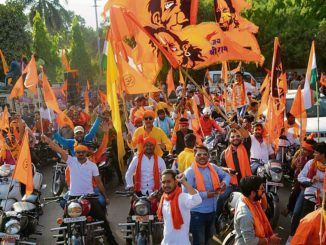
However, Rajasthan — which triggered the latest cycle of violence —observes its New Year on Diwali. This didn’t deter members of the Vishwa Hindu Parishad (VHP), Bajrang Dal (BD) and Vidya Bharti, the RSS’s education wing — sweepingly classified as the ‘Hindu fringe’— from launching a Nav Samvatsar shobha yatra on motorbikes at Karauli. From all accounts, the yatra acquired the color and shape of a carnival rather than a religious occasion. The participants, young men sporting the VHP’s emblematic saffron ‘bandana’, danced to songs played at full blast when they passed a mosque. According to a report in Scroll.in, some numbers were singing VHP anthems, dating back to the Ayodhya era, with the refrain, ‘khaula khoon mera’ (my blood boils), denoting that the day this happened, you (meaning Muslims) will be put in your place and the sword will speak instead of a Hindu’s words. The tropes that figured in the songs were a topi or skullcap and ‘Hindu awakening’. The report quoted young Hindus (unemployed or engaged in semi-skilled work) saying the VHP’s ditties were as inspiring as ‘Vande Mataram’ and caused goosebumps because of lines like ‘those who wear the topi will have to bend and say Jai Shri Ram’. It no longer matters which party rules a state. Rajasthan has a Congress government, rickety from day one. This round of rampage also scorched non-BJP states like Jharkhand and West Bengal and raised a question on whether the local intelligence failed to foresee the mayhem or deliberately kept quiet. Among the BJP-ruled states, Madhya Pradesh was the worst hit.
Delhi BJP leader Kapil Mishra’s infamy precedes him. He is known to give incendiary speeches that polarize communities as he did before the 2020 Delhi violence. He was in MP’s Khargone, the center of the trouble, a day before it erupted. He shared a photo captioned, ‘Neither Musa nor Burhan, only Jai Jai Shri Ram’. The names were those of Burhan Wani and Zakir Musa, Kashmir’s militants, who were eliminated by security forces.
The expanse of the violence, from the east to the west and the north, confirmed three perceptions: it was pre-planned, because in each case, the trajectory pursued the same path. RSS-aligned Hindu activists went on shobha yatras that wound through Muslim localities, got uncontrollable when they passed a mosque or sighted a gathering and seemed to have provoked a reaction from Muslims (stone-pelting was reported almost everywhere). Reports suggest in places it was difficult to tell who cast the first stone. The police, though present, were said to be passive. The MP Police, though, came down strong on Muslims who allegedly instigated clashes and flattened out their properties with bulldozers, borrowed from UP’s manual.
The yatris were armed with swords and sticks. Smaller towns, like Himmatnagar and Khambhat (Gujarat), Lohardaga (Jharkhand), Bankura (West Bengal) and Vasco (Goa) were targeted, instead of more vulnerable cities like Ahmedabad and Ranchi to disseminate the Sangh’s message. The participants were young men, mostly unemployed, who seemed to have all the time in the world to wreak havoc.
Karnataka pushed the Hindutva agenda in different ways: from the hijab to halal meat. The latter has caught popular imagination to such a degree that on Ram Navami day, ABVP activists bore down on the JNU canteen which normally serves meat on a Sunday and assaulted students who challenged them. How does the disorder help the Centre? Indeed, the situation in Karnataka got excessive even for a senior state minister, JC Madhuswamy, who warned the ‘fringe’ groups to back off as CM Basavaraj Bommai remained mum. Reports claimed that the BJP’s central brass advised Bommai to focus on implementing his budgetary proposals and infrastructure projects but out of electoral and not humanitarian considerations; hijab and halal could only win ‘some’ votes.
The affected states stare at polls this year and the next. In Karnataka’s case, there are apprehensions that its unicorn companies and IT majors could relocate to the relatively peaceful neighboring states. Elections and the threat of economic instability do not compose a larger picture. The answers lie elsewhere.
The mandates the BJP has swung in states, bucking anti-incumbency, established that governance was not the criterion. Governance as it is understood in a fundamental sense: delivering on the basics required for a decent quality of life, based on equity, justice and welfare. Welfare there was in spades but in the most rudimentary sense, boiling down to ‘ration-paani’.
The BJP’s success came down to purveying Hindutva through a running organization of ‘karyakartas’. These yatras and such-like programs are meant to keep the workers on the ground and empower them through a simulated sense of bravado. What better way of deflecting people’s attention from inflation and an inability to create jobs?
(The author is a senior journalist)
-

Ram Navami – the day Lord Rama was born
Ram Navami is the celebration of the birth anniversary of Lord Rama, who is believed to be the seventh incarnation of Lord Vishnu on Earth. Lord Rama’s birth was intended to end the rule of the ten-headed demon king Ravana and this day is thus symbolic of the victory of truth over the evil.
Ram Navami is celebrated on the ninth day of the Shukla paksha of the Indian month of Chaitra. According to the Gregorian calendar, it falls in the month of March-April every year. Ram Navami 2022 is on April 10 Sunday.
According to mythology, the kingdom of Ayodhya was distraught about the fact that there was no successor to the throne. During an afternoon of Chaitra, Lord Rama was born to King Dasharath and his queen Kaushalya after they were given the holy pudding to eat by Rishi Vasishtha. It is said that Lord Rama was born to save the people of Ayodhya from evil and to ensure that peace and prosperity prevails over his kingdom.
This day is also celebrated as the birth anniversary of Swaminarayan, a saint who is considered an avatar of Narayana. He was born in the village of Chhapaiya in Uttar Pradesh. Bhagwan Rama exemplified the perfect person (maryada purushottam). He was the embodiment of compassion, gentleness, kindness, righteousness and integrity. Although he had all the power in the world, he still was peaceful and gentle.
His reign in Ayodha is referred to as Ramarajya, the epitome of perfect governance. Ayodhya was the capital founded by the king-rishi Manu. During the reign of King Dasharath, Ayodhya reached a period of great prosperity. But Dasharath had one problem–he had no children. Therefore he decided to perform the ashvamedh sacrifice. Elaborate and difficult rituals had to be observed. Rishi Rishyashring presided over the yagya. The performance of this sacrifice was a great event in Ayodhya. At the end, Rishyashring recited a Mantra and made an offering to the fire. Then the gods, gandharvas, siddhas, and rishis present around began to pray to Brahma. During that time Ravana, the king of Lanka, was terrorizing the people, and they were longing for liberation from his menace. Ravana had acquired great power because he had obtained from God Brahma the boon that he would never die at the hands of gods, or gandharvas, or yakshas (demigods) or demons. As he was not afraid of men, he did not care to include men in the list of his potential slayers. So Brahmadev declared that Ravana would die at the hands of a man. Then the gods went to Vishnu for help and requested him that since Dasharath was a glorious king, that He take birth in the wombs of his three queens in four different incarnations of His divinity. When Dasharath’s sacrifice came to an end, a shining figure appeared over the sacrificial kund, and offered the king a divine beverage called “payasam”, which was to be given to his queens Kausalya, Kaikayi, and Sumitra. In due time, Kausalya gave birth to Rama, Kaikayi to Bharat and Sumitra to Laxman and Shatrugna.
The Sun is considered to be the progenitor of Rama’s dynasty, which is called the Solar Dynasty (Raghukula or Raghuvamsa –Raghu means Sun and Kula or Vamsa mean familial descendant). Rama is also known as Raghunatha, Raghupati, Raghavendra etc. That all these names begin with the prefix Raghu is also suggestive of some link with Sun-worship. The hour chosen for the observance of the Lord’s birth is that when the Sun is overhead and is at its maximum brilliance. In some Hindu sects, prayers on Ramnavami day start not with an invocation to Rama but to Surya (Sun). Again the syllable Ra is used in the word to describe the Sun and brilliance in many languages. In Sanskrit, Ravi and Ravindra both mean “Sun”.
Significance of Ram Navami
The story of the Ramayan is a classic, eternal, universal message of Dharma versus adharma, of deva versus demon, of good versus evil, as represented in the battle between Rama and Ravana.
Ravana was a brahmin; he was a great scholar who wrote numerous works on scriptural philosophy. He was powerful, dynamic, and beautiful in appearance. As the brilliant, handsome king of Lanka, he had everything one would need to be happy and peaceful. Yet, he was arrogant, egoistic, greedy and lustful. His insatiable desires led him to crave more and more power, more and more money, and more and more ladies to fulfill his every whim.
There is one main difference: Bhagwan Rama’s heart overflowed with divinity, love, generosity, humility, and a sense of duty. Ravana’s heart, in contrast, was filled with avarice, hatred, and egoism. Under Bhagwan Rama’s divine touch, the animals became his devotees and his divine helpers. Under Ravana’s touch, even humans became animals. Through his noble and divine choices, he teaches the world to choose dharma over Artha (when he leaves for the forest rather than be coronated as King) and to choose Moksha over Kama (when he chooses his kingdom over his marriage).
Ravana’s ego led to his own demise, first the demise of his spirit and heart and then the demise of his body. He thought he was the one who ran everything. He thought that he was the “doer” of it all. On the other hand, Bhagwan Rama was always humble, and he never took credit for anything. At the end of the war in Lanka, Bhagwan Rama was giving Sitaji a tour of the city, showing her where all of the various events had occurred. When, they reached the place where he victoriously slew Ravana, he reported it to Sitaji only as, “and this is where Ravana died.” He didn’t say, “This is where I crushed the demon,” or “This is where I killed Ravana.”
The story of Lord Rama as told in the great epic Ramayana is one that most Indians know irrespective of caste, creed and religion.
Lord Rama is a legendary figure, the epitome of all that is good and true, the man who vanquished the demon king, Ravana. Lord Rama is not just a hero, but has been given the status of a god by the Hindus. Therefore, it comes as no surprise that his birth is celebrated year after year with great pomp and enjoyment on the ninth day after the new moon in Sukul Paksh (the waxing moon), which falls sometime in the month of April.
-

Ram Navami: Celebrating the birth of Lord Rama
Ram Navami is one the most celebrated Hindu festival that is observed on the ninth day of the Shukla Paksha in the month of Chaitra (Hindu calendar). As per the Gregorian calendar, the day usually falls between the months of March and April.
Ram Navami is celebrated to commemorate the birth of Lord Rama, the descent of god Vishnu as Rama avatar, through his birth to King Dasharatha and Queen Kausalya in Ayodhya. On this day many people conduct homa and conclude the nine days festivities of Chaitra Navratri, due which the festival is known as Ram Navami or Rama Navratri.
This year, Rama Navami falls on Wednesday, April 21, 2021. The birth of Lord Rama took place during the Madhyahna (mid of a day), this period lasts for 2 hours and 24 minutes. Hence, one should perform all the Puja rituals related to Rama Navami during this phase.
According to drikpanchang.com, the auspicious time for puja during the Rama Navami festival are as follows: Rama Navami Madhyahna Muhurat is from 11:02 to 13:38. (Duration: 02 hours 36 mins)
Rama Navami Madhyahna Moment is 12:20.
Navami Tithi begins at 00:43 on Apr 21, 2021, and ends at 00:35 on Apr 22, 2021.
Background
Bhagwan Rama exemplified the perfect person (maryada purushottam). He was the embodiment of compassion, gentleness, kindness, righteousness and integrity. Although he had all the power in the world, he still was peaceful and gentle.
His reign in Ayodha is referred to as Ramarajya, the epitome of perfect governance. Ayodhya was the capital founded by the king-rishi Manu. During the reign of King Dasharath, Ayodhya reached a period of great prosperity. But Dasharath had one problem–he had no children. Therefore he decided to perform the ashvamedh sacrifice. Elaborate and difficult rituals had to be observed. Rishi Rishyashring presided over the yagya. The performance of this sacrifice was a great event in Ayodhya. At the end, Rishyashring recited a Mantra and made an offering to the fire. Then the gods, gandharvas, siddhas, and rishis present around began to pray to Brahma. During that time Ravana, the king of Lanka, was terrorizing the people, and they were longing for liberation from his menace. Ravana had acquired great power because he had obtained from God Brahma the boon that he would never die at the hands of gods, or gandharvas, or yakshas
(demigods) or demons. As he was not afraid of men, he did not care to include men in the list of his potential slayers. So Brahmadev declared that Ravana would die at the hands of a man. Then the gods went to Vishnu for help and requested him that since Dasharath was a glorious king, that He take birth in the wombs of his three queens in four different incarnations of His divinity. When Dasharath’s sacrifice came to an end, a shining figure appeared over the sacrificial kund, and offered the king a divine beverage called “payasam”, which was to be given to his queens Kausalya, Kaikayi, and Sumitra. In due time, Kausalya gave birth to Rama, Kaikayi to Bharat and Sumitra to Laxman and Shatrugna.
The Sun is considered to be the progenitor of Rama’s dynasty, which is called the Solar Dynasty (Raghukula or Raghuvamsa –Raghu means Sun and Kula or Vamsa mean familial descendant). Rama is also known as Raghunatha, Raghupati, Raghavendra etc. That all these names begin with the prefix Raghu is also suggestive of some link with Sun-worship. The hour chosen for the observance of the Lord’s birth is that when the Sun is overhead and is at its maximum brilliance. In some Hindu sects, prayers on Ramnavami day start not with an invocation to Rama but to Surya (Sun). Again the syllable Ra is used in the word to describe the Sun and brilliance in many languages. In Sanskrit, Ravi and Ravindra both mean “Sun”.
Significance of Ram Navami
The story of the Ramayan is a classic, eternal, universal message of Dharma versus adharma, of deva versus demon, of good versus evil, as represented in the battle between Rama and Ravana.
Ravana was a brahmin; he was a great scholar who wrote numerous works on scriptural philosophy. He was powerful, dynamic, and beautiful in appearance. As the brilliant, handsome king of Lanka, he had everything one would need to be happy and peaceful. Yet, he was arrogant, egoistic, greedy and lustful. His insatiable desires led him to crave more and more power, more and more money, and more and more ladies to fulfill his every whim.
There is one main difference: Bhagwan Rama’s heart overflowed with divinity, love, generosity, humility, and a sense of duty. Ravana’s heart, in contrast, was filled with avarice, hatred, and egoism. Under Bhagwan Rama’s divine touch, the animals became his devotees and his divine helpers. Under Ravana’s touch, even humans became animals.
Through his noble and divine choices, he teaches the world to choose dharma over Artha (when he leaves for the forest rather than be coronated as King) and to choose Moksha over Kama (when he chooses his kingdom over his marriage).
Ravana’s ego led to his own demise, first the demise of his spirit and heart and then the demise of his body. He thought he was the one who ran everything. He thought that he was the “doer” of it all. On the other hand, Bhagwan Rama was always humble, and he never took credit for anything. At the end of the war in Lanka, Bhagwan Rama was giving Sitaji a tour of the city, showing her where all of the various events had occurred. When, they reached the place where he victoriously slew Ravana, he reported it to Sitaji only as, “and this is where Ravana died.” He didn’t say, “This is where I crushed the demon,” or “This is where I killed Ravana.”
The story of Lord Rama as told in the great epic Ramayana is one that most Indians know irrespective of caste, creed and religion. Lord Rama is a legendary figure, the epitome of all that is good and true, the man who vanquished the demon king, Ravana. Lord Rama is not just a hero, but has been given the status of a god by the Hindus. Therefore, it comes as no surprise that his birth is celebrated year after year with great pomp and enjoyment on the ninth day after the new moon in Sukul Paksh (the waxing moon), which falls sometime in the month of April.