The pre-production of Nitesh Tiwari’s Ramayana, starring Ranbir Kapoor, is reportedly in full swing. As per an India Today report, Ranbir will undergo extensive vocal training to play the part of Lord Ram in the film as Nitesh wants Ranbir to sound ‘different’. The film also stars Sai Pallavi and Yash as Sita and Ravan, respectively.
As per the report, the Dangal director is leaving no stone unturned and is doing ample homework. It claimed that he has created a separate team for the diction and dialogue department, which will work closely with the actors. According to the report, Ranbir has already been put on to a diction expert who will ensure that his dialogue delivery aligns with the director’s vision. They claim there’s also a special emphasis on costumes.
India Today quoting a source stated, “Ranbir has a certain baritone and a way of speaking his lines. It is symbolic and if you have even closed your eyes, you can recognise a dialogue purely based on Ranbir’s voice. In Ramayana, Nitesh wants to make sure he sounds different from the characters he’s played in the past. Being a versatile actor, he is enjoying this process of trying something new.”
Tag: Ramayana
-

Ranbir Kapoor undergoes extensive vocal training for Ramayana
-

Symbolic significance of Ramayana
Ramayana is one of the most popular epics in the world. It is deeply interwoven into the sociocultural history of India. With 24000 verses, which are divided into six sections (kandas), it is also one of the oldest and largest epics in the history of the world. Originally composed in Sanskrit, its original authorship is ascribed to Valmiki. However, there are many versions and adaptations of the epic. Since the earliest times until now, it has been rendered into multiple languages by numerous scholars from Hindu, Buddhist, Jain and Sikh traditions both in India and outside in countries such as Cambodia, Indonesia Thailand, China, Burma, and Malaysia.
Place in Hinduism
In Hinduism, the epic along with Mahabharata belongs to the genre of ancient history (Itihasa). Hindus believe that the events described in both the epics are historic and happened at some point in the history of the planet. The two epics also exerted great influence upon Hindu art, architecture, literature, dance and drama, apart from serving as major conduits for the dissemination of popular religious themes and moral percepts to the public.
Ramayana is not just a long and convoluted epic story. It contains many sub plots, and stories and stories within stories, which makes the narrative very complex. Its main story is explicit and does not require much effort to understand. It brings to the fore the major percepts of Hindu Dharma and appeals to the readers the importance of character and righteous conduct for the order and regularity of the world. At the same, one may discern in it hidden symbolism and implicit teaching.
Ramayana means
Etymologically, Ramayana is derived from the root word ram or rama, or simply ram (with the short vowel a). Ram is the reference to the hero of the epic, Rama, who is revered by Hindus as the incarnation of Vishnu and as God himself in a human form. Ram (with short vowel a) means to enjoy or to take delight. Ram or Rama means the enjoyer or the one who delights in the play of creation. It is a reference to the Self (Isvara) or God himself. Ayanam means going, moving, walking, etc.
Thus, Ramayan or Ramayanam means the journey of Rama or the wandering of Rama. Symbolically we may interpret it as the wandering (transmigration) of the soul in the field of Prakriti or in the mortal world. Rama also means a beautiful woman, a beloved or a wife. Thus, hidden within the original meaning of the epic is a reference to Sita, the wife of Rama. From this perspective, Ramayana is not just about Rama or his wandering in the wilderness. It also refers to the journey of Sita, the Mother Goddess, and her difficulties in the mortal world as a partner in Dharma to Rama.
Symbolism of the main story
The symbolic significance of Ramayana has been interpreted variously by various scholars. At the most basic level, the epic represents the vulnerabilities to which human beings are susceptible due to their weaknesses and impurities, and the conflict between good and evil forces which may arise from them. It portrays the deep connection between God and his devotees and the power of devotion. It also suggests how with virtue and righteousness and with the help of God mortal beings can surpass even gods in their ability to destroy evil.The epic Ramayana teaches many valuable lessons. It brings to the fore the vulnerability of human life and the message that even God is not free from suffering when he incarnates upon earth. We learn from it that in the midst of difficulties, human beings should not lose their moral imperative. They should follow the example of Rama and remain on the path of righteousness, without succumbing to evil temptations and without surrendering to evil powers. They should also learn from the example of Ravana that knowledge and power can become destructive if it is tainted by the impurities of ignorance, desires, egoism, and delusion.
The epic symbolizes the power of devotion in human life and the deep connection between God and his devotees. God incarnated upon earth as Rama to provide the humans with an ideal role model which they can follow to achieve liberation. The following is the symbolism of the main story of Ramayana. It is presumed that the readers are familiar with the main story of the epic. Hence, no attempt is being made to narrate the story or describe the characters.
– Rama symbolizes the auspicious qualities and the Supreme Self. He descends into the mortal world (the body) in search of the individual Self (Sita), his devotee, from which he is separated in the beginning of creation.
– Ravana symbolizes the ego with ten evil qualities, who defies God and asserts his individuality due to his tamasic and demonic nature.
– The body represents Lanka, which is ruled by the ego (Ravana) who holds the embodied Self (Sita) in captivity because of delusion and demonic pride.
– God (Rama) assembles the army of monkeys, represented by senses and other bodily parts which are by nature restless and fickle.
– With the help of intelligence (Lakshmana), breath (Hanuman) and the restrained senses (army of devout monkeys), he builds a bridge (channel) across the ocean of consciousness (mind) to descend into the being and find the Self.
– He destroys the ego (Ravana) and its army of evils and reconnects with the individual Self (Sita). Upon finding the individual Self, he subjects it to purification in the fire of austerities (tapah) just as Rama did to Sita, and removes all the impurities which accumulated around the Self during its captivity and bondage in the body.
– Rama and Sita depart from Lanka (body) and ascend to the immortal heaven (Ayodha) through the ethereal plane or the mid-region (Puspak Vimanam), along with the whole army of monkeys and devotees (the divinities or the tattvas in the body).
-

Tulsidas Jayanti
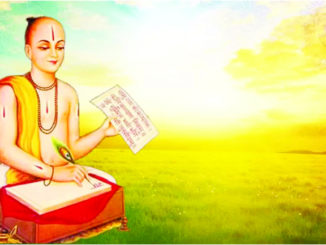
Tulsidas (1497-1623 C.E.) was a Hindu saint and the poet. Tulsidas is renowned for his great devotion towards Lord Rama. Tulsidas composed several works but he is best known as the author of the epic Ramcharitmanas, a retelling of the Sanskrit Ramayana in the vernacular Awadhi language.
Tulsidas was acclaimed to be a reincarnation of Maharishi Valmiki, the composer of the original Ramayana in Sanskrit. He is also considered to be the composer of Hanuman Chalisa, a popular devotional hymn in Awadhi dedicated to Lord Hanuman.
Tulsidas spent most of his life in the city of Varanasi. The famous Tulsi Ghat on the Ganges River in Varanasi is named after him. The famous Sankatmochan Temple dedicated to God Hanuman is believed to be founded by Tulsidas.
According to Hindu lunar calendar, Tulsidas was born on Shravana, Shukla Paksha Saptami and this day is observed as birth anniversary of Poet Tulsidas. Tulsidas is also known as Goswami Tulsidas.
This year, the birth anniversary of the saint-poet falls on August 15.
Tulsidas was born on the 7th day in the month of Shraavana (July or August), in the bright half of the lunar. His birthplace is identified at the Rajapur (also known as the Chitrakuta) at the bank of the Yamuna river in UP. The name of his parents is Hulsi and Atmaram Dubey. The exact birth date of Tulsidas is not clear and different people have different opinions regarding his birth year. According to some scholars he was born in 1554 as per Vikrami Samvat and others say it was 1532. He lived his life around 126 years.
According to a legend, Tulsidas took 12 months to come out in this world, till then he stayed in the womb of his mother. He had 32 teeth from his birth and looked like a five-year-old boy. After his birth, he started enchanting the name of Rama instead of crying. That’s why he was named Rambola, he himself stated in Vinayapatrika. At the fourth night after his birth, his father had passed away. Tulsidas had stated in his works Kavitavali and Vinayapatrika about how his parents’ abandonment him after his birth.
Chuniya (the female maid of his mother Hulsi) took Tulsidas to her town, Haripur, and took care of him. She died after caring for him for just five and a half years. After that event, Rambola lived as a poor orphan and walked door to door begging for alms. It is assumed that the Goddess Parvati took up the form of a Brahmin for taking care of the Rambola.
He himself had given some of the facts and events of his life in his various works. Two ancient sources of his life are the Bhaktamal and Bhaktirasbodhini composed by the Nabhadas and Priyadas respectively. Nabhadas had written in his writing about Tulsidas and described him as an incarnation of the Valmiki. Priyadas composed his writing 100 years after the death of Tulsidas and described the seven miracles and spiritual experiences of the Tulsidas. Two other biographies of Tulsidas are Mula Gosain Charit and Gosain Charit composed by Veni Madhav Das in 1630 and Dasanidas (or Bhavanidas) around 1770 respectively.
The Incarnation of the Valmiki
It is believed that Tulsidas was the reincarnation of Valmiki. According to the Hindu scripture Bhavishyottar Purana, Lord Shiva had described to his wife Parvati that how Valmiki will incarnate in the Kal Yuga.
According to the sources, it is considered that the Hanuman use to go to Valmiki to hear him singing the Ramayana. After the triumph of Lord Rama over Ravana, Hanuman continued to worship the Rama in the Himalayas.
Learning
Rambola (Tulsidas) was given the Virakta Diksha (known as Vairagi initiation) and got the new name, Tulsidas. His Upanayana was performed by the Narharidas at Ayodhya when he was just of 7 years old. He started his first learning at the Ayodhya. He mentioned in his epic the Ramcharitmanas that his guru narrated him the Ramayana over and over again. He came to the sacred city Varanasi when he was just 15–16 years old and got the knowledge of Sanskrit grammar, Hindu literature and philosophy, four Vedas, six Vedangas, Jyotisha from his guru Shesha Sanatana at the Panchaganga Ghat in Varanasi.
After study, he came back to his birthplace, Chitrakuta by the permission of his Guru. He started to live in his family home and narrating the story of Ramayana.
Marriage History
He was married to Ratnavali (the daughter of Dinbandhu Pathak of Mahewa village and Kaushambi district) on the 13th of Jyeshta month (May or June) in the year 1583. After some years of marriage, he had a son named Tarak who died in his toddler state. Once upon a time, his wife went to her father’s home when Tulsidas had gone to the Hanuman temple. When he returned home and did not saw his wife, he swam along River Yamuna in order to meet his wife. Ratnavali was very upset with his activity and blamed him. She remarked that he should become a true devotee and should focus on God. He then left her wife and went to the holy city of Prayag (where he renounced the stages of Grihastha’s life and became a Sadhu). According to some authors, he was unmarried and Sadhu from birth.
How He Met the Lord Hanuman
Tulsidas meet Hanuman at his own Katha, he fell at lord Hanuman’s feet and shouted ‘I know who you are so you cannot get away leaving me’ and lord Hanuman blessed him. Tulsidas expressed his feeling in front of lord Hanuman that he wants to see Rama confronting each other. Hanuman guided him and told him that go to the Chitrakuta where you would really see the Rama.
How He Met the Lord Rama
As per Lord Hanuman instructions, he started to live in the Ashram at Ramghat in Chitrakuta. One day when he went on Parikrama of the Kamadgiri Mountain, he saw two princes on the horsebacks. But he could not distinguish them. Later when he acknowledged that they were Rama and Lakshman by the lord Hanuman, he got disappointed. All these events were described by himself in his writing Gitavali. On the next morning, he met Rama again when he was making sandalwood paste. Rama came to him and asked for a Tilaka of sandalwood paste, in this way he saw Rama clearly. Tulsidas was so happy and he forgot about the sandalwood paste, then Rama took the tilak himself and applied it on his forehead and also on the Tulsidas‘s forehead.
In the Vinayapatrika, Tulsidas had mentioned the miracles at Chitrakuta and lot of thanks to the Rama. He got darshan of the Yajnavalkya (speaker) and Bharadvaja (listener) in the Magha Mela under a banyan tree.
Composition of the Epic, Ramcharitmanas
He started to write the Ramcharitmanas in Ayodhya on the Ramnavami of the Chaitra month in the year 1631. He completed his writing of the Ramcharitmanas in two years, seven months and twenty six days in the year 1633 at the Vivaha Panchami (marriage day of the Rama and Sita) of the month Margashirsha.
He came to the Varanasi and delivered the epic Ramcharitmanas to the Lord Shiva and Mata Parvati at the Kashi Vishwanath Temple.