The year 2025 proved to be one of the most dynamic in the recent history of Indian cinema – a year where massive box-office success collided with bold, socially conscious storytelling, and where audiences were invited to both cheer and reflect. Indian filmgoers flocked to theatres for spectacle and yearned for substance from the screen. What emerged was a cinematic landscape defined not by uniformity but by its contrasts: grand narratives and quiet truths, patriotic fervor and marginal voices, commercial polish and artistic risk.
In 2025, Indian cinema expanded its reach – not just in terms of box?office records, but also in cultural conversation. The stories that dominated our screens reflected a nation grappling with identity, pride and the lived realities of its people.
Dhurandhar: A Spectacle of Patriotism
No discussion of Indian cinema in 2025 can begin without acknowledging Dhurandhar – a film that became a paradigm of mainstream success and cultural resonance.
Directed by Aditya Dhar and boasting an ensemble cast that includes Ranveer Singh, Akshaye Khanna, Sanjay Dutt, R. Madhavan, Arjun Rampal and Sara Arjun, Dhurandhar turned the spy thriller into a nationwide event. With its taut pacing, high?octane action sequences and sweeping production values, the film skillfully blended entertainment with echoes of real historical events like the Kandahar hijack, the Parliament attack, and the 26/11 Mumbai terror attacks.
But what truly set Dhurandhar apart was its phenomenal box?office performance. Opening to strong collections and holding steady through weeks of release, it didn’t just dominate market share – it shattered records. By mid?December, industry trackers reported that Dhurandhar had collected over ?870 crore worldwide, making it one of the biggest Indian films of the year. Along the way it surpassed the lifetime totals of films such as Kantara: A Legend – Chapter 1 and cemented its place in the upper echelon of Indian cinematic earnings. Audiences across age groups responded not just to its star power and action set pieces, but to the film’s emotional undercurrents – a mix of loyalty, sacrifice and national pride that struck a chord in a year of broader social introspection.
Critics acknowledged the film’s technical mastery – the slick editing, immersive cinematography, and an expansive soundscape – while also debating the ideological contours of its narrative. Some saw in Dhurandhar a celebration of courage and resolve; others cautioned against simplistic narratives of nationalism. Regardless of interpretation, the film became a cultural flashpoint, setting the tone for how cinema and national identity intersect in contemporary India.
Homebound: The Power of Human Stories
In stark contrast to Dhurandhar’s explosive scale stood Homebound, a film that operated on intimacy and empathy rather than spectacle. Directed by Neeraj Ghaywan and chosen as India’s official entry for the Oscars, Homebound was named by critics and audiences alike as one of the most socially resonant films of the year.
At its heart, Homebound is a story about friendship, aspiration and the structural inequalities that shape Indian society. It follows two protagonists – one Dalit, one Muslim – as they navigate the obstacles that caste, class and systemic bias place in their paths. The power of the film lies not in plot twists or larger?than?life heroics, but in its observational, humane storytelling. Its characters are fully realized, their motivations clear, their struggles reflective of many real lives in contemporary India.
Shot with a deliberate eye for realism, the film uses its visuals to contrast spaces of privilege and marginalization, showing not only geographic divides but emotional ones. The performances – particularly from the two leads – are quietly potent, grounding the narrative in lived experience rather than cinematic artifice.
Homebound resonated at international film festivals from Venice to Toronto to Berlin, where audiences praised its sensitivity, depth and universality. In a year dominated by thunderous entertainment, it emerged as a reminder that cinema’s greatest strength is its ability to make us see ourselves in the stories of others.
A Year of Diversity: Film Beyond the Blockbuster
The year’s cinematic offerings were not limited to these two poles of blockbuster spectacle and hard?hitting social drama. Across the country, filmmakers in every language and genre produced work that expanded the language of Indian cinema.
Chhaava, starring Vicky Kaushal and Rashmika Mandanna, stood out as a historical epic, sweeping audiences into its richly detailed portrayal of valor and legacy. The film grossed over Rs 800 crore globally, affirming that historical narratives remain powerful engines for both emotion and box?office returns.
On a different register, Saiyaara, released in July, defied conventional expectations to become the highest-grossing Indian romantic film of all time. Its emotional storytelling, paired with a captivating musical score, proved that romance – when anchored in fresh performances and a thoughtful script – still has a dedicated and vast audience. Cinema in 2025 also saw the rise of genre diversity, with films like the animated Mahavatar Narsimha appealing to family audiences, the action-packed War 2 delivering mass thrills, and regional hits like Coolie (Tamil) making significant dents at the global box office. The year’s highest grossing films reflected this diversity: from Kantara: A Legend – Chapter 1 to Lokah Chapter One: Chandra and They Call Him OG, audiences celebrated stories from different regions, languages and cinematic traditions, proving yet again that Indian cinema is pan?Indian, not monolithic.
Independent and Critical Favorites: Beyond the Conventional Frame
Beyond the financial metrics, 2025’s critical conversation was animated by films that challenged narrative norms and foregrounded marginalized voices. Among these:
Humans in the Loop – a sci?fi drama that used artificial intelligence as a lens to explore human agency and inequity.
Jugnuma – a genre?blending tale of caste, capitalism and the supernatural set in the Uttarakhand hills.
Dhadak 2 – a mainstream romance that tested familiar formulas with its commentary on caste barriers.
The Mehta Boys – a heartfelt dramedy directed by Boman Irani, centering family dynamics and generational tensions.
Nishanchi, from Anurag Kashyap, embraced experimental storytelling and genre subversion.
The Great Shamsuddin Family offered a warm, inclusive portrait of Muslim family life that resonated widely across streaming audiences.
These films – each distinct in tone and intent – demonstrated that Indian cinema’s future lies not just in bigger budgets or star casts, but in storytelling that reaches deeper into lived experience.
The Gender, Genre, and Narrative Landscape
One of the more intriguing currents in 2025 was the resurgence of certain traditional tropes even as new ones emerged. Films like Saiyaara and Ek Deewane Ki Deewaniyat saw the familiar – sometimes problematic – “spoilt man child” archetype return to prominence in romantic narratives. While these films drew strong box?office numbers, they also sparked debate about gender dynamics, representation and audience desire for both nostalgia and progress.
At the same time, films like Homebound and Humans in the Loop illustrated a keen interest in narratives that move beyond provinces of the self, asking not only “What entertains?” but “What transforms?” The dual currents of spectacle and introspection – sometimes at odds, sometimes complementary – made 2025’s cinematic dialogue richer and harder to pigeonhole.
Tag: Ranveer Singh
-

2025 in Indian Cinema: Blockbusters, Brave Voices and a Year of Creative Contrasts
-

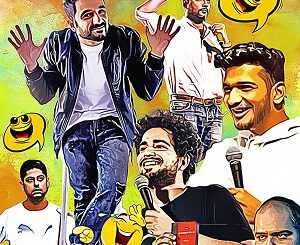
Missing: India’s comic sense
In the midst of FIRs, vandalism and outrage, there must be debate about why comedy is still a fair way away from being a vehicle for social change in the country

By Aditya Mani Jha In 2021, I watched the comedian Varun Grover perform in New Delhi. As usual, he had the audience in the palm of his hand. About 10 minutes in, Grover said (in Hindi), “Please understand the chronology. First, I tell the joke, then you laugh and finally, I go to jail.” The laughter was muted, not because people didn’t understand it, but because they understood it a little too well.
The tension in the room was because back then, the comedian Munawar Faruqui’s legal troubles were hogging the headlines. Across January and February, he ended up spending over a month in jail for allegedly making offensive jokes about Hindu deities, a charge for which not a shred of evidence was ever produced.
Four years down the line it’s more of the same with Indian comedy. At the time of writing this column, Kunal Kamra had just been slapped with the second, third and fourth FIRs against him this week, after the comedian’s allegedly derogatory comments about Maharashtra Deputy CM Eknath Shinde, cabinet minister Nirmala Sitharaman, et al. The comments happened in the context of Kamra’s 45-minute stand-up special Naya Bharat on YouTube, which has received over 11 million views since it was released on March 23. Kamra’s Mumbai studio was also vandalized last week by supporters of Shinde’s faction of the Shiv Sena.
Persecuting comedians
In India, comedy is still a fair way away from being a vehicle for social change. And one of the main reasons is that successive Indian governments — both at the state and central levels — have been trigger-happy when it comes to persecuting comedians. A decade ago, in 2015, All India Bakchod (AIB) uploaded a video where they, in conjunction with Bollywood celebrities such as Karan Johar, ‘roasted’ the actors Arjun Kapoor and Ranveer Singh.
The entire political ecosystem cried obscenity and multiple FIRs were filed against the comedians. AIB finally removed the video from their YouTube page. Since then, through the late 2010s and early 2020s, comedians such as Sanjay Rajoura have faced legal action on the flimsiest of charges. Like in 2016, when the actor and comedian Kiku Sharda was arrested after he did an impression of the religious leader and convicted rapist Gurmeet Ram Rahim, on the TV show Comedy Nights With Kapil.
After Vir Das performed his Two Indias set at Washington D.C.’s Kennedy Centre in 2021, he faced a total of seven police complaints against him in various parts of the country — in Delhi, the complainant was a vice-president of the ruling Bharatiya Janta Party (named, sadly, Aditya Jha). Das also faced lawsuits for “objectionable material” after his Netflix TV series Hasmukh, about a small-town comedian who becomes a serial killer. Kamra himself has a previous contempt case against him in the Supreme Court, running since 2020.
Most recently, of course, comedian Samay Raina and podcaster Ranbeer Allahabadia (aka BeerBiceps) were the subjects of an FIR filed after allegedly objectionable jokes made during Raina’s paywalled YouTube series India’s Got Latent.
Personally, I see this largely as a cultural issue where the standards are very different for India vs. the rest of the world. We are an obedience-based culture focused on the needs of the collective, not a dissent-based culture where individual rights are paramount. And because of this, I don’t see individual outlier comedians affecting vital conversations in India anytime soon — the kind of conversations that lead to real change.
System designed to reward compliance
Recently, I was watching the former English cricketer Steve Harmison answer a question about cultural differences between Asian and non-Asian cricketers. He replied that it was very tough for young players to be mavericks and rule-breakers in India, Pakistan, Bangladesh et al because they come through a system designed to reward compliance and punish dissent.
In my view, Harmison had hit upon something crucial to the discourse, and his point can be extrapolated to the comedic sphere as well. Why would a young, up-and-coming Indian stand-up comedian try to critique, say, caste and religion-based discrimination, or the gender wage gap, or any one of the zillion other problems in our society? If anything, they would be incentivized to swing to the other extreme, to cater to the bigotries and insecurities of the majority.
Can you imagine being a comedian who regularly performs in corporate events in India? Half the people hiring you want nothing else but jokes about their wives’ cooking, or jokes about how feminism “has gone too far”, or jokes about how you can’t catcall women anymore because of “woke culture”. The other half of your clientele consists of people who don’t actually want you to joke about anything at all. They want the comedic equivalent of white noise, words so anodyne and inoffensive that they kind of blend in with the ambience, like elevator music.
Which isn’t to say that actual change cannot be triggered by comedians. In America, basically the entire legal framework for mass-media censorship happened because of one legal case: FCC (Federal Communications Commission) vs. Pacifica Foundation, 1978, ending in a landmark 5-4 ruling by the U.S. Supreme Court that upheld the right of the federal government to regulate content over the broadcast airwaves. The case itself only happened because of comedian George Carlin’s Seven dirty words monologue, wherein he listed certain swear words that could not be uttered on TV or radio, regardless of context.
Carlin was riffing off his predecessor Lenny Bruce’s monologue in 1966, where Bruce reeled off the words he had been arrested for in the past. A conservative activist filed the case against Radio Pacifica for airing the Carlin segment, which eventually brought about this outstanding ruling, rich in both legal and public policy arguments.
You may or may not agree with the U.S. Supreme Court’s judgment, but you cannot deny the rigor and the intellectual heft of the exercise. I would urge Indian comedians and politicians to read not only the judgment, but the arguments that preceded it. These are conversations we should be having right now, when the Internet has forever changed how the public consumes information and opinions.
Alas, we would rather file FIRs and vandalize studios than actually do the reading and construct informed arguments.
(Aditya Mani Jha, a writer and journalist, is working on his first book of non-fiction)
-
Deepika Padukone, Ranveer Singh announce they are expecting their first child
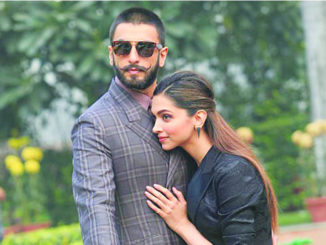
Bollywood star couple Deepika Padukone and Ranveer Singh are expecting their first child. They announced her pregnancy in February 2024. According to reports, Deepika is said to be in her second trimester. The star couple had gotten married in 2018. Her delivery is due in September 2024.
Deepika and Ranveer shared a post announcing their pregnancy on Thursday, Feb 29, The post read, “September 2024,” with cute motifs of baby clothes, baby shoes and balloons.
Earlier, there were speculations circulating that Deepika Padukone might be pregnant. These rumours stemmed from observations that she reportedly hid her baby bump while wearing a glittering saree at the 77th British Academy Film Awards (BAFTA). Deepika Padukone was adorned in a couture saree and custom jewellery designed by Sabyasachi Mukherjee.
Deepika Padukone and Ranveer Singh met on the sets of Sanjay Leela Bhansali’s ‘Goliyon Ki Rasleela Ram-Leela’. They dated for five years before getting married in November 2018.
When asked about becoming a parent, Deepika had a smile on her face and told Vogue, “Absolutely. Ranveer and I love children. We look forward to the day when we will start our own family.”
She further added, “When I meet the people I have grown up with—my aunts, uncles, family friends—they always mention how I haven’t changed one bit. That says a lot about our upbringing. In this industry, it’s easy to get carried away by fame and money. But no one treats me like a celebrity at home. I am a daughter and a sister first. I don’t want that to change. My family keeps me grounded and Ranveer and I hope to inculcate the same values in our children.”
On the work front, Deepika was last seen in Shah Rukh Khan’s superhit, ‘Jawan’. She will next be seen in the Rohit Shetty directorial, ‘Singham Again’. She will be sharing screen space with Ranveer Singh, Ajay Devgn, Akshay Kumar, Tiger Shroff and Kareena Kapoor, among others. -

Deepika opens up about wanting to become a mother, starting family with Ranveer
Deepika Padukone spoke about how she and actor-husband Ranveer Singh ‘hope to inculcate the same values in their children’ that her parents have brought her up with. In an interview with Vogue Singapore, the actor reflected on her how her parents Prakash Padukone and Ujjala Padukone raised her sister Anisha Padukone and her. She also discussed starting her own family with Ranveer.
Deepika Padukone praised her parents, saying, “When I meet the people I have grown up with — my aunts, uncles, family friends — they always mention how I haven’t changed one bit. That says a lot about our upbringing… In this industry, it’s easy to get carried away by fame and money. But no one treats me like a celebrity at home. I am a daughter and a sister first. I don’t want that to change. My family keeps me grounded and Ranveer and I hope to inculcate the same values in our children.”
When asked if becoming a mother ‘is something she looks forward to then’, Deepika Padukone said, “Absolutely. Ranveer and I love children. We look forward to the day when we will start our own family.”
Last year in November, Ranveer Singh and Deepika Padukone were in Belgium as they celebrated their fifth wedding anniversary. Ranveer and Deepika tied the knot on November 14, 2018 at Italy’s Lake Como after dating for six years. They first met on the sets of Sanjay Leela Bhansali’s romantic film Goliyon Ki Rasleela Ram-Leela. They later also starred in Bajirao Mastani and Padmaavat.
Deepika will be seen soon in the sci-fi action film Kalki 2898 AD opposite Prabhas. She also has director Siddharth Anand’s aerial action film Fighter opposite Hrithik Roshan, which will be released on January 25, 2024. She will also be seen in Rohit Shetty’s Singham Again. Ranveer will also be seen in the action film. -

Rocky Aur Rani Kii Prem Kahaani first look posters out
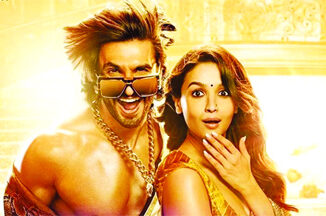
Earlier this year, filmmaker Karan Johar completed the shoot of his upcoming directorial venture Rocky Aur Rani Kii Prem Kahaani. The family drama features Ranveer Singh and Alia Bhatt in lead roles. On Thursday, May 24, the cast and makers released Rocky Aur Rani Kii Prem Kahaani’s first look. This is Karan’s first film as a director since 2016’s Ae Dil Hai Mushkil. In the poster, Ranveer wore funky sunglasses and a gold chain around his neck. He also showed his ripped body in the almost bare-chested image as he wore an animal printed shirt and gave a goofy expression. In another poster, Ranveer Singh wore a studded leather jacket. Alia Bhatt sported kohl-rimmed eyes, black bindi and a huge nose ring in the first look posters of her Aur Rani Kii Prem Kahaani avatar. Sharing her images on Instagram, Karan wrote, “Ladies and gentlemen, the queen is here to steal your hearts – meet Rani!”
-
Ranveer Singh’s Cirkus releasing this Christmas
Ranveer Singh, Pooja Hegde, and Jacquiline Fernandez starrer comedy drama Cirkus, which is all set to hit theatres on December 23rd. The movie is directed by Rohit Shetty. In the comedy-drama, the Bajirao Mastani actor will appear in a completely distinct avatar.
According to previous reports, the film was supposed to release in the first week of December. Later, the makers changed their decision. Other than Ranveer, Pooja, and Jackie, the film stars Siddhartha Jadhav, Johnny Lever, Sanjay Mishra, Vrajesh Hirjee, Vijay Patkar, Sulbha Arya, Mukesh Tiwari, Anil Charanjeett, Ashwini Kalsekar, and Murli Sharma in important roles. Deepika Padukone is playing a cameo role in the film, and her song, Current Laga Re with hubby Ranveer, already went viral.
According to reports, the movie is based on the 1982 classic Angoor, starring Sanjeev Kumar and Deven Verma. This will be the first time Ranveer has played double roles. After Simmba and Sooryavanshi, the movie is Ranveer and Rohit’s third collaboration.
-

Ranveer Singh calls Deepika Padukone ‘my queen’ amid separation rumors
Ranveer Singh and Deepika Padukone continue to go strong on the relationship front. Amid rumours of their separation, Ranveer has praised Deepika after she was signed by an international jewellery brand as its brand ambassador. After Cartier welcomed Deepika Padukone as its ‘newest ambassador’ along with a stunning black and white picture of her sporting a diamond necklace from the brand, Ranveer reacted to the post. He tweeted, “My Queen. Doing us proud!” along with a tricolor, hands joined in prayer and heart emoji. Recently, Ranveer had stepped out in a pink look from head to toe. He shared pictures of his look in a pink tee and pants paired with pink jacket and shoes on Instagram. Deepika had called his look ‘edible’ in the comments section. He also called Deepika ‘Queen on Instagram, while reacting to her look at the recent The Business of Fashion event in Paris.
Deepika was among many celebrity guests at the The Business of Fashion event in Paris. She is the first Indian to feature on the Bof 500 cover. At the event, she joined the likes of Kylie Jenner, Natasha Poonawalla, Charli XCX, Ellie Goulding, Jaden Smith, Jared Leto, Paloma Elsesser and Karlie Kloss. Ranveer and Deepika had made quite a few joint public appearances last month. They attended Mukesh Ambani’s Ganpati visarjan and attended the Ganpati darshan at Maharashtra chief minister Eknath Shinde’s residence. Deepika had also joined Ranveer on stage to present him a trophy at the Filmfare Awards held last month. She gave her a kiss on the cheek and a hug as she arrived on stage. She handed him the Filmfare best actor award for his performance in the film 83. Deepika had co-produced the film, and had played the role of Kapil Dev’s wife Romi Bhatia in it. Source: HT
-
‘Nude’ photograph was morphed, Ranveer Singh tells Mumbai cops
Bollywood actor Ranveer Singh has told the Mumbai police that one of his `nude’ photographs which led to the filing of a case for obscenity against him had been morphed. He denied that this photograph was among the pictures from a photo shoot that he had shared on social media, a police official said on Thursday, September 15.
Singh’s statement was recorded by city police on August 29. He told police that the photograph in which private parts were allegedly visible had not been uploaded by him, the official said.
The actor also maintained that the photos which he had shared were not obscene as he was wearing underwear.
“We have sent the photos to a forensic science laboratory to ascertain if they had been morphed,” said the official. A First Information Report (FIR) was registered against the actor at Chembur police station here in July on the basis of a complaint filed by an office-bearer of a non-governmental organisation.
-

Ranveer wins Best Actor Award for 83 in Melbourne
Ranveer Singh, who was hailed by many for his performance in ’83, has won the Best Actor of the Year award at the prestigious Indian Film Festival of Melbourne (IIFM). The film featured him in the role of the Indian cricket team captain Kapil Dev and was directed by Kabir Khan. It was based on India’s legendary and first win in the World Cup Match. Needless to say, Ranveer Singh expressed his happiness and gratitude for this win adding that 83 will always be one of the most cherished films in his filmography. Speaking about it, Ranveer said, “I would like to take this opportunity to thank all the jury members at IFFM for bestowing me with the Best Actor of the Year Award for my role as Kapil Dev. ‘83 is one of the most loved films of my career! It’ll always be one of the most cherished films in my filmography.”
-

Ranveer Singh calls Jayeshbhai Jordaar as an estrogen film
Ranveer Singh, during a recent interview, opened up about his upcoming film Jayeshbhai Jordaar. Talking about his sensitive character in the film, Ranveer said that he is bringing a wave of estrogen in the testosterone-driven era. Recently, hyper-masculine films, including RRR and KGF: Chapter 2 have become a blockbuster, earning more than Rs 1000 crore at the box office. Speaking about his film Jayeshbhai Jordaar, where Ranveer’s character is sensitive, the actor said that he is bringing a wave of oestrogen in the testosterone era. “How about me coming with an estrogen film in this testosterone rage,” he replied when asked about releasing a sensitive film in a hyper-masculine film era. He then recalled that he had been trained by Loyd Stevens, who trained Tarak for RRR. After he was advised to take a testosterone test, he found out that there was too much!
He said, “Loyd Stevens was my trainer for Ram Leela. First time I created that kind of physique, and my God he was expensive. He trained Tarak for RRR as well, a big-time trainer. He has a scientific approach. He asked me to get these tests, to check my testosterone, to check how much it is if I need supplements you know to fill that testosterone to make that body. The reports came back saying that I have too much of it. I can spare some.”
Source: India Today
-

Ranveer Singh: Like to convince people that I can transform myself into anyone
Bollywood’s livewire star Ranveer Singh, who is gearing up for the release of his next ‘Jayeshbhai Jordaar’, says for him, the best thing about being an actor is that one can live many lives. Ranveer says: “For me, the best thing about being an actor is that you can live so many lives and experience so much because each character that I choose to play are remarkably different from one another.
“When people saw ‘Band Baaja Baaraat’, they felt for the longest time that I was a boy who was born and brought up in Delhi.
“This has happened many times during the course of my 11-year career and that to me is the biggest compliment because I like to convince people that I can transform myself into anyone.”
The actor is clear that he doesn’t want to get typecast in the industry and among audiences. He, thus, picks his projects with care to wow audiences.
Ranveer said: “I have a personal ambition to never be typecast and it’s a tough one but I choose my scripts quite cleverly. ‘Jayeshbhai Jordaar’ presented me with a huge opportunity to play a character with no reference point all over again. I think I really manifest these roles into my life.”
The Yash Raj Films’ ‘Jayeshbhai Jordaar’, also starring Arjun Reddy fame Shalini Pandey, is releasing on May 13. Source: IANS
-
Ranveer joins Machine Gun Kelly, Tiffany Haddish for NBA All-Star Game
Bollywood actor Ranveer Singh is the official brand ambassador of NBA (National Basketball Association) for India. Taking his association forward with the NBA, the actor will now be flying to Cleveland to be a part of a star-studded NBA All-Star Celebrity Game that features basketball players and global musicians as well. For the unversed, Ranveer will be playing the game alongside Anuel, Machine Gun Kelly, Jack Harlow, Quavo and comedian Tiffany.
The Gully Boy actor confirmed his participation in the game during a Q and A on social media. Ranveer informed his fans that he has started preparing for the big match, which is set to take place on February 18, in Cleveland. “I’m flying to Cleveland to play the NBA Celebrity All-Star Game later this month. Better get some practice, varna naak kat jayegi,” the actor said on social media. Last year, in September, when Ranveer was declared as the brand ambassador for the NBA in India, the actor had confessed his love for basketball.
“I have loved basketball and the NBA since my childhood and have always been fascinated with its influence on popular culture, including music, fashion and entertainment. With the NBA tipping off its 75th season celebrations, there couldn’t have been a better time to join forces with the league and support their efforts to grow basketball in the country,” Ranveer said.
Talking about the big game that is set to take place next week, it will also feature Cleveland Browns player Myles Garrett, Las Vegas Aces player Dearica Hamby and Cleveland Cavaliers legends, Booby Gibson and Anderson Varejao.
-
Ranveer wants to get lost in Deepika’s hair, fans drop hilarious comments
Deepika Padukone and Ranveer Singh often indulge in some social media PDA and fans got a glimpse of just that on Wednesday. Deepika shared a glimpse of her ‘failed’ attempt at a hair flip on Instagram and Ranveer reacted to the post. Deepika, who laughed out loud at the outcome of her own attempt, made a confession in her new post: “Tried doing ‘that hair thing’ people do and failed miserably! #hairflip #epicfail.” She added a bunch of ROFL emojis to her post along with a photo of herself posing with unkempt hair that covered half her face.
Ranveer slid into the comments section and posted a filmy remark: “Teri zulfon mein khoya rahoon (Wish to be lost in your hair).” Ranveer also added the kiss patch icons to his comment, along with a bunch of red hearts. Fans, who spotted Ranveer’s comment, posted hilarious reactions. “Chheenk ajaegi bhai (It’ll make you sneeze),” wrote a fan while another jokingly added: “Sir fas jaoge, you’ll get stuck).” One more fan wrote: “Kyun bhai dandruff ho kya (Are you dandruff)?”
Deepika’s hairstylist Gabriel Georgiou had a funny reaction to her post. Deepika’s fans also complimented her on her messy hair look, showering her feed with the heart-eyes and fire emojis.
On December 31, Deepika collated an album of all the things she loves and shared it on Instagram. Left out from the post, Ranveer reacted with the shrug emoji in the comments.
-

Ranveer Singh shares how he impressed Deepika Padukone
Bollywood actor Ranveer Singh revealed while dancing with contestant Divyansh on ‘Lungi Dance’ that he was trying to impress Deepika Padukone while shooting for this track. He was interacting with the contestant in the show ‘The Big Picture’, hosted by Ranveer. During the weekend episode, Divyansh will be answering the questions asked by the host Ranveer Singh and also they will be having conversation about their fathers. As Divyansh opens up to Ranveer about how his father has supported him in his struggles, the host also reveals how his father has deeply contributed to his success. Divyansh also told Ranveer that he is the first person from his village to become a Civil Engineer. He hails from Uttar Pradesh. Both Ranveer and Divyansh in a conversation opened up about their life struggles. Divyansh shared about the hardships his father faced to get him a good education. Ranveer also told how his father struggled financially when he went to study in America. He further mentioned how his father never made him realise the troubles he and his mother went through and can relate to Divyansh’s story. Ranveer also danced with Divyansh on ‘Lungi Dance’ song. Ranveer revealed that he was trying to impress Deepika Padukone when she was shooting for this song. Ranveer said: “During the shoot of this song, I was on the sets as I was trying to woo Deepika.” ‘The Big Picture’ airs on Colors.
Source: IANS
-

Akshay Kumar, Katrina Kaif’s Sooryavanshi to light up theatres on Diwali
Akshay Kumar’s Sooryavanshi is all set to release on Diwali, November 5, in theatres. Directed by Rohit Shetty, the film also stars Katrina Kaif in the lead role and features Ranveer Singh and Ajay Devgn in cameo roles. Akshay took to social media to announce that Sooryavanshi will on Diwali after Maharashtra cinemas reopen in October.
Last month, Akshay Kumar’s Bell Bottom became the first major commercial movie to go for a theatrical release. Now, as Maharashtra Chief Minister Uddhav Thackeray has declared that the state’s cinema halls will reopen from October 22, Akshay Kumar’s Sooryavanshi will release on Diwali. The action film is the best Diwali offering for fans.
Sharing a photo with Maharashtra CM Uddhav Thackeray, Sooryavanshi director Rohit Shetty, and his co-actors Ranveer Singh and Ajay Devgn, Akshay wrote on Instagram, “So many families would be thanking Sh Uddhav Thackeray today! Grateful for allowing the reopening of cinema halls in Maharashtra from Oct 22. Ab kisi ke roke na rukegi – AA RAHI HAI POLICE #Sooryavanshi #Diwali2021 (sic).” -

Holi and Bollywood: A nostalgic walk down the memory lane
By Murtaza Ali Khan
Holi celebrations have been a part of Hindi films for as long as one can remember. Right from the early 1940s, Indian filmmakers have tried to include Holi songs in movies in order to embellish the stories so much so that some of the most popular songs of all time happen to be Holi songs. In fact, Holi has always been an important festival for the Indian film fraternity, not just on-screen but off-screen too. RK Studio hosted some of the biggest Holi parties in Bollywood with the legendary Raj Kapoor serving as a great host to the who’s who of the film industry. And it remained so for decades. The photos from the time reveal how Holi was an integral part of the studio’s celebrations. In fact, taking a leaf out of RK Studios, many others started hosting similar Holi parties and the trend continuestill date.
One of the earliest Holi songs that we come across in Hindi cinema is a song called “Jamuna Tat Shyam Khele Horee” from the 1940 film titled “Aurat”. As we move into the 1950s, we come across more and more of these songs with “Holi Khele Nandalal Biraj Mein” from the 1953 film titled “Rahi”, “KheloRang HamareSang” from the 1953 film titled “Aan”, “Mat Maro Shyam Pichkari” from the 1956 film “Durgesh Nandini”, “Holi AayiRe KanhaiRang Barse” from the 1958 film “Mother India”, and “Are JareNatkhat” from the 1959 film “Navrang” amongst the most famous ones.
In the 1960s, Bollywood unleashed evergreen Holi songs such as”Tan rang lo ji aaj man rang lo” from the 1960 classic “Kohinoor”, “Holi KhelatNandlal” from the 1963 film “Godaan”, “PiyaToseNaina” from the 1965 Vijay Anand masterpiece “Guide”, “LayiHain HazaronRang Holi” from the 1966 classic “PhoolAurPatthar”. As Hindi cinema moved into the 1970s, the writer duo of Salim-Javed injected a new kind of rage and angst in the depiction of the hero that catapulted Amitabh Bachchan’s Angry Young Man to superstardom even as the likes of Rajesh Khanna, Dharamendra, Dev Anand and others continued to play more conventional romantic heroes.
Some of the most popular Holi songs from the 1970s include “AajNa Chhodenge” from the 1970 Shakti Samanta classic “Kati Patang”,”Holi AayiRe” from the 1970 film”Holi AayiRe”, “Holi Re Holi Rangon Ki Holi” from the 1971 film “ParayaDhan”, “Nadiya Se Dariya” from Hrishikesh Mukherjee’s 1973 classic “Namak Haram”, “PhagunAayoRe” from the 1973 Rajinder Singh Bedi classic “Phagun”,”Holi AayiRe MastanoKi Toil” from the 1975 film “Zakhmee” and”Holi KeDin” from Ramesh Sippy’s epic magnum opus”Sholay”.
Bollywood’s craze for Holi songs continued in the 1980s with hits like “Rang BarseBheegeChunarwali” from the 1981 Yash Chopra classic “Silsila”, “BhagiRe BhagiBrij Bala” from the 1982 film “Rajput”, “SaatRang Main Khel Rahi Hain” from the 1985 film “Akhir Kyon”, and “Diwani Tum Jawanon Ki Toli” from the 1988 film “Dayavan”. The 1990s saw Hoi songs like “Ang Se Ang Lagana” from the 1993 Yash Chopra blockbuster “Darr”, “Rang Di Rang Di” from the 1993 film “Dhanwaan”, and “JhankaroJhankaro” from the 1994 film “Krantiveer”.
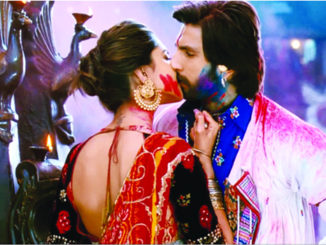
The turn of the millennium witnessed Amitabh Bachchan successfully embarking upon his second innings after a few hiccups. The song “Hori Khele Raghuveera” from the 2003 film “Baghban” went on to become one of the biggest hits of Bachchan’s stellar career. Some other popular Holi songs from the decade include “SoniSoni” from the 2000 Aditya Chopra film “Mohabbatein”, “Do Me A Favour Lets Play Holi”from the 2005 Vipul Amrutlal Shah directorial “Waqt: The Race Against Time”. The most recent superhit Holi number include “BalamPichkari” from the 2013 Ayan Mukerji film “BalamPichkari”, “LahuMunh Lag Gaya” from the 2014 Sanjay Leela Bhansali blockbuster “Goliyon Ki Rasleela Ram-leela”, and “Jai JaiShivshankar” from the 2019 Siddharth Anand blockbuster “War”.
With the death of Raj Kapoor in the year 1988, RK Studios stopped having these Holi parties but others continued hosting these Holi parties. In the recent years, the likes of Shabana Azmi and Javed Akhtar, Ekta Kapoor, Varun Dhawan, Sidharth Malhotra, Ranveer Singh, Alia Bhatt, etc. have kept the tradition alive.
The growing concerns over use of chemical colors and water shortage have led to a few changes in the way the festival is celebrated but the spirit has pretty much kept alive. This year, however, with the ongoing pandemic, the Holi celebrations in the B-town are expected to be little mellow. So it appears that one would have to wait for at least one more year to see the same old zeal in B-town’s Holi celebrations once again.
(Murtaza Ali Khan is a Delhi-based Film & TV Critic / Journalist who has been covering entertainment for over 10 years. He can be reached at murtaza@apotpourriofvestiges.com)