Tag: Ratan Tata – Tata Sons

  • JLR UNVEILS RATAN TATA’S PASSION PROJECT RANGE ROVER VELAR

    JLR UNVEILS RATAN TATA’S PASSION PROJECT RANGE ROVER VELAR

    LONDON (TIP): Tata Motors-owned Jaguar Land Rover has unveiled a new model at a grand ceremony here.

    Gerry McGovern, Land Rover Chief Design Officer, credited the final product to Tata Group chairman emeritus Ratan Tata. “I would like to thank Ratan Tata. Ever since he saw the first sketch of the Velar, he became a passionate advocate of it,” McGovern said at the function.

    “Design has the power to enrich people’s lives… this is a vehicle with emotionally charged DNA and unquestionable pedigree,” he added. Described as one of the “hottest products this year”, the Velar is now open to orders from around the world, including India.

    In a boost to British manufacturing, the company announced that the Velar will be built exclusively at JLR’s flagship Solihull plant in the West Midlands region of England.

    “The expansion of our product range and building this British designed and engineered car in the UK is a sign of our confidence in British manufacturing. We are leading the global premium car industry with our commitment to our home market and our heart, soul and headquarters will always be in the UK,” said JLR CEO Ralf Speth.

    The Range Rover brand has been heralded as Britain’s greatest luxury export since the 1970s and includes the Range Rover, Range Rover Sport and Range Rover Evoque.

    Together they have helped transform the fortunes of the UK’s largest vehicle manufacturer, accounting for 85% of all premium cars produced in Britain and contributing 10 billion pounds to the UK economy every year, JLR said.

  • Funding a clean polity: Crony capitalism needs a dirty political arena

    Funding a clean polity: Crony capitalism needs a dirty political arena

    Harish Khare

    “Today, our politics has become so divisive and toxic that any ‘reform’ becomes suspect. There is no ‘JRD’ today who would be able to tell the Prime Minister that he would be funding his political rivals.  There is no business house that does not seek a favour from the government of the day. This vulnerability induces moral timidity and financial chicanery. The unvarnished fact is that no corporate house can sanguinely acknowledge writing cheques for a political party’s treasurer. No businessman can afford to earn the wrath of the ruling party and incite a visit from that ubiquitous ‘ED’ or the CBI who invariably end up seizing ‘incriminating documents’. Even the most honest trader or contractor or entrepreneur remains vulnerable to the State’s minatory inspector”, says the authorHarish Khare.

    Sometime in early 1959, JRD Tata, India’s most respected and iconic entrepreneur, wrote to Jawaharlal Nehru that though his group, the Tatas, would continue to keep funding the Congress Party, he wanted to inform the Prime Minister that it would also be financing the newly established Swatantra Party. The Tata doyen told the Prime Minister that he found the Swatantra Party to be having a much closer appreciation of the needs of the business community; hence, he felt his group was obliged to extend whatever support it could to the Swatantra Party. Unperturbed, Nehru replied to JRD that he and his group were fully entitled to fund and finance whichever political activity they deemed worth their penny. As far as he was concerned, he had no doubt in his mind that the Swatantra Party had no future in Indian politics. Nehru was proved right: the Swatantra Party folded its tent within 15 years, though not without some spectacular successes in the 1962 and 1967 Lok Sabha elections.

    What neither Nehru argued nor JRD understood was that the Indian business community did not need a party like the Swatantra Party, a political outfit that believed in plain, simple, clean capitalism, whereas the Indian businessmen had thrived only under State patronage and its louche cousin, crony capitalism. Both before and after the 1991 reforms, the so-called entrepreneurs relied on political connections for their financial prosperity. Even now, the Indian State retains a very capricious capacity to mug any business house of its happiness. That is why the totally strange and inexplicable sight of a Ratan Tata making a pilgrimage to Nagpur to pay a ‘courtesy call’ on Mohan Bhagwat, the RSS boss man.

    All this needs to be recalled in order to contextualise Finance Minister Arun Jaitley’s attempt to cleanse the political party’s dirty financial stables. Over the years, all political parties have had access to huge and, that means, really huge -funds to finance elections and political activity. And, this means a less-than-honourable juggalbandi with the dishonest businessman. This juggalbandi has been at the core of all the ills and imperfections of Indian democracy. On the one hand, there rose- and, rose mightily -the houses of the Adanis and the Ambanis; the rise has been attributed to their ability to cosy up to political leaders. On the other hand, we have had the politicians with business links -the SK Patils, the LN Mishras, the Pramod Mahajans – having acquired prominence and clout within their own parties. Narendra Modi’s own ascendency in Gujarat can easily be traced to the ecology of institutionalised crony capitalism. And, by all accounts, the BJP had outspent many times over all its rivals in the 2014 Lok Sabha elections.

    No political party can pretend to have its hands clean, or even cleaner than the other. A handful of individual leaders may be able to claim a kind of personal honesty but none is entitled to a claim of ignorance about his/her party’s ability to access dirty money. No political party can claim to be morally superior when it comes to receiving – or extorting -funds from businessmen, big or small. In recent years, AAP has sought to put in place a somewhat transparent system but, of late, it too has found itself being accused of unclean transactions.

    At first glance, Mr. Jaitley has taken the first step towards forcing the political parties to clean up their account books. It is a political reform whose day has come. Not a day too soon. The middle classes, who have peremptorily colonised the sites of political argumentation, can be tempted to cheer this as a transformative moment. Yet, the temptation must be resisted-for three reasons.

    First, politics is an expensive business. A political party and its activities -mobilisation of support and dissent, sustenance of a large number of party activists, and, increasingly, the need for access to expensive technology of social media – cost quite a bundle. The bigger the party, the larger its establishment and larger the size of its baggage-and, the heftier its monthly bill. Second, the government – at the Centre and in the states – has not vacated its rent-seeking sites. There will always be temptation for a chief minister to use his coercive powers to generate easy money, for personal or political use. Political parties attract mostly the parasitic elements that come to the arena only to live off the taxpayer. And, third, there is no dismantling of crony capitalism. Consequently, the unclean and unethical businessman would continue to seek out the unclean and unethical politician. The businessman’s greed and the politician’s rapacity work in tandem.

    Nonetheless, a beginning has been made. Still, it would be reassuring to know that the Finance Minister’s initiative was not simply motivated by political cleverness, aimed at grounding the BJP’s rivals – just as some suspect that demonetisation was primarily driven by a desire to ‘pauperise’ the other political parties. That calculation seems to be coming unstuck in Uttar Pradesh. The Modi government has incurred a serious trust deficit.

    Political parties in India will continue to have a legitimate need for funds, both for and beyond electioneering activities. And, it is perfectly legitimate for a business house or a rich businessman to ‘reward’ a political party or leader on account of a platform or ideology. In fact, even before Independence, most Indian business leaders willingly and cheerfully funded Mahatma Gandhi’s establishment. After 1947, many regional businessmen were inclined to fund, finance and support regional political outfits.

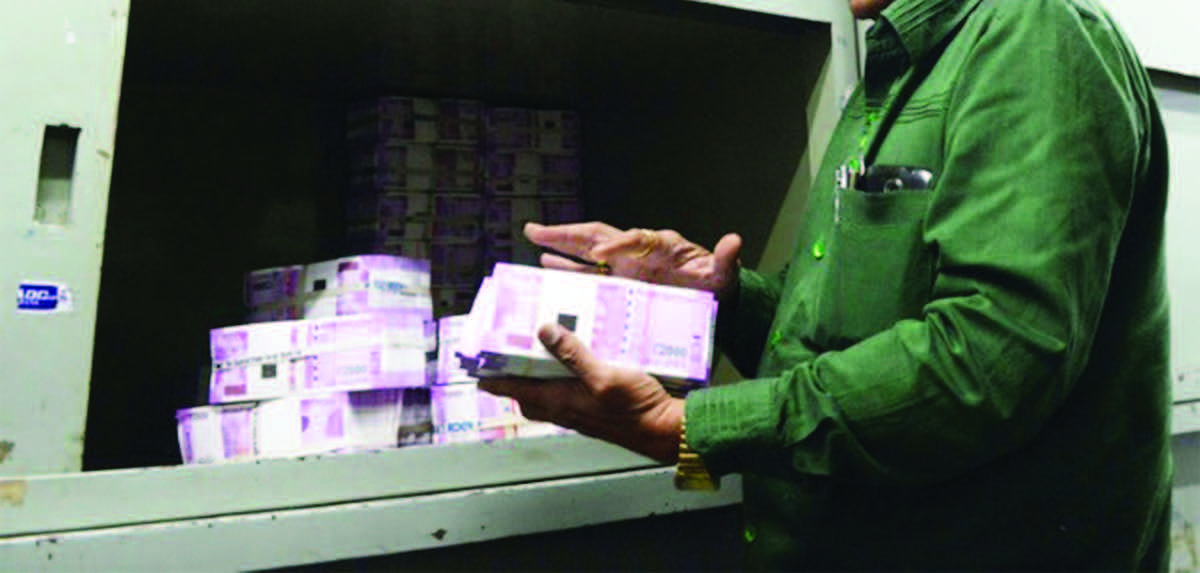
    Today, our politics has become so divisive and toxic that any ‘reform’ becomes suspect. There is no ‘JRD’ today who would be able to tell the Prime Minister that he would be funding his political rivals. No businessman can afford to earn the wrath of the ruling party and incite a visit from that ubiquitous ‘ED’ or the CBI who invariably end up seizing ‘incriminating documents’. Even the most honest trader or contractor or entrepreneur remains vulnerable to the State’s minatory inspector.

    Mr. Jaitley’s budget has so ordained that the political parties – including the BJP – would have to rejig their financial connections. Transparency in public life is a much-desired goal, but it should not be used to frogmarch the rivals out of the political arena. New norms of a level-playing field will need to be institutionalised. Otherwise the Jaitley remedy may be worse than the disease.

    (The author is editor in chief of Tribune group of newspapers)

    British English

  • Ratan Tata Considers Demonetization a National Calamity for Poor, suggests Government to Consider Emergency Relief Measures

    Ratan Tata Considers Demonetization a National Calamity for Poor, suggests Government to Consider Emergency Relief Measures

    NEW DELHI (TIP): Business Tycoon Ratan Tata has suggested the government to consider Extra-ordinary relief measures, similar to those employed at the time of national calamities, for the poor so as to lessen their hardships due to shortage of cash following demonetization.

    Tata Tweeting on the recent effects of demonetizationsaid, “While the government is doing its best to increase the availability of new currency note, it may be worthwhile to consider special relief measures similar to those employed at times of national calamities to serve the poorer segment of the population for their daily needs and for enabling emergency healthcare/medical treatment in smaller hospitals. “

  • Tata Steel sacks Cyrus Mistry, names OP Bhatt as chairman

    Tata Steel sacks Cyrus Mistry, names OP Bhatt as chairman

    MUMBAI (TIP): The Tata Steel board on Nov 25 replaced Cyrus Mistry with OP Bhatt, an independent director, as the company’s chairman with a majority of the members voting in favour of the resolution. The 110-year-old metal giant’s decision is a fallout of the parent Tata Sons ousting Mistry as its chairman last month.

    However, Mistry remains a director of Tata Steel. The company said Bhatt, who has been on its board for the last three years, will be the chairman till the outcome of the extraordinary general meeting (EGM) called on December 21 to remove Mistry as director.

    The Mistry camp slammed the latest move as yet “another example of the unprecedented erosion in core Tata values”, which has seriously dented the most respected Indian corporate brand.

    Six directors supported the resolution seeking Mistry’s removal as chairman, while three opposed it. Mallika Srinivasan, Ishaat Hussain, Adrew Robb, Jacob Schraven, D K Mehrotra and Bhatt backed Mistry’s removal. Nusli Wadia, chairman of Britannia and Bombay Dyeing, Subodh Bhargava, chairman emeritus of Eicher Group, and Mistry himself opposed the resolution.

    Srinivasan is chairman of Tractor and Farm Equipment, while Hussain, who is on the board of Tata Sons, recently replaced Mistry as chairman at TCS. Robb is chairman of Tata Steel Europe, Schraven is ex-deputy chairman of Corus and Mehrotra is the former chief of Life Insurance Corporation. Of the six independent directors, four — Srinivasan, Bhatt, Robb and Schraven — backed Mistry’s removal.

    This was the second board meeting of Tata Steel after Mistry was removed as chairman of Tata Sons last month

    Tata Steel is the third listed group company that has replaced Mistry as chairman, after Tata Consultancy Services (TCS) and Tata Global Beverages. At TCS and Tata Global, group veterans Hussain and Harish Bhat were installed as chairman.

    Tata Steel said that the board took note of the leadership changes at Tata Sons and had received a special notice from the principal shareholder to convene an EGM to remove Mistry as its director. “In view of the current situation”, the board, through a

    “circular resolution dated November 25” passed by majority consent, decided to replace Mistry as chairman “with immediate effect”, Tata Steel said in a regulatory filing.

    Tata Steel said that the board appointed Bhatt as chairman keeping in mind principles of good corporate governance and to provide impartial leadership to the company in its preparation and conduct of the EGM.

    Mistry continues to be the chairman of four listed group companies — Tata Chemicals, Tata Motors, Indian Hotels and Tata Power. He is expected to chair the board meeting of Tata Power next week when the members gather to consider the company’s second quarterly earnings.

    Five Tata Group companies have fixed EGM dates to remove Mistry from their boards (see graph). Tata Global Beverages and Tata Power are yet to announce EGM dates.

    Three companies — Tata Steel, Tata Motors and Tata Chemicals — have also proposed the removal of Wadia, a long-time independent director, from their boards for not supporting Tata Sons in its move to oust Mistry from group companies.

  • Mistry avoids face-off, skips  two Tata board meetings

    Mistry avoids face-off, skips two Tata board meetings

    Mumbai: Cyrus Mistry on Thursday skipped two crucial board meetings, of Tata Sons and Tata Consultancy Services (TCS), his first such absence since he was ousted as chairman from both companies.

    The board of directors of Tata Sons did not discuss issues linked to Mistry, Tata executives said. However, at the TCS meeting, which was chaired by Ishaat Hussain, it was decided that the company will convene an extraordinary meeting (EGM) on December 13 to remove Mistry as a director from its board. On November 10, Tata Sons had said Hussain will replace Mistry as TCS chairman.

    TCS is the first company from the Tata Group to fix the EGM date. In the next few weeks, boards of Tata Steel, Tata Motors, Indian Hotels and Tata Chemicals will also consider convening similar EGMs. Despite opposition from parent company Tata Sons, Mistry remains chairman in these four group firms. To remove Mistry from boards of listed Tata companies, a majority of shareholders have to agree. In Tata Motors, Indian Hotels and Tata Chemicals, independent directors have supported Mistry’s continuance as chairman while in Tata Steel, the six independent directors were divided for and against him. It remains to be seen how shareholders factor in the views of these directors.

    Mistry’s dismissal as Tata Sons chairman and attempts to remove him from other group companies has raised questions about governance practices at the Tata Group.

    “It’s (the TCS EGM) the most regrettable step by the Tatas and murder of corporate governance as till date they have not spelt out why Cyrus was replaced as chairman,” said Anil Singhvi, chairman, ICan Advisors. Singhvi wondered how directors who had come on board recently and were yet to acquaint themselves with the group’s businesses, had agreed to go along with the decision to replace Mistry. Singhvi’s reference was to Venu Srinivasan, Ajay Piramal and Amit Chandra who had joined Tata Sons months before Mistry’s removal.

    Barring Mistry, Thursday’s board meeting, which was Hussain’s first as chairman of TCS, was attended by all the directors with Ron Sommer and Clayton Christensen joining in via videoconference.

    After the TCS board meeting, Hussain and the company’s MD & CEO N Chandrasekaran attended the Tata Sons board meet chaired by Ratan Tata that lasted for nearly two hours. This was Chandrasekaran’s first board meet as a Tata Sons director. Source: TOI

  • Tatas replace Cyrus Mistry as TCS chairman, new battle begins

    Tatas replace Cyrus Mistry as TCS chairman, new battle begins

    MUMBAI (TIP): Tata Sons made its first move on Thursday to wrest control of group companies by replacing Cyrus Mistry and nominating veteran Ishaat Hussain as the chairman of TCS, the conglomerate’s most-profitable company.

    The Mumbai-based business empire –which is in the news following last month’s dramatic removal of Mistry as chairman — called for an extraordinary general meeting (EGM) of shareholders to remove Mistry as director of Tata Consultancy Services.

    Sources close to Mistry called the move “hasty and pre-meditated” with little regard to the due process of law.

    Lawyers that HT spoke to said that Tata Sons — the holding company of the$103 billion empire — may have been guided by concerns that Mistry is likely to increase his control over various group companies.

    Incidentally, the shareholding structure of the Tata group companies is such that Tata Sons has a lone representative on the boards of individual firms.

    A comprehensive statement from Tata Sons, following its communication on replacing the TCS chairmanship, indicates this concern.

    The strongly worded statement pointed at Mistry’s “ulterior objective” and alleged he was trying to gain control of Indian Hotels Co (IHCL) –which runs the famous Taj hotel chain across India — with the support of independent directors.

    Tata Sons said Mistry “cleverly” ensured he was the only Tata Sons representative on IHCL’s board to

    “frustrate Tata Sons’ ability to exercise influence and control”

    “In hindsight, the trust reposed by Tata Sons in Mr Mistry… has been betrayed by his desire to seek to control main operating companies of the Tata group,” the document read.

    Tata Sons shocked the corporate world last month when it removed Mistry as chairman. The move sparked a war of words between the two camps with the ousted chairman saying he faced interference from Ratan Tata, who he replaced in 2012. The Tatas have dismissed the charge and accused Mistry of poor performance.

    The bitterness was evident in Thursday’s statement, where Tata Sons said it acted in good faith and didn’t anticipate Mistry’s “devious moves” and didn’t inform other group company directors about its “dissatisfaction” with Mistry at the Tata Sons level.

    “However, we will now do whatever is required to deal with this situation.”

    The Tatas referred to the developments at Indian Hotels, where, prior to a scheduled board meeting, independent directors issued a statement endorsing Mistry’s leadership. The statement was a sharp rebuttal for Tata Sons that was citing Mistry’s alleged non-performance as the principal reason for replacing him at Tata Sons.

    Commenting on the Tata Sons move to replace him as chairman of TCS, sources close to Mistry said TCS sent the notice to exchanges on his replacement without even a board resolution. The sources added that company laws allowed Tata Sons to only nominate a chairman, who had to then be appointed by the board.

    “Nothing of this nature was done. In pre-mediated haste, by a letter of the same date, TCS has directly gone on to announce that Mistry stands replaced,” they said.

    The sources said the “hasty actions” appear to have been done at night and announcement to the stock exchange happened at 8 am.

    “Cloak-and-dagger machinations with little regard to due process of law have come to define the angry strategy of the Ratan Tata camp,” they said.

  • Cyrus Mistry removed as Tata Sons chairman, Ratan Tata returns as interim chief

    Cyrus Mistry removed as Tata Sons chairman, Ratan Tata returns as interim chief

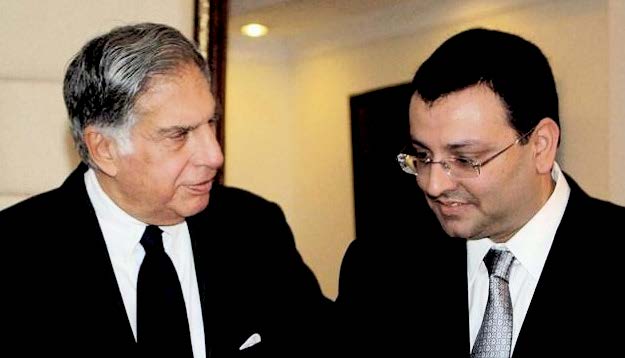
    A big change at Tata Sons has sent ripples in the business world. On Monday, October 24, Tata Songs Board replaced Cyrus Mistry as chairman with former chairman Ratan Tata, who will be the interim chairman for four months. The decision was taken at a Tata Sons board meeting. A selection panel has been formed to find a successor in four months.

    He was replaced by Ratan Tata, who will be the interim chairman for four months.

    The announcement came after the board of Tata Sons met here and decided to replace 48-year-old Mistry, who had taken over from Ratan Tata in 2011.

    The board named a five-member search committee, which includes Tata, to choose a successor to Mistry within four months.

    Mistry was chosen as Tata’s successor in November, 2011, and was appointed Deputy Chairman of Tata Sons, whose board he had entered in 2006. He was made chairman on the basis of his representation from Shapoorji Palonji, the largest shareholder in Tata Sons.

    There were no reasons given for the change of leadership of the man who was brought in with much fanfare but it is believed that Tata Sons was unhappy with Mistry’s approach of shedding non-profit businesses, including the conglomerate’s steel business in Europe, and concentrating only on cash cows.

    “Tata Sons today announced its board has replaced Mr Cyrus P Mistry as Chairman of Tata Sons. The decision was taken at a board meeting held here today,” a Tata Sons statement said.

    Tata Sons is the main holding company of the group.

    CEOs at the operating company level of the group have not been touched in the rejig, company sources said.

    The board constituted a selection committee comprising Tata, TVS Group head Venu Srinivasan, Amit Chandra of Bain Capital, former diplomat Ronen Sen and Lord Kumar Bhattacharya. All of them, except Bhattacharya, are on the board of Tata Sons.

    “The committee has been mandated to complete the selection process in four months,” it added.

    Mistry, who was chosen by a five-member panel in 2011 to succeed Ratan Tata, took over the reins of the conglomerate when the veteran industrialist retired on December 29, 2012, when he turned 75.

    After taking charge, he had to face some challenging situations such as the decision to sell Tata Steel UK in the wake of mounting losses.

    The Tata group is also engaged in a legal battle with Japan’s Docomo over the split of their telecom joint venture Tata Docomo.

    In an interview with an in-house magazine, Mistry had recently stated that the group “should not be afraid of taking tough decisions for the right reasons, with compassion” amid “challenging situations” confronted by some of the group’s businesses that would require hard and bolder decisions on pruning portfolio.

    This was in contrast to steps taken by Ratan Tata, who led the group into some notable acquisitions, starting from Tetley by Tata Tea for $450 million in 2000, to steelmaker Corus by Tata Steel in 2007 and the landmark Jaguar Land Rover in 2008 for $2.3 billion by Tata Motors.

    During Ratan Tata’s tenure, the group’s revenues grew manifold, totalling $100.09 billion (around Rs 475,721 crore) in 2011-12 from a turnover of a mere Rs 10,000 crore in 1991.

    Born on July 4, 1968, Mistry completed his graduation in civil engineering from London’s Imperial College of Science, Technology and Medicine and followed it up with a masters in Management from the London Business School.