Tag: RBI

  • New RBI Governor : Inflation-growth balance key task

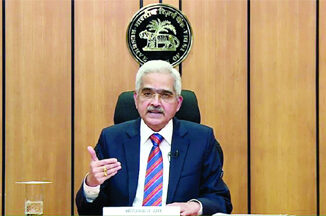
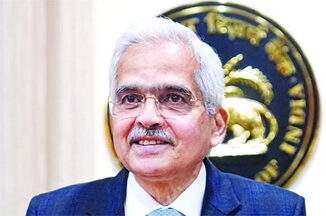
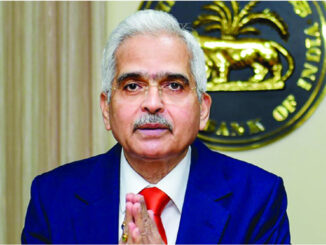
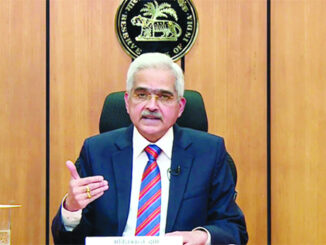
    Revenue Secretary Sanjay Malhotra’s surprise appointment as the Reserve Bank of India (RBI) Governor comes amid worries over a decline in economic growth, a weaker currency and an upturn in inflation. As he embarks on his three-year term, Malhotra has huge expectations to deliver, particularly concerning the monetary policy. Despite the several high points during his six years in office, the second longest for any chief of the central bank, Shaktikanta Das ends his tenure on a somber note. His parting message about restoring inflation-growth balance being the most important task ahead is acknowledgement of the unfinished agenda. Political overtones have been dominating the clamor for a cut in interest rates, with both the Finance Minister and Commerce Minister flagging high bank interest rates as a growth dampener.

    Das leaves behind a legacy marked by steady policymaking and deft crisis management. He steered the economy through the Covid pandemic which prevented any economic activity for well over a year, and also oversaw its recovery, especially in the financial sector. Another achievement was to mend the difficult relationship between North Block and Mint Street that he had inherited from Urjit Patel. The generous out-of-record dividend to the Centre remains a contentious issue, raising concerns about weakening of the RBI’s financial strength and independence.

    While strengthening the banking system, Das prevented a build-up of risk, asking lenders to avoid all forms of exuberance. The Governor-headed Monetary Policy Committee (MPC) kept the repo rate unchanged at 6.5 per cent for the 11th consecutive time last week. It signaled the RBI’s cautious approach amid inflation and slowing growth. A review of the rate cut is likely by the Malhotra-headed MPC in its February meeting. It will be a tough call.
    (Tribune, India)

  • RBI keeps policy rate unchanged at 6.5%, lowers GDP growth forecast to 6.6%

    RBI keeps policy rate unchanged at 6.5%, lowers GDP growth forecast to 6.6%

    ISTANBUL (TIP)- The Reserve Bank of India’s Monetary Policy Committee (MPC) on Friday kept the benchmark interest rate unchanged at 6.5 per cent for the 11th straight policy meeting. The MPC unanimously agreed to maintain neutral policy stance, signalling a cautious approach to current economic conditions.
    The RBI has been maintaining the repo rate at 6.5 per cent since February 2023. With the repo rate unchanged, all external benchmark lending rates (EBLR) that are linked to the repo rate will not increase, giving relief to borrowers as their equated monthly instalments (EMIs) will not increase.
    “The recent spike in inflation highlights the continuing risks of multiple and overlapping shocks to the inflation outlook and expectations. Heightened geo-political uncertainties and financial market volatility add further upside risks to inflation. High inflation reduces the purchasing power of both rural and urban consumers and may adversely impact private consumption. The MPC emphasises that strong foundations for high growth can be secured only with durable price stability. The MPC remains committed to restoring the balance between inflation and growth in the overall interest of the economy. Accordingly, the MPC decided to keep the policy repo rate unchanged at 6.50 per cent in this meeting,” said Reserve Bank of India (RBI) Governor Shaktikanta Das while announcing the outcome of the MPC meeting.
    Driven by a sharp increase in prices of food products, particularly the vegetables, India’s retail inflation touched a 14-month high in October. The inflation based on the consumer price index increased to 6.21 per cent in October, up from 5.49 per cent in September.
    He emphasised the central bank’s effort is to follow the flexible inflation target. He said high inflation would begin easing out in January-March with seasonal harvest.
    Also, India’s Gross Domestic Product (GDP) slowed to 5.4 per cent in the second quarter (July-September) of 2024-25, the third consecutive quarter of slower growth, reflecting weakened manufacturing, consumption, and private investments. As per government data, this is the lowest growth rate in seven quarters. The last time the economy fell below this was in the third quarter of fiscal 2023.
    Inflation forecast
    Governor Das said Inflation for FY25 is projected at 4.8 per cent. For Q3, it is expected to rise to 5.7 per cent, but is anticipated to decline to 4.5 per cent in Q4. For Q1 FY26, inflation is projected at 4.6 per cent.
    GDP growth projection
    The RBI has cut the GDP growth projection to 6.6 per cent for the current financial year, from earlier forecast of 7.2 per cent. The real GDP growth for FY25 is now projected at 6.6 per cent. For Q3, the growth rate is expected to be 6.8 per cent, while Q4 is projected to rise to 7.2 per cent. Source: TNS

  • RBI maintains status quo for 8th time in a row

    RBI maintains status quo for 8th time in a row

    The Reserve Bank of India on Friday, June 7, decided to keep the policy rate unchanged for the eighth time in a row, saying it will maintain a tight vigil on inflation. The rate increase cycle was paused in April last year after six consecutive rate hikes, aggregating to 250 basis points since May 2022.
    Announcing the second bi-monthly monetary policy for the current financial year, RBI Governor Shaktikanta Das said the Monetary Policy Committee (MPC) has decided to keep the repo rate unchanged at 6.5 per cent. He said MPC will remain watchful of elevated food inflation amid the expectation of a normal monsoon.
    The RBI raised the growth projection to 7.2 per cent from an earlier estimate of 7 per cent for the current financial year.v The government has mandated the RBI to ensure CPI inflation at 4 per cent with a margin of 2 per cent on either side.
    In a bid to bolster the safety and security of digital payments and enhance regulatory frameworks, the Reserve Bank of India (RBI) unveiled a series of proposals aimed at fostering innovation, inclusivity, and efficiency in the financial ecosystem.
    These initiatives, announced by RBI Governor Shaktikanta Das, signify the central bank’s commitment to fortifying India’s digital infrastructure and promoting a conducive environment for financial transactions.
    One of the key announcements made by Governor Das pertained to the establishment of a Digital Payments Intelligence Platform.
    This platform, leveraging advanced technologies, aims to mitigate payment fraud risks and enhance the safety of digital transactions.
    According to the annual report released by the Reserve Bank of India (RBI) on May 30, there was a significant surge in the number of financial frauds reported by banks, increasing by 166 per cent year-on-year in the financial year 2023-24 to reach 36,075 cases.
    This figure starkly contrasts with the 13,564 cases reported in the previous fiscal year, FY23.

  • RBI approves record Rs 2.1 lakh crore dividend to Centre for FY24

    RBI approves record Rs 2.1 lakh crore dividend to Centre for FY24

    Mumbai (TIP)- The Reserve Bank of India will pay a record Rs 2.1 lakh crore dividend to the government for the fiscal ended March 31, more than double of what was budgeted expectation, helping shore up revenue ahead of a new government taking office.
    The RBI board, at its meeting on Wednesday, approved the transfer of surplus, the central bank said in a statement. The government had budgeted a receipt of Rs 1.02 lakh crore as dividends from the RBI, public sector banks and financial institutions in the interim budget for the fiscal year 2024-25 (April 2024 to March 2025) presented in February this year.
    The dividend or surplus transfer by the RBI to the Centre was Rs 87,416 crore for the fiscal 2022-23. The previous high was Rs 1.76 lakh crore in 2018-19. The decision on the dividend payout was taken at the 608th meeting of the Central Board of Directors of the Reserve Bank of India held under the chairmanship of Governor Shaktikanta Das.
    “The Board…approved the transfer of Rs 2,10,874 crore as surplus to the Central Government for the accounting year 2023-24,” the RBI said in a statement. The central government aims to contain the fiscal deficit or gap between expenditure and revenue to Rs 17.34 lakh crore (5.1 per cent of the GDP) during the current financial year. Source: PTI

  • No impact on EMIs as RBI keeps repo rate unchanged at 6.5%

    No impact on EMIs as RBI keeps repo rate unchanged at 6.5%

    New Delhi (TIP)- The Reserve Bank of India (RBI) has decided to keep the key repo rate unchanged at 6.5% as its focus remains on bringing inflation under control.
    This is the seventh straight time that the central bank’s 6-member Monetary Policy Committee (MPC) has decided to keep the key policy rates unchanged.
    RBI Governor Shaktikanta Das said the MPC voted in favour of keeping the key lending rates unchanged.
    “After a detailed assessment of the evolving macroeconomic and financial developments and the outlook, the Reserve Bank MPC decided by a majority of 5 to 1 to keep the policy repo rate unchanged at 6.50%,” Das said.
    It may be noted that the standing deposit facility (SDF) also remains unchanged at 6.25% and the marginal standing facility at 6.75%.
    The decision was largely in line with what economists had predicted.
    Das said in his monetary policy statement that the priority of monetary policy continues to be the achievement of the 4% inflation target amidst robust growth.
    He also highlighted the need for the monetary policy to maintain an actively disinflationary stance at this stage.
    Upasna Bhardwaj, chief economist at Kotak Mahindra Bank told news agency Reuters that the MPC maintained status quo on expected lines. “While low core inflation provides comfort, the uncertainty on food inflation remains a worry,” she said.
    “Further, the higher US yields, higher oil prices and other commodities along with possible delay in Fed’s rate easing cycle will keep the MPC wary. Accordingly, we do not see much scope for any rate easing until the second quarter of FY25,” Bhardwaj added.
    Swati Saxena, Founder & CEO of 4 Thoughts Finance, a wealth management firm, said, “The industry overall wants policy stability and predictability above all else and a consistent maintenance of the repo rate indicates that the RBI is content with the existing level of interest rates.”
    “Going ahead, we remain optimistic that the RBI will contemplate rate cuts and build shallow rate cut cycle from June onwards to support lower interest rates and credit demand. Overall, we believe that investor sentiment will continue to remain bullish, supported by the market’s persistent strength,” Saxena added.
    Sensex, Nifty fall
    Benchmark stock market indices fell on April 5 ahead of the Reserve Bank of India’s monetary policy announcement.
    The S&P BSE Sensex was down 151.42 points to 74,084.04 at 9.47 am, while the NSE Nifty50 fell 46.40 points to 22,468.25.
    The broader market indices also encountered high volatility as investors remained cautious ahead of the central bank’s decision on key rates.

  • RBI maintains status quo, keeps key policy rate unchanged

    RBI maintains status quo, keeps key policy rate unchanged

    Mumbai (TIP)- The Reserve Bank of India on Thursday, Feb 8, decided to keep policy rate unchanged for the sixth time in a row as it maintains a tight vigil on inflation. The rate increase cycle was paused in April last year after six consecutive rate hikes aggregating to 250 basis points since May 2022.
    Announcing the bi-monthly monetary policy, RBI Governor Shaktikanta Das on Thursday said the Monetary Policy Committee (MPC) has decided to keep the repo rate unchanged at 6.5 per cent. He said MPC will remain watchful of food inflation so that the benefits gained are not frittered away. This is the first bi-monthly policy following presentation of Interim Budget 2024-25 last week.
    In December, the Consumer Price-based Inflation (CPI) stood at 5.69 per cent.
    The government has mandated RBI to ensure CPI inflation at 4 per cent with a margin of 2 per cent on either side. Changes announced to electronic trading platforms
    On the financial markets front, RBI announced that it will comprehensively review the existing regulatory guidelines for Electronic Trading Platforms (ETPs) that enable transactions in financial instruments regulated by RBI such as foreign exchange and government securities. The review comes in the wake of growing integration between Indian rupee (INR) markets onshore in India and offshore centers, rapid evolution in trading technologies and infrastructure, as well as increasing diversity of tradable products.
    RBI said that financial market participants have also been demanding access to offshore ETPs that offer INR derivative products for effective price discovery and risk management. As part of the revised norms likely to be unveiled after public feedback, Indian banks and traders may get more flexibility in accessing overseas trading venues.
    In another move aimed at easing hedging against gold price fluctuations, the central bank has allowed resident entities in India to access overseas derivative platforms both on recognized exchanges as well as over-the-counter (OTC) markets based in International Financial Services Centre (IFSC). The measure will provide domestic traders and jewelers better ability to hedge their gold exposures through a diverse set of hedging products available globally.
    On the regulatory front for banks and lending institutions, RBI has now mandated that all regulated entities must provide a standardized Key Fact Statement (KFS) to retail and MSME borrowers giving key details of the loan agreement including all-in interest cost. This will equip the customers, especially the middle and low-income segments, to make better sense of the loan terms and conditions enabling informed decisions.
    Further, the RBI aims to improve safety and security of transactions made under the popular Aadhaar Enabled Payment System (AePS) that allows digital payments to be made against Aadhaar identification. Additional guidelines are expected on strengthening customer onboarding verification process for entities managing AePS touchpoints, as well as incorporating risk management requirements to prevent frauds.
    On the digital payments and central bank digital currency (CBDC) front, RBI indicated that it will be adopting a broad principle-based framework for authentication of various types of digital transactions. This is expected to promote adoption of more advanced authentication mechanisms beyond the prevalent SMS-based OTPs.

  • Govt, RBI actively engaged on digital currency, says FM

    Govt, RBI actively engaged on digital currency, says FM

    New Delhi (TIP)- Finance Minister Nirmala Sitharaman on Thursday, January 25, said the government and the Reserve Bank of India are actively engaged in improving the central bank digital currency (CBDC) so that it can be used for cross-border payments.
    RBI began the pilot project wholesale CBDC and picked up nine banks — State Bank of India, Bank of Baroda, Union Bank of India, HDFC Bank, ICICI Bank, Kotak Mahindra Bank, Yes Bank, IDFC First Bank and HSBC.
    Besides, RBI has already rolled out a pilot in the retail version of CBDC or the e-rupee on December 1, 2022. The e-rupee is in the form of a digital token that represents legal tender.
    It is being issued in the same denominations as the paper currency and coins. It is being distributed through financial intermediaries, i.e. banks. Users are able to transact with e-rupee through a digital wallet offered by the participating banks. “We strongly believe it helps in cross border payments. It will bring in greater transparency and traceability…,” Sitharaman said while speaking at an event to mark 125 years of Hindu College.
    It helps in speeding up payments with less cost, she said, adding it brings down cost for inward and outward remittance. “Both the regulator and the government are working on it. We are actively engaged in it,” she said.
    Asked about priority sectors to make India ‘Viksit Bharat’, she said, focus areas would be manufacturing and agriculture. “Agriculture retains its primacy and we are looking at strengthening agriculture by modernizing some of the practices, post harvest practices and so on,” she said. In manufacturing, she said, the government had identified 13 sunrise sectors including renewable energy, semiconductor, machine learning, earth sciences and space.
    Source: PTI

  • ‘Can’t afford a crypto mania’: RBI governor Shaktikanta Das on cryptocurrencies

    ‘Can’t afford a crypto mania’: RBI governor Shaktikanta Das on cryptocurrencies

    Mumbai (TIP)- The US may have green-lighted exchange-traded funds (ETFs) in bitcoin, but for India’s apex banking regulator, cryptocurrencies remain a strict no-no. “The way we look at crypto remains unchanged, irrespective of who does what,” Reserve Bank of India (RBI) governor Shaktikanta Das stated at the 16th Mint Annual BFSI Summit and Awards in Mumbai on Thursday, January 11. “Just because somebody is doing something, we are not here to emulate them.” The US Securities and Exchange Commission (SEC) on Wednesday approved the first US-listed ETFs to track bitcoin, marking a milestone for the world’s largest cryptocurrency and the broader crypto industry. The SEC approved 11 applications, including from BlackRock, Fidelity and Invesco. At the same time, the SEC said it does not endorse or approve bitcoin.
    “RBI’s position on cryptocurrency remains unchanged. Travelling down that path will create huge risks. I don’t think the world or emerging markets (EMs) can take a crypto mania like the tulip mania,” Das said, referring to the 17th century boom and bust in Dutch tulip prices, regarded as one of the most infamous asset bubbles in history.
    Delivering the keynote address at the event, Das pointed out that the US regulator itself has flagged the risks of cryptocurrency products. However, he noted that the blockchain technology, on which cryptocurrencies are built, has the potential to lend itself to many applications.
    The governor has voiced his concerns on cryptocurrencies several times earlier as well, citing macroeconomic and financial stability risks. In June 2022, Das termed them a “clear danger”, and said anything that derives value based on make-believe, “without any underlying”, is just speculation under a sophisticated name.
    The central bank has been focusing on strengthening governance and assurance in regulated entities, Das said. “The key is to identify risks early, monitor them closely and manage them effectively. In this context, instilling an appropriate risk culture in the organisation is important.” This needs to be driven by the board and senior management with effective accountability at all levels, Das said, adding RBI expects top officials and board members to play a more proactive role.
    Source: HT

  • RBI ups weight of SBI, HDFC Bank in too-big-to-fail list

    RBI ups weight of SBI, HDFC Bank in too-big-to-fail list

    Mumbai (TIP)- The Reserve Bank of India has upgraded the weightage of SBI and HDFC Bank on its list of three Domestic Systemically Important Banks (D-SIBs) for 2023 which includes ICICI Bank as well. The RBI said on Thursday, December 28, that while ICICI Bank continues to be in the same bucket structure as last year, SBI and HDFC Bank move to higher buckets – SBI shifts from bucket 3 to bucket 4 and HDFC Bank shifts from bucket 1 to bucket 2.
    The three D-SIBs are require closer regulation under which they need to set aside more capital to avoid risk because if they fail this could have a disastrous effect on the country’s entire economy. These banks are also classified as “too-big-to-fail”.
    For SBI and HDFC Bank, the increase of 0.2 per cent in D-SIB buffer requirements on account of the bucket increase will be effective from April 1, 2025.
    The additional Common Equity Tier 1 (CET1) requirement will be in addition to the capital conservation buffer, the RBI said.
    The current update is based on the data collected from banks as on March 31, 2023 and factoring in the increased systemic importance of HDFC Bank post the merger of erstwhile HDFC Limited into HDFC Bank on July 1, 2023, RBI said.
    The D-SIB framework requires the RBI to disclose the names of banks designated as D-SIBs starting from 2015 and place these banks in appropriate buckets depending upon their Systemic Importance Scores (SIS). Based on the bucket in which a D-SIB is placed, an additional common equity requirement has to be applied to it.
    In case a foreign bank having branch presence in India is a Global Systemically Important Bank (G-SIB), it has to maintain additional CET1 capital surcharge in India as applicable to it as a G-SIB, proportionate to its Risk Weighted Assets (RWAs) in India, i.e., additional CET1 buffer prescribed by the home regulator (amount) multiplied by India RWA as per consolidated global Group books divided by total consolidated global Group RWA. Source: IANS

  • RBI retains repo rate at 6.5% for 5th time

    RBI retains repo rate at 6.5% for 5th time

    Mumbai (TIP) – The Reserve Bank of India (RBI) on Friday, December 8, maintained its benchmark repo rate at 6.5%, keeping its focus on anchoring inflation and boosting growth. The RBI also continued with its policy stance of “withdrawal of accommodation” to ensure inflation is in step with its target of 6%(+/-2), while supporting of economic expansion. In other words, the central bank will be focussed on curbing money supply in the economy to control inflationary pressure.
    Monetary policy will remain actively “disinflationary”, RBI Governor Shaktikanta Das said after a two-day meeting of the bank’s six-member monetary policy committee. He said that the central bank’s successive policy rate hikes, a reference to increases in interest rates, “seems to be working”. The risks of high food prices continue to key be variables to watch that can alter the course of inflation. The global economy remains fragile due to elevated debt levels, lingering geopolitical tensions and extreme weather conditions, Das said, adding, “Long-awaited normality still eludes the global economy.”
    Das has consistently warned of risks to food prices. India is vulnerable to food price shocks from extreme weather events and global factors despite a recent moderation in prices, he had said on November 22. This is the RBI governor’s second warning in a month about the risks from food inflation. In a speech delivered in Japan on November 8, Das had said the RBI saw risks from “recurring and overlapping” food price shocks.
    The central bank had hiked the repo rate by 250 basis points to 6.5% between May 2022 and February 2023. It then hit a pause in the April review of the monetary policy. A basis point is one-hundredth of a percentage point. The repo rate refers to the rate at which commercial banks borrow money by selling their securities to the Reserve Bank, while the reverse repo rate is the rate at which the central bank borrows money.
    These rates are key to boosting credit and investments by businesses to boost economy growth. A hike makes borrowing expensive for businesses, limiting money supply and cooling inflation – the key objective of why banks hike benchmark rates.

  • Currency note with * symbol in number panel valid note, says RBI

    A currency note with a star (*) symbol is identical to any other legal banknote, the Reserve Bank said on Thursday , July 27, allaying concerns on the validity of such notes.
    The symbol is inserted in the number panel of a banknote that is used as replacement for defectively printed notes in a packet of 100 pieces of serially numbered banknotes, the RBI said.
    In a statement, the central bank said it has come to the notice of the RBI that the validity of banknotes with this symbol present on the number panel has recently been the subject of discussions on some social media platforms.
    “A banknote with a star (*) symbol is identical to any other legal banknote, except that in the number panel a star (*) symbol is added between the prefix and the serial number,” it said.
    The RBI clarified that the symbol is an identifier that it is a replaced/reprinted banknote.
    Source: PTI

  • RBI retains FY24 GDP growth forecast at 6.5%

    The Reserve Bank on Thursday , June 8, retained the GDP growth projection for current fiscal year at 6.5 per cent, on the back of supportive domestic demand conditions. In April, the central bank had marginally revised upwards the 2023-24 GDP growth projection to 6.5 per cent, from its earlier forecast of 6.4 per cent.
    Domestic demand condition remains supportive of growth and also the demand in rural areas is on the revival path, RBI Governor Shaktikanta Das said while announcing the 2nd bi-monthly policy for 2023-24.
    India’s economy grew 6.1 per cent in the fourth quarter of 2022-23, pushing up the annual growth rate to 7.2 per cent, as against 7 per cent anticipated earlier.
    Das said the higher rabi crop production in 2022-23, the expected normal monsoon, and the sustained buoyancy in services should support private consumption and the overall economic activity in the current year.
    The government’s thrust on capital expenditure, moderation in commodity prices and robust credit growth are expected to nurture investment activity, said the Monetary Policy Statement, 2023-24.
    Weak external demand, geo-economic fragmentation and protracted geopolitical tensions, however, pose risks to the outlook, it added. Source: PTI
    Rs 89,047-crore revival package for BSNL gets Cabinet nod
    The Union Cabinet, chaired by Prime Minister Narendra Modi, on Wednesday, June 7, approved the third revival package for BSNL with a total outlay of Rs 89,047 crore.
    The package includes allotment of 4G and 5G spectrum for BSNL through equity infusion, an official statement said. Also, the authorised capital of BSNL will be increased from Rs 1,50,000 crore to Rs 2,10,000 crore.
    The package comprises allotment of premium wireless frequencies 700 MHz band spectrum worth Rs 46,338.6 crore; 70 MHz of frequencies in 3300 MHz band worth Rs 26,184.2 crore; frequencies in 26 GHz band worth Rs 6,564.93 crore; in 2500 MHz band worth Rs 9,428.2 crore and Rs 531.89 crore for miscellaneous items. The spectrum allocation will enable BSNL to roll out pan-India 4G and 5G services, 4G coverage in rural and uncovered villages under various connectivity projects, provide Fixed Wireless Access (FWA) services for high-speed internet and provide services/spectrum for Captive Non-Public Network (CNPN). The government had provided first revival package worth Rs 69,000 crore for BSNL and MTNL in 2019. The second package worth Rs 1.64 lakh crore was announced in 2022.

  • RBI holds rates, vows to keep price stability

    RBI holds rates, vows to keep price stability

    New Delhi (TIP)- The Monetary Policy Committee (MPC) of the Reserve Bank of India (RBI), on the basis of an assessment of the current and evolving macroeconomic situation, on June 8 decided to keep the policy repo rate under the liquidity adjustment facility (LAF) unchanged at 6.50%. The standing deposit facility (SDF) rate remains unchanged at 6.25% and the marginal standing facility (MSF) rate and the Bank Rate at 6.75%, RBI Governor Shaktikanta Das said. This is the second time that the policy rate has been paused after a 250 basis point conservative rate hike to curb inflation.
    The MPC also decided to remain focused on withdrawal of accommodation to ensure that inflation progressively aligns with the target, while supporting growth, he said.
    “These decisions are in consonance with the objective of achieving the medium-term target for consumer price index (CPI) inflation of 4% within a band of +/- 2%, while supporting growth,” he added.
    On the outlook, Das said going forward, the headline inflation trajectory was likely to be shaped by food price dynamics. Wheat prices could see some correction on robust mandi arrivals and procurement.
    Milk prices, on the other hand, are likely to remain under pressure due to supply shortfalls and high fodder costs. The forecast of a normal south-west monsoon by the India Meteorological Department (IMD) augurs well for kharif crops; however, the spatial and temporal distribution of the monsoon would need to be closely monitored to assess the prospects for agricultural production, he said.“Crude oil prices have eased but the outlook remains uncertain. According to the early results from the Reserve Bank’s surveys, manufacturing, services and infrastructure firms polled expect input costs and output prices to harden,” he said. Taking into account these factors and assuming a normal monsoon, CPI inflation has been projected at 5.1% for 2023-24, with Q1 at 4.6%, Q2 at 5.2%, Q3 at 5.4% and Q4 at 5.2%. The risks are evenly balanced.
    On growth, Das said higher rabi crop production in 2022-23, the expected normal monsoon, and the sustained buoyancy in services should support private consumption and overall economic activity in the current year.
    The government’s thrust on capital expenditure, moderation in commodity prices and robust credit growth are expected to nurture investment activity. Weak external demand, geoeconomic fragmentation, and protracted geopolitical tensions, however, pose risks to the outlook, he added.
    Taking all these factors into consideration, real GDP growth for 2023-24 has been projected at 6.5% with Q1 at 8.0%, Q2 at 6.5%, Q3 at 6.0%, and Q4 at 5.7%, with risks evenly balanced, he further said. Source: The Hindu

  • RBI to withdraw Rs 2,000 currency notes from circulation

    RBI to withdraw Rs 2,000 currency notes from circulation

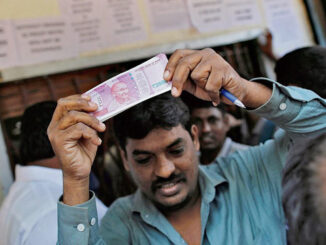
    NEW DELHI (TIP): The Rs 2,000 currency note, introduced after demonetization in 2016, will be withdrawn from circulation from September 30, said an RBI statement.

    RBI cites reasons

    Introduced after DeMo in 2016, RBI says objective achieved as notes in other denominations now adequately available. As 89% of the Rs 2,000 notes issued before March 2017, these are at the end of estimated four to five-year lifespan

    Notes no longer commonly used for transactions — usage declines from 37.3% in 2018 to 10.8% in March 2023

    People holding the notes can deposit or exchange these up to a limit of Rs 20,000 at any bank branch beginning May 23. The RBI has asked banks to stop issuing the Rs 2,000 denomination notes with immediate effect.

    A statement from the RBI gave several reasons for the move. The first was that the objective of introducing Rs 2,000 banknotes was met once notes in other denominations became available in adequate number. It claimed that these notes were “primarily” introduced after demonetization to meet the currency requirement after the withdrawal of legal tender status of all Rs 500 and Rs 1,000 banknotes in circulation then. Therefore, the printing of Rs 2,000 banknotes was stopped in 2018-19.

    Clean note policy

    The move comes amid concerns of the Rs 2,000 notes being used to hoard black money

    The RBI had stopped printing Rs 2,000 notes in 2018-19 and the notes were rarely in circulation; cites its ‘Clean Note Policy’ to phase out the notes

    Secondly, about 89 per cent of the Rs 2,000 banknotes were issued before March 2017 and were at the end of their estimated life-span of four-five years, it said. Their withdrawal, therefore, is warranted under the RBI’s “Clean Note Policy”. Thirdly, the RBI observed that this denomination of notes were not commonly used for transaction.

    The total value of these banknotes in circulation has declined from 37.3 per cent of notes in circulation in 2018 to 10.8 per cent as on March 31, 2023. “It may be noted that the RBI had undertaken a similar withdrawal of notes from circulation in 2013-14. Accordingly, the public may deposit Rs 2,000 banknotes in their bank accounts or exchange these into banknotes of other denominations at any bank branch. Deposit into bank accounts can be made in the usual manner without restrictions and subject to extant instructions and other applicable statutory provisions,” said the RBI in its statement.

    Rs 6.73 lakh cr Worth Rs 2K notes on Mar 31, 2018 (37.3% of all notes in circulation)

    Rs 3.62 lakh cr Worth of notes on Mar 31, 2023 (10.8% of all notes in market)

    Meanwhile, the Opposition parties attacked the BJP government. “Typical of our self-styled Vishwaguru. First Act, Second Think (FAST). 2000-rupee notes introduced with such fanfare after that singularly disastrous ‘Tughlaqi firman’ of Nov 8 2016 are now being withdrawn (sic),” tweeted Congress general secretary Jairam Ramesh, targeting PM Narendra Modi.

    Congress spokesperson Pawan Khera said the “ghost” of November 8, 2016, had come back to haunt the nation once again. “…the PM sermonized the nation on the benefits of the new Rs 2,000 notes. Today, when the printing is stopped, what happened to all those promises?”’ said Khera.

    Rs 20,000 exchange rider

    The RBI has allowed the maximum deposit or exchange of Rs 20,000 worth of Rs 2,000 notes at a time

    The CPM, NCP and other parties also criticized the government over the withdrawal. Countering the Opposition’s criticism, the BJP dubbed them as “fear mongers”. “What does a desperate and issueless Opposition do when the RBI takes a decision to withdraw Rs 2,000 note, of which there (withdrawing and introducing currency notes) are several precedence in the past?” tweeted BJP’s IT cell chief Amit Malviya.

  • RBI keeps repo rate unchanged at 6.5%

    The Reserve Bank of India on Thursday, April 6,  announced an unchanged repo rate (basic interest rate) on the expectations of lower inflation in the coming months due to past six successive rate hikes since May 2022.

    The RBI expects the real GDP for ’23-24 to be 6.5 per cent. The current April to June period will deliver the fastest growth of 7.8 per cent followed by 6.2 per cent, 6.1 per cent and 5.9 per cent in the next three quarters of ’23-24.  This projection is slightly higher than the World Bank’s latest expectations of 6.3 per cent GDP growth and the Asian Development Bank’s (ADB) forecast of 6.4 per cent.

    Terming the international situation as dynamic and fast evolving, RBI chief Shaktikanta Das warned that volatility in external markets will be a major risk factor for the health of the economy as well as stability of the rupee. “We are living in very volatile times. The sudden announcement of output cut by OPEC and the jump in crude prices is another evidence of this volatility,’’ he said while announcing the decision of the Monetary Policy Committee (MPC) which met for three days from April 3, the first time in this fiscal. The RBI chief said any further interest rate hike has been held back on the expectations of a modest inflation rate due to low prices in the Indian crude basket and a decent monsoon. Despite the elevated inflation seen in January and February due to sharp turnaround in food inflation, Das said the RBI expects the inflation rate to moderate to 5.2 per cent. The rate will be evenly spread over all the quarters with 5.1 per cent projection in April to June quarter. It will be 5.4 per cent, 5.4 per cent and 5.2 per cent in the next three quarters.

  • RBI proposes expansion of UPI digital payments system to allow credit

    The Reserve Bank of India (RBI) is proposing expanding the reach of the popular Unified Payments Interface (UPI) digital payments system by allowing credit to be offered via pre-approved bank lines. “This initiative will further encourage innovation,” RBI governor Shaktikanta Das said on Thursday during the announcement of the central bank’s monetary policy decision. UPI is an instant real-time payments system that allows users to transfer money across multiple banks without disclosing bank account details. Its popularity is seen to have reduced the usage of cash and debit cards for daily transactions. In March 2023, UPI recorded 8.65 billion transactions, amounting to 14.05 trillion rupees, its highest-ever since inception, data from the National Payments Corporation of India showed. In a bid to boost digital payments, the RBI recently allowed RuPay credit cards to be linked to UPI. This was to enable customers to link their credit cards and pay via UPI

  • Unlike global economy, India will not slow down, says RBI

    Unlike global economy, India will not slow down, says RBI

    Mumbai (TIP)-Unlike the global economy, India would not slow down and maintain the pace of expansion achieved in 2022-23, an RBI article said. “We remain optimistic about India, whatever the odds,” said the article on the state of the economy published in the March edition of the Reserve Bank bulletin.
    The NSO’s end-February data release indicates that the Indian economy is intrinsically better positioned than many parts of the world to head into a challenging year ahead, mainly because of its demonstrated resilience and its reliance on domestic drivers, it said.
    Even as global growth is set to slow down or even enter a recession in 2023 as global financial markets wager, India has emerged from the pandemic years stronger than initially thought, with a steady gathering of momentum since the second quarter of the current financial year, it said.
    “Year-on-year growth rates do not reflect this pick-up of pace because by construction they are saddled with statistical base effects, and instead suggest a sequential slowing down through successive quarters of 2022-23 to an unsuspecting reader,” said the article.
    The article has been authored by a team led by RBI Deputy Governor Michael Debabrata Patra.
    The authors further said India’s real GDP can go up from Rs 159.7 lakh crore in 2022-23 to Rs 170.9 lakh crore against the current projection of Rs 169.7 lakh crore in 2023-24.
    “This is simple arithmetic; hardly a hurray at half-time. Also, unlike the global economy, India would not slow down – it would maintain the pace of expansion achieved in 2022-23. We remain optimistic about India, whatever the odds,” the article said. Source: PTI

  • Global uncertainty makes fight against inflation tough: RBI

    Majority of members of the high-powered Monetary Policy Committee (MPC) of the Reserve Bank were concerned about heightened inflation even as two panellists raised objections against an increase in the benchmark interest rate, according to the minutes of the meeting released on Wednesday.

    Following the recommendations of the MPC, the RBI increased the rate by 25 basis points on February 8, taking the repo rate to 6.5%. It was the sixth straight hike since May 2022.

    “The fight against inflation is complicated by the global outlook. There is some consensus growing around a milder slowdown than earlier feared, although geographical disparities complicate the prognosis. Be that as it may, the outlook for global inflation is turning more uncertain than before,” Patra opined as per minutes of the Monetary Policy Committee (MPC). Reserve Bank Governor Shaktikanta Das, who heads the six-member MPC, also said overall, there is considerable uncertainty at this stage on the evolving inflation trajectory due to ongoing geopolitical tensions, global financial market volatility, rising non-oil commodity prices, volatile crude oil prices and also weather-related events.

    He also said a 25 basis points rate increase provides space to calibrate future monetary policy actions and stances based on evolving macroeconomic conditions.

    The six-member MPC comprises three RBI officials — Governor Shaktikanta Das, Deputy Governor Michael Debabrata Patra, and Executive Director Rajiv Ranjan; and three government-nominated external members — Shashanka Bhide, Ashima Goyal and Jayanth R Varma.

    Source: PTI

  • RBI hikes interest rates, projects moderate inflation, growth in next fiscal

    RBI hikes interest rates, projects moderate inflation, growth in next fiscal

    London (TIP)- The Reserve Bank of India hiked the repo rate by 25 per cent to 6.5 per cent and forecast slower economic growth of 6.4 per cent during next fiscal as compared to the estimation of 7 per cent during the current fiscal year. The Union Budget pegs the actual growth rate for 2023-24 at a marginally higher 6.5 per cent and the Economic Survey estimates the real growth rate to be between 6 and 6.8 per cent.

    Announcing the bi-monthly monetary policy in Mumbai on Wednesday, RBI Governor Shaktikanta Das said the Monetary Policy Committee (MPC) decided on a sixth successive hike in the repo rate, or the interest rate at which the Central Bank lends to banks, by a 4:2 split decision.

    Faced with finding a balance between hiking interest rates to check inflation and not affecting industry’s growth, Das justified the hike on the basis of the RBI’s internal surveys which said manufacturing, services and infrastructure sector firms are optimistic of the business outlook.

    “Emerging market economies are facing sharp trade-offs between supporting economic activity and controlling inflation while preserving policy credibility,” said Das in this respect. The repo rate at 6.5 per cent still trails the pre-pandemic level and core inflation (manufacturing) remains sticky, he added.

    Growth during 2023-24 would, however, be weighed down by geo-political tensions and tightening global financial condition, Das cautioned.

    The MPC resolved to keep a close watch on inflation, which will remain above the comfort band of 6 per cent during the current fiscal but moderate to 5.3 per cent during the next fiscal.

    Quarterly inflation rates will decline to 5.7 during the ongoing fourth quarter of 2022-23 and further to 5 per cent, 5.4 per cent, 5.4 per cent and 5.6 per cent during the four quarters of 23-24. Quarterly GDP growth rates are projected at 7.8 per cent, 6.2 per cent, 6 per cent and 5.8 per cent during the four quarters of 2023-24.

    After the repo rate hike, the standing deposit facility (SDF) rate has been adjusted to 6.25 per cent, and the marginal standing facility (MSF) rate and the Bank Rate to 6.75 per cent.

    Das said it is now proposed to permit all inbound travellers to use UPI payments for their merchant payments while they are in India. To begin with, the facility will be extended to travellers from G20 countries arriving at select international airports.

    The RBI Governor also announced a new facility, the ability to use UPI at coin-vending machines instead of tendering physical bank notes. “These vending machines will dispense coins against debit to the customer’s account using UPI instead of physical tendering of bank notes. This will enhance the ease of accessibility to coins,” he said.               Source: TNS

  • The Hindenburg Report on Adani conglomerate –

    The Hindenburg Report on Adani conglomerate –

    Uproar in Parliament, Opposition seeks JPC probe: Houses adjourned without transacting business

    • RBI asks banks for details of exposure to Adani Group
    • Boris Johnson’s brother quits linked firm; B’desh questions ‘expensive’ power deal

    I.S. Saluja

    NEW DELHI (TIP): The Hindenburg-Adani issue rocked Parliament with both Houses adjourned for the day without transacting any substantial business. The Congress-led Opposition raised allegations of irregularities against the Adani Group, demanding a probe into the matter by a Joint Parliamentary Committee (JPC) or by a sitting judge of the Supreme Court.

    Both Houses were adjourned until 2 pm after presiding officers of the Lok Sabha and the Rajya Sabha rejected calls for deferment of proceedings to discuss the matter, prompting the Congress-led Opposition to demand a JPC probe or a day-to-day judicial probe headed by a Supreme Court judge. When the two Houses again met at 2 pm, the ruckus over the issue did not abate, and Parliament was adjourned for the day, a Tribune News Service report said. Leader of the Opposition in Rajya Sabha and Congress president Mallikarjun Kharge led the demand for the JPC or a Supreme Court-monitored probe, with the DMK, TMC, SP, JD(U), Shiv Sena (Uddhav), CPI(M), CPI, NCP, IUML, NC, AAP and Kerala Congress joining the issue. The decision to press for an investigation came after a meeting at Kharge’s chambers in the morning which was attended by opposition parties. Rajya Sabha Chairman Jagdeep Dhankhar had earlier said the notices were not in order, but Opposition leaders vowed to keep raising the matter till they were allowed a discussion. Kharge later told reporters that nine party leaders, including him, had given notices for adjournment of proceedings in the Rajya Sabha to discuss the issue but the proposal was rejected by Dhankhar.

    Derek O’Brien of the TMC said: “Opposition leaders are being continuously harassed for no reason by the ED and the CBI. Now, the government must take action against the perpetrators of this monumental scam and ensure that they do not flee the country. The hard-earned money of millions of Indians is in peril.”

    Ram Gopal Yadav of the SP said the matter was very serious as “people were being sent home by the SBI in several districts, saying that there’s no money.”

    The Opposition has been alleging that public money of the LIC and SBI invested in Adani firms is in danger of sinking.

    AAP’s Sanjay Singh asked: “Why is the government silent on this mega scandal? Adani is the scandal kingpin and the treasurer of the BJP. He has formed shell companies abroad, overvalued his shares and looted people’s money.”

    Keshav Rao of the BRS questioned the RS Chairman’s rejection of the adjournment notices. “The Chairman says the notices are not in order. There’s no pro forma as far as adjournment notices are concerned,” he noted.

    Shiv Sena (Uddhav) MP Priyanka Chaturvedi and DMK’s Kanimozhi also demanded a probe.

    Meanwhile, Parliamentary Affairs Minister Pralhad Joshi said, “We have to run the House smoothly. A good Budget has been presented under the guidance of PM Modi. If they have constructive suggestions about the President’s Address, they should give. I urge them to run the House smoothly and put forth their arguments.”

    Congress: Why govt mum?

    Modi govt is maintaining silence on the Hindenburg report. We will not remain quiet if you cheat Indian investors, consisting of 29 crore LIC policy holders and 45 crore SBI account holders.

    Meanwhile, the RBI has asked  banks for details of exposure to Adani Group.

    As the Reserve Bank of India (RBI) on Thursday, February 2,  sought details about lenders’ exposures to the Adani Group, chairman Gautam Adani cited market volatility for the decision to withdraw the follow-on public offer (FPO) of its flagship firm Adani Enterprises. His companies continued to lose on the stock market with the cumulative rout nearing USD 108 billion in a week — one of the biggest wipeouts in India’s history.

    The RBI is seeking details both from private and public banks with the total exposure to the group estimated at Rs 75,000 crore. It has also sought to know special arrangements extended to the companies such as collaterals in the form of bonds.

    The National Stock Exchange (NSE) too has put shares of three group companies under the additional surveillance mechanism (ASM). The move indicates the company’s shares are in trouble and require special monitoring. In a media message, Adani claimed the fundamentals of the company were strong.

    A day after Swiss lender Credit Suisse stopped accepting bonds by Adani Group companies as collaterals for margin lending, Norges Bank Investment Management from Norway followed suit. Citigroup also stopped extending margin loans against securities of the group.

    Boris Johnson’s brother quits linked firm

    Meanwhile, Lord Jo Johnson, younger brother of former British PM Boris Johnson, quit his non-executive directorship of a UK-based investment firm linked with the Adani Group’s now-withdrawn FPO. Johnson junior had taken the position in June last year and said he sat on the board after having been assured that the company “is compliant with its legal obligations and in good standing with regulatory bodies”.

    Bangladesh questions ‘expensive’ power deal

    Bangladesh too has sought a revision of a 2017 power purchase agreement with Adani Power after local media said the price was high and the issue had been earlier raised by PM Sheikh Hasina. The Bangladesh power company is seeking a 40 per cent downward revision in the price.

    (Source: Agencies)


  • Private cryptos can cause next financial crisis, warns RBI

    Private cryptos can cause next financial crisis, warns RBI

    Mumbai (TIP)- Pressing for the prohibition of instruments like bitcoin, Reserve Bank Governor Shaktikanta Das on Wednesday, December 21,  warned that the next financial crisis can be triggered by private cryptocurrencies, if such speculative instruments are allowed to grow. Das has been staunchly opposed to such instruments and the RBI has gone till the Supreme Court with its contention.

    “Cryptocurrencies… have huge inherent risks from macroeconomic and financial stability (perspective) and we have been pointing it out,” he said, speaking at an event organised by a newspaper here.

    The RBI governor added that the developments over the last one year, which include the latest crash of cryptocurrency exchange FTX, which is termed as one of the biggest financial frauds in the history of the US, illustrate the threat posed by such instruments.

    “After all these, I don’t think we need to say anything more about our stand,” Das said, adding that private cryptocurrencies’ valuation has shrunk from $190 billion to $140 billion and there is no underlying value for the market-determined price. “It’s a 100% speculative activity, and I would still hold the view that it should be prohibited… if you try to regulate it and allow it to grow, please mark my words, the next financial crisis will come from private cryptocurrencies,” he said.

    He acknowledged that different jurisdictions are taking different stances on it, but the RBI would like to stick to its stance of prohibiting them completely.

    Das said the origin of private cryptocurrencies lie in their intent to “break” the system, in not believing in fiat currencies introduced by the central banks and not believing in a regulated financial system.

    “They want to bypass and beat the system,” Das said, adding that he is yet to come across any credible argument which can demonstrate the public good served by such private cryptocurrencies. Source: PTI

  • Loan EMIs to go up after RBI hikes rates by 50 basis points to 5.4%

    Loan EMIs to go up after RBI hikes rates by 50 basis points to 5.4%

    New Delhi (TIP)- The Reserve Bank of India hiked its key lending rate by 50 basis points to pre-pandemic levels of 5.40 per cent on Friday, a third increase in a row to tame surging inflation which has remained above the upper end of the central bank’s target this year. With June retail inflation at 7 percent, well above the RBI’s 2-6 per cent medium-term target, the monetary policy committee (MPC) raised the key lending rate or the repo rate by 50 basis points (bps) to 5.40 per cent, the highest since 2019.

    With the latest hike, the repo rate or the short term lending rate at which banks borrow crossed the pre-pandemic level of 5.15 per cent. “The RBI continued to ‘front-load’ its rate hikes in line with our expectations. The central bank highlighted that while inflation might moderate in the coming months, uncertainty around these pressures continues to remain high, necessitating the need for a 50-bp rate hike. Expect the RBI to take the repo rate to 5.75 per cent in this cycle,” said Sakshi Gupta, Principal Economist at HDFC Bank. All the six members of the Monetary Policy Committee (MPC), headed by RBI Governor Shaktikanta Das, unanimously voted for the rate hike.

    The RBI had caught markets off guard with a 40 bps hike at an unscheduled meeting in May, followed by a 50 bps increase in June, but prices have shown little signs of cooling so far.

    RBI Governor Shaktikanta Das weighed in on the dilemma the central bank faces, with pressing economic concerns to be addressed. Retail inflation, based on the Consumer Price Index (CPI), which RBI factors in while fixing its benchmark rate, stood at 7.01 per cent in June. Inflation has been ruling above the RBI’s comfort level of 6 per cent since January this year and the Governor expects that trend to continue. Inflation based on the Wholesale Price Index (WPI) remained in double-digit for 15 months in a row. The WPI reading was at 15.18 per cent in June.

  • RBI hikes policy repo rate by 50 bps, raises inflation forecast to 6.7 percent

    RBI hikes policy repo rate by 50 bps, raises inflation forecast to 6.7 percent

    Mumbai (TIP)- The Reserve Bank of India (RBI) on Wednesday, June 8, hiked the policy repo rate by 50 basis points to 4.9 per cent and raised the inflation projection for the current financial year to 6.7 per cent. RBI Governor Shaktikanta Das announced that the Monetary Policy Committee (MPC) has “voted unanimously to increase the policy repo rate by 50 basis points to 4.90 per cent, with immediate effect”.
    Consequently, the standing deposit facility (SDF) rate stands adjusted to 4.65 per cent and the marginal standing facility (MSF) rate and the Bank Rate to 5.15 per cent.
    The MPC also decided unanimously to remain focused on the withdrawal of accommodation to ensure that inflation remains within the target going forward while supporting growth.
    This is the second hike in the policy repo rate since the being of the current financial year.
    Last month, in its off-cycle monetary policy review the central bank hiked policy repo rate by 40 basis points or 0.40 per cent to 4.4 per cent. This was the first increase in policy repo rate in nearly two years. The repo rate is the interest rate at which the RBI lends short-term funds to banks.
    RBI Governor said the upside risk to inflation persists and the recent spike in tomato prices would fuel food inflation. Also, high global crude oil prices would add to the upside pressure on inflation.
    The upward revision in inflation projection comes as domestic retail inflation has remained above RBI’s comfort level of 6 per cent for four months in a row, mainly due to the Russia-Ukraine war which has impacted the prices of commodities across the globe.
    In the bi-monthly monetary policy, Das upped the inflation projection for the ongoing fiscal to 6.7 per cent.
    A rise in price across all items from fuel to vegetables and cooking oil pushed WPI or Wholesale Price Inflation to a record high of 15.08 per cent in April and retail inflation to a near eight-year high of 7.79 per cent.
    RBI has the mandate to keep inflation at 4 per cent with a bias of 2 per cent on either side.
    RBI retains growth projection at 7.2 pc for FY23
    The Reserve Bank of India retained its growth projection at 7.2 per cent for the current fiscal on the back of improvement in urban demand and gradual recovery in rural India.
    It projected inflation to be 7.5 in June quarter (Q1) and 7.4 per cent in September quarter (Q2).
    Inflation is expected to come down to 6.2 per cent in December quarter (Q3) and further reduce to 5.8 per cent in March quarter (Q4) of this fiscal.
    Das said normal south-west monsoon would boost kharif sowing and agri output. However, global geo-political situation remains fluid and commodity market remains on the edge.
    RBI, in its monetary policy in April, had projected inflation to be 5.7 per cent in the current fiscal, with 6.3 per cent in Q1; 5.8 per cent in Q2; 5.4 per cent in Q3 and 5.1 per cent in Q4.
    RBI Governor said the Indian economy remained resilient, and the central bank will continue to support growth.
    The RBI expects growth in the first quarter of the current fiscal at 16.2 per cent, which will taper to 4 per cent by the fourth quarter.
    He, however, cautioned that there are risks from the ongoing Russia-Ukraine war. The central bank earlier in April slashed the GDP growth projection for 2022-23 to 7.2 per cent from its earlier forecast of 7.8 per cent. On Tuesday, the World Bank cut India’s economic growth forecast for the current fiscal to 7.5 per cent as rising inflation, supply chain disruptions, and geopolitical tensions taper recovery. Source: Agencies

  • RBI hikes repo rate: Loan EMIs set to go up for borrowers

    RBI hikes repo rate: Loan EMIs set to go up for borrowers

    Mumbai (TIP)- All of a sudden-and entirely unexpected-the Reserve Bank of India (RBI) on May 4 increased the repo rate by 40 basis points to 4.4 percent for the first time in almost two years since the start of the pandemic in 2020. One basis point is one-hundredth of a percentage point. This comes when inflation has been rising to an 18-month high amidst a rebound in domestic economic activity.

    “From a real estate point of view, this hike in policy rate is not welcome and will have a negative impact as home loan rates will increase immediately,” says Dr Samantak Das, Chief Economist, and Head Research and REIS, India, JLL.

    Let’s go into the finer details of this announcement and its impact on the borrowers and depositors.

    What are repo-linked loans?

    From October 1, 2019, all banks had to mandatorily link their floating-rate retail loans to an external benchmark – RBI’s repo rate, three/six-month treasury bill yields or any other benchmark prescribed by Financial Benchmark India Private Ltd (FBIL). Most banks had chosen the repo rate as their benchmark. For such retail borrowers, the effective interest rate is the repo rate plus a spread specified by the bank, which includes operating cost and credit risk premium.

    While the repo rate is at the RBI’s discretion, banks change the credit risk premium as and when the borrower’s credit profile changes during the loan’s tenure. Other components, including operating cost, can be altered once in three years, as per the central bank’s circular mandating an external benchmark.

    Will the repo rate hike affect all categories of loans?

    Yes, the implication of the repo rate hike would be felt across all categories of loans, both secured and unsecured.

    “All the loans that come under the repo-linked lending rate (RLLR), especially the home loan and the loan against property will now cost higher and there can be a subsequent increase in other loans EMI as most of the banks have already started increasing the marginal cost of funds based lending rate (MCLR) since the beginning of this fiscal year, ” says V Swaminathan, Executive Chairman, Andromeda and Apnapaisa. “Generally, the car loans are given at fixed rates, which will not be affected by this increase. The car loans with floating rate will certainly see the impact next month or next quarter as per their respective terms,” says Ashish Pahariya, Partner, DSK Legal. According to experts, close to 40 percent of loans are linked to the external benchmark, and this increase will translate into a more expensive loan for new and existing borrowers alike in a very short time. “The existing borrowers will see their tenor go up,” says Adhil Shetty, CEO, BankBazaar.com. He explains that a home loan borrower with an outstanding principal of Rs 40 lakh and tenor of 20 years at 7 percent interest could see their tenor extend by 15-18 months when interest moves up to 7.4 percent.     Source: Moneycontrol

  • RBI maintains status quo; leaves benchmark lending rate unchanged at 4%

    Mumbai (TIP)- Reserve Bank of India (RBI) on Friday, April 8,  kept the benchmark interest rate unchanged at 4 per cent and decided to continue with its accommodative stance despite rising inflation. This is the 11th time in a row that the Monetary Policy Committee (MPC) headed by RBI Governor Shaktikanta Das has maintained the status quo. RBI had last revised its policy repo rate or the short-term lending rate on May 22, 2020 in an off-policy cycle to perk up demand by cutting the interest rate to a historic low. MPC has decided to keep benchmark repurchase (repo) rate at 4 per cent, Das said while announcing the bi-monthly monetary policy review. Consequently, the reverse repo rate will continue to earn 3.35 per cent interest for banks for their deposits kept with RBI. This is the first MPC meeting of the current financial year.

    Source: PTI