Tag: Religion

  • Sikh History This Week- 19th December to 25th December

    Sikh History This Week- 19th December to 25th December

    19th December
    1924 Babbar Sada Singh PinDori accepted shahadat in Jail.
    1967 Punjabi Bill passed by the Punjab Assembly.

    20th December
    1520 Guru Nanak Ji visited Baghdad, Iraq.


    1704 Guru Gobind Singh Ji evacauted Anadpur Sahib.

    1920 Gurudwara Panja Sahib management came under the Panthic controls.

    21st December
    1704 Sikhs blocked the advances of the joint Hindu-Moghul army near Sirsa (Ropar district) so that Guru Gobind Singh Ji could reach some safer zone.
    1838 Ranjit Singh suffered a stroke and severe attack of paralysis. Remained critical for several days. Speech and sight virtually gone.

    22nd December

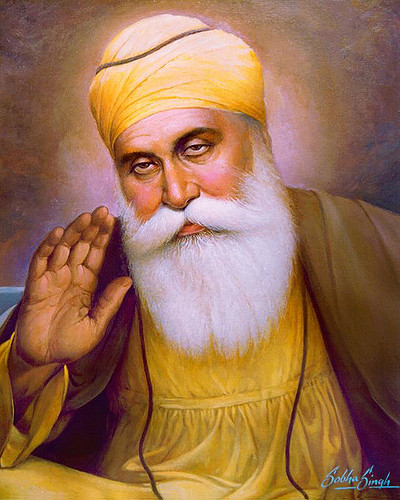
    1666 Parkash Utsav, Patshahi Tenth, Guru Gobind Singh Ji. Guru Gobind Singh, born as Gobind Das or Gobind Rai, was the tenth Sikh Guru, a spiritual master, warrior, poet and philosopher. When his father, Guru Tegh Bahadur was executed by Aurangzeb, Guru Gobind Singh was formally installed as the leader of the Sikhs at the age of nine, becoming the tenth and final human Sikh Guru. Among his notable contributions to Sikhism are founding the Sikh warrior community called Khalsa in 1699 and introducing the Five Ks, the five articles of faith that Khalsa Sikhs wear at all times. Guru Gobind Singh is credited with the Dasam Granth whose hymns are a sacred part of Sikh prayers and Khalsa rituals.
    1704 SHAHEEDHI, Wadhae Sahibjadhae, Sakka Chamkaur.
    1899 Birth of freedom fighter Sardar Udam Singh.

    23rd December

    1667 Birth of Mata Sudari Ji.
    1704 Martydom of Bhai Jaita.

    24th December
    1805 Fateh Singh Ahluwalia sought understanding between General Lake and Jaswant Rai Hulkar.
    1921 Kishan Singh Garhgaj attended diwans at Chamjkaur Sahib and Sirhind during Dec. 24-28 and delivered fiercy speeches.

    25th December
    1850 Lord Dalhousie visits Fatehgarh to meet Maharaja Dalip Singh.
    1922 First meeting of Babbars is held at Jassowal to decide the reformation of the Jholichuks.
    1922 Special issue of “Babbar Akali Doaba” newspaper on Kalghidhar.

  • Five days of Diwali: A journey from darkness to light

    Five days of Diwali: A journey from darkness to light

    Diwali, often called the Festival of Lights, is not merely a single day of celebration but a grand five-day festival that encapsulates the essence of Indian culture-victory of light over darkness, knowledge over ignorance, and good over evil. Each day of Diwali has its unique significance, rituals, and stories, weaving together a magnificent tapestry of faith, tradition, and festivity. From the quiet preparation of Dhanteras to the jubilant Govardhan Puja and the tender bonds celebrated on Bhai Dooj, Diwali is a journey through gratitude, devotion, renewal, and love. Let’s explore the five auspicious days that make this festival so radiant and spiritually fulfilling.

    Dhanteras – The Day of Prosperity and Preparation

    As autumn’s golden dusk deepens and homes across India begin to gleam with the flicker of oil lamps, a special anticipation fills the air. The sound of new utensils being unwrapped, the sparkle of freshly purchased ornaments, and the fragrance of incense herald the arrival of Dhanteras-the first and perhaps most symbolic day of the five-day Diwali festival. Dhanteras, which literally translates to ‘wealth on the thirteenth day’ (Dhan meaning wealth and Teras referring to the thirteenth lunar day of Krishna Paksha in the month of Kartik), sets the tone for the grand festivities that follow. But beyond its association with gold and silver shopping, Dhanteras is deeply rooted in ancient mythology, spiritual symbolism, and timeless Indian customs that celebrate health, prosperity, and divine grace.
    Mythological Origins: The Descent of Dhanvantari and the Ocean of Immortality
    The origins of Dhanteras go back to one of the most magnificent legends in Hindu mythology-the Samudra Manthan, or the Churning of the Cosmic Ocean. According to the Puranas, the Devas (gods) and Asuras (demons) churned the ocean in search of Amrit, the nectar of immortality. During this celestial event, several divine treasures emerged from the ocean-among them was Lord Dhanvantari, the celestial physician and the incarnation of Lord Vishnu, holding in his hands a golden pot filled with the elixir of life.
    His emergence symbolized the dawn of Ayurveda, the ancient science of holistic healing and longevity. Hence, Dhanteras became a day associated not only with material wealth but also with Arogya-good health and well-being. In many homes, prayers are offered to Lord Dhanvantari, seeking freedom from ailments and the blessings of vitality.
    The day, therefore, beautifully unites two fundamental desires of human life-wealth and health, material prosperity and physical well-being-echoing the Vedic ideal that true prosperity is incomplete without wellness.
    The Legend of King Hima and the Origin of the ‘Diya’ Ritual
    Another popular legend associated with Dhanteras tells of Prince Hima, the sixteen-year-old son of King Hima, who was fated to die on the fourth day of his marriage due to a snake bite. However, his clever and devoted wife refused to surrender to destiny. On the night foretold for his death, she placed all her ornaments and heaps of gold and silver coins at the entrance of their chamber and lit countless lamps around the palace. When Yama, the god of death, arrived in the form of a serpent, his eyes were dazzled by the brilliance of the lights and the precious metals. The serpent, blinded and enchanted, could not enter the chamber and spent the night listening to the princess singing devotional songs. By dawn, the danger had passed, and the prince’s life was spared.
    From this tale was born the custom of lighting earthen lamps (diyas) on Dhanteras night, not just as a gesture of welcome for prosperity but also as a symbolic act of warding off death and negativity. Even today, Hindus light a Yamadeep-a small diya placed outside the home, facing south (the direction associated with Yama)-as an offering for longevity and protection.
    Rituals and Traditions: The Auspicious Call of Wealth
    Dhanteras marks the beginning of Diwali preparations in earnest. In the days leading up to it, homes are cleaned, repainted, and decorated-symbolizing the removal of stagnation and negativity. On the evening of Dhanteras, people decorate their thresholds with colorful rangolis, adorn their entrances with marigold garlands and mango leaves, and place lamps in every corner to invite auspicious energies.
    Buying Gold, Silver, and Utensils
    The act of purchasing precious metals is not mere extravagance; it is deeply symbolic. Gold and silver are considered forms of Goddess Lakshmi herself, embodiments of abundance and purity. It is believed that whatever new possession one brings home on this day multiplies manifold.
    Utensils, too, are favored purchases-representing nourishment, family togetherness, and the promise of good meals to come. In modern times, people also buy new clothes, appliances, vehicles, and even digital assets, adapting the spirit of Dhanteras to contemporary life while retaining its sacred essence.
    The Dhanteras Puja
    As dusk falls, families gather for Lakshmi and Dhanvantari Puja. Devotees light 13 diyas (symbolizing the date of Trayodashi) and place them at the entrance, windows, and sacred altars. Offerings include flowers, sweets, puffed rice, coriander seeds, and coins placed before idols of Goddess Lakshmi, Lord Ganesha, and Lord Kubera-the treasurer of the gods.
    The mantra “Om Dhan Dhanvantaraye Namah” is chanted to invoke Lord Dhanvantari’s blessings, while Lakshmi Aarti fills the home with devotional fervor. In business communities, especially in Gujarat and Maharashtra, Chopda Pujan is performed-new account books are opened and sanctified, marking the beginning of a new financial year under divine auspices.
    The Spiritual Essence: Cleansing, Renewal, and Abundance
    At its heart, Dhanteras is about purification and preparation-the mental, spiritual, and physical readiness to welcome the goddess of fortune into one’s home. Just as we clean and beautify our surroundings, this day invites us to cleanse our inner world-our thoughts, intentions, and energies.
    Lighting lamps is not only an act of devotion but a spiritual metaphor: it is the illumination of wisdom, the triumph of light over darkness, and hope over despair. Buying something new is a token gesture that honors life’s constant renewal and reminds us that prosperity, like light, must circulate freely.
    Regional Variations and Local Customs
    Across India, Dhanteras is celebrated with diverse hues and customs:
    – In North India, especially in Uttar Pradesh, Bihar, and Delhi, people perform Yamadeepdaan and decorate their homes with marigolds and diyas. Markets brim with shoppers buying utensils and jewelry, and goldsmiths witness their busiest day of the year.
    – In Gujarat, the day holds special importance for traders who conduct Chopda Pujan, offering prayers to Lord Ganesha and Goddess Lakshmi for success in the coming financial year.
    – In Maharashtra, families decorate the floor with intricate rangolis, and women purchase new metal utensils, believing it attracts household prosperity.
    – In South India, the day is linked more closely to Dhanvantari Puja, with devotees performing rituals to ensure good health and longevity.
    – In rural India, farmers and craftsmen polish their tools and machinery, seeking blessings for productivity and protection in the coming season.

  • Should Muslims sacrifice cattle on Eid-al-Adha?

    Should Muslims sacrifice cattle on Eid-al-Adha?

    By Mike Ghouse

    On Friday, July 31, 2020, over a billion and a half Muslims around the world, will be slaughtering millions of goats, camels, and cattle to carry out Abraham’s tradition of sacrificing the symbolic lamb. Is there an alternative to the ritual of slaying animals on Eid Al-Adha, the festival of sacrifice? The answer is yes!

    Rituals are the pathways to accomplish milestones of peace for oneself and with what surrounds one; life and environment. None of us can escape from the ceremonies. Each of us instinctively follows certain routines, from waking up to the time we go to sleep. Whether we shower, eat breakfast, go to the office, or gym, we follow the rituals.

    The essence of Islam is to create cohesive societies where every human feels secure about his/her faith, race, religion, region, or ethnicity. It is time for Muslims to consider the essence of sacrifice rather than the ritual itself.

    Real sacrifice requires us to give up some of what is dear to us. It is about parents going to sleep without food but feeding their kids; it is clothing their kids while waiting to get their own. In the case of extremities, we would instead get the bullet and save our loved ones, we are willing to rescue an individual from a freezing lake risking our own lives, and even strangers do that.

    A thousand years ago, a man’s assets were made up of his goats, camels, and cattle. The ultimate sacrifice one would make was to give away his precious assets in gifts. Today, the most cherished possession is money, and people must be willing to part some of it to give the ability to the receiver to spend on his/her critical needs.

    One of the examples set up for guidance was the test of Abraham’s faith, love, and devotion to God, which humans do routinely, “If you love me, you would do this for me.” A simple assurance would suffice, be it your fiancé, spouse, kids, siblings, or parents.

     It was Abraham’s turn to face the command of God to sacrifice his son. Upon hearing this, he prepared to submit to God’s will and places his son on the block. Right at that moment, a lamb appears as an alternative. Then God revealed to Abraham that his “sacrifice” has already been fulfilled.

    Does God want animals to be sacrificed?

    Not at all. Qur’an, Al-Hajj 22:37 (The Pilgrimage) is clear: “Never does their flesh reach God, and neither their blood. It is only your God-consciousness that reaches Him. It is to this end that we have made them subservient to your needs so that you might glorify God for all the guidance with which He has graced you. And give thou this glad tiding unto the doers of good.”

    The act symbolizes our willingness to give up a part of our bounties to strengthen and preserve the web of the universe and help those in need. We recognize that all blessings come from God, and we should open our hearts and share with others.

    What would you sacrifice instead?

    It is customary for Muslims to sacrifice an animal on the day of the Hajj, a symbolic representation of Prophet Abraham’s act. What are our alternatives?

    We can put that money to a different use that will do greater good like lending to a street hawker who can sell things from a cart and take care of his family or a single mom who can weave baskets or make sweaters to take care of her family. The beauty of this practice is you can make the same money repeatedly work for the common good. Muslims call it Sadaq-e-Jariah, which is continual giving.

    Dr. Nauman Anwar: “Sacrificing animals without making a public spectacle is still a good idea, as long as no wastage of the meat and hides occur. Many Muslim countries have a lot of poverty, and if the meat reaches the deserving population, it will help improve the nutritional status of the poor.

    Let your single sacrifice multiply rather than the one-time sacrifice of animals. Prophet Muhammad had emphasized service to fellow humans as the highest service to God. Quran (4:152) says, if you are kind to your fellow humans, which is my creation, you will earn my grace regardless of your faith.

    Honoring police, firemen, and soldiers

     Every day our police officers and firemen risk their own lives to protect ours, our freedom is protected by our men and women in the uniforms. I urge fellow Muslims to stop and salute every one of these men and women, honoring them for their love for humanity. Better yet, call the firemen, policemen, and let them know that as a Muslim you appreciate their sacrifice, and this festival is about appreciation for such sacrifice.

    I did that in Louisville; within minutes, the officer had emailed the article to his fellow officers, appreciating the Muslims.

    Prophet Muhammad (pbuh) had said the least you can do as a charity is to smile and appreciate the otherness of the others.

     You can wish your Muslim friends by saying, Eid Mubarak, Eid Saeed, Happy Eid, Happy Festivities, etc.

     ( Dr. Mike Ghouse is the founder and president of the Center for Pluralism. He is a speaker, thinker, author, community consultant, pluralist, activist, newsmaker, and an interfaith wedding officiant. More about him at www.TheGhousediary.com)


  • Ramadan, everything you always wanted to know

    Ramadan, everything you always wanted to know

                 Mike Ghouse

    Ramadan is pronounced Ramzan in the Subcontinent, Iran, Turkey, and the Central Asian Republics wherever the Persian linguistic influence exists, elsewhere in the world, it is Ramadan. In the Arabic language, “Z” is “D” in most words. This article has three sections: The Spirit, Politics, and Rituals of Ramadan.


     The spirit of Ramadan

    One’s birth to the last rites of life, every moment in between, is laden with rituals, even though some of us may deny it. Indeed, whether we go to the gym, eat, sleep, wear clothes, drive, or talk on the phone, we follow  rituals. 

    Rituals signify the milestones of our daily life. Every significant moment of the day is a ritual. It is an unwritten way of measuring our progression, a memory

    pattern to bring discipline to our actions. Training is necessary to do things on time, manage personal relationships, drive to a destination, or keep within budget. The result of disciplined behavior is worthwhile for most people. When joyous, whether we are theists or not, we have to express that sentiment. Otherwise, a sense of incompleteness lingers in our hearts. 

    Every faith is composed of a set of unique rituals to bring discipline and peace to human life. Fasting is one of the five essential rituals that Muslims around the world observe.

    Ramadan is the ninth month of the Islamic lunar calendar and observing with a ritual precision; it is annual training or a refresher. It requires one to abstain from food, drink, intimacy, ill-will, ill-talk, harmful actions, and other temptations from dawn to dusk, every day for a full month. 

    One has to rise above his or her baser desires. Islam gifts this month to

    its followers to teach discipline to bring moderation to their daily lives.

    Although Ramadan is popularly known in the west for its culinary delicacies and fancy iftars (ceremonial breaking of fast at sundown), the spirit and intent of Ramadan lie in a human transformation in a month-long inner spiritual journey of finding oneself in tune with spirituality.

    God does not need the hunger or thirst of someone who hurts others, violates their dignity or usurps their rights said Prophet Muhammad (PBUH). The fasting of the stomach must be matched by the dieting of the limbs. The eyes, ears, tongue, hands, and feet all have their fasts to undergo. The tongue’s temptations, for example — lies, backbiting, slander, vulgarity and senseless argumentation — must be challenged and curbed to maintain the integrity of the fast.

    The consciousness of behavior and vigilance over action are the most profound dimensions of fasting: the fasting of the heart focuses on the attachment to the divine. That is when Ramadan becomes a source of peace and solace, just as Christmas goes beyond the rituals to bring forth kindness, charity, and caring.

    True fasting is self-purification; from this comes an abundant inner life that brings about values such as justice, generosity, patience, kindness, forgiveness, mercy and empathy — values that are indispensable for the success of the community.

    Ramadan will come and go with such stealth that we cannot but be reminded of our mortality. What is it that we value, and why? Habits, customs, even obsessive behavior like smoking can be curtailed with relative ease in the face of a higher calling.

    Politics of Ramadan

    Politics plays a crucial role in our Temples, Synagogues and Churches, Mosques are no different. For the moon sighting, a few scientifically-inclined-Muslims have adopted NASA’s calculations believed to be precise. However, four different traditions are operating concurrently; i) Strictly Calendar, ii) NASA and iii Sighting with bare eyes, and iv) sighting by others in the community.

    Muslims around the world will begin fasting from Thursday, April 23, 2020, and for a whole month after that, however, for some of them, it will start (only) if the moon is sighted.  

     The traditions of Ramadan

     It’s a celebration time when Muslims around the world anxiously wait for the first moon of the ninth Lunar month to appear in the sky. The families gather in their backyards, or get on the nearest hillock or climb on top of their homes, and wait for the pencil-thin moon to appear on the horizon, and when it does, Ramadan begins. 

    Right after the moon is sighted, the announcement goes that Ramadan has started.  

    The first evening, mosques hold “Taraweeh” prayers – in for the next 29 to 30 days, they recite a chapter each day for the full month. Due to Corona, this year, every mosque around the world has canceled the congregational prayers and asked to pray at home.  

    As the Christians do the count down from the first day of Christmas or Hindus express devotion for each one of the nine days through Navaratri or the Jews follow eight days of Chanukah, Jains observe eight days of Paryushan. Others follow a similar path, and the Muslims count the next 29 to 30 days with a sense of duty.

    Every day, with small variations in practices, families rise early around 4:00 AM and gather up in the kitchen to participate in preparing and cooking. Then the family sits around, says a short blessing, and eats the meal. Everyone has to finish off the food and water intake five minutes before sunrise or the morning call for prayers known as Azan or Adan. 

    Then everyone used to go to the mosque to pray, but this year, everyone will pray at their homes.  

     Throughout the day, a conscious effort is made to abstain from food, water, or temptations that are detrimental to self-discipline. Those who do not observe fasting, honor the ones who do, by not eating or drinking in their presence.

     One of the most appealing aspects of Ramadan is the domino effect other Muslims have on you to guard yourselves against greed, anger, ill-will, malice, hate, jealousy, and other ills of the society. One feels pious during the month. Of course, there would always a small percentage in a group who do not receive that wisdom.

      When the time to break the fast approaches towards the sundown, anxiety builds up, it is almost like the countdown of seconds when the space shuttle takes off—Muslims attempt to be in the congregation or team up with some. A prayer call (Azan) signifies the time to break the fast. 

     Prophet Muhammad had initiated a healthy way of breaking the fast; it was graduating the empty stomach with snacks like dates, fruits, and veggies to prepare the digestive system for a full meal after the prayer break. The dates are the most popular item around the world, they are chewy, meaty, and tasty after a long day of fasting, and dates are also a preferred item as it was for the Prophet. It has the right nutrients to give one a smooth transition from fasting all day to eating a full meal. 

     The breaking of fast, also known as “Iftar,” has become a community event. It is an excellent opportunity for friends of Muslims belonging to other faiths to host the Iftars. It is a way to bond, connect, and build cohesive societies. Unfortunately, this year, no one is holding the iftar parties. 

     President Clinton started the tradition of holding an Iftar party carried forward by President Bush and then-President Obama, and they invited a few Muslim leaders from around the United States. Trump held the iftars for the Muslim Ambassadors. It is a major social event for the politicians, just as it is with Christmas, Rosh Hashanah, Diwali, and other festivities.

     At the end of the 29th or 30th day, depending on the moon sighting, NASA, or other traditions, the fasting would come to an end with the celebration. It is Chandni Raat or the moonlit festivities. Usually, the evening is spent on last-minute shopping.

    The next day is Eid or festivity. It is a significant event, and Muslims gather in large spaces and perform their thanksgiving prayer. The traditional greetings are “Eid Mubarak, Ramadan Mubarak, or Happy Ramadan.”

     On this day, one formally forgives and gets forgiven and starts the year with goodwill. Every one hugs three times; I am your friend; you are my friend, and together we are friends, and together we forgive each other. It is the equivalent of Michami Dukadam in Jainism. 

     Traditionally everyone in the family wears new clothing, a symbol of starting over with a clean slate. The oldest one in the family passes on gifts and cash gifts (called Eidi) to younger members of the family to spend as they wish and to teach responsibility with freedom.

     It is also a time to share one’s wealth with the needy; it is like the tithe and is called Zakat. Every family takes out 2.5% of the value of their assets and passes on to the needy. It is an investment in human capital, to help uplift everyone on a level playing field to maintain a sustainable good in society.

     On the culinary side, it is a feast! A variety of dishes are prepared, over the years I have discovered that the most common item around the globe is a dessert made out of vermicelli’s, i.e., thin hair noodles cooked in Milk with nuts, dates, honey, and other goodies, it is both in liquid and solid formats. Of course, the Biryani is the main meal. It is a feast! 

    For fasting to be truly universal, its benefits must extend beyond the fraternal ties of Muslims and must continue to forging a common humanity with others. Fasting is meant to impart a sense of what it means to be truly human, and its universality is reflected by its observance in Bahai, Buddhist, Christian, Hindu, Jain, Jewish, Sikh, Zoroastrian and other faiths.

    (The author is the founder and president of the Center for Pluralism. He is a speaker, thinker, author, consultant, pluralist, activist, newsmaker, and an interfaith wedding officiant. He is committed to building cohesive societies and offers pluralistic solutions to the media and the policymakers. www.TheGhousediary.com )


  • US concerned about status of minorities in Pak: Ambassador

    US concerned about status of minorities in Pak: Ambassador

    WASHINGTON(TIP): The United States is concerned about the status of minorities in Pakistan, particularly the harshness of its persecution atmosphere and the number of people getting killed, US Ambassador at Large for International Religious Freedom Samuel Brownback said on Thursday.

    “We are concerned about Pakistan because of the harshness of the persecution atmosphere and the number of people getting killed or the inability of the Ahmadi Muslims to function in the country because they – the Pakistanis – won’t let them register as Muslims,” Brownback told a news conference here.

    “So, we’re looking at what we can do in that space,” he added.

    Responding to a question, Brownback said the administration had been working with a number of development organizations to ask them to consider if they could help religious minorities in countries, particularly where they are persecuted.

    “We do help certain groups, like we’ll have particular programs targeted towards women in some countries or the handicapped. I’ve asked a number of them to see if there is a chance” to help and support religious minorities, he said.

    (Source: PTI)

  • Derogatory statements about Hinduism

    Derogatory statements about Hinduism

    By Mike Ghouse

    You might cringe when someone makes an idiotic remark about Hinduism and Hindu practices.

    A majority of Indian Muslims will never make a negative statement about Hindus or Hinduism. Indeed, they will defend it as Hinduism is one of the most misunderstood religions like theirs.

    They are driven by the wisdom found in the Quran, 6:108 (Itani), “Do not insult those they call upon besides God, lest they insult God out of hostility and ignorance. We made attractive to every community their deeds. Then to their Lord is their return, and He will inform them of what they used to do.” The Quran warns us from taking the low road and destroying mutual respect and trust.

    Wisdom is available when people disagree, the best way to part is narrated in the Quran109:6 (Itani), you have your idea, and I have my way.” Let’s respectfully disagree.

    Please be aware, there are about three mistranslations of Quran in the market, and we hope you read at least five versions out of the 50 plus translations to get it right. It is easy for one to jump to conclusions by seeing one person’s interpretation. Humans make mistakes.

     From Allama Iqbal to Sahir Ludhianvi to Shakeel Badayuni and hundreds of poets and authors have written accolades, bhajans and uplifting commentary about Hinduism. On my part, I will continuously uphold and defend Islam and Hinduism, along with all religions. The wisdom of the Quran calls for people to learn about each other, and when they do, conflicts fade and solutions emerge.

    I shared the following note (Pluralism 101) to a WhatsApp group with a video as a forewarning to stall Muslims from making derogatory comments. The video was about our Hindu friends drinking urine right of a Cow and washing their faces. Please remember what is sacred to you is not sacred to others, and vice versa.

    A Muslim is an ultimate human being who cares for other’s wellbeing and stands up for justice to each one of the 7.5 Billion inhabitants of the earth. A Muslim is an exemplary citizen and an Amin – A model citizen. We have a few bad apples, and we need to work and redeem them through critical notes like this.

    The administrator of that WhatsApp group and I received a few disgusting comments, and the administrator chose to dissolve the group rather than engage in the conflicts, that was his choice. The other group also had a few negative comments. What a shame!

    Muslims are developing good checks and balances, if one idiot among us makes a wrong statement, there are ten to pounce on him/her.  Our Hindu, Sikh, Jewish and Christian friends are also doing the same, speaking out against idiotic statements. There are plenty of them in each group. The new book American Muslim Agenda documents many such incidents.

    I hope I am speaking for a majority of Indian Muslims, if not, please let me know. We have to talk out what is right.

    (The author  is a public speaker, author, thinker, newsmaker and an interfaith wedding officiant. His new book American Muslim Agenda is available at Amazon and the bookstores.  https://www.linkedin.com/in/mikeghouse/)

  • Indian Origin Hindu Priest brutally attacked; Incident widely condemned

    Indian Origin Hindu Priest brutally attacked; Incident widely condemned

    NEW YORK(TIP): Indian diplomats, US lawmakers  and  Community leaders in one voice condemned the brutal attack on a Hindu priest in New York City’s Borough of Queens in open daylight.

    According to available reports, around 11 a.m. Thursday, July 18, near the Shiv Shakti Peeth in Glen Oaks in Queens, while Swami Harish Chander Puri was walking down the street in his religious attire, a man came up from behind and started hitting him, repeatedly.

    The priest suffered bruises and abrasions all over his body, including his face during the attack. 52-year-old Sergio Gouveia, who reportedly screamed “this is my neighborhood” during the assault,was arrested by police in connection with the attack. He’s being charged with assault, harassment and criminal possession of a weapon.

    “Swami Ji Harish Chander Puri spent this weekend recovering from a brutal, despicable act of hate. Our city is praying for him. But he says he’s praying for his attacker”, tweeted NYC Mayor Bill de Blasio.

    “Glad that Hindu priest Swami Ji Harish Chander Puri is now recovering at home & that @NYPDnewshas arrested the man who allegedly attacked him. We cannot & will not stand for this violence in our city. We all stand w our Hindu neighbors”, said U.S. Rep. Carolyn B Maloney.

    “I am disgusted over the violent attack on a Hindu priest in our borough. This type of brutal act is un-American and the person who committed this heinous crime is a coward. People from across the globe call Queens home and we are proud to embrace this rich diversity that exists in our communities and neighborhoods. I commend the NYPD for making a swift arrest in this case and I’m confident that justice will be served. I stand with the Hindu community and wish the victim a full recovery”, said U.S. Rep. Grace Meng (D-Queens).

    “I will continue to stand in solidarity with the Hindu community in my district and across America. May god grant Swami Ji strength, so he may fully recover,” Tom Suozzi, representing New York’s 3rd Congressional District including parts of Queens, Nassau and Suffolk counties, said on Twitter.

    Meanwhile India’s Consul General in New York Ambassador Sandeep Chakravorty met Swami Harish Chander Puri on July 21.

    “Met with Swamiji of Shiv Shakti Peeth who was attacked by a miscreant. He is at home, recovering well and resumed his spiritual duties. Thanks to the Police for quick arrest of the assailant. Many thanks to @RepGraceMeng & @RepTomSuozzi & the Indian Community for their support,” Ambassador Chakravorty tweeted.

    The Hindu American Foundation urged police to investigate the attack as a hate crime. “Such an attack — occurring as it did in the borough of Queens, perhaps the most ethnically diverse place in the entire world — is particularly senseless and tragic. We’re pleased that Swamiji is recovering from his injuries. We’re also pleased that Representatives Tom Suozzi, Grace Meng, and Carolyn Maloney have offered their support to the local Hindu community. In addition, we praise the office of Mayor Bill de Blasio for its quick response, sending community liaison officer Rohan Narine to the mandir. HAF urges police to investigate the attack as a hate crime, and if it is determined that bias was indeed the motivation for the appropriate charges added to those of assault, harassment, and weapons possession that Gouveia already faces”, HAF Director of Communications Mat McDermott, based in New York, said in a statement.

    Brooklyn Borough President Eric L. Adams condemning  the  assault on the Hindu Priest in Glen Oaks, NY, said in a statement sent to The Indian Panorama :-

    “This vicious, reprehensible assault was evil, plain and simple. If the reports indicating that the suspect viciously beat a Hindu priest for walking in his neighborhood in Glen Oaks, Queens, that is the textbook definition of a hate crime, and the perpetrator should be charged as such. We cherish our Hindu community, and while all violence must be condemned, it is particularly galling to see a man of faith beaten within an inch of his life for looking different.

    “I spoke with Swami Ji Harish Chander Puri on Sunday over the phone and reiterated that we will always stand united against hate and will not tolerate attacks on our fellow New Yorkers. I was struck by his resiliency in the face of a horrific attack, and his willingness to forgive his assailant after all he had been through was truly awe-inspiring. We should all be inspired by his example and determination to move forward, and we should recommit ourselves to stopping the resurgence of hate in our city and beyond”.

  • ARRANT RELIGIOUS BIGOTRY AND DISGUISED RACISM NOW SEEM ALIVE AND WELL IN THE US SUPREME COURT (SCOTUS)

    ARRANT RELIGIOUS BIGOTRY AND DISGUISED RACISM NOW SEEM ALIVE AND WELL IN THE US SUPREME COURT (SCOTUS)

    EXECUTED MUSLIM DENIED LAST RITES BY MULLAH

    By Nagendra Rao

    Looks like the halcyon days of Supreme Court justices like William J. Brennan Jr., Thurgood Marshall, Earl Warren, Potter Stewart, William O Douglas, Felix Frankfurter are permanently over, or at least for a very long time.

    This is what happens when economic prosperity heads full speed towards a brick wall as is increasingly happening to the US as it begins its irreversible long slide down.

    This is the court of Brett Kavanaugh, John Roberts, of late Antonin Scalia disguised but intensely opinionated, conservative, fundamentalist, (bigoted?) Catholic / Christian judges.

    It’s why as NYT wrote in a long and thoughtful piece about 10 years ago that the world has now stopped reading or giving credence to the opinions of SCOTUS.  It is too right wing, too biased, (Christian parochialism?) to be worthy of universal respect as in past eras.  It is the Supreme Courts of Canada, New Zealand, South Africa and India (alas, now increasingly of slavishly westernized and deracinated from Indic cultural ethos and pandering to western sensibilities) which are respected and regarded.

    SCOTUS on narrow technical grounds just denied an American Muslim the right to last rites by a Mullah / Maulvi in the judgment on Dunn v. Ray.  Domineque Ray, was executed Thursday evening by the State of Alabama. Mr. Ray did not contest the state’s power to kill him, he simply asked that Alabama permit his spiritual adviser to be in the execution chamber to comfort him as the state extinguished his life. Ray is a Muslim, and the prison’s policy allowed him to be attended by a Christian chaplain but not by a Muslim imam.

    “Religious liberty for me, but not for thee”.

    The word “empathy,” it should be noted, does not mean “sympathy.” Sympathy implies a kind of partisanship — to be sympathetic to a party is to be favorable to their claims. Empathy means something else. It is the ability to place yourself in someone else’s shoes and to understand their perspective even if you have not shared their experiences. It is a white Christian man’s ability to see that the world sometimes operates differently for an African-American Muslim.

    It should have been an open-and-shut case. As Justice Elena Kagan noted in a dissenting opinion, “the clearest command of the Establishment Clause is that one religious denomination cannot be officially preferred over another.” If Alabama allows Christian inmates to be attended by a clergy member of their faith, then it must offer the same accommodation to people of other faiths.

    Neal Katyal, a former acting Solicitor General of the United States who, by virtue of the fact that he practices before the Supreme Court, must be careful about criticizing its judges too harshly, compared the Ray decision to notorious decisions such as “Dred Scott, Plessy v. Ferguson, Korematsu, and the Chinese Exclusion Act cases.” The National Review’s David French labeled Ray “a grave violation of the First Amendment.”

    Nearly a hundred years ago the Ramakrishna Mission Vedanta Society in California was gifted a huge property by a wealthy devotee in her will.  Her family filed suit.  The openly and blatantly racist and religiously bigoted judge (there are scads of them even in federal courts of the Confederate South) set aside the bequest on totally specious grounds and awarded the property to the family.  It looks like SCOTUS under Trump is rapidly returning to the Dred Scott days of viewing slaves as property.

  • When Guru Nanak Appeared on the World Scene

    When Guru Nanak Appeared on the World Scene

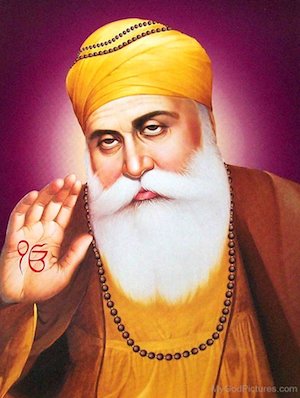
    Guru Nanak is the Founder of Sikhism, the youngest and the fifth  largest religion of the world, with a following of around 25  million worldwide. It is  a monotheistic faith founded in the Punjab region of India more than  500 years ago. Most of the world’s 30 million Sikhs live in India, but more than 500,000 have made  the U.S. their home.

    By Harbans Lal, PhD., D.Litt. (Hons)
    Such was precisely the objective of Guru Nanak and his mission; to take his message across oceans and mountains to civil societies everywhere. Prevalence of similar culture,language, any particular religious belief, weather, landscapes, business opportunities, or political system was not a requirement to entice Guru Nanak. He had no plans to export or take with any ethnic people or language to the places he selected to visit. His whole object was to promote dialogues with religious people and promote interfaith engagement all over the globe towards the pathways to enlightenment and ethics of goodness. All is very clear when one examines the Guru’s dialogues and his travels closely.

    Guru Nanak’s Coming

    Guru Nanak (1469-1539), the Founder of Sikhism, came to this world on April 15, 1469. He declared his ministry in November 1496 when he took on his journey to teach. He found the paths to enlightenment devoid of divinity; they were completely distorted towards unholy goals of the exploiters of people.

    The powerful who often pretended to protect and spread their faith led to struggles that could only be resolved through the subjugation of the other resulting in bloody conflicts. There were score of instances where the rulers chose to protect their own skin by staying aloof that amounted to let the mighty prevail.

    The religious leaders routinely concocted religious practices to thrust on people to serve many unholy interests. These interests were mutually supportive and were successful in designing a variety of concealed tricks to fool people who were seeking peace and salvation.

    The religious institutions had devised beauty shows with religious practices that were intended to attract innocent minds. For example, they invented deities with accompanying stories, idols with descriptions of their powers, recitations to invoke imaginary deities, and rituals that buttressed each other. They asked people to erect stunning buildings to house gods and promised accessibility to gods at precise times, and places opened only through the expense of wealth, time, and inner energy. Altruism was perverted so that it only benefited clerics and clergy.

    Many other tricks were implemented to speed a religion’s institutional agenda. For example, miracles were invented to convert people and to influence human behaviors. The religious myths were invented to answer real questions and then safeguarded those miracles and myths by un-testable threats and promises.  Religious institutions built cults of external marks and body wrappings to encourage murders and wars against those who did not toe the line, or who were members of competing religions.

    People were asked to invest a massive amount of money, time, and mind in ritualistic illusions and also in corrupted beliefs such as, either converting others or serving clergy with wealth or flesh that would guarantee heavens no one had ever seen. Above all, they used horrific fears to ensure compliance of all their tricks.

    Guru Nanak’s Travel

    he Enlightened Guru Nanak on the bank of the river Veni ( Vein)

    Guru Nanak came out of his enlightening meditation at the  Veni (Vein) River with fervent zeal to spread what he said was inspiration from the ONE CREATOR MANIFESTED IN ALL. He assigned a symbol of    Ek-Onkaar to represent the Creator. He described the calling as to spread the universal message of NAAM – Mindful Awareness of Divine Presence, DAAN –  Live Out the Culture of Altruism when Seeking Divine Benevolence, and ISHNAAN – Implement Ethics of Good Deeds that Cleanse Body and Mind

    To accomplish his mission, Guru Nanak undertook four long journeys over a period of thirty-five years. He journeyed over 30,000 miles in over thirty years. Two faithful provided companionship; Bala, originally from a Hindu background and Mardana, coming from Muslim upbringing.  The countries he covered included, India, Bangladesh, Bhutan, Pakistan, Tibet, Nepal, south-west China, Afghanistan, Iran, Iraq, Saudi Arabia, and Ceylon. Stories of his contacts are also being discovered from sources in Egypt, Israel, Jordan, Syria, and Rome.

    Shri Guru Nanak Dev Ji was always accompanied by two followers, one a Muslim Mardana ( Left) who played Rabab ( a musical instrument) , and Bala, a Hindu (Right).

    Mission Was Outright Universal

    What is universal? Universal is that applies universally, that is, for “all similarly situated individuals,” regardless of geography, culture, race, gender, religion, nationality, or any other distinguishing feature. When one looks at Guru Nanak’s travels, teachings, and lifestyles, it becomes apparent right away that his visions, concerns, and approaches were all universal.

    Let me explain the universality of Nanak’s mission a bit more as most of us as yet have not grasped the distinction.

    One of our community leaders was visiting the USA sometimes ago.   In our conversation over what he observed he stated his great satisfaction in this way. He said he was so pleased to observe that Sikhism was really becoming universal. No matter where he traveled, he always met Sikhs, and they were all flourishing. To him, it was not always like during his prior visits. I responded that his observation of meeting Punjabi ethnic Sikhs everywhere was heartening and was true, but Sikhi was not at all going universal no matter how many Punjabi Sikhs he found in how many unexpected places. This fact in itself did not bring universality to Sikhi.

    Rather, Sikhi would be universal only when the teachings of our Guru would have practical appeal to civil societies in many countries within and beyond Northern Indian subcontinent, and many diverse cultures across the oceans practice it.

    A universal is something — maybe a concept, an idea, a feeling, etc. — that can be shared in practice across different cultures and languages. When the concepts or teachings can be readily exported beyond the domain in which it originated, independent of exporting people practicing that concept.

    For example, Christian idea of “God’, or ‘religion’ is practiced beyond its origins in the Middle-Eastern and Greco-Roman context. Native Americans, Black Africans and Caucasian alike have accepted Christianity. Western secularists have exported the idea of democracy beyond its European and American context. Buddhists and Hindus have exported the concepts of dharma, karma, meditation, yoga, transmigration, even Gandhi-ism, etc., beyond India. There are many more examples.

    Maharaja Ranjit Singh, the Sikh emperor, introduced Nanakshahi currency. An 1804 coin has the picture of Guru Nanak. In another coin, Guru Nanak is seen with his constant companions, Mardana and Bala
    Maharaja Ranjit Singh, the Sikh emperor, introduced Nanakshahi currency. An 1804 coin has the picture of Guru Nanak. In another coin, Guru Nanak is seen with his constant companions, Mardana and Bala

    Such was precisely the objective of Guru Nanak and his mission; to take his message across oceans and mountains to civil societies everywhere. Prevalence of similar culture, language, any particular religious belief, weather, landscapes, business opportunities, or political system was not a requirement to entice Guru Nanak. He had no plans to export or take with any ethnic people or language to the places he selected to visit. His whole object was to promote dialogues with religious people and promote interfaith engagement all over the globe towards the pathways to enlightenment and ethics of goodness. All is very clear when one examines the Guru’s dialogues and his travels closely.

    First of all Guru Nanak saw serious problems with the civil societies the world over. His objective was clearly to stir the hearts and minds of people everywhere and all over the world.

    Guru Nanak gave a great deal of thought concluding that civil societies all over the earth were burning in the false belief systems. They were deprived of the divine wisdom, and Nanak heard them horribly desperate. As a result, Guru Nanak changed into the traveling mode and set an example of similar undertakings. He set on enabling the populace of the earth to overcome the darkness of ignorance.

    Regarding Nanak’s religion, there is a famous quote. When, a Muslim scholar in Makkah asked Nanak about his religion, this was his answer. Qazi Ruknuddin asked Nanak:

    “Fala Allah mazaboo”? (What is your religion?)

    To that Guru Nanak responded:

    “Abdulla Allah la mazaboo” (I am a man of God and belong to no religion.)

    Guru Arjan then vouched that Guru Nanak’s teachings could be universally practiced by all four distinctive cultures of Hindu Society, namely, the Kshatriyas who were the nobility and the protectors of society., the Brahmana’s who provide education and spiritual leadership, The Vaishya who produced, and the shudras who served other sections of society through menial jobs.

    ਖਤ੍ਰੀਬ੍ਰਾਹਮਣਸੂਦਵੈਸਉਪਦੇਸੁਚਹੁਵਰਨਾਕਉਸਾਝਾ॥SGGS, p. 747.

    (The author is Professor and Chairman, Department of Pharmacology and Neurosciences at the medical college of the University of North Texas Health Science Center.  Author of over 400 research papers, 26 books, several research reviews and 56 chapters in technical books, Dr. Lal is an authority on Sikhism. He serves as the Founder President of the Academy of Guru Granth Studies established for the promotion of scholarly works on the Sri Guru Granth Sahib. Based in Dallas, Texas, Dr. Lal can be reached atharbansl@gmail.com)


  • Kartik Purnima 2018: Date, Significance, Pooja Rituals and Prasad

    Kartik Purnima 2018: Date, Significance, Pooja Rituals and Prasad

    Hindus across the country will celebrate Kartik Purnima on 23rd November, 2018. Kartik is the eighth lunar month as per the Hindu calendar and is considered the holiest month among all lunar months. This auspicious month holds immense importance as it is dedicated to the worship of both Lord Vishnu and Lord Shiva. The ritual of taking a holy dip during Kartik month begins on the day of Sharad Purnima and ends on Kartik Purnima, which is also known and celebrated as Deva Diwali, Tripurari Purnima or Tripuri Poornima in different parts of the country.

     A lot of rituals and festivals culminate on the day of Kartik Purnima, which makes it all the more significant. The purnima tithi begins at 12:53 pm on 22nd November, 2018 and ends at 11:09 am on 23/Nov/2018. (Source: Drikpanchang.com)

     Kartik Purnima festivities last for five days. The festivities of Kartik Purnima begin on the day of Prabodhini Ekadashi, which is the eleventh day and goes on till Purnima, which is the fifteenth day of Kartik month during Shukla Paksh. A great legend associated with Kartik Purnima is the episode where Lord Shiva killed the demon king Tripurasura (hence the name Tripura Purnima or Tipurari Purnima). As per legends of Tripuri Purnima, Tripurasura defeated Gods and started ruling their kingdom. Once Tripurasura was killed, the day also came to be known as the ‘Deva Deepawali’ or Diwali of Gods.

     As part of the rituals, devotees go to the rivers to take the ritualistic bath or ‘Ganga Snan’. On the day of Kartik Purnima, they also observe a day long fast and perform Rudra Abhishekam of Lord Shiva, by bathing him in honey and milk. During the month associated with Kartika Purnima, Hindus refrain from eating any non-vegetarian food.

     During the five-day celebration, devotees consume food only once in the afternoon, which is known as ‘Habisha’. On the auspicious occasion of Kartik Purnima, annakoot- a type of prasad is offered to Lord in temples. In a lot of household, wheat flour halwa is prepared for puja and prasad, and is then distributed among devotees. The prasad is made using wheat flour, ghee and sugar, cardamom powder and raisins.

     Source: ndtv.com


  • Manduka halts production of Lord Ganesh yoga towels after Hindu protest

    Manduka halts production of Lord Ganesh yoga towels after Hindu protest

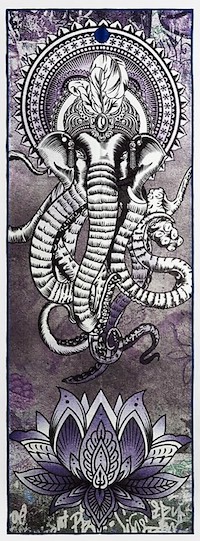
    NEVADA(TIP): Global yoga gear company Manduka, headquartered in El Segundo (California), has announced not to produce yoga towels carrying reimagined images of Hindu deity Lord Ganesh, which Hindus objected calling these “highly inappropriate”.

    Taylor of Manduka Customer Care, in an email today to Universal Society of Hinduism (USOH), which spearheaded the protest, wrote: “Out of respect for our global community, we will no longer produce new versions of the products in question.”

    Hindu statesman Rajan Zed, who is President of USOH, in a statement in Nevada, November 22,  thanked Manduka for understanding the concerns of Hindu community which thought image of Lord Ganesh on such a product was highly insensitive.

    Zed, however, pointed out that a formal apology from Manduka CEO to the upset Hindu community was still due, as it had sold Ganesh yoga towel in the past also. He also urged Manduka to withdraw its yoga towels depicting reimagined images of Lord Ganesh selling on its website or other online retailers or shops.

    Rajan Zed suggested that Manduka and other companies should send their senior executives for training in religious and cultural sensitivity so that they had an understanding of the feelings of customers and communities when introducing new products or launching advertising campaigns.

    Zed had said that Lord Ganesh was highly revered in Hinduism and was meant to be worshipped in temples or home shrines and not to sit/stand on or put feet/buttocks/legs/body on or to absorb/wipe one’s sweat. Inappropriate usage of Hindu deities or concepts for commercial or other agenda was not okay as it hurts the devotees.

    Hinduism was the oldest and third largest religion of the world with about 1.1 billion adherents and a rich philosophical thought and it should not be taken frivolously. Symbols of any faith, larger or smaller, should not be mishandled, Rajan Zed had noted.

    Zed had stated that such trivialization of Hindu deity was disturbing to the Hindus world over. Hindus were for free artistic expression and speech as much as anybody else if not more. But faith was something sacred and attempts at trivializing it hurt the followers, Zed added.

    Taylor wrote to USOH: Thank you for bringing your organization’s concern to our attention. We consider our community in all that we do and work diligently to ensure we never compromise our products, community or each other… Our reputation, as the world’s most respected yoga brand, was built by operating at the highest level of integrity.

    These objectionable “yogitoes yoga towel – enlightened” and “yogitoes yoga towel – opportunity” were priced at $51 and $43.50 respectively and help “prevent slipping”. These are to be placed “on top of your yoga mat or directly on the floor”. Though “enlightened towel” shows up as “out of stock” on Manduka’s main website, it is still available from Manduka Singapore, etc., sites.

    In Hinduism, Lord Ganesh is worshipped as god of wisdom and remover of obstacles and is invoked before the beginning of any major undertaking. There are about three million Hindus in USA.

    Manduka, whose tagline is “Made for you, made for yoga.” and whose history goes to 1997, claims to make “the world’s finest athletic performance products, including yoga mats, towels, bags, props and men’s & women’s fitness apparel”. It runs “project:OM”, whose tagline is “Creating a Better World”. Manduka claims that its quality is “still unmatched in the marketplace”.

  • 550 Saal Guru Nanak de Naal:  Celebration, reaffirmation

    550 Saal Guru Nanak de Naal: Celebration, reaffirmation

    As Guru Nanak’s teachings stand out for their relevance in the present times of divisive turmoil even 550 years after his birth, one’s head bows with humility to the Guru’s deep insight into the right way of living. And, astonishingly, the right path turns out to be quite simple. It is we who have made our lives complicated. With superstitions, rituals, idolatry, barriers of caste and creed, all dressed up with the cloak of religiosity to garner acceptance. In his endeavor to open the minds of fellow humans to the society’s blots and blemishes, the Guru freely dug into the preachings of his times — from those of the Hindus, the Muslims, babas, pirs, fakirs — to evolve his philosophy, that eventually became the Sikh way of life.

    Also, equally astonishingly, it turns out that treading on that simple way of life is not quite so easy. One is easily led by ego, anger, lust, greed towards diversions, blind to the potholes that mark such digressions. After all, why is it so tough to consider all fellow beings as equal; that there is one nameless God, who constitutes the eternal truth and he resides in his creations? Why is truthfulness so hard to come by? Yet, that is the only way for a peaceful and fulfilling life. Be good, work hard, share fortunes. Vand khao, khand khao. Each one of us needs to learn and abide by this credo. The planet would then be a paradise.

    It is in this context that the year-round global festivities around the 550th anniversary of Gurpurab assume importance. Whether it is the announcement of the Kartarpur corridor from Dera Baba Nanak in Gurdaspur to the International Border for further connection with Gurdwara Darbar Sahib at Kartarpur, Pakistan, or the development of Sultanpur Lodhi as a spiritual center, the activities hold value only if they underscore the Guru’s message of overcoming divisiveness. He denounced the dogmas of the caste system, and taught that everyone is equal. Through the spiritual pursuits of love, equality, fraternity and virtue, one can be purged of falsehood.

    (Tribune, India)

  • 550 Years of Shri Guru Nanak Dev Ji, the Founder of Sikhism

    550 Years of Shri Guru Nanak Dev Ji, the Founder of Sikhism

    Guru Nanak Dev Ji(1469-1539),is the Founder of Sikhism, the youngest and the fifth largest religion of the world, with a following of around 25  million worldwide. It is  a monotheistic faith founded in the Punjab region of India more than  500 years ago. Most of the world’s 25 million Sikhs live in India, but more than 500,000 have made  the U.S. their home.

    Guru Nanak was a precursor to modern world of democratic values. His teachings, universal in nature, include equality, brotherhood, compassion, charity- the values the civilized world cherishes.

    The Indian Panorama, with this issue , begins year- long celebration of the Great Master until His 550th  birth anniversary in November 2019.

    Readers may please contribute articles for publication. E mail to salujaindra@gmail.com

    ‘Guru Nanak’s message of inter-faith dialogue is the best solution to contain terrorism, radicalism: Dr. Manmohan Singh

    Dr Manmohan Singh, Former Prime Minister of India
    Photo / Courtesy Mukesh Aggarwal

    NEW DELHI(TIP): Dr.  Manmohan Singh, former Prime Minister of India  said, November 22,  that Guru Nanak Dev’s message of inter-faith dialogue was the best solution to terrorism and fundamentalism and should be followed to promote harmony in the country, which is witnessing social strife, religious acrimonies  and caste rivalries.

    “Guru Nanak’s message that all religions have merit and it is necessary to learn from each other is as relevant today as it was when He lived in our midst,” the former PM said in an exclusive interview to The Tribune on the eve of the 550th birth anniversary celebrations of the founder of Sikh religion.

    He stressed the urgency of mobilizing all institutions — political, religious and social — to end the scourge of terrorism. In reference to the recent terror act on the Nirankari congregation in Amritsar, he said that Punjab had suffered enough, and it would be sad  if terrorism were to again take root in the state.

    The Congress veteran called upon all segments of the Sikh society, the Hindus and Muslims and all others, to unite on the occasion of Parkash Utsav to promote the cult of good and honest living preached and practiced by Guru Nanak.

    A practicing Sikh and India’s first Sikh PM, Dr Singh quoted poet Allama Iqbal, who best described the “Master’s” advent: “Phir uthi aakhir sada tauheed hi Punjab se…Hind ko ek mard-e-kaamil ne jagaaya khwaab se…”

    (With Inputs from  The Tribune, India)

  • A Nationalism That’s Anti-National

    A Nationalism That’s Anti-National

    By Yogendra Yadav

    What the RSS needs is an exposure to Indian culture and a deeper understanding of Hinduism itself

    The RSS was among the few organizations in independent India that refused to honor some of the key symbols of the Indian republic: the national flag, the national anthem and, of course, the Constitution of India. It speaks volumes that the head of the RSS has to clarify, nearly seven decades after the promulgation of the Constitution, that his organization believes in it, something explicitly contradicted by his predecessor. Notwithstanding its recent claims to the contrary, the RSS does not quite subscribe to any of the key tenets of the Constitution: socialism, secularism, federalism and, indeed, democracy.

    The recent outreach by the Rashtriya Swayamsevak Sangh (RSS) at Vigyan Bhavan in Delhi seems to have succeeded in its principal objective: an image makeover for a niche audience. Thanks to an obsequious media and a commentariat ever willing to suspend disbelief, the event has yielded the soft, liberal gloss the RSS needed and desired. Sadly, the critics limited themselves to questions that the RSS anticipated, indeed wanted: Does the RSS exercise influence on this government? Is the RSS anti-Muslim?

    It is time we asked a harder and deeper question: Is the RSS anti-national?

    Theory and practice

    On the face of it, this is an odd question. Nationalism, Indian-ness and Hindutva are very much the calling card of the RSS. This is not put on. I have known the RSS from inside and outside. Having met hundreds of swayamsevaks and many pracharaks, I know that an average RSS volunteer carries this nationalist self-image. I can also attest that just like the communists or old-time socialists, an average RSS worker tends to be more honest and idealist than a run-of-the-mill political leader. I am aware that on more than one occasion, the RSS has done exemplary rescue and relief work during national disasters. If anything, its critics accuse it of being ultra-nationalist. Thus, to question its nationalist credentials might appear outrageous.

    Yet this question needs to be debated in all seriousness and all fairness. Given the salience of the RSS in our national public life today, this is a pressing question. We worry, rightly so, about the impact of Islamic fundamentalist groups and Maoist insurgents on our nation. We debate, as we should, the challenge posed by separatism in Kashmir and Nagaland to our nationhood. But we no longer debate with any seriousness the challenge posed by the RSS and its associates to the project of nation-building the Indian nation. The question is about the theory and practice of the RSS as an organization and its relation to the Indian nation, its past, present and future.

    The nation and the past

    Let’s begin with some indisputable facts about its past. Right from its inception in 1925, the RSS was not in any way active during the national movement. In fact, its associates such as the Hindu Mahasabha actively opposed the national movement. It is also a well-documented fact that V.D. Savarkar, whose ideology inspired the RSS’s founders and who remains its icon, was released from Cellular Jail in the Andaman and Nicobar Islands after he wrote four mercy petitions to the Viceroy pledging loyalty to the British empire. After his release, he lived off a stipend from the British government and obeyed faithfully the conditions it had imposed on him. Shyama Prasad Mookerjee, another Hindu Mahasabha leader, actively collaborated with the British during the Quit India movement while the RSS kept aloof from this biggest anti-colonial uprising. The two-nation theory was propagated by Hindu nationalists, much before the Muslim League. And it is no secret that Nathuram Godse was once an RSS member and was very much a part of its extended family when he murdered Mahatma Gandhi. Bluntly put, the RSS made zero, if not negative, contribution to the national struggle. But that is not sufficient to dub it anti-national today.

    The role of the RSS after Independence is more relevant here. How did the RSS contribute to the project of nation-building? Sadly, the answer is again in the negative. The RSS was among the few organizations in independent India that refused to honor some of the key symbols of the Indian republic: the national flag, the national anthem and, of course, the Constitution of India. It speaks volumes that the head of the RSS has to clarify, nearly seven decades after the promulgation of the Constitution, that his organization believes in it, something explicitly contradicted by his predecessor. Notwithstanding its recent claims to the contrary, the RSS does not quite subscribe to any of the key tenets of the Constitution: socialism, secularism, federalism and, indeed, democracy.

    The secessionists challenge the territorial integrity of India. The left-wing extremists challenge the writ of the Indian state. The challenge posed by the RSS is much deeper: it challenges the very idea of India, the swadharma of the Republic of India. If this is not anti-national, what is anti-national?

    In practice, far from being a part of the solution, the RSS was always a part of the problem that India faced in its difficult journey of nation-building. The legacy of Partition and the challenge of bringing together immense diversities posed an unprecedented challenge to the nascent Indian nation. During this delicate phase, the RSS was at best an irresponsible denominational pressure group for the Hinduisation of the Indian state, opposing any and every concession to minorities and advocating a hawkish foreign policy. At worst the RSS became a fulcrum of organized subversion of the constitutional order, as in the demolition of the Babri Masjid in 1992. If constitutional patriotism is the heart of national political life, the RSS has repeatedly stood in opposition to the nation.

    More than anything else, it is the theory and practice of its nationalism that shows the RSS to be a European import, out of sync with Indian nationalism. The RSS subscribes to the now outdated European model of nation-state which assumed that the cultural boundaries of a nation must match the political boundaries of a state. In Europe it meant a uniform race, religion, language and culture as the defining features of a nation. In India it meant Hindu-Hindi-Hindustan, the slogan coined by Savarkar. India’s home-grown nationalism challenged this European model and its futile and bloody quest for matching cultural and political boundaries. Instead, Indian nationalism was about creating political unity in conditions of deep diversity of culture, religion and language.

    Paradox of its workings

    Today, as a rapidly diversifying world seeks to learn from the Indian model, the RSS clings on to an alien, borrowed and fractious understanding of nationalism. Worse, its model of separatism of the majority is clearly the biggest obstacle for Indian nationalism. Isn’t it odd that an organization that claims to work for national integration has, or has had, little time and energy for an amicable resolution of some of the issues that challenge our national unity? These include intractable regional disputes (the Karnataka-Tamil Nadu and Punjab-Haryana water disputes), intra-regional tensions (demand for Telangana or Vidarbha), language issues (Punjabi-Hindi, Kannada-Marathi) or differences with racial and ethnic dimensions (violence against migrants from the Northeast in Bengaluru, Hindi speakers in Mumbai).

    The RSS version of nationalism comes into play only when there is a religious angle to any issue. It is not that they care for Hinduism either. The RSS ideologues have little knowledge of or interest in Hindu traditions. In fact, the version of Hinduism that it seeks to impose is itself a parody of orthodox Islam and orthodox Christianity and against the basic spirit of Hinduism, let alone the spirit of humanism that informs all religions. Unfortunately, the principal focus of the RSS has been to foment Hindu-Muslim differences, division and hatred. Since Hindu-Muslim violence poses the biggest single threat to national unity today, those who work for the exacerbation of Hindu-Muslim tension must be seen as anti-national, and guilty of treason.

    The secessionists challenge the territorial integrity of India. The left-wing extremists challenge the writ of the Indian state. The challenge posed by the RSS is much deeper: it challenges the very idea of India, the swadharma of the Republic of India. If this is not anti-national, what is anti-national?

    I am not for a ban on the RSS. Its theory and practice represent a cultural-political malady that needs a deeper cure rather than a ban. It originates in an inferiority complex of a modern Hindu, made worse by a westernized, deracinated form of our secularism. This might sound odd, but what the RSS needs is exposure to Indian culture and its multiple traditions, greater appreciation of culturally more confident Indians such as Tagore and Gandhi and a deeper understanding of Hinduism itself. If it introspects rather than hold an outreach at Vigyan Bhavan, I am sure its Sarsanghchalak would recommend to the RSS what Gandhiji suggested to the Congress party: dissolve itself.

    (The author is National President of Swaraj India and a psephologist/academic formerly with Lokniti, Centre for the Study of Developing Societies, New Delhi)


  • A fraught timeline: on Ayodhya title suit

    A fraught timeline: on Ayodhya title suit

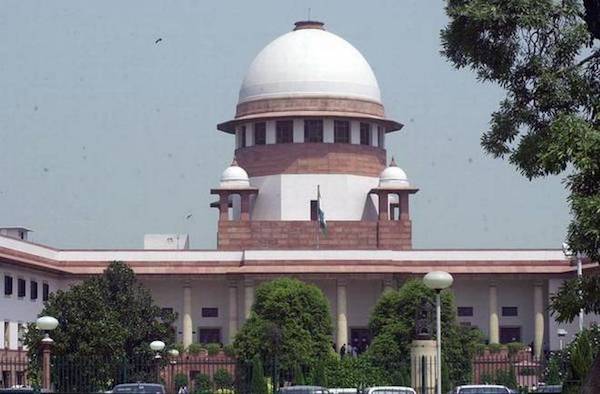
    The Supreme Court’s refusal to refer some questions of law in the Ram Janmabhoomi-Babri Masjid dispute to a seven-judge Bench has one immediate consequence: it could expedite the final hearing in the appeals against the Allahabad High Court’s compromise judgment of 2010 in the main title suit. The two-judge majority opinion has fixed the date for the hearing as October 29, a development that may mean that a final verdict is not far off and it could have a bearing on political events in the run-up to the general election due next summer. The final hearing ought to have begun a year ago but was delayed because some parties wanted the reference to a larger Bench so that certain observations in a Constitution Bench decision in Ismail Faruqui (1994) could be reconsidered. The apprehension was that remarks to the effect that “a mosque is not an essential part of the practice of Islam” and that namaz can be offered anywhere, even in the open, would influence the outcome of the appeal. Justice Ashok Bhushan’s main opinion has sought to give a quietus to the controversy by declaring that “the questionable observations” were to be treated only as observations made in the context of whether land on which a mosque stood can be acquired by the government. It should not be taken into account while deciding suits and appeals. It is difficult to fault this approach, as it is a fact that the respective claims of the U.P. Sunni Central Wakf Board, Nirmohi Akhara and Ram Lalla, the deity, can only be tested against evidence adduced during trial and not by pronouncements on the significance of places of worship or practices in a particular religion.

    At the same time, can one brush aside the possibility that observations on a sensitive religious issue would be exploited by one side to gain legal advantage? In his dissenting opinion favoring a reconsideration of Ismail Faruqui, Justice Abdul Nazeer notes that its observations have permeated the High Court judgment. Ismail Faruqui was a ruling on petitions challenging the validity of a Central law that acquired the land on which the Babri Masjid stood before it was razed by a frenzied and fanatical mob on December 6, 1992. The judgment was notable for upholding the rule of law by restoring the title suits that had been declared as having “abated” in the Act. It also declined to answer a Presidential reference on whether a Hindu temple stood on the disputed site before the mosque was built. Any observation made in the course of such a decision is bound to have a profound impact on the courts below. It is easy to contend that courts should work to their own timelines and not be influenced by such things as election season. But in the life of this nation, the Ayodhya dispute has gone through dark political phases and been more than a mere legal issue. The onus is on the apex court to dispose of the appeals at its convenience without giving any scope for the exploitation of religious sentiments.

    (The Hindu)

  • Ayodhya dispute: SC declines to refer to larger bench whether mosque is integral to Islam

    Ayodhya dispute: SC declines to refer to larger bench whether mosque is integral to Islam

    Hindu groups hail Supreme Court verdict.   ‘High-powered’ saints’ panel to decide future action on Oct 5

    NEW DELHI(TIP):  Hindu groups welcomed, September 28, the Supreme Court decision refusing to refer to a larger Bench its 1994 verdict that said mosque is not integral to Islam, thereby weakening the Sunni Wakf Board’s claim over the disputed land.

    The BJP’s ideological fountainhead RSS and its affiliate Vishwa Hindu Parishad expressed satisfaction while hoping for an early decision on the matter. Stating that all sorts of impediments to “delay the matter” (construction of a Ram temple at Ayodhya) have now been removed, VHP president Alok Kumar said the next course of action would be decided at a high-powered committee of saints on October 5.

    “I am satisfied that this impediment has been removed and the way is now clear for hearing of appeals in the title suits on Ram janmabhoomi. We feel all sorts of impediments were being put up to delay the main matter (construction of Ram temple), including pleas that the matter be heard after the 2019 Lok Sabha elections. We understand that the next hearing on the case has been fixed for October 29. The matter has been pending in the Supreme Court for long. We hope and expect that the SC will expeditiously hear the pleas,” he said.

    On whether the construction of the temple would begin before the 2019 elections, he said the two issues “were not related”. A high-powered committee comprising saints associated with the Ram janmabhoomi issue will gather on October 5 and take a call on the next course of action, he said.

    RSS office-bearers are expected to be present at the meeting to decide whether the matter should be left to the SC, Parliament or required fresh impetus. Notably, the issue related to the 1994 ruling has delayed the hearing in the title case. Now that the hearing will start on October 29, the most important implication of Thursday’s order could be speeding up of the title case. With less than a year to go for the polls, political observers see it as a “favorable” situation for the BJP, which had promised a “grand Ram temple “in its manifesto.

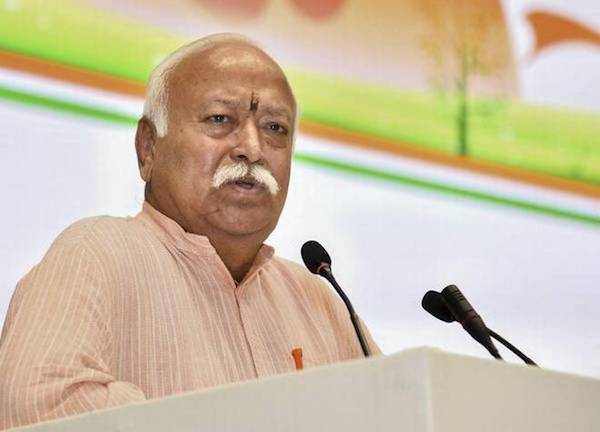
    Recently, RSS chief Mohan Bhagwat, while speaking at a Sangh conclave “Bhavishya Ka Bharat — An RSS Perspective”, was also clear that a grand Ram temple should be constructed at Ayodhya as soon as possible. Rather, it should have been built by now, he had said.

    “It (Ram temple) is the question of faith of crores of Hindus, it should have happened by now. It is only right that a grand Ram mandir is built at the place Bhagwan Ram was born. The building of the temple will end a major issue of friction between Hindus and Muslims. And if it is done amicably, it will automatically silence those who point fingers at the Muslim community,” Bhagwat had said.


  • American Hindus Plan to Celebrate 125th Anniversary of Vivekananda’s Chicago Speech in 100 US Cities

    American Hindus Plan to Celebrate 125th Anniversary of Vivekananda’s Chicago Speech in 100 US Cities

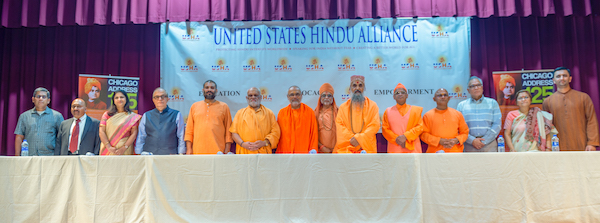
    CHICAGO, IL(TIP):  The United States Hindu Alliance (USHA), a national Hindu advocacy organization, announced a one year 100 city celebration of the 125th anniversary of the historic speech of Swami Vivekananda on September 11, 1893 at the World Parliament of Religions in Chicago.

    The parliament was a landmark event in the history of religions. More than 7,000 religious leaders representing various religions, faiths and Dharma traditions from all over the world took part in the event, including the young Swami Vivekananda from India who represented Hindu Dharma. By virtue of his message, that advanced ideas of tolerance, acceptance, harmony and co-existence, he became an instant celebrity within and outside the parliament. According to the Smithsonian Institute, he is one of the 25 most influential leaders who have ever visited the United States.

    The launch event took place on September 11, 2018 at the Hindu Temple of Greater Chicago, the first Hindu temple of Chicago.

    Among the eminent personalities who addressed the audience included 4 senior leaders of the Hindu Dharma Acharya Sabha, the apex body of all the Heads of Hindu monastic orders (Sanyasi Paramparas) of India, representing more than 1.7 million Hindu monks. Poojya Swami Paramatmananda Saraswatiji, General Secretary of the Hindu Dharma Acharya Sabha, Poojya Swami Vishweshwarananda Giriji Maharajji, Poojya Madhavapriya Das Swamiji and Poojya Acharya Shri Krishnamaniji Maharaj addressed the audience. In addition, Poojya Swami Vigyananandaji, Chairman of World Hindu Foundation, Neeta Bhushan, Consul General of India in Chicago, Rajiv Malhotra, author and founder of Infinity Foundation, Poojya Swami Sharananandaji of Chinmaya Mission and Gokul Kunnath, President of USHA spoke at the event.

    Chicago Address 125 is a yearlong celebration organized by the United States Hindu Alliance, in partnership with Hindu temples and associations nationwide to promote the message of Swami Vivekananda. Vivekananda emboldened the Hindu spirit by promoting Hindu identity, Hindu unity and Hindu empowerment. He galvanized India’s Hindus to work towards the freedom of India. Apart from its outreach to the Hindu communities across the country, USHA has also decided to strengthen the interfaith movement by promoting the vision inherent in the Chicago address. To achieve this goal, USHA has developed 5 themes that will celebrate Swami Vivekananda’s message to the world.

    The five themes are “Inner peace leads to world peace”, “Dialogue leads to reconciliation”, “Mutual respect leads to religious harmony”, “United action leads to preservation of the planet” and “Freedom leads to diversity”.

    For more information on USHA, please visit www.ushaonline.org

    The United States Hindu Alliance (USHA) is a national grass roots Hindu advocacy organization to protect the rights and interests of Hindus in America and worldwide. USHA is a 501 (C) (3) tax-exempt, non-profit, non-partisan, non-sectarian organization representing several million Hindus in the United States.

     (Photograph and Press release by Asian Media USA)

  • Indian Politician, Diplomat & Author to Launch Two Books at DIAC Literary Event

    Indian Politician, Diplomat & Author to Launch Two Books at DIAC Literary Event

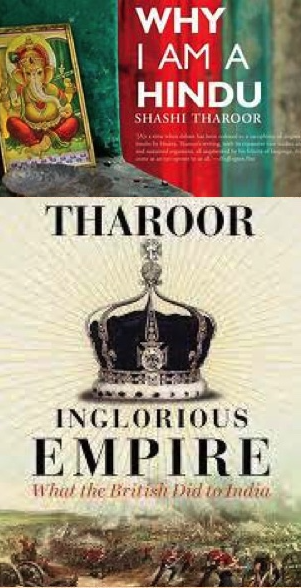
    DALLAS, TX(TIP): Dallas Indian Arts Collective (DIAC), in partnership with Teamwork Arts, proudly presents a Fireside Chat with Indian politician, diplomat and author, Dr. Shashi Tharoor, on Tuesday, September 18, 2018, from 6:30 to 8 p.m. at Center Stage, located at 111 Oak Lawn Avenue in the Design District. The conversation will be moderated by Sanjoy Roy, founder and producer of the world-renowned Jaipur Literature Festival.

    Tharoor, an award-winning author of 17 books of fiction and non-fiction, including Inglorious Empire (published in June 2018) and the newly published Why I Am A Hindu (not available for sale in North America until October 2018, but available at this event), is a second-term Member of Parliament representing Thiruvananthapuram and Chairman of the Parliamentary Standing Committee on External Affairs. He has served as Minister of State for Human Resource Development and External Affairs in the Government of India.

    In a profound re-examination of Hinduism, one of the world’s oldest and greatest religious traditions, India’s leading public intellectual, Shashi Tharoor, lays out Hinduism’s origins and its key philosophical concepts, major texts and everyday Hindu beliefs and practices, from worship to pilgrimage to caste. Tharoor is unsparing in his criticism of extremism and unequivocal in his belief that what makes India a distinctive nation with a unique culture will be imperiled if Hindu “fundamentalists”— the proponents of “Hindutva,” or politicized Hinduism—seize the high ground. In his view, it is precisely because Hindus form the majority that India has survived as a plural, secular democracy. A book that will be read and debated now and, in the future, Why I Am a Hindu, written in Tharoor’s captivating prose, is a revelatory and original contribution to our understanding of the role of religion in society and politics.

    PRAISE FOR WHY I AM A HINDU (available for pre-sale at the event):

    “Shashi Tharoor is the most charming and persuasive writer in India. His new book is a brave and characteristically articulate attempt to save a great and wonderfully elusive religion from the certainties of the fundamentalists and the politicization of the bigots.”—William Dalrymple

    “[O]ne of India’s most articulate liberals and a leading voice of those who reject the aggressively fundamentalist strains of Hindu nationalism.” —Victor Mallett, Financial Times

    “A profound book on one of the world’s oldest and greatest religions.”—Hindustan Times

    In the eighteenth century, India’s share of the world economy was as large as Europe’s. By 1947, after two centuries of British rule, it had decreased six-fold. Beyond conquest and deception, the Empire blew rebels from cannon, massacred unarmed protesters, entrenched institutionalized racism, and caused millions to die from starvation. British imperialism justified itself as enlightened despotism for the benefit of the governed, but Shashi Tharoor takes on and demolishes this position, demonstrating how every supposed imperial “gift”— from the railways to the rule of law—was designed in Britain’s interests alone. He goes on to show how Britain’s Industrial Revolution was founded on India’s deindustrialization, and the destruction of its textile industry. In this bold and incisive reassessment of colonialism, Tharoor exposes to devastating effect the inglorious reality of Britain’s stained Indian legacy.

     “Rare indeed is it to come across history that is so readable and so persuasive.”—Amitav Ghosh

    “Tharoor’s impassioned polemic slices straight to the heart of the darkness that drives all empires. Forceful, persuasive and blunt, he demolishes Raj nostalgia, laying bare the grim, and high, cost of the British Empire for its former subjects. An essential read.”— Nilanjana Roy, Financial Times

    “His writing is a delight and he seldom misses his target … Tharoor should be applauded for tackling an impossibly contentious subject … he deserves to be read. Indians are not the only ones who need reminding that empire has a lot to answer for.”—Literary Review

    Tickets are $50 and are available at www.diactexas.org. Both Tharoor & Roy will be available for one-on-one media interviews, upon request, from 5 to 6 p.m. Media RSVP to Jitin@JingoMedia.com or 512.773.6679.

    (Based on a Press Release by Jitin Hingorani)

  • WORLD HINDU CONGRESS SET TO WELCOME MORE THAN 2,500 DELEGATES FOR 2018 CONFERENCE

    WORLD HINDU CONGRESS SET TO WELCOME MORE THAN 2,500 DELEGATES FOR 2018 CONFERENCE

    Vice President of the Republic of India to Commemorate 125th Anniversary of the Landmark Parliament of Religions Speech in Special Ceremony

    Manu Shah

    CHICAGO, IL(TIP):  The World Hindu Congress (WHC) announced, September 5, that attendance goals for the 2018 conference have been smashed, with more than 2,500 delegates and 220 eminent speakers confirmed for this year’s iteration. Convening September 7-9 at The Westin Hotel in the Yorktown Shopping Center, Lombard, IL, the 2018 WHC is celebrating the 125th anniversary of Swami Vivekananda’s Parliament of

    Religions speech in Chicago in 1893. Upon completion of WHC deliberations, the Honorable Mr. M. Venkaiah Naidu, Vice President of the Republic of India, will participate in a special ceremony to commemorate the 125th anniversary of Swamiji’s Chicago speech.

    “The 2018 World Hindu Congress will be a landmark event,” said WHC Coordinator Dr. Abhaya Asthana. “We are primed and eager to host an unprecedented convergence of Hindu leadership unified in purpose: To connect, share ideas, inspire one another, and impact the common good.

    The WHC provides a unique opportunity for participants to exchange ideas on a global stage and draws upon expertise of speakers from a wide range of fields and backgrounds.”

    Featuring seven parallel conferences that will explore economics, education, media, politics, women, youth and organization, the 2018 WHC will feature prominent speakers such as economist Dr. Arvind Panagariya, academic Dr. Makarand Paranjape, author Amish Tripathi, and Grammy-nominated artist and entrepreneur Chandrika Tandon.

    Additionally, there will be poster presentations at the event that includes 55 posters from various Hindu Leaders and Researchers on topics such as Non-Violence: Our Greatest Gift to the World and Hindu Culture and Life-style studies.

    About World Hindu Congress

    Held once every four years, the World Hindu Congress (WHC) is a global platform for Hindus to connect, share ideas, inspire one another, and impact the common good. Founded in 2014, the first World Hindu Congress in Delhi birthed the seven parallel conference platform to showcase the values, creativity, and entrepreneurial spirit of the global Hindu community. For more information, visit www.worldhinducongress.org

  • 11th Bhavanjali Mahotsav – A Grand Celebration in Dallas, TX

    11th Bhavanjali Mahotsav – A Grand Celebration in Dallas, TX

    Grand celebration by Saints and devotees; Blessings to all the devotees by the saints

    Noteworthy seva by women devotees; Devotees around the globe rejoiced

    DALLAS, TX(TIP): Around the time when India became an independent nation, Shastriji Maharaj Shri Dharmajivandasji Swami laid the foundation for propagating true wisdom to help build the best character in students through an education that was both academic as well as spiritual. He started this effort by initiating the very first Gurukul of Swaminarayan Sampraday. Today more than 150 Gurukul centers exists across the Swaminarayan Sampraday where more than 100,000 students are enrolled in Gurukuls around the globe.

    Shastri Shri Dharmajivandasji Swami renounced his home in 1917 when he was merely 14 years old.  To commemorate the centennial anniversary of the event, a grand Bhavanjali Mahotsav was celebrated across several branches of Rajkot Gurukul including Rajkot, Junagadh, Taravda, Una, Sarangpur, Morbi, Ahmedabad, Surat, Mumbai, Hyderabad and also Dallas, TX.

    Shri Dhirubhai Babaria and Shri Manubhai Patolia of USA, who have dedicated themselves to the noble vision of Shastriji Maharaj, performed the very first poojan of Guruvarya Shri Devkrushnadasji Swami. 35 saints were present for the celebration including Shri Devprasaddasji Swami, Shri Laxminarayandasji Swami, Shri Narayanprasaddasji Swami and others. Devotees from Canada, Latin America, India, Dubai, Africa, UK, Australia as well as different parts of USA including New Jersey, Chicago, Washington, California, Boston, Atlanta, Phoenix, Pennsylvania, Huston, etc. were present to witness the grand celebration. Devotees including Shri Chaturbhai Vaghasia, Shri Gordhanbhai Paghdal, Shri Dhiubhai Kotadia, Shri Rakeshbhai Dudhat (Africa), Shri Jasmatbhai Sutaria, Shri Ashwinbhai Babaria were also present for the auspicious occasion.

    Under the guidance of Shri Vishwaswaroopdasji Swami, several kids (born and raised in the US) took part in traditional Indian folk dances as a tribute to the grand celebration. The kids performed with great flare and poise which reflected their wholehearted dedication. Guruvarya Shri Devkrushnadasji Swami gave his blessings to Shri Vishwaswaroopdasji Swami for his tireless efforts.

    There were more than 150 devotees who had dedicated their time to the temple for the past 50 days. Their efforts were blessed by Guruvarya Shri Devkrushnadasji Swami by presenting them all with a personalized momento. Women devotees also had a huge contribution to the celebration with their tremendous help by providing fresh chapatis, theplas and puris for lunch & dinner for roughly 2500 people each day.

    Guruvarya Shri Devkrushnadasji Swami, in his blessings to all the devotees said, “Just like how a broom cleans the dust and other garbage, performing seva cleanses a human soul from bad vices.” He also added that, “Lord Swaminarayan always accepts selfless acts of seva. Shastriji Maharaj used to perform selfless seva like fetching water from the well for elderly saints to bathe, make chapatis from 30 kgs of flour every day to feed the saints as well as devotees. And in his free time, he focused on learning. He learned the 18 Adhyays of Geetaji in 18 days. He had memorized more than 800 kirtans and more than 700 slokas. Seeing the selfless efforts of each and every devotee here in Dallas makes me very happy. I pray for all your wellbeing.”

    Shri Dharmavallabhdasji Swami had sent a kanthi (made of tulsi) of Nilkanth Varnindra Bhagwan which was graciously accepted by Shri Devkrushnadasji Swami.

    More than 150 volunteers worked day and night, taking off from their office work, for last 50 days. Santo blessed these volunteers with memento. Also, women volunteers of Bhakti Mahila Mandal prepared rotli and thepla for more than 10000 visitors during this celebration.

  • Ambitious International Centre for Sikh Studies set to open in New Delhi early next year

    Ambitious International Centre for Sikh Studies set to open in New Delhi early next year

    NEW YORK CITY(TIP):  With a view to reaching out to the world the message of the Sikh Gurus, an ambitious international center being built in the heart of New Delhi, the Indian capital, aims to impart knowledge and awareness about the origin and values of the Sikh faith to students and other communities around the world.

    The sprawling International Centre for Sikh Studies is being built at the Gurdwara Rakab Ganj Sahib Complex, Opposite to Parliament of India at New Delhi and will be inaugurated on the occasion of Vaisakhi in April 2019. The Centre is an initiative of the Delhi Sikh Gurdwara Management Committee under the leadership of its President Manjit Singh GK, and for which Indian-American hotelier Sant Singh Chatwal has made a contribution of one million dollars.

    Addressing reporters here on August 24, Chatwal said that amid an increase in hate crimes against Sikhs around the world, the Centre will play a pivotal role in explaining the Sikh religion and its universal message of humanity and equality.

    Chatwal said the project is about the universal message of Guru Granth Sahib and the journey of the Sikhism. He said Sikhs around the world are facing hate crimes and are misidentified because of their articles of faith. The Centre, through its high-quality and easy to access digital content will take the message of the Sikh community around the world. He added that the Centre will also collaborate with research institutes and universities around the world to bring scholars and students to the Centre to facilitate their research and studies.

    The Centre is expected to be inaugurated by global ambassadors and diplomats stationed in New Delhi, emphasizing the massage of unity in diversity.

    The Center will house a hi-tech auditorium, art exhibits, digital research library and a museum that will have the Guru Granth Sahib that was handwritten 400 years ago. It will showcase the history of the Sikhs and the presence of essential core values in Sikhism’s sacred texts. This will be done by presenting stories from the history of Sikhism and other relevant sacred texts using state of the art communication technologies so that it is accessed by people anywhere in the world. The content will be in English and Punjabi as well as in other global languages to ensure it is reached a wider audience.

    Describing the initiative as “unique,” Chatwal said the young generation of Sikhs living in India as well as abroad sometimes lacks better understanding of the Holy Scripture- The Guru Granth Sahib – and the project will help spread the message of Sikhism to both Sikhs and non-Sikhs.

    “The Guru Granth Sahib is not just for Sikhs. The project will help convey the message of the Guru Granth Sahib to everybody,” Chatwal said.

    DSGMC officials had visited the city in the summer of 2015 to spread the message about the project among diaspora living in the US and Canada.

    Representatives of Sikh organizations with DSGMC delegation and Sant Chatwal

    Giving details about the project, DSGMC said the Centre aims to engage with young Sikhs all over the world and familiarize them with the core values and contemporary relevance of Sikhism.

    “The message of Guru Granth Sahib is universal. The Sikh Holy Book provides answers to all the problems the world is facing today, including gender inequality, environment challenges, economic inequality and climate change,” Singh said adding that the project will help spread the Sikh message of “selfless service to humanity.”

    He added that the project also aims to acquaint the international community with the history of Sikhism and will incorporate audio-visual communication technologies to spread the information in an engaging manner.

    The work at the Center being built at a cost of INR 20 Crore is in full swing. Already Rs. 10 crore have been spent, GK said.

    A video on the ongoing construction of the Center was shown. Several journalists and community members asked questions or made suggestions.

    Present on the occasion, besides Indian American media, were representatives of various gurdwaras and Sikh organizations. There was a visible excitement among the Sikh community representatives about the Center.

  • Foundation Stone-laying ceremony of the New Haridham Mandir in Chicago

    Foundation Stone-laying ceremony of the New Haridham Mandir in Chicago

    CHICAGO, IL(TIP): Temple is a divine and majestic place of pilgrimage, where life unites with ‘Jagadish’ – the divine ruler of this world. It is a place, where devotees unify with their daitee, where soul fades into the ultimate divinity, where our next generation gets a dose of our true Samskara (sacrament) and culture.

    It’s a place where a mere stone transfigures itself to become a divine idol. This is a place, where our material being, and physical existence convert into a divine temple. It is a place, from where the message of brotherhood, profoundness, unity and intimacy spreads door-to-door.

    With such benedictory purpose and a soulful resolve for welfare and well-being of the people, the erection of the temple in Chicago city of Illinois State of the United States began on May 12 with Mahapuja under total Vedic practice.

    Along with the celebrations marking the beginning of construction work for the new Temple, the auspicious occasion of Rakshabandhan was also jointly celebrated in the august presence of HH Swamishri.

    On this occasion, young members of Chicago Mandal performed mellifluous music including some of the marvelous kirtana and bhajans, which enthralled the listeners.

    Shree Himanshubhai narrated the significance the occasion of Rakshabandhan in a poetic way and stated that Guru Hari Swamishri has committed to protect us from all evils from with-in and outside. He recounted a variety of incidents to explain his philosophy.

    HH Swamiji deliberated upon the importance of Rakshabandhan and said, “We celebrate the festival of Rakshabandhan to pray to God so that he continues to protect us in all situations. Five Pandavas conquered the 100 Kauravas, because they had Lord Shri Krishna on their side to protect them. Likewise, if we surrender ourselves to the God of Godly Saint, we will remain protected in all situations. As much faith we put in God, that much we shall be protected.”

    On the occasion, the Chicago Youth Mandal performed a divine dance on the theme of ‘Yuva Mahotsav ka Bugle Baje’.

    The representatives of different organizations and guests participated the event so as to celebrate the occasion as well as seek the blessings from HH Swamishri.

    Democrat Party’s Congressman, Raja Krishnamoorthi graced the occasion, in his address to the audience, he recognized and praised the social work being done by Yogi Divine Society. Also, thanked the community to erect first Hindu Temple in the Shamburg area.

    On behalf of the American Government, he handed over a letter of appreciation to HH Swamishri.

    The elderly devotees from Chicago Mandal garlanded HH Swamishri as a mark of respect and sought his blessings. On behalf of YDS, Dr CM Patel honored the invited guest, MP Raja Krushnamurti with a bouquet of flowers. The women members of the Chicago Youth Mandal had prepared a special garland for the occasion.

    Other guests and members of Chicago Youth Mandal paid their floral respects to HH Swamishri and garlanded him to seek his blessings.

    Addressing the gathering, Hon Dinkarbhai beautifully articulated the significance of Sainthood to suit the occasion. “Today, with just a holy sight of HH Swamishri, we can say our Rakshabandhan is celebrated. When we instill our complete faith in Swamishri with our efforts, our words and with our mind, then we can stay undeterred in Akshardham.”

    In the end, Guru Hari HH Swamishri showered his blessings on the devotees with his holy words by saying,

    – “Our Guru Yogiji Maharaj is an epitome of courteousness, affection, surrender and devotion. He is such an innocent and detached personality that HME is nowhere to be found. Not an iota of HME, nor slightest of KKL’s steam. Even our HME is removed by merely sitting in the lap of such a motherly saint.

    – HME keeps us attached with the life-death cycle. Sitting in the lap of such motherly saint will eradicate HME, which ultimately cures the disease of life-death.

    – We have to surrender and sit in the lap of such motherly saint to purify our eyes, ears and tongue so as to make it acceptable to the divine.

    – I have come here to invite all of you to the Yuva Mahotsav that we are going to celebrate in the first week of January.

    – This disease of life-death can’t be cured without a saint.

    – Jesus Christ created 110 saints and pronounced the first commandment that no liquor and no meat.

    – Lord Shri Swaminarayan advised us in the Shikshapatri not to consume onion-garlic.

    – I know, they are good medically. But it increases the desires within us.

    – Lord Krishna termed the Kama (desires), Krodh (anger) and Lobh (greed) as the gateway to hell.

    – And Gunatitanand Swami termed obduracy (hatha), pride and envy as the gateway to hell.

    – Atman (soul) is diseased with life-birth phenomenon. To cure it, we need satsang and sant.

    – Without coming in contact with Saint, it is impossible to bring holy thoughts to our minds. We become obedient and courteous once come in contact with such a saint. It brings humility in our behavior. We get to hear and read Bhagwat, Gita or Ramayana.

    – The filth within can’t be cured and cleared without coming in contact with Saints. The Saint is the doctor and bailor for this.

    – If you ask an auto-rickshaw guy or a taxi driver to take you to the temple – Haridham, he will drop you at the doorstep of it.

    – The biggest advantage that will be there is that you would get to know about the great saints of India.

    – The pictures that teach you roaming around, linger, and get naughty, there is no need to watch such movies.

    – Remember one thing always. To become one a human being, there is a need of a Saint. A human means- the eyes watch what is right, ears listen that is right, and tongue speaks that is right.

    – The way Arjuna got Krishna as his Sarthi, Shivaji had Ramdas, Ashoka had Batuk, likewise, we too need a Sarthi like Krishna in our life to live a meaningful life.

    – Abandon things that lead us towards desires. Dinkarbhai is a saint.

    – Our Prem Swamiji is an engineer but he is a Saint. He has nothing else in his life other than devotion and affection.

    – If you come to Haridham, our kids will get engaged in your service. More than that, you will get the benefit of knowing Great Saints of India.

    – We pray for such a Buddhiyoga, which will help us get in the lap of a motherly saint and eradicate the ills such as obduracy (hatha), pride and envy from within us and make us a holy saint like Janak. That’s what we pray for.

    About 750 devotees, who participated in the event enjoyed the deliberations and were privileged to have Prasad at the end of the event,

    (Photographs and Press release by Asian Media USA)

  • The freedom to differ

    The freedom to differ

    Space for a rational and responsible debate on ideas and religion is shrinking

    By Swami Agnivesh

    I can understand that my advocacies and interventions are provocative to the Parivar.  But the hallmark of the democratic mindset is the freedom to differ in a rational and responsible manner. In our tradition, differences in ideas and beliefs are to be addressed through dialogues — shaastrarths — and not by violence and intimidation. We have always believed that the preference for violence is a sign of weakness, not of strength, says the author.

    that spirituality is the light of life. But my idea of spirituality has been, from the beginning, different from its pietistic version. The goal of spirituality is to build a dharmic society, wherein all human beings can attain growth, freedom and dignity. If so, a world-denying, escapist religiosity is clearly unacceptable. So, I developed for myself the vision of Vedic socialism and applied spirituality.

    In this, I have been inspired by the teachings of Maharshi Dayanand. The nine principles of Arya Samaj, as formulated by him, have been my guiding light. I became deeply convinced that his endeavor to re-instate reason in the sphere of religion, and his relentless battle against religious obscurantism and superstitions of all kinds, is the way forward for India. I left academics and plunged into spiritual activism under the world-transforming vision of Dayanand, convinced that it was the cause for which I was to live, for the rest of my life.

    So, my sanyas is a relentless pursuit to seek the light of truth and to make it prevail in the life of our country. The shaping discipline of my life is ‘to doubt, to debate and, if need be, to dissent’. It is not an option for me, hence, to be coopted into anybody’s myths, make-believe or partisan agenda. My spiritual discipline obliges me to satisfy my conscience that what I embrace is in full harmony with the light of truth. I have taken a stand against the indoctrination and communal conditioning by religions, using the arsenal of blind faith, of humans from infancy onwards. I have no doubt that this is an atrocity on freedom and is clearly violative of rights. Every form of conditioning, especially the conditioning that begins from birth, militates against the right to choose, which is basic to religious freedom. To me, freedom to choose where I should stand and which cause I need to support, based on a free and informed application of reason, is the essence of the religion I wish to practice and is, hence, the essence also of religious freedom.

    Dayanand’s campaigns against blind faith and religious obscurantism is an aspect of his commitment to make justice and human dignity prevail in our society. Merely attacking superstition is an academic exercise. I resist and question this evil as part of my commitment to make truth prevail. My reading of history convinces me that blind faith — and the suppression of free and rational thinking it brings about — is the main weapon that agents of injustice, exploitation and oppression use. My spiritual calling and conviction make it incumbent on me to resist this aberration.

    I state the above, to alert my countrymen that the attacks launched on me, which can no longer be glossed over as stray instances, are assaults on the freedom of religion that I am entitled to under Article 25 of our Constitution. The right to practice, preach and propagate my religious vision does not mean, as I understand it, the right to convert anyone. It envisages the freedom to express my spiritual convictions in the public sphere. It protects me from the need to toe the line drawn by some muscular outfits and ideologies.

    I see the present trend not only as a personal threat, but also as a dangerous social and national malady. As a sanyasi in the Arya Samaj tradition, I feel that the Samaj itself is under attack. In this respect two strategies are used. First, that of penetration and colonization. RSS elements have penetrated the Arya Samaj in several areas and, with the help of weak and willing collaborators, hollowed out its innards. The crucial distinction between the RSS and the Arya Samaj stands blurred in such pockets.

    The orchestrated physical attacks on me signal the inauguration of the second strategy: that of intimidation and coercion. The message is clear: the Arya Samaj will be allowed only a shadowy existence in the backyard of Hindu triumphalism as spearheaded by the Sangh Parivar. Any attempt to articulate the authentic spiritual vision of the Samaj will be crushed.

    The RSS and the Arya Samaj are opposites. The one stands for authoritarian, top-down regimentation. It is a threat to social justice and the fundamental values of our Constitution. It scorns the universal vision of the Vedas and espouses a jingoistic and casteist idea of India, which is intolerant and narrow-minded. It replaces truth with violence, especially the violence of blind faith. It swears by hierarchical stratifications that discriminate against women, Dalits and adivasis. The Arya Samaj, in contrast, insists on the freedom of religion based on the primacy of reason. It has a creedal commitment to gender equality and social justice. It dreams of establishing a society of the noble (arya).

    I can understand that my advocacies and interventions are provocative to the Parivar.  But the hallmark of the democratic mindset is the freedom to differ in a rational and responsible manner. In our tradition, differences in ideas and beliefs are to be addressed through dialogues — shaastrarths — and not by violence and intimidation. We have always believed that the preference for violence is a sign of weakness, not of strength.

    What are the options available to me at the fag end of my life? To be silenced by the agents of aggression or to be coopted by them into an agenda that I am totally convinced is a peril to the country? Or, to soldier on, for as long as I retain my breath, and uphold the relevance of the spiritual vision of Maharshi Dayanand to our times? As for me, this does not present a personal dilemma. It poses a challenge; a challenge significant for the country as a whole.

    (The author is an Arya Samaj scholar and social activist)


  • Whitewashing India’s Religious Freedom

    Whitewashing India’s Religious Freedom

    Make no mistake about it; Hinduism is a religion of peace like all other religions. The problem is not between people of faith, but the radicals.

    By Mike Ghouse

    India has an impeccable history of welcoming the stranger and giving refuge to the oppressed, rejected and the evicted. She has welcomed Jews, Christians, Zoroastrians and the Baha’is. Indeed, the very first mosque built outside of Arabia was in India by a Hindu King in the state of Malabar. The Tibetan Buddhist refugees found a home in India; the Ahmadiyya Muslims felt secure, so were the displaced Bangladeshi and Afghan refugees.

    This beautiful pluralistic 5000-year-old tradition of India is in peril now. BJP and its affiliates (The Sangh Parivar) that govern India “currently” are hell-bent on destroying that heritage. They want to force non-Hindus into obedience and tell them what they can eat or believe, and whom they can marry or live as 2nd class citizens. They want to free India from Christians and Muslims and plan to convert them by 2025 to Hinduism.  Indeed, the ISIS had given similar options to the Christians and Yazidis.

    Make no mistake about it; Hinduism is a religion of peace like all other religions. The problem is not between people of faith, but the radicals.

    A few Indian American organizations linked to the Sangh Parivar want to whitewash the situation. They want to portray that everything is hunky dory in India.

    Hunky dory it is not, the Congressmen and Senators are fully conversant of the harassment, lynching, raping and killing of Christians, Dalits, Muslims, Sikhs, Atheists and others in India.

    It is time for the Indian Americans to save the honor of India and restore her pluralistic heritage that got derailed in the last four years.

    The prosperity of a nation stands on her two firm legs; economic growth and social cohesion, one will not sustain without the other.

    If the minorities continue to live in apprehension and fear, the whole nation gets engaged in useless battles and the prosperity will come to a grinding halt, and the country will limp until it reaches a new life or loses all that was achieved.

    The confidence of foreign investments in a nation spurs the growth, India’s IT industry, call centers, and businesses have raised the standard of living for many. As long as the investors feel secure about their investments they will pump in more funds. However, when they see chaos emerging with the nations discriminative practices, harassment, lynching, rapes and killing of the minorities, they will pull out and everyone stands to lose.

    It was embarrassing to note the missing presence of India at the religious freedom conference held by the Department of State in July 2018. If the violations continue, India may get stamped as a “Country of Particular Concern” for violations of religious freedom. It will hurt India, particularly the business community and the information technology sector.

    The whitewash report produced by the Hindu America Foundation is understandable. No Indian wants India to lose, but neither should we compromise on the truth to look good. We hope to produce an accurate state of the union; after all, India’s emblem includes the phrase, Satyameva Jayate – Truth triumphs.

    The majority of Indians of all faiths believe in Pluralism, i.e., respecting the otherness of other. It is not Hindus either, but the radicals among Hindus that are causing the problems with the subtle encouragement from the BJP government.

    Quotes from the HAF, reported by Jha;

    “The Indian government provides “unprecedented” religious accommodations to its religious minority population, says a report by a US-based Hindu advocacy group.”

    The truth is far from it. It sounds like the majority is doing a favor to the minorities in ‘accommodating’ them.  It is like saying “we give equal rights to women” who the hell are we to give them their rights, to begin with, the rights were theirs.  Indeed, every Indian is guaranteed those rights; we are all equal citizens. No one has more privileges than the other.

    “To bring greater stability to the region and prevent the growth of radical Islamist and Communist/Maoist terrorism.” This statement is too hypocritical and divisive to exclude radical Hindutva terrorism from the list.  The issue is not with Hindus or Muslims; it is with radicals among them.

    “Overall, it seeks to show the broader story of religious freedom and pluralism in India, which is often not, reflected in the media or US policy circles.” Indeed, India was a pluralist nation until the Hindutva brigade took over the country four years ago. 

    We need to come together and appeal to the Government of India, to issue visas to the commissioners of the USCIRF to investigate the Sikh Genocide, Massacre of Muslims in Gujarat, killing of Christians, Rapes, and lynching of Dalits, and harassment of Sikhs. If the commission gives a clean certificate, it will help boost the investor confidence in India; on the other hand, if India’s record is of particular concern, then it is time to fix it than pretending to be holier than thou.

    I would appeal to the Hindu America Foundation to issue press releases condemning the lynching of Muslims, killing of Christians, harassment of Dalits and Atheists, by condemning each event, it will give them the credibility to be a legitimate pluralist organization for Human rights.

    We will also write a letter urging Prime Minister Modi to speak out forcefully against harassment of any Indian and pledge that no Indian has more privileges than the other. Ambassador Sam Brownback says, if evil acts get condemned as they occur, they will be choked and will not see the light of the day.

    (The author is president of the Center for Pluralism and is committed to fostering cohesive societies where no human has to live in apprehension or fear of the other)

  • Questions of faith at Ayodhya

    Questions of faith at Ayodhya

    We need to carefully understand the issues before the Supreme Court

    By Subramanian Swamy

    This refers to A. Faizur Rahman’s article “The essentiality of mosques” (The Hindu, August 7, 2018). He says that the Supreme Court needs to reconsider the Ismail Faruqui verdict, in which it stated that a mosque is not essential to Islam. Instead of arguing his case, Mr. Rahman blandly states: “A reading of the Koran and authentic traditions of the Prophet make clear the significance of the mosque in Islam.” This is, at best, a circular argument and, at worst, a terrible obfuscation.

    Misreading the Constitution

    It is also a misreading of the Constitution of India to state, as the writer does, that Articles 25 and 26 guarantee Muslims an unfettered fundamental right to pray in a mosque. Fundamental rights in our Constitution are not absolute, and are subject to reasonable restrictions of morality, health, and public order.

    It is now established that Babri Masjid was a structure constructed by invaders, and after demolishing a pre-existing temple. The Supreme Court in 1994 had directed the Allahabad High Court to verify this by scientific methods.

    The High Court then asked the Archaeological Survey of India (ASI) to determine and verify this fact. A team of two top archaeologists, B.B. Lal and K.K. Mohammed, in 2002 deployed the most scientific tools and unanimously concluded that there was indeed an extensive temple complex in ruins under the site where the Babri Masjid structure had stood.

    The High Court accepted this finding and relied on the same in depth in its 2010 judgment of 1,000 printed pages, now available in three bound volumes. It is this judgment that the Sunni Waqf Board has appealed against in the Supreme Court.

    Before the Supreme Court today are two sets of petitions being considered. The first is a civil suit appeal against the High Court judgment, viz., on questions of who the “disputed” Ayodhya site belongs to. The second is my writ petition seeking enforcement of my fundamental right to pray at the site where Rama was born. Many devout Hindus believe that Bhagwan Sri Rama was born at a particular spot in Ayodhya, the then capital of a flourishing kingdom of the Suryavamsa dynasty.

    Imam-e-Hind

    Rama is venerated as Maryada Purushottam and worshipped by Hindus in the north as an avatar of Vishnu, while some Tamil saints known as Nayanmars and Alwars composed many hymns and songs dedicated to his divinity. In that sense, Sri Rama was the first truly national king of India, supra region, supra varna or jati. That is why the poet Mohammed Iqbal called him ‘Imam-e-Hind’.

    The exact spot of the palace where Rama was born has been — and remains — firmly identified in the Hindu mind and is held sacred. This is the very area where stood, from 1528 till December 6, 1992, a structure that came to be known as Babri Masjid, put up by Babar’s commander, Mir Baqi.

    Posed as it is, my petition should prevail in the Supreme Court since my fundamental right is a superior right in law compared to the ordinary right to property as claimed by the Sunni Waqf Board.

    It is thus to forestall the superior right of worship at Ram Janmabhoomi from prevailing, and to buy time till the next general elections, that the lawyers engaged by the Sunni Waqf Board have introduced this new prayer (which was not raised at the High Court level), of setting up a larger Constitution Bench to reconsider the 1994 five-judge Constitution Bench judgment that a mosque is not “an essential part” of the Islamic religion. This is also the view of prominent Islamic scholars.

    To argue otherwise, as Mr. Rahman does, is nothing but a part of a legal strategy to obfuscate and delay the apex court judgment.

    (The author is a member of the Rajya Sabha and a former Union Law Minister)