Tag: Republic Day of India

  • Sikh History This Week- January 20, 2023, to January 26, 2023

    20th January

    1706       Guru Gobind Singh Sahib reached Talwandi, where he set camp, outside the village, is the location of Gurduara Damdamaa Sahib. Dam damaa means breathing place. That is take a breather after the many battles he had been through.

    1841       After Gulab Singh left Lahore, Sher Singh occupied the fort. Dhian Singh became the Wazir. The Sandalwalia Sardars, hostile to the ruling group, started entering into intrigues.

    1926       The British Government announced the judgement in Babbar Akali case. As a result, 5 Babbar Akalis were ordered to the hanged, 11 were sentenced to life imprisonment, and 38 were imprisoned four years. Approximately 90 religious, high spirited, daring fighters formed the Babbar Akali group. They had promised freedom to the masses and vigorously fought the British, especially in the Duaba and Malwa regions.

    1986       Sentences handed in the case of Indian Airline hijacking.

    21st January

    1831       The King of England sent valuable gifts to Maharaja Ranjit Singh as a gesture of friendship. The gifts were really meant to be a bate of friendship! The British had encroched into his territory and came all the way to the other side of river Satluj and finally attacked the Sikh kingdom as soon as he breatherd his last, after buying all the Dogras. What followed afterwards is a history!

    1846       Budhowal battle was fought and won by the Sikh troops against the East India Company. Sikhs defeated Harry Smith at Budhowal and captured his baggage. Sikhs also attacked and burned down large part of Ludhiana cantonement. HArry Smith fought a minor skirmish with Ranjodh Singh at Atwal.

    22nd January

    1848 Mool Raj, Governor of Multan, revolted against the British but was defeated.

    MOOL RAJ: During Maharaja Ranjit Singh’s reign, Mool Raj was an efficient and loyal Governor of Multan, He was the son of Diwan Sawanmal Chaupadhae and appointed Governor by the Lahore darbar. During his reign, two British officers were killed by the Lahore forces. As a result, the British Resident of Lahore, John Lawrence, wanted to dismiss Mool Raj. On account of his loyalty to the kingdom of Ranjit Singh, he revolted against the British East India Company who were forcibly annexing Ranjit Singh’s Punjab. He put up a brave defense of the fort of Multan but was defeated on this day. The British arrested and imprisoned him in Calcutta jail, where he died in 1850.

    1849 Multan fell to the British.

    1986 The additional session judge announced his judgement in the case of Indira Gandhi’s murder. Satwant Singh and Kehar Singh were to be hanged. The sentence was carried out on Jan. 6, 1989. Indira Gandhi was gunned down at her resident on Oct. 31, 1984.’ as a retribution for her role in operation Bluestar, during which the Indian Army attacked and desecrated Sri Harimandir Sahib, Amritsar.

    23rd January

    1923 Dhanna Singh Behbalpur joins the Babbar Akali Jatha.

    1923 Second attempt to kill Arjan Singh Patwari of Haripur also ends in a fiasco. He was alledged to be responsible for Master Mota Singh’s arrest.

    1948 Dr. B.R. Ambedkar suggested the Sikhs to struggle for a Punjabi speaking state.

    1960 Sirdar Tirath Singh accepted shahadat in Delhi, in connection with the Punjabi Subha morcha.

    24th January

    1849       Chatter Singh joined with Sher Singh against the British while the British forces spared from Multan battle joined their forces.

    1923       Pragpur is raided to arrest Kishan Singh Garhgaj.

    1928       Raghbir Singh RajaSasi formed the Central Sikh Association.

    1943       Maharaja Ripudaman Singh of Nabha passed away at Kadia-Kunal.

    Among the 12 Sikh misls, Nabha reign represented the major branch of Phullkiyan misl. The Nabha family began with Gurdit Singh, the eldest son of Chaudhary Tilok Singh, who in turn was the eldest son of Baba Phull. As a result, Nabha is also known as Chaudhary da Garh (house of Chaudhary).

    1960       129 members of the SGPC and over 100,000 GurSikhs took a vow to lay lives for Punjabi Suba.

    1993       Kesri Nishan hoisted at The Hague.

    25th January

    1921       Morcha of Taran Taran marked the beginning of Gurudwara Reform Movement. Hazara Singh became the first martyr of the movement.

    1922       Karam Singh of Daulatpur arranged diwan at Nawansehar.

    1936       The Nankana Sahib Committee established the Guru Nanak Prachar Trust.

    26th January

    1720       Nadir Shah attacked, ransacked, and looted Delhi.

    Pandits and Brahmins suffered extensively under Aurangzeb, Bahadhur Shah, Forkhshayer, Nadar Abdali, etc. and Guru’s Sikhs rescued their daughters, sacrificed their own lifes for saving their Dharam. Then these decepers used to honor the Sikhs as “saintly rulers.”

    1921       Sikhs assume control of Sri Darbar Sahib, Taran Taran.

    1950       Republic day of India. But the Sikh Nation’s aspirations remain unfulfilled.

    1986       The Sarbat Khalsa, gathered together at Akal Takht Sahib, Amritsar resolved to establish a sovereign State, Khalistan and elected a Panthic Committee to co-ordinate the movement for national independence.

    1986       Work was initiated to dismantle Akal Takht constructed under government’s forcible “Kar Sewa” after Bluestar Operation. This work was carried out by Baba Santa Singh, who was excummunicated from the Panth for his cooperation.

  • Indian Republic Day Celebrations organized on Long Island

    Indian Republic Day Celebrations organized on Long Island

    MINEOLA, NY (TIP): The Indian American Community from long Island organized the 69th Republic Day Celebrations on January 26, 2018

    Prof. Indrajit S Saluja, Publisher and Chief Editor of The Indian Panorama was honored with India Republic Day Award by Nassau County Executive Laura Curran on the occasion of India’s 69th Republic Day celebration in the Nassau County legislature building on January 26 evening. Prof Saluja, who is President of INDO-US Foundation Inc., is also famous as a Writer, Speaker, Actor, and Television Host and well known in the Media and Community for his contributions and support to society. Along with Prof Saluja Laura Curran also presented India Republic Day Awards to:

    Dr Bhupendra R Patel, Doctor of Medicine in appreciation for his good work. He is also former chief of Medicine of the department of medicine at the Mount Sinai Hospital in Queens.  Dr Patel also known as Bhupi is an Icon and pillar of our society.

    Dr Anila Midha is the founder of South Asian American Womens Alliance a nonprofit organization that promotes the education of STEM subjects along South Asian American Women and give scholarships to deserving female students in High School.

    Dr Himanshu Pandya is currently the Vice President of AAPIQLI. Dr Pandya has published several articles in Health Journals. He is Founder of SPARK Club of New York. Dr Pandya is the Co-owner of Social Day Care Center in Long island

    Dr Runi Mukherji Ratnam is the Chair of the Psychology Department at SUNY College at Old Westbury and also served as the Director of General Education program for the college. She serves as consultant to the center for immigrant Health and Center for the study of Global Health at Albert Einstein College of Medicine.

    Deborah Misir Esq. is the Founding Partner of Lally & Misir LLP.

    Indu Jaiswal Chairperson of Indian American Forum welcomed and greeted all the guests. Keynote Speaker Dr Parveen Chopra highlighted the significance of India’s Republic Day. Nassau County Executive Laura Curran and Presiding Officer Mr Richard Nicollelo also graced the event.

    Bollywood dance performances on January 26 at NASSAU county legislature building

    Republic Day was also celebrated in Hempstead Town Hall on January 26 morning and February 1 evening. Hempstead Town Supervisor Laura Gillen and Board members of Indian American Forum, Hempstead Town Clerk Silvia Cabana, Councilwoman Erin King Sweeney, Councilman Mr Dennis Dunn, Dr Urmilesh Arya, President National AIA, Indu Jaiswal Chairperson of Indian American Forum, Members of Indian Veterans Association, Varinder and Ratna Bhalla and several community leaders graced the flag-hoisting event.

    Flag Hoisting Outside the Hempstead Town Hall with Supervisor Laura Gillen, Town Clerk Silvia Cabana, Members of Indian Veterans Association
    Republic Day celebrations at Town of Hempstead. Seen in the picture: Town of Hempstead Councilman Dennis Dunn, Town Clerk Silvia Cabana, Supervisor Laura Gillen with Dr. Urmilesh Arya , National President of AIA , Indu Jaiswal Chair IAF, Nilima Madan, Bina Sabapathy, , Ratna Bhalla
    Members of Indian Veterans Association with Town of Hempstead Supervisor Laura Gillen and Town Clerk Silvia Cabana

    On February 1, The Board of trustees and, members of Indian American Forum organized India Republic Day Celebration at Nathan L.H, Bennett Pavilion, and Hempstead Town Hall. Dr Swadesh Rana, first ever woman to become the chief of Conventional Arms Branch in the Department of Disarmament Affairs at the United Nations, was the keynote speaker.

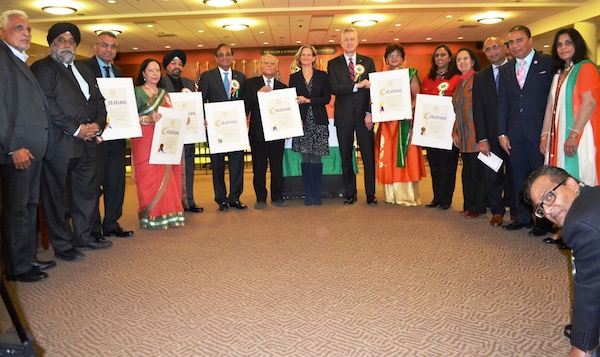
    Town of Hempstead Supervisor Laura Gillen, Councilwoman Erin King Sweeney, Town Clerk Silvia Cabana presenting Citation to Indian American Community

    During the event India Republic Day Awards were presented to Dr Sunita Saini, Founder and Director of South Shore Psychological Services of Long Island and Dr Inderpal Chhabra, clinical Assistant Professor of Medicine at Hofstra North Shore School of Medicine.


  • Grand Republic Day Celebration on Long Island

    Grand Republic Day Celebration on Long Island

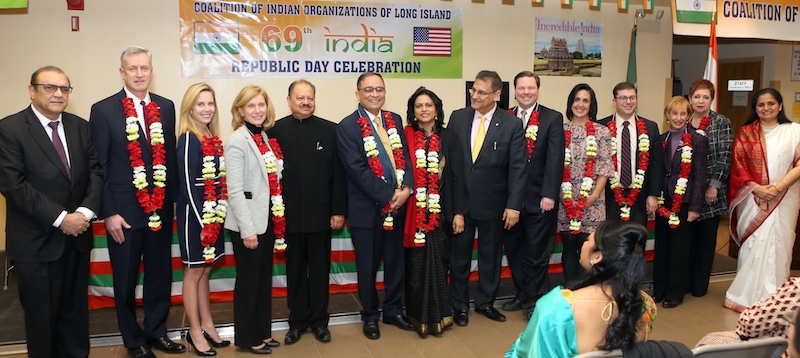
    LONG ISLAND, NY (TIP): The Coalition of Indian Organizations of Long Island celebrated the 69th Republic Day of India on January 31, attended by the Consul General of India in New York, Ambassador Sandeep Chakravorty, judges of NY Supreme Court, public officials at the local and state level as well as who’s who of the Indian community on the island.

    The rare event bringing fourteen Indian organizations of Long Island under one umbrella along with the largest gathering of the American dignitaries was the brainchild of Varinder Bhalla, Chairman of the Indian American Voters Forum, and the culmination of inspiration and support by Ambassador Chakravorty. The community responded enthusiastically packing the Clinton G Martin Hall in New Hyde Park to capacity.

    (From L to R): Dr. Ajay Lodha, former President of the American Association of Physicians from India, Emcee & Event Coordinator Ratna Bhalla, Hempstead Town Clerk Sylvia Cabana and Hempstead Supervisor Laura Gillen presenting a Citation to Ambassador Chakravorty, with Varinder Bhalla.

    The participants were the Association of Indians in America represented by its national President Dr. Urmilesh Arya, and its NY Chapter represented by its President Gobind Munjal; the Arya Samaj of Long Island represented by its Founder Veer Mukhi; Asa Mai Temple represented by Founder Gobind Bathija; Brahmakumaris of Long Island represented by Anjani Persaud; the Federation of Malayalee Associations represented by its Chairman Thomas Oommen; the Gujrati Samaj of New York represented by its President Minesh Patel; Indian American Physicians of Long Island represented by Dr. Rakesh Dua & Dr. Ajay Lodha; the India Association of Long Island represented by its President Gunjan Rastogi; the Indian American Voters Forum represented its Chairman & the event coordinator Varinder Bhalla; International Punjabi Society represented by President Dr. Rajinder Uppal; Rajasthan Association of North America represented by President Dr. Ajey Jain; SPARK Youth Club of New York represented by its Founder Dr. Himanshu Pandya; the World Spiritual Awareness Forum Inc. represented by Rakesh Bhargava and the World Malayalee Association represented by its President Koshy Oommen.

    (From L to R): Ratna Bhalla, State Senator Elaine Phillip honoring Ambassador Sandeep Chakravorty with a Proclamation from the Senate of New York, First Lady of the India Consulate Taruna Chakravorty, and Event Chair Varinder Bhalla.

    New York Supreme Court Justices Denise Sher & Ruth Balkin represented the judiciary; NY Senator Elaine Phillips presented a Senate Proclamation to Ambassador Chakravorty; Nassau County was represented by its Legislature Majority Leader Rich Nicolello and Legislator Tom McKevitt. Also in attendance was Nassau County Comptroller Jack Schnirman who was profusely applauded for including a Hindu prayer in his inaugural program earlier in the month.

    Hempstead Township, larger than seven States of America, was represented by its Town Clerk Sylvia Cabana and Supervisor Laura Gillen, the first Democrat in over a century elected to that post. On January 26, Gillen hoisted the Indian tricolor flag atop the Town Hall.

    Gillen also presented a Citation to Ambassador Chakravorty honoring the 68th anniversary of the India Republic Day. Another Republic Day Citation was presented to the Ambassador on behalf of Oyster Bay Supervisor Joseph Saladino.

    Niketa Bhatia, who successfully petitioned the Syosset School District to have the Festival of Diwali designated as an official holiday was honored with a Citation from the Oyster Bay Township.

    The highlight of the cultural segment was a performance by the artists of the Surati for Performing Arts, nationally acclaimed group which has performed at the Lincoln Center, Kennedy Center, and the United Nations among others. The Indian kids in the tricolor dresses enthralled the Indian audience and the American dignitaries alike. Manav Khurana, 13, a self-taught dholak player at the age of 8, captivated the audience with his stellar performance.

    The pageantry of the Republic Day event was enhanced by bagpipers of Nassau County Firefighters Band which had earlier played at the Trump Presidential Inaugural in Washington DC and in Europe on the 100th anniversary of the end of World War I.

    (Press Release)


  • Indian Americans celebrate Republic Day with enthusiasm across US

    Indian Americans celebrate Republic Day with enthusiasm across US

    WASHINGTON (TIP): The Indian American community in the US celebrated the 69th Republic Day of India with much enthusiasm. From a small township in mid-West or down South to mega cities of New York, Los Angeles, Chicago and Washington, Republic Day celebrations were organized by the Indian missions, Indian community activists and organizations.

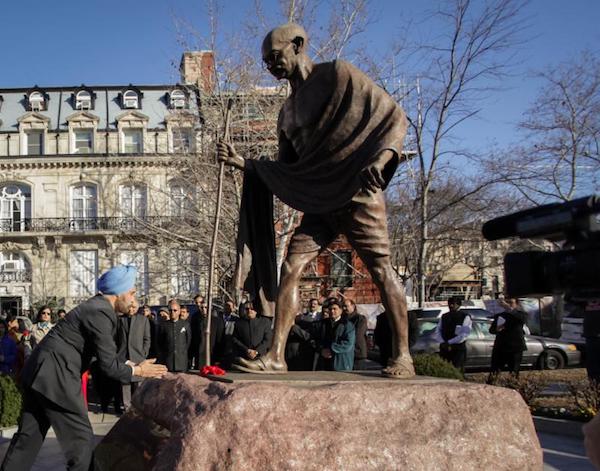
    In Washington, Indian Embassy celebrated Republic Day at Embassy premises. Ambassador Navtej Sarna paid floral tribute to the statue of Mahatma Gandhi in front of the Embassy. Thereafter, Ambassador unfurled the National Flag. The National Anthem was sung. Ambassador addressed the guests and read out the Address of President of India. This was followed by singing of patriotic songs by young Indian Americans. Over 200 members of the Indian American community attended the celebrations.

    Consul General Sandeep Chakravorty unfurls the National Flag at the Indian Consulate in New York

    In New York, Consul General Sandeep Chakravorty unfurled the National Flag and read out the President’s address to the nation. A cultural program was also presented. The over 150 guests included Consul Generals of Italy, Mexico, Israel, Nigeria and Lithuania.

    Speaking on the occasion, Ambassador Chakravorty highlighted the growth story of India and valuable contribution in it of the Indian diaspora. He praised the Indian American community for their hard work and love of both the country of their origin and of their adoption.

    He assured the community of the best services by the Consulate General.

    Ambassador Syed Akbaruddin speaking at the Permanent Mission of India
    Photo / Mohammed Jaffer-SnapsIndia

    The Permanent Mission of India to the United Nations also held a celebration to mark the 69th Republic Day of India. Ambassador Syed Akbaruddin unfurled the national Flag at the Permanent Mission of India in midtown Manhattan in the presence of a large number of staff and guests. Later, in the evening a reception was organized at the United Nations which was attended by a large number of guests which included, besides the Indian American community members, diplomats from various countries. The highlight of the reception was presentation of Indian traditional music and dance.

    Lighting of the lamp ceremony with guests at the United Nations Reception in celebration of Republic Day
    Photo / Mohammed Jaffer-SnapsIndia
    Glimpses of the Reception organized by the PMI at the UN
    Photos / Mohammed Jaffer-SnapsIndia
    Glimpses of the Reception organized by the PMI at the UN
    Photos / Mohammed Jaffer-SnapsIndia
    Glimpses of the Reception organized by the PMI at the UN
    Photos / Mohammed Jaffer-SnapsIndia
    Glimpses of the Reception organized by the PMI at the UN
    Photos / Mohammed Jaffer-SnapsIndia
    Glimpses of the Reception organized by the PMI at the UN
    Photos / Mohammed Jaffer-SnapsIndia

    Various organizations in New York organized Republic Day celebrations. India Association of Long Island organized one with great enthusiasm. Nassau county Executive Laura Curran and Oyster Bay Town Supervisor Joseph Saladino were among the several guests at the event. IALI President Mrs. Gunjan Rastogi honored Veterans of Indian Armed Forces Wing Commander S.H Butani, Squadron Leader D. K Nagia, Major D. Gulati and Mr. P. Shilagani.

    A Cultural program presented on the occasion featured patriotic songs by IALI members and admirably enacted performance by seniors of Happy Seniors Home, dances by young children from Arya Dance and Krishna Arts dance schools.

    The Federation of Indian Associations (FIA) of the Tristate (New York, New Jersey and Connecticut), celebrated the Republic Day with its annual dance competition, “Dance Pe Chance”, at the prestigious State Theatre in New Brunswick, New Jersey.

    FIA has been celebrating Republic Day for over 40 years now, meticulously promoting the opulent culture and various dance styles of India.

    The FIA’s incoming executive committee of 2018 was administered the oath of office by Sandeep Chakravorty. The committee included Srujal Parikh (President), Alok Kumar (Executive Vice-President), Chhavi Dharayan (Vice President), Daxa Amin (Secretary), Himanshu Bhatia (Treasurer), Haresh Shah (Joint Secretary) and Andy Bhatia (Immediate Past President).
    Photos / Paresh Gandhi- Official Photographer
    Winners all

  • FIA Chicago celebrates India’s 69th Republic Day with Health and Wellness Camp

    FIA Chicago celebrates India’s 69th Republic Day with Health and Wellness Camp

    CHICAGO, IL (TIP):  The Federation of Indian Associations Chicago (FIA) celebrated India’s 69th Republic Day by holding a Community Event at Shree Swaminarayan Temple, Itasca Illinois on Sunday, Jan 28, 2018. The event comprised of a blood Donation drive, a Health and Wellness Camp, Information on Medicare and Medicaid benefits, Information and advice on Taxation, College counselling, and Passport and Visa help.

    The event attracted more than one thousand people from the community who took advantage of the various services offered. The Blood Collection Drive was conducted by Heartland Blood Centers. The Health and Wellness Camp saw more than 25 doctors in attendance comprising of dentists, Internal Medicine, Orthopedic, Optometric, Cardiologist, Chiropractors, Urologists, Physiotherapists and Podiatrists taking care of people. Around 325 people had their blood and other vitals checked, and more than 55 had an on the spot EKG taken for their heart issues, while others went on to see other doctors with their general and specific health issues starting from dental issues, general and specific health issues, orthopedic issues, heart issues, not to forget muscle and joint issues.

    Dr Kamal Patel Checking Blood pressure for Ms. Neeta Bhushan, Consulate General of India in Chicago

    There were booths with experts and counselors giving people advice on Medicare and Medicaid, in home help for seniors, taxation advice, and college admission counseling and passport and visa advice booth with officers from the Indian Consulate in Chicago.

    The event began with the American National Anthem sung by Ashika Sachdev followed by the Indian National anthem sung by Geetanjali Maru. Sunil Shah, Founder President, in his speech welcomed the dignitaries to the event and appreciated volunteers who gave their valuable time for this event. Onkar Singh Sanga and Mukesh Shah (Past President) in their speeches welcomed and thanked the volunteers for showing up in large numbers for this community event, spending their valuable time to serve the community and welcomed all the dignitaries and the FIA Board on the stage.

    “This type of event would be the ongoing theme for the FIA. We are opening of non-emergency FIA Toll Free number 1 (833) FIA CARE. I thank all the supporters, doctors and volunteers and dignitaries for joining us in an overwhelming majority at this event, said Neil Khot, the current FIA president.

    FIA Executive Vice President Hitesh Gandhi quoted Sir Winston Churchill:   “We make a living by what we get, but we make a life by what we give”, and added: “One nation, One Vision, One Identity, Freedom in mind, faith in words, Pride in our heart, Memory in our soul, lets salute nation. FIA team serves community with Wellness Camp and celebrates 69th Indian Republic Day”.

    Mayor McLeod and Senator Tom Cullerton handed over the proclamation to the FIA. The event was well attended by dignitaries, elected officials, politicians and respected people from all walks of life. The dignitaries were led by Ms. Neeta Bhushan, Consulate General of Chicago, Mr. Raja Krishnamoorthi, Congressman, Mr. Michael Fredrichs, Illinois Treasurer, Ms. Michelle Mussman, Illinois State Rep, Senator Tom Cullerton, Senator Laura Murphy, Christina Castro, State Rep, Frank Avila, MWRD Commissioner, Bill Mc Leod Mayor Hoffman Estates, Rodney Craig Mayor Hanover Park, Tom Dailly Trustee Schaumburg, Khaja Moinuddin Trustee Hanover Township.

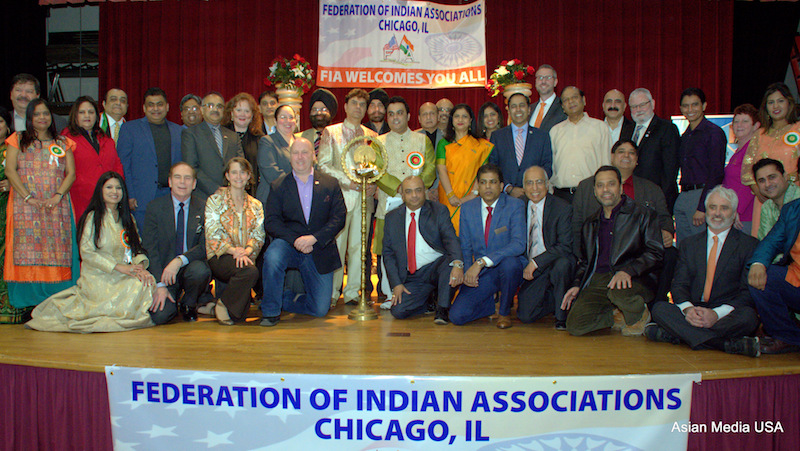
    A view of the gathering

    The traditional lamp lighting ceremony was performed once the dignitaries and the FIA board were on the stage. The dignitaries in their brief speeches extolled and praised the development India has seen since independence and the India USA collaboration in various fields and the friendship between the leaders of both the democracies. The FIA was praised by all the dignitaries for its growth over the last eight odd years. A progress that had put FIA in the forefront among Indian community organizations. Some even put FIA as the best organization amongst all other Indian community organizations.

    This was followed by a patriotic song by Geetanjali Maru. Then all the volunteers were presented with appreciation plaques on behalf of the FIA. A vote of thanks was given on behalf of the FIA by Mr. Hitesh Gandhi Executive Vice President.

    (Photographs and Press release by: Asian Media USA)


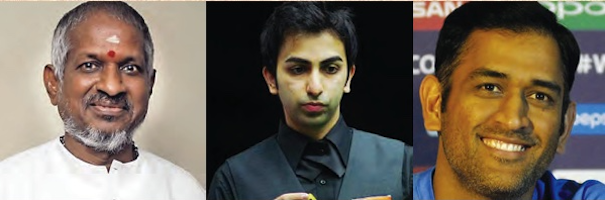
  • Music composer Ilaiyaraaja, sportsmen Pankaj Advani, MS Dhoni among 2018 Padma award winners

    Music composer Ilaiyaraaja, sportsmen Pankaj Advani, MS Dhoni among 2018 Padma award winners

    NEW DELHI (TIP): Keeping its promise of honouring “unsung heroes”, the government Jan 25 announced Padma Shri awards for personalities who served the poor, set up free schools and popularised tribal arts globally.

    Lakshmikutty, a tribal woman from Kerala, who prepares 500 herbal medicine from memory and help thousands of people especially in snake and insect bite cases, is among the awardees.

    She teaches at Kerala Folklore Academy and lives in a small hut made of palm leaves roof in tribal settlement in a forest. She is the only tribal woman from her area to attend school in the 1950s.

    Arvind Gupta, an IIT Kanpur alumnus who inspired generations of students to learn science from thrash, has also been honoured with Padma Shri.

    Gupta visited 3,000 schools in four decades, made 6,200 short films on toy-making in 18 languages and also hosted popular TV show Tarang in 1980s.

    Internationally-acclaimed Gond artist Bhajju Shyam has also been awarded the Padma Shri. Shyam is famous for depicting Europe through Gond paintings, a tribal style of painting of Madhya Pradesh. Born in a poor tribal family, he worked as a night guard and electrician to support family before becoming a professional artist.

    His ‘The London Jungle Book’ sold 30,000 copies and it was published in five foreign languages.

    West Bengal’s Sudhanshu Biswas, a 99-year-old freedom fighter who serves poor, runs school and orphanages and set up free school for poor, is also among the winners.

    Kerala’s medical messiah to terminally ill, M R Rajagopal, has also been honoured with Padma Shri. Rajagopal has specialised in pain relief care for neo natal cases.

    Since last year, the Modi government has been honouring “unsung heroes” with the Padma awards to recognise people who have dedicated their lives to working for the poor or have risen from deprived backgrounds to excel in their own fields.

    Maharashtra’s Murlikant Petkar, India’s first para- Olympic gold medalist, who lost his arm in 1965 Indo-Pak war, is another winner of the Padma Shri.

    Tamil Nadu’s Rajagopalan Vasudevan, who is known as plastic road-maker of India, developed a patented and innovative method to reuse plastic waste to construct roads, has also been given the Padma Shri.

    Subhasini Mistry, a poor lady from rural West Bengal, who toiled 20 years as housemaid and daily labourer to build a hospital for poor in the state, is another awardee.

    Nonagenarian farm labourer Sulagatti Narasamma,who provides midwifery services in backward region of Karnataka without any medical facility, too was awarded the Padma Shri.

    Vijayalakshmi Navaneethakrishnan, an acclaimed Tamil folk exponent, who has dedicated her life towards collection, documentation and preservation of Tamil folk and tribal music, has also been given Padma Shri.

    Another awardee is Yeshi Dhoden, monk physician of Tibetan herbal medicine working in remote areas of Himachal Pradesh.

    Source: PTI

  • Pageantry Marks Celebration of India’s 69th Republic Day

    Pageantry Marks Celebration of India’s 69th Republic Day

    ASEAN leaders attend as chief guests

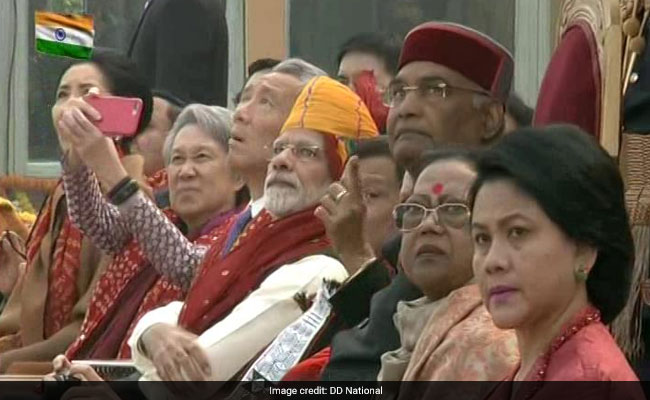
    NEW DELHI (TIP): Amid an unprecedented security cover, celebrations for the 69th Republic Day began on the Rajpath here on Friday in the presence of the leaders of 10 ASEAN nations who are attending the event as chief guests.

    Prime Minister Narendra Modi paid his tributes to the martyrs by laying a wreath at Amar Jawan Jyoti in the presence of Defence Minister Nirmala Sitharaman and the three service chiefs.

    Later Modi, wearing a saffron, red and green colored safa, reached the Rajpath and received and greeted President Ram Nath Kovind.

    Most of the ministers of the Modi government, including Home Minister Rajnath Singh, Finance Minister Arun Jaitley, Health Minister JP Nadda, Information and Broadcasting Minister Smriti Irani, Law Minister Ravi Shankar Prasad and Environment Minister Harsh Vardhan were among those present on the occasion.

    BJP president Amit Shah was also present.

    The ASEAN leaders, here to attend the India-ASEAN Commemorative Summit, are the chief guests at the Republic Day parade which was termed by Prime Minister Narendra Modi as “historic and unprecedented”.

    The ASEAN, founded in 1967, comprises Thailand, Vietnam, Indonesia, Malaysia, the Philippines, Singapore, Myanmar, Cambodia, Laos and Brunei.

    The ASEAN leaders attending the parade are Singaporean Premier Lee Hsien Loong Brunei’s Sultan Haji Hassanal Bolkiah, Indonesian President Joko Widodo, Philippines President Rodrigo Roa Duterte, Cambodian Prime Minister Hun Sen, Malaysian Prime Minister Najib Razak, Thailand’s Prime Minister General Prayut Chan-o-cha, Myanmar’s State Counsellor Aung San Suu Kyi, Vietnamese Prime Minister Nguyen Xuan Phuc and Lao PDR’s Prime Minister Thongloun Sisoulith.

    Twenty-three tableaux, including those representing various states, ministries, the All India Radio (AIR) among others, will roll down the Rajpath.

    Public broadcaster Doordarshan has 38 cameras installed for the coverage of the celebrations. For the first time, six cameras have been deployed for coverage beyond India Gate.

    The parade commenced amid a heavy security blanket with thousands of security personnel, anti-aircraft guns and sharpshooters deployed in view of the event being attended by ASEAN leaders.

    Cold weather conditions and dense fog failed to dampen the spirits of those who came to watch the parade

    (Source:  PTI)

  • INDIA’S REPUBLIC DAY -A HISTORIC OCCASION

    INDIA’S REPUBLIC DAY -A HISTORIC OCCASION

    History of January 26; Birth of constitution of India; Grand celebrations

    India is a proud Republic, with a vibrant democratic system with the largest constitution of the world, which guarantees inalienable equal rights to all of its nearly 1.3 billion people. But the road to Republic has not been smooth. There was a long struggle to realize the dream of a vast population to be an independent nation and a Republic. Much sweat and blood went in to the struggle.

    On December 9, 1946 the Constituent Assembly met for the first time in the Constitution Hall of Parliament House, with the intention of putting together the document that would go on to form the backbone of the independent India’s government. Exuberant and full of hope, the 207 members out of 292 present in the first session started the debate and discussions which would continue for the next three months, culminating in the constitution of India.

    British government sent the Cabinet mission to India in 1946 to discuss with Indian leaders, the process for the peaceful transfer of power. As per the guidelines laid down by the mission, provincial legislative elections were held resulting in the nomination of 292 representatives who would go on to form the Constituent Assembly. Those elected included Sardar Vallabhbhai Patel, Maulana Abul Kalam Azad, Sarojini Naidu and Pandit Jawaharlal Nehru, among others. The task at hand was humongous. Resolutions laid out had to take care of aspects like territorial integrity, socio-economic equality, justice of law and minority rights. Setting out the objectives for the Constituent Assembly, Pandit Jawaharlal Nehru said, “The first task of this Assembly is to free India through a new constitution, to feed the starving people, and to clothe the naked masses, and to give every Indian the fullest opportunity to develop himself according to his capacity. This is certainly a great task.”

    In the next 3 years, the Constituent Assembly held 11 sessions over 165 days. The draft constitution was approved on December 9, 1949. About a month later, on January 26, 1950 the Constitution of India came into force officially, making the newly born nation of India a modern republic.

    The date chosen for the official enforcement of the constitution had a significance attached to the sentiments of the Indian nationalists. When on December 31, 1929, Nehru hoisted the tricolor in Lahore and demanded “purna swaraj”, the date set for independence was January 26, 1930. The day was celebrated as the “purna swaraj” day for the next 17 years. When independence was finally granted in 1947 however, the day set upon by the British was August 15. It is said that the independence day was so chosen to coincide with the second anniversary of the day when Japanese forces submitted to allied powers after the Second World War. In the words of Ramachandra Guha, “freedom finally came on a day that resonated with imperial pride rather than nationalist sentiment.”

    When the constitution of India was born, it was considered necessary by the makers of the document to celebrate it on a day associated with national pride and the best choice available was that of “poorna swaraj” day- January 26. For the next 68 years, India has been celebrating January 26 as the date when it elevated itself from an independent nation to a modern republic, strengthened in all its glory by a fully functioning constitution.

    Republic Day is celebrated with great pomp and show throughout the nation each year. Preparations begin almost a month ahead of  the actual day. A massive parade is held in the capital of India which reflects a touch of modernity in the display of might and technology and the capabilities of growth in various sectors. While the parade symbolizes the power and force, the different regional tableaus reflect the cultural themes and motifs.

    Dr. Rajendra Prasad became the first President of India. He   took the oath of office at the Durbar Hall in the Government House, which was followed by the Presidential drive along the five-mile route to the Irwin Stadium. He unfurled the National Flag at the stadium. This transition of India into a sovereign democratic republic nation is indeed a historic event. The two-decade long journey, right from the conceptualization of the dream in 1930 to its actual realization in 1950, is certainly worth a grand celebration. Today, the Indian Constitution is the longest in the world, consisting of 397 articles and 12 schedules, providing a single citizenship for the whole nation.

    The national holiday is celebrated with festivities and patriotic fervor across the whole nation.

    REPUBLIC DAY PARADE

    The grandeur of the Republic Day of India is visible in the grand parade that is held along Rajpath, beginning from Raisina Hill near the Rashtrapati Bhavan (President’s Palace) and moving on to Rajpath past India Gate and proceeding to the Red Fort.

    The occasion witnesses the presence of the President, the Prime Minister and several other high-ranking officials of the country. The parade starts with the arrival of the President of India, who is escorted by a group of bodyguards on horses. Next, the Prime Minister of India offers wreaths at the Amar Jawan Jyoti at the India Gate in memory of the martyrs of the Indian army.

    The national flag is unfurled by the President of India, who is also the Commander-in-Chief of the Indian Armed Forces. This is succeeded by the cheerful tune of the National Anthem and a 21-gun salute. Led by three different divisions of the armed forces , viz: Navy, Army and Air Force; the Republic Day Parade has all of them displaying their might along the Rajpath, saluting the President. The Armed Forces staff performs motorcycle rides whereas the staff of the Indian Air Force performs flying parade in fighter planes.

    The rich and colorful culture of India is showcased in the Republic Day parade. Traditional as well as cultural performances are given by professionals belonging to different regions. School children in picturesque costumes also participate in the display of different aspects of the glorious history of the country on this big day.

    The real heroes of the nation are honored with  bravery awards and medals. National Awards are given to children for selfless sacrifice and bravery.

    A row of IAF jets marks the end of the grand celebration, leaving behind a trail of colored smoke. It bids goodbye to the gathered audience by showering  rose petals on them.

    Beating the Retreat Ceremony

    The Republic Day celebration ends officially with the Beating the Retreat ceremony, which is held on the 29 January every year. The event symbolizes retreat after a day on the battlefield and features remarkable performances by the Indian Air Force, the India Navy, and the Indian Army.

    CHIEF GUESTS ON REPUBLIC DAY OF INDIA 2018

    The chief guests on Republic Day of India 2018 are 10 Great Leaders of the 10 nations of the world . They are Heads of ASEAN states. Below is the list of names of chief guests and their nations:

    Sultan and incumbent Prime Minister Hassanal Bolkiah – Brunei

    Prime Minister Hun Sen – Cambodia

    President Joko Widodo – Indonesia

    Prime Minister Thongloun Sisoulith – Laos

    Prime Minister Najib Razak – Malaysia

    President Htin Kyaw – Myanmar

    President Rodrigo Roa Duterte – Philippines

    President Halimah Yacob – Singapore

    Prime Minister Prayuth Chan-ocha – Thailand

    Prime Minister Nguyễn Xuân Phúc – Vietnam

    Republic Day 2018 has some very special features associated with it.

    For the first time in history, India will celebrate its Republic Day 2018 with the great leaders of all 10 Asean countries (Association of South East Asian Nations). 

    It is very special because the Southeast Asian bloc completed its 50 years of formation (created on 8 August 1967) and India completed its 25 years of partnership (started in 1992) with the grouping in 2017.

    • It is for the first time that ASEAN Flags will be displayed through fly in the sky over Rajpath.
    • It is for the first time that one of the floats will show “All India Radio” to display Prime Minister’s monthly address “Mann Ki Baat”.
    • One of the floats will be there from Income Tax Department to display anti-black money drive.
    • 113 BSF women will perform motorcycle stunts such as pyramid, shaktiman, fish riding, seema prahari, bull fighting, etc.
    • Aircraft Carrier (IAC) Vikrant is going to be displayed by the Indian Navy which will be commissioned in 2020.
    • “Nirbhay missile” and the “Ashwini radar system” from The Defence Development and Research Organization will be displayed.
    • “Airborne Early Warning and Control System (Netra) is going to fly over the Rajpath.
    • Group of students from Delhi school will perform to represent Indo-ASEAN ties.
    • Around 700 students from the guest countries will perform in the parade other than the Indian Army, Air Force, and Navy.
    • A float by Punjab will be displayed under the theme “Sangat and Pangat” (Sangat means communal harmony; Pangat means community kitchen) representing love for humanity.
    • Folk dances of many countries like Malaysia, Cambodia, Thailand, etc will be performed.
    • Around 61 tribal guests are invited to participate in the Republic Day celebration.
    • 100-odd government agencies are involved in the preparations of Republic Day parade 2018.
    • State capitals will celebrate republic day in the presence of governors of state.
    FAMOUS QUOTES BY FREEDOM FIGHTERS

    On this occasion, it will be pertinent to remember our great freedom fighters and what inspiring words they uttered.

    “Give me blood, I will give you freedom” — Subhas Chandra Bose

    “Patriotism is religion and religion is love for India” — Bankim Chandra Chatterjee

    “A country’s greatness lies in its undying ideals of love and sacrifice that inspire the mothers of the race” — Sarojini Naidu

    “The sanctity of law can be maintained only so long as it is the expression of the will of the people” — Bhagat Singh

    “The shots that hit me are the last nails to the coffin of British rule in India” — Lala Lajpat Rai

    “Swaraj is my birth right and I shall have it.” — Bal Gangadhar Tilak

    “Every Indian should now forget that he is a Rajput, a Sikh or a Jat. He must remember that he is an Indian.” — Sardar Patel

    “If yet your blood does not rage, then it is water that flows in your veins. For what is the flush of youth, if it is not of service to the motherland.” — Chandra Shekhar Azad

    “Long years ago, we made a tryst with destiny and now the time comes when we shall redeem our pledge… At the stroke of the midnight hour, when the world sleeps, India will awake to life and freedom.” — Jawaharlal Nehru

    “We believe in peace and peaceful development, not only for ourselves but for people all over the world.” — Lal Bahadur Shastri.

    CONSTITUTION OF INDIA

    India is a Sovereign Socialist Secular Democratic Republic with a parliamentary system of government. The Republic is governed in terms of the Constitution of India which was adopted by the Constituent Assembly on 26th November 1949 and came into force on 26th January, 1950.

    The Constitution provides for a Parliamentary form of government which is federal in structure with certain unitary features. The constitutional head of the Executive of the Union is the President. As per Article 79 of the Constitution of India, the council of the Parliament of the Union consists of the President and two Houses known as the Council of States (Rajya Sabha) and the House of the People (Lok Sabha).

    Article 74(1) of the Constitution provides that there shall be a Council of Ministers with the Prime Minister as its head to aid and advise the President, who shall exercise his/her functions in accordance to the advice. The real executive power is thus vested in the Council of Ministers with the Prime Minister as its head.

    Background

    The major portion of the Indian subcontinent was under British rule from 1857 to 1947. When the Constitution of India came into force on 26 January 1950, it repealed the Indian Independence Act. India ceased to be a dominion of the British Crown and became a sovereign democratic republic. The date of 26 January was chosen to commemorate the Purna Swaraj declaration of independence of 1930.

    Articles 5, 6, 7, 8, 9, 60, 324, 366, 367, 379, 380, 388, 391, 392, 393 and 394 of the Constitution came into force on 26 Nov 1949 and the remaining articles on 26 Jan 1950.

    Previous legislation used as sources

    It is drawn from many sources. Keeping in mind the needs and conditions of India its framers borrowed different features freely from previous legislation viz. Government of India Act 1858, Indian Councils Act 1861, Indian Councils Act 1892, Indian Councils Act 1909, Government of India Act 1919, Government of India Act 1935 and the Indian Independence Act 1947. The last legislation which led to the creation of the two independent nations of India and Pakistan provided for the division of the erstwhile Constituent Assembly into two, with each new assembly having sovereign powers transferred to it, to enable each to draft and enact a new constitution, for the separate states.

    Constituent assembly

    It was drafted by the Constituent Assembly, which was elected by elected members of the provincial assemblies. The 389 member Constituent Assembly took almost three years (two years, eleven months and eighteen days to be precise) to complete its historic task of drafting the Constitution for independent India, during which, it held eleven sessions over 165 days. Of these, 114 days were spent on the consideration of the draft Constitution. On 29 August 1947, the Constituent Assembly set up a Drafting Committee under the Chairmanship of Dr. B.R. Ambedkar to prepare a draft Constitution for India. While deliberating upon the draft Constitution, the assembly moved, discussed and disposed of as many as 2,473 amendments out of a total of 7,635 tabled. Dr B.R. Ambedkar, Sanjay Phakey, Jawaharlal Nehru, C. Rajagopalachari, Rajendra Prasad, Sardar Vallabhbhai Patel, Kanaiyalal Munshi, Ganesh Vasudev Mavalankar, Sandipkumar Patel, Maulana Abul Kalam Azad, Shyama Prasad Mukherjee, Nalini Ranjan Ghosh, and Balwantrai Mehta were some important figures in the assembly. There were more than 30 members of the scheduled classes. Frank Anthony represented the Anglo-Indian community, and the Parsis were represented by H. P. Modi. The Chairman of the Minorities Committee was Harendra Coomar Mookerjee, a distinguished Christian who represented all Christians other than Anglo-Indians. Ari Bahadur Gurung represented the Gorkha Community. Prominent jurists like Alladi Krishnaswamy Iyer, Benegal Narsing Rau and K. M. Munshi, Ganesh Mavlankar were also members of the Assembly. Sarojini Naidu, Hansa Mehta, Durgabai Deshmukh, Rajkumari Amrit Kaur and Vijayalakshmi Pandit were important women members

    The first temporary 2-day president of the Constituent Assembly was Dr Sachchidananda Sinha. Later, Rajendra Prasad was elected president of the Constituent Assembly.The members of the Constituent Assembly met for the first time on 9 December 1946.

    Drafting

    On the 14 August 1947 meeting of the Assembly, a proposal for forming various committees was presented. Such committees included a Committee on Fundamental Rights, the Union Powers Committee and Union Constitution Committee. On 29 August 1947, the Drafting Committee was appointed, with Dr B. R. Ambedkar as the Chairman along with six other members assisted by a constitutional advisor. These members were Pandit Govind Ballabh Pant, Kanaiyalal Maneklal Munshi (K M Munshi, Ex- Home Minister, Bombay), Alladi Krishnaswamy Iyer (Ex- Advocate General, Madras State), N Gopalaswami Ayengar (Ex-Prime Minister, J&K and later member of Nehru Cabinet), B L Mitter (Ex-Advocate General, India), Md. Saadullah (Ex- Chief Minister of Assam, Muslim League member) and D P Khaitan (Scion of Khaitan Business family and a renowned lawyer). The constitutional advisor was Sir Benegal Narsing Rau (who became First Indian Judge in International Court of Justice, 1950-54). Later B L Mitter resigned and was replaced by Madhav Rao (Legal Advisor of Maharaja of Vadodara). On D P Khaitan’s death, T T Krishnamachari was included in the drafting committee. A draft Constitution was prepared by the committee and submitted to the Assembly on 4 November 1947, which was debated and over 2000 amendments were moved over a period of two years. Finally on 26 November 1949, the process was completed and the Constituent Assembly adopted the Constitution. 284 members signed the document and the process of constitution making was complete. This day is celebrated as National Law Day or Constitution Day.

    The assembly met in sessions open to the public, for 166 days, spread over a period of 2 years, 11 months and 18 days before adopting the Constitution, the 308 members of the assembly signed two copies of the document (one each in Hindi and English) on 24 January 1950. The original Constitution of India is hand-written with beautiful calligraphy, each page beautified and decorated by artists from Shantiniketan including Beohar Rammanohar Sinha and Nandalal Bose. The illustrations on the cover and pages represent styles from the different civilizations of the subcontinent, ranging from the prehistoric Mohenjodaro civilization, in the Indus Valley, to the present. The calligraphy in the book was done by Prem Behari Narain Raizda. It was published in Dehra Dun, and photolithographed at the offices of Survey of India. The entire exercise to produce the original took nearly five years. Two days later, on 26 January 1950, the Constitution of India became the law of all the States and territories of India.