Tag: Rewind 2023
-

Rewind 2023: Major healthcare developments that made headlines this year
A lot of happened in the healthcare sector this year. The year began with a major earthquake in Türkiye and Syria and it ended with the horrific war in Gaza. This year, the world also witnessed many other crises, conflicts, and the continuing threat of disease outbreaks and climate change.
The world also witnessed some positive developments. The year 2023 was a record year for disease elimination, with several countries eliminating infectious diseases.
Here are some of major developments that made headlines this year:
Outbreaks
This year saw a record-breaking resurgence of many infectious diseases – anthrax, chikungunya, cholera, Crimean-Congo haemorrhagic fever, dengue, diphtheria, influenza, RSV – that needed a coordinated regional and global response. Other outbreaks included Lassa Fever in Nigeria and Ebola disease in Uganda, as well as Marburg virus disease in Equatorial Guinea and the United Republic of Tanzania.
COVID-19 and mpox
Amidst all the crises, there has also been positive news this year. In May, following the convening of the relevant Emergency Committees, WHO’s Director-General declared an end to two Public Health Emergencies of International Concern: COVID-19 and mpox, while also stating that the threats from both are not over.
“With a continued threat of COVID-19, and the looming threat of an influenza pandemic, WHO continues to expand its networks to track respiratory pathogens with pandemic potential, utilizing its Global Influenza Surveillance and Response System and CoViNet to monitor the evolution of these pathogens, conduct risk assessments, and prepare for a potential vaccine when the need arises,” WHO said in a statement.
Climate change and health
In a historic first, the organizers of COP28 hosted a dedicated health day in response to the climate-related health crisis affecting at least 3.5 billion people – nearly half of the global population. Extreme heat, weather events and air pollution caused millions of deaths in 2023, putting enormous pressure on health systems and workforce.
A new COP28 UAE Declaration on Climate and Health was signed by over 130 countries at the UN Climate Conference. The Declaration advocates for a rapid increase in political and financial commitments, and concrete action to protect people from the devastating health impacts of the climate crisis.
Disease elimination
The year 2023 was a record year for disease elimination, with several countries eliminating infectious diseases.
In March, WHO certified Azerbaijan and Tajikistan malaria-free, followed by Belize in June.
Egypt became the first country in the world to achieve “gold tier” status on the path to eliminating hepatitis C – an important milestone towards the goal of achieving full elimination of the disease before 2030. This is an astonishing turnaround for a country that had one of the world’s highest rates of hepatitis C infection less than 10 years ago, WHO stated.
As of today, 50 countries have eliminated at least one neglected tropical disease (NTD), in line with WHO’s target of having 100 countries achieve this milestone by 2030. Ghana, Benin, Mali, Iraq, Bangladesh, and the Lao People’s Democratic Republic all eliminated neglected tropical diseases in their countries.
Delivering vaccines
As of November 2023, 72 percent of people worldwide had received at least one dose of a COVID-19 vaccine, with 13.6 billion doses administered around the world, preventing severe illness and hospitalizations for millions of people.
“We began to see promising signs of recovery in levels of childhood immunization after the backsliding that occurred during the COVID-19 pandemic. Earlier in the year, global partners announced “The Big Catch-up”: a coordinated effort to reverse the declines in childhood vaccination, strengthening health systems and working towards a future where no child dies of a vaccine-preventable disease,” WHO stated.
Another important milestone during the year was WHO’s recommendation of a new vaccine for malaria prevention, providing hope to bolster malaria prevention and save hundreds of thousands of young lives in the African Region. There are now two life-saving vaccines that are safe and effective in preventing malaria in children.
A new dengue vaccine was recommended for introduction in settings with high disease burden. The new vaccine offers hope against the mosquito-transmitted infection, of which half of the world’s population is estimated to be at risk.
There was promising news in the fight against meningitis, as WHO prequalified a novel meningococcal conjugate vaccine and issued a policy for its use in the countries of the African meningitis belt, which are affected by seasonal epidemics. According to WHO, Men5CV has the potential to drastically change the fight against meningitis, as it is expected to be more affordable and accessible to countries in the meningitis belt than other available vaccines.
Non-communicable diseases
In a first, WHO released its first-ever report on the devastating global impact of high blood pressure: 1 in 3 adults are affected by the condition. The report indicated that approximately 4 out of every 5 people with hypertension are not adequately treated, but if countries can scale up coverage, 76 million deaths could be averted between 2023 and 2050.The new WHO Global status report on road safety 2023 shows that, since 2010, the number of annual road traffic deaths has fallen by 5% to 1.19 million.
An estimated 101 million people in India were detected with diabetes, 136 million were found to be prediabetes and 315 million people from hypertension in 2021, a first-of-its-kind study by ICMR-INDIAB, which measured the prevalence of metabolic non-communicable diseases (NCDs) in India. -

Rewind 2023: How Khalistan issue became a spoiler in India-US relations
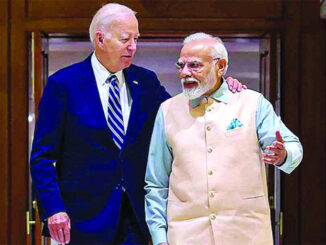
India-US relationship in 2023 in many senses was a historic one: a year when a futuristic-looking initiative was launched, President Joe Biden hosted Prime Minister Narendra Modi for a rare State Visit and then travelled to New Delhi to personally ensure the mega success of a crucial G-20 Summit under India’s presidency. However, the year ended on a sobre note with the Biden administration filing a chargesheet in a New York court naming an Indian official in a plot to kill a US national and a separatist Sikh leader on American soil.
The very fact that the US went ahead with the chargesheet on an alleged plot and at the same time has not taken any action against those responsible for the attack on the Indian consulate in San Francisco and openly issuing threats to top Indian diplomats in the US appears to be a clear reflection that a lot is required to be done when it comes to the “trust” and “confidence” between the two largest democracies of the world.
When Biden walked extra mile for PM Modi
In 2023, both Modi and Biden walked the extra mile and took steps which were aimed at establishing a trusted partnership between the two countries, starting with the prime minister sending his large delegation led by National Security Advisor Ajit Doval for the launch of the Critical and Emerging Technology (iCET) initiative.
The iCET is a major milestone in the US-India partnership, which is increasingly defined by strategic security and technology cooperation.
The bilateral trade between the two countries has reached a new record. The Indian government is taking a lot of steps to facilitate fast fast-tracking of American companies establishing manufacturing units in India and increasing their footprints.
Jet engine manufacturing deal
Biden on the other hand not only gave an unprecedented go-ahead for the jet engine manufacturing deal with India but also took several administrative steps to relax export control regulations for India.
Showing his determination to take the bilateral ties to the next level, Biden invited Modi for the rare Official State Visit of the Indian Prime Minister in June, during which he not only opened the lawns of the White House for a record 15,000 Indian Americans but also spent more than eight hours with him. In less than 100 days, Biden boarded Air Force One to fly to New Delhi to attend the New Delhi Summit for G-20 leaders in September.
Biden’s India visit
At a time when the world was bitterly divided over the Ukraine war and leaders of China and Russia not attending the summit, Biden made it a point that the G-20 summit was a success. India’s success is America’s success were the common remarks by the officials of the Biden administration. By all standards, the G-20 Summit was a historic success.
The year also saw an unprecedented level of visits to India by top US officials. Some of the Cabinet level officials like the Treasury Secretary Janet Yellen and Secretary of State Antony Blinken made multiple trips to India.
India under the leadership of Modi reciprocated on an equal footing from giving the go-ahead for the multi-billion historic deal to purchase commercial aircraft from Boeing to clearing the long pending armed drone deal of General Atomics.
By October, it appeared that the two countries had overcome the hesitations of history and the two largest democracies are now trusted partners.
India and the US were now not only working together in the strategic Indo-Pacific through Quad but also in the Middle East with the creation of a unique U2I2 grouping of the USA, UAE, India and Israel.
What went wrong?
However, two incidents in the last quarter of the year clearly showed that this relationship cannot yet be described as that of a “trusted” partnership. First was open American support to the bizarre allegations made by Canadian Prime Minister Justin Trudeau about a “possible” link between India’s government and the killing of a pro-Khalistan separatist in Vancouver.
In less than 100 days, the Department of Justice filed a damaging indictment in a federal court in New York saying that it had unearthed a plot to kill a US national on American soil. Though the separatist Sikh leader was not named, media reports identified him as Gurpatwant Singh Pannun, the leader of the Sikhs for Justice, an organisation banned in India.
India has denied the Canadian allegations and has repeatedly said that Ottawa has not shared evidence on the case. On the US indictment, India has instituted a high-level commission to probe the allegations.
India is disappointed with US inaction
New Delhi is also not happy with the inability of the US to take action against those responsible for the attack on the Indian consulate in San Francisco and openly letting separatist Sikhs organise and propagate anti-India and Khalistani movements in the country.
As such, what could have been easily a historic year in the India-US relationship, at best can be described as three steps forward and one step backward.
With 2024 being an election year in both India and the United States, no major developments are expected on the bilateral front except that it would be business as usual at best. The relationship will pick steam in 2025.
Source: Indiatvnews