Tag: Romania

  • European Commission proposes euro for Lithuania

    European Commission proposes euro for Lithuania

    LONDON (TIP): The European Commission in its 2014 Convergence Report has proposed to the EU council of ministers that Lithuania can become the latest country to adopt the euro as its currency on January 1, 2015. It also struck down the possibility for seven of its member states – Bulgaria, the Czech Republic, Croatia, Hungary, Poland, Romania and Sweden – to adopt the currency. The Commission said none of them currently fulfill all of the criteria to adopt the Euro. Their situation will therefore be reassessed in two years’ time.

    It said, “These countries have made uneven progress on the road to euro adoption, but Lithuania stands out from this group as it now fulfils the convergence criteria.” The Council will take the final decision on the matter in the second half of July after EU heads of state and government discuss the subject at the 26-27 June European Council meeting and after the European Parliament has given its opinion. Olli Rehn, commission vice-president, said, “Lithuania’s readiness to adopt the Euro reflects its longstanding support for prudent fiscal policies and economic reforms.

    That reform momentum, driven in part by Lithuania’s EU accession 10 years ago, has led to a striking increase in Lithuanians’ prosperity: the country’s per capita GDP has risen from just 35% in 1995 to a projected 78% in 2015.”

  • Maria Sharapova beats Eugenie Bouchard to reach French Open final

    Maria Sharapova beats Eugenie Bouchard to reach French Open final

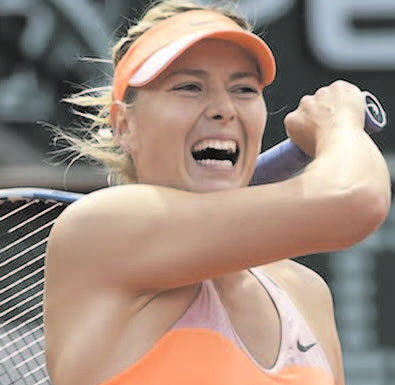
    PARIS (TIP): Maria Sharapova reached the final of the French Open for the third straight year at Roland Garros on June 5, digging deep to see off the youthful challenge of Canada’s Eugenie Bouchard. The 27-year-old, seventh seed once again did it the hard way, battling back from a set down to edge the 20-year-old from Montreal 4- 6, 7-5, 6-2 in a match full of beefy baseline shot-making.

    It was the 19th time in a row that the never-say-die Sharapova had won a three-set match on clay, dating back to a loss against Justine Henin at Roland Garros in 2010. On Saturday she will take on the winner of the other semifinal opposing fourth seed Simona Halep of Romania and Andrea Petkovic of Germany.

    For the fast-rising Bouchard, it represents the second time she has reached a Grand Slam semifinal, after this year’s Australian Open, and the second time she has failed to go a step further, having lost to eventual champion Li Na in Melbourne. “She played an unbelievable match. Her level was extremely high today and I am just fortunate to be the winner,” Sharapova said. “I would prefer to win in two sets, but she started so well.

    It was tough losing the first set, but that’s not when the match is over.” Both players had been guilty of slow starts earlier in the tournament, but the quality from both was high from the start as the sunshine returned to light up the centre court. Bouchard broke first to lead 3-1, but amid some hefty baseline shot-making, the Russian was soon back on level terms at 4-4.

    Bouchard, the WTA Newcomer of the Year in 2013, then produced an inspired game to stun her girlhood idol Sharapova, breaking serve and then holding to take the first set 6-4 in 44 minutes. But Sharapova is seldom as dangerous as when she is behind, especially on clay, as shown in her two previous matches when she dropped the opening set to Samantha Stosur and then Garbine Muguruza. Seeking a fifth Grand Slam title, having completed a career Grand Slam sweep in Paris two years ago, Sharapova jumped out into a 4-1 and then 5-2 lead in the second set.

  • Hodgson: Everybody associates Brazil with football

    Hodgson: Everybody associates Brazil with football

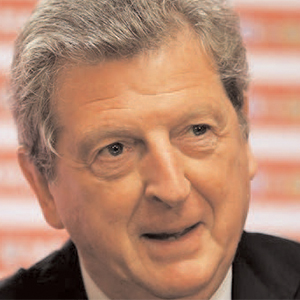
    In the final part of our three-part interview with Roy Hodgson, the England manager speaks about his FIFA World Cup™ memories from 1958, when he was just ten years old, to 1994 as coach of Switzerland. Having also toured Germany in 2006 as a member of FIFA’s Technical Study Group and worked as a pundit for the BBC in 2010, Hodgson has had a wide experience of World Cups from which to draw. And as the former Inter Milan and Liverpool boss told FIFA.com, he believes that Brazil 2014 will be a little special.

    ROY HODGSON: 1958 would be the first one, but mainly because of my time in Sweden when I sort of got reacquainted with it. It was something that should have interested England and Great Britain enormously, as I think it’s the last time all four home nations actually took part. I learned a lot about the ’58 World Cup in Sweden and in particular I became close friends with Orvar Bergmark,who for many years was the most-capped player in the world with his 92 caps. That’s been surpassed many times since, but around the 1958 mark he was right up there.

    And of course, playing against us, managers and colleagues, a lot of the people who played in that: Bengt Gustavsson and Agne Simonsson. All of these people were coaches in Sweden when I was there, and famous players from the ’58 team. Then when I went going to Italy I got to know Nils Leidholm and Gunnar Gren, so I got to know seven or eight of the team and took more interest, I suppose.

    The ’62 World Cup I don’t remember well. And the ’66 one I of course remember very, very well! WHERE WERE YOU DURING 1966? AT CRYSTAL PALACE, TRYING TO BE A PLAYER! Brazil is considered such a football crazy country,where the people basically live for the game. Being a footballer is as good as it gets for anybody in Brazil. WHAT ARE YOUR MEMORIES OF THE TOURNAMENT? DID YOU GO TO ANY OF THE GAMES? No.

    To be fair, aside from the games that were played at Wembley, a lot of the games were played around the country at that time. I was never in a position to get a ticket to be perfectly honest. So I watched the games on TV. I remember the games and the England games quite well. I remember the various moments and controversies. The same with ’70.We had high hopes of doing well because the ’70 team was as strong as the ’66 team on paper because we still had the remnants of the ’66 team and a few interesting younger players had come on the scene.

    In ’74 I was in South Africa, so I only saw the Final. And I saw that in retrospect. I drove from Pretoria to Johanesburg to Wits University. They actually bought the tape of the film for their students and me and my friend were playing in Pretoria,we drove up and got ourselves tickets and watched it in a hall. It was just a taped version of the Final.We knew the score. But that’s the only game we actually saw in ’74.

    Then obviously in ’78 I was in Sweden so I quite liked following that one. WHICH TEAMS OR WHICH MATCHES, PARTICULARLY OF THE LATER WORLD CUPS, STICK OUT FOR YOU? It has to be 1994 when I was involved with Switzerland. I remember all of the games, but in particular the first two, the ones played in Detroit against America and then Romania. I remember those very, very well. Both were in an indoor dome,where they rolled the grass in,which was quite revolutionary at the time. I think in Europe it was only Arnhem (GelreDome) that had a similar system,where they had a dome allowing them to roll in different surfaces. It was quite a novelty in that respect.

    THE HUMIDITY IN THE GAMES THERE WAS EXTREME,WASN’T IT? Our third game, in Palo Alto,was right in the midday sun. In terms of actual temperature it was the hottest. It was over 100 degrees Fahrenheit, because it was right in the heat of the day, with the sun right above you in California. But the worst, in terms of heat and humidity, I thought was the Silverdome in Detroit. They measured the temperature in the low 30s (Celsius) but because it was very hot outdoors, indoors it was even hotter and of course you get the humidity in there as well.

    Washington I don’t remember as being too bad. I think it was in the evening, a later kick-off, and I remember Washington being a normal summer’s day, in the mid-20s. WHAT DO YOU THINK WILL MAKE THE WORLD CUP IN BRAZIL SO SPECIAL? I think the real feeling that this World Cup is special because of Brazil’s relationship to football.

    Everybody associates Brazil with football. Partly because of the success the Brazilian national teams have had and the tournaments they’ve won. But it’s not just that, it’s all the Brazilian players who have played all over the world. They export so many thousands of players. We’re all used to seeing the Copacabana and other beaches filled with people playing on the sand and Brazil is considered such a football crazy country, where the people basically live for the game.

  • Halep breezes into Indian Wells semifinals

    Halep breezes into Indian Wells semifinals

    INDIAN WELLS (TIP):
    Romania’s Simona Halep breezed past Australian qualifier Casey Dellacqua 6-2, 6-2 on March 12 to book a semifinal berth at the Indian Wells hardcourt tennis tournament. Halep, the sixth seed, needed precisely one hour to get past Dellacqua, saving all five break points she faced and breaking the 78th-ranked Aussie twice in each set. Halep next faces either former world number one Jelena Jankovic, the seventh seed, or second-seeded Agnieszka Radwanska, who were meeting under the floodlights at the Indian Wells Tennis Garden on Wednesday night. Top seed Li Na, the reigning Australian Open champion and world number two, will take on Slovakian Dominika Cibulkova in a rematch of the Australian Open final in a quarter-final clash on Thursday.

    The winner of that match will face either 17th-seeded American Sloane Stephens or Italian Flavia Pennetta, the 20th seed. Halep, 22, has won seven WTA tour titles, six of them in her breakout 2013 campaign and at Doha this year. But the world number seven is through to the semifinals of one of the WTA’s elite Premier Mandatory tournaments for the first time. “I was moving really well today,” said Halep, who had said she felt sluggish against rising Canadian star Eugenie Bouchard in her fourth round match on Tuesday.

    “I had no pressure, and I was more relaxed than yesterday. I tried my best. My game is to be aggressive, to hit the balls, and I did really well today.” Halep said it wasn’t Dellacqua’s lower ranking that took the pressure off, but the confidence of having two good wins behind her, against Bouchard and Czech Lucie Safarova. “I won two important matches before. I said that if I’m in quarter-finals I have just to enjoy to play what I can. So I tried and everything was going very well.”

    After her spectacular 2013 season, Halep confirmed her class with a sparkling run to the Qatar Open last month. She breezed past fourth-seeded Italian Sara Errani before beating former Wimbledon finalist Radwanska in the semifinals and downing Angelique Kerber in the title match. Her success has made her a celebrity in her native Romania — something the player who calls herself “a normal girl” is still getting used to. “I was surprised when I wanted to park and I didn’t have space. Someone came and put me in front of the hotel.

  • Pak to beat India to associate membership to Cern

    Pak to beat India to associate membership to Cern

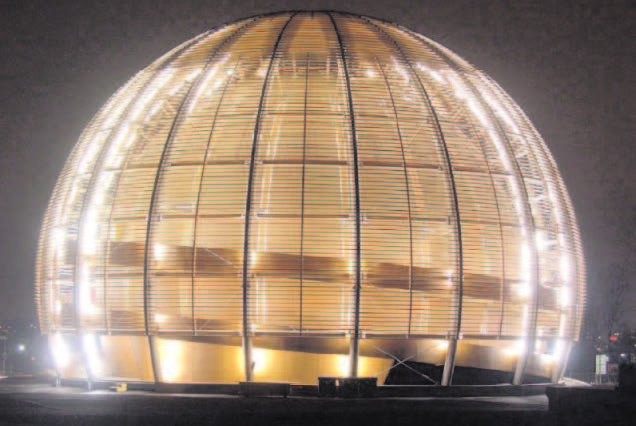
    LONDON (TIP): Pakistan is all set to beat India in becoming an associate member at Cern ( European Organization for Nuclear Research), the world’s largest particle physics laboratory that recently found the God Particle.

    A senior official of Cern told the mediaperson in London that bureaucratic red tape in India had slowed down the country’s intentions of joining Cern as an associate member. The official said, “Cern is very keen that India becomes an associate member and takes up a larger role in the experiments at Cern.

    But the final documents which India needed to submit have been stuck at the Prime Minister’s Office (PMO) for months now.” According to the official, Pakistan on the other hand moved swiftly to put “all documents in place” and “is all set to become an associate member before India”. To be an associate member, India will have to pay $10.7 million annually.

    The status of associate member is also the pre-stage to full membership. As an associate member, India would have been entitled to attend open and restricted sessions of the organization. Rolf Dieter Heuer, Director-General of Cern had recently said that Cern had become highly popular in India. Cern receives the highest number of applications for summer internships from India. Cern discovered the Higgs Boson popularly known as the god particle.

    The associate membership will open the doors of mega science experiments for Indian scientists and will also allow Indian industry to participate in bids for Cern contracts across various sectors. India was given “Observer” status in Cern in 2002. The Cern convention was signed in 1953 by the 12 founding states Belgium, Denmark, France, the Federal Republic of Germany, Greece, Italy, the Netherlands, Norway, Sweden, Switzerland, the United Kingdom and Yugoslavia, and entered into force on 29 September 1954.

    The organization was subsequently joined by Austria (1959), Spain (1961-1969, re-joined 1983), Portugal (1985), Finland (1991), Poland (1991), Czechoslovak Republic (1992), Hungary (1992), Bulgaria (1999) and Israel (2014). The Czech Republic and Slovak Republic re-joined Cern after their mutual independence in 1993.

    Cern now has 21 member states and Romania is a candidate to become a member state. Serbia is an associate member in the pre-stage to membership. “Observer” status allows non-member states to attend council meetings and to receive council documents, without taking part in the decision-making procedures of the organization. Over 600 institutes and universities around the world use Cern’s facilities. High-energy physicists from India mainly from the Tata Institute of Fundamental Research (TIFR) have been participating in experiments at Cern since the 1970s.

    Subsequently the TIFR-EHEP Group joined the L3 experiment contributing hardware for the endcap hadron calorimeter making major contributions to core software and participating in important physics analyses such as the line shape analysis, Higgs searches, QCD and b-quark physics. Some 10,000 visiting scientists from over 113 countries – half of the world’s particle physicists – come to Cern for their research.

  • Global Flooding

    Global Flooding

    In July at least 37 people were killed by flood waters inand around the city of Beijing, China. In the rural andsuburban areas outside Beijing, many more people died inas a result of flooding, which was said to be the region’sworst in 60 years.Floods occurred in southwest Russia inearly July, mainly in Krasnodar Krai, near the coast of theBlack Sea. Five months‚Äô worth of rain fell overnight insome southern parts of the country, leaving 144 people deadand damaging the homes of nearly 13,000 people. Othermassive flooding events occurred in Asia’s BrahmaputraRiver, Great Britain, Ireland, Loreto, Nigeria, North Korea,the Philippines, Romania, Fiji, Nepal, and Pakistan.