Tag: Russia

  • Why is Trump interested in Greenland? Look at the thawing Arctic ice.

    Why is Trump interested in Greenland? Look at the thawing Arctic ice.

    By Gaby Hinsliff

    Forecasts suggest that global heating could create a shortcut from Asia to North America, and new routes for trading, shipping – and attack.

    Another week, another freak weather phenomenon you’ve probably never heard of. If it’s not the “weather bomb” of extreme wind and snow that Britain is hunkering down for as I write, it’s reports in the Guardian of reindeer in the Arctic struggling with the opposite problem: unnaturally warm weather leading to more rain that freezes to create a type of snow that they can’t easily dig through with their hooves to reach food. In a habitat as harsh as the Arctic, where survival relies on fine adaptation, even small shifts in weather patterns have endlessly rippling consequences – and not just for reindeer.

    For decades now, politicians have been warning of the coming climate wars – conflicts triggered by drought, flood, fire and storms forcing people on to the move, or pushing them into competition with neighbors for dwindling natural resources. For anyone who vaguely imagined this happening far from temperate Europe’s doorstep, in drought-stricken deserts or on Pacific islands sinking slowly into the sea, this week’s seemingly unhinged White House talk about taking ownership of Greenland is a blunt wake-up call. As Britain’s first sea lord, General Sir Gwyn Jenkins, has been telling anyone prepared to listen, the unfreezing of the north due to the climate crisis has triggered a ferocious contest in the defrosting Arctic for some time over resources, territory and strategically critical access to the Atlantic. To understand how that threatens northern Europe, look down at the top of a globe rather than at a map.

    By the early 2040s, forecasts suggest global heating could have rendered the frozen waters around the north pole – the ocean separating Russia from Canada and Greenland – almost ice-free in summer. That potentially opens a new shortcut from Asia to North America, not around the planet’s middle but over the top, creating new routes for trading, shipping, fishing – and, more ominously, for attack.

    A new theatre of conflict is consequently emerging from under the melting ice, and China, Russia and the US are increasingly locked in a battle for dominance over it. Meanwhile as rising temperatures turn the high north into an autocrat’s chessboard, territories unlucky enough to be in the way – from Greenland to Canada to the Norwegian archipelago of Svalbard, long coveted by Russia – risk becoming pawns.

    Almost as dangerous for these countries as the threats exposed by a thawing pole are, in a way, the opportunities. Why on earth does the US think it needs to annex friendly Greenland in order to defend this critical Arctic frontier? After all, they’ve had troops stationed on this autonomous Danish territory since the second world war, and Denmark has obligingly made clear they’re more than welcome to bring more. The one benefit that does come uniquely with ownership, interestingly, is rights to the underground riches that could be unlocked as this frozen country heats up.

    Greenland is a rare, untapped source not just of oil and gas but of the rare earth minerals used to make everything from electric car batteries to datacenter processors – which are to US hopes of winning a technological race with China as rubber from Malaya or cotton from India were to the old colonial economies. Though it’s often a mistake to read too much logical method into the apparent presidential madness, there is no shortage of ideologues and tech bros in Trump’s orbit capable of putting all this together and selling it to him. And while mining the Arctic might not be economically viable for many years yet, Trump’s grumbles this week about Greenland being “full of Chinese and Russian ships everywhere” suggests someone has convinced him that he can’t let rivals beat him to a valuable potential development opportunity, a concept any former real estate mogul can grasp. After all, in Ukraine, Trump sought rights to mine rare earths in exchange for security guarantees, and in Gaza he mused about building hotels on its bombed-out ruins: why not seek to make a quick buck from environmental catastrophe?

    And while to Britons all this looks like a new age of empire, for the Maga faithful perhaps there’s an echo of a much more American story, that of settlers making their fortune by joining the wagon trail west, pushing the nation’s frontiers endlessly outwards, staking their claim to Indigenous people’s lands and holding grimly on to them through a brutal mix of trade and violence. The aim isn’t to invade Greenland, US secretary of state Marco Rubio explains, but to buy it, or at least rent exclusive military access. It’s a mark of how fast the relationship between the US and its former allies has collapsed – in just over a year – that this is meant to be reassuring: hey friends, we just want to exploit you, not kill you!

    Given the president’s legendarily short attention span, it’s difficult to know what fate awaits Greenland. Maybe he’ll simply get bored and move on, especially once the midterms are over and there is less need for drama abroad to distract from failures at home. Or maybe the White House will borrow instead from the Putin playbook, exploiting Greenlanders’ yearning for independence from Denmark to foment the kind of domestic unrest that is so easily whipped up in the age of social media – before pitching the US as a benign savior riding into town to keep them safe and make them rich.

    But either way, we had better get used to the idea this is the beginning, not the end, of the conflicts that may come as global heating redraws our maps, unpicks old alliances, and creates new deadly rivalries for land, water and natural resources.

    Of course, it will be worse for those already living on the edge of sustainability, in deserts too parched for anything to grow or in coastal towns already struggling with rising sea levels, or in places too poor to protect themselves from increasingly violent storms, than it will for lucky old temperate Europe. And of course, these risks could always be better managed by collaborative governments treating events like the unfreezing of the north as a collective challenge for humans to face together, rather than a deadly race for national advantage.

    But in the week Trump announced he would be pulling the US out of a raft of international climate initiatives, that clearly isn’t the world we live in. So if nothing else, let poor beleaguered Greenland be a reminder that the climate crisis will have geopolitical consequences we have barely yet begun to understand, and that whatever we can still do to cap the rising temperature or mitigate its effects still matters. Even, or maybe especially, if we can’t yet undo the damage that has already been so willfully done.

    (Gaby Hinsliff is a Guardian columnist)


  • Looking Ahead: Western World wants the best and leave the rest while tightening immigration controls

    Looking Ahead: Western World wants the best and leave the rest while tightening immigration controls

    By Prabhjot Singh

    TORONTO (TIP): “Poaching the best and ignoring the rest” appears to be the new immigration mantra of the developed and flourishing West that it wants to portray and implement in 2026. Conveying a strong message to the nations overflowing with manpower resources, both raw and skilled, the elite group of nations—most sought after by prospective immigrants—has been gradually barricading the borders to minimize the “infiltration.” To cap it, member nations of this group have set in motion both legal and inhumane deportation processes to get rid of what they call “dead wood,” as most of their ageing sections of society have met their requirements of the workforce.

    When the new Liberal government, led by Mark Carney, assumed office in April this year and presented its maiden budget in November, it clearly indicated that it would “look for the best of brains” to head new groups of scientific research. Bowing to the pressures, the Liberal government not only scaled down immigration levels but also introduced drastic cuts to the intake of international students. This major shift in the immigration rigmarole spells doom for hundreds of thousands of youngsters who want or aspire to make one of the developed Western nations their new home. Those with no skills find the immigration doors closed for them for now.

    Donald Trump, soon after starting his second term in office in January of the outgoing year, started sending through full loads of US Air Force aircraft, bereft of basic passenger facilities, with immigration seekers without proper documents to the countries of their origin, including India. And the process has been continuing unabated since then. Hundreds of thousands have already been sent home unceremoniously. Aircraft loads of “unwanted immigrants” are even now leaving the shores of various North American ports for destinations in South Asia, Africa, and other parts of the world regularly. Incidentally, those being deported exclude the brain doctors, engineers, and scientists.

    It is not only the closure of a channel that was taking a lot of loads off the governments of developing nations, but it has now started rebuilding the pressure on shrinking job opportunities and resources in these immigration feeder nations. While their best talent would be leaving the shores of the country, they would be left with numbers that they would find extremely difficult to adjust to under the tightening global economic norms.

    The brain drain would continue unabated, thus putting additional pressure on these fund- and resource-starved nations. Producing a doctor with six to eight years in a government medical institution in India costs the state a minimum of Rs 20 lakh. The same is the case with an engineer or IT specialist groomed at a government institution; the money spent by the state is no less than that of a doctor. And once these young, bright doctors, engineers, and IT experts step out of their institutions, the developed nations are out poaching for them. Instead of repaying the society that spent on their training and grooming, they leave their homelands, lured by green pastures overseas.

    The result is obvious. Their home turfs suffer from a shortage of doctors, engineers, technocrats, and other professionals. A simple case to illustrate this dilemma is the acute shortage of mental health officers in the country. Despite directions from the Apex Court that each district in the country must have a mental hospital, not even 20 per cent of districts in the country have such a facility. There is an acute shortage of super specialists in a country like India. Many medical colleges fake figures to show specialists and super specialists on their faculties, while in fact their services are requisitioned mostly from the private sector at the time of inspections.

    It is not health care. Other areas, especially information technology, science and research, engineering, and related areas, would continue to be impacted by the changed immigration policies of Western nations.

    Other than these technical or scientific “brains,” countries like India are also facing an acute shortage of middle-rung officers in their defense forces. One foremost reason is that pay packages are perhaps not as attractive as their counterparts’ pass-outs from IITs. Then some of the perks associated with jobs in the defense sector have been spiked so much that their added attractions have vanished in recent years. Even a lifetime career in the defense forces is not guaranteed under the Agnipath Yojana. Intriguingly, some of the able-bodied youth, looking for green pastures overseas and shirking jobs in uniform at home, were forced to join the armed forces overseas, as it happened in the case of Russia.

    There is an urgent need for a fresh look at the immigration policies of the nations with abundant manpower or human resources. A country like India needs to regulate its brain drain as well as the outflow of its raw human resources. It also comes with a need to audit the education and healthcare infrastructure in the country. India, for example, can market both its education and health care potentials as a retort to the Western world.

    Otherwise, developing economies would continue to lose their best to the West and keep the rest for their own use.

    (Please print the detailed intro of Prabhjot here)

  • Mark Carney’s new package to Ukraine has Canadians divided

    Mark Carney’s new package to Ukraine has Canadians divided

    By Prabhjot Singh

    TORONTO (TIP): When Canadian Prime Minister Mark Carney rolled out a new economic package for war-torn Ukraine as he and Volodymyr Zelenskyy met briefly at a Halifax-area airport, a chain of reactions, both for and against helping a nation in distress, started. The two leaders embraced as Carney welcomed Zelenskyy to Canada. Zelenskyy touched down for a brief stop on his way to Florida for planned peace talks with U.S. President Donald Trump this weekend, which he called “very important and very constructive.”

    Though the “intentions” behind aid or economic packages are seldom a subject of debate, this time the questions are being raised as the quantum of economic assistance offered looks beyond the means of the country that just managed to get its budget for 2025 ratified by the House of Commons by a couple of votes.

    Canada has been a staunch supporter of Ukraine since Russia’s full-scale invasion began in February 2022, committing $6.5 billion in military support along with humanitarian aid.

    The $2.5 billion that Canada committed to providing aid should enable the International Monetary Fund and the World Bank to lend nearly $10 billion to Ukraine to support reconstruction, the Prime Minister’s Office said in a news release. The funding will also be used to guarantee a loan of up to $322 million from the European Bank to assist Ukraine in reinforcing energy security.

    “Canada has committed new support to Ukraine, not only to help end this war, but also to help the Ukrainian people recover and rebuild,” said Carney in the statement.

    “Canada stands with Ukraine, because their cause—freedom, democracy, sovereignty—is our cause,” he said.

    The new economic package has evoked mixed reactions. While it may be a little far-fetched to link the revival of speculations that a section of the wealthy, perturbed by the rising tax slabs, including the wealth tax, plans to move out to safer tax havens, there is a certain undercurrent of discontent among average taxpayers over the government’s largesse to nations at war.

    They hold that with $2.5 billion in new “offerings” to Ukraine, it is no surprise that the federal government is looking at larger deficits. The 2024 fall statement projected a budget deficit of $42.2 billion this fiscal year. The 2025 budget pegged the deficit at $78.3 billion, with deficits exceeding $50 billion for the next five years. Ultimately, these growing deficits will transform into taxes, direct or indirect, besides accelerating rates of both inflation and unemployment.

    Some of the economic erosions may be due to conditions that have deteriorated since last year, but the bulk is from new spending. Overall, higher deficits are translating into more debt. As a result, debt servicing charges as a share of federal revenues are expected to increase from 10.5% last fiscal year to more than 13% by 2029–30.

    Nonetheless, given the increases in spending and deficits, the federal government has once again changed its fiscal anchor, which is a target that the government articulates to reassure markets, rating agencies, and the public that its finances remain responsible.

    An official communique said that since Russia’s unprovoked, unjustified, full-scale invasion, Canada has provided nearly $22 billion in multifaceted assistance for Ukraine, including over $12 billion in direct financial support—making Canada among the largest contributors to Ukraine’s recovery and reconstruction. As the Ukrainian people endure another winter of Russian aggression, Canada remains steadfast in its support for Ukraine.

    Building on Canada’s strong support for Ukraine, Mark Carney announced last weekend new measures to support a just and lasting peace. Canada has announced an additional $2.5 billion commitment for Ukraine, including financing that will enable the International Monetary Fund to lend Ukraine an additional $8.4 billion as part of an extended financing program, besides Canada’s participation in extended and expanded debt service suspension for Ukraine, for up to $1.5 billion in 2025-26.

    Canada’s new economic package also includes a loan guarantee of up to $1.3 billion in 2026 to the World Bank’s International Bank for Reconstruction and Development to support Ukraine’s reconstruction and a loan guarantee of up to $322 million in 2026 to the European Bank for Reconstruction and Development to support Ukraine’s gas imports and reinforce its energy security.

    In Halifax, Carney and Zelenskyy held a bilateral meeting to discuss the latest developments in ongoing peace talks. Mark Carney affirmed Canada’s full support for Ukraine.

    Since the beginning of 2022, Canada has committed $6.5 billion in military assistance to Ukraine. This funding will allow Canada to deliver military assistance to Ukraine through 2029.

    “The barbarism that we saw overnight—the attack on Kyiv—shows just how important it is that we stand with Ukraine during this difficult time,” Carney said.

    Zelenskyy thanked Canada for its support and called the new attacks “Russia’s answer to our peace efforts” and said it showed that Russian President Vladimir Putin “doesn’t want peace.”

    Zelenskyy also called Putin a “man of war.”

    Moscow has said the new strike was in response to Ukraine’s attacks on “civilian objects” in Russia.

  • Modi-Putin summit yields sweeping economic and strategic package

    Modi-Putin summit yields sweeping economic and strategic package

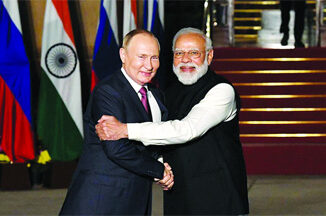
    NEW DELHI (TIP): In a display of enduring strategic partnership, Russian President Vladimir Putin and Indian Prime Minister Narendra Modi on Friday, December 5,  sealed a broad agreement aimed at deepening cooperation across trade, energy, defense, mobility, and technology — under a new “Economic Cooperation” umbrella slated to run through 2030. The accord, unveiled during the two-day 23rd annual summit between India and Russia, comes as both nations face mounting global pressure and shifting geopolitical fault lines — yet signal a clear determination to bolster bilateral ties rather than drift apart.

    Key pillars: trade, investment, energy and mobility

    At the heart of the summit was a comprehensive economic program stretching until 2030. Under the agreement, both countries are committed to diversify and expand trade and investment, with new cooperation across sectors including agriculture, shipping, ports, fertilizers, food safety, medical sciences, and consumer protection.

    One of the concrete outcomes: Indian firms have inked a deal with Russia’s chemical major Uralchem to establish a urea production plant in Russia — a significant step for bilateral industrial collaboration.

    In the maritime and logistics sphere, an MoU has been signed to boost cooperation in the port and shipping sector, underlining ambitions to improve transport connectivity and trade routes.

    Importantly, the summit also delivered a mobility pact: a new framework agreement for labor mobility, facilitating movement of skilled and semi-skilled Indian professionals to Russia.

    Russian authorities, including the banking sector, signaled readiness to support increased imports of Indian goods — especially in manufacturing, pharmaceuticals, and IT — while making trade settlements in rupees and troubles in a bid to bypass Western financial restrictions.

    Energy security & uninterrupted fuel supply: Moscow reassures New Delhi

    On energy, the summit reaffirmed Russia’s commitment to remain a “reliable” supplier of oil, gas and coal to India, pledging uninterrupted shipments despite Western sanctions on Moscow following its 2022 invasion of Ukraine.

    Given India’s rising energy demands — especially for industrial and agricultural sectors — that assurance carries strategic weight, helping New Delhi balance its energy security with growing global pressure to reduce reliance on Russian hydrocarbons.

    Defense, technology and strategic-sector cooperation

    Defense ties — long a cornerstone of the Russia–India relationship — featured prominently. While no large new weapons deal was publicly announced yet, the two sides confirmed intent to expand cooperation in space, artificial intelligence and other strategic technologies.

    Officials say discussions will likely include upgrades to existing platforms — such as additional deliveries under the air-defense S-400 missile system contract — and faster supply of spare parts, maintenance, and possibly joint maintenance facilities.

    Calls were also renewed for cooperation on next-generation projects — including hypersonic weapons and extended-range missile systems — reflecting Moscow’s ambition to deepen the technological dimension of the partnership.

    On the civil side, broad cooperation in sectors like space, medical sciences, and port infrastructure was agreed — underlining a mixed civil-military character to the renewed engagement.

    Diplomacy, world affairs and India’s stance on Ukraine

    During their joint press briefing, PM Modi reaffirmed that India was not neutral on the war in Ukraine, declaring that “India is on the side of peace” — and calling urgently for a return to dialogue and diplomacy.

    President Putin, for his part, expressed gratitude for India’s attention to peace initiatives. Moscow hailed the durability of the “deep-rooted” Indo-Russian strategic partnership that has weathered global turbulence — including sanctions and Western pressure.

    Observers note that while the two powers avoided a detailed confrontation over Ukraine, the summit’s outcome sends a clear geopolitical signal: that Moscow and New Delhi intend to sustain — and deepen — ties even under pressure from Western capitals.

    Why this summit matters: timing, balance and geopolitical significance

    This is Putin’s first official visit to India since the Ukraine war began — and comes at a time when India faces mounting pressure from Western countries, particularly the United States, over its continued purchase of Russian oil.

    Yet, by pushing ahead with a sweeping cooperation package spanning trade, energy, defense, mobility, and high technology — and by establishing a vision through 2030 — both sides underscore their commitment to a long-term, even “structural” partnership, rather than just transactional deals.

    For India, the agreements are a strategic hedge: securing energy and fertilizer supplies, enhancing industrial cooperation, and opening markets for Indian exports at a time when global supply-chain disruptions and geopolitical turbulence demand diversified trade partners.

    For Russia, finalizing such agreements with India reinforces Moscow’s efforts to pivot eastward — toward new markets, new supply routes, and a trade architecture less reliant on Western-dominated systems.

    What to watch next: implementation and global reactions

    The coming months will be critical to seeing whether the newly signed pacts translate into concrete deliveries: building and commissioning the Uralchem urea plant, operationalizing the labor mobility agreement, boosting Indian exports to Russia, and laying groundwork for joint infrastructure and defense projects.

    At the same time, global reactions — especially from Western capitals — are likely to be sharp. Washington has already imposed tariffs on Indian goods in response to Russia oil imports, and the deepening of Russian-Indian ties could complicate New Delhi’s diplomatic balancing act.

    Finally, how India navigates its appeal for peace over Ukraine, while simultaneously deepening ties with Russia, will be scrutinized by both allies and critics — making the 2025 summit a defining moment in India’s foreign-policy recalibration.

    It is a developing story .

    (With inputs from news outlets)

  • Angelina Jolie visits Ukraine border, ‘rescues’ bodyguard

    Angelina Jolie visits Ukraine border, ‘rescues’ bodyguard

    Hollywood star and humanitarian Angelina Jolie made a surprise visit to Kherson, a southern Ukrainian frontline city, Ukrainian media reported on Wednesday. This is the actor’s second visit to the country since Russia launched its invasion, and was made right after the recent drone strikes on Kherson.
    Pictures of the actor wearing a bulletproof vest with Ukrainian insignia and visiting children’s hospitals and maternity wards were posted on social media on Wednesday. One picture showed the Hollywood star with armour and a helmet outdoors, and another had her posing with a Ukrainian soldier whose face was blurred.
    Reports in Ukrainian media also claimed that Angelina was flanked by local bodyguards during her visit, one of whom was drafted by the Ukrainian Army mid-trip. The reports state that Angelina had to go to the conscription office to get him released.
    Kherson is a city which was briefly occupied by Moscow in 2022 and still comes under daily Russian bombardment.
    Neither Angelina nor the Ukrainian government has confirmed the visit to Kherson, which lies on the other side of the Dnieper River from the Russian army.

  • Conflicting Claims by US and India on  India’s Russian oil imports

    Conflicting Claims by US and India on India’s Russian oil imports

    NEW DELHI / WASHINGTON, D.C. (TIP): India and the United States continued to differ publicly over Russian oil as U.S. President Donald Trump said he had been assured by Prime Minister Narendra Modi that India will stop buying oil from Russia, while the Ministry of External Affairs maintained the two leaders had not spoken about the issue.

    However, the MEA said that India was “broad-basing” and “diversifying” its sources of energy according to market needs, and did not specifically deny the claim that it was reducing its intake

    The subject of Russian oil, which has led to the U.S. imposing penalty tariffs on India, is also believed to be holding up trade talks between the two countries. While the government has consistently denied it would bow to pressure, data analyzed by The Hindu showed that oil public sector undertakings (PSUs) have dropped their Russian imports by as much as 45% between June and September this year, even though Russia remains India’s biggest supplier overall.

    “I am not aware of any conversation yesterday between the two leaders,” MEA spokesperson Randhir Jaiswal told reporters here on Thursday, also clarifying that a call between Mr. Modi and Mr. Trump last Thursday (October 16, 2025) had only dealt with the Gaza peace plan and India-U.S. trade issues.

    On Wednesday, October 15, Mr. Trump had said he was confident that India would end its oil imports “soon” but not “immediately”. “I was not happy that India was buying oil, and [PM Modi] assured me today that they will not be buying oil from Russia,” Mr. Trump told reporters at the White House, with U.S. Ambassador-designate to Delhi Sergio Gor also present. “It’s a little bit of a process, but the process is going to be over with soon,” Mr. Trump said, adding, “That’s a big step. Now we’re going to get China to do the same thing.” On Thursday, the Chinese Ministry of Foreign Affairs slammed the U.S. for “unilateral bullying” over its “legitimate” imports from Russia.

    Going on to praise Mr. Modi as a “great man” who “loves Trump”, Mr. Trump said he did not want to “destroy [Mr. Modi’s] political career”. “I’ve watched India for years. It’s an incredible country, and every single year you’d have a new leader,” Mr. Trump said, adding: “My friend has been there now for a long time.”

    It was unclear from Mr. Trump’s words how exactly he believed Mr. Modi had relayed this commitment on oil. The two leaders last spoke, according to official statements, on October 9. Mr. Gor met with Mr. Modi, External Affairs Minister S. Jaishankar and National Security Advisor Ajit Doval on October 11, and then flew back to Washington on October 14, meeting with Mr. Trump on October 15, the day Mr. Trump made his statement.

    The MEA declined to comment on whether Mr. Gor had discussed the issue with Mr. Modi. In a statement issued on Thursday, October 16, 2025, a few hours after Mr. Trump’s controversial comments, the MEA sought to clarify its position. While it did not specifically mention Russian oil, it said it was seeking to “expand” energy procurement from the U.S.

    “It has been [India’s] consistent priority to safeguard the interests of the Indian consumer in a volatile energy scenario,” the statement said, referring to stable prices and secure supplies as “twin goals”. “This includes broad-basing our energy sourcing and diversifying as appropriate to meet market conditions.”

  • India may absorb some of tariff heat for US-bound shipments

    India may absorb some of tariff heat for US-bound shipments

    New Delhi (TIP)- The Centre may partially compensate exporters for their US shipments under Donald Trump’s punitive tariff regime, three people aware of the discussions said.
    With the dawn of steep tariffs, Indian exporters are compelled to reduce prices to stay competitive, which makes a direct hit on their business. The government is now looking to bear 10-15% of the price cuts to help exporters stay in the game, the people cited above said on the condition of anonymity.
    The relief, limited to US-bound consignments, will remain in force until the issue is settled through trade talks, which have been delayed but remain under discussion.
    The proposal is being coordinated between the ministries of finance and commerce to address the mounting pressure on manufacturers and exporters, particularly those in labour-intensive sectors, which are struggling to execute confirmed orders. The Centre may support some of the affected sectors with 10-15% for the price sacrifice they make to keep their US business going, one of the two people cited above said, though the sectors had asked for even higher support. This aid will help exporters continue to execute their orders and keep the manufacturing process going, the person added.
    Given that US importers must pay tariffs on goods imported from India, they are asking their Indian suppliers to reduce prices to compensate for the tariff burden, exporters have said. However, doing so would be an additional burden to the Indian exporter.
    The matter was discussed in separate meetings held on Thursday with finance minister Nirmala Sitharaman and commerce minister Piyush Goyal, where stakeholders highlighted the challenges in meeting deadlines for the upcoming spring season.
    The government has assured that there is no need to worry about the possible impact of the US tariffs on Indian goods exported to the US, stating the issue is being closely looked at.
    The relief package is being explored for labour-intensive goods such as textiles, gems and jewellery, engineering goods, leather and footwear, seafood, among others, the people cited earlier said. “The finance minister sounded positive, stressing that exporters will not be left to face the storm on their own. While she didn’t reveal what specific measures the government is taking, she assured that the government is seized of the matter and will step in to provide support,” said Pankaj Chadha, chairman, Engineering Export Promotion Council. “The 50% tariff undeniably dents cost competitiveness, but it also pushes Indian manufacturers to think beyond pricing. For us, the way forward is twofold-strengthening technology and design leadership so clients see value in performance, and building diversified global linkages that reduce overdependence on any one market,” said Sarvadnya Kulkarni, chief executive officer of General Instruments Consortium, an engineering company. Queries sent to the spokespersons of the Prime Minister’s Office, and the ministries of finance and commerce remained unanswered.
    According to a report by Global Trade Research Initiative, the damage could be substantial if the tariff remains in place for long. Once competitors gain ground in the US market, it will be very difficult for Indian exporters to reclaim lost space, and New Delhi will need to step up its engagement with Washington, it stated. Countries such as China, Vietnam, Mexico, Turkey, and even Pakistan, Nepal, Guatemala and Kenya stand to benefit from the US action, potentially locking India out of key markets even after the tariffs are rolled back.
    As reported by Mint on 21 August, New Delhi is also exploring the possibility of joining China-led Regional Comprehensive Economic Partnership to mitigate potential losses arising from supply chain disruptions amid strained trade relations with the US.
    On Wednesday, Aug 27, Peter Navarro, a top aide to US president Donald Trump, characterized the Russia-Ukraine conflict as “Modi’s war,” arguing that India’s continued purchase of discounted Russian oil is funding Moscow’s military efforts. He also criticized India for its high tariffs and for “getting in bed with authoritarians” by aligning with Russia and China.
    “India, you are getting in bed with authoritarians. China invaded Aksai Chin and all your territory. They are not your friends. And Russia? Come on!” Navarro told Bloomberg Television in an interview.

  • Ukraine conflict is ‘Modi’s war’: Trump officials continue tirade against India

    Ukraine conflict is ‘Modi’s war’: Trump officials continue tirade against India

    WASHINGTON, D.C. (TIP): A day after the United States imposed 25% secondary sanctions on Indian goods as a penalty for India’s purchases of Russian oil, in addition to the earlier 25% reciprocal tariffs, the Trump administration kept up its tirade, terming the conflict in Ukraine as “Modi’s war”.

    The U.S. Opposition Democratic party, however, criticized the move, saying that “singling out India” would hurt the U.S. as well. Former U.S. officials, including former Ambassador Kenneth Juster, expressed hope that the situation would be resolved at the highest levels, potentially through a meeting between U.S. President Donald Trump and Prime Minister Narendra Modi.

    The penalty tariffs by the U.S. are the first such broad-based sanctions placed on India since at least 1998, when the U.S. stopped bilateral cooperation over India’s testing of nuclear devices. In 2019, Mr. Trump had also withdrawn India’s status under the Generalized System of Preferences for exporters.

    ‘U.S. taxpayers fund Modi’s war’

    “India can get 25% off the tariffs right now if they agree to stop buying [Russian] oil and feeding the war machine,” said Mr. Trump’s trade advisor Peter Navarro, who has been leading the charge on tariffs. Mr. Navarro accused Indian negotiators of falsely claiming that India does not charge high tariffs, and of “arrogance” in refusing to cut oil imports from Russia, while “profiteering” from refining Russian oil in partnership with Russian refiners, a reference to the Vadinar refinery in Gujarat.

    “Everybody in America loses because of what India is doing. Consumers and businesses lose; workers lose because India’s high tariffs cost us jobs, income and higher raises. The taxpayers lose because we’ve got to fund Modi’s war.” Mr. Navarro told the Bloomberg news agency, accusing India of “getting in bed with the authoritarians” like Russia and China.

    ‘Profiteering on Russian crude’

    U.S. Treasury Secretary Scott Bessent called India-U.S. ties a “complicated relationship”, despite good ties between Mr. Trump and Mr. Modi, and said that the issue was not just Russian oil purchases but India’s failure to make a deal with the U.S. on trade.

    “I thought India could be one of the earlier deals and they kind of tapped us along in terms of the negotiations. Then there is also the aspect of the Russian crude purchases which they’ve been profiteering on,” Mr. Bessent told Fox News on Wednesday, where he said the Indian rupee is at “an all-time low” due to recent developments.

    Democratic lawmakers, however, attacked the Trump government, pointing out that China buys more Russian oil than India. In the past month, China has increased its intake of Russian oil even as India decreased its purchases.

    “Instead of imposing sanctions on China or others purchasing larger amounts of Russian oil, Trump’s singling out India with tariffs, hurting Americans and sabotaging the U.S.-India relationship in the process. It’s almost like it’s not about Ukraine at all,” the Democrats in the House Foreign Affairs Committee said in a post on X.

    ‘Cooler heads needed’

    Meanwhile, a number of former U.S. officials who have dealt with India in the past expressed their disappointment with the situation leading to the U.S. slapping 50% tariffs on Indian goods from August 27.

    “Unfortunately, the United States and India have managed to convert what appeared to be a true and unprecedented win-win on trade into a remarkable lose-lose,” said Mark Linscott, former U.S. trade negotiator, who is now an advisor for The Asia Group and the U.S. India Strategic Partnership Forum, calling for “cooler heads who understand the value of the relationship” to prevail.

    ‘Stay open to talks’

    Mr. Juster, also a former U.S. Commerce official who served as Ambassador to India during the first Trump term, told the Council for Foreign Relations that Mr. Trump believes the U.S.-India economic relationship has been “out of balance” for many years.

    “Given the vibrant political discourse in India, [Mr.] Modi needed to respond publicly and firmly to the new tariffs. But he should also be careful not to paint himself into a corner and to remain open to discussing ways to resolve the current trade dispute,” he said, expressing the hope that the two leaders would meet on the sidelines of the UN General Assembly (UNGA) in September.

    Indian government officials, however, said that there were no plans for Mr. Modi to visit the U.S. for the UNGA at present.

    (Agencies)

  • 15 Aug 2024 to 15 Aug 2025: India’s hits & misses

    15 Aug 2024 to 15 Aug 2025: India’s hits & misses

    A Year of Contrasts: From space milestones and semiconductor breakthroughs to economic turbulence and climate calamities, India’s story from August 2024 to August 2025 has been one of ambition tempered by reality. The challenge now is clear: translate scientific and strategic achievements into broad-based prosperity while safeguarding people against economic and environmental shocks. If India can bridge this gap, the road to its centenary of independence in 2047 will be far more secure and sustainable.

    As India marched past its 78th Independence Day on August 15, 2024, it carried the momentum of an economy on the rise, a space program gaining global attention, and a rapidly digitizing society. Yet, the following year also brought sobering reminders of deep-rooted vulnerabilities-from economic turbulence to climate shocks.
    The period between August 2024 and mid-2025 was marked by scientific breakthroughs, infrastructure gains, and diplomatic assertiveness-but also by economic strains, natural disasters, and policy challenges.
    The Hits: Bright Spots in India’s Progress
    Space Successes and Tech Ambitions
    – ISRO achieved satellite docking in December 2024, making India the fourth country after the U.S., Russia, and China to master this complex capability.
    – Preparations for Gaganyaan, India’s first human spaceflight, moved into final abort-test stages, strengthening India’s credentials in crewed space exploration.
    – ISRO also intensified outreach programs, inspiring millions of students and predicting a Rs 40 lakh crore space economy capable of generating 3 crore jobs in coming decades.
    Digital Leap and AI Leadership
    – India led the world in Generative AI training enrollments in 2024-25, reflecting its drive to upskill youth for the future economy.
    – The National Academic Depository pilot advanced secure digital credentialing, reducing document fraud and boosting employability.
    Semiconductor Push and
    Manufacturing Growth
    – The government approved four semiconductor manufacturing projects worth Rs 4,594 crore in Odisha, Andhra Pradesh, and Punjab- part of India’s ambition to become a global chip hub.
    – Defense Public Sector Undertakings (DPSUs), led by HAL, continued to build indigenous aerospace capability, cutting dependence on foreign suppliers.
    Climate Action and
    Sustainability Recognition
    – Mission LiFE (Lifestyle for Environment) gained traction, promoting eco-friendly practices nationwide and earning international support.
    – A women-led self-help group in Karnataka won the UN’s Equator Initiative Award for millet-based natural farming and biodiversity conservation, highlighting India’s grassroots climate leadership.
    Strategic Diplomacy and Global Standing
    – India deepened engagement with G20, BRICS, and Quad partners, using forums to push for tech cooperation, clean energy investment, and balanced global governance.
    – Efforts to establish a global code of conduct against pilot poaching reflected India’s growing voice in international aviation policy.
    The Misses: Setbacks and Challenges
    Economic Strains and Market Volatility
    – GDP growth slowed to 6.5% in FY 2024-25, the lowest in four years. While agriculture and construction performed well, manufacturing and job creation lagged.
    – A stock market crash in mid-2025, fueled by global uncertainty and foreign fund withdrawals, shook investor confidence and triggered government intervention.
    Climate Disasters and Resource Stress
    – The 2024 monsoon floods affected over 7.7 million people and caused nearly 1,900 deaths across multiple states.
    – A record heatwave (April-July 2025), with temperatures soaring to 48°C, led to over 450 deaths, crop failures, and severe water stress.
    Diplomatic and Trade Frictions
    – India-Canada tensions deepened over allegations in the Nijjar case.
    – India-U.S. trade relations soured, with Washington imposing a 25% duty on Indian imports-prompting India to lean further into partnerships with BRICS, Russia, and China.
    Innovation and Skills Gaps
    – Despite leading the world in AI course enrollments, India still faces a critical skill gap-too few workers are industry-ready in advanced technology fields.
    – India continues to lag in creating homegrown global tech giants, with systemic hurdles in R\&D investment, venture capital access, and commercialization.
    Social and Governance Concerns
    – Organ donation rates remained far below potential, with institutions like KGMU performing only 29 cadaveric transplants despite capacity for 50 annually, revealing structural and cultural challenges.
    – Persistent wealth inequality and youth unemployment dampened the benefits of headline economic growth.
    Looking Ahead: Lessons from a Mixed Year
    India’s year since Independence Day 2024 showcases a nation in rapid transition-capable of reaching the Moon and preparing for human spaceflight, yet vulnerable to economic shocks and climate extremes.
    To sustain momentum and avoid future setbacks, India must:
    – Close the skills gap by aligning education with industry needs in AI, robotics, and semiconductor manufacturing.
    – Diversify the economy, boosting manufacturing while ensuring rural development.
    – Invest in climate resilience, including heat-resistant infrastructure, urban water management, and disaster preparedness.
    – Strengthen global trade diplomacy to prevent tariff disputes and maintain investor confidence.
    – Build inclusive social systems, ensuring the benefits of growth reach every section of society.

  • Prime Minister Modi’s foreign visits from 2021-24 cost the nation USD 34,114,449 (Rs 295 cr)’;  USD 7,746,345 (Rs 67 cr ) on trips to 5 countries in 2025: Govt data

    Prime Minister Modi’s foreign visits from 2021-24 cost the nation USD 34,114,449 (Rs 295 cr)’; USD 7,746,345 (Rs 67 cr ) on trips to 5 countries in 2025: Govt data

    NEW DELHI (TIP): Over Rs 67 crore (USD 7,746,345) was incurred on Prime Minister Narendra Modi’s visit to five countries, including the US and France, in 2025, while the total expenditure figures related to his foreign trips from 2021 till 2024 stood at nearly Rs 295 crore (USD 34,114,449) , according to data shared by the government, says a PTI report.

    As per the country-wise and year-wise data, the corresponding figures for Modi’s visits to Mauritius, Cyprus, Canada and Croatia, and Ghana, Trinidad & Tobago, Argentina, Brazil and Namibia this year were not available.

    For these visits, the column for ‘total expenditure’ in the data shared by Minister of State for External Affairs Kirti Vardhan Singh on Thursday, in his written response to a query by TMC MP Derek O’Brien in Rajya Sabha, said, “Bills under settlement. Total expenditure is not yet available.” Of these visits, the costliest one was to France, which incurred over Rs 25 crore (USD 2,890,009) , while the one Modi undertook to the US in June 2023 incurred over Rs 22 crore (USD 2,542,900) .

    On March 20, the ministry had shared data in in Rajya Sabha, according to which nearly Rs 258 crore ( USD 29,821,291) was incurred on 38 foreign visits of Modi between May 2022 and December 2024.

    In 2025, Modi had travelled to France and the US from February 10-13. In Paris, he held bilateral talks with President Emmanuel Macron and attended an AI Summit, while in the US he met and held talks with President Donald Trump, among other engagements.

    According to the data shared, the country-wise figures for these five countries Modi visited in 2025 are–Rs 25,59,82,902 (France); Rs 16,54,84,302 (US); Rs 4,92,81,208 (Thailand); Rs 4,46,21,690 (Sri Lanka) and Rs 15,54,03,792.47 (Saudi Arabia).

    The cumulative figures for the preceding four years are–about Rs 109 crore (2024) spanning 16 countries, including Russia, Ukraine, the US and Brazil; nearly 93 crore (2023); Rs 55.82 crore (2022) and about Rs 36 crore (2021).

    In 2021, Modi visited Bangladesh (Rs 1,00,71,288–total expenditure); the US (Rs 19,63,27,806); Italy (Rs 6,90,49,376); and the UK (Rs 8,57,41,408). His trips in 2022 included visits to Germany (Rs 9,44,41,562); Denmark (Rs 5,47,46,921); France (Rs 1,95,03,918); Nepal (Rs 80,01,483) and Japan (Rs 8,68,99,372), it said. For Modi’s 2023 visit to Egypt, the expenditure on advertising and broadcasting was Rs 11.90 lakh, according to the data.

  • India stands ‘isolated’ over abstention on Gaza ceasefire in the UNGA, says Congress

    India stands ‘isolated’ over abstention on Gaza ceasefire in the UNGA, says Congress

    NEW DELHI (TIP): Expressing concern over the flare-up in West Asia after the escalation of the Israel-Iran conflict, the Congress on Tuesday, June 17, 2025, urged the Union Government to work with partner countries to ensure an immediate ceasefire in the region. “India should work with partners to bring an immediate halt to hostilities as any escalation can destabilize the entire region,” Congress Working Committee member Anand Sharma, who heads the party’s foreign affairs department, told The Hindu.

    Mr. Sharma, who was part of the Narendra Modi government’s diplomatic outreach in Operation Sindoor and the Pahalgam terror attack, mounted a scathing criticism of India’s abstention from a UN vote on a motion for the protection of civilians and upholding legal and humanitarian obligations in Gaza. “It is a humanitarian catastrophe that has unfolded in Gaza, where people are facing collective retribution for their identity. It is indefensible that the land of Mahatma Gandhi doesn’t stand for peace,” Mr. Sharma said.

    As Israel ends ceasefire, India expresses concern over Gaza, humanitarian situation, release of hostages

    In fact, the abstention at the UN was cited as yet another example of “weak diplomacy” by India. Congress general secretary (organization) and Lok Sabha member from Kerala’s Alappuzha seat, K.C. Venugopal, said India stood isolated among multilateral fora such as BRICS — a grouping of Brazil, Russia, India, China and South Africa — and SCO or Shanghai Cooperation Organization because of its stance.

    “India has always stood for peace, justice, and human dignity. But today, India stands alone as the only country in South Asia, BRICS, and SCO to abstain on a UNGA resolution demanding a ceasefire in Gaza,” he said on X last Saturday (June 14, 2025).

    Terming India’s stance “shameful and disappointing” in an X post the same day, Priyanka Gandhi Vadra, Lok Sabha member from Kerala’s Wayanad, said, “60,000 people, mostly women and children, have been killed already, an entire population is being confined and starved to death, and we are refusing to take a stand”.

    “Cold-blooded murder”: Priyanka Gandhi slams Israel, says its actions show humanity means nothing to them

    “This is a tragic reversal of our anti-colonial legacy. In fact, not only are we standing silent as Mr. (Benjamin) Netanyahu annihilates an entire nation, we are cheering on as his government attacks Iran and assassinates its leadership in flagrant violation of its sovereignty and complete contravention of all international norms,” Ms. Vadra added. Pawan Khera, who heads the party’s media and publicity wing, countered criticism from some quarters that Kerala’s politics may determine the position of some of their MPs from the State. “Congress’s position on Israel-Gaza and Iran-Israel stems from our own legacy of anti-colonial solidarity, non-alignment, and a firm commitment to human rights and international law,” Mr. Khera said.

    Stressing on the role India can play in the Iran-Israel conflict, he said, “Instead of seeing this moment as a strategic conundrum, India could see it as an opportunity — to act as a moral bridge between the warring sides, both of which happen to be our allies. That is what our legacy allows us to do, and what global leadership demands.”

  • Kremlin warns US against Iran strike, cautions of major escalation

    Kremlin warns US against Iran strike, cautions of major escalation

    MOSCOW (TIP): Washington would be making a serious mistake by launching an attack on Iran, Kremlin spokesperson Dmitry Peskov said, warning that direct US involvement in the ongoing Israel-Iran conflict would further destabilize the region, as reported by RT.

    Tensions have escalated since last week after Israel launched a large-scale bombing campaign against Iran, alleging that Tehran was on the verge of producing a nuclear bomb. Iran denied the allegations and responded with multiple drone and missile strikes. The exchange of hostilities between the two nations has continued, stoking fears of a wider regional war. Commenting on the possible US strike, Peskov said, “Moscow believes it is a wrong move. This is a step that is bound to lead to further escalation, a major escalation, and would only complicate the situation in the region,” RT reported. He further cautioned, “Such conflicts are capable of setting the entire region on fire.” Peskov reiterated Russia’s willingness to help mediate and resolve the crisis, while calling any notion of regime change in Iran by the US or Israel “unacceptable.”

    When asked about this possibility, Peskov echoed President Vladimir Putin’s long-held position: “We believe that it is unacceptable to have such conversations, and even more so to take such actions,” RT reported.

    Peskov said President Putin has maintained communication with both Tehran and Tel Aviv since the conflict began and has a “complete picture” of the situation. He added that while there is currently “little ground” for talks, Moscow remains actively engaged.

    Putin, addressing a late-night Q&A with journalists on Wednesday, revealed that Moscow had proposed several compromise frameworks to all involved parties — including the US, Israel, and Iran, as reported by RT. He suggested that a possible settlement could include mutual security guarantees that preserve Iran’s right to peaceful nuclear technology and Israel’s right to security.
    (Source: ANI)

  • “China absolutely impossible factor to ignore in India’s confrontation with Pakistan”: Tharoor

    “China absolutely impossible factor to ignore in India’s confrontation with Pakistan”: Tharoor

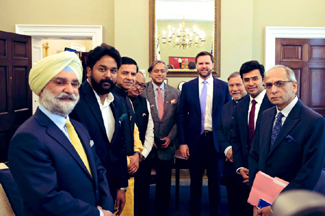
    WASHINGTON, D.C. (TIP): China is an “absolutely impossible factor to ignore” in India’s latest confrontation with Pakistan, Congress leader Shashi Tharoor has said, emphasizing that a thaw in relations between Delhi and Beijing over the past few months was “seemingly making good progress” before the conflict.

    Tharoor, who is leading a multi-party parliamentary delegation to the US, said, “I’m not going to mince my words, but we are aware that China has immense stakes in Pakistan.” His remarks came during an interaction with representatives of think tanks organized at the Indian Embassy here on Thursday, June 5.

    The largest single project under the Belt and Road Initiative is the China-Pakistan Economic Corridor, Tharoor said, adding that 81 per cent of Pakistani defense equipment is from China.

    “Defense may be the wrong word here. Offense in many ways,” he said. “China is an absolutely impossible factor to ignore in what has been our confrontation with Pakistan,” Tharoor said.

    He noted that despite the tensions between China and India since the Galwan Valley clashes in June 2020, “we had actually begun a thaw with China in September of last year, which was seemingly making good progress before this tragedy occurred.” Tharoor added that “then we saw a very different China” in terms of its practical support for Pakistan, even on the Security Council.

    “We have no illusions about what the challenges are in our neighborhood, but I want to remind you all that India has consistently chosen a path of keeping open channels of communication, even with our adversaries,” he said.

    “We have tried as much as possible to focus on development, on growth, on trade. Our trade with China is still at record levels. It’s not that we are adopting a posture of hostility, but we would be naive” not to be aware of these other currents around, he said. Pakistan is currently a non-permanent member of the UN Security Council.

    Following the April 22 Pahalgam attack, the UN Security Council had on April 25 issued a press statement on the ‘terrorist attack in Jammu and Kashmir’ in which the members had condemned it in “the strongest terms”.

    “The members of the Security Council underlined the need to hold perpetrators, organizers, financiers and sponsors of this reprehensible act of terrorism accountable and bring them to justice,” the press statement had said.

    However, the press statement did not mention The Resistance Front as the group responsible for the attack after Pakistan managed to get the name removed with the support of China.

    In October last year, India and China firmed up a disengagement pact for Depsang and Demchok, the last two friction points in eastern Ladakh.

    Days after the agreement was finalized, Prime Minister Narendra Modi and Chinese President Xi Jinping held talks in Kazan, Russia, and took a number of decisions to improve ties.

    External Affairs Minister S. Jaishankar met Chinese Foreign Minister Wang Yi in November last year in Rio de Janeiro on the sidelines of the G20 Summit and the two met again in February this year in Johannesburg.

    During a conversation at the Council on Foreign Relations earlier in the day, Tharoor was asked about the Chinese military equipment that Pakistan used in the conflict against India and if there is a reassessment over this.

    “Frankly, the reassessment took place while the fighting was going on,” Tharoor said.
    He added that when India saw what the Pakistanis were attempting to do using Chinese technology, for instance, the ‘kill chain’ that the Chinese specialize in, where the radar, GPS, planes and missiles are all linked together and they react instantly, “we simply did things in a different way. Otherwise, we wouldn’t have been able to hit” 11 Pakistani airfields and “we wouldn’t have been able to breach the Chinese-supplied air defenses.

    “So it’s clear that assessments were taking place while the fighting was happening, and we were recalibrating our strategies in order to end as effectively as we were able to end,” Tharoor said.

    “The fact is China has immense stakes in Pakistan, the largest single project on the Belt and Road Initiative is the one in Pakistan – the China- Pakistan Economic Corridor. So we have no illusions about the degree of commitment that China may well be feeling towards Pakistan.”
    (Source: PTI)

  • How India flexed its global power muscles in 2024

    How India flexed its global power muscles in 2024

    India’s foreign policy in 2024 showcased a bold stance, with India asserting its influence not only in its immediate neighbourhood but also on the global stage. External Affairs Minister S. Jaishankar in December highlighted a decade-long shift toward prioritizing economic diplomacy, a trend that continued to define India’s strategic engagements this year.
    As per Jaishankar, India’s foreign policy today is based on three principles. “Active engagement with countries, nation’s interests first under any circumstance and humanitarian approach with ethics”.
    Here’s how India flexed its global power muscles in 2024:
    India stares down China
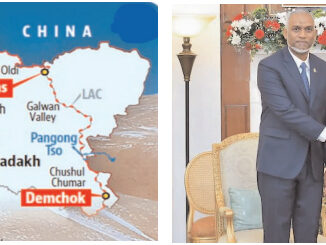
    It took India and China 21 rounds of Corp Commander-level talks on disengagement to end the military impasse that plagued the relationship for five years. While military disengagement had been achieved earlier at four points, the same remained elusive in Depsang and Demchok, the two friction points.
    China maintained that the impasse in these areas were legacy issues that predated the 2020 standoff and should not be allowed to block resumption of normal bilateral exchanges. However, India too steadfastly maintained there couldn’t be any progress in ties till the time disengagement is completed in the remaining areas, calling it an essential basis for peace in the border areas.
    Patient and persevering diplomacy helped clinch the disengagement agreement with China, Jaishankar said.
    Both the countries agreed to return to the patrolling agreements along the Line of Actual Control (LAC) in eastern Ladakh that were in place before the Galwan clashes in 2020 after several negotiations.
    Chabahar port powerplay
    India’s agreement with Iran in May to manage the strategic Chabahar Port for the next decade marked a significant milestone, as it was the first time India assumed management of a port overseas and that too amid Iran’s tensions with the US and Israel. This move underscores Prime Minister Narendra Modi’s emphasis on using strategic ports to bolster regional connectivity and influence.
    Chabahar port is a vital link in India’s efforts to enhance connectivity with Afghanistan, Central Asia, and the broader Eurasian region. It also serves as a counterbalance to Pakistan’s Gwadar Port and China’s expansive Belt and Road Initiative.
    The pact with Iran was signed despite the looming threat of US sanctions. Although the sanctions were never imposed, External Affairs Minister S. Jaishankar addressed concerns raised by the US about the “potential risk” to companies involved in the India-Iran joint venture. Jaishankar stressed that India would “work at” explaining Chabahar’s importance as a project serving the region’s broader interests.
    Maldives comes back
    India’s relationship with Maldives faced turbulence after Mohamed Muizzu, known for his pro-China and anti-India stance, assumed office as president. Mere hours after his swearing-in, Muizzu demanded the withdrawal of Indian military personnel stationed to operate three aviation platforms gifted by India. Following negotiations, the Indian military personnel were replaced with civilian operators.
    Tensions escalated further when three Maldivian deputy ministers made controversial remarks about India and Prime Minister Modi on social media. The Maldivian Foreign Ministry swiftly distanced itself from the comments, leading to the suspension of the three junior ministers.
    Amid these strained ties, President Muizzu made his first bilateral visit to India in October, as Maldives grappled with an economic crisis. The financial challenges facing his country were likely a key topic in discussions with India. Before the visit, Muizzu adopted a conciliatory tone, stating that he has never opposed India and acknowledging that New Delhi was aware of Maldives’ financial difficulties and willing to assist.
    Sri Lanka sides with India
    Sri Lankan President Anura Kumara Dissanayake on his inaugural foreign visit since taking office in September assured Prime Minister Modi that Sri Lanka would not permit its territory to be “used in any way that is detrimental to the interest of India.
    The assurance from Sri Lankan president came at a crucial point as China is intensifying its presence in the Indian Ocean region, particularly targeting Indian interests.
    China’s control over Hambantota Port, acquired through Sri Lanka’s debt default, has enabled Beijing to station vessels like the Yuan Wang 5, a 25,000-tonne satellite and missile tracking ship. This development concerns India due to Sri Lanka’s geographical proximity.
    Despite India’s initial objections in August 2022, Sri Lanka eventually permitted Chinese vessels to dock for ‘replenishment’ at Hambantota. Meanwhile, Chinese surveillance vessels keep on patrolling the Indian Ocean region and using the Hambantota port.
    China secured a 99-year lease on Hambantota port after Sri Lanka struggled with loan repayments. The $1.7 billion project, with phase one completed in 2010, required annual payments of $100 million, which Colombo failed to meet.
    The Canadian challenge
    India in October this year expelled six Canadian diplomats and announced withdrawing its high commissioner and other targeted officials from Canada after strongly dismissing Ottawa’s allegations linking the envoy to a probe into the killing of Sikh extremist Hardeep Singh Nijjar, in a major downturn in already frosty ties between the two nations. India’s decision to recall High Commissioner Sanjay Verma and some other diplomats came shortly after the Canadian Charge d’Affaires Stewart Wheelers was summoned to the Ministry of External Affairs (MEA). Wheelers was bluntly told that baseless “targeting” of the Indian envoy and other officials was “completely unacceptable”.
    India is not neutral in Russia-Ukraine war
    Despite opposition of the West, India has managed to find a middle way on the Russia-Ukraine conflict while also constantly underlining its strong relations with Russia. During the BRICS summit in October, when Prime Minister Modi visited Russia, President Vladimir Putin remarked that he believed Modi would understand his comments without translation, highlighting the strong relationship between the two nations. Modi responded with a hearty laugh. India’s approach to the Russia-Ukraine conflict has been shaped by its steadfast commitment to peace, dialogue, and diplomacy. This year, Modi visited Ukraine and met with President Volodymyr Zelenskyy, reaffirming India’s stance. During the meeting, Modi emphasized that India has never been neutral in the conflict but has consistently sided with peace.
    India’s role in the conflict has drawn international attention. Italian Prime Minister Giorgia Meloni, after her meeting with Zelenskyy, pointed out the potential roles India and China could play in resolving the crisis. Following his visit to Kyiv, Modi telephoned Putin to share his perspectives. Apart from the BRICS summit visit, Modi visited Russia in July, holding extensive talks with President Putin. While India has not proposed a peace formula like those of Brazil or China, it has maintained contact with all stakeholders, advocating for negotiations and emphasizing the importance of Russia’s involvement in peace summits for a sustainable resolution to the conflict.
    Diplomatic win in Qatar
    In a significant diplomatic win for India in February, eight former Indian Navy personnel, who were initially sentenced to death in Qatar on charges of spying, were released, marking a crucial turn of events in a case that had garnered international attention and led Modi critics to make it a test case for his global diplomatic clout.
    India’s diplomatic efforts led to the commutation of the capital punishment to extended prison terms for the eight veterans, who had been facing severe charges in Qatar. This decision came after sustained diplomatic intervention by India, showcasing the effectiveness of bilateral engagements in resolving complex legal matters. Expressing gratitude for the release of the Indian nationals, the Indian government welcomed the decision made by the Amir of the State of Qatar to facilitate their return. The swift resolution of this sensitive issue underscores the significance of diplomatic dialogue and cooperation between nations in addressing challenges faced by their citizens abroad.

  • Landmark events that made headlines in 2024

    Landmark events that made headlines in 2024

    From national politics and international affairs to environmental concerns and advances in science and technology, here are the top issues that captured everyone’s attention this year

    The year 2024 has been a whirlwind of significant events across the globe, spanning politics, science, technology, culture, and natural phenomena. From breakthroughs in artificial intelligence to groundbreaking diplomatic agreements, here’s an in-depth look at the events that shaped the world in 2024.
    Iran-Israel Conflict
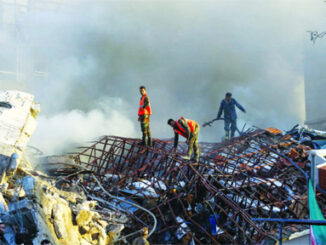
    On April 14, Iran launched hundreds of drones and missiles towards Israel in retaliation for an Israeli attack on its consulate that occurred in Damascus, Syria, on April 2. This attack became the immediate cause of the escalating conflict between Iran and Israel.
    Although Iran and Israel have a long history of bitter conflict and covert military actions against each other, this was the first time Iran has launched a direct attack of this scale aimed at targets within Israel.
    Heatwaves
    Higher daily peak temperatures and longer, more intense heatwaves are becoming increasingly common worldwide. This summer, India also experienced the impact of more frequent heatwaves, which have had devastating effects on human health and the environment.
    According to the India Meteorological Department (IMD)- A heatwave is a period of abnormally high temperatures, more than the normal maximum temperature that occurs during the summer season in the North-Western parts of India. Heatwaves typically occur between March and June, and in some rare cases even extend till July. The extreme temperatures and resultant atmospheric conditions adversely affect people living in these regions as they cause physiological stress, sometimes resulting in death.
    Misuse of Deepfakes
    In the General Elections of 2024, the widespread misuse of deepfakes significantly complicated the battle against misinformation. A deepfake video featuring actors Ranveer Singh and Aamir Khan purportedly endorsing a particular political party went viral during the elections. Earlier, a video that supposedly shows actress Rashmika Mandanna entering an elevator sparked a major controversy online. What initially appeared to be genuine was, in fact, a deepfake of the actress. The original video featured a British Indian girl, whose face was morphed to replace Mandanna’s.
    Deepfakes constitute fake content — often in the form of videos but also other media formats such as pictures or audio — created using powerful artificial intelligence (AI) tools. It is an amalgamation of the words “deep learning” and “fake” and it means fabricated videos generated from existing face-swapping techniques and technology.
    They are called deepfakes because they use deep learning technology, a branch of machine learning that applies neural net simulation to massive data sets, to create fake content. It employs a branch of artificial intelligence where if a computer is fed enough data, it can generate fakes that behave much like a real person.
    Bangladesh Political Upheaval
    The political upheaval in Bangladesh in August 2024 resulted in the ouster of former Prime Minister Sheikh Hasina and the establishment of an interim government led by Nobel laureate Muhammad Yunus. This event is considered a significant turning point in Bangladesh’s history and has introduced new dynamics in regional politics.
    India and Bangladesh share a unique relationship rooted in a common cultural heritage, shared principles, and values. However, recent regime changes in Bangladesh are affecting this relationship, particularly with the rising concern over atrocities against Hindus in Bangladesh, which has become a significant challenge in their bilateral relations.
    India-Canada Diplomatic Row
    In mid-October 2024, the sharp escalation of the diplomatic row between India and Canada, a first-of-its-kind situation in India’s diplomatic relations with the West, raised concerns about potential ripple effects in a range of areas, including trade and people-to-people ties.
    Notably, the diplomatic tension between India and Canada escalated on October 14, when India ordered the expulsion of six Canadian diplomats while also announcing its decision to withdraw the Indian High Commissioner to Canada and “other targeted diplomats,” citing security concerns after Ottawa identified them as “persons of interest” in its investigation into the killing of Khalistan separatist Hardeep Singh Nijjar.
    The bilateral ties between India and Canada are long-standing and significant. Canada is home to a high percentage of Sikhs. However, the two countries’ bilateral relations have been affected by various issues, such as Khalistani separatism and Canada’s position on human rights in India. These issues have led to increased tensions and have impacted diplomatic interactions.
    Political Upheaval in Syria
    The Syrian civil war saw major developments in December this year. The government of President Bashar al-Assad, who has ruled the Middle Eastern country since 2000, faced sudden and intense attacks from the rebel group Hayat Tahrir al-Sham. On December 8, the group reached the capital, Damascus, and celebrated the fall of Assad’s regime.
    Notably, New Delhi was preparing to revive its political and economic ties with Damascus late last month. On November 29, India and Syria held Foreign Office Consultations in New Delhi. India has been a keen developmental partner for Syria and is also actively involved in the capacity-building of the Syrian youth
    The Syrian civil war began around the “Arab Spring” of 2010, dubbed so as many countries in the Middle East and North Africa saw uprisings against authoritarian governments that had been in power for decades. Foreign governments, such as the United States and Russia, also engaged with the conflict based on their respective strategic interests.
    The Arab Spring also echoed in street protests in Syria. But Assad put it down with force unleashing a harsh crackdown on those opposing the regime. This set off a civil war, with the US backing the rebels while Russia, Iran and Hezbollah backing Assad.
    One Nation, One Election Debate
    The discussion on simultaneous elections has been a prominent topic throughout the year. Recently, the Union Cabinet approved the Constitution (One Hundred and Twenty-Ninth Amendment) Bill, 2024, along with the Union Territories Laws (Amendment Bill), 2024. This has reignited the debate over “One Nation One Election” (ONOE). Some believe that simultaneous elections would benefit the citizens, while others argue that it would undermine the basic structure of the Constitution of India.
    Notably, the high-level committee headed by former President Ram Nath Kovind has recommended that the government take a “one-time transitory measure”, which would require the Union government to identify an “appointed date” immediately after a Lok Sabha election and all state assemblies that go to poll after the said date would have their terms expire with the Parliament.
    Simultaneous elections, popularly referred to as “One Nation, One Election”, means holding elections to Lok Sabha, all state Legislative Assemblies, and urban and rural local bodies (municipalities and panchayats) at the same time. Currently, all these elections are held independently of one another, following timelines dictated by the terms of every individual elected body.
    Trump comes back to power
    Donald Trump won the election in the US to become the 47th President of the United States of America. Trump got 312 electoral college votes, while his rival, Kamala Harris from the Democratic Party could manage only 226. Trump’s victory in the US is likely to ensure the revival of ‘America First’ as well as America pulling back from several international organisations, which Trump thinks drain American taxpayers’ money.
    PM Modi gets third consecutive term
    In India, Narendra Modi’s Bharatiya Janata Party (BJP) won the general elections for the third consecutive term, defeating the alliance, dubbed INDIA. The election victory of PM Modi is slated to propel India towards strategic autonomy, meaning India will be able to make decisions that are best suited to its national interests, regardless of what major powers in the world want India to do.
    South Korean President imposes emergency, impeached
    South Korean President Yoon Suk Yeol declared an “emergency martial law” on December 3, accusing the opposition of controlling the parliament; however, within some hours, it was lifted. Following this, the South Korean leader was impeached by the parliament. Notably, the president had survived the first vote after members of his ruling People Power Party boycotted the vote.
    German chancellor loses confidence vote
    German Chancellor Olaf Scholz lost a confidence vote in the Bundestag, the German federal parliament. Scholz got only 207 in the 733-seat lower house against 394 voting against him while 116 abstained. The no confidence vote followed after the chancellor fired his finance minister in a long-running dispute over how to revitalise Germany’s stagnant economy. This saw Scholz’s three-party government collapsing in Germany.
    Labour Party wins in the UK
    UK’s Labour Party won the election in the UK on July 5TH, which dramatically reshaped the political landscape in the country. Keir Starmer became the Prime Minister defeating the Conservative Party’s Rishi Sunak, ending the Tories’ 14-year continued control of the British parliament.
    India-China reach border consensus
    In October, both India and China confirmed that they reached an agreement to end the standoff between both the Asian giants. After the Galwan clash in 2020, the agreement melted the ice as relations between both countries stooped to very low. In December, China and India reached a six-point consensus to address border issues during crucial talks between National Security Advisor (NSA) Ajit Doval and Foreign Minister Wang Yi.
    Vladimir Putin gets presidency again
    In Russia, Vladimir Putin cemented his position by winning the election. Putin will leave Josef Stalin behind if he completes his current six-year term. Putin got 87 per cent of the total votes polled.
    Five nations join BRICS
    Egypt, Ethiopia, Iran, Saudi Arabia, and the United Arab Emirates joined BRICS in 2024. This will see a major portion of the world get represented in one of the most prominent non-western groups.
    Bitcoin’s meteoric rise
    Bitcoin’s meteoric rise to over $100,000 is reminiscent of previous post-election surges. Notably, the cryptocurrency had already hit $81,000 shortly after Donald Trump’s victory in the US presidential elections earlier this year. Historically, Bitcoin’s price has shown a pattern of significant gains following the US presidential elections, which often coincide with its halving cycles – events that reduce its supply and drive up prices.
    Pakistan general election
    Pakistan also went to the polling booths in 2024, in February, to elect members of the 16th National Assembly. But the election was anything but fair. Pakistan Tehreek-e-Insaf (PTI), led by Imran Khan, was not allowed to contest the elections, due to which its leaders appeared as independent candidates on the ballot.
    Despite this and alleged rigging by the military, PTI-backed independents defied the odds and emerged as the largest bloc. However, they were not allowed to form the government, and a last-minute coalition of PML-N, PPP, MQM and others was given the green light.

    Vinesh Phogat’s Olympic Disqualification
    Indian wrestler Vinesh Phogat was disqualified from the Paris 2024 Olympics after being found 100 grams overweight for the women’s 50kg category just before her gold medal bout. After defeating top contenders, including defending Olympic champion Yui Susaki, Phogat was on the cusp of gold, only to see her dreams shattered at the mandatory weigh-in.
    This disqualification ended her bid to become the first Indian woman to win an Olympic gold in wrestling. Despite an appeal to the Court of Arbitration for Sport, the decision stood, leaving India reeling from a missed Olympic medal. A dejected Phogat soon announced her retirement, marking a tragic conclusion to her career.
    India’s Triumph in the T20 World Cup
    India clinched their second T20 World Cup title after a 17-year hiatus, defeating South Africa by seven runs in a thrilling final. Captain Rohit Sharma made history by becoming the first-ever captain to win 50 T20Is, further solidifying his legacy in the sport.
    Expansion of Cricket in the United States
    The 2024 T20 World Cup featured matches in the United States, including a high-profile India vs. Pakistan game held at a pop-up stadium in Long Island. This initiative was part of the ICC’s broader strategy to globalize cricket and tap into new markets, marking a pivotal moment in the sport’s history.
    Typhoon Yagi (Enteng)
    In early September, Typhoon Yagi struck parts of East Asia, leading to approximately 844 deaths. The typhoon brought torrential rains and strong winds, causing severe flooding and landslides.
    Enga Landslide in Papua New Guinea
    On May 24, a catastrophic landslide in the Enga Province of Papua New Guinea resulted in a tragic loss of life, with estimates ranging from 670 to over 2,000 fatalities. The disaster buried entire villages, making rescue operations challenging.

  • Why the Anglo-Saxon West hates Russia

    Why the Anglo-Saxon West hates Russia

    “The short of the long story, therefore, is the revival of Anglo-Saxon versus Russia rivalry on the fringe of Europe. The imperial sea powers of the West would prefer to continue with the proxy conventional war in land owing to their inherent discomfiture to take a direct fight with a monstrous land power which has traditionally thrived on protracted conflict away from the water. The Anglo-Saxons may like to think that the long war on land would weaken the Slav Russia both economically and demographically, but that may not turn out to be so.”

    Biden inherited the Trump legacy of the Afghan war end-game. And August 2021 is a bad dream come true for the new POTUS. The retreat after the 20-year war made Biden a bitter man. The October 2024 escalation of the present Ukraine war is the right punch for Biden to deliver as a revenge trophy to Trump, his 2021-predecessor-cum-2025-successor.

    By Abhijit Bhattacharyya

    This is the taunting remark made by the then UK Defense Secretary Ben Wallace on February 23, 2022, even before Russia had invaded Ukraine: “The Scots Guards kicked backside of Tsar Nicholas-I in 1853 in Crimea and we can always do it again.” He was referring to the 170-year-old Crimean War between Moscow and the tripartite forces of London, Paris and Ankara’s Ottoman Empire which defeated Russia to conclude with the Treaty of Paris in 1856. The palpable hatred of the West’s Anglo-Saxon people towards Russia is unmistakable.

    Fast forward one month, to March 22, 2022, and one finds Joe Biden, President of the US (POTUS), blurting out another verbal bullet in Warsaw: “For God’s sake, this man Putin cannot remain in power.”

    What message was POTUS giving to the world? Was he in charge of the regime change of Moscow and judge, jury and arbitrator, with powers of the world supercop on the prowl? Or, was he heading the sole superpower state? For a minute, however, POTUS acted like a non-state actor of a tinpot dictatorship!

    True, Biden was referring to the wrong and illegal Russian invasion of the sovereign Ukraine. But, did he remember the plethora of worse wrongdoings of his own country committed in the 21st century? Again, it’s true that two wrongs cannot make one right, yet one has to be rational, restrained and reticent while uttering words to make a point on an international platform dealing with such crisis situations as the Russia-Ukraine conflict.

    Russia was wrong on all counts to invade Ukraine on February 24, 2022, and under no stretch of the imagination can the Moscow aggression be defended. It’s a naked 18th -20th century imperial-type aggression by the powerful to conquer the weak. Moscow had no business to trample upon Ukraine’s sovereignty.

    Nevertheless, on closer scrutiny, it is seen that the Russian invasion of Ukraine was born of a ceaseless two-decade-plus shameless US-led NATO and EU provocation, which posed a dire and direct existential threat to Moscow’s geography through her underbelly of Kiev.

    Hence, despite Russian President Vladimir Putin being wrong, he had reason to be wrong, and reason to be not right. It’s the blatant West-plotted expansion towards the East that Russia couldn’t have ignored beyond a point. All the more so because the once-sovereign USSR had already been broken into 15 states in December 1991, with Russia being one of the new states.

    The shrunkened and weakened Russia, thus, constituted a fresh opportunity for the traditional imperialist powers of the West to get back to their favorite pastime: Of expanding territory, controlling resources and subjugating local manpower to subservience to bolster their own economy and multiply their growth chart, the way it zoomed from the 17th to the 20th century.

    Today, the Russia-Ukraine war is more than a local conflict of the Balkan-Black Sea belt. The outgoing POTUS, Biden, has suddenly escalated the war, which could be potentially disastrous for Europe if it remains just a conventional conflict. However, in the unlikely event of the use of nuclear wares, one cannot predict the conflict’s outcome.

    Indeed, whatever the future course of the Ukraine war, Biden (the Anglo-Saxon who hates Russia), for sure, will go down as a would-have-been hero who fell as a tragic villain in the history of the USA in general and the history of European warfare in particular for escalating the war zone into a potential Armageddon. Ironically, the villain should have been Putin for initiating the war. But the role has been diametrically reversed as Biden seems to have taken over the mayhem mantle from the Moscow man.

    Thus, Biden has perfectly fitted into Putin’s shoes by allowing US-made lethal weapons to be targeted deep into Moscow’s land. Obviously, Moscow will react and go for reprisals on the source of the weapons’ launch pads.

    And the launch pads may be any country, but certainly not the US or the UK, the two Anglo-Saxon nations whose hatred for the eastern state of Russia constitutes permanent chapters of world history.

    Where, then, do things go from here? The biggest puzzle at this point in time to the world in general and the West in particular is US president-designate Donald Trump, whose dislike for Biden is too conspicuous to be ignored.

    Biden inherited the Trump legacy of the Afghan war end-game. And August 2021 is a bad dream come true for the new POTUS. The retreat after the 20-year war made Biden a bitter man. The October 2024 escalation of the present Ukraine war is the right punch for Biden to deliver as a revenge trophy to Trump, his 2021-predecessor-cum-2025-successor.

    The short of the long story, therefore, is the revival of Anglo-Saxon versus Russia rivalry on the fringe of Europe. The imperial sea powers of the West would prefer to continue with the proxy conventional war in land owing to their inherent discomfiture to take a direct fight with a monstrous land power which has traditionally thrived on protracted conflict away from the water. The Anglo-Saxons may like to think that the long war on land would weaken the Slav Russia both economically and demographically, but that may not turn out to be so.

    The dynamics of political alignments are changing rather fast, with land powers uniting to take on the comparatively smaller sea powers with diminishing demography and challenging economy.

    In fact, that’s the reason the Anglo-Saxons are emphatically propounding the importance of long-range high-tech weapons to target deeper into the unending land of Moscow. Unfortunately, perhaps, it’s a tad late to be successful. The vastness of Moscow is far too much and way superior than the proximity of Europe for Putin.

    The West’s hatred for Moscow has made things too complicated to be untied any time soon, it appears. Biden’s hatred for both Putin and Trump may have tied the latter’s hands to the military industrial complex of California, Texas and Kansas and the US Mid-West corporations of combat weapons for a longer-than-expected haul.
    ( The author is Advocate, Supreme Court of India. Defense Analyst, Ex Civil Servant)

  • Crimes against humanity: Key U.N. committee adopts resolution paving way for first-ever treaty

    Crimes against humanity: Key U.N. committee adopts resolution paving way for first-ever treaty

    UNITED NATIONS (TIP): A key United Nations (U.N.) General Assembly committee adopted a resolution on Friday, November 22, 2024, paving way for negotiations on a first-ever treaty on preventing and punishing crimes against humanity after Russia dropped amendments that would have derailed the effort. The resolution was approved by consensus by the assembly’s legal committee, which includes all 193-member U.N. nations, after tense last-minute negotiations between its supporters and Russia that dragged through the day.

    There was a loud applause when the chairman of the committee gaveled the resolution’s approval. It is virtually certain to be adopted when the General Assembly puts it to a final vote on December 4.

    “Today’s agreement to start up negotiations on a much-needed international treaty is an historic achievement that was a long time coming,” Richard Dicker, Human Rights Watch’s senior legal adviser for advocacy, told The Associated Press.

    “It sends a crucial message that impunity for the kinds of crimes inflicted on civilians in Ethiopia, Sudan, Ukraine, southern Israel, Gaza and Myanmar will not go unheeded,” he said.

    The resolution calls for a time-bound process with preparatory sessions in 2026 and 2027, and three-week negotiating sessions in 2028 and 2029 to finalize a treaty on crimes against humanity.

    Mr. Dicker said Russia’s proposed amendments left in question whether treaty negotiations would have been completed. Russia’s Deputy U.N. Ambassador Maria Zabolotskaya said Russia withdrew the amendments “in a spirit of compromise.” But she said Russia “dissociates itself from consensus.” “This, of course, does not mean that we are not ready to work on this crucial convention,” Ms. Zabolotskaya told the committee.

    The International Criminal Court was established to punish major perpetrators of war crimes, crimes against humanity and genocide and it has 124 countries that are parties to it. The ICC says crimes against humanity are committed as part of a large-scale attack on civilians and it lists 15 forms including murder, rape, imprisonment, enforced disappearances, sexual slavery, torture and deportation. But the ICC does not have jurisdiction over nearly 70 other countries.

    There are global treaties that cover war crimes, genocide and torture — but there has been no specific treaty addressing crimes against humanity. And according to sponsors of the resolution, led by Mexico and Gambia and backed by 96 other countries, a new treaty will fill the gap.

    Kelly Adams, legal advisor at the Global Justice Center, also called the resolution “a historic breakthrough” after many delays. Pointing to “the proliferation of crimes against humanity around the world,” she expressed hope that a treaty will be “strong, progressive and survivor-centric.”

    Amnesty International’s Secretary General Agnes Callamard expressed disappointment that the timeline had been extended until 2029, but said, “What’s important is that this process will deliver a viable convention.”

    “It is long overdue and all the more welcome at a time when too many states are intent on wrecking international law and universal standards,” she said. “It is a clear sign that states are ready to reinforce the international justice framework and clamp down on safe havens from investigation and prosecution for perpetrators of these heinous crimes.” After the resolution’s adoption, Gambia’s Counselor Amadou Jaiteh, who had introduced it hours earlier, called its approval “a once-in-a-lifetime opportunity to make a difference,” to hope for a world without crimes against humanity, “and a world where voices of victims are heard louder than their perpetrators.”

  • Trump has an opportunity to create a legacy of unity and peace

    By Prof. Indrajit S Saluja
    By Prof. Indrajit S Saluja

    Donald Trump’s return to the White House has stirred intense debates and expectations across America’s diverse political spectrum. His supporters view his leadership as a way to address what they see as pressing issues, from illegal immigration to foreign conflicts, while those on the left call for more compassion, equity, and diplomacy. These contrasting views reflect not only America’s deep political divisions but also a broader expectation that Trump would need to balance conflicting demands across the country.

    One of the most divisive issues in Trump’s previous administration, and one that remains in the spotlight, is immigration. For his base, addressing illegal immigration is paramount. Many of his supporters feel that uncontrolled immigration contributes to a loss of jobs, increased crime, and burdens on public services. They believe Trump’s firm stance on border security and his earlier policies, such as building the wall along the southern border, are essential steps toward tackling this issue. They expect him to continue implementing strict policies and taking decisive action to curb illegal immigration.

    On the other side, however, are millions of Americans who view immigration through a more humanitarian lens. These citizens see the issue not just as a matter of law and order, but as one requiring compassion and empathy. They believe America’s identity has been shaped by immigrants and that, while reform is needed, there should be pathways to citizenship for those already living in the country, especially for children and those who have contributed positively to society. Liberals call for a balanced approach that addresses security concerns without compromising the humane treatment of individuals. Navigating these polarized viewpoints will be a key test of Trump’s leadership.

    Another area where Trump’s policy agenda will come under scrutiny is taxation. Traditionally, Republicans have favored tax cuts for corporations and the wealthy, believing that these policies stimulate economic growth by incentivizing investment and job creation. Trump’s tax reform during his presidency largely adhered to this philosophy, and his base expects him to continue with similar policies, favoring the business class and promoting wealth generation.

    But there is a growing chorus within America that calls for a different approach to tax policy. Many Americans, especially those facing financial hardships, believe that the tax system should be structured to benefit middle- and lower-income families. They argue that tax relief for the poor and greater investment in welfare programs and social security could create a more equitable society. In a nation where wealth inequality continues to widen, Trump would face pressure to either stay loyal to his party’s traditional tax stance or consider measures to support broader segments of the population. Balancing these contrasting expectations could determine how effectively he appeals to the wider electorate.

    One area where Trump’s outlook appears to align with public sentiment across the political spectrum is foreign policy. The idea of reducing U.S. involvement in overseas conflicts has gained traction among Americans who are weary of endless wars. Many want a strong U.S. military, but they would prefer it to serve primarily as a deterrent rather than engage in protracted conflicts that drain resources and often yield uncertain outcomes. Trump has previously criticized American interventions abroad, expressing a “peace through strength” philosophy that resonates with many who feel the U.S. should focus on domestic priorities rather than entangle itself in other nations’ disputes.

    The ongoing conflict between Russia and Ukraine is one arena where Trump’s non-interventionist stance might play out. Trump has suggested that he could negotiate an end to the conflict, potentially capitalizing on his previous rapport with Russian President Vladimir Putin. He has stated that he would push for an end to this war, likely by using U.S. leverage to halt military aid to Ukraine if it facilitates negotiations. With the U.S. as Ukraine’s principal backer, a shift in its support would likely prompt Ukraine to consider peace talks with Russia. While some view Trump’s approach as pragmatic, others fear it could undermine Ukrainian sovereignty and empower Russia. Nonetheless, his stance reflects a broader desire among Americans for a more restrained and calculated foreign policy.

    Another geopolitical hotspot where Trump could exert influence is the Israeli-Palestinian conflict. Currently, the Israeli government, led by Prime Minister Benjamin Netanyahu, has adopted a hardline stance, which critics argue escalates tensions and prolongs hostilities. Netanyahu’s political survival is often seen as tied to the conflict’s continuation, as it helps him consolidate support among right-wing factions. Trump, however, has the potential to play a mediating role. Given his established ties with Israeli leadership, he could leverage his influence to encourage a balanced approach that addresses Israel’s security concerns while also creating conditions for dialogue and peace with neighboring countries. Successfully brokering peace in both Ukraine and Israel could not only elevate Trump’s legacy but also position him as a serious contender for the Nobel Peace Prize, a symbol of his impact on global diplomacy.

    For Trump, however, the challenge lies in choosing his battles and approaching them with a sense of diplomacy. While he has strong convictions and an assertive style, bringing about meaningful change in such contentious areas requires more than rhetoric—it demands tact, empathy, and a willingness to listen to diverse perspectives. Many of his critics fear that he may instead focus on pursuing his perceived political adversaries, which could further divide the country and overshadow critical policy needs. However, a more measured approach could help unify Americans across the ideological spectrum and address issues that matter to all citizens, regardless of party affiliation.

    Ultimately, Trump’s second term will be shaped by his ability to navigate America’s polarized political landscape and deliver on his promises. To truly serve as a leader for all Americans, he would need to balance his commitment to his supporters with the needs of those who oppose him. From immigration reform to tax policy and foreign diplomacy, he has an opportunity to create a legacy of unity and peace. If he focuses on these lofty goals, rather than divisive politics, Trump could achieve what many see as nearly impossible: bridging divides at home and fostering peace abroad.

  • Putin invites Modi for talks at BRICS

    Putin invites Modi for talks at BRICS

    In a boost to peace efforts in the Russia-Ukraine conflict, Indian National Security Advisor (NSA) Ajit Doval met Russian President Vladimir Putin today and conveyed details of the discussions between India and Ukraine on possible measures for resolving the conflict.
    Doval met Putin on the sidelines of the Brazil, Russia, India, China, and South Africa (BRICS) NSAs meeting at Saint Petersburg. During the meeting, Putin proposed a bilateral meeting with Prime Minister Narendra Modi next month on the sidelines of the BRICS leaders’ summit in Kazan, Russia.
    PM Modi and Ukrainian President Volodymyr Zelenskyy had met in Kyiv on August 23, with Doval present among the inner core group of Modi’s team during the meeting. The Indian NSA conveyed details of the talks in Kyiv, according to the Kremlin, which published a transcript and photos of the Putin-Doval meeting on its website. The transcript quoted Doval as saying, “He (Modi) wanted me to come in person and tell you about the talks that took place (in Kyiv). It was a closed format, only the two leaders were present, and I was with Prime Minister (Modi); I witnessed this conversation.”
    Earlier this month, Putin suggested that China, India, and Brazil could act as mediators in potential peace talks with Ukraine. Source: TNS

  • Kamala Harris accepts historic presidential nomination, pledging to be the President for all Americans

    Kamala Harris accepts historic presidential nomination, pledging to be the President for all Americans

    Says election offers “fleeting opportunity” to move past “bitterness, cynicism”

    Indrajit Saluja

    CHICAGO, August 23,  (TIP): Vice President Kamala Harris officially accepted the Democratic presidential nomination Thursday, August 23, promising to be “the president for all Americans”. “I will be a president who unites us around our highest aspirations”, she pledged.

    Framing the upcoming election as an opportunity for the nation to “chart a new way forward” , she encouraged voters to write the “next great chapter in the most extraordinary story ever told.”

    “As a prosecutor, when I had a case, I charged it not in the name of the victim, but in the name of the people. For a simple reason, in our system of justice, a harm against any one of us is a harm against all of us. And I would often explain this to console survivors of crime, to remind them, no one should be made to fight alone. We are all in this together, and every day in the courtroom, I stood proudly before a judge, and I said five words, “Kamala Harris, for the people”. And to be clear, my entire career, I’ve only had one client, the people, and so on behalf of the People, on behalf of every American, regardless of party, race, gender or the language your grandmother speaks, on behalf of my mother and everyone who has ever set out on their own unlikely journey, on behalf of Americans like the people I grew up with, people who work hard, chase their dreams and look out for one another, on behalf of everyone whose story could only be written in the greatest nation on Earth, I accept your nomination, President of the United States of America.”

    Harris makes history as the first Black woman to lead a major party’s presidential ticket, and her remarks closed out the final day of the Democratic National Convention in Chicago.

    Promising to be the President for all Americans, Harris said “ and with this election, our nation has a precious, fleeting opportunity to move past the bitterness, cynicism and divisive battles of the past, a chance to chart a new way forward, not as members of any one party or faction, but as Americans, and let me say, I know there are people of various political views watching tonight, and I want you to know I promise to be a president for all Americans, you can always trust me to put country above party and self, to hold sacred America’s fundamental principles, from the rule of law to free and fair elections to the peaceful transfer of power.

    Democratic Convention in Chicago, August 22, 2024.

    Harris kicked off her speech by offering her thanks to President Biden, calling his character “inspiring,” and she predicted history would look favorably upon his record in office.

    “Let us show each other and the world who we are and what we stand for: freedom, opportunity, compassion, dignity, fairness and endless possibilities,” she said. “We are the heirs to the greatest democracy in the history of the world and on behalf of our children and our grandchildren and all of those who sacrificed so dearly for our freedom and liberty, we must be worthy of this moment.”

    “We are charting, and we are charting a new way forward, forward to a future with a strong and growing middle class, because we know a strong middle class has always been critical to America’s success, and building that middle class will be a defining goal of my presidency”, Harris said.

    “As President, I will bring together labor and workers and small business owners and entrepreneurs and American companies to create jobs, to grow our economy and to lower the cost of everyday needs like health care and housing and groceries. We will provide access to capital for small business owners and entrepreneurs and founders, and we will end America’s housing shortage and protect Social Security”.

    “As a young courtroom prosecutor in Oakland, California, I stood up for women and children against predators who abused them. As Attorney General of California, I took on the big banks, delivered $20 million for middle class families who faced foreclosure and helped pass a homeowner bill of rights, one of the first of its kind in the nation.”

    “I stood up for veterans and students being scammed by big for-profit colleges who are workers who are being cheated out of their wages, the wages they were due for seniors facing elder abuse. I fought against the cartels who traffic in guns and drugs and human beings who threaten the supply security of our border and the safety of our communities. And I will tell you, these fights were not easy, and neither were the elections that put me in those offices. We were underestimated at practically every term, but we never gave up, because the future is always worth fighting for, and that’s the fight we are in right now, a fight for America’s future. Fellow Americans, this election is not only the most important of our lives, it is one of the most important in the life of our nation, in many ways”.

    Lambasting her opponent Donald Trump, Harris said, “ Donald Trump is an unserious man. But the consequences of putting Donald Trump back in the White House are extremely serious. Consider not only the chaos and calamity when he was in office, but also the gravity of what has happened since he lost the last election. Donald Trump tried to throw away your votes. When he failed, he sent an armed mob to the United States Capitol, where they assaulted law enforcement officers when politicians in his own party begged him to call off the mob and send help. He did the opposite. He fanned the flames and now for an entirely different set of crimes, he was found guilty of fraud by a jury of everyday Americans, and separately found Bible through committing sexual abuse and consider what he intends to do if we give him power again, consider his explicit intent to set free violent extremists who assaulted those law enforcement officers at the Capitol, his explicit intent to jail journalists, political opponents and anyone he sees as the enemy, his explicit intent to deploy our active duty military against our own citizens. Consider the power he will have, especially after the United States Supreme Court just ruled that he would be immune from criminal prosecution. Just imagine Donald Trump with no guard rails and how he would use the immense powers of the presidency of the United States, not to improve your life, not to strengthen our national security, but to serve the only client he has ever had- himself. And we know what a second Trump term would look like. It’s all laid out in Project 2025, written by his closest advisors, and its sum total is to pull our country back to the past, but America, we are not going back. We are not going back. We are not going back. We are not going back to when Donald Trump tried to cut Social Security and Medicare. We are not going back to when he tried to get rid of the Affordable Care Act, when insurance companies could deny people with preexisting conditions. We are not going to let him eliminate the Department of Education that funds our public schools, and we are not going to let him end programs like Head Start that provide preschool and childcare for our children. America, we are not going back.”

    “Now compare that to Donald Trump. I think everyone here knows he doesn’t actually fight for the middle class, no, he doesn’t actually fight for the middle class. Instead, he fights for himself and his billionaire friends, and he will give them another round of tax breaks that will add up to $5 trillion to the national debt. And all the while, he intends to enact what in effect is a national sales tax, call it a Trump tax, that would raise prices on middle class families by almost $4,000 a year. Well, instead of a Trump tax hike, we will pass a middle-class tax cut that will benefit more than 100 million Americans friends, I believe America cannot truly be prosperous unless Americans are fully able to make their own decisions about their own lives, especially on matters of hearth and home.”

    Harris criticized Trump’s nationwide abortion ban, taking away the rights of women to have control over their bodies. She said it needed to be reversed. “And when Congress passes a bill to restore reproductive freedom, as President of the United States, I will proudly sign it into law.”

    “In this election, many other fundamental freedoms are at stake, the freedom to live safe from gun violence in our schools, communities and places of worship, the freedom to love who you love openly and with pride, the freedom to breathe clean air and drink clean water and live free from The pollution that fuels the climate crisis and the freedom that unlocks all the others, the freedom to vote. With this election, we finally have the opportunity to pass the John Lewis Voting Rights Act and the freedom to vote.”

    “And let me be clear, after decades in law enforcement, I know the importance of safety and security, especially at our border last year, Joe and I brought together Democrats and conservative Republicans to write the strongest border bill in decades. The Border Patrol endorsed it, but Donald Trump believes a border deal would hurt his campaign, so he ordered his allies in Congress to kill the deal….. And here is my pledge to you as President, I will bring back the bipartisan border security bill that he killed, and I will sign it into law. I know we can live up to our proud heritage as a nation of immigrants and reform our broken immigration system. We can create an earned pathway to citizenship and secure our border and America.

    We must also be steadfast in advancing our security and values abroad. As Vice President, I have confronted threats to our security, negotiated with foreign leaders, strengthened our alliances, and engaged with our brave troops overseas. As Commander in Chief, I will ensure America always has the strongest, most lethal fighting force in the world, and I will fulfill our sacred obligation to care for our troops and their families, and I will always honor and never disparage their service and their sacrifice, I will make sure that We lead the world into the future on space and artificial intelligence, that America, not China, wins the competition for the 21st century, and that we strengthen, not abdicate our global leadership. Trump, on the other hand, threatened to abandon NATO. He encouraged Putin to invade. Our allies said Russia could do whatever the hell they want. Five days before Russia attacked Ukraine, I met with President Zelensky to warn him about Russia’s plan to invade, I helped mobilize a global response over 50 countries to defend against Putin’s aggression. And as President, I will stand strong with Ukraine and our NATO allies”.

    “With respect to the war in Gaza, President Biden and I are working around the clock, because now is the time to get a hostage deal and a cease fire deal done.

    And let me be clear. And let me be clear, I will always stand up for Israel’s right to defend itself, and I will always ensure Israel has the ability to defend itself, because the people of Israel must never again face the loss that a terrorist organization called Hamas caused on October 7. At the same time, what has happened in Gaza over the past 10 months is devastating. So many innocent lives lost, desperate, hungry people fleeing for safety. Over and over again, the scale of suffering is heartbreaking. President Biden and I are working to end this war so that Israel is secure, the hostages are released, the suffering in Gaza ends, and the Palestinian people can realize their right to dignity, security, freedom and self-discrimination, And know this, I will never hesitate to take whatever action is necessary to defend our forces and our interests against Iran and Iran backed terrorists. I will not cozy up to tyrants and dictators like Kim Jong Un who are rooting for Trump. Because, you know, they know, he is easy to manipulate with flattery and favors. They know Trump won’t hold autocrats accountable because he wants to be an autocrat himself.
    And as President, I will never waver in defense of America’s security and ideals, because in the enduring struggle between democracy and tyranny, I know where I stand and I know where the United States belongs”.

    “We are the heirs to the greatest democracy in the history of the world, and on behalf of our children and our grandchildren and all those who sacrificed so dearly for our freedom and liberty, we must be worthy of this moment. It is now our turn to do what generations before us have done, guided by optimism and faith, to fight for this country we love, to fight for the ideals we cherish and to uphold the awesome responsibility that comes with the greatest privilege on Earth, the privilege and pride of being an American.”

    “So, let’s get out there. Let’s fight for it. Let’s get out there. Let’s vote for it, and together, let us write the next great chapter in the most extraordinary story ever told”, concluding her speech, she said.


  • Historic Prisoner Swap with Russia brings home 3 Americans

    Historic Prisoner Swap with Russia brings home 3 Americans

    WASHINGTON, D.C. (TIP): The United States and Russia completed their biggest prisoner swap in post-Soviet history on Thursday, August 1, with Moscow releasing journalist Evan Gershkovich and fellow American Paul Whelan, along with dissidents including Vladimir Kara-Murza, in a multinational deal that set two dozen people free, says an AP report.

    Gershkovich, Whelan and Alsu Kurmasheva, a journalist with dual U.S.-Russia citizenship, arrived on American soil shortly before midnight for a joyful reunion with their families. President Joe Biden and Vice President Kamala Harris were also there to greet them and dispense hugs all around.

    The trade unfolded despite relations between Washington and Moscow being at their lowest point since the Cold War after Russian President Vladimir Putin’s February 2022 invasion of Ukraine. Negotiators in backchannel talks at one point explored an exchange involving Russian opposition leader Alexei Navalny, but after his death in February ultimately stitched together a 24-person deal that required significant concessions from European allies, including the release of a Russian assassin, and secured freedom for a cluster of journalists, suspected spies, political prisoners and others.

    Biden trumpeted the exchange, by far the largest in a series of swaps with Russia, as a diplomatic feat while welcoming families of the returning Americans to the White House. But the deal, like others before it, reflected an innate imbalance: The U.S. and allies gave up Russians charged or convicted of serious crimes in exchange for Russia releasing journalists, dissidents and others imprisoned by the country’s highly politicized legal system on charges seen by the West as trumped-up.
    “Deals like this one come with tough calls,” Biden said, He added: “There’s nothing that matters more to me than protecting Americans at home and abroad.”

    Under the deal, Russia released Gershkovich, a reporter for The Wall Street Journal who was jailed in 2023 and convicted in July of espionage charges that he and the U.S. government vehemently denied. His family said in a statement released by the newspaper that “we can’t wait to give him the biggest hug and see his sweet and brave smile up close.” The paper’s editor-in-chief, Emma Tucker, called it a “joyous day.”

    “While we waited for this momentous day, we were determined to be as loud as we could be on Evan’s behalf. We are so grateful for all the voices that were raised when his was silent. We can finally say, in unison, ‘Welcome home, Evan,’” she wrote in a letter posted online.

    Also released was Whelan, a Michigan corporate security executive jailed since 2018, also on espionage charges he and Washington have denied, and Kurmasheva, a Radio Free Europe/Radio Liberty journalist convicted in July of spreading false information about the Russian military, accusations her family and employer have rejected.

    The dissidents released included Kara-Murza, a Kremlin critic and Pulitzer Prize-winning writer serving 25 years on charges of treason widely seen as politically motivated, as well as multiple associates of Navalny. Freed Kremlin critics included Oleg Orlov, a veteran human rights campaigner convicted of discrediting the Russian military, and Ilya Yashin, imprisoned for criticizing the war in Ukraine.

    The Russian side got Vadim Krasikov, who was convicted in Germany in 2021 and sentenced to life in prison for killing a former Chechen rebel in a Berlin park two years earlier, apparently on the orders of Moscow’s security services. Throughout the negotiations, Moscow had been persistent in pressing for his release, with Putin himself raising it.

    At the time of Navalny’s death, officials were discussing a possible exchange involving Krasikov. But with that prospect erased, senior U.S. officials, including national security adviser Jake Sullivan, made a fresh push to encourage Germany to release Krasikov. In the end, a handful of the prisoners Russia released were either German nationals or dual German-Russian nationals.

    Russia also received two alleged sleeper agents jailed in Slovenia, as well as three men charged by federal authorities in the U.S., including Roman Seleznev, a convicted computer hacker and the son of a Russian lawmaker, and Vadim Konoshchenok, a suspected Russian intelligence operative accused of providing American-made electronics and ammunition to the Russian military. Norway returned an academic arrested on suspicions of being a Russian spy; Poland sent back a man it detained on espionage charges.

    “Today is a powerful example of why it’s vital to have friends in this world,” Biden said.

    All told, six countries released at least one prisoner and a seventh — Turkey — participated by hosting the location for the swap, in Ankara.

    Biden placed securing the release of Americans held wrongfully overseas at the top of his foreign policy agenda for the six months before he leaves office. In an Oval Office address discussing his decision to drop his bid for a second term, Biden said, “We’re also working around the clock to bring home Americans being unjustly detained all around the world.”

    The Biden administration has now brought home more than 70 Americans detained in other countries as part of deals that have required the U.S. to give up a broad array of convicted criminals, including for drug and weapons offenses. The swaps, though celebrated with fanfare, have spurred criticism that they incentivize future hostage-taking and give adversaries leverage over the U.S. and its allies.

    The U.S. government’s top hostage negotiator, Roger Carstens, has sought to defend the deals by saying the number of wrongfully detained Americans has actually gone down even as swaps have increased.

    Tucker, the Journal’s editor-in-chief, acknowledged the debate, writing in a letter: “We know the U.S. government is keenly aware, as are we, that the only way to prevent a quickening cycle of arresting innocent people as pawns in cynical geopolitical games is to remove the incentive for Russia and other nations that pursue the same detestable practice.”

    Though she called for a change to the dynamic, “for now,” she wrote, “we are celebrating the return of Evan.”

    Thursday’s swap of 24 prisoners surpassed a deal involving 14 people that was struck in 2010. In that exchange, Washington freed 10 Russians living in the U.S. as sleepers, while Moscow deported four Russians, including Sergei Skripal, a double agent working with British intelligence. He and his daughter in 2018 were nearly killed in Britain by nerve agent poisoning blamed on Russian agents.

    Speculation had mounted for weeks that a swap was near because of a confluence of unusual developments, including a startingly quick trial for Gershkovich, which Washington regarded as a sham. He was sentenced to 16 years in a maximum-security prison.

    In a trial that concluded in two days in secrecy in the same week as Gershkovich’s, Kurmasheva was convicted on charges of spreading false information about the Russian military that her family, employer and U.S. officials rejected. Also in recent days, several other figures imprisoned in Russia for speaking out against the war in Ukraine or over their work with Navalny were moved from prison to unknown locations.

    Gershkovich was arrested March 29, 2023, while on a reporting trip to the Ural Mountains city of Yekaterinburg. Authorities claimed, without offering any evidence, that he was gathering secret information for the U.S. The son of Soviet emigres who settled in New Jersey, he moved to Russia in 2017 to work for The Moscow Times newspaper before being hired by the Journal in 2022.

    Gershkovich was designated as wrongfully detained, as was Whelan, who was detained in December 2018 after traveling to Russia for a wedding.

    Whelan, who was serving a 16-year prison sentence, had been excluded from prior high-profile deals involving Russia, including the April 2022 swap by Moscow of imprisoned Marine veteran Trevor Reed for Konstantin Yaroshenko, a Russian pilot convicted in a drug trafficking conspiracy. That December, the U.S. released notorious arms trafficker Viktor Bout in exchange for WNBA star Brittney Griner, who’d been jailed on drug charges.

    “Paul Whelan is free. Our family is grateful to the United States government for making Paul’s freedom a reality,” his family said in a statement.

  • Pakistan, Russian connections detected in Ahmedabad school bomb threat case

    The Crime Branch has uncovered a Pakistani link to the bomb threats which targeted 38 schools in Gujarat’s Ahmedabad on May 6, officials said on Friday, May 10. The officials said that this incident has links in Pakistan and a Russian server was used to create a sense of panic and fear in the city. The threat mail was sent from a Russian domain (.ru). More information is awaited.
    The threatening emails received a day before the May 7 Lok Sabha polls caused widespread panic among the public.
    The Crime Branch, Cyber Crime unit, Special Operations Group, and Ahmedabad Police launched an investigation soon after the threats. Despite the alarming nature of the threats, no suspicious or explosive materials were discovered after thorough inspections by bomb disposal squads and canine units. Director General of Police Vikas Sahay had said that the threats were a hoax and encouraged voters to proceed to the polls without fear. This incident follows a trend of hoax threats similar to those received by over 130 schools in the Delhi-NCR area.

  • Russia wants to put a nuclear plant on the moon; China plans to help it

    Russia wants to put a nuclear plant on the moon; China plans to help it

    As the modern-age lunar race picks up pace, Russia and China are setting their sights on the moon with plans to establish a nuclear power plant. The power plant is expected to be established on the lunar surface between 2033 and 2035. Yuri Borisov, the head of Russia’s space agency Roscosmos, revealed this ambitious project in a statement, highlighting a significant collaboration between the two nations in advancing lunar exploration.
    Borisov, who has a background as a former deputy defense minister, emphasised the collaborative efforts between Russia and China in a joint lunar program. He pointed out Russia’s valuable contribution with its expertise in “nuclear space energy,” marking a pivotal step towards sustainable lunar habitation.
    The initiative aims to overcome the limitations of solar panels, which Borisov noted would not be enough for the electricity demands of future lunar settlements. Instead, nuclear power emerges as a viable solution to fuel these extraterrestrial habitats.
    The complexity of delivering and installing a power unit on the lunar surface was acknowledged by Borisov, who stressed the importance of automating the process to avoid human presence during the initial stages.
    This approach points to the challenges and risks associated with deploying nuclear technology in space.
    Further expanding on Russia’s vision for space innovation, Borisov discussed the development of a nuclear-powered cargo spaceship, dubbed a “space tugboat.” This vessel, described as a “huge, cyclopean structure,” would leverage a nuclear reactor and high-power turbines to transport large cargoes between orbits, collect space debris, and fulfill other critical functions.
    Despite the resolution of most technical questions surrounding the project, cooling the nuclear reactor remains a significant hurdle yet to be overcome. Russia’s lunar ambitions have been marred by setbacks, including the failure of its first moon mission in 47 years last year when the Luna-25 spacecraft crashed after spinning out of control.
    However, Moscow remains undeterred, with plans for further lunar missions and explorations of a joint Russian-China crewed mission and even a lunar base. This comes as China announces its goal to send the first Chinese astronaut to the moon before 2030, signaling a competitive yet collaborative race to lunar colonisation. Amidst international concerns over the militarization of space, Russian President Vladimir Putin has dismissed US warnings about Russia’s intentions to deploy nuclear weapons in space.

  • A first: US company lands craft on moon

    A first: US company lands craft on moon

    WASHINGTON, D.C. (TIP): A private American company has scripted history by landing the first commercial spacecraft on the Moon as well as the first US vehicle on the Earth’s only natural satellite in more than 50 years, joining earlier feats by India, Russia, the US and China.

    Built by Intuitive Machines, the lander — named Odysseus — touched down on the moon at 6.23 pm ET on Thursday, February 22, making it the first American spacecraft on the Moon since the Apollo 17 mission in 1972. “Today, for the first time in half a century, America has returned to the Moon,” Bill Nelson, NASA Administrator said. The lander will have seven days before darkness descends on the landing site, preventing the spacecraft’s solar panels from gathering energy from sunlight and bringing freezing temperatures, ABC News reported.
    (Source: PTI)

  • Four survivors in Russian air ambulance crash in Afghanistan, fate of 2 others unknown

    NEW DELHI (TIP): Four people survived and two are unaccounted for after a Russian plane crashed in mountainous northeastern Afghanistan, the air transport agency Rosaviatsia said.
    The Falcon 10 business jet was believed to be carrying six people on a hospital flight to Uzbekistan and Russia before communication was lost on Saturday evening.
    “Of the six people on board the aircraft, tentatively, four are alive. They have various injuries. The fate of two people is being clarified,” Rosaviatsia said, citing the Russian embassy in Afghanistan. The ministry of airport transport and aviation in Afghanistan said that the aircraft crashed in Koof-Aab district of Badakhshan province, and claimed that four passengers survived the crash. A provincial government official in Afghanistan told AFP the aircraft came down in Badakhshan province, which borders China, Tajikistan and Pakistan. The aircraft had taken off from Thailand and had made a brief technical stopover in Gaya airport for refueling,’’ according to the Ministry of Civil Aviation. (AFP)