Tag: Russia

  • TERROR TALKS TOP PM’S CENTRAL ASIA VISIT

    TERROR TALKS TOP PM’S CENTRAL ASIA VISIT

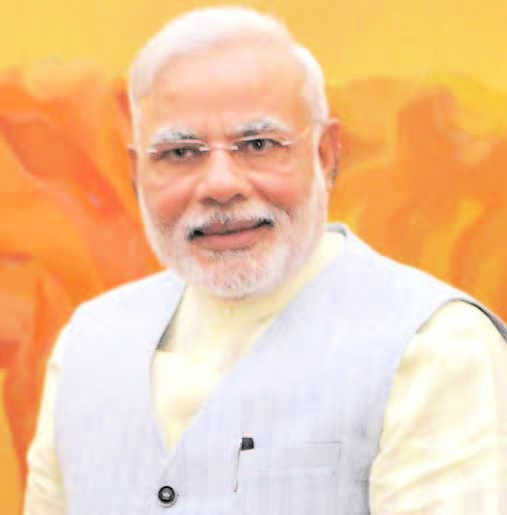
    NEW DELHI (TIP): As Prime Minister Narendra Modi heads for Central Asia, the first PM to visit all the five ‘Stans’ in one shot, India is hoping political outreach, counter-terrorism cooperation, energy and soft power will overcome the challenge of physical connectivity with the region.

    PM is expected to visit Uzbekistan and Kazakhstan on his way out to Russia, and Turkmenistan, Kyrgyzstan and Tajikistan on his return journey. The growing threat of extremist terrorism, of the kind unleashed by Islamic State is perceived as a clear threat by these states — they have watched with concern, thousands of their young citizens travelling to Iraq and Syria to join IS. The prospect of IS taking root in these countries is real. India hopes to engage these countries in a deeper conversation on counter-terrorism. “They are worried about radicalization, and we hope to be able to cooperate and look for solutions together,” said government sources.

    Energy has always been an attractive draw between India and Central Asia but there is the challenge of getting that energy to India. That will be the focus of conversations in both Kazakhstan and Turkmenistan. Many pipelines, including TAPI, have been the subject of intensive discussions, but there has been little progress so far. India already has a uranium supply agreement with Kazakhstan.

    The Afghanistan situation post-2014 will be a common thread in the discussions. There is a resurrection of Taliban forces, even in their regions which means all countries involved have an interest in Afghanistan’s immediate future. The bigger aim behind Modi’s visit is to reclaim politically a part of India’s near neighbourhood. India has always believed this to be its strategic backyard, but in recent years, Central Asia has built very close trade and security links with China. India cannot possibly replace China, or compete with such a large presence, but New Delhi hopes to be a viable alternative in the region.

  • Indian Americans Preet Bharara & Rakesh Khurana honored with Carnegie’s ‘Great Immigrant’ award

    Indian Americans Preet Bharara & Rakesh Khurana honored with Carnegie’s ‘Great Immigrant’ award

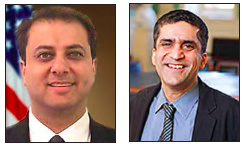
    NEW YORK (TIP): The Carnegie Corporation has announced the 2015 “Great Immigrant”: The Pride of America” awardees. These are the individuals who have helped advance and enlighten our society, culture, and economy. Preet Bharara, U.S. Attorney, Southern District of New York is among 38 eminent personalities selected as 2015 ‘Great Immigrant’ honorees, on the eve of the nation’s birthday on July 4th by Carnegie Corporation.

    The other Indian American awardee, Rakesh Khurana is the Marvin Bower Professor of Leadership Development at Harvard Business School (HBS), professor of sociology in the Faculty of Arts and Sciences (FAS), and co-master of Cabot House and dean of Harvard College.

    “Our founder, Andrew Carnegie, came to this country as the son of impoverished immigrants and grew up to become one of the greatest contributors to American industry and philanthropy,” said Vartan Gregorian, President of the Corporation. “His devotion to U.S. democracy stemmed from his conviction that the new infusion of talent that immigrants bring to our country keeps American society vibrant.”

    The 38 Great Immigrants honored this year come from more than 30 countries around the world and represent leadership in a wide range of professions.

    They include:

    • Preet Bharara S. Attorney, Southern District of New York (India)
    • Geraldine Brooks Pulitzer Prize-winning Author, Journalist (Australia)
    • Thomas Campbell Director and CEO, The Metropolitan Museum of Art (England)
    • Rabia Chaudry Attorney, Civil Rights Activist (Pakistan)
    • Mica Ertegun Interior Designer (Romania)
    • Stanley Fischer Economist; Vice Chair, Board of Governors, Federal Reserve System (Israel)
    • Jonathan Hunt Fox News, Chief Correspondent (Canada)
    • Malek Jandali Composer, Pianist (Syria)
    • Rakesh Khurana Professor, Dean, Harvard College (India)
    • Marie-Josée Kravis Economist, Philanthropist (Canada)
    • Nastia Liukin Olympic Medal-winning Gymnast (Russia)
    • Bette Bao Lord Author, Human Rights Advocate, Philanthropist (China)
    • Ali Malekzadeh President, Roosevelt University, Chicago (Iran)
    • Silvio Micali Turing Award-winning Professor of Computer Engineering (Italy)
    • Lorne Michaels Peabody Award-winning TV Producer (Canada)
    • Franziska Michor Vilcek Prize-winning Professor, Computational Biology (Austria)
    • Anchee Min Author (China)
    • Sharmin Mossavar-Rahmani Philanthropist; Chief Investment Officer, Private Wealth Management Group, Goldman Sachs (Iran)
    • Firouz Naderi Director, Solar System Exploration, NASA Jet Propulsion Laboratory (Iran)
    • Azar Nafisi Author, Scholar (Iran)
    • Craig Nevill-Manning Engineering Director, Google (New Zealand)
    • Maria Otero U.S. Under Secretary of State for Civilian Security, Democracy, and Human Rights (Bolivia)
    • Eddie Pérez Bullpen Coach, Atlanta Braves (Venezuela)
    • Ilana Rovner Judge, U.S. Court of Appeals, Seventh Circuit (Latvia)
    • Arturo Sandoval Grammy Award-winning Jazz Trumpeter (Cuba)
    • Madhulika Sikka Vice President, Executive Editor, .Mic (India)
    • Thomas C. Südhof Nobel Prize-winning Neuroscientist (Germany)
    • Antonio M. TagubaS. Army Major General, Retired (Philippines)
    • Ann Telnaes Pulitzer Prize-winning Political Cartoonist (Sweden)
    • Thalía Singer, Actress (Mexico)
    • Tuyen Tran Vilcek Prize-winning Fashion Designer (Vietnam)
    • Abraham Verghese Physician, Professor, Author (Ethiopia)
    • Eugene Volokh Professor, Legal Scholar, Blogger (Ukraine)
    • Arieh Warshel Nobel Prize-winning Biochemist (Israel)
    • Raffi Yessayan Judge, Massachusetts Superior Court (Lebanon)
  • Business leaders urge G20 to push digital economy, e-commerce

    ISTANBUL (TIP): An influential group of business leaders have urged the G20 to improve the global trade system for the emerging digital economy as well as focus on reforms to ensure strong and sustainable growth.

    The group known as B20, met in Turkey on the sidelines of the G20 sherpas meeting and discussed the recommendations which would be finalised for the G20 leaders meeting in November. It called for eliminating data flow restrictions and softening regulations on data privacy to decrease the cost of doing business. It said customs regimes must be harmonized to ensure that bottlenecks to e-commerce are minimized and transactions are made more predictable.The G20 comprises the largest and emerging economies, which account for 85% of global GDP and 75% of world trade. It comprises the US, the UK, the European Union, India, Argentina, Australia, Brazil, Canada, China, France, Germany, Indonesia, Italy, Japan, South Korea, Mexico, Russia, Saudi Arabia, South Africa and Turkey.

    “Harmonize customer protection rules, specifically on core issues relating to purchase processes, to better facilitate e-commerce efforts and eliminate costs and administrative difficulties,” it said in its draft recommendations.

    According to estimates, the digital economy is expected to contribute $4.2 trillion or more than 5% of GDP for the G20 countries in 2016 and is growing at 10% annually. Cross border e-commerce accounts for 10-15% of total e-commerce volumes, depending on the region. By 2025, annual global cross-border e-commerce revenues could swell to between $250 billion and $350 billion-up from about $80 billion now, according to Mckinsey Global Institute and BCG analysis. The B20 has six task forces on infrastructure and investment, trade, financing and growth, anti-corruption, employment and small and medium enterprises and entrepreneurship. Each of the task forces made specific recommendations to improve business prospects within the G20, which would help lift GDP growth.

    It called for reaffirming the commitment to rollback of existing protectionist measures, particularly non-tariff barriers and said the G20 must start taking distinct actions by eliminating localization barriers to trade as a first step. Numerous reports show that G20 governments are not adhering to their standstill and roll back commitments with regards to regular tariff barriers, the B20 said.

    “Non-tariff barriers can have a much greater negative impact on GDP growth than tariffs. The benefits of reversing all barriers introduced between 2008 and 2013 is at least $460 billion increase in global exports, a $423 billion increase in global GDP and 9 million jobs supported worldwide,” it said. The B20 strongly backed the creation of an enabling environment for increased flow of private funds into more sustainable infrastructure. It said there is a need to increase the number of projects developed through public-private partnerships (PPPs) and build capabilities of governments to deliver PPPs.

  • Saudi Arabia loses spot as top crude supplier to India, China

    NEW DELHI : Saudi Arabia lost its spot last month as (TIP)India’s top oil supplier to Nigeria for the first time in at least four years, according to ship tracking data compiled by Reuters, as the world’s top crude exporter struggles to maintain market share in Asia.

    The OPEC kingpin also fell behind Russia and Angola as the biggest crude supplier to China last month, official data showed this week.

    The Middle East country’s failure to maintain its position in some markets comes despite it leading a strategy by the Organization of the Petroleum Exporting Countries (OPEC) to keep output high to drive out competitors.In India, refiners have been switching out of long-term contracts with Middle East suppliers in favour of spot purchases, often African oil.

    A glut of African cargoes has emerged as the US shale boom cuts American demand and accelerated as OPEC keeps output high.

    The share of African oil, mainly from Nigeria and Angola, jumped to 26 per cent of India’s total imports in May, up from around 15.5 per cent in April and the highest in more than four years, according to tracking data on tanker arrivals.

    At the same time, the Middle East share fell to 54 per cent in May from 61 per cent, with Saudi Arabia supplying some 7,32,400 barrels per day (bpd) compared with Nigeria’s 7,45,200bpd.

    The shift comes as the gap between the international benchmark Brent and the Middle East price marker narrows. The premium for Nigerian crude over Brent has plummeted in recent months, making it more attractive.

    “This gives advantage to the complex refiners like Reliance to buy superior grades of oil like those from Nigeria at discounted rates,” said Ehsan Ul Haq, senior consultant at UK-based consultant KBC Energy Economics.

    Reliance Industries got about a quarter of its oil in May from Africa, the highest in at least three years.

    Indian Oil Corp aims to get 70 per cent of its oil needs through term volumes compared to 80 per cent last year, including a deal with Kuwait halved to 1,00,000bpd.

  • 1% of Chinese on drugs as synthetic substances sold over internet

    BEIJING (TIP): China has admitted for the first time that one out of every 100 Chinese is a drug user. It said that the total number of drug users could be 14 million, which comes to one percent of the 1.4 billion Chinese citizens. The number may be higher if only the adult population is taken into account.

    The sharp increase in drug addiction is driven by the easy a availability of synthetic drugs like methamphetamine, which is widely marketed and sold over the Internet. In fact, 80 percent of new drug users in 2014 were those addicted to synthetic substances.

    Revealing another shocking facet of the drug situation, the National Anti-Drug Commission, said that nearly 56 percent of the drug users were in the productive age group of 18 to 35. Even government officials, businessmen and celebrities have fallen prey to it, Liu Yuejin, deputy director of the commission, lamented.

    An estimated 463,000 people began started using narcotic substances last year, he said.

    “Compared with taking traditional drugs, such as heroin and opium, using methamphetamine can easily bring on mental problems,” Liu said. “The addicts find it difficult to control themselves and are prone to extreme and violent acts, including murder, kidnapping and injuring others.”

    The police has Police officers identified more than 100 cases of violent crimes that were caused by meth abuse across 14 provinces between January and September 2014. This is more than the total number in the previous five years, according to the health ministry.

    The government said there are three million “registered drug users” but the total number of addicts could be 14 million. Nearly half of the registered users are addicted to synthetic drugs which is different from organic drugs like heroin. “Under the pressures of rampant drug smuggling and strong domestic market demand, China is facing the grim task of curbing synthetic drugs, which young addicts increasingly use,” Liu said. China had been meeting annually with the US, Russia, Myanmar and Vietnam to exchange information and discuss combating cross-border drug-related crimes, he said.

    China is working with neighboring countries to collect intelligence and conduct joint operations, while focusing on smashing drug-trafficking rings and arresting major drug lords, he said.

    Song Zengliang, a senior official at the ministry’s Narcotics Control Bureau, said in an earlier interview that much of the methamphetamine is smuggled into China through border areas such as Yunnan province and the Guangxi Zhuang autonomous region.

  • US says Iran nuclear deal deadline may ‘slip’

    US says Iran nuclear deal deadline may ‘slip’

    VIENNA (TIP): High-stakes talks to nail down a historic deal with Iran to curtail its nuclear programme may “slip” past a June 30 deadline, a top US official admitted on June 25 ahead of crunch weekend negotiations in Vienna.

    “We may not make June 30, but we will be close,” the senior official told reporters as top US diplomat John Kerry prepared to head Friday for what could be the last talks between Iran and global powers on the deal.

    The official said the target date to finalise the historic deal — the main outlines were agreed in April in Lausanne, Switzerland –would only “slip” by a few days.

    “The intent of everybody here — the P5+1, the European Union, Iran — is to stay until we get this done, or find out we can’t. And our intent is to get it done,” the official told reporters, asking not to be named.

    Others, including Iranian Foreign Minister Mohammad Javad Zarif, who is due in Vienna on Saturday, have said the deadline may be missed by a few days but until now Washington had insisted it still aimed to get a deal on schedule.

    “We can truly see a path forward that gets us to a very good agreement here. We know what the pieces of it are,” the US official said, adding that in the end, Iran was facing
    “critical choices.”

    Kerry, addressing reporters after unveiling an annual rights report, said he was “always hopeful… I’m not conferring optimism, but I’m hopeful.”

    Iran, which has engaged in something of a rapprochement with the West since the election of President Hassan Rouhani in 2013, denies wanting nuclear weapons, saying its nuclear programme is exclusively peaceful.

    Under the Lausanne framework, which was also agreed several days late, Iran will downsize its nuclear activities in order to make any attempt to make a nuclear weapon all but impossible.

    This includes Iran cutting the number of centrifuges enriching uranium, which is used in nuclear power but also for a bomb when highly purified, as well as slashing its uranium stockpiles and changing the design of a new reactor.

    In return, UN and Western sanctions that have caused Iran major economic pain would be progressively lifted, although the six powers insist they can be easily “snapped back” in place if Tehran violates the accord.-

    – Spanners in the works –

    French Foreign Minister Laurent Fabius will also arrive in Vienna on Saturday, an aide said Thursday, while a source in Brussels said EU foreign policy chief Federica Mogherini was expected “this weekend.”

    The mooted final accord between Iran and the “P5+1” — Britain, China, France, Russia and the United States plus Germany — will be a highly complex agreement 40-50 pages long, including several appendices.

    It will set out an exact timetable of sanctions relief and reciprocal steps by Iran, as well as a mechanism for handling possible violations by either side.

    Tricky issues include how UN sanctions might be re-applied, the reduction of Iran’s uranium stockpile and its future research and development on newer, faster types of centrifuges.

    Iran must also address lingering questions about the possible military dimensions of its nuclear program to the satisfaction of the UN watchdog, the IAEA.

    Amid unease in Iran’s conservative-dominated parliament that Tehran is giving too much away, the country’s supreme leader, Ayatollah Ali Khamenei, on Tuesday appeared to throw several spanners in the works.

  • Indian American Vikram Virk kills teen friend Jaskaran Singh in a Russian Roulette game

    Indian American Vikram Virk kills teen friend Jaskaran Singh in a Russian Roulette game

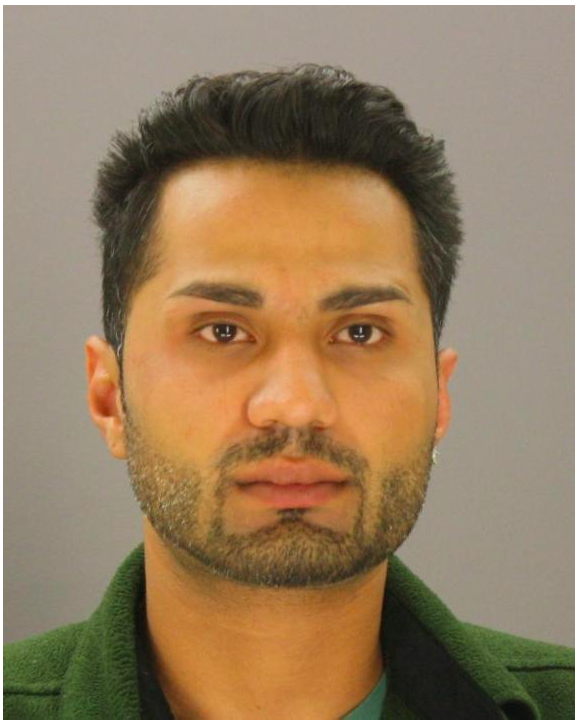
    DALLAS (TIP): An Indian American in Texas shot dead his friend in a deadly game of Russian Roulette.

    Vikram Virk, 27, and 18-year-old Jaskaran Singh were playing Russian roulette in Virk’s car in the parking lot of a Dallas Red Roof Inn motel on Saturday, June 13,  when the game took an inevitable turn for the worse.

    Virk told police that he and Singh were taking turns firing the gun at each other, reported numerous local outlets.

    According to details provided in an arrest affidavit, Virk was sitting in a car with Singh outside the Red Roof Inn at 13685 North Central Expressway late Saturday afternoon, reported WFAA, a local ABC affiliate.

    Virk said he emptied his gun and handed it to Singh, who pulled the trigger twice; the weapon did not fire.

    When Virik took his turn pulling the trigger on his friend, the gun fired the second time, fatally hitting Singh in the head.

    Virk rushed Singh to a local hospital, where Singh died. Hospital personnel recovered the handgun used to shoot Singh from Virk’s car and turned it over to police, according to CBS News. He initially said Singh shot himself, according to police, but during questioning allegedly admitted that he killed his friend.

    Russian roulette is a potentially lethal game of chance in which a player places a single round in a revolver, spins the chamber, places the muzzle against his or her head, and pulls the trigger.

    Police have charged Virk with manslaughter. He is being held on $150,000 bond.


  • India set to ramp up engagement with Tehran

    NEW DELHI (TIP): India is reopening its engagement with Tehran even as a game-changing nuclear deal between Iran and world powers looks potentially around the corner. After Nitin Gadkari’s visit to the Iranian capital in May to sign an MOU on the Chahbahar port, foreign secretary S Jaishankar will be in Tehran on Saturday for political consultations.

    While India had reduced its oil imports from Iran during the US sanctions, it will be keen to restart the trade relationship as well as push the Iranian leadership to expedite the necessary clearances for building the Chahbahar port. India has even set up a special purpose vehicle (SPV) India Ports Global, to handle the port project.

    India would want to revive its oil interests in Iran as well. India, Afghanistan and Iran have signed a transit agreement, and India is keen to build the connections through Iran into Afghanistan and central Asia. The port and its attendant railway lines, once built, would give India an alternative to Pakistan’s Karachi port.

    Foreign minister Sushma Swaraj has already said she would be visiting Iran in the coming weeks for bilateral and NAM consultations. After engaging its immediate neighbourhood and east Asia, the Indian government is working on the Connect Central Asia project.

    Prime Minister Modi will be visiting all the five “Stans” during his trip to Ufa, Russia for the BRICS summit.

  • UKRAINE SAYS IT MAY FREEZE DEBT PAYMENTS TO FUND WAR

    UKRAINE SAYS IT MAY FREEZE DEBT PAYMENTS TO FUND WAR

    KIEV (TIP): Ukraine’s premier warned Friday that Kiev would freeze its debt repayments if no immediate deal was found with private lenders because it had to fund its escalating campaign against pro-Russian fighters.

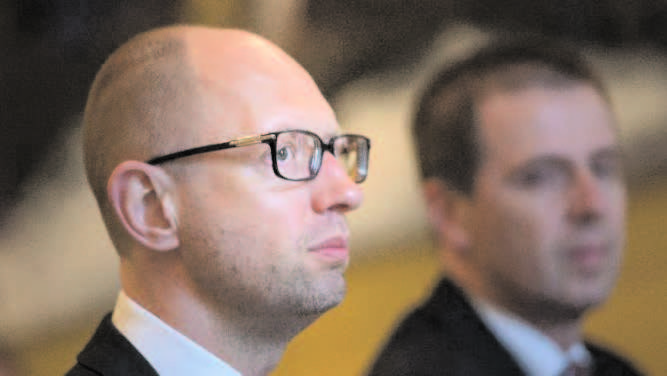
    Prime Minister Arseniy Yatsenyuk said on his return from a crunch visit to Washington that the International Monetary Fund had given his embattled government a few weeks’ reprieve to enact laws needed for the release of new loans.

    But the Western-backed cabinet leader said the Fund had signalled its willingness to let Ukraine restructure debts at its own pace — and that interest payments to Western commercial lenders and Russia may stop as early as next week.

    “Today, Ukraine spends as much on foreign and domestic debt servicing as it does on defence,” Yatsenyuk told a government meeting.

    “The budget can no longer afford it — and not just the budget. The Ukrainian people can no longer live like this,” he said.

    “We will not take money out of Ukrainians’ pockets to pay foreign debts.”

    An upsurge in fighting that has claimed at least 40 lives since last week has rattled a shaky truce deal the foes and Russia had signed off on under strong EU pressure in February.

    Foreign monitors have since accused both sides of pulling their heaviest weapons back up to the front in apparent preparation for a return of full-scale warfare in the 14-month eastern campaign.

    Growing security concerns have been compounded by seemingly deadlocked talks with foreign creditors who soaked up Ukrainian Eurobonds in far more peaceful times.

    Kiev is up against seasoned financial heavyweights such as Franklin Templeton and other titans who believe that Ukraine has the funds stashed away in its central bank to repay its debts in full.

    Ukraine’s Finance Minister Natalie Jaresko has firmly refused to do so — a position that has left the private lender increasingly anxious and Russia visibly irate.

    “We are deeply concerned about the stance (Jaresko) is taking, which is not in the interests of Ukraine,” Kiev’s four biggest commercial lenders warned in a joint statement yesterday.

    And Russia said it may ask the International Court of Justice in The Hague to declare Ukraine in default if it fails to make a scheduled USD 75-million (66.5-million-euro) interest payment on June 20.

    Jaresko and Yatsenyuk mainly want to see the IMF back the quick release of a USD 1.7-billion loan that forms part of a USD 40-billion package the Fund and Ukraine’s foreign allies have patched up for the coming four years.

  • The Ukraine imbroglio

    The G-7 nations put on a brave face against Russia at a summit held this week in the Bavarian Alps and decided to continue their sanctions against President Vladimir Putin for what they called his war in Ukraine. U.S. President Barack Obama in fact accused Mr. Putin of “wrecking his country in pursuit of a wrong-headed desire to recreate the glories of the Soviet empire”. Russia countered by warning that it would prolong its own counter-sanctions, indicating there would not be any change in its Ukraine policy. While all this is happening, a fresh outbreak of violence between government troops and pro-Russian separatists in eastern Ukraine is threatening to derail a tenuous ceasefire. Ukraine is paying a heavy price for this stand-off. It has lost Crimea to Russia, is fighting a deadly civil war in the east, and its economy is in a state of collapse, it having contracted by nearly 18 per cent in the first quarter of 2015.

    The real crisis of Ukraine is that it is caught in a game of one-upmanship between the West and Russia. The West wants to punish Russia for its annexation of Crimea and for helping separatists in eastern Ukraine. Moscow, on the other hand, sees Western involvement in the ouster of Ukraine’s pro-Moscow President Viktor Yanukovych, and seems determined to resist the North Atlantic Treaty Organisation’s outreach to its backyard. If the West’s real intention is to get Russia to change its policy towards Ukraine, it should rethink its sanctions regime, which has been demonstrably ineffective over the past 15 months. Supporters of the sanctions might argue that those worked in the case of Iran and might work in Russia’s case as well. But Russia is not Iran. It is a geopolitical giant, a former superpower and a huge country that still has substantial leveraging power in Central Asia and Eastern Europe. Given the way policy-making works in the Kremlin, it is illogical to believe that any kind of coercion would work against Mr. Putin. Besides, there is little to suggest that the Western policy of isolating Russia is working at all. More than a year after Russia was suspended from the G-8 following its annexation of Crimea, the leading powers still need Russia to deal with pressing global issues ranging from the Iranian nuclear talks to the Syrian civil war. So a more pragmatic approach would be to start a diplomatic engagement in a mutually conducive environment. The inept handling by both sides of what was a domestic issue in Ukraine has turned it into a regional problem. Left unchecked, the problem could well turn into a war. It is high time the West and Moscow set aside rhetoric and started addressing the problem directly.

  • A way with the world

    A way with the world

    The Prime Minister, Narendra Modi, scored most in foreign policy in his first year in power. No one anticipated Modi’s natural flair for diplomacy, to which he has brought imagination and self-assurance. Modi has been more emphatic than his predecessors in giving improvement of relations with neighbors greater priority. He invited all the SAARC leaders to his swearing-in, to signal that the decisive election victory of a supposedly nationalist party did not denote a more muscular policy towards neighbors. On the contrary, India would take the lead in working for shared regional peace and prosperity.

    Bhutan, the only neighbor that has not politically resisted building ties of mutual benefit, was the first country he visited in June, 2014. He handled his August 2014 visit to Nepal with sensitivity and finesse, and followed it up with exceptional leadership in providing immediate earthquake relief to Nepal in May, 2015. In obtaining Parliament’s approval of the land boundary agreement with Bangladesh in May, 2015, Modi showed his determined leadership again.

    He did falter with Pakistan, seemingly unsure about whether he should wait for it to change its conduct before engaging it, or engage it nevertheless in the hope that its conduct will change for the better in future. He announced foreign-secretary-level talks during Nawaz Sharif’s visit to Delhi, but cancelled them precipitately. He ordered a robust response to Pakistan’s cease-fire violations, yet sent the foreign secretary to Islamabad in March, 2015, on an unproductive SAARC Yatra. Relations with Pakistan remain in flux. In Afghanistan, President Ashraf Ghani’s tilt towards Pakistan and China has challenged the viability of India’s Afghanistan policy. Ghani’s delayed visit to India in April 2015 did not materially alter the scenario for us, but India has kept its cool.

    Modi’s foreign policy premise, that countries give priority today to economics over politics, has been tested in his China policy, which received a course correction. After courting China economically, Modi had to establish a new balance between politics and economics. President Xi’s visit to India in September, 2014, was marred by the serious border incident in Ladakh. Modi showed a sterner side of his diplomacy by expressing serious concern over repeated border incidents and calling for resuming the stalled process of clarifying the Line of Actual Control. During his China visit in May, Modi was even more forthright by asking China to reconsider its policies, take a strategic and long-term view of our relations and address “the issues that lead to hesitation and doubts, even distrust, in our relationship”. He showed firmness in excluding from the joint statement any reference to China’s One Road One Belt initiative or to security in the Asia-Pacific region. The last minute decision to grant e-visas was puzzling, especially as the stapled visa issue remains unresolved. The economic results of his visit were less than expected, with no concrete progress on reducing the huge trade deficit and providing Indian products more market access in China. The 26 “agreements” signed in Shanghai were mostly non-binding MoUs involving the private sector and included the financing of private Indian companies by Chinese banks to facilitate orders for Chinese equipment.

    Modi’s visit to Seychelles, Mauritius and Sri Lanka in March, 2015, signified heightened attention to our critical interests in the Indian Ocean area. Modi was the first Indian prime minister to visit Seychelles in 33 years. His visit to countries in China’s periphery in May, 2015, was important for bilateral and geopolitical reasons. During his visit to South Korea the bilateral relationship was upgraded to a “special strategic partnership’, but Korea nevertheless did not support India’s permanent membership of the United Nations Security Council. Modi’s visit to Mongolia was the first by an Indian prime minister to a country whose position is geopolitically strategic from our point of view.

    Belying expectations, Modi moved decisively towards the United States of America on assuming office. He set an ambitious all-round agenda of boosting the relationship during his September, 2014, visit to Washington. In an imaginative move, he invited Obama to be the chief guest at our Republic Day on January 26, 2015. To boost the strategic partnership with the US, he forged a “breakthrough understanding” on the nuclear liability issue and for tracking arrangements for US-supplied nuclear material. Progress on the defense front was less than expected with four low-technology “pathfinder” projects agreed under the defense technology and trade initiative. The important US-India joint strategic vision for the Asia-Pacific and Indian Ocean region, issued as a stand-alone document, high-lighted the growing strategic convergences between the two countries, with China in view. A special feature of Modi’s September, 2014, US visit was his dramatic outreach to the Indian community, which has since then become a pattern in his visits abroad, whether in Australia, Canada or Beijing. No other prime minister has wooed the Indian communities abroad as Modi has done.

    President Putin’s visit to India in December, 2014, was used to underline politically that Russia remains India’s key strategic partner. Modi was effusive in stating that with Russia we have a “friendship of unmatched mutual confidence, trust and goodwill” and a “Strategic Partnership that is incomparable in content”. He was careful to convey the important message that even as India’s options for defense cooperation had widened today, “Russia will remain our most important defense partner”. Civilian nuclear cooperation with Russia got a boost with the agreement that Russia will build “at least” ten more reactors in India beyond the existing two at Kudankulam. All this was necessary to balance the strengthened strategic understanding with the US and its allies.

    Modi bolstered further our vital relations with Japan, which remains a partner of choice for India. Shinzo Abe announced $35 billion of public and private investment in India during Modi’s visit to Japan in September 2014, besides an agreement to upgrade defense relations.

    Modi’s visit to France and Germany in April, 2015, recognized Europe’s all-round importance to India and was timely. He rightly boosted the strategic partnership with France by ensuring concrete progress in the key areas of defense and nuclear cooperation by announcing the outright purchase of 36 Rafale jets and the MoU between AREVA and L&T for manufacturing high-technology reactor equipment in India. Modi’s bilateral visit to Canada in April, 2015, was the first by an Indian prime minister in 45 years. Bilateral relations were elevated to a strategic partnership and an important agreement signed for long-term supply of uranium to India.

    Relations with the Islamic world received less than required attention during the year, although the Qatar Emir visited India in March, 2015, and the political investment we made earlier in Saudi Arabia aided in obtaining its cooperation to extract our people from Yemen. Gadkari went to Iran in May, 2015, to sign the important agreement on Chabahar. Modi did well to avoid any entanglement in the Saudi-Iran and Shia-Sunni rivalry in West Asia. He met the prime minister of Israel, Benjamin Netanyahu, on the sidelines of the UN general assembly meeting in September, last year, to mark the strength of India-Israel ties. So, Modi’s handling of India’s foreign policy in his first year is impressive. He has put India on the map of the world with his self-confidence and his faith in the nation’s future.

  • India & US clear two ground-breaking defence projects

    India & US clear two ground-breaking defence projects

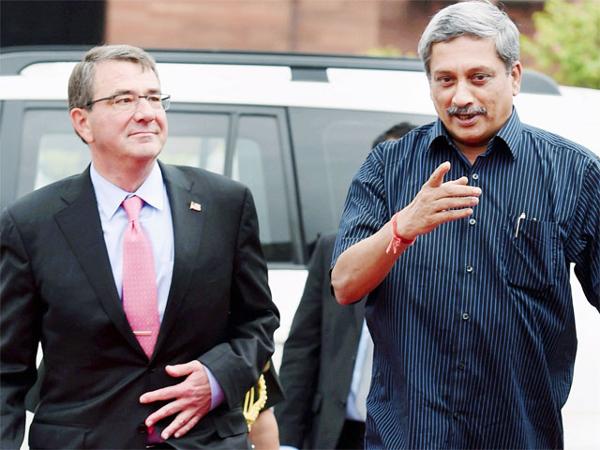
    NEW DELHI: India and the United States have sealed an agreement to jointly develop protective gear for soldiers against biological and chemical warfare, and another on building generators, defence officials said on Wednesday.

    The projects were cleared as US defence secretary Ashton Carter held talks with Indian leaders to expand security ties between the countries that were on opposite sides of the Cold War but have since drawn closer against the rising weight of China.

    The United States has become one of the top sources of weapons for the Indian military, upstaging Russia in recent years, and now under Prime Minister Narendra Modi’s “Make-in-India” programme offered joint development and production of military technologies.

    While the two projects approved are modest in scale, India and the United States are also exploring collaboration at the higher end of technology, Carter told reporters.

    “We have big ambitions, and jet engines, aircraft carrier technology are big projects that we’re working very hard on,” he said.

    Carter is due to sign a new 10-year defence cooperation pact with defence minister Manohar Parikkar later on Wednesday that will include cooperation in maritime security, another official said.

    The two countries conduct annual naval exercises in the Indian Ocean where China has made forays in recent years in a sign of its expanding reach.

    Both the project on protective clothing for soldiers as well developing the next generation power source for the battlefield will each have $1 million in funding shared equally by the two sides, a US defence official said.

    “We’ve negotiated texts, we’ve agreed to texts and they’ll be signed into effect at the end of this month. We went from flash to bang, meaning from the joint statement in January to agreed to and signed texts in just under five months,” the official said.

    The other two projects under the Defense Technology and Trade Initiative that Carter himself launched before his elevation as defense secretary relate to Raven mini-UAVs and surveillance modules for the C-130J military transport plane.

    India is also eyeing US aircraft launch technology for a carrier it plans to build to replace an ageing British warship. The two sides have set up a working group to explore cooperation and the defence official said military officials will meet later this month in the United States.

    “We have the pre-eminent aircraft carriers in the world. They are excited about possible collaboration. There are multiple areas of possible collaboration. It’s a huge platform,” the US official said.

  • Russia steps up propaganda push with online ‘Kremlin trolls’

    Russia steps up propaganda push with online ‘Kremlin trolls’

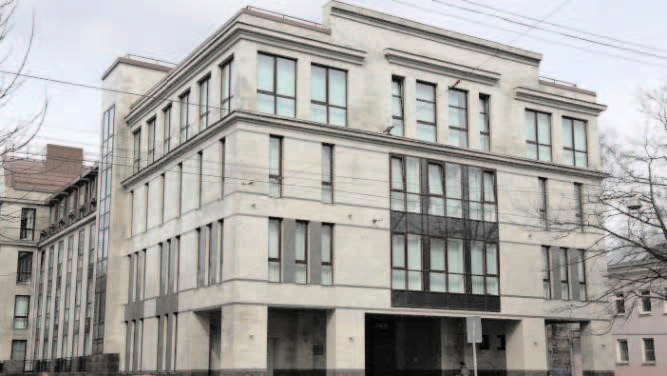
    ST PETERSBURG (RUSSIA) (TIP): Deep inside a four-story marble building in St Petersburg, hundreds of workers tap away at computers on the front lines of an information war, say those who have been inside. Known as “Kremlin trolls”, the men and women work 12-hour shifts around the clock, flooding the internet with propaganda aimed at stamping President Vladimir Putin’s world vision on Russia, and the world.

    The Kremlin has always dabbled in propaganda, but in the past year its troll campaign has gone into overdrive, adding hundreds of online operatives to help counter Western pressure over its role in the pro-Russian insurgency in eastern Ukraine. The program is drawing Serbia away from its proclaimed EU membership path and closer to the Russian orbit, and is targeting Germany, the United States and other Western powers. The operation has worried the European Union enough to prompt it to draw up a blueprint for fighting Russia’s disinformation campaign, although details have not yet been released.

    Lyuda Savchuk, a single mother with two children, worked in the St Petersburg “troll factory” until mid-March. The 34-year-old journalist said she had some idea of the Orwellian universe she was entering when she took the job, but underestimated its intensity and scope.

    “I knew it was something bad, but of course I never suspected that it was this horrible and this large-scale,” she said in an interview in her apartment, which has colorful drawings on the walls for her two preschool-age children.

    She described how the trolls manage several social media accounts under different nicknames, such as koka-kola23, green—margo and Funornotfun. Those in her department had to bash out 160 blog posts during a 12-hour shift. Trolls in other departments flooded the internet with doctored images and pro-Putin commentary on news stories that crop up on Russian and western news portals.

    In some departments, she said, the trolls receive daily talking points on what to write and what emotions to evoke. “It seems to me that they don’t know what they are doing,” Savchuk said. “They simply repeat what they are told.”

    She said most of the trolls are young and are attracted by relatively high monthly salaries of 40,000 to 50,000 rubles ($800 to$1,000).

    Her descriptions of the work coincide with those of other former trolls who have spoken publicly, although Savchuk is one of the few willing to have her full name published. She quit after a little more than two months, after finding she couldn’t stand being part of a propaganda machine.

    The trolls are employed by internet Research, which Russian news reports say is financed by a holding company headed by Putin’s friend and personal chef. Those who have worked there say they have little doubt that the operation is run from the Kremlin.

    St Petersburg journalist Andrei Soshnikov, who was one of the first to report on the “troll factory,” said about 400 people work in the building. A video he posted on YouTube this spring gave a rare glimpse inside the building; in one room trolls were shown sitting shoulder-to-shoulder at their computers. The operation moved into the building when it expanded in March 2014, the month Russia seized Crimea from Ukraine and provoked the first round of Western economic sanctions.

  • Russia warns Google, Twitter and Facebook on law violations

    MOSCOW/FRANKFURT (TIP): Russia’s media watchdog has written to Google, Twitter and Facebook warning them against violating Russian Internet laws and a spokesman said on May 21 they risk being blocked if they do not comply with the rules.

    Roskomnadzor said it had sent letters this week to the three U.S.-based Internet firms asking them to comply with Internet laws which critics of President Vladimir Putin have decried as censorship.

    “In our letters we regularly remind (companies) of the consequences of violating the legislation,” said Roskomnadzor spokesman Vadim Ampelonsky.

    He added that, because of the encryption technology used by the three firms, Russia had no way of blocking specific websites and so could only bring down particular content it deemed in violation of law by blocking access to their whole services.

    To comply with the law, the three firms must hand over data on Russian bloggers with more than 3,000 readers per day, and take down websites that Roskomnadzor sees as containing calls for “unsanctioned protests and unrest”, Ampelonsky said.

    Putin, a former KGB spy, once described the Internet as a project of the CIA, highlighting deep distrust between Moscow and Washington, whose ties are now badly strained.

    He promised late last year not to put the Internet under full government control, but Kremlin critics see the Internet laws as part of a crackdown on freedom of speech since Putin returned to the Kremlin for a third term in 2012.

    A law passed last year gives Russian prosecutors the right to block without a court decision websites with information about protests that have not been sanctioned by authorities.

    Under other legislation, bloggers with large followings must go through an official registration procedure and have their identities confirmed by a government agency.

    Facebook says it responds to government data requests about its users that comply with company policies and local laws and meet international standards of legal process.

    A company website that publishes statistics on how Facebook handles data requests shows it rejected both of two Russian government requests for information on its users last year. In contrast, it produced some data in response to nearly 80 percent of over 14,000 requests made by U.S. courts, police and government agencies in the second six months of 2014.

    Twitter had a similar response rate in the United States but rejected 108 Russian government requests in the second half of last year, according to data on the company’s government Transparency Report site.

    In its semi-annual Transparency Report, Google said it provided some information on users in response to 5 percent of 134 Russian government requests made in the second half of 2014 — again far less than in the United States. The company says it complies with requests that follow accepted legal procedures and Google policies. “We realize they are registered under U.S. jurisdiction. But I think in this case they should demonstrate equal respect to national legislation,” Ampelonsky said.

    If the companies do not pay more attention to Russian government requests for data, he added, “we will need to apply sanctions”.

  • India at 100 on human capital index, Finland leads pack

    GENEVA (TIP): India has been ranked at a lowly 100 position on the global Human Capital Index, which measures countries on development and deployment of human capital.

    Finland has topped the 124-nation list. India is ranked lower than all its BRICS peers — Russia, China, Brazil and South Africa – – and smaller neighbours like Sri Lanka, Bhutan and Bangladesh. But Pakistan follows at 113.

    In the top 10 of the list, compiled by the World Economic Forum (WEF), Finland is followed by Norway, Switzerland, Canada, Japan, Sweden, Denmark, the Netherlands, New Zealand and Belgium. WEF said the list has been compiled on the basis of 46 indicators about “how well countries are developing and deploying their human capital, focusing on education, skills and employment”. “It aims to understand whether countries are wasting or leveraging their human potential,” it added.

    On India, the report said that although the educational attainment has improved markedly over different age groups, its youth literacy rate is still only 90 per cent, well behind the rates of other emerging economies.

  • Strategic Autonomy as an Indian Foreign Policy Option

    Strategic Autonomy as an Indian Foreign Policy Option

    [quote_right]For a large country like India, which has the potential of becoming a big power in the future, strategic autonomy is a compelling choice. By virtue of its demographic, geographic, economic and military size, India must lead, but does not have yet the comprehensive national power to do so. It cannot subordinate itself to the policies and interests of another country, however powerful, as its political tradition and the functioning of its democracy will not allow this. India may not be strong enough to lead, but it is sufficiently strong not to be led”, says the author.[/quote_right]

    In the joint statement issued during the Indian prime minister’s visit to France in April, the two sides reaffirmed “their independence and strategic autonomy” in joint efforts to tackle global challenges. In the French case, as a member of NATO it is not so clear what strategic autonomy might mean, but in our case it would essentially mean independence in making strategic foreign policy decisions, and, consequently, rejecting any alliance relationship. It would imply the freedom to choose partnerships as suits our national interest and be able to forge productive relationships with countries that may be strategic adversaries among themselves.

    In practical terms, this means that India can improve relations with the United States of America and China while maintaining close ties with Russia. It can forge stronger ties with Japan and still seek a more stable relationship with China. It can forge strong ties with Israel and maintain very productive ties with the Arab world, including backing the Palestinians in the United Nations. It means that India can have strategic partnerships with several countries, as is the case at present with the US, France, Germany, the United Kingdom, the European Union, Russia, China, Japan, Brazil, Saudi Arabia, Australia, Canada, Kazakhstan, Afghanistan, Vietnam, Iran and the like.

    It means that India can be a member of BRICS and the RIC dialogues, as well as IBSA, which exclude the West, and also forge closer political, economic and military ties with the Western countries. Our strategic autonomy is being expressed in other ways too. India is a democracy and believes that its spread favors its interests, but it is against the imposition of democracy by force on any country. If the spread of democracy is in India’s strategic interest, using force to spread it is against its strategic interest too, as is shown by the use of force to bring about democratic changes in West Asia by destroying secular authoritarian regimes and replacing them with Islamic authoritarian regimes. Likewise, India believes in respect for human rights, but is against the use of the human rights agenda to further the geo-political interests of particular countries, essentially Western, on a selective basis.

    For a large country like India, which has the potential of becoming a big power in the future, strategic autonomy is a compelling choice. By virtue of its demographic, geographic, economic and military size, India must lead, but does not have yet the comprehensive national power to do so. It cannot subordinate itself to the policies and interests of another country, however powerful, as its political tradition and the functioning of its democracy will not allow this. India may not be strong enough to lead, but it is sufficiently strong not to be led.

    India preserved its strategic autonomy even in the face of severe technology sanctions from the West on nuclear and missile issues. It preserved it by not signing the non-proliferation treaty and continuing its missile program. By going overtly nuclear in 1998, India once again exercised its strategic autonomy faced with attempts to close the doors permanently on its nuclear program by the permanent extension of the NPT and the comprehensive nuclear test ban treaty and fissile material cutoff treaty initiatives.

    In some quarters in India and abroad, the idea of strategic autonomy is contested as another manifestation of India’s non-aligned mindset, its propensity to sit on the fence, and avoid taking sides and assuming responsibility for upholding the present international order as a rising power should. These critics want India to join the US camp more firmly to realize its great power ambitions. These arguments ignore the reality that while the US has been crucial to China’s economic rise, China has been sitting on the fence for many years, even as a permanent member of the UN security council. Far from sacrificing its strategic autonomy, it has become a strategic challenger of the US.

    To be clear, the US government has officially stated its respect for India’s position on preserving its strategic autonomy, and denies any expectation that India would establish an alliance kind of relationship with it. It is looking for greater convergence in the foreign policies of the two countries, which is being realized.

    During Narendra Modi’s visit to the US in September, 2014, and Barack Obama’s visit to India in January this year, a strategic understanding on Asia Pacific and Indian Ocean issues, encapsulated in the January 2015 joint strategic vision for the Asia Pacific and the Indian Ocean has emerged. This document suggests a shift in India’s strategic thinking, with a more public position against Chinese maritime threat and a willingness to join the US in promoting partnerships in the region.

    Modi chose a striking formulation in his joint press conference with Obama in September when he said that the US was intrinsic to our Look East and Link West policies, which would suggest a growing role for the US in our foreign policy thinking. During Obama’s January visit, the joint statement noted that India’s Act East policy and the US rebalance to Asia provided opportunities for India, the US and other Asia-Pacific countries to work closely to strengthen regional ties. This was the first time that India implicitly endorsed the US rebalance towards Asia and connected our Act East policy to it.

    Rather than interpreting it as watering down our strategic autonomy, one can see it as strengthening it. So far, India has been hesitant to be seen drawing too close strategically to the US because of Chinese sensitivities. China watches closely what it sees are US efforts to rope India into its bid to contain China. At the same time, China continues its policies to strengthen its strategic posture in India’s neighborhood and in the Indian Ocean at India’s expense, besides aggressively claiming Indian territory.

    By strengthening relations with the US (which is strategically an Asian power), Japan and Vietnam, and, at the same time, seeking Chinese investments and maintaining a high-level dialogue with it, India is emulating what China does with India, which is to seek to build overall ties as much as possible on the economic front, disavow any negative anti-India element in its policies in our neighborhood, but pursue, simultaneously, strategic policies intended to contain India’s power in its neighborhood and delay its regional extension to Asia.

    In discussing the scope of our strategic autonomy, one should recognize that the strength of US-China ties, especially economic and financial, far exceeds that of India-US ties. India has to be careful, therefore, in how far it wants to go with the US with a view to improving its bargaining power with China. The other point to consider is the US-Pakistan equation. The US has just announced $1 billion of military aid to Pakistan; its position on the Taliban is against our strategic interests in Afghanistan; its stand on Pakistan’s sponsorship of terrorism against us is not robust enough.

    To conclude, strategic autonomy for India means that it would like to rely as far as possible on its own judgment on international issues, balance its relations with all major countries, forge partnerships with individual powers and take foreign-policy positions based on pragmatism and self-interest, and not any alliance or group compulsion.

    (The author is former foreign secretary of India. He can be reached at sibalkanwal@gmail.com)

  • Prosecuting those responsible for MH17 crash key priority: Dutch minister

    Prosecuting those responsible for MH17 crash key priority: Dutch minister

    HAGUE (TIP): Prosecuting those responsible for shooting down Malaysia Airlines flight MH17 over Ukraine, killing all 298 passengers and crew —193 of them Dutch — is a key priority for the Netherlands, the justice minister said April 16.

    The Boeing 777 was shot down over war-torn eastern Ukraine in July last year.

    Kiev and the West have claimed that separatists, using a BUK surface-to-air missile supplied by Russia, were responsible, a charge denied by Moscow, which has in turn pointed the finger at Kiev.

    “Now that we are at an advanced stage of the repatriation mission, the (criminal) investigation and prosecution will occupy a more central place,” Dutch Justice Minister Ard van der Steur, said in a statement.

    Van der Steur and Dutch Foreign Minister Bert Koenders met Thursday on the sidelines of a cyber security summit in The Hague with delegates from countries affected by the disaster, including Malaysia and Australia as well as Ukraine.

    The Netherlands has taken the lead in the investigation into the cause of the incident and identifying the victims of the flight from Amsterdam to Kuala Lumpur.

    A preliminary report in September, which apportioned no blame, said the plane “broke up in the air probably as the result of structural damage caused by a large number of high-energy objects that penetrated the aircraft from outside”. A final report is due in the summer.

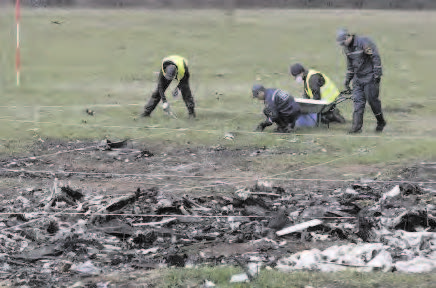
    Also on April 16 Dutch investigators recovered more body parts from the crash site after searching a location that was previously inaccessible because of clashes between pro-Russian separatists and the Ukrainian army.

    The fighting has lessened in intensity since a February ceasefire, paving the way for the investigators to continue their work, and Thursday’s operation focused on Petropavlivka, about 10 kilometres (six miles) west of Grabove where most of the debris fell.

    “The mission was again able to recover human remains and personal effects at two sites,” Jean Fransman, a spokesman for the Department of Justice, told media.

    “Personal effects were given to the members of the mission by the local population: it was jewellery,” the ministry added in a statement.

    Last year’s searches of the area had also turned up body parts, personal effects and pieces of the plane’s wreckage.

    The remains of all but two victims, both Dutch, have been identified.

  • Nuclear Fears in South Asia – Pak Vs Ind

    Nuclear Fears in South Asia – Pak Vs Ind

    The world’s attention has rightly been riveted on negotiations aimed at curbing Iran’s nuclear program. If and when that deal is made final, America and the other major powers that worked on it — China, Russia, Britain, France and Germany — should turn their attention to South Asia, a troubled region with growing nuclear risks of its own. 

    Pakistan, with the world’s fastest-growing nuclear arsenal, is unquestionably the biggest concern, one reinforced by several recent developments. Last week, Pakistan’s prime minister, Nawaz Sharif, announced that he had approved a new deal to purchase eight diesel-electric submarines from China, which could be equipped with nuclear missiles, for an estimated $5 billion. Last month, Pakistan test-fired a ballistic missile that appears capable of carrying a nuclear warhead to any part of India. And a senior adviser, Khalid Ahmed Kidwai, reaffirmed Pakistan’s determination to continue developing short-range tactical nuclear weapons whose only purpose is use on the battlefield in a war against India.

    These investments reflect the Pakistani Army’s continuing obsession with India as the enemy, a rationale that allows the generals to maintain maximum power over the government and demand maximum national resources. Pakistan now has an arsenal of as many as 120 nuclear weapons and is expected to triple that in a decade. An increase of that size makes no sense, especially since India’s nuclear arsenal, estimated at about 110 weapons, is growing more slowly. 

    The two countries have a troubled history, having fought four wars since independence in 1947, and deep animosities persist. Prime Minister Narendra Modi of India has made it clear that Pakistan can expect retaliation if Islamic militants carry out a terrorist attack in India, as happened with the 2008 bombing in Mumbai. But the latest major conflict was in 1999, and since then India, a vibrant democracy, has focused on becoming a regional economic and political power.

    At the same time, Pakistan has sunk deeper into chaos, threatened by economic collapse, the weakening of political institutions and, most of all, a Taliban insurgency that aims to bring down the state. Advanced military equipment — new submarines, the medium-range Shaheen-III missile with a reported range of up to 1,700 miles, short-range tactical nuclear weapons — are of little use in defending against such threats. The billions of dollars wasted on these systems would be better spent investing in health, education and jobs for Pakistan’s people.

    Even more troubling, the Pakistani Army has become increasingly dependent on the nuclear arsenal because Pakistan cannot match the size and sophistication of India’s conventional forces. Pakistan has left open the possibility that it could be the first to use nuclear weapons in a confrontation, even one that began with conventional arms. Adding short-range tactical nuclear weapons that can hit their targets quickly compounds the danger.

    Pakistan is hardly alone in its potential to cause regional instability. China, which considers Pakistan a close ally and India a potential threat, is continuing to build up its nuclear arsenal, now estimated at 250 weapons, while all three countries are moving ahead with plans to deploy nuclear weapons at sea in the Indian Ocean.

    This is not a situation that can be ignored by the major powers, however preoccupied they may be by the long negotiations with Iran.

  • Bringing Yemen’s tragedy to an end – Need for a fair Shia-Sunni deal

    The civil war in Yemen, exacerbated by the intervention of outside powers, is poised at a delicate stage which could impinge on the larger picture of the Middle East’s future trajectory. The truth is that the poorest country in the region lies along several fault lines.

    They are the Shia-Sunni schism in the Muslim world, the rivalry between Saudi Arabia and Iran, the interest of outside powers such as the United States and the major European trading nations and the broader state of US-Russian relations. Despite its appeals, the United Nations is, for the present, a spectator, rather than an effective actor.

    The military intervention of Saudi Arabia and its Gulf allies by launching air strikes on Houthi rebels in Yemen, who are aided by Iran and are in the process of capturing the better part of the country, has complicated the picture. In a sense, it was inevitable because Riyadh could hardly stand aside even as a Shia sect set about conquering a Sunni majority country. The Saudis are now demanding the surrender of the Houthis before stopping their bombing runs.

    The United States is helping the Saudis by providing logistical and other technical assistance, a delicate dance for US Secretary of State John Kerry. He decries Iranian help to the Houthis. Tehran denies even as he eyes a landmark deal with Iran on its nuclear program. Pakistan, on its part, is facing a cruel dilemma in accepting the Saudi demand to join the intervention against the backdrop of its substantial Shia population at home.

    For Pakistan, the dilemma is of a state beholden to Riyadh for its generous subsidies. A contingent of Pakistani troops is permanently stationed in Saudi Arabia in part payment for Saudi goodies. Prime Minister Nawaz Sharif himself is beholden to the Saudis for saving him from possible execution in the days of Gen Pervez Musharraf rule, first giving him refuge and then re-injecting him into the Pakistani political scene.

    Grave as the dilemmas for Pakistan are, the larger picture is more menacing because of the fault lines. The most salient is the Saudi-Iranian contest in the Middle East in which Tehran is seeking to spread its wings through fortuitous circumstances and its own activism. Thanks to the American invasion of Iraq, the latter, with its Shia majority, ultimately fell into its lap. Iran is well placed in Lebanon with its allied Hezbollah movement in a confessional division of political factions.

    Bahrain remains a tempting target because it is ruled by a Sunni monarch underpinned by Saudi power over a Shia majority. Saudi apprehension over the proposed nuclear deal with Iran, shared by Israel, is that it would give Tehran greater opportunities to strengthen its regional role.

    As if the picture were not complicated enough, the growth of Sunni extremists, first in the form of Al-Qaida and its affiliates, then their evolution into ISIS and ultimately into a caliphate holding territory in the shape of the Islamic State (IS), is a fact of life. Americans have reluctantly returned to the region by undertaking bombing runs on the IS and are ironically on the same side as Iran in trying to attain this goal.

    How then is the world, or the major powers, to unscramble the mess because of the very nature of the crises? If relations between the United States and Russia were not as frigid as they are over Ukraine and other issues, they could have joined hands to bring about at least a temporary ceasefire in Yemen. After all, in the five plus one (UN Security Council permanent members plus Germany) format of talks on Iran’s nuclear program, Russia was a participant. But the prevailing animosities in what was once the Big Two make the going tough.

    Individuals and circumstances have contributed to creating the Yemen crisis. Mr. Ali Abdullah Saleh, the long-time dictator, was eased out of office with the help of Gulf monarchies in the wake of the short-lived Arab Spring in 2011. He was nursing his wounds while keeping his powder dry and still had ambitions – for son, if not for himself. He chose to ally with the Houthis while still retaining the loyalty of sections of the country’s armed forces.

    Houthis, who traditionally control the north of the country, were ready to revolt against the Sanaa dispensation presided over by an unimpressive Sunni imposed by Saudis. They felt their interests were being sacrificed and, thanks to Saleh’s support, they had the strength to overrun the capital and even try to take over Aden, the principal city of South Sudan.

    The nature of the strikes being what it is, there are reports of increasing civilian casualties. Although some humanitarian aid has now got in and India, among other countries, has managed to evacuate most of its citizens, international demands are growing by the day to stop the bombing runs and seek a political solution.

    Houthis, being a minority, cannot hope to rule Yemen. Yet, given the military prowess they have demonstrated, they will insist on a fair share of the national cake in any future framework agreement. Saudi Arabia shares a long border with Yemen and will not tolerate a Shia-dominated dispensation despite the earlier long rule of Mr. Saleh, himself a Houthi.

    For its part, Iran has already suggested that the Saudi-led action is a “mistake” and the United States is seeking to maintain a balance between the hoped-for nuclear deal with Iran and warnings to Tehran to refrain from aiding the Houthis. Ultimately, the problem will land in the lap of the United Nations, but the question is how much longer the process will take and how long the regional contestants will drag their feet before a truce is called.

    The scale of the fighting and deaths is leading to growing demands for a ceasefire. The Saudis have made their point that there cannot be a Shia-dominated dispensation along its shared border. But a compromise must include a fair sharing of power with Houthis.

  • US targets overseas cyber attackers with new sanctions program

    US targets overseas cyber attackers with new sanctions program

    WASHINGTON (TIP): The Obama administration on April 1 launched the first-ever sanctions program to financially punish individuals and groups outside the United States that are engaged in malicious cyber attacks.

    US President Barack, in an executive order, declared such activities a “national emergency” and allowed the US Treasury to freeze the assets and bar other financial transactions of entities engaged in cyber attacks.

    Under the program, first reported by the Washington Post, cyber attackers or those who conduct commercial espionage in cyberspace can be listed on the official sanctions list of specially designated nationals, a deterrent long-sought by the cyber community.

    The move, which the paper said has been in development for two years, comes after a string of high-profile cyber attacks ranging from corporate hacks targeting Target, Home Depot and other retailers, to an attack on Sony and other data breaches.

    Subjecting cyber criminals, companies that benefit from commercial espionage and even foreign intelligence operatives, to tough financial sanctions could have a “momentous” effect in deterring the growing number of cyber attacks seen daily on US networks, said Dmitri Alperovitch, chief technology officer of Crowdstrike, a cybersecurity firm.

    “Today, the White House is making yet another huge leap forward in the effort to raise the cost to our cyber adversaries and establish a more effective deterrent framework to punish actors engaged in serious intentional destructive or disruptive attacks,” Alperovitch wrote in a blog posted on the company’s website.

    The executive order gives the administration the same sanctions tools it now deploys to address other threats -including crises in the Middle East and Russia’s aggression in Ukraine – and makes them available for less visible cyber threats. The program could prompt a strong reaction from China. Cybersecurity has been a significant irritant in US-China ties, with US investigators saying hackers backed by the Chinese government have been behind attacks on US companies, and China rejecting the charges.

    Obama has moved cybersecurity toward the top of his 2015 agenda after recent breaches, and last month, the Central Intelligence Agency announced a major overhaul aimed in part at sharpening its focus on cyber operations.

  • Indian-American Parents of ‘Abducted’ Children Seek US Help

    Indian-American Parents of ‘Abducted’ Children Seek US Help

    WASHINGTON:  Around 60 Indian-Americans have asked the US government and the Congress to consider imposing sanctions on India, alleging that they have “not been able to get justice” from the Indian system in reuniting with their kids who have been “abducted” by their spouses there.

    In all the cases, the “abduction” is by their spouses, who fled to India after marital dispute and got court orders against them.

    All these “abducted” kids are American citizens and in the past few months American lawmakers have joined hands in urging the Obama Administration to consider imposing sanctions on countries like India where the government is not helping them getting back the abducted US kids.

    Nearly a dozen of these Indian-American parents from various parts of the US last week held a series of meetings with officials from the State Department, testified before a Congressional committee, met a large number of lawmakers urging to help them get their kids back to the US.

    They held a candle light vigil at the White House and also went to the Indian Embassy to submit a memorandum to the Indian Government.

    These Indian-American parents are part of the larger group – Bring Our Kids Home – which consists of parents facing the same traumatic problem of “abducted children” in other countries like Pakistan, Russia, Japan  and Greece.

    International Parental Child Abduction (IPCA) is a form of child abuse and a violation of US and International law.

    Several nations have signed the Hague Convention on Civil Aspects of International Parental Child Abductions (“Hague Convention”), India is not a signatory to it. As per State Department reports, between 2012-13 India ranked as the number one non-Hague signatory country, said Ravi Parmar, one of the Indian-American parents.

    A law was passed by US Congress last year after years of inaction on the part of successive US Administrations to enforce existing US laws and Hague Convention obligations.

    “This new law could result in sanctions on those countries that don’t cooperate in returning US children, victims of IPCA,” said Vikram Jagtiani, another parent.

    Most of these Indian-American parents have written multiple letters to both Prime Minister Narendra Modi and External Affairs Minister Sushma Swaraj, but have received no response so far.

    “Why I am not getting my children back. They need to be me,” Bindu Philip, who testified before a Congressional committee last week, told PTI.

    National Center for Missing and Exploited Children (NCMEC) says 86 per cent of all active cases of abductions to India are open two years or more and 51 per cent of all active India related cases are open five years or more. 21 per cent of all India related cases close without the child returning or child turning 18 years.

     
  • SMART MOVES – Modi Government on US & China

    SMART MOVES – Modi Government on US & China

    [vc_row][vc_column][vc_column_text]

    “The Modi government will face the test of managing closer strategic relations with the US, which are in part directed against China, and forging closer ties with China that go against this strategic thrust, besides the reality that China has actually stronger ties with the US than it can ever have with India, though the underlying tensions between the two are of an altogether different order than between India and the US.”


    [/vc_column_text][/vc_column][/vc_row][vc_row][vc_column width=”1/2″][vc_column_text]

    [quote_box_center]China[/quote_box_center] 

    Prime Minister Modi has been quick to court both US and China. His first overtures were to China, prompted no doubt by his several visits there as Chief Minister of Gujarat, Chinese investments in his home state and his general admiration for China’s economic achievements. Beyond this personal element, many in the government and corporate sectors in India believe that our politically contentious issues with China, especially the unresolved border issue, should be held in abeyance and that economic cooperation with that country should be expanded, as India can gain much from China’s phenomenal rise and the expertise it has developed in specific sectors, especially in infrastructure. It is also believed that China, which is now sitting over $4 trillion of foreign exchange reserves, has huge surplus resources to invest and India should actively tap them for its own developmental needs. In this there is continuity in thinking and policy from the previous government, with Modi, as is his wont, giving it a strong personal imprint.

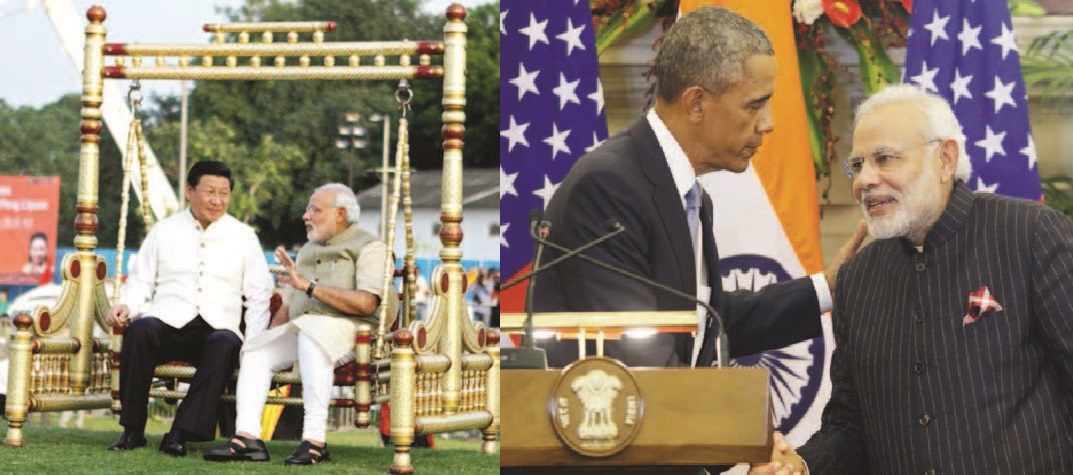
    The first foreign dignitary to be received by Modi after he became Prime Minister was the Chinese Foreign Minister, representing the Chinese President. This was followed by up by his unusually long conversation on the telephone with the Chinese Prime Minister. Our Vice-President was sent to Beijing to celebrate the 60th anniversary of the Panchsheel Agreement even though China has blatantly violated this agreement and India’s high level diplomatic endorsement of it only bolsters Chinese diplomacy, especially in the context of China-created tensions in the South China and East China Seas. Modi had occasion to meet President Xi Jinxing in July at the BRICS summit in July 2014, and this was followed up by the Chinese President’s state visit to India in September 2014, during which the Prime Minister made unprecedented personal gestures to him in an informal setting in Ahmedabad.

    The dramatics of Modi’s outreach to the Chinese aside, his objectives in strengthening economic ties with China, essentially imply a consolidation of the approach followed in the last decade or so, with some course correction here and there. In this period, China made very significant headway in our power and telecom sectors, disregarding obvious security concerns associated with China’s cyber capabilities and the links of Chinese companies to the Chinese military establishment. Many of our top companies have tapped Chinese banks and financial institutions for funds, and this has produced a pro-Chinese corporate lobby in our country. This lobby will obviously highlight the advantages of economic engagement over security concerns. The previous Prime Minister followed the approach of emphasizing shared interests with China rather than highlighting differences. The position his government took on the Depsang incident in May 2013 showed his inclination to temporize rather than confront. Externally, he took the line, which Chinese leaders repeated, that the world is big enough for India and China to grow, suggesting that he did not see potential conflict with China for access to global markets and resources. Under him, India’s participation in the triangular Russia-India-China format (RIC) and the BRICS format continued, with India-originated proposal for a BRICS Development Bank eventually materializing. Indian concerns about the imbalance in trade were voiced, but without any action by China to redress the situation. India sought more access to the Chinese domestic market for our competitive IT and pharmaceutical products, as well as agricultural commodities, without success. Concerns about cheap Chinese products flooding the India market and wiping out parts of our small-scale sector were voiced now and then, but without any notable remedial steps. The Strategic Economic Dialogue set up with China, which focused primarily on the railway sector and potential Chinese investments in India, did not produce tangible results.

    The Manmohan Singh government, despite China’s aggressive claims on Arunachal Pradesh and lack of progress in talks between the Special Representatives on the boundary issue as well as concerns about China’s strategic threats to our security flowing from its policies in our neighborhood, especially towards Pakistan and Sri Lanka, declared a strategic and cooperative partnership with that country. During Manmohan Singh’s visit to China in September 2013, we signed on to some contestable formulations, as, for example, the two sides committing themselves to taking a positive view of and supporting each other’s friendship with other countries, and even more surprisingly, to support each other enhancing friendly relations with their common neighbors for mutual benefit and win-win results. This wipes off on paper our concerns about Chinese policies in our neighborhood. We supported the BCIM (Bangladesh, China, India, Myanmar) Economic Corridor, including people to people exchanges, overlooking Chinese claims on Arunachal Pradesh and the dangers of giving the Chinese access to our northeast at people to people level. The agreement to carry out civil nuclear cooperation with China was surprising, as this makes our objections to China-Pakistan nuclear ties politically illogical. We also agreed to enhance bilateral cooperation on maritime security, which serves to legitimize China’s presence in the Indian Ocean when China’s penetration into this zone poses a strategic threat to us.

    As a mark of continuity under the Modi government, during President Xi Jinxing’s September 2014 visit to India, the two sides agreed to further consolidate their Strategic and Cooperative Partnership, recognized that their developments goals are interlinked and that their respective growth processes are mutually reinforcing. They agreed to make this developmental partnership a core component of their Strategic and Cooperative Partnership. The India-China Strategic Economic Dialogue was tasked to explore industrial investment and infrastructure development.

    To address the issue of the yawning trade imbalance, measures in the field of pharmaceuticals, IT, agro-products were identified and a Five-Year Development Program for economic and Trade Cooperation to deepen and balance bilateral trade engagement was signed. Pursuant to discussions during the tenure of the previous government, the Chinese announced the establishment of two industrial parks in India, one in Gujarat and the other in Maharashtra, and the “Endeavour to realize” an investment of US $ 20 billion in the next five years in various industrial and infrastructure development projects in India, with production and supply chain linkages also in view. In the railway sector, the two sides the two sides agreed to identify the technical inputs required to increase speed on the existing railway line from Chennai to Mysore via Bangalore, with the Chinese side agreeing to provide training in heavy haul for 100 Indian railway officials and cooperating in redevelopment of existing railway stations and establishment of a railway university in India. The Indian side agreed to actively consider cooperating with the Chinese on a High Speed Rail project. In the area of financial cooperation, the Indian side approved in principle the request of the Bank of China to open a branch in Mumbai.

    The Modi government has agreed to continue defense contacts, besides holding the first round of the maritime cooperation dialogue this year, even though by engaging India in this area it disarms our objections to its increasing presence in the Indian Ocean area, besides drawing negative attention away from its policies in the South China Sea as well as projecting itself as a country committed to maritime cooperation with reasonable partners. The joint statement issued during Xi Jinxing’s visit omitted any mention of developments in western Pacific, though it contained an anodyne formulation on Asia-Pacific. This becomes relevant in view of the statements on Asia-pacific and the Indian Ocean region issued during President Obama’s visit to India in January 2015.

    Our support, even if tepid, continues for the BCIM Economic Corridor. On our Security Council permanent membership, China continues its equivocal position, stating that it “understands and supports India’s aspiration to play a greater role in the United Nations including in the Security Council”. It is careful not to pronounce support for India’s “permanent membership”. During Foreign Minister Sushma Swaraj’s visit to China for the RIC Foreign Ministers meeting, China has maintained its equivocation, although the press has wrongly presented the formulation as an advance. China is openly opposed to Japan’s candidature in view of the sharp deterioration of their ties. In India’s case, it avoids creating a political hurdle to improved ties by openly opposing India’s candidature. “A greater role” could well mean a formula of immediately re-electable non-permanent members, of the kind being proposed by a former UN Secretary General and others.

    On counter-terrorism lip service is being paid to cooperation. On Climate Change, the two countries support the principle of “equity, common but differentiated responsibilities and respective capabilities”, although the US-China agreement on emission reduction targets has created a gap in Indian and Chinese positions, with the Modi government deciding to delink itself from China in international discussions to follow.

    In diplomacy, once concessions or mistakes are made, retrieval is very difficult unless a crisis supervenes. The Modi government, for reasons that are not too clear, repeated the intention of the two countries to carry out bilateral cooperation in civil nuclear energy in line with their respective international commitments, which has the unfortunate implication of India circumscribing its own headroom to object to the China-Pakistan nuclear nexus, besides the nuance introduced that China is observing its international commitments in engaging in such cooperation. The calculation that this might make China more amenable to support India’s NSG membership may well prove to be a mistaken one. Surprisingly, stepping back from the Manmohan government’s refusal towards the end to make one-sided statements in support of China’s sovereignty over Tibet when China continues to make claims on Indian territory, the new government yielded to the Chinese ruse in making us thank the “Tibetan Autonomous Region of the People’s Republic of China” as well as the Chinese Ministry of Foreign Affairs – as if both are independent of the Chinese government- for facilitating the Kailash Mansarovar Yatra and opening the new route through Nathu La, even though this is not the  most rational route because it involves a far longer journey, made easier of course by much better infrastructure. On receiving the flood season hydrological date the Chinese have stuck to their minimalist position.

    On the sensitive border issue, the disconnect between the joint statement which repeats the usual cliches and the serious incident in Chumar coinciding with Xi’s visit was obvious. China’s double game of reaching out to India- with greater confidence now as the gap between it and India has greatly widened and it has begun to believe that India now needs China for its growth and development goals- and staging a provocation at the time of a high level visit, continues. This is a way to remind India of its vulnerability and the likely cost of challenging China’s interests, unmindful that its conduct stokes the already high levels of India’s distrust of that country. It went to Modi’s credit that he raised the border issue frontally with XI Jinping at their joint press conference, expressing “our serious concern over repeated incidents along the border” and asking that the understanding to maintain peace and tranquility on the border “should be strictly observed”. He rightly called for resuming the stalled process of clarifying the Line of Actual Control (LAC). While this more confident approach towards China is to be lauded, we are unable to persuade China to be less obdurate on the border issue because we are signaling our willingness to embrace it nonetheless virtually in all other areas.

    That Modi mentioned “India’s concerns relating to China’s visa policy and Trans Border Rivers” while standing alongside Xi Jinping at the joint press conference indicated a refreshing change from the past in terms of a more open expression of India’s concerns. With regard to Bangladesh-China-India-Myanmar Economic Corridor that China is pushing hard, Modi rightly added a caveat by declaring that “our efforts to rebuild physical connectivity in the region would also require a peaceful, stable and cooperative environment”. He also did not back another pet proposal of Xi: the Maritime Silk Road, which is a re-packaged version of the notorious “string of pearls” strategy, as the joint statement omits any mention of it.

    Even as Modi has been making his overall interest in forging stronger ties with China clear, he has not shied away from allusions to Chinese expansionism, not only on Indian soil but also during his visit to Japan. After President Obama’s visit to India and the joint statements on South China Sea and Asia-Pacific issued on the occasion which can be construed as directed at China, Foreign Minister Sushma Swaraj’s recent visit there acquired more than normal interest in watching out for indications of China’s reaction. Her call on Xi Jinping was projected, quite wrongly, as going beyond normal protocol, when in actual fact the Chinese Foreign Minister gets access to the highest levels in India during visits. Swaraj seems to have pushed for an early resolution of the border issue, with out-of-the-box thinking between the two strong leaders that lead their respective countries today. Turning the Chinese formulation on its head, she called for leaving a resolved border issue for future generations.

    That China has no intention to look at any out-of-the-box solution- unless India is willing to make a concession under cover of “original thinking”- has been made clear by the vehemence of its reaction to Modi’s recent visit to Arunachal Pradesh to inaugurate two development projects on the anniversary of the state’s formation in 1987. It has fulminated over the Modi visit over two days, summoning the Indian Ambassador to lodge a protest, inventing Tibetan names for sub-divisions within Arunachal Pradesh to mark the point that this area has been under Tibetan administrative control historically. The Chinese Vice-Foreign Minister arrogantly told our Ambassador that Modi’s visit undermined “China’s territorial sovereignty, right and interests” and “violates the consensus to appropriately handle the border issue.” China is making clear that it considers Arunachal Pradesh not “disputed territory” but China’s sovereign territory. It is also inventing a non-existent “consensus” that Indian leaders will not visit Arunachal Pradesh to respect China’s position. There is a parallel between China’s position on the Senkakus where it accuses the Japanese government to change the status quo and inviting a Chinese reaction, and its latest broadside against India. This intemperate Chinese reaction casts a shadow on Modi’s planned visit to China in May and next round of talks between the Special Representatives (SRs) on the boundary question. If without a strong riposte these planned visits go ahead we would have allowed the Chinese to shift the ground on the outstanding border issue even more in their favor. It would be advisable for our Defense Minister to visit Tawang before Modi’s visit. A very categorical enunciation of our position that goes beyond previous formulations should be made by the Indian side. The Chinese position makes the SR talks pointless, as the terms of reference China is laying down cannot be agreed to by our side.

    [/vc_column_text][/vc_column][vc_column width=”1/2″][vc_column_text]

    [quote_box_center]UNITED STATES[/quote_box_center] 

    Prime Minister Modi, contrary to expectations, moved rapidly and decisively towards the US on assuming office. He confounded political analysts by putting aside his personal pique at having been denied a visa to visit the US for nine years for violating the US law on religious freedoms, the only individual to be sanctioned under this law. The first foreign visit by Modi to be announced was that to the US. Clearly, he believes that strong relations with the US gives India greater strategic space in foreign affairs and that its support is crucial for his developmental plans for India.

    To assess the Modi government’s policies towards the US, the results of his visit to Washington in September 2014 and that of Obama to India in January 2015 need to be analyzed, keeping in mind the approach of the previous government and the element of continuity and change that can be discerned.

    The joint statement issued during his US visit set out the future agenda of the relationship, with some goals clearly unachievable, but the ambitions of the two countries were underscored nonetheless. It was stated that both sides will facilitate actions to increase trade five-fold, implying US-China trade levels, which is not achievable in any realistic time-frame. They pledged to establish an Indo-US Investment Initiative and an Infrastructure Collaboration Platform to develop and finance infrastructure. An agreement on the Investment Initiative was signed in Washington prior to Obama’s visit to India, but bringing about capital reforms in India, which the Initiative aims at, is not something that can be realized quickly. India wants foreign investment in infrastructure and would want to tap into US capabilities in this broad sector, but the US is not in the game of developing industrial corridors like Japan or competitively building highways, ports or airports. Cooperation in the railway sector was identified, but it can only be in some specific technologies because this is the field in which Japan and China are competing for opportunities in India, whether by way of implementing high speed freight corridors or building high speed train networks in the country. India offered to the U.S. industry lead partnership in developing three smart cities, even if the concept of smart cities is not entirely clear. Some preliminary steps seem to have been taken by US companies to implement the concept. The decision to establish an annual high-level Intellectual Property (IP) Working Group with appropriate decision-making and technical-level meetings as part of this Forum was done at US insistence as IPR issues are high on the US agenda in the context of contentious issues that have arisen between the US companies and the Indian government on patent protection, compulsory licensing and local manufacturing content requirements.

    In his joint press briefing with Obama, Modi raised IT related issues, pressing Obama’s support  “for continued openness and ease of access for Indian services companies in the US market”, without obtaining a reaction from  the latter then or later when Obama visited India. On the food subsidy versus trade facilitation stand off in the WTO, Modi maintained his position firmly and compelling the US to accept a compromise. Modi’s firmness on an issue of vital political importance to India showed that he could stand up to US pressure if the country’s interest so demanded. He welcomed “the US defense companies to participate in developing the Indian defense industry”, without singling out any of the several co-development and co-production projects offered by the US as part of the Defense Technology and Trade Initiative (DTTI). Clearly, it was too early to conclude discussions on the US proposals before his September visit.

    The more broad based reference in the joint statement to India and the US intending to expand defense cooperation to bolster national, regional and global security was, on the contrary, rather bold and ambitious, the import of which became clearer during Obama’s January visit. While bolstering such cooperation for national security makes sense, regional security cannot be advanced together by both countries so long as the US continues to give military aid to Pakistan, which it is doing even now by issuing presidential waivers to overcome the provisions of the Kerry-Lugar legislation that requires Pakistan to act verifiably against terrorist groups on its soil before the aid can be released. As regards India-US defense cooperation bolstering global security, securing the sea lanes of communication in the Indian Ocean and the Asia-Pacific region is the obvious context. It was decided to renew for 10 years more the 2005 Framework for US-India Defense Relations, with defense teams of the two countries directed to “develop plans” for more ambitious programs, including enhanced technology partnerships for India’s Navy, including assessing possible areas of technology cooperation.

    The US reiterated its commitment to support India’s membership of the four technology control regimes: the Nuclear Suppliers Group (NSG), the Missile Technology Control Regime (MTCR), the Wassenaar Agreement and the Australia Group, with Obama noting that India met MTCR requirements and is ready for NSG membership, but without setting any time-tables. An actual push by the US in favor of India’s membership has been lacking because of issues of nuclear liability and administrative arrangements have remained unresolved until now and the US has wanted to use their resolution as a leverage. US support for India’s membership of these export control organizations was reiterated during Obama’s January visit, but how quickly the US will move remains unclear even after the political resolution of outstanding nuclear issues.

    The US at one time described India as a lynchpin of its pivot or rebalance towards Asia. The underlying motivation behind the pivot and US interest in drawing India into this strategy is China, though this is not stated publicly in such open terms. India has been cautious about the US pivot towards Asia as its capacity and willingness to “contain” Chinese power has been doubted because of the huge financial and commercial interdependence forged between the two countries. India seeks stable and economically productive relations with China and has wanted to avoid the risk of being used by the US to serve its China strategy that raises uncertainties in the mind of even the US allies in Asia. However, under the Modi government, India has become more affirmative in its statements about the situation in the western Pacific and the commonalities of interests between India and the US and other countries in the Indo-Pacific region. The government has decided to “Act East”, to strengthen strategic ties with Japan and Australia, as well as Vietnam, conduct more military exercises bilaterally with the US armed forces as well as naval exercises trilaterally with Japan. Modi has spoken publicly about greater India-US convergences in the Asia-Pacific region, to the point of calling the US  intrinsic to India’s Act East and Link West policies, a bold formulation in its geopolitical connotations never used before that suggested that India now viewed the US as being almost central to its foreign policy initiatives in both directions.

    On  geopolitical issues, India showed strategic boldness in the formulations that figured in the September joint statement. These laid the ground for more robust demonstration of strategic convergences between the two countries during Obama’s visit later. The reference in September to the great convergence on “peace and stability in the Asia Pacific region” was significant in terms of China’s growing assertiveness there. The joint statement spoke of a commitment to work more closely with other Asia Pacific countries, including through joint exercises, pointing implicitly to Japan and Australia, and even Vietnam. In this context, the decision to explore holding the trilateral India-US-Japan dialogue at Foreign Minister’s level- a proposition that figured also in the India-Japan joint statement during Modi’s visit there- was significant as it suggested an upgrading of the trilateral relationship at the political level, again with China in view.

    On the issue of terrorism and religious extremism, India and the US have rhetorical convergence  and some useful cooperation in specific counter-terrorism issues, but, on the whole, our concerns are  inadequately met because US regional interests are not fully aligned with those of India. The September joint statement called for the dismantling of safe havens for terrorist and criminal networks and disruption of all financial and tactical support for networks such as Al Qaeda, Lashkar-e-Taiba, Jaish-e-Mohammad, the D-company and the Haqqanis, but the Taliban were conspicuously omitted from the list. In any case, such statements against Pakistan-based terrorist groups have been made before but are ignored  by Pakistan in the absence of any real US pressure on it to curb Hafiz Saeed or credibly try Lakhvi despite repeated joint calls for bringing those responsible for the Mumbai terrorist massacre to justice.

    We had a paragraph on Iran in the joint statement in Washington, clearly at US insistence, which the Iranians would have noted with some displeasure. The Modi government is also willing to accommodate the US on Iran within acceptable limits. While the US supports India’s permanent membership of the UN Security Council, the support remains on paper as the US is not politically ready to promote the expansion of the Council.

    At Washington, India and the US agreed on an enhanced strategic partnership on climate change issues, and we committed ourselves to working with the US to make the UN Conference on Climate Change in Paris in December this year a success. This carried the risk of giving a handle to the US to ratchet up pressure to obtain some emission reduction commitments from India, encouraged  diplomatically by the US-China agreement.

    The unusually strong personal element in Modi’s diplomacy towards the US came apparent when during his Washington visit he invited Obama to be the chief guest at our Republic Day on January 26, 2015- a bold and imaginative move characteristic of his style of functioning. That this unprecedented invitation was made was surprising in itself, as was its acceptance by Obama at such short notice. Modi and Obama evidently struck a good personal equation, with the earlier alienation supplanted by empathy. Obama made the unprecedented gesture of accompanying Modi to the Martin Luther King Memorial in Washington, perhaps taking a leaf from the personal gestures made  to Modi in Japan by Prime Minister Abe.

    On the occasion of Obama’s January visit, Modi has moved decisively, if somewhat controversially, on the nuclear front, as this was the critical diplomatic moment to work for a breakthrough to underline India’s commitment to the strategic relationship with the US, which is the way that US commentators have looked at this issue. While in opposition the BJP had opposed the India-US nuclear agreement, introduced liability clauses that became a major hurdle in implementing the commitment to procure US supplied nuclear reactors for producing 10,000 MWs of power, and had even spoken of seeking a revision of the agreement whenever it came to power. During Obama’s  visit, the “breakthrough understandings” on the nuclear liability issue and that of administrative arrangements to track US supplied nuclear material or third party material passing through US supplied reactors, became the highlight of its success, with Modi himself calling nuclear cooperation issues as central to India-US ties. The supplier liability issue seems to have resolved at the level of the two governments by India’s decision to set up an insurance pool to cover supplier liability, as well as a written clarification through a Memorandum of Law on the applicability of Section 46 only to operators and not suppliers. On the national tracking issue the nature of the understanding has left some questions unanswered; it would appear that we have accepted monitoring beyond IAEA safeguards as required under the US law. However, the larger question of the commercial viability of US supplied reactors remains, a point that Modi alluded to in joint press conference. On the whole, whatever the ambiguities and shortfalls, transferring the subject away from government to company level to eliminate  the negative politics surrounding the subject is not an unwelcome development.

    For the US, defense cooperation has been another touchstone for the US to measure India’s willingness to deepen the strategic partnership. While the significant progress expected to be announced under the DTTI during Obama’s visit did not materialize, some advance was made with the announcement of four “pathfinder” projects involving minor technologies, with cooperation in the area of aircraft engines and aircraft carrier technologies to be explored later. The government has already chosen for price reasons the Israeli missile over the Javelin that was part of the several proposals made to India under the DTTI. As expected, the India-US Defense Framework Agreement of 2005 was extended for another 10 years, without disclosing the new text. It is believed  that India is now more open to discussions on the three foundational agreements that the US considers necessary for transfer of high defense technologies to India.

    The US-India Joint Strategic Vision for the Asia-Pacific and Indian Ocean Region signed during the visit is a major document which in the eyes of some reflects India’s move away from the shibboleths of the past associated with nonalignment and the obsession with strategic autonomy. Issuing a separate document was intended to highlight the growing strategic convergences between the two countries, with full awareness of how this might be interpreted by some countries, notably China. It affirms the “importance of safeguarding maritime security and ensuring freedom of navigation and overflight throughout the region , especially in the South China Sea”, while calling also on all parties to avoid the threat or use of force and pursue resolution of territorial and maritime disputes through all peaceful means in accordance with international law, including the Law of the Sea Convention. It speaks, in addition, of India and the US investing in making trilateral countries with third countries in the region, with Japan and Australia clearly in mind. This is a direct message addressed to China, reflecting less inhibition on India’s part both to pronounce on the subject and do it jointly with the US, irrespective of Chinese sensibilities. Some Chinese commentary has criticized this effort by the US to make India part of its containment strategy, without taking cognizance of how India views China’s maritime strategy in the Indian Ocean involving its strategic investments in Sri Lanka, Maldives, Pakistan and other countries. In the joint statement issued during  Obama’s visit, the two sides noted that India’s Act East Policy and the US rebalance to Asia provided opportunities to the two countries to work closely to strengthen regional ties, in what amounted to an indirect endorsement of the US pivot to Asia.

    Obama’s visit also demonstrated the consolidation of the good personal rapport established between him and Shri Modi, with embraces and first name familiarity- possibly overdone on Modi’s part- walk in the park and talk over tea, all of which boosted the prime minister’s personal stature as a man comfortable and confident in his dealings with the world’s most powerful leader on the basis of equality. This personal rapport should assist in greater White House oversight over the Administration’s policies towards India, which experience shows greatly benefits the bilateral relationship.

    Counter-terrorism is always highlighted as an expanding area of India-US cooperation because of shared threats. The joint statement in Delhi spoke dramatically of making the US-India partnership in this area a “defining” relationship for the 21st century. Does this mean that the US will share actionable intelligence on terrorist threats to us emanating from Pakistani soil? This is doubtful. The continued omission of the Afghan Taliban from the list of entities India and the US will work against is disquieting, as it indicates US determination to engage the Taliban, even when it knows that it is Pakistan’s only instrument to exert influence on developments in Afghanistan at India’s cost. The subsequent refusal of the US spokesperson to characterize the Taliban as a terrorist organization and preferring to call it an armed insurgency has only served to confirm this.

    On trade, investment and IPR issues, the two sides will continue their engagement with the impulse given to the overall relationship by the Obama-Modi exchanges. On a high standard Bilateral Investment Treaty the two sides will
    “assess the prospects for moving forward”, which indicates the hard work ahead. On the tantalization agreement the two will “hold a discussion on the elements requires in both countries to pursue” it, a language that is conspicuously non-committal. On IPRs there will be enhanced engagement in 2015 under the High Level Working Group.

    On climate change, we reiterated again the decision to work together this year to achieve a successful agreement at the UN conference in Paris, even when our respective positions are opposed on the core issue of India making specific emission reduction commitments. While stating  that neither the US nor the US-China agreement put any pressure on India, Modi spoke in his joint press conference about pressure on all countries to take steps for the sake of posterity. While  finessing the issue with high-sounding phraseology, he has left the door open for practical compromises with the US.

    As a general point, hyping-up our relations with the US is not wise as it reduces our political space to criticize its actions when we disagree. The previous government made this mistake and the Modi government is not being careful enough in this regard. Obama’s objectionable lecture to us at Siri Fort on religious freedom and his pointed reference to Article 25 of our Constitution, illustrates this. He showed unpardonable ignorance of Indian history and Hindu religious traditions in asking us to “look beyond any differences in religion” because “nowhere in the world is it going to more necessary for that foundational value to be upheld” than in India. To say that “India will succeed so long as it is not splintered around religious lines” was a wilful exaggeration of the import of some recent incidents  and amounted to playing the anti-Hindutva card by a foreign leader prompted by local Christian and “secular” lobbies. Reminding us of three national cinema and sport icons belonging only to minority religions- when their mass adulation is unconnected to their faith- was to actually encourage religiously fissured thinking in our society. On return to Washington Obama pursued his offensive line of exaggerating incidents of religious intolerance in India. On cue, a sanctimonious editorial also appeared in the New York Times. The government could not attack Obama for his insidious parting kick at Siri Fort so as not to dim the halo of a successful visit and therefore pretended that it was not directed at the Modi team. The opposition, instead of deprecating Obama’s remarks, chose to politically exploit them against Modi, as did some Obama-adoring Indians unencumbered by notions of self-respect.

    While giving gratuitous lessons on religious tolerance to the wrong country Obama announced $1 billion civil and military support to Pakistan that splintered from a united India because of religious intolerance in 1947 and has been decimating its minorities since. Obama has also invited the Chinese president to visit the US on a state visit this year, to balance his visit to India and the “strategic convergences” reached there on the Asia-Pacific region. Obama’s claim that the US can be India’s “best partner” remains to be tested as many contradictions in US policy towards India still exist.

    The Modi government will face the test of managing closer strategic relations with the US, which are in part directed against China, and forging closer ties with China that go against this strategic thrust, besides the reality that China has actually stronger ties with the US than it can ever have with India, though the underlying tensions between the two are of an altogether different order than between India and the US.

    [/vc_column_text][/vc_column][/vc_row]

  • Soon, you could drive from Europe to US

    WASHINGTON (TIP): Plans for a new high-speed transport corridor that could potentially link London and New York by rail and superhighway have been unveiled. The idea, dubbed the Trans-Eurasian Belt Development (TERP), would see a high-speed railway and motorway built from Eastern Europe, across Siberia and over the Bering Strait to Alaska. Vladimir Yakunin, the head of Russia’s state railways, told a meeting of the Russian Academy of Sciences that the project could link existing networks and supercharge global economic growth. It would also feature oil and gas pipelines to connect Russia’s petro-industries more directly to the rest of the world. “This is an inter-state, inter-civilization, project. It should be an alternative to the current model, which has caused a systemic crisis. The project should be turned into a world ‘future zone’, and it must be based on leading, not catching, technologies,” he said, according to the Siberian Times newspaper. The plan was developed by the transport boss alongside the rector of Moscow State University, Viktor Sadovnichy and academic Gennady Osipov.

    Alaska is already connected to the US by superhighway through Canada, along the Alaksa Highway — though there is no passenger rail network. The highway links to US interstate network which can take motorists to all corners of the US and beyond.

    In eastern Europe the EU is drawing up plans for a high-speed rail corridor to connect the Baltic states to western Europe’s rail network — which runs through the Channel Tunnel to London. North American passenger rail are comparatively undeveloped. Plans drawn up by President Obama to develop high- speed rail corridors across the US .

  • CHINA NOW WORLD’S THIRD-BIGGEST ARMS EXPORTER: SIPRI

    CHINA NOW WORLD’S THIRD-BIGGEST ARMS EXPORTER: SIPRI

    BEIJING (TIP): China has overtaken Germany to become the world’s third-biggest arms exporter, although its 5 per cent of the market remains small compared to the combined 58 per cent of exports from the US and Russia, a new study says.

    China’s share of the global arms market rose 143 per cent during the years from 2010- 2014, a period during which the total volume of global arms transfers rose by 16 per cent over the previous five years, the Stockholm International Peace Research Institute said in a report released Monday.

    Its share of the world market was up from 3 per cent in the 2009-2014 period, when China was ranked ninth among exporters of warplanes, ships, side arms and other weaponry, said the institute, known as SIPRI.

    The data show the growing strength of China’s domestic arms industry, now producing fourth-generation fighter jets, navy frigates and a wide-range of relatively cheap, simple and reliable smaller weapons used in conflicts around the globe.

    China had long been a major importer of weapons, mainly from Russia and Ukraine, but its soaring economy and the copying of foreign technology has largely reversed the trend, except for the most cutting-edge designs and sophisticated parts such as aircraft engines.

    China supplies weapons to 35 countries, led by Pakistan, Bangladesh and Myanmar, SIPRI said.

    Chinese sales included those of armored vehicles and transport and trainer aircraft to Venezuela, three frigates to Algeria, anti-ship missiles to Indonesia and unmanned combat aerial vehicles, or drones, to Nigeria, which is battling the Boko Haram insurgency in its north.

    China’s comparative advantages include its low prices, easy financing and friendliness toward authoritarian governments, said Philip Saunders, director of the Center for the Study of Chinese Military Affairs at the US National Defense University.

    “Generally speaking, China offers medium quality weapons systems at affordable prices, a combination attractive to cash-strapped militaries in South Asia, Africa and Latin America,” Saunders said.

    Notable successes include a co-production deal with Pakistan to produce the JF-17 fighter, widespread sales of the basic but effective C- 802 anti-ship cruise missile, and an agreement to sell the HQ-9 air defense missile system to Turkey that has run into controversy over its incompatibility with NATO weapons systems.

    China also has exploited niche markets such as North Korea and Iran that the West won’t sell to, emphasizing its attractiveness to impoverished countries and pariah states, said Ian Easton, research fellow at The Project 2049 Institute, an Arlington, Virginia-based Asian security think tank.

    Both those US foes appear to have received satellite jamming and cyber warfare capabilities from China, along with technologies to break into private communications and spy on government opponents, Easton said.

    “All of these sales should be very disconcerting to American policymakers and military leaders,” he said, calling China’s rise to the third-place spot among exporters a “disturbing development” that could threaten the security of the US and its allies.

    China also offers leading-edge drone technology at competitive prices. One model, known variously as the Yilong, Wing Loong or Pterodactyl, has become especially popular with foreign buyers, although Chinese secrecy surrounding such sales makes it difficult to know how many are in service and where.

    Chinese state broadcaster CCTV quoted retired People’s Liberation Army Gen. Xu Guangyu saying at an air show two years ago that the unmanned aircraft, which can be armed with two guided missiles, would cost only about $1 million each. That is about 10 to 20 per cent of the price of a comparable US model such as the MQ-1 Predator. Rumored buyers include the United Arab Emirates, Uzbekistan and Saudi Arabia.

    However, China’s incremental growth and the yawning gap with industry leaders America and Russia show the limitations of its aspirations.

    The US retained a 31 per cent share of the global arms market, exporting to at least 94 recipients, SIPRI said. Countries in Asia and Oceania took 48 per cent of US exports, followed by the Middle East with 32 per cent and Europe at 11 per cent, it said.

    Russia was second with a 27 per cent global share, 39 per cent of which went to India — the world’s largest arms importer overall. China took 11 per cent of Russia’s exports, followed by Algeria.

    SIPRI uses a five-year moving average to account for fluctuations in the volume of arms deliveries from year-to-year and doesn’t provide monetary values, which are often distorted by governments providing weapons as gifts or at below-market prices.

  • Russian military threat – U.S. admiral raises alarm

    Russian military threat – U.S. admiral raises alarm

    Washington (TIP) – The ability of the U.S. and Canadian military to defend North America could be jeopardized by stepped up Russian military activity, according to the commander of the North American Aerospace Defense Command.

    Adm. William Gortney told the Senate Armed Services Committee on Thursday that Russia is continuing to work on its program to deploy “long-range conventionally armed cruise missiles,” that can be launched from its bomber aircraft, submarines and warships. This is giving the Kremlin “deterrent” options “short of the nuclear threshold,” Gortney said.

    “Should these trends continue over time, NORAD will face increased risk in our ability to defend North America against Russian air, maritime and cruise missile threats,” he said.

    Gortney’s remarks came in written testimony submitted to the committee. 

    “This past year has marked a notable increase in Russian military assertiveness,” on the world stage, he said. Russian heavy bomber aircraft flew more patrols outside Russian airspace “than in any year since the Cold War,” though he did not offer a specific number. There have also been increased Russian air patrols across the coastlines of Europe.

    The NORAD commander later said that Russian flights, even down the English Channel, are at a pace “that has not been what they’ve done in the past, even back with the Soviet Union.”

    Under NORAD operations, the U.S. and Canada routinely send fighter jets into the skies to monitor any Russian military aircraft approaching the U.S. coastline. The Russian operations have not extended to actually flying into U.S. or Canadian airspace, but in the last year Russia is clearly trying to keep a closer eye on NORAD.

    “We have also witnessed improved interoperability between Russian long-range aviation and other elements of the Russian military, including air and maritime intelligence collection platforms positioned to monitor NORAD responses,” he said. 

    Gortney said the Russian air patrols, in part, are designed to “communicate its displeasure with Western policies, particularly with regard to Ukraine.”

    One of the security challenges for the U.S. is to determine whether the cruise missiles on its bomber aircraft, submarines and warships are indeed conventional or may be nuclear tipped. When carried aboard submarines, ships and in the internal bays of bombers it’s nearly impossible for U.S. intelligence to know with certainty. The concern remains that the Russian deployments of aircraft and ships into Crimea and the Kaliningrad region could give Moscow a platform for the deployment of the weapons that concern the U.S.

    “They can range critical infrastructure in Alaska and in Canada that we rely on for a homeland defense mission,” Gortney told senators, explaining the reach of the long-range of the Russian cruise missiles.