Tag: Russia

  • BATTLE RAGES FOR UKRAINE’S MAIN EASTERN AIRPORT

    BATTLE RAGES FOR UKRAINE’S MAIN EASTERN AIRPORT

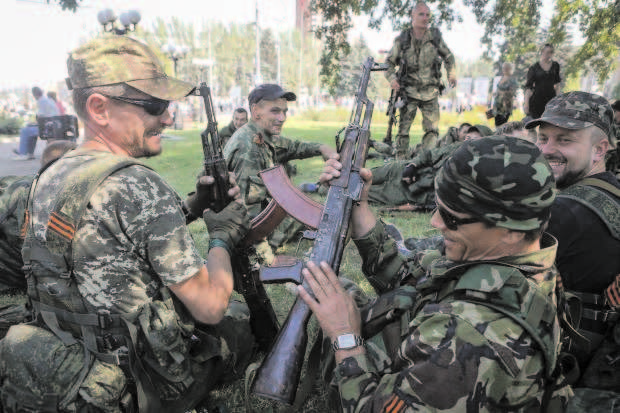
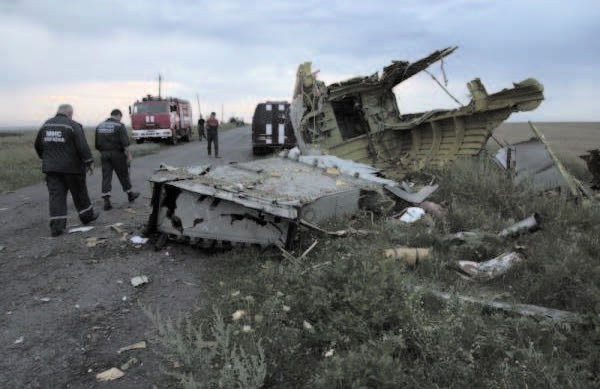
    DONETSK, UKRAINE (TIP): Ukrainian forces clashed with pro-Russian insurgents for control of a strategic airport in the restive east on Friday and traded blame over the death of a Swiss aid worker, four weeks into their shaky truce.

    Heavy fighting engulfed the flashpoint transport hub north of Donetsk, with blasts echoing across the largest rebel-held city throughout the day, but its status remained in dispute.

    Separatist fighters said they were in control of almost the entire facility, which includes an old terminal and a brand new one built at a cost of nearly $1 billion for the 2012 football European Championship.

    The Ukrainian military confirmed that gunmen had briefly seized the first floor of the old building, but said they had since been pushed out, even though fighting continued.

    The weeks-long battle for the prized but no longer operating airport, whose long runway could let the separatists land large planes, has been one of many violations of a Russia-backed ceasefire signed on September 5.

    Since then, 71 Ukrainian soldiers and civilians — and an undisclosed number of separatists — have been killed across the Russian-speaking rustbelt, including a staff member of the Red Cross, whose office in Donetsk was hit on Thursday.

    Both Moscow and the separatist command pinned the blame on Ukrainian forces, which in turn accused the insurgents. Both sides have pelted Donetsk with long-range missiles that were developed in the Soviet era and are notoriously imprecise. The five-month conflict has killed more than 3,200 people and despite repeated violations of the truce, Western leaders still view it as the only viable option for ending Europe’s worst crisis in decades.

    Pro-Western President Petro Poroshenko assured the weary nation Friday that he had “enough energy to stop this war,” adding that “the enemy has made us stronger” despite the loss of 946 Ukrainian soldiers and volunteers since the start of hostilities in April.

    In Donetsk, a half-deserted city that once had nearly a million residents and is all but completely controlled by the self-proclaimed Donetsk People’s Republic, Kiev’s forces seemed to be hanging on by a thread after spending weeks holed up at the airport.

    Separatist “prime minister” Alexander Zakharchenko told Russia’s RIA Novosti news agency that his men controlled 95 percent of the sprawling structure — all but one building.A female rebel at a checkpoint about two kilometres east of the airport told AFP that clashes around the field had gone on uninterrupted since 7:00 am.

    “We are controlling the main part of the airport, the Ukrainians are still in one building,” she said.
    “They (the Ukrainians) still hold two bunkers, we are fighting to take those,” said another rebel.

    The Ukrainian military argued Friday evening that its forces had repelled the attacks and were still “in control,” also accusing Russia of supplying the militias with reinforcements.”Our reconnaissance observed the arrival of considerable armour, heavy artillery and soldiers into this area,” defence spokesman Andriy Lysenko said.

    “Russian forces have moved a unit of unmanned aerial vehicles to the airport area for reconnaissance, which are operated by Russian specialists.” Kiev and the rebels, who agreed on September 19 to withdraw heavy weapons from a 30-kilometre (18.6 miles) buffer zone along the eastern front line, have blamed each other for violating the deal.

  • INDIA- US RELATIONS

    INDIA- US RELATIONS

    I.S. Saluja

    Prime Minister of India, Narendra Modiarrives in New York today, September 26, on afive day visit to USA. His visit, the first asPrime Minister, is being viewed as a powerful push to ensure the relationship between the two democracies of the world acquires genuine warmth, which, over the last few years, hasnoticeably been on the decline.

    Only for a brief period, during the Prime Ministership of Atal Behari Vajpayee, the relationship really warmed up but again, over the years, there have been many hiccups inspite of the loud protestations of “strategic relationship and partnership”.The question which every Indian Americanis asking is : “Will Modi’s visit bring about achange in the US perception of India and createconditions for a genuine friendly relationship,realizing equal partnership and based onmutual respect.In order to obtain a perspective, I spoke withone of the best known Indian Americans, asuccessful and eminent Attorney, Ravi Batra,who has considerable inroads in to the mainstream politics and is familiar with thethinking of US lawmakers, being friendly withquite a few of them.

    EXCERPTS:

    ” It would well serve India to make regulardeposits of goodwill in the generational Bank of Goodwill, such as the one that exists betweenUS and England. I wish to see India see UnitedStates as its inseparable nation-partner”.Another one.” Just remember that United States and India are destined to be joined at the geo-political and economic hip, even as ourpeople share the identical Dream.”Yet another. “Every relationship between living breathing people has irritants. Same istrue of nations. But to define the US-Indiarelationship from the irritant-lens is bothinaccurate and offensive. India and USA are “onthe same page” more often than not. But everyelection, here or elsewhere, gives a turbo-boostin a longstanding relationship, such that itexperiences a honeymoon period again andagain. It’s the Honeymoon period now.”And, finally, this. Be honorable and loyalCitizens of the United States, and continue toreach for the stars – and become worthy ofbeing included in pictures, rather than askingto be in one!

    Here is the full interview.

    Q. What factors have dominated andgoverned the relationship between India andUSA?

    USA?People and governments, and the near-law ofphysics when applied to geopolitics.You must remember that the Americanpeople have loved India all the way back toVasco Da Gama and Christopher Columbus – it’sin America’s soul at birth – this India-love thing.Then came Mahatma Gandhi – a love object ofall humanity, even as governments abhorredhim as a pain without equal. The recent post-Cold War relationship has been economicallydriven, rather than strategically, for Pakistanwas much better located as a buffer to the oldSoviets. The recent IT revolution, however, andIndia’s youthful citizenry has made India,previously known as a “Golden Sparrow” morelike a “Golden Falcon” to the great AmericanBald Eagle – I take some pleasure in that nameand description. Remember now that the young1.3 billion Indians can add value to everynation’s bottom line, even as they produce, andconsume goods and services from across theglobe.

    Q. How far the initial Socialistic character ofIndia in the first 40 years of IndependentIndia has been responsible for distancingbetween India and USA?

    Well, systems come and go, as do strategicalliances. Communism has been discreditedwithout doubt. Capitalism, while it has its faults,has been proven to be the best engine of growthand development. Now, the environmentalistswould argue that development and growth arethemselves the enemy – I disagree. Even to arrestclimate change, we need development of the”green” variety, flying on the wings ofcapitalism. But to answer your question directly,United States which pushed Britain to let Indiabecome free wasn’t happy with the old Soviet-India connection. Glad, that is over. Now, likePresident Obama in his GA speech onWednesday, I look forward to Russia, having”absorbed” Crimea, will return into the fold andbehave in a law-respectful way rather than a PacMan of others’ sovereignty. With Obamapresiding over the Security Council, Russiavoted with everyone to overcome the evil of ISIS.

    Q. In International politics, what have beenthe expectations of US from India and viceversa and how far have these been fulfilled?

    United States expects India to be one of ourcloset allies, without trying to get the best dealin every transaction every time. It would wellserve India to make regular deposits of goodwill in the generational Bank of Goodwill,such as the one that exists between US andEngland. I wish to see India see United States asits inseparable nation-partner.As for India, I am not qualified to answer.

    Q. What have been the significant convergingpoints in the relationship between the twocountries?

    Civilizations that value culture, education,family, education, hard work, and separation ofchurch and state. And then there was terror:9/11 and 26/11.We are joined at the hip in thefight against terror.

    Q. What have been the major discordant notesin the relationship?

    India has had to change its dance partnerafter the collapse of the Soviet Union, and riseof extremism. Sometimes, we in the UnitedStates have not treated India with sufficientrespect, such that it bordered on downrightinsult.

    Q. Can you identify some highs and lows in therelationship between the two countries,clearly analyzing the causes?

    President Bush gave India the Civil Nucleardeal, even as India bought its nuclear powerplants from France and Russia – not nice, nomatter the price differential.While clearly not as important, KrittikaBiswas and Devyani Khobragade to name twoevents. Obviously, had the Indian citizenry notgotten emotionally involved, these casesbelonged in the minor item category. Krittikawill be remembered for America setting thingsright, due to our great independent judiciary.Devyani has now been resolved – I happilypushed the nice Ambassador. Nancy Powellinto early retirement for her apparentobstruction of Indian laws. And PresidentObama has given us – all of us – the highesthonor of appointing an Indian-American asour ambassador to India; this exceedsappointing the now-legendary Preet Bharara asSDNY US Attorney and Sri Srinivasan as afederal Circuit Judge.Wow. This is the “feelgood” stuff. There is so much more on agovernment-to-government basis that securesIndia’s safety.Just remember that United States and Indiaare destined to be joined at the geo-political andeconomic hip, even as our people share theidentical Dream.

    Q. How far do you think the significantly largepresence of people of Indian origin serving inimportant areas like medical services and IThas influenced US attitude towards India?

    Well, being around hardworking people doinggood for many is always goodwill causing. Byand large, our Indian-American doctors havegreat bedside manners beyond their dedicationand smarts. Our folks in the IT section ofsociety have become a brand – that’s how cool itis. Being of Indian blood makes youautomatically IT brilliant.Well, I’m anexception now – for I need kids help to programanything.

    Q. Do you think US will give in to India’sdemands on H1 B visa and other concessionswith respect to immigration, desired by India?

    We should, for its good for the Americaneconomy. But, “immigration” is a near-Thirdrail of national politics, as many Americanshave not recovered from the Great Recessionand see immigrants, legal and illegal, as jobeating,when H1B are highly skilled andunavailable in United States.When emotionsget married with politics, don’t expect reason torule.Q. Another concern of India is US support toPakistan? Do you think US will do somethingto change its policy towards Pakistan, toplacate India?United States owes Pakistan for its loyaltyduring the 50 odd years of the Cold War. Thatwe need exit routes or entry routes, as the casemay be, for Afghanistan and such only serves toremind that Pakistan needs to be treated better.I think we should support Pakistan-India opentradeso that open people-exchange can followin a decade or so. It is not right that people whoshare near-identical culture have had wars andgovernments have sowed distrust when theoverwhelming commonality should be a jointasset.We need to improve everyday Pakistani’slife, if we want to ever live free of local terror.Then, we ought to do so world-wide, to be reallyfree of terror.We need everyone to be living theAmerican Dream, when merit rules, so peace isas durable as the Pax Romana was.

    Q. India’s overtures towards Japan and Chinaand its involvement in BRICS have beingviewed with suspicion by US . What can Indiado to remove this suspicion?

    BRICS were intended to cause suspicion, andhence, drive up the price for India and other BRICS nations. Of course, it was also a sort ofNAFTA across the air and sea among suchnations.

    Q. Do you think, US will act fast to acceleratethe process of reform of the Security Council,whereby seating India on the Council?

    The world order is based upon the P5 powersharing.That is the true geo-political axis that193 nations revolve around and exist with. It’sas real as the Sun in the sky. Yes, reforms areneeded, and Germany, Japan, India and SouthAfrica fantasize most about them. Ask me thisquestion in 25 years, and let’s see if it’s stillrelevant – as I suspect it will be.

    Q. Do you think Mr. Modi ‘s visit to US willgive new momentum to India- US relations ,given the fact that there are quite a fewirritants in their relationship?

    Every relationship between living breathingpeople has irritants. Same is true of nations.But to define the US-India relationship from theirritant-lens is both inaccurate and offensive.India and USA are “on the same page” moreoften than not. But every election, here orelsewhere, gives a turbo-boost in a longstandingrelationship, such that it experiences ahoneymoon period again and again. It’s theHoneymoon period now.

    Q . What would be your suggestions to the twocountries to strengthen their relations?

    Whatare the areas where the two can cooperate?Don’t do stupid stuff, like Devyani; for itmasks and overshadows tons of good stuffbetween the two nations that occur no matterwho governs in either capitol. Aside foravoiding an intended insult that Devyani was,avoid the unintended insult.During the official US/India RoundtableDiscussion in July 2014 held under theCongressional Dome to which my wife, Ranjuand I were independently invited to, I hadbluntly given my love potion: Respectful Reset,even as the “Reset,” between us and Russiadidn’t do so well. India and United States arenow a grown-up relationship, and discord needsnever to enter the public domain. Period.

    Q. What, do you think, the Indian Americancommunity should do to promote the processof strengthening of relations?

    Be honorable and loyal Citizens of the UnitedStates, and continue to reach for the stars – andbecome worthy of being included in pictures,rather than asking to be in one!
    Page 23

    Page 231

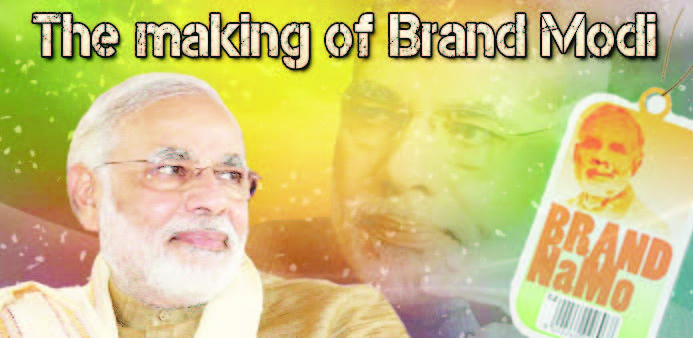
  • The Making of NAMO

    The Making of NAMO

    A Hindu pracharak becomes Prime Minister of India. Here are milestones in his journey of ascension to the pinnacle of power through landslide election victory in the 16th General Election of the world’s largest democracy.


    arendra Modi was born on 17th Sept 1950 in a middle class family of grocers in the small town of Vadnagar- the Temple Town of ancient India which is Varanasi of Gujarat. The town has a long and varied history. Sharmistha Lake, Hatkeshvar Mahdev and artistic Toran Gate are hallmarks of the past glory of the capital of Anart Province. Chinese traveler Yuan Swang visited this town in the sixth century. Akbar’s music maestro Tansen came to normalcy after listening to perfect Meghmalhar singing of Naggar girls Tana and Riri. Poet Narsinh Mehta ‘s son got married to Vadnagar Naggar Community’s bride here. Small town boy Narendra Modi imbibed the past glory of his birth place in Mehsana district of Gayakwad princely state in Gujarat. Modi became a member of RSS in childhood and acquired deep understanding of Hinduism, reading Hindu Scriptures and literature of Swami Vivekananda. He left home with the consent of his parents at a young age of 17 in search of his life’s mission. He traveled extensively and spent some time in the Himalaya , meditating in the tradition of Buddha who has influenced his life and thought considerably. Returning home after some time, he became a PRACHARAK with Rashtriya Swayamsevak Sangh in 1972. He stayed with his maternal uncle in Ahmedabad and helped him selling common people’s popular drink, tea, a job which he had done before in his father’s tea stall at the Vadanagar Railway station. One astrologer who was dinner guest at their family house in Vadnagar predicted to his mother that some day her son Narendra will either be a great sage of Shankaracharya’s caliber or supreme commander of the nation if he enters politics. Jawaharlal Nehru was supreme commander in Prime Minister’s position in those days in India. Savarkar’s message to Hinduise politics and militarise Hinduism appealed to young Narendra. He worked underground during the emergency period 1975-1977 and went jail briefly.
     

    Then, Jan Sangh adopted a new name BJP after losing partnership in the government with the collapse of Prime Minister Morarji Desai’s government . Narendra Modi actively participated in all activities of BJP especially Advani’s Rath Yatra and Unity pilgrimage of Murli Manohar in 1989-90. He was assigned the responsibilities of General Secretary in Gujarat and subsequently at the national level. Modi acquired mastery in public relations and party organization. His contribution in the capacity of General Secretary was well noticed by party stalwarts Advani and Vajpayee. He did not contest any legislative election and had no experience in any capacity in government when one day in the first week of October, 2001, Prime Minister Vajpayee asked him to be the Chief Minister of Gujarat in replacement of Keshubhai Patel who had received more complaints than complements in his handling of problems in the aftermath of earthquake in Kutch -Bhuj area on the Republic Day in January, 2001.

    A Timeline : 
    October 7,2001 Modi takes oath of office of Chief Minister. He is not a member of the legislative body.
    ● Feb.24,2002 : He is elected from Rajkot constituency . Next day he is officially admitted into membership of Gujarat Assembly.
    ● Feb 27,2002 . At Godhara Station in South Gujarat 59 passengers including women and children are burned down by the terrorist group which praised Bin Laden and his methods of terrorism. Those killed were active members and volunteers of Hindu organizations .In retaliation riots spread in Ahmedabad and elsewhere in Gujarat. Both Hindus and Muslims became targets of each others’ wrath for weeks .Media all over the world gave coverage of these events in their own ways.
    ● April 12,2002 BJP High Command meeting in Goa where discussion on the riots remained major issue, some demanded removal of Modi . Narendra Modi offered his resignation . Prime Minister Vajpayee was not soft towards Modi but Advani was firm on not accepting Modi’s resignation.
    ● July 19, 2002 C.M. Modi dissolved assembly and opted to seek new mandate
    ● December 15, 2002 . Favorable election results: BJP won 127 seats out of 182 assembly seats. Modi took oath for the second time in the presence of the Prime Minister. First time in India, a Prime Minister attended oath ceremony of a state chief minister. The Modi Government received national and international praise for restoration programs of earthquake disaster. Seminars for continuing education for elected assembly members and EGovernance were Modi’s new initiatives. Prime Minister Vajpaiyee invited the dynamic C.M. Modi to be in his entourage of Russia visit. Modi observed keenly Russian growth model . He vowed to make Gujarat a shining super state in India . The first vibrant Gujarat festivity program in 2003 attracted attention of investors . Progress
    Person Modi visited China, Japan and other countries to promote investment in Gujarat.
    ● May 21,2005. Rajiv Gandhi Foundation awarded Modi Government for the most well managed State.
    ● December 25,2007: Modi takes oath for the 3rd time after election victory.

    2012: 

    Modi became Chief Minister of Gujarat for the fourth time. In a lighter vein, he stated: ‘ I will remain CM for ever’.
    But Modi was destined for a higher position, as the stranger had once predicted.
    In September, 2013, Bharatiya Janata Party named him the party’s candidate for prime
    Minister’s position. Modi had already nominated to lead the election campaign. With every passing day, it became clearer that Modi had succeeded in convincing voters of India that BJP could bring about a change to their advantage. Some doubted BJP could have the numbers to forma government with its allies, not to speak of forming a government on their own.
    Some simply could not bear to see BJP in power. Eminent Economist Nobel Laureate A.K. Sen wrote: “I do not want Modi to be my Prime Minister “.
    However, voters of the largest democracy in the world countered him : “WE WANT MODI TO BE
    OUR PRIME MINISTER.”
    And there he is. Let us wait and watch his work.

  • BBC reporters ‘badly beaten’ in Russia

    BBC reporters ‘badly beaten’ in Russia

    MOSCOW (TIP): A team of BBC journalists was beaten and their camera smashed in southern Russia, where they were looking into reports of Russian soldiers killed while on secret deployments near Ukraine, the broadcaster said on September 18. The three reporters were working in the southern city of Astrakhan when they were “assaulted by unidentified men in a coordinated attack,” the BBC said in a statement. “Our staff were badly beaten, their camera destroyed and then taken,” the statement said. BBC spokesman James Hardy added separately: “All are OK.” “The cameraman is continuing to receive treatment for concussion and other injuries,” he added in written remarks. After the assault the journalists were questioned at a police station. They later “discovered that recording equipment, which was in their vehicle, at the police station, had been electronically wiped”.

  • U.S. and EU add more Sanctions against Russia

    U.S. and EU add more Sanctions against Russia

    MOSCOW (TIP): As the confrontation between U.S. and European Union, on the one hand, and Russia escalates, Russia may ban some imports including clothing and used cars in retaliation to a U.S. and European Union decision to stiffen sanctions against Moscow over Ukraine. European companies and taxpayers “will have to pick up the costs” for the penalties, Dmitry Peskov, a spokesman for Russian President Vladimir Putin, told Interfax September 11. The Economy Ministry drafted a list of goods that may be banned, including automobile imports, particularly used cars, as well as textiles and clothing, state-run RIA Novosti reported, citing Kremlin economic aide Andrei Belousov.

    The U.S. will “deepen and broaden” measures against Russia’s financial, energy and defense industries, President Barack Obama said in a statement September 11, hours after the announcement by the EU. The latest round of economic restrictions from both the U.S. and the EU takes effect September 12. The sanctions, which go into effect Friday, September 12, take aim at Russia’s energy sector and further constrict the country’s vital financial and defense industries’ access to global markets and resources.

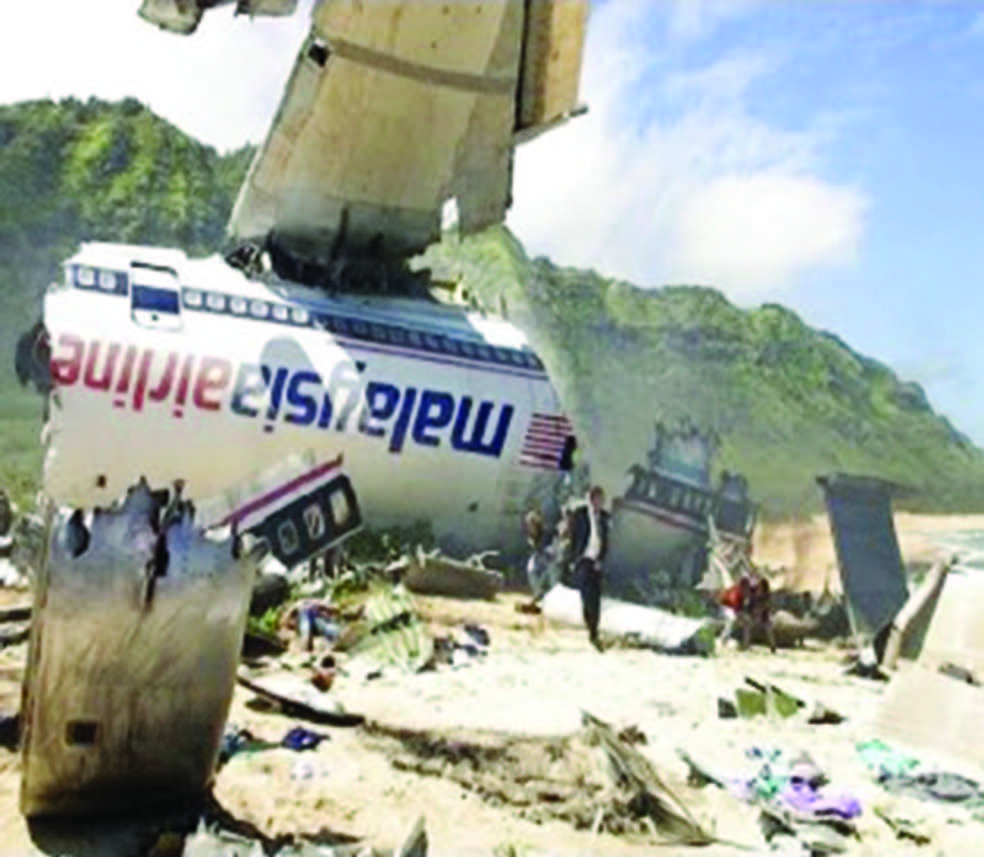
    They strengthen measures that the United States and the E.U. instituted in late July to target key engines of the Russian economy after the downing of Malaysia Airlines Flight 17 over eastern Ukraine. Western leaders threatened to step up sanctions in recent weeks after Russia was accused of sending military vehicles, weapons and troops into Ukraine to bolster separatist forces fighting the Ukrainian army in the eastern regions. Russian leaders have denied the accusation.

    The moves raise the level of confrontation and follow reprisals last month, when the Russian leader banned a range of food imports after an earlier round of U.S. and European penalties. Putin denies any involvement in the fighting that broke out after he annexed Crimea in March in what has become the worst crisis between Russia and its former Cold War adversaries since the fall of the Berlin Wall.

  • INDIA: THE ODD BRIC OUT

    INDIA: THE ODD BRIC OUT

    India must strike a balance between its new emerging partners and beneficial Western ties

    India would be foolish to join an anti-Western bloc as India’s rise is inherently tied to the West. Given the popular view that the BRICS are opposed to the West, India finds itself in the unique position of being a part of the BRICS collective as well as having overtly friendly relations with the U.S., a relationship that is likely to further improve in the future as Modi visits the U.S. and ties strengthen.

    By Stephen Junor The BRICS nations have rapidly evolved from a group of emerging economies into political contenders in a new world, driven by the search for an alternative to Western hegemony. Recent Western failures have also helped to launch the BRICS concept as an alternative, and have possibly pushed the countries closer together than they may have initially intended.

    There are also differences (the China-India border disputes for example) that would have seriously tested the relationship between other countries, but for now they are responsible for the multi-polar world that appears to be emerging. The Western approach toward BRICS has generally been one of skepticism, but when it comes to India there is a conspicuously different portrayal in the media compared to the rest of the countries. Although the recent U.S.-Africa summit suggests friendly relations, South Africa has always seen itself as a member of the global South and champions countries that don’t acquiesce to U.S. dominance. The conflict between the U.S. (somewhat supported by much of Europe) and Russia is well-known, and the media consistently highlights the conflict and difference between the U.S. and China.

    American interference in Latin America has made relations between Brazil and the U.S. touchy, and the rhetoric from Brazil in the wake of NSA spying last year was scathing. Despite relations taking a hit last year when Indian diplomat Devyani Khobragade was arrested in New York, U.S. and Western media have generally been friendly toward India, exemplified by President Barack Obama’s invitation to newly elected Prime Minister Narendra Modi to visit the U.S., despite Modi previously being blocked from the U.S. over his failure to stop sectarian violence as Gujarat’s chief minister in 2002, when more than 1,000 people were killed. It is likely that the U.S. views India as a potential foothold in Asia.

    India is often heralded in the Western media as the world’s largest democracy, in an attempt to provide common ground and a nod of disapproval to the likes of China and Russia. In contrast to the other BRICS members, Indian elites aspire to the wealth and influence of the U.S., and it is only natural that this aspiration would manifest itself in the politics of the country. Modi is a proponent of free market capitalism and this bodes well for relations with the U.S., which will see him as an accessible figure.

    There are further important differences between India and the rest of the BRICS nations.World Bank data shows that India’s GDP per capita severely lags behind the rest at around $1,500, four times less than China and South Africa, seven times less than Brazil and almost 10 times less than Russia. India hasn’t replicated the rapid growth of the other BRICS countries since the turn of the millennium, and this is also reflected in a slower reduction in the poverty gap. Just under 25 percent of the population still live on less than $2 a day, compared to 10 percent or less for the other countries. Such a severe development problem will hinder Indian growth in the near future and will see it fall further behind.

    Modi will be expected to implement reforms that improve growth and lift hundreds of millions out of crippling poverty. Growth alone will not solve the poverty problem in India however. When it comes to literacy rates in adults, the 2011 Indian census recorded a figure of 74 percent while the rest of the BRICS nations record over 90 percent. Literacy among women is even lower at 64 percent. Infrastructure in India is also sub-standard. An overburdened transport systems and insufficient electricity grids that are overly reliant on coal contribute to the poverty problem while hindering growth. Rapid urbanization is also putting pressure on these systems, making the problem more acute.

    India also has a digital problem as only 15 percent of the population uses the internet, compared to upwards of 40 percent for the other BRICS. Connectivity is important, particularly for those often marginalized in society, as evidence points towards benefits for education and health. India has a distinctive set of problems that the other BRICS countries have largely moved beyond. Given the political and economic clout of the BRICS collective, India could soon find itself left behind within the group. Indeed the statistics above and the obvious clout of China and Russia suggest that India may lack influence within the group already, despite efforts to spread power within the recently announced New Development Bank.

    This is where the U.S. could become more influential with India. In a recent interview with The Diplomat, Sadanand Dhume, a resident fellow at the American Enterprise Institute (AEI) and Wall Street Journal columnist, said that India would be foolish to join an anti-Western bloc as India’s rise is inherently tied to the West. Given the popular view that the BRICS are opposed to the West, India finds itself in the unique position of being a part of the BRICS collective as well as having overtly friendly relations with the U.S., a relationship that is likely to further improve in the future as Modi visits the U.S. and ties strengthen.

    India will need to manage its relationships carefully, as it will not want to find itself isolated from either the U.S. or the BRICS. It is also important that India doesn’t become geopolitically caught between the two sides: Any point of tension between the West and an individual BRICS country could reflect on the rest of the group. Indeed if India wants to achieve strong growth and solve its development crisis, then it will need to harness relationships with both sides. The next few years will be crucial for Indian development, and as the international political situation slowly evolves, it will be interesting to see how India locates itself in relation to the West and the other BRICS countries.

    (Stephen Junor writes on the rise of BRICS and geopolitics) (Source: The Diplomat)

  • Bopanna to get Davis Cup Commitment Award

    Bopanna to get Davis Cup Commitment Award

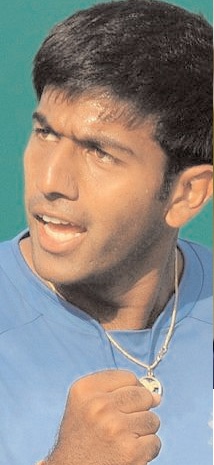
    BANGALORE (TIP): Indian tennis player Rohan Bopanna will be presented the Davis Cup Commitment Award during the World Group play-off tie against Serbia which begins here tomorrow. The International Tennis Federation (ITF) will present the Awards through its national associations during the Davis Cup World Group and Zone Group matches on Saturday.

    Former Grand Slam champions Lleyton Hewitt of Australia and Gustavo Kuerten of Brazil will also be awarded after their respective games. “The Davis Cup Commitment Award reflects the dedication by players for more than a century to represent their country in this prestigious competition.

    These players have continued to rise to the unique challenge of competing in a team environment in front of their home fans, and we believe that it is fitting to recognise their efforts,” said ITF President Francesco Ricci Bitti.

    List of players to be awarded: Australia: Lleyton Hewitt, Brazil: Carlos Kirmayr, Gustavo Kuerten, Luiz Mattar, Cassio Motta, Jaime Oncins, Canada: Frank Dancevic, Chinese Taipei: Ti Chen, France: Pierre Darmon, India: Rohan Bopanna Romania: Victor Hanescu, Russia: Andrei Chesnokov, Andrei Olhovskiy, Thailand: Sanchai Ratiwatana, Sonchat Ratiwatana, Danai Udomchoke, Ukraine: Sergiy Stakhovsky.

  • Leaders: US, UK will ‘not be cowed’ by militants

    Leaders: US, UK will ‘not be cowed’ by militants

    NEWPORT, WALES (TIP): Faced with a mounting militant threat in the Middle East, US President Barack Obama and British Prime Minister David Cameron declared on Thursday that their nations will “not be cowed” by extremists who have killed two American journalists. “We will be more forthright in the defense of our values, not least because a world of greater freedom is a fundamental part of how we keep our people safe,” the leaders wrote in a joint editorial in the Times of London.

    Their comments come as world leaders gather at a golf resort in Wales for a high-stakes NATO summit. While the official agenda will focus on the crisis in Ukraine and the drawdown of the NATO combat mission in Afghanistan, the rise of the Islamic State group in Iraq and Syria will dominate discussions on the sidelines of the summit. The militants have claimed responsibility for murdering two American journalists, releasing gruesome videos of their beheadings.

    Both the US and Britain are deeply concerned about the potential threat to their homelands that could come from the foreign fighters who have joined the violent Islamic State group. Cameron on Monday proposed new laws that would give police the power to seize the passports of Britons suspected of having traveled abroad to fight with terrorist groups. Obama and Cameron appear to suggest that NATO should play a role in containing the militants, but were not specific in what action they would seek from the alliance.

    The two leaders were to visit with students at a local school Thursday morning before joining their counterparts from France, Germany and Italy to discuss the crisis in Ukraine. New Ukrainian President Petro Poroshenko was also to join the discussion in a show of Western solidarity with his embattled nation. Ukraine and Russia have been locked in a standoff for months, with pro- Moscow forces stirring instability in eastern Ukrainian cities. On the eve of the NATO summit, Russia and Ukraine said they were working on a deal to halt the fighting, but Western leaders expressed skepticism, noting it wasn’t the first attempt to end the deadly conflict.

    NATO leaders are expected to agree this week on the creation of a rapid response force that would set up in nations in the alliance’s eastern flank to serve as a deterrent to Russia. Baltic nations and others in the region fear Moscow could set its sights on their borders next. “We must use our military to ensure a persistent presence in Eastern Europe, making clear to Russia that we will always uphold our Article 5 commitments to collective self-defense,” Obama and Cameron wrote.

    Under Article 5 of the NATO charter, an attack on one member state is viewed on an attack on the whole alliance. Obama reiterated his support for that principle Wednesday during a visit to Estonia, one of the newer NATO members set on edge by Russia’s provocations.

  • US sending 200 troops for drills in Ukraine: Pentagon

    US sending 200 troops for drills in Ukraine: Pentagon

    WASHINGTON (TIP): The United States will send about 200 troops to take part in a US-led annual exercise in Ukraine later this month, the Pentagon said on Wednesday, in a show of solidarity with Kiev.

    The presence of 200 soldiers from the 173rd Airborne Brigade will mark the first deployment of US ground troops to Ukraine since the Kiev government’s conflict with pro-Russia separatists erupted earlier this year. Dubbed “Rapid Trident,” the yearly exercise was set for September 13-26 and will involve more than a dozen countries, including “approximately 200 personnel” from the US military, spokesman Colonel Steven Warren said.

    “It’s a peacekeeping exercise,” said Warren, and would focus in part on countering homemade bombs. The drill was due to be held in Yavoriv, about 40 miles (60 kilometers) from Lviv in western Ukraine. US naval forces also were due to take part in a separate maritime exercise starting next week in the Black Sea which will involve forces from Ukraine, Turkey, Georgia and Romania, officials said.

    Two vessels from a NATO maritime group will also participate. Washington is sending the USS Ross, a guided missile destroyer, to join the naval drill, dubbed “Sea Breeze,” which runs from Monday to Wednesday. About 280 US sailors were due to take part.

    The aim of the exercise was “to improve interoperability while promoting regional stability and security” among allies and partners, spokeswoman Lieutenant Colonel Vanessa Hillman said. With Russia’s intervention in Ukraine raising alarm in Eastern Europe and beyond, the United States has held a series of high-profile military exercises in the region in a bid to reassure anxious allies on NATO’s eastern border.

    Ukraine, facing a separatist rebellion and suspected Russian military operations in its east, has asked for US military aid but Washington has declined so far to provide weapons to the Kiev government.

  • INDIA SLIPS TO 71ST RANK IN GLOBAL COMPETITIVENESS LIST

    INDIA SLIPS TO 71ST RANK IN GLOBAL COMPETITIVENESS LIST

    GENEVA/NEW DELHI (TIP): Weighed down by challenging economic conditions for most part of the past year, India has slipped to 71st position — the lowest among BRICS countries — in an annual global competitiveness list, with Switzerland claiming the top spot.

    The annual list, released on September 3 by Geneva-based World Economic Forum (WEF), comes at a time when the new Indian government has completed 100 days in power and has promised further steps to revive its economy and the ease of doing business in the country. “Continuing its downward trend and losing 11 places, India ranks 71st.

    The country’s new government faces the challenge of improving competitiveness and reviving the economy, which is growing at half the rate of 2010,” WEF said. As per the Global Competitiveness Report 2014-15, Switzerland is the most competitive economy, followed by Singapore. Other countries in the top ten are Finland (4), Germany (5), Japan (6), Hong Kong SAR (7), Netherlands (8), United Kingdom (9) and Sweden (10). China, which has improved its position by one place to 28th spot, leads the BRICS grouping, among which India has the least ranking.

    Russia is ranked at 53rd position, followed by South Africa (56) and Brazil (57). “India’s decline of 11 places to 71st, set against the gains of the ASEAN 5 countries, suggests that the competitiveness divide South and Southeast Asia is becoming more pronounced,” WEF said. Besides India, WEF said that some of the world’s largest emerging market economies continue to face difficulties in improving competitiveness.

    These include Saudi Arabia (24th rank), Turkey (45), Mexico (61), Nigeria (127th), South Africa and Brazil — all of them have slipped in their rankings. According to the report, India’s slide in the competitiveness rankings began in 2009, when its economy was still growing at 8.5 per cent (it even grew by 10.3 per cent in 2010). “Back then, however, India’s showing in the Global Competitiveness Index (GCI) was already casting doubt about the sustainability of this growth. “Since then, the country has been struggling to achieve growth of 5 per cent.

    The country has declined in most areas assessed by the GCI since 2007, most strikingly in institutions, business sophistication, financial market development, and goods market efficiency,” it added. Noting that improving competitiveness would yield huge benefits for India, WEF said it would help re-balance the economy and move the country up the value chain ensuring more solid and stable growth. “This in turn could result in more employment opportunities for the country’s rapidly growing population,” it added. WEF further said that India needs to create a sound and stable institutional framework for local and foreign investors as well as improve connectivity.

    The rankings are based on WEF’s GCI which is based on scores covering 12 categories. They are institutions, infrastructure, macroeconomic environment, health and primary education, higher education and training, goods market efficiency, labour market efficiency, financial market development, technological readiness, market size, business sophistication and innovation.

    “The strained global geopolitical situation, the rise of income inequality, and the potential tightening of the financial conditions could put the still tentative recovery at risk and call for structural reforms to ensure more sustainable and inclusive growth,” WEF founder and executive chairman Klaus Schwab said. As per the report, there is uneven implementation of structural reforms across different regions and levels of development as the biggest challenge to sustaining global growth. Talent and innovation are the two areas where leaders in the public and private sectors need to collaborate more effectively in order to achieve sustainable and inclusive economic development, it added.

  • UN security council meets on Ukraine crisis

    UN security council meets on Ukraine crisis

    UNITED NATIONS (TIP): The UN security council met on August 29 in an emergency session on the growing crisis in Ukraine with some members expressing outrage. UN undersecretary-general of Political Affairs Jeffrey Feltman told council members, as the meeting began, that the latest developments mark a ” dangerous escalation in the conflict,” but that the international body had no way of verifying the latest ”deeply alarming reports.” The emergency security council meeting came hours after a top Ukrainian official said two columns of Russian tanks and military vehicles fired missiles from Russia at a Ukraine border post, then rolled into the country.

    That opened a new front in the war in eastern Ukraine between pro-Russia separatists and the new government of President Petro Poroshenko. Statements from Nato, Poroshenko, the separatists, the United States and the president of the security council left no doubt that Russia had invaded Ukraine. A top Nato official said at least 1,000 Russian troops have entered Ukraine with sophisticated equipment and have been in direct ”contact” with Ukrainian soldiers, resulting in casualties.

    The new southeastern front raised fears that the separatists are seeking to create a land link between Russia and Crimea, which Russia annexed in March. US ambassador Samantha Power told the council. ”Every single one has sent a straightforward, unified message: `Russia, stop this conflict. Russia is not listening.”’ ”Russia has come before the council to say everything but the truth,” Power said. ”We will continue working with G-7 partners to rachet up consequences on Russia,” Power said, and France also threatened that sanctions will be increased if the escalation continues.Prior to the meeting, Russian ambassador to the UN Vitaly Churkin told reporters ”You’re at a loss,” offering no further comment. UK ambassador Mark Lyall Grant told reporters: ”Russia will be asked to explain why Russia has its troops inside Ukraine. It’s very clear that Russian regular troops are now in Ukraine.”

  • FBI INVESTIGATES CYBER ATTACK ON US BANKS

    FBI INVESTIGATES CYBER ATTACK ON US BANKS

    WASHINGTON (TIP)The FBI is investigating a suspected Russian cyber attack on a number of American banks. Hackers are believed to have targeted JP Morgan and at least four other banks in the US, amid increasing concern over cyber security from watchdogs on both sides of the Atlantic. The attack on JP Morgan reportedly resulted in the loss of “gigabytes of sensitive data” that could have involved customer and employee information. It is said to have been of a level of sophistication beyond ordinary criminals, leading to speculation of a state link.

    The FBI is thought to be investigating whether there is a connection to Russia. American-Russian relations continue to be fraught amid the crisis in Ukraine, with sanctions ramped up. The bank is understood to have been in touch with executives in London to see if there is any link to its UK operations, but so far the attack, which happened earlier this month, is thought to have affected only the US. But watchdogs are increasingly worried about the city’s potential vulnerability to an aggressive state-backed hack.

    A spokesman for JP Morgan said: “Companies of our size unfortunately experience cyber attacks nearly every day. We have multiple layers of defence to counteract any threats and constantly monitor fraud levels.” JP faced criticism in April when it blocked a payment from a Russian embassy to the affiliate of an American-sanctioned bank. Russia’s foreign ministry described the move as “absolutely unacceptable, illegal and absurd”.

  • Russia has opened new war front, says Ukraine

    Russia has opened new war front, says Ukraine

    NOVOAZOVSK (TIP): Tanks, artillery and infantry have crossed from Russia into an unbreached part of eastern Ukraine in recent days, attacking Ukrainian forces and causing panic and wholesale retreat not only in this small border town but also a wide section of territory, in what Ukrainian and Western military officials described on August 27 as a stealth invasion.

    The attacks outside this city and in an area to the north essentially have opened a new, third front in the war in eastern Ukraine between government forces and pro-Russian separatists, along with the fighting outside the cities of Donetsk and Luhansk. Exhausted, filthy and dismayed, Ukrainian soldiers staggering out of Novoazovsk for safer territory said Tuesday they were cannon fodder for the forces coming from Russia. As they spoke, tank shells whistled in from the east and exploded nearby. Some of the retreating Ukrainian soldiers appeared unwilling to fight.

    The commander of their unit, part of the Ninth Brigade from Vinnytsia, in western Ukraine, barked at the men to turn around, to no effect. “All right,” the commander said. “Anybody who refuses to fight, sit apart from the others.” Eleven men did, while the others returned to the city. Some troops were in a full, chaotic retreat: a city-busload of them careened past on the highway headed west, purple curtains flapping through windows shot out by gunfire.

    A Ukrainian military spokesman said Wednesday the army still controlled Novoazvosk but that 13 soldiers had died in the fighting. The behavior of the Ukrainian forces corroborated assertions by Western and Ukrainian officials that Russia, despite its strenuous denials, is orchestrating a new counteroffensive to help the besieged separatists of the Donetsk People’s Republic, who have been reeling from aggressive Ukrainian military advances in recent weeks. “Russia is clearly trying to put its finger on the scale to tip things back in favor of its proxies,” said a senior American official.

    “Artillery barrages and other Russian military actions have taken their toll on the Ukrainian military.” The Obama administration, which has placed increasingly punitive economic sanctions on Russia because of the Ukraine crisis, asserted over the past few days that the Russians had sent new columns of tanks and armor across the border. “These incursions indicate a Russiandirected counteroffensive is likely underway,” Jen Psaki, the state department spokeswoman, said Wednesday.

    At the department’s daily briefing in Washington, Ms. Psaki also criticized what she called the Russian government’s “unwillingness to tell the truth” that its military had sent soldiers as deep as 30 miles inside Ukraine territory. Ms. Psaki apparently was referring to videos of captured Russian soldiers, distributed by Ukraine’s government on Tuesday, that directly challenged President Vladimir Putin’s assertions that Russia is a mere bystander in the conflict. The videos were publicized just as Putin was meeting with his Ukraine counterpart, Petro Poroshenko, in Belarus.

    Russian forces have been trying to help the separatists break the siege of Luhansk and have been fighting to open a corridor to Donetsk from the Ukrainian-Russian border, Western officials say. To the south, Russia has been backing a separatist push toward the southern town of Mariupol, a major port on the Sea of Azov, according to Western and Ukrainian officials.

    The Russian aim, one Western official said, is to open a new front that would divert Ukrainian forces from Donetsk and Luhansk and to possibly seize an outlet to the sea in the event that Russia tries to establish a separatist enclave in eastern Ukraine.

  • FIGHTING OUTSIDE KEY UKRAINIAN CITY KILLS 9 TROOPS

    FIGHTING OUTSIDE KEY UKRAINIAN CITY KILLS 9 TROOPS

    KIEV, UKRAINE (TIP):
    A Ukrainian official said nine troops were killed in overnight fighting in the streets of the town of Ilovaysk, which lies just east of the rebel stronghold Donetsk. Anton Herashchenko, an adviser to the Ukrainian interior minister, said in a Facebook post on Augusut 20 morning that government troops now control half of the town, but rebels are offering fierce resistance after more than a day of fighting.

    Government efforts to quell the pro-Russia insurgency in eastern Ukraine are focused on encircling Donetsk and also driving rebels out of the city of Luhansk. The Kiev government also has pursued diplomatic efforts to resolve the conflict, which has killed more than 2,000 people and displaced 300,000. The Ukrainian president hosts the German chancellor this weekend before meeting next week with Russia’s president.

  • INDIA DEPLOYS AKASH MISSILES IN NORTHEAST

    INDIA DEPLOYS AKASH MISSILES IN NORTHEAST

    NEW DELHI (TIP):
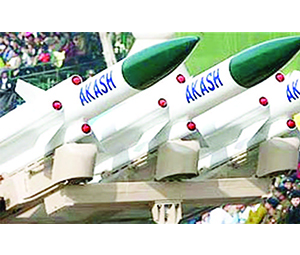
    India has begun deploying six Akash surface-to-air missile (SAM) squadrons in the northeast to deter Chinese jets, helicopters and drones against any misadventure in the region. Earlier, India based its most potent Sukhoi-30MKI fighters at Tezpur and Chabua. Indian Defence ministry sources on Thursday, August 21 said IAF has started getting deliveries of the six Akash missile squadrons, which can “neutralize” multiple targets at 25-km interception range in all-weather conditions, earmarked for the eastern theatre.

    “IAF has deployed the first two Akash squadrons at the Mirage-2000 base in Gwalior and Sukhoi base in Pune. The next six squadrons, as approved by the Cabinet Committee on Security, are to guard against any threat from the northern borders,” said a source. This long-delayed but finally successful induction of the Akash systems, developed by DRDO and manufactured by defence PSU Bharat Dynamics, has also led to scrapping of the protracted discussions to develop the ‘Maitri’ short-range SAMs with France at a cost of around Rs 30,000 crore.

    The Akash deployment in the northeast is in tune with the overall plan to progressively achieve “meaningful and credible deterrence” against China along the 4,057-km Line of Actual Control (LAC). While the Indian Navy is currently better placed to take on Chinese warships in the Indian Ocean, the stark military asymmetry with the People’s Liberation Army along the LAC, both in firepower as well as infrastructure, has long worried the Indian security establishment.

    The steps being taken now to “deter” China range from development of the over 5,000-km Agni-V inter-continental ballistic missile to raising of the new Army XVII Mountain Strike Corps with over 90,000 soldiers at a cost of Rs 64,678 crore. Then, there is also the border military infrastructure development plan for another Rs 26,155 crore, as reported by TOI earlier. IAF, on its part, has deployed Sukhoi squadrons at Tezpur and Chabua in the eastern sector as well as Bareilly in the middle sector of the LAC.

    Both Tezpur and Chabua are also getting their second Sukhoi squadrons, with IAF having inducted over 200 of these 272 fighters contracted from Russia for over $12 billion. The force has also re-activated advanced landing grounds (ALGs) at Nyoma and Daulat Beg Oldie in eastern Ladakh as well as Vijayanagar situated at the tri-junction of India, China and Myanmar in the Changlang district of Arunachal. Similar work is underway at other eastern sector ALGs like Pasighat, Mechuka, Walong, Tuting and Ziro.

    The new XVII Corps, which will fully be in place by 2018-2019, will give India muchrequired “quick-reaction ground offensive punch” for the first time against China. All this is considered crucial since China can rapidly deploy 21 fighter squadrons against India with its eight operational airbases in Tibet Autonomous Region (TAR) and some others just north of it.

    Moreover, the extensive road and rail links created in TAR ensure Chinese soldiers enjoy numerical superiority against Indian forces in a 3:1 ratio. China, incidentally, has been conducting major exercises with its J-10, Sukhoi-27UBK and Sukhoi-30MKK fighters in the high-altitude Qinghai-Tibet plateau in recent times.

  • Basics very much in Indian economy’s favor

    Basics very much in Indian economy’s favor

    INDIA’S JOURNEY TO DEVELOPMENT AND CHALLENGES

    The economy of India is the tenthlargest in the world by nominal GDP and the third-largest by purchasing power parity (PPP).The country is one of the G-20 major economies, a member of BRICS and a developing economy that is among the top 20 global traders according to the WTO.

    India was the 19th-largest merchandise and the 6th largest services exporter in the world in 2013. India’s economic growth slowed to 4.7% for the 2013-14 fiscal year, in contrast to higher economic growth rates in 2000s. However, India’s decisive election outcome has created the potential for further structural reform that could result in a near 7 per cent GDP growth rate over the coming decade, and bank capital injections could enable banks to facilitate funding for that growth.


    32


    This would have meaningful implications for India’s fixed income markets. It is believed that the next decade for India’s foreign exchange (FX) and fixed income markets will be marked by policy-driven reforms driving accelerated growth with increasing market liberalization. Recent figures already appear more encouraging than the dynamics that have been supporting stagflationary recession conditions: The country’s balance of payments has improved, spurred by FX depreciation and the Reserve Bank of India’s (RBI’s) non-conventional measures. The growth outlook has turned moderately positive, helped by a global recovery; and bad loan formation, even at state-owned banks, may now be moderating.


    33


    The narrative for Indian markets began to brighten even before the elections. Following the second stage of India’s economic liberalization and the foreign direct investment (FDI) reforms initiated in September 2012, foreign investment will likely be a major contributor to a jump in private investment. However, despite liberal FDI limits, it has remained moderate, constrained, in part, by administrative hurdles. As the obstacles are reduced, we expect FDI to lead an investment boom over the next decade, similar to China’s mid-1990s experience. We project FDI will rise to an average of 2.5 per cent of GDP (FY2014-24) from an average of 1.5 per cent of GDP (FY2008-14). We believe such foreign capital flow will lend significant support to India’s balance of payments trajectory.

    Improving public health

    Health care services in India have undergone a vast change over the past few decades and encompass the entire nation. The industry is expected to supersede China by 2030 in terms of population expansion. Hence, it becomes one of the essential duties of the state to raise the nutrition level, the standard of living of the people together with improving public health.

    Health care Industry of India The rapidly increasing health care industry of India is one of country’s largest sectors, both in terms of revenue and employment. It has been estimated that the healthcare industry of India is will grow by & 40 billion. The continuous increase in the population of India is considered one of the principal reasons for the growth in the healthcare industry of India. The rise in the infectious as well as chronic degenerative diseases has contributed to the rise in the healthcare sector of India. Additionally, because of diseases like AIDS and several lifestyle diseases of India, the healthcare sector of India will have a constant growth.

    In spite of the fact that the Indian healthcare industry is rapidly expanding, healthcare infrastructure in India is very poor. A noticeable percentage of India suffers from poor standard of healthcare services. Most of the healthcare facilities of India provided by the various healthcare services are limited and of low standard. In order to understand the current status of the healthcare services in India, it is important to know about the different healthcare services found in the country.

    Public health services, essential public health services, preventive health services, mental healthcare services, home health services, magellen health service and school health services are some of the healthcare services found in India. Companies providing Health Insurance in India The various companies providing health insurance policies in India can also be put under the healthcare services of India. Some of the companies that provide health insurance coverage in India are Appollo DKV Insurance Company Ltd., Bajaj Alliance General Insurance Co. Ltd., Birla Sun Life Insurance, Aviva Life Insurance and the like.

    Points to note

    1).It has been found out that while the private health services have been rising for meet the needs of the rich citizens and foreigners, public health services in India are lagging behind and suffering in a major way.

    2).It has also been found out that less than 1% of the GDP is spent on the public health care services in India.

    3).Surveys made throughout India points out that 65% of the Indian population cannot access to modern medicines.

    4).In addition, a number of drugs and even many diagnostic tests are still unavailable in the public health care sector of India.

    5).Most of the hospitals, one of the prime healthcare services in India, are located in the urban areas, thereby making it almost impossible for the rural people to access.

    Indian industry sees green shoots of manufacturing growth
    A green shoots of revival have started to appear in the manufacturing sector, which is critical for job creation, with a majority of segments likely to post higher output, according to industry bodies. The survey conducted by CII-Ascon for the April-June quarter indicates positive growth in important sectors like consumer durables including the vehicle industry and white goods industry, which recorded a growth of 5- 10 per cent, leading to improvement in the overall industry growth.

    The FICCI survey found that eleven out of fourteen sectors are likely to show improvement in production during the second quarter (Jul-Sept) of the current fiscal. Over 64 per cent respondents are not likely to hire additional workforce in the next three months, though this proportion is less than that of the previous quarter (75 per cent), indicating improvement in hiring outlook in coming months.

    The survey gauges the expectations of manufacturers for Q2 for fourteen major sectors namely textiles, capital goods, metals, chemicals, cement, electronics, automotive, leather and footwear, machine tools, FMCG, tyre, textile machinery and more. Responses have been drawn from 392 manufacturing units from both large and small and medium (SME) segments with a combined annual turnover of over Rs 4 lakh crore.

    An upturn in demand condition is also reflected in the improved order books of the manufacturers, said Ficci survey. While only 36 per cent respondents reported higher order books for the April-June quarter in the last survey, 43 per cent respondents reported higher order books for July-September quarter.

    Foreign relations
    Soon after the 2014 Lok Sabha election results declared a thumping victory for the BJP-led NDA government, Prime Minister Narendra Modi invited the heads of all the SAARC countries including Pakistan, Bangladesh, Sri Lanka, Nepal, Maldives, Bhutan and Afghanistan, for his oath-taking ceremony, sending a major diplomatic signal to the global community.

    Credited with being a focused administrator, Modi signalled that his decisive win would reshape India’s foreign relations and leverage the diaspora to increase investments, business opportunities and better relations. Modi went on to choose neighbouring country Bhutan over others for his first foreign visit.

    “I will follow the (foreign) policies of the Vajpayee-led NDA government, and that also applies to the relationship with the United States. I don’t think a decision taken by any individual or one event should impact the overall policy,” Modi said in an interview. The winds of change were clearly being felt at home and abroad.


    29


    SAARC: A refocus on the neighbourhood
    For the first time, leaders of all South Asian Association Regional Corporation (SAARC) countries were invited for the swearing-in ceremony of an Indian Prime Minister. The presence of all seven countries, Pakistan Prime Minister Nawaz Sharif, Afghanistan President Hamid Karzai, Sri Lanka President Mahinda Rajapaksa, Bhutan Prime Minister Tshering Tobgay, Maldives President Abdulla Yameen Abdul Gayoom, Nepal Prime Minister Sushil Koirala, Speaker of Jatiyo Sangshad in Bangladesh Shirin Sharmin Chaudhury, was a welcome step towards strengthening India’s relations with the SAARC countries. However, political parties in Tamil Nadu voiced their displeasure at Sri Lanka’s president Mahinda Rajapaksa attending the ceremony and held demonstrations against him.


    30


    Bhutan visit: Asserting influence in South Asia
    PM Narendra Modi’s maiden foreign trip to Bhutan was intended to show that in the new scheme of things, the neighbourhood enjoys high priority. Inaugurating Bhutan’s Supreme Court building that was built with India’s assistance, Modi also laid the foundation stone of the 600MW Kholongchu Hydro-electric project, a joint venture between the two countries.

    He also proposed to hold a joint sports festival between Bhutan and north-eastern states of India, doubling scholarships for Bhutanese students in India and establishing e-libraries in 20 districts in Bhutan Though his faux pas of referring to Bhutan as Nepal while addressing the Bhutan Parliament caused some embarrassment, Modi went ahead to say that “when Bhutan calculates its happiness quotient, having a friend in India is also a major factor.”

    Meet with Pakistan Prime Minister Nawaz Sharif: Picking up the threads
    Relations between India and Pakistan have always been tense, but differences between the two countries had escalated after the 26/11 Mumbai terror attack. Modi’s invitation to Pakistan’s Prime minister Nawaz Sharif for his oath ceremony was seen as an attempt at cooperation rather than confrontation, which was reciprocated by his Pakistani counterpart.

    In their first meeting, Modi pressed for confidence-building measures, peace and security as well as enhancing bilateral trade, sending a positive message among the people of both the countries. Modi struck a pragmatic note with Sharif, underlining India’s concerns on terrorism and urging his Pakistani counterpart to crack down on militants and speed up trial of the 2008 Mumbai attack suspects.

    Sharif also responded to the meeting positively, accepting the fact that the two countries must strive for better cooperation. In the interaction which was widely seen as an “icebreaker”, the leaders also decided that their foreign secretaries would be in touch and discuss a way forward on talks that had been suspended since January 2013.

    BRICS Summit: New inroads
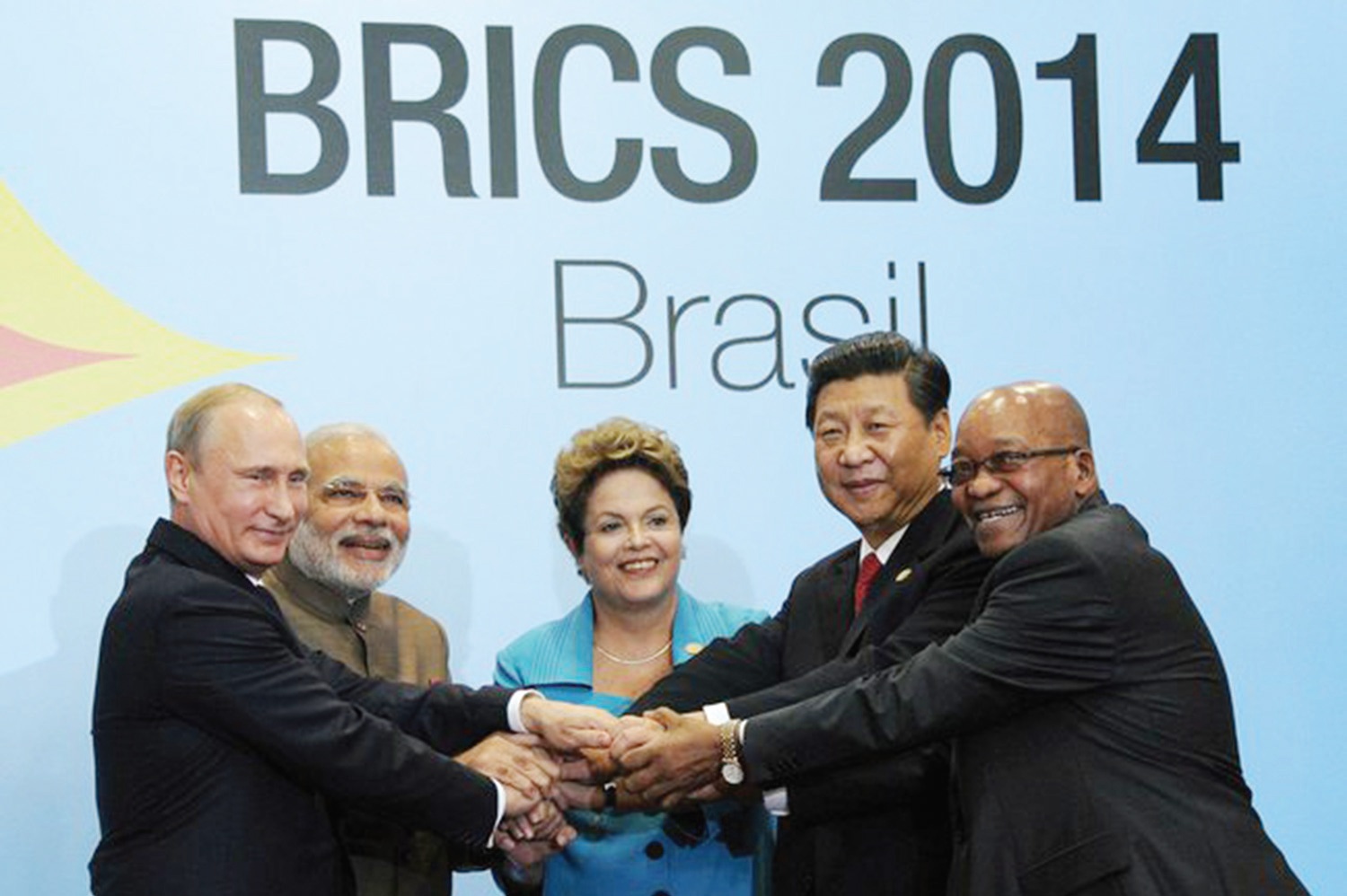
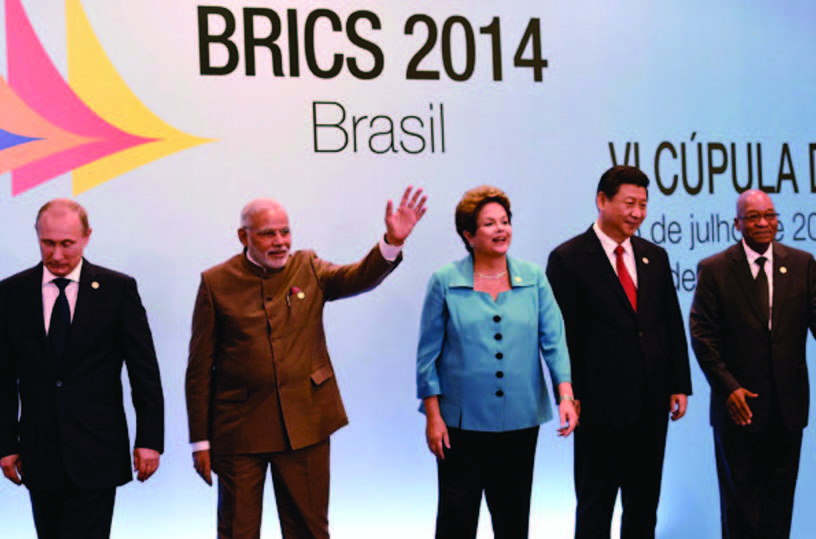
    Pushing for better international governance, Narendra Modi said he favoured an open, rule-based, international trading regime which is critical for global economic growth. Modi’s first BRICS summit saw significant inroads towards the establishment of the New Development Bank and though the headquarters of the bank is slated to be in China, its first President will be from India.

    Addressing the BRICS leaders, Modi also pressed for zero tolerance towards terrorism. He also met Chinese President Xi Jinping and both addressed the need for a solution to the boundary question. Further, Modi also favoured broadening the strategic partnership with Russia in nuclear, defence and energy sectors and invited President Vladimir Putin to visit the Kudankulam atomic power project during his trip in December.

    India poised to make further progress on UN’s development goals
    India has made progress on different indicators such as health and nutrition under the UN’s Millennium Development Goals and is expected to improve further upon them. “There has been progress in all the indicators and further progress is expected to be made in the remaining period up to 2015,” Planning Minister Rao Inderjit Singh had said recently.

    Challenges
    As far as India is concerned, 8 MDGs with 12 targets are relevant which are sought to be achieved during the period 1990 to 2015, the minister said. MDGs are international development goals that UN member states and numerous international organizations, including India, have agreed to achieve by the year 2015.

    Eradicating poverty
    These include eradicating extreme poverty and hunger; achieving universal primary education; promoting gender equality; reducing the child mortality rate and ensuring environmental sustainability. The minister’s said India had achieved the MDG target regarding poverty eradication. India had to halve the proportion of people whose income is less than one dollar a day between 1990 and 2015.

    In 1990, India had 47.8 per cent such poor people and thus the proportion of this population is to be reduced to 23.9 per cent. However, India’s poverty ratio was 21.92 per cent for 2011-12. Similarly, India has to half the proportion of people who suffer from hunger by 2015 to 26 per cent. However, the latest figure for 2004-05 reveal that the percentage of such population was 40 per cent.

    Education: Improving enrolment ratio
    In the education sector, India has to improve the net enrolment ratio in primary schools to 100 per cent by 2015. The country achieved 99.89 per cent enrolment in primary education in 2011-12. The proportion of pupils starting grade 1 who reach grade 5 was 86.05 per cent in 2011- 12 against the target of 100 per cent. The literacy rate in India was 61 per cent in 1990. It went up to 86 per cent in 2017-08.

    The ratio of girls to boys in primary education was 0.73 in 1990 which went up to 1.01 in 2011-12. Similarly the ratio of literate women to men (15-25 years) was 0.67 in 1990, which was 0.88 in 2007-08. MDGs target for both ratios is 1. The mortality ratio among children under the five-year age was 126 per 1,000 live births in 1990 which was brought down to 52 in 2012. The MDGs target is 42 for that.

    Infant mortality ratio
    The infant mortality ratio was 80 per 1,000 live births in 1990 which was brought down to 42 in 2012 against the MDGs target of 27. The proportion of one year old children immunized against measles was 42.2 per cent in 1990 which was improved to 74.1 per cent against targeted 100 per cent coverage.

    Similarly, the maternal mortality ration per 1,00,000 live births was 437 in 1990 which was brought down to 178 by 2011-12 against targeted 109 by 2015.

  • To each superpower, its own near-abroad

    To each superpower, its own near-abroad

    The downing of MH17 puts the spotlight back on the Ukrainian crisis. It’s a warning to the West to eschew attempts to ‘contain’ Moscow and stop the provocative expansion of NATO across Russia’s borders.

    In the early hours of the morning of July 17, Malaysian Airlines Flight MH17 with 298 people on board was shot down over eastern Ukraine, now controlled by Russian separatists, engaged in a civil war against the Kiev Government. The Russian speaking minority has evidently been reinforced and equipped by their kinsmen from across the Russia-Ukraine border. They carry heavy firepower including tanks, armoured personnel carriers and a range of surface-to-air missiles.

    The shooting down of MH17 came alongside rebel missile attacks over the past four weeks, which have downed two military transport and three state-of-the-art Sukhoi attack aircraft, of the Ukrainian Air Force. It is evident that the missile attack on MH17 was based on the mistaken assumption that it was a Ukrainian Air Force aircraft. There have been seven incidents of such inadvertent shooting down of civilian aircraft in the past. In recent times, South Korean Airlines Flight 007 with 277 passengers and crew strayed into Soviet airspace. It was shot down by a missile fired from a Soviet MiG.

    After the usual rhetoric, Presidents Ronald Reagan and Mikhail Gorbachev returned to business as usual. Thereafter, on July 3, 1988, Iran Air Flight 655, flying from Tehran to Dubai with 290 passengers, mostly pilgrims headed for Mecca, was shot down over Iranian territorial waters, by two missiles fired from the US Navy missile cruiser, USS Vincennes. The US refused to accept responsibility for the action. It paid a sum of $61.8 million as compensation to the families of the victims, following the ruling of an international tribunal.

    What the US paid was less than three per cent of what it got from Libya, for the Lockerbie bombing of Pan Am 103. The Captain of the USS Vincennes was awarded Combat Action Ribbons, shortly after shooting down a civil airliner. Washington, DC’s displeasure, about Russian supply of surface-to-air missiles to the Russian resistance in Ukraine, is surprising. It was the US that started the practice of providing lethal weaponry to non-state actors. The Central Intelligence Agency liberally provided lethal Stinger surface-to-air missiles to the anti-Soviet Mujahideen in Afghanistan, through Pakistan’s Inter-Services Intelligence.

    Three Indian Air Force aircraft – a MiG 21, MiG 27 and a helicopter gunship – were shot down and a Canberra bomber damaged, during and just prior to the Kargil conflict. The IAF aircraft were fired on by Pakistan’s Northern Light Infantry, using, what were assessed to be, Stinger surface-to-air missiles. Given the relentless US policy of strategic ‘containment’ of Russia after the disintegration of the Soviet Union, it was inevitable that, pushed to a corner by American and NATO pressures, the Russians would reach a position of saying: “Thus far and no further”.

    The erratic nature of the policies of President Boris Yeltsin and his advisers like Yegor Gaidar and Mr Andrey Kozyrev, immediately after the disintegration of the Soviet Union, evidently encouraged the US and its NATO allies to erode Russian influence in the Balkans and undermine Russian credibility in Kosovo. Simultaneously, members of armed Chechen separatist groups were openly welcomed in western Europe. Yeltsin’s incompetence in Chechnya and his inability to deal with the expansion of American-led influence just across Russia’s borders, contributed to his being eased out of office and replaced by Mr Vladimir Putin.

    Even as the Russians tried to increasingly integrate former Soviet Republics economically and strategically, the US and its NATO allies held out lucrative offers for economic integration with the European Union and membership of the NATO military alliance. Russia faced a challenge of economic isolation and military encirclement. The Russians have responded by developing economic partnerships with former Soviet Republics and the establishment of the Collective Security Treaty Organisation.

    The economic and security inroads made by the EU and NATO have, however, significantly eroded traditional Russian influence in its immediate neighbourhood. These Western moves, which the Russians naturally regard as strategic encirclement, have resulted in former Warsaw Pact members – the Czech and Slovak Republics, Hungary, Bulgaria, Romania and Poland – joining NATO In the Balkans, Croatia and Slovenia are now NATO members. Moreover, the former Soviet Baltic Republics, Estonia, Latvia and Lithuania have joined NATO.

    There are also moves to consider EU and Nato membership for Ukraine, Azerbaijan, Armenia, Kazakhstan, Moldova and Georgia. Ukraine was ruled by Russian tsars for three centuries prior to the formation of the Soviet Union. It was regarded as part of the sphere of Russian influence. Its eastern region bordering Russia was increasingly populated by Russians. Ukraine’s Crimean region was transferred by Soviet leader Nikita Khrushchev from the Russian Federation to Ukraine in 1954, as a “gesture of goodwill”, marking the 300th anniversary of Ukraine being a part of Tsarist Russia.

    Sevastopol in Crimea is vital strategically to Russia, constituting Russia’s access to the warm waters of the Black Sea. Former President Viktor Yanukovych of Ukraine and other Ukrainian leaders inevitably played off the Russians, who promised plentiful supplies of energy, against the EU, which promised prosperity. Mr Yanukovych signed an agreement in 2010 extending the lease of Sevastopol till 2042. The quite evidently American-backed movement that resulted in the ouster of Mr Yanukovych, led to the takeover of Sevastopol and the Crimean region, with a Russian majority population, by Russia.

    The US-led attempts to contain Russia have been marked by inconsistencies. The dismemberment of Yugoslavia and the independence of Kosovo were justified by Western powers on the lofty grounds of respect for “human rights”. But, today these same powers are raving and ranting against the “separatists” of the Russian minority in Ukraine, who are seeking independence, or merger with Russia.

    There is little doubt that Russia today faces serious internal problems arising out of falling birth rates, alcoholism, drug addiction, declining life expectancy and corruption. But, it will be a historical error to underestimate Russian resilience in the face of adversity. Attempts to dominate and marginalise the Russian minority in Ukraine will be fiercely resisted and reinforced by support from across the Ukrainian-Russian border.

    What is needed is a realistic political solution involving a united, but federalised Ukraine. More importantly, attempts at ‘containment’ of Russia, will have to be eschewed and the expansion of NATO across Russia’s borders ended. Given the imperatives of stability and energy security, responsible European countries like Germany and France will recognise this. Will the Americans do likewise?

  • US Bonhomie for India: US Secretaries Storm New Delhi

    US Bonhomie for India: US Secretaries Storm New Delhi

    The recent visits of Secretary of Commerce Penny Pritzker, Secretary of State John Kerry, and Secretary of Defense Chuck Hagel are being seen as demonstrative of the resurgence of U.S. interest in India as both countries try to strengthen ties.

    NEW DELHI (TIP): It may be a coincidence that the Union cabinet announced August 6, a day before US Secretary of Defense arrived in New Delhi, the decision to allow 49% FDI in Defense. Also announced were the cabinet decisions to allow 100% FDI in Close on the heels of the visits to India by U.S. Secretary of Commerce Penny Pritzker and U.S. Secretary of State John Kerry, U.S. Secretary of Defense Chuck Hagel arrived in India Thursday, August 7, for a three-day visit.

    The fact that these high-profile trips by American officials have occurred so close to one another indicates the resurgence of American interest in India. Furthermore, the emergence of a strong, decisive, and reformist government under the Bharatiya Janata Party (BJP) in India has suddenly put India back on the U.S. agenda. India’s Prime Minister Narendra Modi is keen on reminding the world that India is a large country that cannot be ignored and whose interests must be taken seriously.

    Secretary Hagel is scheduled to meet Prime Minister Narendra Modi and India’s Defense and Finance Minister Arun Jaitley on Friday, August 8 as well as U.S. and Indian defense company executives. Talks are expected to be fruitful for both countries. Hagel is in India to strengthen defense ties between the two nations. Although the two nations have been moving closer over the past decade, they have not become as close as some U.S. policymakers would have liked.

    In fact, events of the past year, including India’s support for Russia in Crimea and the Devyani Khobragade case, show the limitations of a U.S.-India relationship. Nonetheless, both countries are interested in strengthening defense ties when possible, as they still share many common interests, including stability in Afghanistan, as well as concerns over China. It is unlikely that India and the U.S. will remain on anything but cordial terms, despite some occasional bumps. Secretary Hagel himself recognized this, stating that U.S. relationships with new partners in Asia represented both opportunities and challenges.

    The Wall Street Journal quotes Rear Admiral John Kirby, the Pentagon press secretary, as saying that “Secretary Hagel’s meetings will focus on the United States’ and India’s converging interests in the Asia Pacific, our common interests in Afghanistan and initiatives to strengthen our defense cooperation, including military exercises, defense, trade, co-production and co-development and research.” One of Secretary Hagel’s goals is to seek more defense projects between the two countries.

    There is much scope for this. India is the largest importer of U.S. arms, although it still imports up to 75 percent of its arms from Russia. The two countries are close to finalizing a $1.4 billion deal in which India will buy at least 22 U.S. Apache and 15 Chinook helicopters made by Boeing, as well as other aircraft. Discussion of this deal will be at the top of Hagel’s agenda during his visit. India is also keen on bringing in more foreign investment in its defense sector, so it can meet more of its defense needs indigenously.

    India is becoming increasingly ambitious on this front, building, for example, ever-larger warships in India. U.S. investment in India’s defense sector could bolster India’s ability to meet its security needs and be another way in which both the U.S. and India cooperate and profit together. Hagel may also discuss a U.S. offer to jointly develop and produce the next generation of the Javelin missile in India for the Indian market as well for export.

    Analysts are optimistic on the outcome of Hagel’s visit to India. According to Vivek Lall, a former Boeing executive and current chairman of the aerospace and defense committee of the Indo-American Chamber of Commerce, “this visit could be the inflection point of deeper defense ties between both countries, specifically to help boost defense production and state-of-the-art technology absorption.”

  • Europe down after Russia sanctions

    Europe down after Russia sanctions

    ECB, Wall Street decline

    NEW TORK (TIP): European shares and the euro lost ground on Thursday, August 7 and investors moved to safehaven government debt after a stronger-thanexpected move by Russia to ban certain imports from Europe and the United States, according to a Reuters report.

    Early gains on Wall Street faded, with the S&P 500 just below its 100-day moving average, a significant technical support level. More broadly, MSCI’s world equity index .MIWD00000PUS lost 0.4 percent. German government debt yields fell to alltime lows, on increased concern over the effect Ukraine’s crisis will have on euro zone growth. The European Central Bank said following its monthly policy-setting meeting that a sanctions war could worsen the growth outlook on the continent, where demand is already weak.

    The ECB elected to hold borrowing rates at record low levels on Thursday. Europe’s main bourses closed lower, with London’s .FTSE down 0.6 percent, Germany’s DAX .GDAXI off 1 percent and France’s CAC 40 .FCHI down 1.4 percent. The move for the DAX put the index down 10 percent from its record closing high in early July. [.EU] “Geopolitical risks are heightened, are higher than they were a few months ago. And some of them, like the situation in Ukraine and Russia will have a greater impact on the euro area than they … have on other parts of the world,” said ECB head Mario Draghi, in post-meeting comments.

    Russia said on Wednesday, August 6, it would ban all food imports from the United States and all fruit and vegetables from Europe in a stronger-than-expected answer to Western sanctions for Moscow’s support for separatists in Ukraine. German Bunds slid to a record low of 1.069 percent DE10YT=RR while the 10-year UK gilts yield touched a one-year low of 2.476 percent GB10YT=RR. [GVD/EUR] Gold climbed back above $1,300 an ounce to hit a high of $1,313.60, breaking through technical resistance that could spur further gains, and 10-year U.S. bond yields touched near a two-month low at 2.43 percent US10YT=RR.

    [US/] The tensions have, however, aided the ECB’s efforts to push down the euro. The shared currency was hovering just above a nine-month low against the dollar EUR= at $1.3363. Portuguese stocks .PSI20, slumped 2.3 percent, and bonds PT10YT=TWEB were again showing significant weakness amid worries the country and its banks will have to pay dearly for the rescue of Banco Espirito Santo. U.S. stocks succumbed to concerns over Russia after a higher opening as initial enthusiasm from an unexpected drop in jobless claims dissipated. The Dow Jones industrial average .DJI fell 82.55 points or 0.5 percent, to 16,360.79, the S&P 500 .SPX lost 11.5 points or 0.6 percent, to 1,908.74 and the Nasdaq Composite .

    IXIC dropped 20.26 points or 0.47 percent, to 4,334.79. “Europe traded sharply lower after the ECB press conference. U.S. equities again provided a counterbalance to that risk-off trade by largely maintaining a fairly tight trading range and stability,” said Peter Kenny, chief market strategist at Clearpool Group in New York. “I look at this as the glass half-full, for sure, if you stop to consider the DAX closed in correction territory and we are off incrementally.”

    As fighting has intensified on the ground in eastern Ukraine, NATO said Moscow had massed around 20,000 combat-ready troops on the Ukrainian border and warned of a possible advance. Russia’s dollar-denominated RTS index .IRTS, which is down nearly 9.3 percent over the past three weeks, lost 0.3 percent while its rouble-based MICEX shed 0.1 percent, giving it a 6.3 percent decline over the same period. U.S. crude CLc1 settled up 42 cents to $97.34 while Brent LCOc1 broke through the $105 mark to settle up 85 cents at $105.44 per barrel. [O/R]

  • Russia gives three-year residence permit to Snowden

    Russia gives three-year residence permit to Snowden

    MOSCOW (TIP): Former US intelligence contractor Edward Snowden, wanted by the United States for leaking extensive secrets of its electronic surveillance programs, has been given a three-year residence permit by Russia, his Russian lawyer told reporters on Thursday, August 7. The announcement comes at a time when Russia’s relations with the West are at Cold Warera lows over Russia’s actions in Ukraine.

    Russia responded to Western sanctions by banning certain food imports from the United States, the European Union, Australia, Canada and Norway on Thursday. The ban has adversely impacted markets in the west. “The decision on the application has been taken and therefore, with effect from August 1, 2014, Edward Snowden has received a three-year residential permit,” Anatoly Kucherena said. “In the future, Edward himself will take a decision on whether to stay on (in Russia) on and get Russian citizenship or leave for the United States.”

    He said Snowden could apply for citizenship after living in Russia for five years, in 2018, but that he had not decided whether he wanted to stay or leave. Kucherena said Snowden was studying Russian and had an IT-related job, but did not provide details. “He is a high-class IT specialist”, he said. He said Snowden’s security was being taken seriously and that he was using private security guards.

    “He leads a rather modest lifestyle, but nevertheless we proceed from the tone of statements that come from the US State Department and other political figures,” he said. “The security issue should not be treated as a secondary one.” Snowden’s place of residence has not been disclosed and few pictures of him have appeared in the media. His lawyer has in the past expressed concerns that he could be at risk, given taken his intelligence background and the outrage over the leaks expressed by US authorities.

    Snowden fled to Hong Kong and then Moscow last year after leaking details of secret state surveillance programs. He spent almost six weeks at Moscow’s Sheremetyevo airport before Russia granted him asylum for a year on Aug. 1, 2013, upsetting Washington, which wants to try him on charges including espionage. Snowden is believed to have taken 1.7 million digital documents with him.

    His leaks revealed massive programs run by the US National Security Agency (NSA) that gathered information on hundreds of millions of Americans’ emails, phone calls and Internet use. He was charged last year in the United States with theft of government property, unauthorized communication of national defense information and willful communication of classified intelligence to an unauthorized person.

  • Pakistani woman climbs world’s seven highest peaks

    Pakistani woman climbs world’s seven highest peaks

    ISLAMABAD (TIP):
    Samina Baig became the first Pakistani woman to climb seven highest peaks in seven continents in under eight months, media reported on Sunday. Baig, 23, has completed the challenge of climbing seven of the highest mountains around the world, including Mount Everest which she scaled in May 2013, Dawn online reported.

    Baig accompanied by her brother Mirza Ali, flew out to Russia, after Alaska, where they went on to scale the highest mountain in Europe, Mt Elbrus in Russia, which is 5,642 metres tall, bringing their “Seven Summits” adventure to an end. Baig was part of an adventure diplomacy mission, funded by passionate climbers outside Pakistan, a few embassies in Islamabad, with no support from the Pakistan government.

    Belonging to Pakistan’s mountainous Hunza Valley, both climbers had summited Mt McKinley, Alaska, reaching 6,168 metres into the sky July 3. Samina Baig became the first Pakistani woman to climb to the top of that highest peak in North America. In March, she and Mirza Ali reached the top of the 4,884 metreshigh Mount Carstensz Pyramid, the highest peak in Indonesia.

    In the last six months, the duo made history in December when they climbed Mt Aconcagua in Argentina, the highest peak in South America.Then in January, they summited the highest peak in Antarctica, Mt Vinson, and then the 5,895 metres-high Mount Kilimanjaro in Tanzania in February.

  • US Vice President Joe Biden praises Japan’s new military policy

    US Vice President Joe Biden praises Japan’s new military policy

    WASHINGTON (TIP):
    US Vice President Joe Biden is welcoming Japan’s decision to loosen restrictions on its military to allow greater use of force to defend other countries. Biden spoke to Japanese Prime Minister Shinzo Abe on Thursday.

    The White House says the two agreed that Japan’s policy will strengthen US-Japanese ties and help Japan contribute more to regional peace and security. Japan’s move has drawn criticism from rival China as Beijing increases its own military posture.

    The White House says Biden also praised Japan’s sanctions on Russia. The US and Europe are sanctioning Russia over its actions in Ukraine. Japan is part of the Group of Seven nations seeking to pressure Moscow. The two leaders also discussed the nuclear threats from North Korea and Iran, plus conflicts in Iraq and Syria.

  • Ukrainian prime minister tenders his resignation in parliament

    Ukrainian prime minister tenders his resignation in parliament

    KIEV (TIP):

    Ukraine’s prime minister tendered his resignation on July 24, berating parliament for failing to pass legislation to take control over the country’s increasingly precarious energy situation and to increase army financing. Earlier on July 24 two parties quit a parliamentary coalition, a move that opened the way for a new election to clear what a politician called “Moscow agents” from the chamber, a decision welcomed by President Petro Poroshenko. Prime Minister Arseny Yatseniuk’s resignation could leave a hole at the heart of decision-making when Ukraine is struggling to fund a war with pro- Russian rebels in its east and dealing with the aftermath of a plane crash that killed 298 people.

    The usually mild-mannered Yatseniuk bellowed at politicians who had failed to pass a law to allow a liberalisation of control over Ukraine’s pipeline system. He said Ukraine’s politicians were at risk of losing the hearts and minds of the thousands who protested for months in the “Maidan” protests in favour of joining Europe and against a pro- Moscow president. “History will not forgive us,” he told parliament.

    “Millions of people made this revolution. We did not take the European choice but the ‘heavenly hundred’ and thousands of other Ukrainians did,” he said, referring to those killed, mainly by sniper fire, during the protests. Yatseniuk, who has been central to talks with the European Union and the United States, cannot leave office immediately, political analysts said, because he is obliged to oversee his duties before a new prime minister and government are installed.

    But his impassioned speech underlined the frustration of many in Ukraine that change in the higher echelons of power was taking too much time. The mood has also sunk in Kiev since the downing of a Malaysian airliner in rebel-held territory in eastern Ukraine last week, even though Ukrainian forces are making headway in the military campaign against the separatists. ‘Full reset’ Poroshenko welcomed the decision by the nationalist party Svoboda and the Udar (Punch) party of former boxing champion Vitaly Klitschko to withdraw from the majority coalition in parliament.

    “Society wants a full reset of state authorities,” Poroshenko said in a statement, adding the move showed that those who decided to quit the coalition were following the will of the people. Politicians and political activists have complained that while Ukraine has a new president, it has yet to elect a new parliament since the toppling of Viktor Yanukovich in February, and accuse his supporters of hampering its work.

    Yatseniuk said that by blocking legislation, like a bill to exert tighter control over the energy sector in the face of dwindling natural gas supplies from Russia, the parliament was putting Ukraine’s future at risk. By not tackling budget spending, it was also putting the lives of Ukraine’s soldiers at risk, he said.

    “Our government now has no answer to the question; how are we to pay wages, how are we tomorrow morning going to send fuel for armoured vehicles, how will we pay those families who have lost soldiers, to look after the army?” he asked parliament. “Those people who are sitting there under fire, can we just think of them?”

  • No link to Russian govt in plane downing: US

    No link to Russian govt in plane downing: US

    WASHINGTON (TIP):


    Senior US intelligence officials said on July 22 that Russia was responsible for “creating the conditions” that led to the shooting down of Malaysia Airlines Flight 17, but they offered no evidence of direct Russian government involvement. The intelligence officials were cautious in their assessment, noting that while the Russians have been arming separatists in eastern Ukraine, the US had no direct evidence that the missile used to shoot down the passenger jet came from Russia.

    The officials briefed reporters Tuesday under ground rules that their names not be used in discussing intelligence related to last week’s air disaster, which killed 298 people. The plane was likely shot down by an SA-11 surface-to-air missile fired by Russian-backed separatists in eastern Ukraine, the intelligence officials said, citing intercepts, satellite photos and social media postings by separatists, some of which have been authenticated by US experts. But the officials said they did not know who fired the missile or whether any Russian operatives were present at the missile launch.

    They were not certain that the missile crew was trained in Russia, although they described a stepped-up campaign in recent weeks by Russia to arm and train the rebels, which they say has continued even after the downing of the commercial jetliner. In terms of who fired the missile, “we don’t know a name, we don’t know a rank and we’re not even 100 percent sure of a nationality,” one official said, adding at another point, “There is not going to be a Perry Mason moment here,” a referenc to a fictional detective who solved mysteries.

    White House deputy national security adviser Ben Rhodes said the US was still working to determine whether the missile launch had a “direct link” to Russia, including whether there were Russians on the ground during the attack and the degree to which Russians may have trained the separatists to launch such a strike. “We do think President Putin and the Russian government bears responsibility for the support they provided to these separatists, the arms they provided to these separatists, the training they provided as well and the general unstable environment in eastern Ukraine,” Rhodes said in an interview with CNN.

    He added that heavy weaponry continues to flow into Ukraine from Russia following the downing of the plane. The intelligence officials said the most likely explanation for the downing was that the rebels made a mistake. Separatists previously had shot down 12 Ukrainian military airplanes, the officials said. The officials made clear they were relying in part on social media postings and videos made public in recent days by the Ukrainian government, even though they have not been able to authenticate all of it.

    For example, they cited a video of a missile launcher said to have been crossing the Russian border after the launch, appearing to be missing a missile. But later, under questioning, the officials acknowledged they had not yet verified that the video was exactly what it purported to be. Despite the fuzziness of some details, however, the intelligence officials said the case that the separatists were responsible for shooting down the plane was solid. Other scenarios _ such as that the Ukrainian military shot down the plane _ are implausible, they said. No Ukrainian surface-to-air missile system was in range.

    From satellites, sensors and other intelligence gathering, officials said, they know where the missile originated _ in separatist-held territory _ and what its flight path was. But if they possess satellite or other imagery of the missile being fired, they did not release it Tuesday. A graphic they made public depicts their estimation of the missile’s flight path with a green line.

    The jet’s flight path was available from air traffic control data. In the weeks before the plane was shot down, Russia had stepped up its arming and training of the separatists after the Ukrainian government won a string of battlefield victories. The working theory is that the SA-11 missile came from Russia, although the US doesn’t have proof of that, the officials said.

  • Obama, Netherlands’ Rutte agree more sanctions needed on Russia

    Obama, Netherlands’ Rutte agree more sanctions needed on Russia

    WASHINGTON (TIP):

    US President Barack Obama spoke by phone with Netherlands Prime Minister Mark Rutte on July 24 and the White House said both agreed on the need to impose more sanctions on Russia for continuing to arm pro-Russian separatists in Ukraine. According to a White House statement, the two leaders said Russia still had not taken steps to deescalate the situation in eastern Ukraine a week after a Malaysian passenger jet was shot down by what US officials believe were pro-Russian separatists using Russian weapons.

    All 298 people on board were killed. “Instead of de-escalating the situation, they agreed that all evidence indicates Russia is still arming and supplying separatists who continue to engage in deadly acts of aggression against Ukrainian armed forces,” the White House said.

    As a result, Obama and Rutte believe Russia must not be permitted “to destabilize the situation in Ukraine without incurring costs and that, accordingly, the international community will need to enact additional sanctions.” Obama also spoke with Australian Prime Minister Tony Abbott. The White House said they agreed on the need for immediate access to the crash site by international investigators.