Tag: Russia

  • Russian aircraft entered Ukraine airspace, Pentagon says

    Russian aircraft entered Ukraine airspace, Pentagon says

    WASHINGTON (TIP): Russian aircraft have entered Ukrainian airspace on several occasions in the past 24 hours, Pentagon spokesman colonel Steve Warren said on April 25, without offering further details. Warren called upon Moscow to “take immediate steps to deescalate the situation.”

  • Former US test site sues nuclear nations including India and US for disarmament failure

    Former US test site sues nuclear nations including India and US for disarmament failure

    WASHINGTON (TIP): The tiny Pacific republic of the Marshall Islands, scene of massive US nuclear tests in the 1950s, sued the United States and eight other nucleararmed countries on Thursday, April 25, accusing them of failing in their obligation to negotiate nuclear disarmament.

    The Pacific country accused all nine nuclear-armed states of “flagrant violation of international law” for failing to pursue the negotiations required by the 1968 Nuclear Non-Proliferation Treaty. It filed one suit specifically directed against the United States, in the Federal district Court in San Francisco, while others against all nine countries were lodged at the International Court of Justice in The Hague, capital of the Netherlands, a statement from an anti-nuclear group backing the suits said.

    The action was supported by South African Nobel Prize winner Archbishop Desmond Tutu, the Nuclear Age Peace Foundation said. “The failure of these nuclear-armed countries to uphold important commitments and respect the law makes the world a more dangerous place,” its statement quoted Tutu as saying. “We must ask why these leaders continue to break their promises and put their citizens and the world at risk of horrific devastation. This is one of the most fundamental moral and legal questions of our time.”

    The Nuclear Age Peace Foundation is a USbased non-partisan advocacy group working with the Marshall Islands and its international pro-bono legal team. The Marshall Islands, a grouping of 31 atolls, was occupied by Allied forces in 1944 and placed under US administration in 1947. Between 1946 and 1958, the United States conducted repeated tests of hydrogen and atomic bombs in the islands. One, on March 1, 1954, was the largest US nuclear test, code-named Bravo. It involved the detonation of a 15-megaton hydrogen bomb on Bikini Atoll, producing an intense fireball followed by a 20-mile-high mushroom cloud and widespread radioactive fallout. The Marshallese government says the blast was 1,000 times more powerful than that at Hiroshima. The lawsuits state that Article VI of the NPT requires states to negotiate “in good faith” on nuclear disarmament.

    The Nuclear Age Peace Foundation said the five original nuclear weapons states – The United States, Russia, Britain, France and China – were all parties to the NPT, while the others – Israel, India, Pakistan and North Korea – were “bound by these nuclear disarmament provisions under customary international law.” A copy of the suit against the United States made available to Reuters says that it is not aimed at seeking compensation from the United States for the testing in the Marshall Islands, which became an independent republic in 1986. Under agreements between the United States and the Marshall Islands, a Nuclear Claims Tribunal was established to assess and award damages to victims of the nuclear tests.

    But it has never had the cash to compensate fully for the damage done. The suit against the United States said it should take “all steps necessary to comply with its obligations … within one year of the date of this Judgment, including by calling for and convening negotiations for nuclear disarmament in all its aspects.” “Our people have suffered the catastrophic and irreparable damage of these weapons, and we vow to fight so that no one else on earth will ever again experience these atrocities,” the statement quoted Marshall Islands foreign minister Tony de Brum as saying. “The continued existence of nuclear weapons and the terrible risk they pose to the world threaten us all.”

  • RUSSIAN MILITARY EXERCISES UP TENSIONS: CHUCK HAGEL

    RUSSIAN MILITARY EXERCISES UP TENSIONS: CHUCK HAGEL

    MEXICO CITY (TIP): Defense secretary Chuck Hagel says Russian military exercises on its border with Ukraine increase tensions and run counter to a diplomatic agreement it signed just last week. Hagel spoke with reporters in Mexico City after he was informed of the Russian military exercises that President Vladimir Putin said were in response to punitive measures by Ukrainian forces against pro- Russian insurgents.

    Hagel called the military exercises “dangerously destabilizing” and “very provocative.” Hagel said if such activities escalate they will make it more difficult to find a diplomatic solution to the situation in Ukraine. Russian troops began new military exercises, sharpening anxiety over the prospect of a Russian military incursion into Ukraine. Russia’s foreign minister warned Wednesday that any attack on Russian interests in eastern Ukraine would bring a strong response.

  • Mounting pressure on USA

    Mounting pressure on USA

    “With BJP declaring Modi as its prime ministerial candidate and the nation turning in his favor; US is trying to find an escape route”, says the author.

    There has been a buzz in the diplomatic circles, after sudden resignation of US Ambassador to India, Nancy Powell. It is not the first time that US Ambassador to India, has been removed. However, present incidence of the resignation of the US ambassador, cannot be considered a normal occurrence. In diplomatic circles, this resignation is being linked with the emerging situation in wake of general elections in India and the possibility of Narendra Modi taking over the charge as Prime Minister of India.

    BJP’s Prime Ministerial candidate Modi had been denied US Visa a number of times and India and the US have been at loggerheads over this issue in the past. Denial of US visa to Gujarat chief minister Narendra Modi, being in the constitutional position, was considered inappropriate in diplomatic terms. However, many people believe that, now in the event of Narendra Modi becoming the Prime Minister of India, it will not be good for US to continue with this stand.

    It is notable that despite denial of visa by US administration, nothing could bar Modi to address the American gatherings, he was supposed to attend; by way of video conferencing. In recent months, with the BJP announcing Modi as its candidate for prime minister, heat on this issue has multiplied. Reportedly some parliamentarians from India had written to the US President to continue with the policy of denial of US visa to Modi; however, after facing criticism for this act of taking up the matter internationally, against a person holding constitutional post of Chief Minister; they had to eat their words and some of them even denied to have signed this controversial letter to US President.

    Even Congress Party led UPA government also had to contest this policy of the United States. Nancy Powell, US ambassador in India for 5 years, was regarded to be close to the current government and the Congress party. She was obviously considered linked with this episode for denial of visa to Narendra Modi. However, relations between the United States of America and the Government of India have apparently been strained for several other reasons, including diplomatic row over Devyani Khobragade issue. Clearly India’s silent support to recent takeover of Crimea by Russia would not have been liked by USA. Thus Indo-US relations have been stressful in the recent past; and USA would not like to have an adversary in the PM position.

    Now, when mood of the Indian people is very much clear, USA would obviously like to buy peace with Modi. By not assigning any reason for Nancy Powell’s resignation, USA itself has given air to such speculation. It is well known that the US government has always strived to protect the business interests of companies. In this context, the recent visit of a delegation consisting of USA’s lawmakers to Gujarat was an attempt to improve relations with Modi. It is notable that America denied visa to Modi on the pretext that a section of the Immigration and Nationality Act makes any foreign government official who was responsible or “directly carried out, at any time, particularly severe violations of religious freedom” ineligible for the visa. USA did not do it alone; England had also supported her by refusing visa to Modi.

    England’s resolve
    However, England ended this controversy in October, 2012 and granted visa to Modi and instructed English High Commissioner to India to meet him. UK government issued a press statement and said that England has strong economic interests linked to Gujarat. Modi in return tweeted to welcome UK government’s decision. After England’s resolve to grant visa to Modi, pressure has been mounting on USA to end its Modi boycott policy; and now, BJP declaring him as its prime ministerial candidate and the mood of the nation in his favor; USA is trying to find an escape route to come out of this controversy. In February 2014, USA’s ambassador Nancy Powell visited Gujarat to meet Modi. People who used to consider Modi as a controversial personality are now praising him. With chances of new government under Modi’s leadership getting brighter, attitude of people around the world is changing fast. Those who were referring to Gujarat riots are now referring to Gujarat development model.

    They are also talking about Modi’s initiative to boost industry, be it land allotment for Tata’s Nano or facilitating Maruti Suzuki. American agencies are also contemplating that once Modi becomes Prime Minister, US policy of denying American visa to Modi would be unsustainable, as he would enjoy all diplomatic rights. Though, not much is known about Modi’s foreign policy; looking at the public utterances of Modi, there would not be any acceptance or lackluster approach against expansionary policy of China. China will have to keep its aggression at back burner, in order to protect its economic interests in India.

    If Pak TV channels or media is any guide, it is clear that Pakistan is extremely afraid of the emergence of a strong national leadership under Modi. Pak intelligence agencies are equally under stress. Modi has publicly expressed his unhappiness over the ill treatment of Hindus in Pakistan and Bangladesh. He has publicly said that if voted to power, his government would help Hindu migrants from Pakistan and Bangladesh settle in India. International and domestic agencies and defense experts have been critical of Prime Minister Manmohan Singh’s lame approach.

    After Modi taking over the reign of power, it is expected that terrorist activities from across the border or from within would be dealt with sternly. On the one hand USA, European Countries and Japan are trying to improve ties with Modi, enemy nations are keeping a close eye on the developments in India. Although change in attitude of USA, should not surprise us, looking at its commercial interests; however US dilemma in this regard, also cannot be overlooked.

  • President Putin’s Desire for Russian Greatness Needs Lincoln, Not Crimea

    President Putin’s Desire for Russian Greatness Needs Lincoln, Not Crimea

    What’s wrong with Nato ships docked in New Russia’s Sevastopol port aka Ukraine? None. It means no nation has anything to worry, and the rule of law is operational and citizens can demand, and are getting, Lincoln’s government “of, by and for” the people. Russia’s greatness is not in “unmarked” boots on the ground and taking land by force and disturbing sovereignty.

    Her greatness would be if her leaders created a nation that folks fought to migrate to for a better life – after all, that’s the litmus test. Without any apology, and despite our democratic (lower case) warts, America still has a long line of folks from all over the world seeking to migrate here and raise a family.

    We have 11 million illegal aliens to prove it. President Putin’s desire for Russia to be great is a worthy goal, and which should win every human being’s heart – but to do it with force is a self-defeating enterprise when the digital world citizenry is as well informed as it is and driven to achieve the ceiling, not floor, of human rights for their children.

    That is the true curse for modern day politicians still playing divide and rule – even Syria’s Assad’s successful unleashing of sectarian violence to thwart the Arab Spring has a limited shelf life – every parent wants their kid to have the American Dream. Russia needs to find a better and more permanent way to greatness – true greatness, and Abraham Lincoln’s recipe is the answer for all, for all time.

  • New Russia sanctions threats as Ukraine stalemate goes on

    New Russia sanctions threats as Ukraine stalemate goes on

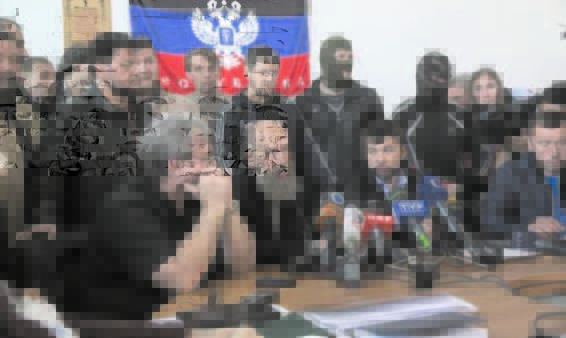
    DONETSK (UKRAINE) (TIP): A day after an international deal in Geneva to defuse the East-West crisis in Ukraine, pro-Russian separatists vowed not to end their occupation of public buildings and Washington threatened further sanctions on Moscow if the stalemate continued.

    Leaders of gunmen who have taken over city halls and other sites in and around Donetsk this month in pursuit of demands for a Crimea-style referendum on union with Russia, rejected the agreement struck in Geneva by Ukraine, Russia, the United States and European Union and demanded on Friday that the leaders of the Kiev uprising must first quit their own government offices. Moscow renewed its insistence that it has no control over the “little green men” who, as before Russia annexed Crimea last month, appeared in combat gear and with automatic weapons to seize public buildings – a denial that Western allies of those who overthrew the pro-Russian president in Kiev do not accept.

    The White House renewed President Barack Obama’s demands that the Kremlin use what Washington believes is its influence over the separatists to get them to vacate the premises. It warned of heavier economic sanctions than those already imposed over Crimea if Moscow failed to uphold the Geneva deal – or if it moved to send troops massed on the border into Ukraine. “We believe that Russia has considerable influence over the actions of those who have been engaged in destabilising activities in eastern Ukraine,” national security adviser Susan Rice said.

    “If we don’t see action commensurate with the commitments that Russia has made yesterday in Geneva … then obviously we’ve been very clear that we and our European partners remain ready to impose additional costs on Russia. “Those costs and sanctions could include targeting very significant sectors of the Russian economy.” President Vladimir Putin’s spokesman hit back, while voicing scepticism – of a kind also heard from the Ukrainian government – about how useful the cautiously worded Geneva pact would be.

    “You can’t treat Russia like a guilty schoolboy,” said Dmitry Peskov. “That kind of language is unacceptable.” The Russian foreign ministry said: “The Americans are once again stubbornly trying to whitewash the actions of the Kiev authorities, who have embarked on a course of violently suppressing protesters in the southeast who are expressing their legitimate indignation over the infringements of their rights.”

    UKRAINIAN OFFERS
    Ukraine’s interim government, in power since pro-Western protests forced President Viktor Yanukovich to flee to Russia two months ago, was at pains to show it was keeping its part of the bargain. Its ill-equipped security forces have shown little sign of being able to regain control in the east by force. Prime Minister Arseny Yatseniuk, though admitting he was not overly optimistic about the agreement solving what has become the gravest East-West crisis since the Cold War, said militants would be offered an amnesty. And he and the acting president made a formal joint broadcast pledging constitutional reform to devolve power to the regions and bolster the status of Russian as an official language in areas where it was widely spoken.

  • Obama threatens fresh sanctions against Russia

    Obama threatens fresh sanctions against Russia

    WASHINGTON (TIP): US President Barack Obama told German Chancellor Angela Merkel on April 10 that the United States and its allies should prepare new sanctions against Russia if it escalates the crisis over Ukraine.

    “The president underscored the need for the United States, European Union and other global partners to be prepared to meet further Russian escalation with additional sanctions,” the White House said in a statement about the phone call. Pro-Russian separatists in eastern Ukraine, “apparently with support from Moscow, continue an orchestrated campaign of incitement and sabotage to undermine and destabilize the Ukrainian state”, it added.

    “The leaders again called for Russia to move its troops back from the border region.” Earlier in the day at World Bank/IMF meetings in Washington, US treasury secretary Jacob Lew delivered the same warning to his Russian counterpart finance minister Anton Siluanov, ramping up the pressure on Moscow. Ukraine is facing a new secession crisis following its loss of Crimea to Russia, and relations between Moscow and the west have hit new post-Cold War lows.

  • Japan pushes plan to stockpile plutonium, despite proliferation risks

    Japan pushes plan to stockpile plutonium, despite proliferation risks

    TOKYO (TIP): Just weeks after Japan agreed to give up a cache of weapons-grade plutonium, the country is set to push ahead with a program that would produce new stockpiles of the material, creating a proliferation risk for decades to come. Though that additional plutonium would not be the grade that is most desirable for bombs, and is therefore less of a threat, it could — in knowledgeable hands and with some work and time — be used to make a weapon.

    The newly created stockpiles would add to tons of other plutonium already being stored in Japan. “The government made a big deal out of returning several hundred kilograms of plutonium, but it brushes over the fact that Japan has so much more,” said Sumio Mabuchi, an opposition lawmaker who served as adviser to the government in the early days of the 2011 Fukushima disaster. “It’s hypocritical.” Plutonium staying in Japan would be used for a nuclear recycling program that has become one of the most contentious parts of the nation’s first comprehensive energy plan since the Fukushima nuclear disaster.

    The plan is expected to be approved by the cabinet as early as Friday.The recycling program, which seeks to separate plutonium from used nuclear fuel so it can be reused to power reactors, is seen by supporters as a way of ensuring resource-poor Japan more energy independence. The program has helped delay the energy plan’s approval, with even some members of the governing party worried by its cost and by criticism from proliferation experts at home and abroad. Those experts fear the plutonium produced by recycling would create an inviting target for terrorists to steal or attack, and American officials have been quietly pressing Japan not to build up larger stocks of the material.

    The plutonium is far easier to use in weapons than the uranium that has been used to power most of Japan’s nuclear reactors. For the many Japanese frightened of atomic power after the Fukushima Daiichi disaster, the government’s continued push for recycling after years of missteps is a worrisome sign that the government plans a robust nuclear energy program in the future despite promises to eventually reduce the nation’s use of atomic power. (The country’s functioning nuclear reactors have been idled while they undergo more stringent safety checks introduced after the accident.) The plans also mean Japan is committed to using a mixed plutoniumuranium fuel for reactors that is considered somewhat more dangerous than uranium fuel if there is an accident.

    The mixture, called mixed oxide fuel, is necessary because plutonium produced by recycling cannot be used alone in the reactors. Japan’s intent to grow its plutonium inventory is also becoming a new irritant in Tokyo’s relations with its Asian neighbors, threatening to further destabilize a region already mired in disputes over territory and wartime history. This month, China accused Japan of stockpiling plutonium and uranium “far exceeding its normal needs.”

    The implication is that Japan wants to retain the plutonium in case it decided to pursue its own nuclear weapons program. For Prime Minister Shinzo Abe and other proponents of recycling, the risks are outweighed by the benefit of more energy independence — a goal of Japanese leaders for decades. While uranium remains widely available, and cheap, the Abe administration says Japan’s nuclear program should not be vulnerable to disruptions of supply or a possible rise in costs. “Japan must continue with the nuclear fuel cycle,” said Kazuo Ishikawa, a former Trade Ministry official who worked on energy policy.

    “Japan’s energy security depends on it.” Anxiety over Japan’s planned recycling program stretches back decades. As some countries, including Britain and Russia, have opted to reprocess plutonium for nuclear fuel, the United States under Presidents Gerald R. Ford and Jimmy Carter turned away from the idea in good part because it was considered a possible new path to a bomb. The fear was that other countries would be more inclined to start the programs if the United States did so, creating stocks of plutonium around the world.

  • Russia takes Voice of America radio off air

    Russia takes Voice of America radio off air

    MOSCOW (TIP): Russia has pulled the US-funded Voice of America radio station from the air, a senior state media official said today, calling it “spam on our airwaves.” Dmitry Kiselyov, the head of the Rossiya Segodnya state media conglomerate, said a contract to broadcast Voice of America on AM radio would not be renewed.

    “Rossiya Segodnya will not work with Voice of America,” Kiselyov said, the RIA Novosti news agency reported. The United States has targeted Kiselyov for sanctions over his role in promoting Russia’s annexation of Crimea. He presents a highly opinionated weekly news show on state television.

    “It’s as if they broadcast from the underworld. Or at least a world that no longer exists,” Kiselyov said of VOA and USfunded Radio Liberty, which still broadcasts in Russia through a partner station. “I view these stations as spam on our airwaves,” he said. “It has nothing to do with freedom of speech” because there is “nothing original” on the stations, he said.

    The Broadcasting Board of Governors, which oversees US media, said last week that Kiselyov had suspended all cooperation with Voice of America. It said Kiselyov sent VOA a letter with the single sentence, “we are not going to cooperate” and said the contract would not be renewed.

    In 2006 Russian regulators forced national stations to stop broadcasting Voice of America shows, a move seen as politically motivated. But the station continued to be broadcast in Moscow on a local AM radio frequency under an agreement with Voice of Russia, a state-owned station now controlled by Kiselyov’s conglomerate. Radio Liberty, which is funded by US Congress, continues to exist in Russia for the time being in form of Radio Svoboda, which broadcasts through a partner station on FM and a popular website.

  • Russia plays gas card to threaten Ukraine

    Russia plays gas card to threaten Ukraine

    MOSCOW: President Vladimir Putin warned on Wednesday that Russia may begin requiring advance payment for gas supplies unless Ukraine comes to the negotiating table over its unpaid energy bills.

    Russia’s statecontrolled natural gas company “Gazprom will only send gas in the amounts that the Ukrainian side has paid for a month in advance” under the changed sale terms being contemplated, Putin said at a government meeting according to televised excerpts.

    “They will receive as much as they have paid for,” he said. Russia says Ukraine now owes it $2.2 billion for natural gas supplies, and Gazprom last week demanded that Ukraine “take immediate measures” to settle the debt.

  • Russia didn’t share all details on Boston bombing suspect, report says

    Russia didn’t share all details on Boston bombing suspect, report says

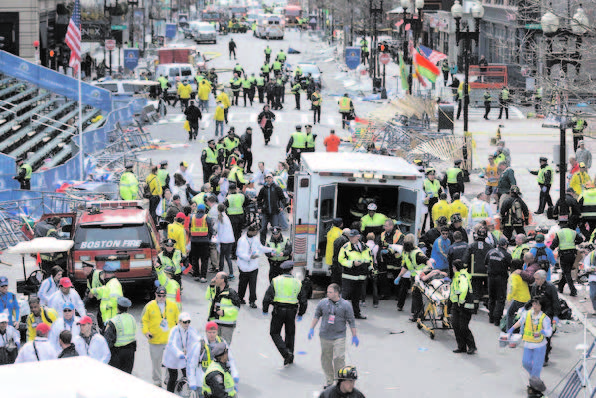
    WASHINGTON (TIP): The Russian government declined to provide the FBI with information about one of the Boston Marathon bombing suspects that would most likely have led to more extensive scrutiny of him at least two years before the attack, according to an inspector general’s report.

    Russian officials had told the FBI in 2011 that the suspect, Tamerlan Tsarnaev, “was a follower of radical Islam and a strong believer” and that Mr. Tsarnaev “had changed drastically since 2010 as he prepared to leave the United States for travel to the country’s region to join unspecified underground groups.” But after an initial investigation by the FBI, the Russians declined several requests for additional information about Mr. Tsarnaev, according to the report, a review of how intelligence and law enforcement agencies could have thwarted the bombing.

    At the time, American law enforcement officials believed that Mr. Tsarnaev posed a far greater threat to Russia. The new inspector general’s report found that it was only after the bombing occurred last April that the Russians shared with the FBI the additional intelligence, including information from a telephone conversation the Russian authorities had intercepted between Mr. Tsarnaev and his mother in which they discussed Islamic jihad.

    “They found that the Russians did not provide all the information that they had on him back then, and based on everything that was available the FBI did all that it could,” said a senior American official briefed on the review. Mr Tsarnaev, who was killed attempting to elude the police, and his brother, Dzhokhar, are believed to be the sole suspects in the attack, which killed three people and injured more than 200 near the marathon’s finish line.

    The Justice Department said in January that it would seek the death penalty against Dzhokhar Tsarnaev. Federal authorities have uncovered little evidence tying the brothers to an international terrorist organization. FBI agents who traveled to Dagestan, a region in Russia’s North Caucasus where Tamerlan Tsarnaev went in 2012 during a particularly violent period there, found nothing that showed he received training or encouragement from terrorists. “At this point it looks like they were homegrown violent extremists,” the senior official said.

    “We certainly aren’t in a position to rule anything out, but at this point we haven’t found anything substantive that ties them to a terrorist group.” The report was produced by the inspector general of the Intelligence Community, which has responsibility for 17 separate agencies, and the inspectors general from the Department of Homeland Security, the Justice Department and the Central Intelligence Agency. It has not been made public, but members of Congress are scheduled to be briefed on it Thursday, and some of its findings are expected to be released before Tuesday, the first anniversary of the bombings. Its contents were described by several senior American officials who spoke on the condition of anonymity because the report has not been publicly released.

    The review is similar to an internal review the FBI conducted after the bombing. In that review, the bureau found that its agents had been restrained from conducting a more extensive investigation because of federal laws and Justice Department guidelines that prevent them from using surveillance tools like wiretapping in investigations like those conducted on Mr. Tsarnaev before the bombings. “Had they known what the Russians knew they probably would have been able to do more under our investigative guidelines, but would they have uncovered the plot? That’s very hard to say,” one senior official said.

    While the review largely exonerates the FBI, it does say that agents in the Boston area who investigated the Russian intelligence in 2011 could have conducted a few more interviews when they first examined the information. The report also recommends several steps it says the FBI should take to more effectively share information with state and local authorities, the officials said. The FBI, which has worked with police chiefs from around the country over the past year on how it can better share information, has already adopted several of the recommendations, according to the officials.

    When the FBI disclosed shortly after the bombing that it had received information from the Russians, congressional Republicans and a few Democrats, including Representative William Keating of Massachusetts, criticized the bureau for not continuing to track him when he left to visit Dagestan and for not questioning him on his return in 2012. “It’s people like this that you don’t want to let out of your sight, and this was a mistake,” said Senator Lindsey Graham, Republican of South Carolina. “I don’t know if our laws were inefficient or if the FBI failed, but we’re at war with radical Islamists, and we need to up our game.” As part of its investigation of Tamerlan Tsarnaev in 2011, FBI agents examined his criminal and educational records and his Internet search history.

    They also interviewed him, his parents and people at his school. It was after those investigative efforts uncovered little that FBI agents stationed in Moscow went back to the Russian authorities and requested any additional information they had on Mr. Tsarnaev, who immigrated to the United States from Dagestan a little more than a decade ago. The exoneration of the FBI stands in contrast to the findings of a similar investigation conducted after the 2009 shooting at Fort Hood, Tex, in which 13 people were killed. After the shooting, a former bureau director,William H.Webster, conducted a formal review of the investigation into the gunman, Nidal Malik Hasan, before and after the attack. That review said the FBI had mishandled information garnered from intelligence, and it led to changes in the way the agency shares information.

  • The future of Indo-US ties now lies squarely on America’s shoulders

    The future of Indo-US ties now lies squarely on America’s shoulders

    After entering a green light mode, India-US relations have slipped into an amber mode. How soon we can get back into smooth circulation will depend largely on the US, as the responsibility for the malaise affecting our ties rests mainly on its shoulders.

    Misjudgment
    It is irrelevant whether the current US ambassador to India has resigned or has chosen retirement. The ambassador would have done two years by the time she leaves, not an abnormal tenure by any means. With a new government in New Delhi in the offing, a change in ambassadors would not be inopportune even in the normal course of things. That the present ambassador has contributed to driving the relationship into a corner despite a pro-US government in New Delhi makes the change even more advisable.

    From our perspective, the present ambassador has outlived her utility.With regard to the State Department role in Khobragade’s arrest and the evacuation of the maid’s family, either the ambassador misjudged our reaction and therefore gave faulty advice, or she gave the right counsel but it was disregarded, which would suggest that her clout in Washington is limited. In either case her usefulness, in any serious attempt to put the relationship back on track, is questionable.

    A more serious political misjudgment by the US, for which the ambassador cannot escape blame, is the failure to mend political fences with Narendra Modi in a timely manner following the European example. Worse for her credibility, the day she met Modi, the State Department declared that the visa policy towards him remained unchanged. The ambassador would have undoubtedly been consulted beforehand about how her overture to Modi would be “balanced” at the Washington end, which further underscores the inept political handling of the US relationship with the BJP’s prime ministerial candidate.

    To lift the morose mood in India-US ties, the US has to decide whether its strategic interest in India has wider geopolitical objectives, or depends on the redressal of shortcomings in our current trade, investment and IPR polices that affect the interests of US corporations in select sectors. If US interest has flagged because the promised opening of the Indian market has not occurred and our growth rate has fallen, can one conclude that the US-India “strategic partnership” is largely a function of board room strategies of US corporations? If so, is the US hyping up its strategic partnership with India to essentially gain wider access to our expanding market?

    Security
    Even if this strategic partnership is taken at face value, the US “system” makes it very difficult to deal with this kind of a relationship with America. Separate constituents of the Administration, the Congress, the intelligence agencies, NGOs, think-tanks, foundations, a variety of lobbies, can all play a constructive or a destructive role in conducting relations between the US and other countries.

    Changing of the guards: The tensions over the arrest of diplomat Devyani Khobragade demonstrate the need for a change of staff. For the Pentagon, India seems to have geopolitical value, especially in the context of a rising China. Protecting the sea lanes of communication in the Indian Ocean, through which global trade and energy flows, makes India a valuable strategic partner of the US, given the expanding power of the Indian Navy. With the Indo-Pacific concept gaining acceptance, maritime security has become a top drawer issue.

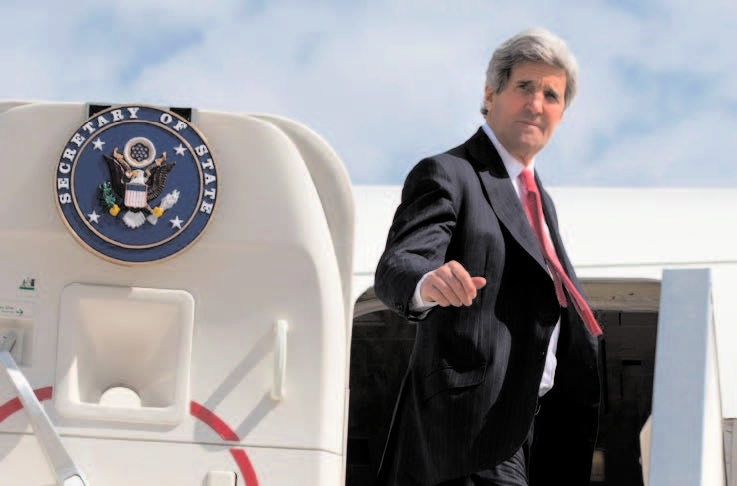
    The State Department’s ambivalence towards India remains despite the forging of a strategic partnership. Secretary Kerry is supposedly less drawn towards India than his predecessor, which would make the political hand at the top of the State Department looser in directing Indiarelated policies. While the non-proliferation lobby in the State Department has been subdued by the India-US nuclear deal, the human rights, human trafficking, minority protection units seem to be propelled by their own logic vis-a-vis India independently of the logic of the overall relationship in which the stakeholders on the US side have interests that obviously transcend dedicated moral pursuits by human rights activists in the US foreign office.

    Turnabout
    The responsiveness of the US system to pressure by corporate lobbies can cause unexpected turbulence in pursuing an overall “strategic partnership” with the US, as demonstrated by the US Trade Representative’s threat to impose sanctions on India under US laws for alleged IPR violations, instead of getting the matter adjudicated through the WTO’s dispute settlement mechanism.

    Hesitant: The US state department under John Kerry appears ambivalent on strengthening ties with India Select US corporations in the pharmaceutical, telecom and solar energy are today leading the charge against India in the US Congress, even as the US corporate sector has been in the past, a potent ally of India in promoting bilateral economic ties. Now we hear that President Obama, focused primarily on domestic issues, is paying inadequate attention to India, even though in 2010 the US relationship with India was, in his eyes, a defining partnership of the 21st century.

    Such a quick turnabout calls into question the depth of the India-US strategic partnership. Presumably this partnership was based on a wider US geopolitical objective of consolidating the global system established by the West post-1945 by co-opting a huge and rising Asian country like India through intensified engagement, so that the inevitable re-ordering of the balance of power within the system is done under the aegis of the US rather than in opposition to it.

    This objective will be increasingly difficult to achieve if the US continues with its regime change policies, refuses to see the terrible societal costs of its democracy and human rights promotion policies, or curbs its tendency to unilaterally sanction countries whose policies it disagrees with, as we see even in the case of a nuclear-armed permanent UN Security Council member like Russia. What strategic lesson should weaker and more vulnerable countries draw from this?

  • Crimean tremor in space: Nasa cuts Russian ties

    Crimean tremor in space: Nasa cuts Russian ties

    MUMBAI (TIP): In a grim reminder of the Cold War days, Nasa on Wednesday suspended majority of its ongoing engagements with the Russian Federation and the Russian Space Agency, Roscosmos, because of “Russia’s ongoing violation of Ukraine’s sovereignty and territorial integrity.”

    A statement issued by Nasa, has however, clarified that Nasa and Roscosmos will continue to work together to maintain safe and continuous operation of the International Space Station. The ban covers teleconferences , travel and email exchanges. Russian space officials have been banned from visiting Nasa facilities till the order is in effect.

    This order was passed a few days after the second half of the Expedition 39 crew launched to the International Space Station from Russia.With the space shuttle flights ending in July 21, 2011, US astronauts have been training in Russia’s Star City for flights to the space station.

    Among those who has been trained at Russia is Indian-American astronaut , Sunita Williams. Nasa administrator Charles Bolden said that if Russia responds by stopping US crew flights to the space station, then he will have no choice but to suspend Orion, Space Launch System and human space flight programme. The statement further said, “Nasa is focused on a plan to return human spaceflight launches to US soil, and end our reliance on Russia to get into space.

    This has been a top priority of the Obama administration for the past five years, and had our plan been fully funded, we would have returned American human space flight launches -and the jobs they support—back to the US next year.” Meanwhile, Ukraine’s security chiefs said on Thursday that the killing of anti-government protesters in Kiev in February took place ‘under the direct leadership’ of ousted President Viktor Yanukovich.

  • US warns China not to attempt Crimea-style action in Asia

    US warns China not to attempt Crimea-style action in Asia

    WASHINGTON: China should not doubt the US commitment to defend its Asian allies and the prospect of economic retaliation should also discourage Beijing from using force to pursue territorial claims in Asia in the way Russia has in Crimea, a senior US official said on April 3.

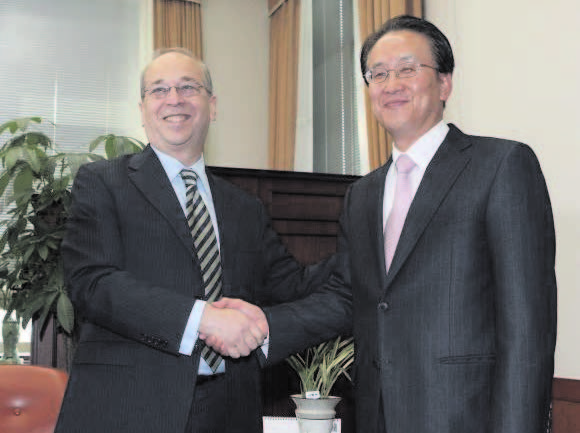
    Daniel Russel, President Barack Obama’s diplomatic point man for East Asia, said it was difficult to determine what China’s intentions might be, but Russia’s annexation of Crimea had heightened concerns among US allies in the region about the possibility of China using force to pursue its claims.

    “The net effect is to put more pressure on China to demonstrate that it remains committed to the peaceful resolution of the problems,” Russel, the US assistant secretary of state for East Asia, told the Senate Foreign Relations Committee. Russel said the retaliatory sanctions imposed on Russia by the United States, the European Union and others should have a “chilling effect on anyone in China who might contemplate the Crimea annexation as a model.”

    This was especially so given the extent of China’s economic interdependence with the United States and its Asia neighbors, Russel said. Russel said that while the United States did not take a position on rival territorial claims in East Asia, China should be in no doubt about Washington’s resolve to defend its allies if necessary. “The president of the United States and the Obama administration is firmly committed to honoring our defense commitments to our allies,” he said.

    While Washington stood by its commitments – which include defense treaties with Japan, the Philippines and South Korea – Russel said there was no reason why the rival territorial claims could not be resolved by peaceful means. He said he hoped the fact that the Philippines had filed a case against China on Sunday at an arbitration tribunal in The Hague would encourage China to clarify and remove the ambiguity surrounding its own claims.

    Russel termed the deployment of large numbers of Chinese vessels in its dispute with the Philippines in the South China Sea “problematic” and said that Beijing had taken “what to us appears to be intimidating steps.” “It is incumbent of all of the claimants to foreswear intimidation, coercion and other non-diplomatic or extra-legal means,” he said. In Asia, China also has competing territorial claims with Japan and South Korea, as well as with Vietnam, Malaysia, Brunei and Taiwan in potentially energy-rich waters. Obama is due to visit Japan, South Korea, Malaysia and the Philippines from April 22, when he is expected to stress his commitment to a rebalancing of US strategic and economic focus towards the Asia-Pacific region in the face of an increasingly assertive China.

  • REFORMS TO GIVE 110 MILLION JOBS BOOST TO ECONOMY IN 10 YEARS

    REFORMS TO GIVE 110 MILLION JOBS BOOST TO ECONOMY IN 10 YEARS

    NEW YORK (TIP): As general elections draw closer in India, global financial major Goldman Sachs has said 40 million new manufacturing jobs can be created in a decade if states follow flexible labor laws like in Gujarat.

    Besides labor laws, implementation of proper reforms in other areas such as subsidies can lead to overall job gains rising to 110 million over the next 10 years – the largest for any major economy, Goldman Sachs said. The observations assume significance as they come at a time when a political debate is underway on the comparison between growth model of Narendra Modi-led Gujarat and that of other states ruled by Congress and other parties.

    Modi is the prime ministerial candidate of BJP, which is trying to wrestle power from Congress at the Centre. The report said the Gujarat government amended the Industrial Disputes Act in 2004 to allow for greater flexibility in the labor market for Special Economic Zones (SEZ). It allowed for companies within SEZs to lay off workers, without seeking the permission of the government, by simply giving a 1-month notice to the worker.

    In contrast, the West Bengal government, made several pro-worker changes. It changed the laws to make it virtually impossible to shut down a loss-making factory.Accordingly, Gujarat has witnessed a 60 per cent growth in manufacturing employment between 2000 and 2012 while West Bengal has seen only a 22 per cent increase.Goldman Sachs said as a new government takes charge from mid- 2014, it sees labor market reforms as a critical ingredient to accelerate India’s economic growth rate.

    “If India were to undertake significant reforms in the labor market, the benefits could be quite large,” Goldman Sachs said. In a bull scenario, it projected that India could add some 110 million workers over the next decade. At this level, the number of jobs that India could create would be larger than that of the US, China, Russia, and Brazil combined, Goldman Sachs said.

    According to the financial services firm, India’s stringent labor laws are a key factor constraining employment growth and the reforms like simpler labor laws, more flexibility to hire and fire, self-certification by the employers, amendment in the Trade Union Act and faster dispute settlement, are likely to increase flexibility and boost employment.India’s employment growth in recent years has been anemic. The economy added only about 2 million jobs each year between FY05 to FY12, compared to 12 million a year in the 5 years before this period, it said.

    “As a labor abundant country, India should be generating jobs in laborintensive manufacturing,” the report said.India has some 44 labor laws which are enacted by the central government and enforced by both the central as well as state governments. In addition, there are also labor laws enacted and enforced by the various state governments. Some laws date back to the colonial era. The Trade Unions Act is from 1926, the Workmen’s Compensation Act is from 1923, and the Factories Act from 1948.

  • India ranks 102 out of 132 nations on social development index

    India ranks 102 out of 132 nations on social development index

    NEW DELHI (TIP): India ranks 102nd among the 132 countries on the Social Progress Index, a measure of human wellbeing that goes beyond traditional economic measures such as GDP or per capita income. Of the BRICS countries — Brazil, Russia, India, China and South Africa — only India ranked lower than the 100th position on the list of the Social Progress Index 2014 compiled by USbased non-profit group Social Progress Imperative. China was next lowest of the five, in the 90th position, and Brazil was the highest, at 46th.

    Using measures of access to basic human needs such as food and shelter and of equality of opportunity such as education and personal freedom, the index aims to measure quality of life throughout the globe. Last year the first Social Progress Index ranked 50 countries. This year, its ranking includes 132 countries around the world. New Zealand tops the list followed by Switzerland, Iceland and Netherlands. Chad ranks the lowest in the index.

    India ranks 102nd on social progress with challenges across all three dimensions with particularly low scores on shelter (39.77) in the basic human needs dimension, access to information (39.87) in the foundations of wellbeing dimension, and tolerance and inclusion (21.54) in the opportunity dimension. The basic human needs dimension comprises parametres of nutrition and basic medical care, water and sanitation, shelter and personal safety.

    The foundations of wellbeing includes parametres of access to basic knowledge, information and communications, health and wellness and ecosystem sustainability, while opportunity dimension includes personal rights, freedom and choice, tolerance and inclusion and access to education. The report said that while the BRICS are generally seen as areas of great economic growth potential, social progress performance is mixed at best.

    Only Brazil (46th) ranks better on social progress than it does on GDP per capita (57th). Russia has a higher GDP than Brazil (39th) yet ranks lower on the Social Progress Index (80th); South Africa is 58th on GDP and 69th on social progress; China is 69th on GDP and 90th on social progress; and India is 94th on GDP and 102nd on social progress. Central and South Asia trails all regions but Sub-Saharan Africa in terms of overall index performance.

    The top performers for the region are Sri Lanka (85th), Kazakhstan (86th) and Mongolia (89th). The worst performance belongs to Pakistan, which is ranked 124th. “Tracking social progress trends over time will be important for understanding the speed with which social progress responds to changes in economic performance.

    It remains to be seen how quickly fast-growing economies such as India and China, that currently underperform on social progress relative to their GDP per capita, can turn economic success into improving social conditions,” the report said. “The Social Progress Index provides evidence that extreme poverty and poor social performance often go hand-inhand,” it said.

  • UK deputy PM Nick Clegg and anti-EU rival Nigel Farage trade barbs in debate

    UK deputy PM Nick Clegg and anti-EU rival Nigel Farage trade barbs in debate

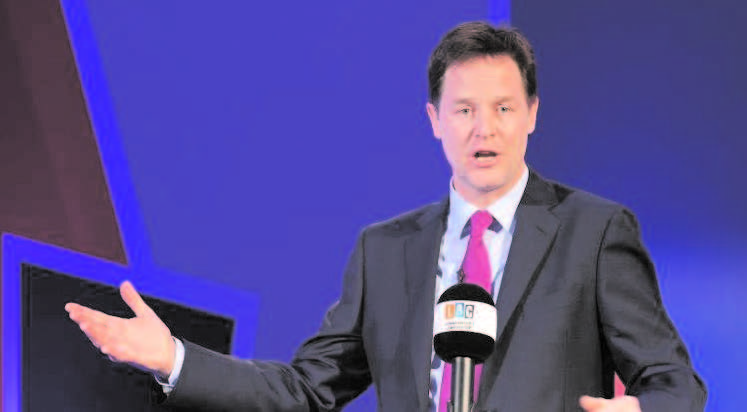
    LONDON (TIP): Britain’s Deputy Prime Minister Nick Clegg locked horns with the leader of the country’s most anti-EU party in the first of two face-to-face debates ahead of forthcoming European Parliament elections. Clegg, leader of the Europhile Liberal Democrats, on Wednesday argued that Britain was “better off in Europe – richer, stronger, safer”, but UK Independence Party (UKIP) head Nigel Farage countered that the European Union was no longer fit to face the challenges of the modern economy.

    Clegg and Farage, who wants to pull Britain out of the EU, will meet again for another debate on April 2. Farage’s party is expected to make large gains in the May 22 elections, while Clegg’s is expected to fare badly. The deputy prime minister said he wanted “a Britain that leads in the world by standing tall in our own European backyard, a Britain prepared to work with other countries on the things we can’t possibly sort out on our own.

    “We are better off in Europe – richer, stronger, safer – and that’s why I will fight to keep us in, for the sake of jobs, for the sake of our clout in the world, for the sake of Britain,” he added. Farage said Britain had “sold his birthright” by handing powers to the EU, and vowed to act to reclaim control of lawmaking from Brussels and to cap immigration. But he insisted he wanted to keep close ties with the continent.

    “This debate is between a tired status quo defending a crumbling EU that frankly isn’t working anymore, and a fresh approach that says let’s be friendly with Europe, let’s trade with Europe, but let’s not be governed by their institutions,” he said. But he controversially suggested that the EU had “blood on its hands” over Ukraine, claiming that its desire to create an “empire” had given Ukrainians false hope of being able to counter Russia’s influence. Commentators largely agreed that Farage had dominated the early rounds of the hour-long debate, hosted by London radio station LBC, but that Clegg had hit back later on.

  • US, RUSSIA EXCHANGE THREATS AT TENSE UN MEETING

    US, RUSSIA EXCHANGE THREATS AT TENSE UN MEETING

    UNITED NATIONS (TIP): Russia and the United States exchanged threats on March 19 at a tense UN security council meeting over the Ukraine crisis, with the Russian envoy saying the US ambassador’s “insults” are jeopardizing Moscow’s willingness to cooperate with Washington on other diplomatic matters.

    It was the council’s eighth meeting in three weeks on Ukraine, a show of determination by Western powers to highlight Russia’s diplomatic isolation over the Crimean Peninsula — even if the council is powerless to act because of Moscow’s veto power as a permanent council member. The meeting came as UN secretary-general Ban Ki-moon left for Russia and Ukraine in a bid to seek a diplomatic way out of the crisis. Ban will meet with President Vladimir Putin and other Russian officials in Moscow on March 20, said UN spokesman Stephane Dujarric.

    On Friday, the UN chief will travel to Kiev for talks with the acting president and prime minister. At the council, Russian ambassador Vitaly Churkin was once again alone in defending his country’s actions in Crimea. He began his speech by celebrating the treaty signed a day earlier by Putin declaring Crimea part of Russia, saying it honored the will of the Crimean people and complied with international law. “Yesterday, something truly historic happened,” Churkin declared. US ambassador Samantha Power warned Russia that, two days after the Obama administration and other countries imposed sanctions on Russia, the US and its allies “are prepared to take additional steps if Russian aggression or Russian provocations continue.”

    She also compared Russia’s takeover of Crimea to theft. “A thief can steal property, but that does not confer the right of ownership on the thief,” she said. The Russian ambassador shot back: “It is simply unacceptable to listen to these insults addressed to our country.” He added, “If the delegation of the United States of America expects our cooperation in the security council on other issues, then Power must understand this quite clearly.” By then, Power had left the meeting to her deputy. Churkin did not elaborate. The United States and Russia are the key players in efforts to establish peace talks in Syria, and also are involved in talks over Iran’s nuclear programme.

    The council also heard a briefing from Ivan Simonovic, assistant UN secretary-general for human rights, who expressed particular concern over the security of Tatars and other ethnic minorities in Crimea. He highlighted the disappearance of a Crimean Tatar activist after participating in a March 3 protest. Simonovic said the activist was found dead March 16 and his body bore marks of “mistreatment.” He said the United Nations is deploying a 34-member human rights monitoring mission to Ukraine, scheduled to be in place by Friday. Simonovic said he was not able visit Crimea because the authorities there refused to receive his mission or ensure its security until it was too late. But he said he spoke to representatives of displaced Tatars and victims of arbitrary arrests, torture and other human rights violations. Churkin dismissed Simonovic’s assessment as “one-sided.” He also blamed snipers for the killing of a Ukrainian soldier and a member of a local self-defense brigade in Crimea on Tuesday, saying the two were deliberately targeted to provoke confrontation.

  • CBI ARRESTS 5 WITH FAKE MEDICAL DEGREES

    CBI ARRESTS 5 WITH FAKE MEDICAL DEGREES

    NEW DELHI (TIP): In a countrywide crackdown, the Central Bureau of Investigation on Thursday arrested five people possessing medical degrees from Russia and China and obtaining recognition from Medical Council of India through allegedly fraudulent means. CBI said based on information gathered, FIR had been filed against eight people who claimed they had medical degrees from Russia and China.

    At least three of the doctors, who had allegedly got a forged registration from MCI, were working in government hospitals in Gujarat, West Bengal and Chhattisgarh. The CBI has also registered case against unnamed officials of MCI and some other individuals. CBI conducted raids at the premises of a Meerut medical practitioner who was allegedly a conduit between MCI officials and the potential candidates coming from these countries.

    According to CBI, those arrested told the agency that they paid upto Rs 20 lakh for getting registration from MCI. Government has made it mandatory for screening test of medical students from erstwhile USSR countries and China to be eligible for medical practice in India. CBI alleged these candidates had colluded with MCI officials who gave them permission to practice in return for illegal gratification even as the doctors did not fulfill the necessary parameters.

    CBI sources said they would interrogate the accused on the role of officials in MCI, who are giving these fake registrations. Sources said more arrests are likely. The registration documents recovered during searches on Thursday would be sent for CFSL examination and files would also be taken from MCI. CBI Director Ranjit Sinha, who is personally monitoring the case, said, “This is a very important case as such people were playing with the lives of patients.”

  • Warning Russia, Biden says US will defend allies

    Warning Russia, Biden says US will defend allies

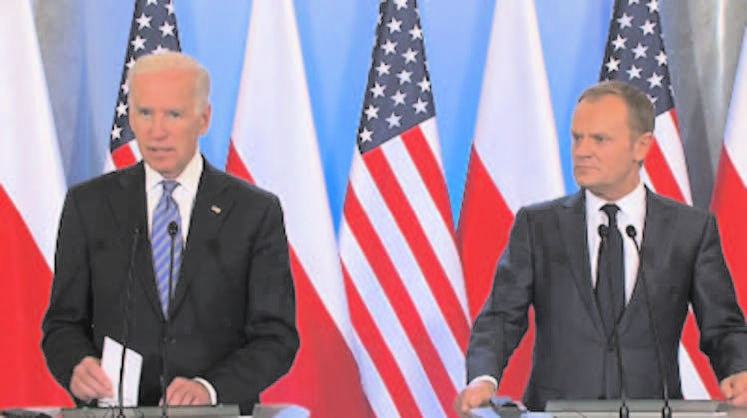
    VILNIUS, LITHUANIA (TIP): Issuing an outright warning to Moscow, Vice President Joe Biden declared Wednesday the United States will respond to any aggression against its Nato allies, as Russia’s neighbors looked warily to the escalating crisis in nearby Ukraine.

    Standing side by side with a pair of Baltic leaders in Vilnius, Lithuania, Biden said the US was “absolutely committed” to defending its allies, adding that President Barack Obama plans to seek concrete commitments from Nato members to ensure the alliance can safeguard its collective security. In a jab at Russia, he said the US stands resolutely with Baltic states in support of the Ukrainian people against Russian aggression.

    “Russia cannot escape the fact that the world is changing and rejecting outright their behavior,” Biden said, after meeting in Vilnius with Lithuanian President Dalia Grybauskaite and Latvian President Andris Berzins. Biden’s comments came at the close of a two-day trip to Lithuania and Poland with a two-pronged theme: Sending a stern message to Russian President Vladimir Putin that the US won’t abide Russian intervention in Ukraine, and reassuring fretful Nato allies that the US and others will come to their defense if necessary. “We’re in this with you, together,” Biden said.

    Amid the tough talk from Biden and the Baltic leaders, Russia’s annexation of Crimea was increasingly looking like a foregone conclusion. At the Ukrainian navy headquarters in Sevastopol, Crimea, militias stormed the base Wednesday, taking it over without resistance. Although senior Ukrainian officials planned to travel to Crimea in hopes of averting an escalation in hostilities, Crimea’s pro-Russian prime minister insisted they weren’t welcome and wouldn’t be allowed to enter. A day earlier, Putin declared Crimea part of Russia in a passionate speech steeped in Russia’s sense of being slighted and marginalized by the West in the years since the Cold War.

    While repeatedly insisting that Russia’s move is illegal and won’t be recognized, the US and other world powers have also turned their attention to eastern Ukraine and other areas with large ethnic Russian populations, lest Putin seek additional territory in what some fear could portend a return to Moscow’s traditional imperialist ambitions. To that end, Western powers were seeking fresh ways to show that Russia would incur real costs unless it changes course.

    Berzins announced that he and Polish President Bronislaw Komorowski had agreed that Poland and Latvia will start coordinating its security activities more closely. France’s foreign minister said leaders of the Group of Eight world powers have suspended Russia’s affiliation with the group over its actions in Ukraine. Obama invited the seven other members to discuss what comes next during an emergency meeting in Europe. Meanwhile, Britain said it was suspending military cooperation with Russia in light of the crisis. And German Chancellor Angela Merkel, in a phone call with Obama on Tuesday, agreed that U.N. and other international monitors must be sent in to other parts of Ukraine without delay.

  • Obama expands sanctions, threatens Russian economy

    Obama expands sanctions, threatens Russian economy

    WASHINGTON (TIP): US President Barack Obama imposed sanctions on more Russian officials and a bank on Thursday and threatened to target the broader Russian economy if Moscow escalates its actions against Ukraine.

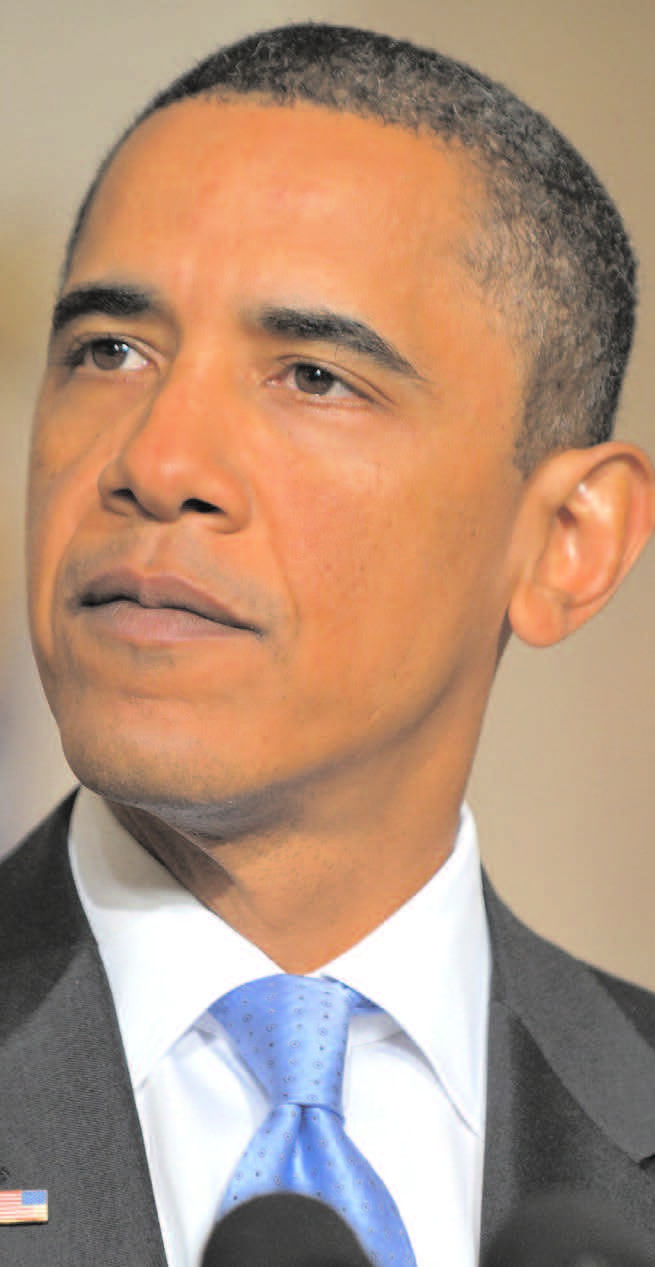
    “Russia must know that further escalation will only isolate it further from the international community,” Obama said at the White House. The new measures targeted a new list of 20 lawmakers and senior government officials in addition to 11 people already sanctioned by Washington.

    Obama made his announced just hours after Russian lawmakers rubberstamped a treaty signed by President Vladimir Putin to absorb the Ukrainian region of Crimea into Russia. The US move freezes assets within American jurisdiction and bars US firms from conducting business with those concerned. The US treasury department identified the financial institution involved as Aktsionerny Bank of the Russian Federation, also known as Bank Rossiya.

    Senior officials said the bank held significant assets of the Russian ruling elite and key figures around Russian President Vladimir Putin. “Bank Rossiya’s shareholders include members of Putin’s inner circle associated with the Ozero Dacha Cooperative, a housing community in which they live,” the US treasury said.

    Obama said: “Now we’re taking these steps as part of a response to what Russia has already done in Crimea.” But he also raised the prospect of tougher future action if Russian behavior does not change, adding he had signed a new executive order that would allow him to target specific sectors of the Russian economy. “This is not our preferred outcome,” Obama said, warning that the moves would have a “significant impact” on the Russian economy.

  • Russia has promised not to attack east Ukraine: US

    Russia has promised not to attack east Ukraine: US

    WASHINGTON (TIP): Russian defence minister Sergei Shoigu promised his US counterpart Chuck Hagel in a telephone call on Thursday that Moscow would not assault eastern Ukraine.

    Hagel voiced concern about Russian military movements but Shoigu assured him that “the troops he has arrayed along the border are there to conduct exercises only and they have no intention of crossing the border into Ukraine and that they would take no aggressive action,” Pentagon spokesman Rear Admiral John Kirby told reporters.

    Hagel also asked how long the military “exercise” would last but Shoigu “didn’t have a firm time frame for that,” Kirby said. Washington has watched a Russian buildup on Ukraine’s eastern border with growing concern after Moscow’s intervention in Crimea.

  • EU moves towards travel bans, asset freezes for Russians

    EU moves towards travel bans, asset freezes for Russians

    BRUSSELS/SIMFEROPOL, UKRAINE (TIP): The EU agreed a framework on Thursday for its first sanctions on Russia since the cold war, a stronger response to the Ukraine crisis than many had expected and a mark of solidarity with Washington in the effort to make Moscow pay for seizing Crimea.

    The EU sanctions, outlined in a document seen by Reuters, would slap travel bans and asset freezes on an as-yet-undecided list of people and firms accused by Brussels of violating the territorial integrity of Ukraine. German chancellor Angela Merkel said the measures would be imposed on Monday unless diplomatic progress was made. Shares in Moscow dropped 2.6% and the central bank was forced to spend $1.5 billion to prop up the rouble as investors confronted the prospect that Russia could face unexpectedly serious consequences for its plans to annex Crimea.

    Russian troops have seized control of the Black Sea peninsula, where separatists have taken over the provincial government and are preparing for a referendum on Sunday to make the region part of Russia, which the West calls illegal. The measures outlined by the EU are similar to steps already announced by Washington, but would have far greater impact because Europe buys most of Russia’s oil and gas exports, while the United States is only a minor trade partner. The EU’s 335 billion euros of trade with Russia in 2012 was worth around 10 times that of the United States.

    The travel bans and asset freezes could cut members of Russia’s elite off from the European cities that provide their second homes and the European banks that hold their cash. The fast pace of Russian moves to annex Crimea appears to have galvanised the leaders of a 28-member bloc whose consensus rules often slow down its decisions. Merkel herself had initially expressed reservations about sanctions but has been frustrated by Moscow’s refusal to form a “contact group” to seek a diplomatic solution over Crimea. “Almost a week ago, we said that if that wasn’t successful within a few days, we’d have to consider a second stage of sanctions,” Merkel said. “Six days have gone by since then and we have to recognise, even though we will continue our efforts to form a contact group, that we haven’t made any progress.”

    PREPARATIONS
    In Crimea, the regional government is led by a Russian separatist businessman whose party received just 4% of the vote in the last provincial election in 2010 but who took power on February 27 after gunmen seized the assembly building. Two days later, President Vladimir Putin announced Russia had the right to invade Ukraine to protect Russian citizens. Preparations for Sunday’s referendum are in full swing. Banners hang in the centre of Crimea’s capital, reading “Spring — Crimea — Russia!” and “Referendum — Crimea with Russia!” Crimea has a narrow ethnic Russian majority, and many in the province of 2 million people clearly favour rule from Moscow.

    Opinion has been whipped up by state-run media that broadcast exaggerated reports of a threat from “fascist thugs” in Kiev. “Enough with Ukraine, that unnatural creation of the Soviet Union, we have to go back to our motherland,” said Anatoly, 38, from Simferopol, dressed in camouflage uniform and a Cossack traditional fur cap. But a substantial, if quieter, part of the population still favours being part of Ukraine. They include many ethnic Russians as well as Ukrainians and members of the peninsula’s indigenous Tatar community, who were brutally repressed under Soviet rule. “Crimea has been with Ukraine since the 1950s and I want to know how they will cut it off from what was our mainland,” said Musa, a Tatar. “If the referendum is free and fair, at least a little bit, I will vote against Crimean independence.”

    The referendum seems to leave no such choice: voters will have to pick between joining Russia or adopting an earlier constitution that described Crimea as sovereign. The regional assembly says that if Crimea becomes sovereign, it will sever ties with Ukraine and join Russia anyway. Still, with the streets firmly in control of pro- Russian militiamen and Russian troops, there is little doubt that the separatist authorities will get the pro-Russian result they seek. Many opponents, including Tatar leaders, plan to boycott. There will be no Western observers. Election officials have openly said they proudly support union with Russia. Journalists seeking accreditation for the vote are required to promise not to report “negative news”.

    While tightening his grip on Crimea, Putin seems to have rowed back from his March 1 threat to invade other parts of eastern and southern Ukraine, where most of the population, though ethnically Ukrainian, speak Russian as a first language. That threat exposed the limits of Ukraine’s military, which would be little match for the superpower next door and has seen its detachments in Crimea surrounded. The authorities in Kiev announced the formation of a new national guard on Wednesday.

    But if Putin had expected to be able to seize Crimea without facing any consequences — as he did when he captured parts of tiny Georgia after a war in 2008 — the push towards sanctions suggests he may have miscalculated. In a statement, the leaders of the G7 – the United States, Britain, France, Germany, Italy, Japan and Canada — called on Russia to stop the referendum from taking place. “In addition to its impact on the unity, sovereignty and territorial integrity of Ukraine, the annexation of Crimea could have grave implications for the legal order that protects the unity and sovereignty of all states,” they said. “Should the Russian Federation take such a step, we will take further action, individually and collectively.”

    TALK BUT NO BREAKTHROUGH
    There has been a lot of diplomatic contact between Russia and the West – on Thursday Putin spoke to French President Francois Hollande, while U.S. Secretary of State John Kerry is due to meet foreign minister Sergei Lavrov on Friday in London — but so far no sign of any breakthrough. Russia has pledged to retaliate for any sanctions, but EU leaders seem to be betting that Moscow has more to lose than they do. Merkel’s finance minister,Wolfgang Schaeuble, said any potential impact on Germany’s economy was likely to be limited. Storage tanks for natural gas across much of Europe are full after a mild season, and the peak of winter demand is over. Europe’s trade volume with Russia accounts for just 1 percent of EU gross domestic product but 15 percent of Russia’s, said the German trade lobby group BGA.

    “A trade conflict would be painful for the German economy, but for the Russian economy it would be life-threatening,” said its president, Anton Boerner. Many investors still believe sanctions are unlikely to be severe enough to damage ‘business as usual’ for Moscow, but say the risk of serious disruption has grown. “Talk of very tough sanctions is probably a negotiating tool and at this stage the impact will be limited. But it’s the anticipation of stronger action that could potentially be more harmful,” said Neal Shearing, head of emerging markets research at Capital Economics.

    While the EU has agreed wording for its sanctions, it is still working on a target list. Talks took place in London this week between officials from Britain, the United States, Italy, France, Germany, Poland, Switzerland, Turkey and Japan. “My understanding is that there was detailed discussion of names at the meeting,” an EU official said. “No definitive list has been drawn up, but it will be ready by Monday.”European officials have indicated that Putin and Lavrov will not be on the list, in order to keep channels of communication open. The list is expected to focus on targets close to Putin in the security services and military, as well as lawmakers.

  • G7 urges Russia to withdraw its support ‘immediately’ from Crimean referendum

    G7 urges Russia to withdraw its support ‘immediately’ from Crimean referendum

    WASHINGTON (TIP): The leaders of Canada, France, Germany, Italy, Japan, the United Kingdom, the United States, the President of the European Council and the President of the European Commission, have in a joint statement through the White House, March 12, called on the Russian Federation to cease all efforts to change the status of Crimea contrary to Ukrainian law and in violation of international law.

    The leaders said, “We call on the Russian Federation to immediately halt actions supporting a referendum on the territory of Crimea regarding its status, in direct violation of the Constitution of Ukraine. Any such referendum would have no legal effect. Given the lack of adequate preparation and the intimidating presence of Russian troops, it would also be a deeply flawed process which would have no moral force.

    For all these reasons, we would not recognize the outcome. “Russian annexation of Crimea would be a clear violation of the United Nations Charter; Russia’s commitments under the Helsinki Final Act; its obligations to Ukraine under its 1997 Treaty of Friendship, Cooperation and Partnership; the Russia- Ukraine 1997 basing agreement; and its commitments in the Budapest Memorandum of 1994.

    In addition to its impact on the unity, sovereignty and territorial integrity of Ukraine, the annexation of Crimea could have grave implications for the legal order that protects the unity and sovereignty of all states. Should the Russian Federation take such a step, we will take further action, individually and collectively.

    “We call on the Russian Federation to deescalate the conflict in Crimea and other parts of Ukraine immediately, withdraw its forces back to their pre-crisis numbers and garrisons, begin direct discussions with the Government of Ukraine, and avail itself of international mediation and observation offers to address any legitimate concerns it may have.

    We, the leaders of the G-7, urge Russia to join us in working together through diplomatic processes to resolve the current crisis and support progress for a sovereign independent, inclusive and united Ukraine. We also remind the Russian Federation of our decision to suspend participation in any activities related to preparation of a G-8 Sochi meeting until it changes course and the environment comes back to where the G-8 is able to have a meaningful discussion.”

  • INDIA AND US TO HOLD TOP-LEVEL MEET TO BOLSTER MILITARY TIES

    INDIA AND US TO HOLD TOP-LEVEL MEET TO BOLSTER MILITARY TIES

    NEW DELHI (TIP): A 26-member delegation led by General Vincent K Brooks, commanding general of the US Army Pacific, will be in New Delhi on March 18-20 for the 18th meeting of the India-US executive steering group (ESG). The Indian delegation, in turn, will be led by director-general of military operations Lt-General P R Kumar during the talks.

    “The ESG will discuss measures to further crank up military-to-military ties through joint combat exercises, doctrinal and operational exchanges. The two armies are slated to conduct their annual Yudh Abhyas counterterrorism exercise at Chaubatia (Uttarakhand) in July- August this year,” said an official. The exercise, the last edition of which was held at Fort Bragg in the US last May, was to be held earlier this year but got delayed by a few months amid the diplomatic wrangling during the Devyani Khobragade episode.

    The expansive India-US defense cooperation over the last decade has seen the armed forces from the two countries conduct over 70 exercises, including the highend Malabar naval combat exercises. India has also invited Japan to join the Malabar war games in August- September this year, an offer which was extended during Japanese PM Shinzo Abe visit here in January. The US has already bagged defense deals close to $10 billion over the last decade in the lucrative Indian defense market, with the latest being the $1.01 billion one for six additional C-130J “Super Hercules” aircraft.

    The other deals on the anvil are the ones for 22 Apache attack helicopters, 15 Chinook heavy-lift helicopters, four P-8I maritime patrol aircraft and 145 M-777 ultra-light howitzers, together worth another $4 billion or so. Desperate to displace Russia as India’s largest defense supplier, the US is promising to treat India on par with its closest allies like the UK and Australia for providing cutting-edge military technology.

    Towards this end, the US has also managed to almost scuttle an almost-finalized over Rs 15,000 crore project with Israel to equip the over 380 infantry battalions of the Indian Army with third-generation, shoulder-fired antitank guided missiles (ATGMs). After the US initially created roadblocks in the transfer of technology (ToT) for its “Javelin” ATGMs, India had turned to the Israeli “Spike” ATGMs for the project. India is keen on an initial import of the tank-killing missiles followed by ToT to defense Public Sector Unit Bharat Dynamics for indigenous manufacture. But after the US recently offered a joint project to manufacture the next-generation of ATGMs, the Indian defense ministry says both the Israeli and American proposals are now being studied to select the better option.