Tag: Russia

  • DIESEL PRICES TO BE DEREGULATED IN 6 MONTHS

    DIESEL PRICES TO BE DEREGULATED IN 6 MONTHS

    NEW DELHI (TIP): Petroleum Minister Veerappa Moily on November 20 said that diesel prices will be deregulated in six months with gradual price increases. He said the small monthly increases in rates will continue as planned and there was no plan for a one-time steep hike of Rs 3 or 4 per litre to bridge the gap. “In six months, the diesel sector will be deregulated,” he said at the KPMG Energy Conclave. The government had in January allowed oil companies to increase the price of diesel by up to 50 paisa a litre every month to gradually eliminate subsidies on the fuel. Stateowned fuel retailers, who control 95 per cent of the petrol pump sales, sell diesel at government-fixed rates, which are way lower than the cost of production.

    “Under-recoveries had come down to Rs 2.50 because of monthly increases, but they soared to Rs 14 as the rupee depreciated sharply. Currently, under-recoveries on diesel are at about Rs 9.28 per litre,” Moily said. At current rates, it will take 19 months to wipe off all the losses on diesel sales, but the Petroleum Minister is pinning hopes on the rupee appreciating and international oil prices cooling down for reducing this time window to six months. Wiping out the under-recoveries would help in the deregulation of diesel.

    “We are already going in the direction of deregulating diesel prices. If the rupee appreciates against the dollar and international oil prices drop, we will be in a position to completely deregulate,” he said. Speaking at the conference earlier, Moily said India was the fourth largest consumer of energy in the world after China, US and Russia and is expected to become the third largest by 2025. India consumed 157.057 million tonnes of petroleum products in 2012-13.

    Ever-widening gap
    Under-recoveries (loss on diesel sales) currently stand at a massive Rs 9.28 a litre This figure had come down to Rs 2.50 because of monthly increases, but it soared to Rs 14 as the rupee depreciated sharply It will take 19 months at current rates to wipe off all the losses on diesel sales The government had in June 2010 freed both petrol and diesel prices from its control

  • The Geopolitics of Nuclear Proliferation It is not easy for Iran and the US to end mutual hostility

    The Geopolitics of Nuclear Proliferation It is not easy for Iran and the US to end mutual hostility

    The author sees no end to three decades of mutual hostility and suspicion between Iran and the US.

    Just after the foreign ministers of the self-styled “international community” (comprising the EU members and the US) together with their Russian and Chinese counterparts met the Iranian Foreign Minister in Geneva, the Foreign Ministers of India, China and Russia issued a statement which recognized “the right of Iran to peaceful uses of nuclear energy, including for uranium enrichment, under strict IAEA safeguards and consistent with its international obligations”.

    This was an important declaration as the Republican right wing in the US, egged on by a predictable alliance of Israel and Saudi Arabia, would like to scuttle any possibility of an agreement that ends sanctions against Iran in return for Iran accepting safeguards mandated by the IAEA on all its nuclear facilities. Israel wants a termination of uranium enrichment and plutonium production in Iran, together with an end to Iran’s implacable hostility to its very existence. American policies on clandestine nuclear enrichment have been remarkably inconsistent. The country responsible for triggering the proliferation of centrifugebased uranium enrichment technology was the Netherlands.

    It was the Dutch who carelessly granted A.Q. Khan access to sensitive design documents on centrifuge enrichment technology when he worked at the Holland-based Physical Dynamic Research Laboratory, a sub-contractor of the “Ultra Centrifuge Nederland”. Former Dutch Prime Minister Ruud Lubbers has revealed that after Khan’s activities came to light, he was prepared to arrest Khan in Holland, but was prevented from doing so in 1975 and 1986 by the CIA. It is well known that the Reagan Administration had tacitly assured Pakistan that it would look the other way at Pakistani efforts to build the bomb.

    If President Reagan looked the other way at Pakistani proliferation, President Clinton winked at Chinese proliferation involving the transfer of more modern centrifuges, nuclear weapon designs and ring magnets apart from unsafeguarded plutonium facilities to Pakistan. The A.Q. Khan-Iranian nexus goes back to the days of Gen Zia-ul-Haq when the Iranians received the knowhow for uranium enrichment from Khan. Iran is now known to possess an estimated 19,000 centrifuges, predominantly at its enrichment facilities in Natanz. It has an old plutonium reactor used for medical isotopes which, it says, is to be replaced by a larger reactor together with reprocessing facilities being built at Arak.

    Given the clandestine nature of its nuclear program, its activist role in the Islamic world and its virulent anti-Semitism, Iran’s nuclear program has invited international attention. This has resulted in seven UN Security Council Resolutions since 2006, which called on Iran to halt enrichment and even led to the freezing of assets of persons linked to its nuclear and missile programs. There have also been cyber attacks (Stuxnet) by the Americans and the killing of some of Iran’s key scientists, believed by the Iranians to have been engineered by the Israelis.

    While Iran’s nuclear program enjoys widespread domestic support,what have really hurt the Iranians are the crippling economic sanctions by the US and its European allies. These sanctions have led to the shrinking of its oil exports and spiraling of inflation. They have been crucial factors compelling Iran to seek a negotiated end to sanctions, without giving up its inherent right to enrich uranium that it enjoys under the NPT. Crucially, the US can now afford to review its policies in the Middle East.

    Its dependence on oil imports from the Persian Gulf has ended, its oil production will exceed that of Saudi Arabia in the next five years and it is set to become a significant exporter of natural gas. The emergence of Saudi backing for al Qaeda-linked Salafi extremists in Iraq and Syria is not exactly comforting as the Americans prepare to pull out of Afghanistan. While the Obama Administration may make soothing noises to placate the ruffled feathers in Riyadh and Jerusalem, rapprochement with Iran does widen its options in the Muslim world at a time when Iranian Foreign Minister Mohammad Javad Sharif proclaims that Shia-Sunni tensions are “the most serious threat not only to the region but to the world at large”.

    But it would be unrealistic to expect that negotiations between the P 5 and Germany on the one hand and the Iranians on the other will produce any immediate end to the Iranian nuclear impasse. The Israelis and the Saudis, who wield immense clout in the Republican right wing, the US Congress and in many European capitals will spare no effort to secure support for conditions that the Iranians would not agree to.

    Iran already has one nuclear power plant built by the Russians at Bushehr, with another 360 MW plant under construction at Darkhovin. It currently has stockpiles of uranium enriched to either 3.5%, which can be used in power reactors, or to 20%, which can be relatively easily further enriched and made weapons grade. The Iranians are reported to have agreed that the highly enriched uranium will be converted into fuel rods or plates. Iran has an old plutonium reactor for medical isotopes, which it requires to shut down.

    It is constructing a larger plutonium research reactor at the city of Arak. The Iranians claim that the reactor at Arak is set to replace the existing plutonium reactor, which is being shut down. This is not an explanation that skeptics readily buy. In the negotiations at Geneva, France reportedly took a hard-line position, demanding that the construction of the Arak plutonium reactor should stop and that there should be no reference to Iran’s “right” to enrich uranium. This is not surprising.

    France has recently concluded a $1.8 billion arms deal with Saudi Arabia and is the recipient of large Saudi investments in its sagging agricultural sector. The Iranians are hard bargainers and will not unilaterally give any concessions unless these are matched by a corresponding and simultaneous lifting of economic sanctions. Having already concluded an agreement with the IAEA, granting the IAEA access to its uranium mine and heavy water plant, Iran is unlikely to agree to yield to demands to stop the construction of its new plutonium reactor.

    More importantly, given the continuing gridlock in Washington between the Obama Administration and the Republican-dominated Senate, the Obama Administration will not find it easy to secure Congressional approval for easing sanctions against Iran, especially in the face of Israeli and Saudi opposition. It is not going to be easy for Iran and the US to end over three decades of mutual hostility and suspicion.

  • Kerry to Congress: ‘Calm down’ over Iran sanctions

    Kerry to Congress: ‘Calm down’ over Iran sanctions

    WASHINGTON (TIP): US Secretary of State John Kerry urged lawmakers to “calm down” on Wednesday over proposed new sanctions on Iran, warning they could scuttle diplomatic efforts to rein in Tehran’s nuclear drive. “The risk is that if Congress were to unilaterally move to raise sanctions, it could break faith with those negotiations and actually stop them and break them apart,” Kerry said. Washington’s top diplomat was speaking before beginning a closeddoor meeting with senators, many of whom are skeptical of the White House’s request for a freeze on new sanctions. The House of Representatives has already passed legislation that toughens already-strict sanctions on Iran, whose economy by all accounts is reeling from the punitive action. The Senate Banking Committee is mulling new sanctions too, and some key members of President Barack Obama’s own Democratic Party back a tougher stance despite the diplomatic opening. “What we’re asking everybody to do is calm down, look hard at what can be achieved and what the realities are,” Kerry told reporters.

    “Let’s give them a few weeks, see if it works,” he said, adding that there was “unity” among the six powers — UN Security Council permanent members Britain, China, France, Russia and the United States, plus Germany — negotiating with the Islamic republic. “If this doesn’t work, we reserve the right to dial back up the sanctions.” In that event Kerry said he would return to Capitol Hill “asking for increased sanctions. And we always reserve the military option.” Washington and Western allies allege Iran is trying to develop a nuclear weapon, a charge Tehran denies. Obama has vowed he will not allow Tehran to develop an atomic weapon. But last week’s Geneva negotiations between Iran and six world powers failed to reach an interim deal to halt its program. Kerry faces tough questions from Senate Republicans and Democrats who bristled when the White House warned Tuesday that toughening sanctions could trigger a “march to war.” The administration’s remarks marked a significant hardening of Obama’s stance towards Congress on sanctions as Washington prepares to resume talks with Iran on November 20. As he entered the meeting, Kerry addressed criticism that negotiations failed in Geneva, saying Iran would have jumped at the interim deal if it was to their benefit. “We have a pause because it’s a tough proposal, and people need to think about it, obviously,” Kerry said.

  • World’s 6th largest number of billionaires in India

    World’s 6th largest number of billionaires in India

    NEW DELHI (TIP): Indian billionaires, the sixth largest group in the rich world, have thrown up an interesting trend found nowhere else in the world — holding on to one’s roots. Despite popular notions of billionaires being jet-setting, cosmopolitan individuals, most Indian billionaires remain where they were raised. The World Billionaire Census 2013 released on Wednesday shows that 95% of Indian billionaires who currently have their primary business in India, also grew up there. The trend globally is very different. Around 23% or just 1 in 4 billionaires globally made their home city the city of their primary business. Only 39% of all billionaires globally have the same home state as the state of their primary business Billionaire hotspots such as Singapore, Switzerland and Hong Kong have emerged as favoured destinations for the ultra-rich. However, only 36, 34, and 25% of their billionaire populations respectively, grew up in these countries. Another significant finding is that not all these Indian billionaires have college degrees, let alone attending Ivy League for a degree in business management. Three of every 10 billionaires in India don’t even have a college degree.

    5.5% dip in India’s billionaire population
    India’s billionaire contingent (103- strong) is narrowly behind Russia (108). However India’s billionaire population has decreased by 5.5% and the total billionaire wealth has fallen by $10 billion since last year. Mumbai is among the top 5 billionaire cities in the world and the only Indian entry in the top 10 list and New York remains the business city of choice for the world’s billionaires. Asia takes eight out of the top 20 spots for billionaire cities, the most for any region in the world. Moscow accounts for more than two thirds of Russia’s billionaires. The total number of billionaires who are based in the top 20 cities is 661, representing 30% of the world’s billionaires. India is one of the few countries where finance, banking and investments are not the most significant industries. Instead, industrial conglomerates and pharmaceuticals are the first and second most significant industries for Indian billionaires. Only 3% of Indian billionaires are female, the joint lowest of any focus country. The majority of Indian billionaires are college-educated with 72% possessing at least a bachelor’s degree (Switzerland and the US are the only other two focus countries that have a higher proportion of universityeducated billionaires). The Wealth-X and UBS Billionaire Census 2013 showed that Asia is where the largest number of newly-minted billionaires is based — since July 2012, 18 new billionaires came up in Asia with a total wealth of $136 billion. Asia was followed by North America (11).

    Five of the top 10 countries with the highest percentage of self-made billionaires are from Asia. Every region increased in wealth terms, with Asia the fastest growing at 12.9%. The global billionaire population reached a record 2,170 individuals in 2013 and total billionaire wealth in Asia surged nearly 13% making it the fastestgrowing region. At current growth rates, the census, the first-ever comprehensive global study on this ultra-wealth tier, forecasts that Asia will catch up with North America in five years. Asia also saw the highest percentage rise in billionaire population (3.7% from 2012) and total wealth (13%) in 2013, suggesting that it is driving the tectonic shifts in wealth globally. The report also shows that 810 individuals became billionaires since the 2009 global financial crisis. The billionaire population’s combined net worth more than doubled from $3.1 trillion in 2009 to $6.5 trillion in 2013 — enough to fund the United States’s budget deficit until 2024, and greater than the GDP of every country except the US and China. Wealth-X forecasts that the global billionaire population will increase by 1,700 individuals to nearly 3,900 by the year 2020. Europe is home to the most billionaires (766 individuals). However, North America has the most billionaire wealth ($2,158 billion). Around 60% of billionaires are selfmade, while 40% inherited their wealth or grew their fortunes from inheritance. Only 17% of female billionaires are selfmade, while 71% gained their fortunes through inheritance.

  • John Kerry to join Iran nuclear talks as hopes of deal rise

    John Kerry to join Iran nuclear talks as hopes of deal rise

    GENEVA (TIP): US secretary of state John Kerry will join nuclear talks between major powers and Iran in Geneva on Friday in an attempt to nail down a long-elusive accord to start resolving a decade-old standoff over Tehran’s atomic aims. Kerry, on a Middle East tour, will fly to the Swiss city at the invitation of European Union foreign policy chief Catherine Ashton in “an effort to help narrow differences” in the negotiations, a senior State Department official said. Ashton is coordinating talks with Iran on behalf of the five permanent UN Security Council members plus Germany. After the first day of meetings set for Thursday and Friday, both sides said progress had been made towards an initial agreement under which the Islamic state would curb some of its nuclear activities in exchange for limited relief from punitive measures that are severely damaging its oildependent economy. US President Barack Obama said the international community could slightly ease sanctions against Iran in the early stages of negotiating a comprehensive deal on Tehran’s atomic programme to remove fears about Iranian nuclear intentions. “There is the possibility of a phased agreement in which the first phase would be us, you know, halting any advances on their nuclear programme … and putting in place a way where we can provide them some very modest relief, but keeping the sanctions architecture in place,” he said in an interview with NBC News.

    Negotiators in Geneva cautioned, however, that work remained to be done in the coming hours in very complex talks and that a successful outcome was not guaranteed. Iran rejects Western accusations that it is seeking a nuclear bomb capability. Kerry said in Israel, Iran’s arch foe, that Tehran would need to prove that its atomic activities were peaceful, and that Washington would not make a “bad deal, that leaves any of our friends or ourselves exposed to a nuclear weapons programme”. “We’re asking them to step up and provide a complete freeze over where they are today,” he said in a joint interview with Israel’s Channel 2 television and Palestinian Broadcasting Corporation recorded in Jerusalem on Thursday. In Geneva, Iranian deputy foreign minister Abbas Araqchi said it was too early to say with certainty whether a deal would be possible this week, although he voiced cautious optimism. “Too soon to say,” Araqchi told reporters after the first day of talks between Iran and the United States, Russia, China, Britain, France and Germany. He added, “I’m a bit optimistic.” “We are still working. We are in a very sensitive phase. We are engaged in real negotiations.” The fact that an agreement may finally be within reach after a decade of frustrated efforts and hostility between Iran and the West was a sign of a dramatic shift in Tehran’s foreign policy since the election of a relative moderate, Hassan Rouhani, as Iranian president in June. The United States and its allies are aiming for a “first-step” deal that would stop Iran from further expanding a nuclear programme that it has steadily built up in defiance of tightening international pressure and crippling sanctions. The Islamic Republic, which holds some of the world’s largest oil and gas reserves, wants them to lift increasingly tough restrictions that have slashed its daily crude sales revenue by 60 percent in the last two years. Both sides have limited room to manoeuvre, as hardliners in Tehran and hawks in Washington would likely sharply criticise any agreement they believed went too far in offering concessions to the other side.

    US Senate may seek more sanctions
    Lending urgency to the need for a breakthrough was a threat by the US Congress to pursue tough new sanctions on Iran. Obama has been pushing Congress to hold off on more sanctions against Iran, demanded by Israel, to avoid undermining the diplomacy aimed at defusing fears of an Iranian advance towards nuclear arms capability. But many US lawmakers, including several of Obama’s fellow Democrats, believe tough sanctions brought Iran to the negotiating table and that more are needed to discourage it from building a nuclear bomb.

  • Iran: Nuclear plan ‘backed’ by 6 world powers

    Iran: Nuclear plan ‘backed’ by 6 world powers

    GENEVA (TIP): Iran’s plan to cap some of the country’s atomic activities in exchange for selective relief from crippling economic sanctions has been accepted by six world powers, the country’s chief nuclear negotiator said on November 7. The upbeat comments from Abbas Araghchi, reported by Iranian state TV, suggest that negotiators in Geneva are moving from broad discussions over a nuclear deal to specific steps limiting Tehran’s ability to make atomic weapons. In return, Iran would start getting relief from sanctions that have hit its economy hard. “Today, they clearly said that they accept the proposed framework by Iran,” Araghchi said. Though he described the negotiations as “very difficult,” he said he expected agreement on details by Friday, the last scheduled round of the current talks.International negotiators, representing the US, Russia, China, Britain, France and Germany, declined to comment on Araghchi’s statement. The last round of talks three weeks ago reached agreement.

  • A great game that all sides can win

    A great game that all sides can win

    Pakistan is averse to discussing Afghanistan with India, fearing that would legitimize India’s interests in that country. But it would be in the interests of all three to do so, says the author.

    Two questions have increasingly taken centre-stage in discussions about what might happen in Afghanistan after United States withdrawal in 2014. One, if it will become a proxy battlefield for India and Pakistan, the two big South Asian rivals, and two, if anything can be done to prevent this.

    William Dalrymple, for instance, wrote in an essay for Brookings Institution this year that beyond Afghanistan’s indigenous conflicts between the Pashtuns and Tajiks, and among Pashtuns themselves, “looms the much more dangerous hostility between the two regional powers – India and Pakistan, both armed with nuclear weapons. Their rivalry is particularly flammable as they vie for influence over Afghanistan.

    Compared to that prolonged and deadly contest, the U.S. and the ISAF [International Security Assistance Force] are playing little more than a bit part – and they, unlike the Indians and Pakistanis, are heading for the exit.” The assertion is not new.Western commentators have long put out that the new great game in Afghanistan is going to be between India and Pakistan.

    The theory goes that India’s search for influence in Afghanistan makes Pakistan insecure, forcing Islamabad to support and seek to install proxy actors in Kabul to safeguard its interests, and that this one-upmanship is one of the biggest stumbling blocks to stability in that country. As 2014 nears, the idea has naturally gained better traction. India would have several problems with this formulation.

    The foremost is that such a theory panders to the Pakistan security establishment’s doctrine of strategic depth, in the pursuit of which it sees a third, sovereign country as an extension of itself. India, for its part, views its links to Afghanistan as civilization, and its own interests there as legitimate. Its developmental assistance to Kabul now tops $2 billion and it has undertaken infrastructure projects in Afghanistan.

    And, if the situation allowed, Afghanistan could become India’s economic gateway to Central Asia. New Delhi also believes the “proxy war” theory buys into Islamabad’s allegations against India that it refutes as baseless. Since about 2005, Islamabad has alleged that Indian consulates in Afghanistan, especially in Jalalabad and Kandahar, which are close to the Pakistan-Afghan border, are a cover for anti-Pakistan activities.

    It alleges that Afghanistan is where India arms and funds Baloch secessionists. And after the Taliban unleashed a relentless campaign of terror inside Pakistan, allegations are rife that sections of them are on India’s payroll. The Indian position would be that if there is a war, it will actually be a one-sided one, in which Pakistan targets Indian interests and Indians in Afghanistan through its proxies.

    The latest was the attempted bombing of the Jalalabad consulate in August. The deadliest, the bombing of the Kabul embassy in July 2008, was linked by the Americans too to the Haqqani network, a faction of the Taliban that is widely viewed as a proxy of the Pakistan security establishment. Despite repeated prodding by the Americans, the Pakistan Army has made it clear it will not go after safe havens of the Haqqanis in the Federally Administered Tribal Areas.

    NEW DELHI’S CONCERN

    Concerned that any instability in Afghanistan is certain to spill over across Indian borders, over the last two years New Delhi has suggested repeatedly to Islamabad that the two sides should talk about Afghanistan. But as Pakistan has emerged as a key player in facilitating talks with the Taliban, and while it has no problems talking to every other country with an interest in Afghanistan, including Russia and China, it has cold-shouldered India.

    The ideal course would of course be for trilateral talks involving Kabul, Islamabad and New Delhi. For, Afghanistan is not just a piece of strategic real estate but a sovereign country made up of real people. Right now, though, Pakistan is averse to any idea of talks on Afghanistan, believe as it does that India has no role in there, and that talking would give legitimacy to New Delhi’s claim that it does. It already resents the India- Afghanistan Strategic Partnership Treaty.

    DIVERGENCE ON VIEW

    The divergence surfaced starkly at a recent Track-2 dialogue convened by Friedrich Ebert Stiftung – a German think tank associated with the Social Democratic Party, which brought together retired bureaucrats, former generals, journalists, civil society representatives as well as one politician each from the two countries.

    One of the issues that came up for discussion was if there was at all a need for India and Pakistan to talk about Afghanistan. Most, but not all, Pakistani participants and some Indians too were of the view that talking about Afghanistan was impossible so long as tension between India and Pakistan remained, and that right now Islamabad was in any case too preoccupied with the ‘reconciliation’ process in Afghanistan.

    A suggestion was made by an Indian participant that in view of the approaching U.S.-set deadline for the withdrawal of its troops, and the possibility that a dialogue on other subjects between India and Pakistan was unlikely to resume until after the 2014 Indian elections, the two sides should consider discussing Afghanistan as a standalone subject in the interim. But this was dismissed by many Pakistani participants.

    Why should Pakistan jump to talk on something simply because India considered it important, asked one, when on every other issue, New Delhi behaves as if talks are a huge concession to Islamabad – including the recent Manmohan Singh-Nawaz Sharif summit in New York. But a far-sighted approach perhaps would be to consider that none of the likely scenarios in Afghanistan after the U.S.

    drawdown looks pretty, and to weigh the consequences for Pakistan itself especially if, as one Pakistani participant rightly suggested, the Taliban refuse to play Islamabad’s puppet; after all, they did not when they ruled Afghanistan from the late 1990s to 2001. As well, the Afghan presidential election, to be held in April 2014, is sure to have its own impact, though it is still anyone’s guess if it will be held and whether the country will make a peaceful democratic transition. In Pakistan, many commentators believe the backwash from Afghanistan post-2014 is dangerously going to end up on its western/north-western borders.

    Strategic depth no longer holds Pakistanis in thrall the way it used to in the last century. A Pakistani participant pointed out, only half-jokingly, that his country had ended up providing strategic depth to Afghanistan through its two wars, rather than the other way around.

    As for the view that Pakistan and India cannot talk about Afghanistan without repairing their own relations first, it might be worth considering if such a discussion could actually contribute to reducing bilateral tensions, given that the concerns over Afghanistan do not exist in a vacuum but arise from other problems in the relationship between the two.

    It could even provide the opportunity the Pakistan side has long wanted to bring up with New Delhi its concerns about Balochistan. By rejecting Kabul’s entreaties to New Delhi to play a bigger role in securing Afghanistan post-2014 than just training Afghan security forces, India has signaled it is sensitive to Pakistan’s concerns. As Afghanistan’s immediate neighbor, Pakistan is right to claim a pre-eminent stake in what happens in there, and India should have no quarrel with this. As was pointed out at the Track-2 meeting, Pakistan has suffered the most from the two Afghan wars; it provided refuge to Afghans during the first war in the 1980s. More than 100,000 Pakistanis live in that country.

    The two countries are linked by ethnicity, culture and religion; over 55,000 Afghans cross daily into Pakistan through the two crossing points Torkham and Chaman, not to mention the hundreds who cross over the Durand Line elsewhere. What Pakistan could do in return is to acknowledge that as an important regional actor, India too has legitimate interests in Afghanistan, and also as a route to Central Asia.

    After all, if Pakistan considers itself to be the guard at the geo-strategic gateway to Afghanistan, it must also recognize that squatting at the entrance can only serve to neutralize rather than increase the gate’s geostrategic importance. On the other hand, India-Pakistan cooperation in Afghanistan could open up a world of opportunities for both, and who knows,maybe even lead to the resolution of some old mutual problems. As both countries grapple with new tensions on the Line of Control, Afghanistan may seem secondary on the bilateral agenda. In reality, it may be too late already.

  • Snowden finds job in Russia, to ‘support and develop a major website’

    Snowden finds job in Russia, to ‘support and develop a major website’

    MOSCOW (TIP): US security leaker Edward Snowden is set to start a new job at a major Russian website, three months after the fugitive was given asylum in Russia, his lawyer said on October 31. “Edward Snowden will start working at a big Russian company tomorrow, November 1.

    His job will be to support and develop a major Russian website,” lawyer Anatoly Kucherena told Interfax news agency. Tantalizingly, Kucherena declined to give the name of the company, citing security concerns. Speculation over Snowden’s new employer centred on the Russian equivalent of Facebook, Vkontakte, whose charismatic founder Pavel Durov publicly offered Snowden a post in August. Its press secretary Georgy Lobushkin told RIA Novosti news agency he could not comment.

    Two other major Russian internet companies, Mail.Ru Group and Yandex said they had not hired Snowden, RIA Novosti reported. Snowden received temporary asylum in Russia in August after exposing massive surveillance by the US National Security Agency. Since then he has been living in hiding. His lawyer has said in interviews that the fugitive is running short of money.

    So far a supporters’ website has raised almost $49,000 in donations. Popular Russian website Life News published a photograph on Thursday apparently showing Snowden on a boat trip in central Moscow, without glasses and wearing a cloth cap. The website, which specializes in sensational scoops, said the photograph was taken in September and that it paid the $3,122 for the image sent via its smart phone app.

    The same website earlier this month published a photograph of Snowden pushing a shopping trolley, later confirmed as authentic by his Russian lawyer Anatoly Kucherena. The new photograph is much better quality and taken from a closer angle. It shows the landmark Moscow church of Christ the Saviour in the background and was taken on the Moscow river that flows past the Kremlin. Life News, which has close contacts with law enforcement officials, said the photograph “proves that the former US agent either lives permanently in Moscow or visits regularly.”

  • PM says CBI can question him on coal scam: PM

    PM says CBI can question him on coal scam: PM

    NEW DELHI (TIP): Prime Minister Manmohan Singh on October 24 on board his special aircraft offered to open his doors for questioning by the Central Bureau of Investigation (CBI) in the probe into the allocation of a coal block to Aditya Birla Group company Hindalco. “I am not above the law of the land. If there is anything that the CBI, or for that matter, anybody wants to ask, I have nothing to hide,” Singh said as he headed back from Beijing ahead of polls in five states including Delhi and Madhya Pradesh. Singh’s offer to put himself under the CBI scanner is his first. The opposition has been seeking to know why the CBI is not investigating Singh, who had cleared the allocation of the coal block in Odisha as the minister incharge in 2005. Hindalco has denied any wrongdoing in the allocation. The Prime Minister’s Office had hoped to cap the controversy before Singh left on a two-nation tour to cement ties with Russia and China with a detailed statement, explaining the circumstances and reasons for the decision. It had recalled that Odisha chief minister Naveen Patnaik had written to them to give Hindalco the coal block to help generate more employment in the state. The opposition Bharatiya Janata Party (BJP), however, did not relent and has kept up the pressure on the Congress-led UPA government and the CBI, which is investigating 14 cases in the coal scandal. Asked if a string of scandals, from the 2G spectrum allocation to the coal allocation scam, had cast a shadow on his legacy, Singh said, “That is for history to judge”. “I am doing my duty… What impact my 10 years of Prime Ministership will have is something which is for historians to judge.”

  • India gets 101st rank on global gender gap index

    India gets 101st rank on global gender gap index

    NEW DELHI/GENEVA (TIP): Indicating a poor state of affairs on gender parity front, India was today ranked at a low 101st position on a global Gender Gap Index despite an improvement by four places since last year. The index, compiled by Geneva-based World Economic Forum (WEF), has ranked 136 countries on how well resources and opportunities are divided between men and women in four broad areas of economy, education, politics, education and health. While India has been ranked very high at 9th place globally for political empowerment, it has got second-lowest position (135th) for health and survival. Its rankings for economic participation and opportunity are also low at 124th and for educational attainment at 120th. The high rank for political empowerment is mostly because of India getting the top-most score in terms of number of years with a female head of state (President), as its political scores is not very good for factors like number of women in Parliament and women in ministerial positions. While India has moved up four positions from its 105th position in 2012, it still remains lowest-ranked among the five BRICS nations.

    Top-four positions on the global have been retained by Iceland, Finland, Norway and Sweden. Philippines has moved up to 5th place, while Ireland has slipped one position to sixth rank. They are followed by New Zealand, Denmark, Switzerland and Nicaragua in the top ten. Other major countries on the list include Germany at 14th, South Africa at 17th, UK at 23rd, Russia at 61st, Brazil at 62nd and China at 69th. Those ranked lowest include Pakistan at 135th and Yemen at 136th. The countries that are ranked below India also include Japan (105th), UAE (109th), Republic of Korea (111th), Bahrain (112th) and Qatar (115th). About India, WEF said that India continues to struggle to demonstrate solid progress towards gender parity. Its economic participation and opportunity score has actually gone down in the past twelve months, although it has done well on political empowerment front. “This is largely down to the number of years it has had a female head of state and for the other two indicators — women in parliament and women in ministerial positions — it ranks 106 and 100 respectively,” it said. While no country has reached parity in terms of years with a female head of state, India has managed to get top rank for this indicator, whereas 65 per cent of countries have never had a female head of state over the past 50 years.

    India’s ninth position on political empowerment front is also its best-ever rank for this sub-index, where it was ranked 17th in 2012 and its lowest score was 25th in 2008. The overall ranking of 101st is also its highest in the past seven years. India had ranked better at 98th position in the WEF’s inaugural Gender Gap Index in 2006. WEF said that increased political participation has helped narrow the global gender gap across the world. A total of 86 countries have improved their rankings since last year, while Iceland has maintained narrowest gender gap for fifth year running. Globally, progress is being made in narrowing the gender gap for economic equality, but women’s presence is economic leadership positions is still limited in both developing and developed countries alike. “Countries will need to start thinking of human capital very differently ? including how they integrate women into leadership roles. This shift in mindset and practice is not a goal for the future, it is an imperative today,” WEF founder and executive chairman Klaus Schwab said. “Both within countries and between countries are two distinct tracks to economic gender equality, with education serving as the accelerator,” said Saadia Zahidi, co-author of the Report and Head of the Women Leaders and Gender Parity Programme at WEF. “For countries that provide this basic investment, women’s integration in the workforce is the next frontier of change. For those that have not invested in women’s education, addressing this obstacle is critical to women’s lives as well as the strength of economies,” Zahidi added.

  • The Obama Doctrine

    The Obama Doctrine

    Is the US president veering toward isolationism? Or will he proudly carry the banner of exceptionalism?

    The recent Obama-Putin tiff over American exceptionalism reignited an ongoing debate over the Obama Doctrine: Is the president veering toward isolationism? Or will he proudly carry the banner of exceptionalism? The debate is narrower than it may seem. There is considerable common ground between the two positions, as was expressed clearly by Hans Morgenthau, the founder of the now dominant no-sentimentality “realist” school of international relations. Throughout his work, Morgenthau describes America as unique among all powers past and present in that it has a “transcendent purpose” that it “must defend and promote” throughout the world: “the establishment of equality in freedom.” The competing concepts “exceptionalism” and “isolationism” both accept this doctrine and its various elaborations but differ with regard to its application. One extreme was vigorously defended by President Obama in his Sept. 10 address to the nation: “What makes America different,” he declared, “what makes us exceptional,” is that we are dedicated to act, “with humility, but with resolve,” when we detect violations somewhere. “For nearly seven decades the United States has been the anchor of global security,” a role that “has meant more than forging international agreements; it has meant enforcing them.”

    The competing doctrine, isolationism, holds that we can no longer afford to carry out the noble mission of racing to put out the fires lit by others. It takes seriously a cautionary note sounded 20 years ago by the New York Times columnist Thomas Friedman that “granting idealism a near exclusive hold on our foreign policy” may lead us to neglect our own interests in our devotion to the needs of others. Between these extremes, the debate over foreign policy rages. At the fringes, some observers reject the shared assumptions, bringing up the historical record: for example, the fact that “for nearly seven decades” the United States has led the world in aggression and subversion – overthrowing elected governments and imposing vicious dictatorships, supporting horrendous crimes, undermining international agreements and leaving trails of blood, destruction and misery. To these misguided creatures, Morgenthau provided an answer. A serious scholar, he recognized that America has consistently violated its “transcendent purpose.” But to bring up this objection, he explains, is to commit “the error of atheism, which denies the validity of religion on similar grounds.” It is the transcendent purpose of America that is “reality”; the actual historical record is merely “the abuse of reality.”

    In short, “American exceptionalism” and “isolationism” are generally understood to be tactical variants of a secular religion, with a grip that is quite extraordinary, going beyond normal religious orthodoxy in that it can barely even be perceived. Since no alternative is thinkable, this faith is adopted reflexively. Others express the doctrine more crudely. One of President Reagan’s U.N. ambassadors, Jeane Kirkpatrick, devised a new method to deflect criticism of state crimes. Those unwilling to dismiss them as mere “blunders” or “innocent naivete” can be charged with “moral equivalence” – of claiming that the U.S. is no different from Nazi Germany, or whoever the current demon may be. The device has since been widely used to protect power from scrutiny. Even serious scholarship conforms. Thus in the current issue of the journal Diplomatic History, scholar Jeffrey A. Engel reflects on the significance of history for policy makers. Engel cites Vietnam, where, “depending on one’s political persuasion,” the lesson is either “avoidance of the quicksand of escalating intervention [isolationism] or the need to provide military commanders free rein to operate devoid of political pressure” – as we carried out our mission to bring stability, equality and freedom by destroying three countries and leaving millions of corpses.

    The Vietnam death toll continues to mount into the present because of the chemical warfare that President Kennedy initiated there – even as he escalated American support for a murderous dictatorship to all-out attack, the worst case of aggression during Obama’s “seven decades.” Another “political persuasion” is imaginable: the outrage Americans adopt when Russia invades Afghanistan or Saddam Hussein invades Kuwait. But the secular religion bars us from seeing ourselves through a similar lens. One mechanism of self-protection is to lament the consequences of our failure to act. Thus New York Times columnist David Brooks, ruminating on the drift of Syria to “Rwanda-like” horror, concludes that the deeper issue is the Sunni-Shiite violence tearing the region asunder. That violence is a testimony to the failure “of the recent American strategy of lightfootprint withdrawal” and the loss of what former Foreign Service officer Gary Grappo calls the “moderating influence of American forces.” Those still deluded by “abuse of reality” – that is, fact – might recall that the Sunni- Shiite violence resulted from the worst crime of aggression of the new millennium, the U.S. invasion of Iraq. And those burdened with richer memories might recall that the Nuremberg Trials sentenced Nazi criminals to hanging because, according to the Tribunal’s judgment, aggression is “the supreme international crime differing only from other war crimes in that it contains within itself the accumulated evil of the whole.”

    The same lament is the topic of a celebrated study by Samantha Power, the new U.S. ambassador to the United Nations. In “A Problem from Hell: America in the Age of Genocide,” Power writes about the crimes of others and our inadequate response. She devotes a sentence to one of the few cases during the seven decades that might truly rank as genocide: the Indonesian invasion of East Timor in 1975. Tragically, the United States “looked away,” Power reports. Daniel Patrick Moynihan, her predecessor as U.N. ambassador at the time of the invasion, saw the matter differently. In his book “A Dangerous Place,” he described with great pride how he rendered the U.N. “utterly ineffective in whatever measures it undertook” to end the aggression, because “the United States wished things to turn out as they did.” And indeed, far from looking away, Washington gave a green light to the Indonesian invaders and immediately provided them with lethal military equipment. The U.S. prevented the U.N. Security Council from acting and continued to lend firm support to the aggressors and their genocidal actions, including the atrocities of 1999, until President Clinton called a halt – as could have happened anytime during the previous 25 years. But that is mere abuse of reality. It is all too easy to continue, but also pointless. Brooks is right to insist that we should go beyond the terrible events before our eyes and reflect about the deeper processes and their lessons. Among these, no task is more urgent than to free ourselves from the religious doctrines that consign the actual events of history to oblivion and thereby reinforce our basis for further “abuses of reality.”

  • LARGEST FRAGMENT OF METEORITE IN RUSSIA FOUND

    LARGEST FRAGMENT OF METEORITE IN RUSSIA FOUND

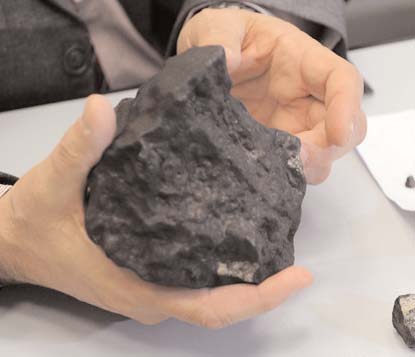
    MOSCOW (TIP): Divers have found the largest piece so far of a meteorite which hit Russia’s Chelyabinsk region in February this year, a scholar said. Xinhua quoted Sergei Zamozdra, an associate professor at South Urals State University, as saying that preliminary studies showed the 570-kg fragment came from the Chelyabinsk meteorite. It was recovered from a depth of 20 metres in the Chebarkul Lake, he said. It will be placed at a local museum after undergoing Xrays and other scientific tests. The meteorite exploded over the Chelyabinsk region in central Russia on February 15, injuring more than 1,600 people and damaging property worth about 1 billion roubles ($30 million).

  • Edward Snowden says he took no secret documents to Russia

    Edward Snowden says he took no secret documents to Russia

    WASHINGTON (TIP): US intelligence leaker Edward Snowden says he did not bring any secret documents with him to Russia when he fled there, ensuring Moscow had no access to the files. In an interview with The New York Times published on October 18, Snowden said he gave all the classified papers he had obtained to reporters he met in Hong Kong before flying to Moscow, where he later secured asylum. The former National Security Agency contractor did not take the documents with him “because it wouldn’t serve the public interest,” Snowden told the Times. “What would be the unique value of personally carrying another copy of the materials onward?” Snowden also insisted he was able to protect the documents from China’s spy services because he was familiar with that country’s intelligence capabilities through his work as an NSA contractor. In his job, he had targeted Chinese operations and taught a course on Chinese cyber-counterintelligence.

    “There’s a zero percent chance the Russians or Chinese have received any documents,” he said. The interview took place last week over several days through encrypted online communications. US officials and critics of Snowden have expressed concern that the documents in his possession could have fallen into the hands of Russian, Chinese or other potentially hostile foreign intelligence agencies. Snowden, however, insisted the National Security Agency knew he had not cooperated with Russian or Chinese spies. “NSA has not offered a single example of damage from the leaks. They haven’t said boo about it except ‘we think,’ ‘maybe,’ ‘have to assume’ from anonymous and former officials,” Snowden added. “Not ‘China is going dark.’ Not ‘the Chinese military has shut us out.’” Snowden also said he never considered defecting while in Hong Kong or Russia, where he has been given asylum for one year. Snowden said his decision to leak secret documents evolved gradually, and that his doubts about intelligence agencies dated back to his time working for the CIA in Geneva.

    He said he clashed with a senior manager when he tried to warn the CIA about a vulnerability in its personnel Web applications. The episode convinced him that trying to work through the system would only lead to punishment. The 30-year-old, who faces espionage charges over his bombshell leaks, defended his disclosures as serving the country’s interests by sparking a public debate and informing the public about secret surveillance. “So long as there’s broad support amongst a people, it can be argued there’s a level of legitimacy even to the most invasive and morally wrong program, as it was an informed and willing decision,” Snowden said. “However, programs that are implemented in secret, out of public oversight, lack that legitimacy, and that’s a problem. “It also represents a dangerous normalization of ‘governing in the dark,’ where decisions with enormous public impact occur without any public input.” The NSA was not immediately available to comment on Snowden’s interview.

  • US-India Relations Hit a Rough Patch

    US-India Relations Hit a Rough Patch

    The author feels that there are a number of vital issues which are unlikely to be settled within the tenures of either Obama or Singh, leaving a lingering note of ambivalence in the US-India relationship even as it deepens outside of the high politics.

    When Indian Prime Minister Manmohan Singh visited Washington last month for the first time in four years, the mood was distinctly subdued. India’s once-stratospheric growth rate is stubbornly depressed. The Indian government is low on political capital and stuck in risk-averse mode until next year’s general elections, with a huge question mark over Singh’s personal future. Most Indians anyway focused on Singh’s New York meeting with his Pakistani counterpart Nawaz Sharif – underwhelming, as it turned out, and marred by a perceived slur – rather than his meetings with President Obama. More generally, the promise of USIndia relations remains far below the levels anticipated only a few years ago.

    Why the stasis?
    There are any number of reasons. Indian journalist Indrani Bagchi suggests that ‘there remains a strong lobby within this government starting with [ruling Congress Party chairwoman] Sonia Gandhi and [Defense Minister] AK Antony downwards, which retains an instinctive aversion to America’. That same government’s slow rate of economic reform irks American companies who want to invest in India. In particular, a strict nuclear liability law limits those companies’ ability to exploit a landmark civil nuclear cooperation agreement initiated by the Bush administration in 2005. Also, India’s Byzantine procurement rules madden the American defense companies eager to sell into what is one of the few growing arms markets in the world. A sense prevails that the low-hanging fruit in the bilateral relationship was picked some years ago. But one less-noticed problem is that the limited bandwidth of US foreign policy is presently occupied by issues in which India is either wary of US policy or simply apathetic.

    The Middle East
    In his speech to the United Nations General Assembly on 24 September, President Obama noted that ‘in the near term, America’s diplomatic efforts will focus on two particular issues: Iran’s pursuit of nuclear weapons and the Arab-Israeli conflict’. India has much to gain from a rapprochement between Iran and the United States, not least the ability to once again freely import Iranian oil. India was circumventing international sanctions by paying for a diminished flow of Iranian oil in rupees, but the new Iranian government is insisting that India can only pay for half this way. India is a bystander rather than active participant in the broader dispute, watching from the sidelines as the P5+1 bloc, which includes Russia and China, participates in negotiations. On Syria, India is sympathetic to the regime of President Bashar al-Assad. It views the issue through the lens of the Afghan jihad in the 1980s, which Indians see as indelibly associated with the subsequent uprising in Kashmir and the growth of anti- Indian militancy. When the Indian Government summoned the Syrian Ambassador in Delhi last month, it was not because of Syrian policies but because the ambassador had alleged that Indian jihadists were fighting with the rebels. The ambassador stated, tellingly, that ‘he was always deeply appreciative of India’s position on Syria’.

    India unsurprisingly opposes efforts to arm the Syrian rebels, tends to see the armed opposition as irredeemably compromised by jihadists and reflexively opposes US proposals for military action, particularly outside the ambit of the UN Security Council. India has already had to abandon several oil fields in Syria and, in September 2013, India’s foreign secretary even referred to an existing Indian line of credit to the Syrian government. Yet, despite these equities, India has no leverage over the parties to the conflict. In May, an Iranian suggestion of greater Indian involvement went nowhere. There is little that Singh would usefully have been able to say to Obama on the subject. At a broader level, the more the Middle East distracts from US attention to Asia- Pacific – including the so-called ‘pivot’ of American military forces eastwards – the less high-level attention India receives in Washington. India was not mentioned once in Obama’s UN address (to compare: China was mentioned once, Iran 26 times, and Syria 20).

    Afghanistan
    India’s attitude to US policy in Afghanistan is even more conflicted. India is ostensibly supportive of US policy, and has formally signed on to an Afghan-led peace process. But Indian officials and strategists scarcely disguise their discomfort towards what they see as undue American haste in withdrawing troops, an overeagerness to accommodate the Taliban as part of political reconciliation, and a continued indulgence of Pakistan despite its support for Afghan insurgents. India felt that its views were vindicated by the June debacle over the opening of a Taliban office in Doha, which deviated from the agreed protocol, handed a propaganda victory to the Taliban, and angered the Afghan government. Indian national security reporter Praveen Swami summed up many Indians’ views in complaining that the US was ‘subcontracting the task of keeping the peace in Afghanistan to the ISI’, Pakistan’s premier intelligence service.

    In recent months, Indians have taken offence at statements by James Dobbins, the US Special Representative for Afghanistan and Pakistan, echoing earlier Indian anger at the late Richard Holbrooke, and have chafed at what they see as a Western equivalence between Indian and Pakistani policy in Afghanistan. For their part, US and British officials have grown increasingly frustrated with India’s approach to the issue, arguing that India offers no plausible alternative to the policy of reconciliation given the long-term weakness of the Afghan state. Yet it is in Obama’s interests to assuage Indian concerns, emphasize that reconciliation with the Taliban will be constrained by the established ‘red lines’, that the US will not abandon counterterrorism efforts in Afghanistan after 2014, and that India’s role in Afghanistan is not only welcome, but also necessary to the strengthening of the Afghan state. India rebuffed Afghan President Hamid Karzai’s request for arms earlier this year, wary of provoking Pakistan. But one area that deserves more discussion is greater direct cooperation between India and the NATO-led coalition in Afghanistan to train and equip Afghan National Security Forces (ANSF).

    According to one report, Obama asked Singh last week for an ‘increased effort’ in Afghanistan, although it’s unclear whether this included an implied or explicit training dimension. India, entirely reasonably, sees a potential eastward flow of militants from Afghanistan and Pakistan as a major security threat, particularly with violent trends in Kashmir worsening this year. India would therefore be particularly receptive to a US commitment to monitor and disrupt militant movement in the years after 2014. In truth, it will be difficult to make progress on these issues until Washington settles its own internal debates over what its posture in Afghanistan will be after 2014 (for example, how many (if any) troops will remain in a training capacity?), which in turn will depend on the peace process itself, President Karzai’s domestic political calculations in the face of presidential elections next year, the integrity of that election, and trends in Afghanistan.

    Where next?
    The level of US-India tension should not be exaggerated. It is telling that recent revelations over US intelligence collection against Indian diplomatic targets have, unlike in the case of Brazil, had negligible impact on the relationship. Indian officials chose to brush the issue under the carpet, presumably hoping that the issue had little domestic salience and perhaps even tacitly acknowledging that the NSA’s activities against Indian internet traffic were indirectly beneficial to Indian policy objectives. Twenty years ago, the Indian response may have been very different. It is these changes in tone that convey strategic shifts as much as any large policy initiative. And although the two countries differ on the contentious big-picture issues outlined above, this has not prevented the relationship from advancing on other tracks. In September, US Deputy Secretary of Defense Ashton Carter visited India to push ahead with the bilateral Defense Trade Initiative (DTI), which Carter co-chairs with India’s National Security Advisor, Shivshankar Menon.

    Carter reiterated his suggestion, dating from last year, that US and Indian firms cooperate to produce military equipment – including helicopters, nextgeneration anti-tank missiles, mine systems, and naval guns – for both countries’ use. India has been bafflingly slow and reticent to respond to these overtures, despite the possibility of much-needed technology transfer to Indian industry (though many analysts are skeptical as to its capacity for technology absorption). The negotiations nevertheless reflect the US perception that the defense strand of its relationship with India are a priority. The road ahead is rocky. Over the next eighteen months, the US-India relationship will be severely buffeted by US policy towards Afghanistan. As the American drawdown accelerates, one possibility is that the US intensifies diplomatic efforts to peel away moderate factions within the Afghan Taliban, Whether that amounts to anything or not (and few are optimistic) the process is certain to involve at least a period of deeper USPakistan consultations, at the expense of India. Later this month, for instance, a fourth Afghanistan-Pakistan-UK trilateral summit will take place in London.

    India has quietly seethed at the previous three, viewing them as a coordinated effort to reduce Indian influence. Yet, for the United States at least, the centre of gravity of the US-India relationship is not Afghanistan, but China. The Middle East’s fast-moving and highly visible crises have briefly distracted from a slow-moving background trend: the political and economic rise of China. Yet this remains where Indian and American strategic interests are most collectively at stake, if not necessarily congruent. Following India’s most recent crisis with China, involving deep Chinese incursions into disputed territory a few months ago, New Delhi’s instinctive response was not to make a prominent feint towards Washington – something that might have been the natural response of other states eager to balance against Beijing – but to engage China more intensively, including on the border dispute itself. Indeed, Singh will make a trip to Beijing next month, with indications that he may sign an upgraded border agreement. Nothing better underscores how India’s internal debate over the desired scope of its relationship with the United States is unsettled, on-going, and erratic. More generally, much of India’s press and strategic community have accepted the popular narrative that American leadership, as well as American power, is in decline, and that US reliability is therefore in question. These issues are unlikely to be settled within the tenures of either Obama or Singh, leaving a lingering note of ambivalence in the USIndia relationship even as it deepens outside of the high politics.

  • India-US Partnership

    India-US Partnership

    Defense Trade to be the Driving Engine

    Contrary to the forecasts of doom and gloom and the skepticism surrounding his visit to Washington, the third Manmohan- Obama Summit meeting on September 27 has been quite productive. With hindsight, one can say that media reports about growing impatience of US NSA Susan Rice, impact of the comprehensive immigration law, lobbying in the Capitol Hill by Microsoft, IBM and American drug manufacturing giants against Indian IT and drug manufacturing companies and differences on Afghanistan, Iran, Syria, nuclear liability Act etc were highly exaggerated. An honest and dispassionate assessment of India-US relations in the last decade clearly shows that they have been transformed beyond recognition; India-US strategic partnership is for real and it is in for a long haul in spite of serious differences on some issues in the short run. Nothing demonstrates this better than the exponential expansion of defense trade; US exports of defense and military hardware to India in the last five years have crossed US$ 9bn; with the long shopping lists of the Indian Army, Air Force and Navy this is bound to expand further.

    If the promise of transfer of defense technology, joint research and co-production mentioned in the joint statement is taken to its logical conclusion, this collaboration could become the driving engine of closer Indo-US strategic partnership. In this regard, the US decision to supply offensive weapons to India will be the leitmotif of this burgeoning relationship. Notwithstanding these positive signals, well-known strategic analyst Brahma Chellaney feels that India-US strategic relationship is somewhat “lopsided and unbalanced” on account of structural and strategic limitations of India. A lot is made out of the flattering phrases such as the “defining relationship of the 21st century” (used by Obama and John Kerry) which might transcend into the 22nd century and India being the “lynch pin” of the US policy in Asia (used by Leon Panetta) and optimistic projections made by the heads of think tanks such as Ashley Tellis of Carnegie Endowment. Visiting American dignitaries seldom fail to stress the commonalities between India and the US: democracy, rule of law, human rights, and multi-ethnic, multireligious, multi-lingual, plural societies. These are, no doubt, important factors but must be taken with a pinch of salt.

    In the real world, so long as it serves their national interests, countries don’t mind doing business with other countries where these factors don’t hold water. The US-China relations are an obvious example of this phenomenon. While the US IT companies might continue urging the US government to apply some indirect brakes on the Indian IT companies, the fact is they have been receiving “great service, great quality at low costs” from Indian companies and it has enabled them to operate efficiently and profitably. The misperception created by media reports that the US wishes to “contain” China and hence is trying to warm up to India warrants closer scrutiny. The US-China economic, financial, trade, business and investment ties are so huge and millions of jobs in the US depend on this collaboration that the US will never risk them. As a matter of fact, the US has been quite careful not to hurt China’s sensitivities; it’s decision to call its new approach in Asia now as “Asia Rebalance” instead of “Asia Pivot” is a “course correction” keeping China in mind. On the issues of alleged incursions into Indian territories by the Chinese troops and the India-China spat regarding the ONGC-Vietnam offshore oil drilling collaboration, the US has maintained strict neutrality.

    Conversely, it is also a fact that the US won’t like to see a China-dominated Asia. This, apart from the economic considerations, explains its concerted efforts to come closer to India, ASEAN and beyond to shore up its influence in Asia-Pacific and maintain pressure on China to keep trade routes through the South China Sea open to international trade according to international laws. Some recent developments have eased the alleged “drift”, “wrinkles” and imaginary or real “plateau” in relations. The preliminary contract between the US nuclear companies, Westinghouse and NPCIL for setting up a nuclear plant in Gujarat is a welcome beginning. The establishment of “an American India- US climate change working group” and convening the “India-US Task Force on HFCs” are viewed as positive developments. And the reiteration of US support for a place for India in the reformed UNSC should be music to Indian ears. Besides, a temporary postponement by the US Federal Reserve to end the stimulus package should give countries like India some breathing time to put their finances in order. Though nothing concrete has been promised, some negotiated compromise on the new Immigration laws shouldn’t be ruled out.

    In the field of foreign affairs, the biggest relief has come from Iran. There is thaw in the air in the US-Iran relations thanks to the speech of the newly elected President Rouhani in the UN General Assembly and his wishes on the Jewish New Year on his Twitter which prompted Obama to make the historic Presidential phone call for the first time in 30 years! Unless, this process is cut short by the Iranian supreme leader, US-Iran relations should see some further easing of tension and resolution of the nuclear issue which has led to the imposition of crippling UN sanctions on Iran. This thaw has the potential of lightening India’s oil import bill if more Iranian oil comes on the market. India’s expectations from the US to put further pressure on Pakistan to bring the perpetrators of 26/11 Mumbai attack to book and rein in the terrorist groups like Al-Qaida and LeT and dismantle terror infrastructure and go slow on co-opting the Taliban in the talks on the future of Afghanistan aren’t likely to be met fully because of the US priorities to exit from Afghanistan smoothly. In the meanwhile, India should brace itself for a Taliban-dominated Afghanistan after the withdrawal of the American troops in 2014.

    What role India could play in Afghanistan after the US exit can’t be guaranteed by the US; it will have to work out a strategy with countries like China, Russia, and Iran and, of course, the US. As the economies of India and the US aren’t doing as great as they would have expected, there are domestic pressures in both countries which impact negatively on the bilateral relations. The IT and pharma MNCs in the US and the constituencies in India which didn’t favor FDI in retail and pressed for a more stringent nuclear liability Bill are manifestations of such domestic pressures. As both India and the US have strategic partnership with a number of countries, in crises situations each country will take a decision based on its strategic interests. From this perspective, KS Bajpai, a former Ambassador to the US, injects a reality check: “If ever India finds herself in an open conflict with another country, she will be just by herself; none will come to her help”. That should give us a wake-up call to mend our fences with our neighbors and create an environment of goodwill and warmth without lowering our guards and ignoring defense preparedness.

  • Russian embassy in Libya evacuated after attack

    Russian embassy in Libya evacuated after attack

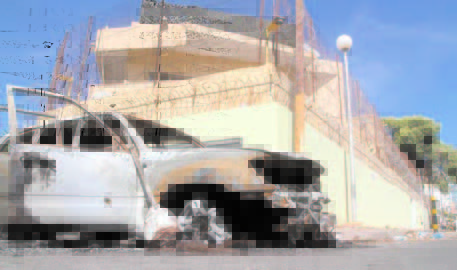
    MOSCOW (TIP): Russia on October 3 evacuated all of its diplomats and their families from Libya, the day after a mob attack on the Russian embassy, and issued a warning to its citizens against visiting the country. The Russian foreign ministry said none of the embassy staff was hurt in Wednesday’s attack, which came in response to the death of a Libyan air force officer, who was allegedly killed by a Russian woman. An armed mob broke into the embassy compound in the Libyan capital Tripoli, climbing over walls, breaking down a metal gate and shooting in the air. One of the attackers was killed by the gunfire, and four more were wounded, Libyan officials said. Russian foreign ministry spokesman Alexander Lukashevich said in Thursday’s statement that Moscow decided to evacuate the embassy after Libya’s foreign inister Mohamed Abdelaziz visited its grounds and told the Russian ambassador that Libya was unable to protect the personnel.

    Lukashevich added that all the embassy workers and their families safely crossed the border into Tunisia on Thursday. He said that the Libyan authorities had promised to protect Russian assets and try to quickly restore conditions for the safe operations of the embassy. Several senior diplomats will stay in Tunisia to maintain contacts with Libya, while the rest of the embassy workers will be flown to Moscow on Friday, Lukashevich said. He added that the foreign ministry recommends Russian citizens should refrain from visiting Libya. Wednesday’s violence briefly raised fears of a repeat of last year’s deadly attack on a US compound in the eastern city of Benghazi, in which the US ambassador and three other Americans were killed. In that instance, on the anniversary of the September 11, 2001, terror attack, militants fired mortars at the consulate, surrounded it and set it on fire. A Libyan official said Wednesday’s attackers took down the Russian flag that was hanging from the balcony of one of the buildings. But they did not enter the embassy buildings, he said, speaking on condition of anonymity because he was not authorized to talk to the media.

  • SLOW AND STEADY RELATIONSHIP

    SLOW AND STEADY RELATIONSHIP

    “The PM’s Washington visit is unlikely to produce any dramatic result, but it will serve its purpose by reminding both sides of the high stakes they have in a progressively improving relationship that is undistorted by impatience or undue expectations on either side”, says the author.
    All eyes will be on the meeting between our Prime Minister and President Obama this week and what it produces. This is natural as our relationship with the US is, in many ways, the most important external relationship we have. The US is our largest trade and investment partner as well as the biggest source of advanced technology, management practices and technical and financial consultancies for our economic sector. The people to people contact with the US is profound, not only because of the large population of Indian origin and the almost 100,000 students we have there, but also because of the influences imbibed by our younger generation. The range of our engagement with the US is larger than with any other country, with over thirty on-going dialogues on various subjects, which implies a regularity of official exchanges on economic, political and security issues.

    Expectations
    Our armed forces have the largest number of military exercises with the US, even though it is not our largest supplier of defense equipment. However, here too the US is making headway, with substantial orders already obtained, even as promises are being made of joint production of advanced weaponry and transfers of technology to rival Russia as our leading defense partner. The political commitment shown by the US leadership to remove the most contentious nuclear issue in our relations has raised expectations on our side that dramatic breakthroughs in relations will continue, even though we cannot define what they could be precisely. At the very least, we expect a trouble free relationship with the US. On the US side, the expectations are more concrete and precise. They would want orders for the US nuclear and defense industries to materialize quickly enough as a quid pro quo for the nuclear deal. They want more access to the Indian market, for which financial and education sector reforms are considered necessary, not to mention improved regulatory frameworks. To the old grievances have been added new ones relating to Indian protectionism as indicated by the decision to give preferential market access to locally established companies in the telecom sector, the retrospective application of our tax laws as in the Vodafone case and inadequate protection to IPRs as decreed by the Supreme Court in the Novartis case. None of these decisions involve US companies, but the US has concerns that India’s example might be followed by other countries affecting ultimately either the global business models of its companies or negatively impacting their future operations in India.

    SHORT-SIGHTED
    The US corporate sector, earlier in the forefront of lobbying for India in the US Congress, is now taking the lead to have Indian trade practices investigated by the Congress. All the indications are that the mood in the US towards India has soured at the political and commercial levels. This is unfortunate because short term considerations of immediate gain are gaining ground over longer term US strategic investment in the India relationship. India’s views about the US have changed fundamentally and the relationship will become more dense with time. US impatience will not necessarily accelerate the process. India and the US have differences on WTO and Climate Change related issues. These differences are in a multilateral context, not a bilateral one, but the US is trying to push for bilateral convergences on these issues. Such pressure should not become counterproductive. India’s nuclear liability law has become a major obstacle in implementing India’s commitment to place orders on Westinghouse and GE for supply of nuclear reactors generating 10,000 MWs of power at two separate sites in India. Secretary Kerry had voiced his expectation that by September India would have found a way to resolve the issue to the satisfaction of US companies, having no doubt Prime Minister’s visit to Washington in view.

    Results
    Reports suggest that India may find a solution by interpreting the rules framed under the Liability Act flexibly enough to meet the demands of not only the US companies but the Russians as well for Kudankulam 3 and 4. This may not be easy in view of Article 17 of the legislation that obliges the operator to take recourse against the supplier for supply of defective equipment, even if the right to recourse is not expressly included in the contract. The challenge is to devise a way to provide insurance cover for such liability through some kind of a pooling arrangement, the cost of which can be adjusted in that of the project. Meanwhile, the decision to sign a “small works agreement” between Westinghouse and NPCIL during Prime Minister’s visit as a token of our intent to implement our commitment might be a diplomatic way out of the current impasse for now, but the larger questions of project cost and tariff competitiveness will remain unaddressed and could block negotiations in the future and cause disappointment. On the Afghanistan question president Obama will not give us satisfaction as he is seeking a dialogue with the Taliban brokered by the Pakistani military. India’s political and security interests in Afghanistan are becoming peripheral to US interest in an orderly withdrawal from there through a pact with the very extremist forces that they had initially dislodged and an understanding with the Pakistani military whose doubledealing they have directly experienced.With the continuing terrorist mayhem in Pakistan and extremist religious forces on the rampage in West Asia and Africa, accommodating the Taliban could prove a folly. The PM’s Washington visit is unlikely to produce any dramatic result, but it will serve its purpose by reminding both sides of the high stakes they have in a progressively improving relationship that is undistorted by impatience or undue expectations on either side

  • Congressman condemns remarks against Miss America

    Congressman condemns remarks against Miss America

    As a Member of Congress who represents a large population of Americans of Indian descent, I am deeply troubled by the outrageous remarks aimed at the winner of the 2013 Miss America Pageant and a fellow New Yorker, Nina Davuluri. Ms. Davuluri embodies the American dream-the daughter of immigrants who graduated from a prestigious university and plans to pursue a medical degree. She is American in the truest sense, and the fact that this would be questioned is despicable. Embracing diversity is an American value, and one that I have always cherished. I am the product of grandparents who fled Russia due to persecution and found an accepting home here in America. I have spent my life honoring their memory by fighting against hatred, bigotry and persecution. When I heard of the vitriol being directed toward Ms. Divuluri, I felt compelled to respond. I join with the voices of the many Americans who have cried out against these hateful remarks. And I will continue to work in Congress to fight against hatred.

  • ARMS DEALS WORTH RS 15,000 CRORE CLEARED

    ARMS DEALS WORTH RS 15,000 CRORE CLEARED

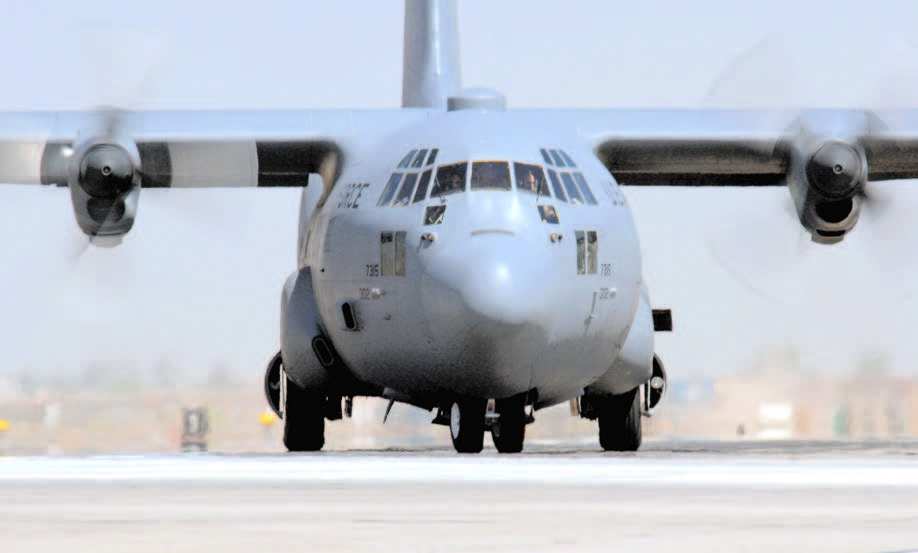
    NEW DELHI (TIP): The defence ministry on September 13 cleared several arms acquisition projects worth almost Rs 15,000 crore for the armed forces, which included six more American C-130J “Super Hercules” aircraft, 236 Russian T-90S main-battle tanks and 4,400 new lightmachine guns (LMGs). The projects were cleared in a meeting of the Defence Acquisitions Council (DAC) — chaired by defence minister A K Antony and included the three Service chiefs and the defence secretary — just four days before US deputy secretary of defence Ashton B Carter arrives here next week. The C-130J deal is among the four major Indian deals worth around $5 billion that the US is all set to clinch within this financial year.

    The other three are for 22 Apache attack helicopters ($1.4 billion), 145 M-777 ultralight howitzers ($885 million) and 15 Chinook heavy-lift helicopters (around $1 billion). The new contract for six more C-130J planes – worth over Rs 4,000 crore in the direct government-togovernment deal under the US foreign military sales (FMS) programme – will now go the Cabinet Committee of Security (CCS) for the final nod by next month. While the first six C-130J aircraft already acquired by IAF are based at Hindon airbase, the six new “Super Hercules” will be housed at Panagarh in West Bengal. Panagarh will be the headquarters for the new mountain strike corps, along with two “independent” infantry brigades and two “independent” armoured brigades (totalling over 80,000 soldiers), which will be raised over the next seven years to plug operational gaps against China. Russia – not too happy with the US bagging Indian defence deals worth over $8 billion in recent years – also had some reason to cheer on Friday with the fresh order for the 236 T-90S tanks. They will be built by the Indian Ordnance Factory Board (OFB), at a cost of around Rs 6,000 crore, under transfer of technology (ToT) from Russia.

    India, in 2001 and 2007, had inked two contracts worth Rs 8,525 crore with Russia to import 657 T-90S tanks. With the OFB subsequently beginning to manufacture these tanks under licensed production, the Army has till now inducted around 780 of the 1,657 T-90S tanks it eventually wants. The LMG project is part of the Army’s endeavour to overhaul the basic weaponry of its infantry soldiers, which range from new-generation assault rifles to closequarter battle (CBQ) carbines, as reported earlier. Infantry battalions will induct the new 7.62mm calibre LMGs, with spare barrels and an effective 1-km firing range, under the new project worth around Rs 530 crore. The project will see the OFB tying up with a foreign vendor after issuing a global tender. The existing 5.56mm LMGs have only a 700-metre range and weigh much heavier at 6.23-kg. The US, of course, is steadily cornering a major chunk of the lucrative Indian defence market. It has already bagged defence contracts worth over $8 billion from India in recent years, including the first six C-130J aircraft for $1 billion, 10 C-17 Globemaster-III strategic-lift aircraft for $4.1 billion and eight P-8I long-range maritime patrol aircraft for $2.1 billion. Another major deal being negotiated is the follow-on order for four more P-8I aircraft for the Navy.

  • INDIA EYES LOCAL CURRENCY SWAPS

    INDIA EYES LOCAL CURRENCY SWAPS

    NEW DELHI (TIP): The government is planning to go for local-currency-swap deals with trading partners to lower its dependence on dollars to foot the soaring import bills. It is looking at establishing multiple arrangements with some of the country’s key trading partners — China being the primary one. Commerce Secretary S R Rao said: “We are exploring the option of trading in local currencies with select partners, somewhat like we are currently doing with Iran. It’s different from central banks’ currency swap agreements that India has with Japan and Bhutan.” In other words, the government is exploring the option of using the rupee to trade with some of its partners — an arrangement similar to that with Iran for importing crude oil. Unlike in the case of dollar-swap deals, a country enters into local-currency-swap arrangements when it intends to lower its dollar dependence.

    For this, India’s focus is likely to be on BRICS countries, which have a combined forex reserve of about $4.4 trillion. The grouping had signed a swap facility last year, too. The government was now looking to have such an arrangement with China, another senior commerce department official said, asking not to be named. China has been scouting for such swap deals with some its key trade partners to promote its own currency, the yuan or renminbi, to free up its financial markets. The government is not ruling out the option of having such deals with other non-FTA countries (the countries with which India does not have a free trade agreement in place). But the real challenge would be identifying the exportable items, as India did not enjoy an edge in manufactured exports. Besides, the country had a trade deficit of around $41 billion with China, which did not gave it the comparative advantage for entering into a swap agreement, an EXIM Bank official said. At present, within BRICS, Russia and Brazil swap its currencies with China, which exports around $140 billion worth of goods and services to its trading partners. Commerce Minister Anand Sharma announced setting up an internal task force under the commerce department to “examine, study and explore” the possibility of a currency-swap arrangement with its trading partners to help stabilise the rupee. It will have representatives from the finance ministry, EXIM Bank and RBI.

  • Bolt made to work for 100m win at Weltklasse

    Bolt made to work for 100m win at Weltklasse

    ZURICH (TIP): Usain Bolt considered it his worst race of the season, yet he still won the 100 meters at the Weltklasse Diamond League meeting in 9.90 seconds. The world and Olympic champion had the slowest reaction out of the starting blocks, and was led deep into the race on August 29 (Thursday) by fellow Jamaican Nickel Ashmeade. Bolt got down to work and muscled through the slight headwind to hit the front at the 85-meter mark. Ashmeade clocked 9.94 for second place, and Justin Gatlin of the United States was third in 9.96 “That was the worst race of the season,” said Bolt, who timed 9.95 when losing to Gatlin in Rome in June.

    “The longer the season goes, the worse my style gets. This race, it was really hard. I was a little sore. It’s time to get home now.” With a parade of new world champions in action, the sold-out Zurich stadium fell silent to watch Ukrainian high jumper Bohdan Bondarenko’s latest attempt to break the 20-year-old world record of 2.45 meters set by Javier Sotomayor of Cuba. But Bondarenko crashed through the bar at 2.46. He’d earlier won the event with a clearance at 2.33. In a stirring women’s 5,000 meters duel between Ethiopian greats, Meseret Defar surged past Tirunesh Dibaba in the final straight. Still, Bolt was the main attraction as usual and put on a typical pre-race act for the crowd, taking center stage seconds after Bondarenko’s record attempt.

    The sprinting superstar pressed his hands together in a prayer-like pose, head bowed before breaking into karate-style moves. He bowed again as the camera moved along the line. On a cool evening, Bolt labored at the start and a rare defeat seemed possible at halfway. “The more I run, the worse my reaction time gets,” Bolt acknowledged. “My coach (Glen Mills) knows that when it comes to the end of the season, I am not the perfect athlete.” Yet Bolt allowed himself a smile on crossing the finish, looking across to Ashmeade two lanes on his left and world silver medalist Gatlin two to his right. Like Bolt, Shelly-Ann Fraser- Pryce of Jamaica completed the sprint gold triple of 100, 200 and 4×100 relay this month at the world championships in Moscow. She won a low-key 200 in 22.40 on Thursday. For once, distance runners took the spotlight with a rare Defar vs.

    Dibaba clash outside a major championship. Dibaba, the world and Olympic champion at 10,000, forced a frontrunning pace at the bell, with world and Olympic 5,000 champion Defar poised on her shoulder entering the final straight. Defar passed her great rival with 70 meters to go and extended her lead all the way to the finish, crossing in 14 minutes 32.83 seconds. Dibaba timed 14:34.82. “On the last 100 meters, I am going to 100 percent,” Defar said. The stellar lineup helped pull American Jenny Simpson through to a personal best time of 14:56.26 in seventh place. Americans David Oliver, LaShawn Merritt and Nick Symmonds ran to victories in the 110-meter hurdles, 400 and 800, respectively. World champion Oliver was a clear winner in 13.12 in the hurdles, and Symmonds clocked 1:43.57 in the 800, just two-hundredths outside his season’s best set when taking silver in Moscow. Merritt timed 44.13 to win after holding off a strong challenge from Olympic champion Kirani James of Grenada.

    In the 1,500, world champion Asbel Kiprop placed only sixth, with Kenya compatriot Silas Kiplagat winning in 3:30.97. World champions Eunice Jepkoech Sum of Kenya and Zuzana Hejnova of the Czech Republic sustained their winning form: Jepkoech Sum clocked 1:58.82 in the women’s 800 and Hejnova took the 400 hurdles in 53.32 and completed her Diamond League season unbeaten. Caster Semenya of South Africa, the 2009 world champion, was a distant seventh though ran her season’s best time of 2:01.83. The surprise long jump winner was Zarck Visser of South Africa, only weeks after failing to qualify for the final in Moscow. He won with a personal best leap of 8.32, and world champion Aleksandr Menkov of Russia was sixth, at 7.94. Dwight Phillips, the 2004 Athens Olympics gold medalist and four-time world champion, leaped 7.53 to place eighth in his final event before retiring. “Hopefully I left a great legacy like other big long jumpers like Carl Lewis,” the 35-year-old Phillips said. In shot put events staged Wednesday at Zurich’s central rail station, world and Olympic champion Valerie Adams of New Zealand set a world-leading mark of 20.98 meters to win the women’s event. With a winning mark of 22.03, Ryan Whiting of the US also earned the diamond on offer as season-long champion.

  • INDIA, CHINA TO SIGN COOPERATION PACT IN ROAD SECTOR

    INDIA, CHINA TO SIGN COOPERATION PACT IN ROAD SECTOR

    NEW DELHI (TIP): India and China are set to sign an agreement for cooperation in the road and transport sector when Prime Minister Manmohan Singh visits Beijing in October. One of the areas would be cooperation in sharing of information on transport infrastructure. Government sources said the transport ministries of both sides have approved the details of the proposed agreement.

    Sources said the identified areas of cooperation include sharing best practices in road and bridge building technologies, policies, intelligent traffic system besides road-related issues. China has taken huge strides in building world class highways, and has built over 60,000 km of expressways. Plans are afoot to build around 18,000 km of expressways in India. China has also made a mark in speedy implementation of infrastructure projects, particularly road and rail. “Once we have technology sharing, it will help us push the pace of construction. They have also improved their record in reducing road deaths in the past sixseven years.

    Cooperation will open a window of opportunity for both the countries,” an official said. Around half-a-dozen road projects are being built with participation of Chinese companies. Sources said all these projects were bagged by private entities in which Chinese firms had a share. Sources said no project has been identified that can be taken up under this cooperation. “This is just a beginning. As we progress, projects will be identified,” the official said. The other major area of cooperation will in the electronic mode of collecting toll (ETC).

    China is way ahead of India in this sector. India also plans to bring all toll plazas on national highways under ETC so that people can pass through all plazas using a single smart card. India and China will also cooperate in the field of intelligent traffic system, vehicle specifications and their certification. While India is likely to benefit from Chinese sharing of information and knowledge, China will learn from India’s success in implementing public-private-partnership projects.

    Last year, former highways minister C P Joshi had reached out to Chinese infrastructure companies to invest in the road sector. He had said around 40 road construction projects were being undertaken by companies from China, Russia, the UK, Dubai, Singapore, Italy, South Korea, Malaysia, Spain and Thailand.

  • INDIA’S JOURNEY TO BECOMING AN ECONOMIC SUPERPOWER

    INDIA’S JOURNEY TO BECOMING AN ECONOMIC SUPERPOWER

    The economic development in India followed socialist-inspired policies for most of its independent history, including state-ownership of many sectors; India’s per capita income increased at only around 1% annualised rate in the three decades after Independence. Since the mid-1980s, India has slowly opened up its markets through economic liberalisation.

    After more fundamental reforms since 1991 and their renewal in the 2000s, India has progressed towards a free market economy. In the late 2000s, India’s growth reached 7.5%, which will double the average income in a decade. Analysts] say that if India pushed more fundamental market reforms, it could sustain the rate and even reach the government’s 2011 target of 10%. States have large responsibilities over their economies.

    The annualised 1999-2008 growth rates for Tamil Nadu (9.8), Gujarat (9.6%),Haryana (9.1%), or Delhi (8.9%) were significantly higher than for Bihar (5.1%), Uttar Pradesh (4.4%), or Madhya Pradesh (6.5%). India is the tenth-largest economy in the world and the third largest by purchasing power parity adjusted exchange rates (PPP). On per capita basis, it ranks 140th in the world or 129th by PPP. The economic growth has been driven by the expansion of services that have been growing consistently faster than other sectors.

    It is argued that the pattern of Indian development has been a specific one and that the country may be able to skip the intermediate industrialisationled phase in the transformation of its economic structure. Serious concerns have been raised about the jobless nature of the economic growth. Favourable macroeconomic performance has been a necessary but not sufficient condition for the significant reduction of poverty amongst the Indian population.

    The rate of poverty decline has not been higher in the post-reform period (since 1991). The improvements in some other non-economic dimensions of social development have been even less favourable. The most pronounced example is an exceptionally high and persistent level of child malnutrition (46% in 2005-6). The progress of economic reforms in India is followed closely. The World Bank suggests that the most important priorities are public sector reform, infrastructure, agricultural and rural development, removal of labour regulations, reforms in lagging states, and HIV/AIDS.

    [5] For 2012, India ranked 132nd in Ease of Doing Business Index, which is setback as compared with China 91st and Brazil 126th. According to Index of Economic Freedom World Ranking an annual survey on economic freedom of the nations, India ranks 123rd as compared with China and Russia which ranks 138th and 144th respectively in 2012. India ranks second worldwide in farm output.

    Agriculture and allied sectors like forestry, logging and fishing accounted for 18.6% of the GDP in 2005, employed 60% of the total workforce and despite a steady decline of its share in the GDP, is still the largest economic sector and plays a significant role in the overall socioeconomic development of India. Yields per unit area of all crops have grown since 1950, due to the special emphasis placed on agriculture in the five-year plans and steady improvements in irrigation, technology, application of modern agricultural practices and provision of agricultural credit and subsidies since the green revolution.

    India is the largest producer in the world of milk, cashew nuts, coconuts, tea, ginger, turmeric and black pepper. It also has the world’s largest cattle population (193 million). It is the second largest producer of wheat, rice, sugar, groundnut and inland fish. It is the third largest producer of tobacco. India accounts for 10% of the world fruit production with first rank in the production of banana and sapota. The required level of investment for the development of marketing, storage and cold storage infrastructure is estimated to be huge.

    The government has implemented various schemes to raise investment in marketing infrastructure. Amongst these schemes are Construction of Rural Go downs, Market Research and Information Network, and Development / Strengthening of Agricultural Marketing Infrastructure, Grading and Standardisation.

    Main problems in the agricultural sector, as listed by the World Bank, are:

  • INDIA’S RELATIONS WITH NEIGHBOURING COUNTRIES

    INDIA’S RELATIONS WITH NEIGHBOURING COUNTRIES

    India has formal diplomatic relations with most nations; it is the world’s second most populous country, the world’s most-populous democracy and one of the fastest growing major economies. With the world’s seventh largest military expenditure, ninth largest economy by nominal rates and third largest by purchasing power parity, India is a regional power, a nascent great power and a potential superpower. India’s growing international influence gives it a prominent voice in global affairs.

    The Economist magazine argues, however, that underinvestment in diplomacy and a lack of strategic vision have minimised India’s influence in the world. India is a newly industrialised country, it has a long history of collaboration with several countries and is considered one of the leaders of the developing world along with China, Brazil, Russia and South Africa (the BRICS countries). India was one of the founding members of several international organisations, most notably the United Nations, the Asian Development Bank, G20 industrial nations and the founder of the Nonaligned movement.

    India has also played an important and influential role in other international organisations like East Asia Summit, World Trade Organisation, International Monetary Fund (IMF), G8+5 and IBSA Dialogue Forum. Regionally, India is a part of SAARC and BIMSTEC. India has taken part in several UN peacekeeping missions and in 2007, it was the secondlargest troop contributor to the United Nations. India is currently seeking a permanent seat in the UN Security Council, along with the G4 nations.

    Relations with PakistanDespite historical, cultural and ethnic links between them, relations between India and Pakistan have been plagued by years of mistrust and suspicion ever since the partition of India in 1947. The principal source of contention between India and its western neighbor has been the Kashmir conflict. After an invasion by Pashtun tribesmen and Pakistani paramilitary forces, the Hindu Maharaja of the Dogra Kingdom of Jammu and Kashmir, Hari Singh, and its Muslim Prime Minister, Sheikh Abdullah, signed an Instrument of Accession with New Delhi.

    The First Kashmir War started after the Indian Army entered Srinagar, the capital of the state, to secure the area from the invading forces. The war ended in December 1948 with the Line of Control dividing the erstwhile princely state into territories administered by Pakistan (northern and western areas) and India (southern, central and northeastern areas). Pakistan contested the legality of the Instrument of Accession since the Dogra Kingdom has signed a standstill agreement with it.

    The Indo-Pakistani War of 1965 started following the failure of Pakistan’s Operation Gibraltar, which was designed to infiltrate forces into Jammu and Kashmir to precipitate an insurgency against rule by India. The five-week war caused thousands of casualties on both sides. It ended in a United Nations (UN) mandated ceasefire and the subsequent issuance of the Tashkent Declaration. India and Pakistan went to war again in 1971, this time the conflict being over East Pakistan.

    The large-scale atrocities committed there by the Pakistan army led to millions of Bengali refugees pouring over into India. India, along with the Mukti Bahini, defeated Pakistan and the Pakistani forces surrendered on the eastern front. The war resulted in the creation of Bangladesh. In 1998, India carried out the Pokhran-II nuclear tests which was followed by Pakistan’s Chagai-I tests. Following the Lahore Declaration in February 1999, relations briefly improved. A few months later however,Pakistani paramilitary forces and Pakistani Army, infiltrated in large numbers into the Kargil district of Indian Kashmir.

    This initiated the Kargil conflict after India moved in thousands of troops to successfully flush out the infiltrators. Although the conflict did not result in a full-scale war between India and Pakistan, relations between the two reached all-time low which worsened even further following the involvement of Pakistan-based terrorists in the hijacking of the Indian Airlines IC814 plane in December 1999. Attempts to normalise relations, such as the Agra summit held in July 2001, failed.

    An attack on the Indian Parliament in December 2001, which was blamed on Pakistan, which had condemned the attack[105] caused a military standoff between the two countries which lasted for nearly a year raising fears of a nuclear conflict. However, a peace process, initiated in 2003, led to improved relations in the following years. Since the initiation of the peace process, several confidence-buildingmeasures (CBMs) between India and Pakistan have taken shape. The Samjhauta Express and Delhi–Lahore Bus service are two of these successful measures which have played a crucial role in expanding people-to-people contact between the two countries.

    [106] The initiation of Srinagar–Muzaffarabad Bus service in 2005 and opening of a historic trade route across the Line of Control in 2008 further reflects increasing eagerness between the two sides to improve relations. Although bilateral trade between India and Pakistan was a modest US$1.7 billion in March 2007, it is expected to cross US$10 billion by 2010. After the Kashmir earthquake in 2005, India sent aid to affected areas in Pakistani Kashmir & Punjab as well as Indian Kashmir.

    The 2008 Mumbai attacks seriously undermined the relations between the two countries. India alleged Pakistan of harboring militants on their soil, while Pakistan vehemently denies such claims. Relations are currently hampered since India has sent a list of 40 alleged fugitive in various terror strikes to Pakistan, expecting them to be handed over to India. Pakistan, on the other hand, has declared that it has no intentions whatsoever of carrying out their extradition. The August 2013 attack by the Pak army on the LoC killed five Indian army men,which further strained the relations between the two nations.

    China Despite lingering suspicions remaining from the 1962 Sino-Indian War and continuing boundary disputes over Aksai Chin and Arunachal Pradesh, Sino-Indian relations have improved gradually since 1988. Both countries have sought to reduce tensions along the frontier, expand trade and cultural ties, and normalise relations. A series of high-level visits between the two nations have helped improve relations. In December 1996, PRC President Jiang Zemin visited India during a tour of South Asia.

    While in New Delhi, he signed with the Indian Prime Minister a series of confidence-building measures for the disputed borders. Sino-Indian relations suffered a brief setback in May 1998 when the Indian Defence minister justified the country’s nuclear tests by citing potential threats from the PRC. However, in June 1999, during the Kargil crisis, then-External Affairs Minister Jaswant Singh visited Beijing and stated that India did not consider China a threat. By 2001, relations between India and the PRC were on the mend, and the two sides handled the move from Tibet to India of the 17th Karmapa in January 2000 with delicacy and tact.

    In 2003, India formally recognised Tibet as a part of China, and China recognised Sikkim as a formal part of India in 2004. Since 2004, the economic rise of both China and India has also helped forge closer relations between the two. Sino-Indian trade reached US$36 billion in 2007, making China the single largest trading partner of India. The increasing economic reliance between India and China has also bought the two nations closer politically, with both India and China eager to resolve their boundary dispute.

    They have also collaborated on several issues ranging from WTO’s Doha round in 2008 to regional free trade agreement. Similar to Indo-US nuclear deal, India and China have also agreed to cooperate in the field of civilian nuclear energy. However, China’s economic interests have clashed with those of India. Both the countries are the largest Asian investors in Africa and have competed for control over its large natural resources. India and China agreed to take bilateral trade up to US$100 billion on a recent visit by Wen Jiabao to India.

  • India names new Envoys to US, Russia and China

    India names new Envoys to US, Russia and China

    NEW DELHI (TIP): India has named new envoys to three most important nations of the world. S Jaishankar, currently India’s ambassador to Beijing, is likely to be the new Indian envoy to Washington DC replacing Nirupama Rao, who will retire after Prime Minister Manmohan Singh’s last summit with US President Barack Obama scheduled for September end. Jaishankar is credited with shepherding the crucial diplomacy with China during the Depsang crisis in eastern Ladakh in April. At the end of a three-week standoff, China agreed to withdraw its troops from camps inside Indian soil after India took a tough stand against the incursion.

    Jaishankar’s move to the US indicates the government’s decision to focus on the Indo-US relationship in view of the criticism that India has allowed the relationship to “drift”. Ashok Kantha, currently secretary (East) and formerly High Commissioner to Sri Lanka, will be the next ambassador to Beijing, replacing Jaishankar. Kantha is an old China hand, having handled the relationship as joint secretary (East Asia) in the ministry of external affairs.

    He is expected to hit the ground running, and be a safe pair of hands for this particular relationship. PS Raghavan, who has recast India’s development aid program, will be India’s new man in Moscow, taking over from Ajai Malhotra. The India- Russia relationship has deep roots, but recent years have witnessed strains in the fabric of bilateral ties – from the price haggling over Gorshkov to the nuclear liability law and Russia’s diminishing position in the arms supplies pecking order. The relationship needs some nurturing. Raghavan, who has had a successful stint in the Prime Minister’s Office, is expected to do the job.