Tag: Russia

  • After Pandemic Corona JLF starts again in Jaipur from March 5

    After Pandemic Corona JLF starts again in Jaipur from March 5

    Jaipur Literature Festival to pick up topical issues of Ukraine-Russia Conflict, climate Change

    Dr. Yashpal Goyal,
    Special Correspondent

    JAIPUR (TIP): After Pandemic Corona outbreak since 2020 in India, Jaipur Literature Festival’s 15th edition beginning in Pink City from March 5 will pick up a some of the topical issues of Ukraine-Russia Conflict, Geo-politics of war, Climate Change, new world order besides holding a whole range of literary sessions.

    Sanjoy K Roy, Managing Director of Teamwork addresses the press conference in Jaipur on March 2.

    Sanjoy K Roy, its Managing Director of Teamwork, told a press conference here on March 2 that finally the JLF organizer has chosen a five star hotel by leaving the old heritage ‘Diggi Palace’ due to traffic problems and other administrative regulations. It will be in a hybrid mode, March 5 to 9 on virtual mode, and from March 10 to 14 the sessions would be on ground and visitors would be allowed to witness the live discussions among noted writers, Roy added.Like the previous years’ edition, JLF will have 500 speakers, including four Nobel laureates and will have sessions covering art of fiction, poetic imagination, travel, science, history etc. The prestigious festival will showcase a variety of exhibiting numerous dialects of Rajasthan-Centric literature.

    In a statement, Rajasthan Tourism Minister Vishvendra Singh said he was delighted to note that JLF was returning on-ground in the Pink City after two years. The festival will truly provide an exceptional platform for both Indian and global authors and thought leaders to engage and strengthen literary heritage and culture.

    This time both the literary sessions as well as music in the evening will be held in the hotel campus, Apurav Kumar, MD of the Clarks Group, told the joint press conference. On a question on the impact of the Ukraine-Russia war, they said, “We may lose a few good speakers as two writers have already cancelled their visits to India”.

    The rich programme will feature, among others, a session with Bruno Maçães, decorated author, international commentator and advisor to some of the world’s leading companies on geopolitics and technology, who will be exploring the study of an emerging world order that is competitive and driven by the need to adapt and survive in increasingly hostile natural environments. In conversation with former diplomat and author Navtej Sarna, Maçães will discuss book Geopolitics for the End Time: From the Pandemic to the Climate Crisis. On clean energy, Rahul Munjal, the Chairman & Managing Director at Hero Future Energies, one of India’s leading Independent Power Producer, is committed to positive environmental impact by increasing the share of renewables. Joining him will be, Amitabh Kant, the CEO of the National Institution for Transforming India (NITI Aayog) and a key driver of initiatives such as Make in India, Startup India, Incredible India and God’s Own Country and academician Siddharth Singh, author of The Great Smog of India. Munjal and Kant will discuss the future of clean energy and climate action. Simon Mundy, Financial Times journalist and author of Race for Tomorrow: Survival, Innovation and Profit on the Front Lines of the Climate Crisis, will speak on the question of what impact a single person can have in the face of the global climate crisis. The earth has witnessed five major mass extinction events over the last 500 million years – responsible for the erasure of nearly three-quarters of its species each time.  A series called The Urgency of Borrowed Time will feature Pranay Lal, natural history writer, biochemist and public health advocate who is also author of the celebrated books Indica: A Deep Natural History of the Indian Subcontinent and Invisible Empire: The Natural History of Viruses. The session will explore the fate of dinosaurs and species sealed by extinction events, and the role of humankind in the surging climate crisis.

  • What is going oninside Vladimir Putin’s head? 12 experts weigh in

    What is going oninside Vladimir Putin’s head? 12 experts weigh in

    By Brendan Cole

    Nearly a week into the largest military campaign in Europe since World War Two, Russian forces have encountered fierce resistance from Ukraine while global condemnation has spurred sanctions that have roiled the Russian economy. Before the invasion, Putin humiliated his spy chief, Sergei Naryshkyn in a Russian Security Council meeting which showed the president relishing being in control. But now with the status of global pariah, Putin’s invoking of his country’s nuclear threat has raised alarm at what his actions might be if he felt cornered.

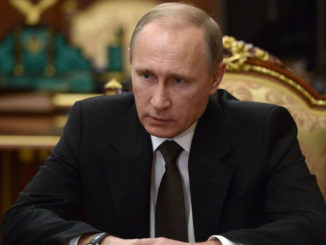
    Newsweek spoke to a selection of experts about what they believed could be going through Putin’s mind. Their responses varied widely—from those who said his apparent erratic behavior was part of a calculated grand strategy, to others who  believe his increased isolation since the COVID pandemic has made him more emotional and unstable.

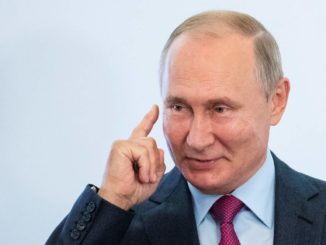
    Questions surround the state of mind of Russian president Vladimir Putin. After his invasion of Ukraine, there are concerns at how far he might go to secure victory.

     Michael McFaul, former U.S. ambassador to Russia

    “Putin listens to no one inside Russia. He’s been in power for over two decades, so does not take advice from anyone anymore. He also is very isolated. He is the only decision maker that matters. He alone can end this war.

    “[Chinese President] Xi is the only leader in the world he respects.”

    Rose Gottemoeller, ex-deputy Secretary General of NATO

    “Vladimir Putin has always cultivated a cool and calculating demeanor, but now he is showing increasingly erratic and emotional behavior—so there is a shift. “From our perspective, it certainly looks irrational, but no doubt that is not how Putin sees it. He’s considering himself a figure of destiny, to bring the Russian-speaking peoples together again. For him, it seems, it is a vital historical objective.”

    Steve Pifer, former U.S. ambassador to Ukraine

    “We are seeing a different Vladimir Putin from 10 or 15 years ago. He now seems more emotional, particularly when it comes to Ukraine, and he is taking a much larger risk with the invasion than one would have expected from him earlier.

    “One also has to wonder about the effect of the isolation in which he has lived and worked the past two years, apparently out of concern about COVID.”

    Gustav Gressel, senior policy fellow, European Council on Foreign Relations (ECFR)

    “He sees himself as the recreator of imperial Russia. The thing is with the ‘madman’ theory, he is playing a bit with that.

    “He is rational if you know his mindset and that is a social Darwinian mindset, where military power and military strength form the core essence of the state and the core momentum of Russian identity. “If you know his mindset, what he does is perfectly rational. It is not mad, is just that you have to adopt to this mindset. “Everything he does today, at some point, he has written or said. It is just that we have continuously excused him for doing so, in saying, “that’s just basically rambling, he’s a hobby historian, he meant that as a joke,’ etc. No, he didn’t. He was serious and we are seeing it now. “

    Douglas Page, assistant professor of political science at Gettysburg College, Pennsylvania

    “While evidence may emerge about Putin’s mental instability, we also should consider the persona that Putin may be willingly crafting during this intense crisis, even when that persona reflects desperation. “The idea that one’s opponent is irrational and crazy is enticing, but this idea also can serve an important purpose for an opponent like Putin. An irrational opponent is more unpredictable and can be viewed as more willing to incur absurdly high costs in a conflict. “For example, nuclear war would doom Russia, but an irrational Putin could raise more questions in the West about his willingness to use nuclear weapons. This perception in the West may follow Putin’s objectives regarding nuclear deterrence and limiting Western involvement in Ukraine.

    Ian Johnson, assistant professor of military history at the University of Notre Dame, South Bend, Indiana

    “His historical rhetoric suggested aspirations beyond Ukraine, restoring Russian primacy over areas formerly in Russia’s orbit across Eastern Europe. “Putin is well-versed in history. He clearly believes that he has an opportunity for a historic legacy, one that puts him in line with those figures he cites so frequently in his speeches—Peter the Great and Stalin, among them — both of whom expanded the borders of the Russian or Soviet state at the expense of their neighbors.”

    William Muck, political science professor, North Central College, Naperville, Illinois

    “It does appear that Putin has shifted how he understands and engages with the international community. The tone and language from his recent speeches are particularly telling. Putin has been much more aggressive, provocative, and nationalistic. “One gets the sense that he now sees himself as a historic figure. That his war in Ukraine is about rewriting the end of the Cold War and making Russia great again. “People talk of Putin as this brilliant chess player who skillfully outplays his rivals in the international system. That may have been the case in the past, but I think the better current metaphor for his mindset is poker. Putin is a gambler, and his invasion of Ukraine suggests he is all-in on this hand.

    “If he wins, it is possible he goes down in history as the figure who restored Russian greatness. However, if he loses, this may be the beginning of the end of the Putin regime in Russia.”

    Matt Qvortrup, political science professor, Coventry University, U.K.

    “He is very out of touch and that is why he expected things to go differently.” “Rationality means you get what you want and what is good for you. For Vladimir Putin, what is good for him is not good for Russia, it is not what is good for the world, it is what will keep him in power. “He does not want to suffer the fate of [Ex-Serbian leader] Slobodan Milosevic, or [Ex-President of Zimbabwe] Robert Mugabe, and for that reason, he would want to use any available means. “The shocking thing is that he will be willing to go all the way. It is conceivable that he will use nuclear weapons if he is desperate and for him that might be a rational thing because that might keep him in power.”

    William Hague, former British Foreign Secretary

    “While it is clear that a great many Russian diplomats and officials think he has made a terrible mistake, there will be nothing they can do now to restrain their isolated, paranoid, obsessive and increasingly angry president.

    “Tragically for the people of Ukraine, he will have no doubts about what he must do. He will be telling his generals to go deeper, faster, more brutally and destructively if necessary.” — The Times of London

    ‘This Madness Must be Stopped’. – Lord Owen, former British Foreign Secretary

    “He is a very able, intelligent person, never underestimate people who you are dealing with who you don’t agree with…it’s easy to dismiss them as being mad. I don’t believe that is a reasonable judgement of him. But he does seem to be more imperious.

    “There is no check on this leader of Russia. In the old Communist days, there was a Politburo, in which you could see collective decision making. That’s all gone for Putin.

    “He’s one single autocratic dictator and he’s isolated for the last two years under COVID…you get the feeling there’s nobody to even argue with him, let alone contradict him.”— Channel 4

    Fiona Hill, former U.S. National Security Council advisor on Russia.

    “I think a lot of people are noticing that something seems to have flipped somewhat with Putin almost as if he’s made a rather emotional and, on the surface, a somewhat unexpected decision.

    “He’s usually pretty cynical and calculating and very calm. Always very sarcastic and kind of harsh in the way that he talks about things. But the announcement that he was basically going to invade Ukraine, he was viscerally emotional.

    “This is what happens if you have got the same person in power for 22 years, he’s been in a bubble, especially over the last two and a half years.” — MLive

    Tatiana Stanovaya, founder of analysis firm R.Politik firm.

    “There are people who go crazy and believe that they serve some higher power, God, or something else, perceiving themselves only as a…tool in the hands of great forces. “Putin is not there yet, but there is something in common. For him, this higher power is the State, as it has been historically understood and he sees himself as its servant.

    “The problem is that personal responsibility is diminished and you feel that you are acting on behalf of history.

    “With such a vision you can go very far without remorse.”— Telegram

    (Source: Newsweek)

  • Hard times for the state of the union

    Hard times for the state of the union

    Foreign policy challenges and domestic hurdles confront U.S. President Biden in his quest for a policy legacy

    By Narayan Lakshman

    “At the end of the day the old adage of “It’s the economy, stupid”, continues to resonate deeply across the country as the tagline for the American Dream. The realization of this — the Biden administration appears to concede — will require the adoption of strong self-interest as a guiding value for policymaking even when it comes at the cost of a gradual erosion of the global rules-based order and the globalization consensus, and the repudiation of older, constitutional values such as equal protection of the laws.”

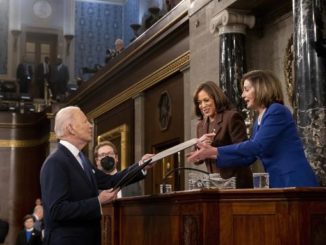
    When U.S. President Joe Biden stepped up to the podium to deliver his first State of the Union address before both houses of Congress this week, it was a historic moment for several reasons. Not only have none of his successors since 1945 delivered this address during an ongoing ground war of a similar magnitude to Russia’s invasion of Ukraine, but the optics of his speech captured another rare event. The two top Congressional officials who stood behind Mr. Biden as he spoke, the Speaker of the House of Representatives and the Vice President, were both women for only the second time in the country’s history.

    The hurdles, Ukraine too

    Notwithstanding the epochal times marking this event, the reality is that Mr. Biden faces grim challenges on the foreign policy front and a steep upward climb to overcome domestic hurdles before he can claim credit for any policy legacy that purports to improve the lot of his fellow citizens. On the foreign policy side, Russian President Vladimir Putin’s move to call the West’s bluff and kick off a military assault of Ukraine has posed complex strategic questions to the Biden administration, which are difficult to explain away to a U.S. domestic audience. Why did Mr. Biden leave Kyiv hanging in the balance without North Atlantic Treaty Organization (NATO) membership and with a virtual target on its back vis-à-vis Moscow’s guns, when many among Ukraine’s neighbors are treaty allies of NATO? Why, despite so many explicit signs that Russia would invade Ukraine if NATO carried on expanding its footprint eastwards across Europe, did Mr. Biden’s administration not do more to either make it harder for Moscow to act in this regard or at least buy more time by persuading Mr. Putin to engage diplomatically?

    Shadow of midterm elections

    Now that the sweeping economic sanctions that Washington has slapped on Russian political elites and institutions associated with Kremlin have roiled the Russian economy and brought the rouble down to historic lows, how will the Biden administration contain the spill-over effects of economic collapse and prevent them from causing a broader global recession? With the conflict intensifying and the human toll rising fast as Russian troops march on Kyiv, the U.S.’s capabilities as a superpower nation will be scrutinized closely on the world stage in the days and weeks ahead. They will almost certainly be attacked by Republicans back home as the midterm election cycle gains momentum — former U.S. President Donald Trump has already set the tenor for the debate by describing Mr. Putin’s Ukraine invasion as “genius” and “savvy”.

    At home, much depends on the outcome of the midterm elections, especially regarding the prospects for a Democratic White House to carry out any meaningful policy reform in the two years that the Biden administration will have from the time the midterms are complete. Democrats and Republicans are evenly split in the Senate with 50 seats each, while Democrats are clinging on to a narrow 221-212 margin in the House of Representatives, both of which advantages could be lost to Democrats if the 2022 midterm election results do not favor them.

    Critical issues

    The keystone issues that Mr. Biden needs to convince voters on, if he is to stave off a deleterious shift in the balance of power on Capitol Hill this November, include jobs and economic recovery in the post-COVID-19 climate of uncertainty, preventing the pandemic from wreaking further havoc in future waves, if any, inflation, and social security and education reforms to ease the financial burden on middle class budgets. Almost without exception, Mr. Biden will need the support of Congress to get the heavy lifting done in these policy areas, particularly where budgetary apportionments require lawmakers’ sign off. Certainly, it will matter in the foreign policy space. A recent example demonstrating the importance of Congress here is the fact that negotiations over a $6.4 billion security and humanitarian aid package for Ukraine hit a stalemate in the Senate over the source of these funds — military spending allocation already agreed, or emergency provisions above and beyond that level. Similarly, on the domestic front, Mr. Biden’s omnibus mega-bill in late 2021, seeking $1.85 trillion for social security and climate change, came to naught in the face of cohesive opposition from Senate Republicans and some rebel Democrats who voted across the line.

    The Trump impact

    At the heart of the Democratic conundrum is the fact that the Mr. Trump’s term in office unleashed forces that have tectonically shifted the ground under Washington politics. Whatever the charges of criminality or wrongdoing by the 45th President of the U.S., whether in terms of tax evasion or his role in spurring on the January 6, 2021 assault on the buildings of Capitol Hill, Mr. Trump’s nativist call to white America to reassert its purported supremacy has firmly embedded itself in the broader discourse and heralded a new era where political correctness is eschewed, and facts sometimes matter less than opinion.

    Indeed, it is evident that Mr. Biden is seeking to walk a tightrope between traditional mainstream Democratic values and the new paradigm when he spoke at the State of the Union of “the rebirth of pride” and “the revitalization of American manufacturing”, which, if it materializes, could help his administration “Lower your cost, not your wages”, and ensure the U.S. builds “more cars and semiconductors in America. More infrastructure and innovation in America. More goods moving faster and cheaper in America. More jobs where you can earn a good living in America. Instead of relying on foreign supply chains, let’s make it in America”.

    At the end of the day the old adage of “It’s the economy, stupid”, continues to resonate deeply across the country as the tagline for the American Dream. The realization of this — the Biden administration appears to concede — will require the adoption of strong self-interest as a guiding value for policymaking even when it comes at the cost of a gradual erosion of the global rules-based order and the globalization consensus, and the repudiation of older, constitutional values such as equal protection of the laws.

    (The author is an editor with The Hindu)

  • Australia announces first tranche of sanctions on Russia over Ukraine crisis

    Australia announces first tranche of sanctions on Russia over Ukraine crisis

    Sydney (TIP): Australia on February 23 joined the United States, the European Union, Canada, Germany and Britain to impose sanctions on Russia after Moscow ordered troops into separatist regions in Ukraine and recognised them as independent entities.

    Australia will immediately begin placing sanctions on Russian individuals it believes were responsible over the country’s actions against Ukraine, Prime Minister Scott Morrison said during a media briefing. “Australians always stand up to bullies, and we will be standing up to Russia, along with all of our partners,” he said. “I expect subsequent tranches of sanctions, this is only the start of this process.”

    Japan sanctions Russia, separatist Ukraine areas

    Tokyo: Japan’s prime minister has announced sanctions targeting Russia and two separatist Ukrainian regions recognised as independent by Russian President Vladimir Putin, joining an international effort seeking to pressure Russia to return to diplomatic solutions.

    Prime Minister Fumio Kishida said Wednesday that his government will ban new issuance and distribution of Russian government bonds in Japan in response to the “actions Russia has been taking in Ukraine.”

    He said Japan will also suspend visa issuance to the people linked to the two Ukrainian rebel regions and freeze their assets in Japan, and will ban trade with the two areas. Kishida repeated his “strong condemnation” of Russia for violating Ukrainian sovereignty and territorial integrity as well as international law.

    He added: “We strongly urge Russia to return to diplomatic process in resolving the development.” — Agencies

  • Shaking up Europe’s security architecture

    Shaking up Europe’s security architecture

    An order that does not accommodate Russia’s concerns through genuine negotiation cannot be stable in the long term

    By P.S. Raghavan

    It is too early to say what Mr. Putin’s endgame is, and how costly this adventure will be, in terms of lives and destruction, as well as in its political and economic impact. Without justifying the manner in which Russia has chosen to “right” the perceived “wrongs”, it has to be said that this crisis results from a broken security architecture in Europe. A sustainable security order has to reflect current realities: it cannot be simply an outgrowth of the Cold War order, and it has to be driven from within. Also, a European order that does not accommodate Russia’s concerns through genuine negotiation cannot be stable in the long term. France’s President Emmanuel Macron has been making this point forcefully, arguing for Europe to regain its strategic autonomy. He has called NATO “brain-dead” and said that Europe, as a “geopolitical power” should control its own destiny, regaining “military sovereignty” and re-opening a dialogue with Russia, managing the misgivings of post-Soviet countries.

    The commencement of Russian military action in Ukraine brings down the curtain on the first act of a bizarre drama that has been playing out over the past eight months. At the heart of it is the instability in the post-Cold War security order.

    The first act began with a meeting between U.S. President Biden and Russia’s President Vladmir Putin in June last year, promising to reverse seven years of relentless U.S.-Russia acrimony. Mr. Biden’s decision to reach out to Mr. Putin signaled a U.S. geopolitical rebalancing, seeking a modus vivendi with Russia and disengagement from conflicts in Europe and West Asia, to enable a sharper U.S. focus on domestic challenges and the external challenge from its principal strategic adversary, China.

    These were Putin’s terms: Mr. Putin saw this reengagement as an opportunity to revive Russia’s flagging economy and expand its freedom of political action globally. However, he wanted this engagement on equal terms. Russia would cooperate in this geopolitical rebalancing if its concerns are met, so that it does not constantly have to counter moves to probe its territorial integrity and constrain its external influence – which is how Russia sees the strategic posture of the North Atlantic Treaty Organization (NATO) and U.S. policies. Russia has repeatedly articulated its grievances: that NATO’s expansion violated promises made prior to the breakup of the Soviet Union; that Ukraine’s accession to NATO would cross Russia’s red lines; and that NATO’s strategic posture poses a continuing security threat to Russia. NATO’s expansion as a politico-military alliance, even after the dissolution of the Soviet Union and the Warsaw Pact, was at the U.S.’s initiative. It was intended to temper European ambitions for strategic autonomy from the sole superpower and to counter Russia’s resurgence. Recent experience shows it may not be succeeding in either goal.

    NATO’s weakened glue: NATO countries today span a geography of uneven economic development and a diversity of political traditions and historical consciousness. Moreover, the original glue that held NATO together — ideological solidarity (free world against communist expansion) and an existential military threat — dissolved with the collapse of communism and the Warsaw Pact. There is no ideology to oppose and threat perceptions vary, depending on geographical location and historical experience. This heterogeneity means a diversity of interests. American leadership has normally succeeded in papering over differences, but the growing ambitions of countries is making this increasingly difficult. The current crisis in Ukraine has illustrated the divisions and exposed the limitations of the U.S.’s ability to bridge them. The irony is that the divisions are of the U.S.’s making. Its pressure on NATO in 2008 to recognize Ukraine’s membership aspirations and its encouragement for a change of government in Kyiv in 2014, provoked the Russian annexation of Crimea. The subsequent armed separatist movement in eastern Ukraine (Donbas) led to the Minsk accords of 2014-15, which provided for a special status for this region within Ukraine.

    Ukraine considers this an unfair outcome, and the U.S. has supported its efforts to reinterpret the accords to its advantage. While some European countries supported this line, France and Germany — which brokered these agreements — have periodically tried to progress implementation, in the effort to break the impasse and resume normal engagement with Russia, which serves their economic interests.

    In recent months, the U.S. signaled that it would support the full implementation of the Minsk accords, but apparently found it difficult to shake the entrenched interests sufficiently to make it happen. This may have finally convinced Mr. Putin that his concerns would not be met through negotiations.

    Energy security: U.S. interests have also divided NATO on energy security. For Germany, the Nord Stream 2 (NS2) Russia-Germany gas pipeline is the cheapest source of gas for its industry. Others deem it a geopolitical project, increasing European dependence on Russian energy. This argument masks self-serving interests. Ukraine fears the diminution of gas transit revenues, and also that if its importance for gas transit declines, so will Europe’s support in its disputes with Russia. The U.S.’s “geopolitical” argument against NS2 dovetails neatly with its commercial interest in exporting LNG to Europe, reinforced by U.S. legislation for sanctions against companies building gas pipelines from Russia. Increasing LNG exports to Europe is explicitly stated as a motivation for the sanctions. European countries that oppose NS2 are ramping up their LNG import infrastructure to increase imports from the U.S.

    The manner in which NATO countries implement the promised harsh sanctions against Russia will demonstrate whether, how much and for how long, this crisis will keep them united.

    It is too early to say what Mr. Putin’s endgame is, and how costly this adventure will be, in terms of lives and destruction, as well as in its political and economic impact. Without justifying the manner in which Russia has chosen to “right” the perceived “wrongs”, it has to be said that this crisis results from a broken security architecture in Europe. A sustainable security order has to reflect current realities: it cannot be simply an outgrowth of the Cold War order, and it has to be driven from within. Also, a European order that does not accommodate Russia’s concerns through genuine negotiation cannot be stable in the long term. France’s President Emmanuel Macron has been making this point forcefully, arguing for Europe to regain its strategic autonomy. He has called NATO “brain-dead” and said that Europe, as a “geopolitical power” should control its own destiny, regaining “military sovereignty” and re-opening a dialogue with Russia, managing the misgivings of post-Soviet countries.

    Outlook for India: India has to brace itself for some immediate challenges flowing from the Russian actions. It will have to balance the pressure from one strategic partner to condemn the violation of international law, with that from another to understand its legitimate concerns. We were there in 2014 and managed the pressures. As Russia-West confrontation sharpens further, the U.S. Administration’s intensified engagement in Europe will inevitably dilute its focus on the Indo-Pacific, causing India to make some tactical calibration of actions in its neighborhood. Geopolitics, however, is a long game, and the larger context of the U.S.-China rivalry could, at some point in the not-too-distant future, reopen the question of how Russia fits into the European security order.

    (The author  is a former Ambassador to Russia and former Chairman of the National Security Advisory Board)

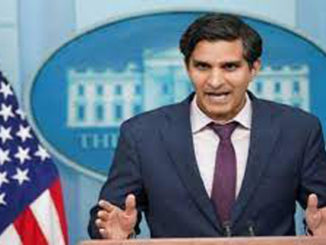
  • Indian American economic advisor Daleep Singh leads Biden admin in executing sanctions on Russia

    Indian American economic advisor Daleep Singh leads Biden admin in executing sanctions on Russia

    WASHINGTON, D.C. (TIP): Russian President Vladimir Putin on Monday, February 21,  signed decrees to recognize Ukraine’s regions of “Donetsk and Luhansk People’s Republics” as “independent”, escalating the tension in the region and increasing fears of Moscow’s invasion of Ukraine. He also ordered Russian troops into eastern Ukraine in what the Kremlin called a “peacekeeping” mission in the Moscow-backed regions.

    Singh, who is Deputy National Security Advisor for international economics and Deputy Director of the National Economic Council, made his second appearance in the White House Press Room in a matter of days.

    White House Press Secretary Jen Psaki said that he is “back by popular demand” given the key role Singh is playing in this Russia policy of the administration. “Russia’s long previewed invasion of Ukraine has begun and so too has our response. Today, the president (Joe Biden) responded swiftly and in lockstep with allies and partners. The speed and coordination were historic… It took weeks and months to mount a decisive response,” Singh told reporters in his opening remarks.

    Singh said that after consultations overnight with Germany, Russia’s Nord Stream 2 natural gas pipeline will not become operational.

    That is a USD 11 billion investment in a prized gas pipeline controlled by Russia that will now go to waste, and it sacrifices what would have been a cash cow for Russia’s coffers, he said.

    It is not just about the money, this decision will relieve Russia’s geostrategic chokehold over Europe through its supply of gas, and it’s a major turning point in the world’s energy independence from Russia. “Second, we’ve demonstrated the potency of our financial sanctions and make no mistake, this is only the sharp edge of the pain we can inflict.

  • After Omicron pandemic, it is Russia-Ukraine war afflicting world of sports now

    After Omicron pandemic, it is Russia-Ukraine war afflicting world of sports now

    By Prabhjot Singh

    Gallant attempts by the world of sports to wriggle out of the devastating impact of the Omicron pandemic may be severely hit by the Russia-Ukraine military conflict that threatens to divide the world again. Unfortunately, the timing of the Russian invasion of Ukraine coincides with the holding of a major International Olympic Committee event, the Paralympic Games, scheduled to start in Beijing on March 4. Twice before the Olympic movement had been hit hard by World War II. The  1940 and 1944 editions of the Olympic Games had to be cancelled during the global hostilities at that time.

    Led by the United States, the NATO nations, in expression of their complete solidarity with Ukraine, have already heaped a series of sanctions on Russia in their valiant attempt to force cessation of hostilities.

    It was for almost similar reasons that the 1980 Moscow Olympic Games were boycotted by a group led by the NATO leader, the United States. The boycotters had objected to the presence of the then Soviet Union forces in Afghanistan.

    Interestingly, the Beijing Winter Olympic Games 2022, that witnessed a diplomatic boycott by most of the NATO nations, including the US and Canada,  had the Russian President, V. Putin, as a guest of honor

    Other than NATO, it is the International Olympic Committee (IOC) that has come hard on both Russia and its aide Byelorussia by  urging all International Sports Federations (ISFs)  to relocate or cancel their sports events currently planned in Russia or Belarus. The ISFs should take the breach of the Olympic Truce by the Russian and Belarussian governments into account and give the safety and security of the athletes absolute priority. The IOC itself has no events planned in Russia or Belarus.

    The IOC Executive Board also wants that no Russian or Byelorussian national flag be displayed and no Russian or Byelorussian anthem be played in international sports events that are not already part of the respective World Anti-Doping Agency (WADA) sanctions for Russia. In the just concluded Beijing Winter Olympic Games, it was the Russian Olympic Committee (ROC) and not Russia that was allowed to send its contingent. Neither any Russian flag was flown, nor the Russian national anthem was played during the Games though the ROC athletes were placed at number two in the overall medals (32) tally with six gold. 12 silver and 14 bronze medals. Norway topped the tally with 37 medals, including 16 gold. Eight silver and 13 bronze medals while Germany took the third spot with 27 medals and Canada finished fourth with a tally of 24. Incidentally, Norway, Germany and Canada are now on the other side opposing the Russian action in Ukraine.

    Though the IOC Executive Board  has expressed its full support to the International Paralympic Committee (IPC) for the upcoming Paralympic Winter Games in Beijing from March 4, the shadow of the Russian action may impact the games in a big way.

    Immediately after Russia launched its military operations, the International Olympic Committee (IOC)  came out with a strong condemnation of the breach of the Olympic Truce by the Russian government by referring to the December 2, 2021 resolution of the UN General Assembly adopted by consensus of all 193 UN Member States. The Olympic Truce began seven days before the start of the Olympic Games, on February 4, 2022, and ends seven days after the closing of the Paralympic Games.

    Earlier in a similar resolution passed by the General Assembly of the United Nations on  9 December 9, 2019, it was decided to include in the provisional agenda of its seventy-sixth session the sub-item entitled “Building a peaceful and better world through sport and the Olympic ideal” and also recalling its prior decision to consider the sub-item every two years, in advance of the Summer and Winter Olympic Games. The Olympic Truce was first taken up by the UN General Assembly  on October 25, 1993, which, inter alia, revived the ancient Greek tradition of ekecheiria (“Olympic Truce”) calling for a truce during the Olympic Games to encourage a peaceful environment and ensure safe passage, access and participation for athletes and relevant persons at the Games, thereby mobilizing the youth of the world to the cause of peace.

    The core concept of ekecheiria, historically, has been the cessation of hostilities from seven days before until seven days after the Olympic Games, which, according to the legendary oracle of Delphi, was to replace the cycle of conflict with a friendly athletic competition every four years. Other than the Paralympic Olympic Games  starting in Beijing on March 4, where winter para athletes of both Russia and Ukraine are scheduled to participate, the first test for any International Sports Federation under the new IOC directive is for field hockey (International Hockey Federation – FIH).

    An elite FIH event – Junior Women World Cup – will be organized at Potchefstroom in South Africa from April 1 where both Russia and Ukraine are among 16 nations confirmed to participate. Going by the hostilities back home, participation of both Russia and Ukraine in the Potchefstroom event looks doubtful, both the South African Hockey Federation and the FIH have a problem on hand.

    The tournament had already been postponed once. The list of participants, too, has witnessed changes. For example, Japan had withdrawn at the last minute. It was replaced by Malaysia. Now the  sword of uncertainty is hanging over the Potchefstroom event again following the Russia-Ukraine war.

    (Prabhjot Singh is a veteran journalist with over three decades of experience covering a wide spectrum of subjects and stories. He has covered  Punjab and Sikh affairs for more than three decades besides covering seven Olympics and several major sporting events and hosting TV shows. For more in-depth analysis please visit probingeye.com  or follow him on Twitter.com/probingeye. He can be reached at prabhjot416@gmail.com)


  • How Ukraine imbroglio can impact India

    How Ukraine imbroglio can impact India

    By Gurjit Singh

    The standoff between Russia and US-Europe over Ukraine has come at an inopportune time for India. As a UN Security Council (UNSC) member, India is contributing to ensuring peace, security and stability in the world. This role has opportunities for enhancement due to the inability of the permanent five (P5) to act in unison. In the case of Ukraine, the P5 are threatening to go to war with each other, with the UK, US, France on one side, and Russia supported by China on the other. This takes matters totally out of the hands of the UNSC, making it redundant. The Ukraine crisis is curtailing Indian role in the UNSC. New Delhi is doing its best to remain relevant. India is developing relations with the EU and other European countries. This initiative leads India to support the Normandy process and the Minsk agreement, which are European efforts to engage Russia on Ukraine. India would prefer the European way of dealing with Russia than the tough posture which the US wants NATO to adopt. European countries will toe the US line if war erupts. That reduces the efficacy of India’s European initiative presently. India is calling for diplomacy as that will defuse the tension and also give India more leeway.The Russian posture on Ukraine and the reaction to it, strengthened the Sino-Russian partnership. The Xi-Putin summit at the Beijing Winter Olympics lent firmness and robustness to that relationship. China is challenging India, has overthrown extant agreements and increased its military threat. This does not augur well. For long, India depended on Russia for strategic partnership. It still largely depends on Russia for military hardware. While the defense relationship is mutually beneficial, the Sino-Russian axis curtails the Russian ability and intent to support India as in the past.

    Russia’s confrontation with NATO will lead to rigorously imposed sanctions. India has delicately negotiated to stay out of CAATSA (Countering America’s Adversaries Through Sanctions Act) with the purchase of S-400 Triumf missile systems which may not work when a war-like situation prevails. Countries like Germany have stark choices on economic issues, and India will be faced with similar choices on defense supplies from Russia with tougher sanctions that the US is ready to impose. India-Russia trade of about $9 billion annually is about 1% of India’s global trade. The significance is the impact on defense, energy, grain delivery and prices.

    Curtailing of defense supplies will impact India’s ability to respond to China. The diversification of defense purchases that India achieved would come into play but without the competitive pricing and transfer of technology of Russian equipment.

    Strategically, Russia will not attempt to restrain China. In exchange for Chinese support for Russian intent in Ukraine, they would concur with Chinese initiatives in the Indo-Pacific. Russia’s nuanced divergence on India could melt away if the Ukraine crises blows up as both NATO and Russia seek clear Indian support which India hesitates to provide.

    The Ukraine crisis brings Russia and China closer and diverts the attention of Western powers towards Ukraine. The Europeans would have a lesser appetite for the Indo-Pacific once they are embroiled in European matters. France held its Indo-Pacific conference right after the Munich Security Conference this month. They wish to continue to deal with the region while engaged with Russia as well. However, the EU member countries do not have diverse abilities and their Indo-Pacific polices are likely to be on hold till the Russian challenge is settled. At present, US naval forces are at strength in the South China Sea and the broader Indo-Pacific as Taiwan is at stake. They will need allies Japan and AUKUS to play a role. They could well call upon India to act in the Indo-Pacific even if India is not directly involved in an operation around Taiwan.

    This is not different from what India is doing in the Indo-Pacific at present, but India expects support for its position with China on the border issue, as was discussed at the Quad foreign ministers’ meeting in Australia recently. Indian activity, in the midst of the Ukraine crisis, may not be ignored by China and Russia.

    India’s energy security is a matter of worry as there is already a $20 per barrel increase in the price of oil over the estimates used by the Economic Survey 2022. This impacts India’s growth story. Russia is a significant oil producer and the Ukraine crisis and sanctions on Russia would destabilize the oil market. This would gravely impact India’s development plans.

    In 2021, India imported merely 1% of its oil and 0.2% of its gas from Russia. GAIL has a 20-year contract to import 2.5 million tons of LNG from Russia annually. It’s not the direct supply but the prices that will be impacted negatively. Thus, India’s repeated calls for peaceful resolution. The diversification of Indian energy supplies over time will perhaps protect supplies but not control prices.

    Similarly, if the Ukraine crisis leads to Europe, particularly Germany, curtailing gas imports from Russia, it will bring other gas providers to strategically shift supplies to Europe impacting Asian economies. The gas prices nevertheless will rise. The pandemic has slowed down India’s investment in Mozambique in gas offtake and this needs to be hastened to diversify gas imports and stabilize gas pricing in India. There are nearly 25,000 Indians in Ukraine, mostly students. They have been advised to leave Ukraine as flights are still available. Indian mission families too are leaving. This is the correct advisory planned well ahead of a full-scale crisis. Students remain averse to depart when it is feasible, to avoid spending on high-priced tickets. They believe that the government will always step in to rescue them once a crisis unfolds. This attitude needs to change.

    This is an inflection point for India as the Ukraine crisis challenges its ability to influence events in its favor, avoid an impact on its economy, without taking sides in a crisis of indirect interest to it. Such impacts of globalization need careful handling.

    (The author is a former ambassador)

  • Ukraine crisis: Treading cautiously serves India’s long-term interests

    Giving  paramount importance to its national interests, India has been sensibly walking a tightrope on the Ukraine crisis. Enjoying good relations with the US, Russia and the European Union (EU), New Delhi has done well to adopt a pragmatic approach that can stand it in good stead no matter how the situation develops from here on. India has been holding its ground despite relentless pressure to take sides. Rather than toeing the US line to hit out at Russia, India has been advocating ‘constructive diplomacy’ to resolve the imbroglio. External Affairs Minister S Jaishankar has rightly observed that the crisis has its roots in post-Soviet politics, the expansion of NATO and the dynamics between Russia and Europe.

    Ukraine is banking on NATO membership and stronger ties with EU to stand up to its neighbor. Russian President Vladimir Putin wants Kyiv to recognize Russia’s sovereignty over Crimea, the Black Sea peninsula that Moscow annexed after seizing it from Ukraine in 2014, drop its bid to join NATO and partially demilitarize. However, these terms are not acceptable to Ukraine and the West, which considers the annexation of Crimea as a violation of international law.

    Since 2014, around 14,000 people have been killed in fighting between Ukrainian forces and Russia-backed separatists in eastern Ukraine. Russia’s fears that it will be hemmed in by the US and its allies once Ukraine enters the NATO club, leading to greater instability in the region, are not unfounded. Though there is no dispute that Ukraine’s sovereignty and territorial integrity ought to be respected by one and all, Russia’s genuine apprehensions also must be allayed. Both nations, along with the international community, should go back to the Minsk Agreements of 2014-15 and give peace a chance by working out a mutually acceptable framework to end the hostilities. An immediate de-escalation of tensions, factoring in the security concerns of all countries concerned, is the need of the hour to prevent a war that can have far-reaching, disastrous consequences in geopolitical and geoeconomic terms.

    (Tribune, India)

  • Russia’s NATO problem: On the Ukraine war

    Putin seems unwilling to engage diplomatically to address Russian security concerns

    Russia’s unjustifiable incursion into Ukraine following weeks of military troop build-up on their shared border has drastically raised tensions in the region with broader ripple effects across the world, particularly for NATO countries and others with strategic connections to the two nations. Reports said that several Ukrainian cities, including capital Kyiv came under attack on Thursday morning, even as the UN Security Council held an emergency meeting to stop the invasion. U.S. President Joe Biden and the NATO and European Commission leadership vowed to impose “severe sanctions” on Russia. This round of sanctions will overlay prior economic penalties imposed on Russian entities and individuals close to the political leadership, and they are expected to include cutting off top Russian banks from the financial system, halting technology exports, and directly targeting the Russian President. Moscow can hardly be surprised at this backlash, for it has shown little sympathy toward the idea of engaging diplomatically on the Ukraine question to address Russian security concerns. Ever since Russia began amassing troops on the Ukrainian border, the U.S., NATO, and Europe have sought to press for diplomatic solutions. This includes direct U.S.-Russia negotiations, and French President Macron’s meeting with Mr. Putin.

    While the sense of frustration in western capitals over Mr. Putin’s intractability and aggression are palpable, and the use of severe sanctions stemming from that is a strategic inevitability, it is unlikely that the prospect of escalating violence and a devastating toll on human life and property in Ukraine can be ruled out until Mr. Putin’s broader questions on NATO are answered. At the heart of his fears is the prospect of Ukraine joining NATO and NATO troops potentially stationed at the border with Russia. NATO’s historical record, of its penchant for expansionism, has likely fueled such insecurities. After the dissolution of the former Soviet Union, the Eastern European military alliance, NATO, and Russia in 1997 signed the “Founding Act” on mutual relations, cooperation, and security. Disregarding the spirit of this agreement, NATO quietly underwent five rounds of enlargement during the 1990s, pulling former Soviet Union countries into its orbit. Cooperative exchanges, communications hotlines, and Cold War fail-safes such as arms control verification have fallen by the wayside, even more since Russia’s annexation of Crimea in 2014. It may be the case that owing to Mr. Putin’s failure to develop Russia into an economic powerhouse that naturally attracted neighboring countries and international capital to itself partly explains Moscow’s deflection of attention to strategic questions relating to NATO and Russia’s territorial integrity. But unless western nations give assurances to Mr. Putin that NATO will not seek to relentlessly expand its footprint eastwards, Moscow will have little incentive to return to the negotiating table. But Russia and Mr. Putin must realize that war is not the means to peace and security.

    (The Hindu)

  • India abstains from UNSC resolution against Russian aggression

    India abstains from UNSC resolution against Russian aggression

    Draft resolution fails as Russia exercises veto

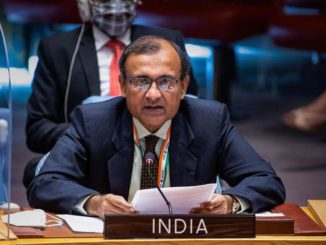
    WASHINGTON, D.C. (TIP): With Russia exercising its veto, a draft resolution sponsored by the U.S. and Albania, condemning Russian aggression and calling for the country’s withdrawal from Ukraine, has failed to pass the United Nations Security Council (UNSC).

    India, along with China and the UAE, abstained, while 11 members voted in favor of it. The U.S. vowed to take the issue to the General Assembly, where Russia does not have a veto. Government officials said India has been speaking to all parties including Russia and Ukraine to return to the negotiating table  “By abstaining, India retained the option of reaching out to relevant sides in an effort to bridge the gap and find the middle ground with an aim to foster dialogue and diplomacy,” a source said.

    The vote at the UNSC had to be postponed twice, for an hour at a time, as U.S. and Albanian diplomats, the “penholders” of the resolution, negotiated with other countries, trying to build a consensus for the draft.

    However, according to officials who saw the draft, the original version was too strong, as it invoked UN Chapter VII, which authorizes the use of force against Russian troops in Ukraine. After several rounds of heated negotiations, the U.S. agreed to soften the resolution and drop the Chapter VII reference, which is believed to have ensured that China also abstained along with India and the UAE, while Russia was alone in voting against the resolution.

    “Let us never forget that this is a war of choice. Russia’s choice,” Linda Thomas-Greenfield, the U.S.’s permanent representative (PR) to the United Nations told the Council. “To those who say all parties are culpable, I say that is a clear cop out. One country… one country is invading another,” she said, adding that countries who based their position on Russia having a historical relationship with Ukraine should think about whom that label would apply to next.  “Vote ‘no’ or abstain if you do not uphold the charter and align yourselves with the aggressive and unprovoked actions of Russia,” she said.

    Delivering India’s explanation of vote, PR T.S. Tirumurti said India was “deeply disturbed” by the developments and called for the “immediate cessation “of violence. Mr. Tirumurti said that the global order had been built on the UN Charter and the respect for the territorial integrity and sovereignty of states. He called on states to respect these principles and for dialogue to settle their differences.

    During his speech, as with his other UNSC speeches relating to the Ukraine crisis, Mr. Tirumurti said India was “deeply concerned” about the welfare of Indians in the country. Ukraine’s PR Sergiy Kyslytsya took a shot at India on this count, when it was his turn to speak. “And I may say to some: It is exactly the safety of your nationals right now in Ukraine that you should be the first to vote to stop the war – to save your nationals in Ukraine. And not to think about whether you should or should not vote because of the safety for your nationals,” he said.

    Mr. Kyslytsya said he was “saddened” that a “small handful of members” seemed to be “tolerating” the war.

    China’s PR Zhang Jun backed diplomatic negotiations between the parties, saying, “Ukraine should become a bridge between the East and the West, not an outpost for confrontation between major powers.”

    Russia’s U.N. Ambassador Vassily Nebenzia called the resolution not just anti-Russian but also anti-Ukrainian, saying the document (draft resolution) ran counter to the interests of Ukraine’s people as it sought to keep the existing government in power.

    With reference to Russian President Vladimir Putin asking the Ukrainian army to depose its government, Mr. Kyslytsya, addressing his Russian counterpart in the Security Council Chamber, asked, “Are you crazy?”

    In post-meeting remarks to the press, U.N. Secretary-General Atonio Guterres said the meeting’s objective had not been achieved.

    “Today, that objective was not achieved. But we must never give up,” he said. “We must give peace another chance.”

  • Bitcoin tumbles as Putin orders military into eastern Ukraine

    Bitcoin tumbles as Putin orders military into eastern Ukraine

    Cryptocurrencies dropped as Vladimir Putin decided to conduct military operations in eastern Ukraine, with Bitcoin slumping to a one-month low. The largest token fell as much as 7.4% to $34,783 after an initial Tass report on Russia’s decision. Second-ranked Ether declined as much as 8.7% to $2,390.61. Other coins like XRP, Cardano and Solana were down as well.

    Bitcoin’s swings during the past weeks of escalating geopolitical tensions have served to undermine the argument that cryptocurrencies offer a hedge in times of trouble. The traditional safe haven gold, meanwhile, surged to the highest level since early 2021 on Thursday, February 24. “Risk assets continue to be weighed down by the Russia-Ukraine conflict and tensions. This includes Bitcoin and cryptocurrencies which are currently still very much viewed as a high-risk asset class,” said Vijay Ayyar, vice president of corporate development at Luno, a crypto platform. The next key level to watch for Bitcoin will be $28,000 to $29,000, he said. If that treshold gets breached, “we could be looking at much lower levels in the low $20,000s and below.”

  • Did We Provoke Putin’s War in Ukraine?

    Did We Provoke Putin’s War in Ukraine?

    By Patrick J. Buchanan

    “President Joe Biden almost hourly promises, “We are not going to war in Ukraine.” Why would he then not readily rule out NATO membership for Ukraine, which would require us to do something Biden himself says we Americans, for our own survival, should never do: go to war with Russia?”

    “Whatever we may think of Putin, he is no Stalin. He has not murdered millions or created a gulag archipelago. Nor is he “irrational,” as some pundits rail. He does not want a war with us, which would be worse than ruinous to us both. Putin is a Russian nationalist, patriot, traditionalist and a cold and ruthless realist looking out to preserve Russia as the great and respected power it once was and he believes it can be again.”

    When Russia’s Vladimir Putin demanded that the U.S. rule out Ukraine as a future member of the NATO alliance, the U.S. archly replied: NATO has an open-door policy. Any nation, including Ukraine, may apply for membership and be admitted. We’re not changing that. In the Bucharest declaration of 2008, NATO had put Ukraine and Georgia, ever farther east in the Caucasus, on a path to membership in NATO and coverage under Article 5 of the treaty, which declares that an attack on any one member is an attack on all. Unable to get a satisfactory answer to his demand, Putin invaded and settled the issue. Neither Ukraine nor Georgia will become members of NATO. To prevent that, Russia will go to war, as Russia did last night.

    Putin did exactly what he had warned us he would do. Whatever the character of the Russian president, now being hotly debated here in the USA, he has established his credibility. When Putin warns that he will do something, he does it. Thirty-six hours into this Russia-Ukraine war, potentially the worst in Europe since 1945, two questions need to be answered:

    How did we get here? And where do we go from here?

    How did we get to where Russia — believing its back is against a wall and the United States, by moving NATO ever closer, put it there — reached a point where it chose war with Ukraine rather than accepting the fate and future it believes the West has in store for Mother Russia?

    Consider. Between 1989 and 1991, Mikhail Gorbachev let the Berlin Wall be pulled down, Germany be reunited and all the “captive nations” of Eastern Europe go free. Having collapsed the Soviet empire, Gorbachev allowed the Soviet Union to dissolve itself into 15 independent nations. Communism was allowed to expire as the ruling ideology of Russia, the land where Leninism and Bolshevism first took root in 1917. Gorbachev called off the Cold War in Europe by removing all of the causes on Moscow’s side of the historic divide. Putin, a former KGB colonel, came to power in 1999 after the disastrous decadelong rule of Boris Yeltsin, who ran Russia into the ground. In that year, 1999, Putin watched as America conducted a 78-day bombing campaign on Serbia, the Balkan nation that had historically been a protectorate of Mother Russia.

    That year, also, three former Warsaw Pact nations, the Czech Republic, Hungary and Poland, were brought into NATO.

    Against whom were these countries to be protected by U.S. arms and the NATO alliance, the question was fairly asked.

    The question seemed to be answered fully in 2004, when Slovenia, Slovakia, Lithuania, Latvia, Estonia, Romania and Bulgaria were admitted into NATO, a grouping that included three former republics of the USSR itself, as well as three more former Warsaw Pact nations. Then, in 2008, came the Bucharest declaration that put Georgia and Ukraine, both bordering on Russia, on a path to NATO membership. Georgia, the same year, attacked its seceded province of South Ossetia, where Russian troops were acting as peacekeepers, killing some.

    This triggered a Putin counterattack through the Roki Tunnel in North Ossetia that liberated South Ossetia and moved into Georgia all the way to Gori, the birthplace of Stalin. George W. Bush, who had pledged “to end tyranny in our world,” did nothing. After briefly occupying part of Georgia, the Russians departed but stayed as protectors of the South Ossetians.

    The U.S. establishment has declared this to have been a Russian war of aggression, but an EU investigation blamed Georgian President Mikheil Saakashvili for starting the war.

    In 2014, a democratically elected pro-Russian president of Ukraine, Viktor Yanukovych, was overthrown in Kyiv and replaced by a pro-Western regime. Rather than lose Sevastopol, Russia’s historic naval base in Crimea, Putin seized the peninsula and declared it Russian territory. Teddy Roosevelt stole Panama with similar remorse.

    Which brings us to today.

    Whatever we may think of Putin, he is no Stalin. He has not murdered millions or created a gulag archipelago.

    Nor is he “irrational,” as some pundits rail. He does not want a war with us, which would be worse than ruinous to us both. Putin is a Russian nationalist, patriot, traditionalist and a cold and ruthless realist looking out to preserve Russia as the great and respected power it once was and he believes it can be again.

    But it cannot be that if NATO expansion does not stop or if its sister state of Ukraine becomes part of a military alliance whose proudest boast is that it won the Cold War against the nation Putin has served all his life.

    President Joe Biden almost hourly promises, “We are not going to war in Ukraine.” Why would he then not readily rule out NATO membership for Ukraine, which would require us to do something Biden himself says we Americans, for our own survival, should never do: go to war with Russia?

    (The author is a former White House Communications Director. Visit Buchanan.org to read his  articles and books)

  • Relationship with India stands on its own merit, not impacted by tensions with Russia: US

    Relationship with India stands on its own merit, not impacted by tensions with Russia: US

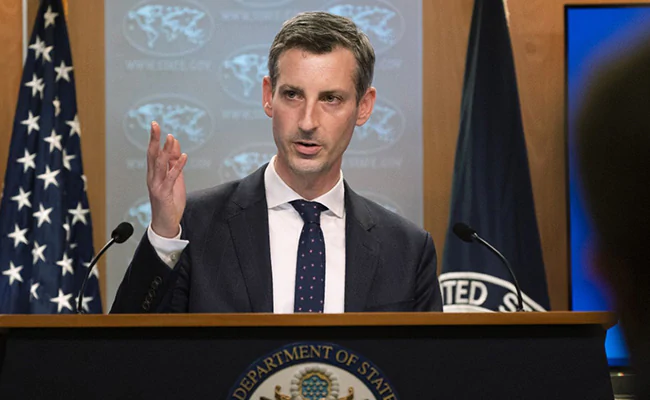
    WASHINGTON, D.C. (TIP): America’s relationship with India stands on its own merit and has not been impacted by the ongoing tension with Russia, the Biden administration said. “We have a relationship with India that stands on its own merits,” State Department spokesperson Ned Price told reporters at his daily news conference on Thursday, February 3. He was responding to a question if the US ties with India have been impacted due to the tension with Russia over Ukraine crisis. For the second time this week, the State Department spokesperson refrained from responding to questions related to India’s position on Ukraine in the United Nations Security Council. “I will leave it to our Indian partners to discuss their stance in the UN Security on this particular issue,” Price said. “We have been in touch with literally dozens of countries around the world, including our Indian partners, on our concerns regarding Russia’s military buildup and its unprovoked potential aggression against Ukraine,” he maintained. These are conversations that the United States is having at different levels, he said. “As I was saying in a different context earlier, Russian aggression against Ukraine and a Russian invasion of Ukraine would have implications for the security environment well beyond that neighborhood. Whether it is the PRC or India or countries around the world, the implications would be far-reaching. And I think there is a broad understanding of that,” the official added.

    (Source: PTI)

  • Russia moves more troops westward

    Moscow (TIP): Russia is sending troops from the country’s far east to Belarus for major war games, officials said on January 18, in a deployment further beefing up Russian military assets near Ukraine amid Western fears of an invasion. Deputy Defence Minister Alexander Fomin said the drills are intended to practice a joint response to external threats by the alliance of Russia and Belarus, which have close political, economic and military ties. Fomin didn’t say how many troops and weapons were being redeployed for the exercises, or give the number of troops that will be involved in the war games. Ukrainian officials have warned that Russia could launch an attack from various directions, including from the territory of its ally Belarus. — AP

  • India in history this Week- December 3 to December 9, 2021

    India in history this Week- December 3 to December 9, 2021

    03 DECEMBER

    1844       The first President of the country Dr. Rajendra Prasad was born.

    1751       Battle of Arnie in India (Second Carnatic War): A British East India Company-led army under Robert Clive defeats a very large Franco-Indian army under the command of Rana Sahib at Archana.

    1796       Baji Rao II was made the Peshwa of the Maratha Empire. He was the last Peshwa of the Maratha Empire.

    1889       The youngest hanged revolutionary, Khudiram Bose, was born in the independence movement.

    1915       A magnitude 6.5 earthquake in Bhutan and Arunachal Pradesh killed 170 people and destroyed many homes.

    1971       The Emergency came into force in the country after the war between India and Pakistan started.

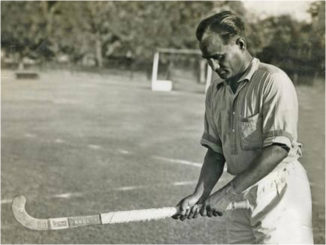
    1979       Hockey magician Major Dhyanchand  died.

    2004       India and Pakistan agreed to restore rail connectivity between Munabav and Khokhrapar after 40 years.

    2011       Film actor Dev Anand died.

    1984       Leaking toxic gas from the Union Carbide factory in Bhopal killed at least 3000 people and caused several thousands of physical deformities.

    1959       India and Nepal signed the agreement of Gandak Irrigation and Power Project.

    1967       India’s first rocket (Rohini RH 75) was launched from Thumba.

    2008       Chief Minister of Maharashtra Vilasrao Deshmukh resigned from his post on the day after the terrorist incident of 23 November in Mumbai.

    04 DECEMBER

    2008       Renowned historian Romila Thapar was chosen for the Cluj honor.

    1888       Birth of historian Ramesh Chandra Majumdar.

    1860       Agustino Lawrenceo of Margao, Goa, received a doctorate in chemistry from the University of Paris. He became the first Indian to pursue a doctorate from a foreign university.

    1899       For the first time, the vaccine of typhoid was used to protect humans from this disease.

    1919       The twelfth Prime Minister of India, Indra Kumar Gujral was born.

    1910       Ramaswamy Venkataraman, the eighth president of India, was born.

    1971       The Indian Navy attacked the Pakistani Navy and Karachi.

    05 DECEMBER

    1955       The STD service that provides long distance telephone calls to every home came into existence on this day in 1955.

    1971       India recognized Bangladesh as a country.

    1895       The birth of Josh Malihabadi, the famous Urdu poet of India and Pakistan.

    1941       Famous Indian female painter Amrita Shergill died in Lahore. Many of his artworks were appreciated worldwide.

    1969       The birth of Anjali Bhagwat, the famous shooter who has illuminated the name of India in the world in shooting.

    1998       Russia agrees to give ‘Krivak class’ multi-purpose warship to Indian Navy.

    1999       Yukta Mukhi took the title of Miss World to her name.

    1657       Shah Jahan’s younger son Murad proclaimed himself king.

    1943       Japanese airplane bombed Kolkata.

    1950       Freedom fighter, poet, yogi and philosopher Arvind Ghosh died in Puducherry.

    1950       Sikkim became a protected state of India.

    06 DECEMBER

    1732       Warren Hastings, the first Governor General of the East India Company, was born.

    1907       The first incident of dacoity related to India’s freedom struggle took place at Chingaripota railway station.

    1992       Babri Masjid in Ayodhya was demolished by fierce Hindu kar sevaks. After this, riots broke out in many states of India.

    1907       The first incident of dacoity related to India’s freedom struggle took place at Chingaripota railway station.

    1956       Bahujan political leader and constitution builder Babasaheb Bhimrao Ambedkar died.

    1987       MiG-29 joined the Indian Air Force, renamed ‘Baz’.

    07 DECEMBER

    1949       Indian Armed Forces Flag Day is celebrated.

    1782       Hyder Ali, the ruler of Mysore died.

    1825       The first steam-powered ship ‘Enterprise reached Kolkata.

    1856       The ‘Hindu widow’ was officially married for the first time in the country.

    1995       India launched communication satellite INSAT-2C.

    2003       Raman Singh holds the post of Chief Minister of Chhattisgarh.

    2008       Indian golfer Jeev Milkha Singh won the Japan Tour title.

    2016       Famous Indian actor, comedian, political satirist, playwright, film director and advocate Cho Ramaswamy passed away.

    08 DECEMBER

    1875       The great liberal leader Tej Bahadur Sapru was born in Aligarh.

    1879       The great revolutionary Yatindra Nath Mukherjee aka Barrier Jatin was born.

    1900       Pandit Uday Shankar, born dancer and dance director of modern dance of India, was born.

    2002       Gomutra was patented by the United States after India’s traditional bio-wealth, neem, turmeric and berries.

    2005       The Red Cross and Red Crescent Society accepted a red crystal of diamond shape in the white background as a new additional symbol.

    1967       The first submarine INS Kalwari was inducted into the Indian Navy.

    1990       Uday Shankar, the famous Indian classical dance dancer, dance director and ballet producer was born.

    1947       Parmanand, the great revolutionary brother of the Indian freedom struggle, died.

    09 DECEMBER

    1946       The first meeting of the Constituent Assembly that made the country’s highest law was on this day.

    1946       UPA Chairperson Sonia Gandhi was born.

    1971       During the Liberation War, the Indian Army had pierced the air campaign Meghna Heli Bridge.

    1484       The great poet and saint Surdas was born.

    1758       The thirteen-month-long war of Madras began in India. This was the most dangerous war between Britain and France in India.

    1898       Belur Math was established in Kolkata.

    2001       United National Party leader Ranil Vikram Singhe was sworn in as the Prime Minister of Sri Lanka.

    1825       Rao Tula Ram, a prominent hero of the Sepoy Mutiny was born.

  • India in history this Week-November 5 to November 11, 2021

    India in history this Week-November 5 to November 11, 2021

    05 NOVEMBER

    1556       In the second battle of Panipat, the Mughal ruler Akbar defeated Hemu.

    1920       Indian Red Cross Society was established.

    1961       India’s first Prime Minister Jawaharlal Nehru visited New York.

    2001       India and Russia rejected the Taliban’s participation in the Afghan government.

    1870       The great freedom fighter Chittaranjan Das was born.

    06 NOVEMBER

    1763       The British army defeated Meerkasim and captured Patna.

    1913       Mahatma Gandhi led ‘The Great March’ against apartheid policies in South Africa.

    1998       India’s proposal for ceasefire in Siachen rejected by Pakistan

    1943       During the Second World War, Japan handed over Netaji Subhash Chandra Bose to the Andaman and Nicobar Islands.

    1962       National Defense Council was established.

    2000       Jyoti Basu stepped down after being Chief Minister of West Bengal for 23 consecutive years.

    07 NOVEMBER

    1858       Bipin Chandra Pal, the great revolutionary who fought against the British, was born on 7 November.

    1862       Bahadur Shah II, the last ruler of the Mughal Sultanate, died in Rangoon.

    1876       Bankim Chandra Chattopadhyay composed the song Vande Mataram in a village called Kantal Pada in Bengal.

    1888       Renowned scientist Chandrashekhar Venkata Raman was born.

    2006       India and ASEAN agreed to create a fund for the development of science and technology.

    2008       The famous poet Rahman Rahi of Kashmir was conferred with the Jnanpith Award.

    1711       The ship of the Dutch East India Company sank all of the 300 crew.

    1978       Indira Gandhi was re-elected to the Indian Parliament.

    08 NOVEMBER

    1661       Sikh religious teacher Har Rai died.

    2008       India’s first unmanned space mission Chandrayaan-1 reached the lunar orbit.

    2016       Prime Minister Narendra Modi announced demonetisation and 500,1000 notes were discontinued. After that, new 2000 notes were issued.

    1999       Rahul Dravid and Sachin Tendulkar set a world record by sharing 331 runs in a one-day cricket match.

    2005       Criticized the terrorist actions of Palestinian organizations in India and the repression of Israel.

    1627       The Mughal ruler Jahangir died.

    1920       India’s famous Kathak dancer Sitara Devi was born.

    09 NOVEMBER

    1236       The Mughal ruler Ruknuddin Firoz Shah was assassinated.

    1270       The great saint Namdev was born.

    1947       Junagadh state merged into India.

    1960       First Indian Air Force Chief Subroto Mukherjee died.

    2000       Uttarakhand was carved out of Uttar Pradesh and made a new state.

    10 NOVEMBER

    2001       Indian Prime Minister Atal Bihari Vajpayee addressed the United Nations General Assembly.

    2013       The famous Rajasthani language litterateur Vijaydan Detha passed away.

    1978       Rohini Khandilkar became the first woman to win the National Chess Championship.

    2008       India won the Border-Gavaskar Trophy by defeating Australia 2–0.

    2008       Giving strategic depth to India-Qatar relations, the two countries signed the Defense and Security Agreement.

    11 NOVEMBER

    1888       Freedom fighter Maulana Abul Kalam Azad was born in Saudi Arabia.

    1973       The first international postage exhibition started in New Delhi.

    1889       Freedom fighter Jamnalal Bajaj was born in 1889.

    1943       Indian nuclear scientist Anil Kakodkar was born in 1943.

  • Chinese, Russian naval vessels jointly sail through Japan strait

    TOKYO (TIP): A group of 10 naval vessels from China and Russia sailed through a strait separating Japan’s main island and its northern island of Hokkaido on October 22, the Japanese Government said, adding it was closely watching such activities. It was the first time Japan has confirmed the passage of Chinese and Russian naval vessels sailing together through the Tsugaru Strait, which separates the Sea of Japan from the Pacific.

    While the strait is regarded as international waters, Japan’s ties with China have long been plagued by conflicting claims over a group of tiny East China Sea islets. Tokyo has a territorial dispute with Moscow as well.

    “The government is closely watching Chinese and Russian naval vessels’ activities around Japan like this one with high interest,” Deputy Chief Cabinet Secretary Yoshihiko Isozaki told a regular news conference on Tuesday.

    A Japanese Defence Ministry spokesperson said there had been no violation of Japanese territorial waters and no international rules were violated by the passage of the vessels. — Reuters

    South asia page

  • The White House & Quad

    The White House & Quad

    Amid global realignments, India should secure its interests

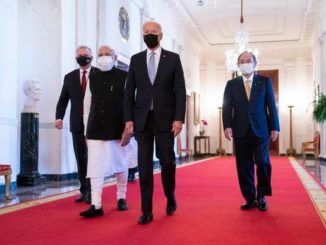
    The strategic reverberations of Narendra Modi’s September 24 double bill in Washington will be felt for long — a meeting with US President Joe Biden, followed by the first in-person Quad Summit where they were joined by the PMs of Australia and Japan. For starters, China was carefully omitted from the joint statements of both meetings. All opening statements by the President and the PMs suggested that the Quad had relegated the security aspect from its exertions. It was even felt that AUKUS, a security trilateral between the UK and two Quad partners, Australia and the US, had overtaken Quad by being more proactive in digging the trenches for a future battle with a new adversary.

    However, the simultaneous presence of the Quad spy chiefs in Washington, and Quad’s commencement of joint work in emerging technology indicates China was the elephant in the room. The growing proximity of common purpose may help India access the currencies of tomorrow such as military drones, 6G, semiconductors and specialized solar panels. It was almost a decade back that South Block had ruled out Russia as an across-the-board partner in frontier areas. But it is also noteworthy that even during the UNGA address Biden did not name China. Biden also broke a long-running China-US stalemate by facilitating the release of Huawei executive Meng Wanzhou, and Beijing reciprocated by freeing two Canadians.

    The challenge before India is to lean on the West to attain global standards in technological and military fields. Yet it must avoid being used as a proxy diplomatic weapon, for there is the risk of being left in the lurch if America’s priorities change. The Biden bilateral and the Quad Summit have promised much in regional infrastructure and co-development in frontier areas. But on the ground, India is yet to recover the trade concessions rescinded by Trump and the PM’s expectation of a generous immigration quota was merely acknowledged by Biden. India also can ill-afford to close all communications with two of its neighbors. In these fast-changing global realignments, India should steadfastly secure its own interests.

    (Tribune India)

  • Russia’s daily COVID cases surge to 5-month high

    Russia logged 20,182 new coronavirus infections over the past 24 hours, the highest daily increase since January 24, taking the nationwide tally to 5,388,695, the official monitoring and response center said on June 24.

    The national death toll rose by 568 to 131,463 in the past day, while the number of recoveries grew by 13,505 to 4,915,615, the Xinhua news agency reported.

    Russian Deputy Prime Minister Tatyana Golikova said on Wednesday that the vaccination rate in the country was rising as more than 16 million people had been fully vaccinated and around 20 million others had received one dose.

    According to Golikova, there were no cases of the “Delta plus” variant in Russia.

  • Russia, China sign MoU to build lunar space station

    Russia and China signed a memorandum of understanding  to set up an international lunar research station, Russia’s Roscosmos space agency said. Moscow and Beijing will draw up a roadmap to establish the station and cooperate closely on planning, designing and implementing the project as well as presenting it to the world space community, it said. “An international lunar science station is a complex of experimental and research facilities created on the surface and/or in orbit of the moon, designed to conduct multidisciplinary and multipurpose research work,” it said. Russia and China will promote international cooperation on the project and offer equal access to any nation that wants to take part, the agency said in a statement on its website.

    The memorandum was signed by Roscosmos chief Dmitry Rogozin and Zhang Kejian, head of the China National Space Administration, during a meeting by video conference, it said.

    Mars on Earth: Turkish lake may hold clues to ancient life on planet

    As NASA’s rover Perseverance explores the surface of Mars, scientists hunting for signs of ancient life on the distant planet are using data gathered on a mission much closer to home at a lake in southwest Turkey.

    NASA says the minerals and rock deposits at Salda are the nearest match on earth to those around the Jezero Crater where the spacecraft landed and which is believed to have once been flooded with water.

    Information gathered from Lake Salda may help the scientists as they search for fossilised traces of microbial life preserved in sediment thought to have been deposited around the delta and the long-vanished lake it once fed.

    “Salda … will serve as a powerful analogue in which we can learn and interrogate,” Thomas Zurbuchen, NASA associate administrator for science, told Reuters. A team of American and Turkish planetary scientists carried out research in 2019 on the shorelines of the lake, known as Turkey’s Maldives because of its azure water and white shores. Scientists believe that the sediments around the lake eroded from large mounds that are formed with the help of microbes and are known as microbialites.

    The team behind the Perseverance rover, the most advanced astrobiology lab ever flown to another world, wants to find out whether there are microbialites in Jezero Crater.

  • Global Covid-19 cases top 96.8 mn, toll at 2.07 million

    The total number of global coronavirus cases has topped 96.8 million, while the deaths have surged to more than 2.07 million, according to the Johns Hopkins University. In its latest update on Thursday morning, the University’s Center for Systems Science and Engineering (CSSE) revealed that the current global caseload and death toll stood at 96,823,968 and 2,073,866, respectively. The US is the worst-hit country with the world’s highest number of cases and deaths at 24,432,807 and 406,001, respectively, according to the CSSE. India comes in second place in terms of cases at 10,595,660, while the country’s death toll soared to 152,718.

    The other countries with more than a million confirmed cases are Brazil (8,638,249), Russia (3,595,136), the UK (3,515,796), France (3,023,661), Italy (2,414,166), Spain (2,412,318), Turkey (2,406,216), Germany (2,090,195), Colombia (1,956,979), Argentina (1,831,681), Mexico (1,688,944), Poland (1,450,747), South Africa (1,369,426), Iran (1,348,316), Ukraine (1,210,854) and Peru (1,073,214), the CSSE figures showed.

    Brazil currently accounts for the second highest number of fatalities at 212,831.

    The countries with a death toll above 20,000 are Mexico (144,371), the UK (93,469), Italy (83,681), France (71,792), Russia (66,214), Iran (57,057), Spain (54,637), Colombia (49,792), Germany (49,499), Argentina (46,216), Peru (39,044), South Africa (38,854), Poland (34,141), Indonesia (26,857), Turkey (24,487), Ukraine (22,264) and Belgium (20,554).

  • The Biden-Kamala era

    India needs to sidestep the eddies

    The most-used words in Joe Biden’s inaugural speech were ‘America, American and Americans’ and ‘nation, people and democracy’. The message to heal a badly split America, its apogee reached in the mob assault on the Capitol barely a fortnight back, is understandably Biden’s top-most priority. But apart from some intense navel-gazing, Biden also declared that ‘America is back’. Hopefully, this will not be an America that under Trump was nickel-and-diming even close allies. India was robbed of zero-duty access to over Rs 40,000 crore worth of exports to the US and PM Modi mocked for high import duty on Harley Davidson motorcycles. Though India has been a bipartisan success story so far, this is more because the US still has to make further ingress into its markets and defense sectors. But like all of Washington’s other partners, India will be hoping the Biden-Kamala team will usher in predictability and sensitivity to the needs of others. Unlike in the Obama administration, the Left has a firm hook into the White House this time. Several of Biden’s appointees are instinctively ranged against ill-liberalist and majoritarian tendencies. Trump’s free pass to the Modi government on the CAA, lynchings and the communal riots was facilitated due to New Delhi’s enthusiastic over-identification with Washington’s China-baiting in the Indo-Pacific. With Kamala Harris as Vice-President, human rights issues will not get overlooked. The farmers’ agitation will be the latest on the list. The Modi government has to instead get the US more interested in non-military areas of cooperation that have been marked by friction and apathy. The shifting of supply chains away from China ought to start with pharmaceuticals and move on to other areas of high dependency. In the military field, India and the US must move to higher-level strategic discussions that lead to a division of labor in the Indian Ocean. India will also need elbow room in its foreign choices — to source oil from Iran and Venezuela and defense platforms from Russia. The Modi government will need to sidestep eddies to carve out a more meaningful relationship with the new US administration in the post-Covid, post-Galwan Valley world.

    (Tribune, India)

  • GENERAL DOUGLAS MacARTHUR & CHURCHILL ARE NEEDED IN 2021

    GENERAL DOUGLAS MacARTHUR & CHURCHILL ARE NEEDED IN 2021

    By Ravi Batra

    The world has not seen a weapon that without a bomb launched or a bullet fired could devastate economies of all nations on earth in one fell swoop, and render their citizenry dead or fearing for life itself.

    2020, to paraphrase FDR, is a year that will live in infamy, and it is also the year when Neville Chamberlain reigned supreme. Indeed, no less than President Trump – who has stood taller than any before him, including, Richard M. Nixon, when he was a Communism-buster up until prior to his 1967 abdication in Foreign Affairs’ pages with a quid pro quo op-ed entitled “Asia After Viet Nam” – called the Virus the “China Virus,” yet, then incredulously declared: that we are fighting “an invisible enemy.” No, we are not Mr. President. The Virus isn’t our enemy, just as on December 7, 1941 the Japanese bombs and bullets weren’t the enemy; Imperial Japan was, by attacking us at Pearl Harbor, in Hawaii. Then, FDR, after sentencing that day “to live in infamy,” unleashed the indominatable General Douglas MacArthur. The same General, who when first expelled from Philippines, left written messages for the people of Philippines:  “I shall return.” And, return he did. Promise made; promise kept. Indeed, a short few years later on September 2, 1945 there was a Surrender Ceremony. A visit to the USS Missouri website proudly shows that the infamous history started at Peral Harbor was in-fact stopped, and a new history of American Freedoms, for all, was made to wit:

    “On the teak decks of USS Missouri, WWII finally came to an end on 2 September 1945. The Surrender Ceremony, which formally brought an end to the bloodiest conflict in human history, lasted a mere 23 minutes. It began at 0902 with a brief opening speech by General Douglas MacArthur. In his speech, the General called for justice, tolerance, and rebuilding. After MacArthur’s speech, Foreign Minister Mamoru Shigemitsu, representing the Emperor of Japan, signed the Instrument of Surrender. He was followed by the Chief of the Army General Staff, General Yoshijirō Umezu, who signed for the Japanese Army. After this, General MacArthur signed the Instrument of Surrender as the Supreme Allied Commander with 6 pens. Of these pens, he gave two to former POWs Lt. General Jonathan Wainwright and Lt. General Lt. General Arthur E. Percival. Following MacArthur, other allied representatives followed in this order:

    Fleet Admiral Chester W. Nimitz signed for the United States; General Xu Yongchang for the Republic of China; Admiral Sir Bruce Fraser for the United Kingdom; Lt. General Kuzma Derevyanko for the Union of Soviet Socialist Republics (USSR); General Sir Thomas A. Blamey for the Commonwealth of Australia; Colonel Lawrence Moore Cosgrave for the Dominion of Canada; General Philippe Le Clerc for the Provisional Government of the French Republic; Lt. Admiral Conrad E. L. Helfrich for the Kingdom of the Netherlands;Air Vice Marshal Leonard M. Isitt for the Dominion of  New Zealand.

    5-Star General MacArthur’s Remarks – that day – on the deck of the USS Missouri are illuminating, and hence, worthy of reproduction so we may escape, even belatedly, History’s “curse of repetition” upon those who forget the past, while cuddling up to happy-amnesia:

    “We are gathered here, representatives of the major warring powers, to conclude a solemn agreement whereby peace may be restored. The issues involving divergent ideals and ideologies have been determined on the battlefields of the world, and hence are not for our discussion or debate. Nor is it for us here to meet, representing as we do a majority of the peoples of the earth, in a spirit of distrust, malice, or hatred.

    But rather it is for us, both victors and vanquished, to rise to that higher dignity which alone befits the sacred purposes we are about to serve, committing all of our peoples unreservedly to faithful compliance with the undertakings they are here formally to assume. It is my earnest hope, and indeed the hope of all mankind, that from this solemn occasion a better world shall emerge out of the blood and carnage of the past — a world founded upon faith and understanding, a world dedicated to the dignity of man and the fulfillment of his most cherished wish for freedom, tolerance, and justice. The terms and conditions upon which surrender of the Japanese Imperial Forces is here to be given and accepted are contained in the Instrument of Surrender now before you. As Supreme Commander for the Allied Powers, I announce it my firm purpose, in the tradition of the countries I represent, to proceed in the discharge of my responsibilities with justice and tolerance, while taking all necessary dispositions to insure that the terms of surrender are fully, promptly, and faithfully complied with. I now invite the representatives of the Emperor of Japan and the Japanese government and the Japanese Imperial General Headquarters to sign the Instrument of Surrender at the places indicated.”

    [After the Instrument of Surrender was executed by all, he concluded with:]

    “Let us pray that peace be now restored to the world, and that God will preserve it always. These proceedings are closed.” (Emphasis added)

    InWWII – we were united with USSR and China (not today’s Chinese Communist Party’s (CCP’s) People Republic of China (PRC)), but the Republic of China (ROC) – today, known as Taiwan, when General Chiang Kai-shek was head of ROC.  I cite the above snippet of history to document the gross geopolitical malpractice of leaders, here at home and abroad, since 1945. Indeed, CCP’s brilliant Chairman Mao, who had originally joined under the leadership of General Chiang, revolted, caused a civil war, and finally expelled him in 1949 from Mainland China to a mere island, Formosa, aka Taiwan. CCP’s China is a new world order – different from feudalism, communism, socialism, corporate-capitalism and our cherished Bill of Rights embedded in our Separated Powers regime – as it is an amalgam of all. Indeed, there are 99 million members of CCP – think corporate governance and the now-disappeared “Avon Lady.” Everybody in China is directly and intimately known by a CCP Member.

    From Chiang Kai-shek, to Harry Truman, to Pandit Nehru, and above all others, to Richard Nixon who rolled out the red carpet for CCP’s China and gifted the critical multi-polar Permanent Seat on the United Nations Security Council – after unilaterally amending History and taking it away from ROC – the world could not, and sadly did not, see the slowly moving tortoise of CCP-China as a threat greater than the fast-moving Adolf Hitler.

    We are at the Third Act of CCP’s “rejuvenation” of the Ming Dynasty’s Tribute System. Indeed, President Xi has honestly stated his China Policy to be “rejuvenation” – almost with as much delight as Edgar Allen Poe had in writing the Purloined Letter.  What former National Security Advisor H.R. McMaster warned about in The Atlantic on May 19, 2020 – “What China Wants” – but left off at, I have continued – as I must warn as Paul Revere did – that our “Emperor wears no clothes,” to metaphorically assert without doubt, that our China Policy – created and effectuated by our Deep State and Executive and Legislative Leaders – is both a misdiagnosis, and a mistreatment that embraces de facto, if not de jure, impotent Chamberlain while rejecting the necessary Churchill, who to them is truly “invisible,” let alone “necessary.” Giving us governmental malpractice that is both decrypt, as it is impotent.

    The world has not seen a weapon that without a bomb launched or a bullet fired could devastate economies of all nations on earth in one fell swoop, and render their citizenry dead or fearing for life itself. Coronavirus, with its transplanted from Bats’ “Spike Glycoprotein (S)” – which I wrote about in my Open Letter to President Trump on April 14, 2020, and the next day United States opened its then-Preliminary Investigation of China – is now the very piece of protein that Pfizer and Moderna’s mRNA-based vaccines now – in error – implant in every patient, and after the initial 2-shots, require a booster shot every 3 months, for life. Result: the enemy get refreshed, while our body’s “T cell” get exhausted or run out. Indeed, Merck’s CEO Kenneth C. Fraizer has correctly said: we don’t even understand the Virus yet, let alone treat it. How right he is. This vaccine frenzy is nothing short of a global clinical trial – worse than if you signed up for one – for now, as a patient, you don’t get paid, and if you suffer a severe reaction, you can’t sue as they have a liability shield, courtesy of Operation Warp Speed that didn’t have to do 10 years of public health studies to identify its efficacy, but its side effects. Risks vs Benefits. A patient with a migraine headache would never accept decapitation as a solution; yet, now, we are to accept this vaccine with a public health study over 10-years of time. Yes, we need a vaccine; but, we need the raw truth about the creation of SARS-CoV2, its escape from the Wuhan lab, its variations, etc., before we can figure out the correct cure.

    Kompromat – is a term used to suggest Russia’s ability to control another person or nation through some act or knowledge that the target would not like exposed. Blackmail. In our social media-connected world, with data that documents one’s hallucinations as if “fact,” our exceptional separated powers regime is sadly checkmated. As 2021 is the Year of Hope, like never before, I end with a wish that just as the Ming Dynasty voluntarily gave up its Tribute system, so does President Xi Jinping; and, instead, he joins in transparent disarming of SARS-CoV2 and dismantles his Jaws of War (which I have previously described). Otherwise, let Churchill be re-born as an American – worthy of everyday hardworking Americans who toil to achieve the American Dream, as merit alone can – and uphold our Flag high and free, as those who died doing so in 1814 at Fort McHenry and caused lawyer-poet Francis Scott Keys to be so moved by their undying courage and national pride to write “The Star-Spangled Banner.”

    (Ravi Batrais a senior attorney and  advisor to many governments. Twitter @RaviBatra)

  • AS I SEE IT -“Our Nation Is like None Other; President Trump Is like None Other; Our Election Was like None Other; and 2020 Civil War Continues, As China Grabs Lands and Assets.”

    AS I SEE IT -“Our Nation Is like None Other; President Trump Is like None Other; Our Election Was like None Other; and 2020 Civil War Continues, As China Grabs Lands and Assets.”

    By Ravi Batra

    The Presidential Election on November 3, 2020 between Donald Trump and Joe Biden, in a perverse way, was somewhat akin to 9/11 – albeit, the conflict was internal – as our Republic was convulsing, our divisions deep

    and open, and the very fabric of our nation laid bare and in conflict. Despite being the

    preeminent nation of laws in human history, Law & Order was unwelcome to too many of our neighbors and fellow Americans. And a nation that was inhabited by those who abandoned a society encrusted with landed gentry for one that defined “fate” and “destiny” on the wings of “merit” alone – and called it the American Dream – was now seriously flirting with Communism’s more appealing sibling, Socialism – where all get what they need and want, by just taking it from those who got ahead. Sweet and Godly “compassion,” however, is not Socialism. Thrown in the dustbin created by hubris, these new American Leaders, like the Evil Queen in “Snow White” asking the “mirror,” “who is the fairest of them all,” these new Leaders – elected or community loud mouths – fancy themselves “perfect,” and issue mandates for removal of Monuments – even of George Washington; my favorite, Thomas Jefferson; the scoundrel, Alexander Hamilton; and even Abraham Lincoln, the Great Emancipator. And then there are folks who have no chance like General Robert E. Lee, who honorably accepted defeat in our great Civil War, or John Newtown, a slave-trader, who found God, became a Preacher, authored “Amazing Grace,” and helped cause slavery to be outlawed in Great Britain. Amazing Grace today defines hope itself. You need not be a devout Christian to know that Judas, who in a singular act of betrayal, gave up Jesus to the Romans and caused Him to be crucified, and, later became the well-loved “Saint Jude” – the Saint, who helps you find things you lost. Indeed, we are lost – in materiality, ego and self, which Mother Nature, heated up by global warming, is ready to eradicate humanity to save the planet – which many leaders fight about what started the fire, when every firefighter knows first “put out the fire,” then look for arsonists.   I know that hubris comes easily to the ignorant or the wicked. For our cherished Republic, a gift from Founders like Ben Franklin, either do harm; both together, are an existential threat – which about eighty (80) million Biden Voters and seventy-four (74) million Trump Voters have tasted together.  It is now the American Spring, in full blossom – in ways similar to the Arab Spring, and yet, in answer to it.

    President Donald J. Trump at a MAGA Rally

    The Great Disrupter – has achieved much good, from Criminal Justice Reform to kick-starting Middle East Peace to Warp Speed Vaccine for a battle-weary population, and our fiscal house anemic and bleeding jobs and souls. But his cadre of disruption-amplifiers, from Steve Bannon, Steve Miller, and our own Rudy Giuliani, are headed for positions – personal and policy – that are  more distant from “honor” and “truth,” but closer to the always sought-after “loyalty,” which weaves a path to the ever-attractive “consolidated power” – the very concept, and a goal – our cherished and honorable Founders deemed un-American, as it devalues American Exceptionalism – built, as it is, on the genius of purposefully separating “power,” by constitutional design, at every turn, and then again for benefits of redundancy – so as to deny “tyranny” a residence in these united States of America (“united,” being the humble lower case, yet more powerful, as an “adjective” always is over the proud and useless “noun.” Our original name was lower-case; our current, a noun).

    To not concede the election, and to even block the Biden Transition from full access to government resources, as federal law mandates, is pure Trumpian joy to his base. By that simple statement, we have upon us a new Civil War, where slavery is not the bone of contention – for there can be no proponents of that economic model, even as slavery was not originally racist, but an aftermath of victory in war: pillage & plunder. As slaves could be of the same race. It is later, about 500 years ago that slave-trading, like Blood Diamonds, became an evil enterprise in, and with, Africa. Indeed, the bronze door knocker to my office in Manhattan is of William Wilberforce – the enlightened soul who successfully campaigned to abolish the African Slave Trade in England, supported as he was, by John Newton. Sadly, not a single person has recognized that Great Abolitionist door-knocker in my office..

    This 2020 Civil War – is about Law & Order, and keeping the American Dream. They say, “[p]olitics makes strange bedfellows.”  Well, no one can truly argue that Joe Biden is against Law & Order, or isn’t a great supporter of the American Dream, even as New York State Attorney General Tish James and New York County District Attorney Cy Vance Jr. appear to not only argue, but are in court dealing with President Trump, for his actions as a civilian. Of course, POTUS’ Attorney General Bill Barr has until 11:59a.m. January 20, 2021 to do likewise to President Barack Obama and inter alia, then-Vice President Joe Biden, for their official acts, etc. We are in a Twilight Zone, in more ways that desirable.

    President-elect Joe Biden at a campaign rally

    There is no doubt that Joe Biden will be sworn in on January 20, 2021, and Kamala Harris, as an African-American woman (and situationally, also Indian-American) as our President and Vice President, respectively. The world leadership has collectively let go and breathe deeply – independent of Eric garner and George Floyd who made that act famous, as each came loaded with baggage – as normalcy, defined by centuries of wisdom embedded in protocols, will re-emerge, an state secrets will again separate policy errors from policymakers, and leave public “respect,” at maximum strength as a calibrated tool, all the way to public “insult,” leaving “private insult” to be candidly used, with the percussion effect of a table smacked in anger for emphasis. But, I write to issue a “Surgeon General’s Warning” to the body politic here at home, and across the world: Donald J. Trump may have come down the escalator almost alone on June 15, 2015 to throw his hat in the ring to be POTUS 45, but on January 20, 2021 he takes with him almost 75 million Trump Voters, and 88.9 million Twitter followers. Poetically, I note that Trump-the-POTUS has 32.8 million Twitter followers. All prior Presidents over last 50 years or more, have largely remained silent and kept quiet after leaving the White House, and declining, in the main, to opine on their successor.

    “Normalcy,” at Least Political and Geopolitical, Is Now Consigned to History.

    Well I hate to say this, but President-Elect Joe Biden and leaders across the world, buckle up!

    As Donald J. Trump, to the great delight of his large and effusive base, will not go quietly into the night and instead, will opine even more freely on matters big and small, public and private. Republicans, let alone Mitch McConnell and Kevin McCarthy, also are not free to go back to “normalcy,” as Trump “owns” the Republican party’s base.

    We are now blessed with an activated citizenry, which makes governance more transparent, and responsive. That, used to be good. It still will be, not because we, as Americans are better than other human beings, but because we live in a nation that our Founders created with an architectural design that exceeds the Pyramids, Parthenon, Colosseum, Great Wall of China, and the Taj Mahal. America is designed to harness competing and ambition-driven energy for self-gain, and turn it into enhancing the public good. Pure alchemy.

    Politicians who wish to be shepherds of quiet and distracted sheep, as before, will have to be on top of their game, to figure out where the public wants to go, and then get there first, so as to lead. Perhaps, Lincoln’s Gettysburg recipe, Government of, by and for the people, will finally pay dividends to the most elusive of that trilogy: “for the people.”

    The lab of global suffering -The Wuhan Lab

    The great battle upon us is: Can Americans be safe without the Police, and can the merit-based American Dream co-exist with Socialism? And, in addition, another battle rages: Social Media, be it Big Tech or individual users, will they destroy representative democracy, as they did the media, and render it into merely Mob Rule, aka direct democracy – the one that killed the great Socrates in Athens for being a “nag” and asking the question, “why.” And, then, there is yet another battle that will render the above two irrelevant: the Chinese Communist Party (CCP) Chairman Mao, a mastermind and globally under-estimated, created a 100 year plan, that included their “Golan Heights” (well before Golda Meir, born in Kyiv, seized it in 1973, and Bibi Netanyahu recently renamed, Trump Heights), with the secret 1949 Karachi Agreement land acquisition, the size of which would leave one breathless; followed up, by swallowing Tibet in 1958, etc.; and reviving Chinese’s Ming Dynasty’s Tribute System – as opposed to Western Nations’ Feudalism – is Commercial favoritism and tributes paid to China, the superior nation. Their OBOR, BRI, and inter alia, AIIB, has weaponized money-giving into land-grabbing in exchange for non-payment of debt – converting unpaid loans to seizure of land and assets that a traditional war could not achieve for China. Having weaponized debt, they weaponized reefs, as in Mischief Reef, and since late last year, they weaponized Viruses by lab-engineering them to bypass human auto-immune system with a “master key,’ the spike glycoprotein, a Trojan Horse, and gave it a deceptively harmless name of coronavirus or Covid-19, and used it to start an undeclared war against us, and the rest of the world.

    Unleashing this Virus is a crime against humanity. It’s like a Bond movie, where they are playing for the world. Well, sadly and infuriatingly, 250,000 Americans have died, and more will in CCP’s Undeclared War on all of us. And yet, we do nothing, other than try to find a vaccine and accuse each other of not fighting the virus correctly. Leaving China unpunished and worse, un-stopped. I tried, and failed, to get Trump as president to cancel China’s debt here, as well as globally, just to offset, in part, the damage and injury China caused. War reparations can only occur – if we are willing to stand up – or will we profit our way into slavery, Ming Style?

    The recent election was a fraud on the Voters. They were told we are fighting “an invisible enemy” (or “we were not fighting the Virus correctly”) No we are not. The virus is invisible; the enemy isn’t. Indeed, look at any map – from 1949 – and all of us can all find it. Show me a current map issued by China, aside from its breathless growth, partially, illegally, it is hard to miss.Hat tip to Marcus Aurelius: Neville Chamberlain Was an Honorable and Reasonable Man.

    Finally, Neville Chamberlain was the epitome of normal leadership, and saw in Hitler, our own mistakes that created the disastrous Weimar Republic and gave birth to the Third Reich. He dealt with him, in a calibrated way. He lost. Churchill begged FDR to get involved, joined up with Stalin, no angel, and faced Hitler down. Chairman Mao, and his hand-picked successors, an unbroken line of the faithful High Priests of Maoism, with President Xi Jinping being an exceptional leader worthy of not only rejuvenating the Ming Tribute system, but a reincarnation of Chairman Mao in a Brooks Brothers Business Suit.

    POTUS Must Do More.

    President Trump – will you ignore the Trademarks given to you and the lovely Ivanka – and use your remaining days as America’s fiduciary and defend us – as FDR did after Pearl harbor – when we have now suffered more deaths than 100 Pearl Harbors?

    Wolf Warriors Stay at Home and Safe, While Virus Kills Relentlessly.

    President-Elect Joe Biden – will you stand up and defend us from the Wolf Warriors that stay comfortably at home, as their Virus does its damage unrelentingly, including, Denmark’s recent discovery of a mutant strain, Cluster 5, which the WHO says is drug resistant. That means the current vaccines – Pfizer’s and Moderna’s 95% effective –  are not effective against it.

    We are on the precipice of an Armageddon, death-by-virus and starvation-by-lockdown, while China seizes property and assets in exchange of “debt” for  “equity.” Exactly what we didn’t teach the Russians after the Berlin Wall came down, which our CPAs and Attorneys know so well to keep the capital markets robust for capitalism to work, China created a different system, just as they are creating at every level, including, making our use of sanction-capacity as a punishment irrelevant. Just ask Russia, Iran and China how they do business, and settle the business accounts outside of “SWIFT”.

    n God We Trust

    Time to heal – may be premature – unless, President Biden can assure 74 million Trumpers that Law & Order is necessary for Public Safety, which is even more important than Public Health, and that the American Dream – meritocracy – is what our cherished separated-powers regime aimed to achieve in perpetuity. And, then, and only them, will E Pluribus Unum be a fact, instead of a slogan.

    (The author is an eminent  attorney based in New York. He can be reached at   ravi@ravibatralaw.com            Twitter @RaviBatra)