Tag: Russia

  • US envoy: North Korea is intimidating the entire world

    US envoy: North Korea is intimidating the entire world

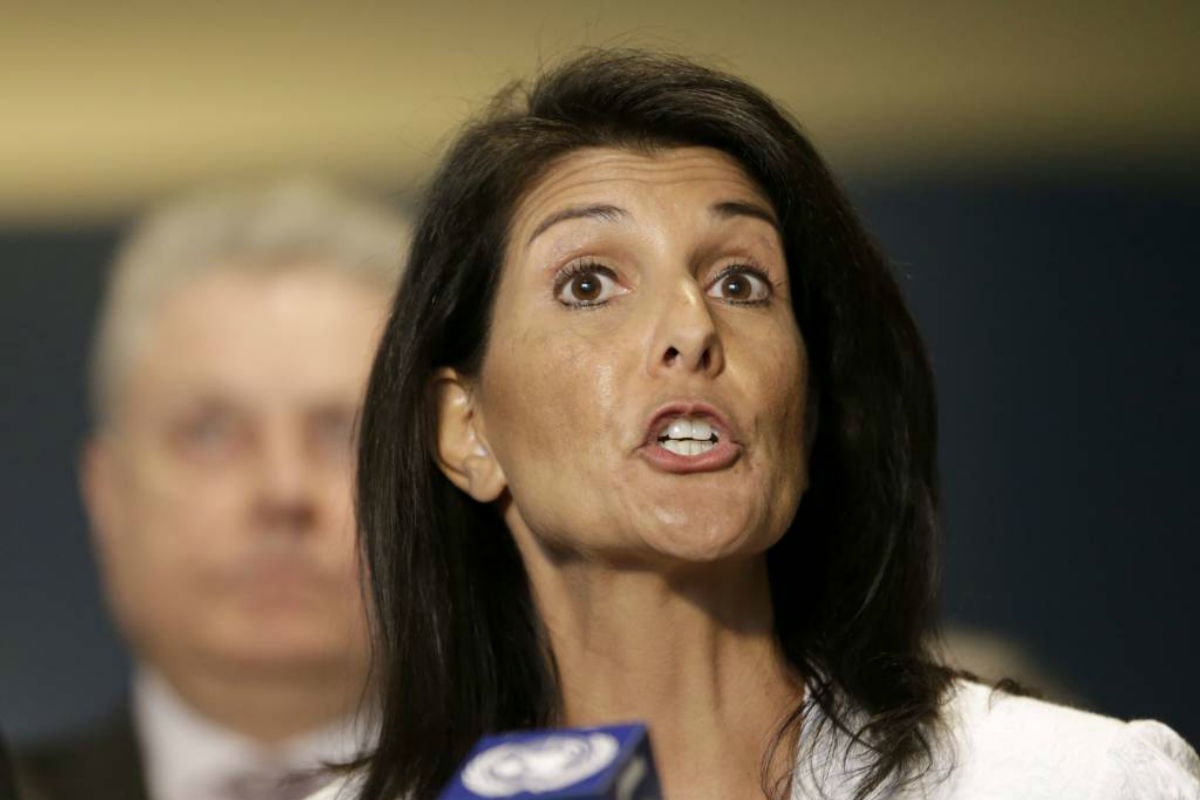
    UNITED NATIONS: US Ambassador Nikki Haley accused North Korea on Tuesday of intimidating the entire international community with its nuclear program, military ability and cyberattacks, and said any country that doesn’t implement UN sanctions is supporting Pyongyang’s actions.

    “No one is immune to the threat of North Korea,” she told reporters before emergency closed-door consultations by the UN Security Council on the North’s weekend ballistic missile launch, which experts said demonstrated a significant technological jump with the rocket flying higher and for a longer period of time.

    “We’re not going to continue to just say go ahead and test as often as you want,” Haley said, flanked by the South Korean and Japanese ambassadors. “This is a true threat to every country in the world. … We’re going to make sure we put the pressure on them economically, diplomatically, politically and internationally.” Haley said the US and China have been working on “a unified plan” on how to approach North Korea that would include stronger implementation of existing sanctions and tougher new sanctions.

    She indicated Washington and Beijing had agreed they would take action if a new test looked to be long range and leaning toward an intercontinental ballistic missile that could reach the United States.

    The latest launch appeared to fulfill both criteria, Haley said, “so I believe that China will stay true to that, and that we’ll come together on how we’re going to do that.”

    The Security Council, which has imposed six rounds of sanctions on the North, discussed possible further action at Tuesday’s meeting. Haley previously indicated that new sanctions could target oil, a critical import for North Korea mainly from China, and she said Tuesday the US also wants sanctions on organizations and businesses in third countries  that are helping Pyongyang.

    Uruguayan Ambassador Elbio Rosselli, the current council president, said after the meeting that members are united in condemning the latest missile launch as “a serious threat to international peace.” He said the council is exploring many different avenues to proceed and “clearly sanctions are a way to go,” but also diplomacy.

    Council diplomats, speaking on condition of anonymity because the consultations were private, said China never mentioned working with the US on a new sanctions resolution, and both China and Russia said they support a negotiated solution through dialogue.

    Haley was asked about comments by Russian President Vladimir Putin in Beijing on Monday who called North Korea’s nuclear and missile tests “unacceptable” but also said the United States should stop intimidating Pyongyang.

    “We need to return to dialogue with the Democratic People’s Republic of Korea, stop intimidating it and find ways to solve these problems peacefully,” Putin was quoted as saying, using North Korea’s official name. “Is it possible or not? I think it is possible.”

    Haley answered Putin and others who have made similar comments about the United States: “What about North Korea intimidating us? They’re intimidating the entire international community. They’re trying to strengthen their muscle with no cause. There is no reason for North Korea to be having these actions outside of the fact they just choose to do so.”

    Haley noted that this weekend’s missile came within 60 miles of Russia’s border and said Russia is “all wrong.” “It is actually North Korea trying to intimidate the international community,” Haley said, “and Russia itself should be concerned because that ballistic missile test was a signal to South Korea for their new elections, it was a signal to

    Russia in how close it got, it was a signal to Japan being in the region, and it was a signal to us.”

    The US ambassador said Russia has the same decision to make as the rest of the international community: “You either support North Korea or you don’t, but you have to choose. You have to pick a side.”

    She said North Korean leader Kim Jong Un is “paranoid” and thinks that the United States is trying to promote regime change and that there are people trying to assassinate him.

    “We’re not trying to do any of those things,” she said. “What we are saying is that for peace on the Korean peninsula, he has to stop his testing. He has to stop any nuclear programs that he has. The US, we are willing to talk — but not until we see a total stop of the nuclear process and any tests there.”

    Haley said the Security Council is going to send a strong and unified message to North Korea that “the international community wants to support you but as long as you test, and as long as you continue your nuclear program, you are on an island by yourself.” (AP)

  • Former FBI chief Robert Mueller to probe Russia-Trump links

    Former FBI chief Robert Mueller to probe Russia-Trump links

    Trump decries special counsel’s appointment as ‘single greatest witch-hunt’ in US history

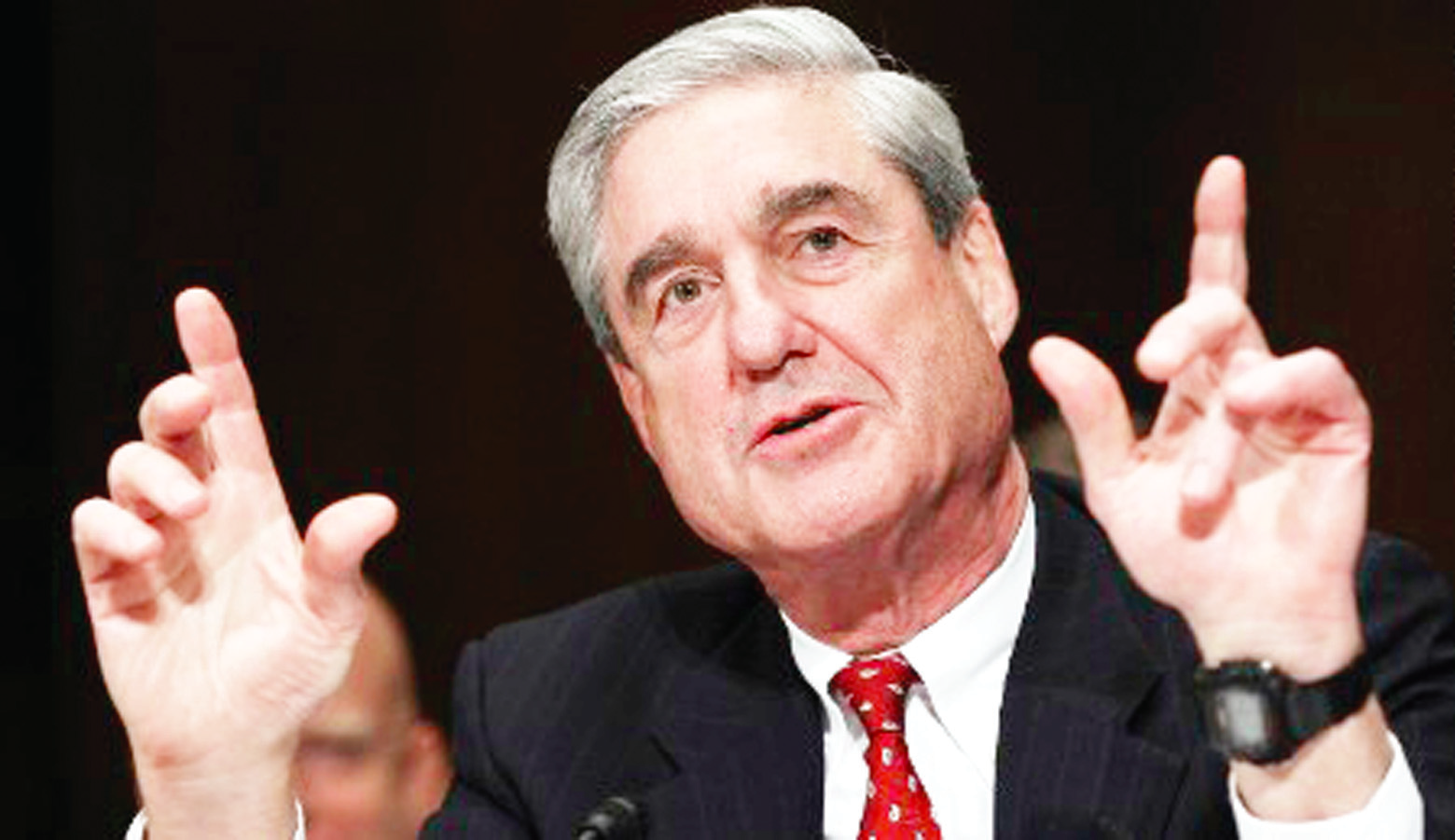
    WASHINGTON (TIP): Former FBI director Robert Mueller has been appointed as special counsel to investigate alleged Russian interference in the 2016 US election and possible collusion between President Donald Trump’s campaign and Moscow.

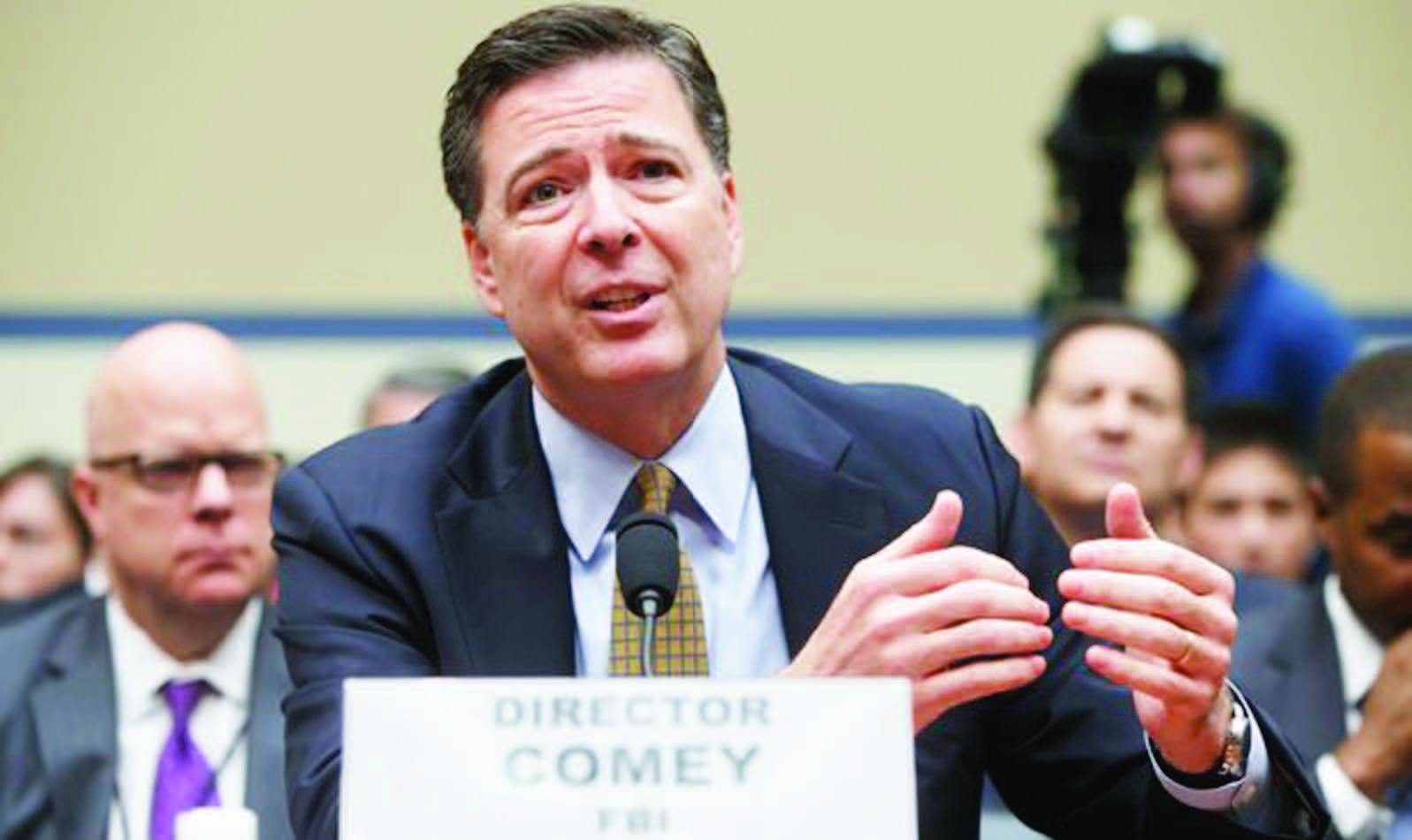
    The decision by deputy attorney general Rod Rosenstein to appoint Mueller, 72, as special counsel came on Wednesday, May 17, following a week of turmoil for the White House after Trump fired FBI Director James Comey, who had been leading a federal probe into the matter.

    Rosenstein said he had taken the decision “to ensure a full and thorough investigation of the Russian government’s efforts to interfere in the 2016 presidential election,” including  “any links and/or coordination between the Russian government and individuals associated with the campaign of President Donald Trump.”

    President Donald Trump on Thursday, May18, decried the appointment of a special counsel to lead the Russia probe as “the single greatest witch-hunt” in US history, hours after he said he looked forward to a thorough investigation.

    In the face of rising pressure from Capitol Hill, the US Justice Department named former FBI Director Robert Mueller on Wednesday as special counsel to investigate alleged Russian interference in the 2016 US election and possible collusion between Trump’s campaign and Moscow.

    Trump said in a statement on Wednesday night that “a thorough investigation will confirm what we already know – there was no collusion between my campaign and any foreign entity.” In a pair of Twitter posts on Thursday morning, Trump made clear he was unhappy with the latest development to roil his administration. “With all of the illegal acts that took place in the Clinton campaign & Obama Administration, there was never a special councel appointed!” Trump wrote, misspelling the word counsel as he referred to former President Barack Obama and former presidential candidate Hillary Clinton. “This is the single greatest witch hunt of a politician in American history!”

    The comments mirrored a speech by Trump on Wednesday, before Mueller’s appointment was announced, in which he said no politician in history “has been treated worse or more unfairly.”

    Considering the unique circumstances of this matter, Rosenstsein said a special counsel is necessary in order for the American people to have full confidence in the outcome. “Special Counsel Mueller will have all appropriate resources to conduct a thorough and complete investigation, and I am confident that he will follow the facts, apply the law and reach a just result,” he added.

    Mueller served as FBI director for 12 years after his nomination by President George W Bush in 2001. Cutting across party lines, top American lawmakers welcomed Mueller’s appointment for the investigation.

    “The appointment of former FBI director Robert Mueller as special counsel for the Russia investigation is a positive development and will provide some certainty for the American people that the investigation will proceed fairly and free of political influence,” Senator Richard Burr said and Mark Warner, chairman and ranking member of Senate Select Committee on Intelligence, said.

    Democratic Senator from Minnesota Al Franken said appointing Mueller is an important step that will help restore the public trust and result in a thorough and comprehensive investigation.

    Mueller, a no-nonsense man Known by some as “Bobby Three Sticks” because of his full name – Robert Mueller III, the former FBI director is famous for his no-nonsense style and independence in high-profile government investigations.

  • US envoy: North Korea is intimidating the entire world

    US envoy: North Korea is intimidating the entire world

    UNITED NATIONS: US Ambassador Nikki Haley accused North Korea on Tuesday of intimidating the entire international community with its nuclear program, military ability and cyberattacks, and said any country that doesn’t implement UN sanctions is supporting Pyongyang’s actions.

    “No one is immune to the threat of North Korea,” she told reporters before emergency closed-door consultations by the UN Security Council on the North’s weekend ballistic missile launch, which experts said demonstrated a significant technological jump with the rocket flying higher and for a longer period of time.

    “We’re not going to continue to just say go ahead and test as often as you want,” Haley said, flanked by the South Korean and Japanese ambassadors. “This is a true threat to every country in the world. … We’re going to make sure we put the pressure on them economically, diplomatically, politically and internationally.”

    Haley said the US and China have been working on “a unified plan” on how to approach North Korea that would include stronger implementation of existing sanctions and tougher new sanctions.

    She indicated Washington and Beijing had agreed they would take action if a new test looked to be long range and leaning toward an intercontinental ballistic missile that could reach the United States.

    The latest launch appeared to fulfill both criteria, Haley said, “so I believe that China will stay true to that, and that we’ll come together on how we’re going to do that.” The Security Council, which has imposed six rounds of sanctions on the North, discussed possible further action at Tuesday’s meeting. Haley previously indicated that new sanctions could target oil, a critical import for North Korea mainly from China, and she said Tuesday the US also wants sanctions on organizations and businesses in third countries that are helping Pyongyang.

    Uruguayan Ambassador Elbio Rosselli, the current council president, said after the meeting that members are united in condemning the latest missile launch as “a serious threat to international peace.” He said the council is exploring many different avenues to proceed and “clearly sanctions are a way to go,” but also diplomacy.

    Council diplomats, speaking on condition of anonymity because the consultations were private, said China never mentioned working with the US on a new sanctions resolution, and both China and Russia said they support a negotiated solution through dialogue.

    Haley was asked about comments by Russian President Vladimir Putin in Beijing on Monday who called North Korea’s nuclear and missile tests “unacceptable” but also said the United States should stop intimidating Pyongyang.

    “We need to return to dialogue with the Democratic People’s Republic of Korea, stop intimidating it and find ways to solve these problems peacefully,” Putin was quoted as saying, using North Korea’s official name. “Is it possible or not? I think it is possible.”

    Haley answered Putin and others who have made similar comments about the United States: “What about North Korea intimidating us? They’re intimidating the entire international community. They’re trying to strengthen their muscle with no cause. There is no reason for North Korea to be having these actions outside of the fact they just choose to do so.”

    Haley noted that this weekend’s missile came within 60 miles of Russia’s border and said Russia is “all wrong.” “It is actually North Korea trying to intimidate the international community,” Haley said, “and Russia itself should be concerned because that ballistic missile test was a signal to South Korea for their new elections, it was a signal to Russia in how close it got, it was a signal to Japan being in the region, and it was a signal to us.”

    The US ambassador said Russia has the same decision to make as the rest of the international community: “You either support North Korea or you don’t, but you have to choose. You have to pick a side.”

    She said North Korean leader Kim Jong Un is “paranoid” and thinks that the United States is trying to promote regime change and that there are people trying to assassinate him. “We’re not trying to do any of those things,” she said. “What we are saying is that for peace on the Korean peninsula, he has to stop his testing. He has to stop any nuclear programs that he has. The US, we are willing to talk — but not until we see a total stop of the nuclear process and any tests there.”

    Haley said the Security Council is going to send a strong and unified message to North Korea that “the international community wants to support you but as long as you test, and as long as you continue your nuclear program, you are on an island by yourself.” (AP)

  • US Justice department names special counsel to probe Trump campaign Russia ties

    US Justice department names special counsel to probe Trump campaign Russia ties

    WASHINGTON (TIP): The US Justice Department on May 17 independently named former FBI Director Robert Mueller as special counsel to investigate ties between President Trump’s campaign and Russian officials, sending the four month old Presidency into a deeper crisis.

    The appointment, apparently made by an independent-minded Deputy Attorney General Rod Rosenstein without prior knowledge of or intimation to the White House, drew a sharp reaction from President Trump even as it gathered bipartisan support for its impartial nature given Mueller’s reputation as a fair investigator.

    ”This is the single greatest witch hunt of a politician in American history!” Trump complained in a Twitter post to much derision soon after the Justice Department announcement. He pointed out that ”With all of the illegal acts that took place in the Clinton campaign & Obama Administration, there was never a special councel (sic) appointed!”

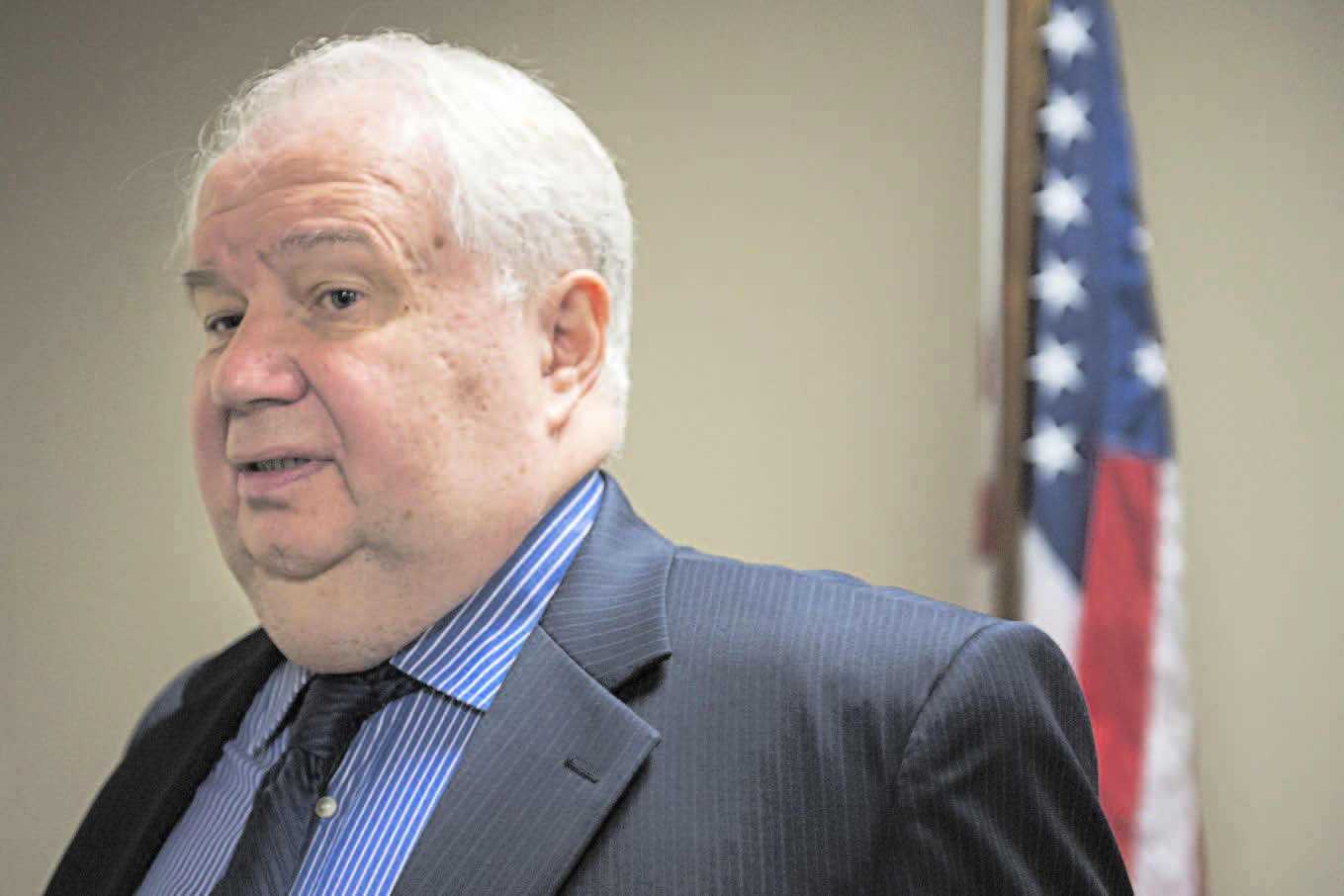
    The announcement of a special counsel came amid new reports that the Trump campaign had at least 18 previously undisclosed contacts with Russian officials in the seven months prior to the 2016 Presidential elections. Conversations between disgraced and fired National Security Advisor Michael Flynn and Russian ambassador Sergei Kislyak accelerated after the November 8 vote as the two discussed establishing a back channel for communication between Trump and Russian President Vladimir Putin that could bypass the U.S. national security bureaucracy, which both sides considered hostile to improved relations, Reuters reported, quoting four current U.S. officials.

    At first blush there appeared to be nothing illegal in the contacts, but such extensive and intensive exchanges with a historic foe, and the pace and secrecy with which it was done, has riled the traditional Washington establishment — Republican and Democratic — that remains leery of Moscow.

    In fact, even as news of appointment of the special prosecutor and previously undisclosed Russia contacts broke on Wednesday, the Trump dispensation and Republicans supporting him had the mortification of another embarrassing disclosure. A key GOP leader reportedly alleged at a party meeting during the 2016 campaign that Trump was on Russian leader Putin’s payroll.

    ”There’s two people I think Putin pays: Rohrabacher and Trump,” Republican House Majority leader said at the meeting according to a recording of the June 2016 exchange first reported in Washington Post, which along with the New York Times has been relentlessly landing a one-two on the Trump Presidency over the past several days. Rohrabacher is a California Republican who is a staunch defender of Putin. Republican lawmakers at the meeting laughed at McCarthy’s comment, presumably seeing it as a joke, at which point McCarthy added, “swear to God.”

    The party leadership, notably Speaker Paul Ryan, quickly stepped in to ensure the matter was not leaked to the media. On Thursday, McCarthy, who like Speaker Ryan later joined the Trump camp after initial reservations, maintained that the remark was a joke and nothing further should be read into it. (PTI)

  • Donald Trump claims witch hunt, says he’s most hounded leader ever

    Donald Trump claims witch hunt, says he’s most hounded leader ever

    WASHINGTON (TIP): Brimming with resentment, President Donald Trump fervently denied on May 18 that his campaign had collaborated with Russia or that he’d tried to kill an FBI probe of the issue, contending that “even my enemies” recognize his innocence and declaring himself the most unfairly hounded president in history.

    Asked point-blank if he’d done anything that might merit prosecution or even impeachment, he said no and then added concerning the allegations and questions that have mounted as he nears the four-month mark of his presidency: “I think it’s totally ridiculous. Everybody thinks so.”

    Not quite everybody. While Trump tweeted and voiced his indignation at the White House, Deputy Attorney General Rod Rosenstein, who appointed an independent special counsel to lead a heightened federal Trump-Russia investigation the day before, briefed the entire Senate behind closed doors at the Capitol. By several senators’ accounts, he contradicted Trump’s statements that Rosenstein’s written criticism of FBI Director James Comey had been a factor in Comey’s recent firing by the president.

    Trump is leaving Friday for his first foreign trip, to the Mideast and beyond, and aides had hoped the disarray at home would have been calmed if not resolved, allowing the White House to refocus and move ahead. Republicans on Capitol Hill hoped the same, reasoning that the appointment of a special counsel could free them to work on a major tax overhaul and other matters without constant distractions.

    Trump said he was about to name a replacement for Comey, another move to settle the waters. Former Connecticut Senator Joe Lieberman was seen as the front-runner.

    But calmness seemed far off. Trump clearly knew what he wanted to say as he took a few questions at a news briefing with visiting Colombian  President Juan Manuel Santos.

    Did he urge Comey at a February meeting to drop his probe of the Russia connections of Trump’s national security adviser, Michael Flynn?

    “No. No. Next question.”

    Did he in fact collude with Russia in his campaign to defeat Democrat Hillary Clinton?

    “Everybody, even my enemies, have said there is no collusion,” he maintained.

    However another answer on that subject seemed both more specific and perhaps ambiguous.

    “There is no collusion between certainly myself and my campaign — but I can only speak for myself — and the Russians. Zero.”

    “The entire thing has been a witch hunt,” he declared, echoing one of the tweets he’d sent out just after dawn: “This is the single greatest witch hunt of a politician in American history!”

    He said he respected the special counsel appointment but also said it “hurts our country terribly.”

    At the other end of Pennsylvania Avenue, Rosenstein was briefing the Senate about his decision to appoint former FBI Director Robert Mueller to lead the independent Trump-Russia probe.

    Senators said that Rosenstein steered clear of specifics while making clear that Mueller has wide latitude to pursue the investigation wherever it leads, including potentially criminal charges. Despite the president’s furious reaction, some fellow Republicans welcomed Mueller’s appointment and expressed hopes it would restore some composure to a capital plunged in chaos.

    “We’ll get rid of the smoke and see where the actual issues lie,” said Sen. Tim Scott, R-S.C. “I do think that the special prosecutor provides a sense of calm and confidence perhaps for the American people, which is incredibly important.”

    One striking piece of news emerged from Rosenstein’s briefing: He told senators that he had already known Comey was getting fired even as he wrote the memo that Trump cited as a significant justification for the FBI director’s dismissal. Trump himself had already contradicted that explanation, telling interviewers earlier that he had already decided to dismiss Comey.

    He offered new justifications for his decision Thursday, even while referring to the Rosenstein memo as “a very, very strong recommendation.

    Trump referred to Comey’s testimony at a recent Capitol Hill hearing after which the Justice Department ended up having to amend part of his testimony regarding last year’s probe of Hillary Clinton’s email practices.

    “That was a poor, poor performance,” Trump said. “And then on top of that, after the Wednesday performance by Director Comey, you had a person come and have to readjust the record, which many people have never seen before, because there were misstatements made.”(AP)

  • 7 questions that explain the special counsel

    7 questions that explain the special counsel

    A closer look at how Robert Mueller’s investigation into Trump and Russia will play out.

    By Josh Gerstein


    The Justice Department’s decision to name former FBI Director Robert Mueller to investigate possible collusion with Russia by Donald Trump’s presidential campaign rocked an already reeling capital Wednesday, May 17.

    While there are a variety of investigative arms available in Washington, the specific provision Deputy Attorney General Rod Rosenstein used to tap Mueller has been dormant for nearly two decades.

    The rarely invoked rules provide answers to some key questions about Mueller’s new, high profile post.

    1) What powers does Mueller have?

    Mueller will have all the authority of a typical U.S. attorney to convene grand juries, issue subpoenas, file criminal charges and pursue those charges to trial, if he deems it appropriate. In practice, he’ll probably have more control over the FBI agents involved in his probe than most prosecutors do.

    The regulations under which Mueller was appointed oblige him to “comply with the rules, regulations, procedures, practices and policies of the Department of Justice.” However, he could seek Rosenstein’s approval to shortcut or waive some of those procedures. Past special counsels have sometimes bypassed certain procedures, like internal reviews for subpoenas directed to journalists.

    2) What is the scope of the investigation and could Mueller expand it?

    Mueller has been assigned to probe Russia’s alleged interference in the 2016 election, which the FBI had been pursuing, with Justice Department approval. Mueller’s authority specifically includes “any links and/or coordination between the Russian government and individuals associated with the campaign of President Donald Trump.” Rosenstein’s directive also says Mueller can pursue “any matters that arose or may arise directly from the investigation,” including crimes like perjury or obstruction of justice.

    Mueller’s mandate seems broad enough to capture matters like Trump’s alleged entreaties to Comey to end the inquiry into former National Security Adviser Michael Flynn. If Mueller wants more clarity on whether a matter is in his purview he could come back to Rosenstein and ask. But past outside investigators have been criticized for expanding the scope of their investigation.


    3) Who does Mueller report to and can Trump fire him?

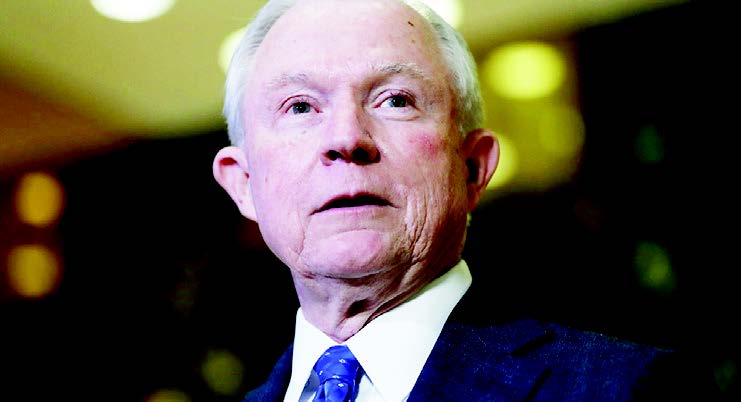
    Normally, a special counsel would report to the attorney general, but because Attorney General Jeff Sessions has recused himself from the Russia-election probe, Rosenstein is acting in that role. He’ll supervise Mueller, although the rules state: “The Special Counsel shall not be subject to the day-to-day supervision of any official of the Department.”

    According to the regulations, Rosenstein can block major investigative steps by Mueller, but must report to Congress if that happens. Rosenstein can fire Mueller “for misconduct, dereliction of duty, incapacity, conflict of interest, or for other good cause.” Trump can’t fire Mueller directly, but in theory could order Rosenstein to dismiss Mueller and could fire Rosenstein if he didn’t comply. The president could then seek out someone who would dismiss the special prosecutor.

    This is the scenario that played out during Watergate in 1973 in the so-called Saturday Night Massacre.

    Trump could also tell Sessions to repeal the regulations under which Mueller was appointed, freeing officials of any limits on firing him.

    4) What sort of budget does Mueller get, and what does his operation look like?

    Mueller has 60 days to propose a budget, which will be worked out with Justice Department finance officials and is subject to approval by Rosenstein. The special counsel must return by July of each year with a new budget plan. Mueller may hire some of his own lawyers and staff on a temporary basis, but typically many of those involved are “detailed” from other Justice Department offices. He’ll have access to the same FBI investigators already working on the probe, but can seek more resources if he wants them.

    5) Is there a set length of time for the inquiry?

    There’s no fixed duration for the investigation. It’s probable that getting Mueller and his team into place will cause some delay as they hire staff and get up to speed on work that’s already been done. Given the sensitivity of the intelligence matters, those newly-assigned to the case will need special security clearances and approvals.

    The investigation could well enter a relatively quiet period for a while until Mueller decides whether to take steps likely to draw public attention, like summoning witnesses to a grand jury.

    6) What impact will there be on Congressional investigations?

    Mueller is likely to be given effective control over what information the Justice Department shares with Congress about the probe and what requests it makes to Congressional committees to defer questioning sensitive witnesses or avoid publicizing potential leads in the investigation.

    In the short term, the decision to tap Mueller could slow down or freeze such cooperation as he tries to get read in on the various aspects of the investigation. Ultimately, Congress can do what it wants to demand witnesses and evidence, but lawmakers are typically leery of taking steps that could jeopardize the criminal probe.

    “The Senate Select Committee on Intelligence will continue its own investigation and to the extent any deconfliction is required, we will engage with Director Mueller and our expectation is that he will engage with the Committee as well,” Senate Intelligence Committee Chairman Richard Burr (R-N.C.) and Vice Chair Mark Warner (D-Va.) said in a joint statement Wednesday night.

    7) Will Mueller issue a final report?

    Yes, but it may not be made public. The regulations call for Mueller to prepare a report for Rosenstein on the reasons for decisions to prosecute or not prosecute. The rules also say the Justice Department must report to Congress on the grounds for closing the investigation. Rosenstein can decide whether or not to make that report public, but it may be a moot point since official notifications to the Hill are often promptly leaked.

    (Source: Politico)


  • Why the Special Counsel may be Good News for Republicans and Bad News for Trump

    Why the Special Counsel may be Good News for Republicans and Bad News for Trump

    By Perry Bacon Jr.


    “The Mueller appointment and the surrounding
    controversy around Trump and Russia remains as
    much a political issue as a legal one”, says the author.


    The appointment of ex-FBI director Robert Mueller as special counsel overseeing an investigation into Russian interference in the 2016 election – and potential Russian connections to President Trump and his allies – is another surprising development after a week full of them. Consider: Trump fired FBI Director James Comey, who was investigating the potential Russia-Trump ties, only to now have Comey’s predecessor at the FBI take over the investigation. And Trump’s deputy attorney general, Rod Rosenstein, who was being mocked by Democrats for his role in Comey’s firing, has now made an appointment that is being praised by Eric Holder, Barack Obama’s attorney general. The president, whose aides were advocating that the Russia investigation end soon, must now watch as Mueller quits his law firm job to devote himself full time to this assignment.

    So, what does this all mean? We won’t ultimately know for some time. But the Mueller appointment and the surrounding controversy around Trump and Russia remains as much a political issue as a legal one. So, let’s look at how this affects the relevant political players.

    Why this is good for Trump:

    Although the simple case is that Mueller’s appointment is not welcome news for Trump – the White House was surprised by the announcement – it does have some plausible benefits for the president, especially in the near term. The Russia investigation had been dogging the Trump administration, and his firing of Comey had turned into a debacle.

    Trump can now say there is an independent investigation going on, by someone he did not personally appoint and who is not beholden to his party. And Mueller has very strong credentials. The president and his team, in theory, can turn the focus to governing, while deferring questions about the investigation. And maybe Comey, who appears to have notes of every conversation he has had with the president, will share them with Mueller and not The New York Times. (That said, as of late Wednesday, Trump had not yet reacted to Mueller’s appointment – a poorly worded Twitter rant could mitigate any short-term benefit for Trump.)

    It’s also possible Mueller will interpret his mandate as limited to Russia and the election. It’s not clear Mueller would be investigating, for example, the details of Comey’s firing. That would be to Trump’s benefit.

    Most importantly, Mueller can exonerate the president. If this is a high risk development for Trump, it also comes with a big reward if Trump hasn’t done anything seriously wrong.

    Why this is bad for Trump:

    Mueller’s appointment ensures that the Russia controversy won’t just go away – at least not anytime soon. And he could gravely threaten Trump’s presidency if he finds clear, improper connections between the president’s campaign and Russian officials. There was a reason that Republicans on Capitol Hill and the Trump administration were trying to stop the appointment of a special counsel. Prosecutors with broad authority to investigate can cause major problems. Just ask Bill Clinton.

    Trump could in theory order Rosenstein to fire Mueller. But that would be exactly what Richard Nixon did, ordering his Justice Department to dump the special prosecutor investigating the president.

    Why this is good for congressional Republicans:

    Republican members were being repeatedly asked about the Trump investigation. Like Trump, they can now defer to Mueller’s probe. This will make them very happy. And in the long run, Mueller helps them avoid the awkward circumstance of investigating their own president. A damning report will make it easier to call for Trump’s resignation, if strong evidence emerges. Alternatively, a report that absolves Trump could take the Russia issue off the table without Republicans looking like they’d engaged in a partisan cover-up.

    More importantly, Republicans now have more room to get back to their policy goals, such as tax reform and Obamacare repeal. Mueller’s investigation is likely to take months. While that unfolds, Trump can sign into law bills passed by Republicans in the House and the Senate.

    Why this is bad for congressional Republicans:

    We’re not going to do fake balance here. This may or may not end up as good news for Trump – but it’s almost certainly good news for congressional Republicans.

    The one problem?

    Mueller is only investigating the Russia issue. It’s likely Trump will do something else controversial – in the past two weeks alone, he allegedly shared highly classified intelligence with the Russians, and he fired Comey in a clumsy way that created all kinds of political problems. Republicans will still have to answer for Trump’s other controversial moves.

    Why this is good for Democrats:

    Just reread the “bad news for Trump” paragraph from above. An investigation of the 2016 election, Trump and his allies could turn up damaging information. A report written by Mueller will have credibility. It’s far more likely that Mueller, as opposed to GOP-led congressional committees, will release information damaging to the president. And the timing of the investigation could be good for Democrats, keeping Russia in the news through the midterm year, even if it results in a slowdown in headlines now.

    But we should not ignore real-world impacts or lose sight of the big picture. Democrats strongly disagree with Republicans like Mitch McConnell and Paul Ryan on policy, including on sweeping issues currently on the congressional docket such as health care and taxes. In the eyes of many Democrats, Trump and the potential laws he might sign could damage the country for years to come. A process that could (in the long run) lead to Trump’s removal from office is a major step for liberals.

    Why this is bad for Democrats:

    In the short term, they may have lost an issue. Polls showed an overwhelming majority of Americans (78 percent, according to a recent NBC News/Wall Street Journal survey) wanted some kind of investigation of Trump’s alleged ties to Russia from outside of Congress. Democrats could have pounded Trump and Republicans on their lack of accountability every day till next year’s midterms.

    Mueller has a reputation for independence, like Comey. How he approaches this investigation is unpredictable, and that has risks for Democrats. (Ask Hillary Clinton.) And because Democrats have effusively praised Mueller’s appointment, they’ll have trouble criticizing him later on – or re-litigating the Russia issue – if he exonerates Trump.

    What would have been more predictable?

    A House Judiciary Committee investigation in 2019 led by Democratic Chairman John Conyers, being cheered on by Democratic Speaker Nancy Pelosi. Make no mistake: If Democrats had won control of Congress next year and Trump had blocked a special counsel up until then, impeachment would have been on the table. Now, Democrats have to wait and see what Mueller concludes.

    Why this is good for the public. By all accounts, Mueller seems to be respected by all sides.

    The author is a senior writer for FiveThirtyEight. (Source: Five ThirtyEight)


  • China’s Silk Road forum latest effort to boost Xi Jinping’s stature

    China’s Silk Road forum latest effort to boost Xi Jinping’s stature

    China’s Silk Road forum latest effort to boost Xi Jinping’s stature

    BEIJING (TIP): China will seek to burnish President Xi Jinping’s stature as a world-class statesman at an international gathering centered on his signature foreign policy effort envisioning a future world order in which all roads lead to Beijing.

    The “Belt and Road Forum” opening on Sunday is the latest in a series of high-profile appearances aimed at projecting Xi’s influence on the global stage ahead of a key congress of the ruling Communist Party later this year. All feed a fundamental yearning among ordinary Chinese: to see their country’s prestige and status rise.

    “Xi is now seen as a world leader with a lot of influence and respect internationally and that will definitely boost his domestic appeal,” said Joseph Cheng, a long-time observer of Chinese politics now retired from the City University of Hong Kong.

    Leaders from 28 countries are set to attend, including Presidents Vladimir Putin of Russia and Rodrigo Duterte of the Philippines. The most prominent attendee from the West will be Prime Minister Paolo Gentiloni of Italy.

    Other Western nations, including the United States, will be represented by officials of significantly lower standing. Washington is sending a delegation led by Eric Branstad, senior White House adviser in the Department of Commerce. Britain, Germany and France are to be represented by finance officials.

    That’s partly because of developments at home, but also is a reflection of concerns that China may be exporting its standards on human rights, the environment and government transparency, while leaving poor countries with unsustainable levels of debt.

    Yet the forum is as much about promoting Xi’s image at home as it is about pushing his vision abroad.

    Chinese state media outlets have linked Xi inextricably to the two-day gathering in Beijing, which will be centered around their president’s plan for a vast network of ports, railways and roads expanding China’s trade with Asia, Africa and Europe. Xi has even popped up in a series of English language promotional videos produced by the official China Daily called “Belt and Road Bedtime Stories.”

    “He’s showing vision. Leaders have to be visionary. He’s showing hope in their economic future by proposing a very significant economic plan,” former U.S. ambassador to China Max Baucus told The Associated Press. “I think it’s going to help him very much ahead of the next party congress.”

    The party will hold its twice-a-decade congress this fall at which Xi will oversee an infusion of fresh blood in leading bodies, most importantly the all powerful Politburo Standing Committee. Xi rose to the top of an intensely competitive system riven by factions and rivalries to take the reins of the party in 2012, and has steadily accrued powers well beyond those of his predecessors in areas such as defense, internal security and the economy.

    He’s also fallen back on the hallowed tradition of political campaigns and sloganeering, preaching the “Chinese Dream” of prosperity and national rejuvenation, pushing a sweeping anticorruption campaign and cracking down on the infiltration of “Western” democratic values that could threaten party control.

    In the international sphere, he’s presided over both the Asia-Pacific Economic Cooperation forum and the G- 20 meeting of industrialized states, both of which were attended by former President Barack Obama. In January, Xi sought to portray himself as a champion of globalization and free trade at the World Economic Forum in Davos, in contrast to President Donald Trump’s protectionist rhetoric. On an entirely different level though is his signature initiative formally known as “One Belt, One Road.”

    It aims to reassert China’s past prominence as the dominant power in Asia whose culture and economy deeply influenced its neighbors as far as Africa and Europe. It speaks deeply to Chinese pride in their country’s explosive economic growth and political clout after a century of humiliation at the hands of foreign powers that formally ended with Mao Zedong’s communist revolution in 1949.

    The initiative also furthers the Xi administration’s reputation for muscular foreign policy. Under Xi, China has strongly asserted its claim to virtually the entire strategic South China Sea and established the Asian Infrastructure Development Bank as a global institution alongside such bodies as the World Bank, Asian Development Bank and International Monetary Fund.

    And unlike APEC and Davos, it involves the disbursal of potentially trillions of dollars in contracts, expanding both China’s economic reach and Xi’s personal authority as holder of the purse strings. The Asian Development Bank says the region, home to 60 percent of the world’s people, needs more than $26 trillion of infrastructure investment by 2030 to keep economies growing. (AP)


  • KREMLIN SAYS ‘TOO EARLY’ TO SPEAK OF THAW IN RUSSIA-US TIES

    KREMLIN SAYS ‘TOO EARLY’ TO SPEAK OF THAW IN RUSSIA-US TIES

    KREMLIN SAYS ‘TOO EARLY’ TO SPEAK OF THAW IN RUSSIA-US TIES

    MOSCOW (TIP): The Kremlin said on Thursday it was too early to speak of a thaw in ties with Washington, a day after Russian Foreign Minister Sergei Lavrov met US President Donald Trump.

    “It’s too early to draw this conclusion,” Kremlin spokesman Dmitry Peskov told reporters. But he added: “Of course the fact that a dialogue is taking place is very positive.”

    Peskov said both Trump and Russian President Vladimir Putin are expected to be at the G20 summit in Germany in July, which “could serve as a good occasion” for them to meet. Wednesday’s meeting came as Trump was embroiled in a political firestorm over the investigations into allegations his US presidential election campaign had colluded with Russia. Lavrov met both Trump and US counterpart Rex Tillerson in Washington, saying the US president was seeking “mutually beneficial” and “pragmatic” relations with Moscow.

    “The goal of both president Trump and president Putin is to have concrete results which will be tangible and which will allow (us) to alleviate problems, including on the international agenda,” he told reporters.

    Tillerson also travelled to Moscow last month for talks with Lavrov. Tillerson, who also had a closed-door meeting with Putin during his visit, deplored the “low level of trust” between the two powers, whose relations have sunk to a post-Cold War low over the conflicts in Ukraine and Syria.

    “The world’s two foremost nuclear powers cannot have this kind of relationship,” the US secretary of state said. In a shock move on Tuesday, Trump sacked FBI chief James Comey, the man overseeing federal investigations into suspected Kremlin interference in the 2016 US vote. (AFP)

  • ‘Obama warned Trump against Flynn as national security adviser’

    ‘Obama warned Trump against Flynn as national security adviser’

    ‘Obama warned Trump against Flynn as national security adviser’


    WASHINGTON (TIP): Former U.S. President Barack Obama warned then- President-elect Donald Trump not to give the post of national security adviser in his administration to Michael Flynn who was eventually fired in a controversy about ties to Russia, a former Obama aide said. Obama gave the warning in an Oval Office meeting with Trump just days after the Republican’s surprise election win last Nov. 8. The warning, first reported by NBC News, came up during a discussion of White House personnel.

    White House spokesman Sean Spicer, responding to the reports, told a news briefing: “It’s true that the president, President Obama, made it known that he wasn’t exactly a fan of General Flynn’s” during a one-hour meeting on Nov. 10 with Trump.

    An Obama spokesman initially declined to comment.

    Flynn has emerged as a central figure in probes into allegations of Russian meddling in. the 2016 U.S. election and possible collusion between Trump’s campaign and Moscow.

    He had been pushed out by Obama in 2014 from his job as director of the Defense Intelligence Agency, or DIA, during the Democratic president’s term in office.

    A former U.S. deputy attorney general, Sally Yates, is expected to tell a Senate Judiciary subcommittee later Monday that she had warned the White House counsel after Trump took office that Flynn had not told the truth about conversations he had held with Russia’s ambassador to Washington.

    Trump fired Flynn, a retired general, in February for failing to disclose talks with Ambassador Sergei Kislyak about U.S. sanctions on Moscow and then misleading Vice President Mike Pence about the conversations.

    Congressional committees began investigating after U.S. intelligence agencies concluded that Russian President Vladimir Putin had ordered hacking of Democratic political groups to try to sway the election toward Trump. Moscow has denied any such meddling.

    Trump has also dismissed the allegations, suggesting instead that Obama might have wiretapped Trump Tower in New York or that China may have been behind the cyber attacks. He has provided no evidence and neither scenario has been supported by intelligence agencies.

    Hours before Monday’s Senate hearing, Trump insinuated that Yates, an Obama administration appointment, had leaked information on Flynn to the media. “Ask Sally Yates, under oath, if she knows how classified information got into the newspapers soon after she explained it to W.H. Council,” Trump wrote on Twitter, apparently mis-spelling the word counsel.

    In another Twitter post, Trump noted that Flynn had been granted top security clearance while working in the Obama administration. Flynn was fired from the DIA in 2014 for what officials familiar with the issue said was a disruptive management style that included instructing analysts to find intelligence substantiating improbable theories that some subordinates came to call “Flynn facts.” He also advocated an overhaul of the DIA that ignited resistance from veteran intelligence officials, the officials said.

    James Clapper, Obama’s former Director of National Intelligence, will also testify to the Senate panel on May 9. (TOI)


  • Trump asked FBI director three times if he was target of investigations

    Trump asked FBI director three times if he was target of investigations

    Trump asked FBI director three times if he was target of investigations

    WASHINGTON (TIP): Donald Trump said May 11 he asked his now-fired FBI director on three occasions whether he was the target of ongoing investigations, stoking allegations of presidential interference.

    The US president also acknowledged that Russia was on his mind when he made the decision to sack James Comey, who had been heading a probe into suspected Russian influence in the 2016 election.

    “When I decided to just do it, I said to myself, I said you know, this Russia thing with Trump and Russia is a made up story,” he said in an interview with NBC, appearing to link Comey’s firing with the investigation.

    Trump said he had asked Comey if he was the subject of counter-intelligence probes — twice in conversations over the phone and once over a White House dinner.

    “I actually asked him, yes. I said, ‘If it’s possible would you let me know, am I under investigation?’”

    “He said, ‘You are not under investigation,’” Trump recounted, repeating an assertion made when the White House announced Comey’s firing Tuesday.

    “All I can tell you is, well I know what, I know that I’m not under investigation. Me. Personally. I’m not talking about campaigns. I’m not talking about anything else. I’m not under investigation.”

    Trump’s comments to NBC raised questions about whether he had acted inappropriately and whether Comey had broken government guidelines. US presidents are normally at pains to avoid any suggestion of interference or even commenting on ongoing investigations. The FBI typically does not confirm their existence.

    Noted legal scholar Laurence Tribe told AFP that if Comey did indeed answer Trump’s question, it would violate Department of Justice rules and “would be unthinkably unethical and unprofessional in this situation.”

    Trump also said that at the dinner, he and Comey discussed whether the US top cop would stay in his role and continue his ten-year term.

    Asking such a question “would come close to bribery… or at least obstruction of justice, which Comey would’ve had to be an idiot to fall for by offering the assurance sought,” Tribe said.

    The White House rejected the suggestion the exchange was inappropriate. “I don’t see it as a conflict of interest,” White House spokeswoman Sarah Huckabee Sanders said.

    In the interview, Trump insisted that he always intended to fire Comey, undercutting the initial White House explanation that he acted on the recommendation of top justice officials who criticized the FBI chief’s handling of a probe into Hillary Clinton’s emails.

    I was going to fire him regardless of recommendations,” said the president. “He’s a showboat, he’s a grandstander.” Opponents have claimed that Comey’s shock sacking was a bid to stall an FBI investigation into alleged Russian meddling in the 2016 election, which is also looking into possible collusion between the Kremlin and Trump’s team. Trump’s interview was released on the same day the interim head of the FBI told the US Congress that Comey’s sacking would not derail the Russia investigation. “There has been no effort to impede our investigation to date,” acting director Andrew McCabe told the Senate Intelligence Committee, in a hearing that capped two days of high drama provoked by the dismissal.

    “You cannot stop the men and women of the FBI from doing the right thing,” he said. “All of the agents involved in the investigation are still in their positions.” Trump told NBC that had Russia interfered in the 2016 election, it would have been “horrible.” He repeated denials of links between his campaign and Moscow.

    “There’s no collusion between me, my campaign and the Russians,” he said. While Trump said the outgoing FBI director had left the agency in “turmoil,” McCabe rejected any suggestion that Comey had lost the support of the rank and file. “Director Comey enjoyed broad support within the FBI and still does today,” he told the committee. Echoing a widely-held view in opposition ranks, the senior Democrat on the Senate committee, John Warner, called the timing of Comey’s dismissal “especially troubling.” (PTI)


  • Trump’s Nixon moment?

    Trump’s Nixon moment?

    Trump’s Nixon moment?


    By Stanly Johny

    U.S. President Donald Trump’s dramatic decision to sack Federal Bureau of Investigation (FBI) chief James Comey hardly escapes comparisons with the 1973 “Saturday Night Massacre”. On October 20 that year, Richard Nixon fired Archibald Cox, the special prosecutor investigating Watergate, after he subpoenaed the President for copies of White House tapes. The decision triggered immediate storm inside his own Cabinet as two top law enforcement officials – Attorney-General Elliot Richardson and his deputy William Ruckelshaus – quit the government instead of obeying their boss.

    Nixon may have thought then that he could save his presidency by removing a defiant prosecutor, but his action actually deepened the Watergate crisis which led to his eventual impeachment a year later. Since then, no American President has dismissed a top law enforcement official conducting an investigation which has a direct bearing on him, until Mr. Trump’s decision. Mr. Comey had been heading an investigation to find if there was collusion between Mr. Trump’s campaign team and the Russian government. Unlike Nixon, Mr. Trump appears to have the support of his Cabinet members. The Justice Department, headed by his close ally Jeff Sessions, stands firmly behind him. Further, unlike Cox, Mr. Comey is not a special prosecutor designated to probe any scandal involving the President. The White House says his dismissal was over Mr. Comey’s handling of the Clinton e-mail leaks, and has nothing to do with the Russia probe. Still, Mr. Trump’s decision could have far-reaching consequences both on the ongoing investigation and his presidency.

    LINKED TO ‘RUSSIAGATE’: The order comes at a time when ‘Russiagate’ is widening – just hours before Mr. Comey was fired, former Acting Attorney-General Sally Yates testified before a Senate Committee that she had warned Mr. Trump that the credentials of Michael Flynn, his initial pick for National Security Advisor, may have been compromised by his links with Russia. This only reinforces the theory that Mr. Trump is wary of the FBI probe, and it is not a secret that Mr. Comey is beyond his direct control. Further, in a short dismissal letter, Mr. Trump said: “…I greatly appreciate you informing me, on three separate occasions, that I am not under investigation…” The “investigation” Mr. Trump here refers to is the same ‘Russia connection’ his administration officials are trying to de-link from the dismissal decision, showing how entangled they are in ‘Russiagate’.

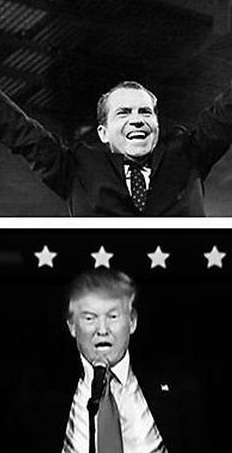
    Nixon and Trump. Trump’s
    firing of the FBI head is
    reminiscent of the 1973
    ‘Saturday Night Massacre”
    Photo courtesy Odyssey
    Online


    Also, Mr. Trump may have thought that his decision could get support from sections of the Democrats particularly upset with Mr. Comey’s handling of the Clinton e-mails, which they think cost her the presidency. However, the Democrats were the first to blast the “Nixonian” decision, and asked for setting up of a special prosecutor to probe the Russia link. If Mr. Trump doesn’t agree to that, suspicions about the real reason behind Mr. Comey’s ouster will only increase. If he does, ‘Russiagate’ will continue to haunt him. Either way, Mr. Trump has just made the crisis worse, like Nixon did by firing Cox.


  • Trump Fires FBI Director Comey

    Trump Fires FBI Director Comey: Claims he is not under FBI investigation

    Democrats see a “Russiagate”: US Presidency under a Cloud

    US President Donald Trumpsays he is not under investigation, even as acting FBI Director Andrew McCabe on Thursday, May 11, told Congress the Russian probe is “highly significant” and will continue, media reports said. Trump told NBC News it was his decision alone to sack Comey, who was leading an inquiry into alleged Russian meddling in the US election and possible collusion between Trump campaign officials and Moscow.

    Trump has dismissed the probe as a “charade”, a claim directly contradicted by Comey’s successor, the BBC said in its report. In his first interview since firing the FBI Director, Trump told NBC News on Thursday he had asked Comey whether he was under investigation.”I said, if it’s possible would you let me know, ‘Am I under investigation?’ He said: ‘You are not under investigation.’” “I know I’m not under investigation,” Trump told the interviewer, repeating a claim he made in his Tuesday’s letter of dismissal to Comey.

    The President also appeared to undercut the initial White House explanation that he fired Comey on the recommendation of top justice officials, the BBC reported. “He’s (Comey) a showboat. He’s a grandstander. The FBI has been in turmoil. I was going to fire Comey. My decision,” Trump said. “I was going to fire regardless of recommendation.” “There’s no collusion between me and my campaign and the Russians,” Trump added. Trump, who tweeted a few days back that the Russia-Trump collusion allegations were a “total hoax”, on Thursday denied he wanted the FBI inquiry dropped. The White House has depicted the Russia inquiry as “probably one of the smallest things” that the FBI has “got going on their plate”.

    But acting FBI Director Andrew McCabe said on Thursday that it was “a highly significant investigation”. In testimony to the Senate Intelligence Committee, McCabe also cast doubt on White House claims that Comey had lost the confidence of his staff. McCabe said he believed the Federal Bureau of Investigation had sufficient funding to conduct the probe. The anger behind Donald Trump’s firing of FBI Director James Comey on Tuesday had been building for months, but a turning point came when Comey refused to preview for top Trump aides his planned testimony to a Senate panel, White House officials said.

    Trump, Attorney General Jeff Sessions and deputy Attorney General Rod Rosenstein had wanted a heads-up from Comey about what he would say at a May 3 hearing about his  handling of an investigation into former Democratic presidential candidate Hillary Clinton’s use of a private email server. When Comey refused, Trump and his aides considered that an act of insubordination and it was one of the catalysts to Trump’s decision this week to fire the FBI director, the officials said. “It gave the impression that he was no longer capable of carrying out his duties,” one official said. Previews of congressional testimony to superiors are generally considered courteous.

    Comey, who testified for four hours before the Senate Judiciary Committee, said it made him feel “mildly nauseous” that his decision to make public his reopening of a probe into Clinton’s handling of classified information might have affected the outcome of the November 8 presidential election. But he said he had no regrets and would make the same decision again. Trump’s sudden firing of Comey shocked Washington and plunged Trump deeper into a controversy over his campaign’s alleged ties with Russia that has dogged the early days of his presidency.

    Democrats accused the Republican President of firing Comey to try to undermine the FBI’s probe into Russia’s alleged efforts to meddle in the 2016 election and possible collusion with members of the Trump campaign, and demanded an independent investigation. Some of Trump’s fellow Republicans called his dismissal of Comey troubling. The Trump administration said on Tuesday that Comey was fired because of his handling of the Clinton email probe. Before he axed Comey, Trump had publicly expressed frustration with the FBI and congressional probes into the Russia matter. Moscow has denied meddling in the election and the Trump administration denies allegations of collusion with Russia.

    A former Trump adviser said Trump was also angry because Comey had never offered a public exoneration of Trump in the FBI probe into contacts between the Russian ambassador to Washington, Sergei Kislyak, and Trump campaign advisers last year. According to this former adviser, Comey’s Senate testimony on the Clinton emails likely reinforced in Trump’s mind that “Comey was against him.” “He regretted what he did to Hillary but not what he did to Trump,” the former Trump adviser said of Comey. Clinton has said the Comey decision to announce the renewed inquiry days before the election was a likely factor in her loss to Trump.

    Aides said Trump moved quickly after receiving a recommendation on Monday to terminate Comey from Rosenstein, who began reviewing the situation at the FBI shortly after taking office two weeks ago. Trump’s move was so sudden that his White House staff, accustomed to his impromptu style, was caught off guard. Stunned aides scrambled to put together a plan to explain what happened. White House spokesman Sean Spicer ended up briefing reporters about the move in the dark on Tuesday night near a patch of bushes steps away from the West Wing. – Reuters

    ‘I have come to terms with my sacking’

    FBI chief James Comey on Thursday told his colleagues that the US President had the right to sack him for any reason “or for no reason at all” and that he had come to terms with it In a farewell letter to his colleagues, Comey said he does not plan to dwell on the decision of the President to fire him or the “way it was executed.” “It is done, and I will be fine, although I will miss you and the mission deeply,” Comey said a day after he was unceremoniously removed as top sleuth. Comey was in the third year of his 10-year term, when he was dismissed. (Source IANS/ NBC)


  • UN, Russia set for Syria meet without US

    UN, Russia set for Syria meet without US

    GENEVA (TIP): The UN’s Syria envoy said today that he will hold talks with Russian officials next week but without the US present after previous plans for a trilateral meeting were “postponed”.

    UN peace mediator Staffan de Mistura said his meeting with Russia’s deputy foreign minister Gennady Gatilov is set for Monday in Geneva.”The trilateral meeting is not off the table, it is simply being postponed”, de Mistura told reporters.

    Asked why US President Donald Trump’s representatives decided to skip the meeting, de Mistura said: “you should ask them, frankly.”

    Syrian regime supporter Moscow and opposition-backer Washington had been the key foreign powers shaping the UN’s Syria peace process.

    De Mistura has previously asked for more clarity from Trump’s administration on its vision for the Syria talks.

    US officials have in recent weeks voiced commitment to support a negotiated solution to the conflict.

    Monday’s sitdown with Gatilov “will be a very intense bilateral meeting”, de Mistura said. He also restated his desire to convene a sixth round of UN-backed talks involving Syrian rivals next month. The previous rounds have failed to produce concrete results. (AFP)


  • Nikki Haley Gets Heckled at Global Women’s Summit Over Trump, Russia

    Nikki Haley Gets Heckled at Global Women’s Summit Over Trump, Russia

    NEW YORK (TIP): Nikki Haley, the tough-talking and blunt U.S. Ambassador to the UN, was heckled during an annual summit on women here as she spoke about President Donald Trump and Russia.

    The Indian American envoy was speaking April 5 at the ‘Women In The World’ summit, a premier annual gathering of influential women leaders, politicians and activists organized by media personality Tina Brown in association with the New York Times.

    As she was answering questions during the session titled ‘Trump’s Diplomat: Nikki Haley’ moderated by MSNBC anchor Greta Van Susteren, Haley was booed and heckled on several occasions. At one point, someone in the audience shouted,”what about refugees” while another asked, “when is the next panel.”

    During the nearly 22-minute session, a woman in the audience shouted, “when is the next panel,” to which the 45-year-old smiled and exclaimed “wow” as the audience tried to shush the heckler.

    She was heckled again when asked how America deals with some of the world leaders who are dictators.

    “You call them out when they do something wrong and you work with them when you can find ways to work with them,” Haley said.

    As some members of the audience shouted at her remarks, Haley said, “we have to express America’s values. We are always the moral conscience of the world,” to which someone from the audience shouted, “what about the refugees,” cutting off Haley. Haley went silent. Van Susteren paused, and then said, “Moving on.”

    At the end of the day’s program, Brown commended Haley for attending the event even as she got a “boisterous reception” and for remaining gracious as she was heckled.

    “We often complain and sneer and say Republicans never want to come on any kind of forum except Fox News or places where they can be asked questions that are soft,” Brown said, adding that Haley did not put on any pre-conditions and sat very “graciously” while the audience heckled.

    “She didn’t get agitated about it, and she’s in the middle of a lot of world crises. So, I feel that we should really applaud the fact that she did come.”

    Van Susteren asked Haley why the world has not heard much from Trump about Russia, a question that drew a thunderous applause from the audience.

    Haley said, “First keep in mind that I work for the Trump administration,” a response that generated boos and heckles from the audience and prompted Van Susteren to ask the audience to “hold on, hold on. We got to get people fix these problems.” Haley added that she has “hit Russia over the head more times than I can count. It’s because if they do something wrong we are going to call them out on it. If they want to help us defeat terrorism, fine.”

    “But the things they have done with Crimea and Ukraine, the things they have done with how they have covered up for (Syrian President Bashar) Assad, we are not going to give them a pass on.”

    Haley said she has had conversations with Trump “where he very much sees Russia as a problem and I think if you look at his actions, everybody wants to hear his words but look at his actions. The two things that Russia does not want to see the U.S. do is strengthen the military and expand energy and the president has done both of those.” She gave out a smile as her comments again drew prolonged boos from the audience.

    On the chemical weapons attack on a Syrian town, Haley said Russia blamed it on a container of chemical weapons that ISIS had.

    “There is no ounce of proof. They just make things up,” she said.

  • America Launches Missile Attack at Syrian Base after Chemical Weapons Attack kills 100

    America Launches Missile Attack at Syrian Base after Chemical Weapons Attack kills 100

    Piqued by Syria’s use of banned chemical weapons that killed at least 100 people, the U.S. military launched dozens of cruise missiles Thursday, April 6 night at a Syrian airfield

    Two U.S. warships in the Mediterranean Sea, the USS Ross and the USS Porter, fired 59 Tomahawk missiles intended for a single target -Shayrat Airfield in Homs province in western Syria, the Defense Department said. That’s the airfield from which the United States believes the government of Syrian President Bashar al-Assad fired the banned weapons.

    The Pentagon said people were not targeted, and there was no immediate word on casualties. U.S. officials told NBC News that aircraft and infrastructure at the site were hit, including the runway and gas fuel pumps.

    “Assad choked out the lives of helpless men, women and children,” President Donald Trump said in remarks from Mar-a-Lago, his family compound in Palm Beach, Florida.

    “It is in this vital national security interest of the United States to prevent and deter the spread and use of deadly chemical weapons,” said Trump, who called on other countries to end the bloodshed in Syria.

    NBC news reported that a White House official said that more than two dozen members of Congress were briefed by administration officials on the missile strike. Vice President Mike Pence returned to the White House after having gone home for dinner Thursday evening and monitored the events from the Situation Room, officials said.

    “We feel that the strike itself was proportional, because it was targeted at the facility that delivered this most recent chemical weapons attack,” Tillerson told reporters on Thursday night.

    “There was a thorough examination of a wide range of options, and I think the president made the correct choice and made the correct decision,” Tillerson said.

    Syrian television characterized the missile strike “as American aggression” Friday morning. But Ahrar Al Sham, the largest Syrian armed rebel group, told NBC News it “welcomes any U.S. intervention through surgical strikes that would deter the Assad regime capabilities to kill civilians and shorten the suffering of our people.”

    Navy Capt. Jeff Davis, a spokesman for the Defense Department, said initial assessments showed that the airfield was severely damaged, reducing Syria’s capability to deliver chemical weapons.

    Tillerson and Nikki Haley, the U.S. ambassador to the United Nations, have bluntly blamed Syria for the chemical weapons attack, whose victims included at least 25 children.

    “We have a very high level of confidence that the attacks were carried out by aircraft under the direction of Bashar al-Assad’s regime, and we also have very high confidence that the attacks involved the use of sarin nerve gas,” Tillerson said Thursday night.

    In a combative speech at the U.N. Security Council on Wednesday, Haley warned: “When the United Nations consistently fails in its duty to act collectively, there are times in the life of states that we are compelled to take our own action.”

    There was no immediate reaction to the missile strike from Russia, which Tillerson and Haley have accused of having turned a blind eye to Syria’s transgressions.

    Tillerson said there were no executive-level communications with Russian President Vladimir Putin before the missile strike. But he confirmed that U.S. officials had “multiple conversations” with the Russian government in accord with U.S.-Russian military “deconfliction” agreements.

    “We sought no approval from Moscow or at any other level within the Russian infrastructure,” Tillerson said. “This was simply following rules that we have put in place in agreement with the Russian military to deconflict. Because our target in this attack was not Russia.”

    Noting the 2013 U.N. arrangement under which Syria agreed to surrender its chemical weapons under the supervision of Russia, Tillerson said Thursday night: “Clearly, Russia has failed in its responsibility to deliver on that commitment from 2013. So, either Russia has been complicit or simply incompetent in its ability to deliver on that agreement.”

    McMaster said the missile strike wouldn’t have wiped out Assad’s “capacity to commit mass murder with chemical weapons.” But he said: “This was not a small strike. I mean, it was not a small strike. And I think what it does communicate is a big shift in Assad’s calculus – it should be, anyway.”

    (Source: NBC News)

    About the Missile Attack on Syria:

    * Fifty-nine Tomahawk missiles were fired from American destroyers in the eastern Mediterranean at Al Shayrat airfield in Syria, where officials said Mr. Assad’s chemical weapons attack this week originated.

    * Mr. Trump ordered the strike after two days of intense deliberations that involved two meetings of his top national security advisers, including one that Mr. Trump conducted from his Mar-a-Lago estate in Florida.

    * In announcing the strikes on Thursday evening, Mr. Trump called the chemical attack “very barbaric” and said his decision would “prevent and deter the spread and use of deadly chemical weapons.”

    * Administration officials described the missile strikes as a message to the world about Mr. Trump’s resolve and his commitment that the United States will no longer “turn away, turn a blind eye.”

    * The Russian military, which is active in Syria, was notified of the strikes in advance, though American officials did not personally inform President Vladimir V. Putin. In a briefing, Secretary of State Rex W. Tillerson criticized Moscow for failing to live up to its promise in 2013 to destroy all of Syria’s chemical weapons, calling Russia either “complicit” or “incompetent.”

  • Nikki Haley Confirms Russian Involvement in 2016 elections

    Nikki Haley Confirms Russian Involvement in 2016 elections

    WASHINGTON — The U.S. ambassador to the United Nations says there’s no question Russia was involved in the U.S. presidential election and insists President Donald Trump would fully support strong action against the Kremlin once investigations are complete.

    Speaking in television interviews broadcast April 2, Nikki Haley contended there is no contradiction between her tough stance and Trump’s repeated public statements seeking to minimize Russia’s role. She said Trump “has not once” told her to stop “beating up on Russia.”

    “Certainly, I think Russia was involved in the election. There’s no question about that,” Haley told ABC News’ Martha Raddatz in an interview on ‘This Week. “And I think when they finish with all of this process, yes, they need to address Russia. They need to act.”

    The Indian American envoy joins Defense Secretary James Mattis as Trump administration officials who have forcefully called out Russia for its actions during the 2016 U.S. campaign.

    “We don’t want any country involved in our elections, ever,” Haley said. “We need to be very strong on that.”

    Russian President Vladimir Putin has denied his country meddled in the 2016 contest between Trump and Democrat Hillary Clinton. While Trump himself has said he believes Russian operatives hacked Democratic Party emails during the election, he has repeatedly lambasted as “fake news” any suggestion that he or his staff had connections to Russia.

    Trump continued his attacks over the weekend, tweeting: “It is the same Fake News Media that said there is ‘no path to victory for Trump’ that is now pushing the phony Russia story. A total scam!”

    He added on April 2: “The real story turns out to be SURVEILLANCE and LEAKING! Find the leakers.”

    U.S. intelligence agencies report that Russia tried to help Trump’s campaign effort. The FBI as well as congressional committees are investigating whether the Russian government coordinated with Trump associates during the campaign. The White House is also trying to quell a firestorm over its behind-the-scenes role in helping the Republican chairman of the House intelligence committee, Rep. Devin Nunes, view secret intelligence reports that he says pointed to inappropriate leaking.

    Rep. Adam Schiff, the top Democrat on the panel, went to the White House March 31 to view materials that he said were “precisely the same.” He declined on April 2 to describe the contents, but criticized the unorthodox disclosure to Nunes, suggesting that the material was more likely an “effort to deflect attention” and “create a cloud through which the public cannot see.”

    “Whenever they see the president use the word ‘fake,’ it should set off alarm bells,” Schiff said. “I think that’s really what going on here.”

    Trump as president persuaded Haley to leave the governorship of South Carolina to represent the U.S. at the United Nations. She said she was “beating up on Russia” over issues such as its actions in Crimea and its dispute with Ukraine.

    When asked if she believes Trump should publicly take a harder Russia stance, she said: “Of course, he’s got a lot of things he’s doing.”

    “There’s no love or anything going on with Russia right now,” Haley said. “They get that we’re getting our strength back, that we’re getting our voice back and that we’re starting to lead again, and, honestly, at the United Nations, that’s the No. 1 comment I get is that they’re just so happy to see the United States lead again.”

    Sen. John McCain, R-Ariz., who chairs the Armed Services Committee, said it was indisputable that Russia attempted to influence the U.S. election, reiterating his call for a special select committee.

    But Senate Majority Leader Mitch McConnell said he didn’t think another review was necessary, citing the bipartisan work from the Senate Intelligence Committee.

    “I think they clearly laid out that they’re going wherever the facts take them,” McConnell said, referring to Republican chairman Richard Burr of North Carolina and Mark Warner of Virginia, the top Democrat on the panel. “We don’t need yet another investigation. We know the FBI is looking at it from their perspective.”

    Dmitry Peskov, Putin’s press secretary, said Russia was not worried about what any U.S. investigation might reveal. “We insist that any blaming that Russia could have been interfering in domestic affairs of the United States is slander,” he said.

    Haley, Peskov and McCain appeared on ABC’s “This Week,” Haley also was on CBS’ “Face the Nation,” Schiff spoke on CNN’s “State of the Union,” and McConnell appeared on “Fox News Sunday” and NBC’s “Meet The Press.”


    • Trump-Russia investigation erodes the U.S. President’s credibility

      Trump-Russia investigation erodes the U.S. President’s credibility

      The first open hearing into the alleged links between the campaign of Donald Trump and unnamed parties associated with the Russian government kicked off this week, even as the President put out a series of social media posts that seemed to mischaracterize statements coming out of that hearing.

      Ground-shaking revelations have come from the grilling of FBI Director James Comey and NSA Director Michael Rogers by the House of Representatives’ Intelligence Committee. The first was from Mr. Comey, who confirmed that the FBI was investigating Russia’s efforts to interfere in the presidential election, including links between specific individuals associated with the Trump campaign and the Russian government. Last month Mr. Trump’s nominee for National Security Adviser, Michael Flynn, resigned from his post after it emerged that he had withheld information about being in contact with Russia’s Ambassador in Washington prior to Mr. Trump’s inauguration. This month, Attorney General Jeff Sessions recused himself from the probe into alleged Russian meddling when it came to light that he had met the Ambassador prior to the election. Yet he continues to head the institution charged with the inquiry. Mr. Comey revealed that the FBI investigation began in July 2016, when evidence emerged that the Democratic National Committee had been hacked by Russia-related entities and emails handed over to WikiLeaks.

      Even as the U.S. intelligence community scrambles to put together the pieces of the Trump-Moscow puzzle, it has, ironically, found itself in the crosshairs of exposure. Earlier this month WikiLeaks released a trove of confidential CIA documents, a series labelled “Vault 7”, which showed the Agency’s penetration of the security systems of household electronic devices that could then be used for covert surveillance. While such timed “leaks” are meant to target his political opponents, Mr. Trump’s own tweets are at odds with revelations in the House hearing. In early March, he accused former President Barack Obama of ordering wiretaps on Trump Tower – yet Mr. Comey said neither the FBI nor the Department of Justice had any information to support that allegation. Mr. Rogers dismissed the White House suggestion that Mr. Obama had asked British intelligence to spy on Mr. Trump, a claim the U.K. has denied. The last straw came when the U.S. President’s account tweeted, as the hearing proceeded, “The NSA and FBI tell Congress that Russia did not influence electoral process,” only to have this statement debunked by Mr. Comey at the hearing, live on TV. Mr. Trump’s tendency to resort to unsubstantiated, even misleading, claims to stall a probe into alleged collaboration with a foreign power is not helping his credibility, which is already low in the eyes of so many Americans.

    • FBI Director Comey confirms investigation into Russian ties to Trump campaign

      FBI Director Comey confirms investigation into Russian ties to Trump campaign

      The FBI has information that indicates associates of President Donald Trump communicated with suspected Russian operatives to possibly coordinate the release of information damaging to Hillary Clinton’s campaign, says a CNN report, claiming US officials told CNN.

      “This is partly what FBI Director James Comey was referring to when he made a bombshell announcement Monday, March 20, before Congress that the FBI is investigating the Trump campaign’s ties to Russia, according to one source”, says the CNN report.

      CNN report further says: “The FBI is now reviewing that information, which includes human intelligence, travel, business and phone records and accounts of in-person meetings, according to those U.S. officials.

      The information is raising the suspicions of FBI counterintelligence investigators that the coordination may have taken place, though officials cautioned that the information was not conclusive and that the investigation is ongoing.

      “In his statement on Monday Comey said the FBI began looking into possible coordination between Trump campaign associates and suspected Russian operatives because the bureau had gathered “a credible allegation of wrongdoing or reasonable basis to believe an American may be acting as an agent of a foreign power.”

      “The White House did not comment and the FBI declined to comment. Dmitry Peskov, a Kremlin spokesman, said Thursday the Russian government would not comment on information from unnamed sources.

      “This is another piece of information without any sources which can’t be commented on, neither can it be taken as some serious thing,” Peskov told reporters in response to a question about CNN’s reporting.

      “White House press secretary Sean Spicer maintained Monday after Comey’s testimony that there was no evidence to suggest any collusion took place.

      “Investigating it and having proof of it are two different things,” Spicer said.

      “The FBI cannot yet prove that collusion took place, but the information suggesting collusion is now a large focus of the investigation, the officials said.

      “The FBI has already been investigating four former Trump campaign associates — Michael Flynn, Paul Manafort, Roger Stone and Carter Page — for contacts with Russians known to US intelligence. All four have denied improper contacts and CNN has not confirmed any of them are the subjects of the information the FBI is reviewing”. (Source: CNN)

    • Mkhitaryan helps Manchester United to draw in Russia

      Mkhitaryan helps Manchester United to draw in Russia

      ROSTOV-ON-DON (TIP): Henrikh Mkhitaryan bagged a precious away goal as Manchester United came away from their trip to Russia with a 1-1 draw in the first leg of their Europa League last-16 tie against Rostov on March 8.

      On an awful pitch, the state of which had United manager Jose Mourinho fuming on the eve of the game, Mkhitaryan turned in the opener 10 minutes before half-time.

      But Aleksandr Bukharov levelled for the home side in the 53rd minute at the Olimp 2 stadium, keeping Rostov hopes alive ahead of next week’s return at Old Trafford.

      The build-up to the match had been overshadowed by United’s complaints about the playing surface and about concerns travelling fans could be targeted by Russian hooligans.

      However, the evening passed off without incident inside the ground, where a little over 200 United supporters were in attendance along with ex-United assistant boss Carlos Queiroz.

      “It was a very good performance in relation to the conditions. It was impossible to play better, impossible to play a passing game,” Mourinho told BT Sport.

      “We played what the game demanded and we played well. We made one defensive mistake.

      “I remember as a kid some matches like this in Portugal — non-league and amateur pitches. To see my players coping with it and the humility to fight for every ball is a good feeling for me.

      “We have an open result for the second leg with a little advantage for us. There are no injuries.”

      The result saw the visitors extend their recent unbeaten run in all competitions to 10 games as Mourinho made seven changes to the team held by Bournemouth last weekend.

      One of those brought back into the starting line-up was Mkhitaryan, and it was he who swept United in front in the 35th minute from close range after good build-up play involving Marouane Fellaini and Zlatan Ibrahimovic.

      Nevertheless Rostov, who are seventh in the Russian Premier League but had already won at home to Ajax and Bayern Munich in Europe this season, drew level thanks to a fine goal shortly after the break.

      Timofei Kalachev delivered a ball over the top that was controlled on the chest inside the box and then fired home by Bukharov to secure the draw.


    • RUSSIA’S TOP DIPLOMAT AT CENTER OF TRUMP CONTROVERSY

      RUSSIA’S TOP DIPLOMAT AT CENTER OF TRUMP CONTROVERSY

      The Trump administration’s back-to-back controversies over its Russian ties now have at least one thing in common: Ambassador Sergey Kislyak.

      Moscow’s top diplomat in the US has become the Kevin Bacon of the Trump White House’s Russia imbroglio. A Washington fixture with a sprawling network, he has emerged as the central figure in the investigations into Trump advisers’ connections with Russia. In a matter of weeks, contact with Kislyak led to the firing of a top adviser to the president and, on Thursday, prompted calls for the attorney general to resign.

      Separately, a White House official confirmed Trump’s son-in-law Jared Kushner and ousted national security adviser Michael Flynn met with Kislyak at Trump Tower in December for what the official called a brief courtesy meeting. Flynn was pushed out of the White House last month after officials said he misled Vice President Mike Pence about whether he and the ambassador had discussed US sanctions against Russia in a phone call.

      At issue Thursday were two meetings between Sessions and Kislyak – one in July and another in September, at the height of concern over Russia’s involvement in hacking of Democratic officials’ emails accounts. Intelligence officials have since concluded Moscow ordered the hacks to tilt the election toward Trump. In his confirmation hearing, the Alabama Republican denied having contact with any Russian officials, neglecting to mention the meetings with Kislyak, which were first reported by the Washington Post.

      The Russian Embassy did not respond to a request for comment.

      Although the White House dismissed the revelation as part of a political witch hunt, Sessions’ former colleagues took the omission seriously. At the urging of some in his own party, Sessions recused himself from the Department of Justice’s investigation. Still, Democrats called for him to step down.

      Observers note Kislyak is a somewhat unlikely figure to cause controversy. Over the course of a long diplomatic career, he’s led the life of a somewhat typical global envoy – making himself a reliable presence on the circuit of receptions, teas and forums that make up the calendar of any ambassador.

      Kislyak, who was appointed to his post in 2008, is regularly spotted walking around town, heading to and from meetings. Early in his tenure, he often opened the doors of the Russian Embassy, hosting dinners for foreign policy professionals, Pentagon officials, journalists and Capitol Hill staffers.

      Those who have attended the events describe him as a gracious and amiable diplomat, although perhaps not as polished – nor as confrontational – as his more famous boss, Foreign Minister Sergey Lavrov.

      In 2015, when Kislyak invited a group of Washington-based journalists, including one from the Associated Press, to the Russian Embassy for tea, he used the meeting to push warmer relations between the two nations – despite the conflict over Russia’s seizure of Crimea and the crisis in Ukraine.

      Kislyak framed US-Russian relations as salvageable and hoped specifically to combat what he considered cartoonish, anti-Russian depictions of his government in the American press. At a press conference where he recused himself from the investigation into the Trump campaign’s ties with Russia, Sessions said he discussed a number of things with Kislyak, including counterterrorism. He said the meeting became confrontational when the discussion turned to Ukraine.

      Kislyak, 66, has bounced between the United States and Russia for most of his long career.

      His first foreign posting was to New York where he worked at the Soviet delegation at the United Nations in the early 1980s. He spent the following years as the first secretary and then councilor at the Soviet Embassy in Washington before returning to Moscow in 1989, where he took a succession of senior jobs at the Foreign Ministry.

      He did a stint as Russian ambassador to Belgium and simultaneously served as Moscow’s envoy at NATO. He then returned to Moscow to serve as a deputy foreign minister, overseeing relations with the United States and arms control issues before being sent to Washington.

      Kislyak’s contacts have sparked questions about his role or involvement in the hacking, questions that are difficult to answer.

      The US and Russia, along with many other countries, have made it a practice to separate their top diplomats from espionage activities, although it is not uncommon for an intelligence agent to operate under the cover of a senior-level diplomat. Foreign diplomats to the United States likely expect that their activities will be monitored by US authorities in the same manner that American diplomats are monitored in countries like Russia.

      Russian ambassadors most likely are aware of the intelligence agents operating under diplomatic cover, but are not believed to part of the security services themselves.

      Russian Foreign Ministry spokeswoman Maria Zakharova on Thursday ridiculed the claims of Kislyak’s involvement in espionage as “total disinformation” and part of efforts to sway public opinion.

      “I’ll open a military secret for you: It’s the diplomats’ jobs to have contacts in the country they are posted to,” she said sarcastically. “It’s their obligation to meet with officials and members of the political establishment.” (AP)


    • China trying to rope India, Russia in cyber pact against West

      China trying to rope India, Russia in cyber pact against West

      China wants India and other BRICS countries to accept its idea of “cyber sovereignity” that would allow each country to govern the cyber space in the manner they want without facing interference from other countries. Beijing plans to move a proposal for cross-border agreement on the issue at the next BRICS summit, which China will host, later this year.

      “As BRICS host this year, China stands ready to work together with Russia and other BRICS partners”, Long Zhou, Coordinator, Cyber affairs division of the Chinese Foreign Ministry, told journalist today after releasing a white paper on international cooperation in the cyber space. China is due to host BRICS summit later this year.

      The idea of “cyber sovereignity” flies against calls for Internet freedom in China, which has banned international sites like Goggle, Facebook and Twitter besides scores of foreign media sites. It is encouraging Chinese versions of these sites like Baidu and Sina Weibo, to operate in China which has the world’s highest Internet connectivity+ .

      India may be reluctant to accept the Chinese model because much of the Indian IT industry is linked to western markets, where the Internet is largely free.

      The agreement that China is pushing among members of BRICS and SCO (Shanghai Cooperation Agreement), smacks of a pact against what it regards as western hegemony over the Internet world.

      China, Russia and Central Asian counties are members of SCO. India and Pakistan which have observer status, are expected to be made a fulfleged member of SCO soon.

      China is trying to persuade world governments and international agencies including the United Nations to accept the principal of “cyber sovereignity” that allows each country to govern the Internet in the manner it wants to without interference from other governments. Long said Beijing was trying to extend the existing principal on land, air and sea soverignity, which is recognized by the UN, to the cyber world because the problems and situations are similar.

      Chinese officials maintain that the internet is free in China, and only a small section of websites that “undermine” the country’s national interests are banned. But officials did not explain how these international sites hurt China’s national interests.

      “The Chinese Internet is fully open,” said Wang Jianchao, International Cooperation Department of the Cyberspace Administration of China. “As long as they comply with Chinese laws and regulations+ , refrain from undermining China’s national interests and interests of Chinese consumers, all Internet companies are welcome in China.”

    • Jeff Sessions Recuses Himself from Russia Inquiry

      Jeff Sessions Recuses Himself from Russia Inquiry

      Could this Russian Angle be bigger than just Sessions, or Flynn???

      NEW YORK (TIP) : Russian involvement in the US presidential elections and President Donald Trump’s ties with Putin began during his campaign and is now having effect on his month-old Presidency with members of his top circle getting hit every week.

      First Manafort then Flynn and now Sessions. It seems everyone from his core team met and spoke to Russian officials during his campaign (which he knows nothing about) and then lied about these interactions.

      Attorney General Jeff Sessions now finds himself in the Russian seat for not disclosing at his confirmation hearing that he spoke twice last year with Russian Ambassador Sergey Kislyak which amounts to perjury.

      U.S. intelligence agencies concluded last year that Russia hacked and leaked Democratic emails during the election campaign as part of an effort to tilt the vote in Trump’s favor. The Kremlin has denied the allegations.

      Under fire, Jeff Sessions removes himself from campaign probes

      U.S. Attorney General Jeff Sessions said on Thursday, March 2, that he would stay out of any probe into alleged Russian meddling in the 2016 presidential election but maintained he did nothing wrong by failing to disclose he met last year with Russia’s ambassador.

      “I have recused myself in the matters that deal with the Trump campaign,” Sessions told reporters at a hastily arranged news conference.

      Did Jeff Sessions lie under oath?

      Yes, He Did!!!Here’s why: Jeff Sessions met twice with the Russian ambassador to the United States, Sergey Kislyak in July and September 2016.

      At the time of Sessions’ contact with Kislyak, Sessions was not only serving as a surrogate for Donald Trump but had been named chairman of the Trump campaign’s National Security Advisory Committee.

      Sessions denied he had contact with Russian officials when he was asked directly during his Senate confirmation hearing to become attorney general whether he had exchanged information with Russian operatives during the election campaign.

      Now-Attorney General Sessions omitted both these meetings in his testimony during his confirmation hearings.

      Sessions and his Trump backers pushed back against the revelations saying that it was, essentially, a misunderstanding—Sessions conducted those meetings in his role as United States Senator, not a Trump campaign adviser, therefore he didn’t perjure himself.

      “He was literally conducting himself as a United States Senator,” Press Secretary Sean Spicer said Thursday. “This is what senators do in the course of conducting themselves in their jobs.”

      But for now its on record that while still in the Senate, Jeff Sessions met with the Russian Ambassador at least twice—once at his Senate office in September and once at an event at the Republican National Convention in July.

      (Read The transcript of Jeff Sessions’s recusal news conference, annotated)

      Trump’s & White House’s Response : President Trump said earlier Thursday, March 2, he “wasn’t aware at all” of Sessions’ meetings and that the attorney general still has his “total” confidence.

      Trump, Kellyanne Conway, Sean Spicer, Sessions and others on the Trump team have denied campaign officials’ communications and connections with Russian officials at least 20 times since July.

      Trump and Republicans who control Congress are trying to move past early administration missteps and focus on issues important to them, including immigration, tax cuts and repealing the Obamacare healthcare law.

      What questions remain?

      It is still unclear what Sessions discussed with Kislyak, although either side could have recorded it or taken notes.

      “As long as the conversation remains unknown, people will still be suspicious of what was said, whether that’s merited or not,” said Robert Walker, a former chief counsel to Senate and House ethics committees.

      Investigators need to find out about anyone involved with Trump who spoke to Russian officials before he was inaugurated. Short of that, Russia potentially could use those conversations to its advantage if it’s being denied by Trump and his administration.

      So far, investigators have found information showing contacts between Trump associates and Russians, including Russians linked to the Kremlin, NBC News has reported. Some of the information came from “routine intercepts” that normally might never have been examined, the source close to the investigation says.

      It’s unclear whether that is how the information about the Sessions meetings came to light, but it has become clear that the Russian ambassador was under FBI scrutiny and his communications were being monitored.

      A declassified report from U.S. intelligence agencies released in January concluded just that, saying, “Putin and the Russian government aspired to help President-elect Trump’s election chances when possible by discrediting Secretary Clinton and publicly contrasting her unfavorably to him.”

      Russia is Laughing with eyes wide Open: The Kremlin, increasingly convinced that President Trump will not fundamentally change relations with Russia, is instead seeking to bolster its global influence by exploiting what it considers weakness in Washington, according to political advisers, diplomats, journalists and other analysts.

      Russia has continued to test the United States on the military front, with fighter jets flying close to an American warship in the Black Sea this month and a Russian naval vessel steaming conspicuously in the Atlantic off the coast of Delaware.

      “They think he is unstable, that he can be manipulated, that he is authoritarian and a person without a team,” Alexei A. Venediktov, the editor in chief of Echo of Moscow, a liberal radio station, said of President Trump.

    • THE SUM OF ALL FEARS – THE REAL DONALD TRUMP AND RUSSIA’s PUTIN

      THE SUM OF ALL FEARS – THE REAL DONALD TRUMP AND RUSSIA’s PUTIN

      The undeserving Donald Trump pretty just keeps on proving to America that his presidency was just going to be a pathetic continuation of his presidential campaign, squashing all hopes that he might suddenly come to his senses and start acting like a responsible adult who must now lead a country.

      Donald Trump’s weird relationship with Russia has been problematic and suspicious from the beginning of his presidential campaign.

      Read more about Trump’s Russia Ties

      Never before had we seen a President praising a leader of another country like the way Trump gushed about Russian leader Vladimir Putin or admitting that our country the United States of America is not no innocent.

      Trump continued effort to defend Russia as reports of the country’s interference in the U.S. election started to be released. There were red flags everywhere, and they continue to pop up again and again while Trump continuously tried to distract Americans from it with his Twitter temper tantrums about “fake news.”

      Another concerning report has just been released by CNN, and this makes Trump and his team look even more suspicious than before.

      Apparently, the White House has requested that the FBI “publicly knock down media reports about communications between Donald Trump’s associates and Russians known to US intelligence during the 2016 presidential campaign.”

      The report states: “White House officials had sought the help of the bureau and other agencies investigating the Russia matter to say that the reports were wrong and that there had been no contacts, the officials said. The reports of the contacts were first published by The New York Times and CNN on February 14.

      That certainly sounds shady – and the FBI knows it.

      According to the report, the FBI shot down the White House’s request and said no.

      For Trump’s team to be contacting the FBI directly is highly unusual due to “decade-old restrictions on such contacts”, according to CNN, and we should definitely be paying attention.

      Clearly, the Trump administration is extremely worried about what might be uncovered and wanted to take the focus off Trump’s ties with Russia by asking the FBI for this ridiculous favor.


      Read More

    • US, Russia agree to boost military talks

      US, Russia agree to boost military talks

      WASHINGTON (TIP): The US and Russian militaries agreed to “enhance communications” after a meeting between their top commanders in Azerbaijan today (February16), the Pentagon said. Chairman of the US Joint Chiefs of Staff Joe Dunford and his Russian counterpart Valery Gerasimov discussed military relations between the two countries as well as security in Europe, the Middle East and elsewhere during their meeting in the capital Baku.

      The two sides “have undertaken efforts to improve operational safety of military activities in order to decrease the prospects for crisis and avoid the risk of unintended incidents,” the Pentagon said in a statement. “The leaders further agreed to enhance communications on such stabilizing measures.”

      The United States and Russia already maintain a permanent military communications line over their air operations in Syria to avoid incidents between their aircraft. The last face-to-face meeting between the two highest US and Russian military officers took place in January 2014 between Gerasimov and Dunford’s predecessor Martin Dempsey. The Baku meeting comes amid widespread speculation about the future of US-Russian relations following US President Donald Trump’s election.