Tag: Russia

  • Researchers Identify 200 Websites That ‘Reliably Echo Russian Propaganda’ to Millions of Americans

    Researchers Identify 200 Websites That ‘Reliably Echo Russian Propaganda’ to Millions of Americans

    WASHINGTON (TIP): Russia had a hand in spreading fake news to millions of Americans during the election cycle, according to two independent research groups, PropOrNot and Foreign Policy Research Institute.

    The Washington Post was the first media outlet to report PropOrNot’s findings that there are over 200 websites described as “routine peddlers of Russian propaganda during the election season, with combined audiences of at least 15 million Americans.” The most recognizable names on the list of “sites that reliably echo Russian propaganda” include Alex Jones’ Infowars, Julian Assange’s Wikileaks and Matt Drudge’s Drudge Report. Others include The Federalist Papers, Zero Hedge, the Free Thought Project and USA Politics Now.

    PropOrNot wrote, “Please note that our criteria are behavioral. That means the characteristics of the propaganda outlets we identify are motivation-agnostic. For purposes of this definition it does not matter whether the sites listed here are being knowingly directed and paid by Russian intelligence officers, or whether they even knew they were echoing Russian propaganda at any particular point: If they meet these criteria, they are at the very least acting as bona-fide ‘useful idiots’ of the Russian intelligence services, and are worthy of further scrutiny.”.


  • CYBERATTACK HIT FIVE TOP RUSSIAN BANKS: KASPERSKY

    CYBERATTACK HIT FIVE TOP RUSSIAN BANKS: KASPERSKY

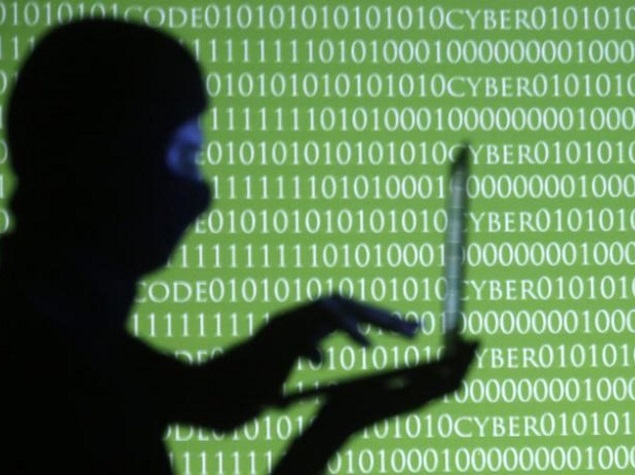
    MOSCOW (TIP): A massive cyberattack has hit at least five of Russia’s largest banks, Moscow-based internet security giant Kaspersky said on Thursday.

    The country’s largest lender, state-controlled Sberbank, said it had been hacked into on Tuesday but managed to neutralise the attack automatically without disturbing its operations.

    Kaspersky said in a statement that the distribution of denial attacks (DDoS) began Tuesday at 1830 IST and targeted “the websites of at least five well-known financial institutions in the top 10” in Russia. The attacks were still continuing today. Most lasted around one hour but the longest lasted almost 12 hours, Kaspersky said.

    DDoS attacks involve flooding websites with more traffic than they can handle, making them difficult to access or taking them offline entirely.

    These attacks saw as many as 660,000 requests being sent per second using a network of more than 24,000 hijacked devices located in 30 countries. More than half the devices were in the United States, India, Taiwan and Israel, Kaspersky said.

    Contacted by AFP, Russia’s central bank confirmed that it had identified

    “attacks on a number of large banks,” describing their intensity as “medium” and saying they did not disrupt access to banking services.

    It said the attacks used botnets made up of the “Internet of things” –electronic devices such as CCTV cameras or digital video recorders plugged in to offices and homes worldwide. A senior executive at Sberbank, Stanislav Kuznetsov, told Interfax news agency that the bank had suffered 68 such attacks this year and that the latest was among the biggest.

    Kaspersky said that DDoS attacks

    “have long been one of the most popular instruments used by criminals to attack businesses.” Such attacks have grown more frequent in recent years with the development of online banking but also in the context of heightened tensions over the crisis in Ukraine with attackers targeting the sites of the Kremlin and NATO. Most recently Washington accused Russia of using cyberattacks against the Democratic Party to attempt to disrupt this week’s presidential election. Source: AFP

  • How Russia uses Interpol to pursue its enemies

    How Russia uses Interpol to pursue its enemies

    VILNIUS, LITHUANIA (TIP): Facing trial in Russia over the theft of a street-art drawing valued by its creator at $1.55, Nikita Kulachenkov, a Russian forensic accountant involved in anticorruption work, fled to Lithuania to avoid what he decided was a doomed battle against trumped-up charges.

    What he did not realize was that Russia’s reach these days extends far beyond its borders. Arriving in Cyprus from Lithuania in January to join his mother for a holiday, Kulachenkov was stopped at airport passport control, questioned for hours by immigration officials and then taken in handcuffs to a police detention center.

    “They told me there was a problem with Russia and kept asking me what crime I had committed,” Kulachenkov recalled. Cypriot immigration and police officers seemed as mystified as he was, he said, by a note in their computer systems that described him as a wanted criminal requiring immediate arrest.

    The wanted notice had been put there in August last year by Russia, where the theft of millions and even billions of dollars by the politically connected goes mostly unpunished but where the alleged theft of a street sweeper’s all-but-worthless drawing has been the focus of a lengthy investigation involving some of the country’s most senior law enforcement officials.

    The arrest demand, known as a “diffusion,” had gone out to Cyprus and 50 other countries through the international police organization, Interpol. It had not been endorsed by Interpol, which is “strictly forbidden” by its Constitution from any action of a “political character,” but nonetheless labeled the 34-year-old anticorruption activist as a criminal in databases around the world.

    Determined to punish domestic opponents who flee abroad, as well as non-Russians whose lives and finances it wants to disrupt, Moscow has developed an elaborate and well-funded strategy in recent years of using —critics say abusing — foreign courts and law enforcement systems to go after its enemies.

    Some countries, including Russia, “work really hard to get Interpol alerts” against political enemies, said Jago Russell, the chief executive of Fair Trials International, a human rights group in London, because “this helps give credibility to their own prosecution and undermines the reputation of the accused.”

    “It is also potentially a good threat to use against people still in the country: ‘You may be able to leave, but don’t assume you will be safe,’” he added.

    The efforts have often fallen flat in the end, but have succeeded in tying up their targets in legal knots for months and years.

    Acting on a Russian request, a British court, for example, froze the worldwide assets of Sergei Pugachev, a former close friend of President Vladimir Putin’s who fell out with the Kremlin in a squabble over property and fled to Britain, then France.

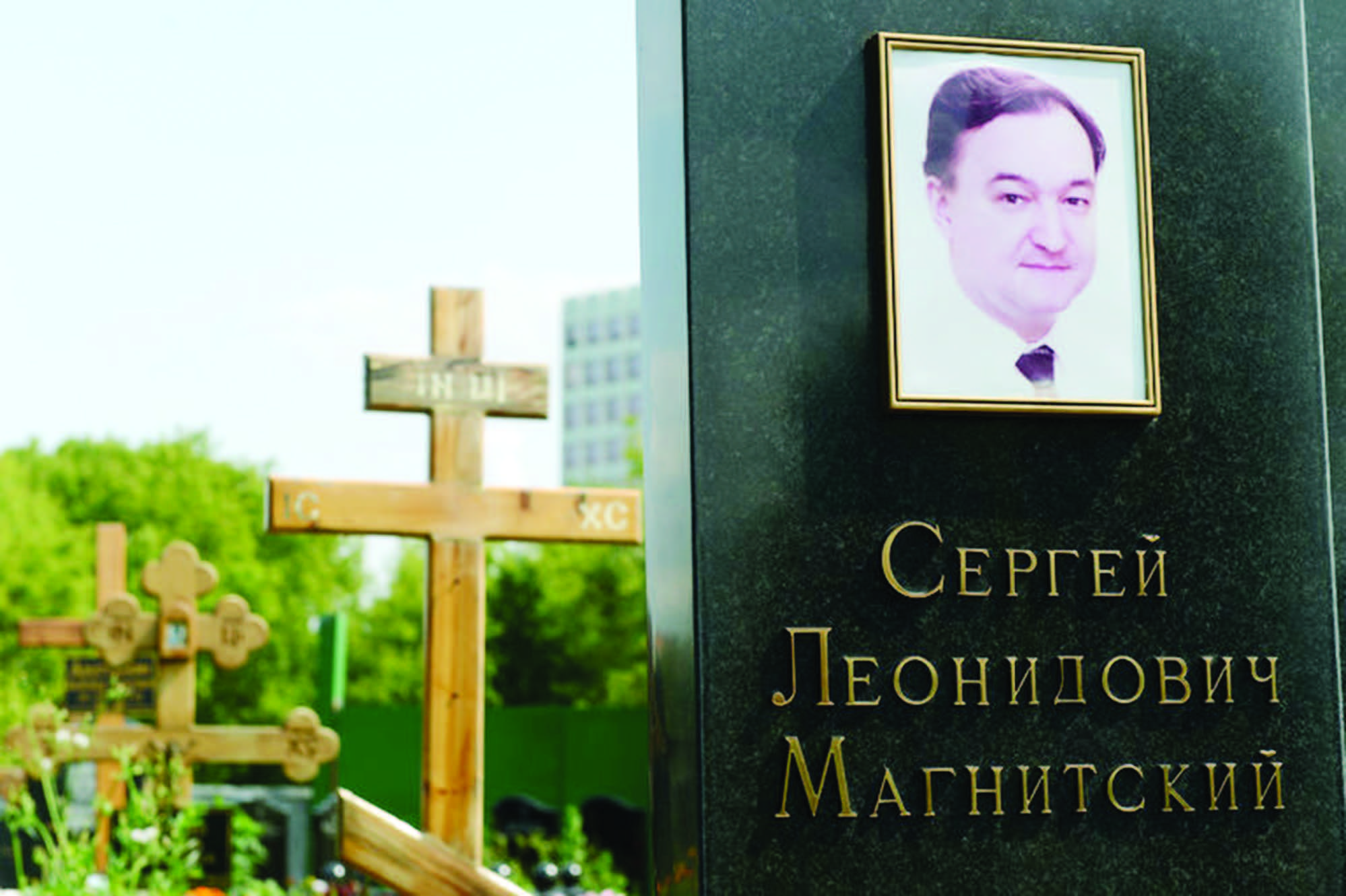
    Russia has also used British courts and Interpol to pursue what many Western governments view as a vendetta against William F. Browder, an American-born British citizen. Browder was convicted in absentia in Russia of tax fraud after he fled to London and mounted an international campaign against Russia over the killing of his jailed Moscow lawyer, Sergei Magnitsky.

    Browder defeated a libel case in 2013 brought in London by a Moscow police officer whom the financier had accused of involvement in a fraud uncovered by Magnitsky. But he faces a new fight as Russia seeks to get British courts to find and freeze his assets and enforce a civil judgment against him in Russia.

    The only winners in most such cases are expensive lawyers, for whom pursuing Russia’s foes in foreign courts has become a highly lucrative business.

    Russia pushed three times between 2012 and 2015 to get Interpol to issue arrest orders against Browder. Having failed each time to convince the police organization that it did not have political motives, it announced this summer that it would try yet again.

    “The Russians try stuff a hundred times, and sometimes it works,” Browder said. “They can fail 99 times, but the 100th time it could work. For them, that makes it all worthwhile.” He described the practice as “lawfare.”

    Based in Lyon, France, and comprising 190 countries, Interpol defines its role as enabling “police around the world to work together to make the world a safer place.” It has often done this, allowing police forces to share information about the whereabouts of mafia bosses, murderers and other criminals, and to secure their arrest.

    But the Interpol membership of nations —like Russia, Iran and Zimbabwe — that routinely use their justice systems to persecute political foes has stirred worries that wanted notices can be easily misused. In September, the congressional Tom Lantos Human Rights Commission heard a litany of complaints about abuse from experts and victims of Interpol notices during a discussion of how to reform the police organization’s system of so-called red notices.

    Interpol issues such notices, which amount to an international arrest warrant, at the request of a member country seeking help in catching a fugitive who has fled abroad. Interpol’s computer system also circulates diffusions like the one against Kulachenkov. These are less formal than red notices, but are also used to request the arrest or location of an individual, or information, in relation to a police investigation.

    Interpol does not release figures for how many red notices or other arrest alerts are issued through its computer system by each member country, but the number of people identified in Interpol’s databases as wanted criminal suspects has risen sharply in recent years.

    In 2004, Interpol issued just 1,924 red notices at the request of member countries. Last year, it issued 11,492, as well as 22,753 diffusions.

    As a result of one of those, Kulachenkov spent nearly three weeks in a Cypriot jail while the authorities in Cyprus reviewed a request from Moscow that he be sent to Russia to stand trial in a case that even Russia’s prosecutor general had initially ruled was not worth pursuing.

    The drawing he is accused of stealing was done by Sergei Sotov, a street sweeper and artist who had left it and other examples of his work hanging on railings around Vladimir, a city east of Moscow. The street sweeper made no complaint to the police when the drawing disappeared, and said he was glad that someone liked his work. (NYT service)

  • Why Putin fears a Clinton Presidency

    Why Putin fears a Clinton Presidency

    “For Putin, stopping Clinton is not only an important strategic goal. It is also personal”, says the author – Frida Ghitis.

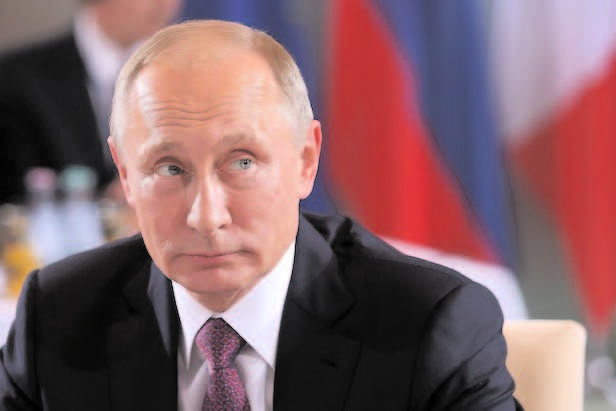
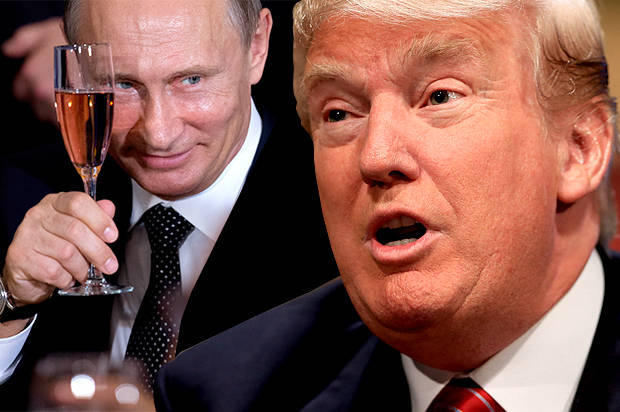
    Though Donald Trump and Vladimir Putin seem to agree on a number of issues, there is one they apparently don’t see eye to eye on. While Trump argues that Hillary Clinton is too weak to be president of the United States, the Russian President appears to be genuinely afraid of Clinton.

    Evidence is growing that Russia is actively working to undermine Clinton’s presidential prospects. When hackers released the emails of the Democratic National Committee just hours before the Democratic National Convention, internet security specialists found the fingerprints of Russian agencies. Then came the latest hacks of Clinton campaign chairman John Podesta.

    The US government has now formally accused Russia of interfering in the US elections, and every instance of interference so far is clearly aimed at harming the Democratic candidate.

    It’s easy to see why Putin fears Clinton. While the Trump campaign is trying to get voters to focus on Clinton stumbling and coughing, Putin sees her as a real threat to his objectives.

    For Putin, stopping Clinton is not only an important strategic goal. It is also personal.

    Back in 2011, Putin faced the biggest protests the country had seen since the collapse of the Soviet Union. He had served two terms as president, the maximum allowed, and in 2008 had become prime minister, in a maneuver that allowed him to effectively hold power while his ally, Dmitry Medvedev, was president. Then he announced — to much anger, but little surprise — that he would seek a third term as president. Three months later, the opposition erupted in fury when his party won a landslide victory in legislative elections amid allegations of fraud.

    Is Russia trying to influence U.S. election?

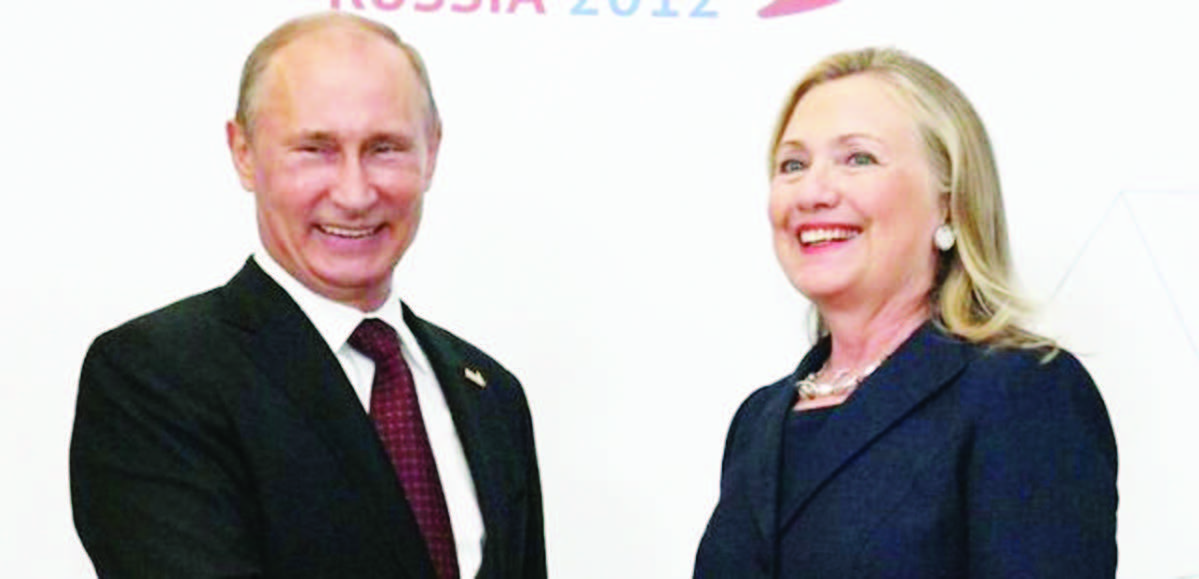
    Despite the frigid Moscow temperatures, thousands massed in the streets calling for fair elections and for an end to Putin’s seemingly endless rule. Signs and chants declared, “Putin is a thief !” Putin’s hold on power faced a genuine threat. Then-Secretary of State Clinton openly sided with the protesters. “The Russian people, like people everywhere,” she said, “…deserve free, fair, transparent elections.”

    Putin was fuming. He blamed the protests on Clinton, accusing her of sending “a signal” to the opposition.

    Putin’s personal animosity toward Clinton coincides with his larger strategic goals. In recent years, he has launched an increasingly muscular foreign (and domestic) policy. He is challenging the US, NATO and the European Union at every turn. Despite a shrinking economy — not much bigger than Mexico’s — Russia has used its military power to make it a major player on the global stage.

    How Russian hackers could influence the election

    Russia, according to Western analysts, has mounted a campaign to “discredit the West’s liberal democratic model, and undermine trans-Atlantic ties,” manipulating Eastern European countries and “supporting the far right” against the EU. That “Kremlin Playbook” includes tampering with elections in Europe and the US.

    Clinton stands in direct defiance to Putin’s vision, already partly in place, of a Russia with a sphere of influence that includes the former Soviet territory and, more loosely, Eastern Europe, alongside a weakened Europe, US and NATO.

    In contrast to Trump, she has made countless comments over the years to suggest she would present a much tougher opponent to Putin’s ambitions than Barack Obama has been, saying she thinks the United States must find ways to “confine, contain, [and] deter Russian aggression in Europe and beyond.”

    What Reagan can teach us about handling Russia

    While Clinton looks poised to toughen America’s stance, Trump’s foreign policy coincides with Russia’s. He has suggested he might recognize Russia’s annexation of Crimea, which Putin captured by force from Ukraine; he might suspend economic sanctions against Russia; and would align his policies in Syria with Putin and Assad.

    During the Republican primaries, Clinton came under fire for leading the Obama administration’s failed diplomatic “reset” with Russia. But the former US ambassador to Moscow, Mike McFaul, said she was deeply skeptical that the plan would bear fruit.

    Once out of office, her criticism of Russia became cutting.

    When Putin justified Russia’s 2014 takeover of Crimea as an effort to protect Russian minorities there, Clinton said it was reminiscent of Hitler’s justification for taking over parts of Eastern Europe. Putin later commented that Clinton has “never been too graceful in her statements.” Russia is happy with its new status in the world

    How Russia views the west

    Clinton was implicitly critical of Obama’s restrained response, saying, “I am in the category of people who wanted us to do more in response to the annexation of Crimea and the continuing destabilization of Ukraine.”

    And just as Putin targeted her by name, she, too, has gone after him personally. In a speech last year, she said, “I remain convinced that we need a concerted effort to really up the costs on Russia and in particular on Putin.”

    The most urgent item on the foreign policy agenda for both the United States and Russia is the civil war in Syria. There, the Trump campaign has offered conflicting ideas, but in the most recent debate Trump seemed to stand with Putin.

    While Obama has maintained an extremely restrained approach to the crisis, sending Secretary of State John Kerry to multiple, so far useless, diplomatic marathons with his Russian counterpart even as Russia continues bombing civilians in support of Assad, Clinton sounds determined to impose a no-fly zone, which would defy not only Syria’s army but also Russia.

    She says she would keep the Russians informed, so no clashes occur, adding “I want them at the table,” but it is a sharp departure from the current policy, and one that must sound deeply disturbing to Putin.

    A few years ago, Putin mused, speaking about Clinton, that “It’s better not to argue with women.” It’s clear now why he’s going to great lengths to avoid having to argue with a President Hillary Clinton.

    (Frida Ghitis is a world affairs columnist for the The Miami Herald and World Politics Review, and a former CNN producer and correspondent. The views expressed in this commentary are her own.)

  • Putin’s man? Donald Trump denies Hillary Clinton’s charge that he’s the one

    Putin’s man? Donald Trump denies Hillary Clinton’s charge that he’s the one

    Hillary Clinton forcefully accused Donald Trump of favoring Russia’s leader over American military and intelligence experts Oct 19 night, as the Republican nominee pointedly refused to accept the U.S. government’s assertion that Moscow has sought to meddle in the presidential election.

    In a combative exchange in the final presidential debate, Clinton charged that Russian President Vladimir Putin was backing Trump because “he’d rather have a puppet as president of the United States.”

    Trump denied any relationship with Putin and said he would condemn any foreign interference in the election. But he notably refused to accept the intelligence community’s assessment that Russia was involved in the hacking of Democratic organizations. The Clinton campaign has also said the FBI is investigating Russia’s involvement in the hacking of a top adviser’s emails.

    The third presidential debate opened with a measured, policy-focused discussion — a stark contrast to the heated and highly personal clashes that defined the earlier contests. However, Trump quickly reverted to his previous style of repeatedly bursting in to interrupt Clinton as well as moderator Chris Wallace of Fox News. (AP)

  • Russia extends Aleppo truce by 24 hours: Defence minister

    Russia extends Aleppo truce by 24 hours: Defence minister

    MOSCOW (TIP): Russia’s defence minister said Oct 20 that Moscow was extending a “humanitarian pause” in Aleppo scheduled to end at 1600 GMT by a further day.

    On the order of President Vladimir Putin, “a decision was made to extend the ‘humanitarian pause’ by 24 hours,” minister Sergei Shoigu said in a statement, adding that Syrian authorities had agreed to the extension.

    Shoigu did not specify when the extended truce would end. The UN said earlier it had received a pledge from Moscow to extend it until Saturday.

    Russia, facing growing criticism of the brutal Moscow-backed assault on the city, said this week that its forces and Syrian regime troops would briefly halt fire in Aleppo on Thursday.

    Moscow said Tuesday that Russian and Syrian warplanes had stopped bombing Aleppo to pave the way for the humanitarian truce.

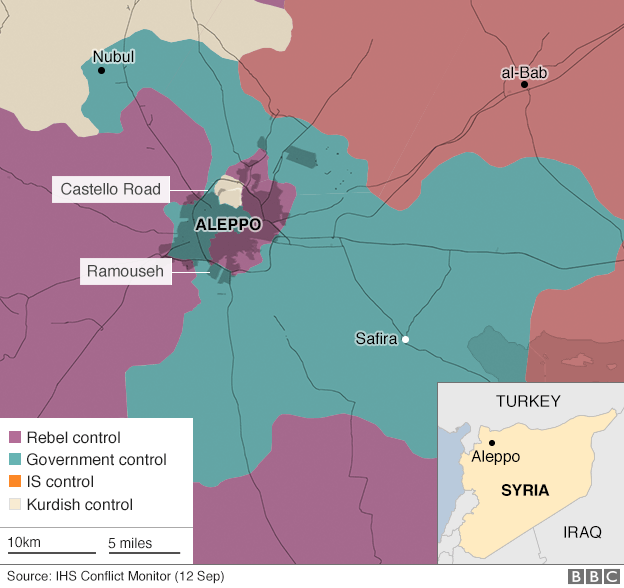
    The Russian defence ministry has said the ceasefire would enable civilians and armed rebels to leave the city’s rebel-held east through six corridors.

    After Syria talks with the French and German leaders, Putin said Thursday that Russia intended to extend the halt in its air strikes against Aleppo “as far as possible.”

    The UN said it hoped to carry out the first medical evacuations from Aleppo on Friday, after having received clearance from all warring parties and a pledge from Russia to extend the truce until Saturday.

    The West has accused Moscow of perpetrating potential war crimes in Aleppo through indiscriminate bombing to support Syrian government efforts to retake total control over the city. (PTI)

  • HONOURED TO WELCOME PRESIDENT PUTIN, LOOKING FORWARD TO TALKS WITH CHINA: PM MODI

    HONOURED TO WELCOME PRESIDENT PUTIN, LOOKING FORWARD TO TALKS WITH CHINA: PM MODI

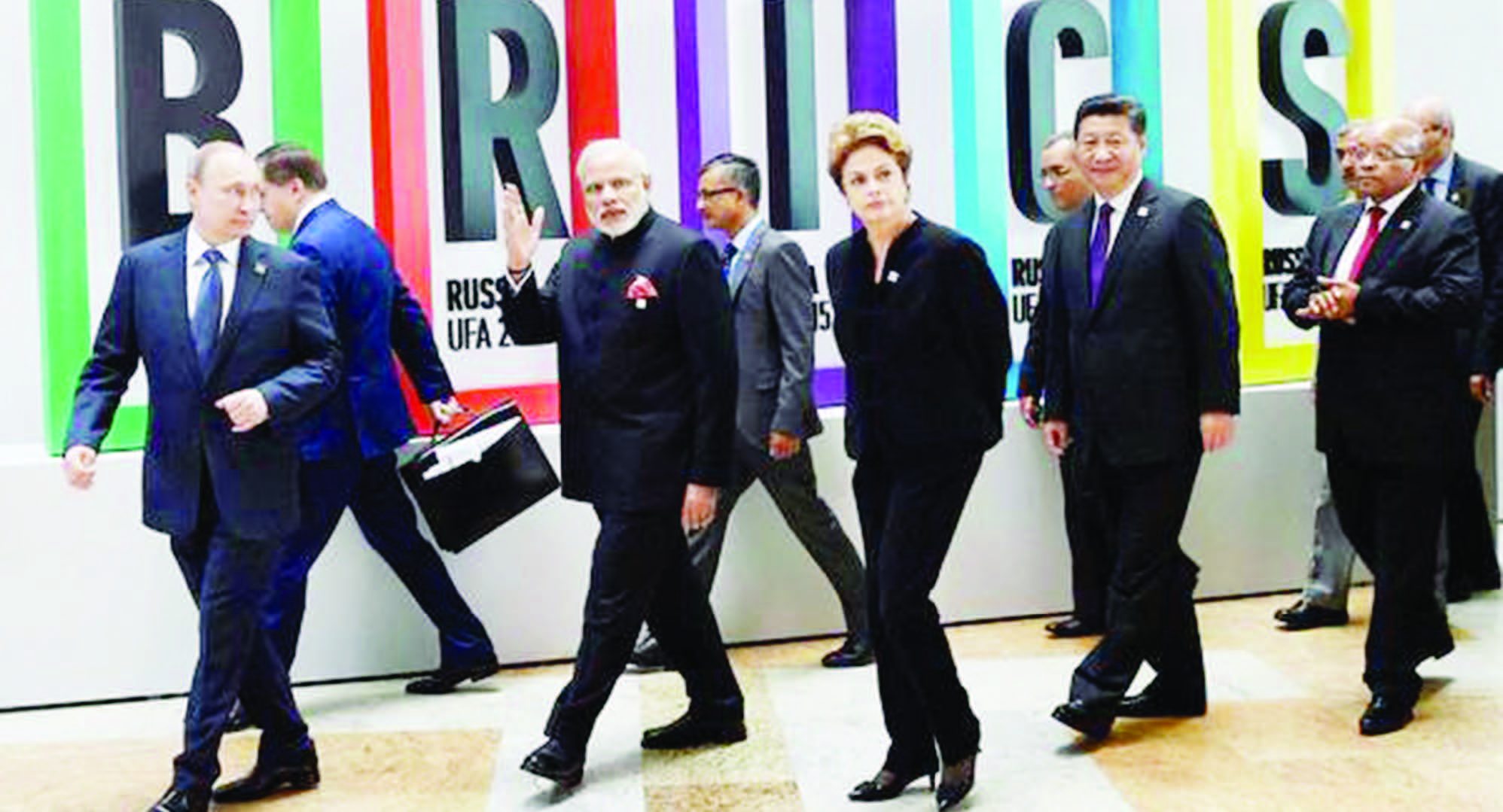
    NEW DELHI (TIP): Asserting that India is delighted to host the 8th BRICS Summit in Goa followed by a first-ever BRICS-BIMSTEC Outreach Summit, Prime Minister Narendra Modi on Friday extended a warm welcome to all nations participating in the event and said that India looks forward to finding common resolve and solutions.

    Taking to Facebook to post a welcome message for the arriving delegations, the Prime Minister said that he is honoured to receive Russian President Vladimir Putin and President Michel Temer of Brazil for a bilateral visit.

    “President Putin’s visit will give us an opportunity to consolidate and reaffirm a unique time-tested friendship and partnership with Russia. President Temer’s visit will open up new areas for cooperation with Brazil, an important strategic partner,” he said.

    He further stated that he looks forward to useful conversations with his fellow leaders from China, South Africa, Brazil and Russia on addressing pressing international and regional challenges that stand in the way of their goals.

    “As Chair of the BRICS this year, India has embraced a stronger emphasis on promoting people-to-people linkages in diverse fields including trade, sports, education, films, scholarship, and tourism. It is anchored in the belief that our people are pivotal partners in our effort to craft responsive, collective and inclusive solutions,” the Prime Minister said.

    Emphasising on the new initiatives that will be launched in Goa during the Summit, Prime Minister Modi expressed his optimism that the BRICS Summit will strengthen intra-BRICS cooperation and advance our common agenda for development, peace, stability and reform.He further said that he is happy that India is facilitating an outreach Summit with the BIMSTEC leaders of Bangladesh, Bhutan, Myanmar, Nepal, Sir Lanka and Thailand.”Representing nearly two thirds of humanity together, we hope to tap the potential for cooperation and the dividends this will bring. India looks forward to building bridges to new partnerships and finding common resolve and solutions to our entrenched problems,” the Prime Minister said.


  • Moscow offers ‘safe withdrawal’ for armed rebels in Aleppo

    Moscow offers ‘safe withdrawal’ for armed rebels in Aleppo

    MOSCOW (TIP): Russia on Oct 13 said it was ready to guarantee safe passage for rebels to quit eastern Aleppo with their weapons, amid fierce Western criticism of its bombing campaign.

    “We are ready to ensure the safe withdrawal of armed rebels, the unimpeded passage of civilians to and from eastern Aleppo, as well as the delivery of humanitarian aid there,” Russian Lieutenant General Sergei Rudskoy said in a televised briefing.

    The announcement comes as Moscow and Washington gear up for international Syria talks on Saturday, the first since the United States suspended ceasefire negotiations with Russia in protest at the fierce assault on Aleppo.

    Moscow- which is backing Syrian regime forces- first announced in late July the creation of corridors for civilians and armed rebels to leave eastern Aleppo, but the plan was viewed by some as a cynical ploy to force the evacuation of the city and failed to work.

    Rudskoy said that the Syrian army has already offered to guarantee the safety of armed rebels wishing to leave Aleppo using the Castello Road, the main route for humanitarian assistance into the divided city.

    He added that Russia was ready to hear “all initiatives and proposals” that would ensure rebels’ safe withdrawal.

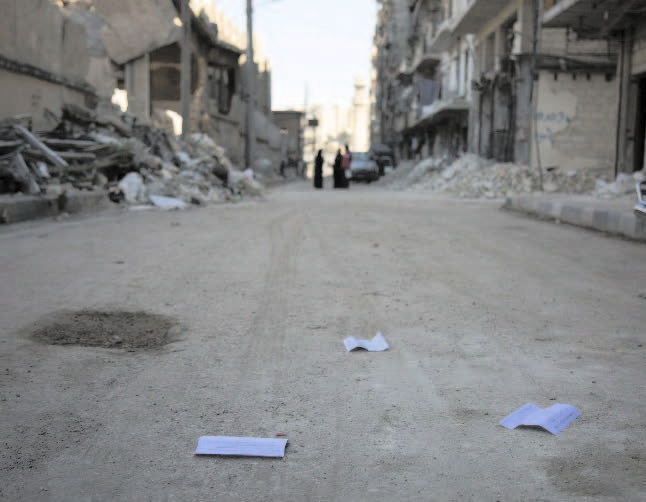
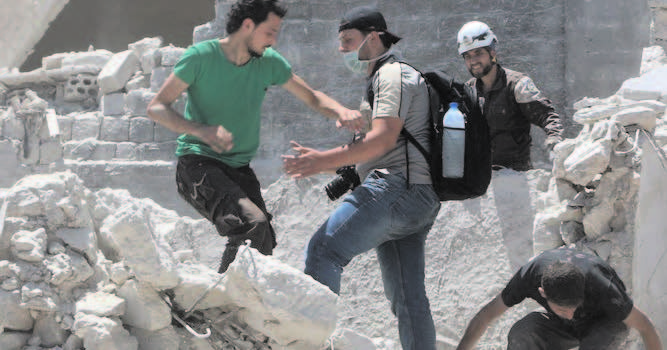
    A brutal government offensive against rebel-held eastern Aleppo backed up by Russian airpower has plunged Syria into some of the worst violence it has seen since the five-year-old conflict erupted.

    An international monitor said Syrian and Russian warplanes carried out fresh strikes on rebel-held districts of Aleppo early Thursday, after an intense bombardment over the previous two days killed more than 70 civilians.

    Russia’s defence ministry on Thursday denied that its airforce was bombing Aleppo at all. “I want to stress that Russian planes are conducting targeted, single air strikes against pre-verified targets outside the city of Aleppo and outside residential areas,” Rudskoy said.

    Washington earlier this month pulled the plug on talks with Moscow on ways to revive a short-lived ceasefire that unravelled in September.

    The West has accused Moscow and Damascus of committing potential war crimes in the operations against eastern Aleppo.

  • Modi to meet Xi, Putin, Hasina

    Modi to meet Xi, Putin, Hasina

    NEW DELHI (TIP): Prime Minister Narendra Modi will meet Chinese President Xi Jinping, Russian President Vladimir Putin and Bangladesh Prime Minister Sheikh Hasina over the weekend in a series of bilateral meetings on the sidelines of the BRICS Summit.

    The three meetings assume great significance in the context of the India-Pakistan tension also because of the many important bilateral issues India has with each of the three countries. Modi is likely to discuss a variety of defense-related issues with Putin. The first joint Russia-Pakistan military exercise was held recently and that adds to India’s headache as it attempts to isolate Pakistan globally. However, sources indicate both countries are likely to make progress on India’s desire to purchase Russian air defense missile systems, helicopters and upgrading of Sukhoi-30 MKI.

    The tricky bilateral will be with the Chinese President. While it is reliably learnt that Modi will raise the issues of India’s renewed efforts to get membership of the Nuclear Suppliers Group (NSG) and that of Masood Azhar’s designation as an international terrorist, China is unlikely to go along with India in either case.

    The statements coming out of China in the last few days are a fair indication that on the NSG, China will stick to “consensus” and also drag Pakistan’s membership issue alongside India’s. On Masood Azar issue, China is likely to stand by its friend Pakistan.

    The third important bilateral that Modi is scheduled to hold is with Bangladesh PM Sheikh Hasina. Sources privy to developments said Bangladesh would raise the Teesta water treaty issue. Bangladesh, under Hasina, has been extremely supportive of India and has backed India on terror-related issues vis-a-vis Pakistan. Hasina now expects the Modi government to go along with her on the Teesta treaty as a sign that her support to India is recognized.

    The spotlight during the summit will be on terror. Though Pakistan will not be present at the summit, it will remain a constant point of reference. The future of BRICS-a club made up of Brazil, Russia, India, China and South Africa-has become a little uncertain with India reaching out to the US in a tighter embrace.

    Besides BRICS, India will also host BIMSTEC (Bay of Bengal Initiative for Multi-Sectoral Technical and Economic Initiative) member countries and most heads of state have confirmed their participation. BIMSTEC comprises Bhutan, Bangladesh, India, Myanmar, Nepal, Sri Lanka and Thailand.


  • Keep US close, Russia closer

    Keep US close, Russia closer

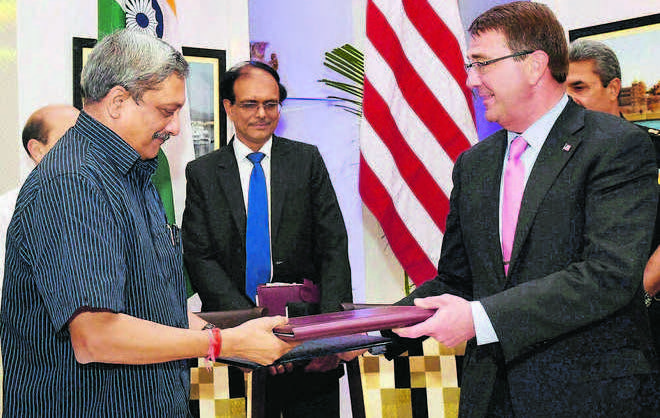
    During his recent visit to the US, Defence Minister Manohar Parrikar signed the LEMOA with his American counterpart, Ashton Carter. The memorandum outlined a framework for the provision of supplies like food, fuel and berthing for visiting naval ships and on overflight and landing facilities for military aircraft. The opposition Congress and the Left cried “foul” and accused the government of mortgaging the country’s sovereignty, the country’s policy of “non-alignment”, and even its “strategic autonomy”. This, despite the fact that the agreement contained provisions for providing such facilities, only on a case-by-case basis.

    The present agreement logically follows the remarkable transformation in India-US relations, during the presidency of George Bush, by the actions of the two UPA government stalwarts – Prime Minister Manmohan Singh and Mr. Pranab Mukherjee. It was Mr. Mukherjee, as defence minister, who signed a 10-year agreement in June 2005, titled “New Framework for the US India Defence Relationship (NDFR)”, with his American counterpart, Donald Rumsfeld. This framework covered a wide range of activities, including collaboration in multinational operations, when such operations were found to be in “their common interest”. Such cooperation was envisaged in areas like terrorism and curbing nuclear weapons proliferation. There has been a substantial increase in military-to-military cooperation, arms acquisitions and joint exercises between the two militaries, since then. Negotiations, thereafter, continued for signing three framework agreements in defense cooperation, logistics, communications and information security and geospatial information.

    The most path breaking agreement that India has signed in this century came barely a month later, when PM Manmohan Singh and President Bush agreed that the US would end nuclear sanctions against India. They also agreed to persuade other nuclear suppliers to end global nuclear sanctions imposed on India after its nuclear test in 1974, by the establishment of the Nuclear Suppliers Group. President Bush stood by his word and even personally intervened with then Chinese President Hu Jintao to fall in line. In the meantime, in August 2008, Mr. Mukherjee, then external affairs minister, signed an agreement with his counterpart, Condoleezza Rice, for the resumption of bilateral nuclear cooperation. The question, which remains, is whether India historically ever provided facilities for positioning foreign warships and aircraft on its soil?

    India has historically shaped its military cooperation with foreign powers, from the days of its first PM, Jawaharlal Nehru, based on geopolitical realities, and not ideology. Even before the Sino-Indian border conflict broke out in 1962, the CIA was permitted to position facilities along the border with China, to monitor Chinese nuclear tests. Panicking after the humiliation heaped on India in the 1962 conflict, a desperate Nehru wrote to President Kennedy, appealing him to deploy 12 squadrons of fighters and two squadrons of fighter bombers, together with radar cover, on Indian soil. The US was permitted to use a staging base in Charbatia, Odisha, for flying its U2 spy planes over China. Strangely, our non-alignment was such in the 1950s that we fought shy of seeking defense equipment from the Soviet Union, despite signs of a growing Sino-Soviet rift!

    In less than a decade, thereafter, the geopolitical situation turned upside down, with Nixon and Mao embarking on a clandestine love affair, midwifed by Pakistan. This “love affair” came to light when Henry Kissinger flew secretly to China from Pakistan. Indira Gandhi had no hesitation in entering into a defense agreement with the Soviet Union to deal with the emerging US-China-Pakistan axis. The Soviet Union had proposed a bilateral treaty with India in 1969, when its defense minister Marshal Grechko visited India. The draft treaty proposed by the Soviets gathered dust for two years in South Block. It was spruced up once it became clear that a Sino-US-Pakistan axis was emerging to counter the Soviet Union and, incidentally, India also, even as the Pakistan army proceeded with its genocide in Bangladesh.

    Once this geopolitical reality was recognized in Moscow and New Delhi, DP Dhar was sent to Moscow to finalize the treaty in the first week of August 1971. Sardar Swaran Singh and Andrei Gromyko signed the treaty on August 21, 1971. Despite our claims of being “non-aligned”, there was a clear military provision in Article 9 of the Indo-Soviet Treaty. It read: “In the event of either party (India and the Soviet Union) being subjected to an attack or a threat thereof, the High Contracting Parties shall immediately enter into mutual consultations, in order to remove the threat and to take appropriate effective measures, to ensure peace and security of their countries.” I was then a young First Secretary in Moscow and took notes in meetings as events unfolded. When the conflict broke out in December 1971, the Soviets, though isolated, vetoed every effort by the US-China axis to stop us from liberating Bangladesh. According to what the Soviets told us, they had deployed mechanized forces and airpower on their borders with China and warned China of serious consequences if it militarily intervened. A Russian nuclear submarine followed the USS Enterprise, as it crossed the Straits of Malacca.

    The world situation has changed drastically since the 1970s. What has, however, continued, is the Sino-Pakistan axis, with a growingly powerful China providing Pakistan with nuclear weapons and ballistic missile capabilities, while enhancing Pakistan’s maritime, air and land power. The China-Pakistan Economic Corridor is being accompanied with the establishment of a direct fiber optic link between the headquarters of the Western Theatre Command of China’s People’s Liberation Army in Kashgar (in China’s Muslim-majority Xinjiang province) and the GHQ of the Pakistan army in Rawalpindi.

    Signing defense cooperation agreements with the US does not mean we are compromising our “strategic autonomy”. We will continue to differ with the US on some of its policies; in Syria and elsewhere. We should understand Russian imperatives in its immediate neighborhood, in Crimea and elsewhere, while strengthening defense and energy cooperation with Moscow. We should spare no effort to enhance mutual trust and confidence in the India-Russia relationship.

    In the meantime, both India and China hopefully share a common interest in maintaining peace and tranquility along their borders. The 2005 agreement outlining the guidelines for a settlement of the border issue remains the most viable framework for moving forward.

    (The author is a career diplomat and author)

  • Malaysian flight MH17 shot down by Russian-made missile: Probe

    Malaysian flight MH17 shot down by Russian-made missile: Probe

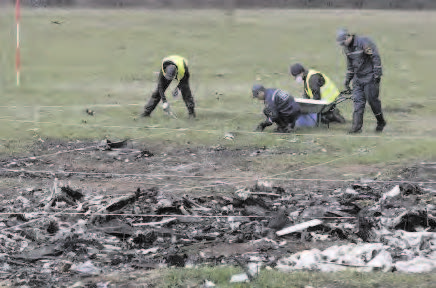
    NIEUWEGEIN, Netherlands (TIP): Malaysia Airlines flight MH17 was shot down by a missile fired from a launcher brought into Ukraine+ from Russia+ and located in a village held by pro-Russian rebels, international prosecutors said on Sept 28.

    The findings counter Moscow’s suggestion that the passenger plane+ , en route from Amsterdam to Kuala Lumpur in July 2014, was brought down by Ukraine’s military rather than the separatists. All 298 people on board, most of them Dutch, were killed.

    The conclusions were based on thousands of wiretaps, photographs, witness statements and forensic tests during more than two years of inquiries into an incident which led to a sharp rise in tensions between Russia+ and the West.

    Among the key findings were: the plane was hit by a Russian-made Buk-9M38 missile+ ; the missile was fired from the rebel-held village of Pervomaysk in eastern Ukraine; and the launcher was transported into Ukraine from Russia.

    “This Buk trailer came from the territory of the Russian Federation+ , and after the launch it was returned again to the territory of the Russian Federation,” said Wilbert Paulissen, chief investigator with the Dutch national police.

    The Ukrainian government said the findings pointed to Russia’s “direct involvement”. Russia – which has always denied Moscow or pro-Russian rebels were responsible -rejected the prosecutors’ conclusions, saying they were not supported by technical evidence and the inquiry was biased.

    Earlier on Wednesday, Kremlin spokesman Dmitry Peskov said its radar data had “identified all flying objects which could have been launched or were in the air over the territory controlled by rebels at that moment”.

    “The data is clear-cut … there is no rocket. If there was a rocket, it could only have been fired from elsewhere,” he said.

    The investigators, from the Netherlands, Australia, Belgium, Malaysia and Ukraine, said they had not had access to Moscow’s radar images but would gladly include a Russian contribution to the inquiry.

    Ukrainian and Western officials, citing intelligence intercepts, have long blamed the pro-Russian rebels for the incident, which played a big part in a decision by the European Union and United States to impose sanctions on Russia over the Ukraine conflict and has damaged Dutch-Russian economic ties.

    Suspects

    Prosecutors said that while they had not brought charges against culprits or established a court, they had identified 100 individuals of interest in relation to the crash on July 17, 2014.

    “Of a number of them, we know pretty exactly what their role and position was, for instance those who organised the arrival of the Buk rocket and who were in charge of the transport that day,” said Fred Westerbeke, chief prosecutor at the Netherlands National Prosecutor’s office.

    “We know exactly what happened, but who exactly was in charge, and whether it was done intentionally, there the investigation is still continuing,” Westerbeke said.

    He declined to specify the nationality of any potential suspects, and called on witnesses to come forward and help determine who gave the order to shoot the plane down.

    Victims’ families, who were informed of the findings earlier in the day, were sceptical about the investigation’s progress.

    Silene Fredriksz, whose son Bryce was on the airplane with his girlfriend, Daisy Oehlers, said Russia would never hand over any suspects voluntarily.

    Moscow was “going to have to be put under intense pressure, with sanctions – that’s the only way to make it possible”, she added.

    A civilian investigation by the Dutch Safety Board also concluded last year that MH17 was hit by a Buk missile fired from eastern Ukraine, but Moscow denied that pro-Russian rebels were responsible.

    At the time of the incident, pro-Russian separatists were fighting Ukrainian government forces in the region. The Boeing 777 broke apart in mid-air, flinging wreckage over several kilometres (miles) of fields in rebel-held territory.

    Prosecutors cannot file charges because there is no international agreement on what court a case would be heard in. (Reuters)

  • Putin Tightens his Grip

    Putin Tightens his Grip

    The outcome of Russia’s parliamentary election was never in question. The United Russia party of President Vladimir Putin has dominated the political landscape ever since it was founded in 2001.

    Even so, the margin of the victory was unexpected. The September 18 elections were held against the backdrop of a protracted economic crisis, tensions between Russia and the West, and a war of attrition in the country’s neighbourhood. Lower oil prices and western sanctions have hit ordinary Russians hard.

    Russia’s economy contracted by 3.7 per cent last year and is expected to shrink further by 0.7 per cent this year. Conventional wisdom suggests that economic hardships trigger anti-incumbency sentiment. But in Mr. Putin’s Russia just the opposite has happened. When the results were declared, his party won more than three-quarters of the 450-member Duma.

    The Communist Party and the Liberal Democratic Party have retained some presence in the national Parliament, while the Yabloko and the Parnas, the two liberal parties critical of the Kremlin, failed to even enter the Duma. This could partly be because of the lack of a united opposition in Russia. The Communists and Liberal Democrats are hardly opposition parties, and agree with the Kremlin on most policy decisions.

    The anti-Kremlin parties have failed in, or been hindered from, building a broad base among the electorate. Alexey Navalny, the leader of the popular anti-government protests of 2011, has been barred from contesting elections. Boris Nemtsov, another popular opposition leader, was shot dead last year in Moscow. At present, there is no opposition leader in a position to challenge the personality cult of Mr. Putin.

    In any case, memories of the anarchic pre-Putin era may still be prompting Russians to stick by him. Mr. Putin is largely credited with fixing the economy and providing a stable political leadership to the country. Under his watch, Russia has come out of its self-imposed strategic retreat and started playing an active global role. Russia’s annexation of Crimea from Ukraine and a combative foreign policy in Syria and elsewhere have proved popular among his domestic constituents. But the Russian economy continues to be heavily dependent on energy exports. If crude oil prices remain low for long, economic pain will persist. Though the muscular foreign policy is popular at home, Moscow has had to pay a heavy price for it. Whatever Mr. Putin had done in his first and second terms to rebuild ties with Europe, particularly with Germany, lies in a shambles in the wake of the Ukraine crisis. If Mr. Putin wants to rebuild Russia as a credible global power, a persistent economic crisis and a stormy neighbourhood are not going to help.

    (The Hindu)

  • Pro-Putin party wins Russian parliamentary election

    Pro-Putin party wins Russian parliamentary election

    MOSCOW (PTI): Allies of Russian President Vladimir Putin comfortably won a parliamentary election, early results showed on Monday, but low turnout suggested a softening of enthusiasm for the ruling elite 18 months before the next presidential election.

    The ruling United Russia party won 51 percent in Sunday’s election, according to a preliminary central election commission tally after a quarter of the votes had been counted.

    That would allow the party, which was founded by Putin and benefits from his popularity, to extend its dominance in the lower house of parliament, or Duma. An exit poll also had United Russia as the overwhelming winner.

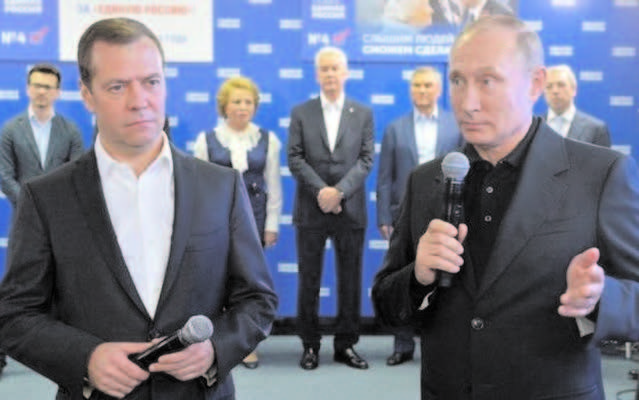
    Putin, speaking to United Russia campaign staff a few minutes after polling stations closed on Sunday night, said the win showed voters still trusted the leadership despite an economic slowdown made worse by Western sanctions over Ukraine.

    Putin’s aides are likely to use the result as a springboard for his own campaign for re-election in 2018, though he has not yet confirmed that he will seek another term.

    “We can say with certainty that the party has achieved a very good result; it’s won,” Putin said at the United Russia headquarters, where he arrived together with his ally, Dmitry Medvedev, who is prime minister and the party’s leader.

    Alluding to the spluttering economy, which is forecast to shrink this year by at least 0.3 percent, Putin said: “We know that life is hard for people, there are lots of problems, lots of unresolved problems. Nevertheless, we have this result.” Other parties trailed far behind United Russia.

    According to the incomplete official vote count, the populist LDPR party was in second place with 15.1 percent, the Communists were in third on 14.9 percent and the left-of-centre Just Russia party was fourth with 6.4 percent.

    All three of those parties tend to vote with United Russia on crunch issues in parliament, and avoid direct criticism of Putin.

    In the last election for the Duma, in 2011, United Russia won 49 percent of the vote.

    There were some reports of voting irregularities. Reuters reporters at one polling station in the Mordovia region of central Russia witnessed several people casting their ballot, then coming back later and voting again. Election chiefs said were was so far no evidence of large-scale cheating.

    After the last election, anger at ballot-rigging prompted large protests in Moscow, and the Kremlin will be anxious to avoid a repetition of that.

    Turnout down

    Election officials said that as of 6 p.m. Moscow time, two hours before polling stations in the capital closed, turnout was 39.4 percent, substantially down on the 60 percent turnout at the last parliamentary election.

    There was some evidence of voter apathy during the day on Sunday as people went to polling stations across Russia’s 11 times zones, stretching from the Pacific Ocean to the Baltic Sea.

    A taxi driver in Ufa, just over 1,350 km (840 miles) east of Moscow, told a Reuters reporter that voting “was like urinating into a blocked toilet.” “Why bother?,” said the man, who gave his first name as Ilysh. Yan Gaimaletdinov said he deliberately spoiled his ballot paper when he went to his local polling station in the village of Knyazevo, near Ufa. “I didn’t vote for anyone: I don’t play with assholes,” he said.

    Commenting on the turnout, Putin, at the United Russia campaign HQ, said it was “not as high as we saw in previous election campaigns, but it is high.”

    Reflected glory

    United Russia benefits from its association with 63-year-old Putin, who after 17 years in power as either president or prime minister, enjoys a personal approval rating of about 80 percent, opinion polls show.

    Most voters do not see any viable alternative to Putin and his allies, and they fear a return to the chaos and instability of the 1990s, the period immediately after the collapse of the Soviet Union, if his rule ends.

    Many voters are persuaded by the Kremlin narrative, frequently repeated on state TV, of the West using sanctions to try to wreck the economy in revenge for Moscow’s seizure of Crimea, the Ukrainian region it annexed in 2014.

    Yevgeny Korsak, a 65-year-old pensioner in the city of Saransk, 600 km (375 miles) south-east of Moscow, said he had voted for United Russia “because it is strong and powerful.”

    Putin has said it is too early to say if he will go for what would be a fourth presidential term in 2018. If he did and won, he would be in power until 2024, longer than Soviet leader Leonid Brezhnev, the longest-serving Soviet leader aside from Joseph Stalin.

    Liberal opposition politicians, the only group openly critical of Putin, failed to get over the five percent threshold needed for party representation in the Duma, the early results showed. Some of their candidates could still make it into parliament in constituency races.

    The election is the first time that voters in Crimea are helping decide the makeup of the Duma.

    That has angered the Ukrainian government and there were scuffles between Ukrainian nationalists and police outside the Russian embassy in Kiev on Sunday after a few nationalists tried to stop Russian citizens from voting there.

  • Russia says Syria ceasefire broken 45 times in last 24 hours

    Russia says Syria ceasefire broken 45 times in last 24 hours

    MOSCOW (TIP): The Russian Defence Ministry said on Sept 15 it had recorded 45 violations of a ceasefire agreement in Syria in the last 24 hours.

    The ministry said Russian and Syrian forces had stopped bombing areas held by opposition forces but the United States was complicating efforts to fight terrorists in the country by not providing the exact locations of moderate opposition groups.

  • Syria truce: Russia accuses US of failing to abide by deal

    Syria truce: Russia accuses US of failing to abide by deal

    Russia has accused the United States of failing to fulfil its obligations under the truce agreement in Syria.

    A Russian defense ministry statement said Washington was using a “verbal curtain” to hide its reluctance to rein in the rebel groups it supports.

    The truce has broadly held since taking effect on Monday although the Russian-backed Syrian army and rebels have accused each other of many violations.

    Meanwhile, the UN has warned there is a “problem” with getting aid into Syria.

    Special envoy Staffan de Mistura placed responsibility on the Syrian government which, he said, had not yet provided the “facilitation letters” that would allow aid convoys to pass through army checkpoints and reach besieged areas.

    “We cannot let days of this reduction of violence be wasted by not moving forward,” he told reporters in Geneva.

    The Russian defence ministry insisted that, from the very beginning of the truce, Moscow had been fulfilling its obligations, which includes ensuring that the Syrian air force does not bomb areas held by mainstream rebel forces and setting up checkpoints in divided second city of Aleppo.

  • Syrian conflict: Russia and US agree to co-ordinate air strike

    Syrian conflict: Russia and US agree to co-ordinate air strike

    Russia and the US have agreed to co-ordinate air strikes against Islamist militants in Syria, part of a detailed agreement to reduce the violence there.

    The plan will begin with a “cessation of hostilities” from sunset on Monday. Syrian forces will end combat missions in specified opposition-held areas.

    A day after the United States and Russia signed the groundbreaking pact, Syria has welcomed the deal by thanking Russia for averting a war like situation.

    Turkey welcomed the plan, and said aid needed to reach those in need “from the first day”

    EU foreign policy chief Federica Mogherini urged the UN to “prepare a proposal for political transition” in Syria

    Russia and the US will then establish a joint centre to combat jihadist groups, including so-called Islamic State (IS).

    A Syrian opposition coalition has cautiously welcomed the agreement.

    “We hope this will be the beginning of the end of the civilians’ ordeal,” said Bassma Kodmani, a spokeswoman for the High Negotiations Committee.

    “We welcome the deal if it is going to be enforced.

    Under the deal, the US and Russia are aiming for reduced violence over seven consecutive days before they move to the next stage of coordinating military strikes against the former Nusra Front and ISIS, which are not party to the truce.

    Aid access
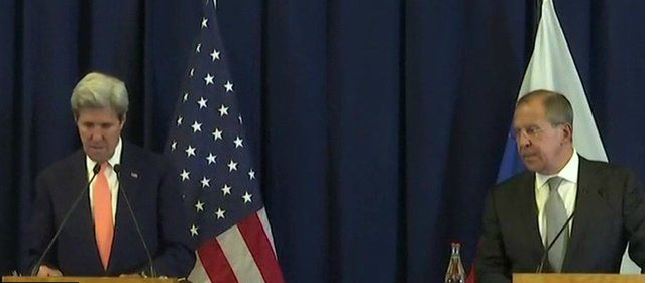
    The announcement follows talks in Geneva between US Secretary of State John Kerry and his Russian counterpart, Sergei Lavrov.

    The plan would need both the Assad government and opposition “to meet their obligations”, Mr Kerry said.

    The opposition had indicated it was prepared to comply with the plan, he said, provided the Syrian government “shows it is serious”.

    Mr Lavrov said Russia had informed the Syrian government about the arrangements and the Syrian government was “ready to fulfil them”.

    Mr Kerry said the cessation of hostilities also involved humanitarian access to besieged areas, including Aleppo.

    Seven days after the start of the cessation of hostilities, Russia and the US will establish a “joint implementation centre” to fight IS and another main group, Jabhat Fateh al-Sham.

    Jabhat Fateh al-Sham used to be known as the Nusra Front but changed its name in June and announced it was cutting ties with al-Qaeda.

    Mr Lavrov said the joint implementation centre would allow Russian and US forces to “separate the terrorists from the moderate opposition”.

    “We have agreed on the areas where such co-ordinated strikes would be taking place, and in those areas, on neutral agreement shared by the Syrian government as well, only the Russian and US air force will be functional,” he said.

    But Mr Lavrov added that “the Syrian air force will be functional in other areas, outside those that we have singled out for Russian-American military co-operation”.

  • Saudi Arabia, Russia sign oil pact, may limit output in future

    Saudi Arabia, Russia sign oil pact, may limit output in future

    BEIJING (TIP): Saudi Arabia and Russia agreed on Monday to cooperate in world oil markets, saying they will not act immediately but could limit output in the future, sending prices higher on hopes the two top oil producers would work together to tackle a global glut.

    The joint statement was signed by the country’s energy ministers in China on the sidelines of a Group of 20 summit and followed a meeting between Russian President Vladimir Putin and Saudi Deputy Crown Prince Mohammed bin Salman.

    Russian Energy Minister Alexander Novak said the two countries were moving toward a strategic energy partnership and that a high level of trust would allow them to address global challenges. Saudi Energy Minister Khalid al-Falih said the agreement would also encourage other producers to cooperate.

    Oil prices soared almost 5 percent ahead of a news conference by the two ministers, but pared gains to trade up 2 percent by 1130 GMT as the agreement yielded no immediate action.

    “There is no need now to freeze production … We have time to take this kind of decision,” Falih said.

    “Freezing production is one of the preferred possibilities, but it does not have to happen specifically today.”

    Even if the Monday statement was short on action, it marks a significant development in the Russia-Saudi relationship. The two countries have been effectively fighting a proxy war in Syria and Moscow also sees itself as a big ally of Iran – Riyadh’s arch-rival in the Middle East.The Organization of the Petroleum Exporting Countries will hold informal talks in Algeria later this month, and is next scheduled to meet officially in Vienna in November.

    Several OPEC producers have called for an output freeze to rein in the glut, which arose as supplies from high-cost producers such as the United States soared. Source: Reuters

  • Messi goal puts Argentina top of World Cup group

    Messi goal puts Argentina top of World Cup group

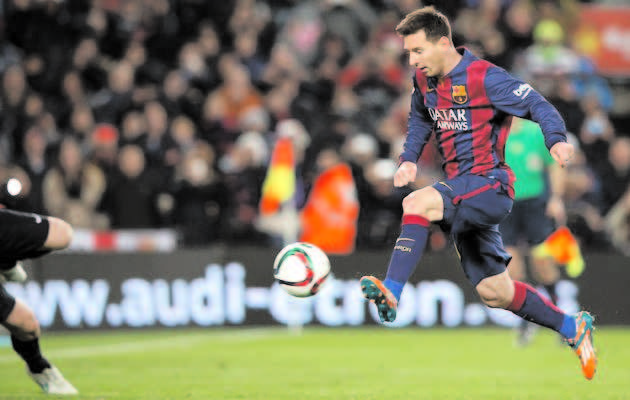
    MENDOZA (TIP): Lionel Messi marked his retirement with a goal to give 10-man Argentina a 1-0 win over Uruguay on Sept 1 that lifted them to the top of the South American qualifying group for the 2018 World Cup finals in Russia.

    In a match of few chances, Messi created something out of nothing three minutes before halftime when, surrounded by defenders, his shot from outside the box took a deflection on Jose Maria Gimenez and wrongfooted goalkeeper Fernando Muslera.

    It took Messi’s record as Argentina’s top scorer to 56 in his 114th international and proved the perfect insurance for his team who were reduced to 10 men when young forward Paulo Dybala was sent off on the stroke of halftime. Dybala, who had almost put his side ahead in the 31st minute with a shot that hit the post, was sent off for a second booking and left the pitch in tears after his first start for Argentina. Uruguay, who had spent virtually the entire first half defending, took the game to Argentina in the second but hardly troubled goalkeeper Sergio Romero.

    “I wanted to be here after all the confusion I’d caused by first saying I wasn’t coming and then that I was,” Messi told reporters.

    Messi said in June he was quitting international soccer after the disappointment of losing the Copa America final on penalties to Chile. “From the moment I said that, the fans showed me a lot of affection and I’m really grateful, I couldn’t not come back.”

    Argentina now lead the 10-nation group with 14 points from seven matches, one point more than Uruguay, Colombia and Ecuador in the four qualification places.

    Brazil, who beat Ecuador 3-0 in Quito with two goals by teenager Gabriel Jesus, are fifth –

    – which would put them in an inter-continental playoff for one more berth. (AP)

  • US imposes sanctions on ‘Putin’s bridge’ to Crimea

    US imposes sanctions on ‘Putin’s bridge’ to Crimea

    MOSCOW  (TIP): Companies building a multi-billion dollar bridge to link the Russian mainland with annexed Crimea, a project close to the heart President Vladimir Putin, were targeted by the United States in an updated sanctions blacklist on September 1.

    The US Department of the Treasury added dozens of people and companies to the list, first introduced after Russia annexed the Crimean peninsula from Ukraine in 2014 and expanded over its support for separatist rebels in the east of the country.

    As well as multiple subsidiaries of Russian gas giant Gazprom and 11 Crimean officials, the Treasury named seven companies directly involved in the construction of the 19 km (11.8 miles) road-and-rail connection across the Kerch Strait, dubbed “Putin’s bridge” by some Russians.
    Chief among those were SGM-Most, a subsidiary  of lead contractor Stroygazmontazh which is already under U.S. sanctions and sub-contractor Mostotrest, one of Russia’s biggest bridge builders.

    “Treasury stands with our partners in condemning Russia’s violation of international law, and we will continue to sanction those who threaten Ukraine’s peace, security and sovereignty,” said John Smith, acting director of the Treasury’s Office of Foreign Assets Control, which levies sanctions.

    The Russian Foreign Ministry was not immediately available for comment, but Moscow has previously said sanctions levied over its actions in Ukraine undermine efforts to resolve the conflict.

    Set to be the longest dual-purpose span in Europe when completed, the Kremlin sees its 212-billion rouble ($3.2 billion) bridge as vital to integrating Crimea into Russia, both symbolically and as an economic lifeline for the region. Putin has called the undertaking an historic mission.

    But the project has had to contend with Western sanctions since the construction contract was handed to Stroygazmontazh last year, a firm controlled by Arkady Rotenberg, a close ally of Putin’s and his former judo partner.

    Rotenberg is already under U.S. sanctions because of his links to the Russian leader, which the Treasury says have helped him win billions of dollars in state contracts. He cannot raise capital in the West or hire Western sub-contractors to help his firm complete the project.

    Officials linked to the bridge’s construction say they have all the skills, equipment and supplies required to build it without Western help.

    “The sanctions will not affect the construction of the bridge,” Crimea Bridge infocentre, the organization responsible for communications about the project, said in a statement on Thursday. “The contractor has all the resources necessary for the timely completion of the project.”

    Rotenberg and his brother Boris have denied getting help from the Russian leader for their businesses.

    Gazprom did not reply to a request for comment.

    The restrictions on the energy giant and its subsidiaries prevent US firms or citizens from providing goods or services supporting the firm’s deepwater, arctic offshore, or shale oil projects.

    (Reuters)

  • SAUDI SIGNALS AT RAISING OIL OUTPUT AHEAD OF FREEZE TALKS

    SAUDI SIGNALS AT RAISING OIL OUTPUT AHEAD OF FREEZE TALKS

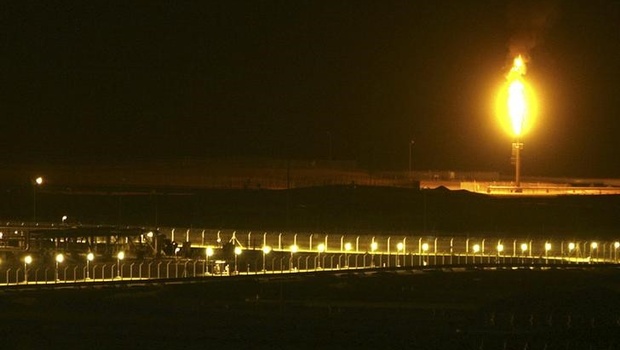
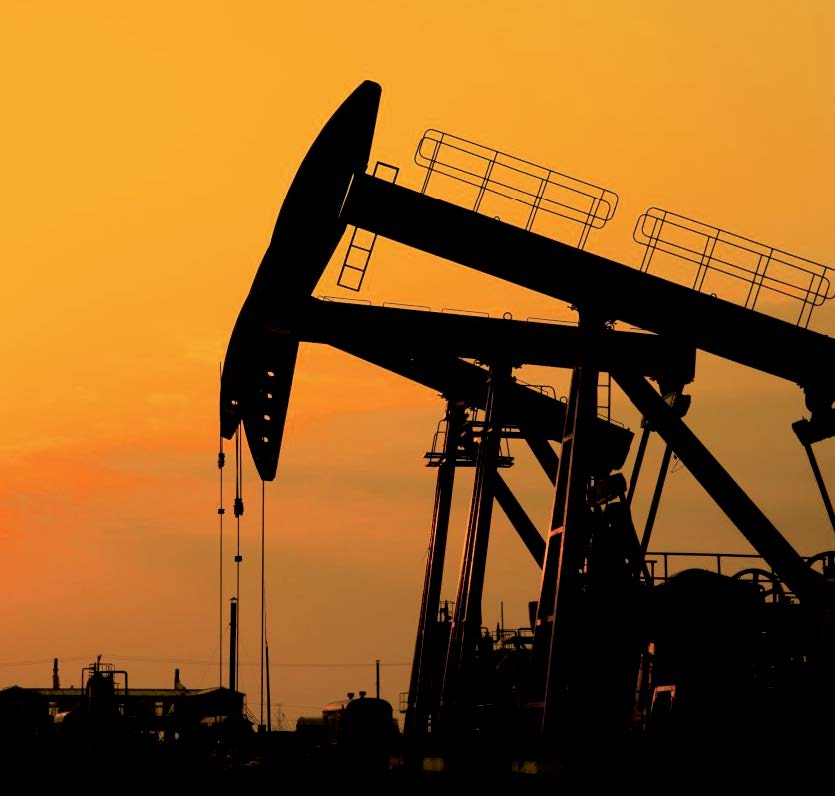
    MOSCOW/DUBAI (TIP): Saudi Arabia is sending signals that it could boost its crude oil supplies in August to a new record level, overtaking Russia, the world’s top oil producer, as it gets ready for tough talks next month for a global output freeze pact.

    Industry sources say the kingdom, already the world’s largest oil exporter, started to raise production from June, after holding it steady for the first half of the year, to meet rising seasonal domestic demand as well as higher export requirements.

    Higher production could give it more leverage during talks in September when both OPEC and non-OPEC producers are expected to revive a freeze deal to support oil prices, the sources say.

    Saudi Arabia appears to want higher prices, but agreeing a level to freeze supplies will be the main obstacle to a deal.

    Some analysts, however, said using hard negotiating tactics could backfire on Riyadh.

    “It would therefore be a very hard sell for Saudi Arabia to have other countries join a collective action plan, while it is the main source of supply increase – outside of Iran post sanctions,” Olivier Jakob at Petromatrix said in a note.

    In June, Saudi Arabia pumped 10.55 million barrels of oil per day, and lifted production to 10.67 million bpd in July, the highest in its history.

    Now the sources expect the OPEC heavyweight to raise its crude supplies to another record this month as demand inside and outside the kingdom looks healthy.

    One source from outside OPEC said the Saudis were quietly telling the market that output could rise further in August to as high as 10.8-10.9 million bpd.

    Last week, Saudi Energy Minister Khalid al-Falih sought to clarify why the kingdom hiked its production in July in an oversupplied market. In a statement, Falih explained the rise was due to rising seasonal domestic demand and customers asking for more oil worldwide.

    “Despite the bearish sentiment engulfing the market, we still see strong demand for our crude in most parts of the world, especially as supply outside OPEC has been declining fast, supply outages increasing, and global demand still showing signs of strength,” he told state news agency SPA.

    The amount of crude supplied to the market in July was 10.75 million bpd, above actual output as Saudi drew down the additional barrels from its huge inventories, SPA reported.

    Oil prices dropped to $27 per barrel in January from as high as $115 in mid-2014, hitting the budgets of oil exporters worldwide, including Saudi Arabia, and resulting in a record fiscal deficit for Riyadh.

    A previous attempt to freeze output at January levels to support prices collapsed in April after Saudi Arabia said it wanted all producers, including Iran, to join the initiative.

    But since the appointment of Falih in April, Saudi Arabia has taken a softer tone towards Iran at OPEC.

    OPEC sources say the group will probably revive talks on freezing output when it meets non-OPEC nations next month in Algeria as Riyadh appears to want higher prices.

    In January when the freeze idea first emerged, Saudi Arabia was producing 10.2 million bpd.

    The Saudis are not alone in raising production.

    Iranian oil minister Bijan Zanganeh said in parliament last week he wanted to take the country’s output to 4.6 million bpd within five years – well above the current 3.6 million bpd and pre-sanction levels of 3.8 million-4 million bpd.

    Iraq, OPEC’s second largest producer, which said in April it would support the freeze deal, has since agreed new contract terms with oil majors to develop its massive fields, which will allow output to rise further next year by up to 350,000 bpd.

    Russia, which back in April was ready to freeze production in the first coordinated action with OPEC since 2001, has also signalled it is no longer very keen on a dialogue to freeze output and would continue boosting production.

    Its output currently hovers near an all-time high of 10.85 bpd and Russian officials expect it to edge up further next year.

  • Taliban frees crew of crashed Pakistani helicopter

    Taliban frees crew of crashed Pakistani helicopter

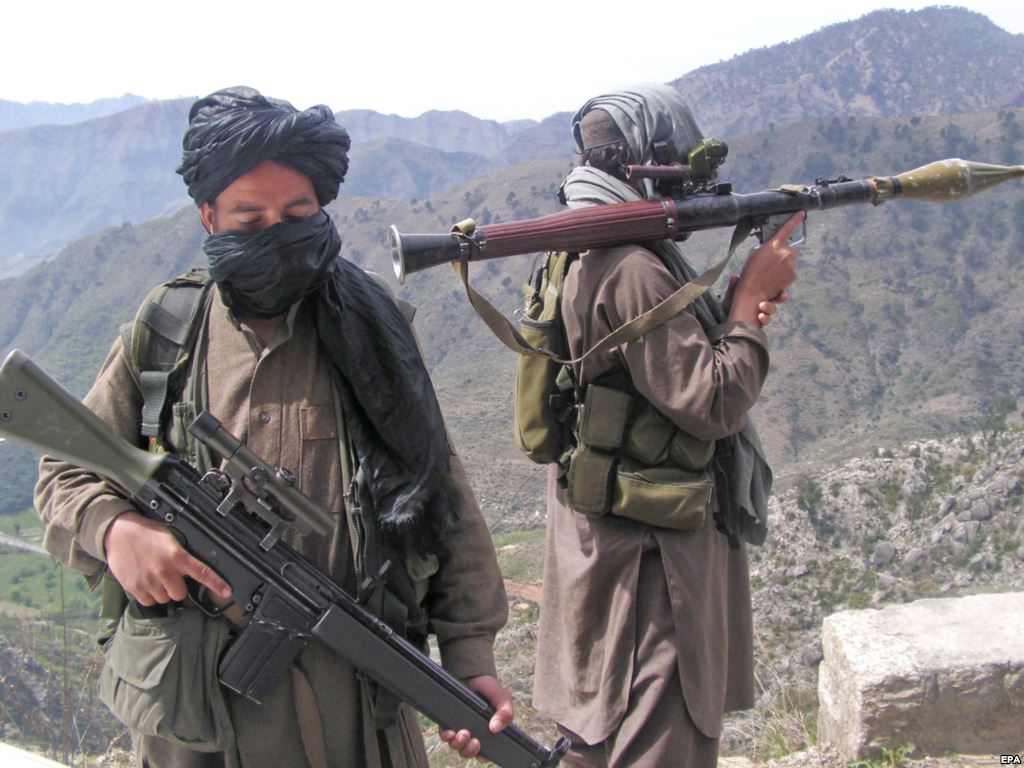
    ISLAMABAD (TIP): The Afghan Taliban has freed the crew of a Pakistani helicopter that crash-landed in Afghanistan’s Logar province on August 4, Pakistani intelligence officials have said.

    Six Pakistanis and a Russian pilot, who were captured by militants in a Taliban-controlled district, were handed over to authorities in Pakistan’s Kurram Agency on Friday, Radio Free Europe quoted the intelligence officials as saying.

    The Punjab government Mi-17 helicopter was on its way to Russia via Uzbekistan for maintenance when it crashed in Afghanistan, the officials said.

    According to Dawn online, the reports have not been confirmed by Pakistani officials.

    Both Russian and Pakistani governments were making efforts for the release of the crew. The Afghan government also initiated an operation for their rescue.

    The Foreign Office said earlier this week that the Afghan government was trying to secure their release with the help of tribal elders of the area.

    Following the crash, Pakistani Army chief General Raheel Sharif had immediately called Commander Resolute Support Mission in Afghanistan General Nicolson and asked him to help in the recovery of the crew. Gen Sharif also asked Afghan President Ashraf Ghani to help in organising a safe and early recovery of the crew. (IANS)

  • NSA hack suspected, Russia in the dock

    NSA hack suspected, Russia in the dock

    WASHINGTON M(TIP): The release on websites this week of what appears to be top-secret computer code that the National Security Agency has used to break into the networks of foreign governments and other espionage targets has caused deep concern inside US intelligence agencies, raising the question of whether America’s own elite cyberwarriors have been hacked and their methods revealed.

    Most outside experts who examined the posts, by a group calling itself the “Shadow Brokers,” said they contained what appeared to be genuine samples of the code — though somewhat outdated— used in the production of the NSA’s custom-built malware. Most of the code was designed to break through network firewalls and get inside the computer systems of competitors like Russia, China and Iran. That, in turn, allows the NSA to place “implants” in the system, which can lurk unseen for years and be used to monitor network traffic or enable a debilitating computer attack.

    According to these experts, the coding resembled a series of “products” developed inside the NSA’s highly classified “Tailored Access Operations” unit, some of which were described in general terms in documents stolen three years ago by Edward J Snowden, the former NSA contractor now living in Russia.

    But the code does not appear to have come from Snowden’s archive, which was mostly composed of PowerPoint files and other documents that described NSA programs. The documents released by Snowden and his associates contained no actual source code used to break into the networks of foreign powers.

    Whoever obtained the data apparently broke into either the top secret, highly compartmentalized computer servers of the NSA or other servers around the world that the agency would have used to store the files. The code that was published on Monday dates to mid-2013, when, after Snowden’s disclosures, the agency shuttered many of its existing servers and moved code to new ones as a security measure.

    By midday Tuesday Snowden himself, in a Twitter message from his exile in Moscow, declared that “circumstantial evidence and conventional wisdom indicates Russian responsibility” for publication, which he interpreted as a warning shot to the US government in case it was thinking of imposing sanctions against Russia in the cybertheft of documents from the Democratic National Committee.

    “Why did they do it?” Snowden asked. “No one knows, but I suspect this is more diplomacy than intelligence, related to the escalation around the DNC hack.”

    Around the same time, WikiLeaks declared that it had a full set of the files— it did not say how it obtained them —and would release them all in the future. The “Shadow Brokers” had said they would auction them off to the highest bidder.

    “I think it’s Snowden-era stuff, repackaged for resale now,” said James A Lewis, a computer expert at the Center for Strategic and International Studies, a Washington think tank. “This is probably some Russian mind game, down to the bogus accent” of some of the messages sent to media organizations by the Shadow Brokers group, delivered in broken English that seemed right out of a bad spy movie.

    The NSA would say nothing on Tuesday about whether the coding released was real or where it came from. Its public affairs office did not respond to inquiries.

    “It certainly feels all real,” said Bruce Schneier, a leading authority on state-sponsored breaches. “The question is why would someone steal it in 2013 and release it this week? That’s what is making people think this is likely the work of Russian intelligence.”

    There are other theories, including one that some unknown group was trying to impersonate hackers working for Russian or other intelligence agencies. Impersonation is relatively easy on the internet, and it could take considerable time to determine who is behind the release of the code.

    The Shadow Brokers first emerged online on Saturday, creating accounts on sites like Twitter and Tumblr and announcing plans for an auction. The group said that “we give you some Equation Group files free” and that it would auction the best ones. The Equation Group is a code name that Kaspersky Labs, a Russian cybersecurity firm, has given to the NSA.

    While widely considered the most talented group of state-sponsored hackers in the world, the NSA is still recovering from Snowden’s disclosures; it has spent hundreds of millions of dollars reconfiguring and locking down its systems.

    Snowden revealed plans, code names and some operations, including against targets like China. The Shadow Brokers disclosures are much more detailed, the actual code and instructions for breaking into foreign systems as of three summers ago.

    “From an operational standpoint, this is not a catastrophic leak,” Nicholas Weaver, a researcher at the International Computer Science Institute in Berkeley, California, wrote on the Lawfare blog on Tuesday. (PTI)

  • US assessing if Russian use of Iran base violates UN resolution

    US assessing if Russian use of Iran base violates UN resolution

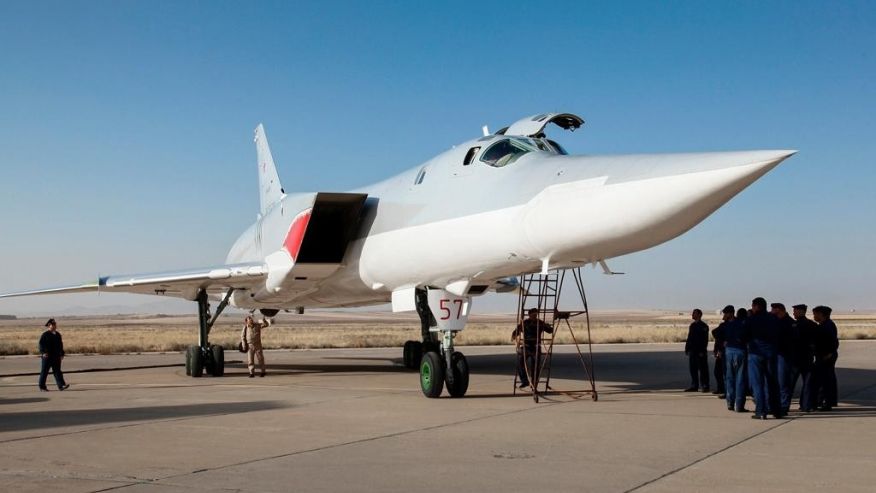
    UNITED NATIONS (TIP): The United States is looking at whether Russia has violated a UN Security Council resolution on military dealings with Tehran by using an Iranian air base to carry out strikes inside Syria, the State Department said on August 17.

    State Department spokesman Mark Toner said US government attorneys had not yet decided whether they think Russia’s use of the Iranian base is a violation of U.N. Security Council Resolution 2231, which was passed as part of the Iran nuclear deal.

    The resolution governs some military interactions between Iran and other countries, including the supply, sale or transfer of military technologies or the provision of training or financial assistance related to the acquisition of new technologies.

    “As I understand it, it’s not just supplying the Iranians certain weapons or certain offensive weaponry. It’s more complex than that,” Toner told a news briefing. “Our lawyers are looking at it. We haven’t made an assessment,” he added.

    Moscow first used Iran as a base from which to launch air strikes in Syria on Tuesday, deepening its involvement in the five-year-old Syrian civil war and angering the United States. Russian officials on Wednesday rejected U.S. criticisms of its use of the base.

    Toner said that beyond the question of Russia’s use of a base in Iran, its air strikes often “indiscriminately” hit civilian targets and moderate Syrian opposition groups.

    “It’s not helpful because … it continues to complicate what is already a very dangerous situation,” Toner said.

    “And so our concerns remain very vivid,” he added. “We’re trying to remain focused on … trying to get a cessation of hostilities back in place in Syria. And this doesn’t help it.”

    Toner said the United States was still open to coordinating with Russia in the fight against Islamic State, but “we have certain issues that we want resolved” before entering into such a deal.

    “We need full humanitarian access immediately … and we don’t have it,” he said. (Reuters)

  • No permanent Russia base for Syria strikes: Iran official

    No permanent Russia base for Syria strikes: Iran official

    TEHRAN (TIP): The speaker of Iran’s parliament is stressing that Russia does not have a permanent military base within the Islamic Republic, a day after Moscow announced launching airstrikes on Syria from Iran.

    The comments by Ali Larijani, reported on August 17 by the state-run IRNA news agency, seem geared at easing domestic concerns over the strikes. Iran’s constitution, ratified after its 1979 Islamic Revolution, bars foreign militaries from having bases within the country.

    Larijani did not directly discuss the strikes in his comments.

    Russia’s Defense Ministry announced on Tuesday that it launched the strikes from near the Iranian city of Hamedan and struck targets in three provinces in northern and eastern Syria.

    The announcement from Russia marks the first significant stationing of its troops there since World War II. (AP)

  • Euro 2016 boots Adidas sales higher

    Euro 2016 boots Adidas sales higher

    BERLIN (TIP): A year of high-profile sports sponsorship has so far paid off for Adidas, with sales at its core brand up 25 percent thanks to events including the Euro 2016 football tournament.

    Higher sales of items branded with the Bavarian firm’s famous three stripes were “mostly due to two-digit increases in the important categories of running, football and training, as well as Adidas Originals and Adidas neo,” two fashion branches, the firm said in a statement.

    “We’re inspiring our consumers with one-of-a-kind experiences,” chief executive Herbert Hainer said, “and that will continue onwards.”

    While the final in Paris pitted two Nike-sponsored teams, France and Portugal, against one another, Adidas markings were visible on other strong performers including the German Mannschaft and the Spanish national team.

    Following the boost from Euro 2016, Adidas-sponsored athletes and teams will be in the spotlight again at the Rio Olympics from August 6.

    Adidas saw double-digit sales increases in several global markets in the second quarter, with a 32 percent gain in north America and 30 percent each in western Europe and China.

    Sales grew more slowly in Russia and the Commonwealth of Independent States at just five percent — slightly allaying fears of a blow to the brand from Russia’s economic slowdown.

    Across the whole group, revenues increased between April and June by 13 percent to 4.4 billion euros ($4.9 billion), Adidas reported in preliminary results released at the end of July.

    Adidas doubled its net profits over the same period in 2015 to 291 million euros.

    The strong result in the second quarter was partly down to Adidas breaking off its sponsorship of London football club Chelsea, bringing in estimated savings of between 50 and 100 million euros.

    Two of the Adidas group’s other brands, Reebok and golf supplier TaylorMade, each reported seven percent growth in the second quarter.

    Adidas announced in May that it would “actively seek a buyer” for TaylorMade as it suffered poor performance —preferring instead to focus on its own Adidas Golf marque.