Tag: SAARC

  • Use international law to take on Pakistan-backed terror

    Use international law to take on Pakistan-backed terror

     A clear and compelling narrative that uses international law and indisputable facts will help India in its fight against cross-border terrorism

    Given that Pakistan has been sponsoring and abetting terrorism against India and has not taken any action against terror groups operating from its territory, New Delhi has a compelling case against Islamabad under these terrorism conventions, which it can present to the ICJ — just as it did in the Kulbhushan Jadhav case. 

     “A key element of a lawfare strategy against Pakistan should be to deploy international law to highlight Pakistan’s sponsorship of cross-border terrorism. This is especially important as India has led the process of adopting a Comprehensive Convention on International Terrorism (CCIT) at the global level. India and Pakistan are parties to numerous terrorism conventions at the regional and international levels. The primary regional treaty is the SAARC Regional Convention on Suppression of Terrorism, while key international treaties include the International Convention for the Suppression of the Financing of Terrorism (ICSFT) and the International Convention for the Suppression of Terrorist Bombings (Terrorist Bombing Convention).”

    By Prabhash Ranjan

    Operation Sindoor has powerfully demonstrated India’s intent to use kinetic measures to tackle terrorism emanating from Pakistan. In addition to executing “hot pursuits”, India possesses other potent non-kinetic strategies, going beyond regular diplomacy, to ensure that Pakistan is held accountable for its continued support of terrorism directed against India. An impactful approach that India has not effectively employed so far is the strategy of “lawfare”, or leveraging international law to confront adversaries to accomplish strategic and diplomatic objectives.

    Leverage terrorism conventions

    A key element of a lawfare strategy against Pakistan should be to deploy international law to highlight Pakistan’s sponsorship of cross-border terrorism. This is especially important as India has led the process of adopting a Comprehensive Convention on International Terrorism (CCIT) at the global level. India and Pakistan are parties to numerous terrorism conventions at the regional and international levels. The primary regional treaty is the SAARC Regional Convention on Suppression of Terrorism, while key international treaties include the International Convention for the Suppression of the Financing of Terrorism (ICSFT) and the International Convention for the Suppression of Terrorist Bombings (Terrorist Bombing Convention).

    These conventions obligate that states not only criminalize acts of terrorism under their domestic laws and prosecute the perpetrators but also refrain from financing such activities. For instance, Article 2(1) of the ICSFT explicitly classifies terror financing as a crime. Similarly, Article 6 of the Additional Protocol to the SAARC terrorism convention requires states to take measures to prevent, suppress, and eradicate the financing of terrorism.

    Pakistan has a long history of sponsoring, abetting, and funding terrorism against India. Following the terror attacks in Mumbai in 2008, India meticulously gathered evidence to demonstrate Pakistan’s active involvement in those attacks, which Islamabad later acknowledged, albeit reluctantly. India needs to consistently publicize proof of Pakistan’s role, which includes the Pahalgam terror attack on April 22.

    Further, India should utilize all international forums to build a solid legal case against Pakistan for its violations of international law regarding terrorism suppression. India’s move to have all-party parliamentary delegations travelling abroad to present India’s case on Operation Sindoor is an ideal opportunity to do this. India should identify specific provisions in terrorism conventions, along with various United Nations Security Council Resolutions that sanction terrorism, and customary international law that Pakistan is violating, and highlight these publicly.

    Rather than mere diplomatic hyperbole, a clear and compelling narrative entrenched in international law, grounded in indisputable facts and supported by irrefutable evidence will significantly benefit New Delhi’s fight against cross-border terrorism.

    Use the ICJ

    A critical aspect of many terrorism conventions is that they grant jurisdiction to the International Court of Justice (ICJ) to enforce the treaties. For example, Articles 20(1) and 24(1) of the Terrorist Bombing Convention and the ICSFT, respectively, empower a country to refer disputes to the ICJ. These provisions, known as compromisory clauses, help circumvent jurisdictional obstacles in international law, which is based on consent. Thus, countries that are signatories to these treaties are bound by ICJ jurisdiction unless they make specific reservations. Ukraine, for instance, invoked such a clause when it sued Russia before the ICJ for violating the ICSFT.

    Given that Pakistan has been sponsoring and abetting terrorism against India and has not taken any action against terror groups operating from its territory, New Delhi has a compelling case against Islamabad under these terrorism conventions, which it can present to the ICJ — just as it did in the Kulbhushan Jadhav case.

    Hurdles to overcome

    However, there are two significant hurdles. First, Pakistan has not accepted the ICJ’s jurisdiction under the ICSFT due to a reservation, which could hinder efforts to hold Pakistan accountable. Nevertheless, India can still file a case with the ICJ to draw global attention to the issue. India should put the ball in the ICJ’s court to address Pakistan’s jurisdictional argument.

    Second, and perplexingly, India has adopted a reservation about the ICJ’s jurisdiction under the Terrorist Bombing Convention, while Pakistan has accepted the ICJ’s jurisdiction for this convention. This obstacle can be overcome if India withdraws its reservation, allowing it to initiate proceedings against Pakistan at the ICJ for terrorism. The ICJ may likely interpret the provisions of the ICSFT and the Terrorist Bombing Convention narrowly, similar to its approach in the Ukraine vs Russia case decided last year. Therefore, India should have fool-proof evidence and devise its legal strategy accordingly. The dissenting opinion of judges such as Hilary Charlesworth in Ukraine vs Russia can come in handy for India. In any case, India should not be overly concerned about the outcome of the legal dispute. Instead, it should utilize the legal proceedings to assiduously promote a global narrative against Pakistan-sponsored terrorism, aligning it with its national objectives.

    In sum, international law and courtrooms can also be used to combat terrorism. To accomplish this, India must build state capacity and mainstream international law in statecraft.

    (Prabhash Ranjan is Professor and Vice Dean (Research), Jindal Global Law School, O.P. Jindal Global University.)

  • Cabinet nod for MoU for bridge between India and Nepal at Dharchula

    Kathmandu (TIP): Union Cabinet on January 6 approved signing of a Memorandum of Understanding (MoU) between India and Nepal for construction of a bridge over Mahakali river at Dharchula in Uttarakhand.

    Briefing the media on the Cabinet decisions, I&B Minister Anurag Thakur said the MoU between India and Nepal will be signed in the “near future” and the bridge will be completed within three years. “The construction of the bridge will help people living in Dharchula in Uttarakhand and in the territory of Nepal,” he said.

    Thakur said as close neighbours, India and Nepal share unique ties of friendship and cooperation characterized by an open border and deep-rooted people-to-people contacts of kinship and culture. The diplomatic relations between the two countries will further improve with the signing of the MoU, an official statement said. It noted that India and Nepal have been working together on different regional forums such as SAARC and BIMSTEC as well as the global fora. PTI

  • India dismisses Pakistan’s fresh offer to host SAARC summit this year

    New Delhi (TIP)- India on Thursday, Jan 6,  dismissed Pakistan’s fresh offer to host the long-pending summit of the South Asian Association for Regional Cooperation (Saarc), saying there is no consensus that will allow the holding of the meeting. The last summit of the eight-nation grouping was held in Nepal in November 2014. India and other countries had pulled out of the 19th summit that was to be held in Islamabad in November 2016 following the Uri terror attack that was blamed on Pakistan-based terrorists.

    On Monday, Pakistan foreign minister Shah Mahmood Qureshi had reiterated his country’s offer to host the summit in 2022, saying India could attend the meet virtually if it does not wish to participate in-person.

    “We have seen media reports regarding the Pakistan foreign minister’s remarks about the Saarc Summit. You are aware of the background as to why the Saarc Summit has not been held since 2014,” external affairs ministry spokesperson Arindam Bagchi told a regular media briefing.

    “There has been no material change in the situation since then. Therefore, there is still no consensus that would permit the holding of the summit,” he added, without giving details.

    Responding to a question on Pakistan Prime Minister Imran Khan’s comments calling on the world community to take action regarding the situation in Jammu and Kashmir, Bagchi said: “Let me make two points. First, the Union territory of Jammu and Kashmir is an inalienable and integral part of India.”

    “Two, the remarks you have referred to were made by the prime minister of such a country that openly supports cross-border terrorism, which gave refuge to [al-Qaeda chief] Osama bin Laden, and whose shocking human rights record the world is familiar with.”

    India-Pakistan relations are currently at an all-time low following a string of terror attacks on Indian military facilities and troops in recent years that were all blamed on Pakistan-based terror groups, mainly the Jaish-e-Mohammed (JeM). Following back channel talks between intelligence officials of both sides, the two countries agreed in February last year to strictly adhere to the 2003 ceasefire along the Line of Control (LoC) in Jammu and Kashmir.

                    Source: HT

  • The U.S.-India health-care partnership will be crucial in the battle against the coronavirus

    The U.S.-India health-care partnership will be crucial in the battle against the coronavirus


    Picture / courtesy freedigitalphotos.net

    The India-U.S. partnership in medical research has been complemented by the strength of our cooperation in pharmaceuticals. India’s capabilities in R&D and in manufacturing have made its pharmaceutical sector the world’s third largest by volume.


    As both India and the United States combat a pandemic of unprecedented scale, we have drawn upon the strength of our long-standing health-care ties to help us better understand the novel coronavirus and find workable solutions.

    In India, the government and the private sector have worked together to ensure the integrity of medical supply chains, and essential medicines from India have continued to reach the United States and some 150 partner countries. But more urgently, the India-U.S. cooperation is proving crucial to confront health challenges posed by the pandemic, including future vaccine development and distribution.

    From therapeutics to diagnostics, the medical supply industry in India has ramped up production to meet domestic needs and also respond, where feasible, to global needs. Prime Minister Narendra Modi took the initiative of bringing together leaders of the South Asian Association for Regional Cooperation (SAARC) to deliberate on collaborative efforts to combat the disease, including establishing a SAARC Emergency Response Fund.

    And as we move toward an effective vaccine for the novel coronavirus, India’s research laboratories and manufacturing facilities — which produce more than 60 percent of the world’s vaccines in a normal year — are integral to the effort. There are at least four ongoing vaccine development programs between Indian and U.S. firms and research institutions.

    Over the years, scientific cooperation has become a critical element of India’s expanding strategic ties with the United States. Last year India and the United States signed an agreement to promote scientific exchanges, cooperative research projects and the establishment of innovative public-private partnerships. U.S.-India scientific collaborations have expanded in fields ranging from health and energy to earth and ocean sciences, and from space to agriculture. Such collaborations have fostered innovation, empowered industry and economic growth.

    Further, under the bilateral Health Dialogue that commenced in 2015, supported by private-sector engagements, India’s partnership with the United States in the health sector has yielded significant results on a global scale. The collaboration under the Vaccine Action Program resulted in the development of the ROTAVAC vaccine against the rotavirus, which causes severe diarrhea in children. The rollout of an affordable vaccine by an Indian company has enabled its use in several developing countries. This success stands as a true testament to the benefits of the India-U.S. partnership for the greater good of humanity. Today there are more than 200 active collaborations between the U.S. National Institutes of Health network of labs and leading research agencies in India, all focused on delivering affordable health-care solutions.

    The India-U.S. partnership in medical research has been complemented by the strength of our cooperation in pharmaceuticals. India’s capabilities in R&D and in manufacturing have made its pharmaceutical sector the world’s third largest by volume. These strengths have been bolstered by government incentives to encourage investments in the manufacture of active pharmaceutical ingredients. Indian generic drugs have found a ready market across the globe, with Indian firms supplying about 40 percent of generic formulations marketed in the United States. This has allowed American health-care consumers to save billions and enjoy enhanced access to quality medicines. The pharmaceutical sector has also been a significant job creator in the United States, with Indian firms investing billions to establish manufacturing facilities in different states in this country.

    When the coronavirus outbreak began, the network of existing collaborations between our countries sprang into action. Using the platform of the India-U.S. Science and Technology Forum, an initiative led by both governments, calls were put out to support joint research and incubate start-up engagements. The initiative was directed at developing technologies for the containment and management of the novel coronavirus, including diagnostics and therapeutics.

    As a country we are committed to increasing health-care spending to 2.5 percent of gross domestic product by 2025. Regulatory reforms, policy actions and investment incentives are imparting fresh dynamism to health care in India. Ayushman Bharat, the National Health Protection Mission, is the world’s largest such public-funded program. The pandemic has also not stopped India from undertaking bold initiatives. The recently launched National Digital Health Mission will facilitate the creation of a virtuous health ecosystem, expanding access for hitherto underserved populations. All this opens up immense opportunities for expanding the India-U.S. health-care partnership.

    Meanwhile, we continue to combat the virus at home. While the number of coronavirus cases in India has surpassed 3 million, we are encouraged that the recovery rate is also significantly high, at more than 70 percent, and the case fatality rate is below 2 percent. India’s health-care providers, comprising 1 million mostly female workers, have also risen to the challenge and have been active at the clinical, treatment and grass-roots levels, playing an essential role in pandemic control.

    The current pandemic has made it clear that ensuring affordable and timely access to health care is a priority for all. It has emphasized the need to diversify health supply chains and foster new international partnerships for global health safety. India is well positioned to offer a reliable alternative, with its strengths in manufacturing and innovation, and with its skilled workforce. As societies that respect innovation, India and the United States can do much to provide solutions to the novel coronavirus pandemic and to build a healthier, safer world beyond.

    (The author is India’s Ambassador to the United States)

  • India’s international response to Covid-19

    India’s international response to Covid-19


    By Ambassador Asoke Kumar Mukerji

    India’s international response to the challenge posed by the Covid-19 pandemic has demonstrated her global leadership as a reliable first responder to humanitarian crises.


    India’s international response to Covid-19 exemplifies the continued relevance of Vasudhaiva Kutumbakam, seeing the world as one interdependent family.

    The Covid-19 outbreak was termed a “public health emergency of international concern” on 30 January 2020. According to the WHO, the virus originated in the city of Wuhan in China, from where it was transmitted by human travelers to several countries across the world, including India. On 26 February 2020, India supplied 15 tons of medical assistance comprising masks, gloves and other emergency medical equipment on an Indian Air Force special flight to Wuhan as a gesture of solidarity in confronting Covid-19.

    The Director General of the WHO declared the global Covid-19 outbreak as a pandemic on 12 March 2020. In a statement in Parliament the External Affairs Minister conveyed that India had taken pro-active action to bring back Indian citizens from the affected countries before restrictions on international air flights to India. These included three special flights to Wuhan in China, evacuating crew and passengers from a cruise ship off Japan, and sending medical teams to assist the repatriation of thousands of Indian nationals stranded in Iran and Italy. As the Minister said, “exceptional situations require an exceptional response”.

    On 15 March 2020 Prime Minister Shri Narendra Modi took a major regional initiative to speak with the leaders of all SAARC countries through video conference. During this meeting, India announced five specific measures to prevent such infections from spreading across South Asia.

    First, the creation of a Covid-19 Emergency Fund with an initial Indian contribution of $10 million.

    Second, placing the services of an Indian Rapid Response Team of doctors and specialists with testing kits and equipment at the disposal of SAARC countries.

    Third, training emergency response teams in SAARC countries.

    Fourth, giving access to India’s Integrated Disease Surveillance Portal, including training on how to use it.

    Fifth, creating a common Research Platform to coordinate research on epidemic diseases in the South Asian region, which would include common SAARC Pandemic Protocols.

    The response to the Prime Minister’s initiative from her neighbors was overwhelmingly positive with contributions pledged to the Covid-19 Emergency Fund by Afghanistan, Bangladesh, Bhutan, Maldives, Sri Lanka and Nepal by 23 March 2020.

    A follow-up video conference of SAARC Directors General of Health Services on 26 March 2020 emphasized the importance of community engagement and participation to augment the emergency measures undertaken by the governments of South Asia to combat Covid-19.

    At the global level, in his role as the incoming Chair of the G-20 in 2021, Prime Minister Shri Narendra Modi had a phone conversation on 17 March 2020 with the G-20’s current Chair, Crown Prince Mohammad bin Salman of Saudi Arabia. The two leaders agreed that Saudi Arabia would convene a video conference of G-20 leaders to coordinate steps to counter Covid-19 and instill confidence in the global populace. 90% of the Covid-19 cases and 88% of the deaths have been in G-20 countries, which comprises 80% of the world’s GDP and 60% of the global population.

    On 26 March 2020, the G-20 held a Summit by video conference Summit. Participants agreed to coordinate a global response to fight the pandemic, adopting measures to safeguard the global economy, minimizing trade disruption and enhancing global cooperation.

    Before and after the G-20 Summit, the Prime Minister of India engaged in active telephone diplomacy with various world leaders from the five continents to discuss a viable framework for effective international cooperation to counter the spread of Covid-19.

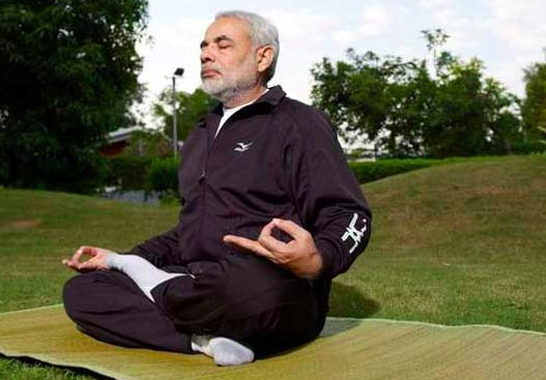
    Two special contributions of India to this international effort so far have been the supply of medicines like paracetamol and hydroxychloroquine to help partner countries, including the United States and European Union, to respond to the pandemic, and highlighting yoga exercises and Ayurvedic remedies to mitigate Covid-19 conditions.

    India’s international response to Covid-19 exemplifies the continued relevance of Vasudhaiva Kutumbakam, seeing the world as one interdependent family.

    (Ambassador Asoke Kumar Mukerj is a  former Permanent Representative of India to the United Nations. The article here is  originally a commentary Ambassador gave on All India Radio)

  • Being a good neighbor

    Being a good neighbor

    India must shed its zero-sum style foreign policy-making, and work towards South Asian integration

    By Happymon Jacob
    The Narendra Modi government’s neighbourhood policy began exceptionally well with Mr. Modi reaching out to the regional capitals and making grand foreign policy commitments. But almost immediately, it seemed to lose a sense of diplomatic balance, for instance, when it tried to interfere with the Constitution-making process in Nepal and was accused of trying to influence electoral outcomes in Sri Lanka. While India’s refugee policy went against its own traditional practices, it was found severely wanting on the Rohingya question, and seemed clueless on how to deal with the political crisis in the Maldives. Despite their characteristic bravado and grandstanding, the BJP government’s foreign policy mandarins looked out of their depth, says the author.

    Whichever way one looks at it, India’s neighbourhood policy is at a critical juncture: while its past policies have ensured a steady decline in its influence and goodwill in the region, the persistent absence of a coherent and well-planned regional policy will most definitely ensure that it eventually slips out of India’s sphere of influence. India’s foreign policy planners therefore need to reimagine the country’s neighbourhood policy before it is too late.

    If South Asia is one of the world’s least integrated regions, India is one of the world’s least regionally-integrated major powers. While there indeed are structural impediments (posed by both India and its neighbours) in fostering regional integration, the most significant handicap is New Delhi’s ideational disinclination towards its neighbourhood. Successive regimes have considered the neighbourhood as an irritant and challenge, not an opportunity. Seldom have India’s policies displayed a sense of belonging to the region or a desire to work with the neighbourhood for greater integration and cooperation. Today, we have become even more transactional, impatient and small-minded towards our neighbourhood which has, as a result, restricted our space for maneuver in the regional geopolitical scheme of things.

    At a critical juncture

    Whichever way one looks at it, India’s neighbourhood policy is at a critical juncture: while its past policies have ensured a steady decline in its influence and goodwill in the region, the persistent absence of a coherent and well-planned regional policy will most definitely ensure that it eventually slips out of India’s sphere of influence. India’s foreign policy planners therefore need to reimagine the country’s neighbourhood policy before it is too late.

    The Narendra Modi government’s neighbourhood policy began exceptionally well with Mr. Modi reaching out to the regional capitals and making grand foreign policy commitments. But almost immediately, it seemed to lose a sense of diplomatic balance, for instance, when it tried to interfere with the Constitution-making process in Nepal and was accused of trying to influence electoral outcomes in Sri Lanka. While India’s refugee policy went against its own traditional practices, it was found severely wanting on the Rohingya question, and seemed clueless on how to deal with the political crisis in the Maldives. Despite their characteristic bravado and grandstanding, the BJP government’s foreign policy mandarins looked out of their depth.

    While it is true that 2018 seems to have brought some good news from the regional capitals, it has less to do with our diplomatic finesse than the natural course of events there. The arrival of an India-friendly Ibrahim Mohamed Solih regime in Male has brought much cheer, and the return of Ranil Wickremesinghe as Sri Lankan Prime Minister is to India’s advantage too. Nepal has reached out to India to put an end to the acrimony that persisted through 2015 to 2017. Bhutan, Myanmar and Bangladesh are also positively disposed towards India, though the relationship with Pakistan continues to be testy and directionless. What this then means is that New Delhi has a real opportunity today to recalibrate its neighbourhood relations.

    Lessons from the past

    First, let’s briefly examine what should not be done in dealing with a sensitive neighbourhood. For one, India must shed its aggression and deal with tricky situations with far more diplomatic subtlety and finesse. The manner in which it weighed down on Nepal in 2015 during the Constitution-making process is an example of how not to influence outcomes. The ability of diplomacy lies in subtly persuading the smaller neighbor to accept an argument rather than forcing it to, which is bound to backfire.

    Second, it must be kept in mind that meddling in the domestic politics of neighbor countries is a recipe for disaster, even when invited to do so by one political faction or another. Preferring one faction or regime over another is unwise in the longer term. Take the example of incumbent Sri Lankan President Maithripala Sirisena. There was a great deal of cheer in New Delhi when he took office in January 2015 (with some saying India helped him cobble together a winnable coalition) after defeating Mahinda Rajapaksa, considered less well disposed toward India. However, Mr. Sirisena’s political transformation was quick, as were India’s fortunes in Colombo, at least temporarily.

    Third, New Delhi must not fail to follow up on its promises to its neighbours. It has a terrible track record in this regard.

    Fourth, there is no point in competing with China where China is at an advantage vis-à-vis India. This is especially true of regional infrastructure projects. India simply does not have the political, material or financial wherewithal to outdo China in building infrastructure. Hence India must invest where China falls short, especially at the level of institution-building and the use of soft power. However, even in those areas China seems to be forging ahead. India must therefore invest a great deal more in soft power promotion (and not the Hindutva kind of outreach). To begin with, India could expand the scope and work of the South Asian University (SAU), including by providing a proper campus (instead of allowing it to function out of a hotel building) and ensuring that its students get research visas to India without much hassle. If properly utilized, the SAU can become a point for regional integration.

    Looking for convergence

    Finally, while reimagining its neighbourhood policy, New Delhi must also look for convergence of interests with China in the Southern Asian region spanning from Afghanistan to Nepal to Sri Lanka. There are several possible areas of convergence, including counter terrorism, regional trade and infrastructure development. China and India’s engagement of the South Asian region needn’t be based on zero-sum calculations. For example, any non-military infrastructure constructed by China in the region can also be beneficial to India while it trades with those countries. A road or a rail line built by China in Bangladesh or Nepal can be used by India in trading with those countries.

    Going forward, New Delhi must invest in three major policy areas. There needs to be better regional trading arrangements. The reason why South Asia is the least integrated region in the world is because the economic linkages are shockingly weak among the countries of the region. The lead to correct this must be taken by India even if this means offering better terms of trade for the smaller neighbours. While it is true that long ‘sensitive lists’ maintained by South Asian countries are a major impediment in the implementation of SAFTA, or the South Asian Free Trade Area, India could do a lot more to persuade them to reduce the items on such lists. Second, several of India’s border States have the capacity to engage in trading arrangements with neighboring counties. This should be made easier by the government by way of constructing border infrastructure and easing restrictions on such border trade.

    Resurrect SAARC

    Second, India prefers bilateral engagements in the region rather than deal with neighbours on multilateral forums. However, there is only so much that can be gained from bilateral arrangements, and there should be more attempts at forging multilateral arrangements, including by resurrecting the South Asian Association for Regional Cooperation (SAARC).

    Third, India must have a coherent and long-term vision for the neighbourhood devoid of empty rhetoric and spectacular visits without follow up. We must ask ourselves, as the biggest country in the South Asian neighbourhood, what kind of a region do we want to be situated in, and work towards enabling that.

    (The author is  an associate professor at the Jawaharlal Nehru University and the author of ‘The Line of Control: Travelling with the Indian and Pakistani Armies’)

  • Peace, security in S Asia essential for progress: Swaraj at SAARC meet; Pakistan says India obstructing

    Peace, security in S Asia essential for progress: Swaraj at SAARC meet; Pakistan says India obstructing

    NEW YORK(TIP): External Affairs Minister Sushma Swaraj emphasized to SAARC countries that an environment of peace and security in South Asia is essential for cooperation and economic development, but Pakistan accused India of obstructing the region’s progress and prosperity.

    Ms. Swaraj’s statement on Thursday, September 27, came at a meeting of South Asian Association for Regional Cooperation on the sidelines of the ongoing United Nations General Assembly session in New York.

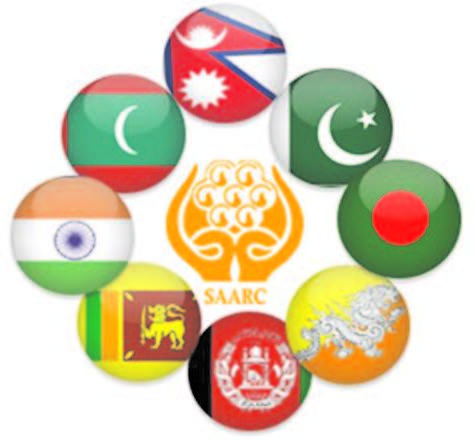
    The SAARC grouping includes India, Pakistan and six other regional countries. It was established in December 1985 with an aim to promote the welfare of the peoples of South Asia.

    “An environment of peace and security is essential for regional cooperation to progress and achieve economic development and prosperity of our people,” Ms. Swaraj said at the SAARC Ministers Meeting.

    She said the number of incidents endangering South Asia are on the rise and terrorism remains the single-largest threat to peace and stability in the geopolitical region, and the world.

    “It is necessary that we eliminate the scourge of terrorism in all its forms, without any discrimination, and end the ecosystem of its support,” she said according to sources.

    Shortly after her statement, Pakistan Foreign Minister Shah Mehmood Qureshi told reporters that Pakistan wants to see SAARC become result-oriented.

    “We have to decide the next step. I have no hesitation in saying that in the way of SAARC’s progress and in the way of the region’s connectivity and prosperity, there is only one obstruction and one attitude. The attitude of one nation is making the spirit of SAARC and the spirit of the founding fathers of SAARC unfulfilled,” he said, without naming India.

    Asked if he had talks with Ms. Swaraj at the meeting, Mr. Qureshi denied. “She left the meeting mid-way, maybe she was not feeling well,” he said.

    He said Ms. Swaraj talked about regional cooperation, but “my question is how will regional cooperation be possible when the regional nations are ready to sit together, and you are the obstruction in that dialogue and discussion.”

    Mr. Qureshi said a majority of the members present in the meeting understands the significance of SAARC. “They want to move on. I can’t speak for them, but I can deduce from their body language, disappointment; because if you do not move on and if you do not sit and convene meetings how do you move on,” he said.

    He cited other regional groupings such as ASEAN and the EU and said “look at this (SAARC) atmosphere”

    He called Ms. Swaraj’s statement at the meeting “very vague”.

    He said “you said the next summit will not happen until there is conducive environment. How do you define what conducive environment is? It can vary from country to country.”

    Mr. Qureshi’s remarks came days after New Delhi cancelled a proposed meeting between foreign ministers of India and Pakistan in New York.

    India cited attacks by Islamabad-backed groups in Jammu and Kashmir and stamps released by Pakistan glorifying Kashmiri terrorists as reasons for cancellation of the proposed talks.

    SAARC member-states have previously said they view the strained relations between India and Pakistan as one of the reasons for the little progress achieved by the geopolitical grouping in recent years.

    Nepal And Sri Lanka have expressed interest in reviving the summit postponed in 2016 after New Delhi pulled out over Islamabad’s unrelenting support to terrorist activities in India and after Pakistan-based terrorists attack an Indian Army base in Uri.

    Bhutan, Bangladesh and Afghanistan had also joined India in boycotting the summit.

    SAARC summits are usually held biennially. The member-state hosting the summit assumes the Chair of the association. The last SAARC Summit in 2014 was held in Kathmandu, which was attended by Prime Minister Narendra Modi.

    (Source: PTI)

  • ‘Bangladesh relies on BIMSTEC after SAARC failure’

    ‘Bangladesh relies on BIMSTEC after SAARC failure’

    DHAKA (TIP): Bangladesh is hopeful of forging regional cooperation through BIMSTEC after the failure of SAARC, a top aide of Prime Minister Sheikh Hasina said on Saturday.

    “In this context coming together in BIMSTEC is truly important. We already saw earlier SAARC with all our high hopes has not done much, and for the moment it is doubtful whether or not the next summit meeting will happen,” International Affairs Adviser Gowher Rizvi said at the opening of the BIMSTEC Network of Policy Think Tanks (BNPTT) meeting here at the Bay of Bengal grouping’s headquarters.

    He said Bangladesh hopes to make up through sub-regional cooperation including #BIMSTEC after the failure of SAARC, bdnews24.com reported. “We have seen NAFTA may or may not survive. We see European Union under challenge. In Bangladesh we see much of the future in the sub-region. It is the sub-region we are focused on. We have BBIN, BCIM and BIMSTEC… this is where we see our future,” Rizvi said, giving examples of the state of the regional groupings in the world. (PTI)

  • Pakistan trade body hints at reviewing ties with India

    Pakistan trade body hints at reviewing ties with India

    ISLAMABAD (TIP): A Pakistan trade body has announced that it would consider suspending trade with India if the current hostile situation did not improve soon, a media report said on Oct 28.

    The Federation of Pakistan Chambers of Commerce and Industry (FPCCI) President Abdul Rauf Alam on Thursday said that Pakistan had no compulsions of any sort to continue business and trade relations with India under the current hostile conditions, Dawn online reported.

    The entire Pakistani business community, he said, was united to take any decision and given the tense situation in the region, it was not possible to continue trade relations with India.

    He pointed out the role of the Saarc Chamber of Commerce and Industry and said that it left them with no choice but to promote trade relations with ECO and D-8 countries. (IANS)

  • Hitting where it hurts: India must keep up the momentum

    Hitting where it hurts: India must keep up the momentum

    As I write these lines, Pakistan has strongly denied that the Indian army carried out surgical strikes across the LoC. It has claimed, indeed asserted, through the official army spokesman that the Indian action was confined to the traditional exchange of fire across the LoC which the two armies have undertaken many times in the past, including heavy fire last year. In doing so, as of now, Pakistan has obviously sought to ensure that it does not come under pressure from its domestic public opinion to adequately respond to uphold the country’s honor. For if it acknowledges that Indian soldiers crossed the LoC, even by a short distance of a couple of kilometers, the Pakistani people, more so, Pakistani soldiers and officers will demand of its generals, especially army chief General Raheel Sharif, that the Indian Army be soonest taught a lesson so it does not undertake such an action again. This refrain would be heard the loudest from the jehadi tanzeems.

    Raheel Sharif has an image to live up to – his elder brother and maternal uncle were decorated with the Naishan-e-Haider, Pakistan’s highest gallantry award, and the Sharif family is greatly respected in army circles and by the public at large. Raheel Sharif is also credited with successful action in North Waziristan to clear Tehrik-e-Taliban-e-Pakistan cadres under the Zarb-e-Arz operation. Thus more than Prime Minister Nawaz Sharif, it is the General who is under greater scrutiny. It is obvious that his initial reaction has been not to immediately get into a tit-for-tat situation and to move cautiously. That is not unnatural, for the Pakistan General staff would need to carefully weigh all options, especially as the international community knows that Pakistan has provoked India continuously over two decades with its pursuit of cross-border terrorism and that no army would take the Uri terrorist attack lying down.

    The major powers, especially the US, have advised Pakistan that it has to take action against all terrorist groups, not only those that have turned against the state. This counsel has fallen on deaf ears, for there is no evidence that Pakistan army is willing to take a re-look at its security doctrines. These prescribe the pursuit of low-intensity conflict to contain India by keeping it off-balance. The fact is that despite the Pathankot attack and India’s acceptance of a Pakistani joint investigation team, including an ISI representative, to visit the Pathankot air base, it continued to essentially remain in denial, which is a clear evidence of its unwillingness to modify its security approaches. As India has crossed a threshold, Pakistan’s security planners will be under international pressure to modify their policies on the use of terror, even as they will not easily give it up. Why?

    The major powers, including Pakistan’s all-weather friend, China, do not want a conflagration between two countries with nuclear weapons. As India has always acted “responsibly”, it has ironically been under greater pressure to avoid taking any step that would enhance the chance of escalation. This has been so after every significant terrorist provocation, including the Parliament attack and the Mumbai outrage. Each time, India absorbed terrorist action, despite the loss of life. Indeed, influential sections of the Indian political and security classes advanced the view that terrorism did pose a real security challenge to the country. Thus Pakistan-sponsored terrorism was cynically relegated to a matter of political management. If this was the view of those who governed the country, the international community naturally went along. The Pakistan Generals too felt secure that India’s political masters would not really react with force. They were initially concerned that Prime Minister Narendra Modi may be different and they tested him even prior to his taking oath when the Indian consulate-general in Herat was attacked. When Modi flip-flopped, laying down red lines only to dissolve them, they felt that he was no different from his predecessors. They will now have to reassess.

    The only time the global powers brought pressure to bear on Pakistan was during the Kargil encroachment. Then India acted with determination to throw out Pakistan forces that had occupied the Kargil heights. It is because India refused to accept Pakistani action and the Indian Army started meeting with success despite great odds that the US put pressure on Pakistan to abandon its unacceptable misadventure. The US pressure was a contributory factor to Pakistan’s decision to withdraw. The Kargil lesson was that if India showed resolve and acted then Pakistan was asked to act responsibly. The key factor in all such situations is calm and sober resolve and deliberate action. Now after the surgical strikes, which have been undertaken with precision, it would be Pakistan that would be under pressure not to notch up the situation. That would be the quiet message that the Chinese would also give, notwithstanding the public postures that they may take.

    Modi government has also done well not to have undertaken the surgical strikes in isolation, but as part of a package of measures to show that India is re-examining the premises of its Pakistan policy. No previous government has focused on the Indus Waters Treaty and Pakistan’s MFN status. Nor has any government raised Pakistan’s human rights record in Balochistan internationally, that too at the UN. Most importantly, the withdrawal from the SAARC Summit -and, it is obvious that Afghanistan, Bangladesh, Bhutan and India have consulted on this matter – would not have gone unnoticed in important capital cities. While there will be routine counsels of restraint, there is no doubt that there will be an understanding that India has suffered much and Modi expended much political capital and the present action – with no intention, at present, to undertake any other surgical strike – was neither adventurous nor unnatural.

    There is little doubt that Pakistan will loudly proclaim the dangers of Indian action leading to the danger of acquiring a nuclear dimension. This is hogwash and self-serving. Pakistan will also renew efforts to draw attention to the Kashmir situation, but global indifference to developments in the Valley will continue as no country wants to intervene in it.

    So, how will Pakistan respond? Indian security managers should redouble their vigilance against a major terrorist strike.

    (The author is a former Secretary, Ministry of External Affairs)

  • Crossing the Line of Control

    Crossing the Line of Control

    After running through a variety of non-military responses to the September 18 terrorist strike at an Army camp in Uri, the Centre on Thursday announced that Indian forces had carried out “surgical strikes” across the Line of Control. With this, India’s next steps, post-Uri, are in uncharted terrain, with New Delhi abandoning the self-proclaimed policy of “strategic restraint” adopted in the face of earlier provocations by terrorists believed to be backed by Pakistan. The operation, that began and concluded in the early hours of Thursday, was claimed to be a military success, with no injuries to the Indian para-commandos who went across the LoC into Pakistan-occupied Kashmir to attack several locations. The decision to strike in this manner was evidently taken after specific intelligence that terrorist groups were planning attacks in India. This may not be the first time India has undertaken quick cross-LoC operations, but it has never before chosen to share information so publicly.

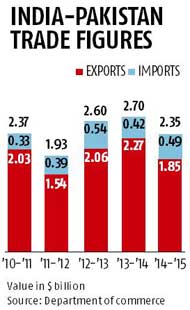
    The terms “surgical strike” and “pre-emptive strike” used by the Centre were intended to convey that this was not an attack on Pakistan’s defense forces, but a targeted action against terrorists poised to wreak damage in India. Pakistan of course has played down the Indian operation, characterizing it as an act of habitual cross-border shelling. It is welcome that New Delhi declared the strikes complete shortly after the operation, with the DGMO calling his Pakistani counterpart to convey that India would not escalate the conflict beyond this. This, along with the briefings held in New Delhi for envoys of various countries, indicates that the Centre wants to end hostilities with Pakistan for the moment. This strengthens the view that the operation was the result of pressure on the Modi government to manufacture a strong response to Uri. Over the past few days there has been a cascade of moves to underline that such provocations cannot be followed with business as usual. The government reviewed the working of the Indus Waters Treaty, declared it is flirting with the idea of reviewing Pakistan’s Most Favored Nation status, and pulled out of the SAARC heads’ meet to be held in Islamabad. Having made it known that India does not want further escalation, even as people living along the International Border and the LoC are shifted to safer locations, the Centre will need to articulate what it regards as the new normal – and indeed, how it hopes, or plans, to dissuade Pakistan from escalating the situation in turn.

  • BANGLADESH, BHUTAN PULL OUT OF SAARC SUMMIT

    BANGLADESH, BHUTAN PULL OUT OF SAARC SUMMIT

    NEW DELHI (TIP): Apart from India, Bangladesh and Bhutan have also pulled out of the Saarc Summit in Islamabad in November, saying the environment is not right for the successful holding of the meet.

    The decision was conveyed by Bangladesh and Bhutan on Tuesday to the Saarc chair Nepal, sources said.

    “The growing interference in the internal affairs of Bangladesh by one country has created an environment which is not conducive to the successful hosting of the 19th Saarc Summit in Islamabad in November 2016,” the communication by Bangladesh said.

    “Bangladesh, as the initiator of the Saarc process, remains steadfast in its commitment to regional cooperation, connectivity and contacts but believes that these can only go forward in a more congenial atmosphere. In view of the above, Bangladesh is unable to participate in the proposed Summit in Islamabad,” it said.

    Bhutan said while it is committed to the Saarc process and strengthening of regional cooperation, it is concerned over the “recent escalation of terrorism in the region, which has seriously compromised the environment for the successful holding of the 19th Saarc Summit in Islamabad in November 2016.” “Further, the Royal Government of Bhutan shares the concerns of some of the member countries of Saarc on the deterioration of regional peace and security due to terrorism and joins them in conveying our inability to participate in the Saarc Summit, under the current circumstances.” The decision by three countries of the eight-member grouping not to attend the summit would lead to its collapse. Prime Minister Narendra Modi on Tuesday also decided not to attend the Saarc Summit in Islamabad in November. The announcement by India came on a day foreign secretary S Jaishankar issued a second demarche to Pakistan High Commissioner Abdul Basit over September 18 Uri attack and confronted him with proof of “cross-border origins” of the terror strike in which 18 jawans were killed. The attack has triggered a strong response from India which has reviewed the 56-year-old Indus Water Treaty (IWT), and decide to reconsider the MFN status granted by it, unilaterally, to Pakistan.

  • Rice phones Doval to put US support behind India, warns Pak on terror

    Rice phones Doval to put US support behind India, warns Pak on terror

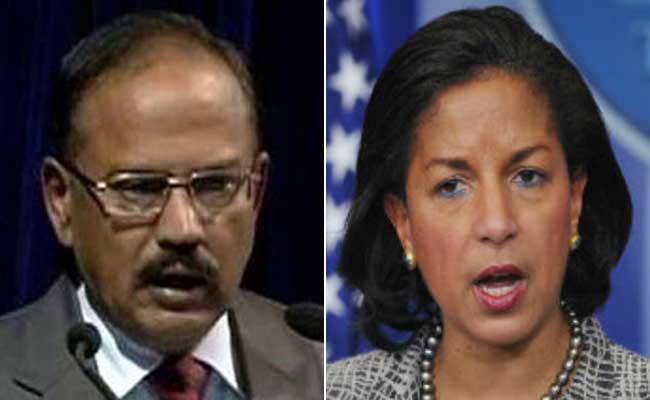
    WASHINGTON (TIP): The Obama administration on Sept 28 affirmed its support to New Delhi on the issue of cross-border terrorism ahead of India’s surgical strike inside Pakistan occupied Kashmir, while putting Islamabad on notice for its failure to act against UN-designated terrorists and entities.

    US National Security Advisor Susan Rice spoke to her Indian counterpart Ajit Doval to offer condolences to families of the Uri attack victims and express support for India on the issue of terrorism, White House National Security Council spokesman Ned Price said in a read-out on the call. The call was initiated by Washington and took place before the Indian strike beyond the Line of Control.

    Although the statement did not explicitly pin the Uri attack on Pakistan, there was a broad censure of Islamabad for continuing to harbor proscribe terrorists and terrorist outfits, with a pledge that Washington would “deepen collaboration on counter-terrorism matters including on UN terrorist designations.”

    “Highlighting the danger that cross-border terrorism poses to the region, Ambassador Rice reiterated our expectation that Pakistan take effective action to combat and delegitimize United Nations-designated terrorist individuals and entities, including Lashkar-e-Tayyiba, Jaish-e-Muhammad, and their affiliates,” the statement said, in an unequivocal recognition of the Indian position that state-backed terrorist proxies have a free run in Pakistan. India has blamed Jaish operatives for the Uri attack, and has more recently identified the attackers and the camps in Pakistan-occupied Kashmir they came from.

    The US statement came amid recrimination from some Indian commentators that the Obama administration was hedging on backing India fully and was not putting pressure on Pakistan after the Uri attack. Although Secretary of State John Kerry gave Pakistan’s Prime Minister Nawaz Sharif an earful at the UN General Assembly last week, some analysts and retired Indian officials selectively highlighted pabulum in the statement to suggest that New Delhi had taken false comfort about US support, and everything was hunky-dory in Islamabad’s ties with Washington.

    The US statement on the Rice-Doval call leaves no doubt where Washington stands on the latest developments in the region, with none of the comforting crumbs that lower level US officials throw out for Pakistanis to feast on, such as recognizing Pakistan’s progress in the war on terror, commiserating with its claim that it is a victim etc.

    “There are no nuances here. The message to Pakistan is very clear,” a senior Indian diplomat said, as New Delhi stepped up international pressure on Islamabad.

    In fact, the Rice-Doval phone conversation, coming after New Delhi’s call to torpedo the SAARC meet, virtually endorses India’s decision to scupper the summit, without the salutary advice that the State Department invariably essays about the need for dialogue. (PTI)

  • INDIA INC GEARS UP TO BE GST-COMPLIANT IN TIME

    INDIA INC GEARS UP TO BE GST-COMPLIANT IN TIME

    NEW DELHI/MUMBAI (TIP): While Rajya Sabha was debating the amendment to the Constitution for rolling out Goods and Services Tax (GST), the top management of a large company was closeted with consultants from a global tax firm in south Mumbai, assessing the possible impact of the new tax regime.

    “So far, GST appeared to be a mirage. So companies were not doing any detailed planning. Now that the first step has been taken, things will start falling in place,” said the head of a leading auto company.

    Consultants say there was a rush of queries over the last few days as companies began to see the new regime as a reality after a decade of discussions. “Most companies, barring a few large FMCG companies, are under-prepared. But I expect them to start now,” said Pratik Jain, who heads the indirect tax practice at consulting firm PricewaterhouseCoopers.

    FMCG companies are seen to be at the forefront of preparedness when it comes to moving to a new GST regime. GST is expected to optimise warehousing and inventory carrying costs for the industry, which has a vast distribution and supply-chain network. Leading companies such as Dabur, Marico and Godrej Consumer Products (GCPL) have either drawn up a blueprint or have completed impact analysis of a post-GST scenario.

    But they are awaiting further clarity. “We have already finished phase 1, where we are fully ready with the roadmap for implementation across the organisation. We are waiting for the details of the Bill to be finalised and would move into implementation after that,” said Sunil Kataria, GCPL business head for India and Saarc. He added that the team has been working on this for the last six months.

    Dabur India, which has manufacturing units at 12 locations across India with products reaching 5.3 million outlets, utilised the services of PwC to complete the impact analysis of the pre- as well as post-GST scenario. Lalit Malik, CFO, Dabur India, said:

    “Dabur has completed the groundwork with regard to amendments in our IT infrastructure to ensure a seamless transition. We are now awaiting the clarifications with regard to rates, classification and procedure for existing exemptions in order to determine the exact impact and execution.”

    For other sectors, such as e-commerce, the concerns are different -the pressure of collecting taxes. Earlier, the money that a buyer paid for a product in the online market place was transferred to the seller after deducting commission. Once GST is implemented, e-commerce players would have to deduct tax and commission before transferring the amount to the seller. Sellers would have to then seek refund.

    For all companies, changes to the software platform are seen as the first step but the process cannot be completed until the tax rate is known or the new forms, along with the online platform, are in place, said several companies.

    The pressure is more on the smaller players than the large companies.

    “Manufacturing companies have taken steps and the service sector has started moving in the last one month or so. But with more clarity, the smaller players can move now,” said M S Mani, senior director at Deloitte, Haskins & Sells.

  • Another SAARC farce: Much ado about nothing in Islamabad

    Another SAARC farce: Much ado about nothing in Islamabad

    Another ministerial meeting of the South Asian Association for Regional Cooperation (SAARC) has come and gone, this time in Islamabad, with people of its eight-member nations none the wiser about the purpose of the get-together. The dysfunctional organization with a 31-year history is known more as a setting for repeated attempts by Pakistan and India to turn a new page in their embittered relationship. This time the violence in Kashmir, the attacks in Pathankot and Dinanagar and the earlier arrest of an alleged Indian spy in Baluchistan have blotted bilateral ties so badly that both sides decided to spurn the opportunity of an interaction between the Home Ministers of both countries.

    For the record, the meeting discussed a range of crucial issues. A limited progress on some of them would eliminate considerable discord not only between Pakistan and India but also Afghanistan and Pakistan. The issues on the table, constant and unresolved since the Interior Ministers’ forum was set up a decade back, are terrorism, corruption, narcotics and psychotropic substances and maritime piracy. The meeting also deliberated on the Conventions on Suppression of Terrorism and the Additional Protocol and Convention on Mutual Assistance in Criminal Matters. But ties between Pakistan and India have been in deep freeze for months and Afghan President Ashraf Ghani has pulled up Islamabad for its double talk on Taliban. The atmospherics certainly did not portend a breakthrough on any of the issues.

    Mercifully, the SAARC charter does not provide for countries to launder their bilateral disputes at the forum. So while the meeting of the Interior Ministers went through its motions peacefully, Pakistan Prime Minister Nawaz Sharif leveraged a meeting of Pakistani envoys to convey that the Kashmir issue is not India’s internal matter. Home Minister Rajnath Singh repeated the statements about terrorism and sanctuaries that he has repeatedly made in India. Prime Minister Narendra Modi will be hard- pressed to come up with some out-of-the-box ideas, an expression he is so enamored of, if the SAARC summit in Islamabad later this year does not turn out to be as vacuous as this SAARC ministerial meeting.

    (Tribune, India)

  • AMID INDIA-PAK TENSION, RAJNATH SINGH TO VISIT ISLAMABAD NEXT WEEK

    AMID INDIA-PAK TENSION, RAJNATH SINGH TO VISIT ISLAMABAD NEXT WEEK

    NEW DELHI (TIP): Home minister Rajnath Singh will visit Islamabad on August 3 and 4 to attend the meeting of home ministers and interior ministers of South Asian Association for Regional Cooperation (Saarc)?nations.

    This will be the first visit by a top Indian political functionary to Pakistan after the January 2 Pathankot airbase attack carried out by militants believed to be from across the border.

    It also comes at a time ties between the two nuclear-armed neighbours are seeing a chill in the aftermath of the killing of Hizbul Mujahideen commander Burhan Wani.

    Kashmir has been on the boil since the death of 22-year-old Wani on July 8 in an encounter in southern Kashmir. His death sparked violent protests in the Valley that killed more than 40 people and wounded hundreds.

    Pakistani leaders have criticised India over the Kashmir unrest, and the country observed on July 20 a “black day” to protest against the killings. The move drew angry reaction from India, which accused Islamabad of interfering in New Delhi’s internal affairs and backing terrorism.

    Sources said the home minister may have bilateral meetings with Pakistani politicians during the visit.

    At the 13th Saarc Summit held in Dhaka in November 2005, the heads of states decided that Saarc interior/home ministers will meet annually preceded by a meeting of the interior/home secretaries to strengthen counter-terrorism cooperation.

    “As far as the home minister’s visit to Islamabad is concerned, he will leave on August 3 and come back the next day,” said a home ministry official.

    Singh is likely to take up with the Pakistani leadership the issue of a reciprocal visit of the National Investigation Agency (NIA) to Islamabad for the Pathankot probe. A Pakistani joint investigation team visited India earlier this year, and the NIA shared the details of its investigation with it.

    A week before the Pathankot attack that killed seven securitymen, Prime Minister Narendra Modi made a brief stopover in Lahore while returning to India from Afghanistan and Russia. Three weeks before Modi’s visit, external affairs minister Sushma Swaraj visited Pakistan for a conference. Source: HT

  • INDIA IMPROVES ties with neighbors

    INDIA IMPROVES ties with neighbors

    Building upon Prime Minister Narendra Modi’s initiative of inviting all SAARC leaders to his swearing-in ceremony in May 2014, the neighbourhood continued to be the primary focus of India’s foreign policy in 2015. While relations with Pakistan and Nepal remained on a tricky path, there was some forward movement in the ties with Bangladesh, Afghanistan, Bhutan, Maldives and Myanmar. Relations between India and Sri Lanka more or less maintained a status quo.

    Nepal

    It began with an upswing in the ties but the relationship were strained by the time the year came to an end. Bilateral ties with Nepal took a hit after the neighbouring country promulgated a new Constitution. India argued that the new Constitution did not take into account the concerns of all sections of the population, particularly the Madhesis who enjoy close ties with India. However, Nepal did not pay heed to India’s protests and rebuked it for interfering in the country’s internal affairs.

    Earlier when Nepal was hit by a massive earthquake on April 25, India responded to the calamity and helped Nepal by launching its largest disaster response abroad, Operation Maitri. During External Affairs Minister Sushma Swaraj’s visit to Kathmandu in June, India pledged $1 billion grant for the reconstruction of the quake-hit country.

    Pakistan

    File image of Narendra Modi with Pakistan PM Nawaz Sharif
    File image of Narendra Modi with Pakistan PM Nawaz Sharif

    Ties with Pakistan did not see any forward movement in the past one year despite two meetings between Modi and his Pakistani counterpart Nawaz Sharif. While pushing for better relations, India has maintained that talks are possible only in an atmosphere that is free of terror and violence.

    Sharif and Modi first met on the sidelines of the BRICS summit in Ufa in Russia. The two sides unveiled a five-point agenda to address concerns on terrorism and to promote people-to-people contact. Despite a number of hurdles including on account of terror attacks in the aftermath of Ufa, and cancellation of initial round of NSA-level talks, a significant breakthrough was achieved in December with the NSAs meeting in Bangkok, followed by Swaraj’s visit to Islamabad for the Heart of Asia Conference.

    Bangladesh

    Prime Minister Narendra Modi and Bangladesh Prime Minister Sheikh Hasina shake hands in Dhaka, Bangladesh, Saturday, June 6, 2015.
    Prime Minister Narendra Modi and Bangladesh Prime Minister Sheikh Hasina shake hands in Dhaka, Bangladesh, Saturday, June 6, 2015.

    Modi’s visit to Bangladesh in June saw the exchange of instruments of ratification of the landmark land boundary agreement. It was a relief for over 50,000 people living in 162 enclaves across both countries as India and Bangladesh swapped enclaves, bringing to an end the 68-year-old boundary dispute. The June 6-7 visit of PM Modi also saw India-Bangladesh developmental cooperation scaling new heights, with India pledging a $2 billion Line of Credit for Bangladesh. The two countries took a host of steps to enhance trade and connectivity, including the launch of two new bus services. The two countries are a part of the sub-regional cooperation between Bangladesh, Bhutan, India and Nepal to enhance connectivity and regional integration.

    Sri Lanka

    Not much change taken place in the ties between India and Sri Lanka in the year gone by. Within months of the newly-elected Sri Lankan President Maithripala Sirisena taking charge of the island nation, two-way visits were held by the leaders and foreign ministers of the two countries. During Modi’s visit to Sri Lanka in March, India pledged $318 million Line of Credit for railway upgradation (New Delhi’s development assistance is already about $1.6 billion), unveiled a currency swap agreement of US $1.5 billion to help stabilise the Sri Lankan rupee and to develop Trincomalee as a regional petroleum hub with the cooperation of Lanka IOC (Indian Oil Corp’s subsidiary in Sri Lanka) and Ceylon Petroleum Corporation.

    Both countries also signed four pacts regarding visa exemption for official passport holders, youth exchanges, customs agreement (to address trade concerns and reduce non-tariff barriers) and the construction of the Rabindranath Tagore auditorium at the Ruhuna University with India’s aid.

    Afghanistan

    Amid the backdrop of the unfolding transition in Afghanistan, India sustained its engagement with the war-torn country. During the visit of Afghan President Ashraf Ghani in April 2015, India reiterated its commitment to the reconstruction of the strife-torn country. The two sides focused on working towards a more liberalised business visa regime. Afghanistan welcomed India’s decision to extend the 1000 scholarships per year scheme by another 5 years as part of capacity building initiatives. India continues its assistance to the construction of the India-Afghanistan Friendship (Salma) Dam in Herat, expected to be completed in the first half of 2016. The Parliament Building in Kabul constructed with Indian assistance has already been completed as well as on the Doshi and Charikar power stations. But the resurgence of Taliban and Pakistan’s continued support to the group remain a huge hindrance. Taliban has regained control of large swathes of land in Afghanistan in the last few months and is now in a position to threaten the elected government once again.

    Bhutan

    India’s all-weather friendship with Bhutan continued on an upward curve. The visit of Bhutan’s Prime Minister Tshering Tobgay to India in January focused on optimising cooperation in the field of hydropower – the centerpiece of economic cooperation between the two countries. The two sides reiterated their commitment to the 10,000 MW initiative and in this context, to the early implementation of the four JV-model projects, totaling 2120 MW.

    Maldives

    India also engaged with the Maldives leadership despite political volatility in the island country. This was reflected in the meeting between the foreign ministers of India and the Maldives on the sidelines of the UN summit in New York in September. External Affairs Minister Sushma Swaraj followed it up with a visit to the island nation from October 10-11 to reinvigorate ties.

    Myanmar

    Bilateral relations with Myanmar improved with the first India-Myanmar Joint Consultative Commission (JCC) meeting held in New Delhi on July 16, 2015. Steps were taken to further enhance the existing air connectivity, extending a$500 million Line of Credit to the Government of Myanmar for development priorities, and a commitment to enhance the regional and sub-regional cooperation under the BCIM-EC and the BIMSTEC framework. India also played an instrumental role in providing disaster relief support to Myanmar in response to widespread floods and landslides caused by Cyclone Komen.

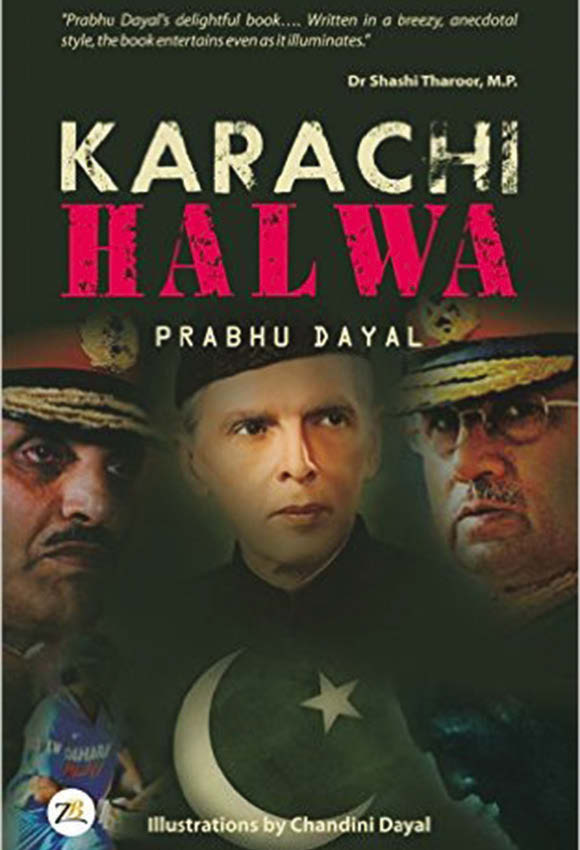
  • Prabhu Dayal serves hot Karachi Halwa

    Prabhu Dayal serves hot Karachi Halwa

    NEW YORK (TIP): Why would Zia want to climb five floors of a hotel? Why did someone think Zia could fix his TV? Was Zia practicing Urine therapy? What did Christopher Lee and Alyque Padamsee have in common?

    Prabhu DayalAmbassador Prabhu Dayal who had a very highly successful diplomatic career as Indian Consul General in New York for five years has penned all his memories of his posting in Pakistan and aptly named the book “Karachi Halwa”.

    Karachi Halwa is witty and insightful portrayal of Zia ul Haq’s rule in Pakistan. Ambassador Prabhu Dayal shares his recollections of that period and keeps you laughing throughout his account of the bumpy ride of Pakistan’s domestic politics and its relationship with India. He tells you how a Sahiwal cow was brought into the equation, and where an elephant comes in.

    Karachi HalwaHe says, ‘The past, the present and the future are in one continuous motion. Whatever I witnessed in Pakistan during Zia’s rule extends its long shadow not only over the present times but will do so well into the future also’. He poses the ultimate question whether the two South Asian giants can live as friends, offering his own suggestions.’

    Ambassador Prabhu Dayal is an illustrious officer of the Indian Foreign Service with a career spanning 37 years. He served in various diplomatic positions in Egypt, Pakistan, Iran and the Permanent Mission to the UN at Geneva before being appointed as Consul General, Dubai in 1994. This was followed by his appointment as Ambassador to Kuwait (1998-2001) and to Morocco
    (2004-2008). He also served as Deputy Secretary (Pakistan) and later as Joint Secretary (SAARC).

    He was Consul General, New York from 2008 until his retirement in 2013-ranking next in seniority to the Ambassador. From the magnificent heritage building in Manhattan which houses the Consulate General of India, he handled matters relating to 10 US States–New York , New Jersey, Pennsylvania, Ohio, Connecticut, Rhode Island, Massachusetts, Vermont, Maine, New Hampshire. His jurisdiction also included Puerto Rico and the US Virgin Islands.

    Having been a student of International Relations at the University of Allahabad, it was perhaps natural for him to opt for the Foreign Service when he stood second in the Order of Merit in the Civil Services Examination. “Nation states have always engaged in warfare and diplomacy” he says, adding “the world needs skillful diplomats more than ever before in history”. He puts his rich experience and intellectual abilities to good use in his first book- ‘Karachi Halwa’. His wife Chandini Dayal has provided illustrations with her deft pen for all the chapters.

    ‘Karachi Halwa’ is published in India by Zorba Books and kindle books are available online at Amazon. The hard copy version is being sold at a moderate price of Rs.199 on Amazon.in and Flipkart. It is also available on uRead.com, which will deliver worldwide.

    Karachi HalwaIn his prologue, Prabhu Dayal says: “My diplomatic career has taken me to several continents, but I must admit that in no country did I feel such an overpowering sense of a common heritage as I did in Pakistan. In both countries, the issues in focus are the ones which divide us. This is of course unfortunate since present day India and Pakistan have existed under similar influences for millennia and have remarkable similarities in a number of areas such as language, literature, art and architecture.

    “I found that there was something rather unique about the experience of living amidst my colonial cousins. The warmth and affection which I often received was very moving, and many occasions remain etched in my memory”.

    Dayal recalls in his book: “One occasion that I remember fondly was when I wanted to buy a camel-skin lamp and found a shop which had just what I wanted. As I was paying the bill, the elderly shop keeper somehow figured out that I was from India, and asked me as to which city did I hail from. When I told him that I was from Allahabad, he refused to take any money from me as his wife was also from there! Finally, he agreed to let me pay, as long as I would accept two lamps for the price of one”.

    “During my stay in Karachi, I met several people who were the very embodiment of sophistication and refinement. Remnants of the legendary ‘Nawabi’ era, they were a charming blend of wealth and culture– poignant reminders of an age that was fast receding into the past, he said.

    “Again, there were also many enchanting evenings which I spent at spell-binding concerts of Pakistani maestros or attending mushairas (Urdu poetic symposia) graced by the participation of renowned Pakistani poets. I felt truly enriched by such cultural fiestas.

    “Then there were those equally enjoyable evenings which I spent just relaxing in the company of a few close Pakistani friends. These occasions gave me the opportunity to savor the best of Karachi humor, always original though at times, somewhat cynical.

    “These and many other memories fill me with sweetness even today. On the other hand, I was often witness to that unabashed lying and duplicity which Pakistani leaders have developed into a fine art. Their pronouncements were often at such variance with ground realities that they were difficult to digest. “Though I embarked on my stint in Karachi with no hint of enthusiasm, the three and a half years which I spent turned out to be unforgettable in several respects and fill me with nostalgia even today after the passage of three decades, he recollects with nostalgia.

  • INDIA-PAKISTAN TALKS BACK ON TRACK

    INDIA-PAKISTAN TALKS BACK ON TRACK

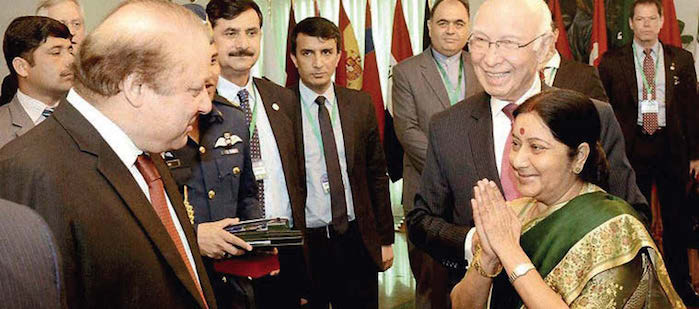
    ISLAMABAD (TIP): As External Affairs Minister Sushma Swaraj walked past the Pakistani media waiting in the Foreign Office corridor on Dec 9 evening, she was asked, “Ma’am, koi breakthrough hai.” Standing behind a lectern, she didn’t disappoint. “I was being asked whether there is a breakthrough or big news,” she began in chaste Hindi, adding “Hum dono deshon ne samagra vaarta prarambh karney ka faisla le liya hai.” When her audience, mostly from Pakistan, couldn’t follow her Hindi and protested mildly, she said, “Let me finish. What was being done as composite dialogue, and was later called the resumed dialogue, will now be called the comprehensive bilateral dialogue.”

    Sushma Swaraj with Nawaz Sharif and Sartaj Aziz in Islamabad on December 9.
    Sushma Swaraj with Nawaz Sharif and Sartaj Aziz in Islamabad on December 9.

    Sartaj Aziz, the Pakistan Prime Minister’s adviser on foreign affairs, also standing behind a lectern, did not add anything and let the joint statement do the talking. Qazi M Khalilullah, spokesperson of the Pakistan Ministry of Foreign Affairs, fished out the one-page document for the cameras. Almost three years after the “resumed dialogue” was stalled following the killing of Indian soldiers, including one who was beheaded, India and Pakistan agreed to restart the dialogue process under the new rubric of “Comprehensive Bilateral Dialogue”. The composite dialogue was stopped after the Mumbai terror attacks in 2008. The comprehensive bilateral dialogue will have all the “pillars” of Indo-Pak relationship and will include confidence building measures (CBMs), Siachen, Sir Creek, Wullar barrage/Tulbul navigation project, economic and commercial cooperation, counter-terrorism, narcotics control, people-to-people exchanges. Two new pillars have been added— humanitarian issues and religious tourism.

    Sources said the idea was not to “disown the past” but make it more contemporary: “After the Geeta and Salman cases have come to light, humanitarian issues have been made another pillar of the relationship.” Swaraj said foreign secretaries of the two countries will meet to decide modalities and schedule of the dialogue. Buoyed by the “success” of the Bangkok meeting, the National Security Advisors will continue to keep talking on “terrorism” — on a parallel track. “We will figure out how it doesn’t duplicate,” a source told The Indian Express, since home secretaries handled counter-terrorism in previous dialogues. From India’s perspective, the Pakistan government’s realisation and acceptance of terrorism as the major challenge was the reason for resumption of the dialogue process. The three-para joint statement gave primacy to terrorism. The second paragraph underlined: “The EAM and the Adviser condemned terrorism and resolved to cooperate to eliminate it. They noted the successful talks on terrorism and security-related issues in Bangkok by the two NSAs and decided that the NSAs will continue to address all issues connected to terrorism. The Indian side was assured of the steps being taken to expedite the early conclusion of the Mumbai trial.”

    Hours before she announced the breakthrough, Swaraj had a “warm” meeting with Prime Minister Nawaz Sharif. Receiving the Indian delegation at his residence, Sharif was at his humorous best. As he introduced Foreign Secretary Aizaz Ahsan Chaudhary, he said, “Yeh hamaare Foreign Secretary hain joh dheeme se muskura rahe hain (this is our Foreign Secretary, he has a faint smile).” Swaraj and Sharif, sources said, chatted a lot in Punjabi. And she met four generations of Sharifs — his mother, daughter Maryam, and his granddaughters. A source privy to the conversation said Sharif gave an “assurance” to Swaraj on speedy conclusion of the Mumbai attack trial. Sources said during the meeting it became clear that Pakistan accepted terrorism as a reality that needs to be confronted and addressed. Sharif told Swaraj that he and Prime Minister Narendra Modi — they met briefly in Paris last month— are “very determined” to take the process forward. Swaraj, in turn, replied that the Bangkok meeting between the two NSAs showed that the two sides can engage on “difficult issues” in a “constructive” and “non-accusatory” manner. Sources said Swaraj discussed the Mumbai attack trial with both Sharif and Aziz, and they both dwelt on the issue for a while. “After all, terrorism colours public perception of Pakistan. So, it appears that they have accepted it as a challenge and are ready to accept it, and address. This was not the case before,” an Indian source, familiar with the bilateral conversations, said. The source also said India was not here to win the war of words against Pakistan. “We are here to bring the relationship back on track,” the source said. But the source was cautious and did not declare that Modi will visit Pakistan next year for the SAARC summit, although Swaraj confirmed it earlier in the day. “Thoda bahut change aaya hai… We don’t say it is permanent. So, we will not predict the future. PM has accepted the invitation in Ufa. There’s still some time.” Earlier in the day, Swaraj said it was time for India and Pakistan to display “maturity and self-confidence to do business with each other”. “Let me take this opportunity to extend our hand to Pakistan as well. It is time that we display the maturity and self-confidence to do business with each other and strengthen regional trade and cooperation.

  • Putting India Emphatically on Global Map – Part 2

    Putting India Emphatically on Global Map – Part 2

    Continued from Putting India Emphatically on Global Map – Part 1

    It defies logic that a country that is considered as our most serious adversary and whose policies in our region has done us incalculable strategic harm should have been accepted as India’s strategic partner during Manmohan Singh’s time. Such a concession that clouds realities serves China’s purpose and once given cannot be reversed. Pursuant to discussions already held during the tenure of the previous government, the Chinese announced during Xi’s visit the establishment of two industrial parks in India, one in Gujarat and the other in Maharashtra, and the “endeavour to realise” an investment of US $ 20 billion in the next five years in various industrial and infrastructure development projects in India, including in the railways sector. The Chinese Prime Minister’s statement just before Modi goes to China on May 14 that China is looking for preferential policies and investment facilitation for its businesses to make this investment suggests that the promised investment may not materialise in a hurry. While the decision during Xi’s visit to continue defence contacts is useful in order to obtain an insight into PLA’s thinking and capacities at first hand, the agreement, carried forward from Manmohan Singh’s time, to explore possibilities of civilian nuclear cooperation puzzles because this helps to legitimise China’s nuclear cooperation with Pakistan.

    Even as Modi has been making his overall interest in forging stronger ties with China clear, he has not shied away from allusions to Chinese expansionism, not only on Indian soil but also during his visit to Japan. During his own visit to US in September 2014 and President Obama’s visit to India in January 2015, the joint statements issued have language on South China Sea and Asia-Pacific which is China-directed. A stand alone US-India Joint Vision for Asia Pacific and the Indian Ocean Region issued during Obama’s Delhi visit was a departure from previous Indian reticence to show convergence with the US on China-related issues. India has now indirectly accepted a link between its Act East policy and US rebalance towards Asia. The Chinese have officially chosen to overlook these statements as they would want to wean away India from too strong a US embrace. During Sushma Swaraj’s call on Xi during her visit to China in February 2015 she seems to have pushed for an early resolution of the border issue, with out-of-the-box thinking between the two strong leaders that lead their respective countries today. Turning the Chinese formulation on its head, she called for leaving a resolved border issue for future generations.

    It is not clear what the External Affairs Minister had in mind when she advocated
    “out-of-the-box” thinking, as such an approach can recoil on us. That China has no intention to look at any out-of-the-box solution has been made clear by the unusual vehemence of its reaction to Modi’s visit to Arunachal Pradesh in February 2015 to inaugurate two development projects on the anniversary of the state’s formation in 1987. The pressure will be on us to do out-of-the-box thinking as it is we who suggested this approach. China is making clear that it considers Arunachal Pradesh not “disputed territory” but China’s sovereign territory. This intemperate Chinese reaction came despite Modi’s visit to China in May. The 18th round of talks between the Special Representatives (SRs) on the boundary question has taken place without any significant result, which is not surprising in view of China’s position on the border. The Chinese PM has recited the mantra a few days ago of settling the boundary issue “as early as possible” and has referred to “the historical responsibility that falls on both governments” to resolve the issue, which means nothing in practical terms. As against this, India has chosen to remain silent on the China-Pakistan Economic Corridor (CPEC) which will traverse territory that is legally Indian, and which even the 1963 China-Pakistan border agreement recognises as territory whose legal status has not been finally settled. The CPEC cannot be built if China were to respect its own position with regard to “disputed” territories which it applies aggressively to Arunachal Pradesh. Why we are hesitant to put China under pressure on this subject is another puzzle.

    Modi’s visit to Seychelles, Mauritius and Sri Lanka in March 2015 signified heightened attention to our critical interests in the Indian Ocean area. The bulk of our trade- 77% by value and 90% by volume- is seaborne. Modi was the first Indian Prime Minister to visit Seychelles in 34 years, which demonstrates our neglect of the Indian Ocean area at high political level and Modi’s strategic sense in making political amends. During his visit Modi focused on maritime security with agreement on a Coastal Surveillance Radar Project and the supply of another Dornier aircraft. In Mauritius, Modi signed an agreement on the development of Agalega Island and also attended the commissioning of the Barracuda, a 1300 tonne Indian-built patrol vessel ship for the country’s National Coast Guard, with more such vessels to follow. According to Sushma Swaraj, Modi’s visit to Seychelles and Mauritius was intended to integrate these two countries in our trilateral maritime cooperation with Sri Lanka and Maldives.

    In Pakistan’s case, Modi too seems unsure of the policy he should follow- whether he should wait for Pakistan to change its conduct before engaging it or engage it nevertheless in the hope that its conduct will change for the better in the future. Modi announced FS level talks with Pakistan when Nawaz Sharif visited Delhi for the swearing-in ceremony, even though Pakistan had made no moves to control the activities of Hafiz Saeed and the jihadi groups in Pakistan.

    The Pakistani argument that Nawaz Sharif was bold in visiting India for the occasion and that he has not been politically rewarded for it is a bogus one. He had a choice to attend or not attend, and it was no favour to India that he did. Indeed he did a favour to himself as Pakistan would have voluntarily isolated itself. The FS level talks were cancelled when just before they were to be held when the Pakistan High Commissioner met the Hurriyet leaders in Delhi. Pakistan’s argument that we over-reacted is again dishonest because it wanted to retrieve the ground it thought it had lost when Nawaz Sharif did not meet the Hurriyet leaders in March 2014.

    Modi ordered a robust response to Pakistani cease-fire violations across the LOC and the international border during the year, which suggested less tolerance of Pakistan’s provocative conduct. We have also been stating that talks and terrorism cannot go together. Yet, in a repetition of a wavering approach, the government sent the FS to Islamabad in March 2015 on a so-called “SAARC Yatra”. Pakistan responded by releasing the mastermind of the Mumbai attack, Lakhvi, on bail and followed it up by several provocative statements on recent demonstrations by pro-Pakistani separatists in Srinagar, without any real response from our side. Surprisingly, in an internal political document involving the BJP and the PDP in J&K, we agreed to include a reference to engaging Pakistan in a dialogue as part of a common minimum programme, undermining our diplomacy with Pakistan in the process.

    Pakistan believes that it is US intervention that spurred India to take the initiative to send the FS to Pakistan, which is why it feels it can remain intransigent. Pakistan chose to make the bilateral agenda even more contentious after the visit by the FS by raising not only the Kashmir cause, but also Indian involvement in Balochistan and FATA. On our side, we raised the issue of cross border terrorism, the Mumbai terror trial and LOC violations, with only negative statements on these issues by Pakistan. Since then the Pakistani army chief has accused India of abetting terrorism in Pakistan. The huge gulf in our respective positions will not enable us to “find common ground and narrow differences” in further rounds of dialogue, about which the Pakistani High Commissioner in Delhi is now publicly sceptical.

    Even though one is used to Pakistan’s pathological hostility towards India, the tantrums that Nawaz Sharif’s Foreign Policy Adviser, Sartaj Aziz, threw after President Obama’s successful visit to India were unconscionable. He objected to US support for India’s permanent seat in the UNSC and to its membership of the Nuclear Suppliers Group (NSG). He castigated the Indo-US nuclear deal, projecting it as directed against Pakistan and threatened to take all necessary steps to safeguard Pakistan’s security- in other words, to continue to expand its nuclear arsenal.

    Chinese President Xi’s April 2015 visit to Pakistan risks to entrench Pakistan in all its negative attitudes towards India. The huge investments China intends making through POK constitutes a major security threat to India. China is boosting a militarily dominated, terrorist infested, jihadi riven country marked by sectarian conflict and one that is fast expanding its nuclear arsenal, including the development of tactical nuclear weapons, without much reaction from the West. President Ashraf Ghani’s assumption of power in Afghanistan and his tilt towards Pakistan and China, as well as the West’s support for accommodating the Taliban in Afghanistan with Pakistan’s help will further bolster Pakistan’s negative strategic policies directed at India. Ghani’s delayed visit to India in April 2015 has not helped to clarify the scenario in Afghanistan for us, as no change of course in Ghani’s policies can be expected unless Pakistan compels him to do by overplaying its hand in his country. Modi is right in biding his time in Afghanistan and not expressing any undue anxiety about developments there while continuing our policies of assistance so that the goodwill we have earned there is nurtured.

    Prime Minister Modi, belying expectations, moved rapidly and decisively towards the US on assuming office. He blindsided political analysts by putting aside his personal feelings at having been denied a visa to visit the US for nine years for violating the US law on religious freedoms.

  • Putting India Emphatically on Global Map – Part 1

    Putting India Emphatically on Global Map – Part 1

    Prime Minister Modi has surprised his own people and, no doubt, external observers, by his foreign policy activism since he took office. In his year in power he has travelled abroad 16 times- and 19 if the forthcoming visits to China, Mongolia and South Korea are included- inviting some criticism that these peregrinations have meant less attention devoted to domestic affairs. This is misplaced criticism because today, with the change in the nature of diplomacy, the heads of governments play a critical role in external affairs. Frequent personal contacts at the highest political level have now become the norm, leaders often are on first name terms and difficult knots are untied by exertions at their level, sometimes in an unorthodox manner. Modi, even if seemingly inexperienced in the foreign policy domain, has had to, therefore, wade into the deep waters of diplomacy as soon as he took over because his position has demanded this. But no one was prepared for a Modi with a natural flair for diplomacy, to which he has brought a surprising degree of imagination and self-assurance. From the start, he seemed to have a clear idea of where the interests of his country lay and the initiatives needed to advance them.

    All Indian Prime Ministers on taking over give priority to ties with neighbouring countries. The belief is that either India has neglected its neighbours or has been insensitive and overbearing, leading to their alienation and consequent opportunities for external powers to intervene at the cost of India’s interests. Modi too began by reaching out to the neighbours, but in a manner not anticipated. He invited all the SAARC leaders to his swearing-in, with the intention no doubt to signal that his elevation to power would usher in a new era of South Asian relations, that the clear victory in elections of a supposedly nationalist party did not denote a more muscular policy towards neighbours and that, on the contrary, India intended to work together with them to move the whole region forward towards peace and prosperity. This gesture had most meaning for India-Pakistan relations, and Nawaz Sharif’s decision to attend the swearing-in was “rewarded” with the announcement of FS level talks between the two countries.

    Continuing the emphasis on the neighbourhood, he chose Bhutan as the first country to visit in June 2014. This made sense as Bhutan is the only neighbour that has not played an external card against us or politically resisted building ties of mutual benefit. His August 2014 visit to Nepal made a notable impact in local political and popular thinking about India as a well-wisher. His extempore address to the Nepalese parliament was a tour de force. He handled sensitive issues during his visit with finesse and played the cultural and religious card dextrously. External Affairs Minister Sushma Swaraj visited Bangladesh in June 2014. A very notable development is the approval of the Land Boundary Agreement with Bangladesh approved by the Indian parliament in May 2015. Modi visited Myanmar in November 2014 to take part in the East Asia summit and for bilateral discussions with this strategically placed neighbour whose honeymoon with China is waning.

    SAARC figures prominently in Modi’s foreign policy vision. He invited all SAARC leaders to his swearing-in ceremony, which was unprecedented. It is true that SAARC is one of the least integrated regions economically speaking, which means that the potential of the region remains unexploited. This also means that external actors find it easier to intrude into the loose equations in the subcontinent. While in terms of aspirations for the region, Modi is right in imagining a more tightly textured SAARC, India’s capacity to do this is limited in the face of Pakistani recalcitrance. A strengthened SAARC means a stronger Indian role in it, which is anathema to a Pakistan that is obsessed with countering Indian “hegemony” in South Asia. Pakistan will be reduced to its true importance if it ceases to confront India, which is why it will continue its confrontational policies. it also means that Afghanistan will not be adequately integrated into SAARC structures as that is contingent on Pakistan’s willingness to facilitate access to this landlocked country. At the Kathmandu SAARC summit in November 2014, Modi encouraged neighbours to benefit from opportunities provided by India’s growth, promised a special funding vehicle overseen by India to finance infrastructure projects in the region and announced India’s readiness to develop a satellite specifically for the region by 2016. He warned at the Kathmandu summit that regional integration will proceed with all or without some, which suggested that if Pakistan did not cooperate, others could go ahead without it, though under the SAARC charter this is not possible and other countries may not support a strategy of isolating Pakistan.

    Modi seems to admire China’s economic achievements, which would not be surprising given China’s spectacular rise. His several visits to China as Gujarat Chief Minister no doubt gave him familiarity with the country and take its pulse. His view that economic cooperation is the key driver in relations between countries and that all countries give more importance to economic growth and prosperity for their peoples than creating conditions of conflict evidently guides his thinking towards China. He was quick to court China after assuming power, with reinforcement of economic ties as the primary objective. The huge financial resources at China’s disposal, its expertise in infrastructure building, its need for external markets for off-loading the excess capacity it has built in certain sectors has made cooperation with China a theoretically win-win situation. The Chinese Foreign Minister was the first foreign dignitary to be received by Modi. He invited the Chinese President to make a state visit to India in September 2014, during which unprecedented personal gestures were made to him in an informal setting in Ahmedabad on Modi’s birthday. This imaginative courting was marred by the serious border incident in Ladakh coinciding with Xi’s visit- one more case of China reaching out to India and simultaneously staging a provocation so that India remains unsure about China’s intentions and finds it difficult to make a clear choice about what policy to pursue, and in the process has to accept faits accomplish that are to China’s advantage.

    Unlike the timidity of the previous government to treat such incidents as acne on the beautiful face of India-China relations, Modi raised the border issue frontally with XI at their joint press conference, expressing
    “our serious concern over repeated incidents along the border”. His call for resuming the stalled process of clarifying the Line of Actual Control (LAC) and mention of “India’s concerns relating to China’s visa policy and Trans Border Rivers” while standing alongside Xi Jinping at the joint press conference indicated a refreshing change from the past in terms of a more open expression of India’s concerns. With regard to Bangladesh-China-India-Myanmar Economic Corridor that China has been pushing hard, Modi was cautious. Why we accepted to discuss such a proposal in a working group in the first place is a puzzle. Engagement with China ought not to mean that we let it set the agenda when the downsides to us of what it seeks are clear. Equally importantly, he did not back another pet proposal of Xi: the Maritime Silk Road, which is a repackaged version of the notorious “string of pearls” strategy, as the joint statement omitted any mention of it. Since then China is pushing its One Belt One Road (OBOR) proposal which seeks to tie Asian and Eurasian economies to China, create opportunities for Chinese companies to bag major projects in this region financed by the Asian Infrastructure Investment Bank (AIIB) that China has floated. This ambitious concept is intended to establish China’s hegemony in Asia and outflank India strategically.

    On a more positive side, during Xi’s visit, the two sides agreed to further consolidate their Strategic and Cooperative Partnership, recognised that their developments goals are interlinked and agreed to make this developmental partnership a core component of this partnership.

    Read More : Putting India Emphatically on Global Map – Part 2

  • Nepal to ink transport deal with India, Bangladesh, Bhutan

    KATHMANDU (TIP): Nepal will sign the Bangladesh, Bhutan, India and Nepal (BBIN) Motor Vehicles Agreement in Thimphu on Monday to facilitate transportation of both people and goods among the four Saarc member countries. Minister for Physical Infrastructure and Transport Management Bimalendra Nidhi is leaving for the Bhutanese capital tomorrow to sign the agreement on behalf of the Nepal government.

    “With endorsement from the cabinet, I am visiting Thimphu to sign the motor vehicles agreement, which is part of the Saarc Motor Vehicles Agreement,” Nidhi told PTI. “Once the BBIN is signed, it would pave way for signing the Saarc Motor Vehicle Agreement,” he pointed out. The BBIN agreement is expected to help revive the stalled South Asian Association for Regional Cooperation motor vehicles agreement, which was approved during the Saarc Summit here in November, 2014.

    “This is a sub-regional motor vehicle agreement which is not parallel to the Saarc motor vehicle agreement,” he said. The BBIN will facilitate transportation of both people and goods among the four Saarc member countries.

    The signing of the BBIN would promote safe, economical, efficient and environmentally sound road transport in the region and would further help each country in creating an institutional mechanism for regional integration. Nidhi said Nepal is still negotiating for the Saarc motor vehicles agreement as early as possible but a meeting could not be convened due to the April 25 quake.

  • A way with the world

    A way with the world

    The Prime Minister, Narendra Modi, scored most in foreign policy in his first year in power. No one anticipated Modi’s natural flair for diplomacy, to which he has brought imagination and self-assurance. Modi has been more emphatic than his predecessors in giving improvement of relations with neighbors greater priority. He invited all the SAARC leaders to his swearing-in, to signal that the decisive election victory of a supposedly nationalist party did not denote a more muscular policy towards neighbors. On the contrary, India would take the lead in working for shared regional peace and prosperity.

    Bhutan, the only neighbor that has not politically resisted building ties of mutual benefit, was the first country he visited in June, 2014. He handled his August 2014 visit to Nepal with sensitivity and finesse, and followed it up with exceptional leadership in providing immediate earthquake relief to Nepal in May, 2015. In obtaining Parliament’s approval of the land boundary agreement with Bangladesh in May, 2015, Modi showed his determined leadership again.

    He did falter with Pakistan, seemingly unsure about whether he should wait for it to change its conduct before engaging it, or engage it nevertheless in the hope that its conduct will change for the better in future. He announced foreign-secretary-level talks during Nawaz Sharif’s visit to Delhi, but cancelled them precipitately. He ordered a robust response to Pakistan’s cease-fire violations, yet sent the foreign secretary to Islamabad in March, 2015, on an unproductive SAARC Yatra. Relations with Pakistan remain in flux. In Afghanistan, President Ashraf Ghani’s tilt towards Pakistan and China has challenged the viability of India’s Afghanistan policy. Ghani’s delayed visit to India in April 2015 did not materially alter the scenario for us, but India has kept its cool.

    Modi’s foreign policy premise, that countries give priority today to economics over politics, has been tested in his China policy, which received a course correction. After courting China economically, Modi had to establish a new balance between politics and economics. President Xi’s visit to India in September, 2014, was marred by the serious border incident in Ladakh. Modi showed a sterner side of his diplomacy by expressing serious concern over repeated border incidents and calling for resuming the stalled process of clarifying the Line of Actual Control. During his China visit in May, Modi was even more forthright by asking China to reconsider its policies, take a strategic and long-term view of our relations and address “the issues that lead to hesitation and doubts, even distrust, in our relationship”. He showed firmness in excluding from the joint statement any reference to China’s One Road One Belt initiative or to security in the Asia-Pacific region. The last minute decision to grant e-visas was puzzling, especially as the stapled visa issue remains unresolved. The economic results of his visit were less than expected, with no concrete progress on reducing the huge trade deficit and providing Indian products more market access in China. The 26 “agreements” signed in Shanghai were mostly non-binding MoUs involving the private sector and included the financing of private Indian companies by Chinese banks to facilitate orders for Chinese equipment.

    Modi’s visit to Seychelles, Mauritius and Sri Lanka in March, 2015, signified heightened attention to our critical interests in the Indian Ocean area. Modi was the first Indian prime minister to visit Seychelles in 33 years. His visit to countries in China’s periphery in May, 2015, was important for bilateral and geopolitical reasons. During his visit to South Korea the bilateral relationship was upgraded to a “special strategic partnership’, but Korea nevertheless did not support India’s permanent membership of the United Nations Security Council. Modi’s visit to Mongolia was the first by an Indian prime minister to a country whose position is geopolitically strategic from our point of view.

    Belying expectations, Modi moved decisively towards the United States of America on assuming office. He set an ambitious all-round agenda of boosting the relationship during his September, 2014, visit to Washington. In an imaginative move, he invited Obama to be the chief guest at our Republic Day on January 26, 2015. To boost the strategic partnership with the US, he forged a “breakthrough understanding” on the nuclear liability issue and for tracking arrangements for US-supplied nuclear material. Progress on the defense front was less than expected with four low-technology “pathfinder” projects agreed under the defense technology and trade initiative. The important US-India joint strategic vision for the Asia-Pacific and Indian Ocean region, issued as a stand-alone document, high-lighted the growing strategic convergences between the two countries, with China in view. A special feature of Modi’s September, 2014, US visit was his dramatic outreach to the Indian community, which has since then become a pattern in his visits abroad, whether in Australia, Canada or Beijing. No other prime minister has wooed the Indian communities abroad as Modi has done.

    President Putin’s visit to India in December, 2014, was used to underline politically that Russia remains India’s key strategic partner. Modi was effusive in stating that with Russia we have a “friendship of unmatched mutual confidence, trust and goodwill” and a “Strategic Partnership that is incomparable in content”. He was careful to convey the important message that even as India’s options for defense cooperation had widened today, “Russia will remain our most important defense partner”. Civilian nuclear cooperation with Russia got a boost with the agreement that Russia will build “at least” ten more reactors in India beyond the existing two at Kudankulam. All this was necessary to balance the strengthened strategic understanding with the US and its allies.

    Modi bolstered further our vital relations with Japan, which remains a partner of choice for India. Shinzo Abe announced $35 billion of public and private investment in India during Modi’s visit to Japan in September 2014, besides an agreement to upgrade defense relations.

    Modi’s visit to France and Germany in April, 2015, recognized Europe’s all-round importance to India and was timely. He rightly boosted the strategic partnership with France by ensuring concrete progress in the key areas of defense and nuclear cooperation by announcing the outright purchase of 36 Rafale jets and the MoU between AREVA and L&T for manufacturing high-technology reactor equipment in India. Modi’s bilateral visit to Canada in April, 2015, was the first by an Indian prime minister in 45 years. Bilateral relations were elevated to a strategic partnership and an important agreement signed for long-term supply of uranium to India.

    Relations with the Islamic world received less than required attention during the year, although the Qatar Emir visited India in March, 2015, and the political investment we made earlier in Saudi Arabia aided in obtaining its cooperation to extract our people from Yemen. Gadkari went to Iran in May, 2015, to sign the important agreement on Chabahar. Modi did well to avoid any entanglement in the Saudi-Iran and Shia-Sunni rivalry in West Asia. He met the prime minister of Israel, Benjamin Netanyahu, on the sidelines of the UN general assembly meeting in September, last year, to mark the strength of India-Israel ties. So, Modi’s handling of India’s foreign policy in his first year is impressive. He has put India on the map of the world with his self-confidence and his faith in the nation’s future.

  • Foreign Secretary Jaishankar to travel to Pakistan

    Foreign Secretary Jaishankar to travel to Pakistan

    Foreign Secretary S. Jaishankar will travel to Pakistan in March, seven months after India cancelled foreign secretary-level talks.

    “In accordance with the Prime Minister’s directive, will be undertaking a SAARC Yatra to all South Asian countries including Pakistan in March,” Spokesperson of the External Affairs Ministry Syed Akbaruddin said on Tuesday.

    However, he did not reveal the exact dates, saying that visit has to be finalised at mutually convenient dates.

    Replying to a question during a live session on Facebook, Mr. Akbaruddin said, “We stand ready to talk with Pakistan in accordance with the Simla Agreement on all issues including Jammu & Kashmir.”

    In an ice-breaking move earlier this month, Prime Minister Narendra Modi spoke to his Pakistani counterpart Nawaz Sharif after which it was announced that Jaishankar will visit Islamabad when he will “push bilateral agenda“.

    Using cricket diplomacy, Modi called leaders of four SAARC nations which, along with India, are participating in cricket World Cup. He conveyed best wishes to their teams.

    Thereafter, Mr. Modi announced that Mr. Jaishankar will undertake a “SAARC yatra” soon to strengthen relationship with them.

    Next month’s visit will be seven months after India broke off foreign secretary-level talks in August last at the eleventh hour because the Pakistan High Commissioner here held consultations with Kashmiri separatists.

    Sharif had welcomed the foreign secretary’s proposed visit .

    “to discuss all issues of common interest”.


  • Foreign Secretary S Jaishankar to visit Pakistan

    Foreign Secretary S Jaishankar to visit Pakistan

    NEW DELHI  (TIP): Foreign Secretary S Jaishankar will soon visit Pakistan in what will mark the first official high-level contact between the two countries since Pakistan PM Nawaz Sharif visited India last year for his counterpart Narendra Modi’s oath-taking.


    The decision to send Jaishankar to Pakistan though is another South Asia outreach by PM Narendra Modi which will see India’s top diplomat visiting all SAARC countries. Sources said they didn’t want to speculate about dates for Jaishankar’s visit to Pakistan. Modi himself informed his counterpart Nawaz Sharif about the decision to resume foreign secretary level dialogue with Pakistan. India had last year scheduled the same dialogue with Pakistan in August last year but cancelled it at the last moment after Pakistan high commissioner chose to meet Hurriyat leaders.


    Islamabad has maintained all along since then that India would have to take the initiative for any resumption of dialogue between the two countries.