Over the past several decades, there has been growing concern among political analysts, economists, and the public at large about the shifting dynamics of governance in the United States. The country, long heralded as the bastion of democracy, appears to be transitioning into an oligarchic state – nation where power is concentrated in the hands of a wealthy few. This transformation is being driven by the intertwining of economic and political power, with billionaire businessmen exercising unprecedented control over both spheres.
The United States has witnessed a dramatic rise in economic inequality. According to a 2023 report by Oxfam, the top 1% of Americans now control approximately 34% of the nation’s wealth, while the bottom 50% collectively own just 2.5%. Billionaires like Elon Musk, Jeff Bezos, and Warren Buffett not only dominate the economy but also exert considerable influence over public policy. Their vast financial resources enable them to lobby for legislation that protects their interests, often at the expense of the broader public.
One illustrative example is the 2017 Tax Cuts and Jobs Act, which significantly reduced corporate tax rates from 35% to 21%. While proponents argued that these cuts would stimulate economic growth, the primary beneficiaries were large corporations and the ultra-wealthy. An analysis by the Institute on Taxation and Economic Policy found that the richest 5% of Americans reaped the bulk of the benefits, while middle- and low-income households saw minimal relief.
Moreover, the wealth of billionaires has skyrocketed during times of crisis. During the COVID-19 pandemic, U.S. billionaires saw their collective wealth increase by over $1 trillion between March 2020 and March 2021, even as millions of Americans lost their jobs and struggled to make ends meet. This stark contrast underscores the growing chasm between the economic elite and the rest of the population.
The influence of billionaires is not limited to the economic realm; it has increasingly permeated the political landscape. Billionaire-backed super PACs (political action committees) and dark money groups have become critical players in elections, effectively allowing the ultra-wealthy to shape political outcomes. The 2010 Citizens United v. FEC Supreme Court decision, which allowed unlimited corporate and individual spending in elections, has further entrenched this power dynamic.
For instance, in the 2020 election cycle, billionaire Sheldon Adelson and his wife Miriam contributed over $218 million to Republican candidates and causes. On the Democratic side, Michael Bloomberg spent nearly $1 billion of his own fortune on his presidential campaign and to support Democratic candidates. This trend raises questions about whether elected officials are accountable to their constituents or to the deep-pocketed donors who fund their campaigns.
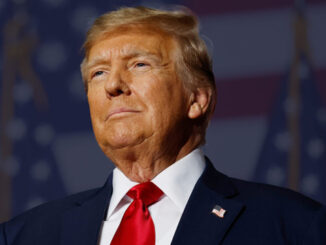
The revolving door between business and government further blurs the line between public service and private interests. High-ranking officials often transition seamlessly between corporate boardrooms and government offices, ensuring that policies remain favorable to the business elite. The appointment of former Goldman Sachs executives to key positions in government during multiple administrations exemplifies this phenomenon.The recent actions of the president-elect have amplified concerns about the United States’ drift toward oligarchy. By signaling a preference for appointing family members, friends, and loyalists to high-ranking government positions, the president-elect appears to prioritize personal loyalty over merit and public service.
One controversial example is the nomination of a relative as an ambassador, raising questions about the qualifications and motivations behind such appointments. Similarly, the nomination of the president-elect’s son’s girlfriend to another ambassadorship has drawn widespread criticism. These actions are reminiscent of oligarchic governance, where power is concentrated within a small, interconnected group, rather than being distributed based on democratic principles.
The potential consequences of such appointments are far-reaching. They risk undermining public trust in institutions, fostering cronyism, and diminishing the effectiveness of governance. When key positions are filled based on loyalty rather than expertise, the government’s ability to address complex challenges and serve the public interest is compromised.
The United States’ trajectory toward oligarchy is not without precedent. The Gilded Age of the late 19th and early 20th centuries was characterized by extreme wealth concentration and the outsized influence of industrial magnates like John D. Rockefeller, Andrew Carnegie, and J.P. Morgan. These “robber barons” wielded immense economic and political power, often at the expense of workers and consumers.
However, the Progressive Era that followed brought significant reforms, including antitrust laws, labor protections, and campaign finance regulations, aimed at curbing the excesses of oligarchy. These measures helped restore a degree of balance to the American political and economic systems.
Today, many of these safeguards have been eroded or rendered ineffective. The weakening of campaign finance laws, the rollback of antitrust enforcement, and the decline of labor unions have all contributed to the resurgence of oligarchic tendencies. As a result, the United States risks repeating the mistakes of the past.
The United States is not alone in grappling with the challenges of oligarchic influence. Countries like Russia and China are often cited as modern examples of oligarchies, where economic elites wield significant control over political decision-making. In Russia, for instance, a small group of oligarchs has benefited from close ties to the Kremlin, while in China, the Communist Party maintains tight control over both the economy and political apparatus.
However, what sets the United States apart is its historical commitment to democratic ideals and its reputation as a global leader in promoting democracy. The erosion of these principles risks undermining the country’s moral authority and standing on the world stage.
To prevent the United States from becoming a full-fledged oligarchy, urgent action is needed to restore the balance of power. Several key reforms could help address the underlying issues:
Campaign Finance Reform: Reversing the Citizens United decision and implementing stricter limits on campaign contributions would reduce the influence of money in politics.
Antitrust Enforcement: Strengthening antitrust laws and breaking up monopolies would curb the economic power of large corporations and promote competition.
Tax Reform: Implementing a more progressive tax system and closing loopholes that benefit the ultra-wealthy would help reduce economic inequality.
Strengthening Labor Protections: Reinvigorating labor unions and ensuring fair wages and working conditions would empower workers and reduce disparities.
Ethics and Transparency: Enforcing stricter ethics rules and increasing transparency in government appointments would help rebuild public trust in institutions.
The United States stands at a crossroads. The concentration of economic and political power in the hands of a wealthy few threatens to undermine the democratic principles upon which the nation was founded. While the challenges are formidable, history offers hope that meaningful reform is possible. By addressing the root causes of oligarchic influence, the United States can reaffirm its commitment to democracy and ensure that power truly resides with the people.
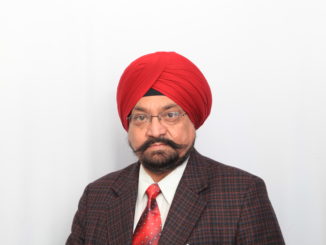
(Prof. Indrajit S Saluja is editor, The Indian Panorama)
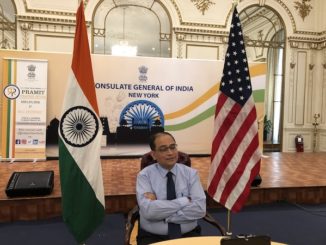
Consul General of India at New York, Sandeep Chakravorty, as his last name suggests, has indeed been a Chakravorty Samrat of his sprawling territory covering ten US States . He came, he saw and he conquered, can well go to describe his work, accomplishments and achievements.
Mr. Chakravorty’s tenure witnessed extraordinary situations which demanded extraordinary responses. In both, the government of India’s J&K action , including the abrogation of Article 370 which granted special status to the State of Jammu & Kashmir, and later, the colossal human misery caused by COVID-19 calling for a gigantic effort to extend a helping hand to Indians , Ambassador Chakravorty proved himself equal to the occasion.
Ambassador Chakravorty ‘s work went well beyond the routine consular work. He strengthened the existing framework and created new and innovative ones. He strengthened institutions and organizations with his ideas, active participation and frontal leadership. In the process, he endeared himself to not only the Indian American community, but also to many from various communities . They will miss him .
Building bridges between India and U.S. and between Indian Americans and mainstream Americans has been his overriding passion. He can be credited with promoting amity and goodwill among communities here and the two nations. He leaves behind a rich legacy which his successor could well be proud of .
Ambassador Chakravorty’s fan following probably compares well with that of top film stars. He came to have many admirers, and quite a large number of friends, among whom I count myself. We will miss him a lot, and also his lovely wife Taruna Chakravorty, the kindly and caring First Lady at the Indian Consulate. Their twin daughters hardly ever made appearances but when they did as when they gave stellar Classical dance performances, they were amazing. God bless them!
New Yorkers tell me they will miss the friendly family. Of course, we will miss them.
We, at The Indian Panorama, Opinio Media , and International Media Arts, and my family who admire the Chakravorties, will miss the beautiful and admirable family. We wish them all health and happiness, and hope to see them remain connected.
Ambassador Chakravorty may be credited with enormous work he has done to streamline the consulate functioning, bringing Indian American community to consulate and vice versa; strengthening bond between Indian Americans and mainstream Americans at various levels; reaching out to American lawmakers and educating them on contentious issues, and winning over some hesitant ones to India’s side ; educating Indian Americans on various Indian issues and winning their support for government of India policies; lobbying with investors in America to invest in India, and creating an image for himself as a dependable friend to Indian Americans and Americans alike. His passion for promotion of Indian culture and heritage resulted in the Consulate becoming a home to artists and promoters of various arts. His dialogue with anti -India separatists to persuade them to give up their futile efforts at separatism and get back to Indian mainstream, is a part of his historic initiatives. There is so much more to Ambassador Chakravorty’s immense work and valuable contribution.
The Indian Panorama, which was the first publication to interview Ambassador Chakravorty, three days after his taking over, as Consul General , on August 3, 2017 , is probably the privileged publication to have him to sit for his last interview as Consul General, on June 16, 2020.
“Setting up of Gandhi Shanti Van is my lasting legacy”, said Ambassador Sandeep Chakravorty. Ambassador Chakravorty ((third from left) inaugurated the plantation ceremony at Gandhi Peace Garden at CUNY, Old Westbury, October 1, 2019. 150 trees were planted in Commemoration of Mahatma Gandhi’s 150th birth anniversary Photo / Courtesy Indian Consulate, New York
The Indian Panorama Chief editor Prof. Indrajit S Saluja and Assistant Editor Bidisha Roy spoke with Ambassador Chakravorty.
Here are some excerpts from the interview.
TIP: Thank you for the interview, which I believe, is your last interview as Consul General with The Indian Panorama.
I recall your first interview to The Indian Panorama in August 2017. I believe it was your first interview to media after taking over as Consul General on August 3, 2017. You were kind enough to give us time immediately after joining here. And that was on August 6, 2017. You had said certain things, then, which I would probably like you to recall.
We have come a long way during the past close to 3 years.
We kept track of your journey, sometimes, through very difficult terrains particularly during the last about one and half year that I can think of. We have been appreciative of your work, and critical, too, where we thought the Consulate was failing, as is the dharma of media. However, we have had a great relationship, to the building of which you contributed more than we did. Thank you.
Institution building Is a continuous process. The consulate in 2017 when you took over has undergone transformation at your hands. You have added enormously to what you inherited. Pramit is the most outstanding example of your prized additions. What led you to imagine Pramit? How successful has it proved? Can you elaborate on that?
Ambassador: So, first of all, thank you and I vividly remember our first meeting right after I arrived here on August 3, if I remember correctly and you mentioned that our interview was on 6th August. So, I would request you to also remind me of what I had said then and I remember in another interview you had brought up what I had said and, you know, we were able to evaluate our performance. So now that I’m ending my tenure here I would again like to go back and see what all I promised, how much I was able to deliver and where I could not. But that’s not from a negative point of view but to see what more can be done. And I like this approach because three years back I set out the roadmap and some milestones to achieve, and I would be very happy to see how much I have achieved and how much I have not been able to achieve. So, that’s a very evaluative kind of exercise that you always do and I want to thank you and Indian Panorama for doing that.
Always planning better services at the Consulate. Ambassador Harsh Shringla cuts the ribbon to inaugurate the E-Seva at the Consulate, July 16, 2019. Consul General Sandeep Chakravorty is on extreme right. Photo/ Jay Mandal-On Assignment
Talking about the app that was developed – the app was developed with the whole idea. You know the moment I arrived here I realized that conventional ways of reaching out to the community will not succeed because of the sheer size and number. And this consulate, although it’s one of the largest consulates India has, it is not commensurate to the responsibilities and the duties that we have to perform. Our staff is the same since last so many years but the Diaspora has doubled, at least in the last 20 years, from 1 million it has become 2 million in this part of the world, and our interaction and connection with India in every, every way has increased. So, we realized that we had to rely on technology and with that objective we worked and I would like to put on record my appreciation and gratitude to one of my consuls Vipul Mesaria who came up with this server based idea, and then both of us, worked together and we developed it and it has really stood us in good stead, particularly now when we faced this crisis, due to COVID. One small example is that you know we responded to medical prescription requirements for across the United States, even outside our jurisdiction, hundreds and thousands. At least five to seven thousand people have responded – that would not have been possible without this app. You know the number of queries that we handle, the number of phone calls. We handle on an average 400 to 500 phone calls a day. That is not possible without this application. So, we integrated our web-based work, our telephone system, our monitoring system into one. And I think this is a great powerful tool, which we have developed and my hope is that other embassies and other missions use it and it actually proved its worth during this crisis, where we were able to reach out to everyone who came to us with some kind of a response. In these circumstances now what people need is response. Even if you say no, it’s a response. But what people don’t like is indifference. Indifference is the worst sentiment that can be created in somebody, and we have tried to overcome that, and I am very proud that my team has been very responsive. Our 24 hours helpline since mid-March, it is working 24 hours – you can call anytime, and you’ll get a response. So, I think that has been because of the technological changes we made in our consulate and our team spirit that we were able to bring. And we did it when things were Ok and normal, and it proved its worth when things became adverse in the last four months.
Building bridges. Ambassador Harsh V Shringla at an informal dinner reception, hosted in his honor by the New Jersey Governor, Phil Murphy (right) and his wife Tammy Murphy at his private residence in NJ, July 15, 2019. . Also in the picture is Consul General, Ambassador, Sandeep Chakravorty who organized the meeting Photo / Jay Mandal-On Assignment
TIP: If it is such a useful app, don’t you think the Ministry of External Affairs should recommend it across the board to all consulates all over the world ?
Ambassador: They are working on it, and I’ve been told by a very senior official that they are developing apps. This was home developed, homebrewed. I think they are trying to do it in a more professional That idea has been implanted. I have myself spoken to our leadership, and they liked the idea and they understand it, and I’m sure it will be the way we work in the coming years.
TIP: Let me take you to your first interview with The Indian Panorama in August 2017, soon after your arrival.
Always a man of ideas. General (Ret) David Howell Petraeus (Left), former Director of CIA and Ambassador Sandeep Chakravorty, India’s Consul General to New York at the Consulate General of India in New York July 23, 2019. General Petraus was invited to deliver a lecture on US-India relations under the New India Lecture Series. Photo/ Jay Mandal- On Assignment
You had said then, and I quote you “There are three relationships here – India-US relationship, Indian community-US relationship, and Indian community-India relationship. All are very important and we need to focus on all three.”
Almost three years later, when you look back, how do you score yourself on these issues?
Ambassador: Look, I would say that in all three, there has been positive developments. I can’t give a number because that would be the job of others who are evaluating me. Self-evaluation is always very difficult. But I think that on all three fronts, there has been, you know, great strengths. The India us relationship has gone ahead. It has been transformational with the Prime Minister’s visit to the US last year in September, then President Trump’s visit to India in February. All those have contributed immensely and if you are a keen observer of the political and geopolitical space, you will realize the kind of goodwill that India generates in the United States. Similarly, there’s a great deal of goodwill about United States in India. So, I think on that account too, we don’t have any reason to be unhappy. What may be, where we have the challenge is to convert this goodwill into economic opportunities, into businesses for bettering the lives of people in India. Having a strong economic relationship, I think ,nothing will put us back.
Rajiv Kumar, Vice Chairman, NITI Aayog (left) speaking about government policies and programs. Ambassador Chakravorty is to the right.
The India-Indian community relationship is also, I think, strong and vibrant. “Howdy Modi’ was a very good example where thousands of people went and you know there is a great deal of support to India and Indian causes in the United States, and the best support we found was when article 370 was abrogated. The Indian community, by and large, you know, greatly and very enthusiastically thought that it was anachronistic and they accepted it. You also mentioned in your remarks that there was a great deal of support. And as far as Indian community Indian Consulate relations are concerned, the assessment should be done by you. But I think that we have opened up our consulate to multiple actors. You know, all kinds of things we have done here. The idea was to not only open up to the Indian community but also to the mainstream American community, and events are a big method of doing that. I offered our facilities and our platform to all kinds of groups. Things that we have never done before we have done here. You know, and one initiative that I took was recognizing the contributions of Indian Americans who are friends of the consulate, and that I think has gone on very well. Few people told me don’t get into this, there will be people who are unhappy! Just because I will make one person unhappy, it doesn’t mean I won’t make 10 more people happy. So, I started in 2019 which was the first year we did it. And we honored people from the media and I think, Prof Saluja, you were one of the honorees last year. This year we honored Renee. You’re working in the media and you have contributed so much to the understanding of India in the United States and vice versa. This year it was in many more in numbers and in the coming years, I’m sure, it will be institutionalized and some of my colleagues and other consulates have liked this and they are proposing to do the same thing.
The New India Lecture Series at Indian Consulate, New York. From left, Sanjay Bhatnagar, CEO, WaterHealth International and Board of Dir. US-India Strategic partnership Forum, Arvind Panagariya, Professor of Indian Political Economy at Columbia University and Ambassador Sandeep Chakravorty, Consul General of India to New York during conversations on India’s current state of Economy at the Indian Consulate in New York City, New York; Jan 22, 2018
I’ll raise one point here. Earlier the interactions were different. They were more personal, because one could afford to be very personal in relationships, because the numbers were small and the kind of things that you did was small, relationship was small. But things have changed in last five years. Relationship has gone to a new level – it’s difficult to go personal now. But I think institution level power interactions have become much, much more. We have taken lots of initiatives. This year I started something called a ‘Chalo Consulate’. Rather than we going to you, you come to us, we will host you, we will talk to you. We did two or three Chalo Consulate’ editions till we were hit by COVID. We did with GOPIO we did it with AIA. But as soon as the situation normalizes, we’ll restart it. So, I think we’re at multiple levels we have connected with. You know, we celebrated 350th birth anniversary of Guru Gobind Singh Ji Maharaj then Guru Nanak Dev Ji’s 550th anniversary, and Gandhi celebrations. We introduced a lot of art and culture and business events. Then, educational events. So, I have tried to vibrate on all the cords, some very successfully, resulting in harmony in music; some maybe not so successful, but I tried my hands on all cords of the Sitar.
TIP: About India, American relationship, there are two areas, which you were looking at. One is the political and diplomatic relationship- India getting the support of the US, and the other is more important maybe, economic development, trade and commerce. There were high expectations of ever-growing economic cooperation between the US and India. There was a huge optimism. You organized so many lectures here by eminent economists, and there was huge optimism that Indian Americans will invest in India; Indian Americans will invest. Many central ministers and chief ministers of states made it a routine affair to visit New York to attract investment and they went all over the US in fact. Where are we on investment by Indian Americans in trade and commerce?
Ambassador Chakravorty held a meeting, October 2018, with the only Hindu Congresswoman Tulsi Gabbard Photo/ -Jay Mandal- On Assignment
Ambassador: The US India investment story is very positive. Now, as far as Indian Americans investing in India is concerned you know we have to understand it in a slightly nuanced way. If you consider an Indian company here which is owned by an Indian American, it doesn’t remain an Indian company, it becomes an American company. So, it then becomes very difficult to ethnically segregate that data. When you look at investment flows, for instance, let’s say, Google is investing in India. Now Google is headed by an Indian, or let’s say KKR is investing or let’s say BlackRock is investing – all their investment portfolio, India portfolio is handled by Indians. So, when American companies invest in India, we don’t see them as Indian American companies we see them as American companies, and that data is not available. But what I can say is that Indian Americans in decision making places, they are very pro India. I have attended so many meetings with CEOs when the finance minister came, when our Chief Ministers came. And we have been inviting all American corporates, but the room is full of Indians. The point is that our people have been so successful, they are making the main decisions in these companies. And so, you know, I would not like to go down that road and try to segregate the data. I think Americans are big investors in India, and when I talk of Americans, it means Indian Americans or, you know, African Americans or Latin Americans, all kinds of Americans are investing in India and the mood is very upbeat. The geopolitical changes that are happening in India will attract investments from the US and even during the COVID times, Facebook invested $6 billion, KKR invested some few hundred million dollars or I don’t know how much and that story is quite intact. And it will, as soon as things normalize, I think you will see a bounce back.
Kevin Thomas, the first Indian American NY State Senator was honored at the Consulate. Seen from left to right: Ambassador Syed Akbaruddin, India’s Permanent Representative to the United Nations, Senator Kevin Thomas, Ambassador Sandeep Chakravorty
TIP: Do you see American companies investing in pharmaceutical sector in India?
Ambassador: I think so. I think so because you know one point which came across is that although we are the pharmacy of the world, we do not make all the APIs in India. One of our friends, common friend, Mr Panaser – he has been leading this charge and trying to make sure that American companies also invest in India, particularly in some of the APIs. They would like to see the entire supply chain located in India so that there are less disruptions. So, we have held one video conference webinar on this issue. Some more are planned and the message I’m getting is that there is, and I see some collaborations. The only drug which works on COVID patients is Remdesivir. Indian companies got license to make Remdesivir. Jubilant America which makes Remdesivir in America, is an Indian company. So, you cannot separate India from pharmaceuticals, neither from vaccines. We are the vaccine factory of the world.
Ambassador Chakravorty at India Day Parade in New York. Seen from left to right: Yashpal Soi, Prof. Indrajit Saluja, Ambassador Sandeep Chakravorty, Congresswoman Carolyn Maloney, Dr. Neeta Jain, FIA Chairman Ramesh Patel (now deceased)and HR Shah
TIP: Coming to some very challenging situations you refer to – article 370 and abrogation of that. And that had international ramifications. Because Kashmir has always been a very hotly contested issue at the world fora, at United Nations and in world capitals. And it must have demanded a very huge effort on your part to explain to not only the Indian American community, a part of which was skeptical about what was being done by government of India, but the American mainstream, the lawmakers, including you know one Congressman you know you disciplined him. How big was that challenge and how you met it, because this is a story, which should be told, and which is a very important one.
Ambassador: I think you’ve raised a very important question. As we all know, and this is something which really strikes a chord in all Indians because we feel that Indian unity and India is one. And what was existing before – even if it was good – I don’t want to even evaluate it as good and bad – it was ineffective. And, rather integrating the people of Kashmir with India, it was fueling distancing. And something which does not work has to be changed. You can’t keep on taking the same medicine and get violent reactions and not do anything about it, you know, you have to stop that and take something else. And I’m optimistic that in the future, things will work out and Kashmir as a part of India will be fully integrated in our hearts and minds as well. So, you are right. You know it’s all a question about messaging and some people, I think, over the years had had been messaging in a very different way and when it happened I think there were some apprehensions and, also, we’ve to understand, other side was also very active in messaging that India was in the wrong. But I think from the messages that we got from our leadership, both in India and from Washington helped us in building a coherent strategy and there again we obtained or got the help of our community, and they were actually the main messengers to the American interlocutors and to the elected officials, public officials, saying that you know this is something where you know we feel very strongly about. And you need to hear all sides of the story, not only one side which they were had been listening to before. So, I think we were quite successful, to some extent, and people understood that this is something where Indians will not be muted. And, we will have to understand that. So, if you want a strong relationship with Indian Americans and with India, then you have to understand our point of view – I think that message went out well. And I think, very soon people understood that India had the full right to do. Earlier there were phrases being used like unconstitutional. It was not unconstitutional at all. It was done as per our law, as per our Constitution, and then then the narrative I think, we slowly shifted. And I think the message went down well and also I think we did a good job in managing the situation in Kashmir which was a very violent place earlier.
Promoting Indian culture internationally. Seen, among others, are Ambassador Chakravorty, wife Taruna Chakravorty, and their daughter who performed classical dance to perfection.
TIP: Even now there is violence. I mean, you can’t say there is peace. You know there are encounters taking place, every day.
Ambassador: Yeah, there is. But I think one has to understand that violence is reduced, and civilian deaths have gone down. I think, even if one life is saved, it’s worth that effort.
TIP: And I think COVID has played its own role. All contentious issues have been laid to rest for the time being. Everybody is bothered about self-preservation. So, that’s probably the positive effect of COVID on India. Even, on the world scene the differences and the contentions that were there, the strifes that were there, they have for now been laid to rest. Talking about COVID, it has affected everybody, in particular, a section of Indians. Whether Indians abroad got stranded in India, or Indians got stranded abroad, this was a big issue. And it was a big challenge – how did you deal with that. It was a huge number, particularly in the US
TIP: You know one thing which I felt good and I want to mention here also is that when we entered into lockdown in middle of March, we quickly retooled ourselves, and we decided that we will work from home, but we will work, we will not disappear from the scene. So, the consulate quickly re-modulated itself or reengineered itself. And we stopped people from coming to the consulate, but all of us were 24/7 available. And I realized the power of social media and I said, we have to be right there in the community, people should know that the consulate is there if they needed help. I think the number of events that we did over the last three/ four months is quite a mind-boggling number. And I involved the community. I found talent in the community. I asked people for help, people for ideas and suggestions and some of them have absolutely clicked so well that at the end, they have found resonance in India. So, I realized that one is helping people in need, in terms of helping them with food and housing and medicine. That was the first case; will come to the second case later. Otherwise, you know, keeping the morale high because people are sitting at home, getting upset, depressed they need some avenue or connection. I think we were able to provide that and I am very happy that our, social media platforms are very active and we have done lots of events and in fact, I will mention one event which will be of interest to you is that, we started this virtual. We were supposed to have this play festival for Natya Darpan of New Jersey, and it had to be canceled. And then I thought, why don’t we do virtual play festival. So, we had Vibrations 1. It was two/ three plays in English. Then I thought why we don’t go regional. So, we had one Hindi and one English play Vibrations 2. On Sunday we had Vibrations 3 in Kannad and Gujarati. And now we have Vibrations 4. For that I’ve asked people to come with a Punjabi or Telugu play, or whatever. So, this has become very popular and people in India are also seeing it. So, it is an invention of the times. So, initially when flights were not there we tried to engage with the community and Indians stranded here.
Promoting adventurer Soman, the globetrotting bicyclist
And then, when we were assured the flights are going to resume and run the Vande Bharat 1, we got involved in preparing those lists of people and trying to put as many needy people as we could. There were certain criteria for selection, and we tried to be as objective as possible, but the numbers are just staggering. And, so you know some people may say that I did not get a chance but I want to say, those who got chance were equally needy. And, you know, so many flights have gone. In the Vande Bharat 2 mission, the number of flights is tremendously high, and we opened up the booking. Now it’s directly through Air India and people are getting seats and people are going back home. And I think that’s a very positive development, you know. So, the burden of ticketing has now moved from us to Air India, and the people can go online and buy tickets. There are issues, because demand may be slightly more than whatever availability. But, again, you know, last week more flights were added from New York. So, I’m sure that the critical requirements was there, that is being fulfilled.
TIP: Yeah, right, critical requirement was fulfilled. I have received complaints that Air India has been charging astronomical fares.
Ambassador: This is completely baseless because Air India was not a company which was in the pink of health, with a green balance sheet or a blue balance sheet. It was in financial stress. I will give you one example. Get me a ticket to China! Chinese nationals are complaining you know how much a ticket to China is costing? $10,000. How can you run the operation if this is not paying? What has happened here was due to COVID. All the supplies were disrupted. And everyone was charging more because you see everyone was laid off and they were earning Social Security, nobody wanted to come to work. Second thing is, Air India has taken a policy of dividing the cost. You know some tickets are cheap. It’s not a money-making operation. It has to be a viable operation – thousands of people went back home. It can’t run on charity. Because of COVID everybody has taken a hit, government has taken a hit; revenues are down. Air India has taken a hit. So, whatever has happened, I think that is a positive culture. When the situation was normal, there were other carriers; people had an option. It could not have been done by any other model. I think it’s justified but saying that Air India is price gouging I don’t accept that.
Celebrating Guru Nanak, the First Master of the Sikhs at his 550th birth anniversary celebrations, at the Indian Consulate. Prof. Baldeep Singh and his co- performers at the shabad kirtan were honored.
TIP: You have actually seen in the consulate basically middle-aged people; the older generation you know they are all over. But the younger generation of Indian Americans, and you probably were trying to rope them in. What did you exactly do to rope them in, to make them interested in their roots, and promote their visits to India so that they get familiar with their own homeland, you know, I mean the Mother India. What did you do about that and how successful has been your initiative?
Ambassador: I think it’s a very valid point and although we tried, I don’t think we have been very successful. But that doesn’t mean that you see, we may not get attract young Indian Americans to our, let’s say, cultural programs. But we were all the people who came for investment programs or the roadshows or the, you know, business with India, those are all young people. So when you come in the evening, let’s say, for classical music, you may not see young people, but during roundtable with Jaitley saab or Nirmala Sitharaman or Planning Commission and many other such events, they joined. So, I would say that, if you go across the events that we did, we were able to attract young people also, but maybe in some events they came in others did not. But I think that exercise is more needed.
TIP: We have thousands of students, you know, studying in various colleges and universities here under your jurisdiction. So, have you been able to drop a program to reach out to those students?
Our student outreach is, I think one of the high points of our work here. We have now an educational officer. We have an India-US student hub running out of Washington. We are active members of that, and hundreds and thousands of students are being reached in through social media. During COVID time we reached out. In fact, Ambassador did an event on Instagram, where more than 100,000 people students saw. So, we have a fantastic outreach to student. In every campus we have a campus lead, who connects to us. We have this India Corner library initiative, I have personally gone to many universities and colleges and set up the India corner where we have reached out to students.
So, we have a very strong student outreach.
Recognizing Friends of the Consulate at PBD 2018. Prof. Indrajit S Saluja was among those honored. See, from L to R: Prof. Indrajit Saluja, Ambassador Sandeep Chakravorty, Deputy Consul General Shatrughna Sinha Photo/ -Jay Mandal- On Assignment
TIP: I come to another question, and I take you back to your August 2017 interview. and I quote, but as you said, every person is different. And I would also love to leave a legacy behind my legacy that I would love to leave behind this fantastic relationship with the Indian community here. So, as we look at your relationship with the Indian American community and the mainstream of Americans. We have no doubt you have created that legacy. And people here will fondly remember you. But how did you achieve it? It must have meant an enormous effort and work on your part. Would you please like to tell us, for our readers.
Yeah, I think, you know, I sensed that many people were hesitant to engage with the consulate. They had some issues in their mind. Maybe we were signaling what we were not. So, I tried to change that signaling. I said that this is home for everybody, and all kinds of people. You know, whether you’re rich or poor or belong to which part of India, really, as long as you are in India connection, you are most welcome here and even if you don’t have you are most welcome. So I think, and that messaging I passed down my consulate and, you know, I tried to build. I told my team that you know the way you behave with each other and with your family, you will have to be here with your clients and customers. So that is the messaging I tried to give from the very beginning and I think we have been successful. And I also said that you know everyone needs a response. People come to see you, or meet you or write to you or call you, response was a deficit, I think, in the same when I came in. And I tried to put in place a very efficient response management system. People want an answer. So, if you see on social media on Google on Facebook, on Twitter and all I think the feedback that we give, we get that has improved dramatically. And to that feedback also we respond. So, I said you know respond to everybody. And I think that creates a positive sensation. And I think the message that I gave to people was that, you know, we are here to serve people you know it’s not the other way around. You have to be very clear. I got support from our embassy and from our leadership. And I think if it continues like this, then I think I’ve achieved my goals.
2018 Friends of the Consulate honorees with Ambassador Sandeep Chakravort, DCG Shatrughna Sinha and Devadasan Nair, Consul (Community Affairs)
TIP: There always is some unfinished task, as there are unsatiated desires. What are the things that you had on the list to do, but haven’t been able to do?
The greatest regret is COVID!! It took away four months from my calendar. There were many things that I wanted to do. Even I am not able to say goodbye in a proper way. I wanted to work more on some political issues, meeting governors and elected officials under my jurisdiction. After President Trump’s visit, the messaging was very important but could not do that. I leave on a high, if people say, ‘don’t go’ – I think that’s the achievement rather than they say, ‘you go now!’
TIP: What would be your message for people in the New York Consulate jurisdiction, in particular, and for all Indian Americans, in general?
Ambassador: People must be very careful about COVID. You have to take precautions. If you are opening up and re-engaging with the community, you have to do it very carefully. Secondly, we have tried to make a new relationship with the community and the consulate is part of the community. This Consulate has the best relationship with people. Extend the same degree of support to my successor. I think I have been able to create a very good team. They are all working for you and will be there. Use that relationship for your benefit. And thirdly, I want to thank everybody. Various institutions, including temples, mosques and gurdwaras were extremely cooperative. I want to thank them all.
Celebrating International Day of Yoga 2019
TIP: What situation or event or happening can you identify as you may like to cherish and never want to forget?
Ambassador: It is a little difficult to identify it. But I may say, the driven and energetic leader that I saw in our Prime Minister on his last visit in September to USA is one I cannot forget. However, I should think, setting up of Gandhi Shanti Van at CUNY campus was my high point. It was my idea. You know my love of trees. So, it was a very satisfying thing to do. I asked Mr. Arvind Vora, who is at least, 70, for his cooperation and he very willingly stepped forward. No government of India funds were used. It was people’s participation. They planted trees in commemoration of their near and dear ones, even as I did in the name of my parents. Gurdwaras, temples, institutions and individuals contributed .We planted trees in the name of all 50 States. Prime Minister Modi Ji made some suggestions which were very helpful. I consider setting up of Shanti Van as my lasting legacy.
TIP: Any situation or event or happening you may like to forget as a bad dream?
Finding time to watch US Open. Also seen is wife Taruna Chakravorty. Photo/ -Jay Mandal- On Assignment
Ambassador: I try to be very discerning not to get into a situation which I may regret later. I may not have made all happy. But I did not intentionally make anybody unhappy. What I know for sure is institutionally, we have never failed.
Always a man of the people. Participating in the Holi festivities organized by The Indian Panorama in 2019
TIP: As you are preparing to leave , to take up another assignment , we, at The Indian Panorama and Opinio Media, Bidisha and myself ,wish you all success and happiness .I hope our bond is beyond geographical limits, and our paths will continue to cross again and again.
Please don’t provoke Nature, anymore . Be fearful of the approaching catastrophe. Now is the time to get out of the way of a devouring monster of Coronavirus.
President Trump should impose a nationwide lock down, a COMPLETE lockdown, not a partial, half hearted one, which is not of much help. Let him take a cue from India and stop all wheels of movement from Air to Land to Sea for at least 4 weeks until the virus finds no prey and turns away in despair. The 100,000 strong Association of Physicians of Indian Origin (AAPI) has also made the demand. President Trump may please not be dismissive of the professional prowess and expertise of doctors . “If it were up to the doctors they may say, ‘Let’s keep it shut down, let’s shut down the entire world.”
Brave Americans should not shy away from paying a little price now to secure their lives and those of their loved ones and communities.
Economies can be rebuilt with a little extra effort over a period of time. But the human lives lost can never be brought back to life.
Let Americans opt willingly for the discipline needed to combat the monster of Coronavirus and follow the advice of health experts. It applies to all, including President of America.
Just look at the speed at which Coronavirus is advancing in the worst hit New York. The number of cases in 1 day, from March 25 to 26 rose by 3101 to reach a total of 23112. The number of deaths has risen to 365, increasing day by day.
At the time I am writing this comment, I get the news that the global number of Coronavirus cases has crossed 500,000, and the US has surpassed all nations, including China and Italy in the number of Coronavirus cases. It now has 82,400 cases, with more than 1,170 deaths, according to Johns Hopkins University. China and Italy had 80,000 cases. Do not forget, in the US , Coronavirus is yet to peak. Imagine the loss of life awaiting us .
Hospitals do not have the required number of beds. They do not have equipment for daily surges of patients. Health workers do not have the protective gear and are exposed to the deadly virus themselves. We know health officials the world over succumbing to death while treating patients. And, on top of it, there is no antidote to the pandemic.
Please do not believe in rumors about drugs / antidotes having been discovered or being available until the health authorities of America announce the drug. And, also remember drug that can kill or keep the virus away will not be available immediately after announcement, and surely not to all 300 million Americans simultaneously. Between the Eureka and the availability of the drug, there may be a significant period of wait. Americans surely cannot go off the guard during this period.
All talk about economy- markets, job losses, revenue losses are of concern mainly to the rich who stay insulated away from the scene of production of wealth and are safe and secure. They are not the ones working in restaurants and stores. They are not among the first responders. They are not cab drivers, train drivers and construction workers. They are not the producers of wealth. They are managers and keepers of wealth. Those who produce on an hourly basis are the ones exposed to the deadly virus. Those who are talking about economy and wealth creation are out of the way of harm by Coronavirus in the sanitized , secure environs of their mansions. The question is why the lives of common Americans s be put at stake for creating wealth for the comfort and luxury of the few.
Now is the time to decide whether economy is above human wealth of America. Surely, Americans will not want dollar value to be put on their precious lives.
We are and will always remain the greatest nation on the Earth for the values we cherish, not for the wealth we may have.
God bless America!
Signup to our Newsletter!
Don’t miss out on all the happenings around the world