Tag: Sam Pitroda

  • Indian American telecom pioneer Sam Pitroda unveils autobiography of tech leader Javad K. Hassan

    Indian American telecom pioneer Sam Pitroda unveils autobiography of tech leader Javad K. Hassan

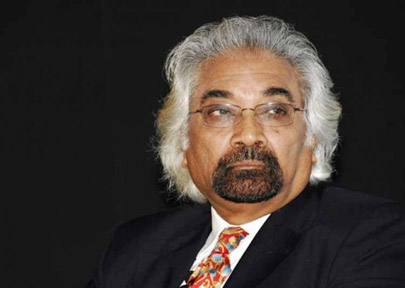
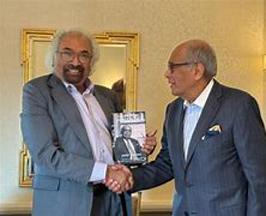
    WASHINGTON, D.C. (TIP): Indian American telecom pioneer Sam Pitroda unveiled the autobiography of Javad K. Hassan, a renowned Indian American tech innovator, at an event in Washington, DC, on Wednesday, September 11. The book, titled “The Art of The Possible: A Maverick’s Journey to Success, Innovation, and Fearless Leadership,” chronicles Hassan’s journey from Kerala, India, as a graduate student to his rise as a global business leader.

    In the memoir, Hassan shares the story of his career, highlighting his relentless pursuit of innovation, leadership, and breaking conventional barriers. The book offers insight into his philosophy of success and his fearless approach to leadership in some of the world’s top technology companies.

    Hassan, a former senior executive at IBM and former president of Global Inter Connect Systems at AMP Inc (now TE Connectivity), is the chairman of the McLean, VA, -based NeST Group.

    Hassan first came to the United States in 1966 to pursue a master’s degree in material engineering at the University of Bridgeport in Connecticut. After completing his studies, he began his career as a young engineer at IBM’s East Fishkill campus in New York.

    Over the next 25 years, Hassan climbed the corporate ladder at IBM before leaving to join connector manufacturing giant AMP in Harrisburg, Pennsylvania. At AMP, his unconventional strategies and leadership style sparked groundbreaking innovations and facilitated key mergers, transforming the company’s trajectory.

    After his time at AMP, Hassan embarked on an entrepreneurial journey by founding the NEST Group, a conglomerate based in Kochi, Kerala. Over the years, he acquired more than a dozen companies, reshaping industries such as fiber optics, software, healthcare IT, and digital media.

    Comparing Hassan’s journey to his own odyssey, Pitroda, who is credited with modernizing India’s telecommunications industry, said: “I see this as a journey of India in many ways, coming from a very simple background, humble background, fighting it along, struggling and making something happen, and then in the process helping others, bringing other from the mainstream. And that journey is what this book is about. It is not just about his journey, but [the] journey of a nation. Many people like him came here, made a contribution, made money … help people back in India, brought some people from India to here, created jobs in India and that multiplying effect is what India is today.”

    Hassan was born on October 7, 1940, in Aluva, located in Kerala’s Ernakulam district, as the eldest child of M.M. Khadijoo and Assanu Nagoor Rawther, a police officer. His maternal grandfather, Mackar Pillay, was a prominent businessman in the Travancore-Cochin region and a member of the Sree Moolam Praja Sabha (Popular Assembly).

    In 1962, Hassan earned a bachelor’s degree in mechanical engineering from the College of Engineering, Trivandrum. He worked for two public sector companies in India for a few years before coming to  the United States.

    Hassan’s autobiography touches on key themes that defined his career, including:

    • Hassan emphasizes his fearless commitment to challenging conventional norms and embracing bold, unconventional strategies that have redefined business and technological landscapes. His forward-thinking mindset has been at the forefront of technological breakthroughs for decades.
    • He shares the secrets behind his ability to build and inspire high-performance teams, drive operational excellence, and achieve visionary goals while maintaining a strong commitment to integrity, lifelong learning, and self-reflection.
    • Philosophical Insights: In the book, Hassan explores his personal philosophy and “inner game,” offering readers a deeper understanding of the mindset required to excel in high-stakes environments. He combines strategic acumen with a profound personal ethos to illustrate his approach to leadership.
    • Hassan offers a balanced reflection on his victories and setbacks, sharing how he confronted industry norms and redefined what it means to succeed in the business world.

    Hassan’s contributions to technology and business have earned him numerous accolades, including an honorary doctorate from the New Jersey Institute of Technology.

    Co-written and edited by London-based Sanjeev Loomba, “The Art of The Possible” gives an account of Hassan’s professional achievements but also a guide for those looking to push boundaries and lead with courage in the modern business world. The book provides valuable insights for aspiring leaders, offering lessons in both innovation and integrity.

    Hassan, who lives in McLean, VA, with his wife, Sabiha, is the subject of a documentary in the Desimax series, “The American Journey.”

    He has two daughters, Hafiza Khan, a cardiac electrophysiologist in Plano, TX, and Naureen Hassan, President of the Americas operations at the Swiss financial giant UBS.

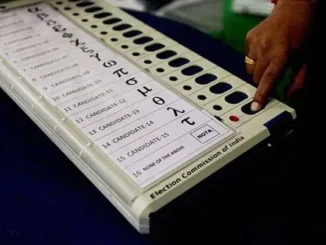
  • Modi’s claim of 400 plus seats entails 100% EVM-VVPAT

    Modi’s claim of 400 plus seats entails 100% EVM-VVPAT

    “Free and fair elections are fundamental to a thriving democracy. One of the foremost indications of that effect is citizenship participation in the democratic process. It is every citizen’s right and duty to vote in the electoral process. Through that participation, they help to build a better democratic system that could effectively serve the public. However, intimidation, corruption, and threats to citizens during or before an election are against the principles of democracy, and the same also holds true for manipulating the voter lists or the voting mechanisms. There ought to be transparency in the public square where those in power are genuinely accountable to the people, and the voters should be fully appraised of what decisions are made, by whom, and why.”

    By George Abraham

    Prime Minister Modi claims that their NDA coalition will win 400 plus seats in the upcoming Parliamentary elections that will take place in India starting April 19 of this year. Is it a panacea or a realistic assessment considering nationwide political dynamics? What is the purpose of making such exaggerated claims if they are not based on accurate data? Their history is replete with fraudulent claims and unscrupulous behavior. Why then should the public believe it now? Anyway, this whole public relations campaign may also be aimed at enthusing the cadres.

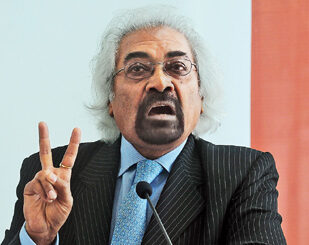
    Responding to their claim, Mr. Sam Pitroda, who is also known as the father of the Telecommunication revolution in India, retorted, “BJP can win more than 400 seats in the 2024 elections if issues associated with EVMs are not fixed “. In further expressing his concerns, Mr. Pitroda cited a report by “The Citizens’ Commission on Elections,” chaired by former Supreme Court judge Madan B Lokur and said that the main recommendations of the report were to modify the current design of the VVPAT System to make it truly “voter-verified.”

    It appears that the BJP leaders are engaged in a psychological warfare where people are being conditioned to believe that Modi’s victory is inevitable. It has dual purposes: one is to demoralize the opposition and dispirit their grassroots, and the other is to set up the stage for any illicit operations that would benefit the party before a desensitized electorate. Their strategy is apparently working.

    The public generally assumes that Modi’s third term is inevitable, and to them, it is just a numbers game as far as how big a majority his party could achieve. Is the Indian electorate so naïve as to believe a narrative created by the BJP without supporting facts? However, the BJP is confident that a public that believes in the ‘Gujarat Model’ can be swayed time after time and will fall prey to their deception once again.

    An entirely different picture might emerge if one looks at the electoral map. Their carefully crafted plans may have little impact in South India. With Karnataka going back to the Congress fold, BJP’s expectations of a repeat performance are quite unlikely. The victory in Telangana by the Congress and the BJP’s lack of an alliance with TRS may also spell trouble for the BJP there. In short, the BJP’s plan of building on the 2019 election results is indeed further complicated by the setbacks in these two southern states. With 130 seats distributed among the five states and the union territory in the south, the BJP’s chances of making any substantial gains in South India will remain as elusive as ever before.

    If we look at the poll results in the Northern States, the BJP almost swept them out, creating the current brute majority in the Loka Sabha. They have won all the seats in states like Gujarat, Rajasthan, Haryana, Himachal Pradesh, Uttarakhand, Delhi, and Tripura. In addition, Madhya Pradesh, Bihar, Maharashtra, U.P., Odisha, and Chhattisgarh combined for a whopping 92% of all seats gained by the NDA coalition. It was an incredible win that even the Political pundits have had a hard time explaining since that came at the heel of a disastrous mismanagement of the COVID-19 pandemic that killed more people in India than anywhere else.

    For any sane mind, that history will be hard to replicate. At present, the Modi regime is in the throes of a mushrooming corruption scandal involving Electoral bonds. If the current allegations of pay-to-play are proven, this BJP government may be one of the most corrupt administrations in the history of an Independent India. This is the party that came to power, putting the Manmohan Singh government on the defensive as regards a number of alleged scams. Yet, they have far exceeded in excelling in corrupt ways while covering up their misdeeds from the public’s view. Thanks to the Supreme Court, the public is learning much more about the crimes and the exploitation the country has been subjected to.

    For the BJP leaders, it is imperative that they stay in power not only to perpetuate their ideology and remake India in its medieval ways but also to be in the unenviable position of power where they will never be held accountable for their misdeeds and misgovernance. It is common knowledge that the economy for the man on the main street is not working that well. Rampant inflation, increasing unemployment among the youth, and persistent poverty at the lower end of the strata have all clouded the high GDP numbers India boasts about. The economy is working for the elites and the super-rich, who already own 40% of India’s wealth. It is crony capitalism at its best, joined at the hip by the governing establishment.

    There is a limit to one who can exploit religious sentiment to win votes. The euphoria over the Ram Janmabhoomi Kshetra may be just about dissipated. Patriot games using CAA and NRC may also have found their boundaries. Therefore, despite all the bravado about winning 400 or more seats, the BJP team must be worried, and their internal polls must have indicated the same. Therefore, they dwell on propagating this narrative about the upcoming massive victory, intending to inject inertia into the minds of the opposition while adding fuel to energize their cadre.

    Considering these circumstances, one should be overly concerned about whether the country will have free and fair elections. It doesn’t matter whether the electorate is dissatisfied or opposition parties run a well-rounded campaign if the will of the people is not truly reflected in the outcome. Some countries in the world would conduct pre-determined elections, whereas India stood as a champion of democracy, transferring power when people finally spoke through the ballot boxes. The question being raised by Sam Pitroda and others touches on this susceptible issue.

    Free and fair elections are fundamental to a thriving democracy. One of the foremost indications of that effect is citizenship participation in the democratic process. It is every citizen’s right and duty to vote in the electoral process. Through that participation, they help to build a better democratic system that could effectively serve the public. However, intimidation, corruption, and threats to citizens during or before an election are against the principles of democracy, and the same also holds true for manipulating the voter lists or the voting mechanisms. There ought to be transparency in the public square where those in power are genuinely accountable to the people, and the voters should be fully appraised of what decisions are made, by whom, and why.

    Therefore, the Supreme Court’s query to the Election Commission on adding VVPAT to every EVM is sensible. Voter Verified Paper Audit Trail is a machine that prints a paper slip of a candidate’s name, serial number, and party’s symbol after a voter has cast their vote. It displays a paper slip for seven seconds for the voters to check if their vote is cast for the chosen candidate. The paper slip then drops down to a locked compartment, and it can be used to audit voting data in the EVMs. Whether the handpicked election commissioners by Modi Sarkar would comply with the public sentiment on this issue will be critical in saving democracy for India and its future generations.

    (The author is a former Chief Technology Officer at the United Nations. He is Vice Chair of Indian Overseas Congress. He can be reached at gta777@gmail.com)

  • Rahul Gandhi speaks of making a modern India with “love and affection, not with anger and hatred”

    Rahul Gandhi speaks of making a modern India with “love and affection, not with anger and hatred”

    The gathering observed silence for 30 seconds in the memory of the victims of the train accident at Balasore in Odisha, India.
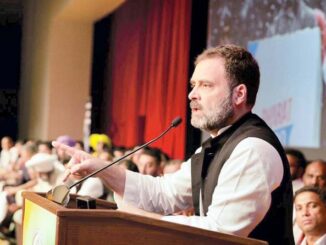
    The full house listens intently to Rahul Gandhi.

    NEW YORK (TIP): “We need to build a modern India with love and affection, not with anger and hatred. Currently, there is a fight going on in our country: a fight between two ideologies. One we represent, and the other is represented by the BJP. On one side is Mahatma Gandhi, and on the other is Nathuram Godse. Gandhiji was modern, forward-looking, and open-minded. However, Godse spoke of the past, never spoke about the future but filled with anger and hatred and was a coward who was unable to deal with his life,” said Mr. Rahul Gandhi addressing a gathering of about 4000 people at the Javits Center in New York on June 4. He has been on a six-day tour of the United States, having visited San Francisco, Washington D.C, and attended this grand finale of the meeting of an enthusiastic crowd who received him with thunderous applause.
    “RSS and BJP are incapable of looking at the future. They are driving the ‘car of India’ and looking in the rear-view mirror. They will always find someone else to blame. They may even blame the British for a train crash. Instead of blaming, we must find solutions for issues like Youth unemployment. We need to build a bridge between India and the United States, focus on the partnership, and deal with the challenges we face from the Chinese. Are we focusing on the revolution that is taking place in the fields of mobility, data and connectivity, and transformation in the energy sector”? he asked.
    “There is a full-scale attack on the democratic structure and institutions in India, including the judiciary and the media, and that is an attack on the very idea of India. Modern India cannot exist without its constitution and democracy. It is our job to defend it, and one thing that excites me when I meet thousands of you is that you, too, believe in that very idea of India where people would love each other.” he added.

    He concluded by saying that Indian values aren’t nasty, arrogant, or violent. I intend to build an affectionate relationship with you all where you can tell me what you think and effectively interact with while promoting a nation where we can live with love and affection.
    George Abraham, Vice-Chairman of the IOCUSA, opened the meeting by lauding Rahul Gandhi as a profile in courage. “When others remain silent, he is willing to stick his neck out despite threats or intimidation even at the cost of his esteemed positions or even his own dwelling. He is indeed a ray of hope for all of us who are yearning for peace and harmony for our mother land.”
    Mohinder Singh Gilzian, President of the IOCUSA, praised Rahul Gandhi’s Bharat Jodo Yatra and said, “it has inspired millions and once again provided hope for all of us who aspire for democracy and freedom. Yatra has indeed bridged gaps between communities and promoted mutual understanding”. He expressed his gratitude for the opportunity to host him today and wished him great success in the future.

    Rahul Gandhi shakes hands with the people at the meeting.

    Sam Pitroda, the global chairman, spoke about the need to awaken and work with vigilance for a better future for India. He said,” IOC is in 30 countries now. We will continue to talk to the global community despite the misinformation, propaganda, and lies emanating from the other side. Future belongs to science, and efforts by the Government to remove evolution and periodic tables are not in the best interests of our next generation”. He also led the meeting to observe a minute of silence in the memory of those who perished in the Odisha train collision.
    Mr. Pradeep Samala, who was the General Convenor of the meeting, thanked Rahul Gandhi along with all the dignitaries who were present on the dais. He expressed special gratitude to all the IOC officials and volunteers who made the meeting successful. Mr. John Joseph and Rajiv Mohan played key roles in the areas of hospitality and IT support.
    The meeting was further enriched by the presence of many Congress leaders from India who also spoke at the event, including Deependar Hooda, Mani Shankar Iyer, Revanth Reddy, Vijender Singh, Rudra Raju Guduru, Madhu Yakshi, Amarinder Singh Warring, Venkat Reddy, Komati Reddy, Arathi Krishna, Punnala Lakshmaya, Neelima Kota, Alka Lamba. Dilip Chouhan, the Deputy Commissioner of New York City, also spoke.
    IOC leaders Phuman Singh, Leela Maret, Thomas Mathew, Rajeshwar Reddy, Ram Gadula, Peter Kothari, Harkesh Thakur, Amar Singh Gulshan, Gurpeet Singh, Kulraj Grewal, Baljinder Singh Kundu, Gurmeet Singh Gill, Gurmit Singh Buttar, Rajinder Dichpally, Nikhil Thagadur, Pawan Darsi, Kawaljit Kaur and Sandeep Vangala, Sharath Chandra Vemuguti, were also present on the dais.

    Sophia Sharma, General Secretary of IOCUSA , emceed the program . She holds a Master’s in Law in Dispute Resolution from Benjamin N. Cardozo School of Law. She started her legal career in 2015, and practices Family Law, Immigration, Human Rights, Wills, Personal Injury and Mediation.

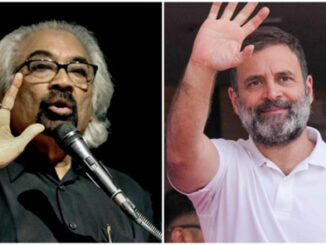
    Sam Pitroda (right) , the Global Chief of IOC which has presence in 32 countries introduced Rahul Gandhi. Also seen in the picture (extreme left) is Mohinder Singh Gilzian, IOCUSA President.
    Congress party and IOC leaders on the dais.
    IOC USA President thanked the party leaders, IOC colleagues and the gathering for their presence. Seen to his right is Sophia Sharma who proved to be an efficient MC.
  • Society has ‘polarized’ during last nine years: Congress leader Sam Pitroda

    Society has ‘polarized’ during last nine years: Congress leader Sam Pitroda

    WASHINGTON, D.C. (TIP): In the last nine years, the country has “polarized” and a very small percentage of people have really concentrated power and wealth, senior Congress leader Sam Pitroda has alleged. Pitroda is the chairperson of the Indian Overseas Congress and he is accompanying Congress leader Rahul Gandhi on his six-day US tour. “I think in the last nine years over a period of time, our society has been polarized. Polarized by focusing on religion. On the one hand, there is Hindu, on the other hand, there is everything else,” Pitroda told PTI. Senior BJP leaders, including Union ministers and chief ministers, highlighted the achievements of Prime Minister Narendra Modi-led government in a nationwide outreach on Monday to mark its nine years in office. The BJP said in a statement that India has witnessed “unprecedented” development in every sector with the mantra of “nation first” guiding Modi’s policies.

    However, Pitroda said the growth has been twisted. “It is uneven. And that’s a great cause of concern. When you don’t have democratic institutions functioning normally, you don’t feel secure. So, there’s a fear in the mind of the people that somebody will come and attack me. So, they don’t speak,” Pitroda, who is based in the US, said.

    “We all know that 85 per cent of India’s population is Hindu or whatever the number is, maybe 82. But within the Hindu community, a very small per cent of high-level people have really concentrated power and wealth. And in the process, a large number of scheduled castes, scheduled tribes, artisans, carpenters, blacksmiths, plumbers, Dalits, have not really progressed as well as they should have,” he said.

    “So, the fight is not about Hindu and non-Hindu. The fight is about the underprivileged and privileged. In the nine years, I think wealth is concentrated. We brag about so many billionaires, which is fine, I’m happy with it. But we have not lifted a large number of people out of poverty,” he said.

    “The trolls on social media just harass people. They harass women. They harass reporters, they harass media people, whether it is typically Ravish Kumar of the world or anybody else, they attack your family, they attack your mother… this is out of control. And it cannot be tolerated. The trolls cannot be tolerated,” he said.

    “Somebody in the government has to stand up and say, look, anybody who trolls and attacks somebody unnecessarily will be punished as opposed to we are encouraging parole. That is a worry for a lot of us. Look at the violence. Violence has increased. Look at violence against women. It has increased,” Pitroda said.

    People who are worshipped today are corrupt, dictatorial, and abusive, he alleged.

    “(They) use all kinds of language against everybody. Promote hate. And I’m saying, where did we go wrong? What’s going on? And it bothers me not that you’re gonna change it overnight, but at least you can raise your voice and have an honest conversation about how I feel. You don’t have to agree with me. But can I get a chance to talk and we don’t have that space,” Pitroda said.
    (Source: PTI)

  • Rahul Gandhi’s US trip aimed at promoting shared values of real democracy: Sam Pitroda

    Rahul Gandhi’s US trip aimed at promoting shared values of real democracy: Sam Pitroda

    WASHINGTON D.C. (TIP): Congress leader Rahul Gandhi’s visit to the United States in June, during which he is slated to address public meetings and interact with university students, is aimed at promoting shared values and vision of “real democracy”, Indian Overseas Congress chairperson Sam Pitroda has said.

    Gandhi is scheduled to visit San Francisco, Washington DC and New York, where he is planning to address two public meetings with Indian Americans, meet lawmakers at Capitol Hill and members of think tanks, interact with university students and meet Wall Street executives, said Indian Overseas Congress, the organizers of the events, on Sunday, May 20.

    Sharing the agenda and purpose of Gandhi’s visit to the United States, Pitroda said, “We are not here to complain. We are here to share what is going on in India. Indian democracy is the biggest democracy in the world and we owe it to the people to tell them about the real situation on the ground.”

    “We are not asking for everybody to come and help us. We can deal with the problems. We want to share with you what is needed,” he told a group of Congress supporters in Chicago.

    He was addressing a Karnataka Assembly victory celebration in Chicago which was organized by eminent community leader Ifteqar Sheriff and the Indian Overseas Congress-USA.

    “The purpose of his (Gandhi’s) trip is to connect, interact and begin a new conversation with various individuals, institutions and media, including the Indian diaspora that is growing in numbers in the United States and abroad to promote the shared values and vision of the real democracy with a focus on freedom, inclusion, sustainability, justice, peace and opportunities world over,” Pitroda said in a statement on Sunday.

    George Abraham, the vice-chairman of the Indian Overseas Congress-USA, said, “I hope that Rahul Gandhi’s visit will energize the diaspora into a renewed appreciation of democracy and freedom the Indian diaspora aspires to have as they constitute more than 30 million non-resident Indians who live around the world.”

    Pitroda said the Indian Overseas Congress has planned multiple meetings for Gandhi in the three cities.

    “We have lots of meetings planned with think tanks, universities; a thousand people in San Francisco, 200 people having dinner in Washington DC… The programme is jam-packed to a point. We don’t even have half-an-hour flexibility,” he told a group of Congress supporters in Chicago.

    “It has been worked out. And he (Gandhi) does a great job when he gets a chance to interact with people. He doesn’t like to broadcast like a ‘Mann ki Baat’. He likes to interact and that’s what Indian democracy is all about — to listen to people. So, we hope that we get a good reception on the Capitol Hill,” Pitroda said.

    In San Francisco, Gandhi is likely to meet a group of artists, while a private dinner has been planned by eminent Indian-American Frank Islam at his mansion in the Potomac suburb of Washington DC.

    In March this year, Gandhi had visited the UK during which his remarks alleging that the structures of Indian democracy are under attack and there is a “full-scale assault” on the country’s institutions, had created a row back home. His remarks had triggered a political slugfest, with the BJP accusing him of maligning India on foreign soil and seeking foreign interventions, and the Congress hitting back at the ruling party by citing instances of Prime Minister Narendra Modi raising internal politics abroad.
    (Source: PTI)

  • Indian Overseas Congress voices concern over situation in Manipur: Sam Pitroda

    Indian Overseas Congress voices concern over situation in Manipur: Sam Pitroda

    WASHINGTON, D.C. (TIP): US-based senior Congress leader Sam Pitroda has expressed serious concern over the “alarming situation” in Manipur and called for an immediate end to violence in the northeastern state.

    Violent clashes broke out in the northeastern state after a ‘Tribal Solidarity March’ was organized in the 10 hill districts on May 3 to protest against the Meitei community’s demand for Scheduled Tribe (ST) status.

    Manipur Chief Minister N Biren Singh on Monday, May 8, said that 60 people were killed, 231 injured and 1,700 houses including religious places burnt in the ethnic violence that rocked the northeastern state for the past few days. “IOC (Indian Overseas Congress) leadership is concerned about the alarming situation in Manipur where our Christian community has suddenly suffered due to the burning of 25 churches and 500 homes,” Pitroda said in a statement on Monday, May 8, in his capacity as chairman of the Indian Overseas Congress (IOC).

    This must stop immediately. Peace must prevail to assure the safety, security, and well-being of all the people in the area, he said. “Our sympathies are with the people of Manipur and the families and friends of the people affected by this violence and tragedy,” Pitroda said. Addressing a press conference in Imphal, the Manipur chief minister said: “These are very very unfortunate incidents. I appeal to people to bring peace together at the earliest.

    Singh said that 1,700 houses including temples and churches have been burnt down during the violence. The chief minister said that Rs 2 lakh will be paid to those whose houses were destroyed and the government will rebuild them.

    Expressing the strongest condemnation of all forms of violence, George Abraham, vice-chair of the Indian Overseas Congress, USA alleged that it is the repeat of the same BJP strategy of exploiting differences and targeting minority communities to gain political advantage.

    In a statement, IOC USA said that Manipur borders Myanmar and is home to a diverse range of ethnic groups, including Meiteis, who are a numerical majority in the state and are predominantly Hindu, and various tribal communities, who are largely Christian.
    (Source: PTI)