Tag: Samsung

  • OpenAI would buy Google Chrome, says ChatGPT chief

    OpenAI would buy Google Chrome, says ChatGPT chief

    OpenAI would be interested in buying Google’s Chrome if antitrust enforcers are successful in forcing the Alphabet unit to sell the popular web browser as part of a bid to restore competition in search, an OpenAI executive testified on Tuesday at Google’s antitrust trial in Washington. ChatGPT head of product Nick Turley made the statement while testifying at trial in Washington where US Department of Justice seeks to require Google to undertake far-reaching measures restore competition in online search.
    The judge overseeing the trial found last year that Google has a monopoly in online search and related advertising. Google has not offered Chrome for sale. The company plans to appeal the ruling that it holds a monopoly.
    The beginning of the high-stakes trial provided a glimpse into the generative AI race, where Big Tech companies and startups are vying to build up their apps and gain users. Prosecutors raised concerns in opening statements on Monday that Google’s search monopoly could give it advantages in AI, and that its AI products are another way to lead users to its search engine.
    Google has pointed to competition among companies offering generative AI products, such as Meta Platforms and Microsoft.
    Turley wrote last year that ChatGPT was leading in the consumer chatbot market and did not see Google as its biggest competitor, according to an internal OpenAI document Google’s lawyer showed at trial. He testified that the document was meant to inspire OpenAI employees and that the company would still benefit from distribution partnerships.
    Turley, a witness for the government, testified earlier in the day that Google shot down a bid by OpenAI to use its search technology within ChatGPT. OpenAI had reached out to Google after experiencing issues with its own search provider, Turley said, without naming the provider. ChatGPT uses technology from Microsoft’s search engine, Bing.
    “We believe having multiple partners, and in particular Google’s API, would enable us to provide a better product to users,” OpenAI told Google, according to an email shown at trial.

    OpenAI first reached out in July, and Google declined the request in August, saying it would involve too many competitors, according to the email. “We have no partnership with Google today,” Turley said. The DOJ’s proposal to make Google share search data with competitors as one means of restoring competition would help accelerate efforts to improve ChatGPT, Turley said.
    Search is a critical part of ChatGPT to provide answers to user queries that are up to date and factual, Turley said. ChatGPT is years away from its goal of being able to use its own search technology to answer 80 per cent of queries, he added.
    n August, US District Judge Amit Mehta found that Google protected its search monopoly through exclusive agreements with Samsung Electronics and others to have its search engine installed as the default on new devices.

  • Is Google’s Play Store monopoly over? US court orders tech giant to carry rival app stores

    Is Google’s Play Store monopoly over? US court orders tech giant to carry rival app stores

    While Google has said that it will be seeking a stay, Monday’s ruling marks the culmination of a four year-long antitrust fight between the Fortnite maker and the big tech company. It also means that Google could face genuine competition in the Android app marketplace for the first time, at least in the US.
    What does Google have to do now?
    From November 1, 2024 to November 1, 2027, Google has been ordered to let apps use their own billing systems for in-app payment purchases instead of being forced to use only Google Play Billing. Previously, the jury had found that Google had violated the law by tying its payment system to the app store.
    The court also ordered Google to remove the anti-steering provisions in its policy, which restricts app developers from linking to external payment options as well as informing users about it. Additionally, Google has to let app developers inform users about the availability and pricing of their apps outside the Play Store, and the company cannot stop them from providing users with a link to download the app outside the Play Store (also known as sideloading).
    What is Google not allowed to do anymore?
    To stop Google from maintaining its dominance in the app distribution market, the court has prohibited the company from offering app developers money or perks to exclusively launch their apps on the Play Store.
    It is also not allowed to share app revenue “with any person or entity that distributes Android apps” or plans to launch an app store or app platform.
    Notably, Google is no longer allowed to ink deals with smartphone manufacturers like Samsung for the Play Store app to be pre-installed on Android devices. Furthermore, the company cannot offer money to device makers or carriers so that they don’t pre-install third-party app stores on their devices.
    During the hearings, Epic Games had argued that Google entered into agreements with various app developers, smartphone manufacturers, and carriers that made it impossible for rival app stores to compete. The jury was also convinced that “Google entered into one or more agreements that unreasonably restrained trade in a relevant antitrust market” including “agreements with OEMs [original equipment manufacturers] that sell mobile devices.”
    The pro-competition changes to the Play Store have to be in place for three years, though Epic had initially sought a six-year period. Dismissing Epic’s argument, the judge said, “The provisions are designed to level the playing field for the entry and growth of rivals, without burdening Google excessively.” Source: The Indian Express

  • Apple overtakes Samsung as top seller of smartphones

    Apple overtakes Samsung as top seller of smartphones

    Apple ended Samsung Electronics’ 12-year run as the largest seller of smartphones in the world, after commanding a 20% market share in 2023, according to a report from International Data Corp. Samsung ended the year with a 19.4% share, followed by China’s Xiaomi, Oppo and Transsion, preliminary data from IDC’s Worldwide Quarterly Mobile Phone Tracker showed. The change in ranking comes after a tough year that saw consumers going slow on smartphone upgrades and choosing cheaper handsets due to high inflation and economic uncertainties. A slower-than-expected recovery in China, the world’s largest smartphone market, also weighed on overall phone sales.
    Apple and Transsion, which sells Tecno, Infinix and itel brands, were the only two of the top five smartphone vendors to record sales growth last year, even though the overall market declined 3.2% to 1.17 billion units and hit a decade low.
    “While we saw some strong growth from low-end Android players like Transsion and Xiaomi in the second half of 2023, stemming from rapid growth in emerging markets, the biggest winner is clearly Apple,” said Nabila Popal, research director at IDC’s Worldwide Tracker team. Phone shipments from Samsung were down 13.6%, while iPhone shipments were up 3.7% last year, according to IDC data.
    Samsung focused on the mid- to high-end segment for profitability but lost share in the low-end segment, said Amber Liu of research firm Canalys.
    Apple, however, is facing pressure in China from a resurgent Huawei as well as from budget Chinese brands. The iPhone maker is offering discounts of as much as 5% on some models in the country to attract customers.
    Microsoft on Friday overtook Apple as the world’s most valuable public company, as Wall Street grew more concerned over the demand for its iPhones and other high-end gadgets. Source: Reuters

  • ‘Samsung’ one of the most commonly used passwords in 2021

    Samsung, or rather “Samsung” with a lowercase S, is one of the most commonly used passwords in at least 30 countries, a recent study by password management solution company Nordpass has showed.

    According to SamMobile, using the name of your smartphone/TV/home appliance brand, for example, Samsung, as a password is not the worst offender, but it has grown in popularity in recent years.

    While the “samsung” password ranked 198th in popularity in 2019, it rose to 189th in 2020 and 78th in 2021, breaking the top-100 mark last year. The most popular password is “password,” which was reportedly chosen by nearly 5 million users, while other commonly used passwords include “123456,” “123456789,” and “guest”, according to the report. In the case of “samsung,” it turns out that it is not the only brand-based password used by a large number of online users.

    According to a recent report, a simple and predictable password can be decrypted in less than one second, whereas combining lowercase and uppercase letters with numbers can also produce variable results. A seven-digit password containing all of those elements can be decrypted in about seven seconds, while an eight-digit password takes about seven minutes, said the report.

    The research firm discovered that the majority of commonly used passwords can be decrypted in less than one second because they are short and consist only of numbers or letters with no uppercase characters, the report added.                 Source: IANS

  • Android 13 officially arrives for Google Pixels, Samsung

    Android 13 officially arrives for Google Pixels, Samsung

    Android 13 has officially started rolling out on Google Pixel devices. The company has announced that the latest Android iteration will reach devices from Samsung Galaxy, Asus, HMD (Nokia phones), iQOO, Motorola, OnePlus, Oppo, Realme, Sharp, Sony, Tecno, Vivo, Xiaomi and more later this year. This year, Google is well ahead of schedule to roll out the Android 13 since the Android 12 started reaching Pixel phones in October. As you’ll expect, the latest iteration comes with a variety of new features to offer users more personalisation options.

    Google says that Android 13 comes with an evolved look that builds on Material You — the company’s standard design language across the Android ecosystem. Now, users will be able to customise non-Google apps to match the phone’s wallpaper and theme. The latest UI basically blends the app icons with the wallpaper for a universal look. Android 13 also allows users to assign specific languages to individual apps. Earlier, the entire phone’s language setting needed to be changed. Apple, on the other hand, lets users change the font size for each app.

    Google is also improving a feature to help users sleep better. Android 13 brings a customised Bedtime mode with wallpaper dimming and a dark theme. These screen options will help users’ eyes adjust to the dark when they are about to go to bed. In terms of privacy, Android 13 now lets users offer only select photos instead of the entire library for an app to function. A similar feature is already available on iPhones since iOS 14. Another nifty addition is the automatic deletion of personal information on the clipboard. The company says, “If you copy sensitive data like your email address, phone number or login credentials on your device, Android will automatically clear your clipboard history after a period of time.”

  • Biden on Asia trip with global issues and tech on agenda

    Biden on Asia trip with global issues and tech on agenda

    PYEONGTAEK, SOUTH KOREA (TIP): US President Joe Biden on Friday, May 20, opened his Asia trip by highlighting the computer chip shortage that has bedeviled the world economy, touring a Samsung computer chip plant that will serve as model for a USD 17 billion semiconductor factory the Korean electronics company plans to open in Texas, a report published in The Hindu says.

    The Samsung visit was a nod to one of Biden’s key domestic priorities: increasing the supply of computer chips.

    A semiconductor shortage last year hurt the availability of autos, kitchen appliances and other goods, causing higher inflation worldwide and crippling Biden’s public approval among US voters.

    Biden will grapple with a multitude of foreign policy issues during a five-day visit to South Korea and Japan, but he also crafted an itinerary clearly meant to tend to the concerns of his home audience as well. The president noted that the Texas plant would add 3,000 jobs and the construction would include union labor.

    “These little chips,” Biden said in remarks at the plant, “are the key to propelling us into the next era of humanity’s technological development.” Greeting Biden at the plant in South Korea was the country’s new president, Yoon Suk Yeol, and Samsung Electronics Vice Chairman Lee Jae-yong.

    Yoon is a political newcomer who became president, his first elected office, slightly more than a week ago. He campaigned on taking a tougher stance against North Korea and strengthening the 70-year alliance with the US.

    Yoon said in a speech before Biden spoke that he hopes the countries’ partnership evolves into an “economic and security alliance based on cooperation in advanced technology and supply chains”.

    The chip plant showed the unique nature of manufacturing as visitors were required to don laboratory coats and blue booties to help keep the facility clean. Biden and Yoon, who did not wear protective clothing, saw a demonstration of the machinery.

    At one point during his tour, Biden received an in-depth explanation of a KLA inspection system on the Samsung plant floor. The California-based company is a major supplier to Samsung’s semiconductor operations.

    After a worker named Peter explained the ins and outs of the machinery, Biden quipped, “Don’t forget to vote,” when he returns home to the United States. Part of the computer chip shortage is the result of strong demand as much of the world emerged from the coronavirus pandemic. But coronavirus outbreaks and other challenges also caused the closure of semiconductor plants.

    US government officials have estimated that chip production will not be at the levels they would like until early 2023.

    Global computer chip sales totaled USD 151.7 billion during the first three months of this year, a 23 per cent jump from the same period in 2021, according to the Semiconductor Industry Association.

    More than 75 per cent of global chip production comes from Asia. That’s a possible vulnerability the US hopes to protect against through more domestic production and USD 52 billion worth of government investment in the sector through a bill being negotiated in Congress. The risk of Chinese aggression against Taiwan could possibly cut off the flow of high-end computer chips that are needed in the US for military gear as well as consumer goods.

    Similarly, the hermetic North Korea has been test-firing ballistic missiles amid a coronavirus outbreak, a possible risk to South Korea’s manufacturing sector should the brinksmanship escalate.

    In terms of chip production, China leads the global pack with a 24 per cent share, followed by Taiwan (21 per cent), South Korea (19 per cent) and Japan (13 per cent). Only 10 per cent of chips are made in the US, according to the Semiconductor Industry Association.

    Samsung announced the plant in Taylor, Texas in November 2021. It hopes to begin operations in the second half of 2024. The South Korean electronics giant chose the site based on a number of factors, including government incentives and the “readiness and stability” of local infrastructure.

    The White House said in a fact sheet issued Friday, May 20,  that semiconductor companies have announced nearly USD 80 billion in US investments through 2025. That sum includes USD 20 billion for Intel’s plant outside Columbus, Ohio, up to USD 30 billion by Texas Instruments, a USD 1 trillion expansion by Wolfspeed in North Carolina and investments by Global Foundries and SK Group.

    (Source: Agencies)

  • Samsung to re-enter laptop segment in India

    Samsung to re-enter laptop segment in India

    Korean electronics major Samsung will re-enter the laptop segment in India this month and aims to capture double-digit market share by the year-end, a senior company official said. Samsung India General Manager and head of new computing business Sandeep Poswal said there is demand in the market, which makes a case for the company to re-enter the segment. “By the end of this year, 2022, we plan to have double-digit market share in the addressable area where we operate. We want to offer this to all segments of our customers. We are launching in March and we will try to do our best to achieve this share,” Poswal told PTI.

    The company had stopped selling laptops in India after 2014. He said as per latest IDC data, the market has almost grown 1.8 times between pre- and post-Covid. “There is a complete strong demand coming. We believe this demand is coming in mainly led by consumer use cases scenario building up, which may be work from home, study from home. We expect this will continue.

  • Germany issues hacking warning for users of Russian anti-virus software Kaspersky

    Germany issues hacking warning for users of Russian anti-virus software Kaspersky

    Germany’s cyber security agency has warned users of an anti-virus software developed by Moscow-based Kaspersky Lab that it poses a serious risk of a successful hacking attack. The BSI agency said that the Russia-based cyber-security company could be coerced by Russian government agents to hack IT systems abroad or agents could clandestinely use its technology to launch cyberattacks without its knowledge. Kaspersky said in a statement it was a privately-managed company with no ties to the Russian government. It said that the warning by BSI was politically motivated, adding it was in contact with the BSI to clarify the matter. The BSI warning comes as Russia’s invasion of Ukraine escalates with the Russian army’s shelling of the capital of Ukraine. The BSI said that German companies as well as government agencies that manage critical infrastructure were particularly at risk of a hacking attack.

    Source: Reuters

  • Android 12L coming to Samsung, Lenovo and Microsoft devices, says Google

    Android 12L coming to Samsung, Lenovo and Microsoft devices, says Google

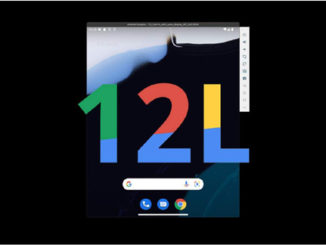
    Google has announced that it will bring the Android 12L operating system to Samsung, Lenovo and Microsoft devices later this year. The new OS brings changes to the home screen, lock screen, notification shade, device set-up screens and settings. The changes are largely designed to give users more information on the screen.

    “Today we are introducing 12L, an update to Android 12 with features that will make tablets and foldables simpler and easier to use,” said Google’s VP of engineering for Android, Andrei Popescu. “We will continue to build more features and functionalities to help you make the most of your larger screen devices in Android 13 and beyond,” Popescu added.

    The company recently announced Android 12L, a version of Android 12 optimised for tablets, foldables, and ChromeOS devices.

    In addition to Android 12L, Google also announced new features in OS and Play for developers to better support these devices, reports TechCrunch. These include updates to its Material Design guidance for large-screen devices, but also updates to Jetpack Compose to make it easier to build for these machines and to ensure that apps can more easily adapt to various screen orientations and sizes.

    On Android, YouTube Music users can now share songs with Snapchat

    Snapchat sharing for YouTube Music was enabled on iOS in October and now a new report has claimed that it is available on Android.

    The first indication that YouTube Music might be able to share songs to Instagram and Snapchat emerged in November of 2020, reports 9To5Google. When you open the share sheet in YouTube Music for Android and tap Snapchat, you will be able to send whatever you are listening to on Snapchat. The artwork for the album, the artist’s name, the app logo, and a link to listen to the music are all included.

    Snapchat has also started rolling out a new feature to let users share their real-time location for 15 minutes or a few hours with friends.

  • This TV remote uses radio waves from router for charging

    This TV remote uses radio waves from router for charging

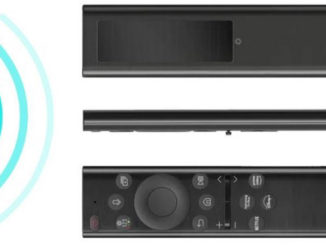
    Samsung at the CES 2022 has showcased a new TV remote that uses radio waves from the home router to stay charged. The company had earlier introduced a solar-powered Eco Remote for its 2021 TVs at the CES event last year.

    This year, Samsung has added RF (radio frequency) harvesting capabilities that let the remote preserve its charge by “collecting routers’ radio waves and converting them to energy,” reports The Verge. The new Eco Remote can also be charged from both outdoor and indoor light or over USB-C. The TV remote “is meant to better complement Samsung’s ‘lifestyle’ TVs like The Frame, Serif, and Sero. Samsung’s Visual Display Business is making its TVs more sustainable by adopting eco-friendly packaging and solar-cell-powered remote controls.

    The remote control is made using renewable plastic and powered by photovoltaic energy rather than disposable batteries. “Supposing that a typical TV is used for around seven years, changing the batteries in its remote just once a year would mean that 14 batteries would get used and thrown out,” according to Kwanyoung Kim, a Samsung engineer. “If we apply that number to Samsung Electronics’ expected annual global TV sales, it amounts to approximately 99 million discarded batteries. If we apply it to annual TV sales overall, it adds up to nearly 3.1 billion batteries,” the company said last year.

                    Source:  IANS

  • Samsung may replace Galaxy Note 22 with Galaxy S22 Ultra: Report

    Samsung may replace Galaxy Note 22 with Galaxy S22 Ultra: Report

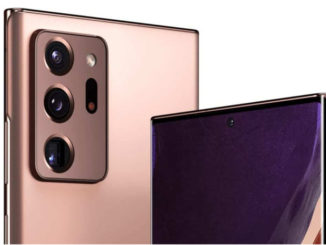
    South Korean tech giant Samsung is gearing up to launch its Galaxy S-series flagship lineup, and now a new report has claimed that unlike the Galaxy S21, Ultra will have a Galaxy Note design. The successor will come with a built-in S Pen, just like all the Galaxy Notes that house their S Pens, reports GSM Arena. Galaxy S22 Ultra is also expected to come with 1TB internal storage. It is likely that the 1TB internal storage model will come packed with 16GB RAM. There will also be a 12GB RAM model and three other internal storage options — 128GB, 256GB, and 512GB.

    This won’t be the first time Samsung will offer a 1TB storage version for its smartphone. A couple of years back, in 2019, the company had launched the Galaxy S10 Plus with 1TB of internal storage as well as a microSD card slot, the report said. In addition, the Galaxy S22 Ultra, will be better at stabilising videos. An AI-assisted Wide Shift OIS feature will help in achieving better stabilisation of videos, effectively reducing camera shake by four times when compared to the S21 Ultra.

  • Apple will switch some iPad models to OLED in 2022

    While the large iPad Pro 12.9-inch (2021) switched to a mini-LED display, the smaller models may go for OLED, the media reported.

    According to Korean publication ETNews reports, Apple will make the jump with iPads coming out in 2022. Those will be the first Apple tablets not to use some kind of LCD (even mini-LED tech is LCD based).

    Samsung and LG are the likely suppliers of OLED panels. They are currently working on OLED displays for the iPhone 13 (splitting the order 65/30 with BOE taking up a small 5 per cent share).

    Image quality, weight and design were reportedly the key considerations in the decision to move away from LCD, the report said.

    However, while phone-sized OLED displays are produced in great numbers, tablet-sized ones are rare, it added.

    Some Android tablets do use them, but Apple moves around 50 million iPads a year, so companies will have to invest into expanding the capacity of their factories. Apple will likely start with a few models at first and add more as capacity expands.

  • Samsung to replace its Daily feed

    Samsung, last year, replaced Bixby Home with a new content discovery platform called Samsung Daily. Now, almost a year after making the change, the South Korean electronic giant is tweaking this platform further.

    As per a report by Sam Mobile, Samsung is planning to replace Samsung Daily by a new service called Samsung Free. The company has started sending notices to its Galaxy smartphone users informing them about the change.

    In the message to its users, Samsung said that the change is a part of the company’s strategy to deliver quality content to its users. In addition to that, the company also highlights some of the changes that it will be making to Samsung Daily for paving the way for Samsung Free. This includes the ability to navigate using a multi-tab structure and availability of content including news in a new format.

  • CAT S60 SMARTPHONE: YOUR RUGGED COMPANION THAT CAN ‘SEE IN THE DARK’

    CAT S60 SMARTPHONE: YOUR RUGGED COMPANION THAT CAN ‘SEE IN THE DARK’

    NEW DELHI (TIP): If you have Rs 65,000 to splurge on a smartphone, which one will you buy: Apple or Samsung? What if you can get a military-grade, rugged smartphone with thermal imaging that can help you see in the dark (like in “The Predator” series) at the same price?

    Recognising India’s potential as a grown-up smartphone market, US-based construction machinery manufacturing company Caterpillar Inc. has for the first time launched the sturdy CAT S60 smartphone targeting both consumers and the B2B sector in the country.

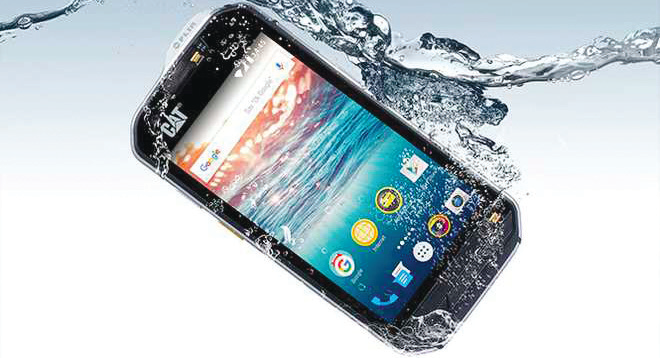
    Priced at Rs 64,999, CAT S60 is the first smartphone with an integrated thermal camera, allowing users to detect heat loss around windows and to see in complete darkness.

    Here is what works for the device.

     The device does not have great looks like the Samsung Galaxy S8 or iPhone 7 Plus, but the moment you hold the S60, it feels tough and robust, with heavy-duty specifications backing it up.

    The device is IP68 certified — a global standardization, which makes it dustproof and shockproof.

    It is also “MIL-SPEC 810G” certified, which means the device is ready to bear extreme temperature, vibration, humidity and is claimed to have been built to withstand drops from 1.8 metres.

    The device is waterproof up to two metres that extends up to five metres to block more water if you flip the “Lock Down” switches on the front-facing speakers which enables the smartphone to be used as an underwater camera.

    CAT S60 stands out from other smartphones for its thermal camera. The technology is provided by US-based company FLIR that specialises in the design and production of thermal imaging cameras, components and imaging sensors. Users need to use the FLIR app to take thermal images (which was a delight to experience).

    The thermal camera visualises heat that is invisible to the naked eye and highlights temperature contrasts. It can pick up heat and measure surface temperature from a distance of up to 50 feet and can also see through smoke.

    The app offers nine different filters, ranging in colour palettes that help make certain temperatures more visible than others. The thermal camera will come in handy for wildlife explorers, construction workers and users who like to trace moisture and missing insulation.

    Sporting 4.7-inch HD display, colours are not as sharp as in the Samsung Galaxy S8, but the touchscreen works nicely even with wet hands or while wearing gloves.

    Opening mid-to heavy apps and browsing among those with Snapdragon 617 octa-core processor paired with 3GB of RAM was smoother.

    Both front and rear cameras clicked decent images but were disappointing as they captured noise and graininess became apparent in low-light environments (but then, this is not a selfiephone, is it?).

    It runs on Android Marshmallow 6.0, has Corning Gorilla Glass 4 and houses 32GB internal storage expandable up to 256GB with an external memory card.

    The device is powered by 3800mAh battery that lasted almost a day-and-a-half with normal usage.

    The phone has a dedicated SOS button on the left that lets you send your location to a pre-entered number.

    What does not work?

    Weighing 225 grams, the smartphone did not feel heavy for the first time.However, after a few scrolls through Instagram or other social media apps or while browsing videos, you might get tired as it is a bit on the heavier side.

    Conclusion:CAT S60 makes for a perfect companion for those who want to live rugged lifestyles. But for the common users, it’s an expensive Android gadget and the thermal imaging is of little practical use. Still, a unique offering for the Indian smartphone market, which is evolving by the day.

    Source: IANS

  • SquareTrade tests find Samsung Galaxy S8 phones more prone to screen cracks, damages

    SquareTrade tests find Samsung Galaxy S8 phones more prone to screen cracks, damages

    Samsung’s latest phones feature big wraparound screens and lots of glass. They also appear to break more easily, according to tests run by SquareTrade, a company that sells gadget-repair plans.

    The nearly all-glass design of Samsung’s Galaxy S8 and S8 Plus makes them beautiful, SquareTrade said, but also “extremely susceptible to cracking when dropped from any angle.” Samsung had no comment.

    The new phones have received positive reviews from The Associated Press and other outlets. Samsung says advanced orders for the S8 were 30 percent higher than that for the Galaxy S7 phones. The company didn’t release specific figures. The S8 starts at $750, which is about $100 higher than the S7.

    SquareTrade said Monday that cracks appeared on screens of both the S8 and S8 Plus after just one face-down drop onto a sidewalk from six feet. The phones had similar problems when dropped on the backs and sides.

    Unsurprisingly, both models did well in water-drop tests. The phones had some audio distortion, but that is typical and temporary. The S8 has water-resistance features.

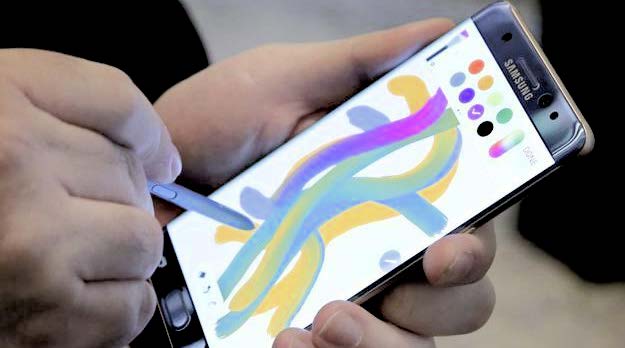
    SquareTrade didn’t test the phones’ battery, the source of problems that led to a recall of Samsung’s Galaxy Note 7 phone.


  • Samsung tips best quarterly profit in over three years as chips soar

    Samsung tips best quarterly profit in over three years as chips soar

    SEOUL (TIP): Samsung Electronics Co Ltd forecast on Friday its best quarterly profit in more than three years in the January-March period, beating expectations and putting it on track for record annual earnings on the back of a memory chip super-cycle.

    The Apple Inc rival has rapidly recovered from last year’s costly failure of its fire-prone Galaxy Note 7 device, despite a political scandal involving Vice Chairman Jay Y. Lee who appeared in a Seoul court on Friday facing charges including bribing ousted president Park Geun-hye.

    The global memory chip leader said first-quarter operating profit was likely 9.9 trillion won ($8.8 billion), compared with an average forecast of 9.4 trillion won from a survey of 18 analysts. Revenue rose 0.4 percent to 50 trillion won, just ahead of analysts’ forecasts.

    “The semiconductor business was likely the main driver for earnings,” said Heungkuk Securities analyst Lee Min-hee, adding that sales of mid-to-low tier smartphones also helped the mobile business remain profitable.

    Samsung shares touched a record high of 2.134 million won in late March on expectations of record annual profit in 2017, as the South Korean tech giant bounced back from the embarrassing withdrawal of its Note 7 devices due to combustible batteries. Source: Reuters

  • SAMSUNG LAUNCHES GALAXY S8, S8+, DEX, NEW GEAR 360 AND CONNECT HOME

    SAMSUNG LAUNCHES GALAXY S8, S8+, DEX, NEW GEAR 360 AND CONNECT HOME

    NEW YORK (TIP): Samsung on March 29 (Wednesday) launched its flagship smartphones – the Galaxy S8 and S8+ – alongside some new products at a event in New York.

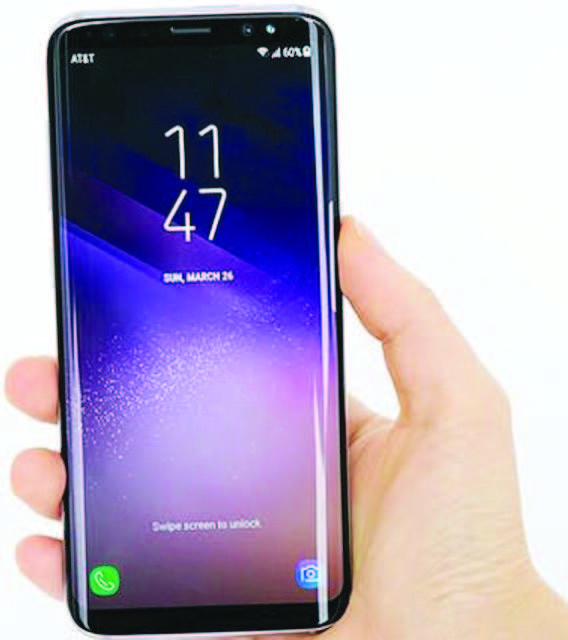
    The Galaxy S8 smartphones, that Samsung hopes will help it woo more customers after the Note 7 fiasco, will come with newer technologies such as Infinity display, iris scanner and face recognition, a virtual home button and a UHD bezel-less curved display.

    The phone, which will be available globally from April 21 (expectedly at a price of $720) along with Harman AKG earbuds priced at $99, will come with top of the line Qualcomm Snapdragon 835 processor in the US and Samsung Exynos processor in other countries.

    The smaller 5.8-inch Galaxy S8 will come with a QuadHD Infinity display with 570 pixels per inch (ppi) along with 4GB RAM. The S8 will have an internal memory of 64GB with microSD support upto 256GB. The phone, which will draw power from a 3,000 mAh battery, will run on Android Nougat. In terms of optics, the S8 will sport a 12-megapixel rear camera and a 8-megapixel front shooter.

    The larger 6.2-inch S8+ will come with an OLED display with 529 ppi support. The S8+ will come with a higher battery capacity of 3,500 mAh due to the bigger display. Other features of the S8+ are same as the S8. Both the phones, which are IP68 (dust and water resistant) will come with USB-C, 3.5mm headphone jack, NFC and MST for Samsung Pay, wireless charging, fingerprint sensor, LTE Cat.16, Bluetooth 5.0 that supports streaming to two devices and Wi-Fi.

    Additionally, both the phones will come with digital assistant Bixby that will help the user in interacting with the device. According to Samsung, Bixby also shows contextual info. This means it learns about app usages and throws back info in the form of cards. It simply adapts to the user based on usage, time and date. It also has a basic reminders tool that lets you set geo-location alerts. Bixby is also compatible with Google Play Music.

    Samsung has designed a button on the side of the S8 that’s entirely dedicated to launching Bixby. The S8 and S8+’s camera is enhanced with Bixby for visual search. This means that it can search for similar images, identify landmarks, and of course let users buy things from Amazon.

    Other striking features of the phone is the iris scanner and face recognition just like Windows Hello. An user can unlock the phone using iris scans. Samsung also has upgraded a few services like Samsung Health to woo the user to the ecosystem. Users can now directly connect with a doctor to get diagnosis and prescriptions without having to leave your house via video calls. The company also launched a new productivity tool like Windows Continuum called DeX that allows the user to turn the phone into a PC with the help of a keyboard, screen and mouse. The price of the DeX was not revealed.


    Other product launches included the new motion sensing Bluetooth remote for the Gear VR, a new 360 Gear camera and a smart WiFi mesh called Connect Home.

    While the new remote will help Samsung put in more immersive content on its VR platform, the new 360-degree camera will help users create content for VR. The Connect Home also comes with an app to manage other Samsung products just like Apple Home.

  • Samsung chief Lee arrested as South Korean corruption probe deepens

    Samsung chief Lee arrested as South Korean corruption probe deepens

    SEOUL (TIP): Samsung Group chief Jay Y. Lee was arrested early on Friday over his alleged role in a corruption scandal rocking the highest levels of power in South Korea, dealing a fresh blow to the world’s biggest maker of smartphones and memory chips.

    The 48-year-old Lee, scion of the country’s richest family, was taken into custody at the Seoul Detention Centre after waiting there overnight for the decision. He was being held in a single cell with a TV and desk, a jail official said.

    Lee is a suspect in the influence-peddling scandal that led parliament to impeach President Park Geun-hye in December, a decision that if upheld by the Constitutional Court would make her the country’s first democratically elected leader forced from office.

    Shares in flagship Samsung Electronics Co Ltd opened down 1.2 percent+ , while shares in Samsung C&T Corp , the de facto holding company of Samsung Group, opened down 3.2 percent compared with the wider market’s drop of 0.45 percent. Prosecutors have up to 10 days to indict Lee, Samsung’s third-generation leader, although they can seek an extension. After indictment, a court would be required to make a ruling within three months.

    No decision had been made on whether Lee’s arrest would be contested or whether bail would be sought, a spokeswoman for Samsung Group said.

    Samsung and Lee have denied wrongdoing in the case.

    “We will do our best to ensure that the truth is revealed in future court proceedings,” the Samsung Group said in a brief statement after Lee’s arrest.

    The same court had rejected a request last month to arrest Lee, but prosecutors on Tuesday brought additional accusations against Lee, seeking his arrest on bribery and other charges. Source: Reuters

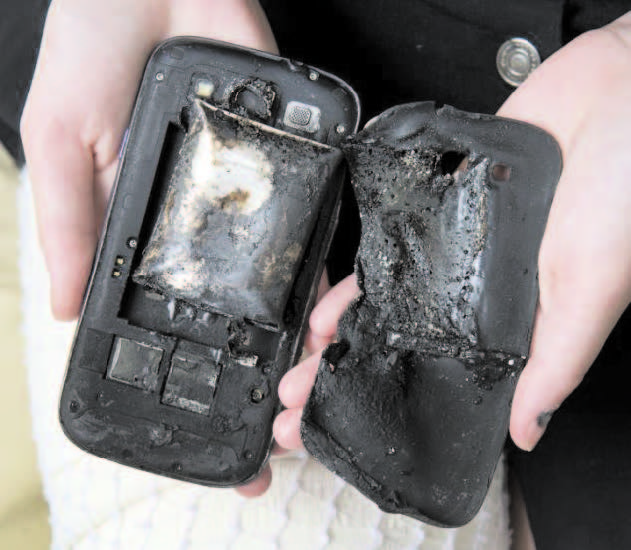
  • WHY ARE SO MANY SMARTPHONES EXPLODING?

    WHY ARE SO MANY SMARTPHONES EXPLODING?

    Twitter has been lately abuzz with consumers crying foul about their exploding smartphones.

    The latest casualty was a Reliance LYF smartphone owned by a Kashmiri youth. Tanvir Sadiq, who is political secretary to the National Conference, took to Twitter to put up pictures of the burnt device and say he and his family had a narrow escape.

    Another consumer also took to Twitter to report about his burnt OnePlus One, and said the phone exploded while it was being charged. In fact, Indian aviation regulator DGCA banned Samsung phones on flights two months ago after reports of Note 7 blasts followed by a Note 2 explosion.

    But why are smartphone batteries exploding now? Scientists and researchers seem to point in the direction of heat/thermal management on the device and also high usage of devices these days.

    A lithium-ion battery is a kind of rechargeable battery that uses different materials, one holding positive ions and the other holding negative ions. Called the cathode and the anode respectively, these ions move one way when charging, and back again when discharging — being used.

    These two layers — or conductors —are never supposed to touch; so manufacturers insert separators to keep them apart. The chemical reaction that makes batteries work creates heat. Overcharging the packs — or charging them too fast — can lead to fires.

  • After Phones, Now Samsung Washing Machines Are ‘Exploding’!!!

    After Phones, Now Samsung Washing Machines Are ‘Exploding’!!!

    Samsung’s woes just got worse. Close on the heels of the Galaxy Note 7 fiasco, Samsung has a new problem – exploding washing machines.

    A federal class action suit has been filed against Samsung for selling washing machines that explode.

    The lawsuit alleges that Samsung was aware of the problem but did nothing to warn customers. The plaintiffs in the case are demanding that the product be recalled, a safety warning be issued, and the manufacturing and distribution of the product be ceased.

    According to the company, the problem occurs while washing certain kinds of items although it didn’t specify which models were affected. It has said that the problem is confined to top-loading washing machines manufactured between March 2011 and April 2016 that have been sold in the US.

    A statement released by Samsung and the Consumer Product Safety Commission states that, “In rare cases, affected units may experience abnormal vibrations that could pose a risk of personal injury or property damage when washing bedding, bulky or water-resistant items.”

    The Commission has stated that it is actively working with the company to handle the safety concerns and arrive at a “remedy”.

    In the meanwhile, the company has advised customers to use in the lower-speed delicate cycle to wash items that may cause the vibrations. Samsung also pointed out that customers have “completed hundreds of millions of loads without incident since 2011.”

    The lawsuit however highlights a scary picture. One of the plaintiffs Melissa Thaxton states in the lawsuit that she was next to her machine when it exploded, sounding like “a bomb went off.”

    One complaint available on the SaferProducts.gov shows how dangerous it can get. According to the user, the machine, during the spin cycle, simply “broke free, throwing itself against walls and throwing parts and water everywhere. Had someone been nearby they could have been severely injured.”

    Samsung has provided a resource for consumers to check if their washing machines have the serial numbers that are affected by the defect.

  • BLACKBERRY, THE ORIGINAL SMARTPHONE, ENDS PRODUCTION AFTER GREAT RUN

    BLACKBERRY, THE ORIGINAL SMARTPHONE, ENDS PRODUCTION AFTER GREAT RUN

    WATERLOO, ONT (TIP): It’s official. BlackBerry Ltd., the Canadian company that invented the smartphone and addicted legions of road warriors to the “CrackBerry,” has stopped making its iconic handsets, a news report says.

    Finally, conceding defeat in a battle lost long ago to Apple Inc. and Samsung Electronics Co., BlackBerry is handing over production of the phones to overseas partners and turning its full attention to the more profitable and growing software business.

    It’s the formalization of a move in the making since CEO John Chen took over nearly three years ago and outsourced some manufacturing to Foxconn Technology Group. Getting the money-losing smartphone business off BlackBerry’s books will also make it easier for the company to consistently hit profitability.

    “This is the completion of their exit,” said Colin Gillis, an analyst at BGC Partners. “Chen is a software CEO historically. He’s getting back to what he knows best: higher margins and recurring revenue.”

    Chen should be able to execute his software strategy as long as he keeps costs in line and maintains cash on the balance sheet, Gillis said.

    BlackBerry, based in Waterloo, Ontario, gained as much as 7.4 percent Wednesday, September 28, its biggest intraday jump since December. The shares were trading up 4 percent to

    C$10.83 at 12:53 p.m. in Toronto.

    Chen will still have to prove that he can continue to expand BlackBerry’s software business in an increasingly competitive space. 2015 File Photo/The Associated Press

    BlackBerry said it struck a licensing agreement with an Indonesian company to make and distribute branded devices. More deals are in the works with Chinese and Indian manufacturers. It will still design smartphone applications and an extra-secure version of Alphabet Inc.’s Android operating system.

    “I think the market has spoken and I’m just listening,” Chen said in a discussion with journalists. “You have to evolve to what your strength is, and our strength is actually in the software and enterprise and security.”

    The new strategy will improve margins and could actually increase the number of BlackBerry-branded phones sold, Chen said, as manufacturers license the name that still holds considerable sway in emerging markets like Indonesia, South Africa and Nigeria.

    “This is the way for me to ensure the BlackBerry brand is still on a device,” Chen said.

    Although BlackBerry’s latest phone, the DTEK50, was already almost completely outsourced, the move is a big symbolic step for a company that once reached a market value of $80 billion. Today, it’s worth about $4.3 billion.

    When the BlackBerry 850 was released in 1999, it married a functional keyboard with email capability and essentially ushered in the modern smartphone era. With a proprietary operating system known for its watertight security, the phones became ubiquitous and extended the workday onto commuter trains and into restaurants and homes.

    They were an instant hit with business executives and heads of state alike. President Barack Obama was fiercely committed to his but finally ditched it earlier this year, reportedly for a Samsung.

    Then, in 2007, enter the iPhone, with its touchscreen interface and app store. People at first said they didn’t want to give up BlackBerry’s keyboard and simplicity. But the lure of apps eventually sent almost all its users to phones running Android or iOS.

    “It was inevitable at this point; they didn’t have the unit volumes to sustain the business profitably,” said Matthew Kanterman, an analyst with Bloomberg Intelligence. “This is doubling down on the efforts to focus on software, which is really what their strength is.”

    BlackBerry shipped only 400,000 phones in its fiscal second quarter, half of what it sold in the same period last year. Apple sold more than 40 million iPhones last quarter.

    BlackBerry said software and services revenue more than doubled in the quarter from a year earlier to $156 million. Still, software revenue was down from the previous quarter’s $266 million, which Chen blamed on patent licensing deals that didn’t carry over into the quarter.

    Adjusted earnings were at break-even, compared with analysts’ estimates for a loss of 5 cents. Revenue in the second quarter was $325 million, falling short of analysts’ projections for $390 million. For the full year, BlackBerry expects a loss of 5 cents or to hit break-even, compared with what it said was a current consensus of a 15-cent loss.

    While investors appear to be relieved that BlackBerry finally threw in the towel on handsets, Chen will still have to prove that he can continue to expand the software business in an increasingly competitive space. So far, he has managed to hit his fiscal 2016 target of pulling in $500 million in annual software-only revenue last March. The next milestone is to grow that by another 30 percent by March 2017.

    Chen also aims to expand the margins of software products to around 75 percent from closer to 60 percent now, he said.

    BlackBerry’s most important software is its device management suite, which helps companies keep track of their employees’ phones and make sure sensitive communication stays within the business. BlackBerry bought one of its key competitors, Good Technology, for $425 million last year, but the market is crowded.

    “This doesn’t change the fact that there are still a lot of competitive threats,” Kanterman said in a phone interview. VMWare, IBM Corp. and Microsoft Corp. all have device management products and are taking market share by bundling them with other business-focused software they sell. In some ways, it doesn’t make sense for BlackBerry to remain a public company.

    Given its shriveled market value, it could be the right price for a private-equity takeover, or it could sell out piecemeal to a bigger company like Dell Technologies’ VMWare or Samsung.

    As BlackBerry reinvents itself, it will have to change how it’s perceived in the market. Investors still largely value BlackBerry as a hardware company, not the software provider it has become, Chen said.

    “As soon as that message is recognized, the stock will move to the right valuation,” he said.

  • Samsung’s profit sinks 39%as mobile profit shrinks

    SEOUL (TIP): Samsung Electronics Co. said its first-quarter net income has plunged 39%as the smartphone business saw its profit shrink to less than half from a year earlier.

    The company reported Wednesday that its January-March income was 4.63 trillion won ($4.35 billion), compared with 7.49 trillion won one year earlier.

    That was lower than analysts’ consensus of 4.97 trillion won, according to financial data provider Factset.

    Sales fell 12% from a year earlier to 47.12 trillion won while operating income dropped 30% to 5.98 trillion won, in line with Samsung’s earnings preview earlier this month.

    The wider-than-expected drop in net profit was due to a big profit plunge in Samsung’s mobile business. The maker of Galaxy smartphones said its mobile division generated 2.74 trillion won in quarterly profit, compared with 6.43 trillion won a year earlier.

    Analysts estimate Samsung sold more smartphones than Apple during the quarter but the Korean firm lost its share in the high-end market to Apple after the maker of the iPhone began offering models with bigger screens last fall.

    Apple on Tuesday reported that it sold 61 million iPhones in the quarter, which drove another quarter of blow-out profits.

    Samsung, which does not disclose its smartphone shipments, is estimated to have sold 81 million smartphones during the quarter according to analysts. But most of the sales increase came from mid-level handsets like the Galaxy A series, which are sold at a cheaper price than its flagship models.

    The Korean company said its profits will increase during the second quarter as the Galaxy S6 and S6 Edge with curved screens expand sales after their global launch this month. But the shipments of those high-end phones will not be big enough to offset decreased sales of middle- to low-end models. Marketing expenses will also go up, pressuring its profit margin.

    The only business that saw an improvement in profit during the first three months of this year was Samsung’s component division that supplies chips and displays for makers of smartphones and televisions, including Apple Inc. Samsung’s consumer electronics division that makes television sets turned unprofitable, losing 140 billion won during the quarter.

    Looking ahead, Samsung said its overall earnings will increase during the second quarter from the previous three months, as sales of premium smartphones such as its Galaxy series as well as the iPhone drive demand for its semiconductor products and display panels.

  • MICROMAX PIPS SAMSUNG TO TOP SLOT: SURVEY

    MICROMAX PIPS SAMSUNG TO TOP SLOT: SURVEY

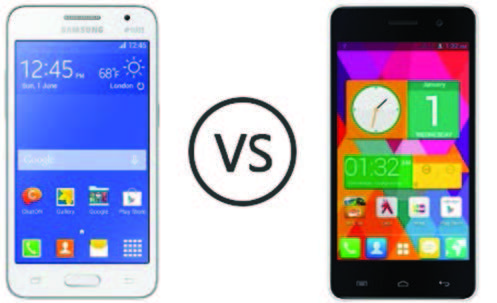
    NEW DELHI (TIP): Low-cost mobile handset player Micromax has emerged as top smartphone seller, displacing Samsung in the fourth quarter of calendar 2014, a survey by a research firm showed on Wednesday, but the Korean giant contested the findings, saying it still maintains the pole position.


    Research firm Canalys said Micromax finished the October-December 2014 quarter with a share of 22%whereas Samsung ended the period with 20%. “Micromax has been quicker than its competitors to improve the appeal of devices, for example, by including a wide variety of local languages,” Canalys analyst Rushabh Doshi said, while praising another local vendor, Lava, which launched certain devices with greater battery life in line with market’s requirements. “Vital to success is selling these handsets at low price points to appeal to the bulging mid-level income market in India.” 


    Canalys said devices priced under Rs 6,000 accounted for 23% of smartphone shipments in the period, while Rs 6,000- 12,000 range, where Micromax had “strong products,” contributed 41%. This is the second instance in recent times that Samsung’s leadership in the Indian mobile phone market has been questioned. CounterPoint Research had said in August last year that for the second quarter of 2014, Micromax had become the leader in India, which included feature and smartphones. It pegged Micromax’s share at 16.6% in the April-June ’14, while giving 14.4% to Samsung.


    Asim Warsi, marketing VP (mobile business) for Samsung India, however, disputed the findings of Canalys. “As per the findings of GfK India market research firm, our share and leadership is clear and robust for the fourth quarter of 2014 as well as for the full year,” he said.

  • AUDIT CRITICIZES TEXAS ECONOMIC DEVELOPMENT PROGRAM RUN BY SCHOOL DISTRICTS

    AUDIT CRITICIZES TEXAS ECONOMIC DEVELOPMENT PROGRAM RUN BY SCHOOL DISTRICTS

    AUSTIN (TIP): Texas school districts are giving away more than $200 million a year in property tax breaks without making sure companies actually create the high-paying jobs promised, the state auditor says. State Auditor John Keel based his criticisms on examination of four school districts’ practices that found inconsistent reporting of information on amounts invested and jobs spun off. “The school districts relied primarily on information that the businesses certified to be true and correct,” said Keel, who recommended the Legislature require independent verification.

    He also urged lawmakers to impose tighter ethics policies on school board members and school district employees who handle applications for tax breaks. Last year, as big corporations such as chipmaker Samsung threatened not to expand their Texas operations unless the incentive program was extended, lawmakers renewed it for another 10 years. From 2001 to 2012, school districts agreed to dole out $2.4 billion in reduced appraisals and tax credits, according to state Comptroller Susan Combs. Under the program, known as “Chapter 313,” recipients must be manufacturing plants, energy generators and research-anddevelopment installations.

    Districts can reduce a company’s property valuations up to 90 percent for 10 years. They also get credits to offset higher school taxes they pay during construction in the first two years. The Texas Education Agency offsets districts’ losses by ramping up their school aid. One of the program’s goals is to attract businesses that might locate in other states, though critics have questioned how that could be true for some of the selected beneficiaries, such as nuclear power plants, wind farms and natural gas processors.

    Business groups have defended the program. Dale Craymer, who heads the Texas Taxpayers and Research Association, has said Texas has very high property taxes on industrial concerns and can’t compete for large relocations or expansions without incentives. “The school property tax is the 800-pound gorilla,” he told the Austin American- Statesman on the eve of last year’s legislative session. Keel was required to audit the program as part of the law extending it through 2024.

    He looked at a Hewlett-Packard research facility in Austin, two wind farms in the West Texas town of Sterling City, a natural gas processing plant in Fort Stockton and two nuclear power generating units in Matagorda County that its owner, NRG, canceled in April 2011. The school districts in those communities passively accepted companies’ investment and job numbers before handing the information to two state agencies that help the districts obtain full reimbursement, the audit said. Nor did the comptroller’s office provide any background materials to support its findings that without the tax breaks, the companies wouldn’t have come to the four communities, the audit said.

    Dick Lavine, a longtime critic of the program, said the audit confirms the program is too loose about making sure as many jobs as possible are created. “The reason it’s important to verify the numbers is to see if the state’s getting its money’s worth,” said Lavine, a former House tax-research analyst who is a fiscal expert at the center-left think tank the Center for Public Policy Priorities. Chapter 313 costs the state far more than its other business incentive programs, such as the Texas Enterprise Fund and Emerging Technology Fund, though they have drawn more attention, Lavine said.

  • Samsung goes offline with mobile phones

    Samsung goes offline with mobile phones

    NEW DELHI (TIP): In a move that might change the dynamics of India’s booming mobile phone market, Samsung Electronics, one of the country’s largest phone makers, has decided to take the offline retail route even as the rest of the world is moving online.

    While its peers like Xiaomi and Motorola are busy selling millions of handsets online, the Korean giant has given in to mounting pressure from thousands of brick-and-mortar retailers over predatory online pricing and has decided to extend exclusivity on selling rights of 48 models, including its muchawaited Galaxy Alpha and Note 4, to offline retailers. Offline handset retailers have been facing the heat from their online counterparts due to heavy discounts offered online, which they couldn’t match.

    This has led to the formation of All India Mobile Retailers Association (AIMRA), a body that has vowed to work for the mutual benefits of brickand- mortar retailers and maintain price hygiene across trade channels. TOI had reported in August that Samsung was facing dealer unrest due to predatory pricing by online retailers. While addressing a large gathering of retailers from AIMRA in the capital recently, a senior executive with Samsung Electronics said: “We have taken action against many rogue distributors, who were dumping their stocks online and beating down the price of our handsets.

    We are working hard to bring back price hygiene in the market. Our revenues from online sales have come down from 30% to single digit. We also have plans to stop billing WS Retail, the largest reseller on Flipkart.” The executive said that Samsung has struck a deal with various e-tailers, wherein the company would give them exclusive rights to sell one or two models in return for the promise that they are going to maintain the price sanctity of Samsung handsets.

    Earlier this month, Samsung made Flipkart the exclusive launch partner for the Galaxy S5 Mini. Interestingly, according to retailers, the difference in prices between Samsung handsets sold online and offline has narrowed considerably since August when a Galaxy S5 that was being sold for Rs 38,000 at retail stores was being offered for Rs 36,000 online. “Now, there is hardly any difference,” an AIMRA spokesperson said. An emailed questionnaire to Samsung did not elicit any response. Retail experts have taken its move with a pinch of salt.

    “It’s a regressive move, especially before the festive season when you are going to see a lot of discounts online,” said Arvind Singhal, founder and chairman of retail consultancy, Technopak. “Perhaps the fact that around 80% of India’s Rs 60,000-crore handset business is still done through offline retail might be reason for the company to shy away from online trade. But, Samsung needs to wake up to the fact that it’s not the future since Chinese manufacturers are offering same spec handsets at one third of the price.”