Tag: Samsung

  • SAMSUNG LAUNCHES GALAXY S5 IN INDIA

    SAMSUNG LAUNCHES GALAXY S5 IN INDIA

    NEW DELHI (TIP): Smart phone manufacturer Samsung Electronics, on March 27, introduced Galaxy S5 in the domestic market. The features include a 16-megapixel camera, fast 3G speeds at 42Mbps and Octa-core processor capable of operating all eight cores at the same time, said a company release.

    It has a perforated pattern on the back cover, and is being offered in charcoal black, shimmery white, electric blue and copper gold, and is IP67 dust and water resistant. It has a finger scanner and biometric screen locking feature. Galaxy S5 also introduces S Health 3.0, a fitness application. “Galaxy S5 offers the world’s fastest auto focus speed up to 0.3 seconds and advanced high dynamic range (HDR)”, the release said.

    Samsung Galaxy S5 is priced between Rs.51,000 and Rs.53.000. Samsung also announced three wearable devices — Gear Fit, Gear 2 and Gear 2 Neo. These devices will be available across the country through Samsung’s retail stores and e-commerce sites from April 11 onwards. Galaxy Gear 2 is priced at Rs.21,900 and both Galaxy Gear 2 Neo and Galaxy Gear Fit are priced at Rs.15,900.

    Asked if the pricing was slightly on the higher side, Samsung India Country Head (IT and Mobile Division) Vineet Taneja said people would not mind paying for a quality product. “I think the Rs.50,000 barrier got broken when we launched the Galaxy Note 3, for which we have got a good response. People are looking for value and for a quality product, they don’t mind paying,” Taneja said. He said the company would offer customers buyback and EMI schemes. “Our financing options make the device really affordable,” Taneja said.

  • SAMSUNG LAUNCHES NOTE 3 NEO, GALAXY NOTEPRO, TAB3 NEO

    SAMSUNG LAUNCHES NOTE 3 NEO, GALAXY NOTEPRO, TAB3 NEO

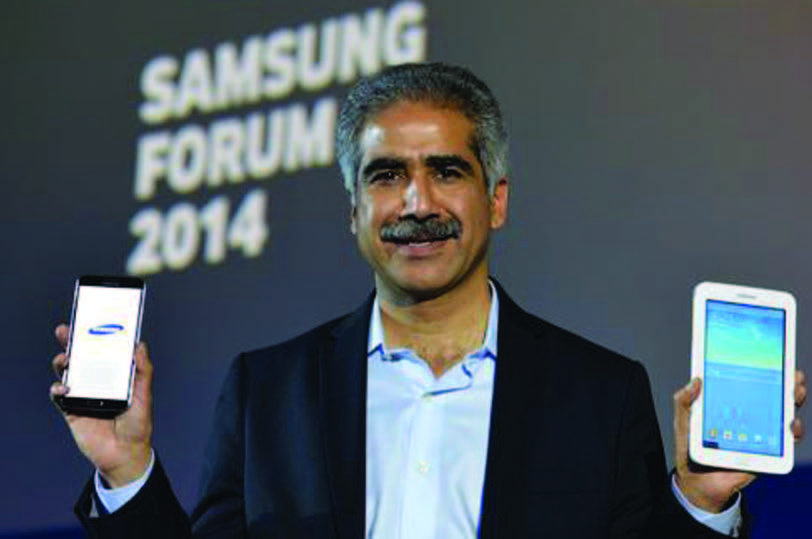
    BALI (TIP): Samsung launched the Note 3 Neo at the Samsung Forum in Bali on February 18. Priced at Rs. 40,900, the Neo is a cheaper version of the Note 3, which retails at around Rs. 45,000. Launching the phone, Vineet Taneja, Country Head, Mobile & IT, said the phone will have Club Samsung that features a “vast array of Indian entertainment content” with access to over 5,000 movies, 4 lakh songs and over 90 live TV channels.” “Because it is designed for India, it also comes with a user interface of nine Indian languages”, Vineet Taneja said. The Neo comes with all the software features in Note 3, such as the advanced Air Command features such as Action Memo, Scrap Booker, Screen Write, S Finder and Pen Window.

    Specifications
    The Neo comes with a 5.5 inch HD Super AMOLED screen, powered by a hexa core (A15 Dual 1.7GHz and A7 Quad 1.3 GHz) processor. The phone’s dimensions are 148.4mm x 77.4 x 8.6 mm and weighs 163 gm. The Neo has a leather-finish back, and comes in three colours – black, white, and the all-new mint green. It has an 8 MP back camera and a 2 MP front camera that can record full HD at 30 fps. It has an internal memory of 16 GB with an additional micro SD slot (up to 64 GB) and 2 GB RAM. The Galaxy Note 3 Neo has a 3,100 mAh battery.

    Galaxy NotePRO launched
    Taneja also launched the Galaxy NotePRO with a 12.2 inch WQXGA screen and having 2560×1600 resolution. It has been priced at Rs. 64,900. Explaining the rationale for a 12.2 inch device, Taneja said, “With one device, you can do a lot more. With the PRO series we are taking multi-tasking to a completely new level.” The PRO series tablets enable the user to open up to four windows, instead of the two possible now. An important feature in the NotePRO is the introduction of WebEx, in collaboration with CISCO. “You can have all the functionalities of WebEx in this very very large screen,” said Taneja. The NotePRO also has an e- Meeting feature. “This enables you to set up a meeting of up to 20 people through WiFi, he said. “The Samsung e-Meeting provides collaboration capabilities by giving users the ability to share content during a meeting without having to access a central server or network, according to a Samsung statement.

    Specifications
    The NotePRO is available with various connectivity options such as WiFi only, WiFi and 3G, or WiFi and LTE. It comes with 2 processors, 3 GB RAM, and has Android 4.4 KitKat. It has a huge 9,500 MAh battery, “which means more than 10 hours of video playback”, Vineet Taneja said. “It has a whole range of essential apps pre-installed,” he said.

    Tab3 Neo launched
    The Tab3 Neo, priced at Rs. 16, 490, comes with a 7 inch display with 600×1024 pixels and measures 193x117x9.7 mm. Designed for the youth, the tablet comes in a range of colours. It has a 1.2 GHz dual core processor and is powered by a 1 GB RAM. It has an 8 GB internal storage, expandable through a micro SD card and has a 2 MP rear camera. It runs on Android 4.2 Jelly Bean and comes with two options – WiFi and 3G. It weighs 322 grams. The Tab3 Neo features a 3600 mAh battery and comes with Club Samsung. It comes with a Content Gift Package that includes “long-term subscription offers” from several news, social media and cloud storage providers including Bitcasa, Bloomberg Businessweek, Blurb, Cisco WebEx meetings, Dropbox, Easilydo Pro for Tablet, Evernote, Hancom Office, LinkedI, Livesport.Tv, NY Times, Oxford Advanced Learner’s A-Z and Sketchbook Pro.

  • Interim Budget 2014: Cars, consumer durables to be cheaper

    Interim Budget 2014: Cars, consumer durables to be cheaper

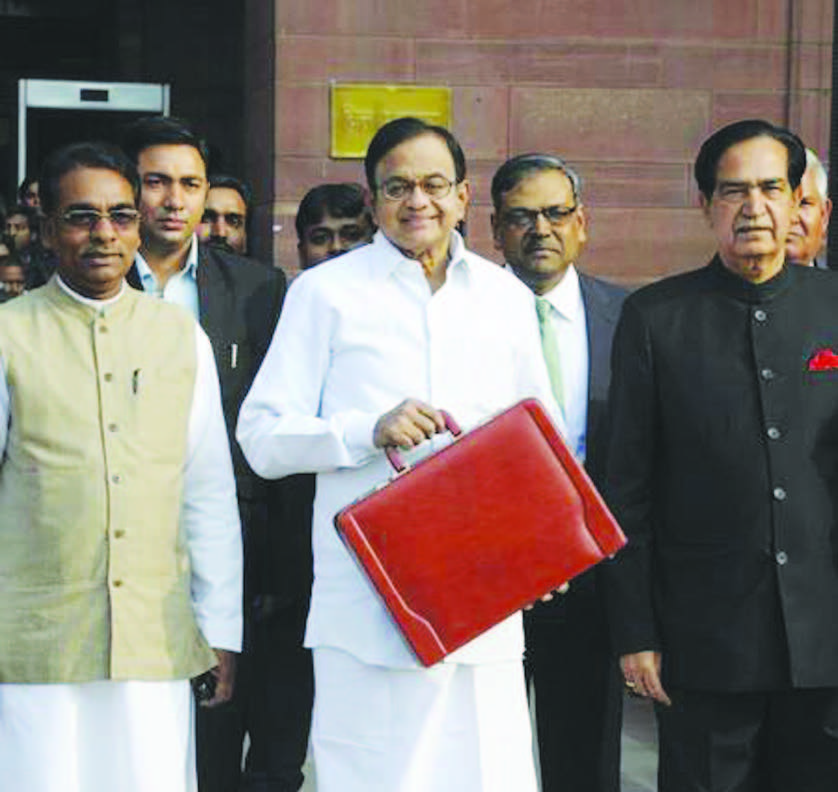
    NEW DELHI (TIP): Financial markets went in for the interim budget with little expectation, and rightly so, as finance minister P. Chidambaram was not expected to tinker with the existing tax laws. But he still had room to manoeuvre and propose changes that will have an impact on your money, well, for at least three months of the next financial year. The markets were looking for the government to contain its deficit under the budgeted target of 4.8% of the gross domestic product (GDP) for the year.

    The government managed to restrict the fiscal deficit to 4.6% of the GDP, and now expects it to come down further to 4.1% in the next fiscal. Therefore, the two very important indicators—the fiscal deficit and the current account deficit which were worrying the financial markets and individuals alike—are now in a much better shape than a year ago, though the improvement under both the heads can be debated. Beyond this critical number of fiscal deficit, there was not much that markets were looking for.

    25
    As a result, the BSE S&P Sensex closed with a modest gain of 0.48%. However, there were some surprises for individuals. If you plan to buy a new car, there is good news as excise in this segment has been reduced, and so they are likely to be cheaper. There is also relief in store for those struggling with the burden of education loans, taken up to 31 March 2009. We take a close look at some of the proposals that will have an impact on your pocket.

    Relief on student loans
    The budget has extended the education loan subsidy scheme with some significant benefits. The finance minister has proposed a moratorium wherein you will not have to pay the interest on your education loan taken before 31 March 2009. The government will shoulder the burden of the outstanding interest portion as of 31 December 2013. From January 2014 onwards, you pay. Given that these loans were taken about four-and-a-half years back, borrowers are likely to have finished their education and moved on to jobs or are at least looking for one.

    The difficult economic scenario in the country, with the GDP growth having fallen from 6.7% in FY09 to a budget estimate of 4.9% for FY14, jobs are not that easy to come by. Says A. Krishna Kumar, managing director and group executive (national banking), State Bank of India (SBI): “This is definitely a good move and will ease pressure on those who are still looking for jobs.” It is too early for banks to know exactly how much this liability is. SBI’s Kumar says, “We are yet to calculate the exact impact on our outstanding education loans.” The government has given an estimated benefit of around Rs.2,600 crore to about 900,000 borrowers. How does this work for you? We take an example using a calculator on Punjab National Bank’s website. Let’s assume, you took an education loan of Rs.10 lakh in April 2007 for a two-year course.

    The interest rate was 12% per annum for 10 years with no processing fees. Your equated monthly instalment (EMI) per month was likely around Rs.14,350. Let’s say, you got a job after two years and started to repay the loan. But in December 2012, you lost your job and have not been able to pay the EMI since. In this case (assuming that the bank hasn’t invoked the guarantee or declared the loan as a bad debt), your outstanding EMIs for 12 months (as on December 2013) would be about Rs.1,72,200. Of this, the interest would be Rs.63,710. As the proposal suggests, the government will pay this outstanding interest on your behalf.

    You will, however, have to start paying from January 2014. More details are awaited. Also, the relief is only for the outstanding interest and not the principal. Your final benefit will depend on the terms of the loan— when you took the loan, the interest rate, the period for which you haven’t paid, and others. It would be pre-emptive to say that this move will result in borrowers becoming complacent and the unpaid dues in this segment going up. Moreover, these loans are not a big portion of banking credit.

    Cheaper wheels
    Another piece of good news came by the way of the proposal to reduce the excise duty for the auto sector till 30 June. The excise duty has been reduced from 12% to 8% on motorcycles, scooters, small cars and commercial vehicles—such as Maruti Suzuki India Ltd’s Alto, Hyundai Motor India Ltd’s i10, Tata Motors Ltd’s Indica, Bajaj Auto Ltd’s Pulsar and TVS Motor Co. Ltd’s Wego.

    For large and mid segment cars, the reduction is from 27% or 24% to 24% or 20%; and for sports utility vehicles (SUVs), from 30% to 24%. According to Prabhudas Lilladher Pvt. Ltd, the benefit is expected to be Rs.1,500-2,000 for two-wheelers and Rs.15,000-20,000 for small cars.

    SUVs should be cheaper by Rs.48,000-60,000, but “given the current slowdown, the automakers may not be able to pass on the entire benefits for SUVs”, says Surjit Arora, research analystinstitutional equities, Prabhudas Lilladher. This may generate more demand and improve sales. Yaresh Kothari, research analyst-automobiles, Angel Broking Ltd, says, “It is a positive announcement for the sector. The cut in excise duty will be passed on to the consumer. Historically, they (auto manufacturers) have always done it. The benefit will differ based on the price of the vehicle.”

    Says Suresh Sadagopan, a Mumbai-based financial planner: “It’s a one-time kind of savings possibility in the short term. If you plan to buy, try and cash in on this benefit before 30 June.” Consumer goods For the mobile handset segment, the finance minister announced that excise duty for all categories of handsets will now be 6% with central value-added tax (Cenvat) credit or 1% without it. Last year, the excise on mobile phones priced above Rs.2,000 had been raised to 6% from 1%, upsetting the industry as the cost of smartphones went up. The reduced excise, however, may not mean cheaper phones.

    “This will not have any significant impact on prices as it will reduce costs marginally given the competition from Chinese manufacturers and the grey market,” says Hemant Joshi, partner, Deloitte Haskins and Sells. Cenvat credit essentially means that a manufacturer can set off excise or service tax paid on the input cost—for example, of raw materials— against its total excise liability. “This may give an edge to domestic manufactures as importers will continue to pay 6%,” says Bipin Sapra, tax partner, EY.

    Two domestic phone manufacturers—Micromax and Karbonn—were the third and fourth largest mobile handset sellers in India with 10.1% and 9.1% market shares, respectively, at the end of the December-2013 quarter, according to International Data Corp. The leader is Samsung, followed by Nokia. The finance minister also proposed to reduce the excise duty on capital goods and consumer nondurables from 12% to 10% for items falling under chapters 84 and 85 of the Central Excise Tariff Act.

    “What this means is that prices of some products such as basic machinery and electronic goods will be affected,” says Sapra. Prices of items such as washing machines, vacuum cleaners, computers, transistors, batteries, software, basic landline telephones, computer disks, knitting machines, etc., may go down if manufacturers choose to pass on the benefit. Super-rich surcharge The surcharge on the super-rich remains. Last year, a 10% surcharge was applied to those with taxable income above Rs.1 crore. This onetime move was supposed to be only for the assessment year 2014-2015, and was in addition to the education cess of 3%.

    The surcharge and income tax rates will continue for the purpose of deduction of tax at source from salaries during the financial year 2014-15, and for computing the “advance tax” payable during that financial year on current incomes. “Practically, the income tax rates, including surcharge, will apply for tax withholding or payment of advance tax. Salaried individuals who pay taxes every month will have to pay this surcharge till the time the new government drops it.

    But non-salaried individuals, who pay advance tax only in September, may not have to pay the additional surcharge at all if the new government drops it,” says Kuldip Kumar, executive director, PwC India. According to the Finance Bill, the total amount payable as income tax and surcharge shall not exceed the total amount payable as income tax on a total income of Rs.1 crore by more than the amount of income that exceeds Rs.1 crore. Here’s an example.

    The tax liability on a taxable income of Rs.1 crore is around Rs.29 lakh. So, if the income is even Rs.10 more than Rs.1 crore, the tax liability will go up by only Rs.10 and not Rs.2.9 lakh. Overall, while the finance minister managed to deliver on his promise of containing expenditure, the reduction in excise duty on various items and relief on education loans will also benefit a key constituent in elections—the middle class. The excise relief will lapse if the new government decides against it. Investors and consumers now have to wait till the new government presents its budget for the full year and give a fresh direction to economic policy and tax laws.

  • Samsung promises bendable smartphones by next year

    Samsung promises bendable smartphones by next year

    NEW DELHI (TIP): Last month, Samsung took the lead in bringing out the world’s first smartphone with curved screen. Though the device failed to excite the technology community, the company has more display technologies in the offing that promise to revolutionize the industry. At the Samsung Analyst Day, the company’s vice chairman and CEO Oh-Hyun Kwon revealed its roadmap for the coming years and the technologies it aims to incorporate in upcoming gadgets.

    The two most notable technologies that the company talked about at the event are bendable and foldable displays. One of the slides, given below, details that the company will launch smartphones with bendable screens as early as next year, while devices with foldable displays are scheduled for 2016-17. Though Samsung has not detailed the technologies involved or which gadgets they would debut with, it has already given a glimpse. At the Consumer Electronics Show in January this year, the company showcased the bendable Youm display. Unlike the curved screen of Galaxy Round smartphone, this prototype screen technology could be bent at any angle. Samsung Galaxy S5, expected to be launched early next year, is one of the likeliest contenders to get this screen technology.

  • Samsung Overthrows Nokia To Become The Largest Seller Of Mobile Phones In India

    Samsung Overthrows Nokia To Become The Largest Seller Of Mobile Phones In India

    KOLKATA (TIP): Samsung has overtaken Nokia to become the largest seller of mobile phones in the country’s major markets, as consumers lap up its new feature phones and its smartphones continue to do brisk business. According to market tracker GfKNielsen’s data, Samsung’s volume market share in urban areas in March rose to 31.4%, surpassing Nokia’s 30.1%. GfK-Nielsen urban panel tracks sales in 793 cities and towns with a population of over 50,000, which account for more than 70% of India’s total handset sales.

    This is the first time the Korean company’s volume market share has crossed that of Nokia’s in the GfKNielsen survey. The all-India figures, which will include rural sales, will be released shortly. Some months ago, Samsung’s market share, measured in value terms, had exceeded that of Nokia’s, and there is now a considerable gap between the two due to growing demand for the Korean firm’s smartphones.

    NEW MODELS PUSH SALES
    Last month, Samsung’s value market share in urban markets stood at 42.2% compared with Nokia’s 20.7%. Analysts say Samsung’s gain in volume market share last month is led by the recent introduction of the Rex feature phone series and strong demand for smartphones such as Galaxy Grand and Note 2, the topselling models at multi-brand retail outlets. Its newest premium smartphone, Galaxy S4, will be launched in India on Friday. A Nokia India spokesperson said the company did not comment on country-specific market data, and added that it was executing its strategy with ‘urgency and at a new clock speed’.

    The spokesperson said at the higher end of the price spectrum, the company had launched ten Nokia Lumia devices in the past 16 months and claimed that Asha 305 was the best-selling smartphone in India. “We are competing at every price point with better mobile experience. Nokia will continue to deliver new and innovative solutions to consumers,” she said. Notwithstanding these initiatives, analysts and experts feel that Nokia’s more than a decade-long leadership in the Indian handset market is under threat.

    The company, which once enjoyed a dominant 80% market share, has never completely recovered from its failure to anticipate and react to the dual-SIM handset boom a few years ago.

  • ING Exits Life Insurance In India

    ING Exits Life Insurance In India

    MUMBAI (TIP): Dutch financial services group ING has exited its insurance business in India selling its 26% stake in ING Vysya Life Insurance to its joint venture partner Exide Industries in a deal that valued the company at Rs 1,100 crore. Exide is now looking for a foreign insurer who will buy the 26% stake. Although a minority shareholder, holding the maximum permissible 26% stake, ING group controlled the life insurance operations for over a decade even as Indian shareholding changed several hands. A statement issued from Amsterdam said that ING’s exit from the Indian life insurance joint venture is part of the previously announced intended divestment of ING’s Asian Insurance and Investment Management businesses.

    “The process for the remaining businesses is ongoing. Any further announcements will be made if and when appropriate. Subject to regulatory approvals, the transaction is expected to close in the first half of 2013,” said the statement. The valuation of the deal has surprised industry insiders. “Prima facie a valuation of Rs 1,100 crore seems to be less considering that this is a 10-year old company where the promoters have invested more than Rs 1,000 crore,” said an industry official. Industry officials also feel that the coordinated exit of financial investors gives an impression that these were structured investments where returns are not entirely market linked. However, industry persons also point out that in an exit deal the Indian partner is on a strong footing as partners have the right of first refusal.

    In a statement to the stock exchanges, Exide Industries said: “The company, currently owner of 50% of the equity capital of ING Vysya Life Insurance (IVL), has in-principle decided to acquire the remaining 50% of the equity capital of IVL (26% from ING group, 16.32% from the Hemendra Kothari group and 7.68% from the Enam group) for an aggregate consideration of Rs. 550 crore approximately, subject to regulatory approvals.” Hemendra Kothari and Enam had picked up stakes in the company as financial investors in recent years. ING is the third insurer to exit India after the opening up of the sector. Australian insurer AMP in a joint venture with Sanmar was the first to sell out to Reliance Life Insurance.

    Some years later American insurer Chubb exited its joint venture with HDFC following disagreement with its partner who later tied up with Ergo. Last year US insurer New York Life sold its stake in Max New York Life to Max which later sold its stake to Japan’s Mitsui. Following the global financial crisis, several insurers have tempered their expansion plans. At present, North American insurer Manulife and Samsung Life of Canada are actively pursuing a presence in India. ING, which has a presence in banking, will continue to retain its presence. “Today’s agreement does not impact ING Vysya Bank, a publiclylisted Indian bank in which ING has a 44% stake, nor ING’s fund management business in the country,” the statement added.

    Automotive battery manufacturer Exide is a Rajan Raheja group company and has a market capitalisation of over Rs 10,000 crore. The company got into the life insurance business by buying out GMR group. GMR group, which along with Vysya Bank, was the original partner of ING had acquired a majority stake after ING acquired controlling stake in Vysya Bank. Vysya Bank had gradually diluted stake in favour of GMR to avoid falling foul of regulation which did not permit foreign partners holding 26% to invest in their joint venture partners. Of the 24 life insurance players in the country, two companies— Life Insurance Corporation (LIC) and Sahara India Life Insurance Co—are running the business without foreign partners.

  • GVK partners Samsung, Smithbridge for Oz project

    GVK partners Samsung, Smithbridge for Oz project

    HYDERABAD (TIP):

    Hyderabad-based GVK Power & Infrastructure Ltd (GVKPIL) plans to tie up $10 billion of funds for its Australian pit-to-port project in a year’s time. With all approvals in place, the company has awarded a contract to Korea-based Samsung C&T and Smithbridge Group Pvt Ltd of Australia for the port component. GVKPIL, through its subsidiary, Hancock Coal Infrastructure, is erecting the $10-billion project at Abbot Point in North Queensland. “We got all our approvals last week. From this week, we are starting our financing programme and construction contracts. The third quarter of the next calendar year will see financial closure and construction would start,” G V Sanjay Reddy, vicechairman, GVKPIL, said.