Tag: Sanjiv Khanna

  • Supreme Court  of India makes public inquiry report of Delhi HC Chief Justice  in Justice Varma’s case

    Supreme Court of India makes public inquiry report of Delhi HC Chief Justice in Justice Varma’s case

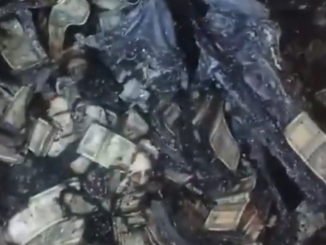
    NEW DELHI (TIP): Chief Justice of India Sanjiv Khanna on Saturday, March 22, 2025, constituted a three-member committee consisting of Punjab and Haryana High Court Chief Justice Sheel Nagu, Himachal Pradesh Chief Justice G.S. Sandhawalia and Karnataka High Court Judge, Justice Anu Sivaraman to conduct an inquiry into allegations of “huge” amount of cash found in the official residence premises of Delhi High Court Judge, Justice Yashwant Varma, during a blaze on the night of March 14. In a unique move to ensure total transparency, the Delhi Chief Justice’s in-house inquiry report, including the response of Justice Yashwant Varma, photos and videos were uploaded on the Supreme Court website late on Saturday (March 22, 2025).

    The move comes within 24 hours of Delhi Chief Justice D.K. Upadhyaya submitting a report prima facie ascertaining the veracity of the allegations and collecting details and evidence.
    In his report to Chief Justice of India (CJI) Sanjiv Khanna, the Delhi Chief Justice said “on examining the incident reported the material available and the response of Justice Yashwant Varma, what I find is that the Commissioner of Police, Delhi, in his report on March 15 has reported that as per the guard posted at the residence of Justice Varma, the debris and other partially burnt articles were removed from the room where the fire had broken out in the morning of March 15. The enquiry conducted by me, prima facie, does not reveal the possibility of entry or access to the room by any person other than those residing in the bungalow, the servants, the gardeners and the CPWD personnel, if any. Accordingly, I am of the prima facie opinion that the entire matter warrants a deeper probe”.

    Justice Varma has noted in his reply that his cash withdrawals were documented, and the allegations were baseless and had already scarred his reputation. He said a conspiracy was afoot to malign him. The incident was a sequence of events to defame him, including unfounded allegations against him which circulated in the social media in December 2024. The outhouse storeroom, where the fire occurred, was not a part of his main residence was utilized generally by all and sundry to store articles. The storeroom was disconnected from the main residence. It was surely not a room in his house as reported in the media.

    “I would be grateful if an enquiry is made with respect to my functioning as a judge and what is the perception of the legal fraternity with regard to my integrity and honesty in the discharge of my judicial functioning… What baffles me is the complete absence of any sacks of allegedly burnt currency which were ever recovered or seized. We categorically assert that neither my daughter, private secretary or household staff were shown the so-called sacks of burnt currency… I wonder who could countenance an allegation that currency would be kept in a storeroom in a corner of the house and which is freely accessible from amongst others the back wicker gate also,” he said in his reply to the Delhi Chief Justice.

    Chief Justice Khanna has meanwhile asked Chief Justice Upadhyaya not to assign any judicial work to Justice Varma. The Delhi High Court Chief Justice has agreed with the proposal of the CJI to repatriate Justice Varma to the Allahabad High Court in the interest of the “better administration of justice”.

    The CJI’s decision to form a three-member committee signals that the allegations against Justice Varma calls for a deeper probe. The Chief Justice of India would now be himself monitoring the progress of the enquiry against the judge. The response by Justice Varma to the Delhi High Court Chief Justice contains his answers to three questions, which were cardinal points of the prima facie enquiry.

    The first question was how he accounted for the “presence of money in the room located in your bungalow”.

    To this, Justice Varma has replied that he “was never aware of any money or cash lying in the outhouse storeroom. He said that neither he nor his family members or staff had anything to do with the cash allegedly found in the gutted room. More importantly, the judge said “no such cash was shown to my family members or staff who were present on that fateful night”.

    To the second question of the enquiry to explain the “source of money”, Justice Varma said the question does not arise as he had nothing to do with the cash allegedly found and videotaped.

    The Police Commissioner’s report on the incident said a guard had seen a person removing articles from the gutted room on the morning of March 15.

    To the query who had removed the “burnt currency” from the room on the morning of March 15, Justice Varma said he strongly rejected the insinuation that “we” had removed currency from the storeroom.

    Issue cannot be hushed up by mere transfer: Congress on Delhi HC judge cash discovery row

    “We were neither shown nor handed any sacks of burnt currency. The debris from the gutted room continues to exist in a part of the residence,” he had replied. Justice Varma said he and his wife were in Bhopal on the night of March 14, and had returned only on March 15 evening.

    “Therefore, the question of its (burnt currency) alleged removal is not known to us. In any event none of my staff removed any article, currency or cash in any form,” Justice Varma has responded categorically.

    Justice Varma said he had inspected the storeroom along with an officer of the Delhi High Court and was “totally shocked by the contents of the video depicting something which was not found on site as I had seen it”. He expressed apprehension that it was a conspiracy to frame and malign him.

    “I unequivocally State that neither I nor any of my family members had stored cash or kept any cash or currency in that storeroom at any point of time,” Justice Varma said.
    (Source: ANI)

  • Supreme Court of India no to status quo on Dharavi project

    Supreme Court of India no to status quo on Dharavi project

    NEW DELHI (TIP): The Supreme Court on Friday, March 7, refused to halt the ongoing work on the Dharavi redevelopment project, which is being executed by Adani Properties Pvt Ltd. However, a Bench led by Chief Justice Sanjiv Khanna issued notices to the Maharashtra government and Adani Properties Pvt Ltd, seeking their responses to a petition filed by UAE-based Seclink Technologies Corporation.

  • Supreme Court of India stays surveys, final orders on suits over religious structures

    Supreme Court of India stays surveys, final orders on suits over religious structures

    Asks Centre to file reply on petitions against Places of Worship Act

    NEW DELHI (TIP): The Supreme Court of India, on Thursday, December 12, restrained trial courts across India from registering fresh suits and ordering surveys or passing any effective and final orders with regard to the religious character of existing structures in pending suits.

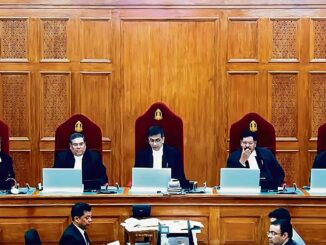
    “As the matter is sub judice before this court, we deem it fit to direct that no fresh suits shall be registered or proceedings be ordered. In the pending suits, courts will not pass any effective interim or final orders (till the next hearing of the case in the Supreme Court),” a three-judge Special Bench led by Chief Justice of India Sanjiv Khanna said. The next hearing is on February 17, 2025.

    22 suits involving 10 shrines pending

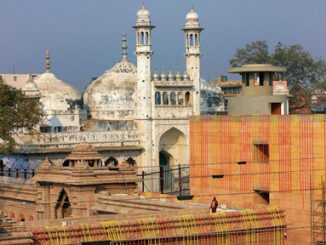
    A total of 22 suits pertaining to 10 places of worship are pending in various courts across the country. The top court’s order means that in pending suits such as those pertaining to the Kashi Vishwanath-Gyanvapi mosque and Krishna Janmabhoomi-Idgah disputes, courts can’t pass any effective or final orders, including those for survey.

    “When a matter is pending before us, is it fair for any other court to examine it,” asked the Bench, which also included Justice PV Sanjay Kumar and Justice KV Viswanathan.

    The Bench, however, refused to stay the proceedings in 22 suits pending with regard to 10 places of worship.

    Amid repeated interjections by senior lawyers representing various parties for and against the Act, the Bench clarified that it was examining validity as well as the ambit of the 1991 law.

    “The matter is sub judice. No further suits can be registered till we hear and dispose of the case,” the top court emphasized. “When the Supreme Court has laid down the law in a five-judge Bench composition, then lower courts can’t wrestle it out with the apex court. That is why proceedings need to be stayed,” it said.

    The top court’s order means that in pending suits such as those pertaining to the Kashi Vishwanath-Gyanvapi mosque, Krishna Janmabhoomi-Shahi Idgah, Sambhal Jama Masjid and Ajmer Sharif dargah disputes, courts cannot pass any effective or final orders, including those for survey.

    The Bench asked the Centre and other respondents to file their replies in four weeks. It also appointed three nodal counsels — Ejaz Maqbool for parties seeking enforcement of the Act and Kanu Agrawal for the Centre and Vishnu Jain for petitioners against the 1991 law.

    Enacted by Parliament during the PV Narasimha Rao government, the Act prohibits conversion of any place of worship, except the Ram Janmabhoomi-Babri Masjid at Ayodhya, and freezes the religious character of any place of worship as it existed on August 15, 1947.

    There are six petitions, including those filed by advocate Ashwini Kumar Upadhyay and former Rajya Sabha MP Subramanian Swamy, against certain provisions of the law. Some of the petitions have been pending since 2020.

    The petitioners against the 1991 Act alleged that it created an “arbitrary and irrational retrospective cut-off date” of August 15, 1947, for maintaining the character of the places of worship or pilgrimage against encroachments done by “fundamentalist-barbaric invaders and law breakers”. The top court had on January 9, 2023, sought responses from the Centre on pending pleas challenging certain provisions of the 1991 Act which took away the right of judicial remedy to reclaim a place of worship of any person or a religious group.

    The hearing assumes significance in view of the fact that there are several mosques and dargahs, which Hindu groups have sought to reclaim on the ground that they were built on pre-existing temples.

    Several politicians, including CPM leader Prakash Karat and RJD MP Manoj Jha, have moved the Supreme Court in support of the Act. On Thursday, the top court allowed the impleadment applications.

    “Tinkering with the Act would harm India’s communal harmony and secular fabric,” Karat submitted while Jha said the Act highlighted the obligations of a secular state and that there was no need for the top court to declare it unconstitutional. NCP (Sharad Pawar) MLA Jitendra Satish Awhad and Indian Union Muslim League leaders PK Kunhalikutty and ET Muhammed Basheer too have urged the top court to hear the parties before taking a call on the validity of the Act.

    In June 2022, the Jamiat Ulama-i-Hind moved the Supreme Court seeking dismissal of petitions challenging the validity of the Act, saying it would open floodgates of litigation against countless mosques across India.

    The Gyanvapi Mosque management committee too has moved the top court to oppose petitions challenging the validity of the Act, saying historical wrongs or perceived injustices of the past should not undermine the principles of secularism and non-retrogression upheld by the Act.
    (Source: TNS)

  • Supreme Court halts all mandir-masjid cases until 1991 Act verdict

    Supreme Court halts all mandir-masjid cases until 1991 Act verdict

    New Delhi (TIP)- The Supreme Court on Thursday, December 12,  issued a nationwide directive restraining all courts from entertaining fresh suits or passing orders to survey mosques to determine whether temple structures lie beneath them. This interim order serves as a sweeping pause on the growing litigation initiated by Hindu groups seeking to reclaim places of worship, effectively stalling proceedings in trial and high courts, and marking a significant intervention by the judiciary in a matter fraught with religious sensitivities and legal complexities.

    The directive came from a special bench, headed by Chief Justice of India (CJI) Sanjiv Khanna, which clarified that trial courts cannot “overreach” the Supreme Court while it adjudicates on challenges to the Places of Worship (Special Provisions) Act, 1991.

    “As the matter is sub judice before this Court, we deem it appropriate to direct that, though fresh suits may be filed, no suits would be registered and no proceedings shall be undertaken therein till further orders of this Court. Further, in the pending suits, no Court will pass any effective interim orders or final orders, including orders directing surveys, etc., till the next date of hearing/further orders of this Court,” ordered the bench, which also included justices PV Sanjay Kumar and KV Viswanathan. The court has scheduled the next hearing for February 17, 2025”.

    The directive comes amid a surge in litigation initiated by Hindu groups seeking the reclamation of alleged historical temple sites, prompting a host of legal proceedings in district and high courts. These disputes have sparked significant controversy and conflicting orders, amplifying political and communal tensions across the country. From Gyanvapi Masjid in Varanasi to Shahi Eidgah in Mathura, from Shahi Jama Masjid in Sambhal to the Taj Mahal in Agra, from the Dargah Sharif in Ajmer to the Bhojshala in Madhya Pradesh, a host of petitions seeking the redetermination of the character of different structures have sprung up across the country. Despite the significance of the issue, the matter had seen little progress in the Supreme Court over the last two years.

    Justice Khanna took over as CJI from justice Dhananjaya Y Chandrachud on November 11. He then formed a three-judge bench on December 7, paving the way for Thursday’s intervention.

    The Places of Worship Act, enacted in 1991, is central to this issue. The Act, which the court is deliberating on at the instance of the two sides – one challenging it and another seeking its strict enforcement — was enacted to preserve the religious character of all places of worship as they stood on August 15, 1947.

  • Supreme Court nulls electoral bonds scheme, seeks info on donors

    Supreme Court nulls electoral bonds scheme, seeks info on donors

    February 15, 2024

    NEW DELHI (TIP): Ahead of the 2024 Lok Sabha elections, the Supreme Court on Thursday, February 15,  declared “unconstitutional” the electoral bonds scheme that allowed individuals and companies to make unlimited anonymous donations to political parties. Noting that voters have right to know, a five-judge Constitution Bench led by CJI DY Chandrachud said the scheme violated Article 19(1)(a) of the Constitution, which guaranteed right to freedom of speech and expression and included right to information within its ambit.

    “We are of the opinion the information about funding to a political party is essential for a voter to exercise their freedom to vote in an effective manner. The electoral bonds Scheme and the impugned provisions to the extent that they infringe upon the right to information of the voter by anonymizing contributions through electoral bonds are violative of Article 19(1)(a) (right to freedom of speech and expression),” the Bench said. The Beach, which also included Justices Sanjiv Khanna, BR Gavai, JB Pardiwala and Manoj Misra, said the disclosure of information regarding electoral bonds was necessary to identify corruption and quid pro quo transactions in governance. “Such information is also necessary for exercising an informed vote,” it added.

    The top court ordered the State Bank of India to stop issuing electoral bonds immediately and submit all details by March 6 to the Election Commission which shall make all donations public by March 13. All electoral bonds within the 15-day validity period shall be returned by political parties to the purchasers, it added.

    Justice Khanna delivered a separate but concurring judgment. Welcoming the verdict, petitioner Association for Democratic Reforms’ counsel Prashant Bhushan said: “This is a salutary judgment which will enhance our democratic process.” The Constitution Bench also declared unconstitutional amendments made to the Representation of the People Act (RPA), 1951, the Income Tax Act, 1961, and the Companies Act, 2013, through the Finance Act, 2017, to facilitate introduction of the scheme.

    Earlier, political parties had to declare all contributions more than Rs 20,000 with no exceptions, and maintain a record of all donations exceeding Rs 20,000 for tax purposes. In a financial year, companies could contribute a maximum of 7.5% of their average net profits from the preceding three years. The amendments did away with the restrictions to allow political parties to receive funds through electoral bonds.

    Introduced through the Finance Act, 2017, an electoral bond is a bearer instrument like a promissory note which can be purchased by an Indian citizen or an Indian company whose identity would remain secret from everybody except the SBI from whom it has to be purchased. Once purchased, the buyer can give it to a political party, which could encash it using its bank account.