Tag: Sardar Vallabhbhai Patel

  • AAPI Delegation Champions Unity and Healthcare Collaboration in Gujarat

    AAPI Delegation Champions Unity and Healthcare Collaboration in Gujarat

    Historic Meetings Advance Shared Vision for Medical Excellence in India and Beyond

    • Ajay Ghosh

    AHMEDABAD (TIP): The American Association of Physicians of Indian Origin (AAPI) reaffirmed its commitment to unity and healthcare advancement during a series of pivotal engagements in Gujarat, India. At the heart of these meetings was the message that unity is the cornerstone of AAPI’s impact—both within its membership and in its partnerships with Indian healthcare leaders.

    During the Indian Medical Association (IMA) convention in Ahmedabad, an AAPI delegation led by President Dr. Amit Chakrabarty met with the Honorable Chief Minister of Gujarat, Shri Bhupendra Rajnikant Patel. The delegation presented a comprehensive memorandum addressing critical healthcare challenges, including “the urgent need to expand postgraduate training slots in emergency medicine and the importance of structured training programs for first responders and EMTs,” a priority strongly advocated by Dr. Lokesh Edara, former Chair of the AAPI Board of Trustees.

    Dr. Hetal Gor, AAPI Chairwoman, eloquently shared AAPI’s mission and objectives in Gujarati, emphasizing the organization’s dedication to enhancing healthcare across India. “Our vision is to collaborate, innovate, and uplift the standards of care in every community we touch,” Dr. Gor stated. The Chief Minister responded with deep appreciation, requesting that the IMA, in collaboration with AAPI, prepare and submit a formal memorandum to his office for further action.

    The delegation’s visit to the iconic Statue of Unity served as a powerful symbol of their message. Reflecting on the legacy of Sardar Vallabhbhai Patel, the Iron Man of India, the group drew inspiration from his pivotal role in uniting the nation. “Standing before this monumental tribute, we were reminded that unity is not just a word—it is the very foundation upon which greatness is built,” remarked Dr. Chakrabarty.

    Patel’s achievements resonated with AAPI’s ongoing efforts. “Patel’s legacy teaches us that when diverse voices come together under shared principles, no challenge is insurmountable. Division weakens, but unity empowers,” Dr. Chakrabarty emphasized. He called upon all AAPI members to “stand shoulder to shoulder, celebrate our shared identity, and carry forward the torch of solidarity.”

    Unity, the delegation stressed, remains AAPI’s “greatest power.” It is the force that “gives us credibility in the halls of power, amplifies our service to patients and communities, and ensures that AAPI continues to rise as a beacon of excellence, dignity, and heritage.”

    Another highlight of the Gujarat visit was the historic meeting with IMA leadership during the organization’s centennial conference. The gathering culminated in the drafting of a Memorandum of Understanding (MOU) between AAPI and IMA, laying the groundwork for future collaborative events that will blend Indian and American medical expertise. “This meeting was not just about agreements—it was about building bridges, fostering trust, and envisioning a future of collaboration,” said Dr. Chakrabarty.

    AAPI members actively participated in the conference, delivering lectures and engaging in vibrant exchanges of ideas. The event underscored “the importance of dialogue in shaping evidence-based practices that serve patients with compassion and clarity.”

    Dr. Chakrabarty concluded, “AAPI is our collective home, our shared voice, and our enduring strength. Just as Patel refused to let India fragment, we must refuse to let discord dilute our mission.” As AAPI and its partners continue to build bridges and uplift communities, their unity remains the guiding light for a future of medical excellence and service to humanity.

  • The History of India’s Republic Day

    The History of India’s Republic Day

    India’s Republic Day, celebrated annually on January 26, holds profound historical and cultural significance. This day marks the moment in 1950 when the Constitution of India came into effect, replacing the colonial Government of India Act (1935) and establishing India as a sovereign, socialist, secular, and democratic republic. It is a day of national pride and a tribute to the relentless struggles and sacrifices of the Indian people for self-governance and justice.
    The Road to Republic Day: Independence and Beyond
    India achieved independence from British rule on August 15, 1947. However, the newly independent nation did not have a constitution of its own and continued to be governed under the colonial Government of India Act of 1935. The need for a comprehensive legal framework that would reflect the values, aspirations, and cultural heritage of independent India became evident. To achieve this, the Constituent Assembly of India was formed in 1946, consisting of eminent leaders, thinkers, and visionaries.
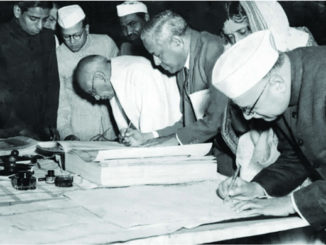
    The Assembly’s task of drafting the Constitution was both monumental and meticulous. Chaired by Dr. Rajendra Prasad, the Assembly included stalwarts like Dr. B.R. Ambedkar, Jawaharlal Nehru, Sardar Vallabhbhai Patel, Maulana Abul Kalam Azad, and others. Dr. B.R. Ambedkar, as the chairman of the Drafting Committee, played a pivotal role in shaping the Constitution, earning him the title of the “Architect of the Indian Constitution.”
    After nearly three years of deliberations, debates, and revisions, the Constituent Assembly adopted the Constitution on November 26, 1949. This date is celebrated annually as Constitution Day. However, the Assembly chose January 26, 1950, as the date for the Constitution to come into effect to honor a historic milestone in India’s freedom struggle.
    The Historical Significance of January 26
    The choice of January 26 as Republic Day was deeply symbolic. On this day in 1930, the Indian National Congress, under the leadership of Jawaharlal Nehru, declared Purna Swaraj (complete independence) from British rule during its Lahore Session. This declaration was a turning point in India’s struggle for independence, inspiring millions to join the movement for self-rule. By making January 26 the date for the Constitution’s implementation, India’s leaders established a link between the freedom movement and the birth of the republic.
    The First Republic Day: A Historic Celebration
    India’s first Republic Day on January 26, 1950, was a moment of immense pride and joy. Dr. Rajendra Prasad took the oath as the first President of India, marking the transition of the nation to a fully sovereign republic. The ceremony was held in the Durbar Hall of the Rashtrapati Bhavan, and the event was celebrated with grandeur and enthusiasm across the country.
    The first Republic Day Parade was held at Irwin Amphitheatre (now Major Dhyan Chand National Stadium) in New Delhi. It was a modest affair compared to today’s grand spectacle, but it set the precedent for showcasing India’s cultural diversity and military prowess.
    The Republic Day Parade: A Symbol of Unity and Pride
    The Republic Day Parade at Rajpath in New Delhi has become the centerpiece of the celebrations. It is a vibrant display of India’s cultural heritage, military strength, and technological advancements. The parade includes:
    – Military Display: The parade features regiments of the Indian Army, Navy, and Air Force, as well as paramilitary forces. Tanks, missiles, and other defense equipment highlight India’s defense capabilities.
    – Cultural Tableaux: Each state and union territory presents a tableau depicting its unique cultural traditions, historical landmarks, and achievements.
    – Awards and Honors: The President of India confers prestigious awards such as the Padma Awards, Bharat Ratna, and gallantry awards to individuals and organizations for their exceptional contributions.
    – School Performances: Schoolchildren perform colorful dances and drills, symbolizing the country’s unity and vibrancy.
    – Flypast: The Indian Air Force concludes the parade with a breathtaking flypast, including formations and maneuvers by fighter jets.
    Republic Day Beyond Delhi: Nationwide Celebrations
    While the main event takes place in the capital, Republic Day is celebrated with equal fervor across the country. Schools, colleges, and public institutions organize flag-hoisting ceremonies, cultural programs, and patriotic events. The day begins with the President’s address to the nation, followed by flag-hoisting ceremonies and parades in various states. Local communities and organizations also engage in social and cultural activities, emphasizing national unity and pride.
    International Participation and Diplomatic Significance
    Another unique feature of Republic Day is the presence of a foreign dignitary as the Chief Guest. This tradition began in 1950, with President Sukarno of Indonesia as the first guest of honor. The presence of an international leader highlights India’s diplomatic ties and its growing stature on the global stage. Over the years, leaders from various countries, including the United States, France, Japan, and South Africa, have graced the occasion.
    Indonesian President Prabowo Subianto will be the chief guest for Republic Day 2025, marking a significant milestone in the 75th anniversary of diplomatic relations between India and Indonesia.
    Reflection and Renewal
    Republic Day is more than a celebration; it is a reminder of the responsibilities that come with freedom. The Constitution of India enshrines the principles of justice, liberty, equality, and fraternity, and it is the duty of every citizen to uphold these values. The day also serves as an opportunity to reflect on the progress made by the nation and the challenges that lie ahead. As India continues to progress as the world’s largest democracy, Republic Day serves as a beacon of hope and resilience. It is a day to reflect on the sacrifices made by the nation’s forebears and renew the commitment to building a more equitable, inclusive, and prosperous society.
    India’s Republic Day is a celebration of the nation’s achievements and a tribute to its rich history and diverse culture. It is a testament to the strength and unity of the Indian people, reminding them of their shared heritage and the collective responsibility to uphold the ideals of the Constitution. With its blend of tradition and modernity, Republic Day continues to inspire generations, fostering a sense of pride and belonging among all Indians.
    Beating the Retreat Ceremony: A Symphony of Tradition and Patriotism
    The Beating the Retreat Ceremony is an iconic event that marks the culmination of the Republic Day celebrations in India. Held annually on January 29, this majestic ceremony takes place against the awe-inspiring backdrop of the historic Vijay Chowk in New Delhi. With its grandeur and solemnity, it serves as a fitting finale to the week-long festivities that honor India’s rich heritage and democratic spirit.
    Origins of the Beating the Retreat Ceremony
    The tradition of Beating the Retreat has its roots in the 16th-century military practice of signaling the end of the day’s battle. Drummers and buglers would sound the retreat, signaling troops to disengage, return to their camps, and lower their flags. The ceremony was later adapted by the British, and India retained this tradition post-independence, imbuing it with its own cultural and patriotic essence.
    The Splendor of the Event
    The ceremony begins with the President of India, the Supreme Commander of the Armed Forces, arriving at Vijay Chowk. The area, illuminated by floodlights, is transformed into a visual spectacle. The main attraction is the synchronized performance by the bands of the Indian Army, Navy, and Air Force. These bands perform an array of martial tunes, patriotic songs, and classical Indian music, creating a harmonious blend that resonates with the audience.
    Key highlights include the soulful rendition of classics like “Abide With Me,” a favorite of Mahatma Gandhi, and the stirring strains of ‘Sare Jahan Se Achha.’ The event concludes with the lowering of the National Flag, accompanied by the playing of the National Anthem. As the flag is lowered, the illuminated Rashtrapati Bhavan, North Block, and South Block provide a mesmerizing backdrop, leaving spectators in awe.
    Cultural and Patriotic Significance
    The Beating the Retreat Ceremony is more than just a military tradition; it is a celebration of India’s unity in diversity. The music played during the event often includes compositions that reflect the nation’s varied cultural heritage. The ceremony serves as a reminder of the sacrifices made by the armed forces and instills a sense of pride and patriotism among citizens.

  • India after Independence

    India after Independence

    • Independence day special

    When India became independent in August 1947, it faced a series of very great challenges. As a result of Partition, 8 million refugees had come into the country from what was now Pakistan. These people had to be found homes and jobs. Then there was the problem of the princely states, almost 500 of them, each ruled by a maharaja or a nawab, each of whom had to be persuaded to join the new nation.

    The problems of the refugees and of the princely states had to be addressed immediately. In the longer term, the new nation had to adopt a political system that would best serve the hopes and expectations of its population.

    India’s population in 1947 was large, almost 345 million. It was also divided. There were divisions between high castes and low castes, between the majority Hindu community and Indians who practiced other faiths. The citizens of this vast land spoke many different languages, wore many different kinds of dress, ate different kinds of food and practiced different professions. How could they be made to live together in one nation-state? To the problem of unity was added the problem of development. At Independence, the vast majority of Indians lived in the villages. Farmers and peasants depended on the monsoon for their survival. So did the non-farm sector of the rural economy, for if the crops failed, barbers, carpenters, weavers and other service groups would not get paid for their services either. In the cities, factory workers lived in crowded slums with little access to education or health care. Clearly, the new nation had to lift its masses out of poverty by increasing the productivity of agriculture and by promoting new, job-creating industries. Unity and development had to go hand in hand. If the divisions between different sections of India were not healed, they could result in violent and costly conflicts – high castes fighting with low castes, Hindus with Muslims and so on. At the same time, if the fruits of economic development did not reach the broad masses of the population, it could create fresh divisions – for example, between the rich and the poor, between cities and the countryside, between regions of India that were prosperous and regions that lagged behind.

    A Constitution is written

    Between December 1946 and November 1949, some three hundred Indians had a series of meetings on the country’s political future. The meetings of this “Constituent Assembly” were held in New Delhi, but the participants came from all over India, and from different political parties.

    These discussions resulted in the framing of the Indian Constitution, which came into effect on 26 January 1950. One feature of the Constitution was its adoption of universal adult franchise. All Indians above the age of 21 would be allowed to vote in state and national elections. This was a revolutionary step – for never before had Indians been allowed to choose their own leaders. In other countries, such as the United Kingdom and the United States, this right had been granted in stages. First only men of property had the vote. Then men who were educated were also added on. Working-class men got the vote only after a long struggle. Finally, after a bitter struggle of their own, American and British women were granted the vote. On the other hand, soon after Independence, India chose to grant this right to all its citizens regardless of gender, class or education.

    A second feature of the Constitution was that it guaranteed equality before the law to all citizens, regardless of their caste or religious affiliation. There were some Indians who wished that the political system of the new nation be based on Hindu ideals, and that India itself be run as a Hindu state. They pointed to the example of Pakistan, a country created explicitly to protect and further the interests of a particular religious community – the Muslims. However, the Indian Prime Minister, Jawaharlal Nehru, was of the opinion that India could not and must not become a “Hindu Pakistan”. Besides Muslims, India also had large populations of Sikhs and Christians, as well as many Parsis and Jains. Under the new Constitution, they would have the same rights as Hindus – the same opportunities when it came to seeking jobs in government or the private sector, the same rights before the law.

    A third feature of the Constitution was that it offered special privileges for the poorest and most disadvantaged Indians. The practice of untouchability, described as a “slur and a blot” on the “fair name of India”, was abolished. Hindu temples, previously open to only the higher castes, were thrown open to all, including the former untouchables. After a long debate, the Constituent Assembly also recommended that a certain percentage of seats in legislatures as well as jobs in government be reserved for members of the lowest castes. It had been argued by some that Untouchable or as they were now known, Harijan, candidates did not have good enough grades to get into the prestigious Indian Administrative Service. But, as one member of the Constituent Assembly, H.J. Khandekar, argued, it was the upper castes who were responsible for the Harijans “being unfit today”.

    Addressing his more privileged colleagues, Khandekar said: We were suppressed for thousands of years. You engaged us in your service to serve your own ends and suppressed us to such an extent that neither our minds nor our bodies and nor even our hearts work, nor are we able to march forward. Along with the former Untouchables, the adivasis or Scheduled Tribes were also granted reservation in seats and jobs. Like the Scheduled Castes, these Indians too had been deprived and discriminated against. The tribals had been deprived of modern health care and education, while their lands and forests had been taken away by more powerful outsiders.

    The new privileges granted them by the Constitution were meant to make amends for this. The Constituent Assembly spent many days discussing the powers of the central government versus those of the state governments. Some members thought that the Centre’s interests should be foremost. Only a strong Centre, it was argued, “would be in a position to think and plan for the well-being of the country as a whole”. Other members felt that the provinces should have greater autonomy and freedom.

     A member from Mysore feared that under the present system “democracy is centred in Delhi and it is not allowed to work in the same sense and spirit in the rest of the country”. A member from Madras insisted that “the initial responsibility for the well-being of the people of the provinces should rest with the Provincial Governments”. The Constitution sought to balance these competing claims by providing three lists of subjects: a Union List, with subjects such as taxes, defence and foreign affairs, which would be the exclusive responsibility of the Centre; a State List of subjects, such as education and health, which would be taken care of principally by the states; a Concurrent List, under which would come subjects such as forests and agriculture, in which the Centre and the states would have joint responsibility. Another major debate in the Constituent Assembly concerned language. Many members believed that the English language should leave India with the British rulers. Its place, they argued, should be taken by Hindi. However, those who did not speak Hindi were of a different opinion. Speaking in the Assembly, T.T. Krishnamachari conveyed “a warning on behalf of people of the South”, some of whom threatened to separate from India if Hindi was imposed on them.

     A compromise was finally arrived at: namely, that while Hindi would be the “official language” of India, English would be used in the courts, the services, and communications between one state and another. Many Indians contributed to the framing of the Constitution. But perhaps the most important role was played by Dr B.R. Ambedkar, who was Chairman of the Drafting Committee, and under whose supervision the document was finalised. In his final speech to the Constituent Assembly, Dr Ambedkar pointed out that political democracy had to be accompanied by economic and social democracy. Giving the right to vote would not automatically lead to the removal of other inequalities such as between rich and poor, or between upper and lower castes. With the new Constitution, he said, India was going to enter into a life of contradictions. In politics we will have equality and in social and economic life we will have inequality. In politicswe will be recognising the principle of one man one vote and one value. In our social and economic life, we shall, by reason of our social and economic structure, continue to deny the principle of one man one value.

    How were states to be formed?

    Back in the 1920s, the Indian National Congress – the main party of the freedom struggle – had promised that once the country won independence, each major linguistic group would have its own province. However, after independence the Congress did not take any steps to honour this promise. For India had been divided on the basis of religion: despite the wishes and efforts of Mahatma Gandhi, freedom had come not to one nation but to two. As a result of the partition of India, more than a million people had been killed in riots between Hindus and Muslims. Could the country afford further divisions on the basis of language? Both Prime Minister Nehru and Deputy Prime Minister Vallabhbhai Patel were against the creation of linguistic states. After the Partition, Nehru said, “disruptionist tendencies had come to the fore”; to check them, the nation had to be strong and united. Or, as Patel put it: … the first and last need of India at the present moment is that it should be made a nation … Everything which helps the growth of nationalism has to go forward and everything which throws obstacles in its way has to be rejected … We have applied this test to linguistic provinces also, and by this test, in our opinion [they] cannot be supported. That the Congress leaders would now go back on their promise created great disappointment. The Kannada speakers, Malayalam speakers, the Marathi speakers, had all looked forward to having their own state. The strongest protests, however, came from the Telugu-speaking districts of what was the Madras Presidency. When Nehru went to campaign there during the general elections of 1952, he was met with black flags and slogans demanding “We want Andhra”. In October of that year, a veteran Gandhian named Potti Sriramulu went on a hunger strike demanding the formation of Andhra state to protect the interests of Telugu speakers. As the fast went on, it attracted much support. Hartals and bandhs were observed in many towns.

    On 15 December 1952, fifty-eight days into his fast, Potti Sriramulu died. As a newspaper put it, “the news of the passing away of Sriramulu engulfed entire Andhra in chaos”. The protests were so widespread and intense that the central government was forced to give in to the demand. Thus, on 1 October 1953, the new state of Andhra came into being, which subsequently became Andhra Pradesh.

    After the creation of Andhra, other linguistic communities also demanded their own separate states. A States Reorganisation Commission was set up, which submitted its report in 1956, recommending the redrawing of district and provincial boundaries to form compact provinces of Assamese, Bengali, Oriya, Tamil, Malayalam, Kannada and Telugu speakers respectively. The large Hindi-speaking region of north India was also to be broken up into several states. A little later, in 1960, the bilingual state of Bombay was divided into separate states for Marathi and Gujarati speakers. In 1966, the state of Punjab was also divided into Punjab and Haryana, the former for the Punjabi speakers (who were also mostly Sikhs), the latter for the rest (who spoke not Punjabi but versions of Haryanvi or Hindi).

    Planning for development

    Lifting India and Indians out of poverty, and building a modern technical and industrial base were among the major objectives of the new nation. In 1950, the government set up a Planning Commission to help design and execute suitable policies for economic development. There was a broad agreement on what was called a “mixed economy” model. Here, both the State and the private sector would play important and complementary roles in increasing production and generating jobs. What, specifically, these roles were to be – which industries should be initiated by the state and which by the market, how to achieve a balance between the different regions and states – was to be defined by the Planning Commission.

    In 1956, the Second Five Year Plan was formulated. This focused strongly on the development of heavy industries such as steel, and on the building of large dams. These sectors would be under the control of the State. This focus on heavy industry, and the effort at state regulation of the economy was to guide economic policy for the next few decades. This approach had many strong supporters, but also some vocal critics.

    Some felt that it had put inadequate emphasis on agriculture. Others argued that it had neglected primary education. Still others believed that it had not taken account of the environmental implications of economic policies. As Mahatma Gandhi’s follower Mira Behn wrote in 1949, by “science and machinery he [mankind] may get huge returns for a time, but ultimately will come desolation. We have got to study Nature’s balance, and develop our lives within her laws, if we are to survive as a physically healthy and morally decent species.”

    The Nation, 75 years on

    On 15 August 2021, India celebrates 75 years of its existence as a free nation. How well has the country done in this time? And to what extent has it fulfilled the ideals set out in its Constitution? That India is still united, and that it is still democratic, are achievements that we might justly be proud of. Many foreign observers had felt that India could not survive as a single country, that it would break up into many parts, with each region or linguistic group seeking to form a nation of its own. Others believed that it would come under military rule. However, as many as thirteen general elections have been held since Independence, as well as hundreds of state and local elections. There is a free press, as well as an independent judiciary. Finally, the fact that people speak different languages or practise different faiths has not come in the way of national unity.

    On the other hand, deep divisions persist. Despite constitutional guarantees, the Untouchables or, as they are now referred to, the Dalits, face violence and discrimination. In many parts of rural India they are not allowed access to water sources, temples, parks and other public places. And despite the secular ideals enshrined in the Constitution, there have been clashes between different religious groups in many states. Above all, as many observers have noted, the gulf between the rich and the poor has grown over the years. Some parts of India and some groups of Indians have benefited a great deal from economic development. They live in large houses and dine in expensive restaurants, send their children to expensive private schools and take expensive foreign holidays. At the same time many others continue to live below the poverty line. Housed in urban slums, or living in remote villages on lands that yield little, they cannot afford to send their children to school. The Constitution recognises equality before the law, but in real life some Indians are more equal than others. Judged by the standards it set itself at Independence, the Republic of India has not been a great success. But it has not been a failure either.